
FEATURE:
Through a Long & Sleepless Night
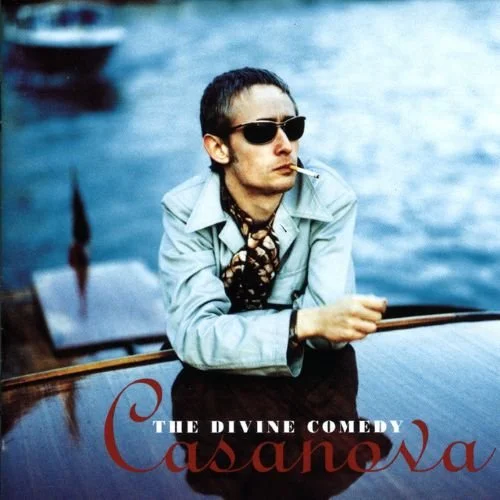
The Divine Comedy's Casanova at Thirty
__________
THE thirteenth…
studio album from The Divine Comedy, Rainy Sunday Afternoon, was released last year and is one of their best ever. Referring to them as a band, it is essential Neil Hannon and a cast of musicians. He has been the focal point ever since the first album in 1990. Another of their albums has big anniversaries this year. Regeneration turned twenty-five on 12th March. However, one of The Divine Comedy’s greatest and most popular albums, Casanova, was released on 29th April, 1996. The fourth album from Neil Hannon and his crew, it contains classics like Something for the Weekend and Becoming More Like Alfie. I am going to end with a review of this beautiful and hugely impressive album. One of the finest songwriters ever, this is one where Neil Hannon’s gifts are in full flight. People might recognise Songs of Love. That was used as the theme song for the incredible sitcom Father Ted in the 1990s. In terms of the truly great albums that arrived in 1996, this stands with the best of them. However, I think Casanova is overlooked in favour of others. It is worth shining a light on it ahead of its thirtieth anniversary. I am starting out with Beats Per Minute and their second look at an album that still sounds astonishing. The song uncovering fresh layers each time you listen:
“The 1996 record turned out to be – and remains – a great entry point. No doubt the fame from Father Ted helped make the album a commercial success (making it a gold record as well as boasting two Top 20 singles in the UK charts), but the strength of Casanova is earned in its own right – something all the more obvious in hindsight.
It’s a sad fact that The Divine Comedy’s principal songwriter and vocalist Neil Hannon is a name that remains fairly under the radar, especially as he is perhaps one of the most talented songwriters and composers out there, consistently delivering solid album after solid album in the band’s 30-some year existence. Truly a poet of his age, he has a magnificent skill of encapsulating everyday woe, everyday love, and the everyday feelings of every day into witty, deprecating couplets. He can turn an unsuspecting phrase into a magnificent weapon on a whim; the kind that can strike you both immediately and decades later with the same force.
Take the aforementioned “Songs of Love” for example; Hannon pokes fun at young couples prancing about in front of him with absolutely no regard for how miserable he is. Phrases like “Pale, pubescent beasts” are golden, but one line sticks out in particular: “Fortune depends on the tone of your voice.”
Perhaps Hannon is poking fun at himself and the love-song-writing community, but he still takes his advice to heart – something that helps distinguish him from other artists. When Hannon delivers a line, he does so entirely invested in it, regardless of how absurd, silly, or ludicrous it might be.
Casanova has a plethora of examples: On “Middle-Class Heroes” he lures in the listener as a hack psychic with a sultry voice (“Okay my pretty, just cross my palm with plastic / and I’ll see what I can do”); the ferocious “Through a Long & Sleepless Night” has him snarling and screaming during the album’s heaviest moment in a sort of post-rock/Britpop climax of noise; and on the centerpiece “Charge” he plays opposing forces of a war, seducing each other with horrific platitudes (“Baby baby, gonna set your village on fire”) in both falsetto and a deep, Barry White-like voice.
Oh, and that’s the thing about Casanova also worth knowing: it’s pretty much all about sex. The album is “inspired by the writings of the eighteenth century Venetian gambler, eroticist, and spy” (which Hannon himself details in the penultimate “Theme From Casanova”, using his best BBC voice as he ushers in a contrastingly gentle and ambling instrumental piece). The characters here are base, dick-led assholes, brimming with misogyny and undeserved huge egos: A man aims to lure a woman into a romp without telling her he’s married on “Something For The Weekend”, while on “In & Out of Paris & London” another man excuses assault and harassment, reasoning “this is not a sin – it’s not even original.” For some, the lyrics might not make for easy listening (even though a lot is left to innuendo and imagination), but it also speaks to Hannon’s skill at painting characters with depth and arcs over the course of just a song. And on the plus side, most of the horrible men meet a deserved grizzly end in some way or another.
When Scott Walker died in 2019, I honestly felt despair over losing an artist like I had felt for no other before. His music had come to be a staple for me since I first heard “Farmer in the City” through the biggest stereo speakers I ever recall seeing, feeling the pressure of the intensifying strings pushing against me. As his voice rose in the song, my heart opened and so did my mind; I had never heard music anything like this before. I promptly went out and bought Scott 1 – 4, and over the following years I consumed about everything I could in the Scott Walker universe. His loss was a sadness in me partly because it meant that there will be no more music from Walker, even though he has a rich, rewarding, and ranging catalogue. Like all good things, you love what you have, but you always want that little more.
When I first saw the biography/documentary film 30 Century Man, I recall a moment of surprise when Neil Hannon came on screen talking about how important Scott Walker was to him. “That’s the guy who does the Father Ted theme,” I thought to myself, knowing little else of his musical output at that point. It came as a great joy then to find Hannon’s music then – especially so after Walker’s death. Walker might be gone, but the ways in which Hannon emulates him, captures his nuance and style, is like having someone putting out B-sides to Scott 1-4 across their own career.
The Walker style is arguably at its most obvious on Casanova – which makes it all the more enjoyable for me to listen to. The rubber brass, marimba, and wide-spanning orchestration on “Middle-Class Heroes” makes it feel like it could fit onto Scott 2 all too perfectly. On the insomniac build of “Through a Long & Sleepless Night”, the way Hannon snarls his words is like he’s actually doing his best Walker impression. (The fact that the song also shares a title with a track from Scott only drives home the deliberate Walker emulation.) When the bass gets slinky and busy during passages on “Charge” and “A Woman of the World” there are echoes of Climate of Hunter to be heard. Final track “The Dogs & the Horses” comes complete with triumphant brass and ornate woodwind as Hannon says goodbye with the air of Oscar Wilde reaching out to the sky to use up his last breath; he’s gentle, but assured of his message throughout as his voice rises and falls with the music.
Thanks to orchestral arranger Joby Talbot, Hannon sounds truly like a timeless icon here, and that that icon is Scott Walker makes the album all the more enjoyable. I listen and content myself knowing that someone out there is still carrying the mantle of Walker’s style.
And ultimately that’s why Casanova is such a rewarding album for me: nostalgia, for both my younger self watching Father Ted, and my present self remembering the musical oeuvre of Scott Walker. There will be others who can relate to that, but it’s by no means a requirement for enjoying Casanova. The breadth of quality is wide here, every moment given due consideration from the band and worth a thesis of critical analysis. “Charge” is full of vaudeville piano breaks over a marching stomp of drums, all before the air raid sirens start bellowing and orchestra starts spiralling over the sound of gunfire; the imperialist/colonial air is there, but Hannon has his tongue wedged firmly in his cheek. (The song’s influence can also be heard clearly in Kaiser Chiefs’ 2014 epic “Cannons.”) The gloomy neo-swing jaunt of “A Woman of the World” (which is a reworked rejected first iteration of the Father Ted theme) casually ambles into cavernous depths as the Hannon explores the origin of feelings of love and hate (“Maybe I love her ’cause I’m jealous of her…Maybe I hate her ’cause I didn’t create her).
Indeed, every track here is full enough to want to break down each detail and lyrical turn: the squelchy synths and the brass riffing on the French national anthem on the darkly humorous “The Frog Princess”; the juxtaposition of the album’s most intense moments against its most whimsical and light ones; the slick 60s swing of “Becoming More Like Alfie”, with its glistening harpsichord and the surprising country twang of it’s vibrant guitar solo; and just the line “I fall in love with someone new practically every day but that’s okay,” which captures the fanatic adoration of both a serial womaniser and anyone who has ever been young and lustful”.
Maybe one of the issues is that Casanova did not fit in with the Britpop-dominating sounds of 1996. Not that The Divine Comedy were a mainstream band to begin with. They always had this somewhat underground appeal. Perhaps a bit too literate or eloquent to truly capture a foothold at the forefront, Casanova was very different to what was being proclaimed and recommended in 1996. This article explores how Neil Hannon’s work fitted into the U.K. scene in 1996. I think Casanova is an influential album that does not get enough attention:
“Even the beautiful and, to my ears, what could be seen as a pure love song in Songs Of Love isn‘t as straightforward as it appears. If you delve into the lyrics they talk of roaming the streets looking for prey whilst searching for a mate, so not quite so romantic when you look at it in that light, is it?
Starting out as the instrumental theme tune for telly comedy Father Ted, Songs Of Love did the job that A Woman Of The World was supposed to do, had TV bosses not rejected its brasher melody. With Hannon, the son of a bishop, offering up his best Frank Sinatra impression amid a 1930s Vegas showgirls routine, it’s not at all surprising why AWOTW would be rejected as the keynote track for this bucolic drama concerning the lives of priests on an island in Ireland.
Songs Of Love feels more pastoral, like a gentle love letter to Neil’s emerald homeland. You can imagine lambs frolicking through fields, maybe even picture My Lovely Horse (another Hannon composition featured in Father Ted’s A Song For Europe episode).
The shady libertine continues to be in evidence in the resolutely un-PC Frog Princess, candidly admitting “I don’t love anybody/That stuff is just a waste of time” but still chancing his arm with “Your place or mine?”. But by A Woman Of The World we see the beginnings of an about turn, maybe he loves her, maybe he hates her, maybe he needs her? Of course, he does revert to type considering the happenstance of killing her whilst in the throes of passion though of course the possibility is always there that she might get in there first.
But that is to discuss the insidious nature of intimacy I mentioned, however, is it also really an album about death? In my opinion, yes. Of the 11 stories the lyrics of seven contain allusions to or are explicitly about mortality, whilst one of the four that don’t is mainly wordless (the aforementioned Theme).
Two of the tunes deal wholly with death: The Dogs & The Horses, the album’s closing chapter, and the jaunty Charge, song five, be a blasé treatise on trench warfare which finds Hannon channelling famous lovemen from Jim Morrison to Barry White and Prince. Midway through the latter, the composer seems to be having great fun charging into the valley of death and shooting left, right and centre, so gung-ho in fact that he’s stark bullock naked. One can almost picture him smoking a cigar with a bandana and camo paint.
The last word in dissonant denouements, The Dogs & The Horses, conversely, is a beautiful baroque slice of Scott Walker-esque melodrama featuring a deathbed vision of beloved pets coming to say one last goodbye and escort you up to the pearly gates. This is, of course, in stark contrast to our protagonist in Middle Class Heroes who is “never to heaven go”.
Maybe again here we are seeing the growth in character progressing throughout the record. We start with the unpleasant side of life but build up to a rousing finale where all is forgiven and we see our rakish hero in a slightly more sympathetic light. We realise he is an animal lover indeed, who has repented of his previous lust and life and can now enjoy an afterlife in heaven and not the hell contemplated in Through A Long & Sleepless Night, here we really feel the shift from loathsome letch to snarling old codger. Hannon never once glosses over the grubby and self-serving aspects of male desire and the album is all the better for it.
And so we leave on a note of positivity that people can change, that repentance brings deathbed redemption and that anyone can end up loved. Or, we could just listen to Neil Hannon and live our lives via the philosophy of track number nine”.
A lot of the features about Casanova are that it is this forgotten album. Rather than heralding a classic that was loved in its time, there is this sense of rewriting the narrative or giving oxygen to something that was ignored or underrated when it came out. Backseat Mafia marked twenty years of Casanova in 2016:
“Possessing a way with a melody light years ahead of his contemporaries, Hannon’s ability to pen a brilliantly accessible tune pretty reached an apex with Casanova, as it was packed full of smart pop songs that would have clogged up the upper reaches of the 90s singles charts for months on end if there was any justice in the world. Hannon’s charming arrangements and experience-soaked croon was a world away from the rip-off riffage and mock-working class bellowing of Britpop, which goes some way to explaining why Divine Comedy were considered an act of niche appeal for so long. As brilliant as Hannon’s songs were, Divine Comedy were committed to the thankless task of swimming against the tide of popularity at the time, so Casanova struggled to reach the audience numbers it deserved to.
So, 20 years after its release, does Casanova still stand up, or have the two decades weighed heavily on its shoulders?
Actually, as it turns out, it still stands up pretty well, especially when compared to the majority of albums released during the era. It remains a collection of arch pop tunes which are playful, without being lightweight, and it’s different enough to anything else going on in the mid-90s for it not to be forever tied to that decade. While not entirely ageless, tunes like “Becoming More Like Alfie”, “Something for the Weekend” and “Songs of Love” have at least aged well, and the heart-swelling “The Frog Princess” is a wonderfully resigned ballad which deserves to be hailed as a modest-masterpiece.
If Casanova has a flaw, it’s that it doesn’t really know how to end. “Theme from Casanova” would have been a charmingly tongue in cheek closing track, however it is followed by the richly orchestrated “The Dogs & the Horses”, a fine song which frustratingly just doesn’t fit in with the sex-based themes of the rest of the album. Perhaps the answer would have been to omit it from the album entirely, but it’s far too fine a piece of music to be relegated to b-side status, or even tucked away as an example of that most teeth gnashing aspect of 90s CD culture – the hidden track.
Casanova is an album that requires a little bit of time lavished on it before it reveals its charms, however when it does, it declares itself one of the finest albums of the 90s. Yes it has its flaws, but that goes for a vast amount of the albums released during that decade, and the good aspects far outweighs the bad. Casanova is by turns playful, charming, smart and on the whole considerably less knuckle-dragging than much of what my generation were subjecting themselves to at that time, and it’s appeal has endured when so many other albums released at the time have long since lost their lustre”.
On 29th April, it will be thirty years since The Divine Comedy released Casanova. There are some who feel Neil Hannon/the band released better albums. I feel Casanova is one of their most important. In terms of how it helped bring the music to wider attention. Even so, many forget about an album released in a year when so many classics came out. That is too bad, as this wonderful album deserves new love…
THIRTY years later.