
FEATURE:
Kate Bush: Them Heavy People: The Extraordinary Characters in Her Songs
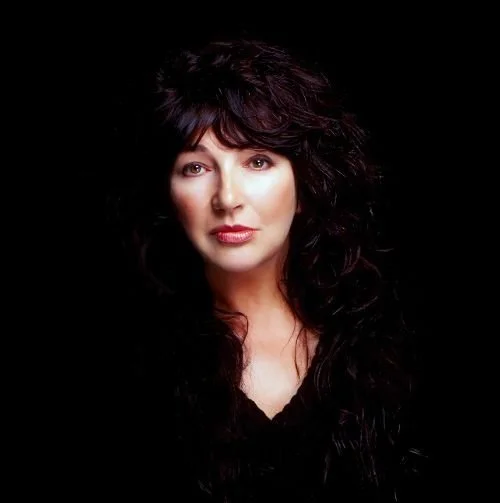
IN THIS PHOTO: Kate Bush photographed in 2005 for Aerial/PHOTO CREDIT: Trevor Leighton
Mrs. Bartolozzi (Mrs. Bartolozzi)/Pandora (Suspended in Gaffa)
__________
THIS first song is one…

IN THIS PHOTO: Kate Bush in 1982/PHOTO CREDIT: Pierre Terrasson
that I have covered a few times already. I will approach it from different directions. That is Mrs. Bartolozzi from 2005’s Aerial. I will discuss this build up to that new album after twelve years. How fewer singles have been released from her most recent three albums, and how Mrs. Bartolozzi deserved a single release. I will also discuss the way Bush has always been seen as eccentric and silly, and why a song like Mrs. Bartolozzi united her present and past. The second song I am going to concentrate on is from 1982’s The Dreaming. On an album with relatively few characters, there is one in Suspended in Gaffa that gives me something to discuss. Pandora is mentioned. Let’s start out with Mrs. Bartolozzi. An amazing eponymous heroine. This is one of those songs where Bush might have coincidentally come across that surname. How it came to her mind. As she discussed in this interview, the subject and lyrics of Mrs. Bartolozzi reflected her domestic life at the time. A new son, Bertie, who was keeping the washing machine busy! Part autobiographical and fantastical, you can imagine Kate Bush bringing this song to mind pretty readily and quickly:
“Is it about a washing machine? I think it’s a song about Mrs. Bartolozzi. She’s this lady in the song who…does a lot of washing (laughs). It’s not me, but I wouldn’t have written the song if I didn’t spend a lot of time doing washing. But, um, it’s fictitious. I suppose, as soon as you have a child, the washing suddenly increases. And uh, what I like too is that a lot of people think it’s funny. I think that’s great, because I think that actually, it’s one of the heaviest songs I’ve ever written! (laughs)
Clothes are…very interesting things, aren’t they? Because they say such an enormous amount about the person that wears them. They have a little bit of that person all over them, little bits of skin cells and…what you wear says a lot about who you are, and who you think you are…
So I think clothes, in themselves are very interesting. And then it was the idea of this woman, who’s kind of sitting there looking at all the washing going around, and she’s got this new washing machine, and the idea of these clothes, sort of tumbling around in the water, and then the water becomes the sea and the clothes…and the sea…and the washing machine and the kitchen… I just thought it was an interesting idea to play with.
What I wanted to get was the sense of this journey, where you’re sitting in front of this washing machine, and then almost as if in a daydream, you’re suddenly standing in the sea.
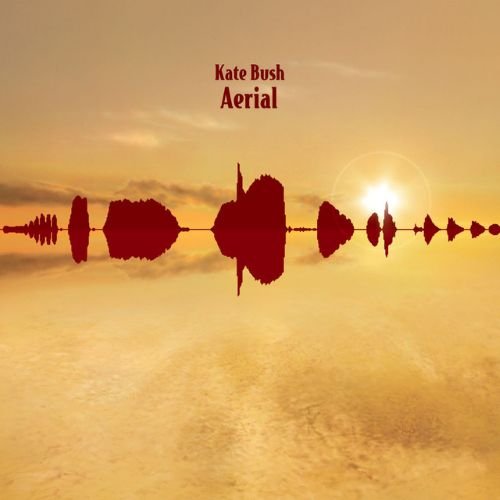
That surname, Bartolozzi, is one that many might not know. Francesco Bartolozzi was an Italian engraver, whose most productive period was spent in London. He is noted for popularising the ‘crayon’ method of engraving. I do wonder if this is who Kate Bush had in mind when she was coming up for a name for her heroine. Before moving on to the topics I was going to cover, I remember when Aerial came out in November 2005 and being blown away by its scale. How it is this double album that has an album of more traditional songs and this conceptual second disc, A Sky of Honey. Mrs. Bartolozzi features on the first disc. If Aerial is seen as quite layered and grand in terms of its compositions, Mrs. Bartolozzi is one of its sparsest. Bush on the piano. I will mention this when discussing how the song married her past and present. King of the Mountain was a shrewd single choice from Kate Bush. Her first album single since 1994, that track is about Elvis Presley and fame. How the King of Rock and Roll might be alive somewhere on a mountain. I sort of think that it was more about Kate Bush and how many felt she was hidden away or this recluse off in a mansion somewhere. There was definitely a lot of speculation around Aerial. What form it would take and how it would compare to 1993’s The Red Shoes. There are few similarities between those albums. Bush started a family and gave birth to Bertie in 1998. In terms of her work schedule, it must have been quite a juggling act. Though the first songs were written before Bertie was born, he weas her priority from 1998. It would have been difficult looking after a new son and putting together a double album. I can’t remember the sort of speculation that was building towards the end of the 1990s and into the 2000s. Bush was not completely away from the spotlight in all that time. She did pick up an honour at the Q Awards in 2001. In an interview around that, she revealed a new album would come.
That said, she was not in a position to give a date. In 2001, think about what was at the forefront. Kyllie Minogue’s Can't Get You Out of My Head was one of the biggest songs of that year. Pop artists like Britney Spears at the forefront. There was such a seismic shift in terms of music released that year. Whereas the 1990s might have been about Grunge, Britpop and other genres, more Electronic and Indie influence coming to the forefront in 2001. The Strokes' Is This It?, Radiohead's Amnesiac, Daft Punk's Discovery, Jay-Z's The Blueprint, and Björk's Vespertine among the standouts of the year. Did people feel that a Kate Bush album would arrive in 2001 and sit with what was out that year?! She would have been aware of what was around and how the music she was making was distinct and perhaps did not fit in. Bush had always been distinct and not necessarily looked to slot in with what was happening that year. In 2005, Aerial stood alone in terms of its sound and feel. Not that many other artists doing what she was doing. After 2001 and that Q appearance, there was certainly a lot of chatter and rumour regarding when an album would come and what it would be likely. I think it is telling how Bush promoted the album. The Red Shoes was the last time she did T.V. or any documentaries. Aerial’s promotion was for radio and print. There were promotional photographs, though most of them were shot from the waist up. There are a few exceptions, though Bush was possibly conscious about her looks. A new mother who had been away from the limelight for a while, her privacy was as important as ever. Maybe there was some self-consciousness considering the promotional photos and how she was self-conscious when shooting the video for King of the Mountain with director, Jimmy Murakami. I can understand why only that single was released. Not committing to more and further music videos, this trend continued for 2011’s Director’s Cut and 50 Words for Snow (Deeper Understanding and Wild Man the respective singles). King of the Mountain is the most recent time that Bush has appeared in a music video. I feel it will be the last we see of her filmed. I do feel like she should have released more singles from Aerial. Mrs. Bartolozzi is a choice option. I wrote in another feature how an actor could have played Mrs. Bartolozzi. Seeing the song visualised would have been a real treat. The lyrics speak of clothes entwined in the washing machine and wrapped in one another. Clothes on the line blowing in the breeze. A fantastic music video could have accompanied those lyrics, for sure.
I do feel like Bush wanted more control of her music and not wanting it to be about singles. Aerial is an album (a double) that she wanted people to experience as a single piece of work. Releasing singles takes away from that. Even though Mrs. Bartolozzi would have been a great single and would have done well on the charts, it sits on an album as part of a larger story. I think that it is significant that it appears after Bertie on the tracklisting. A song about her son. This joyous thing. A song that is about the domestic and the fantasy and mundanity of cleaning and filling the washing machine, there was this curious pairing. Bertie in her mind when it came to Mrs. Bartolozzi, perhaps. One could say that Mrs. Bartolozzi is one of those lost singles. How it could have come out and would have been marvellous. We will never know. I did read some reviews around Mrs. Bartolozzi. Whilst some were impressed by how it elevated the everyday to something truly stirring and emotional, others picked up on lyrics and wrote Bush off as eccentric. This was nothing new. However, in 2005, she was in her forties. No longer this very young artist who was seen as inexperienced or ingenue, this cliché and stereotype about Bush remained. How she was eccentric and odd. “Slooshy sloshy slooshy sloshy/Get that dirty shirty clean/Slooshy sloshy slooshy sloshy/Make those cuffs and collars gleam/Everything clean and shiny”. If some feel those lyrics are self-parody and ridiculous, I actually think they are charming and child-like. This wonder about something quite ordinary. One of the most notable elements of Kate Bush’s lyrics is how she can blend the poetic with the slightly absurd. Mrs. Bartolozzi is an example of that. It is almost classical and operatic in its potential. I could imagine it build up with strings and backing vocals. Bush could have done that. Rather, she kept it scaled-down and intimate. She does provide backing vocals, though it is the power of the piano that is key. The lyrics invite the listener to immerse themselves in the song. It is one of her greatest moments and a track that is not talked about as much as it should be. It is a pity that some wrote it off as this moment when Bush was being silly or parodying herself.
Evident on 50 Words for Snow especially, there was a melding of the past and present. In the sense you can hear themes and lyrics and feel they were from early albums like 1978’s The Kick Inside and Lionheart. Aerial’s Mrs. Bartolozzi is charged with the erotic and sexual. If you feel it is about household chores and a woman mopping a dirty floor and trying to get the laundry done, it is this sensual song where the heroine drifts off and lets her mind wander. We never see who Mrs. Bartolozzi is. Bush perhaps not wanting to put herself directly in the song. She did say in an interview with John Wilson in 2005 how the name was chosen at random - as it fitted better tthan ‘Brown’. However, Bush did say she was told about/aware of Therese Jansen Bartolozzi (ca. 1770 – 1843), who was a pianist whose career flourished in London around the end of the 18th century. She was the dedicatee of piano works by a number of famous composers. Bush did say how she was doing a lot of washing and stuff around the house. That naturally bled into her lyrics. How many other artists can make the domestic and almost trivial and turn it into a masterpiece song?! Bush showing why she was still leagues ahead and this innovator! There are fewer examples of the romantic and erotic in her music from 2005. Even so, 50 Words for Snow had Misty. A song about a woman that spends the night with a snowman. Mrs. Bartolozzi talks of these clothes tangled in the suds. On the line in the breeze. You can sense bodies in them. Rather than it being about laundry and fabric, human beings in those clothes. How it being Bush at her piano with no adornments adds this charge and sense of the intimate and tender. Many people might have feel this was unbecoming of an artist in her forties. Ageism and misogyny. Bush nodding back to her earliest days. Or just being her authentic self. Also, Aerial is an album where family and her setting was at the front. Illusions to her new family and cleaning for them: “They traipsed mud all over the house”. The symbolism of these lyrics could be about divided lovers or this fascinating with clothes and how they have the scent and memories of people in them: “My blouse wrapping itself around your trousers”. The water in the washing machine becoming the waves. So many lines step between fantastical and sexual: “Little fish swim between my legs”. Perhaps memories of someone gone who the heroine wished was here: “I think I see you standing outside/But it’s just your shirt”. In all of this, I wonder who Mrs. Bartolozzi is and whether Kate Bush had a specific person in mind. I would still love to see a video for this song. A modern actor or artist playing Mrs. Bartolozzi. Who would be a current first choice? Margaret Qualley. She has a resemblance to Kate Bush, and I also feel that she is a terrific actor who could do something wonderful in a video. It will never happen, though it is always nice to dream!
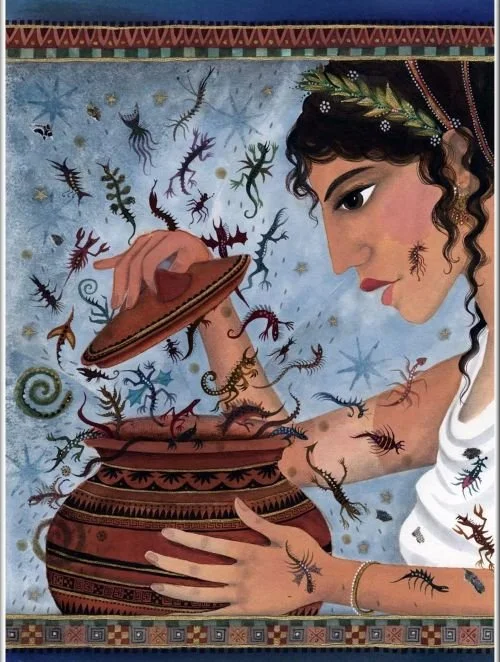
IN THIS IMAGE: A depiction of Pandora (the first human woman, she was created by Hephaestus on Zeus's orders as punishment for humanity)
Let’s go from 2005’s Aerial back to 1982’s The Dreaming. Different situations and recording processes. If Aerial is full of space and sky and Kate Bush was a new mother and was living away from London. I think she may have been in a clifftop mansion near East Portlemouth in Devon at this time. She also had a home in Berkshire, so perhaps this is where Mrs. Bartolozzi was written. However, with the sea being so close to her Devon house, you can envisage her casting her mind there. Suspended in Gaffa was written at a time when Kate Bush was in London and working between multiple studios. Spending long days and nights on the album, Suspended in Gaffa is actually one of the lightest and less anxious-sounding tracks on The Dreaming. It is one of those songs where a character/figure is named, yet it is not a song around them. Unlike Mrs. Bartolozzi, where this woman is at the centre and it is her song, Pandora is briefly mentioned in Suspended in Gaffa. Even so, it caught my eye. In Greek mythology, Pandora was the first human woman, created by Hephaestus on Zeus's orders as punishment for humanity. Gifted with beauty and curiosity, she is famous for opening a jar (often called a ‘box’) that released all evils and miseries into the world, leaving only hope trapped inside. The first thing to address about Suspended in Gaffa is how it is quite autobiographical in nature. Bush was not writing this way a lot previous to this. How does Pandora work around the inspiration behind Suspended in Gaffa? Here are some interview archives where Kate Bush discussed Suspended in Gaffa and it meaning:
“Whenever I’ve sung this song I’ve hoped that my breath would hold out for the first few phrases, as there is no gap to breathe in. When I wrote this track the words came at the same time, and this is one of the few songs where the lyrics were complete at such an early stage. The idea of the song is that of being given a glimpse of ‘God’ – something that we dearly want – but being told that unless we work for it, we will never see it again, and even then, we might not be worthy of it. Of course, everybody wants the reward without the toil, so people try to find a way out of the hard work, still hoping to claim the prize, but such is not the case. The choruses are meant to express the feeling of entering timelessness as you become ready for the experience, but only when you are ready.
Kate Bush Club newsletter, October 1982
I could explain some of it, if you want me to: Suspended in Gaffa is reasonably autobiographical, which most of my songs aren’t. It’s about seeing something that you want–on any level–and not being able to get that thing unless you work hard and in the right way towards it. When I do that I become aware of so many obstacles, and then I want the thing without the work. And then when you achieve it you enter…a different level–everything will slightly change. It’s like going into a time warp which otherwise wouldn’t have existed.
Richard Cook, ‘My music sophisticated?…’. NME (UK), October 1982”.
It is interesting that notion of Bush seeking something and wanting it but not being able to achieve it. I do wonder if the song relates to her career ambitions at that stage. How she was trying to be a type of artist and work on her own terms and have some autonomy. However, having to work to a schedule and having a certain pressure, there were these obstacles. She made sacrifices when it came to The Dreaming. Spending so much time working on the album to ensure it was true to her. There are personal insights and revelations in the lyrics. These lines seem to give a glimpse into her mindset at the time: “But sometimes it’s hard/To know if I’m doing it right./Can I have it all?/Can I have it all now?/We can’t have it all”. Near the end of the song comes these lines: “I won’t open boxes/That I am told not to/I’m not a Pandora/I’m much more like/That girl in the mirror/Between you and me/She don’t stand a chance of getting anywhere at all/Not anywhere at all/No, not a thing/She can’t have it all”. Bush maybe being told to keep in her own lane. Not being too ambitious or experimental. An idea of opening boxes she was not supposed to perhaps a reaction to how she was seen as this one particular type of artist and was not encouraged to be different or experimental. If she did open the box or broke away, then there would be all these consequences. Perhaps one of the most revealing songs on The Dreaminmg, you do get a feeling Kate Bush was embodying Pandora. Except, rather than opening a box and all these evils coming out, a sense that a lot was bottled in and she could not really get this relief and release. This artist who could not have it all, very telling that Bush was sort of saying that she could not be the artist she wanted to be. Or be that and have a personal life too. A subject very relevant to modern music. How very few major artists can have it all in terms of the professional and personal. There is a bit of the oblique and mysterious in Suspended in Gaffa: “He’s gonna wangle/A way to get out of it/She’s an excuse/And a witness who’ll talk when he’s called”. A lot of the personal in the song. However, there are the more impersonal or detached lines that could be about Bush and her career. I do think of Bush casting herself as Pandora. Or the opposite. This box in front of her. If it is opened, which she might want to do, then the result could be damaging and determinantal. This quest for knowledge and achieving something. Obstacles being in the way. Rather than it being laziness and Bush wanting not to take risks, perhaps it is too dangerous and problematic taking risks.
A fascinating song, one of the most emotional lines actually connects with her mother, Hannah: “Mother, where are the angels?/I’m scared of the changes”. Maybe vulnerable and feeling in need of protection, you get the sense of a woman in her twenties plunged deep into recording an album and feeling lost. At a point in her career when she was looking for something but being held back. Almost like Pandora standing over a bomb, there is rawness, emotion, philosophy, pondering and so much more in Suspended in Gaffa. What is particularly noteworthy is that the video for the song did feature, briefly, Kate Bush’s mother. It is a rare occasion when her parents featured. Of course, her brother Paddy was in quite a few of her videos. Few might have seen Kate Bush’s mother. If you see Suspended in Gaffa as a quest for God and enlightenment, I think there is more of the personal and tangible in there. Bush perhaps feeling adrift or in a difficult situation. The video for Suspended in Gaffa does contain a touching moment when Bush is hugged by her mother. What stands out regarding Suspended in Gaffa is the mixture of the deep and thought-provoking and something more child-like. That is not an insult. There is a whimsical or playful aspect to the song. Religions and theology. Religious imagery and symbolism sitting alongside mythology and Pandora. Quite relevant and striking mentioning her. A window into Kate Bush’s mind and feelings when recording The Dreaming. Or I might be reading too much into it. However, before finishing off and mentioning one more subject, there is a wonderful article from Dreams of Orgonon about Suspended in Gaffa:
“One perspective that appears throughout The Dreaming is that of childhood and play — it treats the untethering of the subconscious as revealing a small, confused child. From one perspective of maturity, people can be viewed as complex adult emotions and cynicism burying a repressed inner child. “Suspended in Gaffa” certainly lends itself to this reading. Panto-like in its musical qualities (and certainly in its music video, which we’ll get back to shortly), it’s a waltz in C major, playful and initially parsimonious. Par for the course in The Dreaming, the verse’s chord progressions follow the rhythm in shape, particularly with its descending patterns of two major chords followed by minor chords (V-IV-ii, then V-IV-vi-iii), with a result of nearly staccato chipperness and a less cheerful supertonic or submediant. Its buoyancy is something of a ploy though — Bush’s vocal, while acrobatic in its emphatic lunges towards certain syllables (“OUT/in the GARden/there’s HALF of a HEAVen”), maintains a certain reservation often running lyrics together (“Whenever I’ve sung this song I’ve hoped that my breath would hold out for the first few phrases, as there is no gap to breathe in,” Bush wrote later), as Bush sings primarily from the back of her throat with results that sound like she’s gulping the lyrics, likely a frustrating move to listeners with less patience for Bush’s sometimes unintelligible lyrics. “FEET Of MUD” and “IT ALL GOES SLO-MO” are certainly B.V.s for the ages.
Yet at the core of this excess, there’s a simplicity to “Suspended in Gaffa.” It has the same expansive and consumptive obsessions as its sister songs — youthful aporia, an obsession with an unreachable god, a desire to unite with the subconscious. Yet it filters this through a childlike, somewhat Carrollian filter, with a surfeit of internal rhymes, abstract nouns, and ambiguous pronouns like “out in the garden/there’s half of a heaven/and we’re only bluffing,” “I try to get nearer/but as it gets clearer/there’s something appears in the way,” “I pull out the plank and say/thankee for yanking me back/to the fact that there’s always something to distract.”
The lyric is an endless series of prevarications, often relating to knowledge, or the unattainability of it (see “Sat in Your Lap”). The refrain’s “not till I’m ready for you,” “can I have it all now?/we can’t have it all,” “but they’ve told us/unless we can prove that we’re doing it/we can’t have it all” speak to an “all or nothing” approach, not identifying exactly what’s at stake so much as its urgency. Desire gets codified as an end in itself, often for a god (“I caught a glimpse of a god/all shining and bright”) — “until I’m ready for you” gives away the game (constructive spiritual union with a deity is impossible if one is unready to consent). “The idea of the song is that of being given a glimpse of ‘God’ — something that we dearly want — but being told that unless we work for it, we will never see it again, and even then, we might not be worthy of it,” Bush explained to her fan club. Tapping into the subconscious is a difficulty — when one has a glimpse of something wondrous, there’s a desperation to retrieve the feelings associated with it. “Everything or nothing” can be a neurodivergent impulse, but it’s also how a taste of the sublime works.
The nature of aporia in “Suspended in Gaffa” is cinematic. There’s the title, obviously, referring to the line “am I suspended in gaffa?,” itself a reference to gaffer (or “gaffa”) tape, which is commonly used in film and stage productions. The laboriousness of cinema is inferred a few times (“it all goes slo-mo”), as reflections and manipulation, staples of cinema, get pulled into the mix. Bush even goes quasi-Lacanian at one point; nudging herself with “that girl in the mirror/between you and me/she don’t stand a chance of getting anywhere at all,” a moment of amusing self-deprecation.
The music video, while counterintuitively simple in its setup of Bush dancing on her own in a barn, is similarly weird. Bush’s hair is made up to twice the height of her head as she dances in a purple jumpsuit, slowly jogging in place and thrashing her arms on the floor like an adolescent Job on her rural ash pile. In a pleasantly domestic turn, Bush’s mother Hannah appears (shockingly) as Bush’s mother. The resulting video is both tender and discordant, the ethos of “Suspended in Gaffa” in microcosm.
Bush’s fight with aporia moves forward. She mixes religious metaphors like a hermeneuticist in a Westminster pub (“it’s a plank in me eye,” taken from Matthew 7:5, is adjuncted by “a camel/who’s trying to get through it,” a quiet subversion of the Talmudic “eye of a needle” axiom, cited by Christ in the Synoptic Gospels and additionally by the Qu’ran 7:40), grasping fragments of faiths, mediums, and metaphors in their simplest form. The results are crucially inchoate, as the perspective of a child so often is. Yet through that rudimentary perspective comes a different understanding of emotional truths than one usually finds from an adult point-of-view. Fragments and naïveté are by no means inherently less scholarly than a more mature perspective; sometimes, they’re the most efficacious tools a person has for exploring the ridiculous and sublime.
(Bush.) Personnel: Bush, K. — vocals, piano, strings. Elliott — drums. Palmer — bass. Bush, P. — strings, mandolin. Lawson — synclavier. Launay — engineer (backing tracks). Hardiman — engineer (overdubs). Cooper — engineer (mastering). Backing tacks recorded at May/June 1981 at Townhouse Studios, Shepherd’s Bush. Overdubs recorded at Odyssey Studios, Marylebone, West End and Advision Studios, Fitzrovia from August 1981 to January 1982, 4-and-a-half months. Mixed at the Townhouse from March to 21 May, 1982. Issued as a single 2 November 1982”.
In the case of Pandora, the act of opening this box released diseases, toil, and sorrow into the world, ending the Golden Age. Only Hope remained inside, as she managed to close the jar in time. I have said before how Bush brings in mythology and religion. Bush often brings archetypes, and folklore into her music; using these narratives to explore intense human emotions, transformation, and spiritual, mystical themes. Her music often invokes the ‘triple goddess’ archetype, blending paganism, Druid philosophy, and classical mythology. Consider the title track from 1985’s Hounds of Love. It is, in part, influenced by the myth of Hecate, the goddess of witchcraft and the dark moon. The "black she-dog" is associated with Hekabe, the Trojan queen, and Hecate's howling dogs, which are viewed as harbingers of death and ghosts. Hounds of Love’s Jig of Life also brings in Greek mythology. A fellow track on The Dreaming, Get Out of My House, has been interpreted as a reference to the myth of Hecuba (Hekabe) being driven mad by sorrow and transformed. Maybe we can trace her interest in Greek mythology back to 1970. Aged eleven/twelve, this website highlights how the seeds were planted early. An interest time of change and curiosity: “Kate follows her elder brother John and begins to develop her poetry. Her piano playing is an outlet for her frustration. She is heavily influenced by an interest in Greek mythology”. What I want to end by saying is how you can feel this young woman exploring and seeking. Sat in Your Lap critiques people who want the rewards of wisdom without doing the hard work, suggesting that true understanding requires effort, yet often reveals deeper layers of ignorance. I am curious whether Bush was thinking of particular people, like politicians, or reacting to a wider sect. She was tirelessly working and pushing. Bush saying about the track, this: “Suspended in Gaffa is trying to simulate being trapped in a kind of web: everything is in slow motion, and the person feels like they're tied up. They can't move”. I sort of feel like she was trying to achieve something and growing but was being held back or kept in a box. Maybe scared and exhausted, there is this song that is almost like poetry. In fact, this message board sees people analysing the lyrics and breaking them down. One of her most powerful and memorable songs, Suspended in Gaffa raises as many questions as it answers. This 2025 Medium article trying to get to the bottom of the song: “SongMeanings.net has some angles worth a look. One take says it’s her wrestling art — gaffa as the mess of ideas that won’t line up, “I want it all” her drive to break through. It fits; The Dreaming was her pushing limits, maybe battling her own mind. Another sees it as a shot at the suits — those “they” who demand she prove her worth. The plank in her eye? Noise from execs or life pulling her off track. It’s got teeth; she’s never bowed easy. Kate’s only hinted “gaffa” is about being held back — tape, sure, but bigger too. Her rules, our guesses”. Two compelling and different Kate Bush characters. From Mrs. Bartolozzi and this song about housework, laundry, cleaning the floor and the ordinary and mundane turning into something epic and sensual. We also have Pandora mentioned in a standout from The Dreaming. Both compelling and arresting, I did want to examine these two different figures and talk around them and explore other themes. A chance to dive deeper into…
THE work of Kate Bush.