FEATURE:
Sending a Dangerous Message
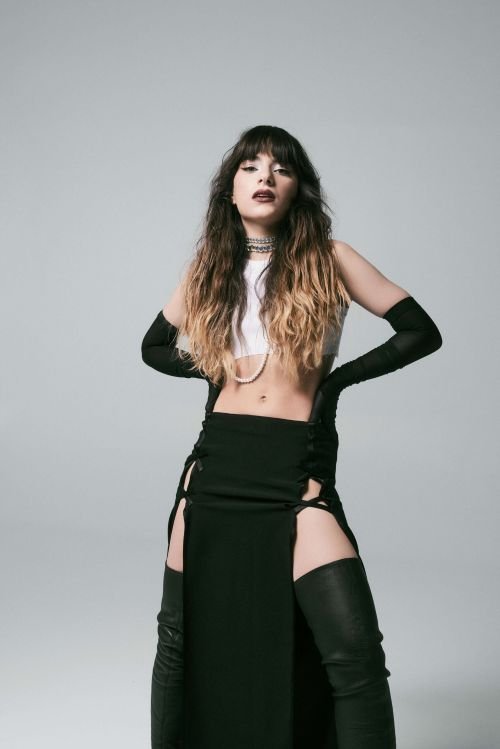
IN THIS PHOTO: Alexandra Căpitănescu will represent Romania at the Eurovision Song Contest on 16th May
Why Controversy Around the Romanian Eurovision Song Contest Entry Is Justified
__________
MAYBE some people…
will not be concerned or feel that it is irrelevant, considering how this year’s Eurovision Song Contest has been dogged by controversy. In the sense Israel is being allowed to compete and some nations, rightly, have pulled out. Israel should be banned out of a moral responsibility. It is a pity that the U.K. has not shown more backbone. It is disappointing and cowardly that we are still in the contest, considering that a representative of a nation committing genocide is being given a worldwide platform. Unfortunately, strangulation during sex is something that is prevalent. It does not always apply to women. However, largely, it is men strangling women during sex. It is an incredibly dangerous practice that can, and often does, lead to death. It is not something that should be promoted or seen as acceptable. In terms of music, addressing this is a risk. It definitely should not be included in songs in a positive way. Romania’s Eurovision Song Contest entry is Alexandra Căpitănescu. She is an incredible artist. However, her song, Choke Me, has rightly been called out for promoting a very dangerous message. This article explains more:
“Romania's entry for 2026's already controversial Eurovision Song Contest is facing criticism for allegedly promoting the dangerous practice of sexual strangulation, according to The Guardian newspaper.
Choke Me, by Alexandra Căpitănescu, includes lyrics such as "I want you to choke me" and "make my lungs explode", and has been described as "reckless" by campaigners against sexual violence.
Last year, The Guardian reported that more than half of sexually active people under the age of 35 in the UK have experienced strangulation, with more than two in five sexually active under 18s having either been strangled or strangled someone during sex. The report suggested that choking has "become part of a dangerous drift towards increased violence in mainstream pornography" and that there are consent issues around the practice in sexual encounters.
Clare McGlynn, a professor of law at Durham University and the author of Exposed: The Rise of Extreme Porn and How We Fight Back, tells The Guardian that the lyrics of Căpitănescu's song display "an alarming disregard for young women’s health and wellbeing".
"The song – and its choice by Romania/Eurovision, and promotion by those organisations – represents a reckless normalisation of a dangerous practice," she says. "It's playing fast and loose with young women's lives. The emerging medical evidence is that frequent sexual strangulation is giving young women brain damage."
However, a caption on the Romanian TV broadcaster's YouTube channel offers a different perspective on the message of the song, stating, "Choke Me speaks about the emotional pressure, doubts and turmoil that many young artists go through when trying to find their own voice and place in the world. Through an intense and deeply personal interpretation, Alexandra Căpitănescu transforms this experience into a powerful and authentic musical moment. The atmosphere of the song captures the tension between fragility and the strength to move forward, inviting the audience into a sincere emotional experience."
The Guardian says that there have been calls for the song to be disqualified.
Meanwhile, Căpitănescu has been booked to perform at the London Eurovision Party 2026 at HERE at the Outernet on April 19.
Eurovision 2026 has already attracted controversy, and international boycotts, due to Israel's participation in the contest. Ireland, Iceland, Spain, Slovenia, and Holland are neither participating in, nor broadcasting, this year's event in protest against the still on-going violence against Palestinians in Gaza, where a 'ceasefire' is in effect”.
This article from last year highlights some terrifying and alarm statistics: “More than two in five sexually active under-18s in the UK have either been strangled or strangled someone during sex, research has found, despite the serious dangers of the practice. “Choking”, as it is commonly known, has become normalised in young people’s sexual habits, the study by the Institute for Addressing Strangulation (Ifas) showed, with 43% of sexually active 16- and 17-year-olds having experienced it. More than half of people under the age of 35 have experienced it, with nearly a third wrongly believing there are safe ways to strangle someone. The survey also revealed a crisis of distress among those on the receiving end, with 36% saying they felt scared during the experience and 21% suffering dangerous physical symptoms, including dizziness and even loss of consciousness”.
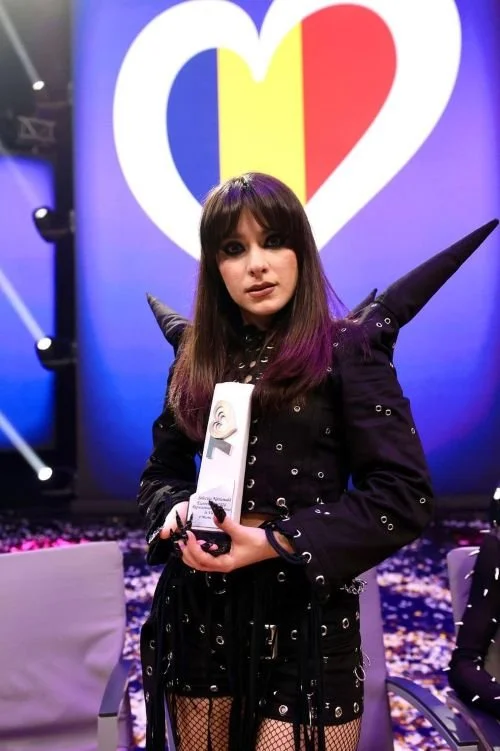
If there was a track promoting sexual confidence or something positive then it would be okay. I do think that it is reckless to sing a song where the heroine asks to be strangled. Not only will people sing this. There is always a chance that people will listen to the messages in the song and feel that it is to be followed. One might say people are not easily swayed and nobody will hear Strangle Me and actually ask to be strangled during sex – or strangle someone themselves. However, it is a strange choice of song to bring to a worldwide event. I am surprised that the track was chosen as the representative for Romania. An event like Eurovision is already facing accusations or supporting and given platform to a genocidal nation. It should look at the songs entered and ban any that are controversial or send out a bad message. The contest should be an evening of celebration and love. Maybe the organisers felt the song was tongue in cheek or jokey. However, when it comes to a subject like strangulation and a dangerous sexual practice that is costing lives and almost seen as normalised, this is not something we should allow. When it comes to young men having sex, they are watching videos and visiting sites like Pornhub and seeing women being choked and strangled. It is abuse. They see this as how sex should be and what women like. Choke Me portrays a situation where strangulation is seen as thrilling, desired and wanted. Even if Alexandra Căpitănescu is not someone who is going to be responsible for a rise in strangulation during sex, this is not a topic that should be discussed positively or even flippantly in music. If you are writing a song about strangulation, then it needs to be seen as negative and something that should be stopped. This is reverse progress. Romania are not among the favourites. Still, it is going to be shocking seeing people cheering and celebrating this song. Alexandra Căpitănescu is a great artist and someone who should be using her voice for good. There is no ambiguity in the lyrics: “All I need is your love/I want it to choke me, choke me, choke me/Born for you to control, I want you to choke me/Ch-ch-ch-choke me, ch-ch-ch-choke me/Love me, make my lungs explode/All I need is your love, I want it to choke me/Ch-ch-ch-choke me, ch-ch-ch-choke me”. Many young men and women will sing these lyrics and not understand the weight of them. The Eurovision Song Contest needs to improve and not allow songs like this to pass through. In more than one way this year, the organisers really need to…
LEARN a lesson.