
FEATURE:
Picture You
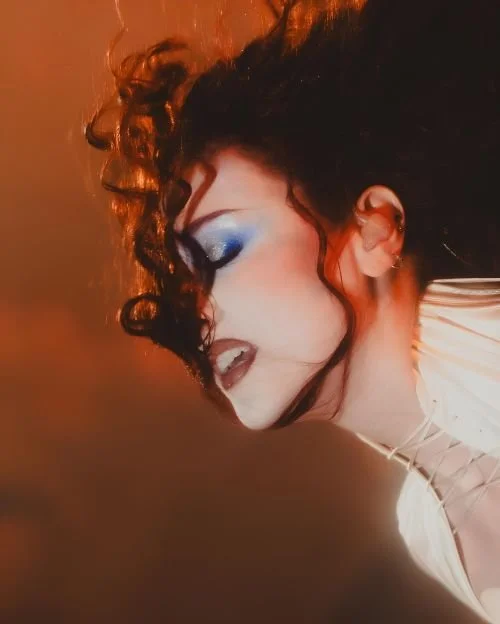
My Kink Is Karma: Why Chappell Roan’s Right to Privacy Should Be Respected
__________
BORN Kayleigh Rose Amstutz…
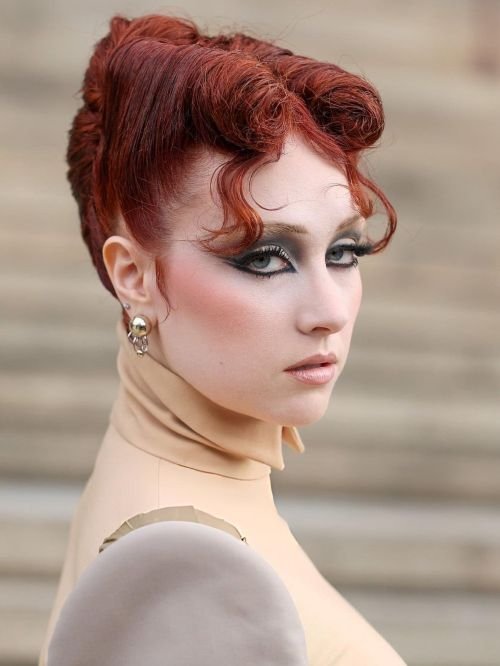
in Missouri, Chappell Roan is one of the most distinct, fascinating and talented artists we have seen over the past decade or so. Her debut album, The Rise and Fall of a Midwest Princess, was released in 2023 to critical acclaim. More than your average Pop artist – if you could call her music purely Pop -, this exceptional songwriter is an incredible live performer, icon and role model. In terms of her cultural influences, we get a glimpse of it here:
“Roan's success has led her to be called a "queer pop icon", "a superstar in the making", and a "visionary performer". Roan has been credited with leading a "lesbian pop renaissance" on the music charts and within the cultural zeitgeist. Roan's music brought the concept of compulsory heterosexuality into the forefront of mainstream pop music. She has been praised for her "unapologetic authenticity" and "expression of her queerness and femininity" in her music and live performances, inspiring young women to embrace their own sexuality. She has also been applauded for her image "rejecting the male gaze" within the pop landscape. Roan has been praised for her "punkish" attitude towards the status quo for queer performers and applauded for "rewriting the rules of lovelorn pop". Rolling Stone described watching Roan's performances as "like watching Michelangelo craft the statue of David in real time".
In October 2025, Roan stopped in Kansas City in her home state of Missouri during her "Visions of Damsels & Other Dangerous Things Tour". The city celebrated her arrival, decorating several buildings in the downtown area in pink lighting, as well as a mural painted depicting Roan's The Rise and Fall of a Midwest Princess at the city's local Hamburger Mary's. Her shows also featured local drag performers as openers.
Roan launched the Midwest Princess Project in October 2025. A nonprofit organization, it aims to uplift trans youth and to protect other LGBTQ+ communities”.
There are these artists that go beyond music and use their platform to do good in the world. To help communities, get involved in politics and make the world a better place. Chappell Roan is one of those people. There are corners of the media that list her controversies and try and paint her in a bad light. That she is this diva – which can be an empowering and positive terms when we think of amazing women – who is aloof or rude. Someone who does not want fame and is horrified when her boundaries are violated and her privacy is threatened, this unfair impression that she is prima donna. This is the same sort of crap that has dogged women for decades. This internalised misogyny and sexism that Madonna had to face from the early days of her career. If a woman in music has an opinion, does not do what is expected of them or does not chase fame or the lure of the press, then they are seen as icy, unpleasant, cruel and this horrible person. I have spoken about Chappell Roan in the context of Kate Bush. Both artists are hugely inventive and have this huge L.G.B.T.Q.I.A.+ fanbase. Innovators and multi-talented artists, Kate Bush also says she never wanted to be famous. She even booted photographer Robin Kennedy, who later remarked, "I didn't think that anyone so small would be able to kick so hard". The altercation was considered out of character and was reportedly a reaction to a comment made by the photographer. That event in 1991 was totally justified. This takes me to Chappell Roan and how she takes to the press. A recent example of her turning the camera on photographers harassing her whilst she was trying to enjoy dinner, there was a divide in opinion. Some saying that she is high-profile and a popular artist who does not get to pick and choose what attention she gets and relies on photographers to get exposure and promote her work. There are those who say that artists should be allowed privacy and should not have to take it in their stride when the gutter press violate their requests for privacy. I obviously fall heavily down in the latter camp. I shall come to that. Artists like Chappell Roan should not have to face criticism if they turn the lens on the paparazzi. Doja Cat, whilst revealing her borderline personality disorder diagnosis, defended Roan and said, rightly, how she did not hurt anyone and had every right to set personal boundaries. In 2024, Chappell Roan was praised by fans after she yelled at a photographer who swore at her on the red carpet at the MTV Video Music Awards. That same year, Roan called out a sect of creepy fans who harassed her family and were overstepping boundaries.
It is something that women face more than their male peers. This harassment, abuse and fans’ obsessive and inappropriate behaviour. Constantly under the spotlight and glare of the media, it is bad enough that they have to work tirelessly and tour for ages in this exhausting reality and, on top of that, have to fends off press intrusion and their fans being unsettling and abusive on social media. Those getting too close and making them feel uncomfortable. I am going to come to a recent article that highlighted the recent incident of Chappell Roan filming the press when they tried to film her. Karma, it seems, is an absolute bitch! However, in 2024, The Face were quite precinct in their choice of words when they said how Chappell Roan is “staring into the abyss of superstardom”. It does very much seem like that. Artists wanting to release music and be themselves who also want to set boundaries. Required to be all over social media, tour around the world and always be seen and active, it does more damage and is like an abyss rather than it being pleasurable and beneficial. Even though there are obviously positives, the realities of being a popular artist seems quite toxic. An experience even worse for popular women in music:
“Yes, Chappell Roan has been talking to all the girls: Gaga, Charli, Sabrina, Lizzo, Katy. “I just got coffee with Lorde and Phoebe [Bridgers],” she says with a self-effacing grimace that indicates she knows how that sounds. “Tomorrow, I’m going over to see Lucy Dacus [of Bridgers’ side project boygenius].”
Everything – and by “everything”, we mean the femininomenonal ascent of Chappell to the summit of Pop Mountain, Summer ’24 – started in early spring, when the Missouri-born singer-songwriter began shooting up the mainstream spine of awareness via an opening slot on the North American leg of Olivia Rodrigo’s Guts tour.
As spring gave way to Pride and festival season, a storm of viral performances from Coachella,The Late Show with Stephen Colbert, MTV and NPR’s Tiny Desk online gig series flooded social media with clips of Chappell performing her now inescapable queer anthems, including Good Luck, Babe!, and her music quickly began scaling the global charts.
To put things into context: last September, she dropped her debut album, The Rise and Fall of a Midwest Princess, to little fanfare beyond her cult following. This August, it climbed to Number One on the UK Albums Chart – almost a full year after its original release.
At first, back in the spring, she didn’t understand why huge stars such as Gaga and Charli were suddenly checking in to see if she was OK. “I was like, ‘Mmm, this isn’t that big. Everyone’s so dramatic!’” she says. Now, Chappell recognises the pop girls’ protectiveness as a lifeline. “They were immediately, immediately supportive,” she says, smacking her palms together for emphasis. “Immediately.” Her voice grows taut, almost aggressive, from a rush of emotion before melting back into the quiet admission of an overwhelmed 26-year-old: “It’s been so amazing, because I’m very scared and confused.”
I’m curious about the performance persona of Chappell Roan – which she’s often described as her drag project – and whether it stems from any specific childhood inspiration. As anyone who’s attended sleepaway church camp worship night can attest to, the American Bible Belt has quite the theatrical tradition. But she minimises the early influence of her Christian upbringing and even modern drag culture as subjects of direct study. “I didn’t start watching Drag Race until last October! I was really confused about the ‘reading’. Like, that’s so mean!”
It is, then, difficult to extract a sense of what young Kayleigh was like and whether this streak for pageantry was in her all along. Wasn’t she at least the type of kid who put on cartwheel-inflected dances to Britney Spears in the family basement? Her whole face softens at the assumption. “I wish I was that girl,” she says. In reality, little Kayleigh was a “problem child”, constantly fighting, kicking holes in walls and going in and out of therapy.
Growing up, she felt isolated, not only within the rural Midwest but also her family and her own brain – she was finally diagnosed with bipolar II in 2022. “All I want in life is to feel like a good person, because I felt like such a bad person my whole life – the worst kid in the family, always so out of control and angry,” she says. “It’s been really hard to forgive, one, my parents for not knowing how to handle that correctly. And two, myself, for being like, dude, you were unmedicated, going through puberty and refused to believe you were anxious or depressed.”
The project of Chappell Roan, then, can be more wholly understood as a therapeutic experience, not only for fans who might have an idea of what those emotions feel like, but also for the artist’s younger self. “Now, I am the girl who does the Britney routine; I am the girl who plays dress-up. I’m making up for that time. When I realised that I should dedicate my career to honouring the childhood I never got, it got big quick.”
“Big” as in becoming a de-facto festival headliner in the US, touring through Europe this autumn and, hopefully, nabbing some music trophies. Nominations in multiple Grammy categories, including Best New Artist and Song of the Year, seem like a no-brainer. “My mom would love to go to the Grammys or the Brits,” she says. But Chappell is, at best, iffy on the whole awards thing. “I’m kind of hoping I don’t win, because then everyone will get off my ass: ‘See guys, we did it and we didn’t win, bye’! I won’t have to do this again!”
What’s more important to Chappell is the long game. “I feel ambitious about making this sustainable,” she says. “That’s my biggest goal right now. My brain is like: quit right now, take next year off.” Her mouth forms a small, tense line again. “This industry and artistry fucking thrive on mental illness, burnout, overworking yourself, overextending yourself, not sleeping. You get bigger the more unhealthy you are. Isn’t that so fucked up?” It’s a problem within the music industry, she notes, but also its attendant attention machines – TikTok, Instagram, the entire internet – which all feed on manic self-compulsion. “The ambition is: how do I not hate myself, my job, my life, and do this?” she says. “Because right now, it’s not working. I’m just scrambling to try to feel healthy.
The Kayleigh side of her still craves the idyll of anonymity – off-hours, she’s been caught by fans practising somersaults in Central Park and racing shopping carts in Ikea. But such bursts of spontaneity are getting rarer. These days, she almost always has to wear a wig in public. She’s even had to let her therapist go, after realising they were no longer equipped to deal with her rapidly accelerating fame.
And it’s getting scary, actually. There are now paps, scalpers and obsessives who buy plane tickets just so they can wait at the gate for when she lands. For every unicorn of a young star with the power to command gigawatts of attention, there’s a seedy microeconomy sprouting around and glomming on”.
I am not sure if there is a second album coming from Chappell Roan at some point. She will take her time and release music when she is ready. I love The Rise and Fall of a Midwest Princess, and instantly knew that this was a very special artist. I hope that she will forgive me comparing her to Kate Bush – not that she will be reading this feature! -, but it is a high compliment. Something about how she is a genius that is so different to everyone around her, yet is reliable and widely adored. A hugely positive role model and force for good, Chappell Roan played in Chile yesterday (15th March) and has a date in Brazil on 21st as part of a Lollapalooza double. This recent case of Chappell Roan being stalked by the press when she was going about her business. Even though it was during Paris Fashion Week, Roan had asked for her boundaries to be respected. The reaction from some was unhelpful. Boy George saying that she should own her fame. Practically telling her to smile and get on with it, no artist should have to deal with press harassment. He said this: “The trick is to own your fame. yes, it’s annoying at times but so is being ignored and told [you’re] a ‘has-been. Life is always now and I think Chappell looks great but cheer up girl. The world is at your feet stop kicking it! It takes so much more time to say no to a picture or a signature. Boundaries are boring. Break them with the magic of kindness!”. I think that Boy George is wrong. This idea of killing with kindness is not helpful when it comes to press and the fans! Artists should not have to have boundaries broken and be thankful they are being noticed! What is notable is this clear misogyny. People on social media branding Roan unlikable and hostile because she took a stand and defended her privacy. Male artists not exposed to the same sort of judgement and criticism. This Vogue reaction piece raises some interesting observations and truths:
“Earlier this week, Chappell Roan was filmed in Paris during fashion week filming the paparazzi with her phone. “I’m just trying to go to dinner, and I’ve asked these people several times to get away from me,” said Roan, 28, while swivelling her phone about in a circle, annoyed. “These are all the people that are completely disregarding my boundaries.” It’s not the first time the pop star has expressed her discomfort with the more parasitic side to fame. “Women do not owe you a reason why they don’t want to be touched or talked to,” she wrote in 2024 as part of a longer statement.
While not wanting to be hounded by paps or fans sounds fairly straightforward, Roan’s reaction appears to have gotten under a lot of people’s skin – my own TikTok FYP is currently full of fans and critics alike branding her “unlikeable”. The main crux of the argument seems to be this: if you do not enjoy the mechanics of fame, then why partake in the ecosystem? Adele, for example, manages to largely avoid the limelight by rarely attending pap-heavy spots. She has described herself as living an “ordinary life”. Roan, on the flip-side, went out for dinner at the height of fashion week, following a string of front row appearances with her equally famous pals.
I get the argument. Being worth multi-millions, and having your art consumed by the masses, often requires a Faustian bargain – one in which you must choose between being hassled nonstop or having to navigate public life like someone involved in professional espionage. But I also think it’s worth interrogating why this deal with the devil needs to exist. Is it possible that the boundary-crossing nature of the tabloids, and now also fans with camera phones, has become so normalised that it’s hard to imagine a world in which we push against it? Why shouldn’t Chappell go for dinner during fashion week without being harassed? Is that really such an insane request?
As to her being called “unlikeable”, I wonder whether there is indeed even a “right” way to be famous. Celebs are lambasted for saying or doing too little (Beyoncé, Harry Styles, Emma Watson). Or, like Chappell, they’re criticised for saying or doing too much. They’re rinsed for being nepo babies – though when a working class artist does manage to crawl their way to the top, they’re often torn to shreds regardless. Celebs are expected to be politically engaged and eloquent with it, while also not saying anything that might alienate fans. And while I don’t prescribe to the notion that artists are above critique – nor that they shouldn’t be politically active (art is inherently political) – I do think there needs to be some realism when it comes to our expectations of people who are, like us, simply human.
If I were famous, I know for a fact that I’d behave in more “unlikeable” ways than Chappell Roan (and, for the record, I don’t think any woman, famous or otherwise, needs to be likeable). I’d probably freak out on camera so often that I’d be turned into a reactive meme. I’d likely say the wrong thing, more than once, and then have to deliver a Notes app apology, which would then be dissected on TikTok for being so tone deaf”.
I refute the idea that major artists should have to avoid certain events and spots because they should be expected to be photographed endlessly. If any artist asks to be left alone then they should be! Whilst that might seem terrible naïve, it is plain harassment and, if you feel an artist has fewer rights than an average person in that regard, then you have to ask yourself some searching questions. Modern artists are allowed to record, tour and follow their dreams without having to deal with obsessive fans, disrespectful press, unhelpful and imbecilic music peers and attacks online. Support from Doja Cat and other corners is encouraging, though you feel Chappell Roan will always be labelled as awkward, demanding, unlikable and this egotistical and difficult diva. How many women through the music years have had to deal with that?! They can shrug it off and power through, but why the hell should they have to?! They should not have to avoid public events because they face being harassed by the press or not being able to have dinner in private. All of this should raise questions about artists today and the pressures they face. The mental health toll of exhausting touring and having to churn out music. Dealing with abuse, harassment, misogyny and threats online. Followed by the press and always judged on what they say (or do not). Chappell Roan is an amazing artist and human who does so much good in the world. She should be treated with respect and dignity. However, when she is not and she reacts, there is this criticism and judgment. Again, you can feel this endless, internalised and almost normalised double standard and misogyny. You’d hope lessons will be learned and the press and fans alike will give Roan the space and privacy that she rightly deserves. However, given the nature of celebrity and how everyone thinks they have the right to do and say what they like to artists that…
WE will be back at square one!