
FEATURE:
Kate Bush: Them Heavy People: The Extraordinary Characters in Her Songs
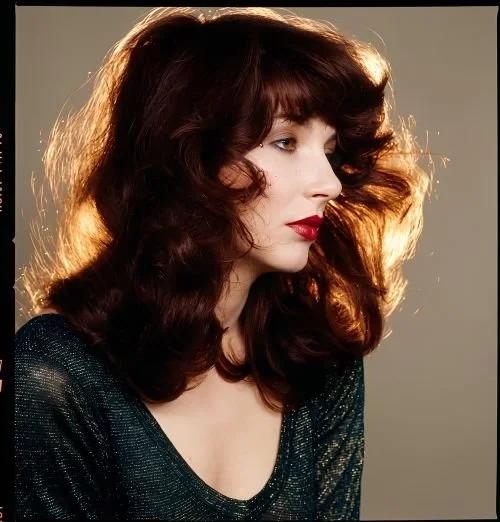
IN THIS PHOTO: Kate Bush in 1979/PHOTO CREDIT: Gered Mankowitz
Kashka (Kashka from Baghdad)/Adolf Hitler (Heads We’re Dancing)
__________
FOR this run of features…
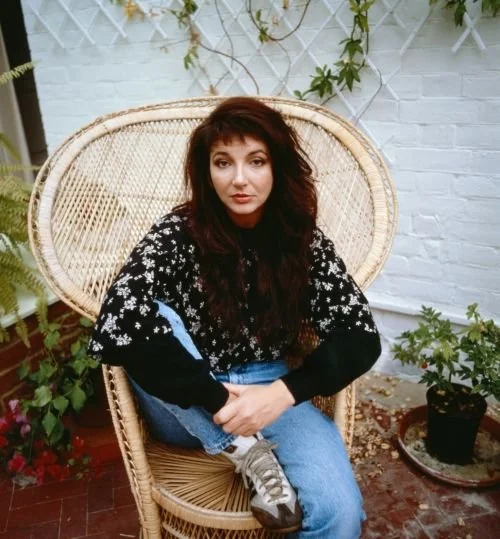
IN THIS PHOTO: Kate Bush at her home in Eltham, London on 13th September, 1989/PHOTO CREDIT: Kevin Cummins/Getty Images
I am joining together characters mentioned in Kate Bush songs. The first I am mentioning is from 1978s Lionheart. I may not have too many opportunities to write about characters from this album, as I think I have covered most. The same with the second album I will come to soon. I am (slowly, understandably!) working my way to an evil historical figure that was mentioned in a deep cut from 1989’s The Sensual World. I am beginning with the eponymous Kashka from Kashka from Baghdad. I did write about this song last year, so there may be a bit of repetition. One of the most interesting facts around this song is that Kate Bush performed it on Ask Aspel in 1978. I will come to an article written about Kashka from Baghdad. Subjects around L.G.B.T.Q.I.A.+ representation and possible cultural appropriation. It is fascinating that Bush wrote this song and what inspired it. The Kate Bush Encyclopedia highlight an interview where Kate Bush talked about Kashka from Baghdad:
“That actually came from a very strange American Detective series that I caught a couple of years ago, and there was a musical theme that they kept putting in. And they had an old house, in this particular thing, and it was just a very moody, pretty awful serious thing. And it just inspired the idea of this old house somewhere in Canada or America with two people in it that no-one knew anything about. And being a sorta small town, everybody wanted to know what everybody what else was up to. And these particular people in this house had a very private thing happening.
Personal Call, BBC Radio 1, 1979”.
I am going to cover unusual and unique instruments providing nuance and layers to Bush’s music. I will also move to Kate Bush and the L.G.B.T.Q.I.A.+ community, in addition to the reasons why Lionheart needs to reappraised and discussed. This was a song Kate Bush wrote in 1976. As a teenager, another example of her maturity and curiosity! Not that there were too many contemporaries writing at such a young age. However, in the 1970s and 1980s, a lot of the Pop mainstream was filled with commercial songs about love and relationships. Although there were exceptions, there were few artists breaking from that norm and convention.
Not only does Kashka from Baghdad take us away from the traditional heteronormative narrative of Pop music. We also visit characters away from the U.S. and U.K. Rather than Bush writing a song about a same-sex couple in the U.S., she wrote about a gay couple in Iraq. When Bush wrote the song, Iraq was experiencing a high point in its modern history, characterized by rapid economic development, industrialisation, and the consolidation of power by Saddam Hussein, who was then Vice President under Ahmad Hassan al-Bakr. Following the 1975 Algiers Agreement, which temporarily resolved border disputes with Iran and ended support for Kurdish rebels, the government in 1976 focused on internal stability and regional influence. By 1978, Iraq under the de facto leadership of Saddam Hussein (as deputy to President Ahmed Hassan al-Bakr), experiencing a period of high oil-driven economic growth while aggressively consolidating political power and shifting away from its alliance with the Soviet Union. The nation in the news perhaps for bad reasons. In November 1978 (when Lionheart was released), the 1978 Arab League summit was held. It was a meeting held between Arab leaders from 2nd and 5th November in Baghdad as the 9th Arab League Summit. The summit came in the aftermath of Egypt's Anwar Sadat's unilateral peace treaty with Israel. In terms of public opinions and perceptions of Baghdad and Iraq, there might have been a lot of negativity. People only knowing about the people because of conflict and political tensions. Kashka from Baghdad never names Kashka’s partner. “At night they're seen/Laughing, loving/They know the way/To be happy”. There is this feeling that it is illicit. They cannot be seen in the daylight. The silhouettes seen at the window under the moonlight. A neighbour looking across. The lady who rents the room knows what is happening. Perhaps taboo and dangerous for this gay relationship to be brought to larger attention. “'Coz when all the alley-cats come out/You can hear music from Kashka's house”. Kashka’s house seems like a place of love and joy. It was the case in 1978 as it is now. So much of the Middle East has such regressive and Stone Age attitudes towards L.G.B.T.Q.I.A.+ people. As we see here, those in L.G.B.T.Q.I.A.+ relationships are open to stigma, punishment and imprisonment: “individuals are subject to criminal penalties under the 2024 law making homosexual relations punishable by up to 15 years in prison with fines and deportation; the 2024 law also criminalizes and makes punishable by prison time promoting homosexuality, doctors performing gender-affirming surgery, and men "deliberately acting like women”.
There were very few songs released in 1978 that were discussing L.G.B.T.Q.I.A.+ people. I want to explore this further. Kate Bush very much standing out or not repeating what was seen as popular and desired at that time. This article provides some interesting personal observations from Michael Langan:
“This is an album I wasn’t very familiar with, being immersed in The Kick Inside, Hounds of Love, and particularly The Sensual World (still my favourite), so I had the lovely experience of discovering something new from her, and a whole new story opening up from him. Henrique told me how he’d heard the first lines, “Kashka from Baghdad lives in sin, they say, with another man,” when he was a teenager and they’d awakened something in him that seemed hopeful and hidden, exotic and strange. As we listened to it together the song’s story unfolded, as told by a curious observer, of a reclusive gay couple; “Old friends never call there. Some wonder if life’s inside at all … But we know the lady who rents the room. She catches them calling a la lune.” But they’re not tragic figures these gay men, instead they engender love and hope; “At night, they’re seen laughing, loving. They know the way to be happy.” The narrator’s interest intensifies into longing, perhaps for a life different from the mundane, that Kashka and his lover personify. “I watch their shadows, tall and slim, in the window opposite. I long to be with them. ‘Cause when all the alley cats come out, you can hear music from Kashka’s house.”
There’s some brilliant footage of Kate singing this song live on Ask Aspel. (Click here to watch the clip.) Those of us of a certain age will remember that, before iplayer, before video recorders even, kids would write in to Michael Aspel at the BBC and ask him to show clips from TV programmes that we’d missed or were desperate to see again. It amazes me to think that a song about a gay relationship was performed live on children’s television in those days. It’s possible that I even saw it and didn’t twig, but that somehow it seeped into me by osmosis”.
At a time (1978) when Punk was at the forefront, Kashka from Baghdad was hugely unusual in terms of its sound and themes. Not only was it unusual for a same-sex relationship to be represented in popular music. Setting it in Baghdad in a period when there was conflict in Iraq and homosexuality was illegal then, this was such a bold and important song. One that does not get enough attention and discussion.
I will end with Ask Aspel, the unusual instrumentation in the song, and the huge merits of Lionheart. I am coming back to a compelling and deep article from Dreams of Orgonon and their take. Whilst heterosexuality is almost subtextual in many of her songs, Kashka from Baghdad removed those layers. However, there are problematic elements to Kashka from Baghdad:
“Any fulfilling discussion of Kate Bush will inevitably detail her relationship with queerness and queer fandom. She’s influenced queer artists such as St. Vincent, Anohni, and Tegan and Sara. You could spin a whole book out of why this is — Deborah Withers has essentially done so with their seminal text Adventures in Kate Bush and Theory. Suffice it to say that Bush has long fostered LGBT-positive readings of her work with her engagement of camp and glam, her crossing of gendered lines, and her general positioning as an outsider. There’s no shortage of queer friendliness in her music — her most famous single of the Eighties demands a trans reading.
There is, of course, something to be made of the racial exoticization at play here. Kashka is first and foremost defined by his nationality. So the fetishization he receives is troubling to say the least. He is represented rather than seen. Bush has never been great on race issues, and this is just one example of that. Nonetheless, it’s intriguing to note exactly what his relationship with race (and by extension class) is. Kashka is an immigrant — he’s not in Baghdad but from it (although his un-Anglicized name, Qashqai, has more to do with Iran than Iraq). Bush’s use of “we” suggests that Kashka is the subject of gossip (“we know the lady who rents the room/she catches them calling a la lune”). Having pinpointed her primary influence for the song as an American detective show (which she’s frustratingly not named), it’s clear “Kashka from Baghdad” is something of a mystery. It’s a whodunnit with the emphasis on whodunnit. More pertinently it’s a fantasy, one about lust.
Homosexuality is a spectre that haunts the song. It’s never allowed to appear onstage. It’s hearsay or it’s a shadow on the wall, something nobody in the song sees up close (“old friends never call there/some wonder if life’s inside at all”). It’s the stuff of gossip and its pleasure comes from its illicitness. Bush clearly has no problem with the illicit. In fact, she clearly considers it a good thing. But she still falls into the trap of speaking of it in hushed tones, something naughty that must be kept behind closed doors rather than pushed into the light.
This makes her treatment of Kashka’s gay life as a matter of secrecy distressing. The polite heterosexual audience needs its eyes shielded from the gay sex it’s teased with. Yes, remaining in the closet is a safety measure for many if not most gay people. But it takes a severe toll on one’s mental health. In “Kashka” the closet is a place where great, magical events happen (“at night they’re seen laughing”). The difficulties of closeted life don’t enter the equation. Bush reduces Kashka and his partner to an instrument of pleasure and titillation”.
In my previous feature about Kashka from Baghdad, I argued the point whether the song was ingenuine because Kate Bush is straight and the gay relationship was never truly explored and executed in the way it should have been. I noted how it was a brave and brilliant song too. One that is bold and taboo-addressing. However, there is this balance between it being an empathetic representation or a ‘ghettoised’ view of queer love kept behind closed doors. I shall discuss further Kate Bush’s continued influence and importance in the L.G.B.T.Q.I.A.+ community. I do think that her heart was in the right place. I am fascinated to see who she visualised as Kashka. She did perform the song as part of 1979’s The Tour of Life, though the story was never acted out on stage. It was amazingly ballsy that Bush performed this song for Michael Aspel in 1978. She originally wanted to perform In the Warm Room, though it was seen as sexually explicit. A song about two gay lovers was deemed less controversial and appropriate for a young audience! It makes me wonder whether there was a certain dismissal of Bush’s music and whether people paid attention to her lyrics. 1978 was a year when Bush was being parodied. Everyone from Faith Brown to Pamela Stephenson was taking her off. A song like Kashka from Baghdad ripe for ridicule and piss-taking. However, there is so much to commend about Kashka from Baghdad. Another example of Bush being influenced by T.V. Like Wuthering Heights and a BBC adaptation, Kashka from Baghdad started life after she watched a U.S. detective series. One of the most notable elements of the Lionheart gem is the strange instrumental elements. Paddy Bush playing Strumento da Porco, mandocello and panpipes. The Strumento de Porco is “a variety of the psaltery, a stringed instrument of the zither family. It was originally made from wood, and relied on natural acoustics for sound production”. The mandocello is “is a plucked string instrument of the mandolin family. It is larger than the mandolin, and is the baritone instrument of the mandolin family”. Few artists were breaking beyond the drum-guitar-bass dynamic. I think a lot of Punk and mainstream music in the late-1970s lacked complexity or depth. Kashka from Baghdad has this sense of the unusual and exotic. If some feel that there was some cultural appropriation in the song; Bush and her problematic approach to race is reflected here. The composition and musical dynamic of Kashka from Baghdad is extraordinary. I do feel like Kashka is one of Bush’s most interesting characters. Whilst reserved to home and the shadows, he does provoke conversations and wider discussions.
Prior to moving to a dictator mentioned in a song from The Sensual World, it is worth noting how Lionheart remains underrated. It turns fifty in 2028, though it will not get the same celebration as The Kick Inside. That turns fifty in February 2028. Bush’s debut album more acclaimed and revered. Underestimated and lacking proper love, the sophistication of the songs should be commended. The reviews around Lionheart were mixed to negative. People thinking Bush would create a follow-up to The Kick Inside that was the same. Bush caught in this awkward position. Forced almost into quickly following up The Kick Inside, she was being ridiculed and parodied. That temptation to break away from her debut album. However, its immense popularity and commercial success also would have made her feel the public at least wanted more of that. Recording in France and with only three new songs written for Lionheart, it is incredible that she released something so extraordinary. Nearly fifty years after its release, we do need to revisit Lionheart. It is a fascinating album. It is that bridge between the debut album and where Kate Bush was heading. Even though Bush liked Lionheart when it was completed, she did put distance between it shortly after. That feeling it was not as she wanted or did not have enough time. I think that there are three or four songs on that album that sit alongside Bush’s best. Kashka from Baghdad among them. Wow and Symphony in Blue right up there. After her second album, Bush did not want to head back into the studio. Perhaps EMI would have pushed her back in to sort of ‘undo’ some of the negativity towards Lionheart. Instead, Bush worked on The Tour of Life and released Never for Ever in 1980. That live exposure and experience benefiting the sound and songwriting scope. Bush co-producing with Jon Kelly. I do feel like Lionheart is a remarkable album where Bush’s songwriting so refreshing and different to what was around her.
This may be the most controversial character Kate Bush has included in a song. Another song I covered recently, Heads We’re Dancing is a track beloved by Charli xcx. Before addressing a few subjects related to Heads We’re Dancing, Kate Bush discussed the background and origin of this track:
“It’s a very dark idea, but it’s the idea of this girl who goes to a big ball; very expensive, romantic, exciting, and it’s 1939, before the war starts. And this guy, very charming, very sweet-spoken, comes up and asks her to dance but he does it by throwing a coin and he says, “If the coin lands with heads facing up, then we dance!” Even that’s a very attractive ‘come on’, isn’t it? And the idea is that she enjoys his company and dances with him and, days later, she sees in the paper who it is, and she is hit with this absolute horror – absolute horror. What could be worse? To have been so close to the man… she could have tried to kill him… she could have tried to change history, had she known at that point what was actually happening. And I think Hitler is a person who fooled so many people. He fooled nations of people. And I don’t think you can blame those people for being fooled, and maybe it’s these very charming people… maybe evil is not always in the guise you expect it to be.
Roger Scott, BBC Radio 1, 14 October 1989”.
The Sensual World was released in 1989. Fifty years after the start of World War II. That decision to use Adolf Hitler in the song. The nature of appropriateness of the song. Some would read Heads We’re Dancing as a glorification or romanticisation of one of the worst people in history. I think Kate Bush wrote Heads We’re Dancing around 1987. It has personal origins: “But it was all started by a family friend, years ago, who’d been to dinner and sat next to this guy who was really fascinating, so charming. They sat all night chatting and joking. And next day he found out it was Oppenheimer. And this friend was horrified because he really despised what the guy stood for”.
When discussing Kashka from Baghdad, I discussed the context of releasing that song in 1978 and what was happening in Iraq. In 1989, major global conflicts were defined by the end of the Soviet-Afghan War, the U.S. invasion of Panama, and the beginning of the Liberian Civil War. The year year saw the ‘Revolutions of 1989’, which effectively ended communist rule in Eastern Europe and brought down the Berlin Wall. It was a year when Germany was being unified and divisions removed. Recording a song about a dictator who divided Germany and created such evil during World War II, I do wonder how people perceived the song in 1989. You can understand why Bush might have felt uncomfortable talking about the song. How she would not write about it now. Whilst not a political or protest song, it is also not showing Adolf Hitler in a positive light. She recalled a dream a friend had and she adapted that for a song. Essentially, this is a song discussing a dream. Bush did write about other historical figures. Joan of Arc is one example (immortalised in Aerial’s Joanni). However, few of her songs focused on evil or desperate people. Many of her songs courted some controversy because of some of the lyrics or inspiration. The Dreaming’s title track. The Infant Kiss from Never for Ever. If Heads We’re Dancing seems problematic or controversial on paper, it does raise interesting discussion points. The representation of dreams in songs and what certain images reveal. Pitchfork mentioned Heads We’re Dancing in their review of The Sensual World: “Even its most surreal songs are rooted in self-examination. “Heads We’re Dancing” seems like a dark joke—a young girl is charmed on to the dancefloor by a man she later learns is Adolf Hitler—but poses a troubling question: What does it say about you, if you couldn’t see through the devil’s disguise? Its discordant, skronky rhythms make it feel like a formal ball taking place in a fever dream, and Bush’s voice grows increasingly panicky as she realizes how badly she’s been duped. As far-fetched as its premise was, its inspiration lay close to home: A family friend had told Bush how shaken they’d been after they’d taken a shine to a dashing stranger at a dinner party, only to find out they’d been chatting to Robert Oppenheimer”.
There is this acting performance happening in the song. How it is almost like a film scene. Bush, as the girl/woman in Heads We’re Dancing, being approached in 1939 by a man who she did not recognise. This idea of The Devil approaching her. Almost caught in this trap and dancing with Adolf Hitler, it is a fascinating visual. Even if she could never release a video for this song, you do immerse yourself in the track and are stood by the side and watching things unfold. Whilst not trying to be comical or overlook Hitler’s atrocities, it is this real-time unfolding. Someone duped. That Pitchfork question where they ask what it says about a person if you cannot see through the disguise. Heads We’re Dancing raises psychological questions. There is an article that raises some themes I want to explore. Kate Bush said in an interview how Adolf Hitler duped and fooled a nation (Germany) and brainwashed them. It would be forgivable if a woman was fooled by Hitler if he approached her at a dinner. What is remarkable is how Kate Bush wrote into songs these characters and subjects that could be seen as jokey or mishandled by others. She has written from the point of view of a foetus (Breathing). Bush turned into a donkey for The Dreaming’s Get Out of My House. She talked about a night of passion with a snowman (50 Words for Snow’s Misty). As this article examines, The Sensual World documents sensuality, growing and exploring passion. Across the album, there are tales of love, break-up and pregnancy/childbirth. Although fantastical, Heads We’re Dancing is another song that examines sensuality and passion - albeit from a darkly comical or unusual angle:
“Taken in this way, Heads We’re Dancing is actually not quite the outlier on the The Sensual World that may be first assumed. The whole album deals with the trajectory of growing and manoeuvring through a world of sensual experiences. It charts the highs as well as the lows, where the joyous imagining of Molly Bloom entering our three-dimensional world is contrasted against tales of dangerous obsession (A Deeper Understanding) and of desires being snuffed out by reality and leading to heartbreak (Never be Mine). A lyric on the latter, a confession of “I want you as the dream, not the reality’’, reflects an important component of The Sensual World’s vantage point on sensuality — that of recognising the barrier between fantasy and fact, of desires and realities, that takes on a new relevance when applied to Heads We’re Dancing. The song embodies that horrifying moment where pleasures become pain — perhaps where we recognise that our habits are dangerous, our vices degenerative, and that now it is too late to change and the damage is done. Here it is presented with extremity — being seduced by a fascist dictator, on the eve of a world war — but it can be easily scaled down to represent any person, thing or idea that enters into your life and seduces you into acting with careless abandon. As Bush states above, Hitler stands in as a perfect metaphor for destructive behaviours or obsessions because he was so seductive to the German public, and this was so intrinsically tied to his villainy — 1939 was both the year Hitler threatened the extermination of ‘the Jewish race in Europe’ in the Reichstag, and the year he was voted Time Magazine’s Man of the Year”.
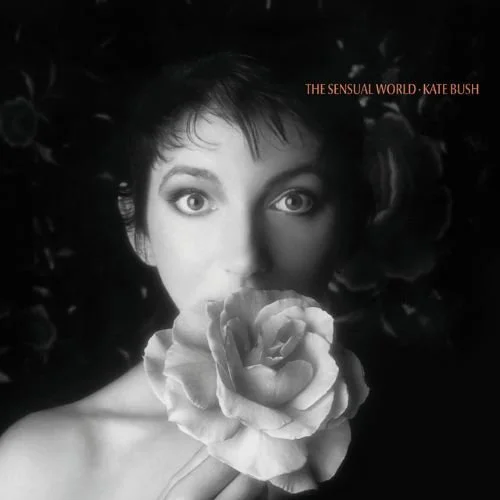
Many love songs talk about being attracted to bad people. Having your heart broken. These toxic people. Whilst a definite extreme, could an artist today ever write a song where, say, Donald Trump replaced Adolf Hitler? This idea of someone evil involved in this wooing and seduction?! It would be interesting to discuss. That idea of a bad or wrong person coming into your life and leading you down a bad path or leading you to bad decisions. Rather than Bush talking about an ordinary person, she took a historical figure. However, there is still something relatable about Heads We’re Dancing. I have written before how Bush was hugely positive towards men. Even if she would have been in relationships that broke down, I am not sure she ever dated anyone that was duplicitous or damaging. Her long-term relationship with Del Palmer broke down after 1989, though they remained friends and worked together right up until 2011 (Palmer died in 2024). It is also worth noting how a lot of modern music avoids political figures. At a time when there is political unrest around the world and we have these corrupt leaders, you do wonder whether artist should address this more. Following on from the passage quoted above, these points were raised:
“But it is impossible to listen to it today without giving thought to its political ramifications, and its more overt commentary on the seductive powers of corrupt politicians. In the UK we are grappling with a government fronted by a man who won his position masquerading as a lovable buffoon, and sold as a preferable alternative to an idealist who was framed as a dangerous radical. Bush often tackled political subject matter at the beginning of her career (the aforementioned anti-nuclear war centric Breathing, or the critique of militarism in Army Dreamers), but by the time of The Sensual World her political commentary was mostly smoothed out, replaced by more internal, emotional affairs. Heads We’re Dancing may in fact stand as her last overtly political parable, and it retains all of the bite of its predecessors”.
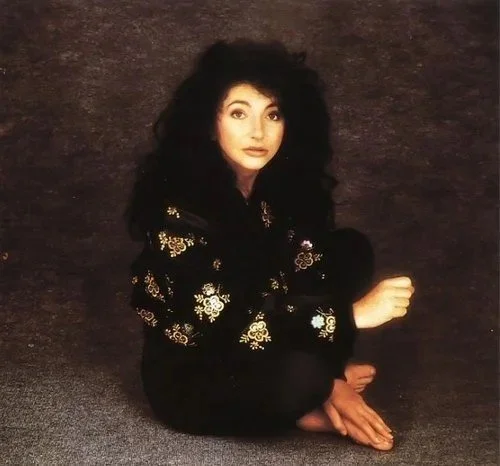
IN THIS PHOTO: Kate Bush in 1989/PHOTO CREDIT: Guido Harari
Kate Bush would have been conflicted about including Heads We’re Dancing on The Sensual World. It does stand out from the other songs in terms of tone and its lyrics. It does raise that question of human nature and whether we would see true evil if it was standing in front of us. How these diabolic people seduce entire nations. We are seeing this now across the world. Especially in the U.S. In an article I have sourced before, they ask whether we could see true evil. That idea that, if faced with Hitler in 1939 and knowing how evil he was, could you justify killing him? A song that is truly engrossing and thought-provoking:
“Who would be the ultimate figure when it comes to envisioning the most evil person to ever exist? One that says, “If the coin lands with heads facing up, then we dance!” in a softly-spoken voice, with no indication whatsoever that he might be harbouring some big, dark secret? For Bush, Adolf Hitler was the only person to fit the role. “The idea is that she enjoys his company and dances with him and, days later, she sees in the paper who it is, and she is hit with this absolute horror – absolute horror,” she sad. “What could be worse? To have been so close to the man… she could have tried to kill him… she could have tried to change history, had she known at that point what was actually happening”.
The Sensual World is another Kate Bush album that is not as lauded as it should be. Heads We’re Dancing is one of the deeper cuts. Never released as a single and never performed live, I do feel it is one of the most relevant tracks. How it applies to today and conversations around world leaders. That braveness of Kate Bush when it came to song inspiration. Always intrigued by flawed, dark and unusual figures, the song is filmic. You can see songs played out. Bush narrating this situation where this man approaches a woman and if a coin toss lands heads-up, then they dance: “They say that the Devil is a charming man/And just like you I bet he can dance/And he's coming up behind in his long/Tailed black coat dance/All tails in the air/But the penny landed with its head dancing”.
Before wrapping up, I want to discuss Kate Bush songs that are fantastic and worthy but could not get played on the radio. I spotlighted this when I assessed The Infant Kiss recently. A song that could be seen as a woman attracted to a child, it is not about that at all. However, if played on the radio, people can misunderstand and it could see Bush criticised. Heads We’re Dancing rarely or never played on the radio. Could it ever be played where people appreciate the song and it is not judged? Although it should be examined and applied to the modern day, perhaps stations and broadcasters are censoring more. Especially when it comes to politics. Though not Bush being political, discussing any politician or someone like Adolf Hitler would be seen as political. Organisations and bodies censoring artists for calling for Palestine to be free. Anyone who criticises Israel’s genocide seen, wrongly and stupidly, as being antisemitic. I do wonder if there were fewer barriers in 1989 than now when it came to releasing a song like Heads We’re Dancing. Bush said this about Heads We’re Dancing when interviewed: “but I do know that whereas in a piece of film it would be quite acceptable in a song it’s a little bit sensitive”. That notion of talking about Adolf Hitler in a song and putting him in this scene much more controversial than if it was in a film. That raises conversations around acceptability and censorship in film and music. Whether the former is a more open and less reactionary and excluding industry. Can we make films today about dictatorships and put that into a scene without much attack or censorship? Artists who sing about this more open to criticism and issues. It is really curious to explore that. Bush did use her platform to write about historical figures rather than modern-day ones. What we should take from Heads We’re Dancing is her boldness and how she was (and is) such an original and inventive songwriter. Kashka from Baghdad and how unusual that was in 1978. Heads We’re Dancing and its power and relevance in 1989. Both of these wonderful and discussion-worthy cuts displaying how Kate Bush always has been…
AN astonishing songwriter.