
FEATURE:
Beneath the Sleeve
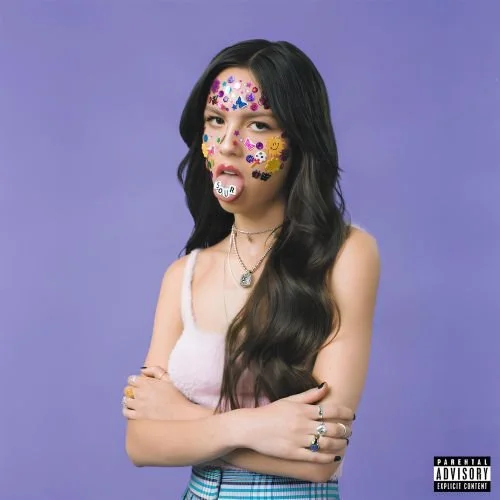
Olivia Rodrigo – SOUR
__________
BEFORE I look at…

PHOTO CREDIT: Laura Jane Coulson for British Vogue
the incredible debut album of Olivia Rodrigo, there is a third album coming soon. When speaking with British Vogue recently, Rodrigo did give some details about her much-anticipated new album. It did not have a title then, though we know it arrives on 12th June. It will be called you seem pretty sad for a girl so in love:
“Fans have been decoding clues about “OR3” in her every move. Teasers are on the way, but for now they’re sure it’ll be love songs and have a new colour theme (a shift from the purple that has been her signature) and another four-letter title (bets are on Luck). As she enters this new fashion era, Rodrigo reveals “my Pinterest is all babydoll dresses and ’70s necklines. I want it all to feel fun and laid-back.” As a magpie for unique vintage pieces, her stylists, LA-based sisters Chloe and Chenelle Delgadillo, write to tell me that they are “always on the hunt for special finds [for Olivia]. When we travel, we make a point to visit local vintage dealers.” Rodrigo is a personal fan of Lovers Lane and Vault Vintage when in Notting Hill, and Chloe and Chenelle add that, “Lately, we’ve been drawn to archive Miu Miu and Marc Jacobs.” They look to modernise the vintage references and create a style that is “effortless, feminine, with a slightly undone feel”.
There are still two or three songs to write. “It was a creative challenge to write from a joyful place,” she says. “When you’re experiencing that you’re connected to someone, or feeling really good, you’re not in your head thinking about bittersweet poems!”
We stop to sit on a bench. It’s time to hear for myself. “Gosh, I’m scared. I’m scared to play [it for] you,” she mutters, fiddling with her phone. This is the first reaction from outside her tightest circle. Her best friend, Madison Hu, heard most of OR3 in an In-N-Out parking lot. (Rodrigo “believes the sound system is the best in [her car]”.) Hu’s excited by its freshness, “And how honest she is!” she tells me over Zoom. “I’ve always been very in awe of how willing to spill to the world she is with her music.” To her ear, it’s about how “love is complicated. I think that’s what she learnt this year.”
Rodrigo hands over wireless headphones. “I’ll play three.” The winter sun shines bright and, from this vantage point, it feels like the city is at your feet. She presses play. The songs are instantly transporting, cinematic and so intimate that I can’t bring myself to look at her while I listen. She puts her hands in her pockets as I focus on the view and scrawl notes in my tiny Moleskine”.
I want to spend some time with this album. Released on 21st May, 2021, SOUR turns five soon. I will end with some reviews of one of the most exceptional debut albums of recent years. Speaking with Vogue in 2021, Olivia Rodrigo discussed her breakout album and brand-new album. It was a hectic time for an artist coming out with a debut album. What made it more difficult was being quarantined because of COVID-19. A tough time to get music out there:
“It’s been pretty non-stop,” says Rodrigo. When we speak, she’s quarantining in the British countryside—“somewhere near Oxford”—ahead of her performance at the Brit Awards in early May. “It’s actually my first performance ever, so it’s crazy that it’s at the Brits,” says Rodrigo. “I’m just so excited to see people in real life, you know? All of the success of ‘drivers license’ happened in a bubble. I was able to see the numbers on my phone, all the people who were streaming it and all that, but I never actually got to meet anyone who was actually affected by the song. So it’s gonna be so cool to see people singing along to it. I’m really stoked for that.” (Despite these nerves, Rodrigo’s powerful rendition of “drivers license”—performed in a red Valentino batwing gown and choppy middle parting that gently recalled Kate Bush’s “Wuthering Heights” video—brought the house down.)
Rodrigo’s natural ear for the epic balladry that characterized “drivers license” might be in full force across the record, but it’s the edgier moments that leave the strongest impression. The album’s opener, “brutal,” erupts into a thunderous guitar riff that sits somewhere between Elastica’s “Connection” and a song you might expect from a Warped Tour headliner circa the year 2000. “I’m so sick of seventeen / Where’s my fucking teenage dream?” Rodrigo wails. “If someone tells me one more time / ‘Enjoy your youth,’ I’m gonna cry.”
Not all the songs are about heartbreak: the album’s closer, “hope ur ok,” pays tribute to lost connections with old friends—a boy with an abusive father, and a gay friend with homophobic parents—whose triumph in the face of adversity continues to inspire Rodrigo. Still, the terrain of romantic torment feels most natural, recalling some of the greatest alt-rock records of the ’90s, from Alanis Morrissette’s Jagged Little Pill to PJ Harvey’s Rid of Me to Fiona Apple’s Tidal. “I wish I could be a teenager in the ’90s, because that’s my favorite music ever,” says Rodrigo, namechecking both Apple and Morrissette as influences for Sour. “I just feel like it’s so raw. I remember the first time I heard Jagged Little Pill and I turned to my mom and was like, ‘Oh my gosh, wow, she really just said that.’ It’s so brutally honest to the point it’s almost shocking—they were things that I’d genuinely never heard before in a song. And that was super inspiring to me. That’s what really got me going and what made me excited to write my own story.”
For all its angst-riddled teenage catastrophism, though, the positive response to the album has been very much universal, with many noting its uncanny ability to transport you right back to the thick of the emotional turbulence of that life stage. “I work really hard to be specific in my songwriting, as I feel like specific songs are the most meaningful,” Rodrigo says. “I'm just so obsessed with really story-driven songs. I grew up listening to a lot of country music, and country music is really specific and vivid, and I think I always was attracted to that as a young girl, which translated over into my songwriting.” It’s a formula that clearly works, and has had its own, reciprocal benefits for Rodrigo too. “I always say you put out songs in hopes of making people feel more understood, but it also works in the reverse,” she continues. “All these people have said to me, I feel the exact same way, or this thing happened to me too. It makes me feel a lot less alone.”
On the subject of the relentless promotional cycle accompanying the album, Rodrigo is endearingly enthusiastic. “It’s been very go, go go, but in the best way possible,” says Rodrigo. “I literally feel like I’m living my dream every day. I feel so grateful.” Still, I hope she will be able to find some time to put her feet up soon? “I think after the album comes out, I’m going to take a vacation somewhere on the beach with a lot of sun. I think that’s super important, too. I was talking to somebody the other day, and they were like, 50% of our jobs is writing songs and the other 50% is living a life to write songs about, you know what I mean? You can’t just spend all of your time in the studio or on tour, because what are you going to write your songs about? You sort of become out of touch with reality. So I’m definitely trying to keep that in mind as I’m going into my second album”.
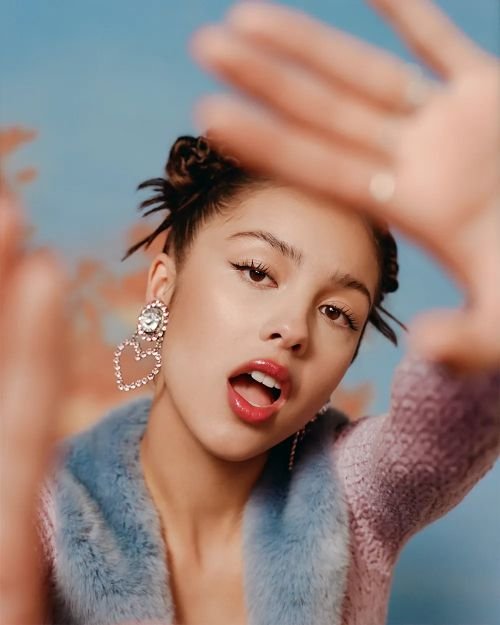
PHOTO CREDIT: Heather Hazzan for Variety
The last interview I am including is from Variety. From her Disney days to her debut single, drivers licence, Olivia Rodrigo was on course for becoming the voice of her generation. It was incredible seeing how SOUR blew up and the reaction it got:
“Rodrigo grew enamored with songwriting through country music, and it quickly became a much-needed emotional outlet. She proudly calls herself a “fangirl for life” and has cited Taylor Swift as a songwriting idol — nods to Swift’s lyrical style and knack for big bridges can be heard all over “Sour.” The artist also was one of Rodrigo’s early champions on social media.
“It’s so nice to be welcomed into the music industry and so great to be supportive of other women,” Rodrigo says. “She wrote me a letter a while ago, and she wrote something about how you make your own luck in the world, and how you treat other people always comes back to you.”
Most of the tracks on “Sour” came from Rodrigo’s deep arsenal of songs, many of which were written during the COVID-19 quarantine that began in March 2020. During that period, Rodrigo says she wrote a song every day for four months, ultimately sharing writing credits on all but three of the album’s tracks with her key collaborator, songwriter-producer Dan Nigro.
“She’s so effortless when it comes to lyric writing it’s pretty incredible to witness,” says Nigro. “Sometimes she’ll run a line by me, and I’ll help her tweak it to make it stronger. But most of the time she’s just running with it.”
Released on April 1, “Deja Vu” added more of an alt-rock sensibility to Rodrigo’s lyric-driven songwriting with fuzzy guitars and saturated drums, courtesy of Nigro. Recounting the sneaking suspicion that an ex is now repeating history with someone else, “Deja Vu” references Billy Joel, “Glee” and strawberry ice cream.

PHOTO CREDIT: Heather Hazzan for Variety
“I think specificity is one of the most important things you can do as a songwriter,” Rodrigo says. “I love songs where you can listen to them and sort of feel like you’re in another world… and the way you do that is through imagery and details.”
Indeed, though the sonic diversity of “Sour” is impressive, what really stands out is Rodrigo’s brutally honest lyrics, especially when recounting the all-too-familiar pain of a relationship gone wrong. Even on upbeat cuts like “Good 4 U,” the words cut like a knife: “Maybe I’m too emotional / But your apathy’s like a wound in salt,” she snarls in the song’s bridge.
“I definitely talked about my deepest, darkest secrets and insecurities on ‘Sour’ — which is sort of strange to be like, ‘Here, you guys can have this. Anyone who wants to listen to it can listen to it,’” Rodrigo says. “But it’s really empowering when it comes out, and it’s been really awesome for me to see people resonate with that vulnerability and relate to it.”
Rodrigo credits Nigro’s background as the former lead singer and guitarist of indie rock band As Tall as Lions with helping her find the pop-punk sound for “Good 4 U.” She says she came up with the track’s hook — “Good for you / You look happy and healthy / Not me / If you ever cared to ask” — in the shower. “I didn’t want the entire record to be sad piano songs,” Rodrigo says. “But then again, I didn’t want to write a poppy, happy, ‘I’m in love’ song, because that was so far from how I was truly feeling at the time. So writing ‘Good 4 U’ was really satisfying because the song is upbeat and high energy and people can dance to it, but I didn’t have to sacrifice being honest and authentic in order to write it.”
Though “Sour” is heavy with heartbreak ballads, its edgier tracks bolster Rodrigo’s genre-shifting abilities – most of all, opener “Brutal,” which smacks you in the face with angst and ferocity. Other album highlights include “Traitor,” Rodrigo’s belted manifesto on how emotional affairs can hurt just as much as physical ones, which she initially wrote off as not being relatable enough. Little did she know, the result would be the opposite.
“I wrote it on my bed while I was crying,” Rodrigo says. “I never really thought that it was going to be a song that resonated with so many people. I thought that it was a very specific situation that I was going through, and it’s so funny that that’s the non-single song that’s the most successful. So many people have been like, ‘How did you know? This is exactly what happened to me!’.
GUTS, Olivia Rodrigo’s second album, was released in 2023. It also was a massive success and received incredibly positive reviews. There are a couple of reviews to include before wrapping up. Pitchfork and said how SOUR was a “nimble and lightly chaotic collection of breakup tunes filled with melancholy and mischief”:
“The matter of failed romance is central to Sour, a nimble and lightly chaotic grab bag of breakup tunes, filled with both melancholy and mischief. Rodrigo’s first trick: Seconds into the lugubrious strings that open the record, she and her producer, Dan Nigro, abruptly switch to grunge guitar and distortion. Abandoning both the gossamer falsetto and the emotive belt that power “drivers license,” Rodrigo adopts a wry sprechstimme on “brutal” to rattle off her grievances: self-doubt, impossible expectations, her inability to parallel park. “Where’s my fucking teenage dream?” she snarls, wisecracking about the way pop culture romanticizes youth. It’s not particularly elegant—it’s not meant to be. Bucking expectations about the kind of sounds she might gravitate toward? That’s just part of the fun.
When she was little, Rodrigo and her mother made a habit of grabbing records indiscriminately from the thrift store, exposing her to the mistiness of Carole King and the muscle of Pat Benatar. Born two years post-Napster, two years pre-YouTube, Rodrigo grew up with music of all varieties at her fingertips. The range of her taste, and her disinterest in choosing a lane, animate Sour; queue up a track at random, and you might hear pop-punk fireworks à la Paramore (“good 4 u”), dewy-eyed soft balladry à la Ingrid Michaelson (“1 step forward, 3 steps back”), or alt-rock squall à la the Kills (“jealousy, jealousy”). Like any teenager, Rodrigo is trying on identities. The fluidity of her approach creates a sense of play that balances out the record’s more sullen moments—the self-righteous sprawl of “traitor,” for example, or the sinister extended metaphor of “favorite crime.”
Of Rodrigo’s many influences, she’s most obviously styled herself after Taylor Swift, whose work she praises often and emphatically. Like her idol, Rodrigo treats emotional turmoil like jet fuel, and laces her lyrics with specifics—a Billy Joel song she and her ex listened to together, the self-help books she read to impress him. She’s said that the shouty bridge in Swift’s “Cruel Summer” directly inspired her own in “deja vu”; “1 step forward, 3 steps back” interpolates the reputation song “New Year's Day.” And publicly inveighing against a heartbreaker, then sauntering off with the last word? How very Swiftian.
But there’s more to Rodrigo’s writing than revenge; Sour gives her occasion to examine her own insecurities. “I wore makeup when we dated ’cause I thought you’d like me more,” she sings over fingerpicked guitar on the tearful “enough for you.” It’s a shot at her ex for underappreciating her, but also a hard lesson about not making concessions. On “happier,” a sweet-and-sour ballad that appeared in demo form on Rodrigo’s Instagram in early 2020, she grapples with the faulty narrative of female rivalry: “And now I’m picking her apart/Like cutting her down will make you miss my wretched heart.” It was this song that captured the attention of Nigro, a former emo band frontman who’s written with Carly Rae Jepsen and Conan Gray. It’s easy to hear what he heard in the homemade snippet: a gently tumbling melody, Rodrigo’s flute-like lilt, a winning balance of pettiness and wisdom.
Meanwhile, Rodrigo is still very much a part of the Disney ecosystem, reprising her role in the second season of HSM:TM:TS, which debuted just last week. To anyone familiar with the history of Disney darlings and the morality clauses that typically bind them, the profanity that peppers Sour will stand out as a break from type. This minor subversion of expectations has given Rodrigo a low-key rebel status. Like her seeming newness, her earnestness, the heartbreak baked into her ascent, it’s one of the qualities that make her easy to root for. In a way, the flattening effect of the internet has worked in her favor, allowing her—someone who has been on TV for roughly a third of her life and is signed with the biggest record company in the world—to slip into the role of the underdog.
Rodrigo avoided the major-label treatment when Universal left her and Nigro largely to their own devices to make Sour. But the effort to preserve the authenticity of Rodrigo’s voice also leaves her shortcomings more exposed. The flatness of the melody on “traitor” is especially noticeable alongside the movement of “drivers license”; “enough for you” is oversung. On a record largely centered around a single story, Rodrigo can fixate on select plot points (like the amount of time it took her ex to move on), rather than seeking out new angles. She sometimes settles for simple rhymes and self-evident phrasings: “You betrayed me/And I know that you’ll never feel sorry.” In moments like these, she seems more invested in content than in craft.
Of all the songs on Sour, “hope ur ok” feels most connected to her Disney lineage. Over a twinkly instrumental, Rodrigo sings directly to a victim of child abuse, a queer girl rejected by her family, and to outcasts more broadly. In its message of love and acceptance, the song calls to mind the empowerment anthems churned out by a previous generation of Disney stars. But as Sour’s closer, “hope ur ok” is limp. An outward-looking loosie tacked on to 10 songs about the world inside Rodrigo’s head and heart, it reads as a last-minute effort to demonstrate perspective and maturity. Someone out there might feel genuinely comforted by Rodrigo’s words, and that matters. But, as the success of “drivers license” shows, there’s a certain magic to be found in embracing your own mess”.
I am going to finish with this review from The Guardian. Cathartic rage set against teenage heartbreak, as it is said. A hugely important moment for a teenage artist “that metabolises anger, jealousy and bewilderment into pop euphoria”. For anyone who has not heard Olivia Rodrigo’s debut, it is a perfect time to get into SOUR:
“Even in a world where streaming’s rise means chart records are broken all the time, the debut single by Disney star Olivia Rodrigo is an anomaly. Upon the release of Drivers License in January, it had the biggest first week for any song ever on Spotify – then hit the 100m streams mark faster than any other track on the platform had before. It debuted at No 1 on the Billboard Hot 100 and stayed there for eight weeks – only the seventh song ever to do so. In the UK, it topped the charts for nine weeks and broke the record for the highest single-day streams ever for a non-Christmas song.
And yet, both the song and the album it is taken from are propelled by an energy that’s about as far from cold, number-crunching rationality as it is possible to get. Drivers License – a portentous power ballad backed by plummeting drones and minimalist percussion – was written among the ruins of first love. At 18, Rodrigo, sentimental, furious, mired in self-pity, is staggered at the way her ex-boyfriend has moved on (“I just can’t imagine how you could be so OK now that I’m gone,” begins the chorus crescendo). This isn’t just about romantic rejection: for Rodrigo, reality has been irrevocably ruptured, and she is deeply disturbed. No wonder. The realisation that somebody you once knew and loved can unilaterally revert back to being a complete stranger – and by doing so seemingly erase all the time you spent together – is among the biggest and most unpleasant shocks of adulthood.
In a satisfying mirroring of form and content, almost every single song on Sour –written entirely by Rodrigo and producer Daniel Nigro – deals with the enormity of this development baldly, bluntly, and with none of the meaningless word salad that popstars often hide behind. Rodrigo imagines her ex recycling dates with his new squeeze over the Taylor Swiftian pop of Deja Vu (“Don’t act like we didn’t do that shit too”). The seething pop-punk of Good 4 U has her incredulous at the irony of everything: “I guess that therapist I found for you, she really helped.” She uncovers yet more hypocrisy on the sad and stately Traitor - “Remember I brought her up and you told me I was paranoid?” - and is fundamentally bruised on Enough for You: “I don’t want your sympathy, I just want myself back.” Rodrigo uses the album as a way to do that, by setting down the terms of her own reality, over and over again.
And if she sounds like a broken record, that’s the point: what makes Sour such a great album is that its maker is unafraid to make a nuisance of herself. In an interview with the Guardian earlier this month, Rodrigo said she was proud the record revolved around emotions that “aren’t really socially acceptable especially for girls: anger, jealousy, spite, sadness”. Even the title is a reclamation of the word “sour”, with its connotations of bitter, undesirable women. Considering that women are told to feign disinterest in men lest they scare them off, writing a whole album about how furious and devastated you are that your ex has forgotten you seems like the sort of thing any good friend would strongly advise against. But the shades of cringeworthiness that run through the whole enterprise is the reason why it is so cathartic, and so charming.
Of course, the emotions Rodrigo mines are not exclusive to adolescence, but Sour is still a gloriously teenage album. Vulnerability has recently become a watchword for a generation of young (and youth-oriented) musicians who are keen to open up about tumultuous inner lives that revolve around anxiety, low self-esteem and romantic rejection. Rodrigo’s emotional palate is not restricted to that: there is much rage here and the generic grammar to match. The brilliant opener Brutal starts with elegiac strings before Rodrigo insists things get “like, messy” and the song swiftly morphs into anthemic 90s alt-rock with pregnant pauses suggestive of a droll eye-roll, in the vein of the Breeders’ Cannonball. Good 4 U, meanwhile, channels a more recent strain of rock: a slice of electro-tinged pop-punk, it shares perhaps slightly too much DNA with Paramore’s Misery Business – but it’s hard to care when it metabolises spitting fury into infectious euphoria so expertly.
A couple of songs have Rodrigo singing over fingerpicked guitar figures in sweetly folky style (Enough for You, Favorite Crime), while Deja Vu plays with fuzzy, crashing percussion and a mosquito synth-line. The majority of Sour, however, is rooted in the style of its breakout hit: Adele meets Taylor, lovely and unadventurous, thoughtful but hardly breaking new ground. Which isn’t quite the same as calling it basic or staid. From the way the seatbelt alarm sound births the opening piano line to the gut-wrenching drones of doom that sporadically appear low in the mix, the other heritage fuelling Drivers License is the precise, sparsely furnished production pioneered by the xx that now forms the basis for a huge amount of modern pop. Rodrigo carries the baton with class and mass appeal, even if things do get a bit samey after a while.
Miraculously, the subject matter never seems over repetitive, but Rodrigo loses her nerve right at the end. On closing number Hope Ur Ok, she turns her gaze outwards to sing about people she once knew who have experienced hardship in their lives. It’s as close to a palate cleanser as a song with such a cloying sentiment can get, but thankfully doesn’t overshadow the glorious myopia of Sour: a collection of polished, precociously accomplished pop that doubles as one of the most gratifyingly undignified breakup albums ever made”.
Whilst it has been almost five years since SOUR was released, Olivia Rodrigo has done so much in that time. Huge tours, a celebrated second album, and a third that is coming in June, she is one of the leasing voices of her generation. A five-star Glastonbury headline slot last year, I do feel that Rodrigo will releasee so many albums and continue to be talked about as one of the greatest Pop artists we have ever seen. A lot of exocomet around you seem pretty sad for a girl so in love. It is going to be the biggest album of this year. On 21st May, we will mark five years of SOUR. I think that it is one of the best debut albums that…
WE have ever seen.