FEATURE:
Spotlight
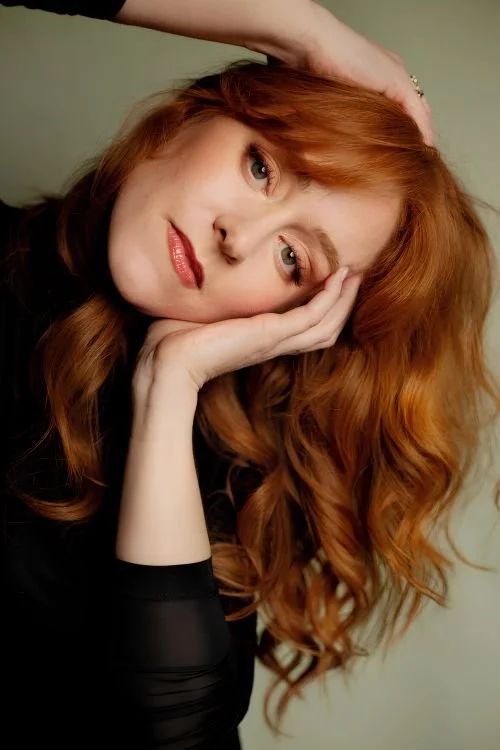
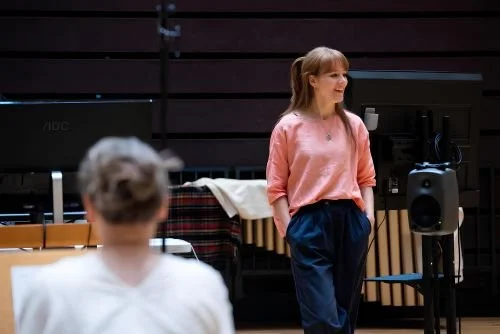
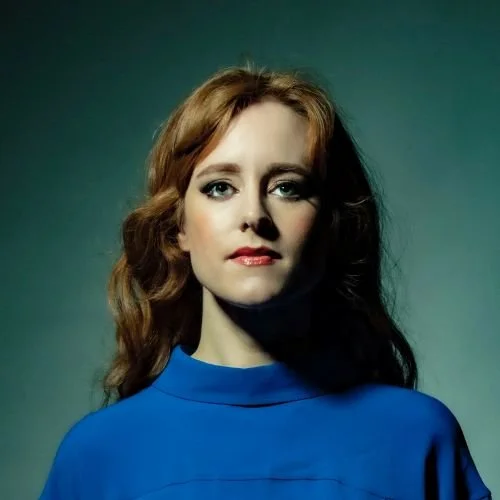
that I would love to see live as I can imagine her shows are truly spectacular! Hannah Peel plays London’s Barbican in October, so I may have to go along to that show. It seems weird putting her in my Spotlight feature, as she is an established artist. However, it offers me a chance to shine a light on her new work. Peel is one of the world’s greatest composers. In terms of what she has created. In terms of the soundtracks she has created, including Bring Them Down, Insomnia, Silent Roar and Bring Them Down. Midwinter Break is her latest soundtrack. She has also released studio albums such as 2021’s Fir Wave. I wonder if there will be another studio album from Peel. I am going to pop in a playlist of her best work to date. There are a couple of interviews that I want to come to. Here is a little bit of background to the amazing Hannah Peel: “Mercury Prize, Ivor Novello and Emmy-nominated, RTS and Music Producers Guild winning composer, with a flow of solo albums and collaborative releases, Hannah joins the dots between science, nature and the creative arts, through her explorative approach to electronic, classical and traditional music From her own solo albums to composing soundtracks like Game of Thrones: The last Watch, or to orchestrating and conducting for artists like Paul Weller, her work is ambitious, forward-looking, always adapting and re-inventing new genres and hybrid musical forms Hannah is a regular weekly broadcaster for BBC Radio 3’s Night Tracks”. Born in Northern Ireland but now based in northern England, this Ivor Novello award-winning composer, producer and broadcaster is incredibly talented. I would advise everyone to listen to Night Tracks, as it is this gorgeous, calming and incredible blends of music. It is “An adventurous, immersive soundtrack for late-night listening, from classical to contemporary and everything in between”. Hosted alongside Sara Mohr-Pietsch, I do really love this series.
I think what is so amazing is how adaptable and versatile Hannah Peel is as a composer. Artists do shift between albums, though many of them do not evolve so greatly between albums. Composers like Hannah Peel do not get the attention they deserve. The majesty and consistent brilliance of her work. Peel is one of the truly great composers. Classical music is an area where men still dominate. There is sexism and sexual abuse that is not discussed enough. Gender inequality remains significant, with men dominating, holding over 90% of orchestral performance slots as of 2024. Despite some progress, women composers receive minimal representation, often less than 10% of programming, while female musicians face structural barriers, including gendered pay gaps and a sharp decline in visibility. These are shocking statistics. Last summer, this article shows that there has been no real improvement. No huge efforts by the music industry to overturn sexism and inequality. I want to come to a couple of recent interviews. It seems like a new album is coming. It is amazing how prolific Hannah Peel is. 15 Questions spoke with Peel recently. Peel said how “I prefer scores that don’t tell us how to feel, that support the narrative and characters and allows us viewers to escape without thinking about it”:
“Hannah Peel's new album The Endless Dance, a collaboration with Chinese percussionist Beibei Wang, is out May 22nd 2026 via Real World.
Current event: Hannah Peel appears at the Film Composers Panel with the Alliance for Women Film Composers (12 April, 11am at Royal College of Music, London) as part of the 2026 edition of the London Soundtrack Festival – London’s first-ever festival dedicated to celebrating the music of film, TV and games. You can check out the full line-up at https://londonsoundtrack.com/whats-on/.
Recommendations for Bangor, Northern Ireland: My favourite place to eat and take time out, is a café restaurant on the coast called ‘The Starfish’. It overlooks the sea and the house the café is in, is like a Victorian traveller’s treasure trove. The food is the best around too. On a warm day, you can drink your coffee in the garden whilst dreaming of where the sea might carry you.
Shoutouts: Follow positivenewsuk on insta for nice world things … and for an alt news outlet I’m loving The Nerve (fearless independent journalism) and those that are leading it. Good on them, we need it.
Which composers, or soundtracks captured your imagination in the beginning? What scenes or movies drew you in through their use of music?
In the very beginning …The score to Michael Nyman's The Piano. Wow that got played everywhere, everyone I knew had bought, borrowed or stole the book. If you had a piano you played it. Pretty addictive as a youngster to play music that was in an actual film!
But when I heard the score to Hable Con Ella by Alberto Iglesias, it was the first to actually tune my ears into something different. Sombre and obsessively romantic.
How would you rate the importance of soundtracks and film music for the movie as a whole? How do you see the relationship between image and sound in a movie?
That’s such a fascinating question.
You know films like The Taste Of Things (2023), the choice to not have music is such an integral part of the film. It’s just not needed at all. The sounds evoke the smells and a score might have taken away from the deep realistic connection of the chef and her food.
And yet, some need music so much they would be lost without it. I can’t imagine Star Wars with no music! It paints the whole world instantly and is completely integral.
I’m not sure that answers your questions directly, but I do know I prefer scores that don’t tell us how to feel, that support the narrative and characters and allows us viewers to escape without thinking about it. The composer is there and magically they are not, without anyone noticing!
Can you take me through your process of composing a soundtrack on the basis of a movie that's particularly dear to you, please?
Always, it’s so different but as the documentary film Underland has just been released after 5 years of making the score (a few years longer for the filmmakers).
It’s one of my favourites because I had read the book, way before I’d known about the film and just somehow fell into the job after contacting the author, Robert MacFarlane.
The project can change so much over that length of time, and to be honest, my scoring abilities had definitely improved by the time we recorded it all! There was a lot of music by the end …
Read the script (or in this case the book)
A list of instruments that could suit that sound world
Exploring that palate with no footage to begin with
Building up enough demos that feel comfortable with the films narrative and fit with the director’s conversations with you
Start to play with the ideas with early footage.
Record some instruments to help the process. In this case it was an explorative session with ancient horn player John Kenny. The sounds he created suited us needing this ‘voice’ of the underworld
More footage, more music and edits.
Many thoughts of “whose music stem is this? Okay, it’s mine, I don’t remember writing this.”
Once the final film edit is coming together; like a giant puzzle, start piecing all the stems together and pieces over 5 years
Picture lock arrives – work alongside the sound designer, start finalising the music and get cues signed off!
Orchestrate – choir, string ensemble, percussion.
Prep for mixing and then send all to be mixed.
Visit the dub and make some notes
Music edit a little more, suggest any extra ideas whilst in the room with everyone
Celebrate with a drink in the present moment, before running for a train or starting on the next score.
Different composers could potentially approach the same scene with strikingly different music. Would you say there can be 'wrong' and 'right' musical decisions for some scenes? In which way can some film music be considered 'definitive'?
The music can change everything! So yes on that basis there can definitely be choices to what is best suited.
For example, in Debrah’s childhood scene in ‘Once Upon A Time In America’ … I just can’t imagine anything other than the utterly perfect Morricone orchestral music as she dances”.
I am going to end with Focus Features and their interview around the soundtrack for Midwinter Break. Hannah Peel discussing her composing this incredible, powerful and hugely impressive score. Truly, Peel is one of the world’s great music talents. She has so much passion and commitment for everything that she does:
“In Polly Findlay’s Midwinter Break, when Stella and Gerry (Lesley Manville and Ciarán Hinds), a long-married couple living in Glasgow, take an impromptu getaway to Amsterdam, the postcard scenery and time away invite both to reflect on their life together and the mysterious tragedy that forced them to leave Belfast years before. Adapted from Bernard MacLaverty’s acclaimed novel by the author and screenwriter Nick Payne, the film creates an almost musical arrangement of internal meditation, comfortable chatter, shared moments, and ineffable loneliness. The Associated Press wrote, “This is a relationship that’s all about the small moments and what’s left unsaid.”
To score the film, Findlay turned to the innovative composer Hannah Peel, having heard her innovative score for a theater piece. The award-winning Northern Irish composer has worked in TV, film, and theater creating scores noted for the way they cross boundaries between electronic, live instrumentation, and sound design. Her thoughtful approach in Midwinter Break created an intimate conversation with Findlay’s cinematic style. “Findlay keeps things as elegant as possible in the director’s chair, going in for close-ups wherever she can to let the actors’ faces tell the story and sparingly utilizing the potent emotionality of Hannah Peel’s score,” write Next Best Picture.
How did you get involved in scoring Midwinter Break?
I was the composer on a National Theatre staging of Brian Friel’s Dancing At Lughnasa in London and Polly had heard the music. She and the team then asked if I was interested in being part of the film. I hadn’t read the script or seen a cut at this point, but after the first few minutes of our meeting, I knew I wanted to be involved.
What did you see as your biggest creative challenge in scoring the film?
It wasn’t necessarily a challenge, but being from Northern Ireland and having to leave when young after witnessing bombs, I could personally understand some of the underlying trauma of the main characters. So, my instinct was mostly about honing in on that—figuring out how and what that would sound like; asking questions like what role does tradition play and how that is affected or changed when you leave your home.
What sort of instrumentation did you use for the score?
Aside from myself on piano and Alice on cello, I recorded a string quintet, harp, clarinet, and soprano voice. We wanted an intimate quartet sound but the quintet was essential for the rich addition of a double bass. The playing style was also important, having a breathiness to bow styles meant that the strings could sit within intimate moments of the movie. The harpist, Esther Swift, is a wonderful folk singer and classical harpist so she instantly understood how I was approaching the parts.
What do you hope people take away from Midwinter Break?
Polly’s work is focused on detail and finding space between the noise. I hope people will see and enjoy the beauty in this and recognize how compassion and love for each other can continuously grow, no matter what age”.
I have loved Hannah Peel’s work for years now. I wanted to spotlight her again because she has new work out and live dates. I will try and see her at the Barbican later this year. I would love to interview her one day. She is a staggering talent. Go and follow Hannah Peel. A wonderful broadcaster, composer, producer and artist, Peel will continue to produce the most spellbinding and original work for…
MANY years to come.
__________
Follow Hannah Peel