
FEATURE:
Before Today
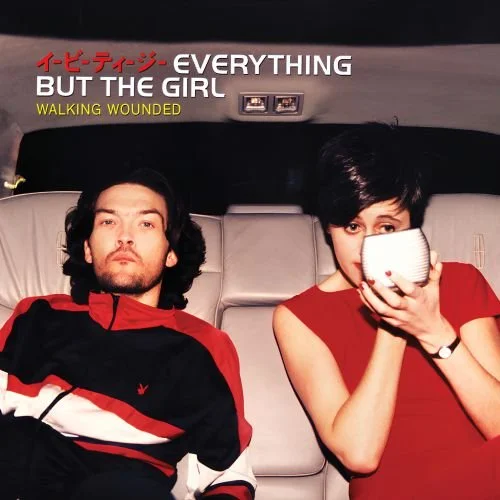
Everything But the Girl’s Walking Wounded at Thirty
__________
I’LL finish up on a review…
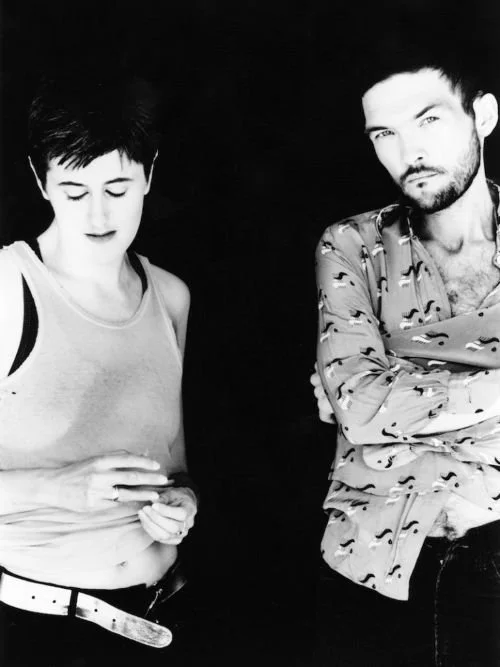
IN THIS PHOTO: Everything But the Girl (Tracey Thorn and Ben Watt) in 1996/PHOTO CREDIT: Juergen Teller
of one of the best albums from the 1990s, Walking Wounded. From the incredible Everything But the Girl, it turns thirty on 6th May. I did not realise that this was their ninth album. Amazing consistency and stamina from an astonishing duo. Also, the fact that that they were hitting a new peak nine albums in! I will get to a few articles that revisit this brilliant record. Walking Wounded is one of my favourite Everything But the Girl albums. I am going to lead off with Albumism and their great twenty-fifth anniversary retrospective of Walking Wounded from 2021. I remember when it came out in 1996 and I loved it. It was a time when I was still in the thrall of Britpop and its aftermath. Everything But the Girl provided something different and somewhat deeper:
“Though critical darlings for two decades on the strength of their early-career solo albums—Thorn’s A Distant Shore (1982) and Watt’s North Marine Drive (1983)—and string of seven albums as a duo beginning with 1984’s Eden through 1992’s Acoustic, it was their 1994 album Amplified Heart that initiated the transformation of their career.
More precisely, though Amplified Heart is a stellar affair all around, one remixed single from the LP proved game-changing for the group. When the original album version of “Missing” was released in August 1994, it made only minor ripples across the airwaves and within the record shops.
Fast forward fourteen months to October 1995, and the revered house DJ/producer Todd Terry reinvigorated the single by layering in more dancefloor-friendly beats, and the single quickly became a massive worldwide hit, one of the most universally beloved dance anthems of all time. After experiencing a career lull in the early ‘90s, Thorn and Watt were suddenly propelled to newfound heights of global popularity and commercial acclaim that at long last rivaled the critical recognition they’d garnered to date.
Coupled with the unanticipated success of the “Missing” remix, Thorn’s stunning vocals on Massive Attack’s “Protection” single a handful of months prior, and Watt’s continued exploration of the London drum and bass circuit, Everything But The Girl’s sound was destined to evolve from their more acoustic and jazz-indebted blueprint.
Upon its release in May 1996, Walking Wounded, the pair’s ninth studio effort, represented the most fully realized manifestation of their career rebirth to date. Though the group’s sonic adventurism also posed creative and professional risks. “This next step in our musical career was exciting,” Thorn declares in Bedsit Disco Queen. “There were no certainties involved in any of it, no sense of treading familiar ground; rather, a strong feeling of heading out into unchartered waters. Just before Walking Wounded came out, I remember thinking that it could go either way. We might triumph or we might fall flat on our faces. We worried that we would annoy some of the drum-and-bass underground by making a pop version of a sound that was still so new, but in the end even that never really happened.”
Masterfully produced by Watt, Walking Wounded marks the formal expansion of Everything But The Girl’s musical palette, through the adoption of more electronic, drum and bass, and house flavored soundscapes. Yet despite this new direction, the group’s arrangements are still comingled with their signature emotive songwriting & dazzling melodies. Thorn’s reassuring vocals and contemplative lyrics about the vicissitudes of life and love are perfect complements to Watt’s lush, beat-driven soundscapes.
Opening the album with a riveting rush of melodic drum and bass, “Before Today” is not your prototypical love song. And this is a good thing. A very good thing. When Thorn seductively demands “I want your love / And I want it now,” the immediacy of love and her determination to have it could not be more palpable.
Released as the second single, the shimmering stunner “Wrong” examines the “little give and take” that defines love founded upon reciprocity. More than any track on Walking Wounded, “Wrong” is most reminiscent of “Missing” and augurs the house-blessed stompers that would feature on the group’s follow-up and final album Temperamental (1999). Like its precursor, “Wrong” gets the Todd Terry remix treatment here as well, though while the beats are more pronounced, Terry’s redeux is admittedly not much of an eye-opening expansion upon the original.
A shining example of an album that exquisitely merges the cerebral, emotional and physical, Walking Wounded is the culmination of Thorn and Watt’s unparalleled devotion to songcraft and fearlessness in taking the bravest of chances with their music. Virtues that have continued to characterize their respective post-EBTG solo careers. Twenty-five years on, Walking Wounded still sounds as sublime as ever”.
It is worth getting to a review or two, just to see what critics make of this album. However, I do want to source what Rhino said in 2017 for their feature on an album that went to number six in the U.K. and scored some stunning reviews. It was a groundbreaking release from a duo who were raising the bar twelve years after their debut album, Eden. Tracey Thorn and Ben Watt would release two more Everything But the Girl albums. Temperamental came out in 1999. Apart from NME giving it 1/10 (some sh*t who clearly didn’t bother listening to it!), it did get some great reviews. Not to say 2023’s Fuse is their final album together, though it was a great album and featured highly in the year-end lists. Making the top ten in so many. One can argue Walking Wounded is not only one of the last big peaks from Everything But the Girl but maybe the best album they ever released:
“The overarching sound of the British duo Everything but the Girl (singer Tracey Thorn and instrumentalist Ben Watt) had after years settled into a pleasant, melodic pattern—keyboards and acoustic guitars laying the melodies over a mix of live and electronic percussion, with Thorn’s contralto providing the main focus and finishing touch. Something odd happened with 1994's AMPLIFIED HEART, though—a Todd Terry club remix of the song "Missing" became a massive worldwide hit, and it suddenly became apparent how ripe EBTG's music was for such aural reassessment. Heretofore unrecognized space in many of their songs' mixes could be filled with beats, echo and other accoutrements of dance music. In the right hands, a track that might have provided an agreeable diversion on the radio or in a dorm room CD player could be positively deadly on the dance floor.
Turns out the best person to take advantage of this development was Ben Watt himself, and on EBTG's next record, 1996's WALKING WOUNDED, he blew their sound wide open. The change is evident from the first notes one hears, on "Before Today"—a dreamy keyboard sample, looped several times before Thorn's voice is heard, trailed by a synth bass and hi-hat. The beats get more frenetic, paddling furiously as the song slowly slinks along. One realizes immediately how well the sound ushered in by the "Missing" remix fits EBTG's songs.
Watt plays with drum 'n' bass beats on the title track, as its skittering percussion is molded with the melody and Thorn's haunting denouement for a relationship ("Nothing can replace the us I knew"); there's a stillness that cuts through the busy undercurrent. A great contrast is "Flipside," probably the most accessible up-tempo track on the record, with a big beat contrasting the intensely inward-looking lyric. The breakdown in the middle of the song is perfect, and the slightly out-of-phase vocal provides just enough unsteady energy throughout to keep the listener engaged and moving. And longtime fans put off a bit by the club trappings will be comforted by "Mirrorball," on which an acoustic guitar provides the melodic base, lifted up in the mix, with the electronic beats dropped down. It's the most "traditional" of the album's many fine offerings.
Some might claim that Thorn and Watt were merely glomming onto a fad or three by making WALKING WOUNDED such a club record, and while acts like Massive Attack and Portishead had all but pioneered this kind of sound, EBTG proved themselves quite capable of thriving in the same space. Unfortunately, they weren't long for the world—1998's similarly structured TEMPERAMENTAL is the last we've heard from them as a band—but they certainly left a mark”.
In 2019, Pitchfork featured Everything But the Girl in their series where they revisit a great album from the past. They spend some time with a stellar and magnificent 1996 album that still sounds utterly engrossing to this day. I don’t think it has aged at all. I wonder whether Tracey Thorn and Ben Watt will mark thirty years of Walking Wounded somehow:
“In spring 1995, Thorn returned to New York with Watt, where they spent a couple of months working on more ideas for Walking Wounded. During that trip, they learned that Terry’s remix had blown up in Miami and, in fact, across the States, breaking out of the clubs and into the charts. Worldwide, it went on to sell 3 million copies.
In the months before “Missing” mania hit the UK, Watt had dived headfirst into London’s drum ‘n’ bass scene. He heard DJs like Fabio and Doc Scott at atmospheric drum ‘n’ bass pioneer LTJ Bukem’s night Speed, and connected with the freeform flow of the sound that Bukem has compared with jazz. His enthusiasm eventually convinced Thorn to join him at the club night. “It wasn’t a rock gig, and it wasn’t a rave—it felt like something new again,” she wrote in her memoir. “Strange and yet familiar, it felt possible.”
The mental space that these new encounters cracked open can be observed in the clarity with which both Thorn and Watt approached their songwriting on Walking Wounded. On the breezy “Flipside,” which features lyrics by Watt and scratching by Scottish producer Howie B, the moment Watt’s life got turned upside down is directly referenced: “London, summer ’92/I think I’ve changed a lot since then, do you?” In the next verse, Watt writes that he is “blasted land,” comparing himself to a coastline that’s constantly shifting at the mercy of the sea. It’s a poetic reminder that the processing of trauma can shape you as much as the incident itself.
In Thorn’s mouth, the lyrics serve to underline that Watt’s near-death experience left them both reeling, questioning everything they used to know. The flipside to “Flipside” comes in the form of a slo-mo drum ‘n’ bass number called “Big Deal.” Written by Thorn, she uses the titular phrase sarcastically in an attempt to deliver a reality check. With an air of frustration, she seems to sing of Watt’s search for answers in the club: “You say you wanna get cured, you wanna turn off your head/Oh and you say it hurts, and you feel unsure/First you doubt yourself and then you doubt her/Big deal, that's the way we all feel.” Everyone goes through trauma in some form or other, the song suggests, what matters is giving one another the space to work through it.
The strength of Walking Wounded lies in exactly that. Each Everything But the Girl album has its own style and story, but the one on which Thorn and Watt’s individual gifts shine brightest is the one on which they stripped everything back. They shared their knottiest feelings, created dialogue with skeletal new sounds, and made the record in a much more insular way than they ever had previously. Its timely sonics and emotionally wrought themes spoke as much to teenagers, myself included, as it did the band’s adult contemporaries (Bristol drum ‘n’ bass head Roni Size gave it thumbs up). Walking Wounded remains Thorn and Watt’s biggest-selling album with worldwide sales of 1.3 million. It did the kind of well that prompted U2 to ask them to be their tour support, something they ended up turning down because, well, they needed some space. Thorn and Watt’s relationship had been tied to their career from the very beginning, and it was time to listen to the cries for independence that Walking Wounded so clearly contained. Instead of going on tour, they started a family, and set the wheels in motion for their separate careers to come”.
I am going to finish up with the Entertainment Weekly and their hugely positive review of Walking Wounded. When we talk about the best albums of the 1990s, I don’t think Walking Wounded is mentioned enough. Musical brilliance from Everything But the Girl. Anyone who has never heard it really does need to do so as soon as possible:
“Savvy songwriters can make even the edgiest music go pop. Nirvana’s Kurt Cobain won the world’s ardor by distilling a decade’s worth of mangy underground American rock into an embraceable new sound. Madonna scored a doubleplatinum success by shaping the subterranean gay dance style known as ”sleaze” into 1990’s Erotica. And now Everything But The Girl stand poised to take the sounds best loved by today’s hipsters to Everymall U.S.A.
On Walking Wounded EBTG infuse the swank of neo-lounge music, the whir of ambient-dance, and the spaciness of trip-hop with the sweetest pop melodies these genres have ever encountered. The groundbreaking result seems at once abstract and immediate, untamed and accessible — Julie London updated to the age of Bjork.
Not that the group’s pop-friendly brand of lounge ranks as coldly opportunistic. No act has better earned the right to bring this music to the masses.
Fourteen years ago, this English duo first matched the cool elan of Peggy Lee (courtesy of singer Tracey Thorn) to the bossa nova beat of Burt Bacharach (via musician Ben Watt). Not since the Carpenters last nailed a hit in the mid-’70s had the pop world heard so exalted a sound. While bands like The Style Council and Swing Out Sister also mined marimba’d beats, none did so with the commitment, variety, and depth of EBTG. If their seven studio albums had twee and mannered moments, the group still managed to provide the broadest possible influence for today’s neo-lounge acts, from Portishead to Stereolab.
After years of attracting only the cognoscenti, EBTG finally cracked the pop charts this year when a house remix of their 1994 song ”Missing” became a surprise top 10 hit. With that encouragement, EBTG opted to set all of Walking Wounded‘s 11 tracks to dance beats. Yet, in choosing beats more radical and complex than those featured on ”Missing,” they’ve created something far more unexpected and new.
For an aural blueprint, the duo clearly drew on two key recordings — both from U.K. trip-hop pioneers Massive Attack. Throughout Walking Wounded one can hear echoes of Thorn’s memorable cameo on the title track of Massive Attack’s last LP, Protection, and a 1995 collaboration between Massive and Madonna on a cover of Marvin Gaye’s ”I Want You.”
Expanding on those revolutionary records, Walking Wounded floats Thorn’s wan vocals over a soundscape of sputtering, hissing, and clacking beats. A clutch of eccentric rhythms turn up, from the funk rumblings of ”Single” to the ambient sway of ”Big Deal.” Watt’s sparse and spacious production lets all these sounds sparkle in air, creating a dizzying 3-D effect.
Watt also coaxes an incredible range of textures from his synthesizers — from the trampoline-bounce bass of the title track to the bedspring explosion of drums in ”Good Cop, Bad Cop.” Such sonic gymnastics comprise their own new subgenre in the U.K., called drum ‘n’ bass, a form whose celebrated ace, Spring Heel Jack, collaborated on some tracks here.
To help ground the sound, Watt and Thorn offer an array of gorgeous melodies. All undulate with a sensuality perfectly suited to Thorn’s burgundy voice. In her lilting style, Thorn recalls the sophistication of Dionne Warwick at her peak; she comes across as both haunted and aloof. By juxtaposing her woozy cadences with the brusque clatter of the beats, EBTG create a great counterpoint — the musical equivalent of manic depression.
This excited sense of melancholy fleshes out the group’s pining lyrics. Every song follows a ruinous love. ”I’m eating less and drinking more,” moans Thorn in a song that recalls the aftermath of a particularly bad affair. Another love proves painful enough to reduce her to childhood, causing the singer to plaintively ask, ”Is this as grown-up as we ever get?”
Coupled with the probing and pulsing music, these torchy sentiments achieve a psychological resonance, putting EBTG way above the campiness of most neo-lounge acts. In fact, their synthesized whooshes and bleats provide modern pop’s first corollary to the weird sounds cooked up by the early ’60s’ most avant-garde lounge stylists: Esquivel and Martin Denny.
By marrying such musical leaps to their sterling pop sensibilities, Everything But The Girl provide a classic service: They offer an ideal conduit between today’s chic underground and pop fans everywhere. A”.
On 6th May, it will be thirty years since Walking Wounded was released. A masterpiece I feel is still underrated. Not discussed as much as it should be. I do hope too that we hear more from Everything But the Girl, as that musical chemistry between Tracey Thorn and Ben Watt (who are married) always yields such wonderful results. More than evident through their…
1996 album.