FEATURE:
Modern-Day Queens
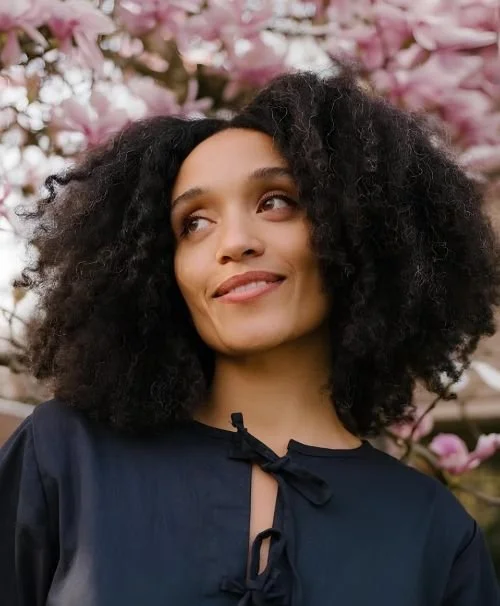
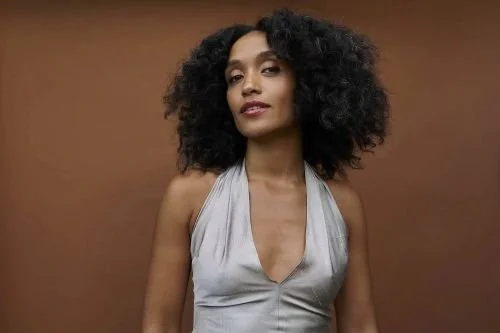
PHOTO CREDIT: Suki Dhanda/The Observer
who I would consider one of the best broadcaster and D.J.s in the U.K. I love Zakia Sewell. As Zakia, she is part of the BBC Radio 6 Music family, and she was on air earlier this month for their Vinyl Weekender. Such an incredible depth of knowledge and passion for music, she also has one of the best ‘radio voices’. That may sound weird, but in terms of its tone and effect, you could listen to her all day! I want to bring in some biography from her official website, so that we can glean some knowledge about an extraordinary broadcaster, writer and podcaster:
“I'm a broadcaster, writer and DJ from London with a passion for music, arts, mental health and history. I regularly produce and present radio documentaries and podcasts for platforms including BBC Radio 4, BBC World Service, Tate, and Boiler Room, covering varied topics, from British folk culture, to my mother's experience of schizophrenia, to Sabar drumming in Senegal, and was the recipient of the silver award for 'Best New Voice' at the Audio Production Awards in 2021, and Radio Presenter of the Year in the UKAN Awards in 2024.
I host Dream Time on BBC 6 Music on Sunday nights, and hosted The NTS Breakfast Show, and Questing w/ Zakia on NTS Radio between 2016-2024. I spent several years working behind the counter at Honest Jons Records in West London, and I DJ regularly at clubs and festivals in London and abroad, and have played for esteemed venues and festivals including Corsica Studios, XOYO, Berlin Atonal, HORST, We Out Here and Dekmantel.
My forthcoming book Finding Albion explores British national identity, folk culture and myth and will be published by Hodder Press in 2026. I've also written articles for publications such as Weird Walk and Resident Advisor, and have an essay published in a collection of essays by and about women in music called This Woman's Work. I also regularly lead radio workshops offering advice and support to aspiring radio makers and have worked on creative research projects with archives and arts institutions such as Timespan, the Stuart Hall Library and the George Padmore institute.
When I'm not doing the above, I'm singing, playing guitar, taking long walks in nature and reading weird books about pagans”.
Definitely suitable for inclusion into this Modern-Day Queens feature, there is no denying Zakia Sewell is a hugely important voice and role model. I have long talked about the incredible female D.J.s who are so incredible. Raising the bar and changing the game. However, there is still huge discrimination and gender inequality. This needs to change. An industry that relies on their talent and passion. However, still, things set up to benefit men. I am going to bring in some interviews with Sewell. She curated service95’s Sunday List earlier in the year. I am championing and spotlighting her as a broadcaster and D.J. However, she did write Finding Albion: Myth, Folklore and the Quest for a Hidden Britain. You can purchase it here:
“Zakia Sewell is on a quest for another Britain. Traversing the length and breadth of our island from Somerset to Scotland, she's seeking out a different story - one that lies beyond divisive national myths and symbols.
In Finding Albion, Zakia uncovers an alternative spirit of Britain that is vividly alive today. It is found in otherworldly folk songs, ancient legends, Celtic seasonal rites and mystic stone circles that punctuate our landscape. Her journey begins as the sun rises on the spring equinox over Glastonbury Tor, where she meets neopagans reclaiming traditions from our pre-Christian past. At summer's peak at Notting Hill Carnival she hears cultural echoes that passed along the slave trade routes from the Caribbean. On All Hallow's Eve she encounters the ghosts of Empire that are still haunting the nation, and in the depths of a Cornish winter she asks if today's new folk revival could unite our increasingly divided country?
Finding Albion brings a hopeful story of Britain out from the shadows, giving us a deeper sense of who we are, and heralding the promise of a brighter future”.
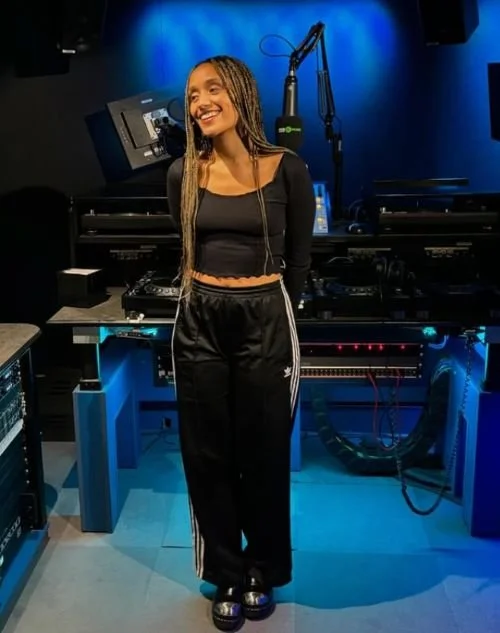
There are some great older interviews such as this that I want to dip into very quickly. I feel it is important to come to the 2018 interview with Brainchild Festival. This was at a time when Zakia had a show on NTS Radio:
“I had quite a rich and diverse musical upbringing”, Zakia explains. But growing up in Hounslow, West London, this is not the easiest thing to come by. “It’s not exactly a hub of cultural activity”, she laughs. “My mum moved to Ladbroke Grove when I was about 15, so that was quite an important turning point for me because it suddenly meant I was plunged a bit closer into the city: Portobello Market, and shops, and music, and just a more vibrant, lively atmosphere.”
“I felt a bit more like it was a place that reflected me and my interests, and what I wanted to do. The other thing is that both of my parents are musicians and I grew up around a lot of music, gigs and rehearsals.”
Mildly overwhelmed after graduating university, Zakia set out looking for a break from “intellectual activity” and stumbled upon a job at Honest Jon’s Records on Portobello Road, just two minutes away from her mother’s house. “It was the best job ever. Two whole days a week of just pure listening, but also getting recommendations, listening to what customers were listening to. I was getting more interesting in collecting music, so I started collecting vinyl. Through that, I started thinking, ‘I’d quite like to share to this somewhere’”.
She started working at NTS as a production intern but never dreamed of having her own show, admitting that had she been left to her own devices, she might not have had the courage to put herself out there. “I didn’t see myself as necessarily worthy of having a show, but it’s kind of blossomed. And in terms of the work, again, it was just kind of by accident. I was doing some research and ended up getting into production.”
NTS Radio has indeed been credited with “revolutionising digital airwaves” in the wake of the destruction that streaming services have brought upon the medium. It repeatedly stays true to its tagline, “Don’t Assume”, through its consistently dynamic programming and steady influx of diverse, underground talent. As Zakia knows, “NTS is really challenging the boundaries of what can be played on the radio. I feel like I can do whatever I want on there; I’ve got such freedom and I really like that”.
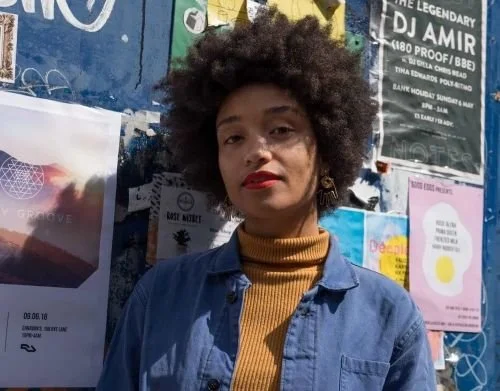
PHOTO CREDIT: Abigail Holsborough
I will bring things up to date. However, The State of the Arts spoke with Zakia (I will refer to her using only her first name when referring to her D.J. and broadcasting work). In the conversation during lockdown, she spoke about the “healing power of music to heritage and mental health which feature prominently and poignantly throughout her work”:
“NTS radio occupies a space that has revolutionised radio and lured music aficionados back to a medium that has been in decline, due to the rise of streaming platforms such as Spotify. The station provides a treasure trove of experimental, diverse global music and is brimming with DIY spirit. From Japanese psychedelia and New wave to Bessie Jones and the Georgia Sea Island Singers, it showcases past and present but also nurtures future underground music scenes. “I feel really proud and grateful to be part of the NTS family, not only because of their incredible, varied and daring music output, but also the people, who are at the nucleus of NTS, are honest lovely people, and that is transmitted through each and every show”.
For regular listeners, QUESTING W/ZAKIA is sacrosanct to the ephemeral beauty of Saturday mornings. Zakia commenced her NTS passage as a Production Intern and never dreamed of having her own show, a “happy accident”, which started with an 8am Wednesday slot, and has bloomed into a weekly Saturday show. “They’ve really supported me and allowed me to find myself and do my own thing, I can’t imagine I would get away with what I get away with on NTS anywhere else… like the rambling”. The personal nature of Questing, the shout-outs, the tracks played to “thrash around your bedroom” (a very welcomed feature during lockdown), immerses listeners week on week, especially the impromptu moments, which make the show even more intimate.
“I feel like it’s an honest reflection of who I am and the music I love and hope this resonates with people, I’ve felt that even more strongly during this lockdown period, there is a connection between where I’m at, the music that’s healing me and what other people need”. Zakia explains to me that she compiles track-lists intuitively, following her own mood but also considers the collective atmosphere. This was evident in a recent show which addressed the shocking, racist killing of George Floyd. It was powerfully and thoughtfully curated and described as “a musical meditation on grief, rage, resilience and resistance”. The sounds and spirits of the civil rights and black power movements, free jazz and jubilant sounds of resistance were played, and it clearly illustrated Zakia’s intrinsic talent to positively channel a wide range of emotions, activism and meditative sounds through the airwaves.
Zakia’s personal heritage has provided her with a huge source of inspiration, from the ethereal field recordings played on her NTS show to radio documentaries, Big Drum on Little Carriacou, Speaking Sabar and My Amey and Me. Eloquently, she expounds “As a mixed- race person, there is a bit of soul searching to do about how two rivers meet in you, whether they blend and flow together or whether they come into conflict. Music is one way of trying to understand that and helps me to navigate and find the meeting places. When I listen to a field recording of my grandparents speaking in their rhythmical Welsh accent, and then I hear someone from the island that my mum’s parents are from, and hear the lovely Carriacou accent, there is something comforting in finding the parallels in the rhythms, sounds and music”. This is something that resonates with many of us, tracing and connecting with our heritage through art forms – be it music, literature or film. For me, music, especially that of my Indian heritage, has the ability to spiritually encompass my entire body in an otherworldly way, something that Zakia relates to: “music hits you, there is a body memory with music, and it cuts through the am I aren’t I, should I shouldn’t I, you just feel it.”
With the recent surge in activism towards fighting racial injustice, sparked by the case of George Floyd and powerfully led by the Black Lives Matter movement across the globe, essential and long-pleaded-for conversations around structural racism and legacies of colonialism within the UK have been re-ignited. The Art of Remembering podcast, produced by Zakia last year for Tate, is an incredibly timely, informative and important listening experience. Led by artists, poets and activists, it explores how art can be used to address the erasure of important events that has led to a history of ‘misremembering’ and gives thoughtful background to the campaign to decolonise Bristol – the Countering Colston movement. “I hope, through the podcasts and documentaries that I make, that I can contribute a little to unearthing stories that are often unheard and overlooked in mainstream narratives. I’m very privileged to have access to platforms like the BBC and Tate and so try my best to use those platforms to centre the voices, experiences and perspectives of people of colour”.
There is this interview that I would direct people to check out. I want to go back to this Observer interview from last year. Making the move from NTS Radio to the BBC, Zakia Sewell talked about respecting your elders (she is someone who champions older female artists), and the intimacy of radio. She talked about why radio is always going to be superior to playlists on streaming sites:
“What’s been the biggest change moving from NTS Radio, one of the coolest stations in the UK, to the BBC?
I’ve always been drawn to music from the past, like the folk revival of the 1950s and early 1960s and the spiritual jazz of the 1960s and 1970s, so it was great to do an archival show on NTS – an anything-goes, totally free space, where it was wonderful to grow and find my voice. A big change at 6 Music has been the sense of duty you get to support and nurture new artists as a BBC broadcaster. You suddenly tap in to that responsibility. It’s exciting to think of relationships you can build with artists over the years.
Which new artists are exciting you?
Clarissa Connolly, who brings ancient-sounding folk melodies into the present with her productions, and her incredible voice. Then there’s Cameron Winter – even with just his voice and piano, I sense he’s going to become some kind of superstar. And Sharada Shashidhar, who’s got this kind of Kate Bush style of singing, then draws in Indian classical music and jazz.
How are radio shows better than playlists made by algorithms?
The storytelling. I could be playing a field recording from West Africa in 1959 and then something contemporary by an ambient producer – my job then is to weave together these worlds and create a narrative through the sequencing of the tracks and the elements I choose to connect them. You can really help people to enter into the music through stories. Late at night, when I broadcast, it’s like you’re whispering to someone, or you’re in the act of listening together. There’s a real intimacy in radio that people long for.
You’ve DJ’d extensively around the world. What’s been your best gig so far?
At an arts festival in Iceland, where I was beaming out dub reggae through this incredible sound system into an amazing landscape. I felt so far away geographically from the origins of dub, but that moment captured for me the power and the beauty of music. The idea that something could find its way from Jamaica through to this moment by a fjord with the sun out... I love thinking about the kind of journeys that music takes, when you can be there in the moment, and witness that magic”.
Whilst I am most interested in her hosting Dream Time on BBC Radio 6 Music. I am going to end with a recent interview from The London Magazine. She talked about the remarkable Finding Albion: Myth, Folklore and the Quest for a Hidden Britain. In terms of her literary career, I do wonder what comes next:
“How would you describe your intellectual formation? You previously made a programme on Stuart Hall for BBC Radio 3, and you mention Raymond Williams at one point in the book, alongside Jeremy Deller, Dylan Thomas, and others. Who are you into?
It’s a weird book in a way, because it brings together things that aren’t usually brought together. Brit(ish) by Afua Hirsch is a book about mixed identity and empire that finds its way into Finding Albion without being discernibly there. I suppose in some ways my book is a kind of follow up to Hirsch. David Olusoga’s work revealing the black history of Britain was a massive influence too. Georgina Boyes’s The Imagined Village was one of the first books to really scrutinise Cecil Sharp’s legacy and the ways that folk culture has been romanticised and fictionalised by collectors throughout the centuries. I don’t mention Stuart Hall in the book but his memoir Familiar Stranger is interesting because in that book all of his theory is synthesised into this very personal story about his upbringing in Jamaica. I found that useful for thinking about the relationship between the personal and the political. I think he’s really brave because usually in academia there’s this divide between the lived experience and the theory, but he marries those things together and says, absolutely, my ideological, philosophical output is completely rooted in my personal, subjective experience. I really value and respect that. So he’s in the ether. Akala’s Natives is far more polemical in a way that my book isn’t, but he’s in there too, in the mix. All About Love by bell hooks was also an influence, in the way that she talks about the relationship between the personal and the political and healing, ultimately, and this book is about healing the nation. It’s about what we need to do in Britain in order to heal from the sins of our past. In the book I write about Gabriele Schwab’s idea of opening up the crypt and facing the spectres within. We can understand that on a personal level in terms of psychoanalysis, but what if we apply that to the collective?
In the book you stage a distance between the personal and the collective by performing a kind of embarrassment or cynicism towards the events you’re witnessing or taking part in. In the first chapter, set on the Glastonbury Tor, you ‘cringe a little at the idea of hand-holding so early in the morning’ and then decide to leave after reaching your ‘“woo-woo” quota for the day’. How important is embarrassment in all of this?
Traditional symbols of Britishness and particularly Englishness are so haughty. They are symbols of power and might and success and ruling the waves. I love that folk culture punctures that a little bit. Yes, okay, we may have been the ‘great’ nation who ruled the waves, but then you go and see Morris dancing on May Day morning and it’s a bunch of blokes with beer bellies sloshing around with tankards of ale. It’s amazing and it’s fun and the costumes are incredible, but it’s a bit ploddy and a bit silly and you just think, this is real Englishness. It’s so much more appealing, at least to me. It’s infectious and joyful and eccentric and mischievous and playful. I feel like these are all the aspects that are completely sidelined or eclipsed by these grand imperial narratives that are so dominant when we’re thinking about identity in this country.
I think that embarrassment is important because the reaction that a lot of people have to folk culture is that it’s cringe or uncool. If people have been fed this vision or idea of the English as a superior, ultra-civilised nation, then it is going to be confronting or humbling perhaps to see these silly, slightly ploddy, strange events happening all around the country and realise that this is the real culture of the people. It was only in 2024 that the government opted to protect Britain’s folk culture under UNESCO’s convention on intangible heritage. UNESCO set that scheme up over twenty years ago and Britain is one of the last countries to opt in to protecting their intangible heritage. What’s that about? Why wouldn’t we? Why would we be one of the last? I wonder if that embarrassment is part of it, that there’s something about these aspects of our culture that undercut or challenge the dominant view of who the British are. That sense of embarrassment is important because in a way it brings us back down to Earth.
You said earlier that we are experiencing a folk revival. Where do you think that comes from? Why is folk culture so big at the moment?
It’s interesting because we talk about a ‘revival’ but that suggests that it ever went away. There are these ripples or surges where folk rises up in moments of great change or uncertainty as something that represents a rootedness or groundedness. It makes sense that throughout the ages, whether it’s the industrial revolution, post-war or now, when things are feeling out of control people start to yearn for the traditions of the past, for old tales or songs that feel rooted in the ground. I think there are multiple layers to it. On one level, it is a response to exclusionary visions of Britishness that are becoming more commonplace. There’s a yearning in people to be able to feel proud of where they’re from without being drawn into the toxic visions of nationhood that are conjured by the far right. But it also taps into a wider longing. There’s this broader trend of people becoming more interested in astrology and spirituality and crystals, and Gen Z predominantly identify as spiritual. People are searching for alternative ways of understanding our position in the cosmos and the world around us. We’re seeing a collective leaning-in to the woo-woo. People need anchors, especially in the tumultuous times in which we live.
Another big thing is the environment. Following the Wheel of the Year or attending rituals on May Day morning or the winter solstice satisfy a desire people have to be more connected to the seasons and cycles and wider system of nature, as opposed to being separate from it. In a way it’s undoing or reclaiming many of the ways of knowing or ways of being that were obliterated or banished to the sidelines by the Enlightenment way of thinking that has structured the world in which we live. There’s a yearning to reclaim some of these discarded elements of culture that for so long were looked down upon, and perhaps now people are seeing there’s value in them.
Folk culture also resists the certainty of atheism, especially the swaggering, masculine atheism of figures like Christopher Hitchens or Richard Dawkins, which is so popular online.
It goes back to what we were saying about nuance and the in-between. Maybe this pagan ritual will bring about a good harvest. Maybe it won’t. Does it matter? Do we need to know? Do we need to find out the science of how much of an impact people gathering together on the summer solstice to ring bells and sing songs might have on the environment? Folk is an embrace of the mystery, the not needing to know. It’s flexible and porous, so you can add a bit of Celtic ritual in with a bit of Malaysian folk practice. The vagueness of it appeals to people. Maybe that says something about where we’re at collectively. People are wanting to embrace the in-betweens and the unknowns.
Do you think there are any limits to this folk revival? In the last chapter you pay nearly thirty pounds to visit Stonehenge, with its ‘mega-modern visitor centre rendered in glass and steel, where pagans in cloaks stand queueing for their lattes’. At the May Day celebrations in Oxford, you watch a ‘sea of glowing iPhones hover above the crowd’. How has the internet shaped things, for better or worse?
The contemporary revival is very much an online phenomenon. It’s a wonderful thing because it means lots of different types of people have been able to partake in this folk surge. It doesn’t matter if you didn’t grow up in a rural village where there’s a seasonal custom that happens every year. People have been able to find and connect with each other and that’s one of the reasons, apart from the demographic shift, that this contemporary folk revival is a lot more diverse than the revivals of the past. I was a weird, folk-obsessed, mixed-race kid and I didn’t have anyone else around me, as far as I knew, who looked like me and was interested in folk, until I started seeing people on social media and connecting with people like Angeline Morrison, who’s just set up the Black British Folk Collective. All of these things are happening and only possible because of the internet. But then of course there is the instagramification and tiktokification of it all, where brands see it trending and want to get their mitts on it. It’s very hard to define what folk is, but one of the defining aspects of folk culture is that it has nothing to do with institutions or corporations. The purity of it means that it tends to be local people raising funds among themselves and spending their money on keeping these things alive”.
I will end there. An incredible author and a phenomenal and established broadcaster and D.J., I have talked about her book. However, for this blog, she is perhaps more relevant as a world-class D.J. and a proud member of BBC Radio 6 Music. A truly wonderful voice, this is a queen of the decks and airwave. Someone who I have…
SO much love for.