FEATURE:
Fourth Time Around
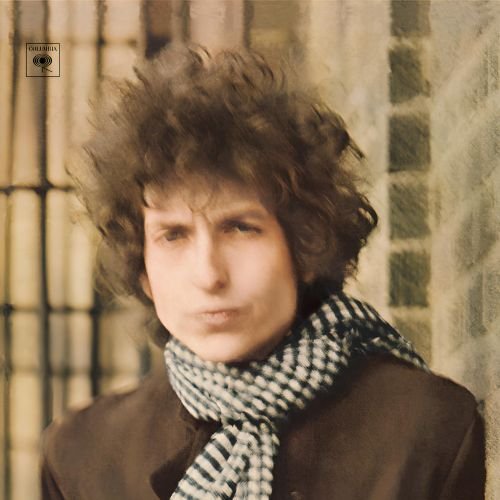
Bob Dylan's Blonde on Blonde at Sixty
__________
IN terms of the…
definitive Bob Dylan album, is there one single that which stands out from the rest?! He is a genius who has released multiple phenomenal albums. However, many would say that Blonde on Blonde is his peak. Or the album where his songwriting genius is in every song. More so than on any other album by him. It was released on 20th June, 1966. This was a year when more than a few all-time great albums came out. The Beach Boys’ Pet Sounds and The Beatles’ Revolver. It was an incredible year for music. Like The Beatles, this was an incredible run for Dylan. Not only did he release two hugely acclaimed albums in 1965 – Bringing It All Back Home and Highway 61 Revisited -, he followed up Blonde on Blonde with John Wesley Harding. Four very different albums, but all staggering. If you had to argue which artist had the best three-album run, there is validity to say Bringing It All Back Home, Highway 61 Revisited and Blonde and Blonde takes the honour. For years, there was confusion and contention as to the exact release date of Blonde on Blonde. 16th May became the assumed release date for a while. It changed to early-July, but it has been confirmed as 20th June. Speaking with Playboy in 1978, Dylan said this of Blonde on Blonde: “The closest I ever got to the sound I hear in my mind was on individual bands in the Blonde on Blonde album. It's that thin, that wild mercury sound. It's metallic and bright gold, with whatever that conjures up”. It is almost impossible to do justice to the full brilliance of Blonde on Blonde. Its background and creation. Its legacy and influence. As it turns sixty on 20th June, I want to bring in some retrospective features and reviews. There are other features I want to get to. However, as it is paywalled and I could not get the whole article, I will source a bit of this Rolling Stone feature from 2016. Published on what was assumed to be the fiftieth anniversary – 16th May, 2016 -, Rob Sheffield was a month premature with his retrospective on this masterpiece. He discussed how “Shakespeare, Smokey Robinson and Nashville session pros fueled singer-songwriter's revolutionary double LP”:
“Blonde on Blonde is full of that “not around” chill – Dylan mixes up the Texas medicine and the railroad gin for a whole album of high-lonesome late-night dread, blues hallucinations and his bitchiest wit. Still only 24, writing songs and touring the world at a wired lunatic pace that would come crashing to a halt in a couple of months, Dylan was on a historic roll, dropping this double-vinyl epic just 14 months after going electric with Bringing It All Back Home in March 1965 and Highway 61 Revisited in August. He was moving too fast for anyone to keep up, and writing masterpieces faster than he could release them. Yet Blonde on Blonde still feels like it came out of nowhere, with a sound he never attempted again, and neither Dylan nor the rest of the world has ever quite figured out how it happened. As organist Al Kooper put it, “Nobody has ever captured the sound of 3 a.m. better than that album. Nobody, even Sinatra, gets it as good.”
If you want to argue that Blonde on Blonde isn’t as perfect as Highway 61 Revisited or Bringing It All Back Home, you may have a point. It’s a wide-ranging double album with some lightweights on Side Three and one profoundly annoying novelty song – which happens to be the leadoff track and hit single. “Rainy Day Women #12 & 35,” man – it’s like if the Beatles decided to begin Revolver with “Ob-La-Di, Ob-La-Da” or “Hello Goodbye.” But it’s his greatest album anyway, creating a sustained 68-minute spell unlike any other listening experience in rock & roll. Hearing Blonde on Blonde puts you in the position of the night watchman who clicks his flashlight at all the losers and freaks and neon madmen and wonders if it’s him or them that’s insane. In these songs, it’s probably both”.
In 2021, Guitar.com argued for the genius of Blonde on Blonde. Not that you have to make much of an argument! It is undeniable the work of a poet in full flight at the top of his game. This music maestro and revolutionary was joined by a “cast of stellar session players and completed an imperial trilogy. For many fans, it’s the ultimate Dylan record”:
“Biographer Robert Shelton wrote that Blonde On Blonde starts with a joke and ends with a hymn. Accounts differ over the order in which the songs were recorded, but McCoy believes the majestic 11-minute album closer Sad-Eyed Lady Of The Lowlands, with its streetcar visions, Arabian drums and memories of Cannery Row, came first, in the early hours of 16 February 1966. “I was playing one-handed, looking at my watch,” recalled drummer Kenny Buttrey. “It kept on and on”. It was the longest pop song ever recorded, cut in a single take, and Dylan would later proclaim it “the best I’ve ever written”.
The February sessions also yielded Visions Of Johanna and Stuck Inside Of Mobile With The Memphis Blues Again, which later featured on the soundtrack to Fear And Loathing In Las Vegas. Dylan returned to Tennessee in March, these sessions culminating in a party at which everyone was encouraged to “get stoned” before recording the opening Rainy Day Women #12 & 35. “He said ‘I’m not going to do this with a bunch of straight people. We’ll send out for something’,” recalled Moss in Howard Sounes’ Down The Highway biography. The musicians, high as kites, swapped instruments and Dylan demanded the sound of a marching band, with trombonist Wayne Butler called in. Recording kicked off at midnight, Henry Strzelecki laid on the floor pushing Kooper’s organ pedals and laughing maniacally.
Mississippi blues
Announcing the album with a wonky ode to getting high was textbook uncompromising Dylan, and despite its overt drug references, when released as a single it reached No. 2 in the Billboard chart. From there, Blonde On Blonde is a bluesy masterwork, refining the blueprint established on Highway 61 Revisited. Robertson is in incendiary form throughout. He remembers the Nasvhille musicians falling silent as Dylan handed him his first opportunity, on Obviously Five Believers. “Bob and I wailed like we were at a blues bar in Mississippi,” Robertson wrote in his biography Testimony. “My extreme bending and quivering of notes wasn’t in any of these guys’ arsenals, so I wasn’t taking anybody’s job.”
The slow-shuffling Pledging My Time nods to Robert Johnson’s Come On In My Kitchen, while Most Likely You Go Your Way (And I’ll Go Mine) recalls Buddy Holly’s It Doesn’t Matter Anymore. Visions Of Johanna, with its fine opening line of “ain’t it just like the night to play tricks when you’re trying to be so quiet?” is a stunning literary love song, Kennedy playing the lead on his ES-335. One Of Us Must Know is a classic fork-tongued Dylan apology, splashed with Kooper’s swirling organ playing and jubilant piano ornamentation, bettered by the sprightly and devotional I Want You, Moss’s Chet Atkins-style intro and lyrical phrases responding to Dylan’s yearning vocal. Robertson then returns with a stinging lead part on the Chicago blues Leopard-Skin Pill-Box Hat, captured at the 22nd attempt.
Just Like A Woman’s “fog, amphetamine and pearls” are widely believed to refer to Edie Sedgwick, Fourth Time Around with its elegant fingerpicking in drop C tuning, is Dylan’s response to The Beatles’ Norwegian Wood, before Robertson takes his bow on Obviously Five Believers and Dylan signs off with one of the most absorbing love songs he ever crafted – Sad-Eyed Lady Of The Lowlands, written for his wife Sara Lownds. Despite stretching to an hour and 12 minutes, there isn’t a weak song on Blonde On Blonde.
“Nobody has ever captured the sound of 3am better than that album,” said Kooper after the dust had settled. Crawdaddy! editor Paul Williams called Dylan a “1960s bard with electric lyre and colour slides”. Blonde On Blonde was high art, simultaneously surreal and achingly romantic, a towering landmark in the middle of pop’s greatest decade. It reached No. 9 in the US charts and No. 3 in the UK, silencing critics who’d demured at Dylan’s electric rebirth. Melody Maker’s review was surprisingly lukewarm, underplaying a “more than competent blues rock band” and a collection that “may not be as startling as The Freewheelin’ or Highway 61 Revisited”. By 1974, NME was placing the album second in its list of the greatest records ever made. Dylan scholar Tim Riley wrote in 1999: “A sprawling abstraction of eccentric blues revisionism, Blonde On Blonde confirms Dylan’s stature as the greatest American rock presence since Elvis.”
Dylan’s first Nashville record sent a trail of bands to record in a city hitherto overlooked by musicians from both coasts. He returned for the following year’s John Wesley Harding before closing the decade with Nashville Skyline, yet while it represented a beginning in one sense, Blonde On Blonde feels more like the end of an era. One month after its release came the mythologised motorcycle accident that saw Dylan withdraw from public life and embark on a new chapter”.
Prior to coming on to a couple of reviews for Blonde on Blonde, I will source Vanity Fair and their 2016 feature on Bob Dylan’s 1966 masterpiece. If an album can be considered a work of literature. Dylan did win the Nobel Prize in Literature in 2016. Just over fifty years since the release of one of his greatest display of poetic brilliance. Blonde on Blonde is a major display of his untouchable lyrical brillance. Could a single album be seen as a great work of literary? A case for Blonde on Blonde being this great '60s novel:
“Does Bob Dylan deserve the Nobel Prize in Literature? That’s a question some casual fans and detractors are asking now that the prize has been awarded to the 75-year-old singer, songwriter, tour-horse, author, broadcaster, and inveterate shape-shifter. Dylan’s oeuvre is vast—there are entire albums that even I, a fan well on the obsessive side of the scale, have never listened to in full—but pieces of it stand out as timeless monuments, however eager some may be to dismiss them as “dad rock.” And while his stark, haunting protest songs are what vaulted him into the uncomfortable role of “Voice of a Generation,” it’s the double album Blonde on Blonde, released in 1966, that provided the fullest indication yet of what an ambitious, unruly artist he truly was.
The album is a plea, a curse, and a benediction all wrapped in one. Affection, derision, worship, and betrayal all vie for the upper hand in one sonic and poetic masterpiece after another. Fifty years after its release, it’s still hard to figure out exactly what was eating Bob Dylan when he recorded Blonde on Blonde, but it’s not hard to see why it will be remembered as one of the greatest rock ’n’ roll albums of all time. Only a 24-year-old at the top of the world could sound this precocious, this romantic, this world-weary, this incorrigible.
When Dylan and his backing band, then known as the Hawks, convened in New York for the first recording session, he had just married the model Sara Lownds. Before decamping to Nashville for additional sessions, Dylan paused for the birth of his and Sara’s first child, Jesse. But Dylan’s fraught relationship and painfully awkward breakup with Joan Baez, who had vouched for him with the folk community and helped launch him to superstardom, was not far at all in the past, nor was his complicated friendship with the troubled Warhol acolyte Edie Sedgwick.
That jumble of relationships left a tangled imprint on the lyrics on Blonde on Blonde, which veer back and forth between loving and lacerating. We know (or think we know) that “Sad-Eyed Lady of the Lowlands” is about Sara (because an enraged Dylan will later say as much in the lyrics to 1976’s “Sara”), but who is the object of, say, “I Want You”? Is it a love song to Sara, or a song of lust, consummated or otherwise, aimed at Edie—or someone else entirely?
Dylan’s wild imagination only adds to the confusion. For every clear image drawn from real life, there are a dozen animated by silly word play, absurdist scenarios, and walk-on characters worthy of Cervantes and Chaucer—or, for that matter, Jack London and the hobo memoirist Jim Tully. Even “Visions of Johanna,” which begins with cinematic specificity inside a New York apartment with coughing heat pipes and country music on the radio, eventually erupts into a mad hallucination involving a peddler, a countess, a fiddler, and a fish truck. (Those shifts in perspective make “Visions of Johanna” one of Dylan’s most famously literary songs; chances are, the Nobel committee had it in mind, along with 1975’s “Tangled Up in Blue.”)
Still, even if much of this symbolism isn’t possible to fully pin down (despite the misguided efforts of countless “Dylanologists”), it’s easy enough to get a feel for what Dylan was struggling with. There is an emotional truth to these songs, even when the literal truth keeps scurrying around the corner before you can get a good look at it. “Pledging My Time” describes taking a chance on a new relationship, despite the knowledge that the odds are stacked against success. (“Somebody got lucky / But it was an accident.”) “Leopard Skin Pillbox Hat” is a parable of sexual betrayal. (“I don’t mind him cheatin’ on me / But I sure wish he’d take that off his head.”)
“Temporary Like Achilles” and “Absolutely Sweet Marie,” like “Maggie’s Farm” before them, are about being at the mercy of a much stronger woman. (“Is your heart made out of stone, or is it lime / Or is it just solid rock?”) “Fourth Time Around” is about tormenting such a woman through sheer stubborn lousy male behavior. (“I stood there and hummed / I tapped on her drum and asked her, ‘How come?’”)
Again and again, Dylan adds layer after layer of color, plot, and character without ever fully obscuring a song’s emotional meaning. You don’t quite know what he means when he says, “Now people just get uglier and I have no sense of time,” but there’s no mistaking the import of “Your debutante just knows what you need, but I know what you want.”
And then there are the songs where Dylan lets the dealer see his cards. “One of Us Must Know (Sooner or Later)” is both boorish and weirdly tender, depicting with unflinching frankness one of those lopsided relationships that bring nothing but misery to everyone involved. The narrator isn’t in love—far from it—but he wants the person whose heart he’s breaking to know that it’s not her fault. It’s not even personal. “I didn’t mean to make you so sad / You just happened to be there, that’s all.” He describes multiple misunderstandings, one of them leading to an unexpected argument: “An’ I told you, as you clawed out my eyes / That I never meant to do you any harm.” This is charmless but recognizable behavior—the kind that rarely shows up in poetry or Hollywood movies but occurs in real life more often than we’d like to admit.
“Most Likely You’ll Go Your Way and I’ll Go Mine” tells a similar story, except this time the narrator is the one who’s in too deep. After being jerked around one too many times, he’s finally cutting bait. “You say you got some other kind of lover / And yes, I believe you do / You say my kisses are not like his / But this time I’m not gonna tell you why that is / I’m just gonna let you pass.” This, too, will strike anyone who’s spent time on the dating circuit as an entirely familiar scenario: falling for the wrong person, getting sucked in by his or her games, then forcing yourself to quit chasing that person around despite the undeniable temptation. Is Edie the object of this song? That would be my guess, but it’s hard to know.
“Just Like a Woman” sometimes feels more like a generational critique (“Nobody feels any pain”) than a first-person tale of woe, but clearly it’s rooted in some deep romantic disappointment. “But when we meet again / Introduced as friends / Please don’t let on that you knew me when / I was hungry and it was your world”—is there any human over the age of 20 who can’t relate to those words? Those same words point to Joan Baez as the target of this tune—she was, after all, the world-famous folk singer who called a largely unknown Dylan onstage during her headlining performance at the Newport Folk Festival in 1963. And anyone who’s seen D.A. Pennebaker’s documentary Don’t Look Back and witnessed Baez’s quiet agony as Dylan passive-aggressively blows her off two years later can imagine him zapping her with those lines about aching just like a woman but breaking just like a little girl.
When Blonde on Blonde was released on vinyl, it became the first double album in rock ’n’ roll history. And the entire fourth side was dedicated to “Sad-Eyed Lady of the Lowlands,” a strangely mournful ode to Dylan’s new wife whose sheer duration surprised even the band. (“I mean, we peaked five minutes ago. Where do we go from here?” drummer Kenny Buttrey later remembered thinking.) Of all the songs on the album, this one hides its meaning most thoroughly, burying whatever real-world scenario that may have inspired it under an avalanche of hallucinogenic images, from “The kings of Tyrus with their convict list” to “Your sheet-metal memory of Cannery Row.” Even the chorus is willfully opaque: “My warehouse eyes, my Arabian drums / Should I leave them by your gate / Or, sad-eyed lady, should I wait?” It doesn’t have quite the same ring as the Clash’s “Should I stay or should I go?,” but after five or six repetitions, you start to understand what he means.
Writing for the aptly named Highbrow Magazine in 2012, Benjamin Wright cites the cultural critic Ellen Willis’s theory that Dylan’s operating principle is taken from the French symbolist poet Arthur Rimbaud: “Je est un autre.” “I am another.” Dylan is constantly playing hide-and-seek with his own image, his own legend, the expectations he himself has set. It’s an emphatically literary way to approach writing and life. The poet William Butler Yeats espoused a “Doctrine of the Mask,” whereby a poem should project the opposite of the poet’s personality. The work is better that way, he believed, and he was probably right”.
It is worth finishing off with some reviews for this flawless album. The greatest double album ever? I would argue that it is Kate Bush’s Aerial (2005), though that might be biased! However, Bob Dylan’s Blonde on Blonde is a towering masterpiece that has lost none of its incredible power. I have used that sentence when speaking about a few albums. However, it is the best way to describe what I need to say. Boundless genius? Hard exactly to put into words, so do forgive me! It is hard to find that many critical reviews online for Blonde on Blonde. Ones that you can access and read! However, in 2015, In Review Online provided an interesting take on the majesticBlonde on Blonde:
“The boozy, bloozy, cacophonous conclusion to Bob Dylan’s mid-60s “electric” trilogy, Blonde on Blonde feels every bit the culmination of…something. A wild fever dream of an album, owing as much to Fellini and T.S. Eliot as to Woody and Leadbelly, it’s the sound of Dylan’s imagination pushed to the edge, perhaps even to a breaking point. The record sounds so unencumbered, so liberated, so kinetic in its energy that it’s difficult to imagine how the man could have pushed this particular sound any further; better to leave everything he had on wax and then change directions completely for the follow-up, the spare and economical John Wesley Harding. But if Blonde on Blonde represents the end of something, it also stands very much as its own world of endless possibilities, each song representing a particular rabbit trail Bob might have followed. Taken together, these songs have an effect that is initially bewildering, ultimately intoxicating, and completely paradigm-shifting. Even following the course-altering creativity of Bringing It All Back Home and Highway 61 Revisited, Blonde on Blonde still shocks; still rocks and rolls with a swagger that sounds like it ought not be allowed; still feels, even after all these years, like Dylan’s getting away with something, and he knows it.
The record sounds so unencumbered, so liberated, so kinetic in its energy that it’s difficult to imagine how the man could have pushed this particular sound any further
Part of the shock comes from the sound of the record, which is thick and hazy, the edges blurring together; it has more heft to it than either of the previous albums, more density than anything Dylan ever made. Its density is not impenetrable, even if it is initially overwhelming, and — working largely with Nashville session cats, their professionalism grounding Dylan’s flights of fancy — the record shakes, swings, and rumbles with more verve and vigor than anything Dylan ever made. Its garage rock mayhem is rooted in country-blues but not particularly reverential to it. The songs perfect everything Dylan tried to do with his electric albums; they are elliptical but not elusive, open to interpretation but never aloof or alienating; no one but Bob could so handily channel universal experiences through such idiosyncratic imagery, such dense and layered poetry. “I Want You” is a blur of pictures, lovestruck and dizzy, but the chorus is simple and precise: “Honey, I want you.” The naked desire in its refrain is made all the more potent by the harried storytelling in the verses. “Stuck Inside of Mobile With the Memphis Blues Again” is a tipsy account of bewildered homesickness, evoking a disorientation that eludes linear description. You could almost imagine the song flying off the rails, were it not for the nimble, in-the-pocket rhythm section. “Leopard-Skin Pill-Box Hat” seethes and snarls with indignation, though the narrator sounds like he’s rather enjoying his own condescension, his anger turned to bemused pity. It’s not the only blues song here — “Pledging My Time” sounds like it just stomped out of the juke joint. There are quieter moments, too, but none are as simple as they first seem. “4th Time Around” is quiet but prickly; “Just Like a Woman” has been covered many times over, sometimes sounding romantic and sometimes sounding condescending, but Bob’s own reading is perfectly open-ended; and “Visions of Johanna” may be the album’s true masterpiece. The opening line is gloriously mysterious: “Ain’t it just like the night to play tricks when you’re trying to be so quiet?” Then for seven minutes the narrator rhapsodizes about the most wonderful-sounding woman, though if you’re really paying attention you’ll note that’s not even who he’s so crazy about. It’s still kind of amazing to hear him get away with it”.
I will end with this review from the BBC and their words about not only one of the best albums of the 1960s. There is a lot of weight behind the view that Blonde on Blonde is among the greatest ever released. Bob Dylan responsible for more than one album that you can say that of. His 1966 double album is hugely influential. One that cemented him as a cultural icon:
“The world is divided into those who think double albums are a really only single albums weighed down by too much filler and the over-indulgence of their creators, and those who treasure every minute, revering the range afforded by the extra space the format provides. As someone who has yet to hear a double album that couldn’t be trimmed to single figures, I confess a bias when it comes to Blonde On Blonde. Regularly spied in orbit around heavenly bodies such as Pet Sounds, Revolver in those stellar “best album ever” lists, side one is a golden run of songs that are about as perfect as you could want.
Even a cursory glance at the highlights would be enough to confirm this first disc’s classic status: the rambunctious stomp of “Rainy Day Women #12 & 35”, the shrill punctuation of Dylan’s harp on the surly rant of “Pledging My Time”, a riotous neck-wrung blues soloing on “Leopard Skin Pill-Box Hat”, opulent, elegiac verses on “Visions Of Johanna”, the popish affectations and beautiful detail of “I Want You” and “Just Like A Woman.”
Consolidating what he’d begun on Bringing It All Back Home and Highway 61 Revisited, the recording of Blonde On Blonde was part of an intense, fertile outpouring for Dylan. One can understand why Dylan and producer Bob Johnston were keen to present as much of it as they could. As a result however, the taut energy of the first disc become somewhat elasticised across the second, “Sad Eyed Lady Of The Lowlands”, whose eleven minute length even caught the backing musicians by surprise, being the chief culprit. Of course one person’s prolix poetry is another’s visionary epic.
One point which both sceptics and believers can all agree on however is the extent to which Dylan is utterly at ease with himself here. Credit also, should go to the crew backing him up. And if their backing is at times a little hurried or patchy, the improvisatory nature of their trying to keep up with the man at the microphone is also a part of this album’s overall charm”.
20th June marks sixty years of Blonde on Blonde. Almost like this great work of literature, you are immersed and invested in this phenomenal album. I can only imagine what those people who bought the album in 1966 thought! Knowing the lyrical wonder of Bob Dylan, it ascended to new heights on Blonde on Blonde. In a year that produced a few all-time works of genius. Blonde on Blonde possibly the...
FINEST of them all.