
FEATURE:
Empire State of Mind
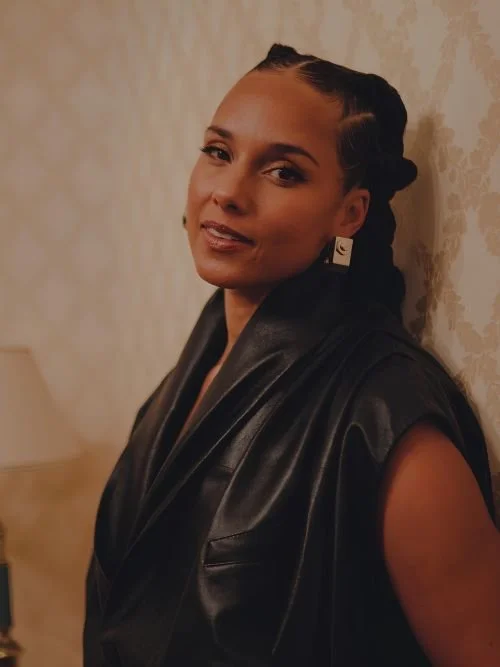
Why Alicia Keys Discussing the Barriers Women Face in the Music Industry Should Create Urgency
__________
I have written about…
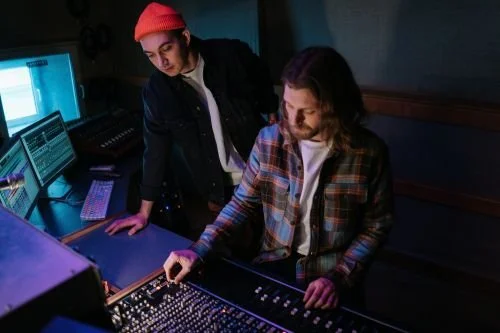
PHOTO CREDIT: cottonbro studio/Pexels
this subject a few times before. If we think about modern music and the abiding impressions we get. In terms of the best, most successful and inspiring music, most is coming from women. That has been true for many years. And it will continue indefinitely, as I don’t think we will see a time when male artist will dominate in that respect. There are a lot of great artists producing their own music. Some amazing women in the industry who produce their own music. However, it is very much true that the gatekeepers and those who have the greatest sway and influence in terms of changing the landscape of studios and the industry are men. Most of the producers in professional studios are men. It is an old boys’ club. It has been that way for decades. Alicia Keys raised in an interview with The Times. The incredible New York-born icon talked “about making new music, the terror of sudden fame and putting her art collection on show”:
“There were big moments along the way, like performing a duet of Changes with David Bowie for her Keep a Child Alive charity at the Hammerstein Ballroom in New York on November 9, 2006, which turned out to be Bowie’s last live performance. (“What a breaker of rules, what a unique person. Sharing a stage with him was unforgettable.”) Then in 2009 came Empire State of Mind, the duet with Jay-Z that has since become the hip-hop anthem of New York.
“I still can’t believe how much it moves people, how it speaks to having a dream and going for it,” she says of the paean to the Big Apple that was the Billboard No 1 for five weeks. “Neither Jay nor myself could do anything new for a whole year afterwards because nothing else was burning into the consciousness.”
What advice would she give someone now going through what she went through? “The first thing I would tell an artist is that they belong there, because when it happens you think, why me? You get impostor syndrome. I would also tell them to trust people who give good energy because it really helps to talk to others who have been through similar experiences. And I would tell them to own their intellectual property. People love to utilise what we create, and own it, and maximise it, and take loans off it, and build their businesses off of it…”
She stares into the middle distance. “So I would advise artists to think about how to become the owners of their own creations.”
She’s warming up to the subject of learning the hard way. “No one tells you these things,” she says, of having a viable career as an artist in the music business. “You deal with all these executives and lawyers who love to take their percentages and overcharge you, but they never say, ‘How can we ensure you’re here to stay?’”
“As time continues I get to be more confident, more creative,” says KeysMilan Zrnic
Keys isn’t naming names, but She Is the Music, a non-profit organisation she co-founded to get more women into the music industry, is clearly a response to dealing with men in the industry who did not have her best interests at heart.
“The music world becomes a good old boy network and all the incredible women working as engineers and producers are not given an open door,” she says. “Women make up 2 per cent of the entire business. I’m a producer and here we are, doing a bunch of work, killing it, so it’s shocking that the number is so small. Rather than just being pissed off about that, it was time to create opportunities.”
Feminist messages have popped up throughout Keys’s career, from A Woman’s Worth to Girl on Fire to Superwoman. “It’s true,” she says. “I didn’t aim to come up with feminist message songs, and most of them were written because I wasn’t feeling that strong so I had to give myself a pep talk to keep going, but it is a thread through my work.”
Perhaps the various business interests are also a product of wishing to take agency over her life after being pulled from pillar to post at such a young age. She founded Keys Soulcare, a skincare and make-up brand. “As a performer, I found myself under a lot of stress and it affected my skin,” she says. “But a lot of us are feeling stressed today, so I was thinking about creating something that would help not just people’s skin, but the way they relate to themselves. We’re told the most shallow things are the most important.”
Keys says that while female celebrities have always faced scrutiny, social media has now spread that pressure to almost everyone. “It’s quite negative: how you’re supposed to be, what you’re supposed to have, how you’re supposed to look,” she says. “Social media is one of the biggest experiments ever created, but nobody did a trial run to discover how it would affect the human psyche. People were just excited about the new frontier and now we’re seeing the effects. It will continue with AI, which we’re walking through in real time, seeing things at a rapid rate that aren’t actually real, and it’s being created without a strong moral backbone. That’s why it’s more important than ever to create things with meaning”.
KEYS is the most recent album from Alicia Keys. That was released in 2021. Maybe they are not big revelations or fresh insights being raised. However, an artist as huge as Alicia Keys discussing how few women are producing and give opportunities should lead to some change and larger conversation. We keep having this discussion and raising the statistics. Opportunities really not being created for women. The studio not a space that is necessarily inviting or set up for women. Even though articles like this from 2021 note that there are some awesome female artists producing their own work and leading the way, so many are doing this and not getting any recognition or respect. And when it comes to women credited as producers, the number is shockingly small. I last wrote about this when Lady Gaga made a powerful point at the GRAMMY Awards earlier in the year. HTL Music Business Academy reacted to her speech and wider realities regarding gender inequality and why women make up such a small percentage of producers:
“At the 68th Grammy Awards in 2026, Lady Gaga urged women to “fight for your songs, fight for yourself as a producer” during her acceptance speech. However, the data reveals a stark disconnect between this encouragement and the reality of women in music industry statistics. Women received less than a quarter of all Grammys at 23%, marking a dramatic 14 percentage point drop from the previous year’s 37% and the lowest level since 2022. This decline extends to nominations as well, where representation fell from 28% to just 24%.
The visibility of female artists collecting awards masks a deeper problem. When Bad Bunny accepted the 2026 Album of the Year award, he shared it with 12 male producers, songwriters, and technicians who weren’t on stage with him. This pattern repeats across major wins. Since 2017, men have claimed 76% of nominations and wins across all Grammy categories, while women have secured only one in five awards during the same period.
Behind-the-scenes roles where women are virtually erased
Producer roles remain the clearest disparity in the representation of women in the music industry. Since its introduction 51 years ago, no woman has ever won the Grammy for Producer of the Year, Non-Classical. In 2026, all five nominees were male. Current data shows women make up just 5.9% of producer credits on year-end Hot 100 charts, while men control 94.1%.
Songwriters face similar obstacles. Women comprise merely 18.9% of songwriter credits, with an overall ratio of 6.2 men to every one woman songwriter across 13 years of Billboard Hot 100 charts. Engineers and technical roles show equally dismal numbers, with women representing only 5% of these positions worldwide.
The collaboration problem in male-dominated genres
Genre analysis reveals where the inequality between men and women in the music industry hits hardest. Metal shows 0% representation of women in key technical roles, while rap registers just 0.7%. Christian and gospel music follows at 0.8%. Even electronic music, which leads other genres at 17.6% female producer representation, still left 37 of its top 50 songs with zero women credited in any technical roles.
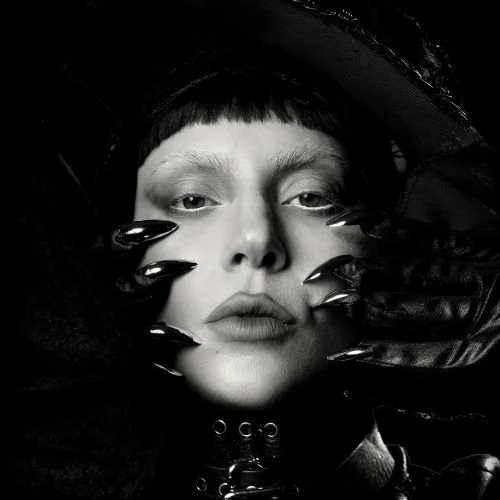
IN THIS PHOTO: Lady Gaga
Gender assumptions about technical abilities
Persistent assumptions about women’s technical capabilities create barriers in production and engineering roles. Women working in studios report being questioned about their competence, with one producer sharing the insulting line: “Women know nothing about rock & roll”. The perception problem runs deeper than individual comments. Over 40% of women stated their work or skills were dismissed by colleagues, while 39% cited stereotyping and sexualization as career impediments. Women in audio production believe they’re held to higher standards than male colleagues, with around 94% reporting this disparity. In effect, women must double-prove themselves to gain the same basic respect men receive automatically.
The lack of role models and visibility
Women face an epidemic of invisibility in key technical roles. Only 5% of audio engineers are female, creating a void of visible role models for aspiring professionals. This absence becomes self-perpetuating. Women don’t know about production careers because they’re not exposed to female producers at opportune ages. Besides limiting awareness, this invisibility affects performance. Studies show people tend to fulfill stereotypes when made aware of them, even subliminally.
How stereotypes prevent women from entering the field
Gender socialization shapes career paths from childhood. Boys receive technologically heavy toys before girls, and gender biases steer young boys toward guitar and bass while directing girls to violin and cello. These small disparities create long-term effects, reinforcing perceptions that women lack suitability for production roles. A whopping 79% of women in music are performing musicians, but only 12% are studio or mastering engineers.
Industry gatekeepers and antiquated practices
Male dominance in gatekeeping positions perpetuates inequality. Men hold disproportionate power in A&R and hiring roles, creating a “boys’ club” mentality. Power builds through trust, reputation, and relationships, leaving women with little leverage. Male producers get approached repeatedly for commercial projects, resulting in lack of diversity”.
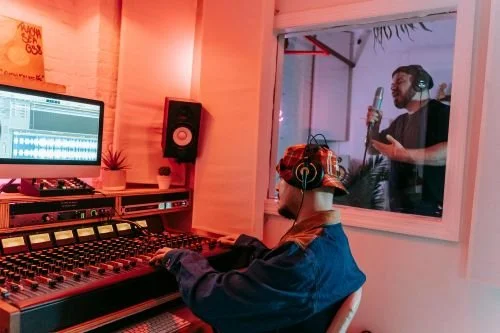
PHOTO CREDIT: Anna Pou/Pexels
It is great that artists like Alicia Keys are talking about creating opportunities. Rather than get angry about the statistics and how female producers are in the vast minority, look at imbalance wider afield through the industry, as Music Radar highlighted last month: “The USC Annenberg Inclusion Initiative has published its annual Inclusion in the Recording Studio study, which examines the representation of women and people of colour in the Billboard Hot 100 Year-End charts as artists, songwriters and producers. The report's conclusions are troubling, finding that 2025 saw "no progress" for women in music, with a decrease in participation across every single category measured. The percentage of female artists dropped by 1.6% year-on-year to 36.1% in 2025, while the percentage of women credited as producers fell from 5.9% in 2024 to 4.4% in 2025. The USC Annenberg report also found that more than 90% of 1400 songs evaluated across 11 years did not feature a female producer – in comparison, only seven of those songs did not credit a man in a producing role”. For sure, there are women in the industry supporting other women and shouting them out. However, when we look at the gatekeepers and those high up through the industry, there is little action or any sort of progress. Not really an interest in changing things. Despite the fact women are dominating when it comes to the best music and the standout tours, behind the scenes, there is troubling inequality and imbalance that has been like that for so long. And we are going backwards too. Women are calling for change and talking about the barriers they have to face, and yet the industry does very little. That idea of the old boys’ club still present. It is affecting festival headliners and bills. Even if small steps are being made there, look at award ceremony nominations and representation and recognition of women, and their brilliance and dominance is not being rewarded and recognised. You do continuingly wonder if that will change. If those who can make change and affect real progress will…
EVER take notice?!