FEATURE:
“You Guys Just Hate Women, Actually”
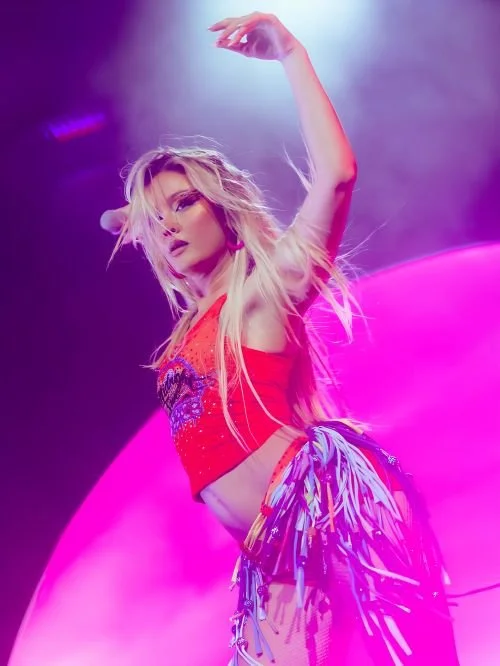
IN THIS PHOTO: Zara Larsson
A Misogynistic Double Standard Applied to Women in the Music Industry
__________
THAT quote at the top…
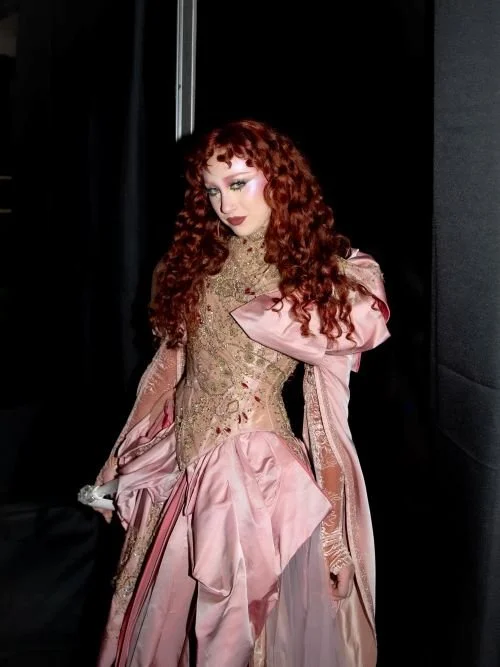
IN THIS PHOTO: Chappell Roan
of this feature was actually said by Zara Larsson. She is one of the biggest artists in the world, and someone who I will be writing about soon for a separate feature. The Swedish-born artist released the acclaimed album, Midnight Sun, last year. She was speaking with The Guardian about that album and reacting to its success. An artist overdue the sort of recognition that, she is perhaps best known for the 2015 single, Lush Life, which has passed two billions Spotify streams. The article writes how “Part of what has made Midnight Sun so irresistible to fans – who call themselves Larssonists – is its genuine youthfulness: it is ultra-fun, uber-femme and whip-smart, evoking tan lines on chests, handprints on butts and skinny-dipping in the dark, all delivered in Larsson’s bright, startlingly powerful three-octave singing voice”. At a time when women in Pop are dominating and creating some of the most powerful, uplifting and unifying music, Zara Larsson does not get talked about in the same way some of her peers do – and what should change. I shall expand on that further in another feature. However, she did react to the recent criticism and controversy around Chappell Roan – something I also wrote about – and the incident of a girl fan who wanted to approach Roan but a security guard stepped in and there was this awkwardness. Turning out that the security guard did not work for Roan or the hotel she was staying at, Roan also didn’t witness the incident but is getting blamed and dragged none the less. Chappell Roan is an extraordinary artist but probably not someone who thrives on fame and attention. She has had boundary issues with fans, many of whom have been unsettling and far too forceful and inappropriate, so it is understandable that she would want her privacy. Zara Larsson is also an extraordinary artist, but someone who knows the press and that side of things is a game.
She thrives on attentions of all forms and is similar to U.S. artist Addison Rae in that sense. Larsson also talked about ageism and sexism in the industry and how women over forty, if they look forty, are seen as past it and on the shelf. Robyn’s new album, SEXISTENTIAL, has been widely praised. It is a very charged, extraordinary and sexually open album. Artists like Robyn (who is over forty) often have been dismissed or seen as impropriate if they talk about sex at that age. Something that only seems to apply to women. Larsson is this young artist who is standing up for other women in the industry, collaborating with them and raising them and also being a great role model. That idea of knowing the paparazzi’s game and playing it might seem unwise and a bad example, but it subverts expectations and means that, if the artist is playing the game, it is not as alluring and interesting for the press. They are being played so what they thrive on, invading privacy and these unwarranted harassments, sort of don’t apply. A powerful and strong artist like Zara Larsson very much on control. She did say something about the treatment of Chappell Roan and what happened to her recently:
“Sometimes fame can feel like a Faustian bargain, with scrutiny, sexism and presidential subtweets coming as part of the package. As her star has kept rising, Larsson has been wondering if there are limits to how much fame she can take. Could she handle it if she was as famous as, say, Chappell Roan, now in regular standoffs with the paparazzi? “The more people hate her, the more I love her,” says Larsson. “I don’t like how she’s being treated at all. When a woman has boundaries, I think people freak out. Men can do violent criminal things and people applaud them, but when a woman says, ‘Stop following me,’ it’s controversial? It’s like: you guys just hate women, actually”.
It is quite telling. There are plenty of men in the music industry who, far from being cancelled, are enjoying the freedom to play gigs. Sure, a few have been jailed for crimes and you hope that when they are released their careers will be over, though there are so many men in the music industry who have done awful things and are reprehensible, and yet rules and laws do not apply to them. There are very few cases of women doing violent or criminal things. When they do something wrong or say something that is misjudged, then they are called out and often torn apart in a way men aren’t. There is also the misogyny and violence aimed at them. I think there is that expectation that women in music should always be available and there should really be no boundaries. If women are confident, make music that is seen as provocative or just simple true to them and has that a sense of power or confidence or whatever, then that is an invite to break boundaries or do anything. If men snap or react violently and are obnoxious then there is very little furore and they continue on. However, if any artist like Chappell Roan dares to want some space and not be approached by fans, then there is that misogyny and double standard. The fact that the recent case of a young fan being upset by a security guard after not doing anything wrong is not Chappell Roan’s fault. Some random security guard took it upon himself to be an idiot and, whereas he should have been criticised and taken to task across social media, so many of the posts were disrespectful to Chappell Roan and really offensive. If the roles switches and Roan was the security guard and the guard – whose name I can’t be bothered to look up – was the ‘artist’, then Roan would still get sh*t. Zara Larsson is not suggesting that all journalists and fans out there have this double standard and go after women more than men. Though I do feel like there are a lot of journalists and people in the industry who do hate women. Anything that is perceived being even slightly wrong, then they are there pouncing and ready to attack them. You can dress it up anyway you want, though it this continuing misogyny that is rampant through music. I keep writing about this because, more and more, there are stories of female artists and women in music who have received such hatred and vitriol for either not doing anything wrong or something minor.
Take men and the fact that nearly everything controversial, criminal or worse is because of them, and how often do they face serious repercussions or are even properly called out and criticised? The freedom they are allowed is staggering. If the male artist is profitable enough then rules and morals don’t apply to them. Chris Brown assaulting Rihanna, he is someone who has also been accused by other women of being violent, yet he has not only been allowed to continue his career and collaborate with other arrests – who really need to check their sanity, moral compass and soul before doing this! -, but he has headlined festivals and is getting booking and selling out shows (the fans, likewise, need to check their brain cell count and see if they have reflections at all!). Kanye West is abusive, racist, antisemitic and a repulsive human. Men like him are not held accountable. In his case, using the pathetic accuse of having mental health struggles – people who suffer from mental health issues can do so without being racist and offensive! -, and that lets him off the hook. Kiana Fitzgerald reacted to this in her recent feature:
“Despite what he emoted in the much-discussed Wall Street Journal apology ad from January, Kanye West has done pretty much none of the moral soul-searching or action that many, including me, called for. “It’s not easy to lead the discussion when you’re fighting for your life against mental illness,” I wrote in an open letter on January 27th. “But some of us have taken up the task, regardless of the state of our health. You weren’t ready to put the bipolar conversation on your back then. I wonder if you’re finally ready now.”
For some, including mental health experts, the apology represented authenticity and progress. “When I read it, I honestly felt sad about it,” Houston-based licensed psychologist Dr. Bianca Jones told me last month. “It seemed sincere.” As someone who lives with bipolar type 1, like Ye, I agree with Dr. Jones. The ad was a major first step in making amends for his actions. But sincerity without follow-through is just optics — something West has long understood how to weaponize.
In February 2025, West started selling T-shirts with a swastika emblazoned on them. This came less than two years after he apologized to the Jewish community for previous transgressions. Within months of selling the shirts, Ye released a song called “Heil Hitler,” which praised and sampled a speech by the Nazi leader. While the song was banned in Germany, it went viral online and inspired dickhead influencers like Andrew Tate and Nick Fuentes.
With regards to the Black community, Ye has famously made jaw-dropping comments like slavery was “a choice,” and worn a T-shirt that bore the slogan “white lives matter.” West has also appropriated the Confederate flag, a symbol recognized for its deep anti-Blackness. In 2024, one of his former employees filed a lawsuit that alleged West often treated Black employees worse than white ones, berating them on several occasions. And to be clear, these are just a few of his many transgressions over the last two decades.
In the two full months since the ad was published, Kanye has not come forward with any tangible ideas to unburden the bipolar, Jewish, or Black communities. Instead, he reminded us that he doesn’t need to apologize to be a top artist; he’s Kanye fucking West. “It’s my understanding that I was in the top 10 most listened-to artists overall in the US on Spotify in 2025, and last week and most days as well,” West told Vanity Fair on January 27th. “My upcoming album, Bully, is currently one of the most anticipated pre-saves of any album on Spotify, too.”
Most of us with good sense noticed that Bully was initially set to be released the week of the apology ad. Ye insisted that this was unintentional (how could we be so stupid to assume?) and coincidentally pushed the album back to March 28th. Between the ad and the release date, Ye has been extraordinarily busy making plans and making moves. He can’t do that alone.
On March 9th, Ye announced a one-night concert at SoFi Stadium in Los Angeles, set for April 3rd. When artist pre-sale tickets went live on Ticketmaster the following day, over one million people were in the queue, leading Ye to announce a second show for April 1st. Tickets to Ye’s first US show in five years ranged from $125 for the cheapest seats to $595 for floor.
Beyond L.A., Ye will bring his performances to numerous countries: He played Mexico City on January 30th and 31st, and will play New Delhi on May 23rd, and Arnhem, Netherlands on June 6th and 8th. (For both Mexico City and Arnhem, tickets for the initial date sold out so quickly that they added a second.)
This is all on top of a three-night Wireless Festival headlining takeover in London from July 10th through 12th, and a 103,000-capacity show in Reggio Emilia, Italy on July 18th. It’s obvious that not booking Ye means leaving money on the table — but these shows prove his past actions may as well mean squat. The venues he’s booking are massive, often requiring multiple show dates. Promoters may have empathy for the communities impacted by Ye’s rants, but they see green, and green only.
Bully itself is currently projected to move about 117,000 first-week units, on track to debut at No. 2 on the Billboard 200, behind BTS’s ARIRANG. For context, Vultures 1 sold 148,000 first-week units and debuted at No. 1. Vultures 2 moved 107,000 first-week units and debuted at No. 2, where it peaked. After everything Ye has put the world through, a relatively flat commercial performance could be seen as a success.
Ye’s fans aren’t the only ones tuning in. Sites like Pitchfork, Complex, and Rolling Stone reviewed Bully, while Variety, Billboard and The Hollywood Reporter covered Ye’s first night at SoFi. It’s not even as simple as wanting to contribute to the record of criticism. (There are such things as retrospective reviews.) At certain sites, the clicks are worth the coverage.
Most, if not all, of these publications claim the moral high ground in other instances, from coverage of music to show business. For a time, they even drew a line in the sand with Kanye — but then everyone shrugged their shoulders and went back to covering him immediately. These outlets are essentially riding the wave of the Trump effect: platforming to platform. And Kanye West will almost always put numbers on the board. He’s been telling us this for decades. But in order for these sites to collect their coins, event promoters have to pull the trigger and book Ye in the first place.
Bookers hold more power than any individual news outlet. If anything, everyone in the orbit of bookers ends up downstream of demand. These promoters are effectively bringing Ye’s visions to life and paying him millions, while also ensuring their pockets are fattened in the process. The venues and their proprietors also have a hell of lot to gain, much to the dismay of people in the communities that have been impacted by Ye’s rhetoric. “If he remains on the right path and makes more effort to make amends, that is well and good, but if he returns to his old ways these venues will have much to answer for,” the charity Campaign Against Antisemitism told the BBC on March 31st”.
Circling back to Zara Larsson and what she said about how there are those in the industry that hate women. More than that, they hate women and will open doors for men. We see it time and time again. How can Chappell Roan, an artist who has simply dared to speak out and say she wants boundaries and for intrusive fans to leave alone, gets all this flack and misogyny because of that. Look at someone like Kanye West and countless men in music who are genuinely awful and should been given a global cancellation, and yet they can flourish and get a free pass. In spite of female dominance in music and the unquestionable superiority they have over men in music – not that we should pit them against one another, but the fact is women in music are releasing the best albums and on the most successful tours right now -, it is still a patriarchy. That fear that powerful male artists being punished, imprisoned and cancelled would be an awful thing. Yet, if a women does anything slight or innocuous then they are piled on. Nothing will change – because, when it comes to misogyny, saying there have been baby steps towards improvement is an overstatement -, yet it is high time that it should! Zara Larsson’s comments for The Guardian are timely and strike a chord. The only upside is that Chappell Roan will have a long career, release award-winning albums and hopefully live a happy life where fans can respect her but know their place and give her the space and privacy she deserves. There does need to be a shift and the double standard and toxic culture that has been allowed to fester does need to be challenged. You have to ask, as misogyny and men getting to slide happens time and time again…
WILL it ever change?!