
FEATURE:
Groovelines

IN THIS PHOTO: Lady Gaga shot for Vogue in 2011 by Mario Testino
Lady Gaga - Judas
__________
IT wasn’t that long ago…
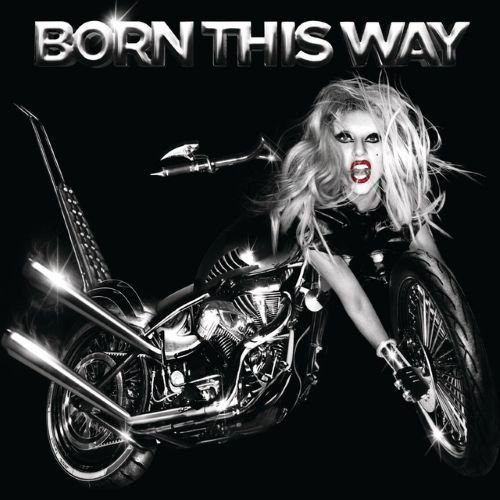
when I marked Lady Gaga’s fortieth birthday. She turned forty on 28th March. I wated to revisit this artist because her album, Born This Way, turns fifteen on 23rd May. Her acclaimed second studio album, it contains some of her best-known songs. For this Groovelines, I am concentrating on one in particular. The second single from the album, Judas was released on 15th April, 2011. So I wanted to spotlight this standout Gaga track fifteen years after its release. Often ranked alongside her greatest singles, I am going to explore it a bit further. "The song is about honoring your darkness in order to bring yourself into the light", Lady Gaga told Google. "You have to look into what's haunting you and need to learn to forgive yourself in order to move on". A top ten success in the U.S., U.K. and multiple nations, it was a smash. Critically acclaimed too. The music video ruffled some feathers. The Catholic League's president William Anthony Donohue criticised the music video for its portrayal of Gaga as Mary Magdalene. He called her irrelevant. Madonna probably faced this when she released Like a Prayer in 1989. That single gaining controversy because of its video. In this article from Vibe, we get some insight from Lady Gaga about the provocative video. Labelled ‘controversial’, this is instead an artist pushing boundaries and being bold. Often attacked as being irresponsible or offensive:
“The always controversial Lady Gaga has been spending a lot of time defending her current single “Judas.” With a number of obvious biblical references and depiction in the music video, critics have been coming up with their own rationale behind the pop powerhouse’s lyrics.
E! News sat with Gaga to get the full story.
“It’s essentially about me going back to an ex-boyfriend and still being in love with someone that betrayed me, someone that was bad for me. That’s really what the video is, the video is a metaphor for forgiveness, and for betrayal and darkness being one of the challenges in life as opposed to being a mistake. The name Judas is something that bears such an intense connotation. I often feel misunderstood, and I think my fans do too. I think [the video] liberates the word in a lot of ways…takes it out of the negative and into the positive.”
“I try to write from a really honest place when I write pop music, and then carry the message of the song into a more deep and more symbolic visual. That’s really what the video is, the video is a metaphor for forgiveness, and for betrayal and darkness being one of the challenges in life as opposed to being a mistake.
“The name Judas is something that bears such an intense connotation. I often feel misunderstood, and I think my fans do. I think [the video] liberates the word in a lot of ways…takes it out of the negative and into the positive.”
“I figured if I’m gonna get stoned for making this video, I’ll stone myself first.”
Interestingly enough, Lady G’s camp dropped another single from her upcoming disc Born This Way. Listen to the difference below”.
When it comes to artists bringing religion into their videos, I tend to find that churches and religious groups are the most serious and least humorous people. Always seeing it as an attack. So it was unsurprising that Judas got some people upset. However, as this article from The Christian Post explores, it is not about being anti-religion. Lady Gaga making a statement. Women in music especially pilloried and attacked if they do anything that is in the least bit challenging and daring. A major Pop artist using Judas and that biblical figure as a metaphor and not directly referencing him:
“I don’t really view the video as a religious statement. I view it as a social statement. I view it as a cultural statement.”
Repeating and reiterating throughout the length of the interview, “the video really is just a metaphor” and “not meant to be an attack on religion,” Gaga specified that she respected and loved everyone’s beliefs. “My fans know that about me.”
Gibson, the creative director, also revealed in The Hollywood Reporter (THR), “We don’t touch on things that we have no right touching upon, but the inspiration and the soul and idea that out of your oppression, your darkness, your Judas, you can come into the marvelous light.”
“So it’s about the inspiration and to never give up... We’ve created a new Jerusalem.”
A believer in the Gospel message herself, she told THR, that the video went through several changes and late-night debates. “At one point, there were two completely different views and I was like, ‘Listen, I don’t want lightning to strike me! I believe in the Gospel and I’m not going there.’”
“It was amazing to have that conversation about salvation, peace and the search for the truth in a room of non-believers and believers,” Gibson mentioned. “To me, that was saying God is active in a big way.”
Like Gaga, who felt her song “Judas” was God-sent, the famous choreographer stated, “I do believe God inspired and worked on everyone’s hearts.”
Though the 25-year-old headliner made plain efforts to emphasize the material had no religious significance, it seemed both she and her “sister” Gibson, were seesawing between the secular and religious connotations themselves.
Author David W. Stowe posited in The New York Times, “Interestingly, it’s Lady Gaga who offers a throwback to the less-segregated pop of the past... While the song is unlikely to herald an end to the religious/secular rift in pop music, maybe it takes someone as genre-bending as Lady Gaga to bring mainstream pop and Christianity back together
In fact, several concert attendees testified that the pop artist spent much time talking about Jesus throughout her show, and not in a “blasphemous way.” Her message was simple: It doesn’t matter who you are or what you do...Jesus loves you.
Critics still are wary of her doctrine and are careful to distinguish between the creed of the Bible – Jesus is the way, the truth, and the life – and her own beliefs, which many believe are dangerously over focused on the self.
Even the main idea behind “Born This Way,” another controversial song on the album, is that “you can be reborn over and over again, as many times as you like in your life, until you feel that you have found the person you can love the most in yourself.”
Nonetheless, Gaga is not out to teach anyone anything, she declared. “I don’t think my fans are stupid. They’re so smart, my fans, which is why I make the videos that I make because I know they understand the imagery.”
“It always means something to me when I can see that the music has affected their life in a positive way. That’s the greatest gift they could give me, is when I see that they’re loving themselves.”
She desired to be a good influence to her fans and “more importantly, reverse pop icon.
“Don’t idolize me, idolize yourself,” the pop singer advised – to the probable angst of many believers.
Whatever message she is spreading, it appears Gaga isn’t through with all the controversy just yet. “I just want to keep pushing forward and making things that are great and thought-provoking.”
Her release of the complete album on May 23rd is sure to draw some flames, with songs like “Black Jesus, Amen Fashion,” which is based on her move to downtown at nineteen.
“It’s like me saying iconic imagery my whole life taught me to look at Jesus and look at religion in a certain way, so I say black Jesus as a representation of an entire new way of thinking... [like] saying [a] new way of thinking is as easy as putting on an outfit.”
Gaga concluded her interview by stressing for the last time, that the video was “just an artistic statement,” not an attack on anyone, and also told Rancic what she felt her purpose was.
“I believe I was put on this earth to cause a ruckus,” she claimed, which indeed she appears to be faithfully and most ostentatiously doing”.
Born This Way was the lead single from the album of the same name. There are some who feel it should have been Judas. Arguably a song with more punch that makes a bigger statement. I do think that Judas is one of Lady Gaga’s defining tracks. This article from The Guardian provided excerpts from an interview that appeared in Saturday's Weekend magazine in May 2011. Simon Hattenstone got this exclusive interview with Lady Gaga:
“Lady Gaga has described her relationship with fans in religious terms, saying: "If I can be a leader, I will."
In an exclusive interview with the Guardian, the singer, whose current single is called Judas, refers to her recent Monster Ball tour as "a religious experience", becoming for many, an alternative to organised faith. But she goes on to clarify, "it's more like a pop cultural church".
The pop star has developed a devoted fanbase over the last two years, and her single Born This Way is being championed as an anthem for the disenfranchised, particularly in America.
Yet she insists: "It's more self-worship, I think, not of me. I'm teaching people to worship themselves."
Gaga gives her own explanation as to why her fans, who she dubs "monsters", have come to look to her for guidance rather than the establishment. She says: "The influence of institutionalised religion on government is vast. So religion then begins to affect social values and that in turn affects self-esteem, bullying in school, teen suicides, all those things.
"It puts me in an interesting position as an artist whose fanbase is commercial and widening. If you were to ask me what I want to do – I don't want to be a celebrity, I want to make a difference."
She continues: "I never wanted to look pretty on stage and sing about something we've all heard about before. I'd much rather write a song called Judas and talk about betrayal and forgiveness and feeling misunderstood, and talk to the fans and figure out what it is society needs. If I can be a leader, I will."
The statement appears to echo John Lennon's 1966 declaration that the Beatles were "bigger than Jesus". But Gaga is at pains to point out that she is not fundamentally against the church. "Don't say I hate institutionalised religion – rather than saying I hate those things, which I do not, what I'm saying is that perhaps there is a way of opening more doors, rather than closing so many”.
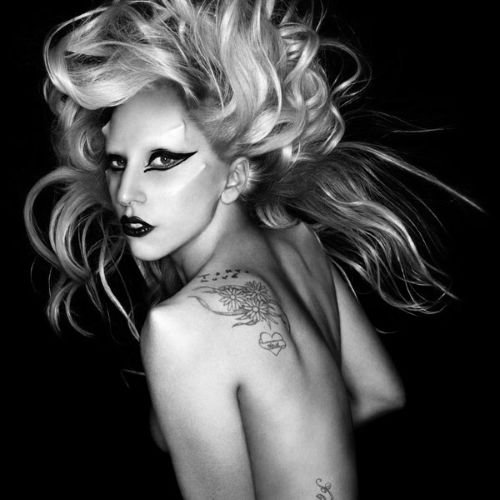
I am going to end with a review of Judas from NME. I have seen some reviews trat dismissed the track or felt it did not stand out. Though I would disagree. Judas is one of Lady Gaga’s most distinct and enduring singles. One that I hear widely played to this day:
“Because ‘Judas’ is the song that Lady Gaga should have come back with. You can see why she didn’t, since it is employs so many of the hallmarks that make a Gaga song a Gaga song. It’s typically Gaga, unmistakably in the same lineage as ‘Bad Romance’ and ‘Poker Face’.
It has the opening vocal freeforming ‘ra ra woos’. It has the nursery-rhyme-simple but addictively compelling chorus refrain. It has the techno breakdown and the spoken-word segments. Yet its genius (and we are going to very tentatively use the word ‘genius’, in the sense that we believe pop music at its best is a genius medium) is that it really doesn’t sound like Gaga in her comfort zone at all.
For one, the heavy-metal-techno sonic gymnastics she promised from the album are present in a way they weren’t on ‘Born This Way’. The breakdown has elements of the hardest techno and the boingiest dubstep, yet the chorus is so instantly pure-pop unforgettable that it just might – might – be even better than ‘Bad Romance’.
Lyrically, it doesn’t sound quite so provocative as the pre-hype would suggest, which itself makes it more accessible. ‘Born This Way’ was so heavy-handed in the positioning of her as a leader for the freaks and outsiders that it led to a minor backlash among people who don’t consider themselves to be freaks and outsiders.
Here, the religious iconography is used more as metaphor for an individuals struggle between the dark and the light sides: “I’m just a Holy Fool, oh baby he’s so cruel, but I’m still in love with Judas, baby.”
Or, at least we think that’s what we’re getting from: “In the most Biblical sense, I am beyond repentance. Fame hooker, prostitute wench, vomits her mind. But in the cultural sense I just speak in future tense. Judas kiss me if offenced, or wear an ear condom next time.”
We’re going home to listen to it another seven times. But we at NME happen to believe that Lady Gaga is one of the most amazing things to happen to pop music for a long, long time. And she’s come back with a song that restores our faith that the ‘Born This Way’ album when it comes is only going to boost her amazingness quotient. So all is good with the world”.
On 15th April, Judas turns fifteen. Born This Way was Lady Gaga's first number-one album, and it was the highest first-week total since 50 Cent's The Massacre (2005) sold 1,141,000 in its first week. Gaga was the fifth woman to sell one million copies in a week, after Whitney Houston (The Bodyguard Soundtrack, 1992), Britney Spears (Oops!...I Did It Again, 2000), Norah Jones (Feels Like Home, 2004), and Taylor Swift (Speak Now, 2010). You can read about the album’s immense commercial performance here. It was a huge moment for this still-emerging Pop artist. Judas helped to make Born This Way this titan of an album. Judas scores high when it comes to ranking her songs. In 2020, The Guardian ranked it fifth: “Dismissed at the time as Gaga’s attempt to remake Bad Romance, Judas plays out more like that track’s gloriously unhinged, turbo-charged sequel. Gaga alternates between a robotic half-rap, a strange caterwauling shriek and then, on the Steps-esque chorus, a pure pop vocal perfect for radio ubiquity. Underneath the lyrical blasphemy, RedOne cooks up an industrial-strength soup of house, pummelling electro and, at the 2min 40sec mark, the sound of a synth disintegrating punctured perfectly by a levity-inducing “Eww” from Gaga”. Included in the list of the eleven best Lady Gaga songs (it came in seventh), this is what Ticketmaster said about Judas: “Born This Way saw Gaga embracing her theatrically with open arms, and ‘Judas’ is the perfect blend of her two worlds – a creative piece of electro-pop with an operatic twist. Always inclined towards the darker side of house and electronic music, Gaga references this in the lyrics as well as the production, singing about her love for a man who betrayed her, but also insinuating that she is the one dragging him into the dark. Larger than life in every sense and complete with a Gaga-style chanted bridge, it’s hard not to be seduced by it”. As it turns fifteen on 15th April, I wanted to spend some time with Judas. Perhaps seen as unmemorable or retreading other songs of hers in 2011, Judas has gained better recognition and respect in years since its release. It is among the very best songs from a Pop icon who is still…
AT the top of her game.