FEATURE:
Spotlight
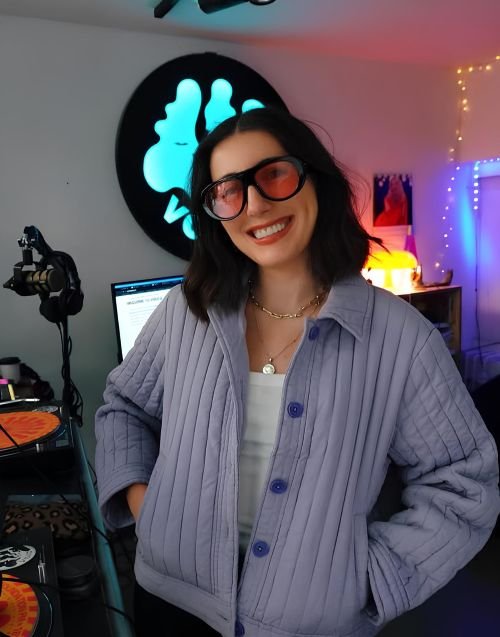
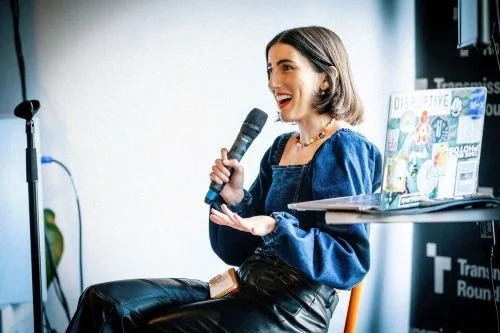
to spotlight and discuss brilliant female D.J.s and broadcasters. It is an industry and side of music that is still male-dominated, or at least set up for men. There are some incredible women who are changing that, though the industry itself is not doing enough to balance things and counteract the sexism that exists. I wanted to shine a light on the brilliant Maria Hanlon. I want to get to some interviews with Hanlon. However, there is some brief biography that I want to lead off with: “Maria Hanlon is a London-based DJ & Presenter. Since moving back to London in 2021 Maria has been busy playing across the capital showcasing her signature sound, weaving together the best in Soulful House, Deep House & Garage. Despite only picking up DJing a few years ago, Maria has been making serious waves on the circuit - last summer saw her return to the infamous Pagoda at Secret Garden Party, Queens Yard Summer Party, Ibiza and make her Snowbombing and Cross The Tracks debut. Maria also hosts The Voices Breakfast Show on Voices Radio, one of London’s most exciting radio stations”. Before getting to chats around her broadcasting and presenting work, it is also worth noting Maria Hanlon is a radio producer. This 2025 feature is about The Voices Breakfast Show on Voices Radio and someone who also helps produce at BBC Introducing in London:
“WHAT DOES A RADIO PRODUCER DO?
A radio producer is usually responsible for the overall content and production of a radio show.
Roles and responsibilities may include:
Live studio production
Booking guests
Choosing music
Compliance
Editing audio
Generating ideas and researching content
DIFFERENT TYPES OF RADIO PRODUCTION
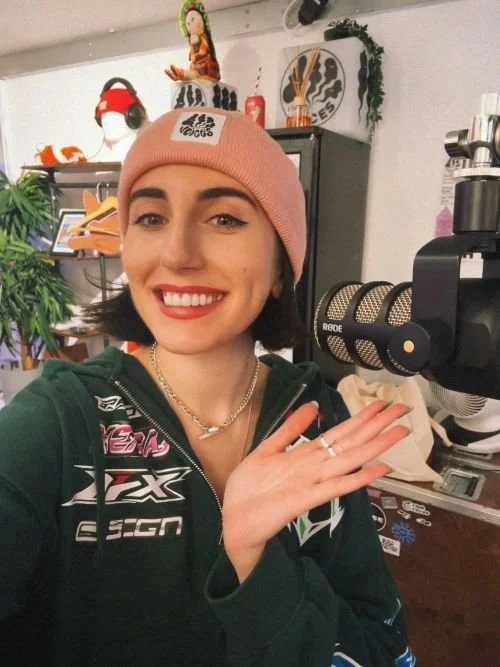
The producer’s role will differ on each show. For example when I produced at Voices Radio (community radio) my main role was to welcome the presenter and guests, get them set up on the mic & equipment and monitor the levels throughout the show. Then I’d upload the show to Mixcloud and Soundcloud after and reply to emails along with other admin tasks.
However, at BBC Introducing in London (local radio) I work alongside the presenter, Jess Iszatt and we do most of the prep before the show including editing interviews, listening to and complying music, music logging and making assets for social media and BBC Sounds.
HOW TO GET INTO PRODUCTION
There are many different ways to get into production, many producers start their radio journey at student radio, hospital radio or community radio.
The best way to gain experience is to learn in a live studio environment. I’d suggest reaching out to see if you could do a shadow shift at a few different stations.
Although you probably have a favourite show or station, gaining experience on a range of shows can be very beneficial so you can see how different producers and presenters work.
Note: Read the excellent recap of UD’s #IT2024 session with Ahmed Hussian, Head of BBC Asian Network in conversation with journalist, Yemi Abiade HERE.
WHAT MAKES A GOOD RADIO PRODUCER?
Working in a live radio environment can sometimes have its challenges, producers need to work well under pressure and remain calm and collected. A good radio producer will also be a creative thinker and come up with new ideas and make them happen. As a producer you’ll need to be technically skilled so you can make sure the equipment is working properly. You’ll also need to have great attention to detail when editing or listening to live audio. Finally, producers will need to be a team player and create a good vibe in the studio and support the presenter so they feel relaxed on air.
FINAL THOUGHTS
Producing live radio is so exciting and it’s a really rewarding job seeing all your hard work come together live on air. I hope my guide encouraged you to start your radio production journey! Check out a few useful links below to get the ball rolling”.
I am also dropping in text from Mixcloud and their conversation with Maria Hanlon. You can check out Voices Radio here. This is someone who champions creative communities. I am really excited by a wonderful broadcaster, producer and D.J. I do think that Hanlon will present on a station like BBC Radio 1 or BBC Radio 6 Music at some point in her career. That said, it feels like she has a great home at Voices Radio. I am including interviews that focus on her broadcasting. However, as a D.J., Maria Hanlon is someone who blends Soulful House, Deep House, Broken Beat and Garage:
“Maria Hanlon has a journey into radio is rooted in a lifelong love of music, shaped by her father’s carefully curated CD collection and later expanded through Brighton’s buzzing nightlife. From early encounters with Stevie Wonder and Aretha Franklin to being blown away by Caribou in a basement club, music has always been a constant thread in her life.
What was it about radio that really enticed you?
There are so many things I love about radio. One being the time you get with your interview guest and the opportunity to ask them questions that you might not usually be able to. I’ve been lucky enough to interview some of my musical heroes such as Colleen ‘Cosmo’ Murphy, Louie Vega, Charlie Dark and Jamz Supernova which were real pinch-me moments. Another aspect of radio that I adore is the community. I have made so many friends at Voices Radio and know there’s always people to ask for advice, hang out with or go to see DJ. As someone who’s not from London, Voices feels like family here in The Big Smoke. And of course, at the heart of it all is the music. Digging deep, discovering new sounds and sharing selections. There’s nothing better.
How did your journey lead to you getting your radio show over at Voices Radio?
A friend sent me a Facebook ad from Voices Radio, which had just launched and was looking for new hosts. I reached out to Toby, one of the co-founders, and he offered me a trial show that same week. I prepped as much as I could, hopped on a train to London and ended up hosting one of the very first Voices shows. Though I didn’t realise it at the time! Thankfully, it went really well and Toby invited me to join the station with a regular slot.
Not long after, I decided to move to London. I picked up different part-time jobs so I could fully commit to my Voices show and throw myself into the city’s incredible music scene. During my time there, I also learned how to DJ, which soon led to bookings alongside my regular radio shows.
What would you say was the turning point for you in your radio career?
One of the biggest turning points for me was hosting the very first breakfast show on Voices Radio. I felt incredibly grateful that the team trusted me to launch their early-morning programming. It felt like a milestone not only for Voices but also for my own radio career. There’s something uniquely special about breakfast radio. My goal has always been to kick off the weekend, sharing soulful sounds and making listeners smile each time they tune in.
What are your top tips for presenting and putting together a radio show?
The most valuable lesson I’ve learned is to simply be yourself, as obvious as it sounds. It’s natural to admire certain presenters or DJs, but your greatest strength is that there’s only one you. Authenticity and passion are what resonate – both on and off air. When it comes to putting a show together, preparation is key. I like to have plenty of music lined up, detailed notes on each track, thoughtful questions for my guest, and jingles ready to go. That way, when the show begins, I can relax, enjoy the moment and let everything flow without the stress of worrying about what to play or ask next.
Looking forward a little, what do you think the future of radio looks like?
I think the future of radio is looking incredibly exciting. While being on air is unmatched, so many community stations in London now host events, fundraisers, panels and workshops that people can get involved in. Voices is a perfect example. It can be a stepping stone into hosting your first show and gaining studio experience. A space to share your record collection just for fun, or, like in my case, the foundation for building a career.
As the radio landscape evolves, I don’t think anything can replace being live on air. Radio thrives on human connection, storytelling, interviews, shared experiences and carefully curated shows. It’s irreplaceable and more important than ever.
What lessons have you taken about yourself through your radio show?
My radio show has shown me just how passionate I am about championing the music I love. Whether that’s spotlighting emerging talent, celebrating timeless classics or curating sets that capture a mood. It’s also made me realize how much I enjoy interviewing people and hearing their stories. I’m so grateful I decided to try radio during lockdown, because it’s become the thing I love most”.
I am going to end with another interview. The Institute of Contemporary Music Performance spent some time with Maria Hanlon last year. If you have not heard Hanlon’s radio work or seen her as a D.J., then I would suggest that you check her out. A crucial tastemaker and wonderful producer, she is one of our most important voices and talents:
“As a DJ, producer and tastemaker, Maria Hanlon plays an integral role at BBC Introducing in London, helping support the next generation of talent in getting their music heard by a wider audience.
Alongside presenter Jess Iszatt, Maria is an essential cog in the platform's machinery as well as holding down a show on the King's Cross-based community radio station, Voices Radio.
She's a regular at gigs and always looking for new sounds and artists to champion. After providing ICMP students with online feedback via our Careers and Industry Hub, we caught up with Maria to hear her essential tips on navigating the music industry, exploring the do's and don'ts of freelancing, how to make the most of the BBC Introducing platform and more…
Want to get into community radio? Immerse yourself in the station's world
With a community station like Voices Radio, it's good to join the network and get really involved - listen to the shows, attend socials and get a feel for the sound of the station. Each day features different genres of music - for example, Wednesday is r'n'b, garage, grime and hip hop, Thursdays are more indie focused. If you want to apply for a show, dig deep into the station's programming and work out where you might fit in its schedule.
Use the BBC Introducing platform to upload the music you think represents you best
If you're looking to make your mark and find a bigger audience with BBC Introducing, the first thing to do is to upload your music. For those that don't know, the Uploader is essentially a giant inbox where the team listens to the music that gets uploaded. Add your music there and make sure it is something that represents you best. We get sent hundreds of tracks each week so try to upload the music you think authentically represents you.
Don't agonise over perfecting your music - do share what you're proud of
It's always hard to know when to release your music as there's always another tweak or edit you can make.
I think the best way to know when a track is ready is when you feel proud of it and you feel it authentically represents you. Make music that you love rather than trying to tap into a trending genre or style.
There's only so much you can tweak so try to release when you feel confident in a piece of music. Of course, working this out depends on each individual artist and can initially be tricky to find out.
Network in person and follow up by email
In person meetings for new artists looking to meet tastemakers can be an effective way of making an impression. It's really beneficial when meeting people and putting faces to names.
If you are networking with BBC Introducing, then make sure your music has been uploaded to the BBC Introducing Uploader and your profile is updated. Then, if you'd like to send an email, keep it brief with the key information.
Gigging artists should try and get warm up slots
There are so many brilliant music venues in the capital. I'm in North London and the Jazz Cafe and Koko are two of my favourites. There's Paper Dress Vintage, Oslo Hackney, Folklore, Ninety One Living Room, The Old Blue Last, The Shacklewell Arms alongside so many others in East London that are all brilliant.
For new acts you're spoilt for choice and securing support slots is a really good way to play to a bigger audience and hopefully gain some new fans. At the start, gigging as much as possible is a really great way of meeting other artists and fans as well as gaining confidence and experience performing”.
I shall wrap it up there. I have a lot of respect for Maria Hanlon. Not only one of our best D.J.s and broadcasters, she is so inspiring when it comes to her advice and guidance. How to get into radio and production. A simply incredible talent and a staple of Voices Radio, go and follow, connect with and listen to Maria Hanlon. In years to come, I feel that she will play huge international gigs and work across some massive radio stations. It would be just reward for her…
IMMENSE talent.
___________
Follow Maria Hanlon
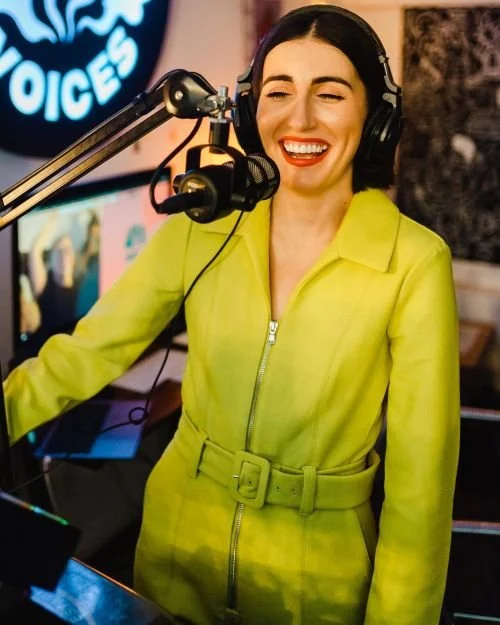
PHOTO CREDIT: Benedict Priddy
Instagram:
https://www.instagram.com/mariahanlon/
TikTok:
https://www.tiktok.com/@mariaanitahanlon
Soundcloud: