
FEATURE:
Try Again
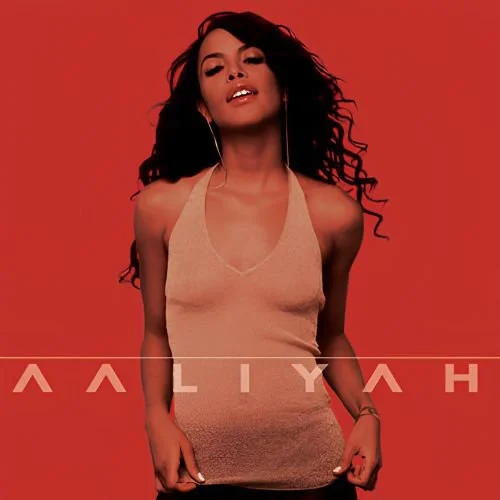
Aaliyah at Twenty-Five
__________
ONE of the most heartbreaking…
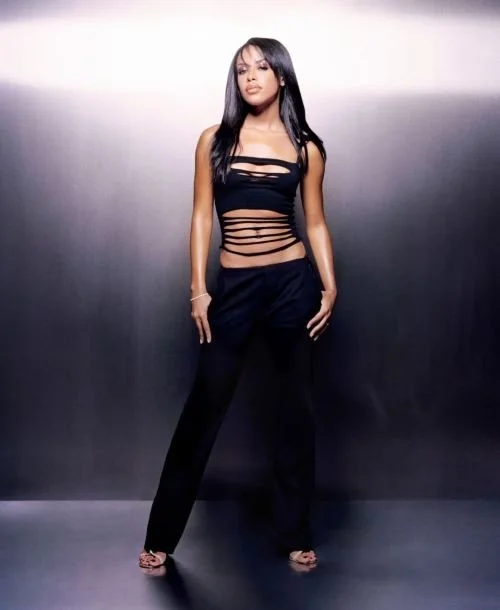
IN THIS PHOTO: Aaliyah photographed on 23rd May, 2001 in London/PHOTO CREDIT: by Hamish Brown/Contour by Getty Images
losses in music history was when Aaliyah died on 25th August, 2001 at the age of twenty-two. Killed in a plane crash after flying back from the video shoot for Rock the Boat. The story behind how she got on the plane and how she did not want to board it makes it especially tragic. Aaliyah was one of the most influential artists of her generation. Her legacy remains. Artists such as Beyoncé has cited Aaliyah as an influence. She released three albums in her lifetime. Her 1994 debut, Age Ain't Nothing but a Number, comes with certain controversy, as it was produced and co-written by Aaliyah’s mentor, R. Kelly. He is currently serving a thirty-one-year prison sentence after being convicted on multiple charges involving child sexual abuse. She and R. Kelly married when Aaliyah was aged fifteen. The marriage was annulled by her parents in February 1995. On 13th August, Aaliyah’s second studio album, One in a Million, turns thirty. This time, without R. Kelly as producer or writer, there is a much stronger and less tarnished reputation to this album. On 7th July, 2001, Aaliyah released her extraordinary final studio album, Aaliyah. I think that it is her strongest album. One where you truly feel that Aaliyah realised her full potentials. A moment where she hit a peak. It makes it really sad that she would not be able to follow this album. I want to mark twenty-five years of an album that has this massive influence. It was a mature step forward for Aaliyah and completed this overhaul. As The Independent's Micha Frazer-Carroll writes, “acts such as Destiny's Child, Ashanti, Amerie, and Cassie capitalized on the success of the album's "idiosyncratic sound", while Aaliyah's "pared-back vocal phrasing" established an archetype for a "more stoic R&B singer" that would influence vocalists like Ciara and Rihanna”. Reaching number one in the U.S., Aaliyah boasts incredible singles, We Need a Resolution, More Than a Woman and Rock the Boat. The brilliant Try Again was a European and Japanese edition bonus track.
Before getting to features and reviews for Aaliyah, I want to feature a cover story that first appeared in the August 2001 issue of VIBE Magazine. Some of the tone is quite standoffish and insulting. However, it is important to highlight this cover story, as it was published about a month before Aaliyah’s untimely death:
“With a new album and the romantic lead in the upcoming Anne Rice-adapted flick Queen of the Damned, Aaliyah is ready for superstardom. But don’t think you can get too close to her. Hyun Kim tried and found out that some things are best left alone. Illustration by Alvaro. Styling by Angela Arambulo
Aaliyah lives the perfect life. To hear her tell it, she wouldn’t change a thing. “This is what I always wanted,” she says of her career. “I breathe to perform, to entertain, I can’t imagine myself doing anything else. I’m just a really happy girl right now. I honestly love every aspect of this business. I really do. I feel very fulfilled and complete.”
It’s true that a young woman with a burgeoning career in music and film might as well be ecstatic about her life. In fact, there’s nothing more annoying than hearing some spoiled star whine about the pitfalls of success. So, while Aaliyah’s comments are refreshing, you can’t help but wonder if things sound, well, too good to be true. She speaks like a veteran politician – well prepared and press savvy, like she’s reading from an unseen teleprompter.
Of course, 22-year-old Aaliyah has been preparing for stardom since childhood. And now that she’s made it this far, it’s impossible to determine when she’s in performance mode, or just honestly being herself. A trained actress who is quickly becoming a hot property in Hollywood, Aaliyah has mastered the art of hiding herself from the public. It started back in the day, when she always rocked dark sunglasses.
If moviegoers weren’t ready for interracial heat then, they’d better brace themselves now. In the upcoming Queen of the Damned, Aaliyah plays Akasha, an ancient-Egyptian vampire. Based on a combination of Anne Rice’s The Vampire Lestat and The Queen of the Damned, the movie is slated to show Aaliyah in intimate scenes with her Irish costar, Stuart Townsend. Perhaps what’s more striking than the eroticism of her role is that Aaliyah is the biggest star in the movie. The blockbuster Anne Rice movie Interview With the Vampire: The Vampire Chronicles boasted Tom Cruise, Brad Pitt, Antonio Banderas and a big Hollywood budget. Queen costs $35 million and has no marquee actors. This doesn’t concern Michael Rymer. “There were two factors for casting Aaliyah. I was very keen that Akasha, an Egyptian queen, not look like Elizabeth Taylor,” he says, referring to 1963’s Cleopatra. “And not only did [Aaliyah] do a good job on Romero Must Die, but people went to see her. This is a really difficult role, and she took on a huge challenge. She worked her ass off for this film.”
Aaliyah trained hard for her role, working closely with her acting coach for a month and then another month with a speech coach in New York. While filming in Australia, she worked with a personal trainer because she wore revealing outfits and a stunt coordinator for her flying scenes. “I have to exude power and be regal,” she says of her role as the mother of all vampires. “I love Egypt. I love vampires. It was the dream role, so I worked very hard.”
During her four-month shoot, Aaliyah somehow found the time to finish her new self-titled album. She began recording it in 1998 before Romeo. She stopped, wrapped the film, and released the super-catchy number-one single “Try Again” off the soundtrack. She traveled to Australia, shot Queen during the day, and hit the studio at night. The new album focuses more on her voice, bringing it to the forefront as opposed to hiding it behind the layered production. It was never her plan to take five years to follow up the double-platinum success of One In A Million. In between, her infectious 1998 hit “Are You That Somebody?” off the Dr. Dolittle soundtrack not only reminded her old fans that she still had it, but introduced her to new fans as well. At the time, “Somebody” was the biggest hit in Aaliyah’s career. She gave us just enough of the tasty appetizer to keep our palates whetted. “When it comes to overexposure, that’s something that I will always be aware of,” she says. “Because I never want that. This is my life, I love it, but it’s important for me to take breaks. Don’t want to overload anybody.”
Aaliyah’s career, like her personal life, is observed in lashes. She comes and goes when she wants. Unlike Mary J. Blige, Lauryn Hill, and Madonna, who pull the public across the fine line between their private and public lives, Aaliyah puts a velvet rope between hers. While most artists scream for creative control of their songwriting and production, Aaliyah–who modestly refers to herself as an “interpreter”–is primarily interested in performing.
“I’m not one to give everything and pour my heart out in one of my songs,” she says. With Hankerson, her uncle, as the CEO of the label she signed to, her mother, Diane Haughton, as her manager, and her cousin Jomo Hankerson as executive producer of her albums, it’s obvious that the marketing, promotion, and sale of Aaliyah is the family’s business. And her father, Michael Haughton, used to comanage her until he fell ill (her family won’t reveal with what). Aaliyah runs every decision by her older brother, Rashad. Her entire world is a tight, closed network, open only to those close to her.
When the people who know her best describe Aaliyah, you would think they were speaking of an angel. Fatima says, “Aaliyah is the sweetest artist I know.” Her best friend of five years, Kidada Jones, uses the words “grounded,” “emotionally balanced,” and “unaffected.” And according to Jones and Aaliyah’s mom, she has a great sense of humor. She’s good at imitations, especially of her mother’s deep voice. Aaliyah likes to make prank phone calls with Jones to what she calls “public establishments.” When asked to go into more detail, Aaliyah chooses not to–for personal reasons, of course.
Even when Aaliyah was young, she was private. “She was a very quiet child,” remembers Dr. Denise Davis-Cotton, whom Aaliyah says guided her education in high school. “Very polite, personable, conscientious. She knew her goals in life at a very young age.” Her mother attributes it to her daughter’s creativity. “She’s quite a complex young lady,” Haughton says. “She’s always been like that. It’s just a part of the genius of herself.”
As a child, it was apparent that Aaliyah was ahead of her peers. During her audition for acceptance to her high school, Aaliyah sang the aria “Ave Maria” in Italian. She was only 14. With the help of private tutors and independent-study programs, Aaliyah graduated high school with a 4.0 GPA. Her home life was pet-packed, with ducks, dogs, and iguanas running around her suburban Detroit home. Her exposure to varied cultures has influenced her approach to music. Aaliyah encourages Timbaland to get as creative as he wants when making up her beats. “She always likes to go to the left,” he says. “She’s the only one who’s willing to use those tracks. It wouldn’t be right if she didn’t.”
After bowling a low 73, Aaliyah decides that she wants to play video games before heading to her Upper West Side apartment to read Harry Potter books. She wants to get as much rest as she can. In a month, she’ll head back to Australia to play Zee in Matrix 2 and 3. After that, she’ll play the lead in the Whitney Houston-produced remake of the ’70s film Sparkle, which is still in its embryonic stage. But for tonight, Aaliyah just wants to be a regular girl. She blasts away would-be killers with her pink gun in the hyper-violent Time Crisis II.
When Aaliyah eventually gets shot to death in the game, she decides she’s had enough. “I’ve always been mysterious,” says Aaliyah. “My mother and father always used to ask me, ‘What are you thinking, what’s going on?’ There are times when I don’t understand myself, you know what I mean?” You do understand, and you can’t help but believe every word she says as she continues, “I have black-out shades in my apartment, I push a button, it’s totally dark. I think I’m a bit of a vampire in real life, and there are times when I just want to be myself. I wanna be alone.”
So instead of hiding from the world, maybe all the secrecy is Aaliyah’s way of discovering herself; her way of holding on to what’s true in a hazy world of glitz and imagery. “People feel like they own you in this business, and, to a certain degree, they do,” she says. “But there’s a part of me that will always be just for me”.
In 2022, PopMatters celebrated and spotlighted an album whose “patented brand of Black pop, a mélange of hip-hop, electropop, and soul, set the standard by which other urban-pop singers were judged and set the stage for Beyonce and Rihanna”:
“What sets Aaliyah apart from pop/R&B records of the city. The work that Aaliyah and Timbaland made each other defined as “The ‘street but sweet’ brand of R&B she crafted with…Missy Elliott and Timbaland, both defined and reinvented the sound of ‘90s urban music.”5 The album opens with a classic Aaliyah/Timbaland jam, “We Need a Resolution”. Written by Static Major (another brilliant talent who died far too young) and crafted by Timbaland, it’s a pop wonder. A sinewy synth undulates alongside skittering beats and vocal samples before Aaliyah’s cool vocal enters, surfing on the wave-like synths. As Aaliyah croons, synthetic hand claps keep in time. It’s an odd yet thrilling record and a brilliant choice for a first single.
The song is a mini-suite, cramming sounds of electrofunk, pop, and soul – it’s a breathtaking accomplishment of technological flair. But it’s important to note that Aaliyah’s moody performance is as integral to the song’s brilliance as is Timbaland’s studio sorcery. Aaliyah’s vocals are multi-layered and collaged throughout the song, as she acts as the lead singer and her own backup group; it’s wall-to-wall Aaliyah. When singing the hook or chorus, the stacked Aaliyah vocals hypnotize listeners as they slither. In 2001, “We Need a Resolution” harkened to the future of Black pop music in which hip-hop, pop, synth-pop, and soul would be pulled together into a brilliant, shiny sound.
Timbaland’s odd genius weaved itself through Aaliyah, popping up on two other tracks, both of which were singles. “More Than a Woman” is a swirling mass of sounds and noises – strutting electric guitars, squeaky rubbery bass, and a humming synth – that sounds stately and grand, nearly cinematic. Though the song is gaudy and overstuffed, there’s restraint in Timbaland’s handling of the song’s structure. Just as we expect the track to reach a euphoric crescendo, the tune pulls back, so we never get that beat drop we want. It’s a brilliant way of confusing listeners and keeping them on their toes.
On the third track that sees Timbaland and Aaliyah work together, “I Care 4 U”, the maestro throws logic out of the window by recasting his muse as a 1970s soul balladeer. Instead of indulging in his techno musical genius impulses, he creates a languid, sexy slow jam. The lyrics are penned by Timbaland’s longtime partner, Missy Elliott, a talent as unique and brilliant as his. Stepping away from the flashy high-gloss of the other tunes he created for Aaliyah, “I Care 4 U” is a swaying, stirring slow dance of a tune. It’s a song that not only pays homage to the soul divas of the 1970s like Minnie Riperton or Syreeta Wright – Michael Odell wrote that the song is “the sort of 1970s style ballad that Aaliyah’s aunt, Gladys Knight, would approve of” 6 but it puts Aaliyah’s gorgeous, silken voice on display.
Divas with sweet croons like Aaliyah are often underrated in comparison with the leather-lunged soul shouters who work overtime to smash as many notes as possible into one word, but as Hyun Kim pointed out, “Aaliyah’s singing voice, while not all that powerful, sounds like she’s whispering in your ear from the pillow next to yours, slowly seducing you over Timbaland’s simmering beats.” 7 As if to prove Kim’s point, on “I Care 4 U”, Aaliyah’s smooth voice displays pleasing tones and colors, impressive timbre, and beguiling richness.
Though Timbaland and Aaliyah are forever linked with each other, their sounds intertwined, his presence on Aaliyah is relatively spare compared to their previous work, her 1996 album One in a Million, in which the producer is credited on half of the album’s tracks. Instead of being defined as a Timbaland production, Aaliyah is at once consistent and diverse, with an abundance of talent. Nathan Rabin noted that despite many of the collaborators listed in the credits, “[Aaliyah] feels surprisingly cohesive.”8 Though the chemistry between Timbaland and Aaliyah is irresistible and inimitable, the other songs on Aaliyah display the singer’s ability to fill the soundscapes created for her with her distinct gifts.
On the single “Rock the Boat”, producers Eric Seats and Rapture Stewart craft a song that is as good as anything Aaliyah had done with Timbaland. The mid-tempo R&B tune is a gorgeous, lush, swinging confection with subtle hints of 1980s quiet storm ballads. Aaliyah’s vocals are at their prettiest – light and airy, floating like soft butterflies on the pillowy synths. Though her singing is sedate and lowkey on the record, it’s as effective as any scale-climbing wail from a bigger-voiced singer, as Shenequa Golding rightly asserted that the softness of her voice did not indicate of vocal prowess.9 In fact, the economy of Aaliyah’s singing pinpoints the excellent way she uses nuance and phrasing to embody the sensuality of the song’s lyrics. Like a modern day Lena Horne, Aaliyah uses her voice to set the mood, allowing for the flexibility and agility of her voice to enliven the languid groove.
Seats and Stewart work magic with Aaliyah on the album tracks, as well. In what could be seen as the best song on the record, “Extra Smooth”, the pair outdo themselves, placing Aaliyah’s sexy purr in a funky setting with pulsing synthesizer. There’s a slight, cartoonish weirdness to the track, especially in the song’s woozy open, with the swinging synth rolling in, sounding like something from Rugrats (In his review, Ernest Hardy called the tune “playful”).10 Her performance is all attitude and swagger. On a record stuffed with high points, this song stands out.
The other Seats/Stewart productions like “Loose Rap” and “U Got Nerve” are extravagant vehicles for the skill of the production duo. These songs are prime examples of top-shelf urban-pop tunes that capture a fantastic blend of electronic music with R&B. Earlier, I mentioned Janet Jackson’s Control and the comparison is apt. In 1986, Jimmy Jam & Terry Lewis pioneered a new sound with Jackson that married synth-pop, soul, funk, and dance-pop. The metallic sheen of the Seats/Stewart songs are just as marvelous in their sonic novelty as are the Jam, Lewis, and Jackson tunes. Like Control, Aaliyah is a predictor of Black pop music. On the enduring power of his work with Aaliyah, Seats said, “When people say the album still feels fresh, or that it feels timeless, I appreciate that.” He adds, “I don’t know if any of us sought out to make a classic album…You hope to do the best work.”11
Aaliyah was released in the summer of 2001, and it’s an essential record when looking at the innovation and evolution of Black pop in the 21st century. Its roots can be traced to the synth-driven sounds of hip-hop born in the Bronx, but the album’s sound feels like it’s been recorded in outer space. The swinging beats of New Jack Swing gave way to the scattered, chipped beats, giving the songs an unpredictable and off-kilter sound.
For a mainstream pop record, Aaliyah pushes the boundaries of radio-friendly urban pop. Because of these songs, pop radio was forever changed: echoes of Aaliyah can be heard on records like Brandy’s brilliant Afrodisiac, which saw Timbaland conjure some of that special magic he shared with Aaliyah with Brandy; Destiny’s Child’s final album, Destiny Fulfilled; Ciara’s debut, Goodies; Justin Timberlake‘s solo debut, Justified; and Monica’s After the Storm. Much like Janet Jackson’s Control set a template of sorts for dance-pop divas in the 1980s, Aaliyah’s patented brand of Black pop, which was a mélange of hip-hop, electropop, and soul, set a standard against which other young urban-pop singers were judged.
After Aaliyah came out, her label looked to its vaults to release unreleased material. In 2002, Blackground released I Care 4 U, a compilation of Aaliyah’s greatest hits, as well as a selection of tracks that failed to make the cut for Aaliyah. In 2021, it was announced that a final studio LP will be released. Unstoppable is a project that will include contributions from artists like Drake, Ne-Yo, Future, and the Weeknd, who is featured on the album’s first single, “Poison”, released eight years after her last single. It’s unclear whether the material on Unstoppable will measure up to Aaliyah’s work while she was alive, but her legacy won’t be marred, even if the new music isn’t as good.
Aaliyah is a perfect urban-pop record whose lasting influence can be heard still today, 21 years later. As Jasmin Kent-Smith put it, “The album’s cultural butterfly effect is still being felt today. The LP known to many as The Red Album shifted the needle of R&B, breaking away from the shiny, wistful love songs that were the genre’s stock-in-trade towards something edgier and more futuristic”.
I want to come now to SLANT and their thoughtful and positive review of Aaliyah. Without doubt one of the strongest albums of the 2000s, it does come with that sadness and tragedy. However, listen to the songs twenty-five years on and they remain so relatable and fresh. Artists of today definitely referencing the album and carrying that torch:
“Long before the new wave of teenage pop stars, Aaliyah made headlines with her all-too-sophisticated R&B and a sordid romance with R. Kelly. But who could have predicted that the talented young teen would emerge a leading lady of hip-hop by the age of 21? While there’s no doubt that smart production has been key to Aaliyah’s success (courtesy of Kelly, Missy Elliott, and Timbaland), the multi-faceted entertainer’s personality glimmers on every track of her self-titled third effort. Mostly coquettish snake-charmer, sometimes scorned lover, Aaliyah almost always recalls Janet Jackson—only with better pipes.
Aaliyah is also further testimony to the indelible watermark Janet’s big brother has left on today’s hip-hop artists and producers. With its relentless sci-fi video-game blips and staccato vocals, “U Got Nerve” is a sharp ode to the Jackson dynasty. Elsewhere, “What If” deftly incorporates industrial-strength guitars and enough pop-drenched angst to make Michael proud. But what sets Aaliyah apart from other artists reared on ’80s R&B is that she often does it better. “Rock the Boat” and “It’s Whatever,” though reminiscent of Janet’s sex dramatizations, are more Marvin Gaye.
Most of Aaliyah traces the slow erosion of relationships, from an overzealous courtship (the key-shifting “Extra Smooth”) to the first single, “We Need a Resolution.” With a seductive Middle Eastern vibe and a guest rap interlude by Timbaland, “Resolution” maturely presents two perspectives, the yin and yang of passive-aggressive miscommunication. Our female protagonist coyly asks, “Where were you last night,” while a backward loop echoes the sentiment through the end of the song. Showcasing a more sultry side to Aaliyah’s voice (not unlike Sade, another confessed influence), the ballad “Never No More” is old-school soul injected with future hip-hop.
But like she says on “Loose Rap,” “it ain’t just rhythm and blues.” The track is doused with subtle Neptunian electronica and aquatic sounds that gurgle beneath Aaliyah’s distinct velvet harmonies. If the beyond-burgeoning actress was ever approached to play a cartoon superhero, the synth-heavy “More Than a Woman,” with its millennium-ready empowerment and sensitive vocals, would make the perfect theme song for the fictional vixen (“You go, I go/’Cause we share pillows”). From the very first seconds of its sampled cinema, “I Refuse” is steeped in melodrama. A theatrical orchestration of pianos, guitars and strings progressively builds to a dramatic climax with a minimalist percussive backdrop straight out of Björk’s Homogenic.
Like Elliott’s genre-bending So Addictive, Aaliyah provides a missing link between hip-hop and electronica. The album’s biggest flaw, however, is the absence of a vocal cameo by Elliott (though Timbaland’s unrivaled production skills will make you swear you can hear the rapper’s sly laugh throughout the disc). Following in the footsteps of some of today’s biggest icons, Aaliyah has learned how to align herself with A-list producers without losing her individuality and, instead, makes the sound her own”.
I will end with Pitchfork and their review of Aaliyah. The masterpiece from New York City-born Aaliyah Dana Haughton, I do hope that there are new features published recognising her genius. It was that leap in maturity. Unfair to judge Aaliyah in those terms, as she was in her early-twenties when her final album was released. However, her eponymous album was such a shift from 1996’s One in a Million:
“In reviews and profiles from the time, Aaliyah is praised, at the expense of some of her peers, for eschewing the “candy-coated” sound and style of the charts; actually, she was simply pre-empting the trends many of her peers would eventually try on. The glossy girl- and boy-band era was at its peak at the turn of the century, and before pop acts would attempt to replace that sheen with cool, calling on “urban” producers like Timbaland and The Neptunes, Aaliyah modeled the perfect balance of pop, R&B, and hip-hop. Months before Britney Spears made headlines for performing with a snake at the MTV VMA awards in 2001, Aaliyah had done it in the video for “We Need A Resolution.” Her personal style, creative direction, and choreography were legendarily inventive. She made comfort look luxe as the original little shirt, big pants girl, and tore through dark-and-mysterious years before Keanu Reeves made leather trench coats trendy (in the early years, her omnipresent sunglasses and then side-swooped hair prompted widespread rumors of a lazy eye). By the time of Aaliyah, she’d reinvented herself yet again, this time brighter and more streamlined. Her dancing, unlike that of many of her peers, was fluid and interpretative, designed to communicate more than to be imitated by fans in bedrooms and basements around the world. Her image was like her music: risky and adventurous, with a fondness for just the right amount of cheek.
Nearly 20 years after her death, she persists as a moodboardable influence, finding lasting presence not purely of nostalgia but as aesthetic inspiration for a generation that came to age in her absence. Searching Aaliyah’s name on Tumblr brings up thousands and thousands of images—watermarked red carpet photos, GIFs and photo sets ripped from music videos, and the occasional ode of fandom. One photo, of what appears to be a performance look, appears to be a direct inspiration for Solange’s current tour wardrobe: a triangle bikini top with straps crisscrossed across the torso and a pair of flowing, loose-fitting pants.
But Aaliyah has been a reference for Solange, and others, elsewhere, too: The multiple-part harmonies that have become the younger Knowles’s signature were in fact once the signature of Aaliyah, most in focus on, Aaliyah. On what would have been Aaliyah’s 36th birthday, Frank Ocean shared his own take of the Isley Brothers’ “At Your Best,” which she’d first covered more than 20 years earlier, in 1994. She’d updated it with a spare, solemn almost-whisper, and Ocean’s version, which was eventually given a proper release on Endless, draws equally from Aaliyah’s falsetto as from the Isley Brothers’ original. There are traces of her influence elsewhere, too; the layered harmonies and gentle melodies of Beyoncé’s “I Miss You,” co-written by Ocean, could easily have been recorded first, albeit with more restraint and whimsy, by Aaliyah. Understandably, among the most common refrains about the singer was that she was ahead of her time.
And yet, paradoxically to its significance, the legacy of Aaliyah is now diminished by its absence from streaming services. After her death, Blackground Records, run by her uncle and cousin, faced some operational and legal issues. The label’s domain name has lapsed, and a final release promised by an associated publishing company has not materialized. There have been a couple of false starts—a posthumous album helmed, and then abandoned, by Drake and 40; an unsanctioned greatest hits release; the sale of her catalog to a publishing company—but most of Aaliyah’s catalog has remained unavailable to stream or download. Age Ain’t Nothing But A Number, the album written and produced by her abuser, is the only accessible release. For many artists, this could mean being written out of history, forgotten to more convenient nostalgia. For Aaliyah, it means something rarer—a legacy defined not by industry profiteers and hologram start-ups but by friends, fans, and kindred artists”.
You wonder what could have come from Aaliyah had she not died. Aaliyah is an album that hinted at this new path and brilliance that could have seen her recording brilliant albums to this day. Appearing in more films and working with some extraordinary artists. It makes that loss so intense and shocking. However, rather than mourn and focus on the tragedy, it is worth recognising her brilliance, and an album that has this incredible legacy. One that will endure forever. This icon and inspiration left behind a wonderful final album that proved she was one of the greatest voices and artists…
WE have ever seen.