INTERVIEW:
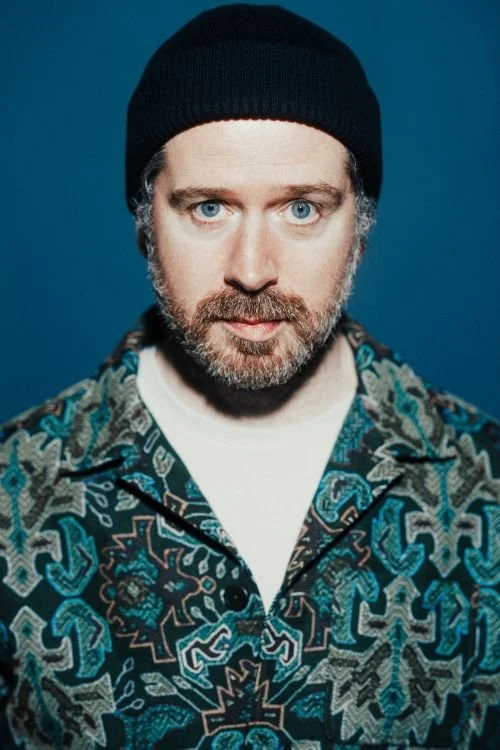
Kris Drever
__________
IT has been a huge pleasure…
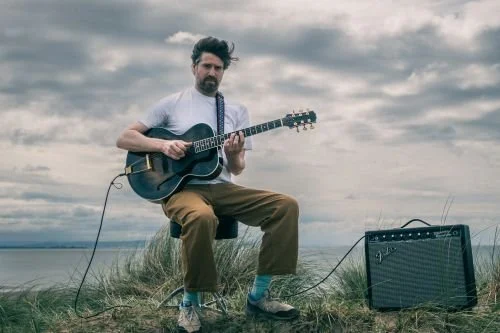
interviewing the terrific Kris Drever. The beloved Scottish artist released his latest album, Doing This for Love, in April. It is a beautiful album that will summon emotions and reactions the first you hear it. You will also come back time and time again as different songs settle themselves into your heard. Between his solo output and work with the Folk trio, Lau, Drever has established himself as one of the most celebrated and acclaimed figures in contemporary Folk music. Among his awards and honours are Folk Singer of the Year at the BBC Radio 2 Folk Awards, and Best Newcomer at the Horizon Awards. Doing This for Love is Kris Drever’s first solo album in six years. Twenty years after the release of the traditional Scottish Folk storytelling on his debut album, Black Water, he continues to release music that stops you in your tracks. Doing This for Love is ten guitar-led meditations on the unglamorous heroism of everyday life - the 4 a.m. alarm clocks, the thankless shifts, the quiet sacrifices made in the name of keeping others whole. I ask Kris Drever about his recent U.K. tour and how that went, when music and Folk came into his life, what the writing process was like for Doing This for Love, and what comes next for him. A wonderful interview with the simply awesome Kris Drever. This is a very special artist who recently released one of the…
BEST albums of this year.
__________
Hi Kris. You have recently completed a run of U.K. tour dates. What was it like playing in so many interesting places, and did you have a particular favourite venue or crowd?
It was a really lovely tour. There’s not a lot of time to hang out in different towns, but a lot of the drives were truly spectacular. I don’t think I’ve ever driven direct from Aberdeen to Dunvegan before for instance. 10/10 would recommend.
I couldn’t pick out one show for the crowd, but I loved putting a full stop on the whole enterprise with my full band gig in the Queens Hall in Edinburgh. Mega!
How important is getting your music to audiences and performing on stage? Is it the aspect of music you enjoy most, and how has your relationship with live work changed or evolved through the years?
It’s always been a huge part of the job. I’m more a musician than a performer, but I like to share what I’ve made with people. I work hard at making new songs that I can stand behind in terms of their quality and craft, and for me the thrill is seeing how other people connect with them. I started as a sideman for other performers and have always taken my musicianship seriously, and one happy by-product of that is that I am quite fluent as a guitarist, and that is where the element of performance comes into it for me. It’s certainly not my dance moves.
“We like a story, but we also like to see ourselves in art of all kinds”
You are one of the most celebrated and respected Folk artists. Can you tell me when you discovered music and when Folk came into your life? How did growing up on the Orkney Islands infuse and direct the music you were raised on?
I come from a Folk music family and so it had always been there. Although I didn’t start playing until I was thirteen, It seemed like a totally normal part of my life. I don’t remember when I started singing; I just always had that interest.
Orkney is by mainland standards a small community, but it has always had a very visible number of musicians, and there’s a strong social scene around it. It’s a thing that people do, and that I suppose has influenced my drive to play and sing. There’s a quite magical atmosphere around the place, which stirs something reflective in me, and reflection is one of the main aspects of most writing. We like a story, but we also like to see ourselves in art of all kinds.
Even though you are recording music for the fans and it is not all about awards, you are an award-winning artist. Is that quite humbling and wonderful getting accolades from the likes of BBC Radio 2 and the Scottish Traditional Music Awards?
Being recognised by your peers is deeply moving. Writing and practising can be pretty solitary pursuits and it’s a huge part of my life, so to have that work recognised by others in the field is reassuring and encouraging.
Let’s discuss your fifth album, Doing This for Love. Maybe a cliché question, but can you first reveal the meaning behind the title, and did it come before you had written any songs, or something that stuck out when you were writing and recording?
It’s something of an umbrella title. The idea that we’re all doing things daily for the benefit of others, even if it’s mostly subconscious. It’s not just the glamorous or romantic stuff. It’s all the everyday tasks we perform to make things a little more comfortable for the people in our lives.
I noticed quite late in the writing process that this theme kept recurring, and I liked how much it encapsulated.
“I like humour and pathos and detail. I’ve learned a lot through the act of writing itself, really”
What did the writing process for the album look like? Did you have a particular routine and space where you were writing, and were there any particularly challenging moments or emotional ones that affected the process and tracklisting?
My writing process takes place wherever I am, although truthfully I don’t get much done on tour. It often takes me a long time to get something that I’m happy with in even one song, let alone ten or twelve, so there’s always a lot of self-doubt. There was a moment shortly before I started recording where I’d lost all confidence in the project, but thankfully I have good friends who can help me through these times. Notably my co-producer Euan Burton, who persuaded me to book time in to track the album on the back of me admitting my loss of belief in the songs.
Tracklisting for this record was purely a musical decision; there’s no narrative to the collection as a whole.
It would be fair to say that your music has become more personal and introspective, perhaps. Ruminative, beautiful and relatable. Do you have any particular songwriting heroes and inspirations when it comes to how you write?
As I’ve gotten older I’ve spent more time with myself, and so I think it’s natural that I write from that point of view. I don’t have any grand pronouncements about the state of the world to make, but I do have opinions, and the only way I can see to include those in my writing is through my own eyes. Anything else would be soapbox, and that’s not where I’m at my best.
I have heroes of course, Tom Waits, Michael Marra, Elvis Costello, Adrianne Lenker, Joni Mitchell, and on and on. But I try not to go down the route of using music as inspiration for more music. I like humour and pathos and detail. I’ve learned a lot through the act of writing itself, really. When I was a kid, of course I tried to write Radiohead songs or Beatles songs, but that imitation is a way to learn how to do it rather than a way to create complete works that come from your own heart.
I especially love Stil the Boy. What was the story behind that, and do you have a personal favourite cut from Doing This for Love?
Thank you. That was initially an idea I had about the parable of the prodigal son. I think in the end though it’s more about being kind to my younger self; I have kids now, and I sometimes think about how I’d react if someone talked to them like I talk to myself. It started as a more specific idea, but the more I wrote, the more I liked its loose ends and blurry edges. Your interpretation of that lyric is every bit as valid as mine.
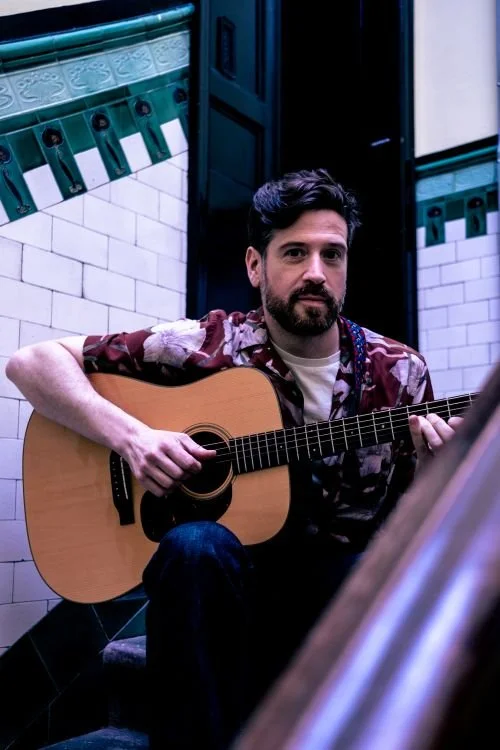
Obviously, your guitar work is sublime, and your voice carries the albums, though the musicians you work with provide colour, flesh and life to the songs. How did you choose the collaborators, and are these musicians you have worked with before? How vital are their contributions?
They are the most vital part of this record. I’ve been incredibly fortunate to have worked with lots of my heroes (Euan Burton, Louis Abbott, Rachel Lightbody), and honestly they just get better and better. I have a core of people who I’ve been working with since 2014 or so, and the common language that we’ve created and the time we’ve spent together just make it feel like anything is possible. It’s so important to be able to describe ideas and be understood.
I get to travel a lot and I do some quite diverse work, which means I’m often meeting extraordinary musicians from outside my usual circle. There are several of those on these songs, and what they’ve contributed blows my tiny mind! Michelle Willis, Trent Freeman, Matthew Herd, Cahalen Morrison and Rachel Sermanni are all extraordinary musicians, and truthfully my directions to any of these was minimal/negligible. I think I have a keen sense of who is going to be a good addition to a song, but they’re the experts. I just listen and marvel.
I think that British Country music is growing and gaining more attention, though perhaps Folk is a genre not as embraced and discussed as it should be. Do you feel like it is under-discussed and respected, or have you found that the genre has grown in stature and status through the years?
I think this discussion is pretty circular, as is my relationship with Folk music, be it Sottish, English, Irish, American etc. The good stuff always floats up, and while a good record is visible, it changes people’s idea of a particular genre. I think to an extent genres are mainly useful for the sales arm of the music industry, but It’s also true that Folk music seems more accepted by the music press at the moment. It seems to have shrugged off some of the lazy stereotypes that plagued it when I was growing up.
“I’ve started tentatively writing again, but that just goes with the territory. I won’t start looking towards another album until I have something that feels right”
Scotland especially has a great and fertile Folk scene. Why do you think that this is? Are there any other Folk artists we should keep an ear out for?
It’s musician led to a large extent. There are so many excellent players in the country, and more appear all the time. I think instruments that used to be a bit of a novelty (pipes, fiddles, banjos, accordions etc) have become normal, and more importantly, when people hear them, they hear them being played well. It’s very easy to hate an instrument if you only ever hear it being murdered.
Re: artists to keep a look out for, I’d say, Brìghde Chaimbeul, Miwa Nagato-Apthorp, Michael McGovern, Niamh Corkey, and Charlie Grey and Joseph Peach. There are loads more, though.
What comes next for you? Have you already got seeds for a future album, or are you focusing on touring at the moment and taking a break before the next chapter?
I’ve started tentatively writing again, but that just goes with the territory. I won’t start looking towards another album until I have something that feels right. Having said that, I’d love to get it together quickly, and I feel like I’m in quite a good place to do that.
I am doing some more touring though, and I have some festival performances with the sublime Cahalen Morrison coming up.
Finally, and for being a good sport, you can name a song and I will end the interview with it. What shall we go with?
Do you mean one of mine? If so, let’s do Still the Boy.
__________
Follow Kris Drever