
FEATURE:
Kate Bush: Them Heavy People: The Extraordinary Characters in Her Songs
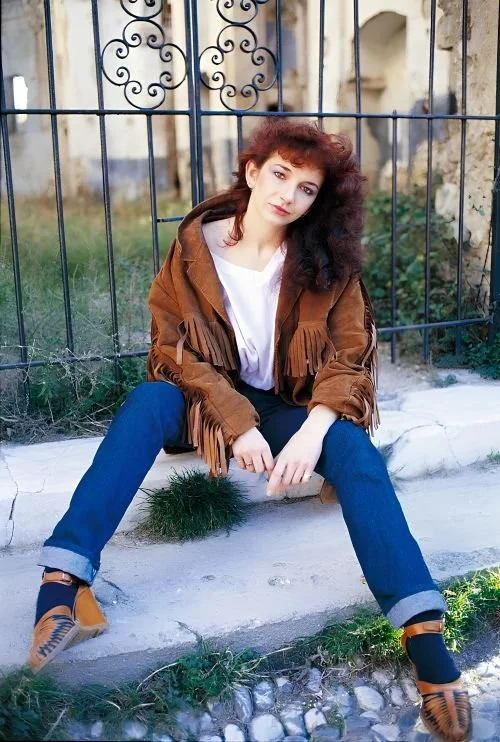
IN THIS PHOTO: Kate Bush in 1980/PHOTO CREDIT: Angelo Deligio
Tam Lin (The Empty Bullring)/My Mother (A Coral Room)
__________
THIS part of my Kate Bush series…

IN THIS PHOTO: Kate Bush in 2005/PHOTO CREDIT: Trevor Leighton
pulls together two that were released twenty-five years apart. One an underrated and virtually unknown B-side of a chart success. The other is a highlight of Bush’s 2005 masterpiece, Aerial. I still have enough ammunition to include all of her studio albums (bar Director’s Cut). The Kick Inside offers up a few more characters than most, though there are B-sides, early demos and rare songs that have interesting characters in them. I am going to get to My Mother in the second half. Bush’s mother was mentioned in the Aerial track, A Coral Room. In other parts, Kate Bush’s brothers and father will be discussed. This is one of at least a couple of songs where Kate Bush’s mother is mentioned, though not by name. She is mentioned in Moments of Pleasure from The Red Shoes. There are quite a few characters/people in that song, so I am including her here. First off, I am coming to a song that was a B-side of Breathing in 1980. That was the first single from Never for Ever. The Empty Bullring is a fascinating song. I am going to lead off with Kate Bush revealing the inspiration behind the song:
“This is a song that I first had ideas for quite a few years ago. It is really about someone who is in love with someone who is obsessed with something that is pretty futile. They can’t get the person to accept the fact that it is a futile obsession. To put it into a sort of story form: he became a matador, and got gored so badly that he couldn’t carry on. But at night he climbs out of the window and runs off to a bullring, when there is no-one there, and he fights a bull that doesn’t exist. (…) Tamlain is a girl in a traditional fairy story, who is locked up in an ivory tower.
There is quite a bit to unpick before we come to the character I want to focus on, Tam Lin. It was a big decision for Kate Bush to put an original song as a B-side. Until then, it was album tracks for the most part that formed the B-sides. That made sense. There was limited scope regarding how many tracks could be released as singles. So putting other album tracks as B-sides meant that buyers could discover these songs that were not single-worthy but worth listening to. In many cases, I felt like too few singles were released from albums. By the time we get to Kate Bush’s third studio album, Never for Ever, that decision to put a new or unknown song as the B-side to the first single. In terms of comparisons, there is not a great connection between Breathing and The Empty Bullring. Kate Bush produced Never for Ever with Jon Kelly. It may have been the case previously that EMI wanted the B-sides to feature album tracks. Bush keeping her powder dry and not wasting new songs. It also meant more of an album could be put out. By 1980, things had changed in her career. She was a massive success. Never for Ever would reach number one in the U.K. I shall come to a feature that notes how The Empty Bullring is a minor track. I do feel like it is a hidden treasure because it is so fascinating. That idea of focusing on a matador and a bullring. It is a world away from that you might expect. I am not focusing on the matador. Kate Bush became a vegetarian in the 1970s, and is someone who hated the idea of any cruelty to animals. The notion of bullfighting would have horrified her. The Under the Ivy fanzine appeared in 1985 and 1986: “Rather curiously they presented the fanzine as “a protest against the traditional Kate crawly-bum-lick crowd”. The fanzine was meant as a means of “enjoying ourselves at the expense of the terminally over-serious Lionhearts with their vegetarian and animal rights fixations”. It does seem like there was a perception that many of Bush’s fans were too ‘woke’ or hippy-dippy. That animal rights was something that was to be written off. However, I do feel like The Empty Bullring is intriguing on multiple levels. You have the idea of violence against animals and why someone would risk their lives to bait an animal.
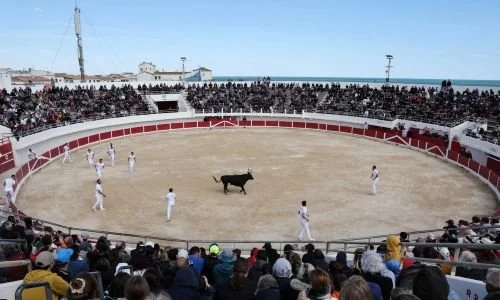
PHOTO CREDIT: Pascal Guyot/AFP/Getty Images (via The Guardian)
Many bullfighters are killed. I have no sympathy with any of them, as this celebrated form of animal cruelty should be banned. This song I suppose takes us to Spain. One of the few countries in the world where this idiotic and barbaric practice continues. You can imagine how a woman who lives with a bullfighter would cause her sleepless nights. That psychological aspect. Is bullfighting about someone who loves to see animals suffer? Is it the adrenaline rush? Is there some sort of idea that a noble sport is being upheld? In terms of contemporary popularity and perception around bullfighting, it is this ‘sport’ that generates very little public interest. Last October, EL PAÍS highlighted a hot political conversation that is dividing public opinion in Spain:
“77% of the Spanish population rejects bullfighting, according to a report published in February by the BBVA Foundation. On October 7 it lost, however, to another growing movement within the country: the alleged defense of the Spanish soul.
Juan Antonio Carrillo Donaire, a professor of administrative law at the University of Seville and bullfight aficionado, ventures into less-explored territory: the one that lies between the two trenches. “The worst thing that has happened to the fiesta is this shift toward opposing political positions. Within the bullfighting world itself, there is a pernicious approach. Their protection strategy is flawed: I don’t believe bullfighting is part of our national heritage, but rather a specific cultural manifestation rooted in certain Spanish territories. A person from [the northern regions of] Cantabria or Galicia will not identify with it, and they may even experience it as an attack [on their own identity].”
A survey published on October 8 by the Ministry of Culture provides figures to support this argument. Attendance at least once a year at events involving bulls remains at a mere 8% — and only 5.9% at actual bullfights — the same as it was before the Covid pandemic. However, this figure rises to 30% in the regions of Navarre and La Rioja. The age groups with the highest attendance figures are the 45-to-64 bracket, and most especially the 15-to-24 group. Despite the UN Committee on the Rights of the Child recommending that Spain prohibit attendance by under-18s, admission is still permitted for anyone aged 14 and older.
Bullfighting is the cultural activity that generates the most opposition: 68% of Spaniards say their interest in it lies between 0 and 2 (on a scale of 10), a percentage that exceeds 80% in the regions of Catalonia, Galicia and the Canary Islands”.
There is that aspect regarding someone fixated. I do feel like there was a slightly political motivation. Breathing is about a foetus who is sort of protected by the womb when there is nuclear threat and horror outside. Though the smoke and poison gets in. “breathing her nicotine”, as it is said. This idea that salvation and peace is lost: “We've lost our chance/We're the first and last”. The Empty Bullring is also about violence and something barbaric. I don’t think that her sympathies lie with the matador. Though I like this notion that he gets gored and is near death but still has that thrill of the chase. Going to an empty bullring and hallucinating the animal. It is a really compelling idea that has largely been overlooked. I will mention my selected character soon.
Before that, this is what Dreams of Orgonon had to say about a B-side that I feel is very strong and compels deeper investigation and discussion. A track that many Kate Bush fans do not know about, notable because it was the first non-L.P. B-side:
“An ephemeral B-side, “The Empty Bullring” tells its story in under 2-and-a-half minutes. A short tragedy, the song takes the shape of a lament by a matador’s lover. The song’s opening line, “disappears through a window/out of my mind/trying to keep him at home,” is a choppy summation of Bush’s POV, but it’s followed by an intriguing literary reference: “leaving me here/like Tam Lin in her tower,” an homage to the Scottish legend of Tam Lin. While Bush’s recollection of this story is off — Tam Lin is a male character who isn’t actually trapped in a tower — and as a result makes the allusion incoherent, it’s still a marker of the song’s cultural literacy. The matador goes “out into Rome,” rather than Spain, the world’s bullfighting capital alongside Mexico. There’s some historical accuracy here — ancient Rome was known for its bullfighting. Yet the juxtaposition of Scottish folklore and the Roman Empire makes for a weird hodgepodge of settings, making history a backdrop on which continuous cultural battles are fought rather than a linear tradition of events.
So what battle is fought in “The Empty Bullring?” Obviously there’s the song’s focal image of a bullfight, which the matador loses: “the throw of the rose/it’s all you lived for/but you’ve lost it all.” The matador has a fatal obsession with “taking [his] red cloak/to regain something,” perhaps a sense of masculine pride which he’s been deprived of all his life. Rather than finding fulfillment at home in his relationship, he’s enraptured by “glory and gore,” seeking out a destructive lifestyle that took him away from the pleasures of life. Bush ends the short song with the bullfighting tragic hero losing everything, having prioritized a momentary victory over long-term happiness.
“The Empty Bullring” is most notable for being the first non-LP Kate Bush song to back one of her singles. It’s a minimalist track, with no instrumentation apart from Bush’s piano playing and little treatment in terms of production. Compared to its despairing A-side “Army Dreamers,” the track is considerably smaller in its scope, carrying a classicist tragedy on a catchy major third-minor third riff. Constructed from bits of other songs, “The Empty Bullring” does what its protagonist never could, accepting its place as a perfectly acceptable minor work in the Bush canon”.
It is interesting that Kate Bush takes us to Rome. This historic setting for bullfighting as opposed Spain or Mexico. Rather than be political and note the futility and cruelty of bullfighting in Spain and Mexico, Bush detached herself from that argument slightly. Even so, we get this sort of gladiatorial approach. Rather than a matador, more of an ancient fighter. Risking his life and love for some futile victory.
In the lyric, Kate Bush sings “Leaving me here/Like Tam Lin in her Tower/You are going/To the empty bullring/Taking your red cloak/To regain something”. There is sort of a mix of older Rome and contemporary Spain in this song. In terms of what was in Bush’s mind. She sets the song in Rome, though I always envisaged the bullfighter as a more modern matador. Tam Lin is a legendary figure from Scottish folklore, best known as a mortal man who was kidnapped and enchanted by the Queen of Fairies. He is the subject of The Ballad of Tam Lin (Child Ballad 39), which tells the story of his lover Janet, who rescues him from fairy captivity through immense bravery. I instantly think of The Kick Inside’s title track. The track was inspired by an eighteenth-century English and Irish murder ballad, The Ballad of Lucy Wan (or Lizie Wan). Bush took the core scenario of the Folk song and completely flipped the narrative to give the female protagonist agency. It seems to be the case with The Empty Bullring. Comparing the ill-fated or lonely woman to this legendary figure. If there is some confusion or the genders are switched, I do like how there again is some agency given to the woman. She rightly seen as the affected and mistreated party. The man is not glorified or seen as noble and right. Instead, we get this image of a woman in Rome like someone captured and kept in an ivory tower. If you do not like the song because of its musical slightness, I feel the lyrics compel offshoots and spotlight. How it can draw you to literature and poetry. Bush was no stranger to this. In terms of getting inspiration from text and a ballad. This blog provides more depth to a character from an under-played Kate Bush song that we should discuss more:
“In the Ballad of Tam Lin, young women are told to avoid the beautiful woods of Carterhaugh. It is said that these woods are guarded by a fairy knight who extracts a toll from any maiden foolish enough to wander there. This may be a ring, an item of clothing, or even the woman’s virginity.
Despite these warnings the young Janet decides to visit the woods. While travelling through them, she plucks a rose and Tam Lin appears. The fairy asks Janet why she has come to his woods. Janet responds that Carterhaugh had been gifted to her by her father, and that she would come and go as she pleased. The two spoke for a time and presumably had sex. Though Janet is often described as having been seduced by Tam Lin, it is just as often implied that she knew exactly what she was doing. She was presumably aware of the warnings about Carterhaugh and chose to travel there anyway – significantly, Janet is also described as wearing a green dress – a colour said to be the favourite of the fair folk.
After her liaison with Tam Lin, Janet returns home, and shortly begins showing signs of pregnancy. When her father confronts her about this, Janet refuses to name the father, saying only that it was a fairy knight. She then returns to Carterhaugh and meets again with Tam Lin – in some versions she goes to Carterhaugh to gather herbs or flowers, which is sometimes believed to indicate that Janet intended to abort the child. When Tam Lin appears, the two speak again. Tam Lin reveals that he is not actually a member of the fair folk, but instead a human stolen by the fairy queen. He had one day been riding his horse with his grandfather when he fell, the fairy queen caught him and carried him away.
Tam Lin also reveals that he is in fear for his life. Every seven years, the fairy folk must pay a tithe to hell – one of their own people. Tam Lin believes that this year, he himself who will be chosen and begs Janet to help him. He tells her that the tithe will be paid on Halloween, and a cohort of fairies will ride through on their way to pay it. Jane will recognise Tam Lin from his white horse, and pull him from the saddle. Tam Lin tells her it will be difficult, as the queen will transform him into all manner of shapes to force Janet to let go, but that she must not. If Janet is able to successfully hold on to Tam Lin, he will be freed”.
I am coming to the second side and A Coral Room. A gem from 2005’s Aerial, A Coral Room is a song that takes my mind in different directions. I will come to Kate Bush’s late mother, Hannah. She died in 1992. Still in Bush’s mind when she wrote this beautiful song, this is what Bush said when speaking with Front Row in promotion of Aerial: “There was a little brown jug actually, yeah. The song is really about the passing of time. I like the idea of coming from this big expansive, outside world of sea and cities into, again, this very small space where, er, it’s talking about a memory of my mother and this little brown jug. I always remember hearing years ago this thing about a sort of Zen approach to life, where, you would hold something in your hand, knowing that, at some point, it would break, it would no longer be there”. I want to talk about the importance of her mother and how she featured through Kate Bush’s work. I do like that idea that she is immortalised in a couple of songs. On Moments of Pleasure, the lines that stand out are these: “And I can hear my mother saying/"Every old sock meets an old shoe"/Ain't that a great saying?”. That homespun and humble saying that stuck with Kate Bush. She reapproached the song when she recorded Director’s Cut. Moments of Pleasure is featured on this 2011 album. How Hannah Bush was very much in her daughter’s mind. In one of Ariel’s standout tracks, we get this emotional moment. Bush was a new mother in 2005. Bertie was born in 1998. She was thinking of her own mother and this little brown jug. How this, perhaps, insignificant brown jug holds so many memories. For A Coral Room, there is a storm and hidden civilisation in this brown jug. “My mother and her little brown jug/It held her milk/And now it holds our memories/I can hear her singing/“Little brown jug don’t I love thee”/“Little brown jug don’t I love thee”/Ho ho ho, hee hee hee”. I imagined a young Kate Bush being served milk from this brown jug. Being kept all of these years, it is one of the last physical objects that connects her to her mother. If it breaks, then that is it. In holding to this brown jug, this is Bush still holding to her mother. I wonder if this brown jug is still intact and whether it was pride of place in the Bush kitchen when she was making Aerial?
What I love about A Coral Room is that there is this mix of the past, present and historical. Fantasy and an amazing aquatic world. This brown jug is much more than that. I don’t know if it true, but Bush talks about the brown jug in the song. How it breaks: “I hear her laughing/She is standing in the kitchen/As we come in the back door/See it fall/See it fall/Oh little spider climbing out of a broken jug/And the pieces will lay there a while”. An older Kate Bush thinking about her mother and maybe casting her mind back to childhood. Vision of her mum laughing as the children ran in. Kate with John and Paddy. Her brothers. The idea the jug is broken and a spider coming out. Bush not wanting to pick up the pieces, as that will mean that her mother might be gone. She may have to throw the jug in the bin. There is this fascinating structure on A Coral Room. The end, Bush sings this, somewhat gnomically: “In a house draped in net/In a room filled with coral/Sails at the window/Forests of masts”. The broken jug lies on the floor of this house. Like all the water has flowed out and is flooding this housed. Drowning memories and her past. The opening of the song is this: “There’s a city, draped in net/Fisherman net/And in the half light, in the half-light/It looks like every tower/Is covered in webs/Moving and glistening and rocking/Its babies in rhythm/As the spider of time is climbing/Over the ruins”. This romantic and historical notion of this spider crawling over the ruins. Then, the spider returns as the jug is dropped near the end. It is almost like a poem that compels you to explore the its meaning. I sort of feel like this brown jug is one that is filled with water and has this civilisation in. Rather than it being a fantasy, Kate Bush using it as a metaphor for memories and the life she had when he mother was alive. It is not her being literal and discussing childhood and what the jug symbolised. Instead, she brings in fantasy. It may seem boring or one-dimensional, so we get these lines: “There were hundreds of people living here/Sails at the windows/And the planes came crashing down/And many a pilot drowned/And the speed boats flying above/Put your hand over the side of the boat/What do you feel?”. I love this underwater world and this carnage! I am fascinated by the images and psychology. What Kate Bush was considering when she wrote about boats and planes. Is A Coral Room Kate Bush’s most poetic song? In terms of it being more like poetry than a song, it is a masterpiece that I would love to have seen a video of.
Perhaps an animated video directed by Kate Bush, it would be emotional, fantastical and dreamy seeing her bring this song to life. It is a pity that this track was omitted as a potential single. King of the Mountain is the one and only single from Aerial. I do feel like Mrs. Bartolozzi and A Coral Room would have made great singles. I have not seen any especially engaging fan videos of this song. I hope one day, Bush will allow creatives and directors to make videos of songs not released as singles. An animated version of Hannah Bush laughing and a young Kate Bush. It would definitely be an effecting moment! Of course, Bush might have a double intent when it comes to coral. The idea of coral in a reef. If thinking of a soft coral, “These do not build reefs. Instead, they resemble plants or trees, growing flexible, woody-like skeletons for support and fleshy tissues for movement”. Using the soft coral as a metaphor for motherly protection and support perhaps. Although Bush has used colours in her songs and given them significance. Symphony in Blue from 1978’s Lionheart references blue and red. Emotions and psychological connections. Hannah Bush worked as a staff nurse at Epsom Grove Hospital, where she met Robert Bush. He was a doctor. I mention this, as the colour coral, in some cultures, is tied to health and protection. Not a coincidence that A Coral Room mentions her mother, the former nurse. This interesting feature tells us of the meaning, symbolism and characteristics of the colour coral:
“The coral colour carries rich and varied meanings. Its warm, natural tones make it a symbol of vitality and energy, qualities that evoke a sense of renewal and dynamism. It is the colour of creativity and communication: coral stimulates expression and dialogue, making it ideal for environments where collaboration and socialization are encouraged.
In many cultures, coral is also associated with protection and health, thanks to its roots in the marine world. In particular, in Eastern cultures, coral is considered a symbol of prosperity and good luck, as well as an amulet against illness.
From a psychological standpoint, coral has the power to influence our mood: it stimulates optimism, reduces stress, and fosters a positive and dynamic atmosphere. It is a colour that evokes joy, warmth, and hospitality, making it the ideal choice for creating welcoming and stimulating environments”.
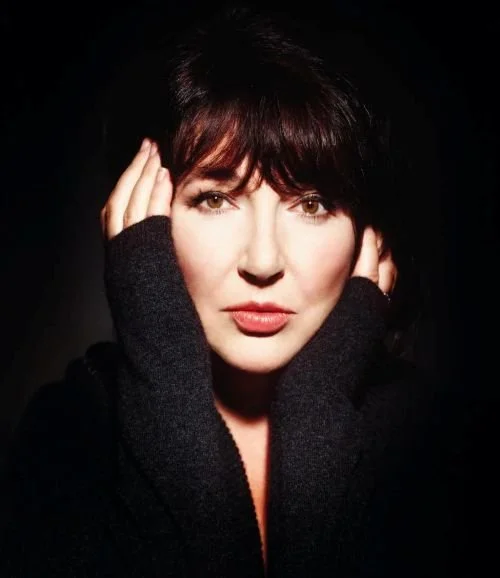
IN THIS PHOTO: Kate Bush in 2005/PHOTO CREDIT: Trevor Leighton
I will end with why A Coral Room has huge personal significance for one person. I am not sure how close to 9/11 A Coral Room was written, but it was in her mind. That idea of a lost city. If we feel in A Coral Room, it is about an ancient city where planes and ships crash ands sink, it touches on the tragedy that befell New York in 2001. The most seismic event in my life in terms of I can remember exactly where I was when I heard the news. The devastation and massive loss of life sitting alongside the personal and still-raw loss of her mother. How poetically Kate Bush talks of both events. One is a universal tragedy; the other a painful personal loss. Sputnikmusic reviewed Aerial and, in addition to agreeing with me that A Coral Room is one of Kate Bush’s best songs and should have been a single, they make some compelling observations: “To begin with, she speaks in an abstract way, describing an abandoned city, before apparently touching briefly on the events of 9/11. Then, it gives way to Kate speaking as directly as she ever has in her entire career. The words 'my mother' appear to hang, haunting, in the air for just a moment, as the piano stops in sympathetic mourning. But then, as soon as the moment appears, it goes, as Kate forges on. 'I hear her laughing/She is standing in the kitchen/As we come in the back door...' This has got to be Kate's most open, confessional song ever, highlighted by the music (just her and her piano - it may have come about 14 years after Little Earthquakes, but this track highlights just what an influence Kate was on Tori Amos)”. Kate Bush considered not including A Coral Room on the album. What a loss it would have been for fans not to hear this song. Though Bush felt it was too personal and something that was still so painful to her. So brave that she did release the song. How haunting the song is. An abandoned and dusty city flattened and torn apart by unspeakable horror. And the heartbreak of this brown jug and her late mother. Almost the last piece of her beloved mother smashing on the floor. Graeme Thomson notes in Under the Ivy: The Life and Music of Kate Bush how his two highlights were unadorned piano tracks. Both connect to motherhood. A Coral Room and that domestic brown jug signifying a part of her mother. Mrs. Bartolozzi is a fictional character, though one that ties to motherhood. A woman doing laundry as mud is traipsed in. I see Bush or her mother as the heroine in the song. Both raw and unlayered. To get the biggest emotional hit.
Graeme Thomson writes how there was no safety net on A Coral Room. No vocal backing to hide any cracks or emotional wobbles. No instruments apart from the piano. This was Kate Bush, as a new mother, singing about her departed mother. Hannah Bush died just over thirteen years before Aerial was released. The Red Shoes released twelve years before Aerial came out. The Red Shoes contains Moments of Pleasure, where Bush sings of her mother. Even though there was this passing of time, it was evident how meaningful her mother still was. How important she always was. In terms of the hospitality she provided when musicians would come to East Wickham Farm. Bush’s crew and musicians hosted by this smiling and lively Irish mother! The love that she gave to Kate Bush and how empowering that was. A strong woman that the young Kate Bush looked up to. That kindness, generosity, charitable side; forgiveness and seeing the best in people, the positivity. That came largely from her mother. Thomson observes how A Coral Room takes us to 44 Wickham Road (In London), at a “time of relative innocence”. A location where Bush wrote, among other songs, Wuthering Heights. An early song, Atlantis, also mentions coral. A blue city “covered in coral and coral”. Making a huge emotional and quality leap on A Coral Room, this song is “an oblique and impressionistic” piece. It is one that “cut far deeper than the more formal pitch of ‘Moments Of Pleasure’, which covered similar ground in much more awkward shoes”. The final thought about this song hit the nail on the head, and it is a big reason why it is so easy to pick apart the lines and create interpretations: “She had once again perfected the craft of saying without telling”. I want to end with a 2023 article from The Guardian. Darren Hayes revealed how A Coral Room gave him a roadmap for his own life and cracked him wide open. The former Savage Garden lead shared personal struggles about a song that no doubt resonated with others. Thank God Kate Bush wisely and bravely kept this album on Aerial, as it has saved and spoken to so many people:
“The seventh song on the album, A Coral Room, really spoke to me when I heard it. In 100 years’ time someone will study that song and say: “She’s Keats, she’s incredible.” There are so many layers of metaphor in the song. She paints this picture of a sleepy seaside town with fishermen’s nets draped over tiny boats, almost like a spider web. And then she takes a step backward and describes that spider web as being the fabric of time itself. She eventually opens up about the loss of her mother, but it’s in such a gentle way; there’s such a reverence to the way she sings these two words – “my mother”. She then sings about this one object – a brown jug – that her mother kept in a room full of treasures, and gave her mother so much joy, that she would sing to it: “Little brown jug don’t I love thee.”
There’s this piano riff that sounds like time slowing down, and Kate describes the jug falling and breaking. The first time I heard it my heart ripped out of my chest because I realised this was her mother falling ill, or leaving this plane. Then she brings back this metaphor about the spider, and now it’s something terrifying because a little spider crawls out of the broken jug. And I think about that association we have when life leaves something and insects move in. I’m reminded of when I was a little boy in Queensland, I had an ancient pet cockatoo named Bobo who used to swear like a trooper and had no feathers. He died in the middle of the night and I remember finding him fallen, and cockroaches and ants had already come in and started the process of decomposition.
It just speaks to me about how precious time is, and how precious the tiny moments are that we have with each other. I think so much about my own mother who I’m very close to – she lives in Brisbane and I live in Los Angeles – and I see my own life in A Coral Room’s cinematic vignettes.

IN THIS PHOTO: Darren Hayes/PHOTO CREDIT: Jessica Hromas/The Guardian
A Coral Room is one of many songs on Aerial where Kate really looks at motherhood – both her relationship to her own mother and her experience of having her child, Bertie, and how that changed her. It profoundly touches me.
In the 11-year break I had between albums – 2011’s Secret Codes and Battleships and 2022’s Homosexual – my self-esteem took such a hit because my identity was so wrapped up in my vocation. But I really needed to have a decade or more of experiences of life – or maybe just find friends who weren’t on the payroll. In that time I got to have this incredible parenting experience – I became a godfather to the daughter of one of my best friends who I met while studying at an improv school in LA. One day a week, for the first three years of her life, I got to co-parent. That human experience really helped me heal a lot of childhood stuff.
When I started in Savage Garden I had this gaping hole in me which was the huge trauma of my own childhood. I really was escaping, and it was wonderful because I got to become someone else, but I was never comfortable with fame and attention. Having hits was an amazing accident that’s given me an incredible life. But I’m not really made for that. Offstage I feel very fragile. I’m a sensitive person. So Kate Bush’s career has been a real roadmap for me in terms of having hiatuses. She made me realise that I can do things my way and the right people will wait and be patient.
There’s something about Kate Bush that’s very Gaia, very Mother Earth. She has an inviting, inclusive energy and she embodies everything that it means to be feminine in a way that is incredibly empowering. And she proves it’s possible to do everything on your own terms without ever compromising”.
That thing about how Bush’s most personal songs can be all-inclusive and goes beyond the individual. Many modern artists and modern Pop is about a single event or a very personal pain or annoyance that some can distantly connect with. In an empty or less deep way. Bush opening her heart and imagination to create this song where her mother and this brown jug are in her memory, it goes far beyond Aerial. Many, including Darren Hayes, found strength and significance in A Coral Room. Perhaps releasing it as a single would have been too painful and exposing for Bush, though it is the one song I wish she had. A masterpiece from a genius double album, it takes us to the end of this feature. In the next part, I think you will be pleased with my song choices, as they will highlight some discussion-worthy characters that will take me in all sorts of places. An ill-fated bullfighter in Rome that we can link to a Scottish ballad and Folk story, to Kate Bush’s mother and sunken, fallen civilisations and cities. The sheer range of her imagination and breadth of her songwriting genius knows no bounds! Two prime examples from…
THIS extraordinary woman.