
FEATURE:
Spotlight
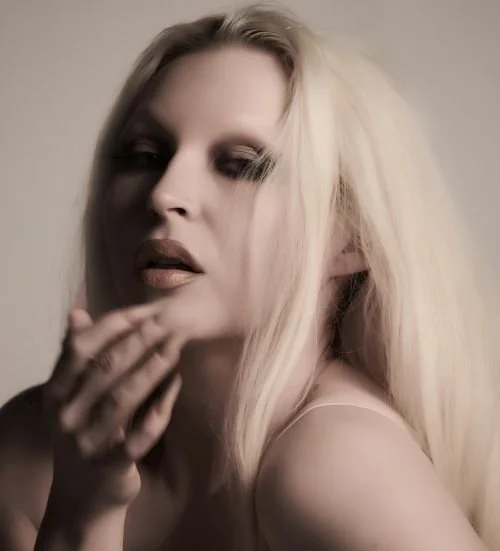
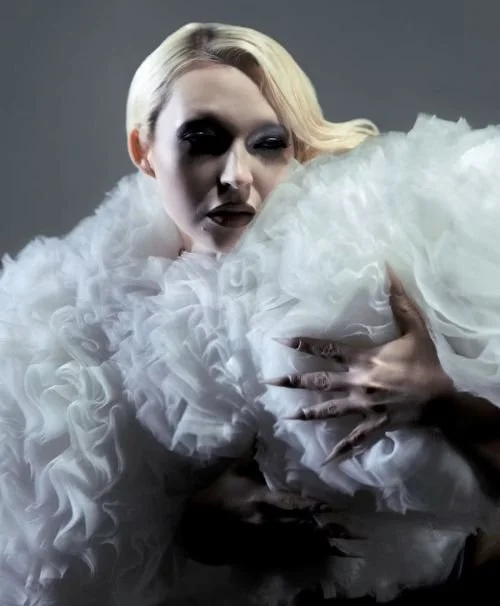
PHOTO CREDIT: Israel Riqueros
played London’s 02 Kentish Town Forum tonight (27th May), before heading to Manchester tomorrow and Brighton on Friday. If you have not heard of this brilliant Swedish artist then, like me, you are a little late to the conversation. Before getting to some recent interviews and a review of the exceptional Torn, I want to bring in an article from Hannah Ewens for The Guardian. It investigates how and why a “wave of hedonistic, feral female pop stars are rejecting respectability”. It is interesting what Ewens observes and what Charlie Harding, co-host of the podcast Switched on Pop, says about the magnetic COBRAH:
“Five years ago, sad-girl bedroom singer-songwriters such as Olivia Rodrigo and Holly Humberstone resonated with a generation spending their formative years in lockdown. Once the pandemic lifted, gen Z reclaimed feckless post-9/11 underground culture as “indie sleaze” and partied through the rubble of their own wrecked prospects. In came smudged eyeliner, shredded tights and the return of electroclash thanks to artists including the Dare and Fcukers.
That 00s sound is “definitely influencing music right now,” says Lo. She celebrates its “rawness and roughness”, which she thinks stemmed from “people not giving a fuck because they’re not being filmed” in an idyllic pre-cameraphone age. “That need to revolt against the norm is building inside us like a pressure cooker. The aggressive ‘getting punched in the face while I scream’ sonic landscape of Slayyyter’s song Crank makes that possible.”
In 2026, the influence of those scenes has mutated into sleazy electro-pop – from throbbing drum’n’bass to hyperactive EDM – delivered with rock-star energy and rap-influenced vocals. The production is aggressively maximalist, all grubby guitars, blown-out synths and addictive hooks. Meanwhile, its energy is rooted in impulsive, raunchy mid-00s US culture: MTV’s Spring Break, Britney with the brakes off, and the proliferation of online porn and reality TV (often both at once, in shows such as Girls of the Playboy Mansion).
Cobrah is now getting broader recognition for her aggressive, sexually charged club music, and was asked by Demi Lovato to feature on her new song Fantasy. Many of Cobrah’s songs – the industrial, icy Brand New Bitch, the hedonistic Good Puss – are about chasing extreme highs. “Everything else just feels very lame and tame,” she says. By leaning harder into her sexuality in her lyricism, she says, “I’ve become more like myself. The opposite of diluted: concentrated.”
Harding suggests that by revelling in hedonism, these artists are “straddling stereotypes of women being unhinged and hysterical while being the masterminds behind the whole endeavour”. You could read it as a reclamation of the mid-00s era, when dishevelled white-girl stars were assumed to be out of control: we know now that Hilton was just cosplaying as an airhead, although Britney Spears wasn’t so lucky, losing the right to run her own life when she was placed under a conservatorship that lasted 14 years”.
I wonder whether an artist like COBRAH is misinterpreted or seen as this provocative and hypersexual artist because of the production and sound of Torn. It is cracked up on so many songs. What we learn from Mixmag and their interview from February is how the “radical Swedish popstar Cobrah shifts from erotic provocateur to a more romantic, lyrical mode on her debut album ‘Torn’. Mixmag’s first cover star of 2026 speaks to Gemma Ross about needing to feel challenged as an artist and how shedding the kinkwear is allowing for a clearer portrait”:
“I have to become my own fantasy,” she says. “You’d never see me on the streets of New York filming a video, because the fantasy needs to be otherworldly”. Over the years, the visuals that support Cobrah’s bolshy, bass-heavy music and soft, sweet vocals have told a story of her progression, building the lore that she’s crafting around this fabled world. “When I’m home, I like to be in slacks, I like to bake, I like to do my comfy things,” she confides. “But as soon as I go to perform and become Cobrah, I need to feel that tension and force.”
After almost a decade spent gaining eminence as a kinkstress, Cobrah is eager to veer the fantasy in a different direction. The box she’d often been placed into was starting to feel like a celebration of image, rather than sound, and not a testament to her musical talents. Recognising that this lifestyle is still very much part of her, this wasn’t going to be a complete reset, but a chance to show fans her rarely-seen softer side. “I felt a little locked into a niche,” she says. “When you see the word BDSM, a lot of people turn away because it can sound scary and aggressive. I want to be a musician in the first room, rather than being in handcuffs in the first room.”

PHOTO CREDIT: Willemskantine
"I wanted to be my own vessel, and now I feel like I've established that,” she explains. “It's much more exciting to try to not compete, but to experiment. I envisioned the biggest of things for the Cobrah project at the start, even though it was very niche in the beginning,” she continues. “I didn’t see myself as niche, but maybe that’s because I'm so consumed in what I do. I'm like, what do you mean I’m avant-garde? I'm Britney!”
On her forthcoming debut album ‘Torn’, Cobrah is toning down the eroticism and opening up in a more romantic, lyrical way. The first singles released as part of the wider project, ‘Hush’ and title-track ‘Torn’, have a more subdued, more delicate approach, where her usually brazen club production takes a backstep, and her vocals come to the front. At the same time, visuals feel stripped-back – she’s dressed in nude colours, wrestling with a mirrored image of herself, or dancing in a shadowy silhouette – all nods to how she’s letting this past version of Cobrah phase out.
It’s taken time for Cobrah to put her efforts into a full-length album following a gradual progression of EPs over the years, from 2019’s ‘ICON’, 2021’s self-titled ‘COBRAH’, and 2023’s ‘SUCCUBUS’, but she wouldn’t have it any other way. When COVID stunted an opportunity to perform at Texan showcase festival South by Southwest, which promised to be her breakthrough moment, Cobrah felt the hit, but sees it as a blessing in disguise retrospectively. “It had an impact on my career, but I’m also really grateful for that pushback. Now I can do my debut album, and many more things that I wouldn’t have been able to five years ago.”
At that time, and even before she grew to prominence, Cobrah longed for a taste of fame. “As a child, I remember hearing these kid stars on the radio, and I knew I wanted to be that. I was really drawn to the artist lifestyle early on,” she recalls. Though still young when she broke out under the cloak of Cobrah in her early 20s, she couldn’t help but feel late to the game. “You always think that you're the oldest in the room, but looking back, I was so young. I’ve felt this longing to do what I'm doing now since I was a child, so to be 21, I felt like I’d already missed decades of doing music, and I had to figure out a lot of things for myself.”
“This album is called ‘Torn’ because it's a little scattered, it's a little torn,” she says softly. “I feel like it will have more connection with the audience because it's more of a pop album, so there’s less of a backing track, and more of a conversation. It's just 100% me,” she adds. Like its namesake, the cover imagery for single release of ‘Torn’ represents one of Cobrah’s points of inspiration when writing the album, depicting stretched skin breaking and splitting. “I was really inspired by stretch marks,” she says, “and in the beginning, I was inspired by mud and dirt. Usually everything is so polished – there’s latex and clean lines – but this feels more gritty in a sense”.
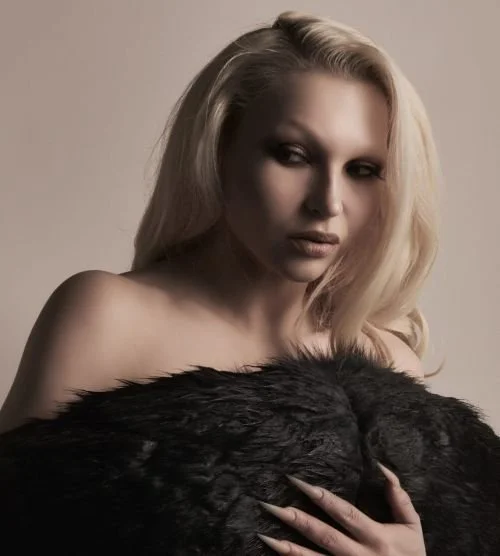
PHOTO CREDIT: Julius Hayes for NME
I am moving to NME and their cover interview from February. I do think that Torn is an evolution for COBRAH. If her past is defined by bangers about female pleasure, there is a softer and more personal touch on her album. That is why I am spotlighting her now. Her catalogue is richer and more varied, and we are witnessing this metamorphosis:
“Before the release of her last EP, ‘Succubus’ in 2023, inklings of a larger project had begun to take shape. It was a creative itch that COBRAH was dying to scratch. “I’d always wanted to make an album, and the stars had never aligned for that opportunity,” she says. “Then, when I finally got to do it, I felt like the culture was catching up to me, I was on people’s mood boards…” she drifts off. “At first I was really annoyed. And then, when I was gonna make more music, I thought: ‘Fuck it. I’m over myself, I’m ready to move on.’ If the world has caught up to what I’m doing, then I’m clearly not doing the thing I’m intended to anymore.”
This shift in thinking would go on to form her debut album’s title track, ‘Torn’, a cross-examination of the push-and-pull the singer felt about inhabiting COBRAH, the character, after all these years. Across flourishes of slow synths and deconstructed techno, her musings spin a tale of inner conflict (“Why do these thoughts at night keep washing in? […] Why don’t I know what I should do?”) acted out by duelling selves. In the accompanying video directed by Julius Hayes, the two COBRAHs flit from possession to embrace, foreplay to rejection, before only one is left on the edge of suffocation, a darker self watching on.
‘Torn’, the gritty and uncharacteristically personal album, continues to carry the torch for this metaphoric skin-shedding. It finds inspiration in the beauty of growing pains and treading new paths, while reckoning with the bravado-packed BDSM-pop of her earlier work to reveal the artist behind the domme. “I’ve always been slightly afraid of putting myself personally into my art and maybe that my own life wasn’t good enough to write about, or not interesting to listen to,” she says, “but with ‘Torn’ I’ve really tried to switch it back. COBRAH is what I feel and do, not the reverse.”
To call the project a total rebirth would be misleading, as the album still pumps with plenty of industrial grit on club-ready bangers like ‘Platinum’ and ‘Excuse Moi’. But here too are experiments that take an axe to heart-raising BPMs in favour of the strung-out, some so hauntingly left-field – such as ‘Charming’ – they were nearly left on the cutting-room floor. That song is part of a handful of outliers that explore love’s trickier sides, along with ‘Dog’, which trades in themes of dark romance and dreams of the domestic. Lines like “I wanna house, up on the hillside / I wanna die together, you just wanna feel right” offer surprising moments of candour.
At a time when sexual liberation in the mainstream feels increasingly on the wane, thanks to attacks from the conservative right, COBRAH’s abrasive, pleasure-seeking anthems feel more important than ever. And while ‘Torn’ may depart from the more overt trappings of the ‘BDSM-pop’ moniker for which she is known for, COBRAH’s softer touch doesn’t come without its harder edges. “What’s important to me when I make music is that it comes from a place of dominance, of confidence and fun,” she says, “I want to make really beautiful things that tingle me. And I think being sexy – and especially being in charge and being sexy – really tingles me.”
With the challenge of completing her debut album now well behind her, COBRAH has her sights set on letting ‘Torn’ play out on stage in 2026. Plans for an upcoming tour, netting some of her biggest audiences to date, have encouraged the artist to think bigger in all aspects. Ahead of her Coachella debut later this summer, COBRAH teases an ambitious lean into the theatrical passions of her teen years, stepping away from the booming sound systems and rave-ready BPMs dominating her club performances and instead slipping into the role of storyteller”.
I am interested in PAPER and their interview from earlier in the year. Torn is a huge moment for COBRAH. If you have not listened to her music, I would urge you to explore this incredible woman. “With Cobrah’s first full-length LP, Torn, the Gothenburg-born, Stockholm-based artist aims to reinvent on her established formula while maintaining her creative interiority”:
“I love that. How did it feel stepping into the creative director role for this album? How was it making the videos?
It was beautiful to be in such control. I have an image-rich mind. When I write music, I usually see what the music video will be like. For “Hush,” I knew that it sounds like we’re riding in a car. So I did that for the video. A year ago, I knew what Puppy, my monster lover, would look like. Everything works together. What I didn’t know was how much I had to direct. Like does the monster have ears or not? What color are his fingernails? What shade of beige? You have to be very meticulous. But it was very fun. It took some time for this album to come out but it’s because I was looking for people I could be equal with in the creative process. It only came together this well because we were all unified in my vision for it. That’s quite rare.
This album is more lyric-focused than your previous works. Did that change the writing process at all?
It felt like I was birthing myself again. Those first EPs were my first birth, my first trial. There was super heavy production and vocals as a sample, rather than what I do now which is text-driven. An album is much longer, so I was able to explore more. I went back to the beginning and it felt refreshing. The good thing about the people I work with is that they’re very in tune with how I feel. It’s supportive. I had doubts when I wrote “Charming” and “Really Hard.” These songs stick out to me on the album.
“Charming” is my favorite track. It’s so poppy.
Yes! Thank you! It’s really honest and truthful. Everytime I hear it I get a little in love and a little sad at the same time. It hits home with people because they can tell it’s real. That song and “Really Hard” weren’t even going to end up on the album. I thought they wouldn’t resonate with people who like my previous works. The writing process was unique for me. I used to approach writing by making a couple songs then picking the coolest. For this, we made 30 demos. We tried so many things. I felt like I could lead with who I am as a person on this album.
It feels like a hard pivot, but it’s still very you. There’s lots of parallel themes and production choices to your past work.
You’re always at the core of your artistry. If you play an instrument, anytime you go a while not playing it, you come back to the same chords when you pick it up again. It’s genetic. It’s not skill, it’s your body knowing that. I expanded with the Cobrah universe but stayed true to my genetic sound. I’m always sultry and soft because that’s the core of Clara, who I am as a person. I’m happy that authenticity comes through.
If you could give a past version of yourself one piece of advice, what would it be?
To have patience. I’m extremely impatient. I lose value of the present. I’d give myself that advice today because I don’t think I’ve learned anything.
And what’s ahead for Cobrah?
I have some exciting collaborations. I can’t tell you who yet. I’m excited to expand this Torn universe with collaborations and live shows. I keep getting asked what’s next. But I’ve been pregnant with Torn since last year. So I’m excited to enjoy it”.
The final interview that I am spotlighting is from CLASH. I do think that Torn will be labelled as sleazy Pop or trash because it seems like it is hypersexualised and prurient. Listened closer to Torn, and you find that it is a much more sensitive and reflective album than many might assume. As CLASH write, this “Scandi pop provocateur Cobrah peels back the nude latex layers on herself, and the years-long conversation around her artistry”:
“On the appropriately titled ‘Torn’, Cobrah tears up the rulebook of her own making and finds her middle ground. “I feel like I’ve found a nice little pocket where things are Cobrah and pop, clubby, sexy, soft, goth and dom. All of these different variables that I try to indulge in as an artist.” Cobrah, real name Clara, speaks of emotional exposure, shifting the conversation about sexual politics and spotlighting the succubus to raw, real life experiences. The sultry touch of her earlier work is not lost, especially where wispy vocals and coy lyricism is concerned, but a newfound embrace for vulnerability is also tapped ino. She candidly chronicles the highs and lows of relationships, plus unimaginable traumas. Not your typical pleasure-and-plain running thread. Album closer ‘Really Hard’ for instance, is about a car crash Cobrah experienced in Australia, she discloses.
In full creative control, Cobrah’s debut LP invited back trusted collaborators Isac Hördegård and Hannes Roovers, whom have followed her since the start her 2018 debut single ‘IDFKA’. Illangelo, Machinedrum, and Tove Burman also make appearances. “I’m a very intuitive writer,” she states. “I used to feel that what I was writing wouldn’t be Cobrah if it wasn’t the very iconic sound that I’ve made up. I am Cobrah, and whatever I do and write is my artistry, and I don’t have to think of fitting into my own image. I’m allowed to explore, I’m allowed to be more diverse – that was the mindset I tried to have with the album.”
March sees Cobrah heading on a North American and European tour, followed by a first-time pit stop at Coachella. With ‘Torn’ ushering a redefined sense of self, expect an evolved, liberating take on her engineered pop sound. “I’m trying to bring this album to life, so I can already say I’m gonna play you the whole album,” she says of her upcoming shows. “Before, when I’ve toured all of my songs, the discography has not been that big. I am working with dancers now and I’ve built this show together with my music video director, with the same choreographer that I worked with on the music videos. You can expect something that is very clubby and very fun, that we’ve built together to tell a longer story.”
Pushing past the boundaries of a distinct club-driven sound, do you see this album as moving away from those roots, or more as an expansion?
I’m not closing any club doors. I’m just opening some theatre doors, hopefully. This is more of a development, rather than moving on from something else. ‘Hush’ is quite clubby, but not like those high-paced, clear club hits. It was important for me to tell the story of also opening more doors, or doing something else by putting those songs at the front of the campaign. I don’t think it would be as clear to people that I am shifting a focus in my storytelling. For the tour that’s going to come, I want to also bring that cinematic vibe that I’ve had in this campaign. It will still be a very sweaty show, no matter what.
‘Torn’ was a test for me. It was written in 2023, it’s almost three years old. All artists say that they don’t look online but I do. Everyone was so happy, I was like, ‘they get it, they just get me!’ My relationship with my fans is getting better and better by the day. They understand what’s going on in my head. That is something that I never really tried to see before. I felt like I was really safe with what I put out. Now I feel like I’m stepping on thinner ice, and it’s been received with just as much excitement as before. So it’s cool to see that people get it no matter what I do, and it makes me feel even freer with the next music that I’m writing. I can really write what I like in life, and no matter how it sounds it’s gonna be appreciated because I made it.
Do fiercely queer Cobrah fans influence how you show up in clubs and festivals lineups, almost as a form of advocacy in electronic spaces?
I am deeply thankful for the fans that I have. My intention was never to have a very gay, loving fanbase, and when I got it, I was like, “these are the best people in the world.” They know how many centimetres of nails you have on; they can see it from 20 metres. They know which brand your shoes are. They know you paid £1000 for those shoes!
And they equally appreciate the effort that you put into the music; the songwriting, the clothing and the videos. There’s no other fanbase that fully gets who a pop star is and can be. That relationship is very precious. I stick very much to advocating for the things that I know most of the music and aesthetic does. I try to keep that political line quite sharp, really. It’s very clear. It’s a wonderful thing to play gay clubs. I love playing gay clubs.
From Zara Larsson’s ‘Midnight Sun’ success to Robyn’s return to music, Scandipop is having a huge moment. How does it feel to ride this wave?
Sweden’s a really good base for me. I’ve tried to move away from here but I can’t. Something keeps me here all the time. I write all my music here, all the people I work with are based here. I’m really happy that the Swedish pop stars are coming back. Robyn, Zara Larsson, Lykke Li and me. We all probably wrote this [into existence] in 2024 or something. It takes some time to write an album. It’s really cool that we all synced with this new Scandipop era, without it being planned.
I don’t feel any pressure from the industry here. I feel like I’ve been successful at what I do because I like to be very isolated. I only work with my friends, and on the weekends I like to bake cookies. I stay in my own lane and I create from a very happy space, even when I write these emotional songs. I really don’t feel pressure or any sense of competitiveness. I just try to stay in my bubble as much as I can. I feel like I’m the best artist when the world doesn’t exist outside”.
As COBRAH is in the U.K., I was particularly interested in spotlighting her. I am going to end with a positive review for Torn. An album I think is up there with the very best of the year so far. It is impossible to avoid falling in love with COBRAH and Torn. The Quietus submitted to her incredible power and charm on a captivating debut album:
“At a time when outsized egos seem to dominate world leadership, it feels soothing and somewhat hopeful that more and more artists dare to envision other forms of power and new realities. Rather than embracing a version of feminism in which women adopt stereotypically masculine traits in order to gain recognition, Cobrah proposes alternative ways of being powerful within oneself and embracing the complexity of it. You might argue that they are burning down the patriarchy one brazen, wonderfully arrogant line at a time. As she sings on the album track ‘Excusez Moi’, Cobrah “honestly doesn’t care, it’s all about her”.
We’ve witnessed this in various forms over the past few years, most recently in Robyn’s single ‘Sexistential’ from her upcoming album of the same name and FKA Twigs’ Eusexua. Both exemplify a type of music that, through experimentation and extremity, tries to encapsulate female sexuality and inner life. For their own good and for the good of the world they are demanding to be seen and recognised. Artists such as Slayyyter, Kim Petras and Ashnikko have succeeded in doing so – the latter even enlists Cobrah on the hot hit ‘Wet Like’. These artists seem more empowered and, in Cobrah’s case, more vulnerably layered than ever before. They dare to provoke and push boundaries, individually and together, not only through playful, audacious words but through very well-composed beats.
With her hushed vocals, theatrical fetish-feminine lyrics, and electronic hyperpop soundscapes Cobrah has repeatedly shown that she knows how to have fun and entertain her audience at the same time. On her debut album, she maintains her sex-positiveness while trying something new. “I love doing characters. I love making things up and being extreme – and I’m still doing that on this album – but I’m also peeling it all off and presenting my real self as a character”, said Cobrah upon the release of Torn.
On the album’s title track, ‘Torn’, first released in 2025, Cobrah shows a more pared-back version of herself. Her vulnerable lyrics are submerged within a chorus driven by a heavy, almost overwhelming electronic bassline, articulating what words alone cannot: the feeling of being completely (heart)broken. Dark in tone, this track is one of the most powerful on the album. The lyrics to songs like ‘Charming’, ‘Snow White’ and ‘Really Hard’ are similarly sentimental and melancholic but calmer in their electronic, floating soundscapes. “Cause I’ve tried to be sweet, tried to be real. I have tried to stay cool, I’d do that for you, it’s so stupid of me…”, she sings in ‘Charming’, once again revealing a softer, more sombre side of her artistry. In this way, she holds up a mirror to a very human experience – the feeling of being hopelessly in love. But within the virtual embrace of the album, she also asserts complexity and confidence, claiming that she’s “too good to be true, too good to you”.
‘Hit Girl’ creates a hypnotic state of mind as Cobrah shifts between high tempo and humming pauses, dissolving into one another. She remains a strong and powerful presence on her debut album Torn, and the more graphic, sensual, and arrogant catwalk tracks – ‘IG’, ‘Platinum‘ and ‘Unoriginal’ – only enhance this. ‘Dog‘ breaks the softness of the album for good: “It’s a ‘fuck me’ song, there’s no singing, it’s quite rough and graphic,” she says. Yet her femininity is no longer demonstrated through fetishistic themes alone. And that is perhaps one of the album’s greatest strengths. In our highly technologised world, there is a hunger for sincerity in its many forms, and Cobrah definitely answers that desire. Each track on Torn harbours unique surprises and embraces different moods through brilliantly composed electronic soundscapes that compel you to surrender and listen carefully to what Cobrah is urging you to feel.
Although part of a broader wave of innovative, sex-positive, and intense female and queer artists, Cobrah’s debut album creates a slightly softer universe of empowering electronic beats and escapist release for those who dare to join her. In an erotic, BDSM, underground sphere, she draws you in, claiming ownership of her desires and emotions alike. And this time, in a more stripped-back version than before. The album’s complexity between catwalk, hard ballroom-inflected beats and emotional tenderness makes it a work of art – one that will resonate just as powerfully in an underground club, the solitude of heartbreaks or cycling through the city feeling utterly uplifted”.
If you can get tickets to see COBRAH or are in a position to see her live later in the year, then it is something you definitely need to do. Torn is a spellbinding debut album that marks a new lyrical phase for this Swedish queen. A brilliant artist and producer, COBRAH is inspiring so many other people. I thinks he will be doing this for…
YEARS to come.
___________
Follow COBRAH
Official:
Instagram:
https://www.instagram.com/iamcobrah
Twitter:
TikTok:
https://www.tiktok.com/@iamcobrah
YouTube:
https://www.youtube.com/@Cobrah
Facebook:
https://www.facebook.com/IAMCOBRAH
Spotify:
https://open.spotify.com/artist/1AHswQqsDNmu1xaE8KpBne?si=iitZ1uvdTzaNyBAkavHGcw