
FEATURE:
The Great American Songbook
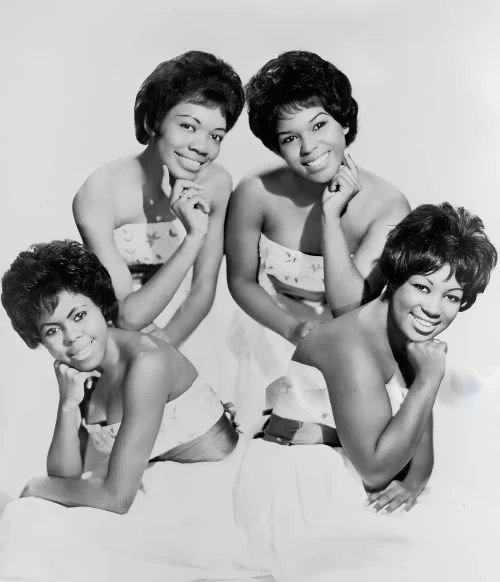
IN THIS PHOTO: The Shirelles’ Beverley Lee, Doris Kenner-Jackson, Shirley Alston and Addie 'Micki' Harris/PHOTO CREDIT: Gilles Petard/Redferns
The Shirelles
__________
ONE major reason for…
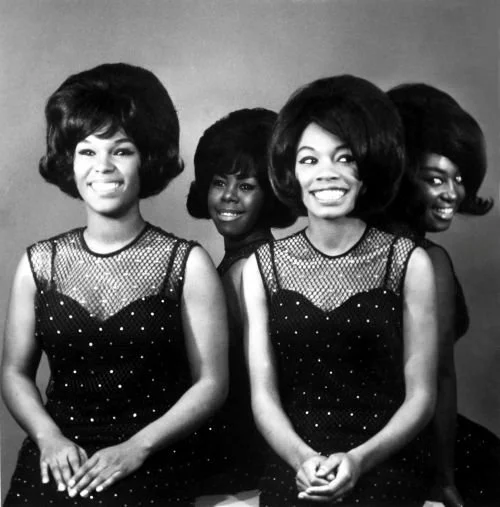
IN THIS PHOTO: Shirley Owens, Beverly Lee, Addie Harris, and Doris Coley, of the Shirelles, circa 1968.PHOTO CREDIT: CSU Archives /Everett/Alamy
including The Shirelles in this The Great American Songbook is that they were an influence on The Beatles. The legendary Liverpool band were fans of girl groups of the 1950s and 1960s. Alongside The Ronettes and The Marvelttes, they were not only impactful on The Beatles and other groups who came through in the early-1960s. The Shirelles’ impact on girl groups who followed is immeasurable: “The influence and impact of The Shirelles was massive – not only did they lay the blueprint for future female stars to follow, but their crossing of racial demographics in both the US and UK, before that of other Motown acts, has been noted as reflecting the early success of the Civil Rights Movement. They have since been awarded multiple honours for their contributions to music, inducted into the Rock and Roll Hall of Fame in 1996 and named one of the 100 Greatest Artists of All Time by Rolling Stone in 2004”. Before ending with a playing of their essential tracks, here is some biography about the iconic girl group:
“How They Started Off
All of the band members went to the same high school, Passaic High School New Jersey, which is where they met each other. They formed the band in 1957 and during one of their rehearsals in the school gym, one of their teachers suggested that they should enter the school talent show. They were interested in the idea and decided to write their own song for the show. That was how their first single I Met Him on a Sunday was created. Their performance in the talent show was dazzling and they became instant sensations.
One of their ardent fans at the time was Mary Greenberg, daughter of Florence Greenberg. She insisted that the girls should meet her mother who owned her owned music record at the time. At first the group was reluctant, but eventually they agreed to do so. They auditioned in the Greenbergs’ living room and managed to capture the heart of Florence Greenberg who went on to sign them to Tiara Records. This marked the beginning of their journey to fame.
Studio Records
The Shirelles kicked off their career at Tiara Records. Their first single was released by Tiara but licensed by Decca Records. However, The Shirelles were not able to command the fame that they had hoped for with Decca Records. Florence Greenberg was also dissatisfied with the performance of Tiara and Decca Records. As a result, she decided to start up another record studio, Scepter Records.
At Scepter Records, Florence Greenberg approached experienced songwriter Luther Dixon to help out with the girls’ music careers. They released hit after hit. The first song that they released with Scepter was Tonight’s the Night, that was co-written by Shirley Owens, the group’s leader. It went on to reach number 39 in the charts in 1960 and ultimately propelled them to fame. Will You Love Me Tomorrow was their first song to hit the top of the charts and among the seven top 20 hits that The Shirelles managed to produce. These two songs were recently selected by Rolling Stone in its list of the greatest songs of all time.
Legal Problems
The Shirelles were famous in the United States and even started to tour internationally.
In 1964, The Shirelles were told that there was no money left in the Greenberg trust fund.
The Shirelles were famous throughout the United States and even started to tour internationally. In 1963, Dixon left to work at Capitol and his position was taken over by Stan Green. The first song that he produced with the girls was Foolish Little Girl which debuted at number four in the pop charts. However, subsequent recordings were a lot weaker.
In 1964, The Shirelles were told that there was no money left in the Greenberg trust fund. This fund was created to protect the band’s earnings. Given their surge in popularity and sudden lack of money, The Shirelles decided to leave Scepter. However, a court injunction prevented them from doing so. On the other hand, Scepter Records continued to release material from the band’s back catalogue, with no commercial success. When the legal problems concluded, The Shirelles decided to remain at Scepter for another four years.
The Beginning Of The End
By 1968, The Shirelles had not produced any song that had made it into the top 20. In 1968, one of the group’s members, Doris, left to raise a family. This left The Shirelles as a trio. The group then signed with United Artists Records in 1970 and later RCA in 1971 – their last record label.
Doris later returned to the group and they continued performing together until June 10, 1982 when Mickey Harris died of a heart attack while they were performing a show at the Hyatt Regency in Atlanta.
This incident broke the band for good and the girls went their own way. In 1989, the original Shirelles group was inducted into the Rock and Roll Hall of Fame. Throughout the 1990s, there were at least three ex-Shirelle bands, each with one of the original members”.
I absolutely love The Shirelles, and their influence on girl groups and music in general is staggering. They do not get talked about enough. The New Jersey quartet definitely deserve a salute. I have compiled a twenty-song playlist of their best songs to end. To show just how incredible they were. One of their finest songs is their rendition (they recorded it first in 1960. Gerry Goffin wrote the lyrics and Carole King composed the song. She included the track in her 1971 masterpiece, Tapestry) of Will You Love Me Tomorrow. When it comes to the answer to that question, it is clear thar there is…
NO doubt about that.