FEATURE:
Kate Bush: Them Heavy People: The Extraordinary Characters in Her Songs
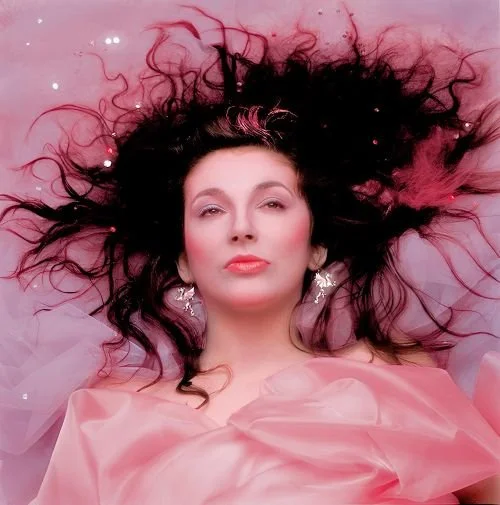
IN THIS PHOTO: Kate Bush in 1985/PHOTO CREDIT: John Carder Bush
The Witch (Waking the Witch)/Those Millionaires (The Sensual World)
__________
I feel I have included…
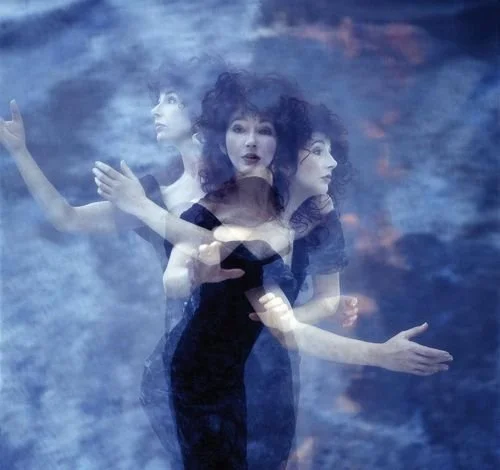
IN THIS PHOTO: Kate Bush in 1989/PHOTO CREDIT: Guido Harari
the last character that is mentioned in Kate Bush’s sixth studio album, The Sensual World. Released in 1989, the ten songs were as character-filled as other albums. I am pairing this album with the one that proceeded it, Hounds of Love (1985). There are more characters from that album that I need to cover off. There is a lot to focus on when it comes to Waking the Witch. The character of The Witch. This song appears during the second side of the album, The Ninth Wave. It comes after Under Ice and before Watching You Without Me. The moment the heroine/Kate Bush gets trapped under ice in the water after going overboard from a ship. Clinging to life, Waking the Witch is this masterpiece song that showcases Kate Bush’s phenomenal production talents. A pivotal moment in the suite, does the woman die here? You ask that, because Watching You Without Me is a family waiting for their loved one to return to them, not knowing where she is. I am going to reference a feature I wrote about Waking the Witch last year when celebrating forty years of Hounds of Love. There are subjects to cover when it comes to this song. Is it the strangest and scariest Kate Bush song? Is it the most important song on that suite, in terms of how the plot changes and the fate of the heroine? There are features from other people to bring in. However, it is worth noting what inspired Kate Bush to write this song. I will discuss the live version of Waking the Witch that was performed during 2014’s Before the Dawn. How powerful and punchy it is. One of the most hypnotic and standout tracks from that residency and live album (released in 2016).
This is what Kate Bush said about Waking the Witch. In terms of the voices we hear in the mix, it is great that she has family members and a much-missed and beloved actor. Trying to wake her up. After suffering struggle and fighting against tiredness and the waves, this is a moment on The Ninth Wave when her life is in the balance:
“These sort of visitors come to wake them up, to bring them out of this dream so that they don’t drown. My mother’s in there, my father, my brothers Paddy and John, Brian Tench – the guy that mixed the album with us – is in there, Del is in there, Robbie Coltrane does one of the voices. It was just trying to get lots of different characters and all the ways that people wake you up, like you know, you sorta fall asleep at your desk at school and the teacher says “Wake up child, pay attention!”. (…) I couldn’t get a helicopter anywhere and in the end I asked permission to use the helicopter from The Wall from The Floyd, it was the best helicopter I’d heard for years for years [laughs].
I think it’s very interesting the whole concept of witch-hunting and the fear of women’s power. In a way it’s very sexist behavior, and I feel that female intuition and instincts are very strong, and are still put down, really. And in this song, this women is being persecuted by the witch-hunter and the whole jury, although she’s committed no crime, and they’re trying to push her under the water to see if she’ll sink or float.
Richard Skinner, ‘Classic Albums interview: Hounds Of Love. Radio 1 (UK), aired 26 January 1992”.
That idea of Kate Bush’s heroine being a witch. On trial. Kate Bush looking back at history and how women were seen as witches. Their instincts and intuitions very strong. Instead of being celebrated, it was seen as suspect. They were put on trial and condemned to death. Appropriate when thinking about Waking the Witch. Perhaps Kate Bush reacting to sexism against her and using the water and witch metaphor to look at the industry and how some perceived her. Also, the production on this song shows what a genius Kate Bush is! That helicopter sample. It is a great production piece that is almost filmic. Collages of sounds and voices. Different effects. Such a head-spinning and sense-altering track. Looking back at my feature from last year, I was referencing Leah Kardos’s 33 1/3 Hounds of Love book and her observations. Kate Bush undoubtably a phenomenal producer. Not only in terms of mixing the instruments and sounds. In terms of bringing these different voices together and making sure it was not too busy or crowded. The effect of these voices and where they would sit in the mix and where they would be coming from. So much to consider. The technical considerations and brilliance needed to execute this song perfectly:
“Leah Kardos writes how we hear various voices – including Robbie Coltrane, whale song, and John Carder Bush’s voice, “from the back of the right speaker peeks out to stage-whisper ‘Over here!’”. The explosion happens after some brief build-up. “Most shocking is Bush’s frantic voice, cutting in and out as she pleads , ‘Listen to me, help me, help me baby’”. It is, as Kardos suggests, the panic-stricken sounds of someone drowning. I often wonder whether Bush/the heroine made it out of the song. Whether this is the moment she succumbs. That garbled cry was achieved by “quickly moving the record switch on the tape machine”. That was the source of a heated argument between Kate Bush and her engineer and then-boyfriend, Del Palmer. In a later interview, Palmer admitted he had to eat humble pie and was wrong!
The heroine goes from this drowning and scared person to someone accused of witchcraft She is put on trial and condemned. “Witch ‘swimming’ or ‘ducking’ was the practice of tying up and dunking an accused woman into the body of water to see if they sank or floated”. It is a terrifying and tense moment that brings so much story and twist to the song. “With its monstrous voice effect (Eventime Harmonizer set to minus-two octaves), Bush’s Witchfinder subjects the accused to such tests (‘You won’t burn, you won’t bleed, confess to me girl’)”. These tests including subjecting the accused to burning and pricking. The feeling that witches were impervious to pain and would have a bloodless mark. It was based around belief, though it was sexism and misogyny. A fascinating thing to bring into the middle of a 1985 album! Bush herself must have felt like a witch being judged and on trial. Subject to so much blatant misogyny through her career! I do not know that background voices “sing lines adapted from the halyard sea shanty Blood Red Shoes. The tune was popularized by folk revivalist A.L. (Bert) Lloyd”. Bush does some riffing on Lloyd’s lines. “Pinks and posies, red, red roses go down”. Bush was no stranger to a sea shanty. Leah Kardos remarks how the B-side of Hounds of Love’s title single was a cover of The Handsome Cabin Boy. It was originally by Lloyd and Ewan MacColl. “The music breaks away from the C# minor for a counter phrase that swirls with the sound of church bells and woozy spiralling guitar figures around E minor. Bush murmurs snatches of Catholic Vulgate scripture that she may be forgetting or getting wrong: ‘Spiritus sanctus in nomine no-no-no-no’ (the name of the Holy Spirit, no) and later ‘Deus et dei domino no-no-no-no’ (God and God’s lord, no)”. The Witchfinder questions the innocence of the woman and delivers the verdict. Kardos writes about the line, “Help this blackbird, there’s a stone around my leg”. With the sound of a helicopter coming in and yelling at the woman to get out of the water – the same helicopter sample used on Pink Floyd’s The Wall -, there is mystery around the blackbird and what that references.
Leah Kardos theorises it could be a reference to Elizabeth George Speare’s 1958 novel, The Witch of Blackbird Pond. The lead is seen as a witch and viewed with suspicion after diving into the water to retrieve a child’s toy and she has this ability to swim. That was seen as unusual. Bush remarked how female instinct and intuition was put down and people fear a woman’s power. She channelled all of this in Waking the Witch”.
Waking the Witch very much frames the ill-fated woman in the water as someone being judged. After being dragged under the water or struggling on Under Ice, is this the moment when she floats and is saved? Most women who were on trial after being caught by witch-finders were probably not as fortunate. Or is this the moment on Hounds of Love when the woman (Kate Bush said it was not her on The Ninth Wave, though she obviously played this character for Before the Dawn) succumbs to the water? There is something intense about Waking the Witch. Ghostly, horrific and dark, it is such a head-spinning and intense song. Is it her scariest song ever? There might be argument for that. Waking the witch was a horrific torture technique used during sixteenth-century witch trials, where accused women were kept awake for days, often forced to walk continuously. This brutal sleep deprivation induced extreme psychological distress, hallucinations, and paranoia, leading to forced confessions to escape the torture. The witchfinders would keep accused women awake for three to five days. I have modified this information from this site. I feel that Waking the Witch is one of her scariest songs. Up there with Get Out of My House from The Dreaming (1982). There is some competition, but is it also her strangest song? In terms of Hounds of Love, there is nothing quite as odd and unsettling. Perhaps Mother Stands for Comfort. Waking the Witch is a song where you are sympathising with the woman and willing her to stay alive. Last year, Far Out Magazine wrote how Waking the Witch is Kate Bush’s strangest song:
“It’s a jarring narrative ledge that Bush hangs the song on, but heightened all the more by her musical arrangement for the track. Combining everything from ambient piano flourishes with scratchy samples that give us a peek into the matrix, it defies all pop conventions and flirts with the esoteric lands of electronic music more popular in the current day.
While some experimentation hints towards a sporadic use of studio time, where anything and everything is chucked at the wall, Bush’s performance of sonic obscurity was a deliberate method. It was used to add context to the broader narrative of the song. Speaking of the song’s fractured use of Morse code, Bush said, “That’s an effect that we managed to muck around with. It was a very experimental idea, a sort of trick really, that took us a long time to do. I wanted to give the impression of a very desperate attempt to communicate.”
Using the dystopic world her soundscape depicts allows Bush to carry forth haunting social commentary. In the song, Bush pulls on traditional mythologisation of witchcraft to tell the tale of a woman who is on trial for being a witch, where she is savagely pushed underwater to see if she will “sink or float.” In a soundscape already packed with texture, Bush adds broken sound effects and splashing noises to vividly depict the disconnect of being thrown underwater without control.
But it’s not just a scary bedtime tale of a witch’s trial, bolstered by dramatic sound production. No Bush’s experimentalism swirls around an exploration of the political and, in turn, delivers a poignant and provocative take on sexism. She explained, “I think it’s very interesting, the whole concept of witch-hunting and the fear of women’s power. In a way, it’s very sexist behaviour, and I feel that female intuition and instincts are very strong and are still put down, really”.
It is arguable how Waking the Witch is the most important song on The Ninth Wave. It is a massive turning point. Thematically, narratively and sonically. Watching You Without Me is haunted and this missing woman who nobody knows what happened to her. Jig of Life then comes after and is this spirited and hopefully song. A second wind. In terms of how The Ninth Wave story changes and its first huge moment, Waking the Witch is so tense and suspenseful! I feel it is the most important album through the suite, and it is also one of Kate Bush’s most powerful songs. In terms of how relevant it is to this day. If she took influence from centuries ago and women being drowned as they were seen as witches, this sort of persecution and violence affects women around the world today. The defiance of Waking the Witch undoubtably can be compared to the strength of women who face persecution, death and their rights being stripped. Women not allowed out in public or to educated. The risk of violence and death if they defy regimes and totalitarian governments. This feature from last year made an interesting observation: “I think of the women of Afghanistan singing in defiance of the Taliban’s femicidal death cult, punished for doing what blackbirds can do freely. This feels like a song for anyone who is drowning, but I also think it’s worth noting that the violent imagery here brings with it the will to stay awake. Unlike the gentle suicide suggested by ‘And Dream of Sheep,’ a sinister song masquerading as a lullaby, this song pricks our drowning woman awake and lights a fire of determination underneath her. It’s at the climax of her persecution that rescue suddenly arrives”. It is worth ending this section by saying how amazing the live version of Waking the Witch is on Before the Dawn. Listen to the live album and you will know what I mean! The percussion drives and hits so hard. Incredible guitar riffs. A song that drives and rides like a wave. I am dropping it in here, as it gives new weight and punch to such an incredible song. It must have been awe-inspiring hearing this track live!
Flipping to the second side, and we need to talk about characters mentioned on The Sensual World’s title track. Although Molly Boom from James Joyce’s Ulysses is not mentioned by name, she is very much the unnamed character. Although they are also not named and they are a vague collection of characters not defined, they do allow me to examine The Sensual World and themes around it. The characters are Those Millionaires: “To where the water and the earth caress/And the down of a peach says mmh, yes/Do I look for those millionaires/Like a Machiavellian girl would/When I could wear a sunset? mmh, yes”. If you could argue Waking the Witch is one of Kate Bush’s weirdest and scariest song, there is no doubt The Sensual World is one of Bush’s most sensual, charged and beautiful tracks. I will investigate the lines when Those Millionaires were mentioned (I am capitalising them as I see them as charcaters). It is best to start out with some words from Kate Bush about this song:
“The song is about someone from a book who steps out from this very black and white 2-D world into the real world. The immediate impressions was the sensuality of this world – the fact that you can touch things, that is so sensual – you know… the colours of trees, the feel of the grass on the feet, the touch of this in the hand – the fact that it is such a sensual world. I think for me that’s an incredibly important thing about this planet, that we are surrounded by such sensuality and yet we tend not to see it like that. But I’m sure for someone who had never experienced it before it would be quite a devastating thing. (…) I love the sound of church bells. I think they are extraordinary – such a sound of celebration. The bells were put there because originally the lyrics of the song were taken from the book Ulysse sby James Joyce, the words at the end of the book by Molly Bloom, but we couldn’t get permission to use the words.
Roger Scott, Interview. Radio 1 (UK), 14 October 1989
There’s a few songs that have been difficult to write. I think the most frustrating and difficult to write was the song, ‘The Sensual World’. Uh, you’ve probably heard some of the story, that originally it was written to the lyrics at the end of ‘Ulysses’, and uh, I just couldn’t believe how the whole thing came together, it was so… It was just like it was meant to be. We had this sort of instrumental piece, and uh, I had this idea for like a rhythmic melody, and I just thought of the book, and went and got it, and the words fitted – they justfitted, the whole thing fitted, it was ridiculous. You know the song was saying, ‘Yes! Yes!’. And when I asked for permission, you know, they said, ‘No! No!’ That was one of the hardest things for me to swallow. I can’t tell you how annoyed I was that, um, I wasn’t allowed to have access to this great piece of work that I thought was public. And in fact I really didn’t think you had to get permission but that you would just pay a royalty. So I was really, really frustrated about it. And, um… kind of rewrote the words, trying to keep the same – same rhythm and sounds.
Kate Bush Con, 1990”.
Reading about her frustration of writing the track. Not being allowed permission from the James Joyce estate to use text from Ulysses. Kate Bush talking about the tactility of nature and the world. How we can touch and experience things around us. A lot of people do not appreciate that. Whilst there is also this aspect of embracing or recognising the sensuality of the trees and grass, there is also this other sensuality. An erotic lust that runs through the track. It is worth bringing in this information that gives us a bit of context about Molly Bloom and “In Ulysses Molly Bloom, the wife of Leopold, comes to life mainly in her husband’s thoughts. Throughout the day he contemplates her affair with a man called Blazes Boylan. Much more than an object of desire and jealousy, however, Molly is also the character who gets the last word. In the book’s final episode, “Penelope,” Molly is not merely breathless but also eloquent, not merely sexually frank but also an engaging narrator and storyteller”. I love the sensuality and the breathlessness of Kate Bush’s delivery. I am thinking about some of Molly Bloom’s final words and the language used: “When I put the rose in my hair like the Andalusian girls used or shall I wear a red yes and how he kissed me under the Moorish wall and I thought well as well him as another and then I asked him with my eyes to ask again yes and then he asked me would I yes to say yes my mountain flower and first I put my arms around him yes and drew him down to me so he could feel my breasts all perfume yes and his heart was going like mad and yes I said yes I will Yes”.
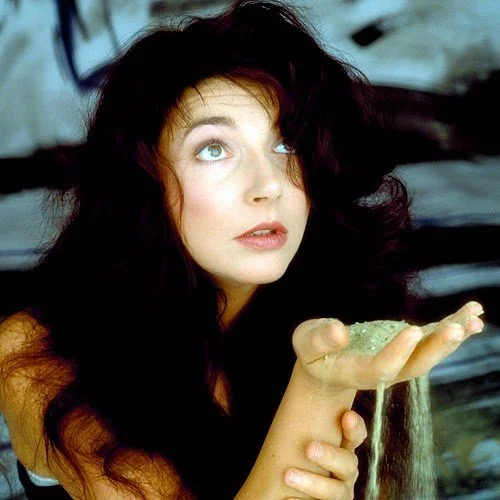
IN THIS PHOTO: Kate Bush in 1989/PHOTO CREDIT: John Carder Bush
I have a few other things to discuss when it comes to this song. I am going to move to those lyrics where Kate Bush mentions the millionaires. Bush singing “Do I look for those millionaires/Like a Machiavellian girl would”. A clever and interesting pairing of lines. In terms of Machiavellian, this refers to “a personality trait and political philosophy characterized by cunning, manipulation, and a cynical disregard for morality, focusing solely on acquiring power and achieving personal goals by any means necessary. It is part of the "dark triad" of personalities and is named after 16th-century philosopher Niccolò Machiavelli, who advised that rulers should prioritize power over ethics”. Almost like a poetic couplet. Is Bush talking about seeking wealth and the wrong type of men? Chasing wealth and emptiness rather than appreciating the world around her and the earth. If Bush had not been able to use words from Ulysses, she would be granted permission when she re-recorded the song and called it Flower of the Mountain for 2011’s Director’s Cut. The power of the word, ‘yes’. Almost bookmarking that verse, it is affirmative and sensual. Each time Kate Bush sings that word, she brings such sexuality and eroticism. Whereas the rest of The Sensual World’s title track is about the sensuality of the world around and this tangible passion and something hugely evocative, that line where Kate Bush mentions millionaires sticks out. I was trying to find reference to millionaires in Ulysses and whether Molly Bloom was tempted by a wealthy suitor or was thinking of stepping into high society. It is an intriguing inclusion that made me want to dig deeper.
In terms of singles from The Sensual World, the title track was the first released. After Hounds of Love and the reception it got, The Sensual World was a very different album. It was a more mature album in some ways. Bush had turned thirty by the time The Sensual World was released, and she was thinking more about this stage of life. Making a more feminine album. Hounds of Love had a more masculine energy. Something that was harder-hitting. The Sensual World has this lower heat in terms of energy and percussion, but it burns hotter in other ways. We can see how critics considered The Sensual World when it was released as a single on 18th September, 1989:
“A dazzling return to form after a few slightly indifferent releases. The best song she’s written since ‘Army Dreamers’, even if slightly on the long side.
David Giles, Music week, 23 september 1989
She’s got bloomin’ sexy… in which talk of desire, touching, and Kate’s own breasts is rife. But these aren’t merely shock tactics… a delicate and all-consuming song.
Tim Southwell, Record Mirror, 23 September 1989
She sings of a deep sensuality that ensures that I have to wear baggy trousers when I dance. Beautiful, warm, and ever-lasting.
Kerrang!, 23 September 1989”.
She was being reviewed by men who were writing for magazines and sources that were probably used to other forms of music. It was a time for U.K. Dance and genres that did not easily sit alongside Kate Bush and The Sensual World. You can feel a sense of leering and sexism in some of the words. A slightly prurient take by some journalists. However, The Sensual World reached number twelve. It is interesting, too, how Kate Bush was inspired to write the song after hearing Irish actress Siobhán McKenna read the closing soliloquy from James Joyce’s Ulysses. Another case of her being inspired by acting and television. Siobhán McKenna died in 1986. Bush immortalising her work and brilliance in this song.
Reviewers picking up the musical richness of The Sensual World. The song was inspired by a traditional Macedonian piece of music called Nevestinsko Oro (Bride’s Dance). A recording of this piece of music was sent to Kate Bush by Jan Libbenga. As in the traditional version, the melody is played on uilleann pipes, in this case by Irish musician Davy Spillane. Thanks to the Kate Bush Encyclopedia for this detail. The globe-trotting nature of Kate Bush’s music. It is worth noting the Irishness of Kate Bush’s music. I wrote about a Hounds of Love song, Waking the Witch, that is not Irish in tone. However, the track called Jig of Life, is a very Irish-influenced song and features Irish instrumentation. Kate Bush was mentioned in this article about the Irish influence in British Pop music:
“Also born in London, English singer-songwriter Kate Bush is half-Irish with her mother hailing from county Waterford. Bush is best known for her hit ‘Wuthering Heights’ from 1978, but she also won the BRIT award for best female solo artist in 1987.
Since the 1980s, Bush has taken inspiration from Irish music, literature and language. Her albums often feature traditional musicians and instruments. Bodhrans and bouzoukis can be heard on the likes of ‘The Sensual world’ – a song inspired by James Joyce’s Ulysses – and ‘Jig of Life’.
In 2014, she expressed pride in her Irish heritage and her mother’s influence, which inspired her work on ‘Mná na hÉireann’ with trad musician Dónal Lunny”.
Dónal Lunny on bouzouki. John Sheahan on fiddle. Uillean pipes from Davy Spillane. Owing to the fact Ulysses is a novel by an Irish author, Bush matching that with the composition. Another chance to dip into the history of Irish music in Kate Bush’s catalogue. The Sensual World was perhaps the last album where Irish music influenced her own. Bush’s mother, Hannah, died in 1992 – three years after The Sensual World was released. The Red Shoes (1993), Aerial (2005), Director’s Cut and 50 Words for Snow (2011) not really referencing Irish music and sounds, even though Bush remained proud of her heritage. Perhaps the loss of her mother made it too heartbreaking to think of her when using Irish players. From The Witch in Waking the Witch and the imperilled woman being on trial and drowned in some ways, this was Bush talking about sexism and the way women’s institution and instincts are judged and seen as suspicious. We then move to the mysterious millionaires in The Sensual World. Perhaps specific people who might turn her eye and could woo Molly Bloom, it might be a reference to distracting riches and wealthy people who could lead someone astray. When Molly Bloom/Kate Bush could embrace the sensuality of the earth and everything around her. The purity of that passion. Songs taken from albums that were released side by side, they are vastly different. The production also not the same on both albums. Bush’s brilliance and constant evolution. Waking the Witch and The Sensual World are two district…
WORKS of excellence.