
FEATURE:
Spotlight

Ava Joe
__________
THIS run of Spotlight features…
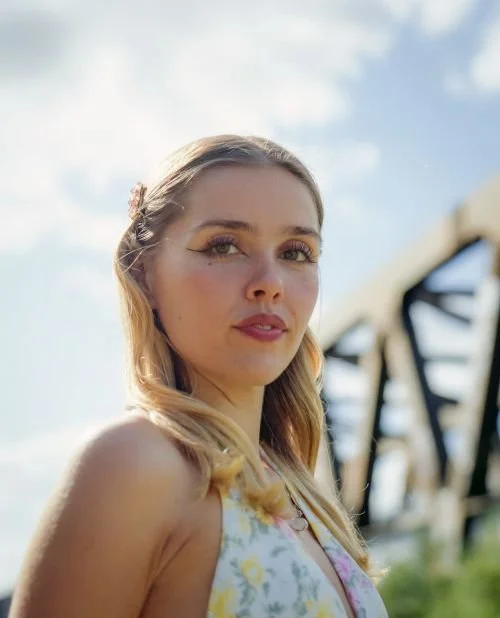
PHOTO CREDIT: Garry Jones
is around artists who played or will play at The Great Escape Festival in Brighton. So much incredible rising talent at that festival. I think a lot of industry figures attend so that they can discover some of the best new artists around. That takes me to Ava Joe. Her Big Beautiful Mess EP came out in April. I want to bring in some press around that. Before bringing things up to date, there is an interview from last year. The Line of Best Fit spoke with Ava Joe around the release of her debut E.P., Try Me:
“Offstage, Joe speaks with the same soft intensity that runs through her debut EP, Try Me, a reflective project that explores the rawness of healing, control, and survival, with an element of diaristic lyricism and intimacy that allows listeners to be let in on something that sounds personal and sacred. Ava is cementing herself as a striking and fresh voice of the UK soul scene.
We chat about her childhood beginnings growing up in Devon, featuring a blended family of ten, where rock music was a constant backdrop thanks to her dad’s band rehearsals. The young Ava Joe dabbled in theatre, appearing in school plays and assemblies, and landing the angel role in nearly every nativity production; however, it was songwriting that drew her in deeper. That eventually led her to the BRIT School, an institution renowned for its ability to shape some of the UK’s most beloved acts, including two of her inspirations, Adele and Amy Winehouse.
Speaking on the experience with distance and clarity, Joe looks back on that time as quietly pivotal. “One thing that BRIT really did for me is it opened up music,” she says. “I was introduced to jazz musicians and funk and soul. It just opened everything up musically, completely.”
A self-proclaimed student of early 2000s-pop, the soulful artist was fascinated by the pop girls of the time, such as Lily Allen, Adele, Lady Gaga, and Britney Spears. But it was her time at BRIT, which introduced her to musical diversity and left a lasting impact on her musicianship. “Looking back, it was such a beautiful experience because it introduced me to so many different types of music. “If it wasn’t for BRIT, I definitely wouldn’t be the artist I am today.”
That same openness pulses through Joe’s five-track debut EP, Try Me, which maps and follows the emotional wreckage and knowledge left behind by a controlling relationship she had entered at just the age of sixteen. The songs sift through the aftermath with hard-won clarity, curiosity, and care, rather than looking back in only anger. Now, at twenty-three years old, Joe began writing the project after leaving the relationship, once enough distance had passed for the memories to soften and for perspective to sit in.
“It was definitely written in the healing process,” she says. “When I was in all of that dark stuff, it was just happening, I almost couldn’t write. It was like I just had to live it. But I always knew, going through it, there was a tiny little bit of hope. And that hope kept saying to me: ‘This is going to be for your music. You’re going to write about it.”
That experience is mirrored via the track “Polly Pocket,” one of the EP’s standouts. “Sometimes this happens when you’re writing — you’ll have a title already,” she explains. “So I knew that I wanted to write a song called ‘Polly Pocket’ and I knew what I wanted to write it about.”
The name appears as symbolic, offering listeners a glimpse into the slow process of reclaiming your voice. “I was in a relationship that was very, very controlling,” she says. “I was in quite a vulnerable, naive place in my life. I was only 16 when I met him. It was on and off for a very long time. But it got very dark… he would pretty much tell me what I can and can’t wear.” She pauses for a moment. “I wouldn’t have any of that now,” she firmly states.
I ask if writing Try Me helped her make peace with that version of herself. “It’s definitely helped me know what not to go for in a guy,” she says with a soft laugh, hinting briefly at where she is now, happier and more grounded. But the conversation quickly turns inward, as she reflects on the deeper inner workings of having more compassion for both her past and present self. “I think I give that younger place in me a lot of love and compassion,” she says.
Therapy has become an anchor in Ava’s personal life and work. It comes up as a framework for how she processes the past, approaches relationships, and creates music. “I actually just started, which is very long overdue,” she says. “It’s helping so much. It’s helping with my music too, because it’s allowing me to process things and give the creative space in me way more free flow.”
And that space is crucial to her process. “Music is something that I go to and turn to when no one else is there,” she says. “It helps me through everything. It’s never left me. It’s never going to take anything from me. It’s never going to let me down or leave.”
That sense of musical safety grounds Ava, even as the shape of her sound continues to shift with her. Joe is still discovering her sound and voice, literally and artistically. “I still feel like I’ve got such a long way to define my genre even further,” she says. “I feel like I’m trying out a lot of things and trying out different sounds to see what works.”
Adele was one of Joe’s earliest inspirations, and for a while, she imagined a more straightforward path for herself—something clean-cut, classic, familiar. But life, as she puts it, had other plans. “After going through things, my voice changed with it,” she says. “Now you can almost hear the trauma in my voice, which is very strange. That’s why I love artists like Billie Holiday and Chet Baker. You can actually hear the pain.”
I tell her that her EP and aesthetic remind me of Lana Del Rey’s early days as Lizzy Grant, and she lights up, explaining how Lana is one of her inspirations and the impact that she’s had on female artists.
It tracks: Like Del Rey, Joe is drawn to the nostalgia that music brings. “It’s such a powerful feeling,” she says. “It’s like you miss it, but it fucking hurts. It’s gut-wrenching if you think of a certain memory and time. And when you hear a song and it makes you feel nostalgic even when you’ve never heard it before, that does something to me”.
I will come to CLASH and their recent chat with this incredible artist. Although she is an artist who has a lot of fans and some high-profile admirers (including Cate Blanchett), I do not think that she gets played on the radio enough. Ava Joe is an incredible artist who I feel will be releasing music for decades more:
“Sat outside Next Door Records in Dalston, I see Ava Joe rushing across the road, with all pleasantries exchanged and chit chat beginning, I was eager to start recording to ensure I didn’t miss any quotable gems.
Having travelled during much of her younger life, which encompassed Ireland, Devon, Surrey and London, Ava had plenty of time to pursue hobbies, music being the main one.
With influences such as Lady Gaga, Britney Spears and Adele – the strong vocalist that Ava would become was almost predestined, “I was really into singing, like I remember getting a karaoke initially one Christmas and I was obsessed with Lady Gaga, Britney Spears, Adele and Lily Allen, all of the sort of like mainstream pop artists at the time.”
She gives credit to her father, “My dad is in a band, actually, and I think growing up, seeing him play and listening to his music and just being around that, sort of really inspired me.”
Ava continues, “I feel so blessed that I knew from such a young age. Literally from the age of three, I was like, ‘This is what I want to do.’ And ever since then, I’ve just stuck with it.”
Having started ‘writing’ at 14, taking on a school project on the Aztecs, Ava didn’t start taking it seriously until she was 16. Seeing it as a form of therapy; “I was about 14 when my parents got divorced and my whole world sort of just like collapsed and that’s when I really started writing because like I always wanted to write but I felt like I never really had much to write about until that happened and then there was so much loss and so much pain that I couldn’t really do anything but write about it, you know?”
Ava has used songwriting as a way to express her angst through relationships, family problems, anxiety and life experiences, both positive and negative.
She cites her childhood experiences, travelling around at a young age, as the reason she can get along with so many people.
Ava mentions she is unable to make long-term friendships and this has left her feeling like she does not belong in some environments, but this allows her to take on intimate writing and collaboration projects with the ease of knowing she may not meet this person again. She doesn’t look back with a negative look, however, believing “everything happens for a reason”, allowing her experiences to become fuel for creativity, “It’s kind of like a form of therapy to me as well.”
The breakout songwriter has since evolved from Lady Gaga karaoke, citing new influences such as Winehouse, The Beach Boys, Chet Baker and Radiohead.
Writing has evolved from her early Aztec storytelling to adapting poetry that she writes on her own typewriter, “I feel like there’s poetry in my songs, and I feel like it’s, again, it’s inspired by the same kind of things, the land, the relationships, the life, the emotions.”
She elaborates, “I love art, I just love art, I love poetry, I love paintings, I love songs, I love music. I think it’s all around us and I love it”.
Some Other Time spent some time with Ava Joe. It is interesting what they remark about her style and music. How you might think, judged on her fashion and aesthetic, that the music would have a set sound. However, it is very different to what you might imagine: “Beneath the soft glow of stage lights, Ava Joe exudes the intoxicating glamour of the golden age of French New Wave. There is something of Anna Karina about the London-based singer-songwriter; big, bouncy hair, cat-eye flicks, and vintage dresses. Her songs, however, betray the illusion, cracking the veneer to reveal a more complex, Lynchian figure”:
“In many ways, the EP marks a significant leap forward, a tight collection of tracks that channel both the hedonistic reverie and emotional turbulence of life in your early twenties. Juggling those dissonant feelings, she masterfully shapes the contradictions into something cohesive, crafting a project that feels more expansive and enthralling than her debut.
‘Am I A Dreamer’ was the first track to really catch our attention. Here, Ava is still finding her footing, but asking the bigger questions. Gentle and meandering, it drifts through existential longing, meditating on love, loss, and the finitude of life over the hum of crudely plucked acoustic guitars, playing out as something reminiscent of early Corinne Bailey Rae.
Time will defeat us
End this loneliness
Consuming me
Am I a dreamer
Or did you leave her
For me?
Across the rest of the EP, there are countless opportunities to sink into the depths of a ruminating mind. A sense of excavation, almost exorcism, runs through the heart of the project. As the tracks unfold, Ava gradually lays herself bare, revealing more with each individual cut, ultimately arriving at a place of release while offering listeners something to anchor their own emotions to. There’s a quiet sense of communion here, a mutual recognition. You see her, and she sees you.
That instinct has been there from the very beginning of her journey as an artist. “I remember writing a song when I was 14, my parents had just divorced and I wrote something for my mum’s birthday. My whole family came round to watch me sing it in the living room, and everyone started crying,” she recalls. “Looking back, it was a really bad song, but I feel like it’s always a good sign when people cry to music.”
Like many, Joe’s early understanding of love was shaped by the rupture of her parents separation. “My whole world came crumbling down,” she says. Naturally, that experience stayed with her, distorting ideas of relationships in the years that followed and drawing her into unhealthy patterns. “I feel like when you’re in that kind of state, you attract the wrong kinds of men or people in general. From there, I got into quite a few toxic relationships.” These themes, present on her debut in tracks like ‘Eleanor Close’ and ‘Polly Pocket’, continue to form a key source of inspiration today.
Our twenties are crucial formative years, often defined by the slow collapse of our expectations, of love, life, and who we thought we might become. In Dubliners, James Joyce captures this disillusionment in ‘Araby’, a story driven by romantic idealism that ultimately gives way to something starkly sobering. There’s a similar tension running through Ava Joe’s music. Like Joyce’s narrator, her songs trace a misalignment between fantasy and reality, between a wide-screen vision of love and the quiet, often painful recognition of what it truly looks like.
That kind of upheaval can often leave you questioning your place in the world, something Joe has been contending with of late. “I’ve always felt like I’ve never really found my place in the world, and then I realised that is my place, and I love it,” she says. It’s a perspective that feeds directly into the emotional core of this new record, the idea of finding solace on the fringes. The misadventures of misfits and mavericks. Here, we sense that she isn’t searching for any form of resolution, but instead finding acceptance, not just as an artist, but as an individual.
Reaching that point, however, required an internal shift, a new kind of radical generosity toward herself. “For this EP, and just in general, how I was feeling when I was writing it, I was more accepting. I’m being warmer to myself, more loving to myself,” she explains.
‘Milk & Honey’ is perhaps the purest distillation of this newfound warmth, forming the silver-screen centrepiece of the project. Borrowing subtle stylistic cues from 60s acts like The Ronettes, the track plays out like a runaway romance. Star-crossed lovers speeding down an open freeway, Ava’s hair caught in the wind, suspended in a state of ecstasy. The imagery is unmistakably cinematic. Built around hazy guitar lines and a slow-burning rhythm, the track immerses you in a dreamlike trance.
Dreamers
No one can reach us
I’m his bad girl
He is my leader
That sense of sepia-toned nostalgia becomes a key motif throughout Big Beautiful Mess, shaped in part by the way the record came together. A self-confessed “old soul,” Ava explains, “I had Woodstock on my mind, that sense of freedom, and we were writing while watching videos of people dancing in fields during the 60s. It just kind of made itself.” That influence is perhaps clearest on the EP’s title track, a euphorically psychedelic number, perfectly suited to the languid euphoria of those long summer nights.
Whatever comes next for Ava Joe feels like an exciting prospect. Having experienced an extended period of creative release that culminated in this project, her inspiration shows no signs of slowing. “At the moment it’s just flowing out of me, and I love being in that state, not overthinking the lyrics, just letting the feeling take over and speak for itself.”
It’s not always clear where Ava Joe the person ends and the artist begins. For some, creativity takes the form of a constructed persona; for others, it flows as a natural extension of the self. In her case, the two feel almost inseparable. As romantic ideals fracture and yield to lived experience, what emerges is something more honest, the gradual unfurling of a young woman learning to inhabit the intensity of her own emotions and discovering the beauty within them.
“My life is not very boring, I feel like my emotions keep it entertaining,” she says. “I’m very up and down and all over the place. I love that about myself. It’s hard, but I really do love it. That’s kind of the point of the EP, things can be intense and chaotic sometimes, but I think there is a beauty in it”.
I am going to finish the interview section with The Standard. One of the coolest artists in London and one of our very best young songwriters, if you have not heard the Big Beautiful Mess EP, then do go and hear it. This is someone “with a style and sensibility aimed at taking listeners into another world to have their heartstrings plucked”. Go and follow her and see her live if you can:
“New EP Big Beautiful Mess is a dreamy world to enter, but founded on harsh realities. The songs are truly psychedelic in that sense, and the Sixties were an important inspiration.
“Freedom is the key theme,” she says of the record, “We recorded the title track while watching a film of people dancing at Woodstock. We wanted to get that feeling of freedom across, being wild and young. And finding beauty in things that aren’t beautiful. The beauty in the sadness, finding beauty in pain, finding beauty in the mess.”
Born in Devon, she lived in Ireland and Surrey before settling in London. She’s the eldest of 10 children from a blended family and started writing songs amidst her parents’ divorce when she was in her early teens. She always sang, but songwriting became an outlet.
“I think that period caused me a lot of problems. It caused me to sort of seek love in the wrong places. But through it all I knew that this was going to be my story, this is what I'm going to write about and I wouldn't change it.”
The Brit School, with its diverse mix of people from different background, helped bring jazz, funk and soul into her style. Still, after a bad relationship in her late teens, she found she couldn't sing: “I lost everything, my people, my voice, myself... I had to build it all back again.” That voice now is a powerful yet vulnerable instrument wired directly to her heartstrings; Sunkissed on the EP, about the fleeting joy of first love, sees it rise on emotion till it breaks.
“It’s always been about turning a bad situation, a heaviness or a sadness, and channeling it into something beautiful that can then uplift you, and others too. It's a universal language beyond words, it's a magical thing.”
With the likes of Sienna Spiro also doing distinctive things while retaining control of their direction, Ava is part of an exciting new wave of female singer-songwriters. And while she acknowledges the risks of delving into the darkness for material, she also possesses a steely confidence that could take her stadium-sized.
“I supported Jalen Ngonda on his UK tour and played at Hammersmith Apollo and it made me realise I'm meant for bigger stages. I've always wanted to be a singer for really big audiences. I want my music to be reached by as many people as possible”.
I have only recently discovered Ava Joe, though this is someone who has won the ear and praise of so many fans. Her Big Beautiful Mess EP is a stunning collection of songs. I was trying to find some reviews for it, though there was not a lot of choice. People should have written about the E.P., as it is wonderful. I am publishing this ahead of Ava Joe’s appearance at The Great Escape Festival. If this artist is not on your radar already, then make sure…
THAT she soon is.
_____________
Follow Ava Joe
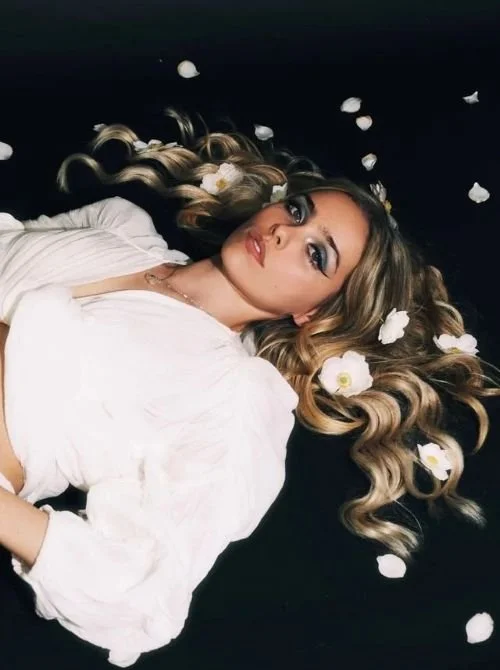
PHOTO CREDIT: Nat Traxel
Instagram:
https://www.instagram.com/avajoee/
TikTok:
https://www.tiktok.com/@avajoeeee
Twitter:
Spotify:
https://open.spotify.com/artist/1kExWfjjFzo8vNlmtBjCdj?si=CsaTbmuIS0ymyhOBbS4Xow
YouTube: