
FEATURE:
Beneath the Sleeve
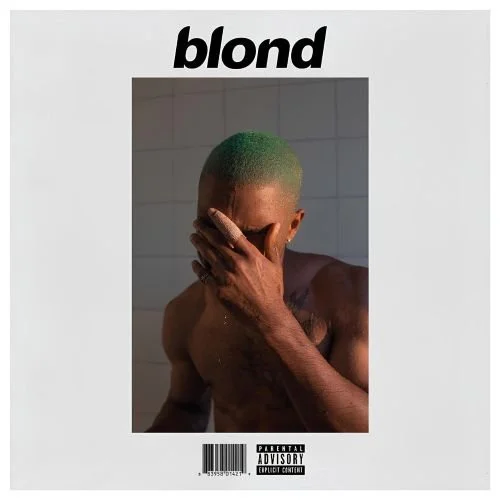
Frank Ocean - blond
__________
EVEN though…
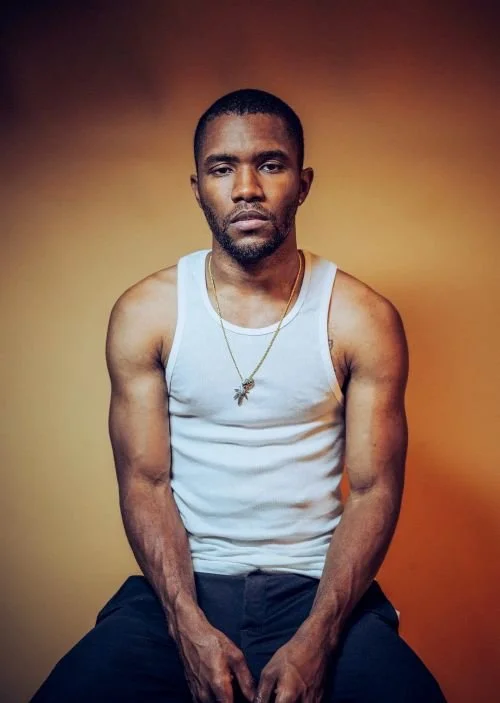
he has only released two albums, they are both masterpieces. I am focusing on Frank Ocean’s second and most recent album, blond. Released on 20th August, 2016 and recorded between Abbey Road Studios, London, Electric Lady, New York and Henson Recording Los Angeles, blond received sweeping acclaim. It is considered one of the greatest albums of the 2010s. Ahead of its tenth anniversary, I wanted to explore the album. I will end with some reviews for blond. I am starting with Vice. They spotlighted Frank Ocean’s words about the album:
“Minutes after releasing his new album, Blond, Frank Ocean shared a post on Tumblr explaining the inspiration behind the record. You can read it in full below and listen to Blond here.
Two years ago I found an image of a kid with her hands covering her face. A seatbelt reached across her torso, riding up her neck and a mop of blonde hair stayed swept, for the moment, behind her ears. Her eyes seemed clear and calm but not blank, the road behind her seemed the same. I put myself in her seat then I played it all out in my head. The claustrophobia hits as the seatbelt tightens, preventing me from even leaning forward in my seat. the pressing on internal organs. I lean back and forward to release it. Then backwards and forward again. There it is—I got free. How much of my life has happened inside of a car? I wonder if the odds are that I’ll die in one. Knock on wood-grain. Shouldn’t speak like that. We live in cars in some cities, commuting across space either for our livelihood, or devouring fossil fuels for joy. It’s close to as much time as we spend in our beds, more for some. The first time I did shrooms, my manager had to come rescue me from Caltech’s ‘Trip Day.’ As I got into her car, I swear to God the aluminum center console in her Porsche truck looked like it was breathing, like the throat of something. On the freeway, leaving Pasadena, we spoke and I looked away, outside, at the wheels and tires of cars doing that optical illusion thing they do where it looks like they’re spinning backwards, which, according to Google, happens because our brains are assuming something completely wrong and showing it to us.
Staring, I was transfixed by all the indicator lights oscillating and throbbing against the wind. We drove thru downtown LA headed west, flying on the same freeways I used to run outta gas on. Welcomed in by the perennial creatures, imperial palm trees and climbing vines living their lives out just off the shoulder. The feeling familiar enhanced, on the 10. I used to ride around in my sinewy crossover SUV, smoke and listen to rough mixes of my old shit before it came out, or whatever someone wanted to play when they hooked up their iPhone to the aux cord. A few years and few daily-drivers later I’m not driving much anymore. It’s been a year since I moved to London, at the time of writing this, and there’s no practical reason to drive in this city. I ordered a GT3 RS and it’ll keep low miles out here but I guess it’s good to have in case of emergency :) Raf Simons once told me it was cliché, my whole car obsession. Maybe it links to a deep subconscious straight boy fantasy. Consciously though, I don’t want straight—a little bent is good. I found it romantic, sometimes, editing this project. The whole time I felt as though I was in the presence of a $16m McLaren F1 armed with a disposable camera. My memories are in these pages, places closeby and long ass-numbing flights away. Cruising the suburbs of Tokyo in RWB Porches. Throwing parties around England and mobbing freeways in four project M3S that I built with some friends. Going to Mississippi and playing in the mud with amphibious quads. Street-casting models at a random kung fu dojo out in Senegal. Commissioning life-size toy boxes for the fuck of it. Shooting a music video for fun with Tyrone Lebon, the genius giant. Taking a break/reconnaissance mission to Tulum, Mexico, enjoying some star visibility for a change. Recording in Tokyo, NYC, Miami, LA, London, Paris. Stopping in Berlin to witness Berghain for myself. Trading jewels and soaking in parables with the many-headed Brandon aka BasedGod in conversation. I wrote a story in the middle—It’s called “Godspeed.” It’s basically a reimagined part of my boyhood. Boys do cry, but I don’t think I shed a tear for a good chunk of my teenage years. It’s surprisingly my favorite part of life so far. Surprising, to me, because the current phase is what I was asking the cosmos for when I was a kid. Maybe that part had its rough stretches too, but in my rearview mirror it’s getting small enough to convince myself it was all good. And really though… It’s still all good”.
A number one album in the U.S., U.K. and beyond, the California-born artist perhaps topped his incredible 2012 debut, Channel Orange. There were very few promotional interviews around Blond. I want to come to The New York Times and their conversation with Frank Ocean. There is debate whether you call Endless a studio album and place it among his discography. Endless is a visual album released on 19th August, 2016, as an exclusive streaming-only video on Apple Music, it preceded the 20th August release of Blond:
“Control is often at the forefront of Mr. Ocean’s mind. When he was on tour, his concerts would be recorded each night, and he would watch the tape, type up notes and email them to his team to prepare for a morning meeting. When “Blonde” and “Endless” were being recorded, he carried the hard drives with his music in his backpack, and the backups, too: “I’d rather the plane goes down in flames and the drives go down with me than somebody put out a weird posthumous release.” When he answers questions, he takes meaningful pauses, mulling over premises, before answering in expansive stories paired with precise bursts of logic.
After bouncing around hotels in London, he moved into a furnished apartment that he eventually stripped bare of all but the essentials: “I just wanted to be able to walk around and not run into an end table or some useless piece of furniture.” He rode electric bikes around the city, made new friends — “which is not as difficult as celebrities make it sound” — went on dates. He recorded in a handful of studios, including Abbey Road, where he asked for the studio, too, to be decluttered, removing furniture and bringing in flower arrangements.
Piece by piece, the music that would become “Blonde” and “Endless” was coming together, though up until then, it had been slow going. He’d begun recording at Electric Lady in New York, but after he took a pause away from the studio, the rhythm of writing was gone. “I had writer’s block for almost a year,” he said. During that time, he would go to the studio, “stare at the monitors and come up with nothing, or nothing that I liked.”
That dry spell broke only after he reconnected with a childhood friend from New Orleans who was going through difficult times. That conversation, he said, “made me feel as though I should talk about the way I grew up more.”
He decided that he wanted “Blonde” and “Endless” to be more autobiographical than his earlier releases. “I wrote ‘Channel Orange’ in two weeks,” he said. “The end product wasn’t always that gritty, real-life depiction of the real struggle that happened.”
So he turned inward, and backward, telling stories about his childhood, family life, and romantic relationships — some frivolous, like on “Nikes” (“He don’t care for me/but he cares for me/and that’s good enough”); some meaningful, like on “Self Control” (“Wish we’d grown up on the same advice”): “That was written about someone who I was actually in a relationship with, who wasn’t an unrequited situation,” he said. “It was mutual, it was just we couldn’t really relate. We weren’t really on the same wavelength.”
In places, like on “Ivy,” he manipulated his voice to sound younger, to better capture the time he was evoking. Many of the new songs have two or three competing narratives — different points of view participating in the same story. “That was my version of collage or bricolage,” he said. “How we experience memory sometimes, it’s not linear. We’re not telling the stories to ourselves, we know the story, we’re just seeing it in flashes overlaid.”
On “Blonde,” especially, you used a lot of different voices.
Sometimes I felt like you weren’t hearing enough versions of me within a song, ’cause there was a lot of hyperactive thinking. Even though the pace of the album’s not frenetic, the pace of ideas being thrown out is.
Are they always multiple points of view, or are they multiple Franks interrupting each other to be heard?
It’s the same thing — to me — because my point of view from one emotional state to another is a different point of view. Sometimes I want to talk on a song and be angry, because I am angry. Then there’s always a part of me that remembers that this record lives past my being angry, and so do I really want to be angry about that? Is that feeling going to have longevity?
Were you working toward a fixed idea on these albums? Or was it mutating and evolving as you went?
When I was making the record, there was 50 versions of “White Ferrari.” I have a 15-year-old little brother, and he heard one of the versions, and he’s like, “You gotta put that one out, that’s the one.” And I was like, “Naw, that’s not the version,” because it didn’t give me peace yet.
You were reaching for something ineffable?
They’re just chords, just melodies. I don’t know what combination of those objects is gonna make me feel how I need to feel. But I know precisely the feeling that needs to happen.
Regaining Control of Business
At the same time he was chasing a perfect-feeling sound, he was trying to regain control of his business relationships. He replaced his team — new management, new lawyer, new publicist. And he began negotiations to free himself from his contract with Def Jam, the label that had signed him in 2009 and effectively shelved him until his self-released debut mixtape “Nostalgia, Ultra” caused a stir online in 2011. “A seven-year chess game” is how he described the process of buying himself out of his contract and purchasing back all of his master recordings — using his own money, he said.
As a condition of the arrangement, he said, Def Jam took on distribution of his next project, “Endless,” which is available only as a streaming video album on Apple Music. Then, less than two days later, came a big surprise: “Blonde,” released independently by Mr. Ocean. (Apple Music paid to host the premiere of “Blonde,” but Mr. Ocean said there was no ongoing relationship with Apple.) This was Mr. Ocean’s checkmate, an album wholly his own that took center stage: “Blonde” debuted atop the Billboard album chart with the third-biggest opening week of the year, behind only Drake and Beyoncé.
When releasing “Endless” and “Blonde,” he took his time: “I know that once it’s out, it’s out forever, so I’m not really tripping on how long it’s taking.” He described his mood after the release of “Blonde” as “postpartum.” Rather than going on a promotional tour, playing radio festivals and making the usual rounds, he spent about a month traveling: “China, Japan, Oceania, France, just around. Casual”.
Let’s finish with a couple of reviews for blond. I am dropping the ‘e’, as the album cover says ‘blond’. I am not sure why everyone adds the ‘e’. Even so, I will move to The Line of Best Fit and their 9/10 review for Blond. In the header of their review they say how “Since disappearing from the public eye, Frank Ocean’s aroused more intrigue, generated more content and provoked more discussion among fans and critics than some of the most visible and productive artists - churning out material, hits and media appearances - could even wish for. It makes you wonder. Maybe Frank Ocean’s been with us all along - as a mirror for ourselves”:
“On the 45-minute long visual album Endless, we watch numerous Frank Oceans stalk the interior of a large industrial warehouse as they proceed to construct – in between breaks to check a smartphone – a tall wooden spiral staircase. The staircase is effectively destroyed as he ascends to its summit (around the 38-minute mark), before Frank resumes silently building from scratch all over again. It would be easy to view the whole thing as a metaphor for the creative process (the “endless” formation, evolution, destruction and/or revision of ideas) – if the warehouse is Frankie’s brain. But it might be too easy. Endless might actually be a statement on the art of patience. Which might feel somewhat incongruous in what are unequivocally urgent times; but there’s a hell of a case for slowing down - as consumers, dreamers, creators. As people. To view the piece in its entirety - to begin to understand it, and the artist who made it - requires patient and undistracted reflection. And, it would seem that since his spectacular debut-proper Channel Orange left its indelible mark on the pop landscape, Frank Ocean’s been learning the value of these lessons, too.
Blonde is at once both complicated and understated, invoking the very best of Channel Orange and rendering it even more fragmented and porous. Channel Orange was effortlessly subtle and moving in its approach to imagery and storytelling – combining a photographic eye for detail and a close attention to minutiae (the fingertips and the lips burning from the cigarettes on "Forest Gump"; the newborn baby reaching for the nipple on "Sierra Leone") with trippy surrealism and flights of sheer fantasy (the aliens watching live from the purple matter on "Pink Matter"; the condo on the cloud in "Pilot Jones"). It was a world in which the hyper-real and the pure imaginary were collapsed into one another and remolded anew – where time slowed, and where nothing and everything was true. But Channel Orange played out in scenes and sketches – albeit delicate, incomplete ones – which we were able to step into and step out of: we’re on the roof looking out across Ladera Heights with our character in "Sweet Life"; we’re right there in the taxi at rush hour on "Bad Religion". Blonde lacks these obvious entry and exit points. They’re there, for sure, they’re just not so easy to find.
Blonde is anchored in the same closed universe as Channel Orange and, to an extent, Nostalgia-Ultra: cars, drugs, pool parties, sex, love, loss, sunsets and moonlight; characters speeding through a blurred existence, unsure of where they’re heading, finding truth and meaning in only the most ephemeral and transitory highs. We’re there from the off: "Living so the last night / Feels like a past life", he sings on the opening track "Nikes". But on Blonde our proximity to these characters and their world is magnified. Frank gets right to the surface of his subjects, right up close to the flesh. This close up it’s hard to see the entire picture; we’re so close to the image it flinches, retracts, becomes something different altogether: "The markings on your surface / Your speckled face / Flawed crystals hang from your ears / I couldn’t gauge your fears / I couldn’t relate to my peers". There’s a line of argument that says one of the problems of living in late capitalism is that it’s all empty surface-level. If anything, there’s less and less real tangible surface-level experience. We’re lost in our own bodies. Like James Blake’s (and Blake’s influence is felt all over this record – as is Frankie’s all over Blake’s, The Colour In Anything), Frank Ocean’s art often reflects and tries to work through these tensions: "Where I cannot / Where I cannot / Less morose and more present / Dwell on my gifts for a second / A moment", he sings on "Seigfried".
We drift throughout the majority of Blonde, orbiting these fragile points of contact, points that feel constantly under threat; we hover precariously over moments of indeterminacy and confusion – the feeling of not knowing how to feel, where lack and desire merge, and become the same. It’s in his style of delivery, in the way he occasionally murmurs, trips off the edge, attenuates, languishes, dissolves (see "Good Guy", or "Close to You"). And it’s there in the writing, too: "Is this the slow body / Left when I forgot to speak / So I text to speech, lesser speeds / Texas speed, yes / Eventually, eventually, yes / I only eventually, eventually, yes" ("White Ferrari"). The writing isn’t always suspended precariously at this trembling threshold, though. There are times when it boasts a brilliant photomontage-like quality – whole scenes cut with sharp details, transitioning frame by frame with a flicker, and then opening up before you. Take this, for example, from "Skyline To": "Gliding on the five / The deer run across / Kill the headlights / Pretty fucking / Underneath moonlight now / Pretty fucking / Sun rising, sand, comes a morning / Haunting us with the beams". Elsewhere, the writing feels like it's buckling under the weight of its own mad potential. Take this piece of Beckettian hopscotch from "Siegfried": "Dreaming a thought that could dream about a thought / That could think of the dreamer that thought / That could think of dreaming and getting a glimmer of God / I be dreaming a dream in a thought / That could dream about a thought / That could think of dreaming a dream".
It would be wrong to suggest, however, that Blonde plays out entirely in a state of dizzy disillusionment, or in a tangle of philosophical windings. When it needs to soar proudly, when it needs to shout, it does exactly that. Blonde is a work of supreme confidence and assurance, one that bounds assertively between genres and styles. It sounds delightful. Between the vague cracklings of sad-boy electronica – a modification of an aesthetic pioneered by the likes of Radiohead and James Blake in the UK – there are big, expansive moments of defiant pop ("Ivy") and impressive flourishes of avant-gardes soul ("Pink + White"). These are enjoyable moments, but they're not without the weight of history either, which cuts into the soft flesh of the album when you least expect. Even as we’re sliding amorphously through these melting snapshots of intimacy and desire and nakedness, the full horrors of American racism still clatter terribly and immediately into the fold. The album’s sense of sadness and alienation (and terror) takes on a whole different import and resonance in the middle of "Nikes", with Frank paying tribute to the life of Trayvon Martin, the 17-year old African American boy murdered on the walk home from his local store by George Zimmerman, in 2012. It’s a simple, devastating one line: "R.I.P. Trayvon / That nigga looked just like me". Elsewhere, the nightmares of Hurricane Katrina flash traumatically across Blonde, like unexpected forks of lightning. And when Frank sings "this is summer / Keep alive, Stay alive", on "Skyline To", it’s not hard to read as a tragic reminder that America’s hottest months are invariably its most deadly.
For an album that is at times intentionally difficult to follow - for all its vague and indistinct meanderings between subjects, between minds and bodies, between place and time, Blonde remains a highly accessible album - and not just sonically. Frank Ocean writes and delivers in a way that makes peculiar sense to those of us inheriting a world bound by so many mad contradictions and discrepancies; one that places us – the young - at its "centre", while remaining incapable of responding to our realities and our grievances. It’s as if those who were brought up living with the Internet are often presumed to have unconditionally assimilated all the manifold perplexities of digital media, past a point of no return. Which is partly true, but it’s not that simple. We’re looking for truth and goodness just like every other generation of seekers, and we’re doing our best to cling to it whenever we recognise it, however fleeting. His music speaks to these fraught and complicated urges: "It’s hell on earth and the city’s on fire / Inhale, in hell, there’s heaven", goes the hook on "Solo". But there’s also a quiet confidence underlying the uneasy melancholia that dominates Blonde, a feeling that when real change eventually comes, it’s going to be on our terms: "We’ll let you guys prophesy / We gon’ see the future first". We might be fucked up, but compared to “them” we’re doing just fine: "You’re tired of moving, your body’s aching / We could vaca, there’s places to go / Clearly, this isn’t all that there is / Can’t take what’s been given / But we’re so okay here, we’re doing fine".
Blonde is a strangely pertinent album. But it never screams its message – if you can really call it that. It’s never didactic or instructional or overbearing; importantly, it never treats its listeners as stupid. Frank Ocean shares our doubts and our anxieties – you can sense it in his writing, in its trepidation, in its ambivilance. Blonde’s not about telling us how to live (it’s decidedly ambiguous on hedonism and materialism, for example.) Rather, Blonde allows its listeners to make their own minds up, and to take what they need from it - to live. It’s this same kind of assurance – allowing the art to speak for itself, and a faith in his audience to listen and to respond - that kept him tinkering away for so long at this project in near total secrecy, until it was properly ready for release, until it was right. After all, there’s no rush. Not really. He might even disappear again soon. It shouldn’t matter to us; because Blonde is a work of art that will stick with us all for way longer than four short years”.
DIY praised the astonishing 2016 album, blond. They note how Frank Ocean “doesn’t have all the answers, and ‘Blonde’’s brilliance comes from how content it is not knowing an absolute truth”. There is no doubt that blond is among the finest albums of this century. I have listened to it more in preparation for this feature. It never fades or loses its magic:
“When music and meaning don’t fully click together like a neat stack of Lego bricks, ambiguity steps in. If a record is billed as being “open to interpretation’, that’s often code for “there’s not a great deal to see here, guys.” That’s not the case for Frank Ocean’s ‘Blonde’, an album that will be poked and prodded at by deep-thinking fans for years to come, and for good reason.
Searching for ‘Blonde’’s true meaning is like fishing for treasure in the Great Barrier Reef. There’s bound to be something down there somewhere, but you’ve got to get past the infinite, beautiful distractions. In truth, the follow-up to ‘Channel Orange’ thrives in its own uncertainty. Its best moments play out like a lucid dream. And it works because it’s so content with not knowing an absolute truth.
Fluid and curious, the record explores like there’s always something else to see. Strict song structures are scarce, save for the dazzling ‘Ivy’ and ‘Pink + White’. Instead, flooring split-seconds and sudden jolts of life step in out of nowhere. Andre 3000’s show-stopping ‘Solo (Reprise)’ verse gives way to ‘Pretty Sweet’’s white noise and a fitting Outkast-nodding beat frenzy. ‘Nights’ splits into two parts - from disjointed, N64-on-steroids playfulness to a twisted, after-hours purple haze.
There are funny contradictions everywhere, like how an anti-drugs speech from Frank’s Auntie (‘Be Yourself’) is immediately followed by ‘Solo’’s opening line, “Hand me a towel I’m dirty dancing by myself / Gone off tabs of that acid.” Right up to the record’s title - it can be called ‘Blonde’ or ‘Blond’ - there’s no certainty. Each song is like a story with a dozen alternate endings. But there’s something refreshing in not having the answer. Especially in 2016, when one opinion can be gospel while everything else is void, when you’re told to be aware of everything while barely anyone knows the reality.
Big name cameos from the likes of Beyoncé and Kendrick Lamar are so subtle, they’re barely audible. The former can be heard in the background of ‘Ivy’, while Kendrick is reserved to a couple of accentuations. More airtime are given to a joke interview recorded by Frank’s brother when they were kids, on ‘Futura Free’. That’s less his way of hogging the spotlight, more proof of ‘Blonde’’s unpredictability and how split-seconds stay in the memory rather than specific songs. The way ‘Self Control’ clicks together - with the help of Yung Lean - from a disjointed love song into an emotional juggernaut. The way Frank employs Elliot Smith lyrics (“This is not my life, this is a fond farewell to a friend”) when he’s in the middle of pouring out his soul. The way ‘Ivy’’s vinyl-crackle notes bend out of shape.
It’s been a year of sudden-releases and snap judgements. But few records need to be unpacked as slowly as ‘Blonde’. It will take months for the dust to fully settle on 2016’s most long-awaited album. For ‘Channel Orange’ purists, the record’s more outward-thinking moments will understandably frustrate - Frank’s rich sense of storytelling is still here, it’s just fragmented. But once ‘Blonde’’s ambiguity begins to piece together, it becomes something remarkable”.
However you stylise the album title, I do feel that blond is among the greatest albums of the century. In terms of what comes next for Frank Ocean, I am not too sure. There have been single releases (such as 2017’s Provider and 2019’s DHL), but nothing in the way of a third album. As we await that – if it will ever come -, we should marvel at blond ten years after its release. We mark thar anniversary on 20th August. A decade later, and blond remains…
A heavenly release.