FEATURE:
Spotlight
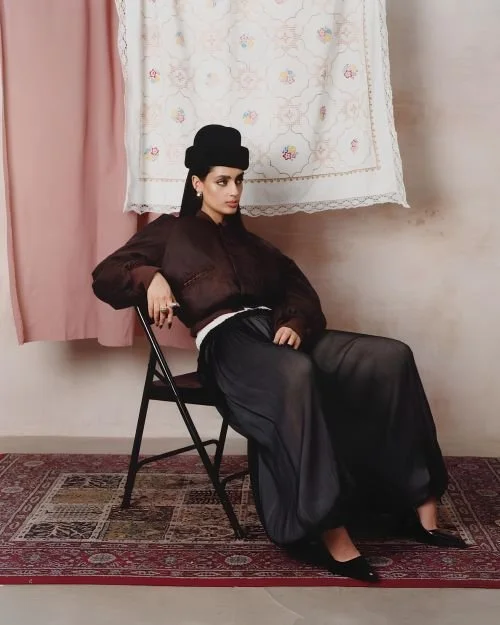
be on your radar, but she really should be. I am going to come to some interviews with the magnificent zeyne. I am going to start out with this feature from GRAZIA. They published it in 2024. Although it was a couple of years ago, it does provide some useful background to this amazing human. One that everyone should support, know about and show love to:
“Zeyne’s musical journey blends passion, heritage, and creativity. Born in Jordan to Palestinian parents, she grew up in a home where music was always present. From a young age, Zeyne’s family encouraged her to explore her musical talents. She began learning the piano at just three years old and was performing in a dabke (traditional Palestinian dance) group by the age of five.
However, it wasn’t until the COVID-19 lockdown that Zeyne fully embraced her musical calling, marking a turning point in her life. Stranded in Jordan when the pandemic closed borders, Zeyne found herself isolated. During this time, she began posting cover songs on Instagram to build confidence, and soon the world began to take notice of her talent. Her breakthrough came with Ma Bansak, a performance on the Colors show, which pushed her into the spotlight.
Her debut single, Minni Ana, blending Arabic R&B with contemporary Western influences, gained praise worldwide. Since then, Zeyne has continued to redefine the boundaries of Arabic music, releasing tracks like Balak, Bala Wala Shi, Atoul, and Ana Wein. These songs not only showcase her extraordinary voice but also her ability to tell deeply personal stories that resonate with listeners.
The Sound of Zeyne
Zeyne’s music is a reflection of her dual cultural heritage. With roots in Palestinian and Jordanian traditions, she blends sounds of the Arabic world with Western genres like R&B and soul. Drawing inspiration from Arabic legends such as Fairouz, Zeyne combines the beauty of Arabic melodies with contemporary Western rhythms, taking influences from Lauryn Hill and H.E.R. Zeyne’s sound highlights the power of cross-cultural collaboration, gainning her a unique sound and a loyal following, not just in the Middle East, but worldwide.
Her songwriting process is deeply personal, tackling topics not often discussed in her culture, such as mental health, anxiety, and the struggles of being a young woman. In her music, she gives a voice to those who feel silenced by society, particularly women.
Zeyne believes that music must come from the heart, which is why she focuses on writing songs that reflect her own experiences. Her first single, Minni Ana, explored her relationship with herself, while Nostalgia expressed her longing for Palestine, particularly Nablus, her family’s hometown. In Atoul, Zeyne delved into the complexities of falling in love, and in Balak (featuring Saint Levant), she captured the frustrations of a long-distance relationship.
Zeyne at Bottega Veneta’s Waves Event IN DUBAI
Zeyne’s performance at Bottega Veneta’s Waves event in Dubai marked a significant milestone in her career. Held at Concrete in Alserkal Avenue, the event combined fashion, art, and music to create an immersive experience in Dubai. The venue, designed by Lebanese architect Carl Gerges, featured soft, concentric seating and sand-coloured textures that reflected the timeless beauty of the desert, creating the perfect backdrop for Zeyne’s performance.
In this unique setting, Zeyne’s performance felt like an extension of the backdrop itself, blending contemporary style with rich cultural heritage. Her performance, alongside Palestinian-Canadian artist Nemahsis, highlighted the event’s theme of cultural resonance, a key part of Bottega Veneta’s commitment to cultural advocacy to foster music, innovative sound, and creative exchange under the direction of Matthieu Blazy.
The Future of Zeyne
Zeyne’s unique ability to blend the old with the new and the West with the Arab world, positions her on a track to become a global popstar. Her collaborations with artists from across the MENA region and beyond, combined with her growing following from international platforms like Colors, have set her as a trailblazer in the new wave of Middle Eastern music.
Zeyne’s growth signals a new chapter in the evolution of contemporary Arabic music, bridging cultural gaps and resonating with a global audience. With her powerful voice, innovative sound, and commitment to strong storytelling, Zeyne’s influence is bound to grow, not just in the Arab world, but globally”.
There is an interview from earlier this year I will come to. Most of the recent interviews are from last year. She released her astonishing album, AWDA, in October. That word translates to ‘return’ in Arabic. I am starting out with DAZED and their great interview. The spoke with an artist who is “making ‘Arabic alt-pop’ to reclaim her voice”. I am going to repeat a little bit of the background that we have read and know. But it is interesting reiterating her pat and road into music. It is fascinating:
“A few years ago, singer and former Dazed 100er Zeyne graduated from the University of Sussex with the intention of pursuing a career in media and communications. Blocked from starting her new job in London thanks to the pandemic, she began posting song covers on Instagram from her home in Amman, Jordan. Eventually, she gained enough traction online that the idea of doing music full-time became a real possibility. “Keep in mind, my parents sent me off to uni. I was meant to do work in PR, research and media,” she tells me over Zoom. “I told them about music, and they looked at me and they were like ‘you know what, OK if that makes you happy do it, we are behind you’, I remember the immediate sigh of relief, and I started crying.”
In 2021, just a year into posting covers online, she released her debut single “Minni Ana”. Now Zeyne is finally ready to show her full self to the world, releasing her anticipated debut album. Entitled AWDA – meaning “return” in Arabic – the project features 12 songs which seamlessly blend Arabic anti-pop and smooth R&B.
Throughout the project, Zeyne unpacks the idea of belonging, identity and cycles of intrusive thoughts. At the start of the opening track, “Asli Ana”, there is a monologue where she recites: “I will not take off my Thobe before they take off my skin / Record that I am an Arab / And I know my origin”. From her opening speech to the final song, which features a recording of Palestinian poet Mahmoud Darwish, AWDA reminds us that culture is strengthened through connection. Below, she speaks to us about the making of her album, learning to write songs, and finding her voice.
What would you say was your earliest memory of music?
Zeyne: At three, I remember seeing my eldest sister, Lina, playing the piano. It was so funny, I was trying to copy her. I looked at my mom, pointed at my sister, and said, "I want to be just like her. I want to play the piano." I'm so grateful to my family for introducing me to music in that way.
When was the moment that you decided that you wanted to pursue music as a career?
Zeyne: I think it was around December 2020. Back then, I had my cover page for a few months. I had met my current producer. I went to his studio, and he was just like, ‘what do you want to do? Why are you here?’ I thought, what an odd question to ask, because I’m here to record a cover, what do you mean? I had never thought of [making original music]. I told him I did not know how to write music but had never tried. He looked at me and said, ‘how can you say you don’t know how to do something if you’ve never tried it?’ I went back home that same night, sat on my piano, and started rambling. I took that to the studio, and we built on that together, and that’s how I ended up coming out with my first-ever debut single.
I wanted to ask about your sonic influences. How do you hear and define your own music?
Zeyne: Before working on this album, I really was experimenting with the R&B sound in Arabic, because I felt like that was an unexplored territory in the region. Making R&B in the Arabic language with our Arabic scales and instrumentation, sonically, I thought that was a very interesting way to start, and I took that with me throughout the album. I was always so scared of going out of a certain genre, because I didn’t want people to think that I'm confusing or whatever. But then I was just like, the story itself is going to communicate the feeling overall; it does not have to stick to a certain genre. But if I were to define it, it's definitely Arabic alt-pop, R&B.
I tried to make the album sonically very inclusive of Arab cultures in general, not just Jordan and Palestinian, but even branching out to like North African sounds, especially in places like Morocco, Algeria and Tunisia, just borrowing sounds. We are cultures that borrow a lot from each other, and we support each other a lot as well, even in the Palestinian cause, our North African brothers and sisters who have stood so much by us. This is a celebration of all of our cultures merged together.
What is the message or feeling you hope people take away from this album?
Zeyne: The feeling is definitely to be empowered. I think growing up, I always lacked the feeling of empowerment. I did not have a lot of confidence in myself to share my music or my voice with the world. When it came to writing the album, I wanted people to feel empowered by love, identity, womanhood, girlhood or feeling proud enough to embrace themselves and who they are. Empowerment and reclamation of who you are, that’s definitely an undertone of this whole album; just confronting and being honest with yourself”.
I am interested to bring in Wonderland. They chatted with zeyne in October. A spectacular artist lighting the flames of resistance. Wonderland. spotlighted someone who had released “her most personal and potent project with debut album AWDA. She talks finding her voice, searching for hope, and pushing her boundaries”. If you have not listened to AWDA or are a little hesitant, I would thoroughly recommend it. It is so atmospheric and transcendent. She blends Arabic Alternative Pop, early-2000s R&B, and Ambient Soul:
“You are adept at combining traditional elements from your cultural lineage with a pop-centric sound. How important is it to celebrate your roots within your music?
It’s really important to me, but it’s not something I approach in a calculated way. It’s more natural than that, like I mentioned earlier, it’s in the way I sing, the melodies I gravitate towards, the language I use. Growing up, those sounds were always around me, so they’re just part of who I am. I think celebrating my roots through music isn’t about putting tradition on display, it’s about letting it live in a way that feels current and personal. It’s my way of honouring where I come from while also pushing forward into newer spaces.
How do you transform the darkness of these current times as light within your own music?
At the moment, with Palestine, it doesn’t feel right to talk about light in the face of what’s happening. Watching a genocide unfold in front of us, I don’t think there’s a way to rationalise it or frame it as anything other than devastating. What I can do, and feels like the least I can do, is to make sure it lives in my work and in the platforms I have access to. For me, that’s not about trying to turn something so dark into light, but rather about speaking on it with honesty and responsibility. The music becomes a place to carry that grief and anger, to refuse silence, and to honour our culture and our people. If there is light in that, it’s in the act of remembering, resisting, and insisting on our presence.
What does the album mean to you? What do you hope it achieves?
For me, AWDA is a milestone, and not because its my debut album, but It’s the first time I’ve been able to put all these different parts of myself into one complete story. It feels like a home I can always return to, no matter where I go next. And I hope it achieves connection where people can listen and find pieces of themselves in the songs, or for it to spark conversation about identity and where we come from, if that’s achieved then it’s done its job. I don’t think music has to give answers, but I do hope it makes people feel seen and understood.
Aside from the project, what’s to come from you, this year and beyond?
I can’t give too much away just yet, but I will say that taking AWDA on tour is something I’m really excited about. There are a few surprises lined up and I’m excited for people to see different sides of me as an artist. For now, I’ll let the music do the talking… but stay tuned”.
There is one more 2025 interview that I want to come to. I am going to end with a review of AWDA. Hunger spent some time with zeyne. Someone who creates music from the heart, she “reflects on trusting intuition, returning to oneself and the collective responsibility to confront injustice”. I am very new to her music, but the more I learn about her and the more I hear, the deeper my affection and respect runs:
“When I ask about representing Palestinian identity from the diaspora, Zeyne is equally thoughtful. “It’s my own identity, and of course, I wouldn’t have the same experience as someone living in Palestine, but what I can do is represent my own experience of living in a diaspora, living just right next door, and feeling so close yet so far from where I belong,” she shares. “It comes with great pride, but also immense responsibility, because it is a very sensitive and important cause that affects so many families, and I want to do it justice every time I talk about it.”
Zeyne’s family are from Nablus, Palestine, approximately forty kilometres as the crow flies from where she currently lives (and was born and raised) in Amman, Jordan. The short distance belies the reality of the journey, which requires visas, border crossings and checkpoints, if entry is granted at all. “I don’t know how safe it is for me to go now, especially after what I’ve put out and released as an artist,” she tells me. “In the past, I didn’t have a digital footprint or a platform where I was so vocal about Palestine and everything that goes on there.” Zeyne has visited Palestine three times — at six months old, sixteen and nineteen — and describes the experiences as “some of the best trips of my life”. “Not all Palestinians have the privilege of going to Palestine,” she observes. “I was privileged enough to be able to go, so I’ll never take that for granted.”
Her new album, Awda, is steeped in Levantine culture, spanning Dabke, a traditional Levantine folk dance, to the mijwiz, a traditional Arabic wind instrument, before culminating in the closing track ‘kollo lena’ a recording of Mahmoud Darwish reciting in Arabic, “On this land, life is worth living”. The thirteen-track album was born out of two transformative years for Zeyne, filled with highs and lows. It explores identity, empowerment, reclamation, self-love and “finding love, and falling out of it”. Reflecting on the album, she says it traces a now complete journey — from hitting rock bottom and confronting personal struggles to finding herself again within her community. “It’s a full-circle moment for sure,” she says.
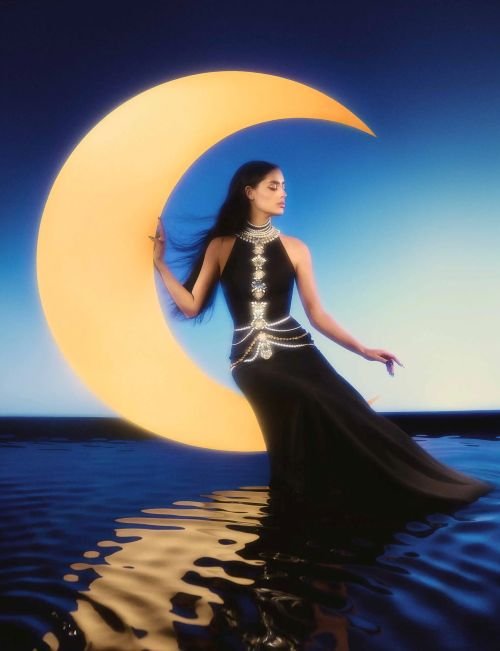
PHOTO CREDIT: Vadym Yatsun
But Awda is as much for Zeyne’s audience as it is for her. The title itself, meaning ‘return’, offers listeners an open invitation. “I wanted to give listeners space to decide where they want to return,” Zeyne explains. “Is it to themselves? To their identity? To their first love, their issues, their family?” And for Zeyne, who describes herself as not particularly vocal online, the album speaks where words cannot. “I’m not very vocal online. I let the music say what I feel,” she explains. “I spoke about everything — finding love, falling out of love, discovering my mom was ill, facing my mental health issues and my identity. Things I wouldn’t normally talk about online.” Writing from personal experience, I learn, is therapeutic for Zeyne. She’s drawn to music that emerges from vulnerable, deeply personal places — a quality she admires in Lebanese icon Fairuz. “She has this ability to express vulnerability in a very contradictory way musically, and I love that kind of contradiction — what you’re saying against the type of music that’s playing with it. I find myself using that.”
Beyond Awda, 2025 has been a landmark year for Zeyne. She performed to tens
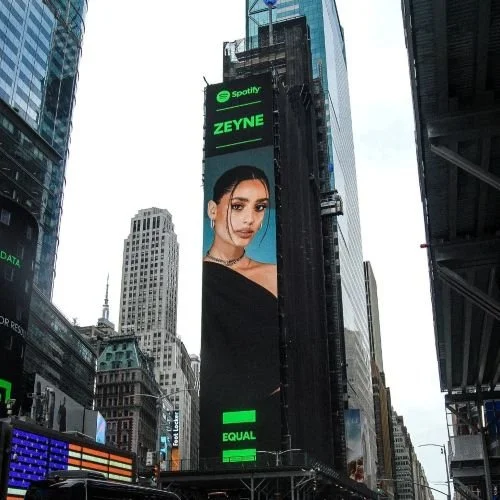
of thousands at Abu Dhabi’s OFFLIMITS Festival and, as an ambassador for EQUAL Arabia, took over a Times Square billboard, celebrating Arab and Palestinian identity and female empowerment. She became the first Levantine woman to appear on COLORS with ‘Ma Bansak’ and the first Arab artist to join YouTube’s Foundry Program 2025, joining a roster of global artists at the forefront of today’s music landscape, such as Rosalía and Dua Lipa. Zeyne is ending the year by playing with Saint Levant in Bahrain and at Sole DXB.
When I follow up with Zeyne a few weeks after the release of Awda, her gratitude is evident. “The response to Awda has been beyond anything I could have imagined,” she effuses. “Seeing people connect to the songs, not just in the region but around the world, has been really emotional and so beautiful to see.” This is especially true for the singer since, as well as sharing her culture on the album, she also filled it with her own story. “This album came from such a personal place,” she reiterates, “and to know that its stories and sounds are resonating so deeply with others makes me so grateful and so inspired to keep creating from the heart.” Zeyne’s artistry, then, lies in her courage: to speak openly, fearlessly and to turn life’s complexities into music that resonates. She stands as one of music’s most important voices today, not only for what she sings, but for the conviction with which she sings it”.
This Schön! interview is incredible. In conversation with one of the most compelling and important voices of her generation, they write how “Everything the Palestinian-Jordanian singer puts forward is done without negotiating her identity”. This is an artist who I feel we are going to hear a lot more from in the next few years:
“Let’s talk about the opening monologue on the first track ‘Asli Ana.’ It introduces these ideas very powerfully. What did starting the album that way mean for you?
The whole album starts with ‘Harrir Akla [Free Your Mind]’ and ‘Asli Ana [My Origin].’ They’re a statement at the beginning of the album to let the listener know exactly who they’re listening to. Someone who is unapologetic about their identity, about who they are, where they come from, their roots, their heritage, their lineage – everything that makes them who they are.
It feels like artists of your generation are shaping a whole new language around what it means to be an Arab singer today. What does that look like from your perspective?
As time will pass, more and more artists are going to emerge. Growing up I didn’t have that. I didn’t have a Palestinian female artist to look up to or someone that I could resonate with from my own generation. Hopefully it also inspires the younger generation to be proud of where they come from and not shy away from that. I remember when I was in university people would ask, “where are you from?” I would say “Palestine, Jordan,” [and] they would just give me a weird look. I’m pretty sure if this happened now it might evoke a different emotion which is really cool. I think the shift is not only in music, it’s the general conversation around the world about Arabs in general. I feel like everything Arab related is now becoming more popular.
What does singing in Arabic mean to you?
There’s a shift in how people look at the Arabic language. We have the most poetic and romantic language to exist. It’s so cool to see people from all around the world sending me messages saying they don’t understand Arabic but they’re starting to learn the language. It’s very touching when I get these messages because it feels like we’re bringing people closer to who we are and not trying to bend over to kind of get to them. The Arabic language is becoming a bridge in my music.
You’ve described yourself as a dreamer. As you look ahead into the new year which dreams feel realised and which ones are still calling you?
I’m finally doing my headlining tour in the spring which I’ve wanted to do for a really long time. It’s very surreal for me. You know what I would love to do? I’d love to sit down with Fairuz. Just for lunch or breakfast or anything she wants.
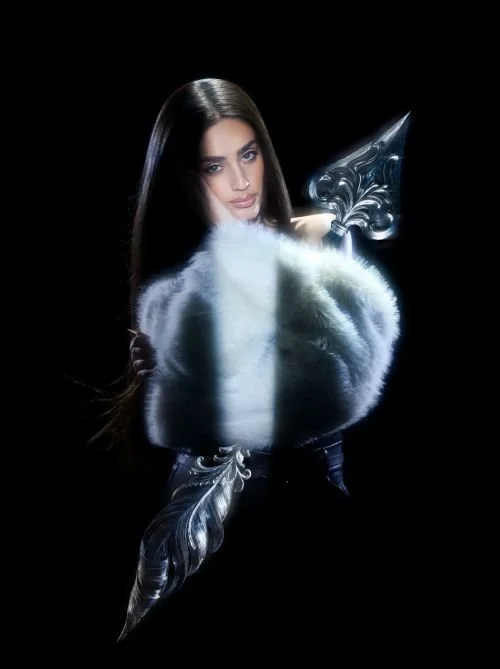
PHOTO CREDIT: Vadym Yatsun
GQ Middle East shared their thoughts on zeyne’s AWDA. It is a no-skips debut. One of the very best of the past few years. She has some gigs coming up, and there is a date at KOKO on 1st September. A London crowd who will show her a lot of love:
“Zeyne has built a sound that defies borders and easy labels, fusing contemporary R&B with the pulse of Arab percussion and the ache of diaspora. Honing in on her influence, her long-awaited debut album, AWDA, is a 13-track emotional map that feels both intimate and universal, and rooted yet future-forward.
“AWDA,” meaning return in Arabic, is much more than a title alone. Across its layered soundscape, Zeyne explores what it means to belong, to love, to lose, and to return to oneself after being fragmented by expectation and exile. Zeyne’s story has always been about multiplicity. With over 52 million global streams and stadium shows alongside Ed Sheeran’s Mathematics Tour, she’s become one of the Arab world’s most magnetic cultural exports – a rare artist who can shift from viral dabkeh at a Bottega Veneta show to raw conversations on mental health with ease. Her ascent hasn’t gone unnoticed. In 2025, she became the first and only Arab artist selected for YouTube’s Foundry Program, joining the ranks of alumni like Rosalía and Dua Lipa.
Produced primarily by Nasir Al Bashir with contributions from Khalil Cherradi, Ratchopper, and Sofian Grillo, AWDA blends early-2000s R&B nostalgia with Arabic instrumentation and ambient soul. There’s a rare emotional intelligence to its construction, where each track feels like a page from Zeyne’s diary. “7arrir 3aqlak (Asli Ana) opens with a reclamation of Palestinian identity through dabkeh and poetry, and “Yom wara yom (OCD)” dissects the spirals of mental illness with tenderness and precision.
She keeps features minimal – Bayou appears on “6 il Sobh,” and Saint Levant adds saxophone to “Arrib Minni” – allowing the focus to remain on her voice. In many ways, AWDA isn’t designed for playlists. It plays like a continuous story without a clear beginning or end, echoing the cyclical nature of identity and healing.
In an era where Arab artists are no longer waiting for Western validation, Zeyne stands as a voice of her generation. AWDA is her homecoming, but it’s also an invitation of self-acceptance, ancestry, and the stories that live in our bones”.
Make sure that you follow zeyne. She is such a fantastic artist who released a new single (a collaboration with Marina Satti), A’ti, earlier last month. I wonder what the rest of the year holds for her. As a new fan and someone who was instantly struck by her music, I am going to keep a close eye. It is clear that zeyne is going to be talked about…
FOR many years to come.
__________
Follow zeyne
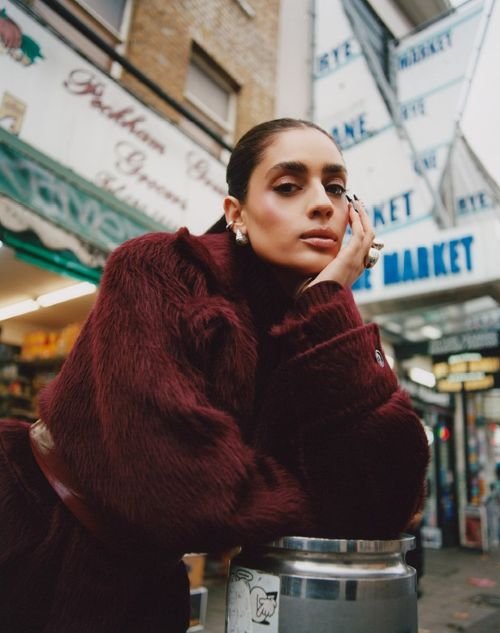
PHOTO CREDIT: Vicky Grout
Official:
Instagram:
https://www.instagram.com/zeyne/
TikTok:
YouTube:
https://www.youtube.com/@zeyne_
Spotify:
https://open.spotify.com/artist/4yuZxu7joQOFtplpMAsxlf?si=tB8eY6g7QzySZtlyYoGltA