FEATURE:
Spotlight
PHOTO CREDIT: Ego
AQUTIE
__________
I want to spend…
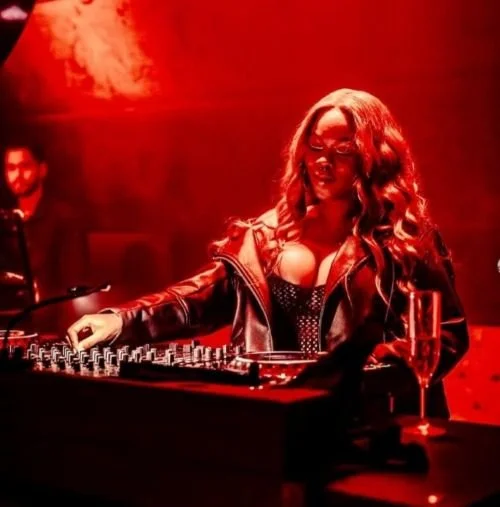
some time with the amazing D.J., AQUTIE. This is a phenomenal producer that I am quite new to but have been instantly drawn to. I will come to a recent interview with her. I want to start out by sourcing some biography about AQUTIE:
“Hailing from the vibrant streets of Harlem, AQUTIE is championing the African sound globally. Drawing from a rich tapestry of influences spanning Afro house, AfroTech, gqom, & amapiano, AQUTIE seamlessly intertwines the rhythms of the African continent with the soulful elements of house, deep tech and soul.
AQUTIE’s meteoric rise to prominence is underscored by her performances with luminaries such as Louie Vega, Keinemusik, ANOTR, Scorpion Kings, Skepta, Dennis Ferrer & more, solidifying her status as a respected figure in the industry. Whether gracing the Boiler Room stage or commanding the decks at Brooklyn Mirage for Black Coffee, AQUTIE exudes a palpable energy that resonates with enthusiasts of all backgrounds.
As AQUTIE continues to carve her path towards global stardom, she embodies a larger ethos of unity and inclusivity. Her mission is about unifying the world through the universal languages of music, dance, and culture”.
I do really love her sound. In terms of spotlighting D.J.s, it is a bit different to a normal artist. If you are not aware of AQUTIE, then do go and connect with her on social media. I do wonder whether she is coming to London at any point and will play.
Prior to getting to an interview from Metal Magazine, there is an interview with IMARA. I do hope there are more conversations with AQUTIE, as she is a fascinating D.J. Definitely one of the greatest D.J.s in the world. A supreme talent that everyone should know about:
“In a city like New York, where sound moves fast and trends move even faster, carving out space for something new requires more than talent—it takes conviction. For AQUTIE, that conviction has spent the last decade reshaping how African music lives on global dance floors.
Born in Harlem with South African and Guinean roots, AQUTIE has built a career that sits at the intersection of cultures. Her sets move fluidly between amapiano, afro house, disco and UK funky—less about genre boundaries, more about feeling. It’s a sound that reflects not just where she’s from, but how she understands the world: layered, rhythmic, and constantly in motion.
But bringing that sound to New York wasn’t immediate—or easy.
“People were not receptive to it… I had to deal with a lot of empty dance floors,” — AQUTIE, via interview.
In the early days, amapiano wasn’t the global force it is now. Introducing it to New York crowds meant resistance, uncertainty, and nights where the energy didn’t quite land. But AQUTIE stayed with it—building slowly, intentionally.
“In order for others to believe in me, I had to believe in myself… I did a lot of teaching,” — AQUTIE, via interview.
That “teaching” took many forms: conversations, collaborations, and most importantly, creating her own spaces. Through events like AMAPIANO NYC and Heat House, AQUTIE didn’t just play the music—she built communities around it. Spaces where discovery felt organic, and where audiences could connect to a sound they hadn’t yet learned to name.
And slowly, something shifted.
What once felt unfamiliar became essential.
Today, amapiano pulses through dance floors across continents, and AQUTIE stands as one of the early architects of its presence in New York. Her journey mirrors a larger story about African music—how it travels, how it’s received, and how it eventually takes root.
Still, for AQUTIE, the work has never been about staying in one lane.
“Storytelling is my forte… I never know where I’ll end up, but I always know that I’ll deliver,” — AQUTIE, via interview.
Her sets are less playlists and more journeys. She starts slow, builds tension, shifts tempo—moving from amapiano into deep house, into AfroTech, into disco—guiding audiences through sound rather than dictating it. It’s instinctive, responsive, and deeply personal.
That ability to read—and sometimes challenge—a crowd is part of what defines her.
Because while audiences often gravitate toward what they know, AQUTIE sees it differently.
“As a DJ, it’s your duty to introduce them to new sounds… you have to trust yourself,” — AQUTIE, via interview.
That trust has taken her far beyond New York. From Boiler Room to Brooklyn Mirage, from Bali to Afro Nation, her presence on global stages reflects not just her skill, but the growing appetite for African-led sounds worldwide.
And yet, even as the stages get bigger, her definition of success remains grounded.
“Success… is when you inspire others… it’s so much more than the big stages,” — AQUTIE, via interview.
It’s a perspective shaped by patience—something she describes as one of her most important lessons in an industry that rarely slows down.
Looking ahead, AQUTIE sees the future of amapiano and AfroTech expanding even further—driven by collaboration, global curiosity, and a shared desire to connect through music.
“We’re much stronger together,” — AQUTIE, via interview.
And perhaps that’s the thread running through it all.
Because AQUTIE isn’t just playing music—she’s building bridges. Between continents, between cultures, between what audiences know and what they’re about to discover”.
I am going to end with Metal Magazine and their conversation with a spellbinding producer and D.J. This is someone who I would very much urge everyone to connect with. She has a very dedicated and growing online following. I am fascinated by her background and, as we learn from this interview, how important community is to AQUTIE:
“Raised between Harlem and South Africa, AQUTIE has built her artistic identity in the space between cultures, communities and genres. That perspective runs through everything she does, from her belief that "music always transcends differences" to her desire to create spaces where people feel "liberated and celebrated."
Community sits at the centre of everything AQUTIE is building. Whether through the records she releases or the experiences she creates around them, the goal remains the same: bringing people together. "I've always been this independent, one-woman show, and sometimes even now, I forget how strong my tribe is," she tells us. Ahead of her Barcelona debut alongside Pablo Fierro at W Barcelona on June 28, we caught up with AQUTIE to discuss belonging, nightlife, community, and why, in her own words, "we're human beings before we are artists."
Growing up between Harlem and South Africa must have exposed you to very different energies and ways of experiencing music. What parts of those environments still shape the way you create and move through art today?
I always thank my mom for keeping me rooted. I could have easily grown up not knowing anything about my culture, but her sending me back home every year really shaped me in the best way. Having that NYC upbringing mixed in with the South African side gave me a completely unique take on my art, which is exactly why PELE PELE was created in the first place. For a long time, I felt misunderstood as an artist. Being in NYC and not feeling African American enough, then being in South Africa and not feeling African enough... It was a constant battle. It still likes to show up sometimes, but I’ve gotten way more confident along the way. I just let my creativity flow now. That’s the beauty of art; you’re allowed to evolve.
Do you feel like existing between cultures also changed the way you understand identity and belonging from a young age?
Absolutely. Music gave me a better understanding of myself and where I belonged. It’s an ongoing journey and something I still navigate today, but I'm constantly making my way through it using sound.
A lot of club culture historically came from communities creating space for themselves when the outside world wasn’t built for them. Do you think nightlife still holds that power today?
Yeah, for sure. People have been complaining for the past six years about how nightlife isn't the same anymore, but honestly, they're just going to whack events. I've personally been having a ball. I'm discovering new artists, new music, going to the afters, and meeting people from all walks of life. People have stories, and the dancefloor is where they go to tell them.
Do you think artists now have a responsibility to position themselves socially or politically within the world we’re living in, or do you think music should sometimes exist separately from that?
I believe it’s important to stand for something. For many people, it’s hard to separate the music from the realities of the world. At the end of the day, it comes down to basic human empathy, knowing right from wrong and speaking out if you have the platform. We’re human beings before we are artists.
Do you remember the first time you saw an artist and realised music could also become world-building, identity and community all at once?
Yes, definitely. I saw that in Kaytranada. I've been a fan of his since his SoundCloud days, and I love what he's built. He created his own lane, which is so commendable. He’s in a league of his own, and it shows. I’ve always loved that he stayed true and believed in himself. People gravitate towards that. It's hard not to conform and follow trends, but he built his own thing, and his community stood behind him. I aspire to do the same.
Do you feel like you’ve found a genuine support system within the industry, or can music still feel isolating despite constantly being surrounded by people?
Yeah, I have a solid support system. I've always been this independent, one-woman show, and sometimes even now, I forget how strong my tribe is. People really do want to see me win. When I have moments of doubt, I think of them and how they've always been there. My people support me, and I don't take it for granted.
Dance music moves incredibly fast now, especially online. Do you ever worry that people sometimes consume culture faster than they truly understand where it comes from?
Yeah, definitely, especially with AI going rampant in the streets. People are just really impatient now. Not only are we fighting against an actual clock, but we’ve got to figure out a way to keep people engaged within three seconds. It's tough, but we’ve got to move with the times because it isn't going back to what it once was”.
I shall wrap things up. I was eager to shine a light on AQUTIE. This brilliant D.J. and producer is shaping a new global Dance movement. In her own way. There are so many incredible D.J.s that do not get talked about as much as artist. I think that should change. They are just as important and worthy. The stunning AQUTIE is someone that…
EVERYONE should know.
__________
Follow AQUTIE