
FEATURE:
The Big Sky
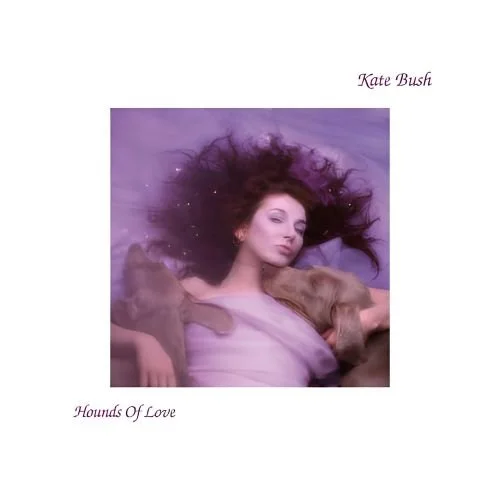
Kate Bush’s Hounds of Love at Forty-One
__________
I wanted to mark…
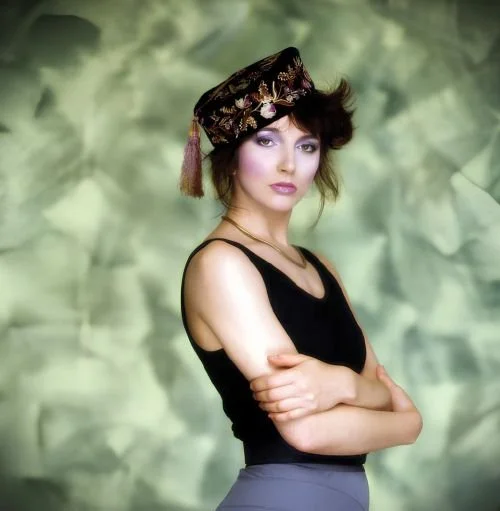
IN THIS PHOTO: Kate Bush in 1985/PHOTO CREDIT: Gudio Harari
the upcoming forty-first anniversary of Kate Bush’s Hounds of Love. It is still her best-known and most celebrated album. I am going to bring some interviews in from 1985. Bush discussing this masterpiece. I will end with a couple of reviews for this classic album. Released on 16th September, it arrived three years after The Dreaming. That was an album that was quite intense and draining. It is a phenomenal album, though Bush was exhausted at the end. She needed rest and recovery. After spending some time with family and friends and making this new album in a bespoke studio by her family home, this was a much needed change. Hounds of Love is a lot happier-sounding than The Dreaming. Kate Bush, as producer, ensuring that she did not repeat that experience for Hounds of Love. As such, what we hear with this 1985 album is someone pushing herself and her music, but not at the expense of her health and happiness. Hounds of Love endures because you can hear that joy and positivity! I do want to come in with a couple of interviews. I am sourcing heavily from them. The first, from November 1985, was published by Fachblatt Musikmagazin Nr. 11. This idea that Kate Bush ‘reappeared’:
“FACHBLATT: After I read an interview of the American magazine "Keyboard" with you I expected a pure Fairlight-LP. Instead of there are a lot of acoustic parts and even very silent piano pieces, almost as on your first LP.
KATE BUSH: Interesting impression... To me it's completely different. I find it's my least piano influenced album to date, because I more or less completely switched to composing with the Fairlight. All piano you hear now was added later.
FACHBLATT: You did, as with "The Dreaming", produce yourself...
KATE: Yes, I did build my own studio after the last album, and because of that the borders between composing, recording and producing became even more floating. The whole thing is a very organic process, because everything can happen next to each other and simultaneously. There are no demos in the usual sense any longer. I record something on the 24 track machine and work on that, so that the demo in principle is the later master.
FACHBLATT: But that cannot always work smoothly. How many versions of one idea are there until a complete piece will emerge from it?
KATE: Astonishingly there were only two or three pieces that experienced a dramatic change. I usually have the base for a piece very quickly, the ideas often come like an explosion, a few pieces of melody, a few fragments of text. But until the piece is completely finished it can need a very long time and that of course depends on the complexity of the song. In other cases I have the complete composition ready and then I am suddenly stuck with the text.
FACHBLATT: How do you manage again and again to create such a strong union of music and lyrics? I don't understand everything you sing (my tape did not have any further givings or lyrics), but I feel what it's all about. It couldn't be the words. Do you get the music and lyric ideas for a piece simultaneously?
KATE: Yes, it's often so that I have the idea of what a song is all about first and then the words and music come to me in parallel.
With "Hello Earth" for example I knew that this piece would be the dramatical highlight of the story. Therefore the verse had to be very slow and the chorus had to be very heavy. Well, I'll explain what it's all about. We are talking about a storm. There's a person that went overboard in the storm and fights a whole night against the waves, the tiredness and the danger to give up. I wrote all pieces of the second side of the LP about this plot. A concept album, or at least half an album, that was a huge challenge for me and a long-cherished wishful dream. I wanted to do something where I didn't have to be ready with the story after just three minutes.
FACHBLATT: Even if it's difficult for you, can you tell me a bit more about the plot?
KATE: I wish I could show you a film about it. The pictures would explain much more easily what I had in mind. There's someone going overboard, at night. He gets insanely tired, wants to resign. Then his past, his present and his future travel past him and try to keep him awake and to bring him through this night. These are of course metaphers for a very deep inner experience after which you reenter the light at the other end as a purified human being.
FACHBLATT: As a kind of spiritual transformation...
KATE: Yes, like a rebirth. There is the external, physical moment, and then there's a process that happens in the head, thoughts, voyages to inner spaces.
FACHBLATT: Water is a diversely interpretable symbol.
KATE: Yes, it also includes the feeling of floating. In addition here there's the night, the darkness, the complete loss of sense for space and time, the shield from all outer impressions. And when something like this happens very remarkable things start happening in your head.
FACHBLATT: Like in an isolation tank...
KATE: Yes, even if I didn't make any personal experiences with that by myself.
FACHBLATT: Did you by chance read "In The Center Of The Cyclon" by John C. Lilly who experienced first with the tank?
KATE: Unfortunately I didn't read it, but I have heard a lot of things about his work that I found very interesting.
FACHBLATT: I fear we come into areas that do not neccessarily belong into a music magazine... Let's talk about your music again. The difference between your last album "The Dreaming" and the new "Hounds Of Love" is astonishing. I always had difficulties to listen to "The Dreaming" in one piece, because in places it teared a lot on the nerves. Did your musical and/or personal attitude change that much in the last three years that you now can deliver a quite accessible, at times poppish album?
KATE: The music always subordinates to the contents of the songs. "The Dreaming" was an emotionally very intense and often conciously aggressively sounding album, because it was about how terribly cruel people could be, what we do to ourselves, what amount of loneliness we expose ourselves. It was a searching, questioning album and with the music did tear you from one point to the next. It provoked extreme reactions, and there were many who were not able to or did not want to get involved with the mood of the album. I was and am very content with it, because for me I have definitively achieved what I wanted to. I had to experience myself what I wanted to explore there, and now I have made the experience and could turn to other destinations. Suddenly I could go dancing again, I spent a summer out of the house, something I did not do for several years. Thereby I felt so positively that I also wanted to write songs that give a positive prevailing mood. That was a completely new challenge, because until then I got my inspirations more from melancholic and gloomy moods. But suddenly I could get enthusiastic about things that were light and lively. I wanted to write about the positive power of love and not any longer about people who destroy each other. The whole energy that developed itself that way also transfered itself to the album. Thereby I did not only want to describe love as a happy, lightful matter, but I rather wanted to show it in all of her aspects, also the dark ones. The LP has got two very different sides this way. The first shows an overview over different forms of love and without exception deals with relations, and the second side goes deeper, therefore the concept spanning all tracks.
FACHBLATT: Both sides are very different musically too. The first contains a couple of very danceable, rhythmic titles. Did you expect to have a hit with "Running Up That Hill" or was this just a nice side-effect?
KATE: At one point I stopped to have any expectations with respect to the music business. But of course it is nice if what you could expect happens... I always had the feeling that hopefully there are other people too who like my albums, if I only put a maximum of personal engagement into the work. And it works! Great, isn't it?
FACHBLATT: And why is the album called "Hounds Of Love"? These seem to be two contradicting terms.
KATE: No, these are the hounds who chase - symbolically of course - those who fear love, who is frightened to be "trapped" by it. But they aren't really bad hounds, you can see on the cover how gently and nice the "Hounds Of Love" are.
FACHBLATT: Do you rather think of it as an advantage or a disadvantage that there's so much time between your albums?
KATE: I cannot answer this question this way, since it simply is as it is. I never said: I need two or three years to make an album. I just began. Whereever this leads - as long as it's positive and productive I continue to do it. If you do your work honestly and with your whole heart It will tell you what to do...
FACHBLATT: But outside there's nobody who tells you if you are on the right way. Someone who brings out a single every second month experiences very fast how the course is at the moment.
KATE: That is a frustrating aspect of my method of working. Besides I also like to busy myself with other ideas and projects. But I cannot run away from the things I have to do at the moment. That takes my complete energy. I just have to bring such sacrifies, and with me it lasts longer as with others.
FACHBLATT: When did you start with "Hounds Of Love"?
KATE: 1983 the studio was built and set up, and in the beginning of 1984 I started with the album, all in all 18 months of work.
FACHBLATT: In such a long time many things can change. Wherefrom do you take the safety that in the end you find those things you recorded in the beginning as good and important?
KATE: Well, if something does not work at all, because you did get off course, you just have to have the courage to stop there, even when you already did invest a lot of time and work. But this happens very seldom with me, and except those two or three pieces with heavy changes that I did mention earlier the founding structures did not change. Changes did mostly occur only in the fine parts, when we for example exchanged Fairlight violins by real strings. I wanted to replace many Fairlight passages by real instruments from the beginning.
FACHBLATT: Who played with you?
KATE: Mainly the people from the last LP, like for example Eberhard Weber, Danny Thompson, Dave Lawson, Stuart Elliott, the musicians from Planxty, my brother, but also others, like John Williams.
FACHBLATT: In which phase do you include the musicians into the work?
KATE: Different. Sometimes in the beginning I only have a program in the Linn machine, to which I bring in a few real drum tracks. Normally the musicians record to a "demo" that's consisting of Fairlight, voices and the Linn machine. But I also use a lot of Fairlight percussion. The most improtant thing with the work with other musicians are the additional stimulations, especially when I sat alone at the Fairlight before. Then the influences from outside are very helpful. I need the feedback, else in the long run it'll get too boring for me. It's nice just to see some other faces sometimes.
FACHBLATT: What about gigs? Is there hope?
KATE: That is quite wierd, because I always want to, but somehow it never works out all right. Until the last LP I did not have enough material to appear with a completely new program. After I completed the promotion work for "The Dreaming" I had to think about whether to go on tour or to build my studio and to look at a new album. Well, now I am again at the end of the work for the album, make promotion, shoot videos and actually I would really want to realise the said film about the second side of the LP. If this somehow happens not to work then I'll think about a tour again...
FACHBLATT: Do you find everything that goes with it as a disruption to the concentrated work in the studio?
KATE: Not as disrupting, but as a burden, yes. I try to put as much time as possible into creative processes. When I am ready with an album there are enough creative processes left, be it b-sides or videos that get into the way of public relations work. I am of course dependent on a certain amount of success to be able to afford the next album. And then I unfortunately have to make timely compromises with the things that are more important to me. To limit this as far as possible I don't give many interviews. I find it completely justified, since I find my actual work more important. The only reason why I do sit here at all is that I worked on an album for a long time and want to announce this. But when I used up three years to meet journalists and to make promotion, then there won't be a reason to sit here…”.
In August 1985, Ted Nico wrote for Melody Maker and spent time with Kate Bush discussing Hounds of Love. I do think that a lot of the press felt Bush was hiding away and was retired. The fact is that she needed time to refocus after The Dreaming and she was working hard on this new album:
“But what, you ask, has sister Kate been doing during this hiatus, this self-imposed exile? As usual Kate explains much, but reveals precious little, slamming the doors of privacy with a single coy look.
"After the last album, I had to promote it, and that took me to the end of '82, so it hasn't really been that long. My life is quite extreme really; I go from a very isolated working situation, to going out and promoting my work and being very much a public creature. After you've ben through months of that kind of over-exposure, you're left feeling a bit shell-shocked. I need to take some time off and go somewhere quite different to write this new album. I didn't want to produce it in the wake of The Dreaming."
A wise move. Music vogues move with such alacrity, that two years off can finish off a career. In fact, such a time-span is the beginning and the end of most groups lifespan!
"I didn't really bother thinking about that sort of thing. I spent the time seeing films, seeing friends, building my own studio, and doing things I hadn't had a chance to do for ages."
Things? You couldn't elaborate on what these strange and wondrous things would be. Trout fishing? Hang-gliding? Hamster hunting?
"I found an inspirational new dance teacher," Kate replies with growing enthusiasm. "The teacher's energy made me really enthusiastic about writing again."
And once again the conversation turns back to the studio. Kate talks about her beloved studio a great deal - a great deal more than she's willing to chat about herself. She really doesn't have any hobbies, mainly because they wouldn't be beneficial to her work - the subject around which her entire universe evolves. The one exception is an avid interest in archery. And even this she has turned toward work, with the cover shot of the new single, believing it to be symbolic of Cupid's bow - an image which ties the threads of the single together.
And so, naturally, we turn to Kate's new album, Hounds Of Love, and the current success of the new single. Another new departure? Another rebirth? Another quest for new pastures?
"Yes, I wanted something new, and to begin with it was extremely difficult. All the songs I seemed to write sounded too much like the last album. I've never seen any point in repeating things you've already done before. I think it's a dangerous thing not to search for new ways of approaching songs. Too many people sit and think 'it'll just come to me', instead of getting off their arses and going for it."
Kate, of course, is far too polite to name names...
"If you get out and go for things then those things will come to you. I think it's too easy to wait and expect things just to come to you."
A certain Mr. M. Thatcher said similar words, but this time they ring with verity. Must be her smile. Kate's new studio, hidden away in the overgrown wilds of Kent, enable her to exorcise the ghosts of The Dreaming without sending EMI executives into prolonged thromboses over the expense of the operation.
"The pressure of knowing the astronomical amount studio time cost used to make me really nervous about being too creative. You can't experiment forever, and I work very, very slowly. I feel a lot more relaxed emotionally now that I have my own place to work and a home to go to."
Sitting on floor cushions, drinking cups of tea, I can't help thinking if things got any more relaxed they'd be sound asleep. Speak more of the new material Kate. Speak words of love...
"This time I wrote a lot of songs and just chose the best ones to put on the A side of the album. I like to think there's not a song there that's been put there for padding. Sometimes people get the impression that if you take a long time over something that you're literally going over the same piece again and again, and instead of making it better, you're making it worse. I hate to think I've ever done that.
This striving for perfection might well be cause by fears about disappointing her audience or her pet cats. The longer the wait, the greater the expectation.
"There are always so many voices telling me what to do that you can't listen to them. All I ever do is listen to the little voices inside me. I don't want to disappoint the little voices that have been so good to me."
Of course not. The finely-tuned songs that made the final selection on the album differ greatly from the diversions of previous albums. They are all love songs (sigh) using elemental imagery that form a cogent and cohesive panoply of emotion. A search and struggle to secure some sort of meaning. The discovery that although you can strip away everything form a person, there will always be a residue of love awaiting resurrection. Sounds mawkish doesn't it? Jane Austin world have loved it. All those over expressive vocals and delicate orchestrations channelled into such pathos. Sounds risible, doesn't it?
Yet the songs' style and eloquence rise above bathos through their haunting overtones. Phantasmagorical voices tilt the rose-coloured world off its trite axis with jagged eerie phrases. Outside observations are slanted metaphors revealing states of mind. No longer are we presented with the eclectic collage of The Dreaming whose continual shifts and spirals allowed an escape with diversity. No longer is the entire story of Houdini crammed into three minutes, until a new fable takes up the torch. Now the texture is more subtle, the production more adroit, and the mesmerism unrelenting.
"The last album contained a lot of different energies. It did take people to lots of different places very quickly and some people found that difficult to take. I think this album has more of a positive energy. It's a great deal more optimistic.
"I rather think of the album as two separate sides." How astute. "The A side is really called Hounds of Love, and the B side is called The Ninth Wave. The B side is a story, and that took a lot more work - it couldn't be longer than half an hour, and it had to flow. This time when you get to the end of one track, what happens after it is very affect by what's come before. It's really difficult to work out the dynamics within seven tracks. The concept took a long time."
Whoops! There goes that word again. Concept - a word mauled by the memory of Floyd, flares, baked lentils and chronic boredom. It took some time to extract my nails from the ceiling and climb back down to earth. It took even longer to summon up the courage to ask what this concept might entail. Kate looks upset that I'm not jumping up and down with ecstasy.
"It's about someone who comes off a ship and they've been in the water all night by themselves, and it's about that person re-evaluating their life from a point which they've never been before. It's about waking up from things and being reborn - going through something and coming out the other side very different."
Sounds suspiciously like The Ancient Mariner revisited...
"Oh no! It's completely different. It ends really positively - as things always should if you have control."
And Kate certainly has that. From the writing, recording, performing, production of her tunes to the choreography on the accompanying video. As usual the visual imagery is gleaned from a wide variety of sources: from the films of Godard, Herzog and Coppola, to The Book Of Dreams, yet their accretion with Kate's own personal fears and desires is shrouded in mystery.
"There are many films that you don't think much of at the time, but weeks afterwards you get flashbacks of images. Sometimes films like Don't Look Now and Kagemusha have really haunted me. You don't necessarily steal images from films, but they are very potent and take you somewhere else - somewhere impossible to get to without that spark.
At this moment it is difficult to see how such a placid, genteel, and downright normal musician could ever produce songs like "Get Out Of My House" and "Sat In Your Lap". Perhaps some strange transformation takes place over when she is asleep!
"Yes, I have very strange dreams you know. Over the years I've collected the most incredible star cast of them. Very famous people come and visit me."
Curiouser and curiouser...
"Peter O'Toole came round to dinner last week and my mum met him and thought he was wonderful. Keith Moon often comes round for tea as well. I have a lot of vivid dreams, most of which I can't mention. The images I get from them sometimes bleed into my songs."
Most of Kate's heroes like Oscar Wilde, The Pythons, Roxy Music, Billie Holiday and Hitchcock have all visited her, but her mum didn't like Hitchcock - maybe she was just frightened by him?
"Hitchcock was definitely a genius. His dreams must have been extraordinary. He must have plucked his ideas out of the sky, or had a private line to Mars."
Slowly, very slowly we're edging closer to the point were the musician and her music bisect.
"I think some people use music as a means of expressing what they feel about things which they can't express socially. I don't really know why people think my songs are strange. Perhaps because I bathe in goat's milk!! It not something you should really ask me. My mom could probably help you more. It's probably something to do with my childhood."
I met Kate's mum in one of her dreams last Tuesday, but she didn't tell me much either. The door slams shut again. Perhaps a choice of character from the scrolls of history might reveal more.
"I would want to be Breugal, definitely". Things are starting to come into focus. Only a fool would have predicted Florence Nightingale - and Kate is nobody's fool.
"His work is so real, and yet depicted in a fantastic way. It's so beautiful and elemental. And his faces are so haunting."
Things seemed to be going well - very well, until quite suddenly, just as Kate was recounting her favourite fairy tales, she comes over all unnecessary. Lights flash, Kate wilts, and her world starts to spin in the opposite direction as everyone else's.
"I'm terribly sorry about this, but I keep feeling worse and worse, and I don't know whether I can talk properly any more."
Her companion calls it overwork, the doctor calls it a severe migraine. We call it a day.
"I don't know what's come over me," she says - embarrassed. We shake hands. She smiles.
"I'm sure we'll see each other again very soon."
Yes Kate I sure hope we will. Probably in another life.
We exited, floating through the nearest wall”.
Even though we celebrated a big anniversary last year, every year we need to honour Hounds of Love. It is an album that still sounds so masterful and effecting. One that has inspired so many musicians. I will end with a review from Pitchfork. Leah Kardos wrote a 33 1/3 book on Hounds of Love you can buy here. I do feel that everyone needs to buy it and get this real insight into the importance and brilliance of her fifth studio album. In terms of its legacy, what can we say about Hounds of Love? In 2024, The Quietus published an extract from the book. The legacy of this incredible album:
“Perhaps that feeling has been buoyed by the late success of ‘Running Up That Hill’ in 2022 and the subsequent discovery of Bush’s music by younger generations. But it’s also true that the reason Hounds Of Love remains so vital in the present is because artists from every successive musical generation since it came out have carried its influence and embedded its legacy into the cultural fabric.
Its impact on self-producing singer-songwriters, particularly non-male ones, has been seismic. The stunning triumph of Hounds Of Love cleared a path for future would be innovators who now had less to fear from being labelled ‘eccentric’ or ‘hysterical’ by the misogynistic music press.
Bush’s stubbornness in advocating for herself, her vision and her preferred ways of working kicked the doors open for artists coming after her to exist and create on their own terms. Her imagistic songwriting and immersive productions stretched the boundaries of what pop music could be.
Writer Dorian Lynskey put it this way: “Some artists open the door to a new room in the house of music; Bush is one of a handful whose imagination revealed the existence of a whole new wing.”
When Tori Amos released her debut solo album Little Earthquakes in 1992, critics were quick to point out the similarities in her sound to that of Bush. Some of the comparisons made were lazy, as if pointing out the fact that both artists were mezzo-soprano singer-songwriters who also played piano was proof of a theft. Tom Doyle asked Amos about these comparisons in a 1998 Q interview, saying, “So you were never influenced by [Bush] directly?” to which she responded, “Well . . . I must tell you that when I heard her, I was blown away by her. There’s no question.”
Listening to Little Earthquakes, which Amos co-produced, there is an undeniable Hounds Of Love quality to the big, gated percussion on ‘Precious Things’ and ‘Crucify’, with the latter song’s melismatic ‘Cha-ee-a-ee-a-ee-a-ee-ains’ recalling something of the ‘Yeah-ee-yeah-ee-yeah-eeee, yooo’ from ‘Cloudbusting’.
That song’s baroque-synthetic string arrangement feels echoed on Amos’s ‘Girl’, and there is a ‘Hello Earth’ feeling to the chilly vocal production and orchestral sweep of ‘China’.
In Q, Doyle pointed out that Little Earthquakes would, in turn, be hugely influential (“the kook rock torch passed from Bush to Amos”) in inspiring Alanis Morissette’s 1995 breakthrough Jagged Little Pill. In another 1998 interview, with German outlet Musikexpress, Amos explained how listening to The Ninth Wave had inspired her to be brave in her life, saying “[The Ninth Wave] turned me inside out. It changed my life . . . I left the man I was living with because of this record.”
In addition to regularly including Bush covers in her sets (‘Running Up That Hill’, ‘And Dream of Sheep’), in 2014 Amos appeared alongside a cavalcade of celebrity talking heads (including Elton John, Dave Gilmour, Neil Gaiman, Nigel Kennedy, Stephen Fry, John Lydon, St. Vincent, Tricky, BigBoi and more) praising Bush’s legacy in the BBC documentary The Kate Bush Story: Running Up That Hill.
But to trace the influential waves of Hounds Of Love, one must look beyond Amos and her fellow Bush-loving successors (Fiona Apple, Regina Spektor, Cat Power, Natasha Khan aka Bat for Lashes, Florence + The Machine, Annie Clark aka St. Vincent, Taylor Swift) to the ground broken by self-producing, tech-adopting artists such as Björk, Imogen Heap, Karin Dreijer (The Knife, Fever Ray) and Grimes.
In a 2014 interview with the Evening Standard Heap cited Bush as being one of the reasons labels took her work seriously, saying, “Kate produced some truly outstanding music in an era dominated by men and gave us gals a licence to not just be ‘a bird who could sing and write a bit,’ which was the attitude of most execs.” For DIY artists wishing to control every aspect of their presentation, from studio construction to image curation, Bush was a vital role model.
In a 2016 interview with Grammy Pro at Lollapalooza, Grimes named her two biggest musical inspirations as Trent Reznor and Bush, “[two] people who have done what I like to think I’m doing,” She described her creative approach as a “one-man show . . . I oversee everything myself; I produce and engineer and write everything . . . I do all of the visual artwork.”
In 2019, Grimes campaigned for the recognition of ‘ethereal’ as an official genre on streaming platforms and radio playlists, saying on Twitter, “we argue that there is a long lineage of auteur artists, often producing their own music and/or directing their own music videos . . . often very ethereal, otherworldly, and futuristic in nature”.
In 2021, Spotify recognized the term as a genre and partnered with Grimes to create a seven-and-a-half-hour playlist “dedicated to experimentalism with strong elements of pop and universal beauty”. ‘Running Up That Hill’ was featured there, alongside work from artists such as FKA twigs, Caroline Polachek, Sophie, James Blake and Imogen Heap. The long line of ‘ethereal auteurs’ that Grimes advocates for and identifies with can be traced back to the pioneering work on Hounds Of Love.
Bush’s appeal in this group is not only about creative autonomy but also emotionally articulate artistry. Norwegian singer-songwriter, producer and author Jenny Hval praised Bush’s ability to bring “emotional density” to her songwriting via “her voice, production twists and magnificent melodic themes. It’s as if she is a reporter, reporting from the war zone of human experience,” in a 2022 article in The Guardian.
Fellow ‘ethereal auteur’ Julia Holter appeared on the popular podcast Classic Album Sundays alongside Outkast’s Big Boi (a superfan who inducted Bush into the Rock & Roll Hall of Fame in 2023) to discuss her admiration for Hounds Of Love, saying “[Bush’s] music holds the emotional complexity of life.”
The album’s influence extends to rock bands, too.
Brett Anderson (Suede) cited Bush (alongside Bowie) as a major influence, telling The Guardian in 2013 that Hounds Of Love was “the album that made me want to make albums,” adding “[Suede’s second album, 1994’s] Dog Man Star wouldn’t have been the same album without Hounds Of Love – it was totally inspired by it”.
Let’s end with Pitchfork and their 2016 review of Hounds of Love. With her self-produced fifth album, Kate Bush “became a total auteur, embracing the possibilities of digital sampling synthesizers and creating a perfect marriage of technique and exploration”:
“Bush’s talent was so undeniable that she could sneak into contemporary music’s center while curbing none of her eccentricities. The album’s second single “Cloudbusting” celebrates Wilhelm Reich, a brilliant Austrian psychoanalyst but crackpot American inventor. Full of details gleaned from his son Peter Reich’s A Book of Dreams, it’s specific to their teacher/pupil relationship, which is played out further in its video featuring Donald Sutherland. But “Cloudbusting” also deals with a much more universal situation: Children long to protect their parents, despite having no adult power to do so. Accordingly, Bush resorts to the one thing all children possess in abundance—imagination. “I just know that something good is gonna happen,” she sings, a string sextet sawing insistently as martial drums beat a battle cry that morphs from helplessness to victory, however imaginary. The son she portrays wills himself into thoughts nearly delusional as his dad’s, and the result is optimistic yet poignant, as he ultimately believes, “Just saying it could even make it happen.”
Imagination’s pull is the subtext to Bush’s entire oeuvre, but that theme dominates Hounds of Love, and not least in the title track. Whereas her piercing upper register once defined her output, here she’s roaring from her gut, then pulling back, and the song shifts between panic and empathy. “Hounds of Love” boasts the big gated ’80s drum blasts Bush discovered while singing background on Gabriel’s “Games Without Frontiers,” and yet its cello just as percussive: It builds to suggest both her pulse and the heartbeat of the captured fox she comforts and identifies with. She fears love: “It’s coming for me through the trees,” she wails. Yet she craves it, so desire and terror escalate in a breathless Hitchcockian climax.
On Hounds of Love, the singer who started directing her own videos at this point becomes total auteur, and takes such a firm grasp on every aspect of the recording process that she often replaces Del Palmer, her own lover, on bass. On “Mother Stands for Comfort,” an all-knowing maternal contrast to the delusional papa of “Cloudbusting,” she duets with German jazz bassist Eberhard Weber, who plays yielding mother to Bush’s wayward daughter. Her Fairlight clatters with the crash of broken dishes while her piano gently wanders, but Weber’s fretless bass maintains its compassion, even when Bush lets loose some freaky primal-scream scatting toward the end.
Skies, clouds, hills, trees, lakes—along with everything else, Hounds of Love is also a heated paean to nature. On the cover, Bush reclines between two canines with a knowing familiarity that almost suggests cross-species congress. She honors the sensual world's benign blessings on “The Big Sky” even while Youth’s raucous bass suggests earthquakes. Bush references its elements with childlike awe: “That cloud looks like Ireland,” she squeals. “You’re here in my head like the sun coming out,” she sighs in “Cloudbusting,” and her stormy emotions are reflected by the music’s turbulence. But nature’s destruction can also inspire us to seek solace in spirituality, and that’s what happens on Side Two’s singular suite, “The Ninth Wave.”
Bush plays a sailor who finds herself shipwrecked and alone. She slips into a hypothermia-induced limbo between wakefulness and sleep (“And Dream of Sheep”), where nightmares, memories and visions distort her consciousness to the point where she cannot distinguish between reality and illusion. Is she skating, or trapped “Under Ice”? During her hallucinations, she sees herself in a prior life as a necromancer on trial; instead of freezing, she visualizes herself burning (“Waking the Witch”). Her spirit leaves her body and visits her beloved (“Watching You Without Me”). Then her future self confronts her present being and begs her to stay alive (“Jig of Life”). A rescue team reaches her just as her life force drifts heavenward (“Hello Earth”), but in the concluding track, “The Morning Fog,” flesh and spirit reunite, and she vows to tell her family how much she loves them.
As her sailor drifts in and out of consciousness, Bush floats between abstract composition and precise songcraft. Her character’s nebulous condition gives her melodies permission to unmoor from pop’s constrictions; her verses don’t necessarily return to catchy choruses, not until the relative normality of “The Morning Fog,” one of her sweetest songs. Instead, she’s free to exploit her Fairlight’s capacity for musique concrete. Spoken voices, Gregorian chant, Irish jigs, oceanic waves of digitized droning, and the culminating twittering of birds all collide in Bush’s synth-folk symphony. Like most of her lyrics, “The Ninth Wave” isn’t autobiographical, although its sink-or-swim scenario can be read as an extended metaphor for Hounds of Love’s protracted creation: Will she rise to deliver the masterstroke that guaranteed artistic autonomy for the rest of her long career and enabled her to live a happy home life with zero participation in the outside world for years on end, or will she drown under the weight of her colossal ambition?
By the time I became one of the few American journalists to have interviewed her in person in 1985, Bush had clinched her victory. She’d flown to New York to plug Hounds of Love, engaging in the kind of promotion she’d rarely do again. Because she thoroughly rejected the pop treadmill, the media had already begun to marginalize her as a space case, and have since painted her as a tragic, reclusive figure. Yet despite her mystical persona, she was disarmingly down-to-earth: That hammy public Kate was clearly this soft-spoken individual’s invention; an ever-changing role she played like Bowie in an era when even icons like Stevie Nicks and Donna Summer had a Lindsey Buckingham or a Giorgio Moroder calling many of the shots.
It was a response, perhaps, to the age-old quandary of commanding respect as a woman in an overwhelmingly masculine field. Bush's navigation of this minefield was as natural as it was ingenious: She became the most musically serious and yet outwardly whimsical star of her time. She held onto her bucolic childhood and sustained her family’s support, feeding the wonder that’s never left her. Her subsequent records couldn’t surpass Hounds of Love’s perfect marriage of technique and exploration, but never has she made a false one. She’s like the glissando of “Hello Earth” that rises up and plummets down almost simultaneously: Bush retained the strength to ride fame’s waves because she’s always known exactly what she was—simply, and quite complicatedly, herself”.
On 16th September, the wonderful Hounds of Love turns forty-one. I would say that anyone who has not heard the album or not listened in a while should hear it now. It is one of the most immersive and memorable albums ever released. Such incredible production. Anyone who doubted Kate Bush’s appeal, potential and production after The Dreaming were silenced after Hounds of Love released. It is a masterpiece from…
ONE of the greatest artists ever.