
FEATURE:
You Are Cordially Invited…
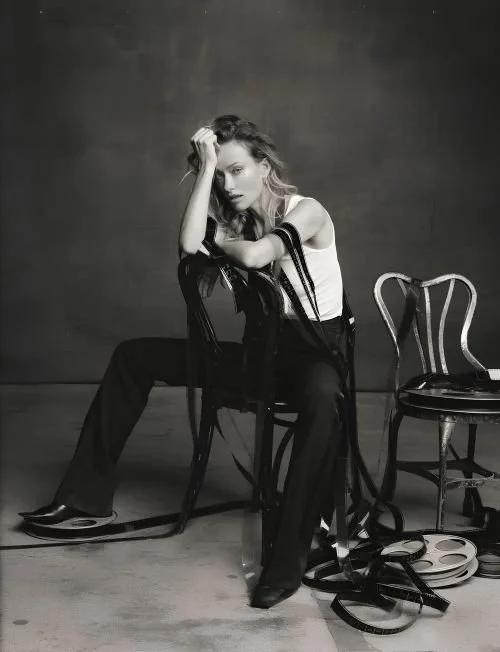
IN THIS PHOTO: Olivia Wilde directs and co-stars in the new A24 film, The Invite/PHOTO CREDIT: Chloe Chippendale for The Cut
Reacting to Olivia Wilde’s Comments About a Lack of Comedies in Cinemas
__________
THERE is a lot of rightful…
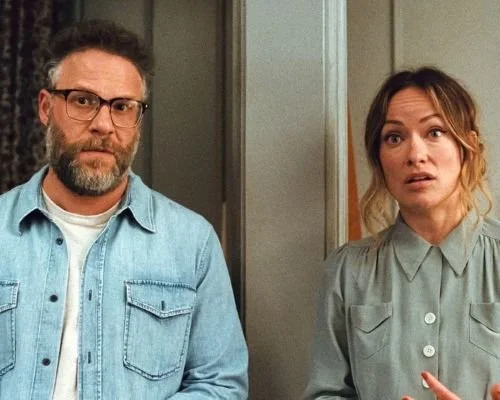
IN THIS PHOTO: Seth Rogen and Olivia Wilde in The Invite/PHOTO CREDIT: Landmark Media/Alamy
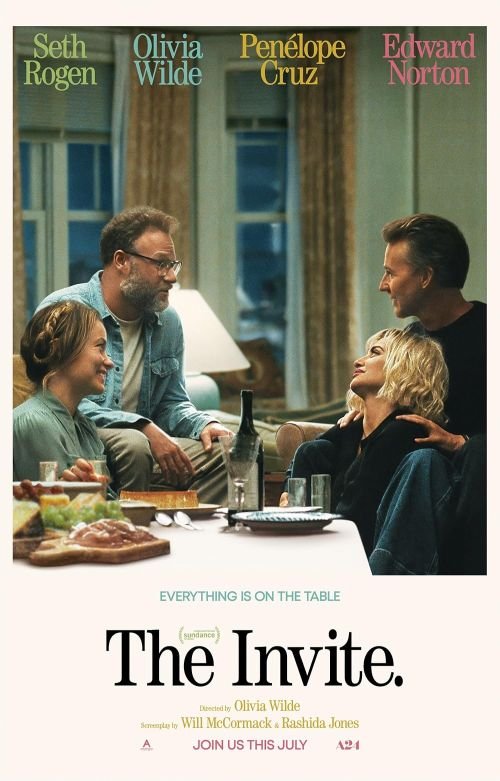
celebration around Olivia Wilde’s new film, The Invite. She co-stars alongside Penelope Cruz, Edward Norton and Seth Rogan. Wilde directed the film and has been the recipient of some glowing reviews. I think she is a phenomenal director, and one that is at her peak when it comes to these smaller and more intimate films. Normally, when a director is acclaimed and win awards, the budgets increase and they make bigger films. When it comes to Olivia Wilde, you want her to direct these more independent films rather than huge-budget superhero films and massive productions. The Invite is a film that is an English-language adaptation of a Spanish film. A comedy about two couples that live in the same apartment block and the couple above (Edwards Norton and Penelope Cruz) are invited down. Most of the action takes place in a single room. It is a comedy where the dialogue is natural too. My favourite film is Frances Ha. A Mumblecore film, characters talk over one another and there is natural rhythm. There are pauses and natural speech rhythms. Most films read like plays. Actors finishing their lines and someone delivering theirs. That is not how people converse! The Invite is almost like a filmed play, only one with a more natural-feeling aesthetic. It is a film that will win awards and I would love to see Olivia Wilde nominated for director awards, as she takes this script and these characters and has created something so engaging and lauded. She has been promoting the film heavily and has spoken about comedies and how there are not so many in cinemas. In fact, I am including a video near the end where she spoke with Rolling Stone and asked why there are so few comedises at the moment.
I mean, there are film comedies being made, though they are a mixed bag. I talked about this in a recent feature. One where I asked why comedy output has declined and there are few modern classics. Olivia Wilde’s The Invite is a rare modern comedy that has received glowing reviews and has been a box office success. It is an old-fashioned type of comedy. One where you have reliance on the dialogue and the relationships between the characters. No huge set pieces and action taking us to different locations. Things centralised and focused. It is hard to make something like that really pop and resonate, yet she has. One suspects there was improvisation and some flexibility in terms of the dialogue. Wilde is a fascinating and incredible director who I am interested to see what she does next., For Rolling Stone, she talked about comedy in general. How there are few where people can converge in a cinema and enjoy this collective experience. Comedy in 2026 is in a sorry state. A few good comedy films, yet so many that have missed the mark and shot wide. The Invite successes because of the actors, that great script, and Wilde’s direction. It has this feel of a classic comedy. A French Arthouse film or something from the 1950s or 1960s. Given the success of The Invite, Wilde can direct a massive film or something on a larger scale. Though I feel she is at her very best when scaled back and on a smaller budget. I feel her direction on The Invite will win her awards and kudos. It did get me thinking about comedy and why there seems to be little discussion. Horror, thrillers and suspense films are great, thought comedy offers this catharsis, release and collective joy. The greatest cinematic experience is laughing in the cinema. The most powerful cinematic memory I have of recent years is seeing Barbie in 2023 and there being this outpouring of joy and love. People coming out of the screening laughing and quoting lines. This does not happen often. Not that The Invite will kick-start a comedic tidal wave. Though Wilde discussing comedy and an absence in cinemas did get me thinking. I feel she is a masterful comedic director. A phenomenal comedic actor. I do want to come to an interview with Time, as Wilde talks about turning her pain into The Invite:
“What she made was The Invite, an independently financed marital comedy that jump-started a bidding war at the Sundance Film Festival in January. A24, which emerged triumphant, is releasing the film on limited screens on June 26 before opening nationwide July 10. In the movie, Wilde and Seth Rogen play a couple on the rocks, Penélope Cruz and Edward Norton their intriguing upstairs neighbors who venture down for a last-minute dinner party. Wilde and Rogen’s characters have conflicting motivations for the evening: She hopes to befriend them, and he wants to complain about their noisy sex. The neighbors have their own agenda. The chamber piece plays like a comic Who’s Afraid of Virginia Woolf?, if the couple at the center were not master manipulators but depleted parents fumbling to explain why they have grown so far apart.
The filmmaking process was quick, unusual, and exactly the type of production Wilde had always dreamed of. After reading a script by longtime writing partners Rashida Jones and Will McCormack, she pitched the writers and cast on workshopping it together. Sitting around a table in the soundstage where the pilot for I Love Lucy was filmed, the six of them tailored the roles to the actors and infused the script with arguments, embarrassments, and confessions from their own relationships. Wilde brought in renowned psychotherapist Esther Perel to work with Cruz, who plays a therapist, and to offer advice on the marital ups and downs of the story. Wilde then shot the film sequentially—rare for small films and logistically impossible for larger ones—in just 21 days on a set designed to mimic a labyrinthian San Francisco apartment.
Though she always intended to direct the film, Wilde had to be talked into starring in it too. She only agreed after the rest of the cast insisted she take the role of anxious Angela. “I had imposter syndrome,” she says. “The prospect of acting opposite Edward Norton was not something I felt was in the cards for me. Until The Invite, I had more confidence as a director than as an actor. But through this process, I’ve kind of fallen in love with acting again.”
Born in New York City and raised, mostly in D.C., by journalist parents, Wilde broke out in Hollywood as an icon of millennial television with roles on The O.C. and House. She tended to play elusive women who communicated with withering looks rather than words, a stark contrast to the bubbly and talkative artist who pauses on our walk to compliment several muddy-pawed dogs. In hopes of finding more control on set, she made her foray into directing feature films with the 2019 high school graduation comedy Booksmart. A sort of spiritual sister to the 2000s comedies Rogen made with Evan Goldberg, like Superbad, the raunchy and heartfelt film positioned her alongside peers like Greta Gerwig, Jordan Peele, and John Krasinski as a successful actor-to-filmmaker crossover story.
Her follow-up, Don’t Worry Darling, a thriller in the vein of The Stepford Wives, caused a media craze, to put it mildly. It began when Wilde was linked romantically with Styles, one of the movie’s stars; accelerated when she was served custody papers in her legal dispute with Sudeikis while onstage at CinemaCon; took another turn when she and Shia LaBeouf presented different narratives about his departure from the project; reached an apex when leading lady Florence Pugh skipped press opportunities; and came to a bizarre conclusion with internet sleuths analyzing a video of Styles allegedly spitting on costar Chris Pine at the Venice Film Festival. (Both actors deny this ever happened.) The movie itself was full of ideas, about the manosphere and (a few years ahead of its time) tradwives, that didn’t quite align with some of its promotion as an alluring romance between Pugh and Styles’ characters.
Still, the word “comeback” popped up repeatedly in reviews of The Invite from Sundance (where Wilde also appeared in Gregg Araki’s comedy I Want Your Sex, out this summer, in a role opposite in every way to Angela: a callous, domineering, leather-clad sex fiend). After The Invite’s premiere, the director pulled two all-nighters listening to presentations from different studios vying to distribute the film. “It’s like speed dating,” she says, adding that the producers let her choose the distributor. She insisted on a theatrical release, a rarity for a comedy these days, and now feels vindicated as she watches with audiences who laugh and cringe in recognition together.
Wilde recognizes that people will inevitably draw parallels between her public breakups and the decisions made by characters in the movie. “If people sense it looks like maybe she has been through the dissolution of a relationship and heartbreak, yeah, I have, and I think that’s what gives me the muscle memory to represent this character fairly,” she says. “I don’t think I would have been able to play Angela if I hadn’t really f-cking felt myself tossed around by life and relationships. And I’m very open to the risk of confession. This sounds so pretentious, but they say great art is confession and should feel risky—that if it doesn’t feel risky then you’re not doing something worthwhile.”
Wilde cites as inspiration not only Perel’s book but her famous TED Talk on infidelity that ends with the widely cited idea that many people today have several key romantic relationships in their lives, sometimes with the same person: “Your first marriage is over. Would you like to create a second one together?” It’s a notion that inspired debate during the making of The Invite. The cast sparred over why this miserable couple had stayed together and whether they would survive. Most at odds were Rogen and Wilde themselves. “When we shot it, Seth and I had two very different opinions about what would happen to this couple,” she says. “There was a real romantic optimism that Seth brought to it. The assumptions that everyone could make about their characters was revealing about their perspective on love.”
If Rogen was the optimist, did that make Wilde the pessimist? “I would say, ‘cynic,’” she corrects. “The more time you spend being alive, I think the more cynical you get.” It’s why she chose to open the movie with an Oscar Wilde quote: “One should always be in love. That is the reason one should never marry.” (Olivia Wilde, it should be noted, was born Olivia Cockburn and changed her name to Wilde in honor of the Irish playwright.) “I wanted to contextualize for the audience the film through my perspective on it,” she says”.
I do think that the world needs The Invite right now. It is a great modern comedy that is contemporary but feels nostalgic. Something we do not really get these days. Oliva Wilde will no doubt invite conversation around film comedies and a lack of contemporary examples on the big screen. Or ones that unify and are acclaimed. Most filmic comedy output from his year has received mixed press. The Invite has unified critics and delighted cinema-goers. I think that it is that relief of laughing and being together at a screening and sharing this experience. The Invite offers awkward moments and tensions. Audiences reacting to these four characters spark off of one another. The dynamics and differences. What we have learned from The Invite and reaction to it is that there’s an appetite and desire to see comedy in cinemas and share in this experience. Though studios do not back them and larger budgets are not available. Directors and writers forced to work on s smaller scale and restricted budgets. That is not a bad thing, though there needs to be more faith in the potential and power of comedy. A genre that has not enjoyed the same resurgence, upswing and brilliance as modern Horror. I do wonder if The Invite is a one-off and it will not lead to a revival, though we cannot be too hasty. What I predict is that studios will see the success it has accrued and take a chance on comedy. A tense film or something scary can grip an audience and there is that experience. Though people sitting in a cinema and laughing together feels altogether more powerful and important. The joy of seeing a terrific comedy and everyone bonded in laughter is…
LIKE nothing else.