FEATURE:
Modern-Day Queens
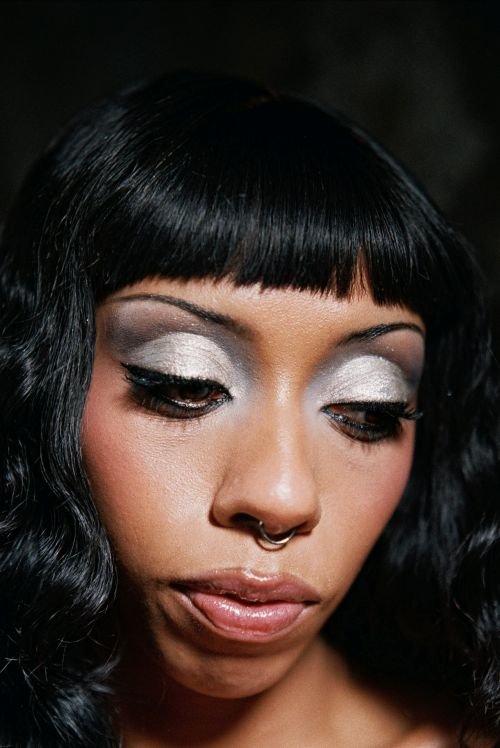
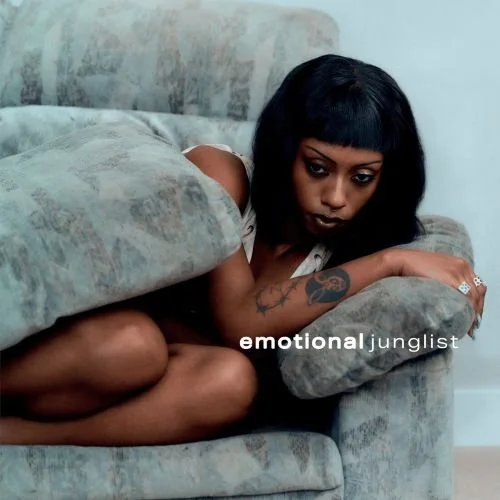
Nia Archives has released one of the best albumns of the year with Emotional Junglism. I am starting out with an interview from Rolling Stone UK. They spoke with an artist whose mission was to champion Jungle. Now, this “girl for the genre’s renaissance is spreading her musical wings and being unapologetically herself”. I have been following her for years. Seeing her growth and evolution has been amazing:
“Over the past five years, Nia Archives has become one of British music’s most magnetic success stories. The self-funded producer who once paid for her debut single ‘Sober Feels’ with her student loan is now a history-maker in her own right: the first jungle artist to receive three BRIT Award nominations, the first in more than two decades to be shortlisted for the Mercury Prize, and a support act for Beyoncé at a London stadium show. Between festival takeovers, magazine covers and industry accolades, she’s established herself as the unmistakable face of jungle’s new generation. If Britain’s electronic scene has spent the past half decade searching for a poster girl, it found one in Nia Archives.
The producer doesn’t reject that title. If anything, she thinks she helped build it. “I think I did that to myself a bit too, [but] I had to back it,” she admits. And when jungle needed a louder champion, she rarely shied away from being one. In 2022, she lobbied for the return of the MOBOs’ Best Dance Act category with a public letter. Across the table, Nia reveals that she convinced herself that the institution would “hate me forever”. Instead, the category returned and she became its inaugural winner – a full-circle moment for someone who had attended the ceremony as a teenager. “I think it’s a great Black institution in British music,” she says of the organisation. “What [late MOBOs founder] Kanya [King] did is amazing and her legacy will go on forever. I feel honoured to be a small part of that legacy.” But, despite all this history-making with the genre, she’s equally keen to remind people that Nia Archives has always been bigger than jungle alone.
That philosophy sits at the heart of her upcoming record. Despite the title, she is quick to point out that this isn’t really a jungle record. “It’s called Emotional Junglist, but it’s not a jungle album,” she says. “It’s an alternative record.” She starts reeling off the music that shaped it almost instinctively: Madonna’s Ray of Light, Blur, Pulp, Saint Etienne, Massive Attack. Jungle still dictates the pulse – the breakbeats, the basslines, the skeletal framework of the songs – but almost everything else has been given permission to wander. “With jungle, I’m inspired by the drums and the bass production and the structure,” she explains, “but I’m not necessarily inspired by the synths. I take way more inspiration from alternative music, guitar music and trip-hop.”
As a music listener and fan, Nia Archives has long admired artists who refuse to sit still. “Madonna did that so well across all her eras – always pioneering, always asking, ‘What’s next?’” she says. “I’m really inspired by people like Madonna and Björk, who keep innovating. [FKA] twigs too, she’s always kept it moving.” Now, Nia is ready “to fuse genres, find the next combination of the things I like – that’s what excites me at the moment.”
The music itself isn’t what worries her. Putting it out into the world is. “I’m really worried,” she admits with a laugh. “People are expecting 15 straight-up jungle tracks. I’ve done that already. I hope people allow me the grace to just try some shit.” For an artist who spent years loudly staking her name on jungle, there is an irony in now having to convince people to follow her somewhere else. The question is no longer whether she can make jungle bend to her imagination, but whether her audience will trust her without knowing exactly where she’s taking them.
That freedom extends beyond the production. She has always written candidly about her life, but admits she once used the frenzy of her music to obscure just how much she was saying. “I used singing more as a musical tool than a vocal showcase,” she says. Even on her debut album Silence Is Loud, widely praised for its emotional openness, she was wary of revealing too much. When its raw title track quickly became a favourite among her team, who wanted to make it a focus of the campaign, Nia pushed back. “I was so scared,” she remembers. “I was like, ‘It can be on the album, but I don’t want it to be the focus.’” This time, there is nowhere near as much distance between the woman living through these experiences and the artist singing about them”.
Polyester spent time with Nia Archives. In addition to discussing her new album, she discussed being shy. If you have not discovered this incredible artist then do go and follow her work. Emotional Junglist is such a stunning album:
“Making a second album is stressful. The pressure, the lack of innocence…I made Silence is Loud in two weeks. This album took me a year. It’s a really different process. What I really like about both is I was going for a particular sound and with Emotional Junglist, I doubled down on it.”
Her fear of the sophomore slump is a valid one; the second albums of so many artists have been cast away as failures by the culture, punished for veering too far off their more famous older sibling. It is a limitation that breeds risk averse musicians, genre used to offset experimentation or too much individuality like a cane.
“I hope people allow me the grace to be an artist and experiment and not be bound by the restraints of what dance music should be because I’ve never wanted to be bound by that,” she says. “I’ve always wanted to try stuff and make stuff for fun. As I get further into my career, I feel like everyone just expects the same thing but I don’t want to do that. It’s boring!”
“I feel a lot of pressure to make “Baianá” over and over again. Or even“Forbidden Feelingz”. I just feel like I made those tunes for fun. I don’t want to make the same song again. I think my music prior to this album and this era has been a little confusing to people.”
Silence is Loud’s charm comes exactly from the fizzy youthfulness and naivety of the artist who made it. It would not work now, precisely because Nia is not the same person she was when she started out.
She does the intelligent thing here, building on the cheeky Britpop writing and unrepentant jungle beats of work past while giving space to the assured melancholy and introversion our mid-twenties force upon us all; it is a sonic maturation in the clearest sense. “Boys in Blue,” a punk anthem jeering at the alarming decision by an ex to intimidate her by calling police to her door, is just a sample of the kind of assuredness she exhibits on the project.
“It’s definitely a more female gaze kind of album, so I want to see a lot more girls at the gigs this year.”
“I’m really happy with that song because it’s a middle finger, a bit of a victory lap. It’s so empowering. Sometimes I feel like I’m moaning?..It’s nice to have a song that’s not like ‘woe is me’. It’s nice to have a song that’s like, ‘I’m that girl. I can’t believe you even dared to do something like that.’”
Many would have licked their wounds in private, but being an emotional junglist requires a candidness that would have been impossible at 22 simply. The point is to cry in the club with your girlfriends and count your battle scars.
“I’ve always written really personal songs but because the production has been so intensely instrumental, I’ve kind of hidden behind the production in previous music. There’s moments of sparseness (on Emotional Junglist), stripped back vibes so I think you can hear what I’m saying a bit more.” She laughs self-deprecatingly. “Weirdly, even though I’ve always been front facing, I feel even more front facing in this era.”
I ask, on a whim, if she’s an introvert.
“I’m naturally a really, really shy person! As I child I was very shy, really quiet,” she says. “In this job though I feel like I have to force myself to be more extroverted than I naturally am.” Her aversion to chaos and attention has cropped up a few times (at one point she tells me that her preferred pre-show ritual is silence: “I like avoiding people before the shows. It sounds really bad but I really don’t like talking”) but you wouldn’t expect it of someone with such formidable energy on stage.
Now, she is once more preparing to face crowds and fans again, this time with an older, wiser version of Nia Archives.
“I’m putting myself out there again. I’ve been doing my own thing away from everyone’s criticism for the past year so I’m preparing to deal with that again.”
She’s being diplomatic about the backlash present in the discourse around both her experimentation across forms as well as the perceived ‘commerciality’ of her work now that her star has risen to BRIT-nominated heights. “Online is just negative vibes. I try to detach from it because people always have so much to say. Even today, I was scrolling TikTok just to wake up and the first thing I see is someone being negative about me.”
Punishment for visibility and mainstream success is not a new phenomenon. Pedestal tearing has become as integral a part of online fandom spaces as thirst edits and shipping culture. Die a hidden gem, undervalued and underpaid or be successful and pay for it with the cultural currency amassed earlier in your career. No artist seems to have squared this incongruous circle, of holding both democratic fame and underground genius.
“That’s why everyone is moving to America, not just in music but in everything. It’s just very British. In Australia they call it tall poppy syndrome. When someone gets to a certain level…people start to resent that and they try to humble you. It’s a cultural thing. In many ways I think it’s good to be grounded but it’s kind of a shame when the community you give so much to can be negative when you do all the things they supported you doing. Skepta had that…I just think it’s part of the journey.”
“I care but I don’t because all the people talking don’t even make music. They’re always talking about junglist this, junglist that but I know all the original junglistst”.
I am going to end up with a review of Emotional Junglist from CLASH. I do think that it is one of the best albums of this year. Such a remarkable work from Nia Archives. That is why I wanted to feature her here, as she is one of our greatest artists:
“Spearheading the new wave of 21st century junglism, Nia Archives swept the competition aside with her excellent 2024 debut album ‘Silence Is Loud’. Since then, the Bradford-raised producer has expanded her sound, fully unpacking her influences in the process. Along the way, her heart has taken a few bruises, and it’s this mixture of personal and technical which makes expansive second album ‘Emotional Junglist’ so compelling.
If one of the standard criticisms of Nia’s work was that she was too in thrall with jungle’s heritage, well, this album demolishes that entirely. Citing everyone from the Streets and Happy Mondays through to LTJ Bukem as a point of inspiration, it’s a weighty 15-tracker that embodies her quicksilver creativity.
The highs come thick and fast. ‘Feelingz Go Numb’ is a superb opener, a neat point of connection between her crisp debut and the frenetic creativity of the follow-up. ‘Around Tha Bend’ utilises a guitar line worthy of The Cure, while ‘Danger’ merges dancehall impulses with industrial tones worthy of Nine Inch Nails. A heady thrill, it somehow remains firmly under the jungle imbrella.
It’s this push-and-pull between her sonic ambitions and her fixed roots which gives the record such a dichotomous energy. If William Orbit’s late 90s work haunts ‘Vertical’ then something like ‘Train Of Thought’ is a more down-the-line liquid DNB offering (albeit with the vocals of an angel).
Indeed, if Nia Archives’ debut album was defined, then her follow-up is fusion oriented. ‘Almost Always’ has a sombre, post-punk guitar line; ‘Dance With Me 2Nite’ is unafraid to embrace pop, and ‘The Darkest Hour’ has an orchestral sweep.
The guests, too, are expertly chosen. Ethan P Flynn helps to engage the creative process, Julia Michaels pops up during a writing trip to Los Angeles, and as a whole the record fully embraces a live-in-the-studio full band feel. Sampha is typically radiant on ‘Tender’ – an open song of longing – while old friend Jorja Smith appears on ‘Get Me Down’, perhaps the apex of ‘Emotional Junglist’ both as a project and as a concept.
In refusing to be hemmed in Nia Archives has built a space to call her own, building outwards on her firm breakbeat foundations. ‘Emotional Junglist’ is a dense mosiac of sounds, but the feelings are pure and distinct – a step forwards from her debut, it’s a fascinating second chapter.
8/10”.
I will wrap up here. Nia Archives is such a tremendous talent. I am wondering where she goes from here and what her next album sounds like. Emotional Junglist is the sound of an artist in full flight. I think that it could be in with a shout of a Mercury Prize nomination. If so, it would be the least that she deserves. We should all salute…
THIS wonderful artist.
_________
Follow Nia Archives
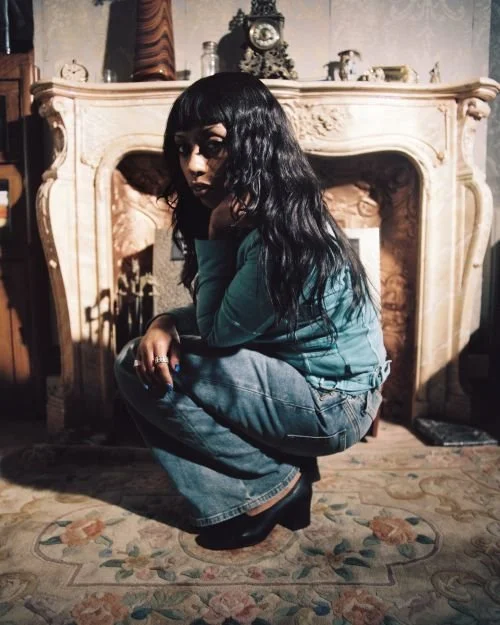
PHOTO CREDIT: Stuart Nimmo
Official:
Instagram:
https://www.instagram.com/archives.nia
TikTok:
https://www.tiktok.com/@archives_nia
Facebook:
https://www.facebook.com/archives.nia
Twitter:
Spotify:
https://open.spotify.com/artist/7BMR0fwtEvzGtK4rNGdoiQ?si=YP5Yxm2tTEWkVnBfYz4XVQ