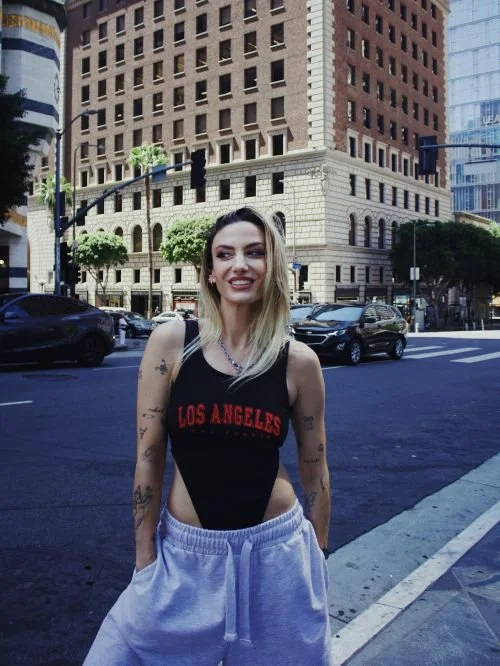
FEATURE:
Spotlight
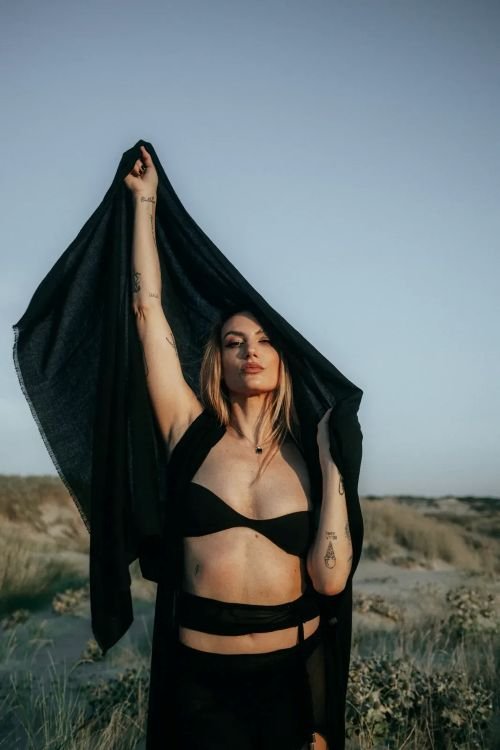
Lee Ann Roberts
__________
THERE are…
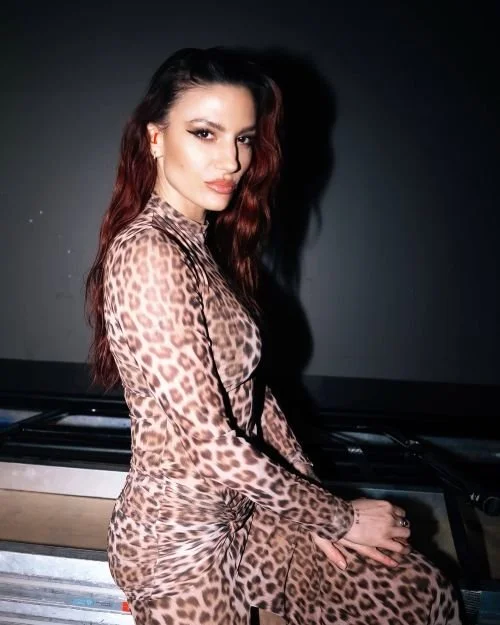
a few interviews with Lee Ann Roberts that I want to get to. This incredible D.J. and artist has just released her E.P., TAKE CONTROL. There is a lot of interest around it. I want to start out with Metal Magazine, who “caught up with the South African artist to talk about the project that’s set to redefine not only her sound but the way she sees herself as an artist”:
“IN THE SHADOWS and TAKE CONTROL have already given people a glimpse into this new era. What has surprised you most about the reaction so far?
I think what surprised me most is how many people connected with the message behind the music. Of course, it's always great when people enjoy the tracks, but seeing people resonate with the themes of growth, self-belief and taking ownership of your life has been really special. What I've loved most is the messages I've been receiving from people. I've had so many supporters reach out saying that this feels like the most authentic version of me they've heard in a long time and that they can really hear me in the music. Some of the messages have been incredibly thoughtful and detailed, and that's been amazing to see. As an artist, there’s nothing more rewarding than knowing people are connecting not just with the sound but with the story behind it as well.
You've described this project as a new era rather than simply a new release. Beyond the visible changes, how has this transformation felt from your side?
For me, it's felt like coming home to myself. A lot of the changes people see externally are just reflections of what has been happening internally. I've spent a lot of time reconnecting with who I am, what I stand for and what I want to represent as an artist. That process has been incredibly freeing.
You took a step back from social media and allowed yourself time to reset. Was it difficult to slow down in an industry that seems permanently obsessed with momentum?
At first, yes. There's always that fear that if you're not constantly visible, you'll be forgotten. But I realised that constantly moving doesn't necessarily mean you're moving in the right direction. Taking a step back gave me clarity, and honestly, it was one of the best things I've done for both my creativity and my mental health.
The title TAKE CONTROL feels like a statement. What exactly were you taking control back from?
From external expectations, noise, opinions and the pressure to be something other than myself. At some point I realised I was spending too much time looking outward and not enough time trusting my own instincts. But it also goes much deeper than music. TAKE CONTROL is about taking ownership of your life in general. I've been through a lot of different experiences and challenges over the years, and for me it was about no longer allowing those things to define me. Instead, it was about taking everything I've learned, everything I've been through and using it as fuel to move forward. TAKE CONTROL is about getting back in the driver's seat and deciding for myself who I wanted to be, where I wanted to go and how I wanted to live my life.
For years, people placed you inside the hard techno box. Did that label ever begin to feel restrictive?
I think labels can be useful to a point because they help people understand where you fit within a scene, but they can definitely become restrictive. Especially when you're someone with a wide range of influences and a genuine love for different styles of music. I've never wanted to be defined by a single genre because my influences have always been much broader than that. As an artist, I think it's important to give yourself the freedom to evolve, experiment and bring different elements into your music. At the end of the day, music is far more fluid than any label we try to put on it.
Your career has taken you across the world, but what does a perfect day look like when nobody needs anything from you, and there’s nowhere you have to be?
A slow morning with my affirmations and meditation, a coffee, some time in nature, spending time with my cats, training and/or going for a surf and seeing my friends. Nothing extravagant, just simple things that make me feel present.
When life starts moving too fast, and you feel disconnected from yourself, what helps you find your way back?
Nature, affirmations, meditation and taking a step back from the noise. Whenever I feel overwhelmed, I try to reconnect with the things that ground me. Usually the answers become a lot clearer when you create a bit of space”.
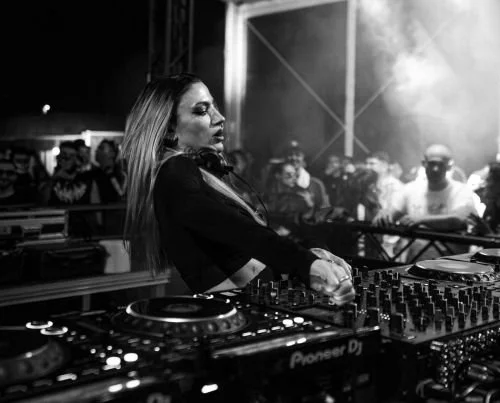
I do want to move to Pioneer DJ and their interview with Lee Ann Roberts. She explains how careful preparation and sobriety shapes her explosive D.J. performance and high-energy sets. This is one of the most talented D.J.s in the world:
“Sobriety has also sharpened Lee Ann’s craft. As we learn below, she feels that having a clear head in the DJ booth has upped her game in basically every respect. “It’s funny because a lot of people think they play better under the influence but I think that’s often because they’ve never really experienced DJing sober, so they assume they’re better,” she says.
As you’ll sense from the interview below—which covers mixing at speed, reading crowds, and switching musical lanes—Lee Ann is someone who thinks deeply about her DJing and is always looking to improve.
Did you learn anything from radio DJing that you carried into club DJing?
Absolutely. Radio taught me the importance of flow, pacing, and taking people on a journey. Even though you’re not physically in front of a crowd, you’re still responsible for holding someone’s attention and creating a mood. It also taught me how to think about track selection more deeply and how to build energy over time rather than just chasing big moments. Those lessons have stayed with me and definitely influence the way I approach DJ sets today.
Do you remember the first setup you learned to DJ on? What was difficult at the beginning?
The first setup I learned on was a pair of Pioneer CDJ-800 MK2s and a Numark DM950 mixer. CDJ-800’s still had CD inserts and it definitely felt like the real deal. I think learning on that kind of setup teaches you the true art of DJing. You had to understand phrasing, timing, track selection, and beatmatching on a much deeper level because there was far less technology doing the work for you.
You established yourself as a DJ and producer playing deeper, minimal sounds. What led to your decision to make a pivot to another style? How difficult did you find this transition?
I never really saw it as a conscious decision to pivot as much as a natural evolution of who I am as an artist. The deeper, more minimal sounds were a huge part of my journey and helped me develop my identity but over time I found myself wanting to express a wider range of emotions and energy through my music. My roots actually come from South Africa’s psytrance scene, so in many ways the harder, more driving sound I make today feels like a return to something that was always part of me. As I grew as both a producer and performer, I became more interested in creating music that combined power, emotion, and storytelling while still maintaining the hypnotic qualities that first drew me to electronic music.
The transition wasn’t without its challenges. Any time you evolve, there’s a risk that some people won’t come with you. But I think authenticity is the most important thing. I’ve always tried to follow what genuinely excites and inspires me creatively rather than chasing trends or expectations. Looking back, it was absolutely the right decision because the music I’m making today feels like the most honest representation of who I am.
Do you have any advice for DJs who are thinking of making a similar lane change?
My biggest piece of advice would be to make sure you’re doing it for the right reasons. Don’t change direction because it’s fashionable or because you think it’s what people want to hear. Do it because it’s a genuine reflection of where you are creatively.
It’s also important to accept that not everyone will come with you on the journey and that’s OK. Every artist evolves. If you’re growing and challenging yourself creatively, some people will connect with the new direction and others may prefer what came before.
Most importantly, trust your instincts. The artists who inspire me most are the ones who weren’t afraid to take risks and follow their own path even when it wasn’t the obvious or popular choice. If the new sound genuinely excites you and feels authentic, lean into it fully and commit to it. People can feel when something is real and that’s ultimately what creates a lasting connection.
What are you reading from the crowd when you decide where to go next?
I’m constantly watching the crowd and looking for small shifts in energy. It’s not just about whether people are dancing, it’s about how they’re dancing, how they’re reacting to certain sounds, whether they’re fully locked in and whether the energy feels like it’s building or starting to level out. Sometimes a crowd wants more intensity but other times they need a moment to breathe before you can take them higher again.
I pay a lot of attention to the emotional response as well. A lot of it is instinct at this point. After years of playing clubs and festivals around the world you develop a feel for when to push, when to hold back, and when to surprise people. Every crowd is different, which is what makes DJing so exciting. You’re having a conversation with thousands of people without saying a word and they’re constantly telling you where to go next through their energy.
Do you always know what track you’ll play first before you step up to the booth?
Sometimes I know exactly what I’m going to play first but most of the time I don’t decide until I’m standing in the booth. A lot depends on the event, the time slot, and the energy in the room. Even if I’ve got a few ideas in mind beforehand, I like to take a moment to suss out the vibe, see how the previous DJ has left the dancefloor, and get a feel for what the crowd is responding to. I’ve always preferred to leave room for spontaneity. The first track sets the tone for everything that follows, so I want it to feel right for that particular moment rather than forcing something I’d decided on hours earlier.
How has your music discovery process changed since you became a professional DJ?
It’s changed quite a lot. When I first started, discovering music was really just about finding tracks that I personally loved. These days, I’m still looking for music that excites me but I’m also listening through the lens of a DJ and thinking about how a track will work on a dancefloor, where it might fit in a set and what kind of emotion or energy it creates. I also receive a lot more music now than I did in the beginning, whether it’s promos, demos, or unreleased tracks from friends and producers, so there’s a lot more filtering involved. You have to become quite selective. That said, I still genuinely love digging for music. There’s nothing quite like finding that track that gives you goosebumps or discovering an artist you’ve never heard before. Even after all these years, that feeling hasn’t changed”.
A couple more interviews to cover before wrapping things up. Let’s get to 1883 Magazine and their eighteen-question interview with Lee Ann Roberts. I have chosen a few of the questions to highlight. They spoke with this prodigious artist and D.J. “about losing her mother, rebuilding her life in Lisbon, and why she stopped chasing trends to trust her own instincts instead”:
“Where do you feel most at peace when life and touring become overwhelming?
Nature… without a doubt. Growing up in South Africa gave me a deep connection to the bush, and whenever life gets overwhelming, that’s where I feel most grounded. Whether it’s the ocean, a forest, or just somewhere quiet, it helps me reconnect with myself. Since moving to Lisbon, I’ve also put a lot of effort into creating a calm, peaceful home environment. When you’re constantly travelling, having a space that feels safe and grounding becomes really important, and Lisbon has been such a healing and calming place for me.
What’s something people often assume about you that couldn’t be further from the truth?
Assumptions are the mother of all fuck-ups. People think they know who you are from social media or from afar, but that’s only a tiny part of the picture. At the end of the day, you should never judge a book by its cover… people are always far more complex than they seem. So I don’t really spend too much time worrying about what people assume. But if I had to pick one thing, it’s probably that people assume I’m naturally outgoing all the time. The truth is I’m actually pretty shy. I can be very extroverted at times, but I think that’s often something I’ve learned to do to compensate. Once I’m comfortable, I’m great, but naturally I’m much more reserved than people expect.
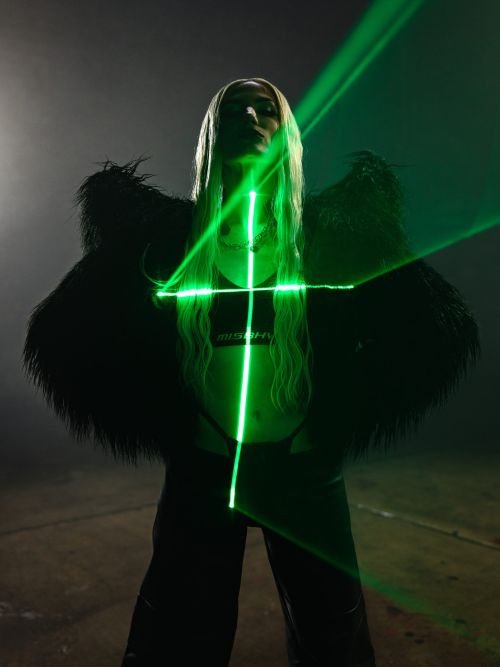
PHOTO CREDIT: Nik Mueller
If you weren’t making music today, what do you think you’d be doing instead?
That’s a difficult one because music has become such a huge part of who I am. But I think I’d probably still be doing something creative or entrepreneurial. I’ve always been driven to build things and create opportunities for myself. Having said that, if I wasn’t in music, I could definitely have seen myself becoming a lawyer or going into criminology. I’ve always been someone who likes to ask questions, challenge things and fight for what I believe is right.
You’ve spoken before about growing up in South Africa and feeling like creative expression wasn’t something that was encouraged. Looking back now, how much of your drive comes from proving to yourself that you could build a different life?
A huge amount of it. Looking back, I think a lot of my drive came from wanting to see what I was capable of and how far I could push myself. Growing up in South Africa, a career in music didn’t necessarily feel like the obvious path, so building a life around it has been incredibly rewarding. It was never really about proving anyone wrong; it was about proving to myself that with enough hard work and belief, I could create a life that felt true to who I am and achieve anything I set my mind on, no matter what the circumstances.
There was a point where modelling was opening doors for you internationally. Was there a specific moment when you realised music wasn’t just a passion anymore but the thing you wanted to dedicate your life to?
Yes, there was. When I moved to Los Angeles for modelling, I reconnected with a friend I’d met in South Africa who is a producer from Houston. I originally went there to spend some time on his turntables, but we ended up spending two weeks in the studio together and made two tracks, “Sensational Lies” and “The Subliminal.” That was the moment everything clicked for me. Up until then, music had always been a passion, working in radio and so forth, but after those two weeks I remember thinking, “Oh my God, this is what I want to do with my life.” From that point on, I never really looked back.
In several interviews you’ve described techno as something that helped you process difficult experiences. Do you think music saved you in some ways?
Yes, I do. Music gave me an outlet when I didn’t always have the words to explain or express what I was feeling. It gave me purpose, direction and a way to channel emotions that otherwise could have stayed buried. I don’t know where I’d be without it”.
I am going to end with Numéro Netherlands and their great interview. Lee Ann Roberts is a fascinating D.J. and artist. She spoke about “changes behind this new era, finding the way back to herself, and why now felt like the right time to take control”:
“A lot of people know you for hard techno, but this project brings you back to your psytrance roots. Why did you want to explore that side of your sound again?
Psytrance is where my journey began. It’s who I am. It’s in my blood, my DNA. Before I was a DJ, I was spending every weekend stomping for days at psytrance festivals in the vineyards and mountains of South Africa, completely losing myself in the music. Those experiences shaped me long before I ever stepped behind the decks.
As my career evolved, I explored different sounds and genres, but over the last few years I’ve found myself reconnecting with the music that first made me fall in love with electronic music. There’s something about psytrance that feels like home. The energy, the freedom, the sense of community—it’s always been a part of me. This chapter isn’t about going backwards. It’s about embracing the foundation that shaped me and bringing it together with everything I’ve learned along the way.
This EP feels more emotional and cinematic than some of your previous work. Did making these songs help you express a different side of yourself?
Definitely. Music has always been how I process things that I struggle to put into words. A lot of these tracks were written during a period of huge personal growth and reflection. There are emotions, memories, and experiences woven into the music that people might not immediately hear, but they’re there. This project allowed me to be more vulnerable and tell a deeper story.
The visuals for this new era are very striking and fashion-focused. How important was it to create a new visual identity alongside the music?
Very important. I’ve always believed that music is more than just sound. It’s a feeling, a world, and an experience. The visuals help tell the story behind the music. Fashion has always been part of my life, so it felt natural to bring that influence into this chapter. I wanted the visuals to feel powerful, mysterious, and cinematic while reflecting the confidence and evolution behind the music.
The tracks on the EP move between dark and uplifting moments. Was there a story or feeling you wanted listeners to experience?
The EP reflects a journey. There are moments that represent struggle, uncertainty, and confronting parts of yourself, but there are also moments of freedom, strength, and hope. Life isn’t one emotion. It’s all of those things at once. I wanted listeners to feel like they were moving through different chapters and ultimately arriving somewhere stronger than where they started.
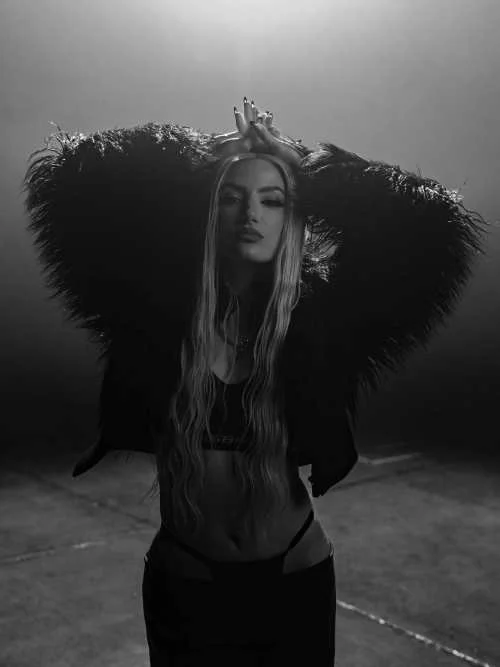
PHOTO CREDIT: Nik Mueller
As a female producer, have you ever felt pressure to fit into a certain box, and how have you learned to stay true to yourself?
Of course. There are always expectations about how you should look, sound, or behave. Early on, I probably felt those pressures more strongly, but over time I’ve realised that authenticity is your biggest strength. The moments where I’ve grown the most have been the moments where I’ve stopped trying to fit into someone else’s idea of who I should be and simply focused on being myself.
After years of touring and building your career, what have you learned about yourself during this new chapter?
I’ve learned that success means very little if you’re disconnected from yourself. For a long time, I was focused on the next show, the next milestone, and the next goal. This chapter has taught me the importance of balance, self-worth, and creating a life that feels meaningful outside of music as well. I’ve also learned that some of my greatest strengths come from the challenges I’ve overcome.
This feels like the start of something new for you. What do you hope people take away from TAKE CONTROL and this new era of Lee Ann Roberts?
I hope people see that it’s never too late to evolve. We all go through difficult periods, setbacks, and moments where we lose our way. TAKE CONTROL is a reminder that you can always choose to begin again. If this music inspires even one person to trust themselves, embrace change, or step into their own power, then I’ve achieved what I set out to do”.
I shall wrap things up. I am a new convert of Lee Ann Roberts. Her new E.P., TAKE CONTROL, is sensational. If you are in a position to see one of her D.J. sets then make sure that you do, as she is a phenomenal and unique talent. You can see where she is playing here. If you have not done it already, make sure that you follow…
THIS D.J. queen.
___________
Follow Lee Ann Roberts