FEATURE:
Spotlight
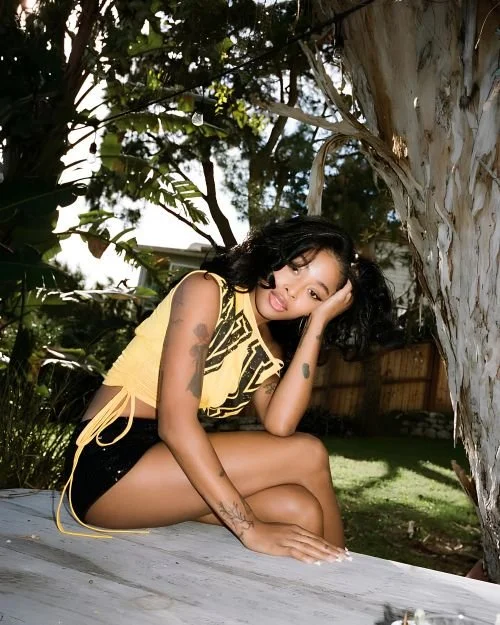
Maya J'an
__________
BACK in May…
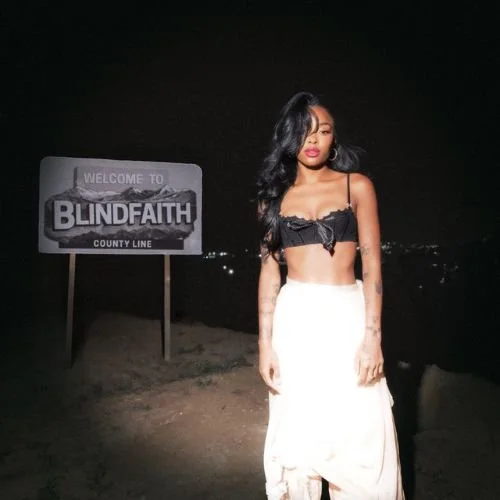
Maya J’an released the E.P., blindfaith county. This Los Angeles artist is truly amazing and awe-inspiring. I am going to come to some interviews from this year. However, I do want to start with Warner Records and their press about someone that you really do need to know about. I am not sure whether she will visit the U.K. here. I hope that she does, as she is someone who would get a lot of love here:
“It wasn’t supposed to happen this way. When Maya J’an first emerged, she was quickly positioned as a frontrunner for the next R&B-pop princess. Two nationwide tours followed, along with placements on highly anticipated films and collaborations with hip-hop heavyweights. On paper, it was all perfect — the dream arc for a young singer from East L.A., seemingly destined for a career in music. And yet, none of it felt right. “It’s like, everyone loves a love song, but do they like a love song where you are sleeping on top of a pocket knife?” she jokes, describing the back-and-forth surrounding her early artist identity. “I think we don’t give people enough credit — they’re capable of listening to music that’s not just, ‘I love you.’” If tragedy leads to transformation, Maya’s evolution was forged in successive reckonings. The first arrived with the pandemic, when she severed ties with her debut label and its prescribed vision. She responded by retreating inward, working quietly behind the scenes as a songwriter for other artists. Five years later, the Los Angeles fires brought another rupture. Grappling with heartbreak, the 26-year-old wrote “cul-de-sac,” a haunting love letter to her ravaged hometown of Pasadena. The song is an emotionally precise, ethereal example of bedroom pop, premiered with an intimate TikTok performance, seated in over-the-knee socks in front of a chain-link fence. Immediately upon posting the clip began to circulate, and Maya J’an’s return to center stage became inevitable. “It’s so important for me to get out everything inside my brain,” she explains. “Music has become that for me again. I genuinely feel like a kid when I go back into the studio, which I didn’t know was ever possible to find again.” Writing came naturally to Maya from a young age. She began journaling at eight, a practice she maintains religiously to this day, and one that became the foundation of her lyricism. Her musical education was equally layered: nearly a decade behind a drum kit, fronting a family band, all while honing her molten vocals in competitive choirs. By 13, she had turned to songwriting, stitching together pop songs at the piano. “I would go home after working at this pizza place and write songs — starting with lines, words, or melodies from songs that I liked because I didn’t know how to write,” Maya laughs. “I remember walking to my job, just looking at the mountains in Santa Clarita, and thinking, I have to make [music] work.
I need to figure it out.” To her family of essential workers — her father a Los Angeles County SWAT sergeant — music felt not only nonessential, but impractical. To meet her father’s expectations for her education, Maya enrolled in a local community college — though she spent more time in the library than in class, obsessively listening to new music and tracking down its creators to share her own demos. After failing her first semester “miserably,” Maya asked her father for a year: if nothing miraculous came of her music, she would walk away. By 19, she had signed a major label deal, spending the next three years collaborating with the likes of Pharrell and touring alongside Summer Walker. “A lot of beautiful things happened [with that deal], but because I was so young when I signed, I always felt like I was kind of playing a character. I was supposed to do what I thought people wanted me to do.” One of Maya’s earliest writing sessions paired her with Aqyila, resulting in “Bloom” — a song that would go on to win multiple Juno Awards and affirm Maya’s instincts as a lyricist. That success led her here, to Maya J’an, alt-pop’s ascending sprite, who defies genre and tradition. “That session reminded me why I started this, why I even picked up my journal when I was eight, why I even sat down at the piano in my dad’s garage. It’s because we have feelings and thoughts we need to release.” Alongside the release of “cul-de-sac,” Maya J’an wants to spotlight and direct support towards Altadena Girls, the teen-led organization founded in the wake of the fires to support the neighborhood and surrounding communities. She felt the song’s release would feel incomplete without engaging the young leaders driving that work — especially as public attention shifts. It’s a collaboration, like the song itself, that signals Maya’s return to her roots: as a singer, a lyricist, and the child who learned to process trauma through the written word. Now, it finally feels like the right moment for the world to meet Maya J’an — and this time, she knows it’s ready. “We’re all human,” she emphasizes. “We’ve all experienced the same things. Now, I’m trying to infuse my identity into my work”.
The first of two interviews I am bringing in is from Good Call Music. They spoke Maya J’an around the release of the single, cul-de-sac, and how the song “traces back to Maya’s upbringing in Pasadena and the strange mix of nostalgia, grief, and tenderness that comes with seeing familiar places changed or gone”:
“Thank you so much for taking the time to chat with us. What’s your hometown, and where are you currently based?
I grew up between Pasadena and Santa Clarita, California. Two places that look really calm and golden from the outside, but hold a lot of complicated feelings for me growing up. I’m based in Los Angeles now, but emotionally I’m still very tethered to those suburbs. They’re kind of the heartbeat of everything I make.
Does the city you live in shape your songwriting, consciously or subconsciously?
Completely. I think LA gives me the language of dreams and ambition, but the suburbs gave me the emotional texture. The quiet, the loneliness, the waiting, the way nothing and everything happens at once. A lot of my writing lives in that in-between space.
Who first introduced you to music in a way that really stuck with you?
My family. Music was always playing in the house — gospel, R&B, reggaeton, movie soundtracks. It wasn’t treated like something background or elite. It was something you felt with your whole body and screamed with your whole chest. My mom put me in drum lessons when I was 7 or 8. I did for a few years. I started writing my own songs around that time too. They weren’t very good.
Looking ahead, when can we expect a full-length album, and how involved are you in the production side?
Sooner than people think. I’m deeply involved, not just in the songwriting, but in the sonics, emotional and visual world around it. The album feels like a place you walk into, not just a collection of songs. A lot of my favorite artists are world builders, and I can’t imagine doing this any other way.
Are there any non-music creatives you’d love to collaborate with?
I love filmmakers and visual artists who create worlds. People like Petra Collins or anyone who treats images like poetry — Paul Thomas Anderson. I’m really interested in blending music with storytelling and film, those are the first two that come to mind, but there’s so many incredible filmmakers and visual artists I’ve put on my reference board this year!
What do you think are the biggest challenges facing artists right now as we move into 2026?
Keeping humanity. Being human in a system that wants constant output. It’s hard to make meaningful work when everything moves so fast. That’s kind of the reason why I stepped away from music, because I realized that I’m making my life’s work and I didn’t feel proud of it. Being an artist or any creative is such a task. You really have to not know what else to do with your life. The greatest gift I think we can give ourselves is being imperfectly human as we tell our stories. Hopefully along the way comes great art”.
Let’s move to The Independent Creative and their interview with Maya J’an. Again, centred around cul-de-sac, “the pandemic severed ties with her debut label, prompting a pivot to songwriting. Five years and a Juno-winning co-write later, the Los Angeles fires inspired “cul-de-sac,” a haunting love letter to her ravaged hometown. Premiering on TikTok, the song’s enthusiastic reception confirmed her instincts, and made Maya’s return to center stage inevitable”:
“You describe your song “cul-de-sac” as a love letter to your hometown. What does the song mean to you personally?
That song is really emotional for me. I poured a lot of memories into it, and it was actually hard to write. I’m really excited to share my music, especially my writing style. I can get very detailed, and I usually write songs like they’re pages from a diary. “cul-de-sac” feels like my most vague song, and I think that’s because it was such a hard thing to put into words. At the beginning of last year, a family member’s house burned down in the fires. Three houses were damaged, and one was completely gone. It was a multi-generational home, so we had so many childhood memories there. It was a really strange and heavy time for my family. I’m very sentimental and nostalgic, so it paralyzed me for a while. About a month later, after I had been sitting with everything, I went into a session with my producer, Jonas Jurström. I told him what I had been going through and said I wanted to create something that felt like being inside a memory. That’s where “cul-de-sac” came from.
There’s a real vulnerability in your voice. It made me wonder, as a singer-songwriter, how does it feel to expose yourself like that?
My only goal is to show up as authentically as I can. It’s funny, when I dropped my last single, “pocket knife,” I literally lay in the fetal position on my bed because I felt so exposed. As a writer, I’m not hiding behind anything. I’m choosing to be honest and not add any frills to make it more digestible. It really is just my diary. I also try to write for myself first. There are times when I play songs for friends, family, or the label, and I catch myself digging my fingers into my legs like, oh god. But that’s how I know those songs are meant to come out. It’s because they mean so much to me. I want to look back and know I gave real pieces of myself. The artists I connect with most are the ones who feel pure and transparent in their writing. The Mitskis, the Lanas. Angel Olsen, Father John Misty. That kind of honesty.
I’d love to talk a little more about “pocket knife.” I can share what I took from it, and you can tell me if I’m completely off? When I listened to it, I felt this sense of playing with fire. It felt like a story about loving someone who embodies risk. The line about “sleeping on a pocket knife, dreaming about your life” gave me this feeling of being with someone who feels a little unsafe, but who’s also very intoxicating. You choose to fall in love.
I love hearing how you interpret it. It’s really close to how I intended it. “pocket knife” is a story about trust. Can we have love without trust, and can you have trust without love? Are they interconnected? Is it a package deal? I’ve always had trust issues. “pocket knife” is just me saying, “I love you. I see things with you, but I’m already preparing myself for you to stab me in the back. If you do that, I’m going to be prepared and stab you back.” Emotionally, of course, not physically. “pocket knife” is just a story of love and trust. You can have either one without the other. Whenever I trust someone, that’s how I know I love them. Whereas love can be a little harder to define. I could love someone and not trust them… Love is such a complex thing, but trust is explainable. It comes with its own set of rules.
Where do you see yourself in five years? You don’t need to be humble about it. It’s not that kind of interview.
I definitely see myself with a handful of Grammys. I see myself writing for myself and other friends, constantly in the studio and inspired, traveling with Ms. Yoko, my dog. And happy”.
I am going finish up with a review of blindfaith county from Ladygunn and their words on an incredible E.P. I am definitely going to follow Maya J’an closely and see where her career takes her. An artist who stays in the head and heart the minute you hear her music:
“Maya J’an finally opens the doors to her personal universe with the release of her long-awaited debut EP, “blindfaith county,” under the Soulpower Records/Warner Records label. This work is an immersive mini-opus where warm analog instrumentation and rich sonic textures complement lyrics that feel intimate and as vast as a cinematic dream.
The heart of this six-track project is the standout single “depends,” a folk-infused rock piece that showcases Maya’s most vulnerable side to date. The artist strips away external stimuli to focus on the internal psyche, exploring the uncertainty of starting each day without knowing if she will feel overwhelmed or inspired by the outside world. It is a journey through the complexity of our inner selves where, as she explains, “blindfaith county” is the place where you believe in something without knowing why, romanticizing every tick of the clock while waiting for a sign.
Although Maya has already proven her worth in the major leagues of songwriting, the arrival of this EP marks her artistic consolidation, as it is not something that emerged from nowhere. Before taking the lead, Maya collaborated with figures of the caliber of Pharrell, SAINT JHN, and Justine Skye, in addition to writing “Bloom” by Aqyila, winner of Contemporary R&B Recording of the Year at the 2025 JUNO Awards. It was precisely the fervent support of her followers after sharing a sketch of her hit “cul-de-sac” that pushed her to carve out a space of her own as a performer.
The path toward this debut has been paved by a series of critically acclaimed singles. From the nostalgia of “cul-de-sac,” an ode to her hometown, Pasadena, to the hauntingly idyllic “pocket knife,” which led outlets like Sweety High to name her a must-watch artist, and the reflective “new june,” Maya has built a solid foundation that already surpasses millions of streams.
With “blindfaith county,” Maya J’an delivers a musical project that invites us to inhabit her world. It is an aesthetic and emotional statement that balances softness and tension, stillness and release. In this way, we discover a formidable songwriter finally stepping into her own spotlight, proving that the most powerful alternative pop comes from a place of deep honesty”.
I shall wrap here. I am intrigued and amazed by Maya J’an. Having heard her E.P., I do wonder if she will release an album down the line. We would love to see her perform in the U.K., as I feel she would find a great deal of support here. It is clear that the future is very bright for…
A supreme talent.
____________
Follow Maya J'an