FEATURE:
Spotlight
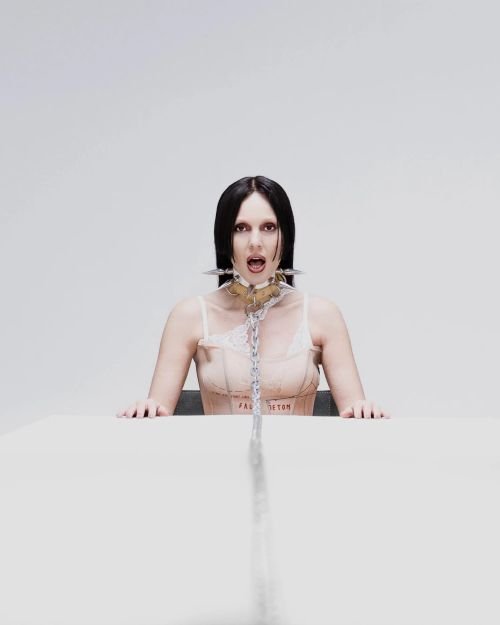
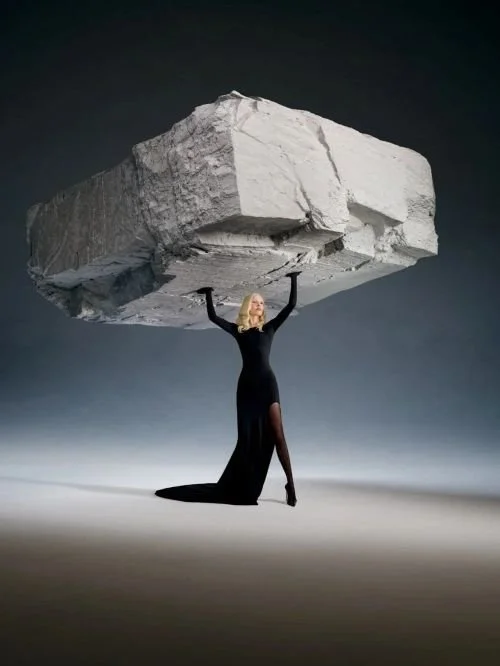
PHOTO CREDIT: Pascal Schonlau
is someone who I heard through her recent single, AUTOTAPINOSI. Tamta is a Georgian-Greek songwriter who produces this incredibly powerful and punchy Pop music. I do want to come to some interviews with her, as they probably do a better job at describing her music and get insight from her. Hunger chatted with a magnificent artist. Tamta spoke about “shedding two decades of commercial caution, embracing her inner chaos, and why it took her daughter turning 25 to finally make the music she always wanted to”:
“Expressive freedom has always pulsed beneath Tamta’s work. Born and raised in Tbilisi, she left behind her life, her friends and everything familiar, finding solace in music along the way. In 2004, she entered Greece’s Super Idol, the televised talent competition that would alter the course of her career, ultimately winning second place. The platform propelled her into pop stardom, leading to more than 250 million combined streams and views, and cementing her status as one of Europe’s most enduring pop figures. Since then, her career has stretched across global stages — from bringing Greek music to audiences through events like the Eurovision Song Contest, where she represented Cyprus, to commanding Pride stages with the same unapologetic energy.
For years, Tamta’s sound was rooted in conventional pop melodies, largely delivered in Greek and threaded with international influences that travelled far beyond national radio. But with the release of her 2023 album, Identity Crisis, a clear shift began to emerge. Darker textures crept in. Edges sharpened. The polished pop exterior gave way to something more experimental, more emotionally exposed, prompting one obvious question: where did this transformation come from? “I introduced myself as a new persona, but this persona was always inside me,” says Tamta. Leaning further into alt-pop, post-punk and electronic distortion, her latest single, ‘Autotapinosi’ (Greek for ‘self-humiliation’) captures that evolution perfectly.
Tell me a bit about your childhood and where you grew up. How did you decide to become a music artist?
My connection to music started very early. I was in a children’s singing group from the age of six. I also played the piano which was mandatory when growing up in the Soviet Union. Back then, I went through many auditions and singing competitions, so in a way I was well-trained and prepared from a very young age for what I’m doing now.
During my childhood I had a lot of intensity and big life changes which meant I had to grow up quite fast, both personally, because I had a huge responsibility of being a mother, and politically because of the situation in my country during the ’90s. So I think that shaped how I experience emotions and how I deal with things in general.
For that reason, for many years in my career, I didn’t touch those deeper emotional parts in my music. Maybe I was placed more in the space of a pop artist that mainly served an uplifting, lighter side of pop music. I loved it, but I stayed in that safety net for a long time.
Moving from Georgia, how did you situate yourself in the Greek music landscape?
I didn’t come to Greece to be a singer. I left my hometown for many reasons and just moved to Greece to be with my mom. I had no idea what I’m gonna do in Greece nor that I would have moved there permanently. One day, my mum came home and told me: “I’ve heard about an audition for Super Idol“. I was like, “Mum, are you crazy? I don’t even speak Greek”. She was like, “Please do it for me and you will see”. Those were her words.
I just went to the audition without knowing almost any Greek at all. At the time, a Greek singer did the remake of ‘Torn’ by Natalie Imbruglia in Greek. I decided to write down the Greek lyrics in Georgian and I was just holding them in front of me and singing the song during the audition. Not knowing Greek also helped me at some points during the process because it meant that I couldn’t understand the negative comments either. I was just happy to sing, really. That experience totally changed my life — I didn’t care about what people were saying. I was just living my dream.
In ‘Autotapinosi’ there are phrases like ‘I control’ and ‘obey’. What message did you want to convey here, and how does it fit into what female empowerment means to you?
It’s about female empowerment and also awareness — knowing what you’re doing and chasing your position in the dynamic. It’s about having ownership. Moving between control and surrender without losing yourself. As women, I feel like we’ve all somehow been in this situation at different points in our lives.
To be honest, with female empowerment, I can’t believe we’re still in this position. Personally, as a woman, I have been through things that I don’t think there is a man who could have handled. If we compare women with men, I honestly think that we’re more powerful. It’s not about the muscles and strength, but rather about what is inside.
You’ve given some great performances at Pride events. What does your musical presence at LGBTQ+ events mean to you?
It means a lot to me, because from the very beginning of my career, the community has supported me like no one else. I’ve always felt a real connection there. I’m a pop artist and there’s a level of openness and freedom in those spaces that feels very honest. I don’t take that for granted. We stand by each other with respect and support all the way.
What can we expect next from you?
I am coming back to London in October to perform at Colours Hoxton for the second time. Performing is part of my psychotherapy, because I’m not a very expressive person in my life. When I get on stage, I go through every emotion. It’s the place where I express myself honestly and freely, so I can’t wait for that.
At the moment, I am also performing at the Smut in Athens every other Sunday. It’s a queer techno club, which is something totally different from what Greek people are used to. I’m having the best time of my life there.
There is also my next album coming soon. This one will be mainly in English. It’s heavily inspired by heavy metal music, but as always, it remains pop at its core. I’m really excited to share it with all of you soon”.
There are a couple of other interviews that I want to cover off, as this is such a compelling and fascinating artist. Being fresh to her music, I am looking back at interviews and listening to her previous work. Le Mille chatted with Tamta last year. This is an artist that everyone needs to check out right away. We learn how “Tamta’s biography has often dominated the way her career is framed, particularly the story of leaving Georgia and rebuilding a life in Greece. The facts remain part of the context, yet her current work moves beyond origin stories. Identity here becomes a system in motion, shaped through cultural layering, instinct and experimentation”.
“Where did you feel more free to take risks — as the villain or the heroine?
As the Villain Heroine. The two aren’t opposites — they feed and complete each other. As long as I’m allowed to exist in both, risk becomes natural. That tension is where my freedom comes from.
Is there a genre or visual aesthetic that doesn’t feel right for you, even if they might work commercially?
I can’t quite pick a genre but what never felt right to me was a purely commercial approach: visually or musically. For many years, I was trying to balance my own creative instincts with the need to survive within a commercial system, without losing myself in the process.
Most of my discography is in the Greek language, while I have also worked in English at times—through fully English songs or by blending English lyrics into Greek ones. In recent years, I’ve allowed other elements that feel deeply personal to enter my work, especially Georgian influences, sometimes in the production, sometimes in the way I approach vocals, particularly when I sing in Georgian.
At the same time, the music I’ve been creating in Greek might not be considered disruptive on a global scale, but within the local context, I believe it represents something genuinely forward-thinking for the Greek pop scene. Now that I’m no longer creating from a place of survival, I feel freedom in my expression. That freedom has brought me a deeper sense of fulfilment, one that matters to me more than conventional ideas of success.
Imagine someone copying your aesthetic perfectly. What would they still get wrong?
In a world where images and sounds circulate constantly and are accessible to everyone, it’s natural that references overlap. We’re all exposed to the same stimuli, often unconsciously, and traces of existing work can surface without intention. That has always been the case, even before everything lived on a screen.
Of course, there are moments when imitation is intentional and obvious, and that can feel unfair to the depth of someone’s creativity and to the artist behind it. But for me, the real distinction isn’t about copying, it’s about approach. Inspiration can be respectful and even honouring, but it only becomes meaningful when it’s filtered through something personal. What matters is how you transform what you’ve absorbed, how much of yourself you allow into it, and whether it becomes something truly your own. My aesthetic is rooted in spontaneity and instinct and it often comes together in the moment and reflects where I am emotionally at that time. By the time something could be replicated, I’ve already moved on. If my work ends up inspiring other artists, I see that as something positive. It can only be taken as a compliment”.
There has been a lot of press around the single, AUTOTAPINOSI. Numéro Netherlands chatted with Tamta recently. I really love what she is doing and will try and catch her in London in October. I can imagine that her live shows are spectacular and really connect with the audience. She is making music that is getting a lot of reaction and love:
“With over 250 million streams and views across your career, how do you continue to challenge yourself creatively after so many milestones?
Numbers are amazing, and I’m grateful for that support, but they can’t be the main motivation. What keeps me excited creatively is curiosity. I like exploring new sounds, working with different collaborators, and experimenting with aesthetics that feel fresh to me. If something feels too comfortable, it’s usually a sign I should push a little further.
You’ve built a unique identity at the intersection of music, fashion, and queer culture. How do those worlds influence the way you approach your artistry?
Fashion, music, and queer culture have always been part of the same creative world. Music has its own power that inspires you to create a whole universe around it. Fashion helps translate the energy of the music into a visual identity, and queer culture allows you to feel free and be yourself. That’s why everything feels connected.
You’ve performed on massive stages, from the Eurovision Song Contest to major Pride events across Europe. How have those experiences shaped your connection with audiences?
Performing on big stages reminds me of the power of collective energy. It’s also my safe space, no matter how many people are watching. I express myself emotionally and physically much more freely on stage than in everyday life—it almost feels like therapy for me. In those moments, music goes beyond entertainment and turns into a space where people connect, celebrate identity, and share a sense of freedom.
Your previous album, “THE VILLAIN HEROINE” introduced a new era for you. How does “AUTOTAPINOSI” build on or push beyond that chapter?
Right now, I feel like I’m somewhere between chapters. My recent releases aren’t necessarily part of a bigger project yet. I’m experimenting—moving between melodic vocals and more aggressive beats—and using this time to shape what the next era might be. With “THE VILLAIN HEROINE,” I set a new bar for myself, and naturally I intend to surpass it.
You’re returning to London for a headline show at Colours Hoxton. What can fans expect from this next phase of your live performances?
People can expect a high-energy set where we truly connect with the audience. Last year in London, we created a very special moment alongside my four incredible performers, and we’re hoping to bring that same energy again this time. The performance is directed by Bill Roxenos, and together we developed a concept that I’m really proud of. So expect some new music and a few new moments on stage”.
Aside from playing in London on 9th October, I am not sure what the rest of the year holds. A lot of anticipation around a new album. I think that Tamta is an artist that deserves more airplay here. I guess she is played on certain station, but she warrants wider exposure. I feel she is one of the most talented and best artists….
IN the world.
___________
Follow Tamta
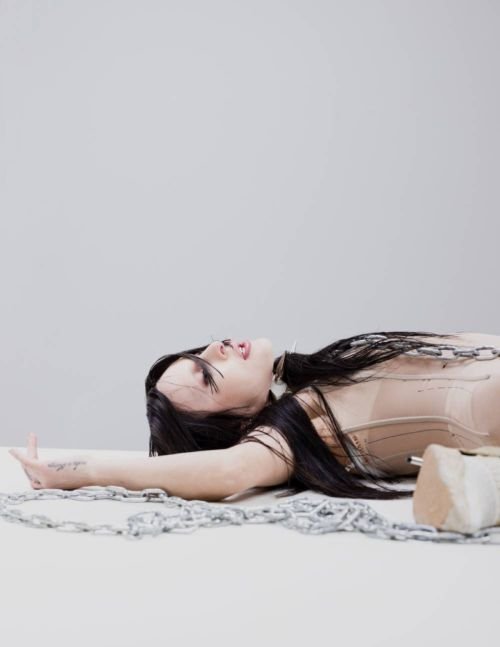
PHOTO CREDIT: Lena Knappova
Instagram:
https://www.instagram.com/officialtamta/
Facebook:
https://www.facebook.com/Officialtamta/
TikTok:
https://www.tiktok.com/@tamtaofficial
YouTube:
https://www.youtube.com/channel/UC2CHXtd1F3yxCFi_PO5SawQ
Spotify:
https://open.spotify.com/artist/3IXfNkd6BwjYA48aNCPDI8?si=YplAKVHpR7S9TuJG-bp9nw