FEATURE:
Beneath the Sleeve
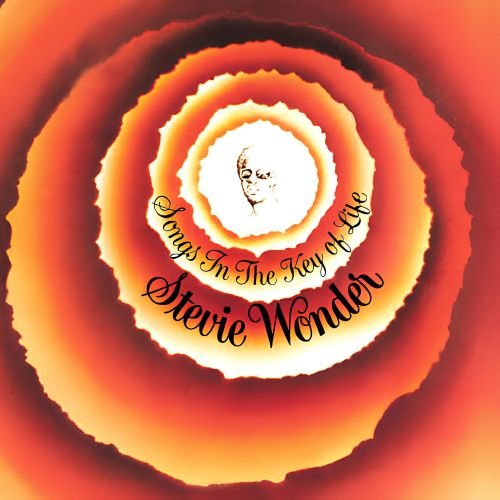
Stevie Wonder – Songs in the Key of Life
__________
THERE is going to be celebration…
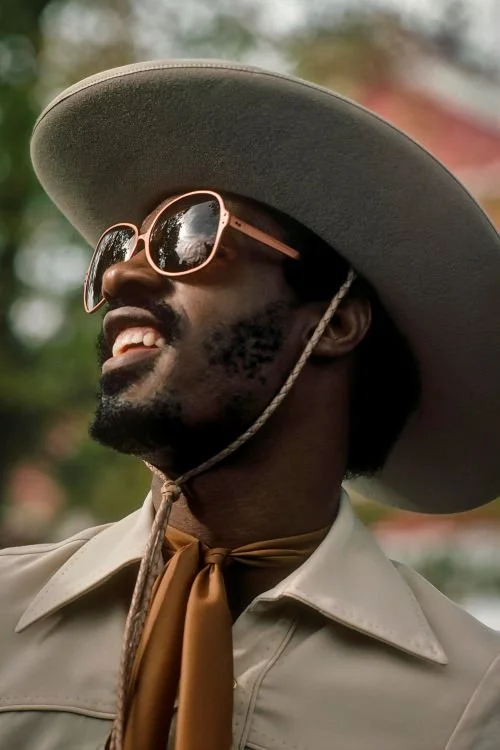
IN THIS PHOTO: Stevie Wonder captured on a ranch in Connecticut while promoting Songs in the Key of Life in 1976/PHOTO CREDIT: Lynn Goldsmith
around this album on 28th September. It is the fiftieth anniversary of Stevie Wonder’s Songs in the Key of Life. You can buy it on vinyl here. It is often cited as his best album. I personally think Innervisions is his finest work, though Songs in the Key of Life is a towering masterpiece. I am going to end with a review of Songs in the Key of Life. I am starting out with Rolling Stone and their in-depth feature about this 1976 classic. Stevie Wonder was on the brink of retirement and worked to painstaking lengths to make this double album. I am not quoting all of the feature, but I feel it is important to drop most of it in:
“The high watermark of Wonder’s so-called “classic period” – an unparalleled streak also encompassing Music of my Mind (1972), Talking Book (1972), Innervisions (1973), and Fulfillingness’ First Finale (1974) – it was the culmination of all that came before. “He took his life experience and put them all into Songs in the Key of Life,” Motown founder Berry Gordy reflected in a 1997 documentary. “And it worked.”
Wonder had been under contract to Gordy’s label since he was just 11 years old. Now a self-assured adult with a steady string of hits stretching back a decade, a “quarter life crisis” malaise began to take hold. The superstar began to openly discuss quitting the music industry altogether and moving to Ghana, where he believed his ancestral lineage could be traced. There, he planned to devote his considerable energy to assisting handicapped children and other humanitarian causes. Brightly colored dashiki tunics replaced his standard Motown-issue mod suits, an outward expression of the changes he felt within.
Wonder briefly touched on his fascination with the African nation in a 1973 interview with Rolling Stone, and soon these abstract notions began to solidify into something more concrete. During a press conference in Los Angeles the following March, he tentatively announced a final concert tour slated for the end of 1975 – when his recording contract was set to expire – with all proceeds earmarked for Ghanaian charities.
“I’ve heard of great needs in that part of the world, the African countries,” he told the Associated Press. “I believe that you have to give unselfishly. … You can sing about things and talk about things, but if your actions don’t speak louder than your words, you’re nothing.” The words were admirable, but some took the cynical view that this dramatic farewell tour was merely a ploy to put pressure on Motown when renegotiating his new contract.
He hardly needed the leverage. Gordy’s empire had taken a beating in first half of the decade due to changing musical tastes and economic depression. Knowing that he stood to lose his most consistent seller to a life of philanthropy – or lucrative offers from rivals at Epic and Arista Records – the label chief was prepared to move mountains of cash.
Wonder sent high-powered lawyer Johanan Vigoda to discuss his lengthy list of stipulations with new Motown president Ewart Abner, and board chairman Gordy, who described the negotiations in his memoirs as “the most grueling and nerve-racking we ever had.” When the dust cleared and the papers were signed, Wonder had a seven-year contract that promised him a $13 million advance (with the opportunity to net up to $37 million if he delivered more than his album-per-year minimum), 20 percent royalties, and control of his publishing. At the time, it was the biggest deal that had ever been done in the music industry. Time magazine noted that it was more than Elton John and Neil Diamond’s contracts combined.
“In those days $13 million was a lot of money,” Gordy wailed in the 1997 Classic Albums: Songs in the Key of Life documentary. “I’d heard that was an unprecedented deal, the most that had ever been paid. But I had to do it, because there was no way I was going to lose Stevie. … I was shaking in my boots!”
In addition to the financial windfall, the contract also offered Wonder the creative freedom to work anywhere he wanted, with any artist he desired, and veto power over any potential singles. A forthcoming triple-disc greatest hits package was canceled at the artist’s insistence, with all 200,000 copies sent to the incinerator. Most remarkably, Wonder’s permission was now required if Motown was ever to be sold in the future. The Beatles, Elvis Presley, Frank Sinatra: None of them wielded that much influence on their own label. The deal was the ultimate testament to Wonder’s status as Motown’s supreme talent.
“He broke tradition with the deal – legally, professionally – in terms of how he could cut his records and where he could cut,” Vigoda told Rolling Stone ‘s Ben Fong-Torres. “And in breaking tradition he opened up a future for Motown. They never had an artist in 13 years. They had single records, they managed to create a name in certain areas, but they never came through with a major, major artist.”
The contract did a lot for Wonder, but Motown had done a lot for him. The imprint was a shining African-American success story.
“I’m staying at Motown, because it is the only viable surviving black-owned company in the record industry,” he said in a statement announcing the deal. “Motown represents hopes and opportunity for new as well as established black performers and producers. If it were not for Motown, any of us just wouldn’t have had the shot we’ve had at success and fulfillment. It is vital that people in our business – particularly the black creative community, including artists, writers and producers – make sure that Motown stays emotionally stable, spiritually strong and economically healthy.”
Three decades later in the Classic Albums documentary, Wonder remained appreciative of Gordy’s trust. “He was brave enough to take the chance – to take that challenge to say, ‘You know what? I believe in him enough to do this. I believe in the gamble.’ And he was a smart man.”
With the technicalities in place, Wonder immersed himself in a new project – his 18th album since 1962.
He had momentum from his previous record, 1974’s Fulfillingness’ First Finale. It was a comparatively somber assortment brimming with self-reflection and even traces of anger (see the Nixon blasting “You Haven’t Done Nothin'”). The disc was originally slated to be his first double album, and when those plans failed to materialize he announced that the excess tracks would be issued on a sequel, Fulfillingness’ First Finale Part II (or, naturally, Fulfillingness’ Second Finale).
Wonder previewed the work-in-progress to writers from Crawdaddy and Melody Maker in late 1974, playing a track called “The Future,” which included the cautionary line: “Don’t look at the world like a stranger, cause you know we are living in danger.” The gloomy song was “fantastically influenced” by the televised police ambush of the Symbionese Liberation Army – a far left revolutionary group then on the run with kidnapped heiress Patricia Hearst – in which many members were killed. “Livin’ Off the Love of the Land” is hardly any sunnier, containing lyrics like “Seems the wisdom of man hasn’t got much wiser,” and “Seems to me that fools are even more foolish.”
Perhaps aware that such caustic songs could alienate his audience and compromise his commercial performance, they were shelved and Fulfillingness’ Second Finale was abandoned. He vowed to start fresh on his next project, which was temporarily known as Let’s See Life the Way It Is. The final title came to him in a dream: Songs in the Key of Life.
For Wonder, the banner was a personal dare to expand his compositional range. “I challenged myself [to write] as many different things as I could, to cover as many topics as I could, in dealing with the title and representing what it was about,” he says in Classic Albums. “The title would give me a challenge, but equally as important as a challenge it would give me an opportunity to express my feelings as a songwriter and as an artist.”
It was a challenge he met head on, working to the point of obsession. Nonstop sessions stretched across two-and-a-half years, two coasts, and four studios: Crystal Sound in Hollywood, New York City’s Hit Factory, and the Record Plant outposts in Los Angeles and Sausalito. More often than not, he could be found in one of those spaces, sometimes for 48 hours at a time, chasing his muse with a rotating crew of engineers and support musicians. Over 130 people were involved in the recording, including Herbie Hancock, George Benson, “Sneaky Pete” Kleinow and Minnie Riperton. “If my flow is goin’, I keep on until I peak” became Wonder’s mantra.
“It went on for two years almost every day, many hours and huge amounts of material,” recalls John Fischbach, who co-engineered the majority of the sessions with Gary Olazabal. “I guess it was really his most prolific time. He did more songs in those two years I think than he had done before.”
Though the exact count is unknown, Wonder claims to have recorded several hundred tracks during the Songs in the Key of Life sessions – nearly all of which remain in the vault. The Prince-like figure is corroborated by Fischbach, who puts the number at “something like 200 songs” in various stages of completion. “Some would be sketched out, some were more finished than others and we just kept working until he had what he wanted,” he says.
Olazabal describes Wonder’s working methods as “frighteningly spontaneous,” often resulting in late night (or early morning) calls to collaborators. Gary Byrd had a particularly harrowing experience while co-writing the lyrics to the track “Village Ghetto Land.” He had labored for three months perfecting the words to what he believed to be the complete song. Then Wonder called him from the recording studio and casually informed him that he had added another verse. Could he whip up some more lyrics in the next 10 minutes? The band was waiting.
“There are ‘sessions’ and then there’s Stevie Time,” laughed keyboardist Greg Phillinganes on WBEZ’s Sound Opinions podcast in 2006. “We didn’t have formal sessions. We went to the studio and that was where you were.”
In addition to his loyal crew, Wonder had a secret weapon: a state-of-the-art analogue synthesizer called the Yamaha GX-1. The enormous instrument boasted three keyboards, multi-octave foot pedals, ribbon controller, a galaxy of buttons to recall sounds and modulate pitches, and even a built-in bench. “It could house a family of eight,” Phillinganes says with a touch of hyperbole. “It was huge.”
Along with the gargantuan size came a gargantuan cost. The GX-1 retailed for a staggering $60,000 (or $320,000 adjusted for inflation). Intended as a prototype for future consumer synths, only a handful were ever made – let alone sold. Most landed in the hands of industry heavyweights like Keith Emerson of prog rock legends Emerson, Lake and Palmer, Led Zeppelin’s John Paul Jones, and ABBA composer Benny Andersson. Wonder bought two.
The GX-1 had much to recommend itself to the multi-instrumentalist. Realistic (for the time) instrument samples allowed him to single-handedly layer complex orchestral beds. And unlike others synths available in that era, it was polyphonic, which allowed him to play multiple keys at once and create lush backing tracks in a fraction of the time.
Wonder dubbed the metallic behemoth “The Dream Machine,” and promptly put it to use on many of the album’s tracks – most notably “Village Ghetto Land” and “Pastime Paradise.”
The latter opens with an insistent cartwheeling fugue that borrows its first eight notes from Johann Sebastian Bach’s “Prelude No. 2 in C Minor.” Intended to mimic the Beatles’ “Eleanor Rigby,” the anxious instrumental phrase is made even more disorienting by the sound of a backwards gong that anticipates the chanting of Hare Krishnas heard on the fade out. The devotees were pulled in off the street on in a spur-of-the-moment burst of creativity.
“Gary [Olazabal] rounded them up on Hollywood Boulevard,” Fischbach recalled to Sound on Sound. “We had decided it would be great to have them on the song, so he went and talked to a bunch of those people and made arrangements for them to come to the studio.”
Crystal Studios was located in the east side of Hollywood, not far from the local headquarters. “They walked in line all the way from the Self-Realization Fellowship,” Olazabal added. “There must have been about a hundred of them, chanting and praying as they showed up to perform on the song, but Stevie never showed up. We didn’t know what to do, and so we just let them go into the studio. The main room was not very live-sounding, but it was very big. Well, they were in there for hours, chanting – they didn’t really interact much in any other way – and when Stevie didn’t appear we knew they’d have to walk all the way back and return another day.” Despite Wonder’s no-show, the Hare Krishna’s remained positive. “There was not a lot of hostility,” Olazabal says. “Except from us. It wasn’t easy to listen to that chanting for hours on end.”
The West Angeles Church of God Choir was also mixed into the outro, performing a version of the civil-rights anthem “We Shall Overcome” that weaved in and out of the Krishna’s incantations. The blend of higher consciousness and social consciousness, the eternal and the urgent, gave voice to the dreams swirling inside the young maestro.
But it was another vocal cameo that hit closest to home. Wonder became a father on February 5th, 1975, when partner Yolanda Simmons gave birth to Aisha Morris. “She was the one thing that I needed in my life and in my music for a long time,” he told Women’s Own magazine soon after. “Isn’t She Lovely” – a joyous celebration of parenthood – is perhaps the most obvious beneficiary of Wonder’s new inspiration. While actual birthing sounds edited onto the song’s intro are from another infant, Aisha can be heard laughing splashing around the bathtub with her father on the extended fade.
Wonder’s sister Renee Hardaway also makes a vocal contribution to Songs in the Key of Life, delivering the scornful “You nasty boy!” that punctuates the album’s lead single, “I Wish.” The final track completed for the project, its lyrics originally dealt with war and “cosmic spiritual stuff” until Wonder attended a Motown company picnic. The label had effectively served as a grammar school for the former child star, and the fun afternoon triggered a wave of nostalgia. He hastily scribed new lyrics about those early days, and at 3 a.m. called bassist Nathan Watts – who had just arrived home from a long day of recording. “Stevie called and said, ‘I need you to come back,” Watts told Bassplayer. “I’ve got this bad song!”
“Saturn,” a track on the album’s bonus EP, A Something’s Extra, also began as a fond look backwards. The lyrical location was originally “Saginaw,” Wonder’s Michigan birthplace, and intended as homage to his home in the mold of the Jackson 5’s “Goin’ Back to Indiana.” But the song was shifted into outer space when guitarist Mike Sambello (later to score a hit with the Flashdance favorite “Maniac”) misheard the title as the ringed planet. Much like the past, it’s described as an idealized utopia just out of reach.
Traces of Wonder’s family and personal history can be found all over the album. Wonder’s brother Calvin Hardaway co-wrote “Have a Talk With God,” and his former wife Syreeta Wright provides backing vocals on “Ordinary Pain.” Some even believe that “Ebony Eyes” – with its reference to a “Miss Beautiful Supreme” – is an ode to Wonder’s childhood infatuation with elder Motown labelmate, Diana Ross. “I had a crush on her,” he admitted to Vanity Fair in 2008. “When I came to Motown, she walked me around the building and showed me different things – she was wonderful.”
There’s also a compelling theory that the tune is actually a tribute to another Supreme, Florence Ballard, who had died in February 1976 of cardiac arrest at the age of 32. She had been fired from the trio nine years earlier for erratic behavior stemming from substance abuse and resentment over being usurped by Ross’ as the band’s frontwoman (it was she who came up with the group’s name). Her career remained mired in a morass of lawsuits, domestic-assault incidents, poverty, and alcoholism, never to recover.
Wonder would have been well acquainted with Ballard. A subtle nod to her premature passing would be in line with his mission to write about all aspects of life – even death.
Mortality, and musical immortality, is central to a much more blatant tribute, the jubilant “Sir Duke.” The song honors the jazz legend Duke Ellington, a formative influence on the young Wonder, who had died in 1974 before they were ever able to work together. “I knew the title from the beginning but [I] wanted it to be about the musicians who did something for us. So soon they are forgotten. I wanted to show my appreciation.” He namechecks Count Basie, Glenn Miller and Louis “Satchmo” Armstrong, and Ella Fitzgerald in the pantheon of greats, perhaps suspecting that his own name would one day be among them.
If it wasn’t already. Sessions for Songs on the Key of Life yielded some of the finest songs in his entire canon, including the celestial “Knocks Me off My Feet,” the intricate harmonies of “Love’s in Need of Love Today” and the Herbie Hancock-assisted “As.”
After basic recording was complete, Wonder insisted on endlessly remixing the tracks in an unlimited series of configurations. “It was a marathon, and at times we wondered if it would ever finish,” says Olazabal. “We had T-shirts with ‘Are We Finished Yet?’ printed on them, as well as others with ‘Let’s Mix ‘Contusion’ Again.’ Without exaggeration, we must have mixed that track at least 30 times. It became part of the joke of our lives.”
Wonder took to wearing these T-shirts around Motown headquarters to tease the supremely stressed-out executives who had never waited anywhere near this long for a product. “Nobody thought this project would go on as long as it did,” confirms Fischbach. Deadlines came and went with little concern from the artist, as the label made do with over a million advance orders on an album that didn’t technically exist.
By the fall of 1976, Wonder was ready. He had completed a double LP and bonus EP bursting at the seams with musical innovation. Songs in the Key of Life was a groundbreaking blend of funk, soul, pop and jazz, seasoned with cutting-edge technology. Amazingly, this bumper crop of forward-looking musical brilliance had its grand debut in the pastoral paradise of Long View Farm in rural North Brookfield, Massachusetts.
But that was just the final step in a long journey. The world press met in the lobby of Manhattan’s elegant Essex House on September 7th, 1976, at 7:30 a.m. There they gulped down a quick complimentary breakfast before being ushered onto three buses that drove them to Kennedy International Airport – but not before passing through Times Square for a peak at the $75,000, 60-by-400-foot billboard that had trumpeted the album for the past four months. Soon they were airborne in a chartered DC-9, well stocked with champagne and appetizers. Once the plane touched down at a small airport in Worcester, Massachusetts, the journalists were loaded onto a fleet of school buses for a short ride to the listening party.
Long View Farm was a 143-acre equestrian ground that had recently been renovated to include a world-class studio (used by the Rolling Stones, Cat Stevens, Aerosmith and the J. Geils Band, among many others). Guests were treated to hearty meals of roast beef, pie and more champagne while waiting for Wonder to make his entrance. He arrived resplendent in a gaudy cowboy get-up, complete with 10-gallon hat, leather fringe and a gun holster emblazoned with the words “Number One With A Bullet.” The whole gala cost Motown upwards of $30,000.
“Let’s pop what’s poppin’,” he announced as he hit play on the reel-to-reel tape machine, unleashing the music that had been gestating in the studio – and his soul – for so long”.
For its forty-fifth anniversary in 2021, Okayplayer spoke with “members of Wonderlove and legendary engineer Gary Adante (Olazabal) about how this timeless album was made”. This album is surely among the greatest of all-time. Flawless from start to finish:
“Let’s go in-depth into the making of some of the songs from this album.
“Love’s in Need of Love Today”
Raymond Pounds: “Love’s in Need of Love Today” was the last song we recorded, but the first song on the album. I was with him when he recorded that song. I guess he must have had the idea in his head and everything because nobody had heard it. I hadn’t heard it. I went to the studio as usual at night around 9:00 PM. Sometimes, you’d be waiting on him, and he didn’t come in there till he’s ready. So, I was waiting. Then, when I got tired of hanging around and tried to leave I’d say, “Hey, Stevie, I’ll see you tomorrow. I’m getting ready to split,” He’d respond, “No, no, hey, don’t leave, hang.”
It was 1:00 AM when he started to record “Love’s in Need of Love Today.” First, he’d get the piano part, and he’d sang a little rough vocal while he played the piano. Then, after he did the piano part, he did the synthesizer keyboard bass part. I was sitting there, and I was the only one. Everybody else was gone. By the time he did the piano part and he did the bass part it was 3:30 AM. After that, it was time for the drum and I said, “Hey, Steve. Man, can I play on this one?” [laughs] He said, “No, I’m going to play this one because I know exactly what I want.” He was right. He did the drum part and then he did all those voices. He did all those like in four or five parts.
Gary Adante: I know that when we were doing “Love’s in Need of Love Today,” Stevie sent Alice Kim to do the vocals. Usually, he’d stand up but there were so many layers for that song. I think he just felt more comfortable sitting down due to that length of time. Also, I remember [singer] Jackie Wilson fell on stage and collapsed right before we did the vocal a few days before. He was in the hospital. Stevie was really super emotional because he thought that Jackie wasn’t going to come out of it. I think he eventually did. He lived for a few years after that. Stevie would sing a line or so, and we had to stop recording and turn off the mic several times just to get through it because he would just get overemotional and couldn’t carry on. I will always remember that. It was so much, it wasn’t anxiety, it was just hard to witness. That’s the sort of thing you don’t forget. He kept saying, “I’ve gotten all these Grammys, I’ve gotten all these accolades, and Jackie Wilson never got any of that.” He felt like it was this guy, who was obviously somebody that Stevie looked up to and emulated possibly, that never received the respect that he deserved.
Nathan Watts: On “Village Ghetto Land,” Stevie played all of the instruments. Many people didn’t realize that there were no strings on the song. They were actually synthesizing the strings from a Yamaha keyboard he had in the studio. During the early '70s, he acquired one of these keyboards when they first came out. The way they made the strings sound on that record was incredible.
“Contusion”
Michael Sembello: On “Contusion,” we were rehearsing right across the hall from John Mclaughlin and Chick Corea. We all used to hang out as musicians back then. Stevie was influenced by everything. We would sit around and listen to different jazz artists. I think the song “Contusion” came out from the type of stuff Chick Corea was doing. He wanted to express the fact that he could play and that he wasn’t just this pretty voice. Everything on that record would be an A&R guy’s nightmare today. [laughs]
“Sir Duke”
Raymond Pounds: For “Sir Duke,” he wrote that shortly after Duke Ellington passed away. He got the inspiration to write “Sir Duke” for Duke Ellington. One day, Wonderlove was at rehearsal and we rehearsed from t0:00 AM that morning until 5:00 PM. At 5:00 PM, we could go home or we could go get dinner and go to the studio where Stevie was and stay there all night. What happened was, he came to our rehearsal at a quarter of five, and we’re getting ready to wrap it up for the day. He came in, and when he showed up, you couldn’t leave. He said, “You know I got a song. I wrote a song. It’s for Duke Ellington. Come on, I will teach it to you.” He taught me the drum part, he taught Nathan [Watts] the bass part, he taught the guitar player, and taught everyone their parts. It took us about 45 minutes to learn that song. After that, he said, “OK, let’s go to studio and record it.” Well, it was 5:30 PM. We’d been there since 10:00 AM morning. I said, “Look here, man. I’m hungry. Let us go get some food. Let us eat, and then let’s come back at 7:00 PM. OK?" He replied, “OK.” That was it. We went to the Sizzler and had some dinner. We went to the studio at a quarter of seven and started recording “Sir Duke.” We played it once or twice, and then they turned on the red light to record, and we recorded that song.
Michael Sembello: On “Sir Duke,” we would basically sleep at the studio most of the time. I remember falling asleep in the vocal booth, and I knew I had to do my guitar part in the song. I would wake up every few minutes and ask, “Is it time yet?” They would tell me no. Two days went by and it was like 6:00 AM and Steve said, “It’s time!” There I was sitting in the booth next to a Marshall amplifier with headphones on and half awake waiting to play my complicated guitar part. The reason I was able to do it was due in part to everyone being so energized and fueled to do the music. It was an incredible experience and it made me realize that I could play while being half asleep. To see the excitement from Stevie Wonder, you can’t help but become energized. When you were in the same room with him your IQ went up by 50 points.
“I Wish”
Nathan Watts: “I Wish” was a song that he never rehearsed. He wrote the song in one day. I was there with him the whole day, and we did nothing that day. I was there until 1 o’clock in the morning, and I told Steve that I was leaving because I was tired. He told me to go ahead and head home. He called me back at 3:30 in the morning and told me to come back to the studio. He said, “I got a song and it’s going to be good. You gotta hear it, and you have to play on it.” The next thing I know I was back at the studio, and we came up the song style and that was it. We came up with the bass line, and he was playing on the keyboard, then I embellished from what I was hearing from him. I finished up my part at 5 o’clock in the morning and went back home. He did the horns and the backgrounds the next two days and it took about 3 to 4 days to complete the entire song.
Gary Adante:“Pastime Paradise” was interesting because of the chanting and the choir. Stevie had suggested that we have people chanting with finger symbols, so I went up to the Self-Realization Fellowship Temple on Sunset Blvd in Hollywood and spoke to them. I asked them if they would be interested in being on Stevie’s album. They agreed that they would come in and chant, sing, and play their cymbals on the album. They all walked single file. I don’t know how many miles, but they walked all the way from where the Shrine is to Crystal Sound. There were so many of them, maybe 50 people. We didn’t know what to do in the record room. They sat there, just went on and chanted for hours until Stevie showed up. One time he didn’t show up, so I had to apologize, and they did it again and this time Stevie actually showed up.
“Isn’t She Lovely”
On “Isn’t She Lovely,” it was one of the things that we had to get the timing just right. Because there weren’t enough tracks of his daughter, Aisha, I think it was just a 16 multi-track to lay that down on a single track. We left it on a two-track and then every time we had to get it in exactly at the right time. I do remember that being a pain in the neck. The recording of her crying was in their home in New York, I think. It was her mother’s recording. She was on the audio as well.
Raymond Pounds:Stevie had this song, “If It’s Magic.” There was no piano. There was just the harp and him singing. He said, “I’m going to call up Alice Coltrane and have her play on “If It’s Magic.” She came with her harp. If he was going to do something with somebody, he would call me and say, “Come to the studio. I want you to see what’s going on.” When I got there, Stevie had an idea. He was the producer, so he was putting the album together. When a producer has a concept in his or her head, you need to do what they want you to do. He kept trying to tell her how he wanted her to play and she said, “Well, this is the way I hear it. This is what I feel.” See, if he called you in to perform on his record and it was not working out, he won’t argue with you and say, “I’m the producer. You need to do this.” He’d just say, “OK.” He let her play, and then he told her, “Great. Thank you.” Then, I said, “Stevie, there’s this harp player, and she’s a Black woman. Her name is Dorothy Ashby. She’ll play what you want her to play.” I brought Dorothy Ashby to him. And the rest is history.
“As”
Michael Sembello: Herbie Hancock came into the studio to play on “As.” He was one of the many people that came by the studio during the recording of the album. I got to meet a lot of people that I really admired. It was just a party of musicians there and everyone wanted to be involved with the album. Greg Phillinganes had just joined the band, and he was the kid of the group. He was 18 at the time, and I was a little older. Herbie’s album had come out a couple of weeks prior, and Greg hopped on the keyboards and starting playing some songs from the album. Herbie had this look on his face, and he was impressed. It was like we all died and went to music heaven during the whole process of making the album. It was young people mixed with veterans that had a mutual respect for one another. There was just a lot of joy there and Steve really attracted that.
Nathan Watts: I was just a young boy walking into the studio and there was Steve and the wizard working on “As.” I didn’t even know how to act. There were the two greatest piano players who have ever lived. Herbie Hancock, are you kidding me? I walked in there, and then we began playing, and we hit it off from that point forward. Herbie was sitting down at the piano playing in the key of B. Anyone who plays an instrument knows how difficult it is to play in the key of B. Herbie walked through it like it was day and night. I was sitting there in awe. Michael Sembello was in there with us. I remember calling back to my friends in Detroit telling them I just finished playing with Herbie Hancock.
“Saturn”
Michael Sembello: It’s funny how the song “Saturn” came about. He asked me if I had any ideas for this song he was working on. He gave me this tape, and he was saying something about going back to Saginaw. I asked him what he was actually saying. He told me, “The song is called “Going Back to Saginaw,” but that’s not going to work.” I said to him, “Yeah, that doesn’t sound very exciting.” Later on that night, I told him the first thing I heard when I listened to the lyrics again was “Going Back To Saturn” and he said, “Yep, that’s it! Go finish it!” He told me to come back the next day, so we could record the song. I thought to myself what would it be like to be a disgruntled alien that came to this planet to try and do good and help people, and we ended up running him away with our guns and bibles in our hands. So, he sang I’m going back to Saturn. I didn’t think it would ever make it on the album because the record company hated it so much. Thank God for double albums, because if it was a single album, it would have never made it.”
Steve’s metaphors are really double entendres and “All Day Sucker” was another one of those. A lot of times it was us playing music spontaneously and the groove from a live band will become a song. Essentially, he had the groove and the next thing we know we have a song. We didn’t have names for the songs at that time.
Gary Adante:“All Day Sucker” was interesting putting a guitar on it because I went to Frank Zappa, who I had a relationship with, because I had worked with him on a few things. I liked Frank, and we tried it. He was amazing, but it was one punch that he couldn’t replay what was on the track. It just really wasn’t as great as we’d hoped it to be. My friend’s nephew, WG “Snuffy” Walden, had met Stevie because he would come to the studio to see him. Stevie asked, “Why don’t you call your friend and see if he’d be willing to come down?” It was past midnight into the wee hours of the morning. He came down and was full of energy and played guitar on that. I think he did a great job.
As you look back 45 years later, what are your feelings about being involved with one of the greatest albums ever made in the history of music?
Michael Sembello: When I listen back to the record today, I realize that I was just learning how to play. Steve was one of my greatest teachers when I worked with him. I’m just starting to comprehend the record, because when you’re in the process of doing something, you don’t know the magnitude of it. When I go on the internet and I go to YouTube, I type in my name and Steve’s I see young kids competing with each other by playing our song “Contusion.” It’s like Wow! I begin to realize I was a part of something great here and left something for the next generation. The energy from the record is going to live on forever and ever.
Nathan Watts: It changed the focus of all musicians. The whole album had variety. It wasn’t stuck in one genre. It wasn’t just an R&B album. It had Latin influences and there were many facets to it. “Pastime Paradise” was a song that had religious overtones, “Isn’t She Lovely” was a song for his daughter, “Joy Inside My Tears” was a soulful, emotional song. There were different songs that touched on many different subjects. A lot of the material done on the album was magical and a once-and-a-lifetime type of thing. It sold millions of copies and is in the top ten of all-time albums in music history. It will stay that way forever. It is timeless. I was lucky to be a part of it. I was just a young man from Detroit.
Raymond Pounds: I never thought that I’d be his drummer and that I might get a chance to play on one of his songs or some of his songs. He didn’t need me to play. Stevie was the best man at my wedding, and he paid for my honeymoon. I picked him up and helped him put on his tuxedo and drove him to the church, so I could get married. We’ve been such great friends for so many years. It was a great experience being a part of this album, man. It was my first big job with Stevie Wonder as a drummer. It changed my life.
Gary Adante:I think when you’re actually doing the work, you don’t think about what kind of impact the music will have on listeners’ lives. You’re just working to capture the sound and the experience clearly and maybe putting a digital thumbprint on it, so people realize that you had something to do with it. You can imagine how cool it is to get somebody, especially if they don’t know you got anything to do with it, who starts talking about that album as being like, “Oh, that was my favorite album.” I live in the Seattle area. I met a keyboard player and one of the songs was his wedding song that he and his wife marched down the aisle to. I thought, “Holy shit.” It’s still having an impact on people’s lives now. It’s a great feeling that something you did had some sort of legacy to it”.
I will finish with Pitchfork and what they say about Songs in the Key of Life. They write how “Its ambition and scope were unprecedented, and he never approached its caliber or impact again”. I hope that this feature has given you a greater insight into Stevie Wonder’s eighteenth studio album:
“Almost everyone understood the magnitude of Wonder’s achievement, but there were some objections, mostly having to do with the length and sprawl of the record. “[I]t has no focus or coherence,” wrote Vince Aletti in a wildly mixed but mostly favorable review in Rolling Stone. “The eclecticism is rich and welcome, but the overall effect is haphazard, turning what might have been a stunning, exotic feast into a hastily organized potluck supper.” But to complain about the excess was to miss the point—any great double-album (The White Album, Exile on Main Street) could easily be edited into something tighter and more consistent, but the all-encompassing aspiration is the whole idea, the desire to contain multitudes and to cover as much ground as possible during a revved-up creative groove. Sometimes, more is more.
Certainly, the public understood. Songs in the Key of Life entered the album charts at No. 1, only the third record to hit that spot straight out of the gate (after Elton John’s two previous releases). It then stayed there for the rest of the year; to understand just how ubiquitous the music of the mid-’70s could be, consider that it knocked Frampton Comes Alive! out of the No. 1 slot, and was finally bested in January of 1977 by Hotel California. Inevitably, Wonder won his third straight Album of the Year award at the Grammys (he missed the ceremony because he was visiting Nigeria at the time).
After Songs in the Key of Life, though, something seemed to deflate in Stevie Wonder’s work. It was as if, at the ripe old age of 26, he was bored by the idea of just writing hit songs. His next album was 1979’s mystifying, experimental, mostly instrumental Journey Through the Secret Life of Plants, a double-album soundtrack to a documentary about the feelings of greenery and flowers. Turning his attention to the crusade for a national holiday to honor Martin Luther King, Jr., Wonder rebounded with Hotter Than July in 1980 (featuring the sublime “Master Blaster (Jammin’)),” but since then, it’s mostly been long waits in between underwhelming new records.
It was like there was nowhere left to go after Songs in the Key of Life—and maybe there wasn’t. The album was more than just a masterpiece; it was the culmination of all of the potential that Stevie Wonder showed since his days as an 11-year-old prodigy. Musically, politically, culturally, it was the fulfillment of everything that Motown and the ’60s soul revolution had promised. And within a few months, disco was the focus for new Black music, while in the parks and playgrounds of the Bronx and beyond, hip-hop was taking shape for the next generation.
The sound of Songs in the Key of Life never stopped reverberating. Elton John and Prince said that it was their favorite album. Michael Jackson and Whitney Houston sang its praises. Coolio, Ol’ Dirty Bastard, and Will Smith sampled its hooks. Mary J. Blige and Luther Vandross covered its songs. Kanye West said in 2005, around the release of Late Registration, “I'm not trying to compete with what's out there now. I'm really trying to compete with Innervisions and Songs in the Key of Life. It sounds musically blasphemous to say something like that, but why not set that as your bar?” Still, it was a genuine event when Stevie Wonder decided to take Songs in the Key of Life to the stage 38 years after its release, and bring the spotlight back to his greatest musical accomplishment.
It required several dozen musicians on stage to recreate the album’s arrangements, with full horn and string sections (that harp!), but it also imposed a discipline on Wonder’s performance, which too frequently devolve into a mess of medleys and sing-alongs. The shows were magnificent, the words as true as ever, and there was Stevie, still telling us—showing us—that “music is a world within itself/With a language we all understand.” Almost four decades later, you could feel it all over”.
On 28th September, it will be fifty years since the release of Stevie Wonder’s Songs in the Key of Life. Where do critics place it? I want to end with a few features that rank his albums. In 2019, The Guardian ranked his albums and put Songs in the Key of Life first: “From Curtis Mayfield to George Clinton, no genre is more overburdened with no-further-questions geniuses than soul music in the 70s, but even in that climate, Wonder stood out. Songs in the Key of Life shows why. It’s not a better album than Innervisions per se, but it clinches the top spot by dint of its breadth and consistency: a rare double album where the quality never lags. Its sheer ambition knocks you sideways – Village Ghetto Land set nightmarish social reportage to, of all things, mock-baroque synthesizer – but what is really startling is that its ambitions are completely fulfilled: every song hits home. And, in Sir Duke, it contains one of the most joyous, life-affirming pieces of music ever recorded”.
Stereogum placed it third in their 2015 feature: “Songs In The Key Of Life is not Stevie Wonder's best album, but it might be his most celebrated, and with good reason. The hugely ambitious double disc opus represents the culmination of a fifteen year personal and professional journey, bringing together the varied jazz, blues, soul and rock elements of his work, which taken together represent nothing less than a new musical vernacular. Any doubt that Wonder is feeling the full extent of his commercial and creative powers are immediately out the window, with the lovely but essentially hookless seven minute opener "Love's In Need Of Love Today," fundamentally a free form exercise akin to other overtly shrugging openers to classic albums like Tonight's The Night Pt. 1 or We Dance. Side one partner "Village Ghetto Life" is similarly strange and beautiful -- an orchestral noir enumerating the miseries of urban life, set to an arrangement that recalls Stravinsky far more than Sly Stone. This is an artist who doesn't need hits and isn't angling for them. Having made his auteur point, Wonder indulges our id as well as our intellect on side two, which begins with the stunning Ellington tribute "Sir Duke," an effervescent, horn-driven paean to jazz, lust and the transformative powers of music which ranks as one of the most exciting tracks ever recorded. The following track "I Wish" backs it up with an inescapable groove and vaguely salacious portrait of adolescent inner city delinquency. Meanwhile "Pastime Paradise" castigates nostalgia and those not busy being born, and the gentle touch of "Summer Soft" conjures a musically and emotionally complicated romantic tangle closer to Steely Dan than Smokey Robinson. Like Exile On Main Street and The White Album, Songs In The Key Of Life is an immersive experience, one rife with gutbucket emotion, stylistic shifts and a general sense of high emotional and artistic stakes. By the time of the whimsical exhalation of side four's Band-like "Ebony Eyes" and the brilliant proto-Prince come-on of "All Day Sucker" you can sense a man both fully engaged and gleefully spent. Wonder would never work again at this high a level -- but then again, what else did he owe us?”. In 2022, Soul in Stereo put it in first position: “Edd said: There’s a good chance that even if you’ve never heard a Stevie album in your life you probably predicted that this album would take the top spot. There’s a good reason for that – it’s of the most famous albums of all time. Thanks to decades of covers and samples its legacy is escapable. Even if you haven’t heard this album, trust me, you’ve heard this album. I can’t say enough about the construction of this piece of art – from the weeping, harrowing strings on “Village Ghetto Land” to the pulsating funk of “Contusion” to the iconic horns of Sir Duke, the poetic writing of “If It’s Magic” each track is a course in music theory. And despite coming out more than 40 years ago, this double disc set doesn’t feel like it has aged a day. If I ranked every single album I’ve reviewed in the 10+ history of this site – we’re talking hundreds upon hundreds of releases – there’s a good chance that Songs in the Key of Life would top that list. Songs in the Key of Life may forever be music’s measuring stick, the pinnacle of artistry”. I will leave it there. Fifty years after its release and Songs in the Key of Life continues to amaze and influence. That is why I was key to go…
BENEATH the sleeve.