
FEATURE:
You See, I’m All Grown Up Now
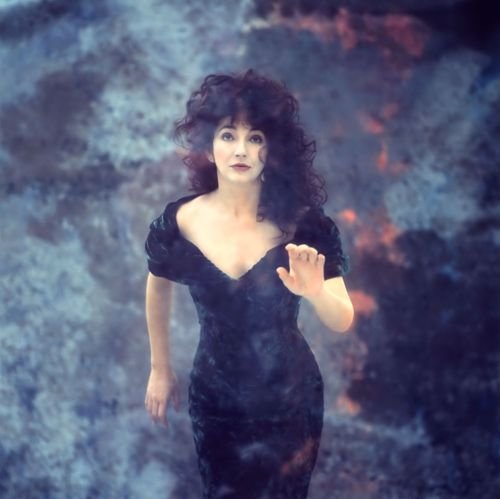
IN THIS PHOTO: Kate Bush in 1989/PHOTO CREDIT: Guido Harari
The Beauty and Cinema of Kate Bush’s The Fog, and How It Ties to The Ninth Wave
__________
A song that…
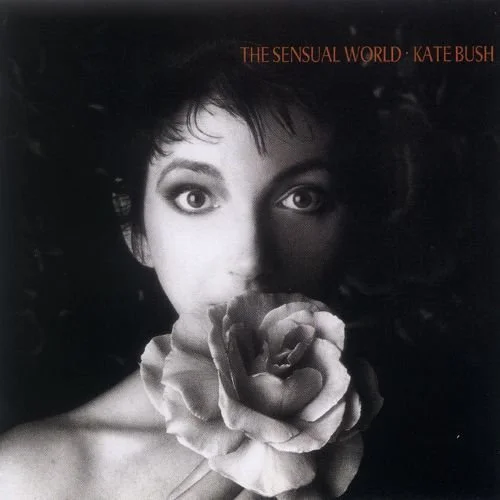
appeared on Kate Bush’s 1989 sixth studio album, The Sensual World, The Fog is one of her most underrated. It is so cinematic. I have been playing this song more, because every time I listen, it creates these reactions. Arguably her most cinematic song ever, I did want to spend time with The Fog. I am picking up on a post that was shared on Twitter. How The Fog could have been included on Hounds of Love. In terms of the themes of the song and its connection to water. It is a track that briefly features Kate Bush’s father, Dr. Robert Bush. In first verse, he says these words: “Just put your feet down child/'Cause you're all grown up now”. The Ninth Wave is all about Kate Bush/the protagonist going overboard and being in the water. That quest for her to stay alive until she is rescued. You feel that The Fog could have slotted in the suite. Perhaps somewhere near the end, the track would have worked well. I don’t think Kate Bush was asked whether The Fog was conceived for The Ninth Wave but did not fit. There are the odd song or two I feel might have been considered for other albums. Moments of Pleasure is on 1993’s The Red Shoes, yet it sounds like a song that could have been on The Sensual World. Though, it is about people who have passed and Bush is remembering them, so that passing of time and the few extra years meant that she could feature the people that are in the lyrics. The Fog is an interesting case. Considering what Kate Bush said about The Fog, you do wonder how come this did not appear on The Ninth Wave from Hounds of Love:
“Again, it’s quite a complex song, where it’s very watery. It’s meant to be the idea of a big expanse of water, and being in a relationship now and flashing back to being a child being taught how to swim, and using these two situations as the idea of learning to let go. When I was a child, my father used to take me out into the water, and he’d hold me by my hands and then let go and say “OK, now come on, you swim to me.” As he’d say this, he’d be walking backwards so the gap would be getting bigger and bigger, and then I’d go [Splutters]. I thought that was such an interesting situation where you’re scared because you think you’re going to drown, but you know you won’t because your father won’t let you drown, and the same for him, he’s kind of letting go, he’s letting the child be alone in this situation. Everyone’s learning and hopefully growing and the idea that the relationship is to be in this again, back there swimming and being taught to swim, but not by your father but by your partner, and the idea that it’s OK because you are grown up now so you don’t have to be frightened, because all you have to do is put your feet down and the bottom’s there, the water isn’t so deep that you’ll drown. You put your feet down, you can stand up and it’s only waist height. Look! What’s the problem, what are you worried about?
That started at the Fairlight. We got these big chords of strings, and put this line over the top, and then I got this idea of these words – slipping into the fog. I thought wouldn’t it be interesting to sort of really visualize that in a piece of music, with all these strings coming in that would actually be the fog. So I wrote a bit of music that went on the front of what I’d done, and extended it backwards with this bit on the front that was very simple and straightforward, but then went into the big orchestral bit, to get the sense of fog coming in.
Then we put a drummer on, and Nigel Kennedy, the violinist, came in and replaced the Fairlight violin, which changed the nature of it. He’s great to work with – such a great musician. The times we work together we sort of write together. I’ll say something like, “what about doing something a bit like Vaughan Williams?”, and he’ll know the whole repertoire, and he’ll pick something, and maybe I’ll change something. By doing that we came up with this different musical section that hadn’t been on the Fairlight.
So when I got all this down it seemed to make sense story-wise. This new section became like a flashback area. And then I got the lyrics together about slipping into the fog, and relationships, trying to let go of people.
It sounded great with the Fairlight holding it together, but it just didn’t have the sense of dimension I wanted. So we got hold of Michael Kamen, who orchestrated some of the last album, and we said we wanted this bit here with waves and flashbacks. He’s really into this because he’s always writing music for films, and he loves the idea of visual imagery. So we put his orchestra in on top of the Fairlight.
Again a very complicated process, and he was actually the last thing to go on. I don’t know how anything comes out as one song, because sometimes it’s such a bizarre process. It does seem to work together somehow.
Tony Horkins, ‘What Katie Did Next’. International Musician, December 1989”.
I always associate The Fairlight CMI with The Dreaming (1982) and Hounds of Love (1985). However, it did play a part in songs like The Fog. The Sensual World is an album that does get some love, though people do not talk about it enough. The Fog is one of the best songs Kate Bush ever recorded. That idea of water and fear of drowning but having a parent there that she could swim to. It does seem very logical that this would have been in the mind for Hounds of Love and The Ninth Wave. I listen to The Fog and it has the power and potency to easily fit in the suite. This song was never performed live. It would have been great to see this come to life on the stage. Bush had a fascination with water through her career and many of her songs are about it. Moments of Pleasure from The Red Shoes mentions her mother, Hannah. She featured in the video for The Dreaming’s Suspended in Gaffa. Moments of Pleasure is about loss and remembrance. A slightly sadder inclusion of her mother. Hannah Bush died in 1992, and she was ill sometime before that. It is great that we get to hear Robert Bush on The Fog. He was instrumental when it comes to encouraging his daughter’s music. He was a talented pianist and music fan. He would often sit and listen to Kate Bush play songs and give feedback. The Fog is this gorgeous and sweeping song that is underrated. Although it has been streamed over three million times on Spotify, it seems quite low. I have never heard it played on the radio. It is such a shame, as this is one of Bush’s very best songs. That idea of having to let go. That we all grow up and that is scary. The parent-child relationship explored on The Fog. I guess it works well on The Sensual World alongside This Woman’s Work. What is striking is how Bush talks about being picked up. Like a radio station or a face in the crowd, she will pick it up. Or pick this person out, lest they slip into the fog. I always think that The Fog is a metaphor for ageing or growing from a child to an adult. When The Sensual World was released, Bush was barely in her thirties. She had spent so much of her life around her family. A glorious Kate Bush track that I feel easily could have fitted on Hounds of Love, The Fog is…
A cinematic masterpiece.