
FEATURE:
Hammersmith, 1979
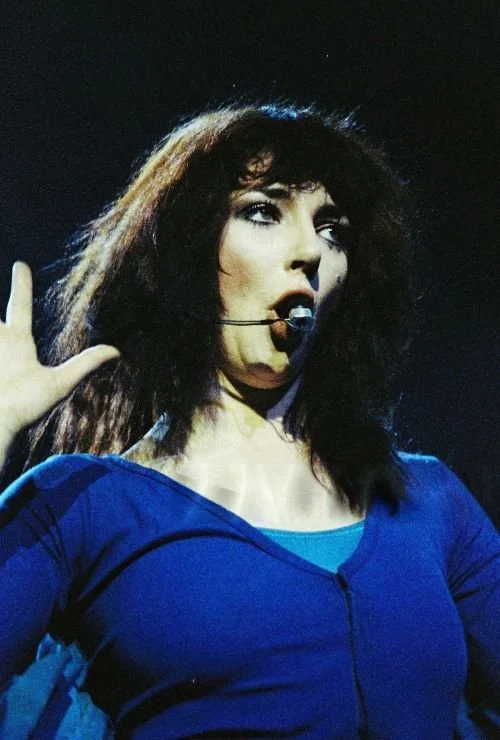
IN THIS PHOTO: Kate Bush on stage at the Hammersmith Odeon in London on 12th May, 1979 (the day before a gig I feel is the best of the 1970s)/PHOTO CREDIT: Pete Still/Redferns
Is This Kate Bush The Tour of Life Performance in London the Greatest Live Gig of the 1970s?
__________
THERE is a specific…
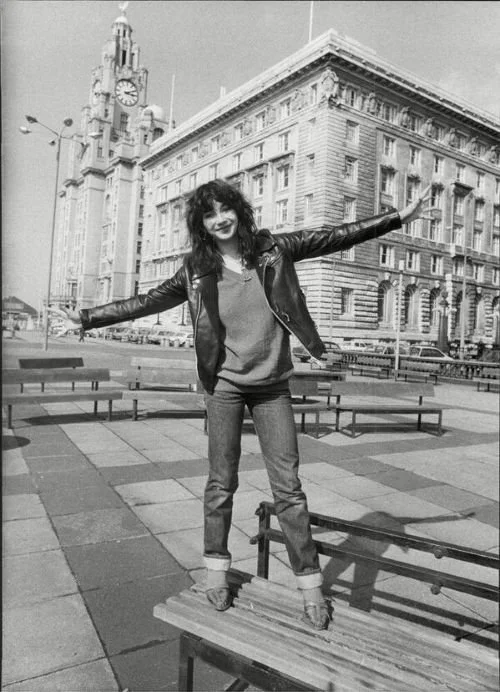
IN THIS PHOTO: Kate Bush pictured in Liverpool shortly before her The Tour of Life date at the city’s Empire Theatre on 3rd April, 1979
performance that I feel is the greatest live gig of the 1970s. As part of 1979’s The Tour of Life, Kate Bush performed at the Hammersmith Odeon. I will drop the video in at the end. As this is specific to one particular date, there are not photos specifically to go with it, so I am bringing in others from The Tour of Life. On 13th May, 1979, Bush performed at the Hammersmith Odeon. Now the Eventim Appollo, she staged her 2014 residency, Before the Dawn, there. The full-length video of that Hammersmith fate gives you an insight into what crowds witnessed in 1979. I am not sure whether anything was edited out or if there was added in. I assume everything from the video was from that date. What we get to see is Kate Bush demonstrating why she is one of the greatest live performers ever. If this video was cleaned up and it could be HD or 4K, we could get something even more powerful. The final date of the tour was on 14th May, 1979. On 12th May, the setlist was changed slightly, as it was an In Aid of Bill Duffield gig. He was part of her crew and tragically died after suffering an accident at the warm-up gig in Poole on 2nd April. So I think there is this emotional weight to that gig on 13th May, 1979. I do think that it is the best gig of the 1970s. In terms of the spectacle and what Bush and her team accomplished. People might point to David Bowie and what he was doing. In terms of other people’s views, there have been some features. This one lists legendary concerts by Bob Dylan, David Bowie, and The Who. I do think that Kate Bush needs to be mentioned in the same breath. In terms of the spectacle and the theatrical side, there were few concerts that could stand with hers. Her physicality and performances through that date are phenomenal. A test of endurance, it is a groundbreaking and hugely memorable gig. Before coming to Dreams of Orgonon and their general assessment and insight into The Tour of Life, here is some critical feedback: “As the tour rolled out around the UK the reviews were euphoric: Melody Maker called the Birmingham show “the most magnificent spectacle ever encountered in the world of rock. (…) I hadn’t expected to be impressed by her as a singer, both she and the band were nothing short of immaculate”. According to Sounds, the show was “so finely realised that it’s beyond criticism”.
By 13th May, 1979, Bush was exhausted. She has played around the U.K. and Europe and had only one date left after this one before she could rest. Though, it was not long until she was in the studio working on a new album. Also, she had performed enough dates to have everything honed and perfect. You would think there was fatigue and issues given how tiring the tour was. Though you do not get a sense of that when you see the video. Bush has this captivating charm and energy. She did not speak to the audience, as this was more like a theatrical performance than a traditional gig. Dreams of Orgonon gives us a window into the extravaganza that is The Tour of Life:
“Every tour performance began with “Moving.” Whale sounds were played for several seconds, as they were on The Kick Inside, while a transparent blue curtain cordoned off those onstage from the audience, with only a bright light in the center of the stage and the silhouette of Bush completely visible through it. Then came the vocal and the piano: “moving stranger, does it really matter/as long as you’re not afraid to feel?” called Bush to her audience as the curtain was pulled back. Her dance, made up of open arms and gestures aimed at the outline of her body, was an invitation to the audience to collaborate and be part of her music. According to every recording of these concerts, it was a steady introduction: when the first number ended, the audience cheered loudly. “The show went well and the audience was wildly appreciative,” said Lisa Bradley in the Kate Bush newsletter, “it was unfortunate that we rarely had a chance to see it as the merchandise stand had to be looked after all the time.”
Every night of the show got stark raving reviews from the British press. Mike Davies of Melody Maker admitted going to see Bush “more as a pilgrim than a critic,” John Coldstream of the Daily Telegraph praised her “balance between the vivid and the simple,” and former Bush naysayer Sandy Robertson of Sounds announced she had “seen the light.” There were a couple reviews from more negative quarters, mostly notably by Charles Shaar Murray in NME, who opined that “her songwriting hints that it means more than it says and in fact it means less” and “her shrill self-satisfied whine is unmistakable.” One could smugly grin at Murray for panning a critically praised and influential tour in 1979, but why do that when he invented every sexist whinge about Lauren Mayberry more than three decades early? It’s a break from the orthodoxy of Bush’s tour reviews, and thus in keeping with Bush’s ethos.
An oft-commented on aspect of Bush’s shows in reviews was its synthesis of theater and rock. This is a glib and useless description are there were many “extravaganzas” in rock music at the time, but even among them the Tour of Life broke rank. Bush had more planned for her debut concerts than simply playing her new album — she was producing a stage show, a colorful spectacle with extensive costuming, mime routines, dancers, act breaks, poetry, and elaborate set design. “I think the most important thing about choosing the songs is that the whole show will be sustained,” said Bush later. “…the songs must adapt well visually: a show is visual as well as audial, so there must hopefully be a good blend of the two.” As per usual, Bush’s way of proving herself was unorthodox. While there were other especially theatrical rock acts performing at the time (glam was the world’s loudest costume drama, and prog acts like Genesis and Pink Floyd thrived on massive setpieces, and disco and ABBA were more theatrical than they were credited for), they were mostly playing their songs live with different arrangements and more props. Bush was staging a long play, with dance acts, characters, and spoken word segments. The concerts were made by small flourishes: “The Kick Inside” got a spoken prelude by John Carder Bush with a foreboding call-and-response (Kate hauntingly shouts “two in one coffin!”), “Saxophone Song” has a saxophonist projected onto the stage, and mime Simon Drake appears decked out in white make-up as Charlie Daniels’ devil channeled through Iggy Pop. A classic component of the shows is, bizarrely, from the “Room for the Life” performances, in which Bush is rolled around in a velvet cylindrical egg (get it? It’s a uterus). She eventually departs the egg and frolics with her band during the song’s outro, giving way to Bush’s greatest performance ever as she enthusiastically calls “a-woom-pa-woom-pa-woom-pa-woom-pa-woom-pa!”, elevating the worst song on her debut album to a highlight of her career.
Salvaging “Room for the Life” isn’t Bush’s greatest feat at this time, however. It was unprecedented for women artists to undertake projects of this scale at the time. Bush was hopping into a steadfastly rockist tradition and putting a feminine spin on it. We have Björk, Laurie Anderson, and Florence + the Machine because of shows like this. You know those weird headset mics artists use sometimes to stay handsfree while performing? Bush was the first singer ever to use those, and she did it here. This is pretty much the Seventies equivalent of Zoo TV and The Wall Tour, and a woman got there first.
Rather than feeding on nostalgia (a hard feat for a recent artist to pull off), Bush used her existing work as a diving board for her live shows. For all the strengths of The Kick Inside and Lionheart as albums, the live versions of a few of their songs are superior: the revamped band bring the songs a power the original recordings sometimes lacked. “Coffee Homeground” sounds tighter, and even the unimpeachable “Wuthering Heights” improves slightly when Alan Murphy improvises bits of the track’s guitar solo. There are plenty of odd musical choices throughout the shows: there’s an electronica-inflected rendition of Satie’s Gymnopedies leading into “Feel It,” and “James and the Cold Gun” becomes the 10-minute prog jam its album counterpart was itching to be. This doesn’t suggest that Bush has been constrained by the studio — in fact, it’s likely she works better outside of the traditional rock band format. But in many ways she’s liberated by her chance to do musical theater, showing off what her songs look like and pushing some aspects of their sound a bit further.
In theory Bush was doing the Lionheart Tour, as it was her most recent album. Yet in practice, it was equally the Kick Inside Tour. All the songs from both albums were performed barring “Oh To Be In Love” (perhaps justifiably — it’s the Bush album track which most feels like a holdover from the Phoenix years), plus a couple of new songs called “Violin” and “Egypt,” the latter of which we’ll return to next week. It’s a well-organized setlist, as Kick and Lionheart are both preoccupied with the sort of adolescent world-storming the tour is. Bush’s concert setlists show off this interplay of albums well: Act One is constructed around the lighter songs of The Kick Inside like “Them Heavy People” and “L’Amour Looks Something Like You” with the two new songs, while Act Two centers the anxiety-ridden bulk of Lionheart plus “Strange Phenomena,” and Act Three provides the show with a theatrical climax of “Coffee Homeground” and “Kite” before the encore of “Oh England My Lionheart,” and finally “Wuthering Heights.” Setlists can be unruly things: while touring for albums, you’ll want to intersperse the newer material with the hits. Bush keeps this in mind while also remembering she’s doing a stage show with act breaks and thematic resonances. It’s a strong act, one that’s bolstered by its setlist.
The artistic precision of the concert belies what occurred behind the scenes. Bush was exhausted by the shows and the preparation for them, with her essentially all-day rehearsal schedule giving her little-to-no time off. The scale of the shows and the extensive travel involved (Bush is famously afraid of traveling by plane) are likely a contributing factor to Bush’s decision to never tour again. A likely further cause is the tragic first night of the tour. During a warm-up concert at Poole, lighting director Bill Duffield fell through an open panel around the stage and landed on a concrete floor 17 feet below. After a week on life support, Duffield died. It was a traumatic moment for everyone involved in the tour, and gave the group pause about whether to continue. When they inevitably did, it was as much as because of the effort put into the shows as it was for Bill himself.
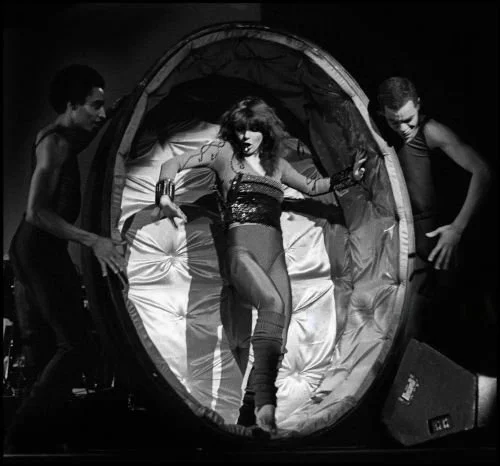
IN THIS PHOTO: Kate Bush performing at Carré, Amsterdam, Netherlands on 29th April, 1979/PHOTO CREDIT: Rob Verhorst/Redferns
Bush didn’t forget Duffield, keeping tabs as she did on everyone she worked with. The first date of the final London stretch of the tour was a benefit concert for Duffield’s family. The night saw a drastic departure from Bush’s other concerts in many respects: the setlist was significantly different, as Bush wasn’t the only singer performing that night. Two other artists who’d worked with Duffield were present: Steve Harley and Peter Gabriel. Bush had previously worked with established names (e.g. Geoff Emerick), but appearing onstage with established British rock stars was a step forward for her. Harley had scored a #1 single with his glam band Cockney Rebel in 1975 when they released “Make Me Smile (Come Up and See Me),” and didn’t fall out of the albums charts for the next few years. While in 1979 he was hardly the big name he had previously been, with his attempt to go solo beginning with a critically savaged and commercially disappointing album, he had hardly been forgotten by listeners of British pop. Peter Gabriel, however, was at the top of his game. Unlike Harley, Gabriel was confidently traversing through the early years of his post-Genesis career, with the first two of a quartet of self-titled albums under his belt, both of which had made the top 10, and a major solo tour under his belt. The classic “Solsbury Hill” had climbed to #13, and Gabriel was good to go. At the Duffield concert he performed the effervescent “I Don’t Remember,” a wild ballad of the kind of formalist mountain-climbing and despair Gabriel had made his bread and butter while in Genesis. A wailing Kate Bush joins him on backing vocals, and sounds like her larynx is about to combust under the weight of the song’s Frippertonics. Much easier on Bush is a traditional cover of “Let It Be,” a song she’d sung before but still hadn’t made her way into (this would change — wait until this blog hits the late Eighties). Conversely, Gabriel seems to struggle with the song, as Paul McCartney’s gentler songwriting chafed with the new modes of composition he’d been exploring on his own albums and tour. A duo was established, however: Bush and Gabriel would sing together again.
It was a wild time for Bush. “It’s like I’m seeing God, man!” she said enthusiastically. When she’s onstage in a black-and-gold bodysuit and blasting her bandmates with a golden, it’s easy to believe she made that comment while looking in a mirror. It takes a shot of the divine (or perhaps a deal with it?) to stage a tour of this magnitude and success while dealing with such severe drama behind the scenes?”.
A lot of the gigs that are considered the best of the 1970s are about technical performance. In terms of the visuals and taking things beyond the music, not a lot is happening. Bowie has his merits in terms of costumes and changing personas, though Kate Bush created this template that you can see in the biggest and most celebrated concerts of all time. I feel artists like Madonna were influenced by Kate Bush. Huge gigs today where there is this multimedia aspect and it is like a film or theatre production. Not many artists prior to Kate Bush were doing this. Taking a Pop concert to new places. I do feel that epic gig on 13th May, 1979 for The Tour of Life was the best…
OF the decade.