FEATURE:
Something in the Way
Nirvana’s Nevermind at Thirty-Five
__________
THIS may be a contentious…
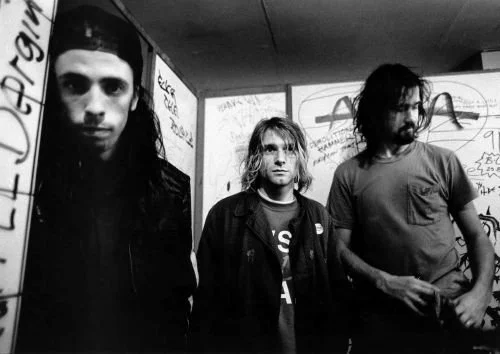
PHOTO CREDIT: Paul Bergen/Redferns
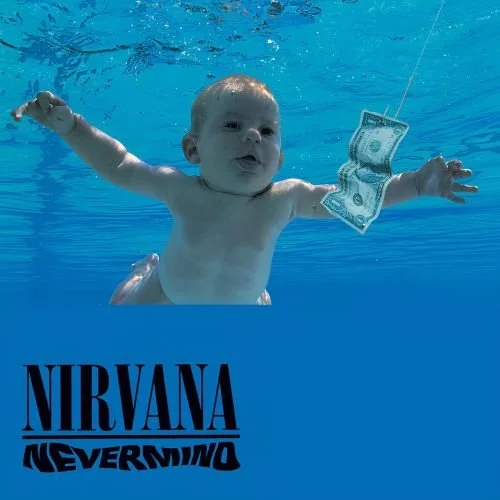
thing to say, but you wonder what Nevermind would sound like if it was gritter and rawer. Like Bleach or In Utero. The former, the 1989 debut album from Nirvana. The latter, their final studio album, which was released in 1993. Though you cannot argue against the genius of Nevermind. Released on 24th September, 1991, it ranks alongside the greatest albums in history. Though I feel the trio, especially their lead, Kurt Cobain, felt it was too commercial and resented the fame and attention. Or that people thought Nirvana were this mainstream and commercial act. They would strip things back and produce something purer to them in 1993. Though Cobain sadly died a year later. Produced by the legendary Butch Vig, there was this move to make something more radio-friendly. Perhaps feeling Nirvana needed more airplay and chart success. Singles like Smells Like Teen Spirit, Come As You Are, and Lithium were big successes. Cobain, Dave Grohl and Krist Novoselic becoming pin-ups. A number one in multiple counties, including the U.S., there is some controversy over the cover of Nevermind. I was nervous about using it in this feature, lest it cause issues or be blocked on Instagram. I did want to mark the upcoming thirty-fifth anniversary of Nevermind. Before getting to features and reviews, I wanted to start with this chat from Interview Magazine that was published in 1991, before Nevermind came out. We get to learn some of Kurt Cobain’s musical inspirations:
“In this interview, we meet Nirvana before Nevermind. It is 1991 and the triumvirate have only released one album, Bleach. While Bleach is by no means Nirvana’s best work, there is a reason it is so often overlooked, it does contain one marvelous song—”About a Girl,” which would later become one of the highlights of Nirvana’s Unplugged in New York set. Here, Kurt Cobain discusses his early musical influences, from Chicago to the Cars, to punk bands MDC and Black Flag. Cobain calls himself “Kurdt Kobain,” a pseudonym that some speculate was employed by Cobain to distance himself from his fame, or for when Cobain was feeling particularly disconnected. —Emma Brown
KURT COBAIN
By Adam Snyder
The first wave of music from the Sub Pop label in Seattle delivered a fine collection of young men, guitars, hair, and a new standard of stop/start dirge spasmodiscs—a punk/hard-rock reconciliation of sorts. The wave has subsided, and one particularly shiny pebble called Nirvana has been scooped up by Geffen’s DGC Records. A Sub Pop insider favorite—their first and so far only album, Bleach, came out in 1989 and has become a staple. The band is composed of Kurt Cobain, guitar and vocals, Chris Novoselic, bass, and Dave Grohl, drums. At a time when so many other young song-crafters strain to dazzle us with their esoteric influences, Cobain plays the clever hooligan. His compositions come across as the next logical musical phrase on the ballad of growing up cool in America. An album is in the works from DGC.
INTERVIEW: Your music has a surprising hook for such a heavy sound.
KURT COBAIN: Well, I started out listening to pop music. I had to mainly because of where I lived. In Aberdeen, Washington, we had an AM radio station that played stuff like Tony Orlando & Dawn, and Chicago, and I had no choice but to hear that kind of crap. Then I found out about Aerosmith, through some stoners that lived in our trailer park. They’d come over to my house and steal ashtrays and eat my food.
INTERVIEW: Then you got your first guitar.
COBAIN: Yeah. A few years later, in the eighth grade. I started playing Cars songs. I took lessons for two days and learned how to play “Back in Black” by AC/DC.
INTERVIEW: And then punk rock changed your life.
COBAIN: Right. I sold my Aerosmith and Led Zepplin collection for twelve dollars. I completely threw away my hard-rock roots and was into MDC and Black Flag.
INTERVIEW: They made everything else seem uncool, right?
COBAIN: Yeah, right.
INTERVIEW: As if you never even been into that hard-rock thing in the first place.
COBAIN: Right. I didn’t get back into that stuff until much later.
INTERVIEW: So when were you reborn as an Aerosmith fan?
COBAIN: Just a few years ago. It wasn’t that painful, actually”.
Last year, Guitar World told the story of Nevermind. The making of, its background and legacy. How it created a new genres, sold over thirty-million copies, and changed popular culture overnight. I am sourcing from the earliest part of the feature, as it is very in-depth, so I could not drop it all in here:
“Nevermind represented a quantum leap for Nirvana, both musically and career-wise. Their previous album, Bleach, was recorded in three days and cost $606.17 to make. Their initial budget for Nevermind was $65,000 – 100 times larger than the budget for Bleach. They ended up spending twice that amount. And while Bleach, which was Nirvana’s debut album, came out on the then-little-known indie label Sub Pop, Nevermind had the major-label clout of Geffen Records behind it.
The two-year period that separates Bleach from Nevermind was a time of tremendous growth and upheaval for the band. They went on their first national and international tours. Cobain started up and broke off a relationship with Tobi Vail of the band Bikini Kill. What’s more, Nirvana went through several personnel shifts.
Guitarist Jason Everman, who joined shortly after Bleach, exited the band nearly as quickly as he’d come aboard, once it became clear that his tastes were more hard rock/metal than his bandmates’. He later joined Soundgarden.
Chad Channing, who played drums on Bleach, left the band. Nirvana’s original drummer, Dale Crover, filled in for a seven-date West Coast tour. Dan Peters of Mudhoney played drums on a Nirvana single called Sliver and did one gig with them before Dave Grohl finally settled into place as the group’s permanent drummer.
The frequent personnel shifts and extensive touring seemed to have honed the band’s songwriting, as such experiences often do.
The process also seems to have sharpened the band’s pop sensibilities, which are in far greater evidence on Nevermind than on the sludge-guitar heavy Bleach. But Nirvana biographer Michael Azerrad suggests that those same pop sensibilities existed all along, and that Cobain deliberately suppressed them on Bleach in an effort to conform with Sub Pop’s retro Seventies metal agenda of that time.
“Half of the songs on Nevermind were written at the time of Bleach, but didn’t make it onto the album,” Cobain told journalist Roy Trakin. “So there really isn’t an obvious change. We’ve always been fans of pop music.”
A major milestone along the road to Nevermind came in April of 1990, when Nirvana began recording with producer Butch Vig at Smart Studios, his recording facility in Madison, Wisconsin.
Now perhaps best known as the leader of the band Garbage, Vig was then an up-and-coming indie producer whose credits included well-regarded records by the Laughing Hyenas, Smashing Pumpkins, Firetown, Tad, and Killdozer, among others.
In the week Nirvana spent at Smart, they recorded six songs that would later turn up on Nevermind: In Bloom, Dive, Lithium, Breed (originally titled Imodium), Stay Away (originally titled Pay to Play), and Polly. They also made an unsuccessful stab at another tune, Sappy, which they’d attempted to record at an earlier date, also with unsatisfactory results.
The Smart sessions were originally intended for release as Nirvana’s second album on Sub Pop. But a series of events led the band to change their plans. First, Chad Channing left Nirvana in May 1990. And then the prospect of major-label interest started to become more than an idle rumor.
“We lost Chad and there was uncertainty with that,” Novoselic told a radio interviewer in Australia.
“We didn’t want to release [the Smart sessions]. If we did anything, we wanted it to be with a new drummer. [Also] Sub Pop was doing some wheeling and dealing. They were going to sign a licensing deal with a big label, and that kinda scared us. There were so many variables to consider; it wasn’t wise to put out a record at all.”
Polly is the only song on Nevermind that was recorded at Smart; all the other tracks were re-recorded (although the final versions are said to be very similar to those laid down at Smart).
As for Polly, the band and producer realized there was something special in Cobain’s solo acoustic performance of this disquieting rape scenario, which was based on an actual newspaper account he’d read. The dramatic twist was that the very anti-violence, pro-woman Cobain sang the song from the attacker’s point of view.
Grohl became a member of Nirvana in September of 1990, joining them from the Washington D.C. hardcore band Scream. His muscular yet agile drumming took Nirvana’s power trio sound to a new plateau.
Grohl’s arrival also sparked a fresh burst of group songwriting. In a Tacoma, Washington rehearsal space that they shared with a local bar band, Nirvana embarked on a regimen of daily, 15-hour band practices for a period of four or five months.
“We came up with so much stuff where we’d go, ‘God, this is the best thing we’ve ever done!’ Then we’d forget how to play it,” Grohl told Circus magazine. “So many songs got thrown away, until we finally said, ‘Maybe we should start recording them on a cassette.’ So we’d record them, then lose the cassette.”
Two songs that didn’t get away were Smells Like Teen Spirit and Come As You Are, tunes that would prove to be cornerstone tracks of Nevermind. The attention-grabbing title of Teen Spirit was born on a typically relaxed evening at the Cobain residence, as Kurt explained to Australian radio listeners.
“A friend of mine and I were goofing around my house one night. We were kinda drunk, and we were writing graffiti all over the walls of my house. And she wrote, ‘Kurt smells like Teen Spirit.’
“Earlier on, we’d been having this discussion about teen revolution and stuff like that. And I took [what she wrote] as a compliment. I thought she was saying that I was a person who could inspire. I just thought it was a nice little title. And it turns out she just meant that I smelled like that deodorant [called Teen Spirit]. I didn’t even know that deodorant existed until after the song was written.”
Geffen Records had been taking an active interest in Nirvana since April 1990, when Gary Gersh – then an A&R man for Geffen and currently head of Capitol Records – saw the band play at the Pyramid club in New York.
Gersh had been brought to the show by Kim Gordon and Thurston Moore of Sonic Youth. This set in motion a chain of events that would lead to Nirvana’s signing with Geffen. The deal was formally consummated on April 30, 1991. In May, the band arrived in Los Angeles to begin recording what would become Nevermind”.
Marking thirty years of Nirvana’s Nevermind in 2021, BBC discussed how this classic album made a huge global impact. It very much “offered a subversive outlet for a global audience”. I do wonder if there will be any celebrations or anything special for its thirty-fifth anniversary:
“When Nirvana released Nevermind in September 1991 (on major label Geffen, following the band's emergence on Seattle indie SubPop), the album's explosive success followed a European tour and proved a shock to the mainstream system (Geffen president Ed Rosenblatt described it as "one of those 'get out of the way and duck' records"). Back on the Seattle DIY scene, the mood was less celebratory: "My memory of Nevermind is that it felt like a betrayal," says Keshavarz. "People were protective because Nirvana were representative of a community and so many ideas. In retrospect, I have great sympathy for the band, because I think they legitimately made beautiful music that touched people's hearts. In fact, I remember visiting Iran soon after Nevermind came out, and smuggling in tapes to play to friends and relatives; you'd see their faces, like: 'What is this? It's kinda cool… can I get a copy?'
"But within Seattle at the time, people were super-upset; it was that DIY ethic that believed you couldn't achieve liberation through a major label. We knew rents and ticket prices would go up, and we were really protective of our spaces. Kurt would often turn up at the Old Fire House and just be quiet in a corner; he was a gentle soul, and everybody loved him – yet sometimes, he wouldn't be welcome, depending on who was playing, because the anger levels were high. That must have been hurtful."
Global reverberations
Nevermind has reportedly sold over 30 million copies worldwide, making it one of the biggest albums in music history. It also arguably forged a kind of globalised youth culture, fuelled by the increasing reach of MTV (which had its videos, including Smells Like Teen Spirit, on heavy rotation). Brazilian cultural studies academic Moyses Pinto, now a professor at Lutheran University in Porto Alegre, was struck by Nevermind's initial release when he was 11. "I thought: 'this is perfect'; it sounded like a bright synthesis of noise and pop music," he says.
Neto points out that Brazil's military dictatorship (1964-1985) inspired many rebellious musicians, including pysch-rockers Os Mutantes (one of Cobain's favourite bands). The end of the dictatorship extended the range of rock, punk and post-punk sounds in Brazil, though Neto describes a "time lag" between international influences, before the age of Nevermind: "We had punks in Brazil, but almost a decade after their peak in the UK and US – and there was '80s pop culture and mainstream arena bands," says Neto. "But the impact of Nirvana and MTV made it synchronised; a new youth – including me – began to hear the same music, and wear the same styles; there was a cultural homogeneity probably never experienced before. Grunge culture became dominant very quickly; all that had been 'cool' suddenly became ugly and exaggerated, and Kurt was the symbol of transgression."
Another Porto Alegre kid in '91, Rogerio Maia Garcia, was intrigued by Nevermind's "swimming baby" vinyl artwork (the album arguably heralded an era of visual iconography, as well as musical influence), right before the music captivated him: "We were all listening to rock and metal, but Nevermind sounded totally different – like 'normal kids' playing at home: raw, and really loud," says Garcia. "It certainly opened our ears to the grunge scene; after Nevermind, bands like Soundgarden, Alice in Chains and Pearl Jam became well known in Brazil, and many kids started learning to play; in early '90s Porto Alegre, live music had been losing out to dance music, but suddenly there were local band gigs every night." He adds that established Brazilian bands such as Titas also incorporated the influence, working with Seattle producer Jack Endino for their own album Titanomaquia (1993).
I think Nevermind expressed the feelings and fears that any teen goes through, from my generation in Brazil to now – Rogerio Maia Garcia
Garcia grew up to be a criminal lawyer rather than a full-time musician, but he remains an ardent Nirvana fan: "In my mind, Nevermind's legacy can't be separated from Kurt Cobain's last years of life [Cobain was just 27 when he took his own life in 1994]," says Garcia. "I later realised that his voice expressed a sad violence and emptiness over life experiences; songs like Lithium took a new perspective. I think Nevermind expressed the feelings and fears that any teen goes through, from my generation in Brazil to now."
A blend of political revolution and personal revelation also brought young music student Grzegorz Kwiatkowski (now vocalist and guitarist for acclaimed Gdansk indie rockers Trupa Trupa) to Nevermind: "We're talking about Poland in 1991, only a few moments after defeating the communist system, and the beginning of the democratic system, which brought not only cynical capitalistic stuff from the West but super high-quality stuff – like Nirvana and Nevermind," says Kwiatkowski. "For Polish teenagers, MTV was a signal that we are part of international youth."
Kwiatkowski grew up listening to everything from Schubert to The Beatles, and saw Nevermind as a natural progression: "Very beautiful, very simple songs; the perfect combination of killer sound and great singer-songwriting". His own band would sign a worldwide deal with Seattle institution Sub Pop in 2019; Trupa Trupa continue to create original, expansive music while crediting their early inspirations. "In my opinion, Nirvana and Nevermind are still the symbols of freedom and normality," says Kwiatkoswki. "Not unreal superstardom, but something 'regular', and at the same time, great."
English remains the lingua franca of pop culture (for now), and Nevermind has inspired countless international covers. Jamaican reggae artist Little Roy released an album of reggae-fied Nirvana covers (Battle for Seattle, 2011); Brazilian tropicalia star Caetano Veloso would rework Come as You Are; Indian hard rockers Pentagram (fronted by film music composer Vishal Dadlani) would add Nirvana covers to their live sets.
Japanese music journalist Hiroko Shintani was immersed in international alt-music scenes in 1991, and already knew Nirvana's Bleach album – but couldn't initially believe Nevermind was by the same band: "My first reaction was: 'What's happened to them?!' – in a positive sense," says Shintani. "I was more shocked by the fact Nevermind went on to become such a cultural landmark, and sell that many copies. But what I admired was the innate pop sensibility that cuts through the musical style and the irony of these songs about Kurt Cobain's discomfort; his alienation from the mainstream ended up being shared by millions of people, thanks to that sensibility.
"I remember the thrill of hearing such a raw and vulnerable male voice on mainstream radio and MTV. Kurt sang: 'Never met a wise man/ If so, it's a woman' [on the album track Territorial Pissings]. That in itself was phenomenal."
Shintani notes that while Japan produced numerous home-grown rock bands in the late-'80s/early-'90s, that era's mainstream artists weren't necessarily driven by angst or social rebellion. "Remember, Japan was enjoying 'bubble economy' until the early '90s, and our 'Generation X' grew up in a relatively prosperous time," she says. "But obviously, Nevermind's legacy lived on, and I think it had much larger influence among bands that came out during 2000-2010." Indeed, 2012 saw the release of a compilation album, Nevermind Tribute, where a new generation of Japanese bands covered Nevermind's track-listing, in sequence.
Another artist who discovered Nevermind after its original release is Istanbul-based singer-songwriter and visual artist Gaye Su Akyol. She's widely praised for her fearless, politically-charged expressions (including latest album, Istikarli Hayal Hakikattir), and she cites Nevermind as a formative inspiration – it was 1995, she was at primary school, and she found her brother's cassette album in their mother's car. "I remember hearing Nevermind for the first time; it was groundbreaking!" says Akyol, adding that she badgered her brother with questions about Nirvana, learning how Kurt had died. "Probably to protect me from admiring that, my brother told me: 'He had everything: fame, money, love, but he chose to die'. I was confused and unsatisfied; I was looking at the cover art, the band's photos inside.
"I felt lucky to discover a treasure, and also remember feeling: 'this is exactly what I need!' I always had a rebellious and disobedient spirit. I was looking for a different way to express my feelings, and Nevermind caught me instantly; it opened the doors of rock'n'roll to me."
Akyol still describes Nevermind as a "homecoming" album; she has held onto the original cassette, though is now equally likely to listen to it on vinyl or digitally: "The intimate relationship I had with it is always alive, and it's a 'safe space' where I can breathe."
Nevermind made "outsider" spirit feel like a unifying experience, on a massive scale. This also struck a chord with Mpumi Mcata, co-founder of brilliantly sharp Johannesburg rockers BLK JKS; in the early '90s, Mcata had left high school to pursue his band dreams, and first heard Nevermind while working in a music shop”.
Reviews in 1991 were not all glowing. Rolling Stone gave it three stars. Not a tonne of five-star salutes. In years since, it has been rated as this near-perfect masterpiece. I will end with Pitchfork’s 10/10 review. I think many were expecting another Bleach. Too commercial or the feeling Nirvana had sold out, it was short-sighted and ignorant. Nevermind became this juggernaut that affected Kurt Cobain. Though it is one of the most influential albums ever.
In 2011, Pitchfork provided a detailed review of Nevermind. With its brilliance beyond dispute, they reviewed deluxe versions. The demos and offcuts maybe not as valuable as the original album. Anyone who has never heard this album before needs to check it out:
“Despite its tremendous influence on the mainstream rock that followed, it's hard to think of another album that sounds much like Nirvana's Nevermind, a record with so much more pop and punk punch than any music it inspired. Of course, no diamond-certified, canonical treasure hitting the two-decade mark can be left well enough alone in 2011-- especially one that changed the lives of a lot people now approaching middle age, with the discretionary income to prove it. After all, "super deluxe" reissues of classic albums don't even have to be tied to an anniversary these days. But Nevermind is 20 this week, still a pretty respectable number in a world where any milestone marks an excuse to shift a few more units. The only question is whether these reissues-- a single-disc remaster, a 2xCD "deluxe" version, and a 4xCD+DVD "super-deluxe" edition-- are that rare essential repurchase that makes you hear an album you've possibly exhausted in new ways, or if it's just another mediocre jumble of odds and ends that inadvertently reveals the flaws and blemishes carefully excised from the original 12-song set.
Sadly, both expanded versions fall into the latter category, with material ranging from "interesting" to "historical curiosity" to "of zero value to even superfans." But this mish-mash of sketches, practice-space woodshedding, and alternate-but-not-very mixes does help explain what makes Nevermind so unique. Nirvana certainly never made another album like it. The precocious Bleach still has its partisans, folks who think its primal bash-and-howl is the be-all-end-all of rock, while In Utero stands as the band's most harrowing statement, where it's a toss-up as to whether the riffs or the lyrics hurt more. But Nevermind was and remains an unrepeatable object. It retains the gleeful pummel of the first album while hinting at the bleakness of the third. Yet there's also a concision and clarity that Nirvana hadn't quite mastered on the gnarly-by-necessity Bleach and wouldn't allow themselves on the stark and caustic In Utero.
Nirvana began their career with no illusions about their chances for mass success and ended it by seeing just how abrasive a platinum-selling band could get away with being. But when they got their chance at the brass ring, they went at it with a bubblegum band's canniness, however much Cobain shit on the shiny final product after the fact. Andy Wallace's radio-ready mix certainly helped sharpen this potentially no-concessions, indie-to-major leap into an obvious commercial proposition. But even if they'd settled on producer Butch Vig's slightly less slick mixes-- made as a reference for the band and identified on the super deluxe edition's third disc as the "Devonshire mixes"-- Nevermind would likely have fared well in the charts, since these early passes aren't far from Wallace's infamous high-gloss version. Listening in hindsight, though, they have the woozy effect of feeling just slightly off, leaving you to focus only on what's missing.
The box set does make clear that Nirvana honed these songs over a long period. Listening to the various sessions leading up to the one that gave us the album we know-- especially the nearly unlistenable "boombox" mixes of early demos-- you learn very quickly that these songs didn't arrive perfectly formed in one sustained burst of inspiration. The hours of rehearsals and the expensive time spent tinkering in the studio shaped them into classics. It helped that there are songs on Nevermind that might appeal to people who've never heard a hardcore album in their lives, who might have even (gasp!) kinda liked the glossier hard-rock bands whose era largely ended with the rise of grunge. Moving away from the heavy-at-all-costs sound he'd always been both enamored with and suspicious of, Cobain worked diligently on his big hooks and decided to stop smothering his natural melodic gifts under so much self-conscious sludge.
The key was that Nirvana, unlike many of their indie peers, didn't assume that intensity was incompatible with polish. Cobain's discomfort could be unnerving because it sounded as unmediated as anything allowed on the radio could get. There was too much pop-rock study involved to claim Nevermind as some kind of art brut document of one dude's unraveling. Confronted with something like "Polly", Cobain's distress was obvious in 1991, long before his shotgun-assisted exit. But it wasn't the way Nevermind exposed Cobain's psychic wounds that provided support for those who related to him. It was the fact that, fucked up as he was, Cobain still found pleasure in rock's most emphatic clichés and bent them to his own never-quite-smirking ends. He snuck into the spotlight while remaining an alienated weirdo, but for a while there, you suspected he was enjoying the attention, even if he knew that it was all a joke to be taken about as seriously as high school cliquishness. "Territorial Pissings" is as raw as any punk song I know, but it actually found its way into the hands of suburban tweens. How good must that have felt, to be responsible for such a thing?
Even as they moved toward the mainstream, Nirvana were trying shit that no one would have called an easy route to success. Nevermind is drenched in the filthy Pacific Northwest roar that slapped Cobain into action as a teen, but it's as catchy as any of the radio giants that caught his ear as a kid. It's driven by pain as naked and personal as the riot grrrl bands whose company he kept and as fuck-around goofy as the Seattle contemporaries who both reveled in and mercilessly parodied machismo. And despite the fact that none of those modes would seem to fit together on the same album, let alone all of them, it's all hammered into a still-disarming whole, a collection of anthems that retain the idiosyncrasies of the very weird band that made them. It helped that Cobain had yet to be disabused of the idea that you could be an idiosyncratic indie kid and a rock star without compromising on either front.
That's probably why the bonus material here feels less like a revelation and more like the kind of peek-behind-the-curtain that you wind up regretting. Nevermind is basically a great fake-out. It presents itself as an off-the-cuff explosion, a from-the-gut expression of realness and energy in the grand punk tradition, but it was actually the product of a shit ton of hard work. If you don't hold with the first-take-is-the-best-take philosophy, your respect for Cobain may actually increase when you realize how dedicated he was to getting every element right. Listening to him fumbling his way toward greatness on the "boombox" mixes of songs like "Come as You Are" and "Something in the Way" or hearing a newly cemented group working out the kinks in their interplay in the studio, you may also realize that you don't want to hear the missteps and rewrites and second guessing that went into the perfect-as-is final product. The "boombox" mixes, Devonshire mixes, and Smart Sessions (early Vig-produced takes recorded with drummer Chad Channing that were initially intended for release on a second album for Sub Pop) are largely work tapes. Listening to them feels like studying every unused scrap of a film classic that someone managed to sneak out of the editing room, which is about as fun as that description makes them sound. If you've always been suspicious of the album's production sheen, there's no Holy Grail here that's going to give you the raw take you're looking for.
For all its finessing and tweaking, though, Nevermind is still a thousand times closer to the unpremeditated intensity of Cobain's D.I.Y. days than any of the post-grunge rockers who claimed it as an influence. I defy you to listen to any of the live performances on this edition-- the only essential extras, though less uncomfortably intense than 1994's MTV Unplugged set and less definitive and uniformly powerful than 2009's release of their king-making set at the 1992 Reading Festival-- and not hear a ragged, joyful, charismatic band that makes those inert, angst-ridden followers sound like they come from another aesthetic universe.
That charisma is a big reason why Nevermind remains a 10. But in-concert takes on "Sliver" and "Been a Son" that are the third most thrilling live versions officially available on CD? It's not as if all this "exclusive" dreck-- most of which has been floating around on bootlegs and .zip files and YouTube for eons-- will permanently dull the excitement of the Nevermind, but trying to swallow it all might put you off the album itself for a long while. If you're truly interested in hearing this stuff, the two-disc deluxe set is easily the better deal, giving you a little hint of the various stages of Nevermind's construction without wearing you out the way the four-disc set will. But if you really want to celebrate the 20th, you'll be better off just giving the original album a few spins. Despite how much better-left-forgotten material is being offered up here as essential, there's still more life in the real Nevermind than anything that's attempted to replicate its attack since”.
Released on 24th September, 1991, Nevermind came out the same day as Red Hot Chili Peppers' Blood Sugar Sex Magik, and A Tribe Called Quest's The Low End Theory. Record buyers were spoilt for choice that week! Thirty-five years later, and you can feel the influence of Nevermind still. Nirvana’s most successful album still impacting artists. We all need to salute…
A truly monumental album.