
FEATURE:
But He Never Had a Proper Education
ALL PHOITOS: John Carder Bush
Kate Bush’s Army Dreamers at Forty-Six
__________
I can appreciate that I have…
written about this song so many times, it is unavoidable repeating myself to an extent. I am going to bring in some interview segments where Bush discussed this song. The inspiration behind the song. This was the final single from her 1980 album, Never for Ever. After Breathing and Babooshka made chart impact and it showed that Bush was a tremendously diverse writer, what can arguably be called one of her most political songs was released. I am going to source a part of a horrendous interview by Danny Baker for NME in 1979. Condescending and sexist, he is a rank arsehole throughout the piece! Even though he apologised retrospectively, his attitude and lack of respect for Kate Bush, in part, motivated her to show that she was a ‘serious’ artist. She was always serious and deep, but in the midst of New Wave and Punk, male journalists especially equating credibility and worthiness with something political or controversial. In the years since, Army Dreamers has become one of Kate Bush’s most streamed songs. As I type (29th August, 2026), it has been streamed on Spotify 385 million times. It is her second-most-streamed song behind Running Up That Hill (A Deal with God), which is nearing two billion streams! Released as a single on 22nd September, 1980 I wanted to mark its forty-sixth anniversary. There is a modern-day relevance. In terms of context, The Troubles in Northern Ireland was in the news. I always associate Army Dreamers with The Troubles. Maybe Bush was not thinking of that specific conflict. The Warrenpoint Ambush occurred on 27th August, 1979. The Provisional Irish Republican Army (IRA) killed eighteen British soldiers using two roadside bombs at Narrow Water Castle. Events like this surely impacted Kate Bush. I will start out with the NME car crash interview before coming to something more pleasant.
After The Tour of Life in 1979 was a major success, there was a lot of new interest in Kate Bush. Not only one of the most distinct artists of her time, she was also now this acclaimed and extraordinary live artist. Surely exchanges like this would have spurred Kate Bush to write songs that were seen as more political or ‘real-world’, just so that they didn’t have to answer to cretinous journalists like Danny Baker. This is part of his NME hatchet job:
“She grins broadly again. Kate is an artist through and through, seeing the world as a crazy canvas on which to skip. Her outrageous charm covers the fact that we are in the midst of a hippy uprising of the most devious sorts. I approach her on the question of being a woman in pop music once more. How do her workmates treat her?
"Well, when I started, I felt really conscious of being female amongst all these fellows. But these days I feel like one of the lads."
That doesn't sound very healthy.
"Oh, yeah, it is. When I'm working, it's really important for me to get on with it in that way. But at the same time, I sense that they're very respectful, because they make me aware of being a woman, and will lay off the dirty jokes and that..."
Incredible. Do you find men in awe of you?
"Socially? Well, I find that--with people that I haven't seen for a couple of years, because they won't treat me as a human being. And people in the street will ask for autographs and also won't treat you as human, but...ah...sometimes I get really scared. Sometimes when I'm going to the supermarket to get the coffee and cat litter, I get freaked out and see all these people staring, and you turn around and there's like forty people all looking at you...and when you go around the corner, they're all following you! You start freaking out like a trapped animal.
"However, I don't notice guys doing it on a personal level. Maybe some will keep their distance, but that may be because they don't get off on me.
"You see, when I first got started, I thought that I'd better watch out for these rip-off artists and stick with old friends. But it's amazing that since I've been in the business, I've made many more real friends, especially on a working basis. I find that I can get so involved with a guy working with me--and usually on a platonic level, which is great! That's so special, like these two minds linked on this one project. And that is a very beautiful thing that I'd never have experienced if I had not been in this business.
"And what's more, I'll keep these friends for life, because not only do they care for you, but they give me information and their teachings. What more could I ask for?"
Do you think there's a danger of becoming detached inside music?
"Probably. I don't read newspapers, and I've said I don't watch the news. I love books, but I don't read much.
"What I do is I get people to read to me, and I put the stories in my head."
A bit like a hat, I suppose.
"And films. I watch an awful lot of TV films."
Do you think you might be avoiding real life?
"Well, no, because I think that all these heavy issues--equality among blacks and whites, etc.--have all been done before, and if you do it now, it has to be very cleverly handled. It all gets too negative and cliched. So I find that, working with fantasy, I can handle the same issues, perhaps, but in a more positive way."
Don't you think that albums can make you feel and think sometimes without er...pussyfooting? I remember the first time I heard The Clash, and...
"Oh, yeah, some of these new bands are amazing. They're just springing up. The Police are just amazing..."
Here, listen, I think you've got the picture. Kate Bush, to meet, is a happy, charming woman that can totally win your heart. But afterwards on tape, when she's not there and you actually listen to all this, well...golly gosh. Don't lose sleep, old mates, it's just pop music-folk and the games they spin. Wow.
This was Chicken Licken, Cosmic News, Atlantis, goodnight, man…”.
Although Bush did not say it herself in many interviews, she does adopt an Irish accent. That is no mystery. Although that also makes me think it relates to The Troubles. If Bush’s Irish accent was more southern, it could also apply to a Northern Irish mother whose son has been killed in war. Kate Bush recalled in more than a few interviews how Army Dreamers came to be and what influenced it:
“It’s the first song I’ve ever written in the studio. It’s not specifically about Ireland, it’s just putting the case of a mother in these circumstances, how incredibly sad it is for her. How she feels she should have been able to prevent it. If she’d bought him a guitar when he asked for one.
Colin Irwin, ‘Paranoia And Passion Of The Kate Inside’. Melody Maker (UK), 10 October 1980
The song is about a mother who lost her son overseas. It doesn’t matter how he died, but he didn’t die in action – it was an accident. I wanted the mother to be a very simple woman who’s obviously got a lot of work to do. She’s full of remorse, but he has to carry on, living in a dream. Most of us live in a dream.
Week-long diary, Flexipop, 1980”.
Rare for Kate Bush to write in the studio. No doubt there was an urgency to put this song down onto tape. When speaking to Zigzag, she did elucidate regarding the significance of the Irish accent: “The Irish would always use their songs to tell stories, it’s the traditional way. There’s something about an Irish accent that’s very vulnerable, very poetic, and so by singing it in an Irish accent it comes across in a different way”. Reaching number sixteen in the U.K., it was perhaps a rarity, in the sense that future singles were not political or influenced by warfare or contemporary fears. Not to say her singles thereafter were personal or fantastical. I feel it was a particular time in her life when she needed to write songs like Army Dreamers and Breathing (a song told from the perspective of a fetus as nuclear warfare is happening outside his mother’s womb).
I have used this article before from Neil Crossley. In May, he wrote a piece for Music Radar which is fascinating. I feel the fact it was recorded at Abbey Road Studio is important. It lends Army Dreamers this grandeur or historic context. The same studios where some of Bush’s music heroes recorded before, it was a moment in her career where she was producing (with Jon Kelly for Never for Ever) and was very much taking her music in new directions. She could have the final say and there was this scope for her to do more. Not simply repeat what was on The Kick Inside (her 1978 debut album):
“Abbey Road Studios was the facility chosen for the recording of Army Dreamers and that was where the song came into being. “It’s the first song I’ve written in the studio,” Bush told Colin Irwin of Melody Maker in October 1980.
Army Dreamers is a wistful folk ballad in 3/4 waltztime and features sampled gun sounds and an emotional vocal performance.
In the song, the grieving mother wrestles with her guilt over what she could have done to prevent her son’s pointless death during military training.
One of the most notable aspects of the song is that Bush sang it in an Irish accent. For Bush, whose mother was from County Waterford in Ireland, the decision to sing it that way was integral to the song.
Bush’s decision to sing in Irish prompted suggestions that the song was specifically about The Troubles in Northern Ireland. But Bush suggested the song was more of a general commentary on the waste of young people’s lives, particularly those with limited opportunities.
“The song was meant to cover areas like Germany, especially with the kids that get killed in manoeuvres, not even in action,” Bush told Kris Needs. “It doesn’t get brought out much, but it happens a lot. I’m not slagging off the Army, it’s just so sad that there are kids who have no O-levels and nothing to do but become soldiers, and it’s not really what they want. That’s what frightens me.”
For Bush, the experience of producing Never For Ever was an empowering one and gave her a sense of creative ownership over her recordings. This album marked her transition into a completely self-sufficient auteur of sorts and she seized the opportunity.
“The whole thing was so exciting for me, to actually have control of my baby for the first time,” she told the Canadian fanzine Break-Through. “Something that I have been working for and was very nervous of too, obviously, because when you go in for the first time you really wonder if you are capable – you hope you are… it really is a wonderful experience – everyone's feelings going into the songs that you wrote perhaps in a little room somewhere in London, you know, it's all coming out on the tape.”
Bush came into the sessions soon after the Tour Of Life in 1979, an experience so gruelling that she resolved never to tour again.According to her biographer Rob Jovanovic, Bush spent an unprecedented five months writing and demoing at Abbey Road studios. Like most artists, she was reportedly fastidious and exacting in her quest to achieve her creative vision.
The Fairlight CMI digital sampler in particular was an empowering new piece of technology and Bush and the band reportedly spent hours experimenting with the new technology. As Ben Hewitt notes in The Quietus in 2020, such experimentation allegedly included smashing Abbey Road Studio’s crockery and recording the varying sounds of each shattering plate, cups and glasses.
According to Graeme Thompson’s biography Under The Ivy, Bush reportedly sought forgiveness from the appalled kitchen staff by bringing in Belgian chocolates for them as gifts.
The Fairlight CMI was prominent in the sessions. Bush had been introduced to the Fairlight by Peter Gabriel and there were only three in the UK at the time. It was, as Ben Hewitt of The Quietus put it: “The sonic equivalent of a Jedi being handed their first lightsaber”.
As Ben Hewitt put it in his piece in The Quietus in 2020: “Its gauzy prettiness gives it the air of a nightmare taking place inside a snow globe, twice as crushing for her delicate touch.”
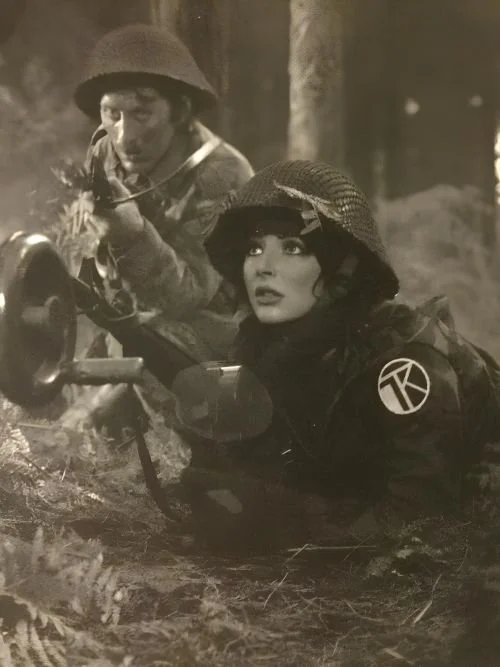
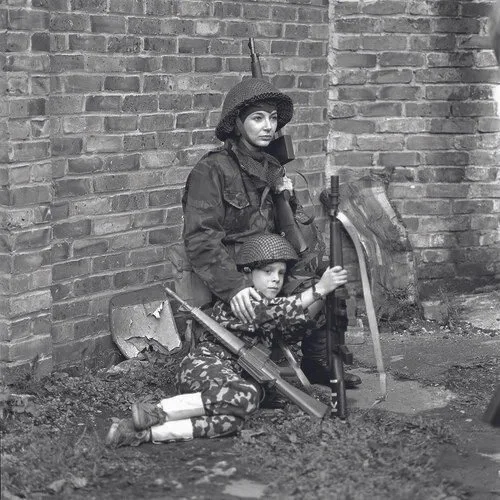
Army Dreamers was released on 22 September 1980 and reached No 16 in the UK Singles Chart. Its success was fuelled by a video, featuring Bush in camouflage in a forest, holding a white-haired child.
Bush went on to say that the video was one of the few pieces of work that she was completely happy with.
“It really was a treat, that one. I think that’s the first time ever with anything I’ve done I can actually sit back and say, ‘I liked that’. That’s the only thing.”
In the decades that have followed, the potency of the song has prevailed. Its message was emphatic enough to ensure that Army Dreamers was one of 68 songs considered inappropriate for airplay by the BBC during the first Gulf War.
Far more recently, in 2024, the song’s haunting anti-war lyrics and themes of loss led to the song being appropriated for Tik-Tok’s ‘Witchtock’ trend.
Army Dreamers experienced a 1300% increase in streams when snippets of the song used on clips on TikTok and Instagram went viral, prompting Gen Z-ers to seek out the track on platforms such as Spotify and Apple and fuelling the song’s popularity.
The song reportedly clocked up over 100 million streams on Spotify between May and December 2024, and 1.6 billion views on TikTok.
This is nothing new for Kate Bush. Ever since 2022, when Running Up The Hill was featured in Season 4 of Stranger Things, Kate Bush’s songs have seemingly had a deep emotional connection through edits on TikTok. While such appropriation can seem facile to some, it does underpin the song’s emotional impact and its potency as an enduring anti-war anthem”.
I do want to end with Dreams of Orgonon and their insights into Army Dreamers. Maybe more of a domestic or personal song than a political one, one cannot help read Army Dreamers as something infused and infected by the news. Bush would have absorbed images of carnage and warfare and been compelled to reflect that. Though there is something very stirring and heartbreaking about a mother losing her son in such a futile and horrible manner:
“Since we’re used to Bush being asleep to political infrastructure and class, we can at least turn to her complex politics of domesticity. While she doesn’t interrogate the structural causes of political violence, she’s still centering a song around the vulnerable people whose lives are destroyed by it. Never for Ever is populated by mothers and wives. Five of its eleven songs explicitly focus on maternal and uxorial figures, and that’s if we don’t count the broadly familial “All We Ever Look For.” Bush’s wives and mothers tend towards fatigue over their familial roles, experiencing emotions that contradict their outward actions or social operations. Bush’s mothers are an intrinsic good whose absence or loss is a tragedy, and whose losses are a social catastrophe. Key to the mother’s characterization in “Army Dreamers” is absence. She bemoans not merely her lost son, but his lost opportunities and the things she couldn’t provide for him. “What a waste of army dreamers,” muses Bush, in a ritual mourning of military casualties, which treats them as a cessation of dreams.
Most impressive is the way “Army Dreamers” treats the mother as an individual while also stressing her importance to her family. Stripped of her duties to her son, she is left with no more motherhood to perform. This suggests that while war is horrible, the people who are left behind have their own experiences of it. Men get sent off to die, and the women they leave behind are expected to grieve dutifully. Yet they’re prescribed a performative kind of grief — the actual effects of trauma are widely besmirched and ignored by the jingoistic reactionaries who send civilians off to die. Women are usually seen as broken when their soldiers fail to come home — this isn’t quite what Bush does. Is the mother broken? No, of course not. Has she had a vital part of her life snatched from her? Utterly.
There’s a touch of sentimentalism to this, if at least a grounded and humanitarian one. Violent deaths are often devastating because they cut short the lives of unsuspecting civilians who’ve been planning to go live their lives as usual the next day. Bush’s anti-militarism is hardly strident, but “Army Dreamers” has an edge to it even in its understatedness, blaming the services of “B.F.P.O” for overseas tragedies (although interestingly, her son’s death appears to be an accident — there’s little fanfare of death, no suggestion of the glory of battle). The horror of the death is largely its silence — all the things that couldn’t happen, no matter how much saying them would make them so.
The politics of the situation are left understated, as is typical for Bush, and yet with a light inimical rage, as if Bush is finally turning to the British establishment and shouting “look at what you’ve done!” While “Army Dreamers” is far from an indictment of the military-industrial complex (indeed, it has more to do with the British Army’s consumption of Irish civilians than anything else), its highlighting of war as futile is striking. “Give the kid the pick of pips/and give him all your stripes and ribbons/now he’s sitting in his hole/he might as well have buttons and bows” is a line of understated condemnation that spits on military emblems (pips are a British Army insignia) and consolidates trenches and graves. “B. F. P. O.,,” intone Bush’s backing vocalists again and again. In interviews, Bush backpedals from any perceived anti-militarist sentiments in her work (“I’m not slagging off the army…”), but her song tells a different story: nothing comes with B. F. P. O. except carnage”.
As it turns forty-six on 22nd September, I wanted to revisit Army Dreamers. It is this song that has enduring relevance, owing to genocide and warfare around the world. Learning nothing from a song like Army Dreamers, we still see young men killed in war. More than that, children murdered and wiped out. It is more than being about the army and their reality. It has a broader and much harrowing impact. It is a timely and enduring masterpiece from…
THE extraordinary Kate Bush.