FEATURE:
Don’t Fight It, Feel It
Primal Scream’s Screamadelica at Thirty-Five
__________
NOBODY can deny…
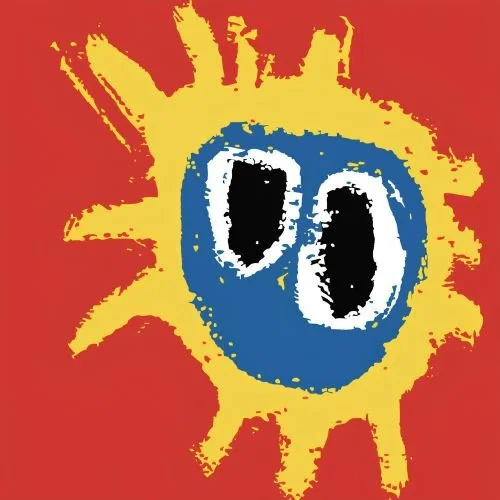
the genius and legacy of Primal Scream’s Screamadelica. Their third studio album was released on 23rd September, 1991. This was a week in music that saw timeless albums come out. In the U.S., A Tribe Called Quest’s The Low End Theory and Nirvana’s Nevermind came out on 24th September. I wanted to mark thirty-five years of Screamadelica. I hate to not include the whole feature, but there are sections from The Quietus and their feature from 2021. They celebrated thirty years of Screamadelica. “Two themes are routinely described as transformative for Primal Scream’s celebrated 1991 recording: acid house and Andrew Weatherall. But, as Ben Gilbert outlines, other factors led to an album that was both era-defining and defined by the era in which it was made”. It is a fascinating piece:
“Understandably, given the acclaim Screamadelica has generated in the three decades since coming out, this period has been well documented. Two key themes are routinely described as transformative for Primal Scream: acid house and producer Andrew Weatherall. But, while both had an obvious impact, there are other factors that led to an album that was era-defining but also defined by an era where studio technologies allowed a band interminably drenched in their own influences to dive into them like a bath full of ecstasy.
As Gillespie freely admits, the group certainly lifted, if not thieved, a vast number of other people’s ideas to fully realise the fabric of his mind for Screamadelica. “Everything was up for grabs, because of the technology and the way people could sample in the way they couldn’t before. Rap and hip hop records were doing it, house, dance records,” explained Gillespie, perhaps in reference to albums like Paul’s Boutique and 3 Feet High And Rising, both released in 1989, which redrew the art of music production. “It was like the wild west. No copyright laws,” he said, making comparisons to William Burroughs’ cut-up method. “It was what everybody was doing. It was a culture,” said Gillespie. Of course, the dominant British culture in this period was acid house, a scene that his band initially felt was so acutely anathema to their leather-clad rock & roll dreadnought that guitarist Robert ‘Throb’ Young reportedly threatened to excommunicate McGee from the Scream Team after he was spotted wearing “a baggy T-shirt”.
Improbably comic parties began to shape the future narrative. “There was always the Scream at one end, and Alan championing house music and playing it to them. Then Bobby would put on Goats Head Soup and all the Scream would go mad. Then Alan would take it off and put some more house on. This was going on all the time”, Lawrence from Felt told Cavanagh. Innes has rather more unifying memories of the period, explaining: “We took to the acid house clubs like ducks to water,” he said in Jockey Slut’s tribute to Andrew Weatherall. “The girls were incredible looking, the atmosphere was brilliant, there was no violence and the music was great. Better than some indie club playing the Wedding Present.”
Gillespie had previously dismissed modernising the Primal Scream sound. Quoted in Cavanagh’s book, he insisted: “We’re not that stupid.” But the singer went along with a proposal from either Innes or Jeff Barrett, founder of Heavenly Recordings and former PR at Creation, that Weatherall should remix/“fucking destroy” ‘I’m Losing More Than I’ll Ever Have’. Weatherall, whose only previous studio experience apparently involved watching Paul Oakenfold overhaul ‘Hallelujah’ by Happy Mondays, was perhaps the only music journalist on Earth to enjoy the Primal Scream album, writing effusive reviews about its ballads for the Boy’s Own fanzine.
“The thing about Andrew was that he was a non-musician,” said Gillespie, who first met Weatherall in the summer of 1989 at a rave in a field in the Brighton countryside. “Because he wasn’t aware of the rules, he broke them. He wasn’t trying to make hit records. That never entered his mind. He just wanted to make interesting tracks that worked on the dancefloor.” Reflecting on Weatherall’s 2020 death in The Observer, Gillespie celebrated his friend’s ability to divine the “ecstatic blues”: “No one else would have thought of constructing tracks like he did, arranging our melodies and music into abstract pop songs.”
Alongside Weatherall, engineer Hugo Nicolson’s influence on these sessions cannot be diminished. Witness their collaborative process on a second mix of ‘Don’t Fight It, Feel It’: “I gated the drums and keyed them off a cowbell which I programmed to do a rhythm I’d heard on a Jungle Brothers record. Then I grabbed a bit of bass fill from halfway through the song, turned it backwards and used that as the bass,” he told Sound On Sound. On Weatherall’s instruction, he also located a pivotal component: “I found a crappy whistle sound on the Korg M1 and played what turned out to be the main hook of the song.”
Gillespie has compared the band’s spirit and approach on Screamadelica to that of Parliament-Funkadelic. With ‘Higher Than The Sun’, The Orb’s Alex Paterson become part of this loose collective, contributing one of two titanic versions. His ‘Higher Than The Orb’ mix contains another percussive fill, from ‘Wah Wah Man’ recorded in 1971 by Young-Holt Unlimited, and a more amorphous spirit described by Gillespie as “Starsailor music”, in reference to Tim Buckley’s disorientating and light years from home 1970 album of the same name”.
There are a couple of other thirtieth anniversary features I want to include. I guess there will be thirty-fifth anniversary features shared very soon. The Skinny wrote how Screamadelica is still influential today. I don’t think that it has lost any of its power and brilliance. That is in part thanks to the genius production of Andrew Weatherall. I think I first heard this album not long after it came out in 1991:
“The album opens with Movin' On Up – unashamedly cribbing from The Rolling Stones' Sympathy for the Devil – which provides one of the few links to past and future Primal Scream with the searing hard-rock guitars, but the prominence of gospel singers, the electronic production and Gillespie's light touch vocals are the first signs that this is a different beast. The psychedelia is immediately dialled up on the cover of Slip Inside This House, with whirling sitars sitting next to a syrupy Amen break. And then Don't Fight It, Feel It runs dangerously close to the vapid dance music of the era that paired interchangeable soul singers with pseudo-transcendent electronics, but is saved by Weatherall's Midas touch and the thrilling Italo-house piano that enters midway through. These three songs are very different, but they represent the album perfectly in their marriages of dance and rock, along with so much more.
Gillespie is a less prominent vocal presence throughout the album (sometimes not appearing at all), frequently ceding the floor to the many experimental flourishes; the pitched-down orchestra plus haunted yodelling of Inner Flight; the shrill, overbearing saxophone of I'm Comin' Down; the corny/cosmic psychedelia of Come Together (which gestates for almost five minutes before the uplifting chorus comes in); the spooky accordion of Shine Like Stars. It gives the album an inclusive, cohesive feel, ideal for the sense of collective hedonism and creative freedom that permeates and defines Screamadelica.
By the time Screamadelica won the inaugural Mercury Prize in 1992, the burgeoning movement was over, the dance elements to be subsumed into the harder rave scene of the 90s and the rock elements to provide the seeds that Britpop would soon take up and ride to chart domination for the rest of the decade. Tellingly, the band never attempted another album that sounds like this one, perhaps appreciating the unique, lightning-in-a-bottle magic at play here.
But its influence has been strongly felt both at home and abroad; Scottish indie was brilliant in the 80s (Orange Juice, The Associates, Aztec Camera etc), but the parameters were fairly narrow until Primal Scream opened the door to funk, house, electronic etc. This openness continued in great 00s bands like Life Without Buildings and Franz Ferdinand and is still felt today in Django Django and even Young Fathers.
Outside Scotland, Daft Punk have praised Screamadelica's brilliance and Mark Ronson cites the album as the one that got him into indie, informing his production style to this day. Solar Power, the first single from Lorde's most recent album, is clearly indebted to Loaded, so much so that she contacted Gillespie to get his approval. Lorde claims she'd never even heard of Primal Scream, all the more evidence that the band's influence has seeped into international musical culture, though perhaps lacking the recognition.
For a brief moment, rock, acid-house, psychedelia and more congealed into a gleeful genre-less gloop that focused more on vibes than posturing, an unabashed desire for joy that wouldn't be seen again until the internet started to break down genre borders in the late 00s. It couldn't happen again, and it would be foolish to attempt, but Screamadelica is the culmination of that moment and a potent gateway drug to experience those feelings again”.
I will end with Classic Rock and their 2021 feature. I can appreciate that there may be fewer thirty-fifth anniversary features, as a lot has been said already and people might not be able to add to that. However, Screamadelica still resonates and is being discovered by a new generation. Classic Rock say this in their sub-header: “how self-belief, speed, dance music and the best producer the Stones ever had combined to make Primal Scream’s truly progressive and psychedelic masterpiece”.
“They were certainly living the life. Screamadelica was a filthy party animal of a record. It was a place where the tribal edicts of rock’n’roll were played out amid the glowstick rallies of rave. The album’s unbowed hedonism was typified by songs like Higher Than The Sun, Gillespie intoning to some imaginary Golden God: ‘I live just for today/Don’t care about tomorrow.’
“That’s exactly how I felt,” Gillespie says today. “I didn’t care if I died. I know that sounds dramatic, but it’s all there in the lyrics. We were out there taking ecstasy and speed. Speed was our main drug of choice, then people got more money and got into cocaine, then they got into heroin and it kind of fucked everything up. But I can’t really include heroin here, because while we were making the record it’d be speed and ecstasy. We’d never record on it though; you can’t play rock’n’roll on ecstasy.
“Acid house was similar to the LSD explosion of the sixties. The music was different, but I think it released a similar amount of energy and creativity in people who maybe hadn’t realised they had that inside them before. The energy in the clubs was intense. It reminded me of early rock’n’roll and punk. And that energy was extremely seductive. So we were up for days, living what it says in the songs. Being up for days meant we were exposed to a lot of great scenes and wild, strange, dangerous people. And fucking weird scenes with weird women. But we were a serious band when it came to recording and gigs. We may have partied at the weekends, but every week we were in the studio writing. At that point in your life you’re really out to prove to the world what you can do.
“We had a fucking great time, and that found its way into the music and the songs. I think it’s a very euphoric record. To me it’s ecstatic rock’n’roll. It’s what rock’n’roll should be: joyous and celebratory.”
Amid the mixes by Weatherall, Hypnotone and The Orb – who took Higher Than The Sun into the freakoid realm of cosmic dub – Screamadelica was notable for a more obvious Primal Scream influence. Jimmy Miller was the producer behind The Rolling Stones’ killer streak of albums from 1968’s Beggars Banquet through to Goats Head Soup in ’73.
When engineer Colin Leggett quit three days into the sessions for Movin’ On Up, Gillespie knew just who to call to finish what was already an ultra-Stonesy track: “The one guy in the world I wanted to mix us was Jimmy Miller. But he was hard to find, because within the music industry he was seen as a burn-out. But I went up to Eden Studios and he mixed Movin’ On Up for us there. And it was incredible. Then he did Damaged with Andrew Innes. We were blown away. He was really into groove and rhythm. On Movin’ On Up there’s this mad percussion thing going on, and it’s Jimmy playing two Coca-Cola bottles.”
So was Screamadelica ultimately a balancing act between guest producers and the Primals’ own artistic vision?
“With Andy Weatherall, I think we were both coming from the same place,” Gillespie offers. “I think we married a rock’n’roll attitude and sensibility and songwriting instinct to Andy’s knowledge of the dancefloor and contemporary rhythms. Also, Andy was a bit of a punk. He wasn’t a musician, but what he had was ideas in abundance. I think the best records are not just made by people with loads of technique, it’s about attitude and imagination.
"And between Andy and us – and The Orb and Jimmy Miller – we made a fantastic record. I’ve got to give those guys credit, but then they did what producers are supposed to do. Producers are supposed to enhance your songs and suggest things. For example, I know the Stones struggled with the rhythm of Honky Tonk Women, then Jimmy Miller came up with the cowbell intro. Charlie Watts said that it was Jimmy’s riff. And that’s one of the most famous intros in the whole of rock’n’roll.”
True to their own wilful nature, Primal Scream refused to repeat Screamadelica. Give Out But Don’t Give Up, in ’94, was instead a return to the visceral charge of time-worn rock’n’roll. The music press largely bemoaned the fact that this was no Son Of Screamadelica, and duly waded in. True, the album may have been uneven, but there were more than a few choice moments.
“Even if we’d wanted to we couldn’t have made another Screamadelica,” reasons Gillespie. “We were in a different place, and so was Andy Weatherall. I know that he didn’t – and we didn’t – expect that success. And then we went away and toured the world. Some of the band got into heroin. My take on it is that the creativity seized up a little. It was a really strange period, then out of that came the …Don’t Give Up album. We could have made a better record than that, but maybe that record was as good as it could be. There are two songs from that that we play live every night: Rocks and Jailbird. At the time, the music press in Britain slagged it. But when we play Rocks at our gigs these days, younger and younger generations just love it and the place goes fucking nuts. To me it’s like School’s Out by Alice Cooper.”
Primal Scream have made some striking albums since – chiefly Vanishing Point (’97) and Riot City Blues (’06) – but none more memorable than 2000’s XTRMNTR. Coming at the opposite end of the decade, it can almost be seen as the sinister flip-side to Screamadelica. It’s a dense, punishing listen, shot through with abrasive riffs, hard-nosed electronica and a misanthropic world-view. It’s like that second Summer of Love never happened at all.
“Screamadelica is an emotionally warm record,” Gillespie agrees, “whereas XTRMNTR is the other end of the scale – angry, paranoid, vitriolic, scathing. But then that’s part of my character and part of the character of the band. When he heard XTRMNTR, Alan McGee said to me: ‘That’s the record you’ve wanted to make all your life.’ And I went: ‘Yeah, you’re right’”.
I do feel, at such a hard and dark time, Screamadelica is a record to embrace and escape in. It is euphoric and warm. It has this energy that can lift the heart and mood. I was only eight when the album came out, so it was not until I was an adult I properly dived in and listened. I would urge everyone to play and immerse yourself in Screamadelica, as it is one of the greatest albums…
EVER released.