
FEATURE:
Modern-Day Queens

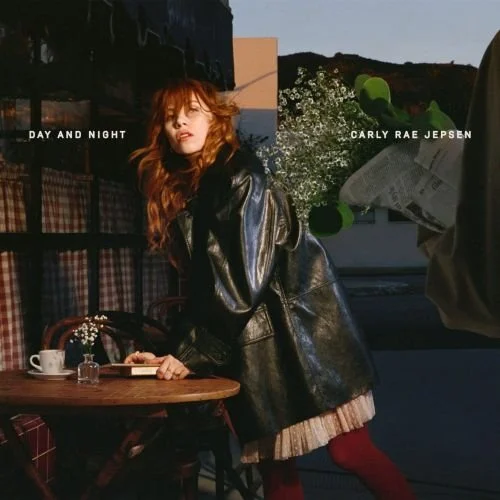
a few days before Carly Rae Jepsen releases her double album, Day and Night. I am writing this on 14th September, and the album comes out on 18th September. I am going to finish with a review for that album. There are a few interviews I am eager to spotlight before then. She is an artist who has been on the scene for many years, though she continues to push herself. You feel her best album is still ahead of her. Her debut, Tug of War, came out in 2008. Day and Night is her eight album. This Canadian queen is one of the best Pop artists of her generation. I want to go back to earlier in the summer when NME interviewed Jepsen:
“NME: Hi Carly! So, did the songs inform the album concept, or did the album concept inform the songs?
Carly Rae Jepsen: “You know, the honest truth is it was a little bit of both. I never want to have constraints on what the album is supposed to be until I allow myself to play a little bit and just reach for what I’m attracted to. Then there’s a point where I stop and look at it, usually with my close friend and collaborator, Tavish Crowe.
“I write a lot, so even in the beginning phases, I still had a pretty hefty body of work on my hands. So I flew Tavish to New York and said, ‘I’m really torn. I love this and I love this, but I don’t know how to make it go together.’ What I had was obviously the beginnings of ‘Day And Night’. The ‘Day’ songs were a bit more organic in nature, with more live instruments and a little hint of my roots in folk music. But then I also wanted to go in this darker, more experimental, synth-based direction, which is [what became] the ‘Night’ songs.
“The mix wasn’t making sense to me, but Tavish just said: ‘It’s like this amazing house party with an upstairs and a downstairs’. I was like, ‘That sounds a little like Downton Abbey, but I feel you’. And then later on, when I was back in LA, the idea of ‘Day And Night’ really got formed in my head. And we all got excited about the indulgence of not having to decide, and just getting to do everything that you want. I’ve released B-sides projects in the past, so I was like, ‘You know what, with intention, at age 40, let’s just do a double album.'”
Why is your new single ‘On Wires’ the right song to launch this era with?
“As an artist, you’re always searching for something that you haven’t quite done before, which feels powerful and exciting. This song is all of those things. It feels like a way for me to say: ‘Expect the unexpected with this album.'”
What’s the story behind the song?
“Well, it’s really funny to answer this question with the [added] perspective of the music video, because it’s brought a whole new meaning for me. When the song was born, it was more of a cut to the heart, ‘come hither’ kind of song. I pictured chasing this man through the streets of New York – just being unabashedly bold about it, like I almost can’t stand the pleasantries of flirting and dating. There’s something really exhilarating about being the pursuer like that.
“But then, by the time we shot the video – and I hope this isn’t too much of a giveaway – I was like, ‘How do I chase a man through the streets when I’m six months pregnant?’ It would look like I’m looking for child support! So my creative directors came up with this concept where there’s, like, this really beautiful tug-of-war between me and the microphone cable.
“And the more we talked about it, the more it became [a metaphor for] what was really going on in my life, which was me carving out space for my personal life within the business of music, while I’m in the middle of this pregnancy. So this tug-of-war I’m having with the microphone cable, it’s like the umbilical cord! No, that’s a little too far, a little too gross, let’s not go there. But in the video, I take the microphone out into the streets and you see it pulling me, then me pulling it back. And you kind of see who wins at the end”.

PHOTO CREDIT: Mark Griffin Champion
There have been a fair few interviews this year with Carly Rae Jepsen. Day and Night is the first album since 2022’s The Loneliest Time and 2023’s The Loveliest Time. The Hollywood Reporter published an interview earlier in the month. They say how Carly Rae Jepsen could have been a one-hit wonder. Instead, she has developed into this far more interesting artist. Jepsen discusses “what she's learned since her breakout hit nearly 15 years ago: "Where I've landed now in my career is the sweet spot”.
“Since the release of her breakthrough album, Kiss, Jepsen has kept one foot in the door of mainstream pop success and another in a more avant-garde space. Jepsen’s latest release, Day and Night, is a feat of balance, a double album that reflects the yin-yang equilibrium she’s striven for throughout her post-“Maybe” career. It’s divided thematically into Day, filled with sun-soaked psychedelic pop anthems, and Night, dripping in synth-heavy electropop. Jepsen hadn’t set out to make a bifurcated album; as with many of her most ambitious projects, it grew organically out of a back-and-forth with Crowe. She was heading on a trip to New York and was planning to show him the music she’d been working on. “He and I share music kind of like brother and sister in a very deep way,” she explains.
Jepsen presented her friend one song from Day and one song from Night, and he suggested they think of them as contrasting material for a single project rather than two separate albums, as she’d originally imagined. She continued to mull the concept back home in L.A. until one day, driving around the city (once again with Crowe), the idea of Day and Night came to her.
“As we were listening to stuff, it just felt like a song would naturally slot itself into the Night section or the Day section,” Crowe says. “Even before they were fully produced, too, you could still tell.” In the beginning, there were many pushes to divide the songs into two albums, but Jepsen says she “passionately disagreed” with that idea. “I wanted them together. They felt like two sides of the same thing,” says Jepsen.
The duality of the album mirrored Jepsen’s own upbringing. “I grew up in two different houses because my parents divorced when I was quite young and remarried to incredible stepparents,” she says.
It was a “very modern idea of co-parenting,” where she and her brother would switch houses every two days, both within 10 minutes of each other in the town of Mission, British Columbia. Her parents, all four of them, would have monthly meetings to discuss rules for the children. But the houses were very different. Night and day, you might say.
“My mom’s a little bit more free spirit, hippie-ish, and my dad’s a little bit more the opposite of that,” she says. “I feel like musically there was a connection. They all love James Taylor, they all love Joni Mitchell, but they also had different flavors in terms of what my stepparents brought to the table with their musical tastes.”
That duality made its way into Jepsen’s live shows, a mix of hits old and new. She considers it a win that “Call Me Maybe” isn’t the focal point of her concerts anymore, slotted within the set instead of as the closer. “I don’t think it’s a place to sit and hold resentment — what a useless waste of energy,” she says of the obligation to play the song she’s best known for. “If it’s a calling card that makes a couple of people happy, it’s not really about me anymore.”
Perhaps the most significant collaboration on Day and Night has little to do with the music. The album was made against the backdrop of one of the most transitional times in Jepsen’s personal life. While making Day and Night, she was falling in love with the man who would become her husband, musician Cole M.G.N., one of her collaborators and a producer on the album. Later in the process, as the album was being mixed, she became pregnant with their son. When it’s suggested in our interview that the album has effectively served as a time capsule for this time in her life, she asks, “Can I steal that?”
“I don’t want to say that my album’s only sunshine and rainbows and happiness because if I’ve done my job right, there’s some depth to it,” she says. But she’s not going to lie about how she’s feeling: “I’m the happiest I’ve ever been”.
Before getting to a review of Day and Night, there is one more recent interview worth highlighting. The Guardian’s interview is particularly interesting. I don’t want to drop in whole interviews, so I hope that what I have included makes sense and is not too dislocated. Selecting segments of interviews without there being too much repetition:
“In virtually any other era, Jepsen might be filling stadiums. But changing tastes aside, the music scene has fragmented thanks to streaming and social media, and the charts can be topped by a song that many have never heard. The one-time “megastar” is now more likely to be described as an “indie darling”. How does she feel about her industry?
“There’s a little bit that I don’t totally know or understand, or stay checked into,” she says, “and I don’t know if that aloofness just comes from the fact that it’s not super interesting to me.” Maybe it’s a survival tactic, she adds, “but the reality is, long ago I became aware of what my strategy would be, and I’ve stuck to it. I knew around the time that I made Emotion that I was more excited about having a strong, small-but-mighty group, than I was about trying to be confused and feed the masses.”
Now she knows who she is and who her fans are, but that knowledge didn’t come overnight. “I needed to take a second to figure out what it was that I liked about pop music to begin with, and what it was that I thought I had to contribute to it,” she says. “That’s why I went and did Cinderella, which was a really weird left turn.”
In 2014, less than a year after winning three Canadian Juno awards for Call Me Maybe and Kiss, Jepsen made her Broadway debut in a production of the Rodgers and Hammerstein musical. “I think everyone in the industry around me at the time was like: ‘What is she doing?’,” she says. But ticket sales were good, her stint on Cinderella was extended (“I love theatre, so it was like getting my cake and eating it”), and the experience reconnected her to her craft: “It was more of an artistic choice than a strategy, I guess.”
“I think what I feel about pop music is not that I love all of it, but I have a really strong opinion about it,” Jepsen says. “I don’t know that I can define it, but I was excited about trying to figure out the thing that makes me feel like I did with Rufus, where you know a stranger.” “Rufus” is Rufus Wainwright, whose moody 2001 song Poses first inspired her to “take a run at this music thing”. That unknowability is what still excites her about pop: “The idea that comes across, hopefully, in this album, is that you can play with so many different genres as ingredients and it can still be the thing”.
I am going to end up with Riff Magazine and their review of Day and Night. A doubler album is always a risk, as it can have some filler and it seems a little over-ambitious. There is a bravery in doing this. I do feel that Day and Night is going to rank alongside the best albums of this year:
“Carly Rae Jepsen has spent over a decade writing infectious pop songs about the rush of wanting someone. She’s finally found that someone on her new double LP, Day and Night, and she’s now singing about what comes next — from waking up next to them to dancing together all night long.
The album’s first side, Day, leans into sunny pop made for these final days of summer with breezy psychedelic pop and the warm haze of new love. Night turns toward synths, disco and stranger dance-floor impulses. It remains cohesive as one long project, though its length results in occasional moments of fluff.
Double albums aren’t new for Jepsen, though the B-sides projects have typically come as separate albums. This time, the two sides are uniquely connected.
Day opens with one of its best: “After All” is also one of the album’s most carefree and catchy moments. It sounds like being on vacation, with its jazzy piano elements and danceable chorus.
“I want to be the owner/ I want to buy you flowers,” she sings with easy sensuality. “Why don’t you take your shirt off for me now?”
“Habits of Creatures” continues that honeymoon haze, stripping away some of Jepsen’s usual maximalism in preference of a lo-fi, intimate sound. “If you want to, we could sleep in for the third time this weekend,” she sings, her airy delivery matching the song.
“Versailles” is more immediately familiar. There’s something in the chorus — the sickly sweet melody, acoustic guitars and handclaps — that sounds like pop straight from 2015. It’s bright without sounding like an attempt to recreate her acclaimed 2010s record, EMOTION. Though perhaps some of this album could use a little more of the euphoric, catchy choruses that are all over that album.
The quieter approach can come across occasionally flat, like on “Lonely Side of the Bed.” The song has a low-key charm but is less emotionally or melodically distinctive than those around it.
Then Night starts, and Jepsen pulls you toward the dance floor. Though it consistently pulses, the side of the project is still relatively relaxed in comparison to the maximalist pop of earlier albums like 2022’s The Loneliest Time and 2019’s Dedicated. “Never Let a Good Thing Die” opens on a great grooving bass line, though its chorus feels too restrained, with bubbly synths where a bigger release might have landed harder.
“Amalfi Coast” also plays with disco, while “You Don’t Know How It Feels” finds a balance between dance music and the album’s more relaxed mood. “All of my defenses never had a chance with you,” she sings in a near-whisper, over a track that has flashes of Robyn and ABBA but still feels distinctly casual and intimate.
That looseness carries through the rest of Night. “That’s Just Me” turns sadder and dreamier, while “No Labels, I Love You” snaps back into something flirtier.
Night’s standout track is single “Motivation,” which broadens the record beyond romantic love altogether and may just be Jepsen’s thesis statement for her career and life. The uniquely minimalist house-influenced track is the project’s most oddball moment, full of dry production and filtered vocals that become incredibly infectious.
“We go hard in this family/ We love hard in this family/ I’m in love with my family,” she sings about both the family she’s growing at home and her die-hard community of fans.
With its length, Day and Night is inevitably uneven. But the space also allows Jepsen room to try new things and let her songs breathe—like the feeling of being comfortable and relaxed with someone you love.
Closing track “Super Sage” ends the album in its most lush, otherworldly soundscape. A vocoder introduces the song before synths slowly build around Jepsen’s most vulnerable verses of the album, which lead up to a sigh of relief: “We’re still alive, man of my life.” Across 24 tracks, Jepsen’s love remains the focal point”.
I am curious what comes next for Carly Rae Jepsen. You feel like Day and Night is her most important album. How nervous she is putting it out into the world. Once all the reviews come in and people have heard it, what comes after that?! Rolling Stone said in their review, “ To her, there’s no shame in airing out your baggage and confessing your feelings in a single song. Night closer “Super Sage” starts with Jepsen nervously pacing, worried she’s driving her lover to the brink as synths pile and pan like spiraling anxieties. Then suddenly, “Super Sage” rockets to the psychedelic-pop cosmos. The tempo picks up, synths undulate like a sine wave, and it all mimics that rush of heat one feels when they’re about to confess everything. Despite the Edenic imagery painted throughout Day and Night, Jepsen’s repeated gasps of “I love you” make for the album’s most romantic and vulnerable moment, full of stark intensity. Seven years ago, on Dedicated‘s “Real Love,” Jepsen screamed to the clouds about wanting genuine connection. On Day and Night, it sounds like she’s found it”. Make sure you grab a copy of the latest album from…
THIS awesome artist.