FEATURE:
Once Upon a Time, Not So Long Ago…
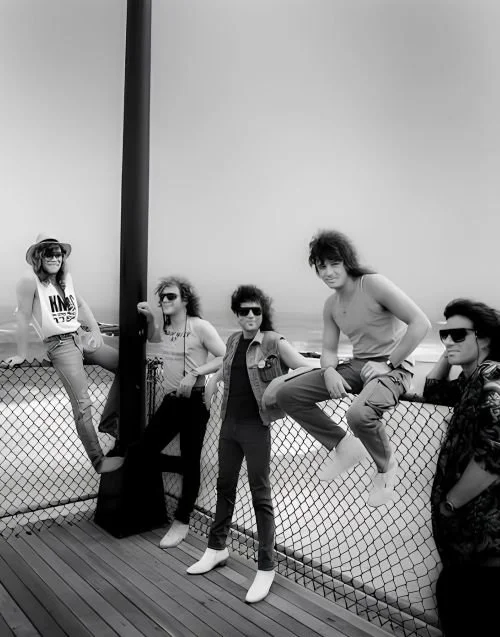
IN THIS PHOTO: Bon Jovi in 1986/PHOTO CREDIT: Patrick Harbon
Bon Jovi’s Livin’ on a Prayer at Forty
_________
ONE of the defining tracks…
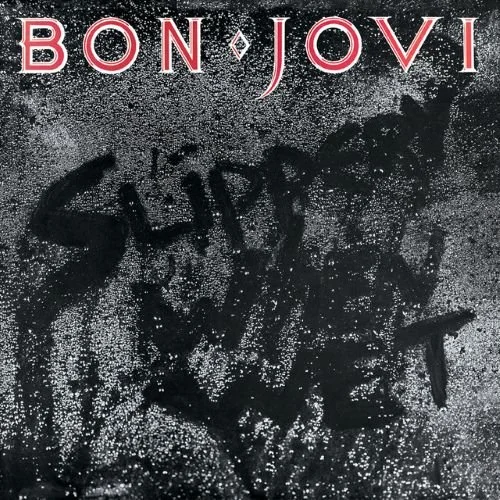
as the 1980s tunes forty on 31st October. Livin’ on a Prayer was the second single from their third studio album, Slippery When Wet. A number one smash and one of the most recognisable and memorable songs of its generation, I wanted to look inside this song as it approached a big anniversary. Slippery When Wet also contains You Give Love a Bad Name and Wanted Dead or Alive. Though nothing compares top Livin’ on a Prayer. One of those songs impossible not to sing along to! I do want to start off with Gold Radio and their feature around this working-class anthem. Livin’ on a Prayer was arguably the song that took them into the stratosphere. After this, they were on top of the world:
“Written with the backdrop of the second Ronald Reagan presidential term and the economic problems that brought the working class, 'Livin' on a Prayer' tells the story of a couple whose love pulls them through their financial hardship.
Tommy is a dockworker who isn't getting paid while his union's on strike ("he's down on his luck it's tough"), so the couple scrape to pay the bills with Gina's work as a waitress in a diner ("she brings home her pay for love").
Despite it all though, the couple have each other and take turns in supporting one another keeping their love and dreams alive ("She says, we've got to hold on to what we've got" / "When she cries in the night, Tommy whispers / Baby, it's okay, someday").
"It deals with the way that two kids – Tommy and Gina – face life's struggles, and how their love and ambitions get them through the hard times." Bon Jovi later said. "It's working class and it's real."
Are Tommy and Gina in 'Livin' on a Prayer' real people?
"Tommy and Gina aren't two specific people; they represent a lifestyle," Bon Jovi said, but maybe the reason for the pure emotional power of 'Livin' on a Prayer' was that Jon Bon Jovi and Desmond Child were absolutely writing from life experience.
Like Tommy, whose rockstar dreams were frustrated by the struggles of real-life ("Tommy's got his six-string in hock"), Jon had a pal who was a high school baseball star, but had to give up his dreams after he got his girlfriend pregnant, having to go and work in a factory.
As for Gina, when Desmond's girlfriend and fellow singer-songwriter Maria Vidal worked at the Once Upon A Stove diner, she got the nickname Gina because of how much she looked like Italian star Gina Lollobrigida.
And Tommy and Gina got another appearance in the massive 2000 comeback hit 'It's My Life' ("Yeah, this is for the ones who stood their ground / For Tommy and Gina, who never backed down").
How did 'Livin' on a Prayer' do in the charts?
After 'You Give Love A Bad Name' changed everything for Bon Jovi by going to number one on the Billboard Hot 100, the band had to follow it up with something big to prove it wasn't a fluke.
They did that and more with 'Livin' on a Prayer', which also topped the Mainstream Rock and Cash Box Charts.
It went to number four in the official UK chart, and topped the UK Rock and Metal Chart, too.
It's gone on to be triple platinum in the US and double platinum in the UK, as well as racking up 840 million YouTube views and 820 million Spotify listens (and counting)”.
There are a few other features I want to come to before I wrap thing up. Such an iconic song, no surprise there has been a lot written around it. Last year, uDiscovermusic explored this ageless classic. One that has been passed through the generations. One of these songs that will be played widely for decades to come. Whilst we all know this song and sing along, how many of us know the story behind it? I was interested to know more:
“A motivational anthem for the working class, “Livin’ On A Prayer” captured the economic hardship of the era. It focused on fictional couple Tommy and Gina who try to hold on to their faith as they struggle to make ends meet. While the song has become ubiquitous at festivals, karaoke nights, bars, and arenas worldwide for decades, it wasn’t initially favored by the band.
“I remember walking out of the room with Richie and I said, ‘Eh, it’s okay. Maybe we should just put it on a movie soundtrack,’” Bon Jovi told The Irish Times. “Richie looked at me and said, ‘You’re an idiot. It’s really good.’ I said, ‘I just don’t know where it’s going.’ But it didn’t have that boom-boom-boom bassline yet, so it sounded more like The Clash.” One listen to the demo, which was featured as a hidden track on the 2004 box set 100,000,000 Bon Jovi Fans Can’t Be Wrong, and you can hear what Bon Jovi means. The track is void of the pounding drums, ripping guitars, and that quintessential robotic talkbox effect.
“We had sort of written it like this spooky, moody, sensitive thing,” co-songwriter Desmond Child recalled on a podcast in 2019. Along with his work with the band, Child is behind Top 40 smashes like Joan Jett & the Blackhearts’ “I Hate Myself for Loving You,” Aerosmith’s “Dude (Looks Like a Lady),” and Ricky Martin’s “Livin’ La Vida Loca.” Child continued: “Jon didn’t think it was going to be right for the direction that they were going into, which was like, hard rock, stadium rock. The song was so good that Richie Sambora and I literally got on our hands and knees, half-joking, half-serious, and begged him to record it.”
The final version of “Livin’ On A Prayer” was an instant smash. The video, directed by frequent collaborator Wayne Isham, was on constant MTV rotation. The song itself became their second consecutive No. 1 single following “You Give Love A Bad Name.” They were the first hard rock band to ever top the Hot 100 with back-to-back singles.
But the song has had an impact far beyond the charts. Following the September 11 attacks, Bon Jovi performed a celebrated acoustic version of “Livin’ On A Prayer” for the America: A Tribute to Heroes special. At the start of the COVID-19 pandemic, meanwhile, Jon Bon Jovi joined a city-wide Chicago singalong. The track has also inspired other artists. In 2010, Rihanna joined the band during a Madrid concert and later covered the song during her 2016 The Ellen DeGeneres Show appearance. And, in 2019, Michelle Williams covered it on The Masked Singer”.
Two more features to come to. In 2023, Produce Like a Pro hailed a Hair Metal epic. One of these songs that I remember being played a lot when I was a child. I was a huge fan right away and was captivated. It is a song I can play again and again and never really tire of. I am not a fan of Bon Jovi as such, but this track is among my favourites ever:
“One of the reasons this song is so powerful is the way it combines these meaningful lyrics with hard rockin’ instrumentals and Jon’s incredible vocals. The bass player at the time was Alec John Such and is credited on the album, but it’s commonly accepted that Hugh McDonald wrote the bassline and played on the final version. Richie Sambora’s guitar stands out for its use of a Talkbox effect, and of course his polished and yet expressive guitar. Tico Torres brings a powerful drum and percussion part that perfectly matches the different elements of the song. The nuances of the percussion part (such as the chimes during Bryan’s keyboard intro) are one of the ways the song sounds so polished. The way David Bryan’s keyboard is used in the song also helps it stand out from so much of the hair-metal of the time. We find a unique diversity of sound in the haunting synth strings, the way the rising bassline in the keyboard synth sets up the core tension of the song, and of course the pulsating chords throughout the song which has an underlying drive. All of these elements paired with Jon Bon Jovi’s powerful and expressive vocals brings the song’s storytelling to life. The melodic line contrasts between the verses and the chorus. The verses are characterized by descending melodies which require him to start in the tense sound of the upper register of his voice. The falling melody brings out the tension and hard-times depicted in the song’s lyrics and are in contrast to the chorus which has the rising “whoas”. The chorus provides the uplifting response to the problems presented in the verses
At first Jon wasn’t sure the song was the right fit for the band. The original demo didn’t have the powerful, anthemic sound that ended up being released on Slippery When Wet. You can hear it as a hidden track on the 2004 box set 100,000,000 Bon Jovi Fans Can’t be Wrong. During the “Runaway to Paradise” fan cruise, Jon revealed the reasons for his hesitation during a fan Q&A:
“Ultimately, the song was so unique. It didn’t sound like anything. You know, ‘Runaway’ had eight notes, like a lot of songs on the radio at the time. Even ‘[You Give Love a] Bad Name’ was reminiscent of other songs that were on the radio.
“‘Livin’ on a Prayer’ didn’t sound like anything. So, I was sort of indifferent. I thought, Well, it’s different, but is it a rock song? Is it us?”
Desmond has stated in multiple interviews that he and Richie had to literally get down on their knees to beg him to give it a second chance: “That song had a majesty, a kind of upward lift that just exuded hope. And at that time, Jon was thinking about making a more hard rock record. So when we wrote the song, he was a little bit… the song a bit sentimental. It’s a bit soft, and he said “I was hoping we could rock harder”. And Richie and I literally got on our hands and knees and begged him to record it. I mean, half joking, but half for real. Just record it! See what happens…”
With the benefit of hindsight, we can now see how the elements that made Jon wonder whether the song was the right fit for the band’s sound, are exactly the elements that made “Livin’ on a Prayer” stand out from the rest of hard-rock radio and transcend into a classic rock anthem for all time. The revised version of the song (the one that made it onto the record) is polished and tight. All the iconic elements – the synth introduction, the talkbox guitar effect, the deep, powerful bassline – came into the picture as the band worked with the producer Bruce Fairbairn.
Before his untimely passing in 1999 at age 49, Fairbairn recalled the moment they came up with the talkbox idea for Richie’s guitar: “We were digging around in Richie’s guitar effects box…I grabbed hold of this old tube and up comes this talk box, and I thought, ‘Stick this in, I haven’t heard one of these since the (Peter) Frampton album.'” Fairbairn was referring, of course, to Framptom Comes Alive, the best-selling live album from 1976.
All of these effects came together to create a unique sound – polished and yet hard-hitting – giving “Livin’ on a Prayer” the perfect makings of a hard-rock stadium anthem. “Livin’ on a Prayer” was the type of song to get a whole stadium of fans singing together. It builds and gathers its listeners in before exploding into the chorus.
“Livin’ on a Prayer” and the entire Slippery When Wet album were produced at Little Mountain Sound Studios in Vancouver in the first half of 1986. The album was released on August 18 that same year, and “Livin’ On a Prayer” came out as the album’s second single in October. On February 14, 1987, “Livin’ on a Prayer” gave the band their second consecutive number 1 spot on the Billboard Hot 100 – “You Give Love a Bad Name” had hit the milestone 3 months earlier. It was also an international hit, hitting the number 1 spot in Canada, New Zealand and Norway, and peaking in the top 5 in Australia, Belgium, Ireland, Netherlands, Scotland, South Africa, Spain, Sweden and the UK.
“Livin’ on a Prayer” brought a down-to-earth, common-man attitude to the age of hard-rock and hair metal. The December 13, 1986 Billboard review of the song declared: “metal muscle meets gritty reality in a tough, clanging rocker.” The song moved the sound of hard-rock away from the glittery glam metal of the sunset strip and to the roots-rock of Bruce Springsteen’s New Jersey. Much like Springsteen had a decade earlier, Bon Jovi was now addressing topics that mattered to people.
But more than just a hard-rocking track with lyrics that meant something….”Livin’ on a Prayer” became an anthem of hope. Further, it is an anthem that has transcended decades. In its excellent songwriting, it is also extremely adaptable – the song exists in different arrangements and formats that bring out different elements of its meaning and beauty. In 1994, the band rearranged a completely different version for their Cross Road album – calling it “Prayer 94.” In 2001, following the 9/11 attacks, the band performed an emotional, acoustic version of the song for New York – famously televised in the benefit concert America: A Tribute to Heroes.
The harmonic colors, the melody, and the powerful lyrics allow “Livin’ on a Prayer” to reach audiences in a variety of arrangements, but the song has never lost its original meaning as a hard-rock anthem for the common man. It remains a staple of the band’s live shows and one of the 80’s most beloved and often-played songs – even four decades later”.
I may bring in the same information more than once. But I feel it is important to highlight Stereogum and their 2021 examination of Livin’ on a Prayer for their The Number Ones series. I do wonder whether Bon Jovi will do anything for the anniversary on 31st October. It is a big occasion. Streamed over two billions times on Spotify, the video on YouTube has been seen over 1.5 billion times. It is this colossus of a song. There are few songs ever that have this same weight and legacy:
“According to Bon Jovi, the trio wrote "Livin' On A Prayer" "on a day when none of us had any ideas." They got to talking about all their backgrounds. Bon Jovi and Sambora had both grown up working-class in New Jersey. Bon Jovi's high-school girlfriend had stayed with him as he tried to land a record contract. (They got married in 1989, and they're still together now.) Desmond Child had worked as a cabdriver in New York in the '70s, when he was dating Maria Vidal, one of the singers in his group Desmond Child & Rouge. Vidal worked in a diner, and her coworkers nicknamed her Gina because she looked like the actress Gina Lollobrigida. (Maria Vidal's highest-charting single, 1984's "Body Rock," peaked at #48.)
When Child first came up with the "Livin' On A Prayer" lyrics, the song told the story of a couple named Johnny, Child's birth name, and Gina. Bon Jovi knew that wouldn't work, since his name was Jon. The song had to be third-person. Child changed the guy's name to Tommy, which is a better name anyway. (When I was six, I made one of my worst decisions ever, insisting that I wanted to go by "Tom" instead of "Tommy." "Tommy" sounds so much cooler. Fuck.)
Even after that conversation with Richie Sambora, Jon Bon Jovi wasn't really into "Livin' On A Prayer." Producer Bruce Fairbairn pushed hard for the song to appear on Slippery When Wet. In that Irish Times interview, Jon Bon Jovi says that the song "didn’t have that boom-boom-boom bassline yet, so it sounded more like the Clash." The demo version of "Livin' On A Prayer" sounds absolutely nothing like the Clash, and I can't even imagine how Bon Jovi even got that into his head. But he's right that it didn't have that boom-boom-boom bassline. It didn't have a lot of things.
The band and Fairbairn kept working on "Livin' On A Prayer," layering on more and more ideas: The synth-drone intro, the blazing guitar leads, the whoa-whoa-whoa talkbox riff. Fairbairn and Sambora found that talkbox while digging around in Sambora's box of guitar effects. (From what I've read, the talkbox -- a device built on a clear plastic chord that goes from your mouth to the guitar -- really hurts to use. It makes your skull vibrate and your eyes feel like they're going to explode. I love that.) The sound that the weird machine conjures -- like a giant evil robot doing the bass voice in a street-corner doo-wop group -- gives the song a whole new cinematic dimension.
The finished version of "Livin' On A Prayer" is light-years beyond that demo. The song only really works if it's all drama, if it explodes out of the speaker. However long it took, the band turned "Livin' On A Prayer" into a perfect engine of drama. They shaped it into a true soul-shaking cheap-seats howler.
There are plenty of people who will tell you that "Livin' On A Prayer" is the dirt-stupid lowest-common-denominator cousin of what Bruce Springsteen was doing at the time. These people are entirely correct. Springsteen had written his name in the history books by turning down-and-out Jersey loser life into grand, swollen opera. Springsteen had done it with tenderness and brains and a sense of nuance. "Livin' On A Prayer" does the Springsteen thing at the most base and obvious level, with none of the poetic language or the lived-in warmth. But what these people don't seem to get is that the bone-simple dumbness of "Livin' On A Prayer" is what makes the song great.
When Bon Jovi wrote "Livin' On A Prayer," Springsteen himself had just dumbed down his own sound for the 1984 album Born In The USA, turning it into stadium-status synth-rock. In the process, Springsteen had the biggest success of his extremely successful career. With "Livin' On A Prayer," Bon Jovi took peak big-'80s Springsteen and made it dumber, which was the smart thing to do. On paper, those "Livin' On A Prayer" lyrics look almost like Springsteen parody -- all that hard-times romanticism stripped down to pure theatrical gesture. "Livin' On A Prayer" goes light on specifics and heavy on fist-pump hamminess. That's why it rules.
Tommy and Gina are pure archetype. Tommy used to work on the docks, but the union's been on strike, and he's down on his luck. It's tough. So tough. Tommy can't support himself and his girl, and he can't even express himself artistically, since he's got his six-string in hock. Gina works the diner all day, working for her man. She dreams of running away, but when she cries in the night, Tommy whispers, "Baby, it's OK." And then: "Someday." That "someday" is a mythical time when things won't be so hard. Tommy and Gina don't know whether this time will ever arrive, but they have to believe in it. They have to believe they're halfway there.
Bon Jovi himself has said that "Livin' On A Prayer" was a response to the Reagan era and the suffering that so many people were going through. Reagan certainly did everything in his power to cripple organized labor in America; maybe that's why Tommy's union was on strike. But the lyrical concerns of "Livin' On A Prayer" aren't tied to any particular moment in history. They're elementally simple, like an early-'60s girl-group song.
The music, on the other hand, is extremely of its moment. Even more than "You Give Love A Bad Name," "Livin' On A Prayer" is a terrifying display of supercharged '80s pop-metal that just goes for the car-stereo jugular. The production is so clean you could eat off of it. The synths and guitars glitter and gleam. The bassline and the simplistic drum-stomp are practically disco. Everything on the song works as a hook. The verses sound like choruses, and the choruses sound like suns exploding.
Jon Bon Jovi gets clowned for being a bad singer, and he's admittedly not Luther Vandross or whatever. But have you ever tried to sing "Livin' On A Prayer"? I did it once, in a crowded karaoke bar in Red Hook, and I learned some hard lessons real quick. (I should clarify that I could charitably be described as a dogshit-ass singer. The mere fact that I had a microphone in public is an indictment of the entire concept of karaoke.) The song started up, and people seemed amped to hear it. I got through that opening verse feeling good. And then the chorus showed up and I suddenly realized that I could not scream that high. It just wasn't in me. I struggled through, but then that key change came along and I was fucking done -- out of breath, squeaky, pathetic, humiliated. I walked into that bar thinking I could do the things that Jon Bon Jovi had done. I could not. My man did his thing on that song.
It's not just that Jon Bon Jovi hits the notes, though he does. It's that he sells those notes. He doesn't just convey the beaten-down seriousness of Tommy and Gina's plight. He also embodies all the hope that they're holding out. He throws himself into that chorus with total starry-eyed devotion”.
On 31st October, it will be forty years since one of the biggest and most popular songs ever was released. I still feel it is relevant to this day. One whose lyrics will be adopted and taken to heart by each subsequent generation. That idea of a working-class couple struggling to make ends meet. It is something so many can relate to. Anthemic, epic and blood-rushing, we are going to be talking about Livin’ on a Prayer forever. Such is it brilliance. Nearly forty years after it came out, this anthem has lost…
NONE of its incredible power.