
FEATURE:
Picture to Burn
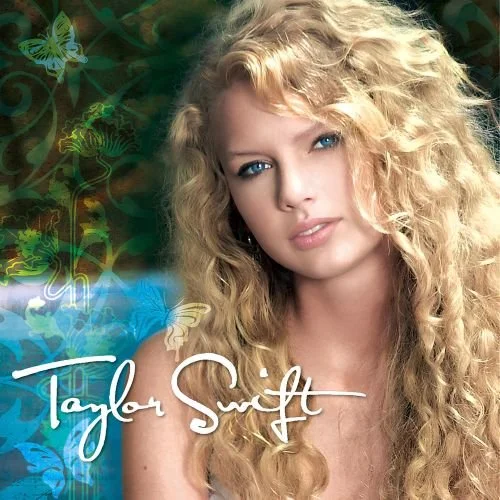
Taylor Swift’s Eponymous Debut at Twenty
_________
EVEN if Taylor Swift…
has released better albums in her career, there is no denying that her debut is important. It was released on 24th October, 2006. Ahead of its anniversary, I wanted to bring some features and reviews together. Few knew in 2006 that Swift would become this colossus of an artist. There were glimmers of promise and brilliance on Taylor Swift, though she would soon evolve as an artist. By the time her fourth studio album, Red, arrived in 2012, you can argue she hit her first peak. I do love a debut album, as it is the first thing an artist puts out. Their life leading up to that. You can definitely hear the passion and talent throughout Taylor Swift. Even though this was a debut album from a relatively new artist, Taylor Swift reached number five on the US Billboard 200. Swift co-wrote or solo-wrote every track. There are some highlights. Her debut single, Tim McGraw, Our Song, and Picture to Burn. It is amazing that Swift released her debut when she was sixteen! Rather than repeat what other Country/Pop artists were doing, she did distinguish herself from her peers. I want to start with this feature from last year:
“Taylor Swift was 14 when she moved to Nashville with her family to pursue a career in music. By the time she was 16, she had released a self-titled debut album that was full of promise and which set her on the road to stardom.
Swift was a music-obsessed teenager. She was heavily influenced by her late grandmother Marjorie, a former opera singer, and learned to play the guitar by copying a Dixie Chicks song. “I grew up on country music, especially Patsy Cline and Dolly Parton,” she said. “At an early age, I would perform their songs around my hometown, at festivals, fairs, and karaoke contests.”
Released on October 24, 2006, her debut album was full of the energy and obsessions of youth. Particularly shrewd was her decision to work with an experienced songwriter Liz Rose, who helped sharpen her youthful ideas. They co-wrote seven of the 11 songs on the album, including Swift’s first hit single, “Tim McGraw.”
Rose, who was then in her early 40s, is the mother of country singer Caitlin Rose. While Swift had written her first song when she was only 12 – the autobiographical “The Outside,” which also appeared on her debut album – Rose was a late bloomer. According to Caitlin, her former bank-worker mother “didn’t start writing until she was 40, not even a poem. It was sort of an accident.”
Together, Swift and Rose also wrote the hit single “Teardrops On My Guitar” about a boy who is unaware that he is the object of his schoolmate’s affection. Rose, who described herself as being like an editor, said of their writing process, “She shared all those emotions with an old lady… She taught me to shut up and listen and let the artist write their own song, just be the vehicle. Hopefully, I taught her just the mechanics. She already knew everything. I also told her, ‘I’m going to help you tell your story.’”
The songs, written while Swift was at high school, have a small-town setting and girl-next-door charm, reflecting the emotional talking points of an observant adolescent. Some, such as the charming “Our Song,” were full of vibrant images and helped by fine musicianship. The talented and inexperienced producer Nathan Chapman, who played guitar, banjo, mandolin, and bass on the album, brought in some seriously talented backing musicians. On “Our Song,” for example, the fiddle is played by four-time Grammy winner Andy Leftwich.
In addition, dobro player Bruce Bouton, then in his 50s, was an experienced Nashville session man – having played guitar on records by Kenny Rogers – while guitarist Dan Dugmore had guested on several James Taylor albums. Percussionist Eric Darken was a veteran of work with Alan Jackson, Barry Manilow, and Lee Ann Womack among others.
The results were impressive. “Tim McGraw” was certified platinum as a single, while “Picture To Burn” – a scathing portrait of an arrogant former boyfriend, hailed as the first portent of the feminism that was to follow – became a fourth consecutive Top 10 single from the album in 2007.
In the decade or so that followed her debut album, Swift evolved from doe-eyed country prodigy to global superstar, acquiring ten Grammys and a fortune along the way. But she looks back on her debut with pride, including the song “Tied Together With A Smile,” which is about a friend who was a beauty queen who kept an eating disorder secret. As she said at the time: “I didn’t want to just be another girl singer recording other people’s songs. I wanted there to be something that set me apart. And I knew that had to be my writing”.
I am interested in this Pitchfork review from 2019. They look at her first five albums. How, from her debut to 2014’s 1989, there was this growth from Country underdog to a worldwide Pop sensation. Though it is very important that we consider her debut and how its merits:
“Taylor Swift’s self-titled 2006 debut arrived at a fortuitous moment for young women in country music, particularly those with crossover ambitions. The beers-and-trucks bro-country grip of Florida Georgia Line and their ilk was a few years away from fully tightening; Carrie Underwood had won the 2005 season of American Idol; and the Dixie Chicks’ defiant “Not Ready to Make Nice” and Sugarland member Jennifer Nettles’ syrupy Bon Jovi duet “Who Says You Can’t Go Home” were making inroads into Top 40 radio. (The Chicks’ anti–George W. Bush stance had gotten them kicked out of country rotation.)
The 16-year-old Swift crash-landed into this landscape with “Tim McGraw,” a saudade-drenched mid-tempo ballad that’s as much a love letter to music’s power as it is to a soon-to-be-ex-boyfriend leaving for college. Swift’s quivering low soprano made the lyrical details—her “little black dress,” the stalled-out Chevy truck, “the moon like a spotlight on the lake”—hit harder, and showcased her ability to make diaristic songs universally relatable. You can track the song’s quiet hope (“When you think Tim McGraw/I hope you think my favorite song”) all the way to Reputation closer “New Year’s Day,” while its clear-eyed view of time’s passage is reflected in 1989’s “Clean.” “I love writing songs because I love preserving memories, like putting a picture frame around a feeling you once had,” she wrote in Elle earlier this year, and “McGraw” shows how essential that ideal has been to her work since the beginning.
Two years earlier, her family had left Wyomissing, Pennsylvania and moved to Nashville in support of their firstborn child’s teenage country-star dreams. Taylor Swift showed someone who had been honing her craft since her preteen years, meticulously turning her experiences with boys and with her girlfriends into country songs that reflected the lives of her peers, whom she connected with via MySpace. (“Every single one of the guys that I’ve written songs about has been tracked down on MySpace by my fans,” she told The New York Times in 2008.) MySpace would morph into Tumblr and Instagram Live, but the impulse would remain the same.
The album turned out to be a solid, spunky-yet-reflective country record told squarely from the teenage perspective, as opposed to the “can you believe someone so young sounds like that” packaging that weighed down former teen sensations like LeAnn Rimes. While Taylor Swift’s chief genre signifiers, like fiddles and vocal twang, are rooted in ’00s Nashville tropes, the influence of millennial teen pop bubbles up in the bouncy music and in ripped-from-the-LiveJournal lyrics like the cheerily insouciant chorus of “Our Song” (“Our song is the slamming screen door/Sneakin’ out late, tapping on your window”). “Picture to Burn” is a descendant of JoJo’s “Leave (Get Out),” given a Southern-fried twist by Swift’s drawled asides (“alla yer best freeends”), her mockery of the dude’s “stupid old pickup truck you never let me drive,” and the plunking banjo. (“Picture to Burn” also showed that she was learning to hone her poison pen: In the original version’s first verse, she threatened to tell her friends the guy who’d wronged her was gay, a line she dropped from live performances shortly after Taylor Swift’s release. The album version followed suit.)
“Teardrops on My Guitar,” a longing ballad about an out-of-reach crush, presaged Swift’s eventual embrace of pop; in early 2008, her now-former label Big Machine released a “pop version” that added echo to her voice and a mid-tempo beat, dropping the weepy slide guitar that doubled as a realization of the song’s title. While Swift was hardly alone in reworking country songs for the “hits you can play at work” crowd, the ease with which “Teardrops” translated to straight pop showed that her deft melodic touch and conversational way with deeply felt emotions could scale to the widest possible audience. Today, her production takes its cue from current trends, and her subjects don’t need to be identified via online fishing expeditions, but her detailed lyrics and canny worldview were there from the start.
Back then, though, she had doubters. An Associated Press report on her early success opened with sneering from a Nashville bigwig: “Tell her to get back in school and come back and see me when she’s 18, and bring her parents,” manager and promoter Jerry Bentley scoffed. That his biggest client was Lee Greenwood, the man behind the hoary “God Bless the U.S.A.,” is almost too delicious; that the piece quoting him found his dismissals worthy of the story’s opening lines is depressing. But Swift showed—and her songs’ subjects learned over and over again—that she’d always get the last word”.
Although the writer’s opinion might have changed, in 2017, Jonathan Bradley wrote in Billboard that Taylor Swift was the best album from the icon. It will be interesting to read what Taylor Swift posts online when her debut turns twenty:
“To best understand that Taylor Swift, look to the album that has her name on it. Her 2006 self-titled debut, released a few weeks before her seventeenth birthday, is Swift’s foundational document; the ur-text that contains inscribed in its eleven tracks everything encompassed by the pop colossus she would ultimately evolve into. In 2017, Swift is a knot of contradiction: a country singer who does not make country music, a girl-next-door with an A-list of exes, a lovestruck naïf who slices her enemies with samurai precision. In Taylor Swift, these strands resolve and are made comprehensible.
“I don’t know what I want, so don’t ask me,” is how she begins “A Place in This World,” a light-footed and mid-tempo ballad that flutters with picked banjo and adolescent uncertainty. It is one of a number of songs that evince, even within the album’s Nashville professionalism, an unhewn quality that collapses the distinction between the kind of song an authentic teen would try to write and the teenage voice an expert author would attempt to replicate. It has that same searching naivety, expressed with unexpected proficiency, that made Swift’s friend (and arguable successor) Lorde so striking on first listen — though where Lorde shrugged with outsider indifference (“Don’t you think it’s boring how people talk?”), Swift had dreamy ambition. “I’m still trying to figure it out,” she sings.
The songs on Taylor Swift are the enactment of that figuring-out process. This is an interior album; its small town setting extends only from high school halls to front porches and rural back roads, but it takes place within the even smaller confines of Swift’s mind. One of her favored narrative techniques is to bind her tales in memory or dialogue or — in an even more deliberate nod to the inherent artificiality of storytelling — within the explicit language of film.
The first single and album opener “Tim McGraw” exemplifies this diaristic distancing: the hints of summer romance are filtered through memory (“Looking back on all of that, it’s nice to believe…”), epistolary recursion (the final chorus is “a letter left on your doorstep”) and the emotionally freighted sound of the titular performer’s songs on the radio, Tim McGraw’s tunes tying the couple together through time and tumult. For a song of Georgia stars and Chevy trucks, it takes place on an intensely personal scale; the dramatic arc crests and resolves not with anything so momentous as a reunion but when Swift manages to make peace with her past.
She would maintain this interiority as she grew into an older and more savvy writer, the settings of her songs expanding to encompass Greenwich Village in New York and the Hollywood intersection at Sunset and Vine. But Taylor Swift is affecting for how its details remain so sharp at so small a scale.
At this point in her career, her outlook was explicitly country-oriented, and she embraced the bounds of her genre as she reinterpreted them. Her knack for expanding prosaic detail into resonant universality is a country trick — “Our Song” is a romance told in screen doors and phone calls after curfew. She also puts her stamp on country’s interest in how generational continuity fosters community; “Mary’s Song (Oh My My)” is a familiar tale of a couple that meets, courts, marries, and grows old, but for Swift, the story’s crux is in the present day. After taking her characters on a close study over multiple verses from grade school to adolescence, she allows the rest of their lives (until ages 87 and 89) to pass in a few lines: adulthood was an ellipsis she would not imagine and was yet to experience.
That’s because Swift’s perspective was as much teen-pop as it was country — she sang of crushes parents, and schoolyard social dynamics, and her contemporaries included Miley Cyrus and Avril Lavigne as much as they did Rascal Flatts and Little Big Town. Performing in a genre still suspicious of hip-hop and R&B, her early live sets featured covers of Eminem, Beyoncé, and Rihanna; Swift spoke the language of pop radio as comfortably as she did country.
But if Taylor Swift demonstrated already Swift’s faculty with sorrow, it also showed how fully developed her potential for fury was. Infernos like “Picture to Burn” and “Should’ve Said No” were released into a country music landscape that already had Miranda Lambert lighting “Kerosene” and Carrie Underwood taking a Louisville Slugger to a cheating lover’s car; Swift took the rage back to high school. “Picture to Burn,” in particular, is tremendous fun: the deadbeat getting ditched is a “redneck heartbreak” who drives a “stupid old pick-up truck you never let me drive.” Swift was self-aware enough even this early in her career to toy with her public image: “go and tell your friends that I’m obsessive and crazy,” she taunts, anticipating the winking intimations of her own instability in the 2014 Billboard Hot 100-topper “Blank Space.” She was fine playing the field: “There’s nothing stopping me from going out with all of your best friends.”
When the 14-year-old Swift took up a guitar and persuaded her family to relocate to Nashville, she did so to pursue a career as a songwriter specifically, and she has always conceived of herself as an author before a performer. “I write songs, and my voice is just a way to get my lyrics across,” she told The New Yorker in 2010. The Taylor Swift project has long been marked by the tension between her writerly insularity and a grand determination to deliver to as massive an audience as possible.
That union of studied craft and pop megalomania is what continues to define her, and it is a duality rooted deep within her debut album. Taylor Swift is Taylor Swift in miniature, already formed: an essential and paradigmatic manifestation of the singer. Everything that she would ever become existed here already”.
I am going to end with this feature that discusses the legacy and importance of her debut album. It also looks at her subsequent albums (the article was published in 2024). It is staggering to think how far Taylor Swift has come in twenty years. Consider the opening words and compare that to where she is now in life: “On November 4th 2004, a bright and ambitious teenage girl walked onto the stage of the famous Bluebird Cafe to perform a mixture of both covers and songs she’d written herself, at just 14 years old. This wasn’t long after her family had packed up their Christmas tree farm in Pennsylvania and moved to Nashville so she could chase her dream of becoming a country music star. Little did anyone in that audience know, in just a matter of years, that 14-year-old girl would be a cultural phenomenon and an international star”.
“On the 19th of June 2006, at 16 years of age, Taylor Swift made her musical debut with the song, Tim McGraw. The sweet country ballad reminiscing on a summer romance was an undoubtedly smart way to introduce the world to this new talent. Leading up to the release of the album, Swift was playing the game to ensure it was successful. She was very active on MySpace, where she was constantly promoting, interacting with fans, and encouraging others her age to check out her music. She went on every radio station that would have her, bringing with her homemade cookies and handwritten letters as a thank you for playing her music, which only made them more likely to play her music again. Even though she was only a teenager, it was clear she had a mind for marketing. She understood that in order to get more people consuming her product, she needed to create personal connections with each individual person, rather than as a collective, which is a tactic she still employs even to this day. The self-titled debut album, Taylor Swift, was released on October 24th 2006. The two main collaborators for the project were Nathan Chapman, her producer, and Liz Rose, her co-writer.
While Taylor Swift is a solid debut, this record, like most debut albums, plays it relatively safe. No big risks are taken; it’s clear that Taylor is still finding her footing. Nevertheless, it is still an enjoyable listening experience. This record is an authentic insight into the life of a teenage girl. We listen as she vents about her struggles with love, high school, figuring out who she wants to be, and everything in between. She was essentially letting the world read her diary. This was part of what was unique about Taylor at the start of her career, and something that became part of her brand. Other young female singers at the time were singing much less personal songs about partying, being in big cities, and becoming famous; and they were being sung from the point of view of people who had been in the spotlight their entire lives.
But Taylor, who didn’t grow up in the spotlight, was singing songs about things regular, ordinary teens experience. Like the slow ballad, Teardrops on my Guitar, which is a song about being in love with someone who doesn’t love you back, or The Outside, which explores feeling as though you don’t fit in with your peers. The reason why Taylor’s demographic was primarily teenage girls at the beginning of her career is because teenage girls found her music relatable. She created a ‘girl next door’ image. She wasn’t a superstar, she was an ordinary teenager. She was just like you.
But even though this album is youthful, there is an undoubted maturity to it. Like the track, Cold as You, which explores being in a relationship with someone who is emotionally distant, with chilling lyrics such as: “You come away with a great little story of a mess of a dreamer with the nerve to adore you.” Or perhaps track 7, Tied Together with a Smile, which is a song about a girl Taylor once knew who seemed like she had everything, but really on the inside, she was falling apart. Listening to this collection of songs, you wouldn’t think they were written by a 16-year-old. It’s clear that this is a teenager who is wise beyond her years.
On this record cycle, Taylor played into the country archetype. While there are several poppish melodies, this album has its fair share of fiddles and mandolins. In the photoshoot, she poses by a lake with a guitar and cowgirl boots, and in the music, there are lyrical references to muddy pick-up trucks, faded blue jeans, and Christianity. She even adopted a somewhat questionable Southern accent, despite being raised in Pennsylvania. She was marketing herself as a stereotypical American country singer. This is also when Taylor began to construct the persona of a stereotypical “good girl.” She was polite and respectful, she never did anything edgy or rebellious, she never swore in her lyrics, wore revealing clothing, or talked about drinking. She was exactly the type of public figure parents would want their teenage daughters to see as a role model.
Taylor Swift was relatively successful upon its release. it peaked at number 5 on the Billboard 200, and Our Song earned Swift her first number 1 on Billboard’s Hot Country Songs. The album did what it needed to do, which was to get her name out there; it introduced Taylor to the world as a sweet teenage girl with a guitar and a dream. It was clear that this was a girl full of potential, the only question was where she was going to go next”.
Taylor Swift turns twenty on 24th October. If it is not up there with her most accomplished and acclaimed work, Swift was so grounded and humble at the start. People who knew her then remark how hard-working and was down to try anything. Even if her life and fortunes have changed, that is not to say Taylor Swift has lost the qualities that stood out in 2006. I did want to shine a light on Taylor Swift, as it is one of the most significant debut albums ever. In terms of what Swift would become and how her music would change. If her best was still to come, you can feel the roots and shoots working their way through her 2006-released eponymous debut. That drive, talent and heart…
WERE already there.