FEATURE:
All I Want to Do Is Forget…
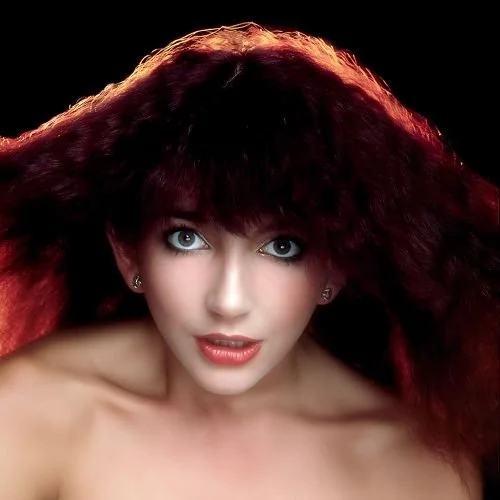
IN THIS PHOTO: Kate Bush in 1978/PHOTO CREDIT: Gered Mankowitz
Kate Bush’s Hammer Horror at Forty-Eight
_________
I try to mark…
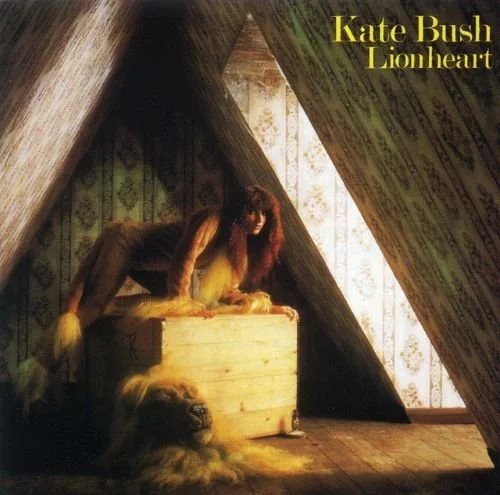
every Kate Bush single and album anniversary. I might miss a couple out, as I have already written about them for various features. However, I did want to celebrate forty-eight years of Hammer Horror. This is the first single from Kate Bush’s second studio album, Lionheart, it was released on 27th October, 1978. Although it is a remarkable song, it would have been more obvious releasing Wow as the lead single. Though Hammer Horror is one of the more notable departures from anything on The Kick Inside (her debut album which was released on 17th February, 1978). In terms of the energy and tone of the song, it may have felt a bigger swing. I will come to features where Bush’s singles are ranked. What people say about Hammer Horror. I am going to source I quote I have used before. Yet it is always useful getting words from Kate Bush when it comes to the inspiration behind her songs. I often think it is a companion to Wow. In that both songs deal with actors and productions. Even if their lyrics pull in different directions, interesting that two of Kate Bush’s singles from Lionheart are about acting. Here is what she said about Hammer Horror:
“The song is not about, as many think, Hammer Horror films. It is about an actor and his friend. His friend is playing the lead in a production ofThe Hunchback of Notre Dame,a part he’s been reading all his life, waiting for the chance to play it. He’s finally got the big break he’s always wanted, and he is the star. After many rehearsals he dies accidentally, and the friend is asked to take the role over, which, because his own career is at stake, he does. The dead man comes back to haunt him because he doesn’t want him to have the part, believing he’s taken away the only chance he ever wanted in life. And the actor is saying, “Leave me alone, because it wasn’t my fault – I have to take this part, but I’m wondering if it’s the right thing to do because the ghost is not going to leave me alone and is really freaking me out. Every time I look round a corner he’s there, he never disappears.”
The song was inspired by seeing James Cagney playing the part of Lon Chaney playing the hunchback – he was an actor in an actor in an actor, rather like Chinese boxes, and that’s what I was trying to create.
As Hammer Horror is forty-eight on 27th October, four days before Hallowe’en, it is worth puling in articles and features that discuss this song. Again, Dreams of Orgonon is a site I utilise a lot. The analysis of Kate Bush’s songs is wonderful. I have sourced them in other Hammer Horror features, though as not many people have written about this incredible single, it is worth bringing in some detail. I am surprised it only reached forty-four in the U.K. After successful single releases from The Kick Inside, it might have given EMI a scare. Wow reached fourteen in the U.K. For Never for Ever (1980), the singles did well but there was not quite the same incredible success as she saw for The Kick Inside where Wuthering Heights reached number one and The Man with the Child in His Eyes hit number six in the U.K. Hammer Horror a relatively minor success:
“There’s also an element of musical gender play at work in “Hammer Horror.” Bush chooses a male story with a masculine narrator and tells it through a feminine perspective with dashes of camp. This is where her “actor in an actor” fascination comes in. She’s telling someone’s story and embellishing it in radical ways. If Mick Jagger sang this track, it’d be him spitting autobiographically at Keith Richards, who would reply with some vicious chords in open D. Bush plays the actor as a frightened damsel, terrified of the stranger in the dark. She begins the song with a trembling “yooooouuu stoooood,” moving down her vocal range for a more playful “they’ve got the stars for the gallant hearts” (the most innocent confession of pissing oneself ever put on record), howl-belting out “HAMMER HOR-ROR” for the chorus, and lapsing into a more classically Bushian “are we really sure about this” in the post-chorus. It’s the most daring Bush vocal we’ve heard on this blog so far. No male artist would go this far in 1978.
What else do those vocals point to? I don’t know, umm, how about the fact that this is the most camp thing ever? Bush maintains some reverence for her Gothic source material, but not without a tongue-in-cheek performance. Her vocal for “Hammer Horror” is full-blown melodrama, containing, as Goth scholar Andi Harriman puts it, the Goth subculture’s commitment to dramaticism, or “transforming yourself into a different form of beauty.” Bush’s vocal range swerves up and down, covering C#6, Bb5, and descending to the lows of F#5 and F5. The song is absurdly eclectic and committed to its shtick, containing a licking guitar and a full-blown string section tensely opening the song and carrying the chorus. Musically, it’s full-blown hedonism. Visually, it’s another story altogether.
I mean, look at that music video. Bush is dressed in black while dancing with a man (presumably dancer Stewart Avon-Arnold) and expressing nearly every note of the song with obsessive literalism. When she sings about a hand reaching out from the dark to grab her, sure enough she gurns at a mysterious hand. Indeed she gurns at everything in the music video — Bush will remain a world class gurner until she develops a more understated relationship with the camera (and thus many great GIFs were lost to the world). Until then, this is the standard for camp Bush videos. It is utterly absurd and completely delightful.
Now we’re discussing camp, we might as well discuss the real ghost haunting this essay: Goth rock. It’s uncontroversial to say that Kate Bush is not Goth. She’s too separate from the Goth subculture in terms of aesthetic, class, and musicality to claim to membership. However Bush is, as we noted earlier, not averse to engaging with the Gothic. She launched her career on it. Naturally there’s going to be some overlap with Goth rock.
One of the most surprising things about Bush is how she’ll often stumble on an aesthetic before anyone else and perform it in a way that sounds nothing like its more famous iterations. “Hammer Horror” was demoed in 1976 and released in 1978, when the Goth scene was beginning to cohere as a subculture. When it was released as a single in October, Joy Division had recently put out an EP, Siouxsie and the Banshees had cracked the Top Ten with “Hong Kong Garden,” The Cure had recorded but not yet released “Killing an Arab,” (yes much orientalism) and early iterations of Bauhaus were playing Northampton clubs. Goth wasn’t a salient cultural movement, but it was beginning to look like a separate scene from punk and even standard forms of post-punk (e.g. Gang of Four, Magazine). While this was going on, Bush had charted multiple times with three singles and two albums. She existed in a different sphere from Siouxsie and Peter Murphy. So why comment on the similarities at all?
Well, the Gothicness of “Hammer Horror” seems like enough of a starting point that the similarities are worth talking about. It’s a glam song in Gothic trappings: parts of it are in a major key and it has a wholesale commitment to excess. Goth is all about excess as well, although in a largely different fashion, one largely focused on underbellies, as Alex Reed puts it. Andi Harriman said of Goth that it embraced punk’s DIY ethos, “combined it with elements of Ziggy Stardust’s alien-like presence, and cloaked it in darkness.” Bush is less committed to the decrepit and alien. At its core, her aesthetic retains some English respectability. Her aversion to subcultures and living in a privileged space kept her from a total commitment to alternative culture. But the major overlaps in Bushian and Goth aesthetics are perhaps self-evident: looks, camp, femininity, and, well, Gothicness”.
There were some mixed reviews for Hammer Horror in the press. Many comparing Bush unfavourably to Joni Mitchell. In the sense they were both seen as having high-pitched voices, but Mitchell deeper and more substantial. However, there was a kinder and more affectionate review from Tony Parsons: “Ominous post ELO orchestration with the unrequited lust of a broken affair viewed as living dead love-bites-back as in classic 50’s British celluloid, a real nail biter, hypnotic and disconcerting”. He was writing for NME. At the end of 1978, Kate Bush has garnered a lot of attention because of her debut. Though she was still being mocked and seen as irrelevant. I think perception did shift not too long after Hammer Horror, but the prospect of an artist dressed in black and appearing in this camp and theatrical video would not have been seen as cool by a lot of the press. Lionheart is a camp album. There are themes of fear, paranoia and anxiety throughout. Coffee Homeground and Fullhouse. As there is not a lot written about Hammer Horror, I will finish with singles rankings and what has been said about this track. Recently, MOJO ranked Kate Bush’s best fifty tracks. Hammer Horror came in forty-four. I am not sure if this was intentionally to match its U.K. single chart position: “Despite the title’s reference to the legendary British horror movie studio, Bush cited Universal’s 1957 film Man Of A Thousand Faces – where James Cagney played silent star Lon ‘Phantom Of The Opera’ Chaney – as inspiration. Bush took the idea of an actor playing an actor further, offering a complex narrative wherein a leading man dies and is replaced in the role by his best friend – the former returning to haunt the latter. Despite the track’s lyrical melodrama and playful musical charm, it missed the Top 40 when released as a single in October ’78”.
I did want to finish with this 1978 interview, as it sort of explains why Kate Bush wanted Hammer Horror to be the lead single from Lionheart. Concerned that she was being seen negatively and as light and romantic, this was more of a statement. A change of direction aimed to shift perception:
“Overall, Bush was concerned that the new album should differ quite radically from her first. Maybe I'm a bit too close to it at the moment, but I find it much more adventurous than the last one. I'm much happier with the songs and the arrangements and the backing tracks.
"I was getting a bit worried about labels from that last album: everything being soft, airy-fairy. That was great for the time, but it's not really what I want to do now, or what I want to do, say, in the next year. I guess I want to get basically heavier in the sound sense...and I think that's on the way, which makes me really happy.
"I don't really think that there are any songs on the album that are as close to Wuthering Heights as there were on the last one. I mean, there's lots of songs people could draw comparison with. I want the first single that comes out from this album to be reasonably up-tempo. <The first single was Hammer Horror .> That's the first thing I'm concerned with, because I want to break away from what has previously gone. I'm not pleased with being associated with such soft, romantic vibes, not for the first single anyway. If that happens again, that's what I will be to everyone."
She is acutely aware of the danger of being pigeon-holed, and is actively engaged in discouraging that.
"If you can get away with it and keep changing, great. I think it should be done because in that way you'll always have people chasing after you trying to find out what you're doing. And, anyway, if you know what's coming next, what's the point? If I really wanted to, I guess I could write a song that would be so similar to Wuthering Heights . But I don't. What's the point? I'd rather write a song that was really different, that I liked, although it might not get anywhere."
Have you heard her new single, Hammer Horror ? Now that's really different.
The major changes in the preparation for Lionheart was undoubtedly that Kate, over-burdened with promotional schemes for the first album, was for the first time left with the unsavoury prospect of meeting deadlines and (perhaps) having to rush her writing to do that. It was a problem she was having trouble coming to terms with at our last meeting, when she spoke in obvious admiration of bands like Queen--who came up with the goods on time every year, and still found time to conduct world tours.
But Kate insisted that she wasn't going to be rushed, and eventually the songs came along. In all, it took ten weeks to record the twelve tracks (ten are on the album), an indication of the meticulousness shown by Bush herself in exercising as much control as possible over every facet of the work. "I'm not always right, and I know I'm not," she says, "but it's important to know what's going on, even if I'm not controlling it."
I'll be interested to read the reviews of Lionheart . It'll be sad, I think, if the album is greeted with the same sort of insulting indifference that The Kick Inside met, when Kate Bush was pathetically underrated.
Lionheart is, as the artist desired, a heavier album than its predecessor, with Bush setting some pretty exacting tests for the listener. Kate's songwriting is that much more mature, and her vocal performance has an even more vigorous sense of drama.
Musically, the tracks on Lionheart are more carefully structured than before. There is, for instance, a distinct absence of straight songs, like the first album's Moving, Saxophone Song, The Man With the Child in His Eyes and The Kick Inside . Here, only Oh England, My Lionheart makes an immediate impression and I'm not sure that the move away from soft ballads (be it to secure a separate image) is such a wise one. As Bush proved on those songs on The Kick Inside, simplicity can also have its own sources of complication.
There is much about this album that is therapeutic, and often Kate Bush is the subject of her own course. Fullhouse is the most blatant example of that. <There is no evidence that this song is autobiographical.> On of the album's three unspectacular tracks musically (along with, in my opinion, In the Warm Room and Kashka From Baghdad ), it is still lyrically a fine example of ridding the brain of dangerous paranoias. The stabbing verse of "Imagination sets in,/Then all the voices begin,/Telling you things that aren't happening/(But the nig and they nag, 'til they're under your skin)" is set against the soothing chorus: "You've really got to/Remember yourself,/You've got a fullhouse in your head tonight,/Remember yourself,/Stand back and see emotion getting you uptight."
Even Fullhouse is mild, though, when compared to tracks like Symphony in Blue, In the Warm Room and Kashka From Baghdad, which exude an unashamed sensuality. Symphony in Blue, the opening track, is a hypnotic ballad with the same sort of explicit sexual uninhibitiveness as Feel It from the first album. "The more I think about sex,/The better it gets,/Here we have a purpose in life,/Good for the blood circulation,/Good for releasing the tension./The root of our reincarnation," sings Kate happily.
In Search of Peter Pan, Wow (running together on the first side) and Hammer Horror are are examples of Kate's strange ability to let the subconscious mind run amok in the studio. Wow is tantalisingly powerful and Hammer Horror (the single) is most impressive for the way it seems to tie in so many of the finer points of the first album and project them through one epic song”.
Hammer Horror turns forty-eight on 27th October, so I wanted to write about it. Although not seen as one of her very best songs, it is an important one. A rushed second album, Kate Bush was conscious of not repeating herself. If she has released Wow first or even Symphony in Blue or Kashka from Baghdad, she may have felt like she was in danger of being pigeon-holed and unable to shift perceptions those in the press had. It is a brave song and one of her better ones, though she would regain chart success with Wow. Rather than Hammer Horror being curio or an insignificant bump in the road, it is a fascinating song that Dreams of Orgonon dissected and revealed some strong points. A track that should get…
A lot more love.