
FEATURE:
Give Me That Little Kiss

IN THIS PHOTO: Kate Bush in September 1989/PHOTO CREDIT: Kevin Cummins
Kate Bush’s This Woman’s Work at Thirty-Seven
_________
I have written about…
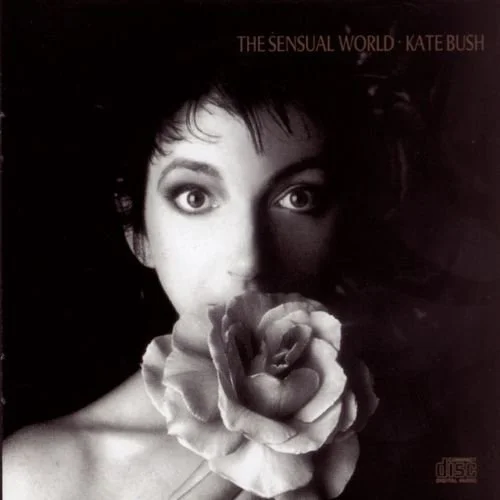
this track a fair few times. I wanted to come back to it, as This Woman’s Work is thirty-seven on 20th November. Rather than just repeat what I have done before, there is a new angle I want to approach. I do want to start with some background to the song. Kate Bush speaking about it. As this was a track that featured in a film before it was on The Sensual World. This is what Kate Bush said in 1990 at Kate Bush Con regarding the wonderful This Woman’s Work:
“There’s a film called ‘She’s Having A Baby’. And John Hughes, the director, rung up and said that he had a sequence in the film that he really wanted a song written to be with. And I’d only worked the once before on the ‘Castaway’ film – where I’d really enjoyed that – so I was extremely tempted by the offer. And when he sent the piece of film that the song was going to be part of, I just thought it was wonderful, it was so moving, a very moving piece of film. And in a way, there was a sense that the whole film built up to this moment. And it was a very easy song to write. It was very quick. And just kind of came, like a lot of songs do. Even if you struggle for months, in the end, they just kind of go – BLAH! – You know. [Laughs]. So that was the first song that I wrote for ‘The Sensual World’ album. In fact at the time we weren’t even sure whether to put it on the album or not. And I must say that Del was very instrumental in saying that I should put it on the album, and I’m very glad I did. Because I had the most fantastic response – in some ways, maybe the greatest response – to this song. And I was really – I was absolutely thrilled, that you felt that way about it”.
I did not know that Del Palmer was very instrumental in getting This Woman’s Work onto The Sensual World. Many people would not have seen She’s Having a Baby. I did want to explore the use of Kate Bush’s songs in the media.
This Woman’s Work has been used in various things through the years. There does seem to be certain tracks that are used quite a lot in films and T.V. I think it is designed to get that emotional hit, even if the track itself does not necessarily fit perfectly alongside the visual. Perhaps a little lazy or cheap, it’s perhaps taken something from the song. Also, This Woman’s Work only getting to number twenty-five in 1989. In terms of Kate Bush’s chart positions, there was this inconsistency. The first single from The Sensual World, its title track, reached number twelve. That is quite good. I am surprised that This Woman’s Work was lower. To me, it is one of Bush’s most extraordinary tracks. In 1989, other genres were doing well in the charts. Perhaps This Woman’s Work was seen as too heavy. It has been reissued since. Bush reworked This Woman’s Work for 2011’s Director’s Cut. I still prefer the version that is on The Sensual World. Although I have bemoaned the overuse of This Woman’s Work in film and T.V., it does seem to have this ongoing relevance. There are some songs that can be adapted and soundtrack so many different situations. Be urgent and important at various times. That is the case with This Woman’s Work. From its origin in a 1988 film, in years since, This Woman’s Work has been adopted by filmmakers to add punch and emotion to their work. This Far Out Magazine article explains more:
“In truth, Bush’s lyrics are so exceptionally universal in this song that they become relevant to various significant pop culture moments, providing the perfect song for moments of complete intensity. While the song is entirely fitting with the scene in She’s Having a Baby, it’s since been used as a poignant way of enhancing the struggles within the narratives of different protagonists.
For instance, the song features in the second season of The Handmaid’s Tale during a chilling opening sequence where June (Elisabeth Moss) and several other Handmaids come to the grim realisation that they are facing execution. As each woman is forcibly led towards a noose, Bush’s hauntingly tender vocals echo in the scene, transforming it from deeply sad to completely devastating.
“This woman’s world /Oh, it’s hard on the man,” Bush sings, commenting on a society that has become upended, holding an inherent structure that is harder on the men, even though, in reality, it’s considerably harder by a country mile for the women. While this clever interplay of lyrics and juxtaposition was not a concept Bush had necessarily anticipated during the 1980s, her ability to step into another’s shoes speaks volumes about her empathy as an artist.
Aside from also appearing in It’s Always Sunny in Philadelphia, among other comedies and dramas, the usage of ‘This Woman’s Work’ in recent years has often been a technique for elevating the fight for justice. This may have been triggered by Maxwell’s version of the song, which evolved into a protest anthem and a symbol of social change, highlighted during his live shows with visuals depicting lives lost, often due to police violence.
The song’s significance was further emphasised when used in the series Shots Fired, addressing racism and police brutality, and in Spike Lee’s She’s Gotta Have It, reflecting themes of gentrification and racial tensions. In both contexts, the song conveyed the exhaustion and trauma of witnessing recurring tragedies and the ongoing struggle of a black woman.
It makes sense, therefore, as to why ‘This Woman’s Work’ hugely complements The Handmaid’s Tale, a series portraying an America with an unavoidably bleak future. The song’s use in this show, alongside many others, underscores the constant threat or fear of social injustice that looms over the oppressed while emphasising the enduring struggle for hope and the chance of liberation. In essence, ‘This Woman’s Work’ is an ode to all those who have struggled, each amid an ongoing societal effort that never truly concludes”.
I guess it is about getting the balance right. It is great that Kate Bush’s songs are used in film and T.V., but some people use songs just because it is by Kate Bush. Or the wrong song is used. I wrote a feature recently wondering why Kate Bush gave permission for Hounds of Love to be used in Monster: The Lizzie Borden Story. It seemed misjudged. It may seem that This Woman’s Work has been overused, though it is a song that has this flexibility. In terms of its messages and meaning.
We are living through a time when women are repressed and under threat. Their rights being stripped and taken away. Vulture also wrote a feature about This Woman’s Work in 2018. You can look at the U.S. now and reproductive rights being taken away. This Woman’s Work, for so many women, takes on this whole new meaning. Whilst it might seem overkill to use it in a load of modern shows and films, I do feel the song has this huge modern relevance. Though it could not get the same success as Running Up That Hill (A Deal with God) did in 2022 when used in Stranger Things, what is to say This Woman’s Work cannot keep being used? If it is used appropriately and right, then it can have this enormous impact:
“When there’s an element of irony involved, Bush’s otherwise cathartic, ultraserious ode to pain and regret can even succeed at scoring laughs, as it did in the season one finale of You’re the Worst, when a deflated and drunk Lindsay sang a karaoke rendition of “This Woman’s Work.” As played by Kether Donohue, Lindsay did so beautifully, sincerely, and with absolutely no awareness that she’s never done any actual work in her whole damn life.
But in the past year or so, “This Woman’s Work” has more often been used to reflect the mood and mind-set of those fighting injustice, or those just trying to find shreds of hope in hopeless times. That trend may have started because of the way that Maxwell — who first covered the song for MTV Unplugged in 1997, then recorded it on his 2001 album Now — began to frame it during his 2016 live shows, flashing images of lives lost, often to police violence, on the screen while he performed. “As this violent year draws to a close, this song became protest, dirge and battle cry,” a writer for the Economist put it in October 2016. “Night after night, by juxtaposing black and white, man and woman, today and yesterday, ‘This Woman’s Work’ has been reborn as a plea for social change and an olive branch of inclusivity.”
It made complete sense, then, when Maxwell’s take on the song was featured in a trailer for Fox’s limited series Shots Fired, which explored racism and police brutality. In that context, the song captured exhaustion and trauma of seeing the same tragedies play out over and over again (“Make it go away”).
When Spike Lee used it in the penultimate episode of She’s Gotta Have It, again within a story line about cops and racism, it had a similar effect. Maxwell’s cover slips in after the protagonist, Nola, insists on being taken into custody after an uppity white neighbor accuses her homeless friend Papo of spraying graffiti on the steps of a Brooklyn brownstone. Both Papo and Nola, who tries to take responsibility for the infraction, end up getting arrested and head to the station while Maxwell, again, insists in that desperate falsetto that they can find strength. To an even deeper degree than it does in that admittedly brief Shots Fired trailer, the song communicates how tired Nola is of having to defend herself and her friends, again and again having to do the work of a black woman living in a gentrifying neighborhood.
Now that we’re two years out from Maxwell’s 2016 concert tour and his reimagining of the subtext for “This Woman’s Work,” it’s obvious why the song resonates even more now. “Pray God you can cope” isn’t just the first lyric of this beautiful dark night of the soul set to music; it’s what people whisper to themselves in 2018 before they check their news feeds. “Make it go away” is what we say once we start processing what’s there. There’s a sense in the air that the country is stuck in some limbo between despair, surrender, and stubborn perseverance. All those feelings are conjured up by Kate Bush’s song, which was originally conceived to capture a moment of profound personal crisis but works just as well at capturing a social or political one.
That makes it just right for a drama like The Handmaid’s Tale, which is often received as if it’s the worst-case scenario of America’s future. In every episode, June and her fellow Handmaids are trying to summon the fortitude to press on, to get to a place where they don’t feel like they should be hoping, but where they can just hope. By placing “This Woman’s Work” in that near-hanging sequence at the beginning of season two, the show emphasizes through music that the possibility of death always hovers over June and her Handmaid sisters, but their fight to find a little life — not just by bearing children but by someday being free enough to build lives for themselves again — is going to continue. In other words, this woman’s work is never done.
“This Woman’s Work” is also a fitting in the Hulu drama for an simpler reason: Once again, a song that Kate Bush wrote just a few years after Margaret Atwood published The Handmaid’s Tale is being used to convey just how scary it is when a pregnant woman finds her life in danger”.
By 2023, there were articles like this that asked people to stop using This Woman’s Work. How it was appearing in everything. That is the hard thing. People have their own view on the song and whether it works in The Handmaid’s Tale or not. There has been this debate. I do feel that it is a song that still has a lot of life in it. I do agree that a couple of times the song has been used and it has not worked. Though I have warmed to the idea of this song having more life on the screen. Filmmakers need to stop using it as this cheap or manipulative emotional hit and actually ensure that the context is considered. Is This Woman’s Work the best choice for this particular moment?
“It’s absolute torture to watch. It’s cruel to the point of viewer manipulation, pure trauma porn from a show that made its name by trading in the stuff. And Bush’s song, once a tender examination on the fragility of life, transforms into a vicious ordnance, stripped of any meaning to give viewers a psychological beating.
Somehow, this scene being a big fake out, where no one actually dies, only makes it feel more ruthless. I was so angry with The Handmaid’s Tale after that episode, so upset that its writers and music supervisors thought that no one would call them on their bullshit, that I never watched another frame of the show. Was I paying for Hulu at the time, meaning my viewership, or lack thereof, would have any effect on their metrics and margins? No. But I like to think I stuck it to them.
The second shrewd use of “This Woman’s Work” came just as recently as this year, in A Man Called Otto. That Tom Hanks clunker is already a deeply narratively confused film, and it doesn’t help that Otto has no conceivable idea where to start, when it comes to sprinkling in stirring resonance throughout the movie. However, the one thing going for this entry is that it has the good sense to mimic how the song was used in She’s Having a Baby (though if you’ve got to imitate a scene that already worked much better, you’re already juggling bigger problems than deciding what song to slap over it.)”.
It is good that Kate Bush gives permission for her songs to be used. There are occasions when you wonder why she agreed and if the song is being tarnished because of that decision. I feel she is attracted to that idea of her music being linked to cinema. However, I still stand that the Hounds of Love inclusion in Monster: The Lizzie Borden Story was an error. But This Woman’s Work has been used quite a bit. I still think that it can and should be used, though I guess there needs to be this consideration as to whether the song is right for that moment. As it turns thirty-seven on 20th November, I wanted to discuss it again. One of Kate Bush’s most essential tracks, This Woman’s Work holds such meaning and power…
TO this day.