
FEATURE:
Can I Have It All Now?
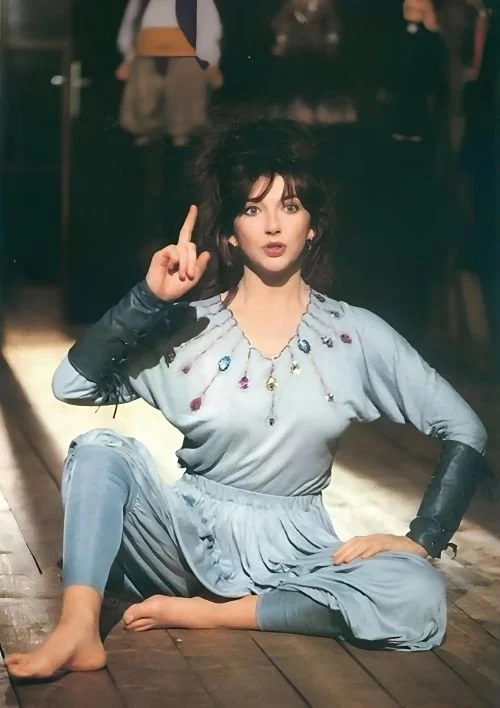
Kate Bush’s Suspended in Gaffa at Forty-Four
__________
I do like to mark…
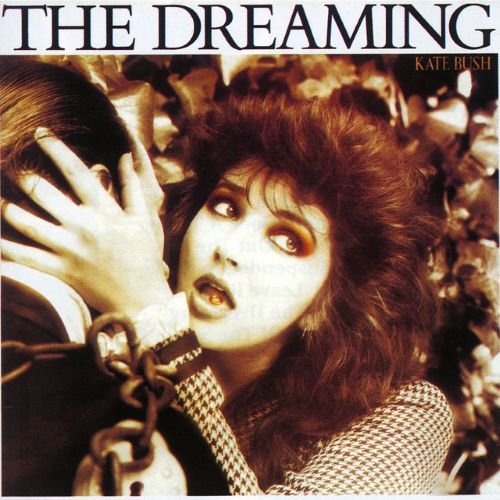
album and single anniversaries each year when it comes to Kate Bush. Despite the fact that I have written about this song before and am going to repeat myself, I did want to discuss Suspended in Gaffa, as it turns forty-four on 2nd November. Whilst the inferior There Goes a Tenner was released in the U.K, Suspended in Gaffa was released in Australia and Europe. It doesn’t happen now, as we don’t have physical singles, but you would get artists who released different singles in different territories. The Dreaming did not have much in the way of ready-made singles. Kate Bush’s 1982 album was a commercial success, though not as high-selling as her earlier work. Suspended in Gaffa is a terrific single and one of Kate Bush’s best songs. It did not really do much when it was released. There are various reasons to love this song. The musicians on it. Including her brother Paddy on mandolin and strings and her then-boyfriend Del Palmer on bass, it is this glorious song whose video features a cameo from Hannah Bush. Kate’s beloved mother, I will come to articles around this song. There is a lot to discuss with Suspended in Gaffa. The Dreaming is full of gems, but I especially love Suspended in Gaffa. In terms of its lyrics and what the song is about. There are interviews where Kate Bush talked about the inspiration behind Suspended in Gaffa:
“‘Suspended In Gaffa’ is, I suppose, similar in some ways to ‘Sat In Your Lap’ – the idea of someone seeking something, wanting something. I was brought up as a Roman Catholic and had the imagery of purgatory and of the idea that when you were taken there that you would be given a glimpse of God and then you wouldn’t see him again until you were let into heaven. And we were told that in Hell it was even worse because you got to see God but then you knew that you would never see him again. And it’s sorta using that as the parallel. And the idea of seeing something incredibly beautiful, having a religious experience as such, but not being able to get back there. And it was playing musically with the idea of the verses being sorta real time and someone happily jumping through life [Makes happy motion with head] and then you hit the chorus and it like everything sorta goes into slow mo and they’re reaching [Makes slow reaching motion with arm] for that thing that they want and they can’t get there. [Laughs]
Kate Bush Encyclopedia also contains a section about the video. This is something I have included before, but it is really great to read what Bush said about it and working with her mother. How charming and loved she was on the set:
“The video did remain uncomplicated – just a few effects and just one extra: but a very special. one. There is one section where a child’s voice says, ‘Mother, where are the angels? I’m scared of the changes.’ And there was only one person that could be addressed to – my mother. When I asked her to appear in the section, contrary to my concern about her nerves, she was more than obliging and said, ‘Yes’. She was definitely the star of the day, and waited patiently hour after hour as we slowly moved through the bulk of the shooting to eventually reach her debut. I was amazed at her grace and stamina: as all of us began to wane and wilt, my mother continued to blossom and glow, and her only worries were getting back home in time to get dinner and hoping she would not succumb to an attack of giggles during the vital moments of being on screen. She needn’t have worried, for she is a natural professional, a real star and my favourite mum”.
The video is one of the best from Kate Bush. Brian Wiseman directed it. The singles from The Dreaming had these videos that were quite cinematic. Compared to her very earliest videos, there was this growing ambition. Or the videos were becoming more cinematic in my view. Hounds of Love (1985) took another step. The videos from that album are iconic. I do want to get to a couple of articles about Suspended in Gaffa. I think this is a hidden gem. Even so, it has been covered quite a bit, though I have never heard it on the radio. Or not for a long time.
Before getting to a Dreams of Orgonon, there is a recent article from Paste that ranked the best one-hundred songs of the 1980s. Suspended in Gaffa came tenth. This was the highest-ranking track from Bush in that list. People might think Hounds of Love, Cloudbusting, Running Up That Hill (A Deal with God), Babooshka or The Sensual World would come higher, though it is this pearl from The Dreaming that got the honours:
“No other album captures the ambition to “have it all”—namely as a woman artist—in all its grotesque glory like Kate Bush’s The Dreaming does, as it remains not only a witches’ brew of sweat, blood and the desire to consume any oncoming obstacle whole, but an unfiltered testament to the wrath of her artistic vision. Even in a decade containing most of her career highlights, Bush would never swing quite this big again, something she clearly already knew while writing the record’s rickety waltz, “Suspended in Gaffa.” Even while shrouded in biblical metaphor, Bush’s line of questioning is clear: Is it possible to reach new creative heights in an industry that often casts people like her aside? Is it possible to see god (of any strain) again once you’ve glimpsed him already? Is it possible to “have it all”—create challenging work, be taken seriously, and escape with your sanity to tell the tale? By this point in her story, Bush had already broken records and made history as a woman “having it all” on the charts, but “Suspended in Gaffa” marks another milestone of Kate Bush discovering what she was meant to sound like: brilliant, unwieldy, and never replicated”.
Even if Suspended in Gaffa is a bit of an underrated track, there have been lists and polls where it has been placed quite high. MOJO published an article in July ranking Bush’s fifty-best songs. At twelve is Suspended in Gaffa: “Bush once suggested Suspended In Gaffa was a hangover from her Roman Catholic upbringing. The wonky time signature, oom-pah-pah piano intro and breathlessly delivered lyrics (“Can I have it all?”) complement the idea that it’s about briefly glimpsing the divine. Yet it also evokes that dreamlike state where you can only move in infuriating slow motion and everything is tantalisingly out of reach”. In 2024, Autostraddle published a fascinating article about Kate Bush and her music. This is what they said about a song I am keen for people to investigate: “Suspended in Gaffa” similarly puts piano and percussion in the forefront together with an uptempo buoyancy that makes the track feel almost hypnotic. Bush’s vocals stress certain syllables of the words throughout to connect the composition with the spiritual conundrum the speaker is having in the lyrics. The cinematic lyrics describe the feeling of wanting something desperately but not being able to reach it without putting in the work it takes to get it. There’s a raised-in-Catholic-household angst permeating the song that feels especially cathartic for me”.
I am ending with an article I have sourced before. Dreams of Orgonon wrote such insightful and detailed articles about Kate Bush’s songs, and this article about Suspended in Gaffa is tremendous. I did want to source a bit of it, as I feel a lot of people are not aware of this song or have not heard The Dreaming. Ahead of its forty-fourth anniversary, I was keen to spotlight one of her greatest moments. And that incredible video where she got to embrace her mum:
“Public response was ambiguous. In the years since its release, The Dreaming has gained a reputation as Bush’s most underrated album. This is a slight exaggeration, if a basically understandable one. The Dreaming peaked at #3 in the UK, but it domestically sold a relative paucity of 60,000 units (to compare, Never for Ever sold 100,000 UK units, and even Lionheart hit 300,000). It wasn’t close to a commercial failure by any means, but it was decidedly less popular than Bush’s prior work. This can be explained by a number of factors, from the obvious aesthetic ones (The Dreaming’s maximalism was viewed by some as a bridge too far for Bush), to timing (“Sat In Your Lap” predated the album’s release by over a year), and EMI’s timid promotional campaign. Reviews were mixed, if better than they’re sometimes declared in retrospect. The indelibly truculent Robert Christgau offered The Dreaming a conditionally approbatory review (“the most impressive Fripp/Gabriel-style art-rock album of the postpunk [sic] refulgence makes lines like ‘I love life’ and ‘some say knowledge is something that you never have’ say something”). Melody Maker’s Colin Irwin effused about Bush’s “fearsome twisted voice” for “put[ting] the fear of God in me,” while future Pet Shop Boy Neil Tennant observed Bush’s efforts to “become less commercial.” Record Mirror’s Daniella Soave curtly acknowledged Bush’s ambitions while saying “until I’ve heard it another 50 times I haven’t a clue.” What stands out in the majority of reviews is their areas of accord: everyone agreed that The Dreaming was defined by multiplicity, weirdness, a distinct non-commercialism, and a willingness to try everything. Even if listeners couldn’t agree on whether The Dreaming worked, everyone had a grasp on what it was.
This degree of unified disagreement speaks volumes on the nature of The Dreaming. For a pointedly (and willfully) unkempt LP, its nucleus of formal ambition and complex emotional catharsis is remarkably consistent. The album boils down to an exploration of fairly close-knit concepts: the liberatory effects of madness in women, the untethering of the subconscious, the symbiosis of body and mind, and the aching voice of repressed people. Its ethos is a cathartic one, about freeing one’s emotions from self-imposed bondage. The resulting emotions can be scary, but The Dreaming treats that as neither positive nor negative, merely a fact of having emotions.
One perspective that appears throughout The Dreaming is that of childhood and play — it treats the untethering of the subconscious as revealing a small, confused child. From one perspective of maturity, people can be viewed as complex adult emotions and cynicism burying a repressed inner child. “Suspended in Gaffa” certainly lends itself to this reading. Panto-like in its musical qualities (and certainly in its music video, which we’ll get back to shortly), it’s a waltz in C major, playful and initially parsimonious. Par for the course in The Dreaming, the verse’s chord progressions follow the rhythm in shape, particularly with its descending patterns of two major chords followed by minor chords (V-IV-ii, then V-IV-vi-iii), with a result of nearly staccato chipperness and a less cheerful supertonic or submediant. Its buoyancy is something of a ploy though — Bush’s vocal, while acrobatic in its emphatic lunges towards certain syllables (“OUT/in the GARden/there’s HALF of a HEAVen”), maintains a certain reservation often running lyrics together (“Whenever I’ve sung this song I’ve hoped that my breath would hold out for the first few phrases, as there is no gap to breathe in,” Bush wrote later), as Bush sings primarily from the back of her throat with results that sound like she’s gulping the lyrics, likely a frustrating move to listeners with less patience for Bush’s sometimes unintelligible lyrics. “FEET Of MUD” and “IT ALL GOES SLO-MO” are certainly B.V.s for the ages.
Yet at the core of this excess, there’s a simplicity to “Suspended in Gaffa.” It has the same expansive and consumptive obsessions as its sister songs — youthful aporia, an obsession with an unreachable god, a desire to unite with the subconscious. Yet it filters this through a childlike, somewhat Carrollian filter, with a surfeit of internal rhymes, abstract nouns, and ambiguous pronouns like “out in the garden/there’s half of a heaven/and we’re only bluffing,” “I try to get nearer/but as it gets clearer/there’s something appears in the way,” “I pull out the plank and say/thankee for yanking me back/to the fact that there’s always something to distract.”
The lyric is an endless series of prevarications, often relating to knowledge, or the unattainability of it (see “Sat in Your Lap”). The refrain’s “not till I’m ready for you,” “can I have it all now?/we can’t have it all,” “but they’ve told us/unless we can prove that we’re doing it/we can’t have it all” speak to an “all or nothing” approach, not identifying exactly what’s at stake so much as its urgency. Desire gets codified as an end in itself, often for a god (“I caught a glimpse of a god/all shining and bright”) — “until I’m ready for you” gives away the game (constructive spiritual union with a deity is impossible if one is unready to consent). “The idea of the song is that of being given a glimpse of ‘God’ — something that we dearly want — but being told that unless we work for it, we will never see it again, and even then, we might not be worthy of it,” Bush explained to her fan club. Tapping into the subconscious is a difficulty — when one has a glimpse of something wondrous, there’s a desperation to retrieve the feelings associated with it. “Everything or nothing” can be a neurodivergent impulse, but it’s also how a taste of the sublime works.
The nature of aporia in “Suspended in Gaffa” is cinematic. There’s the title, obviously, referring to the line “am I suspended in gaffa?,” itself a reference to gaffer (or “gaffa”) tape, which is commonly used in film and stage productions. The laboriousness of cinema is inferred a few times (“it all goes slo-mo”), as reflections and manipulation, staples of cinema, get pulled into the mix. Bush even goes quasi-Lacanian at one point; nudging herself with “that girl in the mirror/between you and me/she don’t stand a chance of getting anywhere at all,” a moment of amusing self-deprecation”.
I will end here. A divine moment from the wonderful Kate Bush, Suspended in Gaffa is a song that I will always admire. It has got a bit of acclaim in years since it release, though not as much as it deserves. It is the most-streamed song on The Dreaming, so there is awareness of it. Its video viewed two million times on YouTube. The lyrics are incredible. This is my favourite section: “With a camel/Who's trying to get through it/Am I doing it?/Can I have it all now?/I pull out the plank and say/"Thank you for yanking me back to the fact that there's always something to distract...". Forty-four years after it was released in a single, Suspended in Gaffa is one of the greatest things…
KATE Bush has recorded.