FEATURE:
Room for the Love
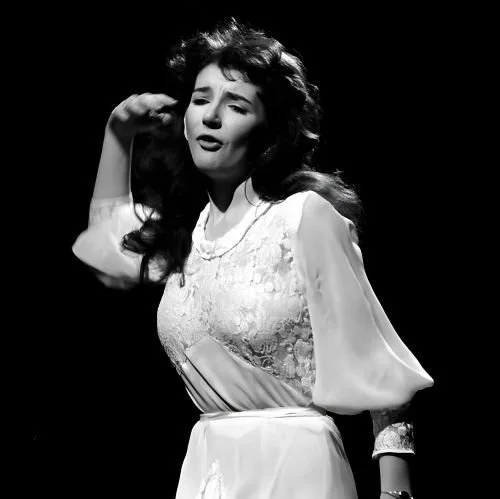
IN THIS PHOTO: Kate Bush performing Wuthering Heights at the BBC in 1978/PHOTO CREDIT: Don Smith
Why Kate Bush’s Detachment from The Kick Inside Should Be Reconsidered
__________
I am putting out…
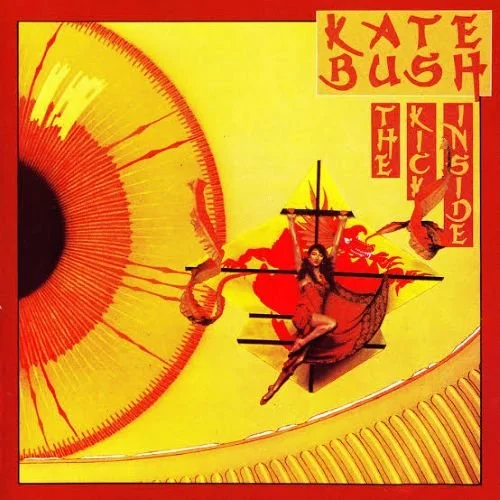
Kate Bush features that take us to her earliest career days. Around 1978 and before. I am re-reading Graeme Thomson's fantastic and essential book, Under the Ivy: The Life and Music of Kate Bush. If you read the first few chapters, you get a good impression of who Kate Bush was when she was at school. We learn about her earliest relationships, taking danced classes and becoming infatuated with movement and mime, in addition to the earliest recordings. It is my favourite period of her career. In terms of the albums she is proud of and how she views her first few – 1978’s The Kick Inside and Lionheart; 1980’s Never for Ever -, I feel there is a sense of detachment and Bush not really happy. She started to feel in control and content when it came to 1982’s The Dreaming. She produced that album solo. When it comes to her debut, The Kick Inside, Graeme Thomnson writes how it is unique. None of her peers were recording and writing in that way. In terms of how she addressed love and desire. The characters she brought in. So unconventional and original, this is an album that still sounds daring and hugely accomplished today. No doubt a genius, I feel the teenage Kate Bush was not ceded much control. Producer Andrew Powell assembled the band and was directing. Bush could suggest ideas, though perhaps she felt more of a bystander and not the architecture. These were her songs, so I am not sure whether she would do something different with production. Even if there would have been discussion whether she could produce, as a young artist on her debut, it would have been a huge gamble. She distanced herself from The Kick Inside pretty much as soon as it came out (February 1978). Even that early on, she wanted her music to be raw and real. The album was performed by excellent and experienced musicians. The recording period was a very happy one.
That said, Bush did want that masculine energy that we hear on later albums like The Dreaming. One of the quotes that stands out is when she said she did not want to be airy-fairy and light. “I’m not happy with being associated with such soft, romantic vibes”. That’s what she said to Kerrang! in 1984. She wanted to get heavier in the sound sense. More guts., punch, bites and masculinity. EMI would definitely not have thought that hearing her demos and her earliest recordings. With Lionheart, there was a bit of a move to something heavier. Songs like Hammer Horror and Wow a bit punchier. It seems like The Kick Inside was a compromise or disappointment, though these were her songs and she would have been able to have some call and vote. Though it seems some of the demos changed radically before they got onto the album. Whether Andrew Powell heard a heavier and bolder Coffee Homeground or Wow and then softened it. That feeling that a young female singer should be more romantic and lighter. You could say a masterpiece like Hounds of Love is so revered is because it has this hunting instinct. Big drums and big production. It is epic and masculine. By 1989, when The Sensual World came out, Bush did move to something more female. That desire to explore sounds and themes with a more feminine lens. From Never for Ever to Hounds of Love, there was this increasing push towards music that was gutsier and bolder. You can understand why she a little disappointed that her 1978 debut was a bit soft. That is not what I think, though you feel Kate Bush was a little disenchanted. I think she was wrong to distance herself. Maybe she does not feel that way today. You can hear elements of 2005’s Aerial and 2011’s 50 Words for Snow and nods back to The Kick Inside. More piano-based and with this more romantic element, I do feel things came full circle. A lot of reviews paint The Kick Inside as being a bit soft and airy-fairy. If once was the case that artists name-checked Kate Bush based on Hounds of Love, I feel more and more are invested in The Kick Inside. You can hear direct connections to artists such as Billie Eilish.
This somewhat stranger Kate Bush is intriguing and very attractive to a wave of younger songwriters. Never seeing The Kick Inside as this over-romantic and somewhat sickly album, there is this unconventional approach. Bush’s vocals always exciting and unique. It is not like The Kick Inside is full of ballads and the tracks are traditional. Although several of the tracks document love and desire, she was writing in a way that was not soft or commercial. I feel some of Kate Bush’s regret was mirroring what critics said. How they feel The Kick Inside is airy-fairy. Basically agreeing with them. This is not doing justice to an album that is bold and brave. She talks about menstruation and period pain. Suicide, incest and ghosts. You cannot define The Kick Inside as being romantic and light. Yes, there are songs that talk about passion. Though the lyrics are unusual and poetic. Think about The Man with the Child in His Eyes. How can anyone who writes a song like this not want to be associated with it?! Both Beth Orton and Fiona Apple have said how The Kick Inside is among their favourite albums. The latter grew up playing and singing songs from it. You can feel that D.N.A. in Apple’s music. How she writes about love and sex. Some songs that discuss abuse or are very open and shocking. This bravery and rawness is something that might have in part have been influenced by The Kick Inside. How fearless and open Kate Bush is on her debut. You could never listen to its thirteen tracks and think that it is soft or lacking in bite.
If she was thinking this in 1984, that would be when Hounds of Love was taking shape. I would like to think that, if asked now, she would acknowledge how incredible The Kick Inside is. I do want to bring in a case for the defence. Laura Snapes’s review of The Kick Inside for Pitchfork. I have sourced this before, but her words and descriptions highlight how The Kick Inside was anything but too soft and romantic. Even when Bush was writing about romance, you could find something cheeky, explicit, tantalising and risk-taking. Not like this teenage artist was being submissive, doe-eyed and this awe-struck woman who was writing these sappy and sickly-sweet love songs. I don’t think there is anything on The Kick Inside that tallies with Kate Bush’s disassociation. What compelled her to say this?! Her words might not have been right. Feeling that The Kick Inside was lacking in production and instrumental punch. In terms of her lyrics and singing, you can feel this electric charge and sweat. In its own way, it has quite a lot of bite and body. Even Feel It, which might be one of the most romantic or conventional, features these lines: “Feel your warm hand walking around/I won't pull away, my passion always wins”. This curiosity and passion from a young woman. She is not writing romantic and slushy songs like many of her peers. There is this physicality and risqué element. I guess Them Heavy People could be seen as a little hippy-dippy or airy-fairy. Though it is a song that is captivating and compelling. Laura Snapes’s words about The Kick Inside highlights how she was definitely not writing in a soft and overly-feminine way. Never submissive or soft, even moments that don’t gel and could be better are still so different to anything that was around in 1978:
“Besides, Bush had always felt that she had male musical urges, drawing distinctions between herself and the female songwriters of the 1960s. “That sort of stuff is sweet and lyrical,” Bush said of Carole King and co. in 1978, “but it doesn’t push it on you, and most male music—not all of it, but the good stuff—really lays it on you. It’s like an interrogation. It really puts you against the wall and that’s what I’d like my music to do. I’d like my music to intrude.” (Evidently, she had not been listening to enough Laura Nyro.) That reasoning underpinned Bush’s first battle with EMI, who wanted to release the romp “James and the Cold Gun” as her first single. Bush knew it had to be the randy metaphysical torch song “Wuthering Heights,” and she was right: It knocked ABBA off the UK No. 1 spot. She soon intruded on British life to the degree that she was subject to unkind TV parodies.
The louche “L’Amour Looks Something Like You” treads similarly brazen territory though lands less soundly. She fantasizes about “that feeling of sticky love inside” as if anticipating a treacle pudding, and there is an unctuous gloop to the arrangement that makes it one of the album’s least distinctive songs. More complex desires tended to elicit her more inherently sensual and accomplished writing. “Moving,” her tribute to dance teacher Lindsay Kemp, is so absurdly elegant and lavish that its beauty seems to move Bush to laughter: There is deep respect in her admiration for him, in concert with piercing operatic notes and impish backing vocal harmonies that sound like they should have been handled by a chorus of Jim Henson creations. “You crush the lily in my soul” as an awed metaphor for the timidity of girlhood gone away is unimpeachable.
What made Bush’s writing truly radical was the angles she could take on female desire without ever resorting to submissiveness. “Wuthering Heights” is menacing melodrama and ectoplasmic empowerment; “The Saxophone Song”—one of two recordings made when she was 15—finds her fantasizing about sitting in a Berlin bar, enjoying a saxophonist’s playing and the effect it has on her. But she is hardly there to praise him: “Of all the stars I’ve seen that shine so brightly/I’ve never known or felt in myself so rightly,” she sings of her reverie, with deep seriousness. We hear his playing, and it isn’t conventionally romantic but stuttering, coarse, telling us something about the unconventional spirits that stir her.
And if there is trepidation in the arrangement of “The Man With the Child in His Eyes,” it reflects other people’s anxieties about its depicted relationship with an older man: Will he take advantage, let her down? This is the other teenage recording, her voice a little higher, less powerfully exuberant, but disarmingly confident. Her serene, steady note in the chorus—“Oooooh, he’s here again”—lays waste to the faithless. And whether he is real, and whether he loves her, is immaterial: “I just took a trip on my love for him,” she sings, empowered, again, by her desire. There’s not a fearful note on The Kick Inside, and yet there is still room for childish wonder: Just because Bush appeared emotionally and musically sophisticated beyond her years didn’t mean denying them.
The Kick Inside was Bush’s first, the sound of a young woman getting what she wants. Despite her links to the 1970s’ ancien régime, she recognized the potential to pounce on synapses shocked into action by punk, and eschewed its nihilism to begin building something longer lasting. It is ornate music made in austere times, but unlike the pop sybarites to follow in the next decade, flaunting their wealth while Britain crumbled, Bush spun hers not from material trappings but the infinitely renewable resources of intellect and instinct: Her joyous debut measures the fullness of a woman’s life by what’s in her head”.
It did sort of bug me that Bush said in an interview that she did not want to be associated with soft and romantic sounds. That is how she saw her debut. The Kick Inside dismissed. Alongside fearlessness is this child-like wonder. You can think about modern artists like Chappell Roan very much latching onto The Kick Inside and being drawn to that. Olivia Rodrigo too. The Kick Inside was groundbreaking. Listen to Wild Beasts and their acrobatic, unusual, swooping and sweeping songs of lust and desire and you can feel that link to The Kick Inside. There is plenty of teeth and guts on the 1978 debut, though the production is not as impactful and bold as it would become when Kate Bush was producing. That does not mean that The Kick Inside is soft and romantic. As The Kick Inside turns fifty in 2028, I will be dissecting it and writing about it a lot. The Kick Inside is an album that Kate Bush should be…
VERY proud of.