FEATURE: Music Musings and Such at Six: The 10,000-Hour Rule: Burnout, Progress and Ambition

FEATURE:


Music Musings and Such at Six:

laptop.jpg

PHOTO CREDIT: Burst 

 The 10,000-Hour Rule: Burnout, Progress and Ambition

________

MAYBE that order of words is wrong but I wonder…

master.png

IMAGE CREDIT: Getty

at a time when artists have to work so much harder (than ever) to prove themselves – are we putting too much pressure on their shoulders?! For me, I wanted to raise this subject for two reasons. For one; the sixth anniversary of my blog is upcoming: it is something I have dedicated a lot of my free time to and am constantly searching for rewards and new chances. Another reason involves the lengths musicians have to go to achieve their dreams – and whether innate talent and dexterity is more important than work ethic and commitment when it comes to achieving goals. Before I come onto my own experiences; a quick question: Where does that 10,000-hour rule from? It is from Malcolm Gladwell’s popular book, Outliners, and states, in order to perfect a craft/object; one must expend that many hours. I was interested in a BBC article - that went into more depth:

But Ericsson (Anders) was not pleased. He wrote a rebuttal paper in 2012, called The Danger of Delegating Education to Journalists.

"The 10,000-hour rule was invented by Malcolm Gladwell who stated that, 'Researchers have settled on what they believe is the magic number for true expertise: 10,000 hours.' Gladwell cited our research on expert musicians as a stimulus for his provocative generalisation to a magical number," Ericsson writes.

Ericsson then pointed out that 10,000 was an average, and that many of the best musicians in his study had accumulated "substantially fewer" hours of practice. He underlined, also, that the quality of the practice was important.

"In contrast, Gladwell does not even mention the concept of deliberate practice," Ericsson writes.

Gladwell counters that Ericsson doesn't really think that talent exists.

 "When he disagrees with the way I interpreted his work, it's because I disagree with him," he says.

"I think that being very, very good at something requires a big healthy dose of natural talent. And when I talk about the Beatles - they had masses of natural talent. They were born geniuses. Ericsson wouldn't say that”.

I have a concern modern musicians/music personnel are getting caught in a trap between talent and expectation. That 10,000-hour figure seems arbitrary and random but is there truth that, regardless of your level of expertise/proficiency, you can master anything in that time? Modern music requires total focus and balancing so many different aspects. The industry is so competitive so I wonder, regardless of the number of hours expended, are the hardest working and most dedicated likely to get the same amount of success as those who ride and skate through life? In music, I see so many artists who have big labels behind them and get into music to get money and easy fame. Other have joined the business relatively late and, by being in the ‘right place at the right time’, they are granted golden tickets and fabulous rewards. There are many more who toil and endless work, only to see their fastidiousness and dedication go unnoticed. One of the reasons people like me get into journalism is to support new artists who create fantastic music – only to find very few people who will offer them exposure. Small venues and spaces are willing to put artists up but there are fewer people turning up to see performances. If a band/act struggles to draw people in; will talent and potential all count for anything?! It is hard organising and policing music so we can get people into spaces and ensure the best and brightest artists get their just rewards. The comparative lack of gig-goers is another area to explore but I wonder whether natural ability is as important as grafting and intent study.

poster.jpg

IMAGE CREDIT: Getty

It is clear the most respectable artists in the world did not get where they are by hard work alone. One needs talent and ability in the first place but it is important to supplement that with constant effort and attack. There are so many great artists emerging and putting their all into things but I am concerned, regardless of whether they obtain ‘expertise’ and a sense of perfection that will be enough. There is an inverse relationship between hours spent and success rate. If certain artists are getting to the precipice on looks and a certain personality; does that send a negative message to other artists – who, in turn, will quit and think they are not going to get anywhere?! I would say we need to do two things in order to sustain the quality and profligacy of music and ensure our best do not burn out. I think we need to re-nurture and subsidise small venues so those starting out are provided proper promotion and chance. If a lot of small venues are struggling to get people in; we need to look there. I have seen a lot of bands call time because punters are not coming out and seeing them. If the likes of Oasis and Primal Scream, back in the day, had been in the same position then they could have enjoyed very short careers. Regardless of the number of hours you put into music; are there structural and foundation issues that need to be addressed? I feel, in a digital age, hard work and talent need to accompany a savviness and market-minded brain that recognises the way modern music is going. It is all very well having awesome music and crafting endlessly. If you do not understand the intricacies, mechanisms and motives of Spotify – and other streaming services – then you are risky falling at the first hurdle.

clouds.jpg

IMAGE CREDIT: Getty

One needs to assess a lot of different sides to the argument to get a clearer picture. Another article, that contradicts the rigidity of K. Anders Ericsson’s assumption, argued it is better to focus on quality rather than quantifiable hours:

In deliberate practice, you need to be fully tuned in to learning the skill you are working on, and minimize distractions as much as possible (put away your phone). Because focusing intently takes so much energy, you can really only sustain that level of practice for 60 to 90 minutes at a time, perhaps two hours at most.

Putting in too much time might mean you're not making good use of it. If that's the case, you're more likely to burn out. Instead, try to focus harder for a defined period of time, then take a rest.

Even when doing deliberate practice, reaching the top levels in a field is long road. Photographer Dan McLaughlin tried to develop the skills to become a PGA tour golfer with 10,000 hours of deliberate practice, despite having little experience with the sport. His mission stalled out just past 6,000 hours, when his body stopped cooperating and the demands of life made it hard for him to continue.

However, deliberate practice is still your best bet for mastering a skill to the extent your personal ability allows. So the next time you're trying to learn a new skill, worry more about the quality of your focus than the hours you log”.

As I come to my sixth anniversary of Music Musings and Such – in a couple of weeks – it is interesting looking at that magical number and whether expertise (whether that is possible) is the same as happiness and fulfilled? If one was to master an instrument or profession; does that make them more rounded and better suited to the industry?! In terms of music; maybe a more targeted approach to work is the best way to go about things? It may sound illogical but is it possible to put fewer hours in and produce something of a higher quality – that, in turn, is a more economical way of doing things?! There is always a part of my mind concerned musicians feel they need to push themselves to the point of breakdown in order to get further ahead.

books.jpg

IMAGE CREDIT: Getty

There is no evidence to suggest a certain number of hours and effort will guarantee success. Music can be arbitrary and unpredictable: there is no golden rule as to what the industry will favour and what will strike the collective heart. One of my main problems is the burnout possibility and putting too much out there. If the article above suggests focus and logic is more important than irrational exhaustion and quantity – it gives me much to ponder as I continue to write and search. My goals is to monetise what I do and be in the position where I have influence and can mix it with the big guns – whether that is at a big radio station or newspaper, I am not sure. Are we in the music predisposed to expend an insane amount of time and effort simply to exist and remain stable? Maybe that is an issue in the wider working world but it is hard breaking away from an intuitive (if irrational) way of life and embracing something new. I am excited as I head into my seventh year (writing the blog) but am determined to reverse my current status and adopt a healthier approach to writing. Doing fewer pieces/interviews means I can concentrate on documentaries and single articles. It might not seem the best way to do things – fewer pieces means I there are fewer shares/retweets and people seeing my work – but people can see when someone is under pressure.

Stefflon.jpg

IN THIS PHOTO: Stefflon Don (an artist I am tipping for big success in 2018)

There is no point doing anything when you feel it necessary to push yourself to breaking-point. I feel the best way for myself, and people in the music industry, to get where they need to be is to preserve their health and look after themselves. One cannot function and work if they push their minds and bodies to the limit. Stepping back and allowing oneself to relax and recharge every now and then is a better long-term strategy. Sure; one needs to put the hours in but it is no good thinking you will master music and be a major success if you put in a five-figure slog. I am not near the 10,000-hour figure but feel, even if I do reach it, my success and potential will not be down to that milestone. Success and happiness will come, in time, but we need to – whether it seems impossible or not – stop chasing the eternal carrot and assuming failure will come if we do not constantly work. If it is deemed we all need to bust a gut and sacrifice so much of our self pursuing our dreams; the only way to confront this ill is to put ourselves first. I will take this approach because, for all of us, wellbeing is…

head2.jpg

IMAGE CREDIT: Getty

MUCH more important than popularity.

FEATURE: ‘The J-Word’: Why Jazz Remains a Misunderstood Genre

FEATURE:


‘The J-Word’:

here.jpg

IN THIS PHOTO: The Comet Is Coming/PHOTO CREDITFabrice Bourgelle   

Why Jazz Remains a Misunderstood Genre

________

IT seems the mere mention of the word 'Jazz'…

jazz.png

IMAGE CREDIT: Jazzradio.com

is like uttering some kind of curse. There are certain genres that have struggled to assimilate into the mainstream through the decades. Like the spectacled child standing shivering and exposed in the playground – waiting to be picked for the football five-a-side – the poor old genre of Jazz often gets selected as a forced consolation. I am a fan of Jazz but worry it is still seen as a rather boring and ignored style of music. It is maligned and snobbishly overlooked by those who feel they have a grasp on music. If one looks at the critics’ favourite albums of any year and how many Jazz albums make it into the list?! It is hard to say why many feel the genre lacks appeal. For me, I think the fact it has not burgeoned and gained mainstream passage is the fact reputation and assumption goes before patience and endeavour.

din.jpg

IN THIS PHOTO: Laura Jurd's band, DinosaurPHOTO CREDIT: Getty

Many assume they hate Jazz and it will offer no surprises. I bring this up because I am seeing a lot of prejudice come through for certain genres. There are certain age groups and demographics who refuse any taste of Jazz because, in some way, it repulses them. I am not a huge devotee of the genre but I cannot understand the attitude afforded Jazz music. In recent years, bands like Here Comes the Comet and Dinosaur have been nominated for the Mercury Prize. Those two bands, one can argue, take a rather ‘interesting’ approach to Jazz. Rather than a more conventional and streamlined take on the style - think John Coltrane and Miles Davis – they bring more acidic hallucination and a psychedelic angle. I call Miles Davis ‘streamlined’ (more on him a bit later) but I mean his Kind of Blue material. Dinosaur’s prize-nominated, Together, As One, is an eight-track release of various-lengthened songs. Each composition is immerse and transportative. One listens to the record and can close their eyes and drift – imagining the scenes and projecting your own interpretations.

radio2.png

IMAGE CREDIT: Jazzradio.com

The same can be said of Here Comes the Comet’s Channel the Spirits. When defining the album, - speaking with M last year - band member Betamax Killer spoke in these terms:

Channel The Spirits was meant to be a soundtrack to planet Earth’s doom. To stare death in the face and explore a symphony of human emotions. Panic, hope, defiance, fear, brotherhood and a release from cultural restrictions. We hoped to discover the underlying human power beneath the mundane day-to-day routines of modern life. Through the process of making the record we have been on a journey together through the distant realms of our collective mind. It feels like we have become creative space explorers”.

Modern Jazz is not that far departed from the older, more traditional forms we are all familiar with. Jaimie Branch’s Fly or Die is a perfect integration of styles from the Long Island trumpeter. One gets a hit of Noise-Rock and Psychedelia; Jazz and Hip-Hop all in one. It is an extraordinary record that is the definition of what modern Jazz is all about: the assimilation and unification of various themes and genres against a backbone of conventional Jazz.  

laura.jpg

Loneliness Road is the latest album from Jamie Saft, Steve Swallow and Bobby Previte. It sees Iggy Pop collaborate and is an inter-band conversation where the members show their mastery of their respective instruments. Falling between the seduce and sophistication of Bill Evans and the urgent rush of Alice Coltrane – one of the strongest Jazz albums of this year. Diana Krall’s Turn Up the Quiet and Linda May Han Oh’s Walk Against the Wind are respectable and standout records from the year. The latter, especially, boasts huge fluidity and poetic expression – the sound of a woman’s path through life and development. The performances are uniformly exceptional and add so much colour, candid energy and emotion to the music.  Whether one likes to admit it or not: all of us have an attachment to at least one Jazz piece.

lois.jpg

IN THIS PHOTO: Louis Armstrong/PHOTO CREDIT: Getty

Take someone like Louis Armstrong, for example. He remains one of the most influential trumpeters and composers from the world of Jazz. What a Wonderful World is one of the most popular and requested songs in the world. It seems to resonate in so many people and is an accessible, touching and universal number that cuts to the heart. People might be a little wary of lionising Miles Davis, John Coltrane; Charles Mingus and Thelonious Monk. Their music seems to define what Jazz is and, if you don’t like it (or get it), you cannot say you appreciate Jazz. Maybe that is an over-simplification but one need not know every passage and album (from those artists) to approve and understand what they are about. I am a fan of Miles Davis but would say Kind of Blue, Birth of the Cool and Sketches of Spain are his finest – In a Silent Way and Bitches Brew are essential works.

miels.jpg

I think one of the big problems when it comes to Jazz is the critics who are charged with proffering the genre. Many, when looking at the list of best Jazz albums of this year, seem to reduce their assessments into tropes and diminishing sentences. A few albums I have seen on a list have been labelled as records to listen to when having a cup of tea – perfect background music that you can enjoy when doing other things. I think this reductive and dismissive attitude, whilst unintentionally diminutive and patronising, seems to mirror the views of many out there. Jazz, like all great music, is not meant to linger in the back of the mind and prohibited from focal attention. I agree some Jazz albums are not palatable and popular enough to convert those uninitiated and hesitant. The best Jazz records are those that keep the ethos and roots firm but update and evolve the form. I have mentioned modern artists like Here Comes the Comet who, in a way, have more in common with bands like The Stone Roses and The Beatles – as they do Mile Davis and Louis Armstrong.

ronnie.jpg

PHOTO CREDIT: Getty

If one feels they ‘hate’ Jazz then one would hope they have had enough exposure to make that determination. It seems the popular go-to decisions for many: I have not given it a chance and, therefore, it sucks. I think a lot of us get into the presumption all Jazz sounds like a single artist/album then, yeah, you are going to fall into that mindset. The fact is no genre, even Jazz, is limited in scope and appeal. A lot of the modern equivalent is far-reaching, progressive and exciting. Those who claim Jazz is a boring genre would do well to properly investigate what is happening right now. There are two sides to Jazz that need to be defined and distinguished. There is the more romantic and reflective side and the cross-referencing, cross-pollinating brand. Maybe those who favour the former are of a certain age and taste: those who chase the more modern and experimental alternative slightly younger and more hip. That would be an over-simplification but Jazz is at its broadest and most accessible right now. If one listens to the finest Hip-Hop artist around and you’ll see how influential and important Jazz is to them.

kend.jpg

IN THIS PHOTO: Kendrick Lamar/PHOTO CREDIT: Alan Gwizdowski

This has been the case for decades. Whether samples into De La Soul’s incredible L.P., 3 Feet High and Rising, or Kendrick Lamar’s To Pimp a Butterfly – Jazz has been invigorating and connecting artists in all corners. It is not a coincidence some of the best albums ever – whether Jazz is used as a sample or an original thought – take so much from Jazz. It has never been a genre limited to certain tastes and rigid in its sound. This is definitely true today. The reason it is still fighting against resistance is the fact the mainstream still refuses to fully embrace it. In a way, when integrated into Hip-Hop and Rap, it is almost like an ingredient in a dish – rather than the main meal itself. Jazz warrants fonder and worthy study as it is not a dirty word…not anymore. I don’t think it ever was but we have to stop labelling genres and thinking we know everything about them. Jazz is misunderstood and underappreciated. I am not saying everyone should obsess over Jazz and go right through the ages but reappropriation is required. If the average listener gives it a chance they will find, without having to dig too far, there…

john.png

IN THIS PHOTO: John ColtranePHOTO CREDIT: Getty

 IS much to love.

FEATURE: Love Me Do: The Birth of The Beatles

FEATURE:


Love Me Do:

beatles.jpg

The Birth of The Beatles

________

HISTORIANS and aficionados of The Beatles

mag.jpg

have their own interpretations surrounding the band becoming 'The Fab Four'. I guess a moniker is the way one can determine when an artist has truly arrived in music. Whether one assumes it was literally the first Beatles record that defined and announced their birth; their finest earliest album; the moment they cracked America – there are subjective and different viewpoints regarding the canonisation of the world’s greatest band. To me – and why I wanted to kick this piece into the wider world – was the vital landmark that is Love Me Do. On 5th October, 1962, the song was one of Paul McCartney’s earliest songs – written whilst he was cutting class from the Liverpool Institute back in 1958. I will quote from Ian MacDonald’s definitive and sacrosanct Beatles manuscript, Revolution in the Head. Here, like all their other songs, he charts the course and genesis of the track – where it stemmed from; which take we hear on record; how it fared in the public; his impressions of the song. From pages fifty-eight through to sixty; MacDonald charts the progress of the song’s creation and the place it plays in The Beatles’ cannon. To me, those opening few seconds, not only beckon and proclamation the greatest force of nature the music world has ever seen – it runs to a deeper, more personal level. To me, it is the tributary of the river that is my love of The Beatles. That harmonica blast (John Lennon playing that one) causes shivers, memories and fond reminiscence. I remember encountering the album Please Please Me (I shall come onto that) and being blown away by the sheer simplicity, live sound and class dripping from every song. In my estimation; Love Me Do is the first landmark release from the band – the time they transcending from promising boys (playing covers) to a truly original band who could change the world. Love Me Do employs two chords (G and C). Most Pop numbers of the time revolved around three common chords: the fact Love Me Do had two made it, in its reverse-evolution and base appeal, a more progressive and evolved thing.

studio.jpg

IN THIS PHOTO: The Beatles recording at Abbey Road on 4th September, 1962

Breaking a trend by making music more simplistic might seem counterintuitive and risky. The boys knew they could not repeat what was out there and expect to gain the recognition they warranted. The song was started by McCartney during his educational day but, struggling to finish it off, showed it to Lennon – who added the middle eight and helped ensure it saw the light of day. Back in September 1962; Love Me Do was one of half-a-dozen songs being rehearsed by a band who were a bit nervous about releasing singles. The record label (Parlophone) preferred the inferior How Do You Do? as a single for The Beatles. The Mitch Murray-penned song was more commercial and toe-tapping but The Beatles disassociated themselves with the song – not wanting anything to do with it and thinking it did not represent what they wanted to say. Tackling and confronting the decision-making bosses is a bold decision for a band who were, in 1962, not a known commodity. It would be a few more months before the public took them to heart so that decision to rebuff the single suggestion showed the Liverpool foursome were determined to have their say and take their career where they wanted it to go. The “vernacular title” (as MacDonald sums it up) and dockside harmonica impressed producer George Martin. He knew there was something unconventional and original emanating from Love Me Do. Pop music of the early-1960s was more concerned with guitars, big choruses and fitting into the packs. The Beatles came along with a song that imbued the nature of early Blues recordings and 1950s sounds – the band were inspired by artists like Buddy Holly and Elvis Presley; not desperate to remain rigidly in the 1960s and jettisoning their tastes. There were a few issues surrounding the recording of Love Me Do. Legend has it – although interpretation has been interrogated and questioned – McCartney was dissatisfied with Ringo Starr’s drumming: he was hurrying into the chorus and failing to lock-in the bass-drum with the bass guitar.

record.jpg

McCartney, playing bass, felt there was an arrhythmic and undisciplined approach from Starr. Martin shared these concerns and felt, against a loose-swinging expressionist like Starr, a more conventional and studied drummer would give the performance more professionalism and reliability. A week after the fraught rehearsals; the band sojourned to Abbey Road Studios (Studio 2) and laid down the track. Andy White, a session drummer at the time, ‘sat in’ on drums whilst Starr reinforced percussion with rudimentary tambourine smashes. Two versions of Love Me Do were issued: the first (mixed bottom-light to distort and hide Starr’s bass-drum) went out as the A-side to The Beatles’ debut single; the second found its way onto the band’s debut album, Please Please Me, and opened its second-side. What amazes me about the song is how it contrasts what the band would go on to create and how distinct it was juxtaposed against the colour and excitement of the time. Love Me Do is a primitive and raw song that is a balustrade against a rainbow sky: a black-and-white rug in the kitsch and Art Deco kitchens of the suburban cool. Sales figures were cautious when the song arrived: many unsure how to approach it and what to expect. The “modal gauntness” seemed extraordinary against a Pop scene that demanded songs get to the mind quickly and traditionally. Some claimed the arrangement has been tampered with (by Martin) and the lead vocal had been given to McCartney rather than Lennon – hardly a surprise considering it was McCartney’s baby. Beatles fans, in retrospect, realise the song didn’t capture the live energy of their shows and seems awarded slow and contemplative. The easy hook (‘Ple-e-e-ease’) and untraditional chorus phrasing from McCartney; the passionate harmonica from Lennon; the raised-brown solo clash from Starr that followed Lennon’s performance. It seemed George Harrison was the only player who remained anonymous and lacking character. That would change but was understandable considering the eventfulness surrounding Starr and his technique; the fact Lennon and McCartney were the main songwriters and leaders.

alb.jpg

Even if the open-fifth vocal harmonies were drowned in reverb; the production was cracker-dry and lacked the sheen, sparkle and timbre one would encounter on records at the time. The song, as Macdonald notes in his book, was a blast of autumnal air against the homogenised smog of the 1960s Pop scene. There was a hangover and awkward transition from the late-1950s and masters like Presley and Holly. So much of Love Me Do separated The Beatles and spotlighted a band that was going to make a huge impact. The harmonica wailing from Lennon contained no bent notes – the sort one might hear on U.S. blues recordings; the sort Dylan employed in his music – and has more in common with the working-class Blues and Folk of British artists from the North. That was a revelation from a public who were used to – when they heard harmonica – to something more jazzed, syncopated and florid. Lennon’s erstwhile and singular performance defined him on that record. McCartney’s lyrics might seem rather generic and unspectacular when you consider what the band went on to be. In any case; it was his story and song that lit the fuse – one that started the fire and showed these four lads from Liverpool were not going to stamp out covers and be like every other group of the day. Love Me Do was, in MacDonald’s terms, “awed by nothing” and signified the move from the elder-respecting stuffiness of modern culture – overthrown and besieged by the youth generation and a tipping towards a more energetic and reckless style of song. One might see a song like Love Me Do and balk at how basic it sounds when compared to Beatles songs such as Strawberry Fields Forever and A Day in the Life – songs that arrived only five years after Love Me Do. The band, even by 1963, was starting to experiment and grow their sound. That 1962 introduction single was never going to be the studio-pushing, genre-defying track that defined Sgt. Pepper’s Lonely Hearts Club Band; the head-bender conclusion to Revolver or the majestic L.S.D. melts one could find on The Beatles (‘The White Album’) – or should that be marijuana?! In any case; Love Me Do is an epochal song because it changed the face of music.

boys.jpg

IN THIS PHOTO: The Beatles captured in Liverpool (1962)

I think of Love Me Do in terms of the album, Please Please Me: the former the creator and mother of the progeny. Love Me Do appeared on The Beatles’ debut album – although, as we know, a different version to the single – and was part of a musical revolution. The album is a stark polemic of the complex and pioneering works such as Sgt. Pepper’s Lonely Hearts Club Band. Although there were some flaws and rough edges on the record – a couple of the covers missed the mark; Harrison’s singing on Do You Want to Know a Secret a little flat; A Taste of Honey lacking the quality it could have – it is an extraordinary record that still inspires musicians today. The brief was simple: record an album in a single day that would, essentially, replicate the live energy and spontaneity of The Beatles’ shows. It was recorded far less expensively than albums of the times (£400 at the time; about £7,500 these days). Following the success of Love Me Do and its flip-side, P.S. I Love You, there was a need to get an album out to capitalise the spirit captured on those songs - the band's second single, Please Please Me, became the album's title-track. P.S. I Love You distilled McCartney’s gift for melody was balanced against Lennon’s comparative laziness – singing and projecting the minimal intervals of everyday speech (another MacDonald thought). Although a naïve song that adds a little to the ‘letter’ sub-genre of music; its expressive chorus and verses elevated the song to the consciousness of the masses. Those songs formed the bedrock of Please Please Me. George Martin needed ten further songs to accompany the band’s two singles. It was intended, at first, to be a morning and afternoon session – the evening session was added later – and captured at EMI in Abbey Road Studios, essentially, as a long-drawn band live performance. The band started at 10 A.M. Monday, 11th February, 1963: finishing at 10:45 P.M. the same day – with breaks and breath; a thirteen-hour (more-or-less) sessions that got the L.P. recorded and captured.

please.jpg

Six of the fourteen songs featured on the album are cover versions: of the original cuts; the majority had Lennon singing the lead vocal – the same was true of the covers. Each band member got a vocal lead (Ringo Starr taking the helm on Boys) whilst the lead-off track, I Saw Her Standing There, gained its own life and gravity. Its unconventional phrasing and lexicon (“She was just seventeen/You know what I mean”) – the original pitch saw the second line “Never been a beauty queen” – replaced with something less cloying and predictable – amazed fans and its explosive tone set the scene for the record. Mixing more tender and calm numbers against thrilling cuts: Please Please Me ended with the now-legendary and logic-defying version of Twist and Shout. By the time the guys had completed the definitive take of There’s a Place (the penultimate track), they knew what was left: the spectacular finale of Twist and Shout. The fact the session run until late at night was because of Lennon and poor health. Suffering a cold and sore throat; he spent breaks gargling milk and soothing his throat with honey and medicinal substance – whilst the rest of the band supped coffee. The 585-minute recording session would never have a better moment than the opening notes to Twist and Shout.  The fact they had recorded all day means recording a fireworks-take of Twist and Shout would have been hard: throw in an ailing Lennon and it made the job that much more difficult. As it was, somehow, he stepped up the microphone and nailed it in one take. It has to be done in a single take because that performance blew his voice beyond recovery – he has nothing left after that. George Martin wanted a new take but Lennon’s voice was shredded – the version you hear could not be topped, in my mind. The jubilant and relieved whoop from McCartney as the track ends shows what excitement and deflation there was in the room – the fact they had done it and managed to record the song that day. Apparently, when the take was completed, there was cheering and jubilation in the studio.

twist.jpg

The engineers, staff and band were enthralled and buzzing from the energy that has been projected during that take (I imagine Lennon would have needed a week or so off after that song!). Love Me Do is the first blush of The Beatles and their debut cut – in my view, the most important offering from the band’s chest. Please Please Me responded to the building heat and popularity the band were accruing. If 1966 – 1967 was the peak of their creative powers: 1962 – 1963 was the start of things and the shaping of the biggest band on the planet. Match and contextualise Love Me Do in Please Please Me and you discover a group who were genuinely making music history. It all started with that John Lennon harmonica clarion of Love Me Do – the first notes of the Paul McCartney song that traces its lineage as far back as 1958. The song seems inexplicably forward-thinking and staggering today. That is a fifty year period (from its release) and still acts as a guide to musicians who want to add spice and difference to the Pop market. The Beatles went on to make better songs but few had quite the same impact and effect as Love Me Do. It stunned a complacent public and shook the charts up. Labels and bosses had not experienced a band like The Beatles – there has been nobody quite like them ever since! Put the song on and let it take you somewhere special. I can only imagine the sights, smells and sounds that came from the studio when John Lennon, Paul McCartney; Ringo Starr and George Harrison – ably assisted by George Martin – captured that moment of history. Fifty years since its release; Love Me Do still wields immense power and  (is a song) that…

hits.jpg

HELPED define the music of the 1960s.

FEATURE: It’s That Time of the Year! The Hallowe’en Playlist

FEATURE:


It’s That Time of the Year!

moon.jpg

 The Hallowe’en Playlist

________

WHETHER you convincingly immerse yourself…

Pix.jpg

in the costumes, fun and theatre of Hallowe’en – or take a rather laid-back and detached attitude to the celebrations – the final day of October has an effect, one way or the other. One cannot avoid the build-up and the peculiar fascination, adults and children alike, have for Hallowe’en. Few are concerned with its origins and history – I shall not bore you with it, now – but I am worried there is little of the dark arts working through music. Gothic-Rock was a style of music that emerged in the wake of the Post-Punk era of the late-1970s. Growing from the ties of English Punk-Rock; Proto-Gothic bands enjoyed great influence and importance in the late-1970s/early-1980s. Joy Division, The Cure and Siouxsie and the Banshees were early proponents and made music defined by a certain fashion, sound and identity. It is fascinating watching these artists follow from a time of great rebellion and anger.

cure.jpg

IN THIS PHOTO: The Cure

The Punk movement, by this time, had all but trickled down to a whimper: a new sensation was beginning to take shape. If Goth-Rock did not quite dominate music, it gained a lot of followers and compelled musicians – who were a little more peculiar and 'outsider' than most – to step into the spotlight. It seems rather crude and immature assuming this style of music is ghoulish and Hallowe’en-y. The reason for bringing this subject up is to show how music and Hallowe’en relate. Sure, other genres of music have created moments of witchcraft, the spooky and dark – it is not exclusive to a particular time and place. What I find interesting is how Gothic music was less a genre and more a movement. Bands and artists helped launch a distinct literature, fashion and community. If bands such as The Cure saw their popularity wane towards the end of the 1980s; the impact they made helped influence new musicians – mutating and preserving Gothic-Rock into the 1990s (and beyond). Today, bands such as The Horrors preserve aspects of legends like Joy Division and The Cure but it seems (Gothic music) is less prevalent and popular than once was.

chelsea.png

IN THIS PHOTO: Chelsea Wolfe

Tastes and times have changed but I feel music needs that new burst of colour and light – not as black and dark as many would assume. This year, Gary Numan and The Horrors have released terrific Gothic-Rock/Electronic albums – the former more dystopian and bleak than the latter, it must be said. Numan’s Savage (Songs from a Broken World) looks at fractured elements of the modern world – a desertified, post-apocalyptic landscape as a result of global warming. The Horrors’ latest, V, is more widescreen and varied: a less bleak and shadowy creation than their earliest work. Throw in other acts such as Chelsea Wolfe, Zola Jesus and The Tiger Lillies and there are enough musicians keeping the more haunted and intense side of music intact. It would be unfair to suggest these artists/this music are depressive and suppressive. That is unfair but it is clear they occupy a singular segment of the musical map. To me; there is a link between Hallowe’en’s history, dynamics and identity and music. Over the years, there have been some terrific songs produced by artists who channel something ghostly, spectral and twilight. To end this piece; I have collated an essential mix of Hallowe’en-ready tracks that span the decades. A rich and varied collection of songs that will provide any Hallowe’en night…

castke.jpg

THE perfect kick and spice.

FEATURE: Anarchy, EMI and the Monarchy: Never Mind the Bollocks, Here's the Sex Pistols at Forty

FEATURE:


Anarchy, EMI and the Monarchy:

sex.jpg

 Never Mind the Bollocks, Here's the Sex Pistols at Forty

________

FEW bands record a single album…

god.jpg

and go down in music history! There are fewer who could only release one record and remain in the memory for (over) forty years. Perhaps the Sex Pistols struck a particular vein at a perfect point in time. I will bring in a Rolling Stone article a bit later but, it seems, Never Mind the Bollocks… was the ultimate and most intense way of articulating the stresses and divisions apparent in 1977. The Punk band formed in 1975 and, despite four singles and one album, were instrumental in spearheading a new wave of Punk bands. There are those who say the group were overrated and arrived in music a little too late – albums by The Clash faring better and predating their sole album. If one looks at Never Mind the Bollocks… then you will see, years before, bigger and bolder Punk artists has already set the flame alight. The Clash released their eponymous debut in April (1977); the Ramones unleashed their eponymous debut the year before – there were already markers and leaders in the market before the Sex Pistols.

sex1.jpg

To get a bigger picture of the Sex Pistols’ only album and one has to look at the country at the time and John Lydon’s arrival in the band. In 1975, Bernard Rhodes – a good friend of Malcolm McLaren – spotted a nineteen-year-old John Lydon, a Kings Road habitué, at a gig wearing a Pink Floyd T-shirt – with the image's eyes gouged out; a message, ‘I Hate’, scrawled above the band’s name. It attracted Rhodes’ attention – he asked Lydon to meet with fellow musicians Steve Jones and Paul Cook. Unbeknownst to them; the green-haired rebel that entered their midst was going to be their leader. Lydon, at the start, improvised singing and would do some unique renditions of popular songs – to the amusement of his band-mates. His unconventional and untutored mannerisms – coupled with the fact he was seen as a bit grating and loud by the guys – meant there was a natural and instant bond. It would be two years before the band settled and recorded their landmark album.

sid.jpg

IN THIS PHOTO: Sid Vicious in 1978/PHOTO CREDIT: Bob Gruen

At this stage – before the album was released – Glen Matlock was on bass. He was replaced by Sid Vicious (who had never played bass before joining the band) and, with McLaren managing the Sex Pistols, the legend was cemented. It was hardly a shock, given their non-conformist mind-set and anarchic disregard, they would prove unpopular with the press at the time. The Clash were, at the time, the biggest British Punk group: American had the Ramones and, at a time when there was the desire for social change and re-engineering; Sex Pistols seemed like a breath of (much-needed) fresh air. That yearning for pandemonium and moral retaliation – against the crown and state – meant the Sex Pistols were granted a free pass by the music public. If the press felt they were too uncouth and ragged to appeal to the shiny, white-teeth-polite-words requirements for the mainstream – those who preferred their artists real and original bonded with the London band. In the spring of 1977, the three senior members – excluding Sid Vicious – went to the studio to record the album. The band were not keen for Vicious to be around them at the time – fortunately, as they see it, Vicious had hepatitis. Matlock came and recorded with the guys as a session musician:

pic.jpg

PHOTO CREDITShutterstock/Richard Young

Vicious’ incompetence and behaviour meant he was barred from the studio. Jones played most of the bass parts on the record with Matlock having to audition, in a way, to play with the band – a process, many say, he felt demeaned having to do. The only element of Sid Vicious on Never Mind the Bollocks… is a pared-down, near-mute bass part recorded for Bodies. There was an appropriate amount of disarray and disorganisation when it came to recording the album. Members being switched and there was very little structure at the time. Many would say that is what one requires from a genuine Punk band: if they were methodical and well-behaved; that would take away from their ethos and music. Luckily, the band did actually make an album – what was captured remains one of the most explosive and important albums of the 1970s. Critics at the time had their opinions, for sure.

john.jpg

IN THIS PHOTO: Johnny Rotten

Some saw the record as too controversial for the sake of it; songs like Bodies contained profanity and, naturally, was not a favourite for radio stations – Never Mind the Bollocks… was censored because of its testicular reference. Politicians – often the go-to when it comes to music opinions and reflecting the opinions of the masses – felt the record reflected the downward turn society was taking. These bratty and explicit boys were not what Britain wanted or needed at that time. In 1977, Star Wars was breaking box office records; Elvis died; Red Rum won the Grand National for the third time – it was a weird and wonderful year. The fact our Queen was celebrating her Silver Jubilee. Around August, there were strikes against The National Front and it seemed there were contrasts in the U.K. in 1977. Even if you were not a royalist; you would have been captured in the spirit and celebration that unfolded then – a fact the Sex Pistols did not let slip.

ana.jpg

The fact there was far-right fascism and a disenfranchised youth rallying sat with strikes, economic problems and regal celebrations meant a Punk movement of Pistols proportions was inevitable. Johnny Rotten and his crew recorded an incendiary record that verbalised an anger many felt. To commemorate the album; Johnny Rotten and Glen Matlock conducted an interview with Rolling Stone - and looked back on the record with mixed feelings:

"Bollocks was such a solid piece of work, yet when we were recording it, it felt anything but," says Johnny Rotten, looking back on the watershed 1977 LP Never Mind the Bollocks, Here's the Sex Pistols. By his account, the group was working with a producer who was "deaf in one ear and tone deaf in the other," and he and his bandmates had to cram a lot into their time in the studio”.

denis2.jpg

PHOTO CREDIT: Dennis Morris

Their annoyance with production and sound mars the fact Never Mind the Bollocks, Here’s the Sex Pistols sounds just right. If the singles/standouts – God Save the Queen and Anarchy in the U.K. among them – were highlighted by critics (and seen as the ‘hits’ among filler) then it only takes a few minutes to get stuck into the remaining tracks. Many overlook tracks like Liar and Seventeen: essential cuts that provide fuel, cohesion and story. They are an essential part of an album and songs that have their place. It was not until 20th September that the tracklist was finalised for the album. There were debates and problems along the way – the band were dropped by their label and signed with Virgin – and the record took a long time to get down. Holidays in the Sun – with Satellite as its flips-side – was the fourth single from the band and proved less successful as previous singles like Pretty Vacant. If the songs’ content and themes provoked controversy: the album’s title/cover – but was originally called God Save Sex Pistols – would see store leave blank spaces on shelves; remove copies from circulation or censor the cover. It caused a furore and did what Sex Pistols needed it to do: get people talking and cause controversy. Rolling Stone, in their recent article, assessed the magic and purpose of the record:

Ultimately, the Sex Pistols created the defining clarion call for punk mayhem. The record was a little less than 40 minutes of seething rock & roll frustration aimed at anyone within gobbing distance, and their home country, in particular. And around the time Never Mind the Bollocks came out on October 28th, 1977, the band caused chaos as much as it inspired anarchy”.

flag.jpg

God Save the Queen attacked the deference of the Crown and coruscated the country’s regalism; other subjects broached looked at the music industry, consumerism and apathy – violence, the Holocaust and abortion. Johnny Rotten, when speaking with the magazine, talked about songs like Bodies (“The song is about abortion, and yes, it is a woman's right [to choose] absolutely because she has to bear the child and all the issues thereinafter. Is it wise to bring an unwanted child into the world? No, I don't think it is, but again that is just my opinion, because I always would leave it to the woman”.) and Liar (“But the song isn't totally about Malcolm. I think we always knew that about him, and in an odd way, it was one of his most adorable features. Do you know when you really know someone, you kind of accept those kinds of things because you take everything with a pinch of salt?”).

1st.jpg

Glen Matlock talked about Anarchy in the U.K. (“Around the summertime, we were rehearsing and once again I said, "Does anybody got any ideas?" And I had a go at Steve, 'cause I felt I was pushing the band along a bit, but that time he had something, which wasn't much. And he said, "Why don't you come up with something?" And I had half an idea for a big overture, and I just started playing that descending chord progression and everybody picked up on it and said, "Where's it go next?") and Pretty Vacant (“Malcolm McLaren had been going back and forth to the States to be involved in the rag trade and buy old Fifties clothes because he had a Teddy Boy shop, and I knew he ran into Sylvain Sylvain from the New York Dolls and went backstage. Malcolm came back with fliers for the shows and he brought back set lists, but none of these bands had made records at that stage. One said "Blank Generation," and that got me thinking about how there was nothing going on in London, and there was a real air of despondency and desperation, so I came out with the idea of "Pretty Vacant.”).

dav.jpg

IN THIS PHOTO: Glen Matlock (2017)/PHOTO CREDIT: David Mallows

It is clear the biggest songs struck a chord with Rotten (Lydon) and Matlock. They have a fond spot for Seventeen, New York and Sub-Mission but their ‘anthems’ are the songs that have endured and resonated hardest. It is fascinating seeing two Sex Pistols dissecting and discussing their music forty years down the line. It is clear, regardless of whether you see the album as underrated or too pumped, Never Mind the Bollocks, Here’s the Sex Pistols remains a wonderful work. It is as synonymous with its background and changes as it was the music itself. By January 1978 – when the band completed a chaotic tour of the U.S. – Johnny Rotten announced the band’s split. There was no chance or time to release another album: that was the end of the Sex Pistols! The remaining members of the band have embarked on reunion tours – Sid Vicious died of a heroin overdose in 1979 – but it was merely a chance to rekindle some of the magic they created in 1977. Nothing or nobody can diminish the effect the Sex Pistols’ only album had on music. Maybe it caused conflict – among the government, record labels and distributors – at the time but it compelled and ignited the public.

band.jpg

It was unlike anything else out there and a true reflection of the simmering dismay in the 1970s. Times are tough now - so it seems an album like Never Mind the Bollocks, Here’s the Sex Pistols has a relevance and purpose. Noel Gallagher claims it is his favourite album; Kurt Cobain listed it among his favourite albums, too – it has made a huge impact on generations of musicians. One need only look at the current musical landscape and realise Sex Pistols are encoded in the D.N.A. of our rawest and most primal acts. From IDLES and Sleaford Mods through to Honeyblood and Drenge: bands who all, consciously or not, have taken something from Never Mind the Bollocks, Here’s the Sex Pistols.

bacl.jpg

I feel today, more than 1977, we need another band to spark the same kind of passion the Sex Pistols did then. If 1997 was defined by Radiohead’s OK Computer; 1967 by The Beatles’ Sgt. Pepper’s Lonely Hearts Club Band (The Joshua Tree in 1987, perhaps?!) then 1977 belonged to Sex Pistols. Against strong competition from fellow Punk luminaries, The Clash; a ramshackle group of guys came together to make something sensational. They may, on the surface, have seemed unprofessional and unfocused but the Sex Pistols were tremendous musicians and vital voice of their generation. Never Mind the Bollocks, Here’s the Sex Pistols has its detractors but, look at the musicians it has compelled, and one cannot ignore its importance. At a time where we are as fragmented and troubled as then (back in 1977), the relevance and wisdom of the Sex Pistols’ majestic album is…

dednis1.jpg

PHOTO CREDIT: Dennis Morris

AT its absolute peak!

FEATURE: Unlocking the Music Box: Music’s Role in the Fight Against Alzheimer’s

FEATURE:


Unlocking the Music Box:

explosion.jpg

IMAGE CREDIT: Denise Cole  

Music’s Role in the Fight Against Alzheimer’s

________

THIS is not the first time I have explored…

music.jpg

PHOTO CREDIT: Pinterest

music and memory in the past couple of weeks. Last week, in fact, I looked at the connection between music and memory; how certain songs bring back fond recollections and put us in a safer space. I argued, when looking at my musical tastes, how I always pine for the teenage years. The years before then, I’d say, was the last time I was truly content and happy. Remembering the music from that time brings those times flooding back – all the adventures and happenings from around that time. I wonder whether there is a part of the brain where we store certain songs: connect them to memories from the past so they do not get lost with all the trivial nonsense we filter on a daily basis. There is a lot to be said on the subject and more exploration to do. In my mind, music is the most powerful form of communication we, as humans, have. It is harrowing when one reads the statistic around Alzheimer’s. Before going on; the statistics on Alzheimer’s – from Alzheimer’s Society:

What is dementia

Dementia describes different brain disorders that trigger a loss of brain function. These conditions are all usually progressive and eventually severe.

Alzheimer's disease is the most common type of dementia, affecting 62 per cent of those diagnosed.

Other types of dementia include; vascular dementia affecting 17 per cent of those diagnosed, mixed dementia affecting 10 per cent of those diagnosed.

Symptoms of dementia include memory loss, confusion and problems with speech and understanding. Dementia is a terminal condition.

pi.jpg

Who is affected?

There are 850,000 people with dementia in the UK, with numbers set to rise to over 1 million by 2025. This will soar to 2 million by 2051.

225,000 will develop dementia this year, that’s one every three minutes.

1 in 6 people over the age of 80 have dementia.

70 per cent of people in care homes have dementia or severe memory problems.

There are over 40,000 people under 65 with dementia in the UK.

More than 25,000 people from black, Asian and minority ethnic groups in the UK are affected.

How much does it cost?

Two thirds of the cost of dementia is paid by people with dementia and their families.

Unpaid carers supporting someone with dementia save the economy £11 billion a year.

Dementia is one of the main causes of disability later in life, ahead of cancer, cardiovascular disease and stroke. As a country we spend much less on dementia than on these other conditions.

How does the UK compare to other countries?

There are an estimated 46.8 million people living with dementia and the numbers affected will double every 20 years, rising to 115.4 million in 2050.

Another 7.7 million people will develop dementia around the world every year.

What about treatments and research?

There is no cure for Alzheimer's disease or any other type of dementia. Delaying the onset of dementia by five years would halve the number of deaths from the condition, saving 30,000 lives a year.

Dementia research is desperately underfunded. For every person living with dementia, the annual cost to the UK economy is over £30,000 and yet only £90 is spent on dementia research each year.

There are not enough researchers and clinicians joining the fight against dementia. Five times fewer researchers choose to work on dementia than on cancer.

Alzheimer's Society is committed to spending at least £150 million over the next decade on dementia research to improve care for people today and find a cure for tomorrow. This includes £50 million to develop the UK’s first dedicated Dementia Research Institute

Those are shocking statistics and the fact so many of will be vulnerable to the disease should compel the government to generate more investment into finding a cure. I am sure there will be a cure one day but, until then, it is sad seeing how the disease takes hold. Alzheimer’s is no longer a disease that affects the elderly: more middle-aged and younger people are being affected by it. Alzheimer’s leads to nerve cell death and tissue loss throughout the brain. It leads to, over time, a shrinking of the brain and a complete attack of all its functions.

Admiration goes to those who care for those with Alzheimer’s as it is tough dealing with someone who has the disease. It is hard to know what to say and one needs patience and compassion in that situation. If it is difficult for those charged with caring for Alzheimer’s: the toll it takes on their loved ones is staggering. Watching someone you love succumb to the disease and lose a lot of who they are is too emotional to put into words. Many – who see relatives go through it – feel helpless and unsure how to talk to the person. Alzheimer’s is not a binary disease and takes on many different forms. Everyone’s case is unique so it can be hard formulating a cover-all therapy and treatment for people who suffer from it. I wanted to look at Alzheimer’s because, as we are aware, new studies are coming to light...

brain.jpg

According to a study that looked at translational neurodegeneration - there are scientists and medical professionals expounding the therapeutic and augmentative powers of music. I will quote from an article written early in the year – one that talks about musical therapy and results seen when used on patients:

Increasing articles have demonstrated that MT can improve multiple domains of cognitions in AD patients, including attention, psychomotor speed, memory, orientation and executive functions [10232526]. Bruer RA and other scientists found that listening to the music could increase the global cognition of AD [2534]. And Ozdemir L pointed out the effect of MT for AD could last for at least 3 weeks after intervention [26]. After 6-week intervention, Gómez Gallego M et al. found that listening to the music which patients like could significantly improve the memory and orientation of AD. At the same time, improvements were observed in depression and anxiety in AD patients. In addition, anxiety was reduced in mild ones, and delirium, hallucinations, agitation, irritability, and language disorders were reduced in moderate AD ones [22]. Kim HJ et al. demonstrated that multi-domain cognitive stimulation including music therapy could improve the word-list recognition and recall test scores”.

woman.jpg

PHOTO CREDIT: Getty  

Maybe the results and transformative powers of music are not going to change the course of Alzheimer’s and cure the disease. Every brain is different but we do know people who do not suffer from the disease lock special music memories away. When we hear that piece of music; it brings images to mind and a lock that no other stimulus is capable of doing. It is profound watching how a mind can be opened and lit up when listening to music. I theorised how we unconsciously store music we love to a special part of the brain – attached with that is a collection of unique memories and times associated with that piece. Alzheimer’s is not something we are afflicted with from birth - so every patient would have accrued a bank of special music memories and kept them tight. It is hard to say how Alzheimer’s changes music perception and remembrance but it is clear those who suffer Alzheimer’s will not completely forget music and those sounds they connect with past times. I will continue but, when thinking about music and memory in Alzheimer’s patients; an article by Live Science spiked my thoughts:

Music's ability to tap into procedural memory and pull on our emotional heartstrings may mean it can do more than simply allow dementia sufferers to access pristine memories from the past. In 2010, the researchers discovered that Alzheimer's patients had a much easier time recalling song lyrics after the words had been sung to them than they could after the words had been spoken. "It suggested that music might enhance new memory formation in patients," said Nicholas Simmons-Stern, also at Boston University and lead author of the study.

heart.jpg

 PHOTO CREDIT: Haley Zapal

Since then, the researchers have been investigating whether patients can learn vital information, such as when to take their medication, through song. According to Simmons-Stern, as-yet unpublished results lend hope to the idea, suggesting music will be a powerful tool for the treatment and care of dementia patients in the future. However, to have the intended effect, the music must ring true: "The lyrics need to fit the music in a way that's natural and enhancing, and the process of fitting is extremely important," he said. Repetition of the lyrics is also crucial.

Despite this progress, the scientists still aren't sure whether music aids in patients' ability to form new memories by harnessing procedural memory, strengthening new knowledge by tying it emotions, or doing some combination of the two. It may not be surprising that they are only now getting a handle on music's influence on the minds of elderly people; they have barely studied its effects on the rest of us. "I think that music as a scientific area of study has not been thought to be legitimate or mainstream until very recently," Budson said.

Even in the firm hands of science, music is slippery: Like love, it is such a complex neural stimulus that scientists struggle to determine the interplay between lyrics and tune, sound and meaning. Simmons-Stern said what they know is this: "Every patient, and pretty much anyone, could benefit from having more music in their lives."

This research shows that, not only can Alzheimer’s patients remember stored musical memories and find comfort through it – music, in itself, can act as a diary and alarm clock; it helps with daily routines and can be a helpful pneumonic device. The battle as to whether music can help form new memories in Alzheimer’s suffers is raging on. With medication and traditional therapy; music therapy is an experimental tool that we are learning more about. The benefits have been shown and it is clear, through the years, more research is being carried out. The articles I have already source chart the years between 2012 and 2016. This year, new studies are coming to light. Bodies like Alzheimer’s Association are continuing to probe and bring new evidence to light. Alzheimer’s robs the sufferer of the ability to retain information short-term: that frustration that comes where the person repeats themselves and forgets the person in front of them. It is cruel and indiscriminate but it is the long-term memories that could be unlocked through music therapy. If a patient can recall a selection of long-term memories (some people who have the disease can) then can that ability, help improve short-term memory? Music is brilliant when it comes to unearthing those oft-forgotten times – potent enough to connect us to very specific locales and scenarios. So, then…are there other benefits when it comes to music aiding those with Alzheimer’s?!

brains.jpg

A piece by The Arbor Company – who quote from the Alzheimer’s Association – talks about live music and how dancing (and exercising at these events) can provide further benefits:

Researchers believe music stimulates many parts of the brain at the same time, such as those areas affecting language, mood and movement, along with the senses of hearing, sight, sound and touch. Research at the University of California at Davis pinpointed an area of the brain which stores memories by linking them to familiar songs and the emotions associated with those memories. The affect a song will have on someone can often be determined by a person’s past emotional experience with that song. If the song reminds someone of breaking up with an old boyfriend, their response could be less positive than a song associated with happier memories. Alzheimer’s patients might show distress in such a situation by acting agitated, tense or making grimacing facial expressions.

Music popular when a person was between the ages of 18 and 25 often promotes the most positive response. However, typical childhood songs or music that is unfamiliar may also be effective, often due to a lack of an emotional connection. Depending on the type of music, music therapy may help accomplish a variety of things. Stimulating music with a quick tempo and percussion songs can motivate patients to take action or stay awake. Sedating music might prove more soothing. This type of music works well with patients who feel agitated or overloaded by their environment. In later stages, the disease causes patients to stop showing affection to others, but through dance or swaying to the music they may move closer to others or make affectionate gestures.

Patients in early stages may benefit from going out dancing or to hear a concert. Respect their likes and dislikes, even about music they once liked. Brain changes may affect their perception of the music. Playing an instrument may be enjoyable for those who once played. Note and play favorite pieces, such as songs played at a wedding, which serve to spark happy memories. As the disease progresses, playing music may help improve balance while walking. Music can also be used boost the mood of a person suffering from Alzheimer’s, while more soothing music often helps with nighttime behavior issues. In later stages, the same favorite pieces might jog a person’s memory when discussing past events. Music often motivates advanced Alzheimer’s patients to participate in exercise. Relaxing music also soothes and provides comfort.

We know music is invaluable to those going through anxiety disorders and depression. Not only can a variety of songs produce different emotions/reactions: a consistent and structured exposure to music – in a suitable environment – can help relax the sufferer and help with their recovery/treatment. Not only that but music is a sociable industry: getting out to gigs and picking up an instrument can be really helpful and pivotal when it comes to coping with mental illness. There is a lot more work to do but the rise of Alzheimer’s means action needs to be taken. There are great charities and bodies directly involving themselves with sufferers.

getty.jpg

PHOTO CREDIT: Getty  

Money is being spent and there is daily research carried out to help fight and cure the disease. Until the day comes everyone is free from it: what other forms of therapy and education are there?! Music’s role in the siege is growing and more is coming to light as to how it can not only help recover some memories – it has a physical component where the disease sufferer can, through attending gigs or listening to music, remain active and improve their mental health. The eradication of memories and the sense of self is one of the most disturbing and poignant sides to Alzheimer’s. Seeing some, who goes through Alzheimer’s, lose their nature and identity can take a lot away from loved ones and those who care for them. There are no easy answers and quick fixes but, year by year, we are learning more about Alzheimer’s. Medicine and therapy are developing and people are getting a better sense of what Alzheimer’s entails and its complexities. I feel music has a real place and importance to play. I have sourced articles where know what effect music has and how it is being utilised to help those who go through Alzheimer’s. I feel there is, even more, utility available from music: greater physical, emotional and cognitive benefits from the full spectrum of the art. I feel, with every breakthrough and discovery, those who have to live with the brutal reality of Alzheimer’s are being afforded…

poster2.jpg

IMAGE CREDIT: Denise Cole  

A small, but crucial, ray of light.

FEATURE: London Grammar: Capital Letters and Punctuation

FEATURE:


London Grammar:

Main.jpg

 Capital Letters and Punctuation

________

YESTERDAY, I wrote a feature about King Gizzard & The Lizard Wizard…

Getty-Press.jpg

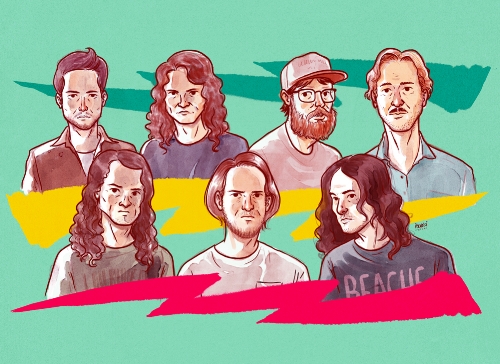
for a couple of reasons. The first (reason) is because they are an Australian band who deserve a much larger following – they are still under-the-radar here and seen as a quirky option. More than that; I wanted to examine the way the seven-piece band reinvent themselves on each album. Whether they are coming up with time-related concepts and acoustic patterns; microtuning and infinite loops – an album where the final track led straight to the opening one (thus, creating a never-ending record!). I hope more people do tune into King Gizzard & The Wizard Lizard’s wavelength and discover what they are all about. The second piece is concerned with London Grammar. They are a trio I have been following since their debut and noticed a change in them. I will look at both of the Nottingham-formed band’s albums and what impact they have made on music. I want to feature Hannah Reid’s voice which is a thing of rare beauty. The main reason for writing this piece is to highlight a group who were put in the spotlight from the off; the relentless touring meant the trio almost split; the critics were expecting a quick follow-up album – putting a strain on the ranks. Hannah Reid, the lead and alluring siren, is at the centre and the focal point of London Grammar.

debut.jpg

For anyone who was unsure whether successful and ambitious artists felt strain the pressure of music – they could do well to the listen to the words of Hannah Reid. I will source a couple of interviews she has recently conducted that show what a transformation London Grammar underwent between albums. Back in August; Reid spoke with the Sydney Morning Herald about the band’s crisis-point. She spoke about touring Australia and Japan and the moment she decided things were getting too tough:

"We were going to Australia and Japan, and the trip was we had two days at home and we were meant to fly to Japan, go and do a show, turn around and get straight back on a plane and fly to Australia," she says. "And I was so exhausted by then, I didn't even turn up at the airport. I was like, 'I just can't. I can't. I actually cannot get out of bed.' "

guys.jpg

The interview looked at the critical success of their first album, If You Wait, and how big the trio got. Asking Reid how they coped with that – and whether it was expected – she provided her opinions:

"You can't ever anticipate what's going to happen, but we were just so young at the time," Reid says. "I think it happens a lot: you're kids when you start out and you make something really special. It was amazing, but we did need a bit of time at home afterwards, for sure”.

That period (following the debut album) saw continuous touring and strain. It would be hard for established and experienced acts to cope with that demand but for London Grammar – new kids off the block – it was a real eye-opening experience:

"It took us about 18 months and it was really hard," Reid admits. "There was a lot of pressure – I think naturally there always is, for a lot of artists that have successful first albums and want to make a second. But it's probably another learning curve; by the end of it we realised, 'You know what? You can't think about it or you're not going to do your best work.' And I think that's another lesson to take forward!" she laughs.

record.jpg

"I think I both grew as a writer and also shrunk away. I think there are some amazing songs on the second album that I really love, but I view this second album as the stepping stone to our third one. We wanted to find a new sound and there is a new sound in it, but it has the potential to be really, really amazing but it's not quite there yet. That's how I view it."

The debut album was released in 2013 and, until this point, the trio had been airing the material and preparing the bones of their second album, Truth Is a Beautiful Thing. Not only can the physical demands put a strain on the personal relationships of the band but something more precious was compromised: Hannah Reid’s voice.

reid.jpg

That might sound glib but Reid’s singing voice was there before she met Dot Major and Dan Rothman: it will be there after the trio, years down the line, go their separate ways. It is the beating heart of the music and leads everything. It is obvious so many gigs would compromise the structure and safety of the voice. For Reid, who was already suffering anxiety and fatigue, that physical weakness would add pressure to an overworked voice. London Grammar are a perfect example of a popular group pushed to the point of breaking, Reid, in the same interview, explained how the level of expectation meant she carried on singing without a thought – not wanting to disappoint the fans:

"I had really bad muscular problems – surviving through that was difficult, because I was really worried about the damage I was doing," she says. "And you don't want to let down fans and to have people who want to listen to your music and have bought tickets – you want to do it and you want to do it to the best of your ability. And that's the mistake we made ... You know Sam Smith, he haemorrhaged a vocal cord; it's happened to a lot of singers.

"It's difficult to be a good singer and also be on the road."

making.jpg

A few interviews surfaced around the time of the second album’s announcement/promotion. The trio were discussing how they had changed since the debut and the reason they had taken such a long time to complete their second album. Speaking with The Guardian; the guys talked about the strains and adventures when London Grammar were on the road:

It was a whirlwind. You’re just holding on for dear life, really,” says Rothman, a chatty, trainer-addicted north Londoner, before recalling the time their tour bus broke down during a 12-hour journey from Toronto to New York to appear on the David Letterman show. A local taxi driver got them to the studio with seconds to spare: “She was like the Wolf in Pulp Fiction – she knew exactly when the traffic lights would change,” he laughs.

sing.jpg

Hannah Reid talked about her stage fright and how the fatigue really got to her:

The exhaustion really kicked in for me after a year,” says Reid, a friendly but unshowy frontwoman. Her battle with stage fright has been widely reported, but the effects of success were physical as well as mental. “I spent the second year pretty much just hanging by a thread – I didn’t really know what was wrong with me. Then I just got used to feeling that way and I was like: ‘I must have some kind of illness, I must have chronic fatigue syndrome.’ I got tested for a whole bunch of stuff, it got kind of weird. My liver wasn’t working properly even though I was completely teetotal.”

other.jpg

The idea of control and creative expression was discussed. The group looked at how much of a say they had when it came to touring; days off and the limits they go to in order to satisfy the fans:

The thing about touring is that young artists don’t always have much say or control,” Reid says. “You’re quite naive. You say: ‘Yeah, I want to do everything.’ And you want to please everyone. You’re so grateful, but you get sick at some point because everyone does. You have to cancel stuff, and then that has to get rescheduled. It can very quickly go from being manageable to snowballing into the kind of schedule that can end up wrecking your voice. The worst thing about it is disappointing the fans,” she pauses. “We’re going to do things differently this time.”

It is understandable there was a great weight of expectation and love following London Grammar’s debut album. If You Wait sat in a music world, in 2013, when there was a need for dreamy Pop and soulful blends. Many noted, when the album arrived, the comparisons to The xx and Florence and The Machine. After the band signed with Ministry of Sounds and Big Life Management; the album’s first sessions began in 2012 with Cam Blackwood. Tim Bran and Roy Kerr replaced Blackwood and the trio, assessing the switch, felt it was a natural and ‘right’ unity.

Many sources saw If I Wait as a quarter-life-crisis album because Reid, in her early-twenties, was looking at failed relationships and assessing her lot. The idea of self-assessment and introspection is not a new thing: the power and extraordinary beauty in Reid’s voice elevated the songs into near-operatic and mesmeric things. It was interesting reading the composition/lyrics breakdown on the album. Reid wrote the lyrics for most of the songs: the trio collaborated on the music for most of the tracks (Reid tackled a few on her own; Rothman co-wrote the lyrics for Flickers; the trio brought in one or two others for some tracks). Crepuscular, after-the-bar-closes mystique and moodiness crackles with tense beats and haunting electronics.

france.jpg

Rothman and Major bring atmosphere and incredible scores: Reid provides husky, otherworldly vocals. It is hard to describe the potential, soul and limits of Reid’s voice. It seems mystical and goddess-like; it rises and swoons. It must have taken years to hone but on London Grammar’s debut, it was laid out on songs that talked of wasting youth and unsure love. Even when talking of love; London Grammar managed to bring to elevate it into something divine and spiritual. The album entered the U.K charts at number-two and made them an instant success. It was invariable touring and demands would follow a blockbuster of an album. Whether you see Reid’s voice as the star – or the combinations of all three – one could not deny the chemistry and friendship of the trio. That was almost broken (it was certainly tested) given the popularity following If You Wait.

Many, myself included, asked where London Grammar had gone after their debut. It took four years before they announced a new record. That is a hell of a long time for an act to follow up on a debut. Many could have gone elsewhere but it was what was happening behind the scenes that affected the timing scheduled. They were thinking of new material but were so busy touring their introductory album. Rooting for You was the first single from Truth Is a Beautiful Thing. Released in January; it charted but was not a big success. Big Picture followed a month later and was a minor success. Subsequent singles were unveiled but none reached a high position in the charts. London Grammar’s second album features ten producers in total and there are quite a few bodies in the mix.

guitar.jpg

Happily, the trio takes to writing the material themselves (aside from the odd co-write) and step away from the Pop of their debut and bring in new elements. Compare reviews of both albums from a common source, AllMusic:

Once again, vocalist Hannah Reid takes center stage with her powerful, angelic instrument, which can stir the soul at the smokiest depths before jolting everything to the heavens in a fashion much like Florence Welch or Annie LennoxDan Rothman and Dominic Major provide lush accompaniment to Reid's voice, creating a gorgeous cinematic landscape that ranges from dreamlike wisps to fully enveloping grandeur. The first half of the album takes time to pick up, as Reid slowly eases listeners into "Wild Eyed," an expansive moment that recalls 2013's "Hey Now." The thumping heartbeat of "Oh Woman, Oh Man" gives the band equal time to shine. Other highlights include the throbbing "Non Believer," the uplifting Florence-esque "Bones of Ribbon," and the sweeping "Leave the War with Me." These tracks provide a much-needed jolt of energy to balance the album's other quieter moments, which tend to lull the listener into a dreamlike haze. While it's an overall relaxing experience, Truth Is a Beautiful Thing is never boring; it's a comforting and often heartbreaking listen that really gets under the skin, especially with Reid's emotive delivery”.

Mads Perch.jpg

PHOTO CREDIT: Mads Perch

That was the assessment of Truth Is a Beautiful Thing by Neil Z. Yeung. Look at Scott Kerr’s review of If You Wait - and some similarities come in:

With obvious nods to the unfussy, reverbed guitar motifs of the xx, alongside Hannah Reid's beautiful, emotive vocal ability -- which rises and falls with an alarmingly disarming effect -- the album is a practice in refrain, where each song is pushed to the brink of an inevitable climax and achingly, no further. The percussive production, synths, and basslines provided by multi-instrumentalist Dot Major, build on this sense of drama and urgency and are displayed perfectly in one of the highlights of the record, "Wasting My Young Years."

hannah.jpg

Its throbbing chorus is chastened by the slow-burning synths and guitars that come together with stunning results when coupled with Reid's vocal delivery. The obvious confidence Reid has in her own voice belies the apparent vulnerability in the words she sings throughout, and the piano ballad "Strong" is testament to the loneliness and heartbreak that encapsulates the brooding feel of the album, which conflicts with the almost upbeat, danceable moments scattered amongst "Flickers" and "Stay Awake." They pay homage to their electronic influences mid-album with a rework of Kavinsky's "Nightcall" that unfolds gently into one of the most boisterous cuts on the record. It's no surprise that Reid's strong vocals are at the forefront of London Grammar's sound, and her voice dominates their music in much the same way as Florence Welch's does in Florence + the Machine”.

Oz.jpg

Consequence of Sound, when Zander Porter reviewed If You Wait, had this to say:

Although The xx parallels are undeniably forthcoming, London Grammar’s innovative combinations of vocal and instrumentation are a unique, necessary progression. Though maturity may not be on the trio’s side, If You Wait argues that staying tuned is vital and that patience is a virtue, and one that seemingly will pay off for Reid and those anticipating what comes next from London Grammar”.

It was the sense of déjà vu and familiarity that crept into reviews of Truth Is a Beautiful Thing. Andy Gill, writing for the Independent, highlighted some concerns:

Though by no means worthless, Truth Is A Beautiful Thing offers such negligible advances over London Grammar’s debut If You Wait that it’s hard to imagine what they’ve spent the intervening four years doing, besides shovelling cash into bulging accounts...

voxal.jpg

...They’re effectively the Sade of their day, mining a tightly-circumscribed format built around a distinctive, elegant vocal centre, to repeatedly similar effect. Despite the clarity of her contralto and the folksy elisions evoking echoes of Sandy Denny, Hannah Reid seems forever emotionally distant, even when keening and whooping through “Wild Eyed”; and the spartan arrangements created by her bandmates only occasionally develop persuasive emotional momentum, as on the string-laced anthem “Hell To The Liars”. Likewise, the lyrical themes of romantic regret and existential uncertainty – epitomised in the line “I’m scared of loneliness when I’m alone with you” – merely reprise the concerns of If You Wait. It’s pleasant enough, though listeners may experience a twinge or two of déjà vu”.

booth.jpg

Personally, I prefer the debut but find much to enjoy in the trio’s second album. I feel they have many albums ahead of them and will continue to evolve and grow as their careers continue. Maybe there has been too much pressure on them: following their debut; they were set on the road and were keen to please demands and do as much as they could. Whilst their second album is exciting; it does not quite have the same magic and potency of their debut. Reid’s voice is as majestic as ever but it deserves a wider range of material and room to manoeuvre. Maybe there is a commercial demand to have the trio repeat the debut and not stray too far from the path. I feel London Grammar will produce a career-best third album but I wanted to highlight them as an act that suffered from the brightness of the spotlight and the demands from the label.  

I will finish shortly but wanted to bring in an interview the group conducted with NME back in March. They were asked about touring and how the sounds differ on their latest album:

Turning to the ‘sound’ of the new album, Dan says fans can expect it to be ‘less moody than the first record’. “It’s maybe less ‘samey’,” he admits. “We’ve tried to provide more variety.”

“We’ve expanded on the filmic, cinematic aspect,” says Dot. “That’s maybe something that’s consistent throughout the new album, but in terms of what’s going on in different songs it definitely varies a bit more.

tour.jpg

 “The live experience should always feel slightly different to an album in general. The only thing that is different if that we’ve been informed by the experience of actually doing it. Sometimes it would feel so mad to have a section like that at the end of ‘Metal & Dust’, where we were worried that it might have been too far removed from what we actually are as a band. Having experienced that live, it slightly relaxes the band.”

I worry, given Reid’s vocal/muscular issues and stress/anxiety – not forgetting her stage fright – there is still too much pressure being put on the group. The trio’s friendship almost broke when they had to cancel gigs (owing to Reid’s fatigue) and the frontwoman has been put under immense strain since the debut. It seems like they are on a more solid footing and have less stress in their life – one hopes that will not reverse when they tour their current album internationally.

They have a huge following in Australia and, although that has created a huge fanbase and airplay, it means long flights are inevitable. I hope the trio manage to stabilise and in a calmer headspace; that things get on a level footing and they are able to produce and tour music on their own terms. The tale of their first album – and the madness and fracture that occurred afterwards – should act as a warning sign for any label/artist put in a similar position. It is still early days for London Grammar but, if they are able to find a perfect work-private life balance, then they could well be one of the most successful and inspiring acts…

blur.jpg

WE have heard in years.

ALL PHOTOS: Press/Getty Images/London Grammar (unless stated otherwise)

FEATURE: Globetrotting (Part Four): Thirteen Artists to Watch

FEATURE:


Globetrotting (Part Four):

Miss.jpg

 IN THIS PHOTO: Miss June 

Thirteen Artists to Watch

________

THE penultimate edition of Globetrotting

janie1.jpg

IN THIS PHOTO: Janie Bay

takes in talent from nations like Italy, South African and Israel. There are a couple of British acts and artists from the U.S., Canada and Australia; New Zealand, too – and fantastic act from Stockholm included in the mix! It is another packed edition and one that should give you food for thought. Among the sounds are tribal/African beats and fresh Pop; incredible Punk and some enticing Rap. It is a weird and wonderful blend but it shows the breadth and depth of talent around the world.

Let’s hope there is something you like and can get your teeth into…

________

Pikachunes

pick.jpg

PHOTO CREDIT: Coco Campbel

Location: Melbourne, Australia

Genre: Pop

Essential Song: You Are

Follow: http://pikachunes.com/

Phoebe Hunt & The Gatherers

hoebe.jpg

Location: Austin, U.S.A.

Genre: Country

Essential Song: New York

unvb.jpg

 PHOTO CREDIT: @mashbit

Location: Toronto, Canada

Genre: Yaya

Essential Song: Bedroom Fall

janie2.jpg

Location: Pretoria, South Africa

Genres: Folk; Pop

Essential Song: The Way It Should Be

Follow: http://www.janiebay.com/

Jade Lathan

jade.jpg

Location: Detroit, U.S.A.

Genres: R&B; Soul; Electronica; Pop

Essential Song: Guala

Follow: https://www.facebook.com/JadeLathan/

Steve Buscemi’s Dreamy Eyes

steve.jpg

PHOTO CREDIT: Ola Lewitschnik

Location: Stockholm, Sweden

Genres: Dream-Pop; Indie

Essential Song: Call Out

river.jpg

Location: Forster, Australia

Genres: Folk; Pop; Electro

Essential Song: Fool’s Gold

Follow: http://www.jackrivermusic.com/

Monowhales

mono.jpg

Location: Toronto, Canada

Genres: Indie; Pop

Essential Song: Take It Back

Follow: https://www.monowhales.com/

Liberty Ship

lib.jpg

Location: Sheffield, U.K.

Genres: Rock and Roll; Alternative

Essential Song: Cast Away

Follow: http://www.libertyshipband.com/

Fabri Fibra

fabra.jpg

Location: Milan, Italy

Genres: Rap; Hip-Hop

Essential Song: Fenomeno

Follow: http://www.fabrifibra.it/

Quarter to Africa

quarter.jpg

PHOTO CREDIT: Amit Ofek, Boaz Samurai; Guy Trefler, Ariel Efron and Haim Yafim Barblat

Location: Tel Aviv, Israel

Genre: Afro-Arab Funk 

Essential Song: Connect

Miss2.jpg

Location: New Zealand

Genre: Punk

Essential Song: I Don’t Wanna Be Your Dog

Follow: https://www.facebook.com/missjunenz/

Desperate Journalist

desp.jpg

Location: London, U.K.

Genres: Alternative; Pop

Essential Song: Be Kind

FEATURE: Natural Selection: Why Music from Our Childhood Stay with Us

FEATURE:


Natural Selection

girl.jpg

PHOTO CREDIT: iStock 

Why Music from Our Childhood Stay with Us

________

I could have named this piece 'Teenage Kicks' but that…

cerys.jpg

IN THIS PHOTO: Cerys Matthews/PHOTO CREDIT: BBC Radio 6 Music

might have, either, made you think of The Undertones or masturbation – neither are what I am aiming for here! It is said – by psychologists and the consensus – that we cannot remember anything older than the age of two. My memory is shocking and, lumbered with depression, my recollections are near-senile-levels of uselessness. I can see a person walk into a room and, seconds after they leave, not remember the colour of the top they were wearing – or what they said and most of the conversation. Some people have extraordinary memories but most of us will be in a similar situation. We only recall brief details from interactions and none of us will have any clear memories when we were a toddler. My first-ever memory was musical – I will talk about that, soon – but, in terms of clear and vivid recollections; most of mine are from childhood/early-teens. Psychologists can recondition memories regarding those who suffer trauma or P.T.S.D. – adapts the harshest images and removes the negative kernel. You do not strip the reality but modify the apex of fear and disgust; so that it is less traumatic when thinking back. Social media has changed the way we think and remember. We have search engines and get our ‘facts’ from the Internet. It changes the way we remember our lives and means now, in an ultra-high-tech age, we do not really need to retain facts and figures – we have a handy knowledge bank that means we have no need for intellectual retention.

Memory.jpg

It is interesting and, as I type this, there is a fascinating show on BBC Radio 6 Music with Cerys Matthews. Check the website and you will hear her talk to guests and artists about music and memories. It is what compelled this spark and got me thinking about music’s power and endurance. Matthews’ show is in conjunction with a BBC Radio 3 who feature neuropsychologist Dr. Catherine Loveday; who explains the psychology that connects us with the music from the past – it is an experiment being tested at the University of Westminster and BBC Radio 3 listeners. In the piece, she provides some fascinating insights:

The brain’s memory systems are at their most efficient during late adolescence and early adulthood. We also experience many things then for the first time, which makes them particularly memorable. But the key reason that we return to songs and anecdotes from this period of our lives is that they remind us who we are. It is during these formative years that we make many crucial life-changing decisions, initiate significant long-term relationships and establish the cultural and political beliefs which form our identity.

cath.jpg

 IN THIS PHOTO: Dr. Catherine Loveday

When people are asked about music that is important to them, they often favour songs that are associated with influential times, places and people – maybe their first holiday away from parents, a pivotal encounter with their future spouse, or a moment of self-discovery. One music producer I know, for example, chose Two Tribes by Frankie Goes to Hollywood, citing it as the sole reason that he decided to become a sound engineer. Songs connected to weddings, births and funerals are also very common, as are cultural references.

One possible reason for the strength of the musical reminiscence bump is that people tend to listen to more music during this period of their lives. Music has an intrinsic capacity to regulate emotions: what better way to manage the emotional rollercoaster of puberty than to wallow in Leonard Cohen, dance to Michael Jackson or chill out to The Orb?

These songs naturally become embedded in our important memories, both positive and negative. In our experiments, people regularly choose songs that they have listened to during sad and difficult times, as well as those linked with better experiences. These tunes seem to offer an important reminder of the emotional light and shade that give life meaning.

Music also plays a fundamental bonding role in many adolescent relationships, whether with family, lovers or friends. In our analysis of Desert Island Discs, we found that one of the most frequent reasons for a guest’s record choice was that it reminded them of a specific person, often a parent or a partner.

It has even been suggested that there may be a “cascading reminiscence bump”. The music psychologist Carol Krumhansl has shown that teenagers have superior recognition for songs that come from their parents’ and grandparents’ reminiscence periods. So maybe my son’s love of The Beatles reflects my own fondness of the Fab Four, which in turn stems from my parents”.

DMBSlDzWkAEd1FM.jpg

Every one of us has different perspectives and recollections of music; how it affects us and why we retain certain memories. Does Classical music stay in the mind because it is more epic, fluid and grand?! There are no vocals – unless it is an Opera piece – and it is easier to bond with the elements and complexities. The fact the music has already survived hundreds of years means it has gravitas and potency. Is this why a lot of modern Pop escapes our mind – many design music that is instant but has no long-lasting effects? I feel too much of today’s music is concerned with a quick-fix and making that initial impression: many are not concerned with after-care and the longevity of what they create. Many of us remember what we choose to and dispense with everything else. I feel there is more to things that discarding the second-hand junk and treasuring the gold. I feel place and situation, mixed with quality, is responsible for the songs/artists that remain in the brain. I have written about this subject before – the music from my childhood more important than the music I hear now – and why memory and music are so intrinsic and complex. There is simplicity to be found: the best music and that which ties us to fonder times will always stay in the brain. I am listening to music (on BBC Radio 6 Music) and, whilst I am not a huge fan of the song itself, it instantly takes me to a particular time.

brain.jpg

IMAGE CREDIT: Getty Images

I have not heard Moondog’s Bird’s Lament for a long time but, when listening to it, I can visualise when I last heard it – the effect it has and all the sounds/smells present in that setting. As Matthews speaks from the Wellcome Collection; I am listening to the song that has just been played and how it has been translated and adapted through time. Moondog’s song was sampled by Mr. Scruff and has been sampled by others. The way new musicians preserve and evolve older recordings means classical favourites are making their way to younger generations – who will create their own memories of that song and, in a way, have a connection with the original. None of my musical memories centre on Classical music but it is a genre important to me. I am more drawn to the contemporary and modern sounds I grew up with and my musical memories start from about aged two. The main focus on this feature is the teenage years but my first recollection of music, and life, is hearing Tears for Fears’ Everybody Wants to Rule the World. I was a toddler and heard the shimmering introduction and powerful chorus emanate from the family kitchen. I am not sure why it is that particular song that made its way into my memory first but there was something about the production and sound that made it impactful.

peel.jpg

IN THIS PHOTO: Hannah Peel (who took part in the BBC Radio 3/BBC Radio 6 Music morning that looked at music and memory)

Other music memories formed but that was the beginning of it all. Childhood, in fact, was a pivotal time because of when I grew up. I was born in 1983 and lived in a very musical household – in the sense music was being played all the time. Being born in that year meant artists like Duran Duran and Michael Jackson would have been on the radio – although, I would not necessarily have remembered them that first time around. It was the exposure to my parents’ music that forged and started that love of recorded sound. I was brought up on The Beatles, T. Rex and Steely Dan – Kate Bush, The Bangles and The Rolling Stones were all in there. I think I can bond with the school of thought that suggests prolificacy and experiences cement certain times/sounds into the mind. I was exposed to so much music when I was growing up so it is only natural many of those artists remain in my mind – and that, in turn, compelled me to get more involved in music and listening. If the household were relatively mute then I do not think music would have played such a huge role this many years down the line – I would have moved to something else and might be a different person. When I was at school, those were the first real signs of independence and life. You do not have to take full responsibility for yourself but no longer are you the naïve toddler bumbling around without a care in the world.

save.jpg

PHOTO CREDIT: Semonegna

It is a stressful and strange time where you meet new people and face the challenges of the educational system. Music was vital because it helped those harder moments but, in my view, was much stronger. The quality of sounds coming out in the late-1980s and 1990s was extraordinary. Then, we were not in the Internet age and exposed to so much music all the time. My experience with music was through radio and playground chatter. We had cassette players and would share tapes: a very different time where music and remembrance was more communicative and sociable. Kate Bush, I think, was the first icon to really stick in the mind. It was her unique edge and quality that got into the brain; the oddity and beauty of her music. The expressions and potency imbued within her music resonated and many other artists (of the time) did. I feel the music I remember from childhood is the very best we have ever heard. I remember little of the lesser chart acts and insignificant albums: all of my memories are of great and inspiring sounds of the day. We all have ‘trigger tracks’ that takes us back to specific times. Songs like A Good Heart (Fergal Sharkey’s version) and Super Trouper remind me of my late aunt; the Dance music of the ealry-1990s of middle-school and friendships. I feel circumstance and situation are more powerful than quality – when it comes to the songs we remember. I had a relatively happy childhood and school was not especially traumatic. The lessons and curriculum have faded – in the sense I have assimilated those lessons into my head and they have surpassed their practicality – but the music has not evaded me.

music.jpg

IMAGE CREDIT: Getty Images

I can associate certain songs with very clear memories. One that comes to mind is a classmate getting on a chair (might have been 1992) and playing The Shamen’s Ebenezer Goode. It was a bold moment but one we all responded to with tribal dancing and chorus singalong. I have countless memories like that because it was a transformative and challenging time. Children have to take a lot in and it is a tough time: the first experience of stepping out of the household and interacting with other humans. There was, unfortunately, a lot of bullying in my early years. This is especially true of high school where I was subjected to physical and verbal torment. The perpetrators have all forgotten the times, I assume, but they are scorched in my mind. It was hard explaining and revealing the torture to my parents – the scars made dialogue inevitable – so music was a form of escape and comfort. The paternality and soothe of the music meant I could channel the fears, pain and upset of the bullying into music. I became more immersed and engrossed in music because it was a confession booth and silent friend. Many of us forget what we did this morning but can remember why we listened to The Beatles as a youngster. The longer-term memories migrate to a different part of the brain; musical memories are distinct and (evidentially) are kept in a part of the brain immune to the worst effects of ageing and dementia, let’s say. We discard the triviality of the ordinary day because most of what we experience is inane and insignificant. We remember the most harrowing and day-altering events but most of it is forgotten. Most of the music we grew up with gets lost but we instantly tie songs and artists to particular times.

fab.jpg

IN THIS PHOTO: The Beatles/PHOTO CREDITHulton-Deutsch Collection/CORBIS/Corbis via Getty Images

There is a plurality inherent in music whereby we tie particular songs to memories – rather than people and conversation. I want to finish up by talking about the teenage years and the period from high school to university. It is beguiling when we listen to single notes and why certain songs come to mind quicker. We can hear a single second of one song and it instantly springs to mind: others, it takes other songs longer before they are identifiable. There might be something in the sonic make-up or the popularity of that song. One could spend hours debating music robustness and whether certain genres and styles make a bigger imprint. To me, all of my musical passion and strongest memories come from the time when I was a teenager. This is the period in our life when we take a more active role in music and start discovering it on our own – not as beholden to our parents’ tastes and hand-downs. I guess school and going from one to another is more memorable than other periods of our lives. These are the times where we all experience dislocation and new challenges. Music is the constant that follows us and is that universal bonding tool. Because I was older – and knew about school and how difficult it is to adapt to a new setting – it was especially hard going to high school. Although it was a mile from where I lived; it felt like another world. It was much more grown up and I feel, the closer one gets to adulthood and job responsibility, the more pressure you have at school.

glebelands.jpg

IN THIS PHOTO: My old high-school, Glebelands

My peers felt that pressure and, rather than sublimate it, we expressed that through discussion. Invariably, that turned to music and the best songs at the time. I entered high school in 1994 and right in the middle of the Britpop explosion. Acts like Blur and Oasis tussled for chart glory; Pulp were the intellectual outsiders – brilliant chart music at the time got into the mind, Dance and Electronic music meant the likes of The Prodigy and Chemical Brothers were synonymous. Throw in the last throes of Grunge and the rise of U.S. guitar music and it was a wonderful time. The fact the finest music of all time (in my mind) coincided with the most stressful period of my life means the sounds of the time have a larger portion of my memory and fondness. Maybe it is the fact so much of the 1990s music is played now – less so with the 1980s – that this period sticks in the mind. One can tie that to quality but, to me, the connections to the people I went to school with is much more enduring than the popularity of the music. The songs of the 1990s helped me through tough days and soundtracked some of the fondest memories from the period. Friendships were cemented, great achievements occurred and priceless times imprinted in the mind – all backed by some tremendous music. I listen to certain songs and can remember people and particular conversations. I feel music’s true power is when it connects one to their past and the way music guided and supported them. I survived high school and one of the reasons I was keen to continue studying was the power of music and the fact it was a constant companion. Of course; that love continues to this day and it is questionable whether I would write about music were it not for the role it played all those years back. Such a fascinating one that deserves more exposure but, for now, it has got me thinking about songs from childhood – a chance to revisit them now. Think about music and the role it plays in your life; why it is so important and the wonderful….

woman.jpg

PHOTO CREDITFuture Music Magazine/Future

MEMORIES it provokes.

FEATURE: King Gizzard & The Lizard Wizard: The Music, Magic and Mind-Fu*k

FEATURE:


King Gizzard & The Lizard Wizard:

201.jpg

 The Music, Magic and Mind-Fu*k

________

IT is hard to think of a lazier band out there…

king.jpg

PHOTO CREDIT: Jamie Wdziekonski

than King Gizzard & The Lizard Wizard! It is amazing to think that, this year, they will only release FIVE albums! I jest, naturally, but that is a thing that amazes me about the Australian band: they seem to have no facility for fatigue. There are bands/artists that take five years between albums: the fact the Melbourne seven-piece are planning five albums this year speaks volumes! I get annoyed when artists take time away and spend far too long formulating records. I shall not name anyone specific but one need only look around the music world and you can see the chasm acts leave before their next record...

bands.jpg

I know every artist needs to tour but I am baffled it takes so many THAT long to bring out a new record! I wonder what they are up to in that time and whether they realise how much of a risk it can be – leaving a gap that long risks many finding other musicians who are more prolific. The thing about King Gizzard & The Lizard Wizard is their sheer zeal and inventiveness. Each album sounds different to the last and they are never keen to repeat themselves and stick to the same format. Whether they are talking about mystical beasts and overlords; the changes in the world or something less substantial – the boys never disappoint and always bring something weird and wonderful to the party.

sketches.jpg

Their current album – and third of this year, so far – is Sketches of Brunswick East and alludes to Miles Davis’ Sketches of Spain and the Melbourne district of Brunswick East. The record explores Jazz more and is one of the more listenable and accessible records of the band’s career. It flows and melts together wonderfully – the record is a collaboration between the Melbourne crew and Mild High Club. Alex Brettin, the sole member of the band, stayed at Stu Mackenzie’s house (Mackenzie is the lead of King Gizzard') and the two came up with vague ideas for songs. They recorded drafts on iPhones and, in time, the music started to form and mutate.

illsu.jpg

ILLUSTRATION CREDIT: Berat Pekmezci

I listen to the album and it sounds unlike anything King Gizzard & The Lizard Wizard have ever created! The record explores Jazz and experimental avenues but is never restrained and limited. Critics have afforded the album passionate reception (it was only released on Friday) and noting the changes from Murder of the Universe and Flying Microtonal Banana – both released this year. The reason I wanted to feature King Gizzard' is because of their prolific and exhaustive work ethic; the way they change their dynamic each album – and the way they push music forward without many people noticing.

sketches2.jpg

IN THIS PHOTO: King Gizzard & The Lizard Wizard with Mild High Club/PHOTO CREDITWDZIEKONSKI

Relatively few have heard of the band outside of Australia (there is building reputation but they are still under-the-radar) but that will all change. Whether it is working with unusual turnings or creating a Prog-Rock odyssey – the guys are among the most unusual and inspiring groups around. The record, Murder of the Universe, works in three different stages. According to Wikipedia – thanks to them for summarising – this is what it is all about:

The first, The Tale of the Altered Beast explores themes of temptation, and tells a tale of a human who stumbles upon a mystical human/beast hybrid, dubbed the Altered Beast. The story starts from the perspective of the human being pursued, who slowly takes interest in the idea of being altered – as it is considered taboo in their society. The perspective then changes to the Altered Beast's itself, who is filled with murderous intent to kill. The human encountered by the beast slowly gives into temptation into becoming altered once the beast confronts them, as they crave power. Accepting of their fate, the beast and human merge, creating a newly altered beast, who now craves even more for flesh. However, the beast suffers greatly from absorbing another conscience – it loses track of its identity and eventually dies of insanity, decaying into the earth.

Murder.jpg

The second story, The Lord of Lightning Vs. Balrog is more focused on a big battle between two entities dubbed The Lord of Lightning and Balrog respectively, who represent the force of light vs darkness. The chapter starts with a foreword from the perspective of a storyteller, who recalls a battle between these two great forces. This story begins from "The Lord of Lightning", which is about the general destruction caused in a town by lightning fired from the entity's finger. He is perceived as evil and malevolent by the townfolk. However, he fires lightning at a corpse, who is somehow reanimated into the creature known as Balrog. This creature chooses to ignore the Lord of Lightning, and instead wreaks further havoc to the townspeople. However, the Lord chooses to fight the Balrog and confronts him – eventually the Balrog is left as a burning corpse. The Lord of Lightning then immediately leaves, choosing not to harm the townsfolk anymore.

The third and final story, Han-Tyumi & The Murder of the Universe, is about a cyborg in a digital world who gains consciousness and through confusion decides he strives only for what a cyborg cannot do – these being vomiting and death. He decides to create a creature dubbed the "Soy-Protein Munt Machine" whose only purpose is to vomit. As the creature rejects his love, Han-Tyumi decides to merge with the machine, which spirals the machine out of control. This machine then explodes and infinitely expels vomit, which eventually engulfs the entire universe, hence the title of the album.

Mackenzie explained the album was the most narrative-driven thing they have created and its sheer scope/ambition could have sunk a lesser band. Flying Microtonal Banana, released in February, is where they played with microtonal tunings and bizarre aesthetic – altering instruments and sounds to give the album is alluring and unique sound. It is a different animal to Murder of the Universe. If that album is an apocalyptic and epic drama then Flying’ is a more restrained, if more complex, album. The band’s use of non-Western tunings and custom-made instruments showed how much they were dedicated to the project.

fling.jpg

Each band member was armed with $200 and bought instruments from that cash – tuning and modifying them so they could bring something different to the album. Many assumed, when the album was released, they would not top it! The songs on Flying’ fuse East-meets-West with layered Psychedelia and Rock blasts. If that was the only thing they were releasing this year then they’d get huge kudos. Few artists can match the same intelligence and originality of the record; the quality is immense and it is a tight and stunning creation. I cannot resist the chants and addictiveness of Rattlesnake – it is a song I need to play on-repeat and amazes me with its irresistible chorus and incredible composition. You get chugging guitars and twanging bass; vision of hissing snakes and distorted vocals – a song that urges the listener to swing their head and move their feet (the sort of song best enjoyed when off your head or gripped by cannabis).

That is everything the band has released this year: I believe there are another two albums arriving but unsure what form they will take. Last year - and their finest album, perhaps - we saw Nonagan Infinity which is, essentially, an infinite loop. Every song flows into the next – that includes the opening and closing track...the record never ends and it sounds like you are listening to a single song...one that never stops! Director Edgar Wright has listed it among his favourite albums and critics responded in force. AllMusic assessed it in these terms:

It's way more blown-out and weird than that, but you can hear a lot of late-'70s no-frills metal in the sound. The rest of the record is a little more varied, with moments of calm proggy respite, jazz-rock dreaminess, and blown-out psych-pop to balanced the frantic, sustained attack. The way the album is put together is an impressive feat, but almost beside the point since each song within the loop is worthy of standing alone. King Gizzard's inventive sound, giant hooks, and hard-as-titanium playing make Nonagon Infinity not only their best album yet, but maybe the best psych-metal-jazz-prog album ever.

non.jpg

2015’s Paper Mâché Dream Balloon was recorded using acoustic instruments and sounds foreign when compared to King Gizzard & The Lizard Wizard’s modern albums. It shows, when you listen to the album, the boys sound as assured and confident (as any other record they have laid down). It is another bold step and could have been a gamble – for a band who are known for their oddity and thrills. MusicOMH gave this opinion on the record:

What you actually had there, however, was a bit of a gem. The seventh album in their relatively short career, Paper Mâché Dream Balloon sees these Melbourne-based neo-psychedelicists eschew the motorik churn of 2014’s I’m In Your Mind Fuzz or this year’s Quarters, trading fuzzed-out whorls for a more pastoral, mellow style – earlier explored (at length) on the jazzy The River, the first of Quarters’ four 10-minute sojourns.

Gone too is the deliberately thin, straight-to-tape sound of their previous output, perhaps despite – according to lead vocalist/guitarist and flautist Stu Mackenzie – the album having been recorded in an empty shipping container on his parents’ farm in Victoria.

boys.jpg

PHOTO CREDIT: Jamie Wdziekonski

There was a strict no electric instruments rule in the sessions, but rather than woody strum, there’s plenty of colour and tone from the off, thanks to the variety of other instruments in the seven-piece’s armoury: Sense’s opening minor sevenths give way to serene, serpentine clarinet, while Bone and Dirt are buoyed by wheedling flute.

Rather like the excellent album-and-a-half recorded by XTC in their The Dukes Of Stratosphear guise (or perhaps The Young Ones tie-in Neil’s Heavy Concept Album), there’s a reverent irreverence to the pop-psych pastiches here. Our ardent crate-digger could happily while away the short running time collecting references: the whimsical title-track and Cold Cadaver let in hints of Traffic’s Hole In My Shoe and Paper Sun, there’s Canned Heat under The Bitter Boogie (with a brilliant slackening-string lead guitar) and a touch of the gleefully wrong intervals of Cardiacs on the circular Time Fate.

But the songs are a little more than insubstantial homages. Sense decries the senselessness of la vie moderne, while there’s a playful menace to Trapdoor’s roiling paranoia (“Everybody knows what’s under the door, And everybody goes to great lengths for sure, To hide themselves away”)”.

hah.jpg

PHOTO CREDIT: Lee Vincent Grubb 

I shall not go into THAT much detail about their remaining albums but look at their back-catalogue and we can see the differences and inventions on each. Quarters! (2015) has four songs that each run for ten-minutes-ten-seconds – each is a quarter of the album. It draws upon Jazz-Fusion and is a more laid-back thing. It is something to get your head bobbing to - perhaps, not something you can see going down well in the mosh-pit. The band’s second album, Eyes Like the Sky, is a cult-Western-like-audio-experiment that is narrated and written by Broderick Smith – it tells stories of outlaws, child soldiers and the frontier. It embraces the old Western films and some evil guitars (that is what Stu Mackenzie reckoned, anyway!). 2012’s 12 Bar Bruise was the debut and was not a conventional introduction.

12.jpg

IN THIS PHOTO: The album cover for 12 Bar Bruise

It was self-recorded by the band and several tracks were subject to unconventional record methods. The title-track was recorded through four iPhones – placed around the room – whilst Mackenzie sang into one of them. The fact the band has released eleven albums in five years means they are one of the most reliable and hard-working in all of music. I cannot think of anyone else that has managed to bring that much music out in all that time. Each album they release is different and relies on a different theme/concept. They have played with tunings and track length; the nature of music itself and how they record the songs themselves.

stu.jpg

IN THIS PHOTO: Stu Mackenzie/PHOTO CREDIT: Kimberley Ross

Before I end; I wanted to bring in a few snippets from an interview Stu Mackenzie conducted with New Noise Magazine. He was chatting about the album, Flying Microtonal Banana, and looking ahead at the albums to come:

Flying Microtonal Banana features the modified electric guitars, basses, keyboards, and harmonica, as well as a Turkish horn called a zurna. “I think there was definitely a challenge,” Mackenzie says, “picking up the Flying Microtonal Banana for the first time and just being so gobsmacked and not knowing what to do. I’ve played guitar most of my life, and then, picking up this instrument and not knowing what to do with it—it was quite confusing.”

CROWS NEST.jpg

IN THIS PHOTO: The boys tear up The Crows Nest, Glastonbury

Initially, using the new instruments was a lot harder, which made the creative process move a lot slower, but once everyone got the hang of it, it really opened up the realm of possibility.

The band have already started playing some of these songs live, and the response has been good. “We’ve played a couple so far, and we plan to play all of them out on tour,” Mackenzie says. “We’re going to take all of the modified guitars out with us on the next few tours and maybe beyond. Maybe we’ll make more music with these guitars. I’m not sure.”

amsterdam.jpg

IN THIS PHOTO: A shot from Paradiso, Amsterdam 

King Gizzard & The Lizard Wizard kicked off their U.S. tour in March and are playing dates across the Northeast, Midwest and West Coast, capping off the tour at Coachella at the end of April. “We’re touring a lot this year as well, so we’ll see what we can do,” Mackenzie says about the prospect of three or more records this year. “We kind of have been making two records a year for a few years in a row. Last year, we just put out one, which just seemed a bit weird, so maybe we were overcompensating this year by saying we were going to do so many.”

eyes.jpg

Not a huge amount has changed in terms of King Gizzard & The Lizard Wizard’s bond and commitment to music. Stu Mackenzie has assumed the writing command – a few albums have co-writes but he is their creative lead – and each record tackles new ground and reveals fresh discovery. I wanted to feature the Melbourne band for a few reasons. They have managed to create a raft of exceptional record but, more importantly, showed bands you can break ground and push limits. Rather than take years to release some average album – there are a couple of big acts who have done that this year! – they have produced high-quality records quickly. Each L.P. has a niche and U.S.P. Maybe the fact they have seven members means they can bust through material and recording quicker but I think the sheer size of the band creates potential banana skins. It is quite clunky and, having that many voices, means disagreements can come up – getting all the players in the same room to record an album is a logistical nightmare. Maybe that will be their next record: a series of songs recorded via Skype?!

william.jpg

IN THIS PHOTO: The band on the William Green Stage, Glastonbury

The boys are in audacious form and there are no visible cracks in the band’s armour. Considering they have been performing together since 2010 means, if they had found flaws with one another, that would have happened by now! The guys are almost like brothers. They have an insane connection and seemingly endless possibilities! I cannot wait to see how their next two albums shape up – due this year, remember – and whether their insane work-rate continues into next year! Mackenzie stated the band are over-compensating a bit this year but they feel the need to put that much material out shows they are hungry and determined. Get into the mindset of (the tremendous) King Gizzard & The Wizard Lizard and you are stepping into a land…

croc.jpg

WHERE rattlesnakes, The Lord of Lightning and a Flying Microtonal Banana lurks!

FEATURE: The Harvey Weinstein Controversy: Do We Need to Protect Our Female Musicians Better?

FEATURE:


The Harvey Weinstein Controversy:

harvey.jpg

IN THIS PHOTO: Harvey Weinstein/PHOTO CREDIT: Alberto E. Rodriguez/Getty Images  

Do We Need to Protect Our Female Musicians Better?

________

THE worst and most upsetting details have been revealed…

harvey2.jpg

PHOTO CREDIT: Emily Berl/The New York Times

but we have not heard the end of Harvey Weinstein’s abuse and sordid goings-on. A number of high-profile female celebrities have come out claiming Weinstein sexually abused them – from stars of the screen to those in other areas of the entertainment industry. Musicians are coming forward, as are associates of Weinstein. Who knows how long it (the assaults/abuse) has been known about but it is a relief – if that is the right word?! – the truth is out there. His Weinstein Co. has fired him and his wife, Georgina Chapman, is leaving him. There are women who would stick by their husband and not believe the rumours. The fact she is leaving suggests she either knows what has been happening or has exposure to his true nature. All manner of reports are emanating from the press. There are articles abbot Weinstein’s sexual advances and how ‘bold’ he has been about it – supposedly propositioning women whilst his wife was in the next room. It is a brave move to leave your husband but she was in no doubt. Women are coming forward claiming Weinstein raped them and many others are detailing their encounters with Weinstein. I do wonder whether the details we are hearing tells the full story. One wonders why it has taken this long for women to speak out but there is a great sense of fear – thinking they will be judged and risk losing their careers.

couple.jpg

IN THIS PHOTO: Weinstein and his wife, Georgina Chapman/PHOTO CREDITREUTERS/Danny Moloshok

There are men in prominent positions who feel, because they have wealth of influence, they can treat women any way they want. One wonders whether there are other studio bosses and Hollywood men who have perpetrated such horrendous acts. The ongoing revelations around Harvey Weinstein will, in the end, see the man brought to court and losing the life he has built. I was thinking about this controversy and the fact it is not an isolated event. I have suggested there are other men in the entertainment industry whose (similar) acts have not yet been exposed. It is impressive so many women have come forward – who have built a career and risk reprisals – but I know there are similar concerns in the music industry. The issue of sexual abuse and exposure is not something that affects men in music – not in the same way at least. When news broke about Weinstein’s incidents; many noted how famous actors – who knew about these attacks/abuse – did not come forward. Is there a society of secrecy where, unless things are brought to light, people keep things to themselves?! There is no excuse for not speaking out but do actors, like musicians, fear personal misfortune and loss if they go forward? One can quibble the ethics and logic behind that but I have been looking into music and the recent case with Dr. Luke and Kesha. The court case was brought whereby Kesha claimed Dr. Luke was guilty of sexual assault and battery; sexual harassment, gender violence; civil harassment, violation of California's unfair business laws; intentional infliction of emotional distress, negligent infliction of emotional distress, and negligent retention and supervision.

kesha.jpg

IN THIS PHOTO: Kesha/PHOTO CREDIT: Charles Sykes/Invision/AP

Kesha claimed Dr. Luke sexually, physically and verbally abused her throughout their professional relationship – it was said he raped her on two occasions and made threats to Kesha and her family. There are people on either side questioning the facts and what actually happened. Controversy and developments in the case – including Lady Gaga’s aborted resistance to a deposition – have made it one of the most talked-about music court cases in history. Some have suggested Kesha has intensified her accusations in promotion of her album, Rainbow. The record received huge applause and the revelations, feminism and emotional soul-baring throughout Rainbow stunned the press. One cannot rationally conclude Kesha fabricated anything and has been exaggerating for commercial gain – that would be hugely cynical and insulting. Whatever the eventual outcome; it shows music is not separate of controversy and abuse. Like Weinstein and the film industry: is music hiding secrets and harbouring sexual predators? Many think, because there is more money in the film business, there is going to be more cases like Weinstein’s. We do not often think of music and big bosses: it is usually about the artists and talent rather than the moguls and decision-makers. Hollywood is a bit different and we all know about the big studios and the fact they are (predominantly) run by men.

dr.jpg

IN THIS PHOTO: Dr. Luke/PHOTO CREDIT: Allen Berezovsky/WireImage

Music is, for the most part, run by men – the biggest studios and labels are owned and managed by men. You cannot say Weinstein and Dr. Luke are extraordinary cases and we will never see anything like that again. I know there would have been threats levied against the women that Weinstein abuse (allegedly) and it would have been terrifying keeping what happened a secret. Musicians and the industry are no different and I wonder whether we need to introduce stricter measures and great vigilance. Before I come to conclusions and remedies; I want to bring in a couple of articles. Noisey wrote a piece that looked at the Kesha/Dr. Luke case and whether we should start believing women and not scrutinising their version of events. There have been journalists and figures in society that pour scorn on artists that claim they have been sexually assaulted. It was interesting reading Noisey’s thoughts and advice:

We should be better than this by now; we should be working toward openly and vocally believing women. Kesha's case is a disheartening one to watch unfold because it's a real-time example of how hard it is to move in the music industry as a woman. Last year, then senior editor at Pitchfork and current editorial director of music at MTV Jessica Hopper compiled what is a book's worth of personal histories from women about how they cope with misogyny, abuse, and gaslighting in the industry. It was a much-needed catalyst and gave a large platform for necessary stories and experiences to be told. But with every instance of progress we see, there is a Piers Morgan to undermine it. Perhaps Kesha's case will become an example of the very precise and calculated ways men seek to control women, how they will protect their brands; Sony is in the interest of protecting itself and whatever the company's assets may be.

kesha2.jpg

 PHOTO CREDITGetty Images

Another piece, written by LA Weekly, featured the story of musician/author/journalist Jordannah Elizabeth – a rape survivor who was abused and victimised by different men:

I remember standing in a circle of girls in our local mini-mall parking lot talking about R. Kelly’s sex tapes. A couple of girls knew some girls who had been with him. This was in Baltimore in 2002, when the tapes had been made public, and I was nearly 15 years old. At the time, I didn’t think it could have been me because I wasn’t his type. I wasn't thin and didn’t have the hint of innocent glamour that he apparently liked. Besides, being chosen by him at a concert was furthest from my mind. I was still a virgin and was concerned with other things, like hip-hop and Nirvana and Red Hot Chili Peppers. At 15, I knew Kelly wasn’t my type, either.

When you’re a black girl or woman in towns like Chicago, Baltimore and Atlanta, the existence of R. Kelly makes you think seriously about sex, and what you’d do if you knew a girl who’d fallen for him. It makes me personally think of Aaliyah, and all the black girls who came into the industry around her age and the producers who put them on, and how it could have been me.

jooru.jpg

IN THIS PHOTO: Jordannah Elizabeth/PHOTO CREDIT: Breck Omar Brunson

Actually, it was me. I was sexually assaulted in Harlem by a man who was well-connected in the music industry and offered to “start me out as a model” to gain exposure for me while we began to develop my music. I’d seen him all over TV, so he seemed legit. I agreed to meet with him.

I was in my early 20s, dressed in a short dress and high heels. I took a car to Harlem and waited in a Dunkin Donuts until he picked me up and took me to his grandmother’s apartment a few blocks away. As we walked together, he seemed to know everyone in the eighbourhood. His friends looked as me as if I was familiar. I noticed their glances and I could intuit that I was seen as “another one.”

These are a couple of articles that have been published in the past couple of months but there are others that look at labels like Sony and whether they are hiding details of sexual assault and abuse – their top bods culpable of assaulting female talent through the years. Sexual assault and abuse is nothing new in the music industry. I feel there is more vocal outrage and support in the film industry – when the likes of Weinstein are sussed and exposed – than there is in the music industry.

gaga.jpg

IN THIS PHOTO: Lady Gaga (who has suffered sexual abuse during her time in music)

Women are being bastardised and reduced to meat; made to feel worthless and at the mercy of wandering hands and loose tongues. We know women in music who have been raped, assaulted and drugged. It is not a new sensational so why are these cases still coming to light?! I hope the Weinstein case gets people thinking about the music industry and entertaining the possibility something similar could be lurking in the seedy undergrowth – a prominent figure waiting to be called out and brought to justice. The fact the guilty parties tend to lose their livelihood and fortune is wonderful but it does not undo what they did and the types of acts they have performed on women. Amber Coffman, of Dirty Projectors, spoke to The Telegraph about her experiences:

We have to open our eyes to how serious this problem is and how deep it runs. It is an epidemic,” says Amber Coffman, a 31-year-old musician who has worked with the likes of Snoop Dogg, Major Lazer and J. Cole. Last month, she tweeted about the sexually inappropriate behaviour she had been put through by a prominent music PR, Heathcliff Berru – and found numerous other women coming forward to share stories of how they too had been mistreated by him.

“The amount of women who came [out] privately with their own stories after Heathcliff's actions were exposed was staggering,” she says, particularly given that “the amount of stress induced in coming forward about one's experience with abuse, and the amount of risks involved in doing so are enough to keep most victims silent for their entire lives.”

amber.jpg

 IN THIS PHOTO: Amber Coffman

Berru responded to the allegations by resigning as CEO of Life and Death PR and releasing a statement saying that he was “deeply sorry for those who I have offended by my actions and how I have made certain women feel," adding that he had been“fighting a losing battle” with drug and alcohol addiction, for which he would seek help. The company folded soon after.

Coffman, a singer and guitarist with band Dirty Projectors, knowsthat strength in numbers was imperative in getting resolve.

“Even if women are supported and believed, as it was with our case, it is a very heavy load.

“It's extremely taxing on victims emotionally and psychologically…so it's understandable that some don't feel they can take that on. Add that to a scenario where a woman also doesn't feel safe coming forward because she…fears losing her job or being ostracized and it's much, much harder”.

The articles and interviews I have sourced are a sprinkling and do not really tell the full story. I feel we need to put in measures whereby those suspected of abuse are provided harsher punishment and banned from the music industry. If the allegations are true then they should have no place in music! Female artists should be free to express themselves and revealed the truth – without getting a storm of crap on social media and being ignored...

woman.jpg

PHOTO CREDIT: Reliawire

How many cases do we have to read about before something is done?! Women need to feel secure and safe coming forward and talking about their experiences. When these allegations are made; they need to be followed up and investigated properly. If it means a truncated court case, then so be it! If that is the cost we have to pay to see perverts and abusers prosecuted and asked to explain themselves then that is what needs to be done! We cannot overlook any reports and incidents when women tell their stories. Harvey Weinstein will be dealt with – and is already seeing his empire collapse – and Dr. Luke’s reputation has been given a severe beating. How many others are getting away with things and free to molest, abuse and attack with impunity?! It is alarming considering, on a daily basis, how many women are being assaulted. Whether it is a studio boss/record label owner raping a star or a fellow musician touching a woman without her permission – it all needs to stop and be brought into the light. If we have to see another case of a female artist abused and assaulted then it proves we have learned nothing and not protected women adequately. I hope something can be done before that occurs but I do fear the music industry is not protecting female artists and are…

kesh2.png

MAKING making them vulnerable to abuse.

FEATURE: Minds Over Matters

FEATURE:

unsplash.jpg

PHOTO CREDIT: Unsplash 

Minds Over Matters

________

TODAY is a very important one for anyone who has to deal…

world.jpg

with a mental health problem. It is World Mental Health Day and, rather than this being a chance to ‘make space’ for the issue: many are sharing their stories and revealing their struggles. There are a couple of reasons why I wanted to mark World Mental Health Day. For a start; there are many musicians who suffer mental health issues – and many other psychological disorders – and have to keep their illness s secret. Some of the biggest names in music go through mental health struggles. In fact, when researching for this piece, I came across an illuminating piece in the Independent. In it; Nothing but Thieves’ frontman Conor Mason revealed his struggles – and the way pressure and expectations sit on his shoulders:

I don’t want to be the guy to burst the bubble around the typical view of a rock ‘n’ roll frontman. The sexed-up, drug-fuelled lothario; the party animal who doesn’t give a monkeys about anything but himself and the road.

But we can’t all be in ‘Towers of London’. The way I work is somewhat different, because, I suppose I’m just made of different stuff. I’ve never seen myself as an alpha male stereotype, so instead of trying to fit that mould I find myself swaying effortlessly towards the opposite. I see myself as the frontmum of the band instead of frontman, a sensitive chap who wouldn’t bark at a fly - and I’m cool with being an anti-cool figure.

conor.jpg

IN THIS PHOTO: Conor Mason/PHOTO CREDIT@NBTConor

When the going gets tough, that archetypal male survival mindset doesn’t kick in for me, I don’t ‘man up’. I don’t even know what that’s supposed to mean. Grin and bear it? Shout at it? Lash out at it? Does it mean ignore your issues and don’t speak to anyone about what you’re facing? Feel it but don't show it?

I just can’t do that. I’ve really tried, but as I’ve grown up I’ve realised how much cooler and frankly healthier it is to be open and express myself. I just try and be myself and not care about what people think of me, so in turn that makes me sensitive to everything, I care a lot. Ironic really.

The music industry is an alternative reality. It can give you a hall pass to deal poorly with normal life. This doesn’t account to everyone in the industry, not by a long shot, but a large number of musicians I meet have problems they suppress and never deal with correctly. I have friends who have messed up their marriages, hooked on drugs and women because it’s so readily available on the road, using them to block out difficulties in life. For people who come into this lifestyle as kids it's a bewildering, with no rule books and very little guidance, but that's the price of having the best job in the world, creating and performing music.

cry.jpg

 PHOTO CREDIT: Unsplash

It is a candid and revealing feature – read the entire thing; it is a very good read! – but, rather frustratingly, embed between the paragraphs are adverts, inane posts and banners! It seems, even when discussing something as serious as someone’s mental health issues – it cannot be given its own space without being wrapped around irritating garbage and spam. It is not the fault of the newspaper/website itself but it is annoying seeing a great and open piece spoiled by advertising/money-making distractions. As someone who suffers from mental health issues; I find myself being overlooked and buried, to an extent. It might seem like a rather bad metaphor but I am the advert inside the article: the minor bird trying to get its voice heard. For me; mental illness defines me and what I have done since I was young. It struck me when I was about eighteen and has been responsible for a lot of bad moments – some good in there, too. I can confidently say the reason I am a music journalist is because of my mental illness: it is debatable whether I would be as driven and single-minded without it. That sounds rather destructive but (poor mental health) has translated into something productive and, I think, good. Many assume musicians have very little to be worried and down about. As we can see from Conor Mason’s piece; there are downsides and perils being part of a band – the slumps and endless hours; the huge expectations and stress. I have found my mental health issues exacerbating for a number of different reasons.

blog.png

My blog is becoming more popular and, with it, the requests filter in wildly. I rarely say ‘no’ to anyone so it means my days – away from the full-time job – are spent emailing interviews and writing. My weekends are consecrated to the pursuit of music-writing and there are few hours spent away from the laptop. I can detach and tear myself away but I feel guilty if I take moments off and it would cause me stress – I have not had a ‘day off’ in over a year. Many see my pieces come out and assume I am happily typing and everything is breezy. In actuality, if one positioned a camera in my room – no office or suite: a small-ish room in a normal house – they would find a man who suffers a lot of stress. Every Internet drop-out and website issue causes me near-heart-attack-levels of anxiety and stress. I can be incredibly cold and distant in these times. In fact, a lot of my writing life is spent isolated and jettisoning human contact. That is my decision but I feel, aside from family, there is nothing that offers fulfilment or any connection – writing is an outlet where I can be myself and express what is inside me. My social skills are not great and there is a sense of awkwardness and lacking coordination – in terms of conversation and relationships.

We rarely consider music professionals and what goes through their mind. Depression, anxiety and poor mental health are not reserved to certain professions and sectors! It is an indiscriminate beast that feasts on the noble and hopeless alike. Among my musician contacts; I have seen everything from bipolar affective disorder and B.P.D. (borderline personality disorder) cause irreparable damage and change. A lot of musicians get into the industry in order to normalise and stabilise their mental health issues – putting it into song and finding a like-minded community. This, to me, is a side of music that is overlooked: how much support and love there is online. Perhaps the average workplace is less aware and educated about the depths and true heartache of depression, let’s say. I am not suggesting everyone in the music industry suffers mental health problems but the statistics are more alarming than the national average. It is said one-in-four (or one-in-six, as other outlets claim) of us suffers mental health issues at some point in our lives: I find that statistic rather patronising and myopic. There are a LOT more people than that who would knock that statistic – the fact people do not disclose their illness means the figure is rather biased and misleading. Musicians do not have a propensity for depression and psychological disorders - but one can draw a link between creatives and emotional unrest.

I found myself the outsider at school and had to foster a reality outside the social cliques and bike-shed-dwelling cool. I feel like an outsider still but have managed to find a sense of tribe and family (outside my own). The fact it is online is both a blessing and curse. Being able to connect with so many people who understand my problems – and share my weaknesses – is rewarding, comforting and humbling. Strip away the words and what is left is emptiness. These people are not real – they exist, but not in my daily life – so any friendship is ersatz and/or tenuous. Many on there I have a fondness for and respect them greatly: once the laptop is off; the hollowness strikes hard. Maybe social media and dependence on the Internet have made it harder to tackle mental health issues and worsened our sense of loneliness and addictiveness. One of the other reasons my mental health issues have become more pronounced is associated health issues – painful legs and chest cramps among them. Some might say that is a precursor to heart problems but I identity (these symptoms) as physical manifestations of depression. I can empathise with the plight and complexities of mental health problems; the realities and sadness many of my peers feel. We often ignore musicians and their minds because we bond with the words and music – few consider the personality and skin behind the sounds.

unsplash2.jpg

 PHOTO CREDIT: Unsplash

Today should not be a one-off day where we feel obliged to shine a light on mental health struggles and people who undergo psychological illness. It is a way of opening up and taking stigma out of depression. Not only do people feel embarrassed or reluctant to open up to someone: many associate mental health problems with depression alone. Few realise the range of sub-categories, associated ailments and full psychological platter. I have mentioned borderline personality disorder but there is bulimia, schizophrenia and post-traumatic stress – so many other problems one can face. Perhaps few feel confident talking about their mental illness through fear of recriminations and ignorance. I often hesitate because, often, there is a sense of cliché and lack of understanding – not from family but other people in society.

advice.jpg

I do not reveal quite how bad things are but I recognise things need to change. Knowing I am not alone is a relief but it can make me feel even more alone. The more people diagnosed with mental health problems; the harder it is to treat and speak to all of ‘us’. Today is not for the few and the misaligned: it is for anyone and everyone who has any mental health problem. Rather than hide it away and feel embarrassed by any perceived sense of ‘weakness’ – this is a chance to talk to other suffers and get your story heard. So many musicians undergo all manner of mental health problems and it can be hard talking about it. There is so much pressure on their shoulders and their daily existence is so busy and stressed – maybe that is making things worse?! I do worry we are putting too much pressure on musicians and that, in turn, is causing many to suffer needlessly. Lots of love to anyone and everyone who has to feel the daily sting of mental health’s cruel whip – massive respect for sharing your experiences and being brave. Not only does it help others come forward and feel less alone about their problems. Importantly; the more we talk about mental health issues, the quicker we can reduce…

resolve.jpg

THE number of people who have to suffer silently.

FEATURE: Albums to Watch Out for in October

FEATURE:

pic.png

IN THIS PHOTO: St. Vincent

Albums to Watch Out for in October

________

WE are comfortably into October and have already…

julien.jpg

IN THIS PHOTO: Julien Baker

witnessed some great albums come through. The nights are drawing in and there is definitely a winter vibe in the air. It is the time to get properly into music and ensure everyone is aware of all the biggest and best records due for release this month...

_________

Beck Colors

beck.jpg

Release Date: 13th

Label: Capitol

Producers: Beck, Greg Kurstin and Cole M.G.N.

Followhttps://www.facebook.com/Beck/

William Patrick CorganOgilala

wpc.jpeg

Release Date: 13th

Label: BMG Rights Management (US) LLC

Producers: Rick Rubin and Billy Corgan

Followhttps://www.facebook.com/BillyCorgan/

Robert Plant Carry Fire

album.jpg

Release Date: 13th

Label: Nonesuch Records Inc.

Producer: Robert Plant

Followhttps://www.facebook.com/robertplant/

Pale HoneyDevotion

pale.jpg

Release Date: 13th

Label: Bolero Recordings

Followhttps://www.facebook.com/palehoney/

P!nk Beautiful Trauma

Pink.jpg

Release Date: 13th

Label: RCA

Producer: Steve Mac, Jack Antonoff and Max Martin

Followhttps://www.facebook.com/pink/

St. Vincent MASSEDUCTION

mass.jpg

Release Date: 13th

Label: Lorna Vista Recordings

Producer: St. Vincent, Jack Antonoff and Soundwave

Followhttps://www.facebook.com/St.Vincent/

Jessie Ware Glasshouse

glassh.jpg

Release Date: 20th  

Label: Island

Followhttps://www.facebook.com/jessiewaremusic/

Lindstrøm - It's Alright Between Us as It Is 

its.jpg

Release Date: 20th

Label: Smalltown Supersound

Followhttps://www.facebook.com/hplindstrom/

Julien Baker Turn Out the Lights

Julien222.jpg

Release Date: 27th

Label: Matador

Producer: Julien Baker

Followhttps://www.facebook.com/julienrbaker/

Weezer Pacific Daydream

weezer.jpg

Release Date: 27th

Labels: Atlantic; Crush

Producers: Butch Walker; Johny Coffer; J.R. Rotem and Toby Gad

Followhttps://www.facebook.com/weezer/

FEATURE: Write On… Incredible Music Blogs Worth Following

FEATURE:


Write On…

laptop.jpg

 PHOTO CREDIT: Pixabay 

Incredible Music Blogs Worth Following

________

MANY people wonder whether the music industry...

blog.jpg

PHOTO CREDIT: Unsplash

is suffering because of the digitisation of the press. In fact, it is not really viable sustaining the physical press due to purchasing and production costs. The diaspora of music journalism has seen it migrate from the printing press to the Internet. It means we can get our music news and reviews instantly: none of the waiting for the magazine and becoming impatient. In a sea of music blogs – more coming into the market by the week – there are many great and noble; even more average ones; even more bad ones, it seems. Depending on your tastes and proclivities will determine which blogs you go looking for. I find the more all-round and multi-genre sites cater to music-lovers who have a broad scope.

With that in mind...I bring those blogs that everyone should keep in their ‘Favourites’ list.

_________

Pitchfork

pitch.jpg

 Founded in 1995 by Ryan Schreiber, who was working in a record store at the time, the magazine developed a reputation for its extensive focus on independent music, but it has since expanded with a variety of coverage on both indie and popular music artists. Pitchfork publishes daily reviews, features and interviews - as well as real-time music news coverage. Pitchfork has developed one of the web's most devoted and loyal followings, in the process spawning Chicago's annual Pitchfork Music Festival and the online music video channel Pitchfork.tv.

Website: https://pitchfork.com/

Twitter: https://twitter.com/pitchfork

Facebook: https://www.facebook.com/Pitchfork/

Indie Shuffle

indie.png

 We’re a diverse group of people excited about sharing music. We’re not about 10-point ratings or giving bad reviews. You might not agree with all of our tastes, but hopefully a few of us can help you find something new. At Indie Shuffle, we believe humans are better than robots when it comes to music discovery. Think about it. How many of your favourite bands were recommended to you by a friend? That’s why we’ve assembled a team of international writers to bring you the best music, including indie rock, hip hop, electronic, and everything in between. It’s music discovery powered by real people. Consider us your new best friends.

Website: https://www.indieshuffle.com/

Twitter: https://twitter.com/indieshuffle

Facebook: https://www.facebook.com/indieshuffle

Consequence of Sound

cons.jpg

Consequence of Sound is a New York and Chicago-based online music, film, and television publication. Since its inception in 2007, CoS has reported on all of music’s breaking news, in addition to hyping new artists and cracking highly anticipated lineups for music festivals across the globe. In 2014, Consequence of Sound expanded its coverage into film with daily reviews and features in addition to breaking news updates.

With a committed staff of just over 50 writers, editors, graphic designers, and photographers, CoS continues to successfully push its way ahead of the engaging and highly competitive new media market.

Website: https://consequenceofsound.net/

Twitter: https://twitter.com/consequence

Facebook: https://www.facebook.com/consequence/

 Drowned In Sound

DIS.jpg

Over the past 14 years, Drowned in Sound has established itself as “the first port of call for music obsessives” (The Observer). The site’s authoritative reviews and interesting interviews with everyone from Bjork to Paul McCartney have won many awards, whilst the irreverent community on the site’s forums have generated 5million different topics of discussion.

Our Wiki says:

DrownedinSound.com, or DiS, is a UK-based music webzine dedicated to new, independent, innovative and groundbreaking music, as well as the best from established artists and international talents.
DiS is one of the leading tastemakers in the UK, with an average of 500,000 unique users every month, and operates a critically celebrated independent record label - DiS Recordings - instrumental in launching the careers of Bat For Lashes, Kaiser Chiefs and Martha Wainwright. DiS recently signed a joint-venture deal with BSkyB to launch many new sites and upstream content into various parts of the Sky system.

DiS started in 1998 as The Last Resort (which was essentially an emailed blog) but was relaunched as DrownedinSound.com in 2000. It is managed by Sean Adams

The freelance writing team is spread across the globe, with contributors based in four continents - North America, Asia, Europe and Australasia. The site is largely based on contributions from unpaid writers and has an integrated forum to allow for discussion and comments on interviews, news and reviews. It also includes a user-rated database of artists and bands as well as details for most live music venues (big and small) in the UK. Aside from space for comments, there are separate forums for general discussion, music related discussion and advertisements for people requiring bands or musicians. The site has over 100,000 registered members.

Website: http://drownedinsound.com/

Twitter: https://twitter.com/drownedinsound

Facebook: https://www.facebook.com/drownedinsounduk/

The Line of Best Fit

Line.jpg

The Line of Best Fit is the UK's biggest independent website devoted to new music.

From bedroom blog beginnings ten years ago, we're one of the world’s most trusted voices for music discovery, read by more two million people a month who come to the site to find their new favourite band.

Follow our Discovery playlist on Spotify - updated weekly - to find out what we’re listening to right now.

Oh and we got our name from a song on Death Cab for Cutie's You Can Play These Songs with Chords.

Website: https://www.thelineofbestfit.com/

Twitter: https://twitter.com/bestfitmusic

Facebook: https://www.facebook.com/thelineofbestfit/

Ditto Music Blog

ditto.jpg

Introducing Ditto Music

We're an online digital music distributor with a proven record of getting unsigned artists into the UK Top 40, and the world's biggest artists into the world's digital stores.

We're musicians ourselves: we understand, care and have won awards for our customer service. We give you everything a record label can offer and value no one can match. Wherever the next innovation in online music distribution is, we'll find it and make it easier for you to get your music out there, heard and sold.

We're Ditto. And the world is listening.

Ditto Music distribute your music online and into the charts. We were responsible for the first ever unsigned artist (Koopa) to break the UK top 40 singles chart in 2007. We now distribute over 30,000 artists including Ed Sheeran, Paul McCartney and Finch.

As well as digital distribution to hundreds of key stores, we provide you with the tools to succeed and build a brand behind your music.

Website: https://www.dittomusic.com/

Twitter: https://twitter.com/Dittomusic

Facebook: https://www.facebook.com/DittoMusicDigital

 Louder than War

louder.jpg

In 2010 we decided that there was a space for a new type of website that didn’t follow the preconceived rules of music.

We were bored of genres and the conventional history of music; we liked so much music and we wanted to communicate it.

We didn’t realise how many people agreed with us and the site has become one of the fastest growing, award winning music websites in the UK.

Our Manifesto:

1.       Fast forward to the future

We are always looking for the new noise, the next buzz, we have no borders, no boundaries – all the musical skree of the 21st century is ours to celebrate.

2.       Old, new, borrowed and blue

The future does not mean a fear of the past – we have a wonderful archive of classic features which we will exhibit; movers and shakers from any period always burn brightly.

3.       The world is ours

No corner of the planet is beyond bounds. Norwegian death metal, Brazilian freak punk, Baille funk, Mexican quiff bop, English punk, electronic pop, Angolan Kuduro music, north African hip hop, the foulest bedsit dubstep, Manchester lad bands, Turkish gypsy music, Goa Trance, Japanese freak noise, African rhythms, Karnatik folk, Greek Mohawked anarchists and Indian metal hardcore – it’s all in here and more; we celebrate the classic Anglo American axis but we are not constrained by it. We are open to suggestions. We are open.

4.       Do you believe in the power of rock n roll?

We still believe in the power of music and we still believe in the counter culture.

5.       New blood for young skulls

We actively seek new talent to compliment the old. Great writers from the past rub shoulders with youthful first-timers. We are open people.

6.       I am the resurrection

We have no truck with the loose talk of pop culture being over. It’s not even started yet. These are fractured times and we are in the wild west of technology. There is an information overload and we are loving it.

7.       Keep on moving

We travel a lot and we have writers from all over the world. We love the idea that technology can disseminate information about raw, very human music. The primitive is everywhere- the music business is over. We are the Jack Kerouac and Neal Cassady’s of the 21st Century – the internet is our highway.

8.       But we have no fear of the mainstream

There is great pop to love as well. We love the Beatles, modern girl pop and obscure Indian snake charmer music at the same time. We have Kraftwerk, WuTang, System Of A Down and Crass and a million others on our ipods. We love pop music and we love noise. It’s our choice.

9.       Ignore alien orders was once written on a guitar

In 2011 it would be written in cyberspace.

10.   The old models of rivalry and competition are banished

We actively encourage our readers to enjoy our comrades work in the likes of The Quietus. We are all mere portals conveying information.

11.   The first rule of this Write Club is that there are no rules

12.   Words are my weapons

The writing will be informative but also emotional. I want people who are immersed in culture and want to fire you up with their love of it.

13.   Music is one of the last things we have left

No-one owns it. We can all make it. And we can all celebrate it. It is beyond the accountant’s grim fingers.

14.   People once wanted to save the world now they are saving up to buy it

We are a break from that.

15.   We are punk

Website: http://louderthanwar.com/

Twitter: https://twitter.com/louderthanwar

Facebook: https://www.facebook.com/louderthanwarmag/

Clash

clash.jpg

Clash Music is a dynamic independent media group with established platforms in both print and digital media, with a diverse Live calendar that includes festivals, international music events and bespoke events organised for brands. The group encompasses Clash Magazine, ClashMusic.com and Clash Live Events.

Clash has consolidated its position as a leading UK and international title within the music, fashion and film sectors. While music continues to diversify and evolve, Clash endeavours to represent the crossover appeal of different styles and sounds. We feature the best new and emerging bands alongside established and popular acts and legends of the industry across our multiple media platforms - magazine and online; and through live events.

Clash Magazine is a multi-award winning music magazine that launched to critical acclaim in 2004, combining underground and mainstream music genres that includes fashion, film and entertainment in its subject matter.

ClashMusic.com is a definitive online guide to leading music andmusic trends – covering the best of breaking to established artists alongside news, reviews, features, image gallery and forums, in addition to a collection of the best content from Clash Magazine.

Website: http://www.clashmusic.com/

Twitter: https://twitter.com/clash_music

Facebook: https://www.facebook.com/clashmusic/

Dots and Dashes

dots.png

 Dots & Dashes is an award-winning, London-based editorial, independent music publication, concerning both the upcoming and established.

Website: http://dotsanddashes.co.uk/

Twitter: https://twitter.com/dotsanddashes

Facebook: https://www.facebook.com/dotsandashes/

 Make It in Music

make.jpg

 Make It In Music (’MiiM’) is a Music Industry Resource Company set up by Ian Clifford, ably assisted by Amanda McGowan. Between us we have 30 years of frontline global Music Industry experience.

After working tirelessly to find, develop and hone young talent for many years, it became glaringly obvious to us that the young hopefuls always had the same questions and always made the same mistakes in their quest for fame and fortune. 

That quest has only become harder in the last few years with the turmoil caused by the extended death throes of the long-serving Artist and Record Company model. Nobody knows quite how the explosion of the digital age in the Music Industry (downloading, social networking, the death of the CD etc) will play out. There are theories and there are potential new models, but for now, the future is clouded.

It was always difficult, in any age, to get a band together, learn to write and play, and then attract enough attention to get a shot at success. It’s even harder now that the record companies have less money and even less room for manoeuvre. But….there are now some truly feasible alternative ways to reach your future fans and even ways to financially sustain yourself outside of the record company model. 

Some bad, and a little good then - but the same things remain true whether you try to go it alone or look to get signed. You need to work out how to be good enough and you need to find a fanbase.

It’s the lessons that we can impart to help in that quest that led to the creation of MiiM. Having worked as a music lawyer, artist and producer/songwriter manager, record label owner, music publisher, promoter and more, there are few things that Ian hasn’t seen in the Music Business. With No.1 records on both sides of the Atlantic and first hand experience in Rock, Pop, Indie, Hip-Hop and Dance (and even a little folk!) that knowledge can be transcribed to any artist in any genre. From a technical legal starting point, through the creative process, making the record and ultimately marketing it and the band to the public, we can share our knowledge of all of it. 

Amanda has more than one degree in Psychology - an immensely helpful training both in dealing with artists and also in understanding what makes people become fans. Years of on-the-road touring and street team marketing, both in the moshpit and at the front edge of the digital frontier, make the value of her insight to any emerging artist incalculable.

Website: http://www.makeitinmusic.com/

Twitter: https://twitter.com/MakeItInMusic

Facebook: https://www.facebook.com/MakeitinMusic/

 Pigeons and Planes

pig.jpg

 Here’s the basic idea: Pigeons and Planes is a music discovery site, brought to you by COMPLEX. It's where you can keep up with new music, across all genres and from all corners of the globe. We put you on to good music made by good artists, whether they’re established stars or rising newcomers.

We get asked what the name “Pigeons and Planes” means a lot. The idea was to incorporate two things that are complete opposites but also have something in common. In this case that common thing is flight. A pigeon is the perfect symbol for the starving artists who are trying to survive in a world that wasn’t made for them. They’re mostly ignored, mostly unwanted, and there are a lot of them. It’s a tough life, but they survive however they can and when the time comes, they take flight.

The planes represent the mainstream artists—finely tuned machines associated with major corporations, a global reach to the masses, and serious money. We could stretch this on for days, but use your imagination. Pigeons and Planes.

Website: http://pigeonsandplanes.com/

Twitter: https://twitter.com/PigsAndPlans

Facebook: https://www.facebook.com/PigsAndPlans/

Aquarium Drunkard

aqu.jpeg

 Based in Los Angeles, Aquarium Drunkard is an eclectic audio blog featuring daily music reviews, interviews, features, mp3 samples and sessions. Originating in 2005, digging globally, the Drunkard bridges contemporary sounds with vintage garage, psych, folk, country, soul, funk, r&b and beyond.

Helmed by Justin Gage, the site has since spun off Autumn Tone Records, the Aquarium Drunkard Presents series, the Lagniappe Sessions and the weekly, two hour, Aquarium Drunkard Show airing Fridays on SIRIUS/XMU (channel 35), Noon-2pm EST. Gage is a working music supervisor for film and music consultant. He authored the 2009 guide/travelogue Memphis And The Delta Blues Trail.

Noteworthy AD guest contributors include: Robyn Hitchcock, Will Oldham, Dungen, Jim James, Lower Dens, Steve Gunn, Hiss Golden Messenger, Psychic Temple, Patterson Hood, James Elkington, Mark Kozelek, Allah-Las, Spooner Oldham, Jon Spencer, Kevin Morby, Joan Shelley, John Vanderslice, Akron/Family, Steve Earle, White Fence, Anton Newcombe, Mikal Cronin, The Sandwitches, Hamilton Leithauser, Parquet Courts, Gordon Gano, J. Tillman, The Antlers, Jason Isbell, Richard Swift, The Handsome Family, Daniel Hutchens, Frida Hyvönen, Castanets, Drive-By Truckers, William Tyler, William Elliott Whitmore, Tortoise, Father John Misty, Kikagaku Moyo, The Broken West, Lucero, Horse Feathers, Rodriguez, Bowerbirds, Port O’brien, Portugal The Man, Frankel, Roadside Graves, Josh Rouse, Throw Me The Statue, The Whigs, Cymbals Eat Guitars, Fruit Bats, James Jackson Toth, James Husband, Bear In Heaven, Japandroids, The Minus 5, Megafaun, King Tuff, White Hinterland, Wolf People, The Deadly Syndrome, Dean Wareham, Frog Eyes, Doug Paisley, Everest, Lotus Plaza, The Ruby Suns, The Jim Jones Revue, Chris Cohen, Sunset, Elf Power, Bobby Bare Jr., Breathe Owl Breathe, Ben Weaver, The Autumn Defense, Robert Ellis, Hacienda, John Grant, Wooden Wand, Medeski, Martin & Wood, Skygreen Leopards, Matthew E. White, The Amazing, Porcelain Raft, Tashaki Miyaki, Night Beds, Daniel Romano, Chris Forsyth, Sonny & The Sunsets, Bobby Bare Jr., Of Montreal, Eric D. Johnson, Jolie Holland, Benjamin Booker, Daniel Bachman, Ultimate Painting, Jennifer Castle, Alex Bleeker, Diane Coffee, Jess Williamson, Ryley Walker, Gruff Rhys, Rickie Lee Jones and many more.

Interviews: John Cale, Pere Ubu, Peter Buck, Brian Wilson, Bonnie ‘Prince’ Billy, Dwight Yoakam, Alan Vega, Adrian Sherwood, Michael Chapman, Dave Davies, Nick Lowe, Robyn Hitchcock, Protomartyr, Yo La Tengo, David Crosby, Jeff Bridges, Neko Case, Träd, Gräs & Stenar, Cass McCombs, Tom Jones, Jah Wobble, Idris Ackamoor, Paul Major, Bill Fay, Mike Watt, Lift To Experience, Joan Shelley, Woods, Laraaji, Bill Vitt, Vic Chesnutt, Kris Kristofferson, Mary Timony, Terry Allen, Henry Rollins, James Elkington, Cody Chesnutt, Lou Barlow, Willis Earl Beal, No Age, Psychic Temple, Jody Stephens (Big Star), The Weather Station, Lambchop, Richard Buckner, The Olivia Tremor Control, Kevin Morby, Jim White, Silver Jews, Elyse Weinberg, John Mulaney, Matthew Sweet, Chris Robinson, The Hold Steady, Merle Haggard, Moon Duo, Joanna Brouk, Centro-Matic, K. Leimer, Alejandro Escovedo, The National, Beth Orton, The Felice Brothers, Scott Fagan, Shearwater, Howe Gelb, Real Estate, Anton Newcombe, AA Bondy, Brendan Benson, Twin Peaks, The Low Anthem, Pere Ubu, Nathan Bowles, Jay Farrar, Shirley Collins, Kaitlyn Aurelia Smith, Circulatory System, Ethan Miller, Condo Fucks, Jason Lytle, Akron/Family, William Bell, The Moondoggies, Telekinesis, Megafaun, Phosphorescent, Charlie Louvin, Castanets, Dan Auerbach, Benji Hughes, Cheap Trick, The Walkmen, Mikal Cronin, The Rosebuds, Horse Feathers, Mercyland, Blitzen Trapper, Kelly Hogan, Damien Jurado, DeVotchka, The Whigs, The Broken West, Car Seat Headrest, Quintron, Calexico, Hayden, Eric Bachmann, Patterson Hood, Arcade Fire, Whitney, Beach House, Skygreen Leopards, Portastatic, Born Ruffians, Twin Peaks, Animal Collective, The Antlers, Kelly Hogan, Foxygen, Mikael Jorgensen, Futurebirds, Lissie, The Love Language, Five Eight, Dale Murphy, Foxygen, Menomena, Corin Tucker, Destroyer, Superchunk, Beachwood Sparks, Lucinda Williams, Wooden Wand, Margo Guryan, The Growlers, Father John Misty, Chris Cohen, Steve Gunn, Hiss Golden Messenger, Chris Stamey, Angel Olsen, Camera Obscura, Bobby Whitlock, The Baptist Generals, Daughn Gibson, Van Dyke Parks, Califone, Gary Numan, William Tyler, Doug Paisley, Peter Walker, The Rock*A*Teens, Christopher Denny, Castanets, Dwight Twilley, John Lurie and many more.

Website: http://www.aquariumdrunkard.com/

Twitter: https://twitter.com/aquadrunkard

Facebook: https://www.facebook.com/aquadrunkard/

FEATURE: Armistice: Security at Music Events in the Wake of the Las Vegas Shootings

FEATURE:


Armistice:

event.jpg

 Security at Music Events in the Wake of the Las Vegas Shootings

________

STEPHEN Paddock is a name few of us…

paddock.jpg

IN THIS PHOTO: Stephen Paddock/PHOTO CREDIT: Eric Paddock/WOFL

will forget in a hurry. Without provocation or any clear motif; the supposed gentle and quiet retired American opened fire at a Country music in Las Vegas – killing fifty-eight gig-goers before taking his own life. He wounded hundreds more and scarred everyone who would have attended that night. The chronology of the event – and the fall-out – has raised question of security at big events. If one wants to examine moral hierarchy and where Paddock falls in comparison to a terrorist; it raises a lot of questions and opens debate. Instantly, when the deaths were reported, there was that clear distinction between his actions and that of a terrorist. It is, obviously, a case of domestic terrorism but, as he was a retired gentleman not attacking the government, newspaper headlines were a lot less judgemental and accusatory. If this were a Muslim attacker who implanted himself at the event and blew up dozens of people; there would be few surprises and people labelling him a terrorist. That would be a fair assessment but there is little difference between a white, non-terrorist killing the same number of people. It doesn’t matter whether the attacker was a nice guy who snapped: it makes his crimes no less horrifying and atrocious.

vegas.jpg

IN THIS PHOTO: Police near Mandalay Bay, Las Vegas, following the attack/PHOTO CREDIT: NBC News

Rather than provide Paddock the oxygen of publicity; it is better to look at gun control and the way we police music events. I am not suggesting we need to barricade music events and search every single human being within a five-mile radius. It is hard to say why Paddock took it upon himself to meticulously plan the spree and ensure he could not be brought to justice. It was not someone reacting in the moment and losing control: this was a detailed and thorough attack intended to eradicate as much life as his ammunition would allow – or until the Las Vegas Police Department got to his room. Who knows how many he could have killed and maimed if they had arrived later? Maybe there would have been fewer deaths had that reacted quicker? The Second Amendment of the U.S. Constitution says that anyone has the right the bear arms – that right shall not be infringed. It is clear the centuries-old Constitution needs to be evaluated and discussed. It is no good every President condemning a gun attack and saying we need to see fewer incidents – then not doing anything proactive. The gun lobbyists will always revolt and the illogical sentiments of gun owners – give up their arms and they are vulnerable to attacks; defenceless to defend themselves – has the loudest voice.

guns.jpg

The American police need to armed, to an extent, but that throws up issues of bias and impartiality. Why are they allowed guns and everyday citizens prohibited?! It gets tangled and litigious before we even delve into the logistics and legalities. The tragedy in Las Vegas follows from the bombing at the Manchester Arena. Many might say they are isolated events and not going to be repeated. There have been enough near-misses and close-calls to worry the average music-goer. Many would say music and the triumphalism of the fans means sounds and a common bond is more powerful than hate and terrorism – this is true, I’ll confess. It does not matter how steel-hearted and lion-like fans are: if there are insufficient security measures then future attacks can happen. I know terrorism affects more areas/locales away from music – and there are domestic incidents where many are killed – and a few incidents a year does not an epidemic make. Nobody could have seen Manchester occur but following the massacre at the Bataclan back in 2015; there should have been stringent measures put in place at ALL music venues around the world. Things have got tighter recently but I am concerned things need to get even more proactive and visible.

bata.jpg

IN THIS PHOTO: The Bataclan, Paris

A full-on police presence might seem alarming and off-putting for people who want to relax and enjoy music. It is a hard line to draw but we cannot be naïve and relaxed when it comes to the threat of terrorism and security. The attack in Las Vegas has highlighted how attacks are not reserved to terrorists of Muslim origin. I am attending a big concert in November and, whilst I am looking forward to it, always find myself wondering whether a rogue element can enter the arena and create chaos. It is paranoia but one can be forgiven for being overly-vigilant during these times. Does extra security and armed police create a deterrent or does it provide psychological unrest - and exacerbate nerves among those trying to filter out the possibility of violence? Again; this is a contentious debate but one that needs to be brought to the table. Paddock’s Las Vegas attack was hard to predict because we profile attackers and, given the most recent terrorist attacks, have a view of the nationalities and religions of those who perpetrate such deed. Paddock was acting alone and not part of a terrorist cell. The U.S. security services will be called into questions and asked why this man was allowed to amass an arsenal and fire at people without any warning and surveillance.

mandalay.jpg

PHOTO CREDIT: TripAdvisor

Paddock positioned himself high above the crowds in a hotel room (at Mandalay Bay) and there was no way he could have been stopped instantly. The fact he managed to get all those guns into his room and fashion a perfect environment to kill people returns to my (slightly fatuous) desire for widespread cordoning. We talk about massacres at music events because of the sheer scale of loss. A lot of fear is percolating in the music industry and, if artists and fans are reluctant about attending events, that compromises the integrity and future of music itself. On street-level, there is no way of realistic preventing all terrorist attacks. The latest vehicular-related attack in London, whilst not terrorist-related, did raise issues whether we need to secure the city better and how far we need to place measures. Attacks are more utilitarian and simplistic than they used to: homemade devices can be easily fashioned and many people are simply driving vehicles straight at people. It is easy enough to prevent any attacks we saw in Las Vegas. That was so devastating because of the proximity of the event and the hotel Paddock stationed himself in. Here, there are few big arenas where an attacker can prop themselves above. It seems extreme but having armed police at each event would create more security than fear.

manc.jpg

IN THIS PHOTO: Scenes outside the Manchester Arena following the attacks

If they were positioned sporadically – and any nearby hotels/vantage points monitored – that would secure the peripheries. Every gig-goer needs their person searched so any explosive devices and weapons can be detected. There would be few other ways a would-be attacker could carry out any violence. There is little we can do about our roads and public transport but, at the very least, venues need to go further with their security in light of the attacks we have witnessed in the past year. All of us live in an extreme world where violence and terrorism is becoming more familiar and common than ever before. It is not foolhardy to be over-protective if it means any potential attackers are deterred from striking. Whatever the solution is; too many people are fearful of stepping into venues and seeing the artists they love. It is not right we live in a time when the worst elements of society can claim lives and carry out their evil agenda. Perhaps there is no way to completely stop the problem but we can do something to stem the flow. I worry there will be another attack before the end of this year and, with security being at the level it is, no way of saying which concert it will take place at.

poilice.jpg

PHOTO CREDIT: The Press Association

Most of the attacks happen at Rock and Pop concerts – where more people attend – and I wonder whether it is the ethics and message these artists are sending out that attracts a violent response. Of course, stopping them from performing is insane but there needs to be increased police at these kinds of shows. Whether we are under-resourced or stretched; it is a matter of national security and we, here, do not have the insane levels of gun violence as the U.S. The overriding spirit of togetherness and defiance takes a lot of the fear away. People are not going to be put off by attacks but, at the same time, we need to safeguard those who do go to concerts. For now, and as we carry on with our business, there needs to be more debate in parliament. I fear the current regime is not aware or that bothered about music event security but they should be. Attacks might be rare but they are not extinct. The fact they do happen should raise enough alarm bells. Our biggest music events should not be defined by fear and bloodshed: they need to be about the music, spirit and memories created by the artists we go and see. That happens at the majority of events but changes need to happen. When they do, and there is a more consistent security contingency in place; this means we can all…

concert.jpg

PHOTO CREDITShutterstock/KR MEDIA Productions

REST a lot easier

FEATURE: The Thirty-Second Rule: Do We Need to Drop Advertising from Music Sites?

FEATURE:


The Thirty-Second Rule:

adsuu.jpg

 Do We Need to Drop Advertising from Music Sites?

________

THE reasoning behind the first half of the title…

ads1.jpg

explains my opinion when it comes to advertising. We are told we should never eat food that has been dropped on the floor and remained there for longer than six seconds…or is it eight?! Anyway; we are given a very short time before it is safe to eat a hot dog that has been dropped on a carpet festooned with dog hair, rat droppings and dirt – and that is just the contents of the hot dog! It seems rather arbitrary given precise time because, for one, we never time it when we drop food and it is impossible to say exactly when a piece of food will spoil – I disregard the rule when it comes to sucking wine out of the carpet when I spilt it! My views on advertising differ, mind. We can quibble regarding the validity and purity of food – when it hits a sullied surface – but I am advocating we remove all advertising from music. One of the biggest disappointments from my time running this blog is seeing certain bands and artists give in to advertising.

unsplash.jpg

PHOTO CREDIT: Unsplash

They have promoted brands and gained money from doing something rather nauseating and sell-out. None of them has taken pride from doing that but it seems like they have no choice – money is so tight they are doing it to fund their new record. I understand there is a school of thought that suggests music can enhance adverts and bring new music to young generations. I am not a fan of music being used in advertising, either. To me, the best way to discover new music is through the old-fashioned method of self-discovery…in the sense one buys records and looks on their own. Music is great in film and T.V. and is used to heighten a scene and convey emotion. There, the intention is to score a scene – one cannot do that with silence – and it is good mixing Classic scores with contemporary songs. Things are very different when it comes to T.V. advertising.

ads.png

Here, there is no need to elevate a scene and articulate emotions dialogue cannot convey. All adverts are cheap, boring and/or embarrassing. Only a small few from history have managed to amaze the senses and stick in the memory – the fact they are flogging something like Guinness or Levi’s detracts from the artistic quality and visionary scope. I know great directors can cut their teeth/expand their C.V. directing adverts but it seems there are very few current legends. I would argue against the fact we need to have music in advertising: it is not the best way to bring music to people and is not what advertising is for. I think many assume advertising on streaming sites is a good way or bringing products and essential services to the people – that is the only rationale I can apply to that ‘logic’. I am happy to pay for streaming music on Spotify; for the sheer sense of freedom and not being harassed.

audio.jpg

Before then, for every song, I was subjected to a violating and irritating advert for some crap or other – I have forgotten what it is for and happy I have, too! I understand why Spotify run adverts: they want to generate money and, if someone is not willing to pay for music, that is the way they earn their cash. Many are avoiding paying for the service but how is advertising going to convince them otherwise?! The tactic is, to avoid the adverts, you have to pay to get rid of them. That is like saying the only way to stop someone poking you in the eye is to buy their brand of sunglasses! The point of adverts is to promote a service and provide information to the public. If the only reason you have adverts on your site is to get people to pay then there is something ironic about the whole thing. One of the worst things about Spotify is that, in the past, they have produced adverts (audio) that feature a woman, in harrowing detail, talk about the time she was raped.

message.jpg

I don’t think it was an aimless and weird experiment: there was a service and reason why that was included on the site. Not only does one have to endure adverts but they have to listen to things that are upsetting and come without warning. Not only do the adverts feel obtrusive but they are very hard to mute and get rid of. You cannot bail and skip the adverts and, in a state of anger and distress, the user goes elsewhere or spends less time on the site. Before, one could get most of the way through an album before they had the advert pop in – now, it is, maybe, two or three tracks. I know Spotify needs to pay artists and, if they are to avoid the controversies of fair equity and compensation, that is what needs to be done. There are a couple of issues inherent. For one; I do not think advertising revenue is sufficient granted the amount of music that is streamed from the site – and the money that should be going to artists.

spotify.jpg

Acts DO make money from the site but it seems like a paucity. One needs to generate immense streaming figures to earn a tiny bit of money. Rather than force people to watch adverts and get annoyed: there should be a campaign that outlines the bonuses of Spotify and offers new tiers of membership and payment. Rather than get people to pay annual/monthly subscription – there are problems there – get them to do it with every song they download. It seems unfair the huge stars that command millions of streaming figures, and have a lot of money already, get the same sort of cuts as everyone else – and benefit most from Spotify. I feel, as a Premium user, I still do not pay enough. I use Spotify every day and feel like I stream more than I pay for. There are some that pay a subscription fee and do not really get value. If you are a casual user – streaming a couple of tracks a month – then is it fair they need to pay what they do?!

new.png

It seems there is a disparity between the new artists – who do not really earn anything from streaming sites – and the big artists who can easily amass money in no time. It is clear there needs to be a rethink and restructure but advertising is not the way to go about things. Everyone is annoyed by them and it is a reason why many are flocking elsewhere. There are ways advertisers can showcase their services on Spotify without it being embedded every time someone plays a song. We could have a separate section of the site that runs adverts or, for people who are using the site for free, they can be promoted to pay for what they are listening to – unless they do, they will be denied access. It seems harsh but that would get more people paying. Some do endure the adverts in the knowledge they can continue to use Spotify for free.

sound.jpg

SoundCloud has started to put more adverts into their service. There was a time I could navigate and play songs without that interruption but, for some artists, they have adverts included. I am not sure whether this is a conscious decision or a service SoundCloud are trailing. We know money is a premium and there needs to be more given to artists. If people are ignoring adverts, thus, missing the point of them entirely; then what is the reason for using them? The worst offender of the pack is YouTube - that is where the title of this piece stems from. Everyone is familiar with the perils of YouTube. It offers a free service but, before you know it, a song you are listening to has an advert preface. There are no markers on videos that say there is going to be an advert – it would give one the chance to mute and avert their eyes. Whereas Spotify allows the user a chance to pay to get rid of adverts: YouTube forces one to ensure any hideous advert they want to throw our way.

new2.jpg

Ironically, when sourcing this Variety article - the page was riddled with banners, adverts and all kinds of crap. I had to carefully click things away before I was sucked into their paid advertising.

YouTube is getting rid of one of its first paid content models: The Google-owned video site announced Tuesday that it is discontinuing its paid channels initiative, effectively killing the option to sell the content of individual channels to paying subscribers. Instead, YouTube is expanding its sponsorship model, making it available to all YouTube Gaming creators and testing it with some creators within the main YouTube app.

YouTube first introduced paid channels in 2013 as its very first move into the subscription business. Initially launched with a few dozen content partners including the Sesame Workshop, NatGeo Kids and DHX Media, paid channels allowed creators to set their own price for subscriber-only channels on the service.

However, there were signs early on that YouTube’s audience didn’t care much for these paid channels, and the initiative has since been overshadowed by YouTube’s other monetization options, including the site-wide YouTube Red subscription service. At the last count, less than 1% of creators were making use of paid channels, according to YouTube.

music.jpg

One of the ways YouTube is now looking to replace paid channels is a patronage model. YouTube began testing sponsorships with select YouTube Gaming creators in late 2015, and is now making this additional revenue stream available to all of YouTube Gaming. Users can sponsor a creator for $4.99 a month, and in return get custom chat badges and custom emoji as well as access to a sponsor-only chat. Creators can even give them additional perks through third-party integrations.

The scheme they trailed has not worked but it seems fair, if you want to watch a channel or subscribe to a vlog then a small fee is not out of the question. We could all afford a fiver a year to have unlimited access to our favourite channel, surely?! Not only would the creators get revenue but we could avoid adverts.

you.png

As it is; these channels rely on advertising so we get it shoved down the throat. What I object to is having to struggle and search endlessly to get rid of YouTube adverts. There is no easy link or button on the site that means we can block adverts. If there IS a way to get rid of adverts then why make it so hard to find?! There are few things more annoying than watching a video from, say, Jeff Buckley, and having to sit through a crappy advert for a dismal song – or a brand-new trainer, for instance. Nobody WANTS to see it and we are not going to drop what we are doing to see that advert! Most of their adverts are thirty seconds in length and some can be cancelled/skipped after five.

cards.png

That is not always the case: some last over a minute and other thirty-second adverts force you to stay with them. During this time, we all mute the advert or look away – thus, defeating the objective of running that advert. I would be more than willing to pay for YouTube as I use it every day, too. My Spotify subscription is not too high so supplementing that with a YouTube payment is not going to break the bank. I would stick with the site and am more likely to leave given all the adverts I am made to watch. The fact nobody out there likes the adverts means they are being met with hostility and objection. Like Spotify; why not introduce a payment option that gives users the chance to pay for what they watch and dispense with the adverts. The way things are being run means musicians are not being fairly paid and people are being harassed with endless adverts and stuff they do not want to see/hear. I propose getting people to pay more for what they stream/view and putting advertising elsewhere.

user.jpg

PHOTO CREDIT: Unsplash

YouTube could easily have an advertising channel – if someone was sad enough to want to see adverts – and earn money that way. If users are not paying for the adverts, or buying products being advertised, then I struggle to see any logic. I suspect people’s personal details are being accessed every time they watch an advert. All of us have experienced banners and adverts flash up on Facebook – when we have watched a video on YouTube that has an advert with it. There has to be a better solution because, from the feedback I have heard, everyone wants to get things changed. Adverts are horrid and needless. Whereas music can be useful and needed in film: adverts and brands have no place in music.

cafe.jpg

PHOTO CREDIT: Unsplash

If one does not want to pay to stream/view music then that is their issue. It is not really fair assuming they want to watch adverts in exchange for a free service. Nobody is being given the option of paying for YouTube subscription and I feel many would sign up if that option was provided. Even if an advert is a thirty-second video; it appears people, myself included, have had enough. Money can be generated from the public and advertisers can have their wares included on these sites – away from the music and in a bespoke menu/sub-site. By giving people options and restructuring the way sites like Spotify and YouTube are funded; we are benefitting the public and artists. The users deserve a hassle-free environment – if they pay for services – and the artists need greater remuneration. Let’s sort things out and get rid of adverts so the people who use these sites can…

woman.png

CONCENTRATE on the music alone.

FEATURE: The Ultimate Superlative Playlists

FEATURE:

oman.jpg

PHOTO CREDIT: Unsplash 

The Ultimate Superlative Playlists

________

I have been very serious and angry on the past few features….

Mac.jpg

so it is about time for something a little less aggressive and, well…FUN. I have been listening to a lot of Spotify playlists and find their recommendations somewhat mixed. I like their current Ultimate Party Playlist, but I wanted to look at a few other avenues: uplifting bangers, those sensual, beautiful songs; tracks from the best albums of the past four decades; a cocktail of stunners – and the finest songs from this year (so far).

________

The Ultimate Bangers Playlist

bangers.jpg

PHOTO CREDIT: Unsplash

The Finest Songs to Seduce

woman.jpeg

Songs from the Best Albums of the Past Four Decades

T.jpg

The Finest Music Cocktail Ever

cocktails.jpg

 PHOTO CREDIT: HOLGER LEUE/GETTY

The Best Songs of 2017

Lorde.jpg

IN THIS PHOTO: Lorde/PHOTO CREDIT: Andrew Whitton

FEATURE: Vive la Révolution! Why We Need to Bring the Spark Back into Music

FEATURE:


Vive la Révolution!

oasis.jpg

 IN THIS PHOTO: Oasis 

Why We Need to Bring the Spark Back into Music

________

MUSIC really sucks right now…

picture.jpg

PHOTO CREDIT: Unsplash

I’ll qualify that: it really sucks! I don’t mean the quality is lacking but there is not the same character and contention we had a couple of decades back. There is no getting away from the fact – nobody can argue or offer reasoned counteraction – that the 1990s were the best! I know people who think the decade’s music was overrated and poor – I hope they die of some genital infection in the very near-future. The 1990s, on the contrary, was the last time the music world was king of the world. Outside of the music business; everything in culture and entertainment seemed to be at its peak. Legendary sitcoms/comedies Friends and The Simpsons were either starting out or at their very peak – the former started in the 1990s whilst The Simpsons was at its very best in the decade. Fantastic filmmaking and the most innovative comedy ever – I haven’t even mentioned the likes of Seinfeld and Frasier – were inspiring the masses and bringing joy to millions. Politics were fraught but, luckily, by 1997; we welcomed in a Labour government – a much-needed revolt that spawned a sense of optimism in Britain. Of course, there were issues and turbulent political times; bad economic slumps and social tensions.

Tape.jpg

That is only natural but what struck me was the quality of the music emerging. I am willing to negotiate with someone who feels the 1970s is the finest decade for music – I cannot get behind the notion the 1960s was all that. What defined the 1990s was the fact big genres and movements began then. Grunge might have originated in the late-1980s but it hit its peak in the early-1990s. Fantastic Dance music was ruling the waves and it was the last time an innocent and substantial form of Dance music was popularised. Now, there is far too much shallowness, sexuality and plastic sounds (in the genre). If one types in the words ‘best albums of the 1990s’ then you will get a sense of the treasures and moments of genius that sprung through.

OK.jpg

From R.E.M.’s Automatic for the People and Radiohead’s OK Computer; Beck’s Odelay and Dr. Dre’s The Chronic – masterpieces and pioneering records that changed the face of music. Take away those L.P.s and you still have dozens of records that could easily challenge for the medal places. We have seen some world-class albums over the past few years but I wonder whether, in years to come, we will look back with the same fondness that we have of the 1990s’ best. I doubt it and wonder whether technological development and changing tastes mean we cannot reclaim and match the same energy and originality. The albums I have not mentioned – from the 1990s – are Pulp’s A Different Class and Oasis’ Definitely Maybe. One can toss their follow-up, (What’s the Story) Morning Glory? into the debate. I will come to that but, looking at music from the 1990s, I am fascinated by everything from the ascension of Rap and U.S. bloc parties – everything about the culture and times is astonishing.

For me, the last great wave of British Rock/Indie was during the 1990s. Oasis, sadly long-defunct, created two of the era’s biggest records in 1994 and 1995. Oasis’ debut arrived in August of 1994 and, upon its release, was a smash. The defining single, Live Forever, seemed like a pearl dropped from the sky. The band, when discussing the album on the documentary, Supersonic explained how the song seemed surreal. Noel Gallagher walked in with it and played it to the guys. Nobody could believe it was happening and HE wrote it. Gallagher talked about writing the song and the fact it came straight to its head. It, alongside tracks such as Cigarettes & Alcohol and Shakemaker, were anthems of the time and galvanised the young. Live Forever has taken on its own legacy and life owing to its uplifting nature and inspiring lyrics.

def.jpg

It was chanted at concerts then; it was chorused at Oasis’ famous Knebworth gigs – every time it is played, someone, somewhere, sings the track. It is a moment of defiance and seizing the moment. The song does not care about conversation and pointless details: it is about living for the day and having a great time. Oasis, by the time of (What’s the Story) Morning Glory? has established themselves as one of Britain’s most important bands. They stood toe-to-toe with Blur – their infamous Britpop battle of 1995 gave Blur the victory – and were seen as the great working-class band of the day. Oasis’s second album pushed Indie music into the mainstream and changed the nature of Rock. Gone were the leather trousers and posing heroes: in were light ballads and huge songs that has an actual message. By the time the band split – 2008’s Dig Out Your Soul was their final album – their best days were behind them. It is sad the band ended but it was inevitable. They had, in their career, cemented something unbreakable and shown what was possible.

pulp.jpg

Those early albums were the zenith and apex of working-class Rock truth and, alongside contemporaries Pulp, Oasis were talking about what was happening in society. Pulp’s album, Different Class, released in 1995, talked about common romance and class mismatch; drugs and modern youth – art and culture in all its forms and flirtations. Jarvis Cocker, the pencil-thin poet and beguiling frontman, detailed the nuanced and complex rhapsodies tangible in the working-class suburbs. Flirtations, late-night liaisons and marital disharmony was laid out in a rich and tapestry-like tableau that brought together so many different sounds, stunning vocals and quotable lyrics. Different Class embraced the Britpop spirit but was a true and unflinching insight into the working-classes and the realities in Britain. There were other albums of the time that did this but few as effectively and hypnotically as Different Class. Maybe Cocker is that once-in-a-lifetime writer but, as Oasis showed, it was possible to have other artists articulating the flesh and bones of a less-glamorous lifestyle.

Oasis were the more bombastic, accessible option: Pulp, the poetic and intellectual counterbalance. Both bands were spearheading a countercultural movement – one where preening fakes and facile music was part of the landscape. “We don’t look the same as you” goes Different Class’ opening track, Mis-Shapes. That was a perfect distillation of Pulp in the music industry. Whilst there was a lot more industriousness and quality in the scene back then: the sort of music Pulp were putting down seemed foreign and a bolt of lightning. I bring these examples in because we live in the most tense and precarious time in recent memory. I was alive during the mid-1990s and do not remember the world being as fractured and toxic as it is now. The Labour government didn’t come in until 1997 but, until then, there was the need to revolt and restructure the government.

It seemed like politicians were not speaking for the masses: today, that is heightened and underlined with every crooked speech and fake promise. Terrorism is an ever-present threat – including a possible attack on London today – and the U.S. President (Trump) is leading the world towards a nuclear apocalypse. Having a raving derelict helming the world’s most powerful nation would be enough to provoke a Pulp/Oasis-like attack: the fact we have a hopeless Prime Minister making our decisions should steal the deal. Throw into the mix climate change/disintegration and terrorism; sexism, racism and the prevalence and negative impact of social media on human relations – rich pickings for a modern-day orator to shape that into an epoch-defining record, no?! One would think that is enough fuel and impetus to lead a sonic attack. I, for one, would get behind a record that tackled these themes and tried to connect the people together. I know there are some incredible Rock/Indie acts like Wolf Alice and IDLES – who have a political and social bent in their music – but there are few, if any, who have the populist edge and skillset of the 1990s’ best.

I guess, as I speculated at the top, the scene has changed so we cannot duplicate the same majesty and sensation we had in the 1990s. The reason albums like Different Class and Definitely Maybe struck a chord was the fact they were new and inspiring. They brought the people closer and said what few other records did – at a time when the nation needed true guidance and compelling messages. Our world is more dented and anxious than it was back then. We need a modern-day Common People (Different Class) or Live Forever to get the music industry on a track it needs to flow. I know music does not have the power to change the system and remedy all the evil being felt and seen around the globe.

houses.jpg

What I know, for sure, if the fact music has the strength to elevate lives and eradicate pains; compel other like-minded acts to do something different and try and make a difference. In a time when our current government is hanging by a thread: one feels a well-timed and definitive record could be the difference! The only way we are going to bring about a true vein of quality and progression is questioning the current system and the values we hold dear. The mainstream is a weak and gossamer-thin cobweb that still proffers the hollow and vacuous. Rock is not dead but it needs a serious loan of purpose: bands and artists coming along and steering it clear of icebergs. Away from that; we have great albums/music but what is lacking are the huge artists who genuinely made a change. They do not have to talk about the working-classes and northern life – what it is likely living on council estates and navigating a labyrinth of social misconstructions and hopping-over-the-fence romantic escapades. In those albums; one could immerse themselves in something fantastical, evocative and brilliantly alluring. Now…where are those artists?!

Crack.jpg

IN THIS PHOTO: One of the most promising bands of the moment, IDLES/PHOTO CREDIT: Crack Magazine

I do not believe we have gone too far the other way and the 1990s’ peaks were a product of the time. Every musician has the opportunity and means to record an album; the times we live in are crying out for the common philosophers and anthem-penning heroes/heroines. The production sounds would not be the same as they were back then but that is the only thing that has changed. Many are disincentivised creating something that strikes against the government and steps off the garden path of love-and-romance-with-a-side-order-of-self-flagellation. That would be awfully risky and one would not like to risk their record deals and Spotify streaming figures! The unsigned artists are doing their best to have their say but I am worried their progressions and procession will be delayed by the clogs in the system. Change can only come about when artists take a stand and do something radical.

angry.jpg

There is that desire in the public and I wonder how many reflected rumblings are detectable in the dressing rooms of the music scene?! Times are bad and music has a role to play. I do not want to listen to music that is escapist and deflects away from the real issues on the table. I want to see that cocksure rebellion where musicians speak about working-class struggles and political stupidity; the less-heard elements of romances and the way the world is unfolding. I think, only when that happens, can we truly call the music industry – the sounds we hear; I think sexism and other issues will not be eradicated that easily – truly progressive and inspiring. We do have a few artists who provide hope and promise but, when you consider how many musicians we have in our midst, that is really…

protest.jpg

PHOTO CREDIT: Unsplash

NOT good enough.

FEATURE: Resident Needle: Vinyl and the Art of Community

FEATURE:


Resident Needle:

shop2.jpg

 Vinyl and the Art of Community

________

THE title might confuse those who…

Counter.jpg

are expecting a mash-up of a record and the established video game/film franchise, Resident Evil. Although the pun has no connection with anything gory or gaming: I wanted to look at the way record shops, and the best out there, are promoting a sense of community and conversation. In fact; the first word in the title refers to Resident. Whether you name the store ‘Resident’, ‘Resident Records’ or ‘Resident Music’ – it is a must-visit for anyone with even a passing interest in music. I will mention other record shops but for me, tantalisingly close to Brighton; I make the trip down to Kensington Gardens, Brighton to get myself into the place. Recently, in a feature conducted by VR; Resident was deemed the seventy-sixth record shop in the world – not too shabby when you consider the sheer wealth of alternatives around the globe. Before I offer my own thoughts; I’ll provide exposition from the piece:

What’s the story? Resident is a record shop that proves you don’t need gimmicks, flash marketing or an “angle” to be a great record shop. Doing the basics better than most, Resident opened its door in 2004, the brain child of Derry Watkins & Natasha Youngs, who first met stacking the CD shelves of the local Virgin Our Price where they worked.

Now husband and wife (what better indication of the shop’s love for music could you want?), the pair set about drafting a more independent alternative in the city, evolving to stock a huge selection of genre- and generation-less new music, catalogue titles and tickets to local gigs, some of which take place in the shop itself.

Located on North Laine, the shop doubled in size in 2015 as Resident moved in next door too, expanding its vinyl offering which is now staffed by 12 employees who also help oversee informative newsletters, a vibrant online shop and the end of year ‘Resident Annual’, collecting the best new albums from the last twelve months.

In short, Resident is about as prime an example of independent spirit that you’ll find, a shop that reflects and represents the best of the town it inhabits”.

The North Laine-appointed store, looking at it from the outside, is perfectly situated in one of Brighton’s thriving side-streets. Off the commercial and rather ordinary high-street chains – and rising homelessness, too – one finds a cleanliness, character and colour when traversing the legendary Laines. It is rather fortuitous, for me and many, Resident is located directly opposite another of Brighton’s treasure troves: the majestic, I-could-easily-blow-a-year’s-wages-in-ten-minutes-flat-mate, Snoopers Paradise.

Shop.jpg

I always, rather neridshly, find myself singing Coolio’s Gangsta’s Paradise when nearing the shop – and I haven’t been committed, yet! – and it is somewhere I could quite happily bankrupt myself in. One enters a Narnia of bric-a-brac and vintage clothing: old records and 1940s/1950s homeware – a veritable bounty of bygone treats and must-have wonder. When one staggers out, blinded by an empty wallet and multitude of seducing images, there is Resident waiting across the way – one wonders whether that was a cunning tactical move when it was opened! Once one is through the doors of the city’s best music shop – and one of the world’s finest, as we have seen – you are in the presence of people who really know what they are doing. There are few peripheries and baubles adorning the walls (a lot of record shops tend to paper the walls with posters, memorabilia and crap; it distracts the punter from the business of buying) and the colour-scheme is tasteful and calming. One sees a mixture of whites, blacks and paler greens – you can tell I’m a bloke because I cannot find a word to describe the gradations and shades of colour (even though black and white are not true colours). The store is arranged so the C.D.s are in the right-hand area (as you walk in) and the serving area/tills are in front – one has plenty of space to roam and browse in a large and welcoming environment. Since its expansion a couple of years back; it has allowed the shop to do what it does best: provide the most comprehensive selection of vinyl this side of the M25.

Resident.jpg

Nick Cave has been heard yelling down “Resident is the best fuck*ng record shop in Britain!” I am not sure whether that is fabled or reliable intel but I can well see it. The man lives nearby and knows his vinyl! That should be proof and testament enough – the fact of the world’s greatest-living songwriters gives it his loud, expletive-ridden seal of commendation! Rather than write a passion-piece about my favourite record shop: instead, a look at how Resident, and other brands, manages to bring people in through a number of different methods. Of course, there is the sense of selection and availability. When I go into shops like Resident; not only do I find the album I was going in there for – there are those weird and wonderful L.P.s and long-forgotten rarities. They do 7” singles and far-out records – catering for those who like it rare, whacked-out or away-from-the-mainstream.

Outside.jpg

PHOTO CREDITAshley Laurence

There is, in essence, an emphasis on quality and refinement. One will not see crappy Pop albums and naff 1980s Hair Metal festering the shelves there! I love local record shops but find they rely too heavily on the second-hand offerings of their clientele. When one gets in the shop, they are cramped and struggle to move down the aisles. They should hire osteopaths and chiropractors because, after ten minutes of flexing, bending and clambering – one's bones and skeletal composition is compromised and traumatised. I have never been in Resident during an in-store or signing. I can imagine there is a bit of a squeeze but, during the week/weekend, one can time it so they can move around without behind violated. The sort of people who go to record shops are serious music-lovers and not your casual browsers. They want a space they feel comfortable in and are not forced to hurry along and move out the way. It is great the Brighton hotspot has doubled since its opening. I have not been for a few years but I definitely notice the difference.

Pixabay.jpg

PHOTO CREDIT: Pixabay

The sheer sense of space is one of the reasons it has such a loyal fanbase. As I said; the selection is immense. I have, in the past few months, armed myself with some terrific records and, in one case, spent more than I was intending to! One of the criticisms of shops like Resident is the fact the produce is so expensive! Vinyl needs to appeal to new generations but is it feasible when the average album can run you close to twenty quid – in many cases, one can shell over twenty-five quid or more for a single album. If one goes to Resident’s homepage or visits their Facebook page - then you can keep informed of all the latest happenings and developments.

alice.jpg

IN THIS PHOTO: Wolf Alice

I shall return to the issue of cost and economy but one of the best things about Resident, and all good record shops, is the way they bring artists and people together. Despite a convivial and calm atmosphere; it can be quite sterile and studious flicking through stacks of immaculate vinyl. One needs something engaging and interactive every now and then. Kelela’s new album, Take Me Apart is Resident’s Album of the Day so, if you want to snap that up, you can. Whilst there; have a look at what is coming up – the staff are very approachable and happy to discuss things happening in the shop. I was kicking myself I missed the recent – and much-discussed – in-store from Wolf Alice. The live performance from artists is a reason Resident is so well-regarded. The band’s just-released gem, Visions of a Life, has gained spectacular reviews and could well top the end-of-year lists in a couple of months. The fact they have managed to craft something so essential and visionary on their second attempt shows they are one of our best bands.

2.jpg

PHOTO CREDIT: Unsplash

Having them in your store is an honour and I wondered how their sound came across in a relatively modest space – listen to their album and there is plenty of howling strings, bombast and moshpit-worthy thrashes. I saw photos from the gig and Ellie (Rowsell) and chaps, at points, were sat on the counters playing. It was very ‘cosy’ but, from the reviews, they turned in a blinding set. The North London quartet is one of many who are/will walking/walk through the doors. There are some other sets happening before the end of the year; so it is definitely worth following the store when you can. What impresses me about record shops like Resident is the fact they have a passion for live music and discussion. I find streaming is too impersonal and one does not really discuss their downloaded album with someone on the Internet.

turn.jpg

PHOTO CREDIT: Unsplash

Music is becoming more processed and faceless as the years tick by: ensuring we have traditional record shops expanding is an encouraging antidote to the rise and ruination of digitisation. I go into record shops and feel there is a real, instant mini-community. Customers shoot the breeze with others – even if they have not met – and, considering few of us randomly converse with people on the street, we can walk into a record shop and guarantee we connect with another human being. It is a shame there is not (even more) room for Resident as, building on that, they could craft something that mixes a café/salon but has the records at its heart. Maybe that sounds corporate and unwieldy but I would be happy to sit in the store – buying, of course – and engage with others in a more relaxed and seated setting. I don’t know about the logistics but I am pleased record shops, the best out there, make you feel open and lacking inhibitions.

cafe.jpg

PHOTO CREDIT: Unsplash

The idea of an eighteenth-century-style coffee shop – where noblemen and the common could debate poetry, politics and the proletariat – are long-dead but, as we get sucked into the yellowed jaws of the machine…record shops are one of the final bastions of cultural conversation and musical discourse. Sure; gigs are where we can do the same but how many shops/coffee shops will you frequent and be able to discuss music and live gigs – without feeling as exposed as if you had your nipples swinging in someone’s face?! I have been to stores like Rough Trade East and Flashback Records and get the same impression: people do not cloister themselves and balkanise; there is that desire to link-up with passing trade and provide their own insights into records we should own. It is a unique setting that needs to survive – now more than ever before!

east.jpg

IN THIS PHOTO: Rough Trade East (London)

All Age Records and Casbah Records provide different-sized settings and their own flair. If you are in the capital; check them all out and get involved. I worry the idea of a traditional, old-fashioned (if that is fair?!) record shop will be a dying breed. If we want to see the form out of captivity and preserved for decades to come: rent prices need evaluating and these small businesses require a guarantee of guardianship and security. That will not happen under the Conservative government but if/when Labour get in; one expects them to tackle these issues and ensure the high-street’s best record shops do not fall prey to scrupulous landlords and the perils of gentrification. The finest record shops around the country are those where rent is manageable and the flow of customers is steady – a slight tear in that delicate fabric could see their hoardings boarded and the doors closed forever.

cash.JPG

I am worried the best record shops around are no safer than your average shop. It is a depressing thought but, rather than stress about fiduciary ideals, let us promulgate the multifaceted joys of the humble record stores. If the likes of Resident are able to have empirical ambitions – doubling in size is something few retail outlets can boast! – whilst retaining modesty and the comforting position they hold in Brighton (nestled among a string of wonderful shops and businesses) then that is the best of both worlds. The fact they, and their vinyl neighbours, are mixing the finest shopping experience with live gigs and in-store events mean the record store is preserving its multifunctional, community-based ethos. That is hard to do in a modern-age: space is limited and people are relying on the Internet for sociability and ‘human’ connection. Perhaps I am naïve thinking record shops could grow into a one-stop place for conversation, music and performance – essentially, turning them into live venues and café-type settings; disintermediate the big businesses and utilise the space they have. Venues are threatened and fewer music-based options are visible on the streets.  

mac.jpg

IN THIS PHOTO: The Maccabees played an intimate gig at Resident back in 2015/PHOTO CREDITAshley Laurence

The fact Resident has been awarded honours and virtual decoration may seem soporific to those not familiar with the wonders of records. Those who know their music, and realise how capricious and fragile the industry is right now, are eager to champion their local record stores and ensure their future is beyond contention. For me, the best record shops are a place one can indulge their passions and discover brand-new and older music. You can have a chat with a fellow shopper and talk to the staff about the week’s releases – and those rare gems other, mainstream music shops do not stock. If we devalue the relevance of record shops then we are threatening the physicality and human touch that is inoculated and purged from the current climate – where we want our music streamed, downloaded and available right in front of our (square) eyes.

Sound.jpg

PHOTO CREDIT: Sound Matters

The special population of (passionate) music-lovers know wherefore I speak and can, I hope, relate to the nuances and functionality of record shops. They are more than mere places one can buy records: they are habitats one can feel a sense of belonging in; a bespoke arena where one does not feel a tit when they argue which Kate Bush album is the best (The Kick Inside, of course!). On top of this, if you are in the right place at the right time – if anyone has a time machine so I can see Wolf Alice?! – you can witness a great in-store that will remain in the hippocampus for years to come. These are sacred and quintessential pleasures that we all need and should…

NEVER let go of!

FEATURE: Headphones On, Earphones In! Ten Great Podcasts and Audiobooks for a Busy Commute

FEATURE:


Headphones On, Earphones In!

Girl.png

 PHOTO CREDIT: Unsplash 

Ten Great Podcasts and Audiobooks for a Busy Commute

________

MUSIC is not only about the songs and albums…

commute.jpg

PHOTO CREDIT: Unsplash

we hear from artists. That would be one-dimensional and limited: there are some wonderful music-related podcasts from all avenues of the globe. I am a huge fan of Desert Island Discs and, whilst it is an interview-based format; it does incorporate a ‘castaway’s’ eight chosen records – those songs they would take to an island, were they stranded. There are so many options out there for the music lover and radio listener. Whether you want a band archive or interview series; a D.J. stepping into new territory or a podcast that keeps you updated with the latest musical happenings – one is hardly stuck for options!

I collate ten awesome podcasts/audiobooks everyone should investigate...

________

Steve Lamacq’s Roundtable

Lammo.jpg

PHOTO CREDIT: Dean Chalkley/BBC

Lammo’s Thursday Roundtable is, as the title suggests, a place where one can get the latest hot vibes and musical tips – three guests come in and review the upcoming releases and recent albums. Each episode is available to download following the broadcast: a quintessential show that incorporates a variety of genres and musicians; all discussed with passion and depth.

Follow: http://www.bbc.co.uk/programmes/b00p4l4t

XLR8R

xlr.jpg

The XLR8R podcast features the best producers and D.J.s creating fine mixes. It is a brilliant place one can discover hidden gems and rare treats – some last-minute music choices and party-savers! It has been going for a while now but always manages to keep its followers enticed and fulfilled!

Follow: https://www.xlr8r.com/podcasts/

Dissect

Dis.jpg

This is the most streamed/listened-to podcast for the serious music-lover. It is, as they say in their own words:

Dissect is a serialized music podcast. In a world creating and accessing more content than ever before, we’ve quickly become a scrolling culture, hurriedly swiping through this infinite swath of content that seems to replenish without end. Dissect was created to counter this cultural shift. We’ll step outside our new consumption habits and take our time analyzing pieces of music measure by measure, word by word in sometimes painstaking detail. To appease our new consumption habits, we’ll break up our analysis into short, easily digestible episodes”.

Follow: https://dissectpodcast.com/

Shaun Keaveny’s Not So Simple

Shaun.png

The title might be bitterly ironic – just kidding, obviously! – but, here, is another BBC Radio 6 Music stalwart who brings us something wonderful and enriching. Unlike Lammo; this is less music-orientated and, instead, sees Keaveny interview experts in biology, psychology; economics and business – audio extracts from their upcoming works are featured; the guest is given oxygen to discuss their careers and bond in a unique crucible. Keaveny, an adept and skilled comedian/D.J., provides an accessible and warm-hearted route into areas of society few of us have investigated – a must-hear for your ears!

Follow: https://soundcloud.com/user-347937138

Desert Island Discs

desrtd.jpg

The aforementioned Desert Island Discs is an institution and a Sunday fixture for many. Each week, a guest discusses their choice of eight discs with Kirsty Young – there have been other presenters but she is the current incumbent – and they, at the end, have to select the one record they’d save from the waves. They also select a luxury item to take and a book – they get the Bible and The Complete Works of Shakespeare to have already – and contemplate life on the island. Guests are taken from the world of science, business; music, film and, well….anywhere. Over its seventy-five year history; the show has included countless castaways who have given us hours and hours of entertainment.

Follow: http://www.bbc.co.uk/programmes/b006qnmr

Song Exploder

song.png

This series puts the microscope over a song and dissects it in great depth. It is a forensic approach to music but one that unravels the anatomy and lineage of that track. Host Hrishikesh remains unobtrusive as a guest talks about the song, in-depth, and how it was made. There is a range of genres and sounds – each edition offers something new and unexpected.

Follow: https://twitter.com/songexploder

No Jumper

No.jpg

The so-called “Coolest podcast in the world”; No Jumper, hosted by Adam22, started life building his own BMX community and empire. His trajectory into music started with late-night sessions on SoundCloud- where he discovered the brightest Hip-Hop stars and those under-the-radar artists. A lot of the rappers featured do not get interviewed much: the warm and convivial style of interviewing leads to a very candid, revealing and engaging.

Follow: https://www.youtube.com/channel/UCNNTZgxNQuBrhbO0VrG8woA

Showstopper

show.png

This is a Spotify original podcast and one that looks at how music has impacted big television shows. Over its course; it has interviewed music supervisors from the likes of Breaking Bad and The O.C. Host Naomi Zeichner highlights the pivotal nature and effect a great soundtrack can have on a show – and how certain tracks can gain a new lease after being featured in T.V. shows.

Follow: https://open.spotify.com/user/spotify_in_residence/playlist/22q0S2C0SxQAA70MLp82xM?utm_source=twitter&utm_medium=social&utm_campaign=spotify_social_us_showstopper_bb_2017_social&gtm=1#_=_

Listen: http://www.slate.com/podcasts/showstopper.html

Headp.jpg

PHOTO CREDIT: Tuan Tran/Moment/Getty Images

The Future of What

future.png

This series wonders whether radio still matters. Are downloads the way forward and what is the future of music licensing – host Portia Sabin speaks with those industry experts who chat about trends, realities and insights into the music industry. It is a useful guide for anyone looking to forge a career in music.

Follow: https://soundcloud.com/thefutureofwhat

This Song

This.jpg

KUTX’s This Song asks a guest whether a song has changed their lives. The likes of Run the Jewels have sat down with Elizabeth McQueen to talk about songs that have changed their life – why that is so and the impact the track continues to have. It is a way of slowing things down and exploring a song in huge depth and detail.

Follow: https://www.stitcher.com/podcast/kutx-this-song