FEATURE: Banquo: Where Music Could Go When We Remove the Boundaries

FEATURE:


Banquo

Album.jpg

ALL PHOTOS (unless credited otherwise): Unsplash 

Where Music Could Go When We Remove the Boundaries

________

I’LL admit from the off…

girls.jpg

this is a bit of a vanity-piece (sorry!). I am going to put names and sounds together that would not usually share the same room, mind. I have been thinking about albums and what I would do were I provided limited (translation: affordable but ambitious) resources and permission. This is not a chance for me to open the toy-box and indulge myself: I wonder whether the reason we have not seen any biblically-good albums arrive in the past decade-or-so is (because) it is getting harder to indulge the imagination. Look at the progressive and paradigm-shifting records of the past – such as Sgt. Pepper’s Lonely Hearts Club Band – and the way the studio was pushed to its limits. Those classic, endlessly fascinating albums have remained in the history books because of the quality and talented expended. One cannot claim the all-time-greatest records claim that position because of any tricky, pampering or trickery. I feel it is becoming harder and harder to break boundaries and ignite discovery because so much ground has already been covered. Consider music in the same vein as scientific discovery. Those world-changing finds and epiphanies occurred because nobody thought of them. That is axiomatic - but there was less pressure and fewer competing minds back then. The same could be said of the earliest musical breakthroughs. Whilst you could never claim The Beatles succeeded and changed music because they started out in the 1960s – and there was more ground to explore and room to manoeuvre.

record.jpg

Now, in 2018; we have seen all the genres unfurl and music has become packed and suffocated. Whilst there is never going to be anything as vital or shape-shifting as Punk, Grunge or Psychedelia: I feel there are ways modern music can expand minds and blow minds. I am not saying I can do that – as I do not write music and have not released material – but the developments will not come in the form of unexplored genres. I feel one reason music cannot leap forward is due to legalities, written consent and a lack of boldness. There are artists who throw everything into the mix and have the talent to hang it all together: most albums work within normal confines and do not break moulds. Maybe it is a matter of cost and concision; others are less willing to take commercial risks and depart from the normal. Music is primed for one of those albums that throws the dice against the wall, takes it trousers down and runs around the room with its todger out! Maybe the idea of a no-holds-barred album would be a psychic wank-storm that could be a huge commercial flop. The best albums of the past (however many) years have had monumental moments but there are few that take music in new directions and change the game.

since.jpg

IMAGE CREDIT: Getty Images

I am not saying I could do that but I wonder what could happen if fewer obstacles were in place; if artists tried something truly experimental and profound. Some of my favourite albums – 3 Feet High and Rising; Paul’s Boutique and Since I Left You – have dug through crates of vinyl and spliced samples together to create something transformative. Whether it is a samples-only creation like The Avalanches’ Since I Left You or a Hip-Hop-cum-samples delight like Beastie Boys’ Paul’s Boutique – these are albums that have gained massive critical acclaim and been a labour of love. That might not sound appealing and, as I type this, realise the time it took to get clearance (regarding the samples) was back-breaking. Even though it was tricky getting clearance; it would be impossible to do that today. There are records that use samples but nothing to the extent of the best albums from the 1980s (2000 in the case of The Avalanches). If I were to suggest an album, and advise how to create something music-altering; it would be loosening the laws regarding copyright – or make it easier to forge an agreement between a song’s creator and those looking to use it on their record. Albums that employ samples, whilst injecting original voice, have stayed in my mind longest. Look at the greatest records from the 1960s-present and you have experimentation and social relevance at the heart.
deck.jpg

There are flights-of-fancy and genre-splicing adventures; odd twists and fantastic little asides. To my mind, aside from Kendrick Lamar and Radiohead (In Rainbows (2007) and 2016's A Moon Shaped Pool) there have been few modern albums that have truly moved me – physically, emotionally and spiritually. My mind always goes back to music created before 2000 (most of it from the 1990s; lots of stuff from The Beatles; a healthy smattering of the 1980s’ gold). Maybe that is nostalgia and the comfort of childhood memories – music soundtracked important moments then; that was the last time I felt truly safe – but I feel there were fewer restrictions and greater mobility back then. Perhaps artists are not attacking and vocalising the tensions and fears we all face (some are but most aren’t) or music might be too busy to proffer and uncover albums that reach into the stratosphere. In my mind, the ‘perfect’ album would be a combination of my all-time-favourites and the best from the past couple of decades. If there were no boundaries and I could make any album I wanted (it would not be expensive!); it would unite the albums many of the artists I feature mark as their favourites; samples a-plenty (keeping it cost-effecting); some unique narration and a general concept.

protest.jpg

I feel the modern world, and all its brutal scars, is the most compelling and divisive thing available to the musician. The political strife, terrorism and inequalities; the controversies, problems and anger that are circulating around the world are in all our hearts and seconds from being shot from the lips. It is hard for the average person to make sense of their fears and have their voice heard: musicians are in that privileged position where they can get their fears and thoughts out. My pitched album, Banquo, would be a state-of-the-world concept but have room for love and romance. Before certain songs, and during some others, there would be narration and spoken words from certain high-profile figures. Mavis Staples, and that whiskey-soaked, incredible voice, would be the perfect ‘Muse’ – the lead and guiding voice that acted as conscious/God/nature. She would appear in a singing capacity on one or two numbers but, mainly, she would narrate and provide clarity and exposition. In terms of other narration; I would have Charlie Brooker and Aisling Bea. The former would act as a commentator and spectator; a news reporter and observer who provides wit, sardonic cut and observations. There would be comedic input but, unlike Mavis Staples; Brooker would take a more political stance – against the voice of Staples; looking at religion, the environment and love.

mav.jpg

IN THIS PHOTO: Mavis Staples/PHOTO CREDIT: Getty Images

Aisling Bea compels me for a number of reasons. Her voice is engaging, alluring and full of life. She would, in a sort of different-concept A Grand Don’t Come for Free, act as the voice of a love interest and heroine. Bea is a witty, acerbic and deeply intelligent talent who has huge dramatic and comedic pull – utilising her abilities and vocal nuances would add a lot to the album. I mention The Streets’ finest album because it is a concept album that succeeds and addresses modern life. Banquo’s narrative arc would address how the world is unfolding and what is occurring: environmental damage and political tyranny; terrorism and religious division; huge conflicts and issues in our country; controversies arising in the entrainment issue – with plenty to tip the balance. There would be moments of love and sexual allure; domestic dramas and realities (a northern version of A Grand Don’t Come for Free mixed with embers of modern Grime) with quirkier, fantasy moments. I have mentioned a few of the popular names I want to throw in – some great new and older musicians adding their voice; great musicians adding their voices to certain songs – but it would be the sampling/breadth of sounds incorporated that makes the difference! The same way Paul’s Boutique sourced from various decades/artists; Banquo would take from mega-big artists (The Beatles, Kate Bush; Steely Dan, Joni Mitchell and Stevie Wonder among them); obscure rhymes and spoken samples (from T.V. and film).

Aisl.jpg

IN THIS PHOTO: Aisling Bea/PHOTO CREDIT: Jillie Bushell Associates/Getty Images

The opening song would address the world and introduce what is to come; what the concept is and how things will progress. It would end in a battle between differences forces and influences – warring leaders and the environment; conflict and the growing plight of mental illness. It would be one of those trippy, head-fuc* endings that leaves the listener stunned and gasping (hopefully).  It is, in a way, a similar narrative/progression as A Grand Don’t Come for Free but mix domestic/local observations with those worldwide concerns and issues. Samples would range from jam-packed (the closing number and a few others) to a well-chosen selection here and there; going through all genres and sounds from the 1940s to now (with some Classical and Blues thrown in). I have a great fondness for the 1980s (an underrated decade!) and would use, if I could, samples from Madonna, Talking Heads and Yes; Pixies, Tears for Fears and The Smiths. The 1990s would get a good look-in and would the classic acts from the 1960s and 1970s. A few titles are already in mind – The Oxford Coma; The Last of the Great Northern Lovers; Kintsugi and Antifreeze in Summer – and I have names (other than Staples, Brooker and Bea) that would be perfect. There would be no central bands/artist (like De La Soul or Beastie Boys) complimenting the samples and mixing their voice into the mix.

love.jpg

Musicians, new and established, would provide the vocals/instruments and, although there is no central gravity and voice; the collaborations and blend of voices would give the album a more unified and interesting vibe. Stories and songs would range from small-time love/flirtations to mass destruction; political, socially-aware protest and fired political statements. It all sounds like a rather expensive and time-consuming project to put together. Throw into the fray the fact I want to do something original and pioneering regarding promotion, release and recording…and it all sounds like it could run away. In terms of the promotion/release surprise; I am thinking something similar to Radiohead’s pay-as-you-like dynamic concerning In Rainbows – only something different and unexpected. In terms of format; there would be different options and, the same way King Gizzard & The Lizard Wizard allowed people to copy and distribute one of their albums as they liked – I would want to do something as bold and inventive. Banquo would be available on all physical formats but even the way one listens to it would be unique. It may sound too complex and, yes, borderline-pretentious but it would not be. Everything would be worked out to ensure it was affordable, possible and not too ambitious. The work needed to pull it all together would be a slog but that is what needs to be done: plan an album that goes beyond the conventional and inspires other.
tape.jpg

Getting clearance for samples would be the biggest challenge. Finding a way of bargaining with musicians – so I could use their material, ensure they are compensated and they had some say – is key but I feel it would be possible. The album would involve different collaborations and artists adding their voices from all over the world – recording in a variety of locations (from their home to odd locales and studios) – and record music in different formats (mono and stereo; bending sound and the way music is heard). It is a big ask but I feel modern music needs something that takes gambles whilst keeping its themes relevant and important. Nothing commercial and ordinary would arrive. That said; the record would not alienate anyone but, instead, appeal to as many people as possible. Of course; given the album’s allusion to Banquo; there would be elements of Macbeth and comparable story-strands. So much ground will be covered in the album – sexual identity and gender-equality; animal rights and race – and the musical spectrum would be bright and variegated. It might be a risky gamble but, as I consider pitching it on PledgeMusic/Kickstarter; I am excited by the possibility and what could come from it. I have a lot of ambitions regarding music I want to achieve: some might take a few months; others might take a few more years. Getting people together, celebrated figures and musicians, into a single project (double-album) would be a dream of mine. 2018 is a year to embrace the daring and take a chance so, with that in mind I shall…

write.jpg

GET to work!

FEATURE: Lead Us Not into Temptation… Why the Heart Needs to Rule the Head in 2018

FEATURE:


Lead Us Not into Temptation…

Shop.jpg

PHOTO CREDIT: Unsplash

Why the Heart Needs to Rule the Head in 2018

________

THE next few pieces I am writing will…

cock.jpg

PHOTO CREDIT: Unsplash

look at music careers, the way the industry has changed; how music can change and evolve – and why it is important to throw everything into an album. For now, fairly briefly, I want to look at the predictions that have been laid out and why a more intelligent and brave approach to music needs to take place. That might sound insulting, and vague, but it is aimed at the mainstream and the artists that are promising good things; why the themes they sing about (sex, love and struggles) need to come from a deeper and more spiritual place. Before I move onto the final instalment of my 2018-sounds-related pieces; I want to break off and tell a story. We all have regrets, I guess. One of the biggest ones in my life was back in school; back when I was fourteen and was truly popular. My sex-life is not exactly great – don’t need to put the neon sign up to tell you the truth behind those words! – but, when I was riding high in high-school; I was asked out. In fact...that was, actually, the last time I was actually asked out. The girl, Charlotte, was maybe too shy to come forward – I forget her surname but she asked me out via a friend of hers. I was popular back then because I was sporty. I ran cross-country and was athletic; played on the football team – whilst managing to cancel that all out by being a massive nerd!

Kiss.jpg

PHOTO CREDIT: Unsplash

A poet, academic and general outsider – it someone got my name out there, at least. I did not reject that offer of a date because of arrogance and the fact I could do better. The fact is…I don’t know why I turned her down. She was extremely beautiful and has a great, northern voice; she was popular and would have been perfect. She is probably married and happy now; so I doubt she wracks her brain: I have kept it in my head all these years. It actually affects my every move and I wonder whether things would be different if I had said ‘yes’ to her. Maybe life would take me in a different direction and be worse: perhaps I would be further along and where I actually want to be. That might sound like a random detour but if I were to write a love song; I would take from that time and write from the deepest part of my heart. I know there are speculations mainstream music might strengthen and change the tide. The reason I am focusing on this type of music – for the last time in a while – is because that is where most of the attention is paid. It has been a while since mainstream artists, when talking about love, have really impressed me...

cailin.jpg

IN THIS PHOTO: Cailin Russo/PHOTO CREDIT: Getty Images/Artist

The last artist I got excited about, in that position, was Lorde. Again; I shall try and limit mentions of her for a little while: here is an artist who is very young but able to project issues around relationships in a very mature and different way. I am not suggesting there needs to be a moratorium on all artists who present love and heartbreak in a very lifeless way. I am excited most by female artists coming through and what they can do. I am looking at the artists who have the potential to do something intelligent and soulful; compared to those who might aim for the mainstream dollar. Cailin Russo has appeared in a couple of Justin Bieber videos and is being tipped for great things. September Rose is a song that is personal and fresh but does not suffer the same fate as other mainstream artists might face. Stars like Nadine Coyle, Pixie Lott and Rita Ora are tackling relationships without much distinction and depth. They have writers and producers backing them and are aiming towards the side of the market that wants something urgent and uncomplicated. That temptation and need to embrace something easy is one of the greatest fears I have this year. Certain polls have tipped acts like Billie Eilish and Sigrid to succeed.

Nadine.jpg

IN THIS PHOTO: Nadine Coyle/PHOTO CREDIT: Getty Images/Artist

They are great, young artists that have a sense of self and control. Maybe that is the split we are seeing. Those independent-minded musicians who write their own material (or have a bigger say) who write about relationships with wider emotion and a more compelling edge; those who still go for the trashy and simplistic (and have a legion of others working with them). Throw in the likes of Jessie J to the latter; Jessie Ware to the former; big-name artists like Justin Bieber can go with Jessie J, too. My biggest music-based wish is there is a rearrangement of ideals and order so those compelling young artists replace the established order whose music is rather shallow and populist. It may sound like I am picking on the girls but the fact is, I am being rather positive and complimentary.  The one thing that unites all musicians is personal relationships. That is the commodity and spirit everyone has any puts into their music. The point I am trying to make is moving music from the generic and salacious to personal and inspiring. If artists are going to stick with love/relationships as a majority share; one would hope they inject some new angles and ideas into the pot. I have mentioned some mainstream-lite artists who are less concerned with soul and compelling; they are in it to get quick streaming figures and meaningless popularity.

Pixie.jpg

IN THIS PHOTO: Pixie Lott/PHOTO CREDIT: Getty Images/Artist

Whilst the likes of Pixie Lott, Nadine Coyle and, say, Rihanna provide something aimed more at young audiences who prefer hot beats and polished production over nuance and quality – there are those in a position of power who go a lot further and expend more effort. I know I just mentioned Rihanna in a post celebrating great black artists: I know she has a commercial appeal and is inspiring a lot of people. Lana Del Rey has a huge fanbase but takes subjects of love and desire in a more sensual and cinematic direction. She is someone who has been accused of lacking any real identity and memorability - but you cannot accuse her music of lacking personality. She reminds me of the blue-eyed Soul singers of old; those songs that have romance and shiver but brought you into a unique universe. Maybe there is something fashionable about liking a certain artist. If they seem cool and sexy; they have an edge or a can craft a hook-filled song – is that something you should be focusing on?! Young audiences, in a lot of ways, are still being fed cheap and sterile music because that is what (marketing people and labels) think they demand. Music, in a way, is a form of education. Love, relationships and coping with rejection are subjects people need to know about – it does not matter how old you are.

rose.jpg

PHOTO CREDIT: Unsplash

Maybe young listeners are more naïve and having their eyes opened to something new: older listeners are looking for direction and fresh insight. You cannot say music aimed at younger listeners (teens and those discovering music for the first time) is innocent and censored – given the sexualised videos and explicit suggestions. What worries me most is how hollow and shallow a lot of popular music is. Some might say I can walk away and it is not aimed at me. That is true but, as a journalist, I am looking out at the mainstream and hoping it takes responsibility. I am pleased hotly-tipped names like Sigrid and Billie Eilish are getting their dues. They are mature and multi-talented artists who have had their hearts broken but are not willing to cheapen what they do to appeal to the ultra-commercial. It is tempting, if you have lust and passion, to put the purity and openness of those emotions into song. If you are heartbroken and vengeful; that can lead to some rather spiked and direct words. These emotions go through everyone but, for songwriters, there is more relevance and potential. If your fans are, say, ten or eleven - does that mean you have to write something banal or easy-to-remember? You are instantly giving them little credit and assuming they do not want to be moved. Penning those aimless, generic lines might get you up the charts and on certain radio stations – we have seen it too often and, surely, this kind of music will not endure years from now?!

sigrid.jpg

IN THIS PHOTO: Sigrid/PHOTO CREDIT: Getty Images/Artist

I will look at boy-made music in a bit but two artists I have followed for a while, and am excited about this year, are FiFi Rong and Lola Coca. Both are London-based and have colour and passion on their side. FiFi Rong mixes Electronica and hybrid movements; strange textures and epic compositions with that inimitable, striking voice. She has a sense of the beguiling and unusual but, at the heart, deals with personal issues and how love moves her. Lola Coca, by contrast, has a less emotive and intense approach. She uses humour and cheek; some keen wit and an impressive amount of confidence to give the finger to guys that take her for granted. Both these artists have been recording for a while and are unwilling to compromise in order to get a fast passage to the mainstream. I wonder whether mainstream megastars like Ed Sheeran are leading artists down a bad road. He is not the only one whose songs of love and not exactly the work of philosophical genius. I know it is more complex than a binary argument: those artists who put their soul and keener intellect into love; those who are too commercial and scared to try anything with any real depth. Perhaps I am being harsh on artists, in general. They are all in the business for good reasons - and want to move people.

fifi.jpg

IN THIS PHOTO: FiFi Rong/PHOTO CREDIT: Jamike Latif

What I hope is the new breed of Pop/mainstream artists has the ammunition to compel change. Love and romance are subjects I have attacked in the past – too common when it comes to the music we here. I have made peace with that side of my brain and come to accept there is a definite place and purpose for love songs. If done right, they can inspire people and open minds: if they are lazy and personality-free; it leaves a sour place. I disagree with the notion certain Pop acts have their place because there is a demand out there. There is only that demand because this is the type of act/sound the mainstream has proffered. The fact a band of new artists, male and female, look set to bring something different to music. That is heartening to hear but I worry they might have to wait longer for glory because of the success and place the less-reliable and pioneering hold. Attach whatever word you want to love - but it is a powerful thing and, if done right, can change a person’s life. I have told a story concerning a regretful time; a lot of musicians have (these kinds of tales) in them and, if shared with their audience, it can give them guidance and comfort. There are those who go for the cheap and tasty – songs easy to write that will get them commercially laid – but those who go further and think bigger represent music’s finest and…

Man.jpg

PHOTO CREDIT: Unsplash

BRILLIANT best.

FEATURE: Colour-Blind: How Race Is Still an Issue in Music – and Why Black Artists Are Producing Some of the Best Music Around

FEATURE:


Colour-Blind

JONES2.jpg

IN THIS PHOTO: JONES/PHOTO CREDIT: Josh Shinner  

How Race Is Still an Issue in Music – and Why Black Artists Are Producing Some of the Best Music Around

________

THIS is another topic I have been compelled…

list.jpg

IN THIS PHOTO: The faces that make up the longlist for BBC's Sound of 2018/PHOTO CREDIT: Getty Images

to revisit and explore. There are few black faces on BBC’s annual longlist - of artists to watch for - this year. There were more last year but, this year, there is an embrace of modern Pop - and less of a reliance on genres such as Hip-Hop, Rap and Grime. Last year was a productive and exciting one for young black artists in Britain. A spotlight was provided and, when you look at the Mercury Music Prize nominations, there were some fantastic black artists on the list. Sampha won it but Loyle Carner was nestling near the higher ranks – almost sneaking it from Sampha. The Grammy Awards have shifted so the main categories have more minority artists than ever. This not only extends to race but music – Hip-Hop and Rap taking over from Pop and commercial sounds. Many bemoaned the lack of Lorde, Taylor Swift and Rock acts: those with common sense recognised the evolution and recognition of great new artists like SZA and pioneers like Kendrick Lamar. New artists like Princess Nokia and Cardi B are coming on strong; Chance the Rapper, Frank Ocean and Beyoncé have created some of the best albums in the past couple of years. In fact; the last four years, I would say, have been defined by terrific black music.

SZA.jpg

IN THIS PHOTO: SZA/PHOTO CREDITSSENSE

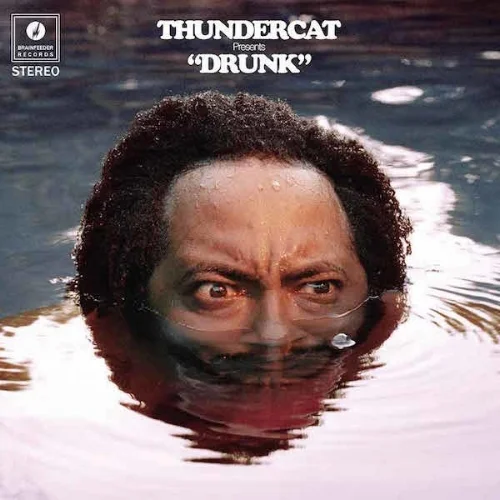
I will come to an album that is back in my mind – I consider the best of 2014 – but I feel Kendrick Lamar created the best album of 2015 (To Pimp a Butterfly); Beyoncé in 2016 (Lemonade); many feel Kendrick Lamar’s DAMN. was the best of last year – others feel records from SZA, JAY-Z; Kelela and Tyler, the Creator were deserving. Throw in British efforts from Sampha and Stormzy; U.S. greats like Thundercat, too. Solange created a year-defining album in 2016 (A Seat at the Table) and this year look set to put a great focus on black artists. I worry, mind you, that there is still a racial bias when it comes to music. Maybe it is not as evident as sexualisation and sexism but it is very much there. Overlooked tracks from Rhiannon Giddens deserved more acclaim but, largely, there was good coverage of black music. Although I have listed some great black albums from the past few years; I am still seeing fewer black faces at festivals and being proffered. There are plenty of geniuses in music but, regardless of talent; there is that leer and lure towards white artists, still. I have mentioned the BBC’s longslist of artists to look out for this year. I am glad good Pop is taking focus but there is that issue of racial-genre bias.

Tyler.jpg

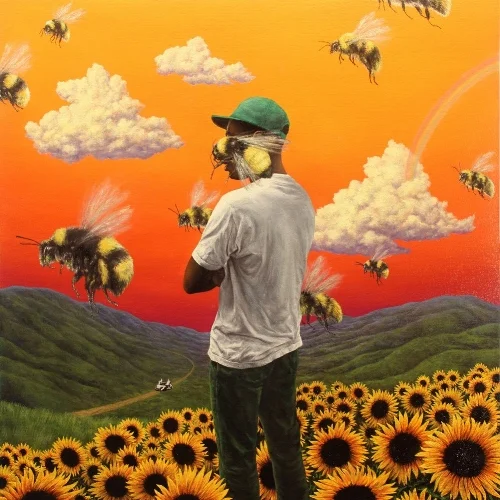
IN THIS PHOTO: The cover to Tyler, the Creator's album, Flower Boy/PHOTO CREDIT: Getty Images

Many were excited last year when Grime and Hip-Hop got more attention. The thing is: there are fantastic black artists throughout music. We have mainstream queens like Rihanna and Beyoncé; all genres have great black artists and that is not translating into focus and attention. My headline photo is of JONES: a young British artist who has the promise to make some big strides this year. I put a spotlight on RAYE a while ago; highlighted Eva Lazarus yesterday – have made a special place in my heart for Leon Bridges. Bridges is a stunning Soul voice and someone who puts me in mind of Stevie Wonder and Marvin Gaye. I have expounded the virtues of Michael Kiwanuka and the hot underground of Grime. Whilst there are genres with a larger proportion of black artists – Grime, Hip-Hop and Rap – it is the lack of exposure to black artists in other genres that is troubling. The longlists of ones to watch this year is Pop-orientated but there are so many great black artists in popular music. Why, then, are there so many white faces on display?! Jazz, a maligned and underrated genre, has produced stunning music the past few years. Kamasi Washington’s Harmony of Difference is a staggering odyssey and immersive work that should get more exposure. The fact it did not get the push and oxygen it deserves is not a racial thing: it is the fact Jazz is ignored and seen as too experimental and boring.

RAYE.jpg

IN THIS PHOTO: RAYE/PHOTO CREDIT: Getty Images

I have grown a bit tired of the way certain genres have been marginalised – where there is so much great music that warrants more. The mainstream has some great black artists playing but there is still that dominance of white bodies. Festival headliners, in this country at least, ten not to be black. You might have artists lower down the bill but it has been a while since I’ve seen a mainstream festival give props to a black act. Beyoncé took to Glastonbury a while ago – she will play this year’s Coachella festival and, let’s hope, she plays Glastonbury when it returns next year. There are other festivals that will host black acts but how many will headline?! One can flip the argument and say the general population (in this country) is about eight or nine-percent. That would mean music would not have to boast a higher proportion of black faces, no? You look at the festival acts and those proffered for good things – can you say eight percent of them are black? Talent and music do not follow arbitrary rules and should be based on talent. If there were few black artists in music then you could say it is fair mostly white acts are being promoted. I have provided a long list of black artists doing incredible things. A Mercury win from Sampha is a positive sign – even if there were few other black faces alongside him – and the Grammy rundown is shifting away from a white mainstream to the engineers of musical progression and true originality.

SAMPHA.jpg

IN THIS PHOTO: Sampha/PHOTO CREDIT: Getty Images

One way of recognising the brilliance of black music is to get out of the perception the charts and mainstream is indicative of what quality looks like – and what the public wants. Music should be equal and, with sexism an issue in entertainment; should we really continue down the same lines when it comes to race?! I am not saying we cheapen the issue but playing only black music and reversing what is happening in the industry. We should not put black artists-only headliners in festivals and not offer constructive solutions. I am concerned we associate black artists with certain genres. Folk and Rock have few black artists but, again, why does it have to be that way?! Maybe this goes back to history and tastes – black artists connecting with their roots and music of their peers – but I think there is an institutionalised homogenisation and compartmentalisation. I am seeing great Rock bands led by black artists and those with a more acoustic-minded nature. If they feel they will not be taken seriously if they go into white-heavy genres; that means they will stick to genres that are traditionally more accepting of black artists. Even the genres with a greater number of black artists – Hip-Hop, Rap and Grime – goes through waves and movements. There is a consistent celebration of Pop, Alternative and other mainstream sounds.

Rihanna.jpg

IN THIS PHOTO: Rihanna/PHOTO CREDITFentyBeauty.com

Rihanna, in 2015, spoke with the The New York Times - and was asked whether race is still a problem in music.

I have to bear in mind that people are judging you because you’re packaged a certain way – they’ve been programmed to think a black man in a hoodie means grab your purse a little tighter,” said Rihanna. “For me, it comes down to smaller issues, scenarios in which people can assume something of me without knowing me, just by my packaging”.

Nicki Minaj questioned the voting criteria of MTV and whether there is a favouring of white artists. If white artists writhe around in videos and get loads of streams; they get lots of hits and nominations. She, as a black artist, has fewer nominations and is overlooked:

Hey guys @MTV thank you for my nominations. Did Feeling Myself miss the deadline or…?,’ she tweeted, before adding: ‘If I was a different “kind” of artist, Anaconda would be nominated for best choreo and vid of the year as well…If your video celebrates women with very slim bodies, you will be nominated for vid of the year”.

Some have argued so-called ‘racism’ is a result of less-nefarious factors such as nepotism and cultural shifts. It is clear politics and the way black people are seen in society has an impact on musicians. Everyone from Solange and Chance, the Rapper have spoken out against isolation and the way those in the White House are ignorant of the plight and necessity of black recording artists. Whilst you can quibble over whether there is inherent racism or sheer ignorance – one cannot argue at the strength and power of black music.

sol.jpg

IN THIS PHOTO: Solange/PHOTO CREDIT: Getty Images

I alluded to an album/artist who has come back into my consciousness. I have looked at artists like Beyoncé and Kendrick Lamar and how they are changing music. They can, in many ways, thank D’Angelo. He is one of those artists most of us will not recognise my name – his music will strike a chord when we hear it. Many black artists got into music because of seminal records like Voodoo. To me, it is 2014’s Black Messiah that really connects. That album arrived and blew critics away. The experimentation, confidence and audacity that ran throughout took everyone by surprise. The album connects with me because of its richness and depths. It explores genres like Hip-Hop and Rock; it moves into Jazz and takes in Soul and R&B. The lyrics look at political turmoil and the struggle of the black population; social deprivation and personal frustration. There were songs about love but it was those fired-up mandates that really impressed. Listen to the album and realise what a wonderful thing it is. Look back through music and everyone from Stevie Wonder and Aretha Franklin have investigated social struggle and the realities of black lives – and fusing that with more traditional subjects of love. Michael Jackson, Marvin Gaye and the legends of Soul; the incredible Disco artists and R&B pioneers; some of my favourites like En Vogue, Aaliyah and Lauryn Hill; Neneh Cherry and A Tribe Called Quest; Public Enemy and N.W.A. All of these artists have made staggering contributions to the music world. What stands out is the motivation to address issues overlooked by many white artists.

D.jpg

IN THIS PHOTO: D'Angelo/PHOTO CREDIT: Getty Images

We are at a time when the political machination of Trump and May are causing division; where there is clear inequality and hatred circulating and festooning the lungs. It is not only the black population put-down and ignored. There are deprived and struggling people in all sectors of society. From the mentally ill to the homeless; the poor and those without a voice – music has its role and the power to raise change. I worry whether the new Pop movement has come at a time when we need to promote social change and engineer productive solution. In order for the end of division and the majority coming together; we need to embrace the minority artists who have the authority and passion to make a change. I worry few people are having conversations about race. You cannot write everything off by saying it is nepotism and decades-old problems revolving around ego. If things have not changed since the 1950s and 1960s in regards the make-up and dynamics of the mainstream – how can we claim there is not racism? Maybe it is not overt and profane but there is a severe sense of apathy and unwillingness to bend. Ironically; movements and real change do not happen overnight. We know there are fewer black artists put into the fore; the festivals are not housing them; we still assume there are ‘black genres’ rather than black artists – so many over issues around commercialism, awards and publicity. 2018 is here and, in addition to tackling sexism and addressing wrong; we need to consider areas around race. It should not have to fall to major black artists to highlight the disparity and discrepancies around. The world needs leading and anger articulated and, rather than proffer those artists who can bond the people and properly vocalise what issues are present – we are focusing on artists who do not have the ability to bond the people and shine a light. That is a shame because, in one of the tensest times of modern times; we need these pioneering and strong artists…

Leon.jpg

IN THIS PHOTO: Leon Bridges/PHOTO CREDIT: Getty Images

TO guide us forward.

FEATURE: Instrumental, Elemental: Are We Still Buying Musical Instruments?

FEATURE:


Instrumental, Elemental

vi.jpg

ALL PHOTOS: Unsplash

Are We Still Buying Musical Instruments?

________

YOU can claim the history of music has seen shifts…

play.jpg

and new leaders come through. Tastes have changed and the music world has evolved. Last year; I wrote a couple of similar pieces that looked at acoustic music and whether it is relevant. Another investigated Rock and whether that is dying. I am not saying modern music is defined by a lack of instrumentation but it seems fewer young people are picking up instruments. You can debate the local markets and whether, in some regions, the traditional music store is surviving. It is a debate and point that is contentious but one I feel obliged to pull up. Near where I live; there is a music school and there are a couple of music shops. Dig deeper into London and you have some closures but, it seems, there is still a taste for proper, live music. We hear stories of the industry in decline but, when it comes to the D.N.A. of the music; you cannot replace the true spirit and blood of the sound with electronics. I am pleased artists are using laptops and technology but I fear some are taking an easy route. The reality of mastering an instrument concerns time and patience. I have tried picking up a guitar and, aside from a few lessons, I found my interest wane. I wanted to get into the music business but could not get to grips with the guitar.

gui.jpg

I was taught fingering and chords; structure and songs – some simple performances to get the confidence up. That didn’t work. I moved to piano and the same thing happened. I am writing a piece about Classical music and how there needs to be more of it in modern sounds. There is compartmentalisation still and I worry artists are taking the easy route. It is hard to get a true impression of the music industry and whether modern electronics will take over from conventional methods. Electronic downloads, we heard, have overtaken C.D.s. Other sources look at the glory of the C.D. and how physical music still holds a place in the heart. Vinyl has been struggling in the past but has faced an upturn. Sales are increasing and it seems the people are not willing to let electronic-made music dominate. In fact; I am a little rash and vague with regards the battle between older and new. My point concerns the relationship between musical formats and how the C.D. boom, when Dire Straits’ Brothers in Arms arrived in the 1980s, occurred. Big, musically-rich albums encourage artists and fans to pick up instruments. The Grunge bands of the late-1980s and early-1990s compelled a million diehard garage-based bands to emulate their heroes. Punk compelled angry musicians to articulate their passion and misunderstood minds through music. Every great wave and movement motivates certain symmetry...

Punk.jpg

As times have progressed; the more guitar-based formats have been replaced. There are great guitar bands around but most of the mainstream is disconnected. Past heroes such as Oasis and Nirvana got youngsters involved in music-making and picking instruments up. Now, with genres like Pop starting to take more of a slice; it is harder getting a clear view as to whether instruments are still playing an important role. I have mentioned laptops and, with there being little money in it for new musicians; many are producing sounds through technology - forgoing the costs of the studio and the time it takes to make a song. Laptops and new software can mimic instruments and we are seeing a lot of new music that provides the sounds of instruments without one actually being played. Whilst there is enough evidence to suggest modern music places less prominence on instruments; I feel all is not lost. There are some great new bands in the underground that have kept true and are unwilling to fully embrace technology. When they come to fruition; their music will inspire the next generation coming through. Two years ago; The Guardian highlighted a music shop that was doing sterling business. There are others that continue to see sales grow but there is the assumption the decline of the high-street music shop means artists are not picking instruments up.

shops.jpg

The biggest shift we have seen, to coincide with the electronic boom, is the shift from the visible shop to the online store. The average musician/member of the public cannot necessarily afford a guitar or drum kit. It takes a lot of saving and the cost of lessons means the price of learning an instrument runs into thousands. People are seeing the way Pop is taking over the how artists who play instruments are getting less exposure than those who rely on others – making their music through technology and producers. There are music classes and lessons but there is a shift towards bigger facilities and colleges. When I was in school, all those years ago, we had music on the syllabus. It was a mandatory part of primary education and, by the time you got to high-school; it was an option available – one that many took. Now, there are fewer primary schools offering music courses and it is not ingrained into the national curriculum. Sure, there are colleges and music schools available to those at a certain point in life – are we ignoring the importance of exposing students to music at a young age? That affects the desire to pursue music but, against the bad statistics is a chance for positivity. Although schools’ music programmes and record shops are less visible than before; we are still seeing instruments bought and played.

to.jpg

Online sales and have increased and, as a companion to the vinyl revival and survival of the C.D.; people are not abandoning music at its pure base. If people are still being instruments and taking them up; does this mean that desire is being translated into music? One of the problems with the decline of record stores – and those that sell instruments – is the competition from online sources. It is more cost-effective buying online but the cost of lessons and the dedication needed is putting many people off. Maybe the questions I posed in the headline should have compared the cost of buying instruments and whether it is affordable. I know there has been a loss of shops and educational programmes but, alas, we are still buying instruments. Figures suggest that side of music is in decline but, in fact, the business has shifted to the Internet. One of my biggest fears does not revolve around sales and the move towards electronically-produced sounds. I am concerned the structure of modern music means a lot of the people picking up instruments will struggle to transition into the business. Popular instruments like guitars and drums are reserved to certain genres. If Pop – with its electronics, machine-made beats and way of working – is riding high; Hip-Hop and Rap are creating ground (less instrument-based; more to do with flow and vocals) then I wonder whether new musicians will have the patience to stick with it.

vinyl.jpg

There are Garage, Punk and Rock bands getting acclaim in the underground. Mainstream artists like Wolf Alice and IDLES are proving how powerful and potent instruments are – and why you cannot get the same magic and emotion from a laptop/electronics. I am all for revolution and change but I do not want the music I was raised on to be a part of the past. Changes will come and there will be a swing back to genres like Rock and Alternative. Until that happens, I fear music-making will be largely electronic. Many new musicians are playing piano and guitar but still leaning heavily on their laptops and trickery. The main point of this article is to highlight how enriching and beneficial playing an instrument is. It might be as simple as learning the acoustic guitar or picking up a violin. At first, if you do not have a band, it might seem a solitary pursuit. In time, when you bond with that instrument; you build a social circle and can join with others. It teaches you a lot about yourself and provides unique expression and perception. You can create language with music and explore what is possible. I do not feel instruments will be replaced by the machine but I am fearful the cost will put people off; the popular scene is not equipped to foster and nurture those who want to play (whether they are in a band or a soloist) and they will struggle to transition as fast as they’d hoped – and lose that passion down the line. I think statistics proffering the decline or instruments are false and misleading.

lass.jpg

There is a desire and demand out there but the way we are buying has shifted. Schools are reducing their music programmes but there are options open elsewhere – many of these are paid courses at schools and universities. It is money, making a big impression: laptops might be more affordable and machine-created songs more economical than a traditional, instrumental number. We are still buying instruments and playing them but there has been a slight downshift. The problem is not sales: costs are putting off ambitious creations and the mainstream is not rife with bands playing guitars and drums; there are not many Classical elements in popular music; other genres (more reliant on instruments) are not as popular. I am confident the young and older will take to instruments but many take an instrument up because they see a shop on the street – compelled to go in and explore. They are taught about music at school and, if these elements dwindle; what does the future of music look like? We can never get rid of bands and music that does not need a laptop to make it come to life. My main recommendation is to revert back to the past and reignite the strong music curriculums people like me grew up on. Put more money into the kitty and inject some more cash into the high street – so music stores can survive and breed. Making playing more affordable is important. I love electronic-based music and the way technology has taken a stand. Older sound sticks in my mind because of the physicality and nuance of instruments played. The only way we can get people interested in music and taking to instruments is ensuring bands and lesser-heard genres are back into the forefront. It seems, when it comes to the prosperous future of music we must…

pinao.jpg

REMEMBER the reason music has come this far.

FEATURE: Vinyl Corner: Steely Dan – Can’t Buy a Thrill

FEATURE:


Vinyl Corner

steh.png

PHOTO/IMAGE CREDITS (unless stated otherwise): Getty Images

Steely Dan – Can’t Buy a Thrill

________

IT has been a while since I ventured into…

stee.jpg

IN THIS PHOTO: Steely Dan, 1972: (L-R): Jeff 'Skunk' Baxter, Walter Becker; David Palmer, Denny Dia; Donald Fagen and Jim Hodder/PHOTO CREDIT: Michael Ochs Archives

the dusty nostalgia of Vinyl Corner. The last album, I think, I featured in this spot (last year) was Joni Mitchell’s Blue. The reason for this feature is to highlight albums, I feel, are best heard on a record player. There are a few that have that potential: coming to life when you drop the needle and take them back to their true home. There was another reason I wanted to include Steely Dan’s debut, Can’t Buy a Thrilltwo, in fact. The first concerns the timing: the fact the record was released forty-five years ago (last November, in fact). I forgot to feature the record back in November so that is a good reason to focus on it now. The other reason is the fact Walter Becker is no longer with us. The co-founder (alongside Donald Fagen) died suddenly last year and shocked the music world. Although there will be, sadly, no new Steely Dan albums anymore – we can rejoice and preserve the memories and wonderful songs. I go back and forth when it comes to the issue of the ‘best Steely Dan album’. I have been leaning towards Pretzel Logic (their third) because it is, to me, the moment the band became a duo. By that; I mean the sound was cemented and all the experimentation of the first two albums was crystallised into a coherent whole (on Pretzel Logic).

film.png

PHOTO CREDIT: Chris Walter/WireImage

I have been leaning back towards Can’t Buy a Thrill because, as I look at the where Steely Dan came from; one is amazed at the confidence and quality that was evident right from the off! My favourite song of Steely Dan’s is my favourite of all-time, ever: Deacon Blues. That song is the jewel of Aja (their penultimate album before they took a long hiatus) and sees Becker and Fagen in full-fat, all-in-the-pot mode. The sumptuous horns and incredible percussion; the luscious backing vocals and the musicianship that makes it a work of genius – it never gets boring and does everything that music should do. The Gary Katz-produced debut was recorded at Los Angeles’ The Village Recorder and, even in 1972, was seen as a luxury. Most big bands have the option to record in esteemed surroundings and pull in as many musicians as possible. That box of toys meant, conversely, it was a challenge and breeze for the ambitious duo. Fagen and Becker were not, strictly, the only members of Steely Dan at that point. They wrote the songs and created the drive but other singers/musicians were present from the off. One of the biggest issues of the album was the numerous bodies! The biggest criticisms levied at the album – very few in total – was the lack of leadership and some ill-advised inclusions.

band.jpg

David Palmer, the soulful, blue-eyed voice you hear on Dirty Work and Brooklyn (Owes the Charmer Under Me) – that was something critics jumped on. The as-yet-solidified band were trying out singers and, in an attempt to fit into the mainstream, perhaps; hiring a popular, conventional singer seemed like a way to get the singles out to the masses quickly. The problem with created spectacular music from the very start meant many could see a distinct sound coming through; a unique personality that was to define future albums. Palmer’s oversung, impassioned performances seemed jarring against the looser, more sardonic performances of Donald Fagen. That said; Dirty Work is seen as one of the best Steely Dan songs ever. Closer Turn That Heartbeat Over Again sees Palmer co-lead with Fagen and Becker – the blend of three voices makes it a more pleasing brew; without the distinct and unaccompanied sound of Palmer alone. If one feels non-Fagen vocals are a bad thing; they might try and explain the brilliant Midnite Cruiser. Some claim the vocal from Jim Hodder – the band’s drummer sadly drowned a few years after the album was released – was not very Steely-esque and did not fit into the ethos. Others protest against the chorus: dropped from nowhere and not as intelligent and complex as other songs on the album. I refuse all assumptions completely. The song is a blissful anthem and, unlike Palmer’s over-earnest and soulful croon; there is enough beard and whiskey in Hodder’s voice to make it stand out and impress. It is the enriching, soul-lifting chorus that, to me, seems to define what Can’t Buy a Thrill is all about: songs that get into the head and remain there for years (decades, even!).

Can.jpg

IN THIS PHOTO: The band during a recording session for Can't Buy a Thrill

Originally released in a two-channel stereo format; there was a four-channel quadraphonic mix, too. There are differences between the two mixes but, whatever version you have; it is the sonics and audio richness that makes the music inspire and endure. The lyrics and vocals are sublime and consistently impressive but it is the complete package that makes the album such a scary-good debut – all the players and elements fusing to create a Californian symphonic. A lot of the popularity and renewed interest in Steely Dan’s debut revolves around the sheer accessibility of the record. Its music shifts from Mambo and Soft-Rock to Swing and Rock. It is a fantastic spectrum and freewheelin’ record that manages to have a simple breeze and studious countenance all within the same moment. The lyrics are sardonic, cryptic and humorous; the vocals are varied and nuanced; the music takes you somewhere special and safe. Maybe, in a good and bad way, the album’s cover defines what is contained within. Steely Dan went to create some near-iconic sleeves – Pretzel Logic and Aja spring to mind – but many mauled the debut’s cover because it was messy and crude; childish and garish. In fact; it is the colours, images and tripped-out sensations one discovers that creates intrigue and showcase the tropical flavours of the record. On a song-by-song basis, there are few stronger Steely Dan albums. Can’t Buy a Thrill might not have the coherence and faultless nature of Pretzel Logic; the authority, richness and sheer audacity of Aja; the hidden treasures and layers of Katy Lied – it is, however, their most addicting and record player-perfect creation.

Single.jpg

It is a vinyl you hear from beginning to end; immersed in the obvious highs (Dirty Work, Reelin’ in the Years and Do It Again) and underrated gems (Midnite Cruiser, Kings and Change of the Guard). The ten-track L.P. is rife with discovery and brilliance. Do It Again and Dirty Work are the perfect opening one-two. The latter, despite criticisms of Palmer’s vocal, has that swirling organ and amazing chorus. The chorus, in fact, seems to define the album. Every one gets into the brain - but each is different. Do It Again is a sharper, Fagen-sung chorus that contrasts from the semi-operatic qualities of Palmer. That contrast, in lesser albums, would seem like a weakness and lack of focus. Here, in the hands of accomplished musicians; they are natural companions and, in a sense, embodiments of different personalities and lovers (the sharp-tongued and romantic; the soulful and sensitive against the wise and cragged elder). After the two big hits come two corking underdogs: Kings and Midnite Cruiser. The latter, I have talked about; the former is a historical song – almost cliché when it comes to debuts by Californian Jazz bands! – that sees the power-shift from King Richard to King John. The patrons and subjects raise their pitchers and glasses; the scene is set and, with a rousing chorus; it is a song that departs from the love-and-lies predictable and offers something truly different. Only a Fool Would Say That pairs Fagen and Palmer but gives the bigger role to the former. It is one of those Steely Dan songs that could have been taken from their latter, more assured records. On their first outing, it sounds completely alien and alarming – how, like all the other songs, it sounds so confident and free from nerves.

al.jpg

The second side is a little weaker but contains the album’s best-known song: Reelin’ in the Years is the one most highlight from Can’t Buy a Thrill. Those cutting, awesome guitar licks and funky-as-sh*t riffs are breezy and sunny as California but have the smog and danger of a New York neighbourhood. The solo was played by Elliott Randall and is often cited as one of the greatest from all of music! That is another reason Steely Dan succeeded from the off: not only relying on the two creators to produce the music. From Randall’s guitar and Hodder’s exceptional vocals/percussion; Jeff ‘Skunk’ Baxter’s guitar and Denny Dias’ guitar and sitar – all of the bodies that are crammed into the studio add their own textures and D.N.A. The remaining four songs on the record – Fire in the Hole, Brooklyn (Owes the Charmer Under Me); Change of the Guard and Turn That Heartbeat Over Again – provide rises and lows; plenty of lyrical brilliance and some of the finest music that year could handle. In a year where Exile on Main Street (The Rolling Stones), Pink Moon (Nick Drake); The Rise and Fall of Ziggy Stardust and the Spiders from Mars (David Bowie) and Harvest (Neil Young) were released…it would be hard work muscling into the crowd and getting critical attention. Not only did Can’t Buy a Thrill get reviews and attention: many saw the potential that would flourish in future albums; knowing, full-well, Walter Becker and Donald Fagen were onto something!

alb.jpg

IN THIS PHOTO: Original album advertising art

There are faults and little knocks here and there – the cover-art and some of the Palmer vocals; the fact the first side is much stronger than the second; the lack of Jazz experimentation and interludes (too many different genres and commercial elements) – but they are excusable for a debut album. They, on their own, do not weight the album down or provide any disappointing visions. Their name might have derived from a dildo from a William S. Burroughs novel but there was nothing crude and sexual about the album. The hard work, quality and maturity come through from the first notes. Each song sounds free and unhindered but, at the same time, the result of perfectionist-pursuit and long nights honing and tinkering. It is a fantastically detailed album that interweaves and delves; it takes you by the arm and gets you to connect with music in a new way. For a debut album from an untested musical force; Can’t Buy a Thrill could have been a big failure and pretentious mess. The result was a record that has stayed in the collective mindset for over forty-five years and started the career of the mighty Steely Dan. I would suggest anyone who has an interest in music, texture and musicianship investigate Can’t Buy a Thrill - and, if you can afford, buy it on vinyl. Place it down, let the needle drop and close the eyes - and let every note wash over you. It would be forgivable to suggest an album like Can’t Buy a Thrill would lose some of its charm and potency so many years from its creation. If anything; the Steely Dan debut has grown stronger…

guys.jpg

WITH each passing year.

FEATURE: Spotlight: Eva Lazarus

FEATURE:


Spotlight

AMSTER.jpg

PHOTO CREDITDomas Zinkevicius 

Eva Lazarus

________

LAST year was a productive and successful one…

EVA.jpg

IMAGE CREDITDaniel Córdoba García

for the multi-talented songwriter, Eva Lazarus. My first exposure to the Bristol musician was her track, Bad News. That song looked at the tough times when the lovers were split; the fact the heroine is a bit of trouble but, when they are together, they can be really good (for one another). The song has that laid-back vibe and a mix of Reggae and Soul. Garage, Bass and Pop fuse and infect the music: the lyrics and vocals weave together and create something stunningly vibrant. The chilled-out bliss and tranquil-chill contrasts against the fierce undertones and strident beats. The concoctions get into the head and blood; the song stays in the mind and leaves a sweet taste on the tongue. That track compelled me to get more involved with Eva Lazarus and, through this year, I have been following her developments. Amsterdam was released late last year and features a hook-up with Mungo’s Hi Fi. Other moments from the young songwriter – Live My Life and Bad Gyal – see the heroine shift and shape. The voice remains in the realms of Reggae, Drums and Bass and Soul; able to go from classic sounds to a more urban, retro versions. Backed by urgent production, racing compositions and solid support; the young songwriter retained her personality and core but stretched her talents into new areas. It is amazing to see, over the course of a few songs, the way she can mutate and inspire.

bad.jpg

The songs, especially last years, show how far she has come. Eva Lazarus is a name who is getting into the minds of some rather big sources. She has the backing of national radio and media but, as we head through 2018; it seems this will be her year to strike. There is more material coming and, following a successful E.P. campaign; it appears she will be busy and in full attack-mode. I am compelled to see what comes and whether the songs she has already recorded make its way through. Amsterdam and Bad News have similar undertones but are different songs. Each has that devilish grin and sense of the bad girl coming good; wanting to be better and not having any stress in her life. Amsterdam’s sweet-leaf swagger puts me in mind of a smoky and acrid room with no cares and some cool Reggae playing on the stereo – even if the singer had a different idea for the song. Eva Lazarus shows she can work with other producers/talent and people are responding to that! The big-voiced, big-haired talent is an M.C./songwriter who spans genres from Hip-Hop and Jungle to Soul. There is no escaping the fact eyes will turn her way and, with it, hearts will melt.

laz.jpg

Having played Glastonbury and BoomTown; performing to record crowds and smashed the local scene – we have an E.P., collaborations with Sam Binga and Zed Bias coming; more airplay and exposure to go with it all. The backing crew, ‘The Afronaughts’, remind me, in a way, of Bob Marley – a modern-day Wailers, perhaps. Instead, we have a very modern-focused musician who wants to get the people dancing and take away the cares. That is a rare thing to find in music. You get some artists who have that agenda but for most; one feels there is a more success/money-driven motive. I have been looking around at the artists who can change things this year; add their own mark and provide music something magical. Eva Lazarus has the soulfulness of Amy Winehouse and the modern Reggae chops of Damien Marley; the flair of the strongest Rock band – the sexiness of the most impassioned Jazz singer. That rich musical heritage, understanding and upbringing stirs in the pot and fires an insatiable, heady smoke that filtrates and dominates. I urge everyone to get involved with her social media and take a look at how far she has come. I have concentrated on her recent work but the music of Eva Lazarus extends beyond that. The Bristol favourite has played around the country and, with her team behind her, has the potential to embark on worldwide gigs.

di.jpg

The stunning confidence and ability to step into any lyrical or musical territory is a talent most musicians would kill for. The themes look at the ups and downs of love; the good-girl-gone-bad and cheating boys; the need to kick-back and indulge once in a while. Above all is the need to embrace love and focus on the positives. Even when Eva Lazarus is looking at scarred relationships and the perils of fidelity; there is an abiding hopefulness and energy. I am pumped to see what the E.P. contains and, as we go deeper into 2018; how many dates will Eva Lazarus get? She will play Bristol but one feels a U.S. tour would be in order. The sort of music she is throwing out has a huge potential and I can imagine American audiences would eat it up. Whatever her plans is; do not bet against the Bad News creator riding high with the best and brightest of 2018. These are exciting and great times for her. I have seen her develop and grow in stature; get those great reviews and spins from D.J.s. The hard work ethic of Eva Lazarus means she played big festivals and smaller venues alike. Tongues are wagging and there is a feeling of expectation in the air. A lot of songwriters might not be able to live up to the hype. When it comes to Eva Lazarus; she will see those rising hopes and meet them with…

fly.jpg

PHOTO CREDITAmanda Thomas Photography 

MUSIC that takes the breath away.

________

Follow Eva Lazarus

song.jpg

FEATURE: ABBA: Super Troupers: An Exhibition That Demonstrates the Importance of a Genius Group

FEATURE:


ABBA: Super Troupers

ABBAs.jpg

PHOTO CREDITMichael Ochs Archives/Getty Images 

An Exhibition That Demonstrates the Importance of a Genius Group

________

IF you take an Internet trip…

JSJSJS.jpg

ALL PHOTO CREDITS (unless stated otherwise)Getty Images 

and head over to the website of the Southbank Centre - you will find a bit about ABBA. In fact; it is more than a mere ‘bit. It is a full-on passion-exhibit that, as they say, takes you on an immersive and deep road into the back-catalogue and legacy of one of the biggest bands ever. The Swedish foursome of Agnetha Fältskog, Björn Ulvaeus; Benny Andersson and Anni-Frid Lyngstad, in the 1970s, created some of the finest music the world has ever seen. I wanted to write about the exhibit for a couple of reasons. For one; it is a must-see presentation that brings you into a unique world of ABBA. The landscape and mini-universe of Sweden’s best-loved export is narrated by Jarvis Cocker. It is only natural the legendary Pulp frontman should narrate the inner-workings and magic of the band. Many might turn their noses at that assumption but it is well-founded. His voice is a blend of emotions and contrasts; it is something you are gripped by and immerse yourself in. His alluring tones are perfect to take us into the world of ABBA. Make you sure head to the Southbank Centre because it is one of the must-visit events/exhibits of the winter. I am going to get up there because there are more and more music-based ‘galaxies’ forming that provide a deeper and more interactive way of connecting.

NEW.jpg

It is not only a collection of songs being played as one wanders around. The My Name Is Prince exhibition at the O2 is another case of a musician’s work being treated with respect and passion. Although Prince is not with us; memorabilia and rare artefact were presented to the public back in October. Among the exhibits on show is the orange-cloud guitar that was played at his 2007 Super Bowl halftime performance; Third Eye glasses from 2014; The Raspberry Beret cloud-suit from 1985 – and so much more! ABBA’s layout is a bit different: the Prince exhibit is more traditional in terms of a museum-style layout and, I don’t think, has narration. ABBA are still around – its members, anyway – so many will ask why go to the effort to celebrate a group that have not performed together for years?! That is a good question but, as Pop music starts to come into the ascendancy this year, more eyes are looking back. Pop has been somewhat generic and streamlined the past few years. So many exciting young artists are emerging and, with that, splicing genres and sounds. It will be a bolder scene and one (one hopes) defined by quality songwriting – as opposed to the commercial themes and plastic production. Who knows what will happen but the point is Pop is starting to come back into a credible realm. Many are taking from ABBA and, decades down the line; they are borrowing aspects from the Swedish group.

prince.jpg

IN THIS PHOTO: Prince/PHOTO CREDIT: Dave Hogan/Getty Images

The Southbank Centre’s page (on the exhibit) talks about a very special year in the group’s rise:

In 1974 ABBA catapulted into British consciousness as they won the Eurovision Song Contest at The Dome, Brighton. The Swedish pop group would go on to become a household name across the world, and later this month we celebrate their impact and their legacy with our immersive exhibition ABBA Super Troupers.

ABBA were a breath of fresh air to a 1970s Britain mired in a financial crisis epitomised by strike action, the three-day working week, and the effects of The Troubles. To help get a picture of the year in which the Swedish group arrived in Britain, or indeed to relive it all over again, take a look at our timeline”.

That description pretty much sums up why the group have endured and are celebrated – and why their potency and appeal has never faded. You can look at the timeline on the website and see how their songs fitted with the changing times. To me; their arrival was the European wave of colour and Pop that added something dynamic and fun to the rather strained and grey sky. It is interesting looking back and the industrial strife, political tensions and uncertainty. The same can be said today: we are living in a time when everyone is nervous and not sure how things will work out.

col.jpg

I feel ABBA are not part of the 1970s in the same way other acts are. We have had genres like Glam and Disco; Grunge and the New Romantics. Some of those sounds have survived today but the original pioneers are gone; their music is not as heady and explored as once was – much has moved on and evolved since then. The same cannot be said of ABBA. Although the songwriting was done by the boys of the band – Benny and Björn – it was the complete band that made the music come to life. In fact; many could argue those sumptuous lead vocals made the music come to life. The pressures of touring and the levels of fame – complete with some inter-band issues – meant their lifespan was not as long as many would like. The always-mooted reunion rumour is never far away and it seems the appetite for revival is strong. The official ABBA website shows where it started to go wrong for the group:

In March 1980, ABBA took their tour to Japan for what turned out to be their very last live concerts in front of a paying audience. The rest of the year was devoted to the recording of ABBA’s next album, Super Trouper, containing classic hits like ‘The Winner Takes It All’ and the title track.

In February 1981 the final blow was dealt to ABBA’s happy-couples image of the 1970s, when Benny and Frida announced their divorce. This still didn’t stop the foursome from working together. At the end of the year, ABBA’s eighth album, The Visitors, was released, with ‘One Of Us’ as its biggest hit single…

ABS.JPG

…Through the course of 1982 the energy was gradually running out of the group, as Björn and Benny set their sights on writing the musical Chess and Agnetha and Frida were reviving their solo careers. The only ABBA LP release this year was a compilation double album of their hit singles, entitled The Singles – The First Ten Years, including two new songs. Although the single ‘The Day Before You Came’ was one of the group’s most accomplished recordings it failed to become a worldwide hit on the scale they had been used to. At the end of 1982, ABBA decided to take a break. If they wanted to, they reasoned, they could always get back together after a few years.

More than three decades after ABBA’s “temporary break”, there still has been no ABBA reunion. But the group’s music lives on: the 1990s saw the beginning of a major revival, with successful cover versions and high-profile movies using ABBA songs on their soundtracks attracting a great deal of attention. The compilation CD ABBA Gold, released in 1992, has sold more than 30 million copies to date. The 1993 companion album, More ABBA Gold, went on to sell 3 million copies. The box set Thank You For The Music followed in 1994, containing all the hits, selected album tracks, plus rare and previously unreleased recordings”.

That shows, A) why it was inevitable the close-knit group would fall and, B) why the public have been pining for new material and taking the group to heart. It is amazing to think they achieved so much in a short period.

water.jpg

ABBA shot into the public consciousness when they took Waterloo all the way to the Eurovision Song Contest in 1974. A special plaque was fitted in Brighton last year to celebrate their famous win. The affection the British public has for them, especially, is heartening and obvious. There are similarities between the Pop we produced in the 1960s and the variety ABBA brought to these shores. The Waterloo album, their third, was released in 1974 but, aside from the title-track; there was little to suggest the band would endure for this many years. It was a promising collection…but better albums were to come. Their third album (ABBA) was released in 1975 and was a marked improvement from their previous effort. Mama Mia and S.O.S., two staples of the group’s routine, were on that record: there were hardly any filler tracks and a total of seven singles were released from the album. The upgraded sound of 1976’s Arrival saw the band, as the title implies, coming onto the scene with conviction. Dancing Queen, Knowing Me, Knowing You and Money, Money, Money were on that record. They, again, are staples and showed the band were becoming more adventurous and confident. Those big hits saw people all around the world flocking to see the band. They are classics that are in everyone’s head and we all know the words for – even if we do not admit it!

arri.jpg

The biggest drawback when confessing an appreciation of ABBA is the stigma and criticism people give. Many see them as cheesy and bland; a band that appealed to a small sect but never really produced quality. The group had to fight these criticisms from the start and were seen, by some, as over-hyped and sterile. The thing is; the band got strong and ABBA: The Album boasted Take a Chance on Me and The Name of the Game. Voulez-Vous had the title-track, I Have a Dream and Does Your Mother Know. 1980’s Super Trouper was their penultimate record and was when the strains started to show. Even though the material was up to its immense standards: tensions and the rigours of touring was having an effect. The title cut looked at the spotlights (‘Super Trouper’ is a name given to spotlights used for stadium concerts) and the glare of fame. There is the loneliness of the road and the rush of performance: all the ups and downs the band has experienced in the seven years before then. Super Trouper and The Winner Takes It All notched up another two number-ones for ABBA and 1981’s The Visitors looked at the band as isolated outsiders on the edge of dissolving. The album signalled a move from the lighter Pop of previous albums and explored the downsides and pains of splitting – more serious songs and music that dug deeper.

Isolation and regret were themes explored through the album and, for a band that were going through challenges and huge strains – the fact they produced one of their (if not the) best albums of their career was amazing. Unlike other huge bands with a short seven-eight year career (The Beatles springs to mind!) it seemed the best music was being made at the end. It led many to ask why they split and how things had gone bad. The relationships within the group and the demands of their daily lives impacted the harmony within. The Gold: Greatest Hits compilation was released in 1992 and became an instant hit. Over thirty-million copies have been sold and it showed, years after the band’s split, there was a huge appetite for their music. That collection of songs showcase an immaculate band who could pen affirmative music with immense choruses; gorgeous harmonies and some of the finest lyrics in modern Pop – far deeper and more profound than many gave them credit for! One can look at the destruction and break-ups that led to the end of ABBA -  we are here to celebrate and commemorate. The ABBA: Super Troupers exhibit is a must-visit for any fans of the band: anyone who is a newcomer to the music should go and see what made the songs shine; how the band came to be and what drove their world. It gives an insight into a once-in-a-generation group who changed music and laid down some of the finest Pop music ever. Maybe they will not back together but they have, in their short career, transformed music and inspired legions of artists. Visit the Southbank Centre and listen to the music; revel in the glamour, glory and gold that means their 1970s/1980s-produced music…

vis.jpg

REMAINS treasured and relevant to this very day.

FEATURE: The January Playlist: Vol.1: Decorations Down, Hangovers Easing…

FEATURE:


The January Playlist

boys.jpg

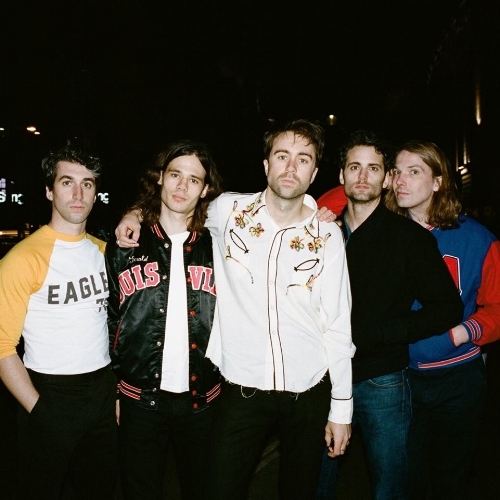
IN THIS PHOTO: The Vaccines/PHOTO CREDIT: Getty Images

Vol.1: Decorations Down, Hangovers Easing…

_______

THIS is the first Playlist of 2018…

Dreasm.jpg

IN THIS PHOTO: Dream Wife

and is no short supply of quality tunes! Dream Wife, Laura Marling and The Vaccines are armed and ready. Throw in Kendrick Lamar, Cardi B and Bruno Mars – and it doesn’t stop there. MGMT and Rae Morris have released new cuts; there are some hot offerings from the world of Rap and Pop; a smattering of underground treasures mingling with those big-league bangers.

It is a great way to kick off a new year and, as this week proves, one that is ripe, ready and ambitious! I have been looking at all the tracks released this week and compiled them into a post-Christmas stocking guaranteed to get the music juices drooling…

ALL PHOTOS (unless credited otherwise)Getty Images

________

Dream Wife Hey Heartbreaker

d.jpg

PHOTO CREDITAidan Zamiri

Flying LotusQuarantine

flying.jpg

Laura Marling – Don’t Pass Me By

loz.jpg

The Vaccines – I Can’t Quit

boys.jpg

Sea Girls – Heavenly War

Sea.jpg

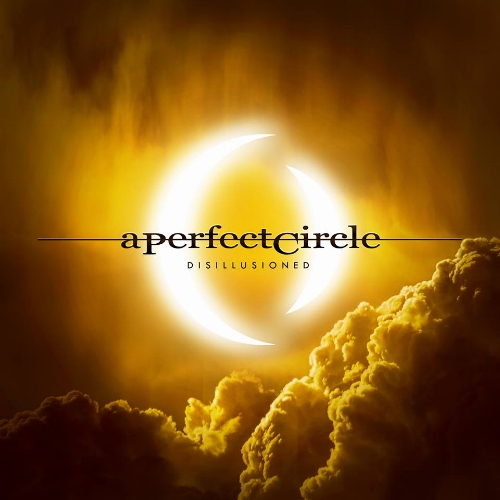
A Perfect Circle – Disillusioned

perf.jpg

Arlissa (ft. Jonas Blue) – Hearts Ain’t Gonna Lie

arlissa.jpg

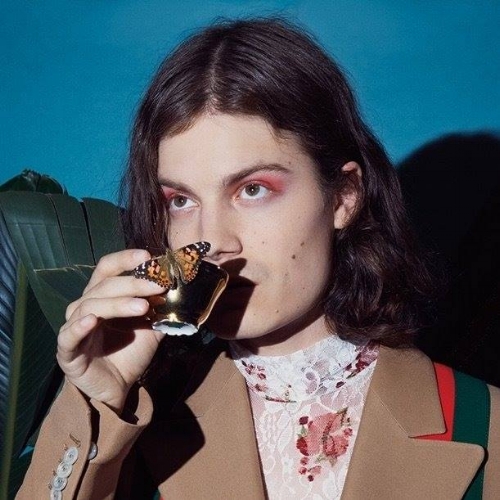
BØRNS (ft. Lana Del Rey) – God Save Our Young Blood

BORNS.jpg

Bruno Mars (ft. Cardi B) – Finesse (Remix)

CARDI.jpg
​​​​​​​​​​​​​
​​​​​​​

Ferris & SylvesterLondon’s Blues

sing;.jpg

Charlie Puth (ft. Boyz II Men) – If You Leave Me Now

ch.jpg
​​​​​​​​​​​​​​
​​​​​

Rosie CarneyK.

rosie.jpg

PHOTO CREDITDeborah Sheedy 

Chloe X Halle – The Kids Are Alright

chloe.jpg

HOTO CREDIT: Pascal Le Segretain/Getty Image

Sidney GishWhere the Sidewalks End

sid.jpg

PHOTO CREDIT: Hester Konrad

Lil Durk - India

Lil.jpg
​​​​​​​

Soleima Low Life

sol.jpg

[MV] MAMAMOO (마마무) - Paint Me (칠해줘)

MAM.jpg
​​​​​​​​​​​​​​​​​​​​
​​​​​​​

PrelowGoes to Shit

pre.jpg

Dave East - Legendary

dav.jpeg

Tofer DolanElectric Heart

ele.jpg

Plies - Rock

piles.jpg

il Xan Wake Up

XAN.jpg

Tyga - Boss Up

tyga.jpg

dodie – Party Tattoos

DOD.jpg

DON BROCO– Come Out to LA

DON.jpg

Youngr Ooh Lordy

YN.jpg

Camila Cabello - Never Be the Same

cam.jpg

James Blake – Vincent

jam.jpg

Justin Timberlake – Filthy

J.jpg

Kendrick Lamar (ft. SZA) – All the Stars

ken.jpg

Lilly AhlbergBad Boys

Lil.jpg

Liam Payne and Rita Ora – For You

ria.jpg

MGMT – Hand It Over

mg.jpg

Rae Morris – Push Me to My Limit

rae.jpg

FEATURE: Lorde, the Good of Israel... Why Rabbi Shmuley Boteach’s Accusations of Bigotry Are Dangerous and Misguided

FEATURE:


Lorde, the Good of Israel…

Lorde.jpg

IN THIS PHOTO: Lorde/PHOTO CREDIT: Getty Images

Why Rabbi Shmuley Boteach’s Accusations of Bigotry Are Dangerous and Misguided

________

FOR someone who preaches love and togetherness…

Rabbi Shmuley Boteach.jpg

IN THIS PHOTO: Rabbi Shmuley Boteach/PHOTO CREDIT: Getty Images

labelling one of music’s biggest names a “bigot” is a rather contradictory and ironic move! Lorde recently cancelled a concert in Israel because of the tensions and conflicts (Israel has( with Palestine. This boycott is not a new phenomenon: as I will discuss; music figures have passed the opportunity to play Israel fearing (performing there) would send a bad political message. Rabbi Shmuley Boteach put out a full-page advert in The Washington Post following the New Zealand-born singer’s decision to pull out of her planned date in Israel. Lorde decided to cancel because of the poor treatment of Palestinians. Rabbi Boteach claimed her “jew-hatred” was part of a wider idolatry and mindset by Western artists. The New Jersey-based preacher poured scorn on Lorde and claimed that, as a twenty-one-year-old, it was a surprise finding someone so narrow-minded and bigoted. One can write-off the ramblings and misinformed delusions as a way of kicking up prevarication and serving a personal agenda – it does worry me how such accusations will impinge on the music world. Back in July; Radiohead took to the stage in Tel Aviv and were met with protest and derision. It was done and was seen as a deliberate contravention of the boycott of Israel called for by Palestinian civil society and adhered to by leading cultural figures.

Jonny.jpg

IN THIS PHOTO: Jonny Greenwood/PHOTO CREDIT: Getty Images

The band’s guitarist, Jonny Greenwood, has an Israeli wife - so was aware of the situation and complexities present. The protests and abuse - the band had plastic bottles and debris thrown at them – was upsetting and affecting for a group who were only trying to bring their music to the people! Many peddled the line that Radiohead were anti-Semitic and supported the mistreatment by Palestinians: given the same accusation has been levied at Lorde (who showed pacification and boycotted); one can hardly win, can they?! There was the suggestion, after the furore surrounding Radiohead, people conflate Zionism with Judaism. Israeli governments, successive, have claimed to represent Jews in general – something seen as injurious and factually floored. A Time to Speak Out: Independent Jewish Voices on Israel, Zionism and Jewish Identity states:

Moreover in the United Kingdom those who claim to speak for British Jews collectively (or allow that impression to go unchallenged) tend to reflect only one position on Israel’s conflicts: that of the Israeli government. In reality, however, there is a broad spectrum of opinion among Jews in Britain – just as there is among any other Jewish population in the world – on Israel and on Zionism. Many Jews refuse to view these subjects through a narrow ethnocentric lens. They base their opinions instead upon universal principles of justice and human rights. And they refuse to accept that Israel alone offers a viable identity for Jews.”

rad.jpg

PHOTO CREDIT: Getty Images

Radiohead were not supporting the apartheid and civil war happening in Israel. One cannot label every band who takes a stand – either by performing and showing they are there to bring love to the people; boycotting as a stand against the violence in Israel – an anti-Semite. Many who protested, as was noted by critics, waved their flags at Radiohead’s gig but support the governments of Prime Minister Theresa May and President Donald Trump. How is oppression and bigotry in the U.K. and U.S.?! How can they support flawed and divisive regimes and brand a band like Radiohead, who do not support hatred and division, as bigoted?! Some see Lorde’s boycott as a political move. She is a from New Zealand: a nation that has not been involved in the conflicts between opposing sides in Israel. The nation does not support the hostilities and so, to brand one its most-popular artists a bigot seems rather suspect. I can understand why some would see a boycott as a political move, were they British or American – powerful nations making a conscious decision in regards the struggles. Musicians, by and large, do not have a strong opinion regards Israel and what is happening. They are there to play music but, if they feel performing a gig would send a bad message and would stir trouble – why should they put their lives and fans at risk?!

ise.jpg

IN THIS PHOTO: Jerusalem, Israel/PHOTO CREDIT: Unsplash

Radiohead made a stand and took that decision – it was not done lightly and did not suggest their playing meant they supported oppression and those living in occupied territories. They were not backing the militant, blood-shedding fighters and the conflicts there. Other commentators have suggested a boycott is only justifiable when those worst affecting are calling for a boycott themselves; when a musician’s boycott has the chance to bring about change and improvement. I will come to look at Lorde’s case-specific omission but, in the past, actions seen as rebellious and ill-advised have yielded backlash. Paul Simon recorded with Ladysmith Black Mambazo (for his album, Graceland) when there was apartheid in South Africa. White artists were not performing in the country and it was seen, if they did, they supported the violence and racism there. Simon recruited Ladysmith Black Mambazo because he backed the black artists and population who were being killed and marginalised. That, at the time, was seen as taking an unwise stand – given the tension between different nations and governments – but his boldness and unwillingness to conform to foolish ideologies broke ground and helped bring about change. Israel is a different situation but one where making a stand either way is going to cause derision. Radiohead performed because they knew about the conflicts and divide and were not saying they were in support of the violence – they simply wanted to bring their music to people who were fans; those who wanted an end to bloodshed as much as they did.

2010.jpg

IN THIS PHOTO: Rabbi Shmuley Boteach (in 2010)/PHOTO CREDIT: Getty Images

If one labels Lorde a bigot then they have to look back ant every other artist who has boycotted any country, ever. Faithless boycotted Israel in 2010 in solidarity with the Palestinians. Not only did their boycott, and subsequent ones, send a message musicians are unwilling to visit a nation that allows a race/group of people to withstand such brutality and hatred. It raises awareness of the situation there - when news focuses on domestic affairs and pays comparatively little time to Israel-based news – and shows nations like the U.K. and U.S. do not condone that sort of behaviour. Should a band/artist act on behalf of their government and make that call?! It is down to the judgement of the individual but I do not think anyone who plays/boycotts should be labelled as a bigot and conspirator. Radiohead’s decision to perform was met with derision by high-profile figures like Ricky Tomlinson, Juliet Stephenson and Maxine Peake – an open-letter was signed by South African archbishop Desmond Tutu. Poets, musicians and celebrities added their signature to an appeal that urged Radiohead to reconsider. Many saw Radiohead’s decision to ‘support’ apartheid as a double-standards: they are keen advocates of freedom for Tibetans.

pal.jpg

IN THIS PHOTO: A boy in Palestine, Jordan/PHOTO CREDIT: Unsplash

Although Radiohead have not faced much heat and commercial disadvantage since that concert; it is still a controversy that highlighted the risks artists are taking playing in Israel. I can understand the desire to reach fans and not exclude people who are opposed to the violence present. Radiohead are not world leaders; nor are they saying they back the violence. Perhaps a certain self-respect was lost (by Radiohead) but one cannot question their motives. Given the years-long boycotts and pressure exerted by public figures – can anyone blame Lorde for pulling out of her gig?! If she were to attend and be met with protests; that could cause her physical harm and she would be exposed to who knows what! Lorde actually asked her fans what she should do and was unaware of the troubles in Israel. She did not want to offend and was hardly coming out in the press with anti-Semitic views! It was a decision based on feedback, research and caution. She did not want to inflame tensions and provoke any criticism and violence. She made the right choice and, other than a social media post saying she was cancelling the concert; nothing else was said on the matter. Following the reaction Radiohead gained when they performed; Lorde had no other choice but to back out.

Andrew Whitton.jpg

PHOTO CREDIT: Andrew Whitton

She would have, if she went ahead, garnered bad press and that would have a detrimental impact on her fanbase and commercial platform – and damaged her wellbeing and health. The young songwriter has never, as far as I know, been to Israel so has no idea how bad the situation is. The fact rabbi Boteach went to such extreme lengths to condemn Lorde and single her out is inflammatory and vicious. She is no bigot and is not making any negative statements. The decision is not an easy one but, when other artists have pulled out of Israeli concerts; they have not been greeted with bile-filled spreads in U.S. newspapers. The fact it even made it to print makes me question the integrity and compassion of the editor. Freedom of speech is justified but (his words) step into libellous territory; designed to spark hatred and judge an innocent musician – somewhat ironic given his tirade and the points he was strictly underlining. Rabbi Boteach’s comment are, given past decisions, sexist, ageist and personal. Paul McCartney performed in Israel in 2008 – he played there as part of the nation’s sixtieth anniversary. Militant activist Nakri Muhammed threatened him with death following that decision: McCartney played in the country because he and his friends supported Israel. Whether you see the South Africa comparison as a false analogy or not; it is clear there are complexities and opposing sides. Boycotting Israel is seen as illegal under French law (according to the French appellate court of Colmar; others see (boycotting) flimsy and ineffective). John Lydon, in 2010, responded to criticism against him by claiming he will not boycott any Muslim country because none of them has a democracy – so you cannot have an issue with the violence there! That comment came in light of Elvis Costello’s decision to boycott playing the country. Gene Simmons felt boycotting was a waste of time: directing anger at Arab dictators was a better course of protest.

Mads.jpg

IN THIS PHOTO: Madonna/PHOTO CREDIT: Getty Images

Other public figures who have shown their support (by boycotting/protesting) include Elton John, Leonard Cohen; Lady Gaga, Rihanna; MGMT, Madonna and Alicia Keys. Riverdance performed in Israel back in 2011. Madonna’s The MDNA Tour visited Tel Aviv in 2012. She said the concert was designed to promote peace – even offering six-hundred tickets to various Israeli and Palestinian groups. Scarlett Johansson promoted SodaStream in 2014 – an Israeli company that operated in a West Bank settlement. SodaStream is a peaceful cooperation and employs Palestinians and Israelis. There are no easy answers and ‘right’ decision when it comes to playing Israel and what refusal/participation says about your political allegiance. There have been artists who have played as support of the innocent and refuse to be cowed. Those conscientiou-objectors are not willing to play in a country that allows the sort of cruelty and violence aimed at Palestinians. Lorde’s decision was not a rash one or based on any prejudice. She was urged by fans not to attend and, when announcing that decision, rationalised and explained everything. There is an irony when one hears a rabbi, who espouses faith and love, expressing such hate and contradictory values. According to the Talmud; gratuitous hatred is the most vicious form of hatred - and the rabbis denounce it in the most extreme terms.

tor.jpg

PHOTO CREDIT: Unsplash

In their view, the Second Temple was destroyed as punishment for this sin (Yoma 9b; cf. Story of Kamẓa and Bar Kamẓa, Git. 95b). It is equal to the three paramount sins of idolatry, fornication and murder (Yoma 9b). Torah explicitly prohibits hatred of one's fellow in the verse "Thou shall not hate thy brother in thine heart" (Lev. 19:17). Hatred is understood by the rabbis as essentially a matter of mental disposition, as implied in the phrase "in thine heart." Torah explicitly prohibits hatred of one's fellow in the verse "Thou shall not hate thy brother in thine heart" (Lev. 19:17). Hatred is understood by the rabbis as essentially a matter of mental disposition, as implied in the phrase "in thine heart." One who expresses hostility to his fellow through word or deed, although he violates the commandment "love thy neighbor" and injunctions against injury, insult, vengeance etc. is not, according to most rabbinic authorities, guilty of the specific sin of hatred referred to in Lev. 19:17 (Sifra, Kedoshim; Ar. 16b; Maim. Yad, De'ot 4:5, Sefer ha-Mitzvot, prohib. 302; Ḥinnukh 238). The Talmud is emphatic in its denunciation of hatred. Hillel taught that the essence of the entire Torah is, "What is hateful to you, do not do to others". I wonder how one who lives his life according to Jewish teachings can so blatantly and explicitly pour hate and scorn on one he does not know?!

Lorxes.jpg

PHOTO CREDIT: Getty Images

Those interpretations and explanation of hate should, if rabbi Boteach practices as he preaches, make him pause for thought. It is preposterous calling someone like Lorde a bigot. She has no hatred and prejudice in her heart: her music is designed for everyone and she opens her soul to everyone. Her touring and endless schedule means she plays to Israeli and Jewish audiences; she does not discriminate and the fact Lorde felt bad and gutted to miss the gig means it was not an easy decision – as the accusatory and toxic article (by rabbi Boteach) seems to suggest. He would do good to look inside himself and attack an innocent young musician who was pulling out of a concert – she did not kill anyone or commit any huge sin. It is appalling such a tirade was provided the oxygen of national press – I wonder why The Washington Post allowed the article to go to press. The only person who has come out of this with dignity and respect is Lorde. She has not engaged in retaliation and name-calling. Her reasons (for calling off the concert) are sound and she has the right to change plans without being accused of bigotry and hate. Other artists, who have difficult decisions to make regarding gigs in hostile areas, might make a bad decision if they fear a ‘wrong’ choice will see them assaulted in the press! Lorde should be proud of herself as she has come through a difficult time and not broken under pressure and scrutiny. The Washington Post piece is the opinion of one (ludicrous) human but I fear this kind of thing is doing damage to artists who have done no wrong. Let’s hope lessons are learned and people like rabbi Boteach…

stop.jpg

PHOTO CREDIT: Unsplash

THINK before they speak!

FEATURE: 2018: A Stasis Odyssey: Is Artificial Intelligence the Natural Way Forward for Music?

FEATURE:


2018: A Stasis Odyssey

eye.jpg

ALL PHOTOS (unless stated otherwise): Unsplash

Is Artificial Intelligence the Natural Way Forward for Music?

________

THE title of this piece…

2001.jpg

IMAGE CREDIT: Getty Images

refers to the 1968 film directed by Stanley Kubrick – adapted from a short story by Arthur C. Clarke – but, actually, there are comparisons between that Science Fiction classic and exciting developments in music! 2001: A Space Odyssey is about an imposing black structure and the way it provides a connection between the past and the future. When Dr. Dave Bowman and other astronauts are sent on a mysterious mission their ship's computer system, HAL, begins to display increasingly strange behaviour – that leads up to a tense showdown between man and machine that results in a mind-bending trek through space and time. Maybe things are not quite that dramatic and cinematic - but the way man and machine/technology interacts is being explored and evolved. A lot of musicians favour the electronic/digital revolution because it means they can compact and streamline their music into a hand-held device. If you, before, took musicians on the road to provide backing; it would involve ferrying and impractical journeys. Now; many artists can put those backing tracks onto a device and play them at gigs – there are few wage packets and less hauling and work needed by the artist. I will explore the new developments being proposed in music but there are those who prefer things the way they are. There is that human connection and the ability to bond with an audience: music is about the physical revelation and spiritual depth! Songs are written by humans and replacing them with processed vocals and animated figures take away the traditional and obvious joy one would get seeing an actual musician up there.

AI.jpg

Many artists see the way music and interaction are becoming distant; the way we play and enjoy music is becoming less physical and connected! Many of us are spoiled and demanding so we always want new music and things right in front of us. A lot of mainstream artists, such as Loyle Carner, feel songs are like chapters in a book: one must wait for them to come together and not be so impatient and greedy. The Internet and streaming mean music can be released instantly and reach millions: people are always on the hunt for something and have lost a degree of patience and discipline. My thoughts have been compelled by an article the BBC wrote that explored breakthroughs happening in the music industry. Developments and advancing music is welcomed: it means we can explore new possibilities and, actually, make music richer and more promising. Technology has been a part of music for a long time but the drive towards new arenas is putting some off. If we continue to explore the limits of modern technology...does that mean the conventional gig risk extinction?! Will we see our favourite artists replaced by holograms (more on that) and watch gigs from our laptops only?! Will we make improvements and steps regarding sound and quality if we remove the physical, human component?! A lot of feedback comes from gigs and the way an artist performs...

col.jpg

Nuances and on-the-fly changes can make a song stronger or different. That decision comes from audience reaction during the gig and it is important having that interaction. We got to gigs (most of us) to experience something real and deep. We bond with the artist(s) and, from the performer’s viewpoint, they want to see the look on people’s faces and get that hit. Many are questioning whether genuine, quality Rock will make a comeback: that is going to be harder to achieve if we feed everything into a machine. It all boils down to those who want to preserve the human element and hear real strings, voices and beats (and other instruments). Whilst I am part of that camp; I am excited by some development occurring. Before I move onto the A.I./holographic point...the technological breakthroughs we have made has provided musicians greater scope and possibility – able to connect with people from their own home. Musicians can record material on a laptop and broadcast shows without having to travel – saving on costs and able to reach more people than performing in a single venue (viewers around the world can log in and watch). In the case of Noel Gallagher’s album, Who Built the Moon? – he recorded and produced a lot of his material on a laptop. Software, laptops and new technology mean artists can produce different-sounding notes and experiment with sounds in a different way.

noel.jpg

IMAGE CREDIT: Getty Images

They can create symphonies and huge sounds with the click of a mouse. Were one to attempt that with an orchestra then the cost and logistics of putting that together would be immense. Technology has helped so many musicians reach others and get their music heard: that might not have been possible were they to rely on studios and hiring musicians. Fairly new horizons like block-chain technology mean releases can get sent from the creator to consumer without infringement of copyright and piracy issues. DJ Gramatik become the first artist to ‘tokenise’ himself – meaning fans could buy tokens using cryptocurrency. A lot of these developments are new – so it is hard to know if any problems will arise – but the way music can go from the musician to fan is changing. It is a lot quicker; you can disintermediate distributors and the middle-man and protect the actual product from misuse and any unauthorised copying or distribution. Whilst there are many who want to conserve the heritage and humanity of music; many out there are excited by the greater role A.I. is playing. One of Japan’s biggest Popstars is Hatsune Miku. It is a humanoid singer that has captured the imagination of the Japanese people. It is not a shock such an advanced and technology-focused nation would embrace an alternative in J-Pop. It is, specifically, 3-D holograms that are making the news...

Roy.jpg

IN THIS PHOTO: Roy Orbison/PHOTO CREDIT: Getty Images

Rob Orbison (‘The Big O’) died in 1988 but he is embarking on a tour this year – good work if you can get it! Backed by the Royal Philharmonic Orchestra; ‘he’ will play Cardiff on 8th April. His son, Roy Orbison Jr., hope this landmark will see the hologram play its own Las Vegas residency. Tupac, Elvis Presley; Gorillaz and Michael Jackson have appeared in hologram form and played ‘live’ gigs. Whilst the projection cannot interact with the audience and, essentially, mimic movements like a robot could – maybe this is where music is headed. Some quarters are uneasy having a dead artist resurrected without their consent – and a bit unnerved by the whole concept. Whilst it is a strange experience; many of us wouldn’t have had the chance to watch artists like Michael Jackson and Roy Orbison play. Not only does the upcoming Orbison concert provide a unique collaboration but a demonstration around holograms and what is possible. The concert will have those live musicians but incorporate Orbison’s music in a more sentient and visual manner. The only way we can connect with departed musicians is watching older videos and listening to their music. It is impossible to watch them in the flesh so, in a way, this is a way of making the impossible real. Long-gone artists can collaborate and, like Orbison, they can have their music backed by orchestras.

wacth.jpg

Maybe the full capabilities and possibilities are years off but it seems holograms and A.I. are here to stay. We will never get rid of real music and abandon the form as we know it: in many ways; A.I. will bring music to new people and places. If you cannot afford to see an artist or are physically unable; they can be projected in your home and you can experience the concert without leaving your room. Some see that as a gateway to the disbandment of live gigs – where performers and fans share a space – and a step towards human disconnection and sloth. The reason, I feel, holograms and A.I.. can transform music is to make the impossible realised. We can get music to far-off places and revive deceased artists; increase the possibilities of what a live show is and, for many living artists, augment their existing music. M.I.A. was at Meltdown last year and pondered the political activism of A.I. – whether something artificial could provide the physicality and humanity needed to provoke revolution and reaction. That is a downside for sure: the fewer human elements available; the less chance we have of inspiring politically-minded music. That is needed in the modern scene - so we have to be aware of that pitfall. Many bands welcome 3-D mapping and virtual-reality. Artists can make their music more interactive and create spellbinding light displays and electronic sets. It means there is not a guy sitting on stage playing a guitar or scratching records.

Gor.jpg

IN THIS IMAGE: Gorillaz/IMAGE CREDIT: Getty Images

3-D mapping manipulates objects and creates a completely new feel and look. It means that can come into a set and provide fresh depth and layers. These advancements mean the live set is more immersive and, as such, will bring more people in. I have discussed how fewer people are going to gigs and supporting new artists. It is creating genuine concern but the addition of 3-D and A.I. could provide the same spectacle and entertainment as your favourite box-set. Bands/artists who are getting a bit tired and old – and do not want to keep touring – can, like Gorillaz, go anywhere in the world as often as they please. Whilst Damon Albarn and his crew are in the same venue as their animated selves; they do not have to rely on this in future years. They can sit back and take their music around the world without expending any energy. It will be possible, as the band attests, to preserve the music of artists in a more secure and impressive way than V.H.S. and D.V.D. Many of us have old tapes of our favourite artists from childhood. Gone are V.H.S. recorders so, unless they have been released on D.V.D.; we have lost quite a lot of the past. A.I. is, essentially, the modern-day form of V.H.S. Given, it is more advanced but it means we can ensure music from today is available decades down the tracks.

stage.jpg

It is clear the possibilities are very exciting and alluring. These advancements are, literally, the future – they will become more commonplace and continue to grow and solidify. The idea of seeing Roy Orbison come to life in Cardiff is a sight that brings mixed emotions in me. I love the fact new people can see the great man live and right in front of them. I wonder whether the success and popularity of these kinds of concerts will mean every dead artist will come to life and feature on a stage near you. The sense of privacy violation and mawkishness is hard to shake off. As this phenomenon becomes more embedded and ingrained; I guess we will see it as normal and natural. We use virtual-reality and A.I. to simulate dinosaurs, sea-life and specimens we could not otherwise view for ourselves. It seems inevitable that the music world would look to venture into this avenue. My reservations aside – whether it will be expensive to sustain and whether the ordinary person has the technological capabilities to see A.I. concerts from home – I feel economic and ergonomic issues will be addressed and resolved.  It will inspire industries like film and T.V. to use the technology and push the boundaries of what is possible on the big and small screen. It can feed into all areas of the art and the classrooms – used as an educational tool and way of bringing the past (vividly) to life.

spot.jpg

I feel A.I. and 3-D is a few years from being viable and truly revolutionary - but its practical advantages are inspiring and very exciting. Musicians can take their music further, physically and audibly, and add new levels and elements in. The amount of data A.I. carries and produces means live performances can be enhanced and elevated – in terms of theatrics, technical possibilities and how we can interact with the past. It is not only about projecting an artist, living or dead, in a unique environment: the way we can collaborate with immaterial forms and technologies can change music for the better and open new horizons. From gigs to recordings through collaborations and the way we hear instruments – all very promising and intriguing. So long as we do not let the machines take over too much – and completely replace physical performance/music as we know it – then that is fine. Knowing how far to go and when to stop is almost as hard as anything else. If a balance can be struck - so we understand why human interactivity is why most people go to gigs and buy music - then there is no reason why A.I., 3-D and other forms of innovation cannot have their place. Unlike disturbing system-error codes and man vs. machine battles; our advancement and curiosity will be much more harmonious (than 2001: A Space Odyssey). Artificial Intelligence might not seem like a natural development and next stage but, for many different reasons, it is…

glasses.jpg

THE future of music.

FEATURE: Pay-to-Play: Is It Time to Put It to Bed?

FEATURE:


Pay-to-Play

gig.jpg

ALL PHOTOS: Unsplash

Is It Time to Put It to Bed?

________

THE term ‘pay-to-play’ is exactly what you’d imagine!

asjajs.jpg

It can take one of two forms. Either a label will pay a venue to put their artist up – or get a D.J. to spin music from their artists. More commonly, though, it refers to artists (normally independent) paying a venue so they can play a gig. That might sound insane but it is not being limited to smaller spaces. Venues, larger ones, are still charging bands to play; hoping they (the gig/concert promoters/venue) will not lose money and turn a profit. I can see some sense with regards charging larger bands, perhaps. There is a lot of talk concerning the declining live scene and how it is impacting pubs/venues. I see a lot of musicians change their normal routine and travel further afield to get gigs. A lot of local bars and spots are closing and seeing fewer people through the doors. Dwindling profit and a less visible social scene means there is a definite sense of endangerment in some areas. People are spending more money on their own alcohol and staying in; we are choosing to find our own entertainment and there is not the same culture we saw years ago. Many would say the reduction of people in pubs is good regarding public order and the burden placed on the NHS. That is true but we are still seeing rampant drunkenness and many areas are proposing the idea of a ‘drunk tank’ – where lary drinkers can sleep it off without having to go to their local hospital.

wom.jpg

If we are as irresponsible as ever; perhaps we are less sociable and happy – binge-drinking a sign of a nation whose psychological health is deteriorating. That is another matter but I wanted to look at whether the shrinking live music scene is forcing many venues into this pay-to-play scheme. Before I go on; musicians Christine Rage explained the concept of pay-to-play:

Regardless of whether you're booking a hole-in-the-wall club in a small town, or all 18,200 seats at Madison Square Garden, the process for show promotions is the same. All venues owners want a venue usage guarantee and will require the promoter to pay this fee upfront. Smaller venues may allow a promoter or band to share the door fee in the case they can be convinced that there will be enough of a draw. If, however, the band or promoter don't bring in enough fans then they may still owe the venue money at the end of the night. Clubs and promoters like the Pay-to-Play business model because it guarantees they make the money they want upfront and without any hold ups. If the band has no audience, the venue isn't put out financially. Pay-to-Play is essentially scaled down concert promotions when you get to the heart of the matter. Your band can make money with Pay-to-Play the same way that the big name bands do, through sponsorship dollars, merchandise sales, and creative marketing techniques”.

finger.jpg

That is a simplified explanation but it makes sense, definitionally. If there are very few people coming out and drinking then how is one to predict what repercussions that has on a bar/venue’s profit?! If, say, twenty people came out to watch a band for free and only bought a pint each; that might be £200 for a bar. They might pay each member of that band £50 for a set and so, if they were a quartet, that would mean the bar breaks-even. Unless you ask people to pay for a show – and know what numbers you’ll have well in advance – you are running the risk of losing money. A lot of people, because of streaming and less disposable income, are unwilling to pay for gigs and find the total cost of a music-based night out is too steep. I can emphasise with struggling bars but a lot of the pay-to-play implantation is imposed by promoters and outsider forces. Smaller bars might be working with a local promoter who are questing tariffs from artists. Bigger venues might be working off their own back but whoever instigates the scheme; is it something we should look to eradicate?! Before I come to the argument against pay-to-play; returning to that aforementioned article – where Christine Rage explains ways artists can turn a profit and merchandise/get sponsors:

drums.jpg

Sponsors are advertisers that want to get their brand name or product in front of a specific demographic. Some sponsors that might want to advertise to your fan base include:

Musical instrument and pro audio manufacturers

Music schools

Beverage companies

Clothing retailers”.

A lot of artists have their own merchandise stalls so they can make a bit of money on T-shirts, C.D.s and other assorted good. It can be hit-and-miss how much money (if any) they will turn on merchandise. You consider the ‘hidden’ costs of playing a gig and you start to see how the idea of making a profit (under these circumstances) is far-fetched. Most artists do not have the luxury of being walking-distance to their nearest venue. Even if they have a great pub/venue down the road; they will travel to get to other gigs. Some can load all their kit into a car - but many artists have to hire a van and pound a fair few miles. Throw in hire costs, fuel costs and band fuel (eat and drink) and that is only the half of it. You might have your own sound engineer and someone manning the merchandise stall and other assembled crew to help you set up your gig and run the show – maybe a local bar does not have their own security (so another body needs to come along).

dry.jpg

Social media is a handy and free tool but many artists will still need to consider an advertising outlay. Facebook offers a service where you can boost a post – get it out to a larger audience for a fee of your choosing. Depending how many people you want to hit depends on the money you spend. Posters and flyers are a quick and easy way of reaching people. Once you have the printing and digital costs tabulated; toss that into a spreadsheet alongside the physical costs; put that with the money you are paying a venue – how much will that run you?! Say you are a solo artist and you are playing a gig twenty-five miles from your home. You can fit your guitar and amp into the car and do not have to hire that many people. Consider the petrol costs £20 (for the return) and promoting has set you back £40. You spent £15 on food/drink at the bar and have to pay the venue £20 to play. That is £95 before you even play a note! I know, from gigs I have put on, unless you are headline-worthy; you are not going to get more than £50 or £60. That means an artist is going to be indebted and in the red – unless their merchandise can tip the scales! That is a single example but a scenario that is not uncommon. Bands might be in a slightly better situation but they have more kit/people to ferry around.

till.jpg

Many might say the fees artists are paid is not a lot to begin with: what does it matter if you are losing a bit of money? I know venues are limited with how much they can pay an artist; they might not be able to charge an entrance fee and they have to think about their coffers. The reason so many speak out against pay-to-play is because bands/artists are not playing gigs to make money. Most of them have to work two jobs and are never going to make a big profit no matter how many gigs they squeeze into a year. They are performing to get their music to people and win fans. Streaming and social media promotion shares music but it does not guarantee you will reach everyone – how do you know which people are listening to your music? Many need to perform to solidify their skillset and ensure they get that experience in their back pocket. Most love the thrill and experience of playing. That excitement and reception they get when performing their music to a crowd – that is what drives them and keeps them going. If you are charging artists to play then that will lead to a few things. Not only will they perform fewer gigs – if they know they will lose money or take home a few quid – and lose that faith in the live circuit; they will struggle to make money and that will impact their mental-health and love of music.

bored.jpg

Fans feel uncomfortable knowing venues are charging artists so might stop going to gigs as a protest. That means venues risk closing down and that impacts not only musicians but the local economy. Is this problem limited to smaller acts? Are they the only ones aggrieved and concerned? I have been looking at an article from 2011 - that provided Elbow lead Guy Garvey with the chance to explain his position:

"There needs to be something really strong in place if a promoter is found to be ripping off young bands. It's really, really unfair. It's basically playing on the hopes and dreams of people who are at the very first hurdle of their musical careers."

One man who has experienced gigging on both sides of the fence is Samuel Nicholls, aka Whiskas, guitarist of Forward Russia.

In his late teens and early twenties Whiskas was a promoter as well as a musician and has this advice for young artists tempted by play-to-play deals: "There's no need to do it. Pay-to-play deals never make sense as you're only ever going to play to your mates and family.

"My advice would be to put on your own gig. Buddy up with some other local bands, book a room in a pub, print some posters and do it yourself.

"You're risking your own money by doing it but probably no more than under a pay-to-play. If you do well you'll make more money and get more of the right sorts of people in to your gigs."

Pug.jpg

Money is a big concern for all new artists. The more music becomes digital and free; the harder it is for any new artists to make a profit and realistically survive. It is not only the unsigned/newer artists suffering: bigger performers are still having to pay venues so they can get their music to the people. It is a scene-wide scar that needs medicating and addressing. It might be obvious saying scrap it from all venues and ensure there are better ways to ensure profit is being made at gigs. At a lot of the problem is with greedy promoters and labels wanting to make money – rather than pubs/venues seeing a chance to get some cash in and taking advantage. I can see the problem regarding smaller venues and them feeling the pinch when only pull in a small crowd. It is clear we need to get rid of the pay-to-play concept. It is less common than years ago but I am reading posts where it is still happening in certain places. Every gig I have organised with a label/P.R. company has seen them do things fairly. They will pay a headliner £100; smaller artists get £50 and they have to play a set of around thirty minutes. They get beer tokens – so they can get booze for free – but they have to arrange all their own travel and instruments (they would be provided a backline and sound engineer).

travel.jpg

That sounds like a fair deal because, if you are fairly local to the venue; that means you are still making money (even if it is £10 or £20). Even that set-up is still only turning a tiny profit for artists. I have seen a lot of them set up merchandise stalls but many are going to a gig and choosing to get that artist’s music on streaming sites. Look at the reality of gigs in music and you see what tight margins are present. Only the truly established artists can confidently play a gig knowing they will make a tidy bit of money. Of course, the passion of music and love of performing means many artists will play gigs for a small fee and be happy with that. Given the stress they are under – and the fact they have to work full-time jobs – how can any venue expect to sustain a pay-to-play model and not face backlash?! It is clear abolition needs to occur but, given the shaky future many small venues face; are there alternatives to the problem?! My ethical conundrum arrives when establishing whether it is scrupulous promoters/labels or hard-working venues culpable. The most common infractions are happening in small bars so I think you can split guilt down the middle. If you can only remain in business if you turn a profit; paying artists to perform means some venues suffer losses and, therefore, face closure – is it the only recourse in some cases?!

beer.jpg

Some artists are willing to play for free if they are performing for a charity: others will do it in exchange for beer or petrol money. Whilst there are exceptions and room for bargaining; compensating artists for their hard work is only fair. To retain those ethics; if payment is not possible for artists, then some sort of immunity or indemnity must be formulated. As far as I know; artists who have to pay to perform are, unless the venues have a specific policy, not paid after the gig – if lots of people get in and there is a lot of money made behind the bar. There is that assumption, when making them pay, not enough money will be made at the venue that gig. If a contract can be worked up where the payment from an artist is a deposit – that means they can get their money back, and maybe get paid, if more people come in. Perhaps more venues should do the same as many festivals: offer food and drink as a minimum. A lot of artists I know (who have gone down the pay-to-play route) do not even get that. I think there should actually be something a bit more lucrative for artists. Maybe there is no other solution but force every venue to pay their artists fairly. Unless an artist volunteers to play for free then there should be money provided following every performance.

pedal.jpg

The notion of playing to perform is not exclusive to music – it is present in the entertainment industry and sport – but the issue of financial struggle is more vivid and clear than other industries. I have seen disgusted Facebook posts where artists have had to pay to get a gig and, at the end, have been out of pocket. One would think the rise of streaming and free music would put issues like pay-to-play into the spotlight. It is harder now (than ever) for new and established artists to make a crust from what they do. Unless you are an established act who can command multi-date tours and guarantee a healthy kitty after the end of any run – how much money are you going to make?! It is a testing time for new musicians and the off-putting side-effects of streaming need to be counterbalanced by positive rewards. That can come from passionate crowds and a fantastic network of fellow musicians. When you think about it; there are not that many benefits and obvious bonuses for a new musician. The passion and love of what they do tend to override the bad points. If some venues insist on maintaining their (Scrooge-like) pay-to-play policy then that will put so many musicians off. The music industry is a tough market, I know. Getting gigs, however, is a right (for those deserving) and not

right.jpg

A privilege.

FEATURE: The New Music Expression: Unifying Guidance or Futile Rebellion?

FEATURE:


The New Music Expression

Anne4.jpg

IN THIS PHOTO: Anne-Marie/PHOTO CREDIT: Getty Images

Unifying Guidance or Futile Rebellion?

________

SOME might say there has been little…

Dylan.jpg

IN THIS PHOTO: Bob Dylan/PHOTO CREDIT: Getty Images

in the way of political progress and musical rebellion since the 1960s. We all associate singers like Bob Dylan with politics and his cutting commentary. The songwriter himself claimed not to be political with regards some of his most famous songs. That seems extraordinary when you consider the lyrics – that speak of war, oppression and deceit – but maybe he does not want to be labelled and tied to those (rather weak) Folk artists who felt strumming strings was as effective as genuine protest and activation. The world has seen political distress and social divisions for centuries but, given the role of the Internet and how easily we can spread music; should there be a better drive towards getting artists to shift from love to politics? That might be a simplification but there are too many songwriters relying on staple and cliché for their inspiration. I raise the point because Pop mainstay Anne-Marie has revealed a new song – a demo, albeit it – that castigates President Trump and Prime Minister Theresa May. The song contains the lines “Dear Mrs. Prime Minister/We’re not one bit similar/So how’re you supposed to know a thing about us?”;“I don’t believe a word you say” it continues…“And as for Mr. President/It’s like World War III/And he don’t give a fuck”. The song then explores other issues: “So much drama, people dying/Police shooting, children crying/You know? No, you don’t”.

Anne-Marie.jpg

PHOTO CREDIT: Getty Images

The song ends with a definite promise: the people will not keep quiet and sit by. The lyrics are not up to the standard of Bob Dylan’s early work but they are least convey a distinct political anger – Anne-Marie is definitely not going to refute that claim. Another artist, Stomrzy, has been embroiled in a bit of a dispute with our (unpopular) Prime Minister. She has, somewhat inadvertently, claimed he is an artist who promotes drug-taking and is glamorising that form of abuse. I have written about drugs and how the seeming romance of substance abuse and drug-taking has led to a poisonous and dangerous culture. Stomrzy, of course, retaliated and is not solely responsible for any controversy. His Grime music is part of a scene where the subject of drugs has always been a component. He referred to May as a “paigon” whilst collecting a GQ awards – handed to him by opposition leader Jeremy Corbyn! It is clear there is a dissatisfied and disaffected sector of music that is unwilling to support the Prime Minister and the way she is leading the nation. If Anne-Marie’s song, Dear Mrs. Prime Minister, is an attack on the detached and middle-class values of May – and the way she is clueless regarding the public desire – then one has to wonder whether these (kinds of) songs can make a difference.

Storm.jpg

IN THIS PHOTO: Stormzy/PHOTO CREDIT: Getty Images

Stormzy’s declaration and attack is on the money but leaving it there seems rather hollow and anticlimactic. His comments gained a lot of press and were seen as the start of a possible revolt. The Grime community is among those who see through the Prime Minister and know the score. I wonder whether enough is being done and (whether) artists feel political music will gain traction and support. I touched on this late last year and wondered whether the role of ‘political singer’ is a false concept and an oxymoron. If the likes of Bob Dylan were never, as he states, politically-minded; then can we expect the modern popular to take a stand? I would say Anne-Marie’s song is a flavour of what is to come. Many might turn their noses. She is a Pop singer and is going to collaborate with Ed Sheeran on her next album. That combination might seem as scary and potent as a night out with your grandmother: hardly Public Enemy at the peak of their powers! Times have changed and we have not got the same might and muscle in Hip-Hop and Rap. Maybe we never did in the U.K. but the same could be said of the U.S. Aside from artists like Kendrick Lamar and a few others in Hip-Hop; how many other popular artists are tearing into the administration? It does not matter what genre you play in: now is a time when many are confused and looking for direction.

i.jpg

PHOTO CREDIT: Walid BERRAZEG @bazingraphy/https://www.instagram.com/bazingraphy/

I am impressed Anne-Marie took the decision to record a song that strays from what we know her for. Regardless of your opinions about her music and ethos; can you deny the fact a mainstream star attacking the world’s most powerful leaders is a sign of young artists taking a stand? I am not sure a single artist – or most of her peers – bandying together in protest cannot change the ways of the government and lead to social change. Rather than see it as a ‘revolution’ maybe we can see it as a necessary change and tide. Many are speculating as to how Pop will change this year – many are tipping a turn from commercial sounds to young artists speaking about things more substantial and relevant. There will still be a large proportion of love songs and concentrating on the self. My hope and suspicion is there will be a drive towards social/political-minded discussions and using a (privileged) platform to speak to young listeners in a new way. If the likes of Anne-Marie and Stormzy are not exactly breaking new ground or causing seismic shifts: their actions and reactions will inspire other artists to follow their lead and buck form the conventional. I know Anne-Marie will go back to her usual routine and style – her collaboration with Ed Sheeran hardly suggests we are about to see an explosive political firecracker that burns into the imagination.

th.jpg

IN THIS PHOTO: Prime Minister Theresa May/PHOTO CREDIT: Andy Rain/EPA

That does not matter because something as simple as that one (rough) song is a risky move from someone who has a particular persona and demographic. A revolution and vanguard does not have to match the quality and genius of N.W.A. or Public Enemy; Eminem or Kendrick Lamar. Those artists come from different background and play in different genres. There is nothing insincere and inauthentic about a Popstar like Anne-Marie tackling the state of the nations(s). She is a young woman seeing what is happening around her and finding the friction and bad decisions impact on her happiness and mental-health – she has written and spoken about her anxiety issues and how they affect her daily life. Those who are brave enough to fly and take a risk will see rewards and make changes. She could have written another personal song about life or a documentation of a no-good man (the usual fare one might expect from Pop). Things have got to the point where musicians are willing to break from their social contract and speak out against our leaders. You can debate the quality and potency of Anne-Marie’s lyrics; speak about the effectiveness of Stormzy’s (unwelcomed) shout-out; whether we will see an about-shift and a revitalisation in music. 2018’s sharpest and most arresting Pop moments might take a while to bed in but I feel, in the coming weeks/months, we will see a definite change in the air.

protest.jpg

PHOTO CREDIT: Unsplash

Encouraging a climate change towards more politicised thinking and responsible songwriter is important. I am not saying there will be a complete makeover – nor will that be possible given the money, commercialism and rigidity in music – but the smallest changes and songs can make a big difference. I hope Anne-Marie works the song into something hard-beating, whip-cracking and intense: a modern Pop banger that will not only compel the listener to move and bond with the song; they will absorb the words and think more deeply about politics and what is happening in the world. It is not brain-washing or imposing a political affiliation on young audiences: it is an artist’s opinion and a reflection that many others share. I know mainstream music will not embark on radical shifts but there is optimism in the air artists who have a more prominent say in music (Pop acts) will dig deeper and, lyrically and musically, explore new territory. Some said the relatively recent exposure of Hip-Hop and Grime (many of our young hopefuls tipped for big things this time last year when tipsters were prophesising) provided a platform for something angered and observant. The likes of Skepta and Stormzy have done some good work but, this far down the line, has there been any huge difference and change?!

bucket.jpg

PHOTO CREDIT: Unsplash

As we make resolutions for the year and plan ways to improve our own lives; I wonder whether music, in general, will make plans and motivation for change. A few political songs and expressions of dissatisfaction will not mobilise the public into protest but it is a big and important step in a music industry where a lot of the most dissatisfied and disgruntled artists have to work in the underground. I always regret they do not have a mainstream voice but the gradual moves and reconfigurations we are witnessing have come off the back of a turbulent, testing year. Those who voted against President Trump and Prime Minister May have had our doubts and mistrust rewarded with peerless mishandling and mistakes. One of the things we should encourage in 2018’s music – among many others things – is a slackening of commercialism/populism and a greater nurturing of something deeper and more unifying. It is possible to foster a scene that blends the mainstream ideal and new movement without seeing an exodus of fans and dismay from records labels. If Anne-Marie’s bedroom-made attack of May and Trump is not an earthquake that can get the industry exploding and galvanised – it is an indication of dissent, dismay and disgust that has always been present in young artists. There are big issues that need to be explored, tackled and verbalised in popular music and, whether it is a small step or a huge leap, it can start a domino effect that can lead all the way…

fire.jpg

 PHOTO CREDIT: Unsplash

THROUGH the music industry.

FEATURE: In Bloom: Can a Website Cure a Lot of the Issues in Today’s Music and Make Us More Sociable?

FEATURE:


In Bloom

flower.jpg

ALL PHOTOS: Unsplash

Can a Website Cure a Lot of the Issues in Today’s Music and Make Us More Sociable?

________

IT is still the first day of 2018 so I am not going…

rest.jpg

to start pushing myself and getting ambitious until the weekend at the very least! This year; I will repeat some points I laid out in 2017. I have talked a lot about sexism, racism and imbalances that are robbing great acts of coverage and equality. I am making pushes regards my Kate Bush documentary (hoping to get something out before February) and I want to, above all, make concrete development regards my website. I have pitched various pieces about Psychoacoustics: a website that would draw together all the facets and functionality of existing sites and put them into one place. I have taken a rather technological and electronic approach to the end of the year. I talked about the effects of social media and why we should encourage less time on it - maybe there is an irony talking about a website where we encourage artists and fans to spend time on. My concern around social media is less to do with the fact it is indoors and we are wasting our lives away: the fact is, we are not being productive and are open to trolling and abuse. Too many people are subject to bullying and negativity; the ‘social’ side of the Internet means we spent a lot of time staring at screens and sharing pointless information. It is important we retain a certain attachment to social media but I have been wondering what effect it has had on the collective consciousness.

girl.jpg

Whilst I am seeing a lot of developments and good aspects of social media – music able to get far and wide; new connections and bonds made – but the downsides revolving around the amount of time we spent on it and what we actually get back raises questions. I will not write too many other pieces around social media but there is a desire in me to spend less time on it and move towards something more material and constructive. One might say a music website is the same thing as social media. People are facing the same problem and the addictiveness is the same. As 2018 begins; I am determined to get ambitions and plans moving and developed. There are three reasons why I am determined to get the website going and focalise all my music stuff into one place. It is possible to integrate all the social media strands into a website and not have people switching between sites. Sociability is an important part of music - and direct contact with artists/labels would make promotion and connections a lot easier. Right now; we have to email companies, D.J.s and artists but, if there was a messaging service where we could contact them instantly; have music contacts only – instead of general ‘friends’ on social media – then that would be a more productive way of socialising and connecting.

social.jpg

Rather than obsesses over status updates and photos; those who love music would have a more economical and relevant timeline/chat function and layout. One of the things that concern me about social media is we are commenting on things that do not matter; watching and seeing information that adds nothing – if we are going to spend time on the Internet/social media; it might as well lead to something beneficial. Another reason I wanted to set a website up is to combine all the various elements of music media into one. How many blogs and sites do we look at of a day?! I must visit half-a-dozen and I often look at another five or six music-related sites. I watch YouTube and listen to Spotify; I am on Twitter and Facebook for my updates; I have my email accounts I check; I am all over the place and spent a lot of time flicking between pages. Having all of those in a menu and combining that with a menu would mean I could have a one-stop access to all the blogs/record labels/magazines/music-related sites that I need of a day. Information is power and, in music, that takes two forms. For musicians and writers; there is that desire to research and discover; to find opportunities and progress. That could take the form of gig listening and local venues; bands/artists broken down into location/genre/alphabet – something not being done on streaming sites and music websites. I am concerned there are too many empty calories on social media. It is the way we promote music and discover new artists.

and.jpg

Everyone and everything is bunched together and we get easily distracted. Right now; things are so disorganised so we are getting waylaid and obsessing; we are in a lower state and mental-health concerns are growing. I am not suggesting a  disciplined and regimented music website would allay or erode the issues we have. It would be there for those interested in music but be a positive and safer space. I have seen reports recently of various problems arising. Female artists being abused on stage and marginalised because they are not considered Rock/raw – that is something that should be eradicated. Putting platforms and forums up; sites and information that counteracts this sexism and educates those culpable…a way of sparking debate and reducing the occurrences. Solange, a popular mainstream artist, had to cancel her New Year’s Eve performance/set because a nervous system disorder. Making people aware of that condition would mean other artists with the ailment would get support; it would expose ignorance and highlight underrepresented maladies and issues. There are so many other topics that could be raised. Details about music festivals and school; ways to get funding and controversial topics that have been raised – such as pay-to-play and the problem of depression in music. Informing people and providing links; making changes and moving forward – it would be a way for music fans, musicians and labels/stations/managers to all have their say and connect with one another. Alongside information is education. I am keen to bring together all the sites and websites – concerned with music and anything that could impact on musicians/fans – but eager to see older and new music combined into a single site.

fest.jpg

This might be me traversing trodden ground but every day that passes sees me more and more frustrated with the state of streaming and music-sharing websites. I stumbled across songs I have not heard in years; I feel many people are not being exposed to the greatest music from the past. The only way to preserve the past and lead to a fuller music scene is ensuring people can find older sound – and putting them in an organised and compartmentalised place. Whether we integrate Spotify and YouTube alongside SoundCloud and BandCamp: a network or single site/search engine that makes it easy to get on top of all the great new music coming out is key; ensuring the treasures of the past are safe and advertised is crucial. This means new listeners can discover old gems; musicians have more material and archive to source from – it is beneficial to everyone. Making sure all recorded music, past and present, is visible and easy to navigate is as important as providing all the tools and sides to music. Software, where we can record instruments; ways of collaborating online and seeing all the best visuals, documentaries and videos is another consideration. Having a bespoke music library/search engine where one could find any album cover/album information is a good idea; investigate certain genres and, in a sense, create lessons and structured seminars for curious listeners and artists.

Look.jpg

The idea is to tie together everything we already have so artists can be better informed and resourced. Listeners have greater availability and can discover music a lot easier. There is a lot of negativity and imbalance in music so, with the Internet at our disposal; there is a desire to provide a supportive community and tackle these problems. Encouraging debate and dialogue are vital in these times and the Internet is one of the most effective ways of achieving this. We all know the way music can improve and inspire so finding ways to achieve that is paramount. Warnings have been provided – by high-profile figures and musicians – as to the detrimental hold social media has. It is a chasm for aggression and abuse; a place where people feel exposed and do not feel safe. Getting away from that side of the Internet and creating something better guarded and music-based – with a social media component running as a minor thread –is a way of remaining on social media/the Internet but adds education, information and music in. Of course; there are downsides transitioning between a reliance on social media and transferring to a new site does not wholly get rid of the problem. The garden does not get rid of its weeds – and replace them with roses – without proper care and common sense.

camera.jpg

It is hard to protect everyone and ensure we do not spend too much of our lives on computers. That is quite hard to achieve when you work in music. Most of the daily workload is done online; we spend time promoting and chatting – that does mean there is less time to rest and be a human being. I think a social side to the website that encourages people to get out would be a good idea. Whether that is a dating website or social events; it is key we get people out, together and interacting. It is possible to achieve all you need as a musician/fan, have that element of social media and not change too much – whilst allowing more time to get into the open and allow some room to breathe. Most of us are staying in and spending less time with our fellow humans. That is because of a number of things but I feel we are becoming less sociable as the Internet/social media take a bigger hold. That can only get worse so attempting to reverse that, whilst offering a gateway/transitional option, means the balance can be redressed and we can all improve – become more social and better-informed. I am worried about a number of things and the Internet can, ironically, be a cure to the problem it is creating. It will take a little time to ween people from their addiction to something else but, as a music-lover who wants to socialise more with people like me – and feel less isolated and depressed – there are possible remedies to the…

Together.jpg

PROBLEMS we have before us.

FEATURE: Spotlight: Confidence Man

FEATURE:


Spotlight

bands.jpeg

PHOTO CREDIT: Rachela Nardella/Press

Confidence Man

________

THE best album to end 2017 was from the Melbourne…

con2.jpg

PHOTO CREDIT: Press/Getty Images

band, King Gizzard & The Lizard Wizard. Gumboot Soup is their fifth (and final) of the year and one can forgive them for wanting a good rest in 2018! They will not do that but it got me thinking about artists doing things differently. I love the band because they are so prolific and changeable. Each album brings something different to the table. I like how they switch styles and push boundaries. The fact the band released five albums last year was a shock to many – critics wondered if it would be possible at all. They have shown other artists how to do things. Australia, it seems, is producing some incredible artists because Confidence Man, in a lot of ways, remind me of King Gizzard & The Lizard Wizard. The Brisbane band impressed with their single, Boyfriend (Repeat), last year. Its stop-motion video sees Ken and Barbie mixed through a blender. Confidence Man’s Janet Planet talked about the song and video:

We wrote this song at our home studio in about two hours. By the end of the day we were so excited and drunk that lots of stupid ideas seemed to be working… which is where the lyric ‘I hate bacon and eggs’ comes from. It’s probably not something we would come up with normally, but the next day when we listened back it turned out to be our favourite part. As for the video, we haven’t played with Barbies for a while, but it seemed like the right time to get my old Ken dolls out”.

The band played shows in London in the summer and it was the perfect time to boost a song that gets the colours flowing and the voice singing. Its chorus sticks right in the head but it is the way they subvert Pop clichés and add their own spin that gets to me. Other artists have lined up to remix the song and it shows how immediate and popular the band already are. I have looked around the new artists coming through and hear a lot of promise. All are doing their own thing and keen not to repeat what is already out there. Confidence Man are not heard to con us and dupe the unsuspecting listener. Their music is pure and delightful; it rushes into the senses and has a whiff of the 1990s. I feel one of the defining moments of that decade was the 1990 hit, Groove Is in the Heart. Deee-Lite’s best-known song has endured and continues to amaze because of the samples and shifts; the joy and giddiness you get when listening to it. It was a magnificent start to the decade and inspired other artists to take a similar approach to composition and the genre. Boyfriend (Repeat) has touches of Groove Is in the Heart: their follow-up track, Bubblegum, certainly reminds me of that song! It has the flair of the 1980s and brings so much flair and fireworks to the plate. The beats and electronics tumble and conspire; they fizz and percolate.

It is an extraordinary song that tops their previous effort and shows they are on an upward trajectory. The double-B motif continues with Better Sit Down Boy and continues that explosion and innovation. It is a different beast and sees the band embrace new sounds and lyrical direction. There is that attitude towards cheating and dishonesty; the spirit to take control and that rare blend of taking something with serious undertones and providing a fun and frivolous glee. That track was released a few months back and capped a fantastic year for the band. I am not sure how their music will progress in terms of its scope and sound; whether they will carry on with the B-only song-titles or they expand their alphabetic horizons – but I know the Australian band will go on to big things. I am not sure whether they are going to spin new material but it is clear there is a big army of fans who are bonding with their music. As I continue to write and search for new artists; I am watching Confidence Man and seeing what they pull out their bags next. I would like to think, if an E.P. or album arrived, they would keep with the B-themed songs and stay on those lines. Each song is very different but retains their inventiveness and insane spirit. Their videos are brilliantly conceived and I have seen few other artists take such care and detail with regards their material/videos.

There will be a lot of artists vying for attention this year – I feel Confidence Man will do some great things. In the coming weeks; I will spotlight other artists but I think the Australian band will continue to push limits and inspire imaginations. They say the Pop market is going to change and augment this year. Hungry new musicians are coming through and adding something fresh to the form. It has been long overdue and I am confiden the Boyfriend (Repeat) creators will be hustling with the biggest new acts around. They have been playing together a while but this year has been especially productive and successful. Having played gigs in the U.K.; one feels American touring is going to be part of this year’s plans. The demand is out there and the Australian group are responding with a kaleidoscopic, tropical blend that judges boring boyfriends and losers of love; they document things we are all familiar with – bringing a unique twist to the table. Throw your love and weight behind their music and make sure you keep abreast of all their developments. 2017 was a busy and exceptional one for the group. I have a feeling this year will be the best…

boy.jpg

OF their career.

_________

Follow Confidence Man

nw.jpg

FEATURE: Eternal Muse: The Continuing Inspiration of Jeff Buckley’s Grace

FEATURE:


Eternal Muse

13345732_f1024.jpg

PHOTO CREDIT: Merri Cyr

The Continuing Inspiration of Jeff Buckley’s Grace

________

IT is a bit soon to come out of the gates…

Meri.jpg

PHOTO CREDIT: Merri Cyr

with any predictions regarding new music or bits of music news. I will talk about another regular fixture on my pages, Kate Bush, and why I want to concentrate on her a lot in 2018. The year has just begun and, why I am keen to explore everything going on right now, I have been thinking about an album that keeps coming up in interviews I conduct: Jeff Buckley’s Grace. Maybe apropos of nothing; it is interesting investigating why the album appears so frequently in the minds of new musicians. I have looked at all the interviews from last year and the album musicians listed as their favourite, above all, was Grace. It is easy to see why it would resound in the minds of new musicians but is the impassioned way they discuss the record that stands out – in the same way so many musicians single Kate Bush as their most influential artist. The record was released in 1994 and, at the time, I was eleven. Many of the musicians I interview are younger than me and discovered Grace later in the decade/the start of the 2000s. When Grace arrived (in 1994); the music scene was packed with genius and glorious music. It was one of the finest years in music history and, from U.K. talent like Oasis and Blur, through to U.S. artists such as Green Day and Pavement – the year kept producing world-class albums like there was no tomorrow.

buck.jpg

PHOTO CREDIT: Anton Corbijn

You only need to do a cursory search on the Internet to look at all the wonderful albums from 1994. There are some seductive and tender albums in the pack but nothing like Grace. In 1994, as we can see, there was a demand for more anthemic, instant music. From Oasis’ Definitely Maybe to the eponymous album from Weezer – a desire to get the energy levels up and the heart pumping fast. There were more Pop-orientated albums like Madonna’s Bedtime Stories and Tori Amos’ Under the Pink: the general demand was for the bigger, bolder records. Grunge’s king, Kurt Cobain, died and there was a new charge of U.K. Rock/Alternative. It was a transitional time where new orders were replacing the old – among this was a strange and unique album from a new American star. I know I have looked at Buckley’s masterpiece a couple of times in the past year – marking the anniversary of his death and why Grace is considered one of the very best from music – but it seems appropriate to return to the record. A lot of young musicians (in their twenties/thirties) discovered Grace when the Rock/Grunge movement was dying down and the 1990s was coming to an end. Against all the chaos, energy and confusion of the time – that was reflected in the adolescent lives of the listeners – there was the need for something safe and romantic.

Corbijn-Anton-Jeff-shading-face-pg.-1.jpg

PHOTO CREDIT: Anton Corbijn

Jeff Buckley could not really release the album at any other time. Playing cafes and small shows around New York during 1992/1993; record label Columbia signed up the promising songwriter and was keen to get him in the studio. Sojourning to Bearsville Studios, Woodstock; the young master started recording songs that were being previewed and performed to modest audiences in the U.S. He would go on to tour around the world and go down in history but, at that time, the following was relatively small. Few knew what to expect when the album came out on 23rd August. Like all the finest albums that get acclaim after the fact; Jeff Buckley’s only studio album received a smattering of applause upon its release. Sales were not great and it took a while for the public to turn their minds onto the album. That is not a surprise given the demands and climate of music in 1994. Touring, exposure and dedicated passion saw the album gain a following but it is the ensuing years have elevated the record to Godlike status. For me, and many, it represents a shaft of calm in an ocean of confusion. That may sound dystopian but, even in the mid-1990s; there was a lot of negativity and aggression in music. A few artists tried to counteract that with something more uplifting but the clash of optimistic Britpop optimism and a more negative, insular U.S. scene created a fractured and divided scene.

British music would not change and assimilate U.S. artists more readily until the end of the 1990s but Buckley, in Grace, was already ahead of the pack. People responded to it then because it was different and provided an alternative: further down the track, as the dust started to settle; the true relevance and beauty of Grace came to light. It is a personal and revealing album but one that is not too closed-off and heartbreaking. The title-track is a paen to true love and one of the more accelerated numbers on the album; Eternal Life and So Real see Buckley assume a fiercer mantle – looking at subjects of corruption and love with equal conviction and fascination. Each song has a different skin and, in the 1990s and now; that importance and desire are the same. Back then, as young musicians were experiencing the world for the first time; they connected with an outsider and misunderstood soul offering the planet something deeply heartfelt and pure. You only need to look at polls now to see how wrong critics were. Grace is seen as one of the most iconic albums of 1994 and, in retrospect, perfectly fitted into a year where things were changing and people/artists were searching for fresh guidance. You can argue Grace has gained a lot of headway and acclaim because of its standout track, Hallelujah.

jeffs.jpg

PHOTO CREDIT: Mikio Ariga

That song comes as close to perfect as you can imagine: the ethereal, near-religious performance is hymnal and sublime; a song that is as right to score sadness as it is to celebrate an orgasm (Buckley’s version was, as he said, concerned with sex and the orgasm). That song has taken on a life of its own and almost overshadows everything else on the record. Talent shows and endless covers have not dampened the potency and splendour of the definitive version – even its author, Leonard Cohen, could not have envisaged the song would be presented that way. Beauty and grace are present throughout the album. It speaks to those whose hearts have been broken and who feel things too readily. Sensitivity is seen as a stigma to some: to Buckley, it was his way of connecting with things deeply and feeling more than anyone else. The complexities and contrasts of sensitivity are explored throughout the record. I relate to it because the music comes from a man who had his heart broken but was not giving up on the world; he is isolated and misunderstood but has that attachment and affiliation with words and music – what they can do and how they can define a person. I am not surprised to see the record so highly regarded as, to each person, it means a different thing.

Buckley’s personality, warmth and enigma shine in every song. I have heard interviews he gave around the release of the album and you can tell how meaningful the music is. I have not mentioned his band members – brilliant guitarist Michael Tighe among them – and the musicians that worked on Grace. The reason critics and fans ‘discovered’ the record years after its release means the nuance and songs one discovers run a lot deeper than traditional mainstream fare. Many are picking up the album now and playing it on-repeat. The lack of comparative bliss and quality in modern music makes Buckley’s L.P. an attractive option. Musicians are inspired by what they hear and unable to find the same level of brilliance and fascination in other albums. The timelessness of Grace makes it a year-in-year-out guide. The songs talk about love but they are never too specific and personal. The messages one hears in Mojo Pin, Last Goodbye and Lover, You Should’ve Come Over never lose their meaning and importance. We relate to the singer and his soul: we are struck by the layers and rich vocals; the perfect words and the sumptuous production. Grace is an album that is loved by many but the way everyone describes is beyond ordinary. Unlike other classic albums; Grace hits so much harder and seem to connect to a part of the heart no others do.

As I interview other artists through this year; I know Grace will come up time and time again. It resonates with the lonely and pining; it comforts those who have lost love and those in the throes of new passion. The majestic voice and direction from Jeff Buckley entice you in; the nuance of the music keeps you hooked; the way the songs reveal new life and soundtrack every important moment of life means it is more popular twenty-three years after its release. It is amazing to think an album that was released to minor applause has managed to remain in the musical bosom for all this time! Stick the record on in its true format – a vinyl on a record player – and let the music wash over you. It is a transformative experience and one that more artists should take note of. In a hard and unsure time; people are looking for the sort of comfort and protection Grace provides. I am not surprised so many young musicians are connecting with Grace and confessing their love for it. As we embrace new sounds and genres; we look ahead to the best albums to come…there is one record that never loses its relevance, quality and…

new.jpg

INCREDIBLE desire.

________

FEATURE: In the Nineties with the Chance of Rain: Metacritic’s Highest-Rated Albums Ever: The Playlist

FEATURE:


In the Nineties with the Chance of Rain

chill.jpg

ALL PHOTOS: Unsplash

Metacritic’s Highest-Rated Albums Ever: The Playlist

________

THIS is my final piece of 2017 and…

rain.jpg

whether I enter the New Year drunk or being eaten by a raging Alsatian – I’d like to have some world-class music ringing in my ears! Most of will enter next year’s infantile hours sleepy, blurry-headed…and our memories severely impaired. Nominal aphasia, dry mouths and banging heads – all part of the celebration aftermath. I have been covering a lot of music and, as early as tomorrow, will look at an album that continues to inspire and compel new musicians – some twenty-three years after its release. We have had all the Christmas songs and, as we ring in the New Year; everyone will have their bespoke soundtracks. I felt adding mine would be a bit obvious but, as we are marking the best music of the year…why not put a playlist together collecting music from the greatest albums of the past seventeen years?! I have been looking at Metacritic – some musicians/journalists consider it bias; others use it as gospel – and looked at the albums they have rated extremely highly (scoring ninety-percent or over) and compiled a selection of epic music to give your final moments of 2017 necessary kick, memorability and quality. Sit back and spin a banquet from some of the finest albums…

Vsan.jpg

FROM the past couple of decades.

________

FEATURE: Beauty in the Eye of the Beholder: The Best Cover Art of 2017

FEATURE:


Beauty in the Eye of the Beholder

new.jpg

PHOTO CREDIT: Unsplash

The Best Cover Art of 2017

________

PERHAPS an album/E.P. cover is less important now than…

jane2.jpg

IN THIS PHOTO: Jane Weaver/PHOTO CREDIT: Getty Images

in past years. The digital nature of music means there is less of an emphasis on a sleeve and the look of a record. People are more interested in the music and forget about the effort and dedication it takes to get that perfect image. If you look back at the greatest album/E.P. covers from history; they have captured the imagination and struck the eye – either due to their simplicity or a vivid and intricate design. A lot of those classic covers have been about capturing something instant and pure; a shot that defines the music inside and differs from anything out there. I have been looking at the album and E.P. covers from the year and have assembled, what I think, are the finest and most alluring…

ALBUM COVERS: Getty Images

________

Jay SomEverybody Works

Jay.jpg

Release Date: 10th March

Label: Polyvinyl Record Co.

St. VincentMasseduction

mass.jpg

Release Date: 13th October

Label: Loma Vista Recordings

Lorde - Melodrama

alb.jpg

Release Date: 16th June

Label: Republic Records

Arca - Arca

arca.jpg

Release Date: 7th April

Label: XL Recordings

FeistPleasure

fe.jpg

Release Date: 28th April

Label: Interscope Records

Kehlani - SweetSexySavage

Keh.jpg

Release Date: 27th January

Label: Atlantic Records

Jane WeaverModern Kosmology

Jane.jpg

Release Date: 19th May

Label: Fire Records

Tyler, the Creator - Flower Boy

Tyler.jpg

Release Date: 21st July

Label: Columbia Records

Girlpool Powerplant

pool.jpg

Release Date: 12th May

Label: Anti-

HalseyHopeless Fountain Kingdom

Hlasey.jpg

Release Date: 2nd June

Label: Astralwerks

ThundercatDrunk

Thunder.jpg

Release Date: 24th February

Label: Brainfeeder

Tove LoBlue Lips (Lady Wood Phase II)

tove.jpg

Release Date: 17th November

Label: Universal Music LLC

Charli XCX - Number 1 Angel

ch.jpg

Release Date: 10th March

Label: Atlantic Records UK

Mura Masa - Mura Masa

Mura.jpg

Release Date: 14th July

Label: Polydor, Interscope, Downtown and Anchor Point Records

Father John Misty - Pure Comedy

pure.jpg

Release Date: 7th April

Label: Sub Pop

Kelela Take Me Apart

kel.jpg

Release Date: 6th October

Label: Warp Records Limited

Baek A Yeon Bittersweet (E.P.)

Yaen.jpg

Release Date: 29th May

Label: JYP Entertainment

Arms and SleepersLife Is Everywhere

life.jpg

Release Date: 27th January

Label: Arms and Sleepers

SZA - Ctrl

SZA.jpg

Release Date: 9th June

Label: Top Dawg Entertainment

FEATURE: Saratoga with a Slice of Lime: Why the American Music Press Is Ahead of the British Best

FEATURE:


Saratoga with a Slice of Lime

flag.jpg

ALL PHOTOS (unless credited otherwise): Unsplash

Why the American Music Press Is Ahead of the British Best

________

MANY might find my headline proclamation…

british.jpg

tantamount to a lack of patriotism and faith! There are many familiarities between America and the United Kingdom, We both have unpopular, ludicrous leaders (the U.S. are ahead of us) and both have incredible music scenes (I would give that win to us). In a modern-day, media American Revolutionary War; the Americans win the new-age Saratoga and Yorktown. It is not biased suggesting we have a better and more rounded music scene. I know America is larger and has broader geography than we do here. You can go from the Southern states like Arizona and Nevada and see no comparison to that of Tennessee or New Mexico. New York is a world away from California whilst Oregon and New Jersey have their own thing going on. Maybe the fact there are more musicians in the U.S. (compared to here) means there are more music outlets; greater mobilisation and better, finer-funded journalistic attack. I often search for ‘the best bands in…’ when looking at state-specific artists. The local media, except for New York and California, is not that active when highlighting their best acts to watch. Maybe Nashville and Austin (Texas) are exceptions. Here, we have the same issue: I wonder why there are few local sources scouring the floors for artists to watch. The national press is a different matter?

write.jpg

I will concede America is a lot stronger regarding other elements of the entertainment industry. I watched a new drama, Feud, for the FX network that tells about the rivalry bittern Joan Crawford and Bette Davis. The series was well-received and has been renewed for a second season – where the subject switches to the relationship between Princess Diana and Prince Charles. I watch ambitious and sharp U.S. drama and realise how far ahead of us they are. Look at the range of fantastic dramas on Netflix, FX and Amazon Prime and you can see how advances and ahead of us they are – despite the fact they have more money. I do not believe finance and greater resources is the reason the Americans leads us: finer talent and better writers, with great imagination, are part of the equation. That is the same case regarding sitcoms: the penmanship is finer, wittier and the series are, largely, much funnier. You can debate the odd show here and there but, when comparing scenes; the U.S. market is a lot stronger. Music is a much more evenly-balanced and competitive. The Americans have a better and dominant Hip-Hop/Rap scene. We have nobody who can rival the potency and genius of Kendrick Lamar, for example. Our Pop market is richer and we are pretty toe-to-toe regarding Punk, Rock and Indie. Look at the Folk market and we take an edge; the U.S. has better Country acts; maybe the U.S. leads the Jazz market – we regain advantage when looking at Electronic acts.

peigr.png

IN THIS PHOTO: The logo for Pigeons & Planes/PHOTO CREDIT: Getty Images/Pigeons & Planes

In spite of our shinier, tauter muscles; there seems to be a disparity that is quite alarming. I look at the list of best-rated music blogs and the Americans lead the pack. From Pitchfork and Consequence of Sound; BrooklynVegan and Aquarium Drunkard; The 405 and AllMusic; Pigeons & Planes to Metal Injection – all based in the U.S. Drowned in Sound, The Line of Best Fit and Louder Than War are situated here. Manchester’s Louder Than War – based on The Smiths’ Louder Than Bombs compilation – is one of the go-to sites for all the coolest and most current music news.  I am a big fan of Drowned in Sound and what they produce. We have Too Many Blogs and other great blogs but, if you look down the list of the finest and highest-rated you find the majority are American. We might, in a list of fifty, not lose out by much but the top-ten/twenty is U.S.-heavy. Considering we here have a deeper and more vibrant music scene (in my view); I wonder why we are losing the war. There are more people in the U.S., for sure, so it is inevitable there would be a wider media scene. Quantity and coverage do not mean a stronger and better-quality market. Our best music blogs match the quality and importance of magazines like MOJO, NME and Q. We have a wonderful wave of underground/independent blogs (not including myself!) but the spotlighted, professional sites are not quite as striking and impressive as the U.S.

mj.jpg

PHOTO CREDIT: Getty Images

If the Americans have us beat for drama and comedy writers: does that mean their music journalists are finer? I would say, historically, we have produced the most intelligent and passionate music commentators. Now, if you look at the music media, there is a less-visible and important scene. Gone are the heady days of NME – when every band lusted after coverage – and the writers who helped define and document our brilliant artists. Although we have passed the epic days of the 1990s; that does not mean a weakened music scene should affect the music press. A few years ago the BBC Radio 4 series, Yesterday’s Papers: The End of the Music Press, examined the downshift in media outlets and how writing has moved from traditional print to the Internet. It is a shame to see the cessation of weekly magazines – a few exist but fewer than years ago – and the digitisation of the music press. One of the problems we have here is a lack of governmental backing. We have a lot of talented writers – on the same level as America’s best – but there is less money set aside to find the media. Although recent reports suggested certain U.S. newspapers are laying off editors and copyrighters. There is structural weakening occurring and the need to minimise and centralise publications. Many sources are streamlining their workforce and trying to save money.

print.jpg

That said; there is still more money available in the U.S. and better financing to ensure the best music blogs/paper are subsidised and survive. I know most of our blogs have to rely on unpaid contributors and a shallower wallet. Many are closing because of the expense needed to produce great work. One needs to go to gigs and interview artists; publish pieces and, in order to compete; be as ambitious and prolific as possible. Free contributors are fine but there are still the issues around expenses and subsidisation. There is such a tight budget for our best writers and sites to expand and thrive. Maybe, then, finance is the big difference. A lot of other factors play in. The closure of music venues and changing genre-tastes – Pop starting to rise; Rock less prevalent and important; new music taking a bigger role than mainstream – means the lesser-seen, smaller blogs (who investigate new music) are busier and, in my view, more promising. The finest we have here are wonderful but there is something special about the U.S. I can trace a lot of the weakness to the way the government ignores the music scene. Venues are closing and the charts are not an accurate representation of our music culture; the printed press is dwindling and there is not the kind of explosion and genius we had years/decades ago. All of these factors combine and it means it much harder appealing to the masses; producing the same sort of work that made British music journalism the byword for quality years back.

money.png

The U.S. has its own problems but there are more paid writers and bigger numbers. If they can afford to hire writers and have bigger kitties for gigs and pieces – that means the journalism will be better and appeal to more people. More money can be spent on promotion and it seems there are differences between the way the music media is perceived and treated in both nations. I cannot abide by the assumption American writers are better than ours. The music scenes are even but with exciting young artists like SZA, Princess Nokia and Brockhampton producing terrific music – it is a ripe and rewarding time being a music journalist in the U.S. We have amazing hot artists coming out but I feel U.S. music, at the moment, is more adventurous and colourful. If the quality levels are even; there is a more eclectic scene. If you look at an average day at Pitchfork and Drowned in Sound you cannot really say the Americans are sharper, more detailed and innovative than our best. A lot of these polls are based on numbers and, when you have a bigger national population; the more people will visit music websites. America has government problems and faces the same trials as we do but I think our media and music scene is at greater risk than the U.S. Structural damage and shaky survival rates for venues is worrying; the way the mainstream is set up and the lack of affirmative, mass-inspiring bands compelling writers. Maybe, though, there is a general issue with music journalism as a whole.

DQdgJM-VwAAEl8y.jpg

IMAGE CREDIT: Getty Images

Is the lack of money and digitisation affecting people’s dedication and concentration? The invention of apps. mean people can get their music news on the go; there is more competition and albums are released in different ways – less time for promotion and people refuting the media’s opinion and relying more on streaming services for musical guidance. I still think these issues exist more in the U.K. It is hard explaining why the U.S. are so far ahead of us regarding popularity and press dominance. I shall conclude by bringing in a piece by a U.S. journalist published on hypebot earlier in the year:

Back in the day, music press got the word out about music before the music itself could get there. You could read about a record, but hearing it required hard work, happenstance or money you didn’t have. It could take yearsbetween seeing the name of some potentially-interesting band or song and actually hearing them. These days, of course, your chosen obscurity is likely just a YouTube search away.

With the rise of blogs, opinion is as readily available as the music itself. Approximately nobody is going to pay money for this stuff. Only the biggest blogs and sites can sell the ads they need to, and even they’re having serious problems. The New Musical Express is now an entertainment guide given away outside tube stations. The problem for professional music critics and press is competition from literally the whole world, the same problem artists have.

cash.jpg

This is a special case of the problem with journalism in general: the money dried up with the exclusivity. About the only press that’s done at all well are the technology sites, who ripped down those tedious walls between editorial and advertising and gave up any reluctance to live off payola around the turn of the millennium, turning into utter and unapologetic shills. (Though it’s not clear those walls were ever up in music journalism.)

Even in the ’80s and ’90s, the pay was bloody dismal — I quit X-Press twice because of their widely-attested habit of asking for stuff then not running it, thus not paying you — and the main attraction was that it beat working for a living; but even that beer money level is now largely gone. Though I enjoyed it — even the tedious bits were pretty fun — I’m a computer system administrator primarily because there’s no money in writing about music. This Baffler story is me after I moved from near-unemployable nonprofit lifer to overpaid geek. I eat way better now”.

The lack of paid roles; dominance of the middle-classes in mainstream media; the lack of motivation new writers have to work for nothing; the fact people are finding out about albums before they come out – and less reliant on the written word – are all damaging and important. I have concerns about the music press in general and whether journalism is a profitable and desirable path. The only way we can make it attractive is by building our blogs/publications and considering how they are run/staffed. The U.S. music press is in trouble but I feel we face graver issues – fewer stunning writers and less money available for great and original content. With such a brilliant and growing music scene, our best and brightest talent…

band.jpg

DESERVES better than that!

FEATURE: Trêve de Noël: Supersonic, Reunion Rumours and Why Oasis Continue to Compel

FEATURE:


Trêve de Noël

bandss.jpg

PHOTO CREDIT: Jill Furmanovsky 

Supersonic, Reunion Rumours and Why Oasis Continue to Compel

________

IT would be impossible to end the year…

su.jpg

IMAGE CREDIT: Getty Images

without talking about Oasis! Those reading might think that quite odd: the lads have not produced music in years and irrevocably split – the two Gallagher brothers engage in spats, conflict and exchanged jabs. One expects that kind of spirit and spit from two men who, even when Oasis were together, did not always gel that well. I have been watching the Oasis documentary, Supersonic, quite a lot. Initial reviews of the documentary, last year, highlighted the great times and the glorious music. Many noted the battles and wars were overlooked. Publications like The Guardian pointed out it was overtly positive and did not tell the whole truth. That is a misleading assumption because, when you watch, the members allude to bad times. There was the moment Liam kicked off on a ferry and got stuck into a mass melee. Liam loved the spirit and physicality whereas Noel was a bit more pragmatic. He condemned that behaviour and, unsurprisingly, Oasis were in the press for the wrong reason. Part of the legacy and reputation stemmed from the no-holds-barred, unedited comments from the Gallaghers. They were keen to proclaim Oasis the best band in the world; mouthing-off and slagging the competition. They have that northern wit and honesty but, because of their mother, Irish humour and candidness.

That combination of D.N.A. and confidence meant they were always a controversial and divisive band with critics – the documentary looked at all the headlines, fall-outs and tension. One could not produce a documentary to celebrate a band’s music and make it too negative. We have all heard about the fights and problems with their father – the Gallaghers pointing out how he was abusive and ostracised from the family – and how their mother raised them on her own. Liam and Noel were interviewed separately but every member of the band came to the same conclusion: despite the lows and tabloid obsession were some fantastic moments. The sell-out Knebworth gigs were among the defining moments of the 1990s. The build-up and hype surrounding the gigs was Oasis at their peak. It was a surprise to see so many people flock to see Oasis take to that stage. Over two-and-a-half million applied for tickets; V.I.P.s were given their own Oasis-branded binoculars; over seven-thousand were on the guestlist; only two arrests were made during those gigs  - and Noel is a bit spotty when it comes to the gigs. Whether that was the result of some epic post-gig caning or the fact it was years ago – when he spoke to Kirsty Young on Desert Island Discs (in 2015); she asked him about those times.

team.png

IMAGE CREDIT@liamgallagher

Noel knew he was there – as there is empirical proof to back it – but the rest is a bit of a blur (a bit of Britpop humour there!). Most of us huddle around the Christmas fire to watch It’s a Wonderful Life or a Disney flick – maybe another watch of Mary Poppins! They are the classics and staples of the yearly routine. The fact Supersonic has been gaining press speaks volumes. Many preferred the Oasis documentary over the usual selection of Christmas-themed films. I was among them and, following a Twitter truce between the brothers; there is renewed interest in the band. Liam took to Twitter to wish 'team NG' (Noel Gallagher) good luck in 2018. Although it was not the two of them hugging and downing pints together; it was a thawing of tensions that bubbled and heated during 2017. The usual to-and-fro continued – each brother poking at the other – and, considering they both released albums (Liam’s solo debut, As You Were; Noel’s Who Built the Moon? gained huge acclaim) there was a perfect platform to lob a grenade in the enemy camp. The reason I have that French title (up at the top) is the Gallagher ‘truce’ reminds me of the infamous/rumoured coming-together during World War I. Troops, once opposed and balkanised, disposed with their guns and climbed out to play a cold, Christmas game of football. How much of the rumoured comradery and conviviality was factual – one suspects there was chilliness still – could not disguise the huge step each side made (both probably advanced more in that game than each side did in the War to that point).

boys.jpg

PHOTO CREDIT: Getty Images

Whilst Noel and Liam’s pleasant social media exchange was not on the same level as that truce; it did seem to have a whiff of détente and brotherly compromise. That, of course, sparked the rumour-mill and put fans into a frenzy. The fact Liam made that step could have been the result of Christmas bonhomie – the tweet was sent on 19th December – but one feels there is a desire to get the band together. I have heard interviews where Liam regrets the way things ended. He felt they could have gone on but, remembering Supersonic; Noel felt they could have ended after the Knebworth gigs – going out on top and not letting the band drag on and become stale. Be Here Now came out a year after the gigs and, whilst not the best album from the band; it signalled there was life and energy left in the bones. That cocaine-soundtracking album was the most swaggered and bolshy of the band’s career – following from the more cannabis-scented, all-for-one anthems of their first two albums. I remember 1997 and the speculation surrounding Be Here Now. It was one of the last times in music where there was genuine excitement and memorability. People do not queue up for music anymore and spent hours waiting to get a record!

be.jpg

IN THIS PHOTO: The cover for Oasis' third album, Be Here Now/PHOTO CREDIT: Getty Images

The 1990s saw a gradual shift from physical music to digital – although the Internet did not start to dominate until the latter stages of the past decade. It is disappointing seeing a lack of that physical lust and the need to grasp an album in your hand. One can argue that is a natural development of the digital age but, in truth, there are no bands like Oasis around. I feel there is a huge interest in the band now goes beyond Twitter buzz and the repeat of Supersonic. The documentary reminded us of those great times and why the lads are so revered. The music was incredible (the playlist at the end of the feature collates their top songs) and they were incredible live performers. It is the personalities and approach to life that resonates. You only need to hear the Gallaghers talk about their respective albums to know their wit, honesty and boldness is still present and correct. The guys do not need to be together to get into the papers. Noel has that natural charm and humour whilst Liam is still the same rebel and leader of the working-classes he has always been. Neither has dampened and distilled in line with the passages of time. Maybe their songwriting has gone in different directions but neither artist has sold-out and changed who they are. There is the fire and ability there but you wonder whether Oasis, if Bonehead and Paul McGuigan came back – maybe Andy Bell and Gem Archer – they would pick up where they left off.

dig.jpg

PHOTO CREDIT: Getty Images

The final album, Dig Out Your Soul (2008) was one of their better late-career efforts but not up to the standard of their first two records. Definitely Maybe (1994) and (What’s the Story) Morning Glory? (1995) are considered two of the greatest albums of the 1990s and classics. The band would not return to that template because they are not in the same position. The brothers are famous and have different ambitions; they have matured their sound and would probably produce something similar to their solo material. We can argue about possible album-sounding directions Oasis 2.0 could take but that belies the main point: the need for a band like them to salvage music and inspire the people. There are no working-class heroes at the forefront of music. Oasis led a 1990s vanguard that included Pulp and Blur. Perhaps those bands were edging towards middle-class but, alongside the 1980s legends like Stone Roses – there was that spirit of the proletariat gaining control. Rebellions and upheavals have, historically, been led by those underfoot, under-heard sectors of society who are ignored by the government. Back in the 1990s, before Labour came in, there was the feeling Britain was drifting and disconnected. Oasis’ glory and music spoke about modern life in a way that was fresh and honest. It was not manufactured or directed to impress the big labels: the lads produced music that came from the heart and was born on the streets.

The sort of modern equivalent is Grime and Hip-Hop. Modern Rock idols, aside from the best newcomers, either lack the common sense to talk about Britain as it is or are from privileged backgrounds. Labour are staking the middle-ground out and are seen as leaders-in-waiting. Jeremy Corbyn has helped mobilise and vocalise the working-classes but the musicians who are charged with documenting social commentary are letting the side down. The Tory government have made a mockery of the nation and the democratic process has not resulted in positive change and development. The majority want out of Europe and elect a leader who is posh, painfully out-of-touch and powerless. If the misguided masses are unaware of what’s best for Britain; it seems there are music lovers who know the likes of Oasis are a necessary tonic and counterattack. An Oasis reformation cannot cure the lack of working-class faces in the mainstream but it would compel others to take action and change media perspective. Even if Noel and Liam are wealthier than they were in the early-1990s; they have not changed who they are and what they believe. Oasis would produce their eighth album that, one hopes, would have the same ideals as Definitely Maybe but mix in different sounds and ideas – get Liam charged in the booth and have Noel craft some new licks and massive choruses! Modern bands are critically endangered and there is a musical global warming. The pollution from the vague Popstars and the generic Alternative bands has warmed waters once teeming with life and innovation. Oasis’ departure from music left a vacuum that has not been adequately filled.

The music of Oasis is timeless because of the quality songwriting and incredible performances. It is not a nostalgia trip holding dear the treasured times of the Manchester band. The songs have relevance today and, with the need for a new Labour charge – the same as when Tony Blair came to office in 1997 –, there are parallels between now and when Oasis ruled the land. If the street poets of Rap and Hip-Hop are keeping the beat and realities of the street firm and uncompromising; there are no popular bands who are prepared (or in any position) to talk about the Britain we live in. I am not suggesting we expect a happy reunion an instant return to the 1994/1995 heyday – that would be impossible for many reasons – but there is an appetite for new Oasis record. Liam is up for it but Noel less so. Maybe it will never happen but the Christmas olive branch was a big step towards reformation and cordiality. The Gallagher war has been raging since the late-2000s and one cannot go from a mutual dislike to a close-knit bond. The thing is; the brothers always had that rivalry and difference – it exacerbated when the band got famous and various influences (human and substance-wise) impacted the lifespan. If they learnt from those times and cleaned the slate. Maybe I am a dreamer but, to quote John Lennon, I’m not the only one. The sensible and rationale majority have their voices ignored when it comes to the vote; they want to remain tied to Europe and see a government who protects our best interests come in. That might not happen for a bit but music can take a stand and lead a revolt. If Oasis did reform; we would not want the guys to change and fake a persona. Do not adapt, dilute or bargain – we all want you to be exactly…

def.jpg

PHOTO CREDIT: Getty Images

AS you were.

FEATURE: The S-Words: Sexuality, Sex and Social Media

FEATURE:


The S-Words

woman.jpg

 ALL PHOTOS (unless credited otherwise): Unsplash

Sexuality, Sex and Social Media

________

TOMORROW provides me the chance to wrap up a few…

new.jpg

idea and pieces I have been meaning to get out. Aside from a review; I will look at album covers that have defined this year – negatively or positively – and why Oasis’ music/legacy is reigniting flames and excitement; some of the all-time great albums and why they remain so important; the ‘civil war’ of U.S. and U.K. music/journalism; I will cast the spotlight on a fantastic Australian duo – and conclude a busy and eventful year. It has been a good one (in terms of my work) but I am not taking any time off: Monday sees me look at a few new topics and keep the ball rolling. I will look at new ambitions and how I want to develop my site but, before then, I have hopes and fears regarding 2018. The reason I have highlighted sex, sexuality and social media – and provided quite a proactive image at the top – is the way sexuality and gender are still major sticking points in music. We have heard a lot of good news from music and there have been some terrific albums released. Glastonbury was a raging success and we saw some new artists come to the fore. All things considered; it has been a productive year of music with the best sounds showing how advancing, talented and original our best musicians are.

fest.jpg

I expect that to continue in 2018 and am excited about the big albums and underground artists who will add their mark to the year. Away from pure music, we need to look at the imbalances and downsides that have been hidden to a degree. I have spoken a lot about sexism and the way female artists have been given fewer opportunities and platforms than their male counterparts. It may sound like my revisiting trodden ground but it seems like the best way to end 2017 – almost, at least. This is less a coruscating article: more a suggestion and guidance for the music industry as we head into the New Year. I marvelled at Glastonbury’s headliners but saw no female presence; I looked at other areas of the industry and, between festivals and award nominations, saw that male dominance. Whilst I grant you male musicians have been riding high in festivals for years; that is not an indication of dominant quality and commercial appeal – more a lazy and routine booking by the festival organisers. The need to break away from the boring and commercial should see fewer male artists given prominence; more female artists coming into the fold and being provided equality. Parity is what I am concerned about, really. I feel there has been a bubbling, unresolved sexism that has not really been challenged by male artists.

black.jpg

Journalists (male) have ignored the issue and, weirdly, it is seen as okay and normal having that gender imbalance. I have seen cases of female artists abused on stage; male performers demean and degrade female artists; others sexualised and exposed because of their looks – the impression female artists are weaker, inferior and objects still exist in some areas. Whilst not as toxic and widespread as it could be: I feel those in a position to change things have not been given the kick needed to go about it. That is the responsibility of journalists and male artists – I feel like I have done my part but the bigger names have not played their part and exposed the gaping wound of sexism in the industry. The rise of strong Pop artists and hot newcomers means next year will see talented female artists get a say and impress. I wonder whether there will be any changes so they are not held back from festival slots; their music is treated the same as the guys; they are not promoted because of their looks and bodies – given the chance to show what incredible artists they are...

pride.jpg

Sexuality is another side of music that is provided scant coverage. Earlier this year; I talked about, in various pieces, how sexuality and sexual orientation are still seen as taboo. Mental-health is being discussed a lot more but I wonder whether the outpouring of professions and openness is strong enough for the industry to bend and care for artists overworked, unhappy and struggling. I know there are a lot of problems that need tackling and I do not want to talk an alphabetic approach – nearly every letter of the alphabet will be covered! I know a few gay artists and they are proud (rightly so) of their life and how they express themselves. There are Pride festivals in Brighton and London that celebrate difference and unity: how homosexuality should be expressed, celebrated and normalised. That may sound like an odd word to use but I feel gay artists are afraid to explore their sexuality in music; been afforded the same chances as straight musicians – fearing they’ll be seen as outsiders or a niche act. There are/have been many gay artists in popular music – from Elton John and George Michael to Lucy Spraggan. Bisexual artists like (Fifth Harmony’s) Lauren Jauregui and Halsey are proud of who they are and have opened up about their sexuality. There are more L.B.G.T.Q. artists than ever before – proving sexuality is a spectrum and complicated thing.

laure.jpg

IN THIS PHOTO: Lauren Jauregui/PHOTO CREDIT: Getty Images

It is not a binary decision – being gay or straight – but I know there are many more artists out there unafraid to come out through fear of isolation and judgement. I agree we have become more accepting of sexuality – in the music industry at least – but there is still a lack of education and awareness among many. Homosexuality is something that should be emboldened and assimilated into the mainstream more readily; not seen as something unique and odd. I know of a few gay artists who feel, as they plan their sounds and aim for the mainstream, it is going to be hard expressing their sexuality and revealing it. Friends and colleagues know they are gay but is there still a stigma attached to coming out? Those popular artists who have revealed their sexuality (bisexual, homosexual or transgender) have been met, in the most part, with applause and respect. Hopefully, that will destigmatise the nature of sexuality and see those artists afraid and concerned feel brave enough to reveal their sexuality and be met with affection. The music industry has a problem and, even though there are more members of the musical L.B.G.T.Q. but the rainbow is being dampened by cloud and mist. I am not suggesting special dispensation and accommodation needs to be afforded gay/bisexual artists: they do not want to be treated any differently to anyone else!

taci.jpg

Whilst gender and sexuality and high on my list of ‘things we need to tackle and treat with compassion in 2018’ I am concerned social media is losing control and focus. Maybe it has always been a place where one takes chances and is not necessarily safe. Former President Barrack Obama, when interviewed by Prince Harry, warned us of the dangers around social media. We are spending too much time on Facebook and Twitter and, with it, our physiological health is being affected. I have, again, spoken about social media and how promotion and music-releasing is less physical and more electronic. Modern artists NEED to spend a certain amount of time on the Internet: many are supplementing that with social-time and, when you look at it, hardly getting any rest and time for detachment. I have heard a few cases this year when online bullying and ill-advised comments have claimed lives. An adult film star, August Ames, hanged herself this month following abuse online – following accusations of homophobia. It was a shockwave and reminder about how hurtful comments and the effect social media has on us can have devastating consequences. I have heard of other suicides and, considering a couple of high-profile suicides in the industry (Chris Cornell and Chester Bennington); I feel musicians should be encouraged to spend less time online.

bed.jpg

I realise promotion and popularity stem from a savvy social media plan and constant dedication. That does not mean one needs to spend every waking hour on social media. The more tired we get the worse our decision-making process is; we make mistakes and say things we regret; we are subject to harsh comments and, because we are tired, that means we are likely to make errors of judgement and feel alone. The more we immerse ourselves in the digital world, the more distant from the human connection we become. Many use social media as an alternative to a life where they feel misunderstood, unheard and unhappy – feeling people online will understand them and provide friendship (artificial at best). It is hard separating social media work-life (not too much time on there) and any personal downtime. Musicians are required to push their work and get it out to people. That involves social media and a lot of time sending emails. Not only is the endless work and exhaustion affecting their creativity and ambitions; it is fixating and obsessing the mind so there is little/no time in outside world. I am worried many musicians are open to the worst traits of social media – abuse, trolls and the way we cannot wean ourselves off it – and need to heed the kind of warning Barrack Obama has provided.

man.jpg

I know music will make changes and take responsibility in 2018. Those S-worded subjects are a few big things I hope will be afforded more exposure and investigation. I have seen improvements and small changes. Discussion and anger (positive and negative) have highlighted how female artists are still downplayed and seen as minorities; a lot of gay and bisexual artists lack the confidence to express who they are and discuss their sexuality through music. I have not spoken about race and other sides of music that have troubled me – maybe I will have to leave that for another day. This is not new ground – and I have spoken about all these things at various points – but, months down the line, seen few changes and little advancement. Maybe, when we look at how to improve musicians’ lives, we should take an alphabetic dynamic. Starting at ‘S’ might be a weird place to start but I am seeing too many artists lose out, suffer and go unnoticed. If those in a position of influence – the government, labels; executives and journalists – helped challenge sexism and sexuality; helped raise issues around social media and the pull the Internet is having on artists (and all of us) that will be a positive and…

In.jpg

NECESSARY difference.