FEATURE: The Beatles’ Abbey Road at Fifty: Cuttings from the Studio Archives: The Beauty of the Anniversary Releases

FEATURE:


The Beatles’ Abbey Road at Fifty

cxxz.jpg

 IN THIS PHOTO: The Beatles crossing Abbey Road during the iconic photoshoot for their 1969 album/PHOTO CREDIT: Ian Macmillan 

Cuttings from the Studio Archives: The Beauty of the Anniversary Releases

__________

WHILST this feature is mostly looking ahead...

cxxz.jpg

IMAGE CREDIT: The Beatles/Apple

to the special releases of The BeatlesAbbey Road on 27th September, it is a chance to look at albums and those classics where we get to uncover and discover some rare gems, outtakes and demos. I think I have written about this before…but I do wonder why more artists are holding material back. Whether you bought the anniversary editions of The Beatles’ Sgt. Pepper’s Lonely Hearts Club Band and The Beatles or not, one cannot deny the thrill of getting all this fresh material. Not only were these releases a treasure trove for Beatles fans but it showed how an album can sound different when we have these new offerings. By that, you listen to the Esher Demos from The Beatles and we get to witness these classic songs in their early stages. It is wonderful hearing the bare bones and sketches taking shape. Not only do we get to see the evolution and growth of songs but, on some recordings, you can hear intimate conversations between the band members and the spontaneity of the recording process. Before carrying on, here is what’s planned to mark Abbey Road’s fiftieth anniversary:

The Beatles Abbey Road gets the expected 50th anniversary treatment on September 27th UMe announced today, which coincidentally is the 50th anniversary of the famous walk across the street photo shoot that became the iconic album cover.

There will be new stereo, 5.1 Surround and Dolby Atmos mixes presented on multiple formats including a "Super Deluxe" 4-disc box set, 3LP box set and 1LP picture disc. 17 tracks have been newly mixed by producer Giles Martin and mix engineer Sam Okell, accompanied by 23 session recordings and demos, most of them previously unreleased. These are presented on the Super Deluxe and Deluxe vinyl box sets in chronological order of their first recording dates. The three-track ‘Something’ EP, featuring the 2019 Stereo Mix, the Studio Demo and Take 39 – Instrumental – Strings Only, can be streamed here now.

From the press release: "The Super Deluxe box set of Abbey Road contains 40 tracks —including “’The Long One’ Trial Edit & Mix for the epic medley on side two — on three CDs (stereo) and one Blu-ray disc (Dolby Atmos, 96kHz/24 bit high resolution stereo, and 96 kHz/24 bit DTS-HD Master Audio 5.1). The four discs are housed in a slip-sleeved 12” x 12” 100-page hardbound book. Elements include McCartney’s foreword, Martin’s introduction and in-depth insights by Beatles historian, author and radio producer Kevin Howlett.

"These cover the months preceding The Beatles’ Abbey Road sessions, track-by-track details and session notes, the cover art and photo shoot, and the album’s reception upon its release. The hardbound book also has an essay by music journalist and author David Hepworth, examining the album’s influence over 50 years. The volume is illustrated with rare and previously unpublished photographs, including many by Linda McCartney; never before published images of handwritten lyrics, sketches, and a score by George Martin; Beatles correspondence, recording sheets, and tape boxes; and reproduced original print ads. The Super Deluxe digital audio collection presents all 40 tracks for download purchase and streaming in standard and MFiT formats, and in high resolution audio (96kHz/24 bit) for download.

"The limited edition Deluxe vinyl box set features all 40 tracks from the Super Deluxe collection on three 180-gram vinyl LPs. The new stereo mix LP is packaged in a faithfully-replicated sleeve, with the two Sessions LPs paired in their own jacket, presented with a four-page insert in a lift-top box. The Deluxe 2CD set pairs the new stereo mix with versions from the session takes and demo recordings of its 17 songs. These are sequenced to match the album’s running order. "These two discs are presented in a digipak with a 40-page booklet, abridged from the Super Deluxe book…

The new stereo mix of Abbey Road is also available in 1CD and 180-gram 1LP vinyl packages, for digital download in standard and MFiT audio, and on a limited edition picture disc vinyl LP illustrated by the album’s front and back cover art images. "Martin and Ozell worked on the new Abbey Road mixes with Abbey Road’s expert team of engineers and audio restoration specialists. All of the editions feature the new stereo album mix, sourced from the original eight-track session tapes. Giles Martin used the original stereo mix by his father George Martin as his guide. "Says Giles Martin in his written introduction: “The magic comes from the hands playing the instruments, the blend of The Beatles’ voices, the beauty of the arrangements. Our quest is simply to ensure everything sounds as fresh and hits you as hard as it would have on the day it was recorded”.

I do wonder whether Giles Martin (the son of The Beatles’ producer Sir George Martin) has plans to remaster and release new editions of albums like Rubber Soul and Please Please Me. I know there is a remastered version of Rubber Soul but not one that has extensive extras and alternate studio versions of songs. I am excited to see what we will get from the Abbey Road releases and how the various takes will sound. There are a few versions of Something online but there is so much more coming. There will be a different vinyl and C.D. release but the C.D. version provides an extensive book/booklets with unseen photos and information.

Thinking about The Beatles’ albums getting special releases makes me wonder whether other albums will get the same treatment. Jeff Buckley’s Grace turns twenty-five in a few weeks and this is the sort of album where fans would love to hear some of the early takes and see some unpublished photos. In fact, most of us will have a top-ten of iconic albums where anniversary releases would be the cherry on top. There are a lot of Kate Bush albums where I would welcome some expanded editions and I would also love to hear albums such as Rumours (Fleetwood Mac) and Bringing It All Back Home (Bob Dylan) get new releases where the archives are mined and we get to hear all this new stuff.

90.jpg

Some might say this is a bit excessive and exploitative but I do think, as I said, these great albums can be seen in a new light if we are treated to demos and alternate takes. Given the fact huge albums from Oasis (Definitely Maybe, twenty-five on 29th August) and The Clash (London Calling, forty on 14th December) have anniversaries approaching, I do wonder if there are plans for expanded anniversary editions. Not only would it gives fans a chance to see their favourite albums in a new light but I also think it would draw others in – maybe some who feel the final studio versions lack a certain magic. Some feel the extra money needed to buy these albums is a bit steep given the fact that the originals have already been bought – and is it worth shelling out so much for a little bit extra?! I have Abbey Road on vinyl and C.D. but I will be buying the new C.D. release and, even though it is almost ninety-pounds, I cannot wait to hear the various different takes and extras. When one considers the excitement around these classic albums’ anniversary releases, it makes me curious whether new artists will offer similar releases for their fans. I know we are in a digital age and many artists are unwilling to give too much away for nothing but I think, for vinyl releases and C.D. editions, it would be really interesting hearing embryonic versions of tracks. Maybe there are compelling arguments as to why this would be impractical and unpopular but I am a big fan of the anniversary releases. I cannot wait for Abbey Road’s new C.D. and vinyl releases because, not only is it a great way to mark fifty years of a truly iconic album but fans and new generations get to hear new material – such a joy and rare treat for music fans! Whilst I am many others have our wishlists of albums we’d like to see get new, expanded editions (you just know Kate Bush has a lot in the vaults!) go and pre-order The Beatles’ Abbey Road anniversary editions because they are truly…

xz.jpg

 IN THIS PHOTO: The Beatles in 1969/PHOTO CREDIT: Everett Collection

ESSENTIAL purchases.

FEATURE: A Brighter Future… The Desire for Balance and the Extraordinary Women Who Have Paved the Way

FEATURE:


A Brighter Future…

099090.jpg

IN THIS PHOTO: BBC Radio 1 D.J. Annie Mac is a huge advocate for gender equality in music/PHOTO CREDIT: Getty Images 

The Desire for Balance and the Extraordinary Women Who Have Paved the Way

_________

THIS feature is not prompted by one event…

  IN THIS PHOTO: Lauren Laverne on BBC Radio 4’s Desert Island Discs/PHOTO CREDIT: @BBCRadio4

but is more a culmination of concerns and situations. I guess everything comes back to gender parity and the fact that, whilst there are steps being made and things are happening, I am still seeing too many holdbacks, cheap shots and problems. I wanted to start with an article that definitely inflamed social media and received a lot of backlash. There has been a lot of talk regarding an article that appeared on The Spectator’s website that needlessly attacked Desert Island Discs presenter Lauren Laverne. It was obviously written from a very snobbish and privilege viewpoint and was incredibly short-sighted and offensive. Here is one particular extract that caught my eye: 

There’s no getting away from it: Lauren is lightweight and uncerebral. Her capacity to come up with the forgettable phrase is quite something. When I asked a former radio critic what he thought of her he answered instantly: ‘Awful. I heard her with [poet] John Cooper Clarke and it was sucking up to PC idiocy and brandished plebbiness. But that’s what the programme is for now… Guests can be nearly anonymous provided they are vibrant and diverse.’ A BBC journalist observed: ‘The latest run of programmes have been really flat — is that her or is that the selection of guests? Nobody chooses anything or says anything that is surprising — perhaps her lack of big interview experience tells’”.

The condemnation and wave of love towards Laverne was swift. I watched her social media feed as she posted a brave message thanking people for being in her corner.

It was an ugly affair, but I think one that spoke volumes about how women in music are treated. I will look at gender parity in a wider sense. Not only was The Spectator’s article offensive regarding Laverne’s origins and northern background but it had this sort of noxious attitude that is hard to shift. In truth, women like Laverne are inspiration to many and paving the way for others coming through. Rather than degrade and put down brilliant women in music, we should elevate them. Look across the music landscape and it is true some progress is happening. Primavera Sound easily achieved gender parity on its bill this year and 42% of the acts on Glastonbury’s line-up this year was female. I shall get to festivals soon but, regarding radio and gender, how long until we get a fifty-fifty balance? The Stylist wrote this in response to the hatchet piece The Spectator wrote about Lauren Laverne:

It’s true that the BBC has pledged that gender parity on-air will reach 50/50 across its radio stations by 2020. Just last week, we reported how the reaction to Zoe Ball’s recent ratings drop spoke volumes about the sexism against female radio DJs. But we only need to look at huge talents such as Annie Mac, Sara Cox and Annie Nightingale to understand the power of female voices on radio. And Laverne is no exception, as the strong support she has received proves”.

IN THIS PHOTO: Pioneering D.J. Annie Nightingale in the 1970s/PHOTO CREDIT: Getty Images 

Not only do we need to eradicate sexism against D.J.s like Zoe Ball – the drop in her ratings does not reflect a lack of popularity: a lot of Chris Evans’ listeners (Ball replaced Evans as BBC Radio 2 breakfast host) followed him and Ball will see her listener figures increase soon) – but we need to encourage more women in radio. I have covered this subject before but I do feel that there are so many media outlets that have this sexist approach. I do hope there is a fifty-fifty split very soon because there are some brilliant female broadcasters coming through. Look at pioneers like Annie Nightingale and how they paved the way for change. Nightingale was the first female D.J. on BBC Radio 1 – she started on 8th February, 1970 – and is their longest-serving D.J. Although Nightingale is not especially keen on a fifty-fifty split – she is more in favour of being judged on talent and not quotas – she recognises that there is still sexism and there are amazing women who are not getting the respect they warrant. In this article from 2017, Nightingale revealed how shocked she was by the lack of progress and how few women followed her into radio:

I was staggered that it took twelve years before Radio 1 had another female DJ when Janice Long came along. I asked myself ‘do women just not want to do this’? The women getting attention at that time were the newsreaders.”

Inspired by pirate station Radio Caroline, Nightingale was determined to make her mark on the new, legal, nationwide pop service.

She finally wore down the BBC’s male hierarchy, who granted her a Sunday evening show.

“I said ‘Let me have a go. If I’m no good I will go away forever.’ It takes three years to change anything at the BBC. I don’t think they really wanted Radio 1 at the time.”

“They didn’t like the term ‘DJ’. They hadn’t caught up with the changing world of working women”.

Maybe a blind fifty-fifty divide on radio could be seen as quota-filling but I feel a lot of the finest broadcasters are women and they are not getting their dues; there are many rising talents that are being overlooked in favour of men.  Not only is there an issue regarding radio and the respect we show to female broadcasters but, still, we must talk about festivals and inequality. To wrap up this article, I will discuss women in other areas of music - but we are still living in a time when festivals are struggling to react to the immense quality of female artists. This year has been dominated by women in all areas of music and, apart from one or two festivals, not enough is being done to represent them at festivals. Think back to this year’s Glastonbury and commanding performances from Lizzo, Billie Eilish, Kylie Minogue and Christine and the Queens (among many others) and you would think that, given this, next year’s festivals will react – seeing why we need more women on bills. Whilst we are (slowly) moving towards equality at festivals, Hear Her is a new event that is all-female. This article explains more:  

Amid controversy over male-dominated line-ups, an all-female music festival has been announced.

HearHer, which is set to take place from October 11-13 in Poole, Dorset, will feature a programme comprised entirely of either female solo artists or women-fronted bands, with all behind-the-scenes production organised by women, too.

hy.jpg

IN THIS PHOTO: SOAK/PHOTO CREDIT: Joey Wharton 

Organisers claim that 70 per cent of UK festival line-ups in 2018 were all-male bands, and added that HearHer will be the only festival in this country “to boast a 100 per cent female bill”.

KT Tunstall will curate the Friday line-up, headlined by British pop artist Shura. The Saturday bill will be led by Northern Irish musician SOAK.

Elsewhere, there will be performances from the likes of Bang Bang Romeo, Cat Burns and Hannah Trigwell, spread across three stages.

The event, which trialled last year as the majority-female Diva Music Festival, will be supported by Keychange, a foundation which encourages festivals to deliver gender-balanced line-ups, and has named domestic abuse charity Refuge as its charity partner.

Various high-profile musicians, including Lily Allen and Annie Mac, have bemoaned the lack of female performers at festivals both in the UK and abroad.

HearHer festival 2019 line-up

·         Shura

·         Soak

·         Ariana and the Rose

·         Bang Bang Romeo

·         Betty

·         Caitlyn Scarlett

·         Cat Burns

·         Charlotte

·         Carpenter

·         Grace Savage

·         Hannah Trigwell

·         Heather Peace

·         Kal Lavelle

·         Katey Brooks

·         Laky

·         Lanta

·         Lots Holloway

·         Lucy Whittaker

·         Saara Aalto

·         Toya Delazy

·         The Coaltown Daisies

·         Xylaroo”.

Articles like this highlight the fact that, although some of the biggest acts of today are women, that is not being reflected in festival line-ups. Perhaps, as Vox discussed in the article, the fact there has been such slow progress is the fact that, in the backrooms, a lot of men are calling the shots:

You can only create diversity onstage or on the screen if there is diversity behind the stage and behind the screen as well,” Andreea Magdalina of SheSaid.so, an international organization that advocates for women in music, told me. “If you have a bunch of men in the boardroom deciding who gets booked for what, of course they’re not going to be mindful of representation diversity and inclusion.”

Keychange’s Partridge echoed this sentiment. “It’s really important for everyone to recognize we have a responsibility — we all have a responsibility — to make sure this is an inclusive industry. ... It’s down to us each individually to look at our fields of information and see who we work with, who we hire, and really examine if we are being equal in these things.”

Both SheSaid.so and Keychange were founded to support female musicians. SheSaid.so offers professional mentoring and networking events for women in the music industry; Keychange encourages international festival promoters to sign its pledge to have a 50-50 gender split between male and female musicians by the year 2022. Today, Keychange has more than 165 festivals on board to work toward gender parity — more than three times the number it had when it launched just one year ago, in February 2018”.

From iconic broadcasters like Annie Nightingale to the new wave of powerful female artists, it is clear more still needs to be done in order to achieve equality. Festivals and radio stations have pledged parity by 2022 but I wonder if we need to start in the studios and boardrooms. Male producers and songwriters still dominate - and inequality is a big issue. I can see change happening in all areas of music and I do feel the future looks a lot brighter now than it did, say, a few years back.

b b.jpg

 PHOTO CREDIT: @akeenster/Unsplash

One of the biggest problems is the fact so many festival organisers, radio bosses and figures in the boardrooms are men. I know there are so many fantastic female producers and engineers; brilliant businesswomen and radio chiefs who are in the minority. With so much control in the hands of men, it is small wonder we still have not seen true equality. I do feel more needs to be done to overturn the dominance of men in these areas and ensure there is activism occurring. It is all well and good asking for gender parity at festivals and on the radio…but we also need to look at areas that are male-heavy and aim to create diversity. With so many inspiring, ambitious and passionate women ready to lead, guide and formulate change, I do hope something is done to redress the imbalance we have right now. Maybe it all comes back to The Spectator and their article about Lauren Laverne; how there is sexism and disrespect in so many places. I hope there will be some big changes but, as we are seeing so many  incredible women striking hard in music, studios and at festivals, we cannot ignore the need for equality. Festivals will get to fifty-fifty soon, but one wonders why most have not already; radio stations, in terms of their playlists and personnel, still have some work to do – and there are glaring gulfs when it comes to the number of male and female producers/engineers. With such a wave of wonderfully talented women in all corners of the music industry, let’s hope those with the power recognise this and it…

az.png

 IN THIS PHOTO: Award-winning producer Catherine Marks is one of the best in the industry/PHOTO CREDIT: Catherine Marks

LEADS to growth and balance.

FEATURE: Spotlight: Flohio

FEATURE:


Spotlight

788787.jpg

PHOTO CREDIT: Hanna Moon 

Flohio

_________

ALTHOUGH she is not brand-new on the block…

VCVCV.jpg

 PHOTO CREDIT: Lol Pani

there is a lot of talk regarding Flohio right now. I have been watching her moves this year and it is clear that the South London artist is primed for big things. If you haven’t heard her perform How Long’s It Been with The Streets from Abbey Road Studios then make sure you do – it is quite a moment, I can tell you! With the incredible single, Hell Bent, out in the ether, it seems Flohio is gearing up for a new E.P. or album. Hell Bent has the same sort of intrigue and exciting undertones of Dizzee Rascal’s debut album, Boy in da Corner, but it is distinctly the work of Flohio. The sheer confidence and rawness of the track is incredible and, whilst it is hard to put the song on a lot of radio playlists (owing to the explicit language), it is a fantastic song that deserves to be heard. Ever since last year’s Wild Yout EP last year, there has been a lot of talk and focus put the way of Flohio. Publications such as The Guardian have already tipped her as one to watch:

There is an urgent yet seemingly effortless vitality to south London MC Flohio’s output. The 25-year-old rapper, AKA Funmi Ohiosumah, is attracting attention with her exquisitely fiery, fast-paced delivery, intelligent lyricism and tantalising choice of genre-blending production: thumping industrial techno meets metallic grime with the occasional trill of more traditional, clubby hip-hop. 

Bands, the first single from the British-Nigerian artist’s forthcoming second EP, quakes and squelches with experimental beats (courtesy of producer HLMNSRA), while she spits lines such as: “Grenfell Tower couldn’t burn me out/ and I send mad love to who’s mourning now”.

Speaking poetic, emotional truths is something that is key to Flohio’s sound – her appearance on production duo God Colony’s My World in 2016, for example, saw her addressing a close friend who had passed away: “And then hope we never have to bury our friends”.

It is a great time for British Rap and, whilst most people think it is male-dominated, that is not the case. Artists like Flohio and Little Simz are truly electric and thrilling and mark changes in Rap. I am not saying that the genre will be truly gender-balanced in the next couple of years but there are powerful and inspiring artists like Flohio who are tipping the tables and providing incredible firepower. The punch and rawness coming from SE16’s Flohio is turning heads and paving the way for a wave of new female artists. She is one of the smartest and most original lyricists around and is pairing her incredible words with epic spit and flow! I am not sure what comes next for Flohio but think about where she has come from and the incredible songs she has created. There is a determination and focus that is deeply impressive. It has not been an easy path for Flohio.

In this interview with CRACK we learn about Flohio’s (Funmi Ohio) early life and when music came into her life:

Her childhood memories are of her family settling in Bermondsey, south east London, after migrating from Nigeria. With her pilot father rarely around, her mother always working and her older sister in boarding school, the then nine-year-old Flohio was left to her own devices. She developed a passion for watching music videos from the golden era of Channel U and her idol, Lil Wayne. “When I came here I was in the background adjusting, and I just wanted to fit in,” she reflects. “So, it was a phase of me trying to figure out what my life was at the time, when I was 10-12.”

Music was the perfect escape from the daily toils of this transition period, and she began writing lyrics at the age of 13. Until recently, she had a job as a graphic designer at record label Ninja Tune, which she left last year. “I just wanted to be happy making music, it allows me to be so free,” she says. “Plus, I hate waking up early; after performing abroad one night, I can’t be going back to work the next morning!”

Having found her happiness through her music, Flohio is ready for what the future holds, with clear definitions of what the word ‘achievement’ means to her. “I want my music to take me all around the world – end of,” she concludes. “I want to get paid to make people happy and love each other. I want to be a promoter of peace and love, that’s the only thing we can give, man. I don’t want my nephew to grow up in a messed-up world where it’s all hate. I get a big buzz off making people happy and giving. That’s the shit I live for”.


Before rapping things up, I want to bring in an interview Flohio gave to The Guardian earlier in the year. It is an illuminating piece that charts her progression from a promising MC to where she is now; the fact that she had to balance music and an office job and, happily, is earning enough money so she can fully dedicate herself to music:

Heavy, bleak electronics form the foundations of her brutalist sound, which is confrontational in a way that female MCs rarely dare to be. Last year’s Wealth highlights her doomy bars, as she spits: “Put my life on the line ’cos I told myself I’ma do this shit ’til I’m dead,” over glitchy beats provided by Berlin’s Modeselektor.

“Rap isn’t meant to be too happy; there’s meant to be grit in there,” she explains. “It’s not about weed and lipstick. You’ve got to have that punk in there. It’s got to be radical. You’re here to make a statement.”

PHOTO CREDIT: Lillie Eiger for CRACK

As driven as she is skilled, all that Flohio has achieved so far has been under her own steam, including releasing everything on her own label, Alpha. “My friend says this thing: ‘DIY or DIE,’” Flo says of her work philosophy. “There’s so much joy in getting your hands dirty, messing up and then succeeding. You gain knowledge that way.” Her reasons for not signing to a major label (yet) are wrapped up in this idea. “What I have is quite delicate. I can’t just place it in random hands because I don’t know how they’ll handle it. It scares me. I’m standing firm until I have all my foundations set, then they can come back and have that conversation.” 

It’s a sensible decision, especially considering how the majors have treated British female rappers in the past. Take Birmingham MC Lady Leshurr, who revealed one offered her $250,000 to start a spurious beef with Nicki Minaj. Or Stefflon Don, whose first big single, Hurtin’ Me, made more of her singing than it did her furious wordplay. Likewise, Flo is still having to define and explain her sound. She is regularly – and wrongly – pigeonholed with grime artists whom she respects but certainly doesn’t consider herself one of. “I got frustrated with it – but you know what it is, I hear it, I’m influenced by it a lot,” she says, genially”.

This year has been dominated by female artists and I am excited to see how that translates next year in terms of festival bookings. This year’s Glastonbury saw strong artists like Little Simz and Lizzo rule and slay the crowds! I think Flohio has the same sort of energy and panache as contemporaries such as Little Simz and Stefflon Don but I think Flohio digs deeper and is even rawer – taking Rap to new levels and places; showing what variety there is in the genre. In a year when many people are gravitating towards urgent sounds and socially aware songs, Flohio has a vital role to play. As she says in her track, Bands: “Realistic goals/Man I hate that word!/No limit I...mastered it/Smash glass ceilings and I'll take my cut”. Flohio is riding high and I do think there are big things coming very soon. Many people will be hankering for a mixtape or album and, with some great tracks already out there, her fans will wait with baited breath. There are a lot of promising Rap and Hip-Hop artists coming through in the U.K. right now but, when it comes to the immense Flohio, she is very much…


A cut above. 

________________

Follow Flohio

goo.jpg

FEATURE: Vinyl Corner: Portishead - Dummy

FEATURE:


Vinyl Corner

ddfd.jpg

Portishead - Dummy

_________

THERE are many reasons to love…

xx.jpg

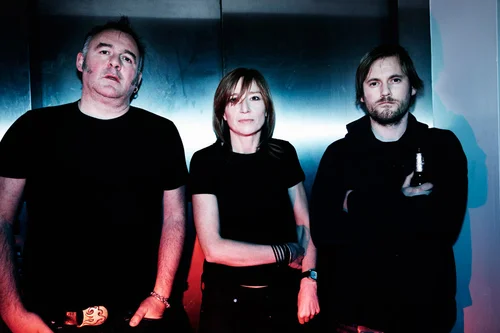
 IN THIS PHOTO: Portishead/PHOTO CREDIT: Andy Whitton/NME

the fantastic Dummy by Portishead. The album turns twenty-five later in the month and it is a perfect opportunity to revisit this masterpiece – or discover it for the first time if you are new to Portishead. The songs on the record are brilliant and, depending on which you favour, you cannot deny the entire body of work is sublime. I would urge people to buy Dummy on vinyl because it sounds so good on that format. The album is the debut from Bristol’s Portishead and followed from their E.P., Numb. Many might trace the roots of Trip-Hop to other parts of the world but, by 1994, it was clear that the epicentre and focus of Trip-Hop was in Bristol. Portishead were well-known and building a local reputation before they unveiled their debut album but few could have predicted the sheer brilliance and invention of Dummy. From the opening of Mysterons, you are in this other world. The beats scuffle and shift whilst Beth Gibbons’ voice creates this intoxicating allure. There are theremin-like notes and a beguiling mood that draws you in. Geoff Barrow, Beth Gibbons and Adrian Utley have only released three albums as Portishead but, to many, their golden moment happened right at the start. To be fair, each of their three albums are world-class but I would agree with that sentiment. Maybe it’s because 1994 was such a busy, productive and eclectic year; perhaps there was something in the air back then!

Although 1994 did bring us so many iconic albums, Portishead sort of stood on their own. It was playing away from the Britpop scene and, to me, was a lot cooler than what was being produced by Oasis and Blur. It is amazing looking back at that year and realising just how many phenomenal records were released! Whilst other British Trip-Hop pioneers like Tricky would go on to release staggering albums – 1995’s Maxinquaye is one of the best of the decade – Portishead sort of led the way. It is the stunning vocals of Gibbons and the incredible sounds/invention from Utley and Barrow that makes the musical blend so arresting and wondrous. Numb, Sour Times and Glory Box were released as singles and each of them sounds completely overwhelming and unique today! It is hard to say just how influential Dummy is but I can hear strands in a lot of music today. It is clear Portishead have been influential but Dummy was such an earthquake. I listen to it now and am still taken aback when I hear the songs. Of course, reviews for Dummy in 1994 were positive but there has been a lot of retrospective passion. In this Pitchfork review, they talked about the originality of Dummy and how the combination of cinematic sounds and Beth Gibbons’ voice led to this rich and astonishing album:  

But Dummy is too idiosyncratic to feel like a calculated response to its predecessors. Its obsessions are too specific, and too doggedly pursued: the spy-movie twang of the guitars, the ripple of the Hammond organs and Leslie cabinets—if anything, its vintage signifiers feel out of step with that era’s rush of pre-millennium tension. Bristol’s junglists were carving new routes to the future in every chopped-up breakbeat, while Portishead were drizzling on muted trumpet solos like so much curdled milk. Where most of the decade’s cutting-edge electronic music was zealous about its agenda, Dummy pledged allegiance only to a mood”.

They favor sounds imprinted with a host of associations, many of them filmic. Utley’s riffs come straight from John Barry’s James Bond theme; the woozy sine waves of “Mysterons” echo sci-fi soundtracks like The Day the Earth Stood Still; and “Sour Times” loops an extended sample of Lalo Schifrin’s music for Mission: Impossible. Their cinematic inclinations are borne out in the fact that they made an actual short film, To Kill a Dead Man, before the album itself. The 10-minute, black-and-white film is not particularly consequential, but it is notable for the way it visually remixes many of the same influences that make the album feel so instantly familiar. Fortunately, they proved to be far more adept at translating those moods and devices into music.

This air was the medium through which Gibbons’ voice soared. Would Portishead have been one-tenth the band they turned out to be had Barrow and Utley contented themselves with instrumentals, or hired session singers to lend a soulful patina at freelance rates? Not on your life. Gibbons’ voice is the center of the music; she elevates the recordings from tracks to songs, from mere head-nodders to forlorn lullabies”.

This BBC review was also full of praise for Dummy and talked about how similar-sounding acts (to Portishead) came and went but none could match the band’s template:

Imitators have come and gone, but no act has reproduced the disquieting magnificence conjured here except Portishead themselves. The band’s next album, an eponymous effort of 1997, distanced them from the coffee tables that (wholly unexpectedly) had made room for Dummy; to some it’s a superior listen, though a lot colder and harder than its predecessor. And their overdue comeback of 2008, Third, embraced krautrock motifs to take an established sound into a new dimension. But to many, Dummy is the group’s defining work – and even if you disagree with that, what can’t be doubted is that this is one of the greatest debuts of the 1990s”.

There are some really great articles that talk about the influence of Dummy but, from some of the new Electronic acts to artists like Kanye West, it is obvious Portishead’s debut has resonated. Whilst new Electronic genres have formed and artists are mixing all sorts of sounds, there is nothing in the world right now like Dummy. Third arrived in 2008 and I wonder whether we will get a fourth album from the group. I definitely think there is a gap and so many people would welcome their return. I do think the world needs the magic only Portishead can provide. Some ask whether Portishead’s popularity killed Trip-Hop or took it in strange directions. It is clear that Portishead transformed the scene and brought Trip-Hop the masses. They were so much more than that. Listen to Dummy closely and it bursts with life and visions. It sounds so accomplished and detailed yet there is a sense of freedom and openness. Maybe that is just my interpretation but, unlike some albums from 1994, Dummy is not necessarily reserved to a particular time and place. If you need more convincing regarding Dummy’s genius and legacy, this AllMusic review states how Portishead managed to crack into America – uniting audiences and breaking barriers:

The chilling atmospheres conjured by Adrian Utley's excellent guitar work and Barrow's turntables and keyboards prove the perfect foil for Gibbons, who balances sultriness and melancholia in equal measure. Occasionally reminiscent of a torchier version of SadeGibbons provides a clear focus for these songs, with Barrow and company behind her laying down one of the best full-length productions ever heard in the dance world.

Where previous acts like Massive Attack had attracted dance heads in the main, Portishead crossed over to an American, alternative audience, connecting with the legion of angst-ridden indie fans as well. Better than any album before it, Dummy merged the pinpoint-precise productions of the dance world with pop hallmarks like great songwriting and excellent vocal performances”.

When Dummy turns twenty-five on 22nd August, I think a lot of new people will discover this gem. I mentioned how Dummy still sounds fresh but, also, it reveals new layers and things that you might have missed. It is a true masterpiece and one of the finest albums of the 1990s. If you can get a copy on vinyl then do because it sounds utterly incredible and immersive. It may be twenty-five years old but, from the very first note to the last, Dummy sounds alive, timeless and…  

ki.png

PHOTO CREDIT: Getty Images 

UTTERLY wonderful.

FEATURE: Female Icons: Part Fourteen: PJ Harvey

FEATURE:


Female Icons

lkklkl.jpg

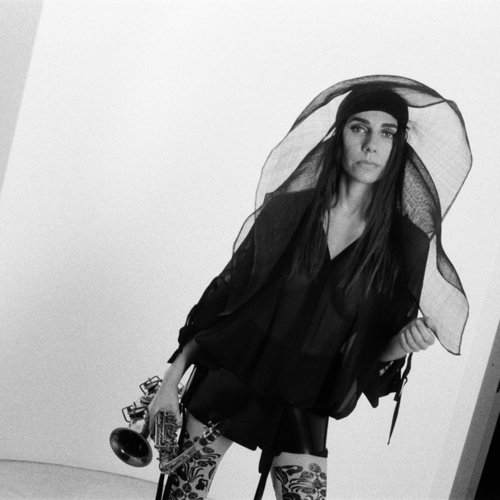
IN THIS PHOTO: PJ Harvey in 2015/PHOTO CREDIT: Maria Mochnacz 

Part Fourteen: PJ Harvey

_________

THERE are many reasons why…

tytyyt.jpg

 PHOTO CREDIT: Getty Images

an artist can be considered iconic or influential. In this feature, I have covered a whole range of inspiring female artists who have helped shift music and left a huge mark – and continue to compel generations of new artists. When thinking of the most important female artists of the past couple of decades PJ Harvey springs to mind. It is hard to bring too much personal input from Harvey into this feature because she gives very few interviews. It is not that she is opposed to the press and talking about herself but she is not one of these artists who gives multiple interviews with every release. As such, some of the quotes and exerts I am going to put into this piece are from a few years ago. That will come soon but, for now, we need to go right back to the beginnings. Unlike a lot of the female icons I have included in this feature – from Aretha Franklin to Kate Bush –, I was alive and conscious of music when PJ Harvey arrived. In a way, she is more of a modern icon rather than a classic legend – that will change in years to come but, trust me, PJ Harvey is a colossus! Not only does every album seem to reveal a new persona or character but she is an artist who is not guided by labels and the pack: she is someone who lets the music speak and is keen not to reveal too much.

v.jpg

 ILLUSTRATION CREDIT: Megan Ferguson-Smyth

Actually, before I continue, I have discovered a fascinating article that talks about the ‘lessons’ PJ Harvey has taught us all:

Harvey is a fearless experimenter and frequent collaborator – in addition to old friend John Parish, with whom she has co-written two albums, she has worked with Nick Cave (their relationship is believed to have inspired a clutch of songs on his lush record The Boatman's Call), Marianne Faithfull, Tricky, and the producers Flood and Steve Albini, to name a few. But right from the beginning, she has kept control of her output, hollowing out her own niche within the recording industry, and working only with the people who inspire her. Her first ever contract was reportedly written to allow her full artistic control and her fiercely individual discography proves that she has maintained it ever since.

Almost every article about PJ Harvey, even the rare interviews, mentions her reticence and lack of interest in the fame game. After suffering some form of breakdown early on in her career, Harvey took herself home to Dorset to recuperate and her interviews from then on have been guarded affairs. But she has always seemed an old soul, never one to bare all, even when appearing on the front cover of the NME topless with her back to the camera, or recording her last album publicly as part of an installation at Somerset House. "I want to give, but I have to remember that I must keep what's private to me intact," she once said. She lets the work speak, and the rest of us fall about trying to decipher it.

Just as she knows when to retire from the media, she has a keen sense of when and how to speak about issues which matter to her, without coming across as preachy. As Britain reeled from the Brexit result, she punctuated her Glastonbury set by reading aloud John Donne's poem No Man Is An Island. When she guest-edited the Today Programme in 2014, her curation spoke volumes – guests included an unedited Julian Assange, and featured a poem by ex-Guantanamo detainee Shaker Aamer. Her work is a collage of voices, invented and real, that burrow away in the mind – protest songs without any posturing, and more powerful for it”.

Born in Bridport, Dorset in 1969, the young PJ Harvey was exposed to all kinds of music by her parents. Included was Blues music, artists such as Captain Beefheart and Bob Dylan – artists who would influence her own work. Everybody’s parents inspire their children’s musical tastes but Harvey’s parents regularly attended gigs; there was this definite artistic spirit and sense of discovery. It is unsurprising Harvey was a curious and eclectic music-lover from a young. Having learned the saxophone as a teenager, Harvey joined an instrumental group, Bologne, who were based out of Dorset. By 1991, Harvey formed her own band with Rob Ellis and Ian Oliver. Like many legendary artists, the earliest gigs were not exactly successful. The trio – Oliver left and was replaced by Steve Vaughan – had a disastrous debut gig at a skittle alley (like you do!) in April 1991 and it was not long until the group relocated to London – perhaps sensing there was more opportunity and bigger venues.

Harvey was studying at Central Saint Martins College of Art & Design (at this moment, Pulp’s Common People spring to mind!) and things started to happen. The new band recorded some demos and they started to turn the heads of industry influencers and tastemakers. The debut single, Dress, proved hugely popular and caught the ear of a certain John Peel – who said the track was admirable if not always enjoyable. Harvey has released some truly sensational works but you can hear her everything in Dry – the 1992 debut that stunned critics and announced a very exciting talent. Harvey felt that her debut might be her only record so, as such, she put her all into it. Dry is quite an extreme album but there is no a wasted moment! The eleven-track debut is crammed with wonderful moments but it is the two singles, Dress and Sheela-Na-Gig, that drew the most attention. The latter’s title comes from the Sheela na gig statues; carvings of naked women displaying an exaggerated vulva which were found throughout Britain and Ireland. In terms of the lyrics scope, bravery and originality, I am reminded of the debut albums from Kate Bush and Tori Amos: The Kick Inside (1978) and Little Earthquakes (1992). Unsurprisingly, the reviews for Dry are hugely positive. Here, in this retrospective review from AllMusic, the raw and powerful delivery from Harvey is highlighted:

Her voice makes each song sound like it was an exposed nerve, but her lyrics aren't quite that simple. Shaded with metaphors and the occasional biblical allusion, Dry is essentially an assault on feminine conventions and expectations, and while there are layers of dark humor, they aren't particularly evident, since Harvey's singing is shockingly raw.

fft.jpg

Her vocals are perfectly complemented by the trio's ferocious pounding, which makes even the slow ballads sound like exercises in controlled fury. And that's the key to Dry: the songs, which are often surprisingly catchy -- "Dress" and "Sheela-Na-Gig" both have strong hooks -- are as muscular and forceful as the band's delivery, making the album a vibrant and fully realized debut”.

A lot of artists who release huge and unexpected debuts take a few years to regroup and plan their next move. Another reason why I feel PJ Harvey is iconic and inspiring is the fact she was back in 1993 with her sophomore album, Rid of Me. After Dry’s release, the band toured widely and played Reading Festival in 1992. Although Harvey’s music was reaching new ears and lands, her place at Central Saint Martins College was not kept open. She was suffering from exhaustion due to extensive touring, poor eating habits and stress. Because of this, Harvey moved back to Dorset. Whilst settling back to a quieter life in Dorset, the songs on Rid of Me took shape. Many have interpreted the album as feminist in nature. Harvey denied the album was overly-feminist and stated that, when writing songs, she did not consider gender – she just wrote what came naturally. Some of the songs were inspired by personal heartache (especially the title track) and the introduction of Steve Albini as producer gave Harvey’s music a new diversity. There are quiet breaks and feedback; a greater depth that, whilst pleasing to Harvey, did divide some critics.

Some felt Rid of Me was a bit too heavy and uncomfortable to listen to considering the rawness of the lyrics and the production style. Songs like Rid of Me and 50ft Queenie, again, showed what an extraordinary and unique songwriter PJ Harvey was. If the record was a tougher and more challenging listen than Dry, it is a more nuanced work – you are taken aback at first but then keep coming back to experience this sensational and completely engrossing voice. I will not look at all of her albums chronologically, but there are a few that I want to pay special attention to. 1995’s To Bring You My Love was another huge success and was a little less raw than her previous work. Biblical imagery is employed more and the influence of Captain Beefheart is clear. The first big album that I want to draw attention to is Harvey’s 2000 wonderwork, Stories from the City, Stories from the Sea.  Stories from the City, Stories from the Sea earned Harvey a Mercury Prize nomination and was certified Platinum in the U.K. and Australia. Unlike her earlier work, Stories from the City, Stories from the Sea is a more direct record. It is more melodic and rounder; more sophisticated, according to Harvey, with more colour and variation. Stories from the City, Stories from the Sea is a beautiful and warmer album against the darker and more intense sounds of her first few albums.

Critics fell for Harvey from her 1992 debut and that love was not letting off. This is what NME had to say:

More pertinently, ‘Stories…’ is PJ Harvey’s best album since 1991’s ‘Dry’, a return to the feral intensity of that remarkable debut. For while it’s a cliché any frank woman singer-songwriter is ‘disturbed’ in some way, there’s no avoiding the fact Harvey’s last album, ‘Is This Desire?’, was unhappy; painfully-constructed third-person narratives buffeted by electro-industrial static.

‘Stories…’, however, is suffused with vitality. The clarity of the electric guitars played by Harvey, Rob Ellis and Mick Harvey is enough to make you fall in love with elemental rock all over again. When Thom Yorke adds his blustery yowl to ‘This Mess We’re In’, you wonder if it was the realisation he’d never write something as stark that prompted the itchy ambience of ‘Kid A’”.

Whilst I love This Is Love and Good Fortune, I especially love the duet with Thom Yorke, This Mess We’re In. There is something about these two incredible singers – Radiohead released Kid A in 2000 – that makes it such a compelling and unforgettable track. Stories from the City, Stories from the Sea is a staggering album and is a natural evolution from her darker and more challenging works. Harvey showed she could alter and progress her sound without losing her golden touch.

aaAA.jpg

If 2004’s Uh Huh Her was not overly-successful and well-received – compared to her best work – Harvey was back in peak form for 2007’s White Chalk. Maybe Uh Huh Her was a dark and raw album: White Chalk is gothic and quieter album; one where she put aside the guitar/bass/drum sound and recorded songs for piano. Not only did she tackle the piano (which was fairly new to her) but she sang in a higher register. Again, this was Harvey moving forward and seeing where she could push her music. The second album that I want to pay special attention to is, perhaps, her finest achievement: 2011’s Let England Shake. Not only did the album win the Mercury Prize in 2011 (her second win; 2011 was her first win) but it garnered some truly huge reviews. Recorded during a five-week period in a Dorset church, you get this improvisational, live-sounding album that is another departure; a restless and hungry artist unwilling to settle and repeat herself. PJ Harvey began writing the album’s lyrics before pairing the words to music. Poets such as Harold Pinter and T.S. Eliot were influences as well as bands such as The Doors and The Pogues. Let England Shake is a remarkable album and one of the finest of the last decade. There was plenty of passion and praise for Harvey’s eighth album!

This is how The Guardian viewed Let England Shake:

Scrupulously avoiding the usual cliches that arise with self-consciously English music – Kinksy music-hall observations, eerie pagan folkisms, or shades of Vaughan Williams – the central sound is guitars, wreathed in echo that makes them seem as if they're playing somewhere in the middle distance. Around them are scattered muzzy electric piano, smears of brass, off-kilter samples and musical quotations: a reference to Eddie Cochran's Summertime Blues somehow works its way into The Words That Maketh Murder, while an incessant trumpet reveille sounds during The Glorious Land, out of tune and time with the rest of the song.

You're left with a richly inventive album that's unlike anything else in Harvey's back catalogue. That, she told Marr last year, is the point: "My biggest fear would be to replicate something I've done before." Let England Shake sounds suspiciously like the work of a woman at her creative peak. Where she goes from here is, as ever, anyone's guess”.

Pitchfork praised Harvey’s thought-provoking and moving lyrics:

On Let England Shake, Harvey is not often upfront or forceful; her lyrics, though, are as disturbing as ever. Here, she paints vivid portraits of war, and her sharp focus on the up-close, hand-to-hand devastation of World War I-- depicting "soldiers falling like lumps of meat"-- provides a fitting setting for today's battlegrounds. From the Zombies to the Pogues, artists have often gravitated to the confused, massive loss of life of the Great War. If it doesn't resonate as much in America as it does in Europe-- and it doesn't-- that's more our fortune than our shame.

The Great War remains a rich and resonant subject for art because it briefly caused the world to step back, aghast and afraid to look at what it had done. The collective trauma of World War I did indeed shake England, specifically, out of the end of its imperialistic Victorian stupor”.

xccxc.jpg

 PHOTO CREDIT: Getty Images

Before rounding things up and bringing them up to date, I want to bring in a rare interview gave to The Guardian. She talked about Let England Shake and her influences:

“…Even though Harvey has never written about such issues before, she says she has always been politically engaged, and music was crucial to her education. Her parents, a quarryman and a stonemason, were friends with Rolling Stone Ian Stewart and their remote Dorset farmhouse (she has said that even a day trip into town would make her dizzy) was often home to visiting musicians. The songs they played were windows on the world beyond. "Certain Neil Young songs like 'Southern Man' or 'Ohio', I'd go looking for the meaning behind them. A lot of Dylan's work, especially the early 60s. Beefheart's 'Dachau Blues'.

"I'm probably much more influenced by film-makers and painters than I am by other songwriters or poets," she says. "With songs I almost see the images, see the action, and then all I have to do is describe it. It's almost like watching a scene from a film, and that's what I go about trying to catch in a song."

Songwriters tend to be notoriously bad at describing the creative process, and loth to mention the perspiration behind the inspiration, but Harvey is visibly energised by talking about it. "I certainly feel like I'm getting somewhere that I wanted to get to as a writer of words. I wanted to get better, I wanted to be more coherent, I wanted there to be a greater strength and depth emotionally, and all these things require work – to hone something, to get rid of any superfluous language”.

Harvey’s most-recent album, The Hope Six Demolition Project, was another success and critical favourite. Harvey wrote most of the songs for the album during her travels to Kosovo, Afghanistan and Washington D.C. with filmmaker/photographer, Seamus Murphy, between 2011 and 2016. Although many were impressed with the power of the lyrics and the quality of the songwriting, there were some reservations and criticisms. This review from Laura Snapes asks some interesting questions:

Harking back to Let England Shake, maybe her dispassionate storytelling is making a point about how we easily condemn past atrocities while failing to recognize history repeating itself before us. Questions of perspective, and how we bear witness, feel central to The Hope Six Demolition Project. We were voyeurs, watching her make a record about being a voyeur. Is it a deconstruction of the protest record? By pointing out the problems in these three communities, but proposing no solutions, is she just as responsible for their desertion as the global powers that came before her? You sense that the record is part of an ongoing inquiry, not a destination. Fortunately, the music often feels like salvation itself”.

gfgffg.jpg

PHOTO CREDIT: Lex van Rossen

Although 2016 was the last time Harvey released a studio solo album, she has been busy on other projects since then. Once more diversifying her stock and stepping into new territory, she has been composing for the stage and screen. Here (from an article in NME from a couple of months ago), we get details of Harvey’s incredible recent work:

PJ Harvey has released six new songs as part of her work on The Virtues soundtrack. You can stream the songs below.

Created by Shane Meadows, The Virtues told the story of Joseph – played by Stephen Graham – a man coming to terms with his identity after he uncovers a repressed memory and ultimately seeks revenge.

Speaking of her contribution to the series, Harvey said: “I am so happy to have provided the original music for this extraordinary and powerful new drama by a director I have admired and followed all my life.

oooo.jpg

PHOTO CREDIT: Seamus Murphy

“Shane has a unique directness and sensibility to his work which I am drawn to and aspire to in my own work, so our collaboration was open and trusting. I sent Shane ideas as demos for him to try out as he edited and let him choose what he used and where to greatest effect.

Earlier this year (April 12), Harvey shared her complete score for the stage play of All About Eve. The play, directed by Ivo Van Hove and starring Lily James and Gillian Anderson, is currently running at London’s Noël Coward Theatre.

Speaking about the score, PJ Harvey said: “I have always loved stories, and so to compose music to support and enhance a story being told is a challenge I enjoy. I also love the freedom that working instrumentally can give me without the constraints of song form.”

She continued: “For All About Eve I chose to work with my long-time collaborator James Johnston as he has a soulfulness and sensitivity to his playing that inspires me. I also worked with Kenrick Rowe who has a versatility to his drumming I knew I could experiment with until I found what was right”.

It is amazing to see how much Harvey has achieved since her 1992 debut. Although that was twenty-seven years ago, her music today sounds as extraordinary and fresh! She is always pushing boundaries and inspiring people as she goes. I know there are a lot of modern artists who are compelled by Harvey’s incredibly raw lyrics and amazing instinct; the way she shifts between albums and how she has grown through the years. Harvey is a true icon and one of music’s most special artists. I look forward to seeing where she heads next and what her music will possess. You can never predict Harvey’s path and what she will include; she is one of those artists that is always moving and never looking back. If you are new to PJ Harvey or have not listened to her work in a while, have a listen to the playlist below and go and buy her albums. (It would be good to see more of her albums on vinyl because, for some reason, one struggles to buy her albums I this form). You can stream her work and witness the brilliance. PJ Harvey is a fearless, vital and inspirational artist whose music will stand and influence…

FOR generations to come.

FEATURE: Always in Vogue: The Record-Breaking Music Videos of Madonna

FEATURE:


Always in Vogue

xxxx.jpg

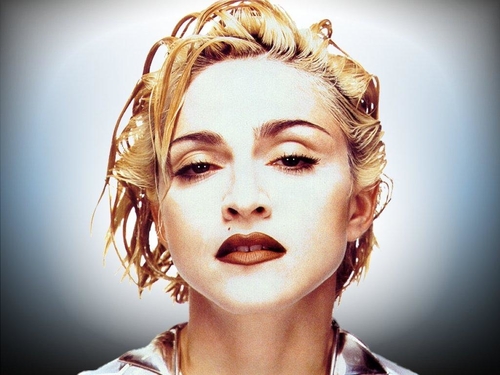
IN THIS PHOTO: Madonna in 1990/PHOTO CREDIT: Jean-Baptiste Mondino for Harpers Bazaar 

The Record-Breaking Music Videos of Madonna

_________

SEEING as so many news reports posted about Madonna

sddsdsds.jpg

 IN THIS PHOTO: Madonna as ‘Madame X’ in 2019/PHOTO CREDIT: @Madonna

are negative or have some sort of bitter edge, it was a relief seeing the news that she has broken a music record! Madonna is no stranger to breaking records and, as the most-successful female recording artist ever, she has definitely achieved a hell of a lot. The video for her iconic 1990 hit, Vogue, passed one-hundred million views on YouTube recently and that set a new record: she is the only female artist who has passed one-hundred million views on YouTube for videos covering four decades. Her 1990s’ achievement was long-overdue because, to me, there are no finer Madonna videos than Vogue. Tone Deaf have reported the news:

Madonna, the iconic pop star of almost every decade since she began music, has officially become the first female artist to reach 100 million views on music videos from 4 different decades.

In case you’re wondering what exactly those videos are, we will be breaking down all four videos, which reached pinnacles of success in their time.

The videos are:

80s: ‘La Isla Bonita’

90s: ‘Vogue’

00s: ‘Hung Up’

10s: ‘Bitch I’m Madonna’

That’s 40 years of hits, not even including songs such as ‘Like a Virgin’‘Into the Groove’ or ‘Ray of Light’, which were all extremely successful for their time”.

It is hard to explain why these particular videos reached one-hundred million views whereas some of her other hits – including Material Girl and Frozen – have not garnered more.

It is true, Bitch I’m Madonna (from 2015’s Rebel Heart) is not one of her strongest songs but it is a fantastic video that shows Madonna in strong and defiant mood! Featuring Nicki Minaj, the track is lifted by an incredible video that is full of colour and strut. Vogue, which I shall get to in a bit, is her defining moment in terms of visuals; Hung Up (from 2005’s Confessions on a Dance Floor) is another brash and eye-catching video where the newly-revived Disco queen – Madonna suffered some critical loss and disappointment with her 2003 album, American Life – caught the imagination and drew people in. Not only do these huge videos like La Isla Bonito show Madonna has kept her fans and her videos prove popular to this day but she has also recruited new generations. A lot of modern artists have a very tight demographic or appeal to a certain core. Look at a lot of the biggest artists and you can appreciate one or two of their songs but you feel the music is marketed to a particular age group and taste. With Madonna, she never imposed limits. I am in my thirties but have followed her music from the start – well, I was born in 1983 but I discovered her debut album when I was in school. Her eponymous debut is a great Pop record that sounds completely effortless and absorbing today.

La Isla Bonita is from 1986’s True Blue and, to me, that album remains underrated. It preceded 1989’s Like a Prayer but, on True Blue, Madonna proved she was a fearless and pioneering artist who was pushing boundaries and making epic music to match! Papa Don’t Preach might be a more recognisable single from True Blue but there is something undeniably seductive and beautiful when one watches La Isla Bonita. It is clear a new generation are falling for videos like La Isla Bonita because, not only do the visuals capture the mind and compel repeated viewings, but the music is indelible, universal and instantly accessible. I asked whether there was a link between her four one-hundred-million-topping videos and whether all those views came from those of the same generation. Unlike, as I said, so many new stars, Madonna’s fans span the spectrum in terms of age and nationality. I think all four of the songs that have reached this milestone and very different and, perhaps, that is why they have proved popular. If the ‘newer’ videos, Bitch I’m Madonna and Hung Up, maybe speak to younger audiences, perhaps La Isla Bonita and Vogue are for people like me: those who have charted Madonna career for years and gravitate towards those classic videos. The evocativeness of La Isla Bonita and black-and-white brilliance of Vogue are very different when matched against the neon Bitch I’m Madonna and the dancefloor call of Hung Up.

A lot of Madonna’s videos have racked up millions of views and I think the reason her videos remain essential and span the generations is because of the imagery. Madonna does not restrict herself when it comes to plots, visuals and pace. Some of her videos have employed a lot of energy and colour whereas Vogue relies on something simpler and classic. I guess the changing and eclectic videos match the music: Madonna has never stood still and always offers a new side of her with every album. With her latest album, Madame X, out in the ether, who is to say one of the videos release from that album cannot reach one-hundred million views in years to come? I want to end with the video from the group of four which will break all records. Vogue is the video that seems to epitomise Madonna’s legacy and brilliance. Vogue was shot in black-and-white and remains one of the most memorable music videos ever. Rather than describe the video myself, here is the Wikipedia article on Vogue’s video:

The black-and-white video, set in Art Deco-themed 1920s and 1930s surroundings, starts off showing different sculptures, works of art, as well as Madonna's dancers posing. Along with this are images of a maid and a butler cleaning up inside what seems to be a grand house. When the dance section of the song starts, Madonna turns around, and, similarly to the lyrics, strikes a pose. The video progresses, and images of men with fedoras, Madonna wearing the controversial sheer lace dress and other outfits, follow.

As the chorus begins, Madonna and her dancers start to perform a vogue dance routine, where she sings the chorus as her dancers mime the backing vocals. After this, other scenes of Madonna in different outfits and imitations of golden-era Hollywood stars progresses, after which there is a scene with Madonna's dancers voguing. Finally, after this scene, Madonna can be seen wearing her iconic "cone bra", after which she also performs a dance routine with a fellow dancer. As the rap section begins, different clips of Madonna posing in the style of famous photographs or portraits of Hollywood stars, begins, ultimately followed by a choreographed scene with her dancers and backup singers.

MTV placed the video at second on their list of "100 Greatest Music Videos Ever Made" in 1999.[48] In 1993, Rolling Stone magazine listed the video as the twenty-eighth best music video of all-time. Also, the same magazine listed "Vogue" as the #2 music video of all time in 1999 second only to Michael Jackson's Thriller.[49] It was also ranked at number five on "The Top 100 Videos That Broke The Rules", issued by MTV on the channel's 25th anniversary in August 2006.[50] It was the third time Fincher and Madonna collaborated on a video (the first being 1989's "Express Yourself" and the second being 1989's "Oh Father"). About.com listed as the best Madonna video.[49]

With the release of the song, Madonna brought the underground "vogueing" into mainstream culture.[22][73] Before Madonna popularized the dance, vogue was performed mostly in bars and disco of New York City on the underground gay scene.[74] Steven Canals, the co-creator of TV series Pose stated "If we're looking at the history of ballroom and specifically that moment in time, what Madonna did was bring ballroom to the mainstream.

She introduced the world to this community who, up until that point in time, had been a subculture."[75] Vogueing has since become a prominent dance form practised worldwide, and many performers have followed Madonna's footsteps, with Beyoncé, Rihanna, Ariana Grande and Azealia Banks all adopting the dance style and incorporating it into their music videos and performances.[75]

However, some critique stems from the possible exploitation of an underground Queer Culture for commercial gain, as feminist writer Nicole Akoukou Thompson notes for the Latin Post, Madonna had "taken a very specifically queer, transgender, Latino and African-American phenomenon and totally erased that context with her lyrics." [76]

The song is also noted for bringing house music into mainstream popular music,[77][78] as well as for reviving disco music after a decade of its commercial death. Erick Henderson of Slant Magazine explained that the song "was instrumental in allowing disco revivalism to emerge, allowing the denigrated gay genre to soar once again within the context of house music, the genre disco became in its second life."[79] Sal Cinquemani of the same publication wrote that the song was "making its impact all the more impressive (it would go on to inspire a glut of pop-house copycats) and begging the question: If disco died a decade earlier, what the fuck was this big, gay, fuscia drag-queen boa of a dance song sitting on top of the charts for a month for?"[21]”.

Vogue was the last of the four videos to top one-hundred millions views and, whilst I am surprised it was the fourth one to reach this milestone, it shows that Madonna’s iconic videos and generation-spanning work never go out of fashion. The indefatigable and iconic Queen of Pop can move, strike a pose and create truly incredible videos…

fff.jpg

 IN THIS PHOTO: Madonna in her Vogue video (which was directed by David Fincher)

LIKE no-one else.

FEATURE: The Divided State of America: Can Music Help Bring About Much-Needed Gun Law Progressiveness? 

FEATURE:


The Divided State of America

i999.jpg

ILLUSTRATION CREDIT: Rick Calzi/Dying Breed 

Can Music Help Bring About Much-Needed Gun Law Progressiveness? 

_________

ONE can hardly ignore the terrible…

vvvvv.jpg

 IN THIS PHOTO: A woman touches a cross at a makeshift memorial for victims outside Walmart, near the scene of a mass shooting on 3rd August, 2019 which left twenty-two people dead in El Paso, Texas/PHOTO CREDIT: Press/Getty Images

events that happened in El Paso, Texas and Dayton, Ohio. Another two mass shootings in America has horrified the world but, in a nation where this sort of tragedy happens on a fairly regular basis, it seems like change and evolution is going to be a struggle. The sense of stubbornness regarding gun laws in the U.S. is compounded by an ignorant President Trump who, one feels, could not care less about the lives lost in Texas and Ohio; someone whom will never act to ensure we see far fewer deaths of this kind in the future. Will we see an end to gun violence in America? It is hard to see anything moving forward when we have Trump in The White House. Trump’s explanation (regarding the massacres) is that the gunmen had mental-health issues. The fact that the vast majority of gun massacres – and knife crime in the U.K. – are perpetrated by men sort of dismisses such a statement – why would women be able to control their mental-health issues a lot better than men?! I do think that the more logical explanation regards a white supremacy mindset, fuelled and fostered by Trump’s own beliefs regarding minorities. The fact one can relatively easily obtain a gun in the U.S. makes it so easy for radicalists to kill at will. It is sobering and heartbreaking seeing news stories coming through where innocent lives have been lost for no reason – what exactly do massacres achieve regarding certain minorities living in America and ‘learning’ a lesson?

The sheer insanity and barbarism we have all seen on the news over the past week should open eyes in America and compel the Government to make resolutions and amend legislation. We all know that will not happen in a nation where a written constitution gives people the ‘right’ to bear arms – although the Second Amendment concerns protection and the military rather than giving license to unhinged humans to spread chaos and hate. Something needs to change, radically, that is for sure! Whether through song or online anger, musicians have a lot of power and influence. I shall come to Lana Del Rey shortly but, in the immediate aftermath of the attacks, artists took to social media and were keen to register their distress and sympathy. This article from Vanity Fair explains more:

 “After the mass shootings in El Paso, Texas, and Dayton, Ohio, over the weekend, musicians were among the most vocal celebrities demanding action. Rihanna implored Donald Trump to use the word “terrorism.” Jason Isbell accidentally sparked a Twitter meme about feral hogs (really) after tweeting, “If you’re on here arguing the definition of ‘assault weapon’ today you are part of the problem. You know what an assault weapon is, and you know you don’t need one.”) Kacey Musgraves tweeted, responded to a follower who told her to “stick to the singing,” and urged a Lollapalooza crowd to yell “somebody fucking do something!”

IN THIS PHOTO: Lana Del Rey/PHOTO CREDIT: Getty Images 

Lana Del Rey, meanwhile, headed more or less straight to the studio to record her response with Jack Antonoff. On Monday, she posted it to Instagram: a new song called “Looking for America.” “I’m still looking for my own version of America,” she sings. “One without the gun, where the flag can freely fly.” It’s a rough, in-studio video recording that conveys its immediacy. “Now I know I’m not a politician and I’m not trying to be so excuse me for having an opinion,” she wrote in the caption. “But in light of all of the mass shootings and the back to back shootings in the last couple of days which really affected me on a cellular level I just wanted to post this video that our engineer Laura took 20 minutes ago”.

Looking for America is an excellent song and one that stands out in its own right but also makes one think. One sees visions of Lana Del Rey enjoying an America with drive-ins and care-free times; where the flag can fly free and people can walk the streets safely – as safely as one can in any nation. I have listened to the song a lot and it is stirring hearing these messages come out. I think it is great an artist like Lana Del Rey was motivated to head into the studio and record something as raw and emotional as Looking for America. There are political artists out there and, around the world, we are discovering songs that tackle inequality, poverty and gender equality.

gggt.jpg

PHOTO CREDIT: @yohannlibot/Unsplash

I do wonder, at a time when America is troubled and unwilling the budge regarding gun laws, whether artists need to put some pressure on the Government – not just in the form of songs but also concerts and speeches. It is difficult to compromise possible record deals and fan opinion by having a say but who could possibly object to anger and passion from artists who want to see change in America?! In the U.K., there is a worrying rise in knife crime and we have a few artists documenting this trouble and worrying situation. I do think, however, only artists from certain genres are talking about knife crime and it means there are swathes of the industry that are not doing their part. Even if you do not live in areas affected by knife violence, you cannot help but feel a sense of compassion and fear – feeling heartbroken but also concerned not enough is being done to limit deaths. The same must be true in America. I know so many artists feel disgusted and angry that very little is happening to sure the nation’s citizens are protected against the threat of guns. Although there is a lot of online protest, this is not translating into musical expression. Although Lana Del Rey’s Looking for America is not an explicit and inflamed track that calls out President Trump – it is more a yearning for a past America; one where one felt safer -, it was written in reaction to the recent shootings.

a.jpg

 IN THIS PHOTO: Bob Dylan/PHOTO CREDIT: Getty Images

You cannot help but feel struck and affected when hearing the song. As I keep saying…there is a commercial risk if you mix politics into the blend but I do think there is a yearning for progression and a ban on gun sales. I have to cast my mind back to the protest songs of Bob Dylan in the 1960s to think of a time when a huge artist made such an impression with political music. Maybe I am over-exaggerating but it is a very long time since an artist has reacted to the chaos around them in such a profound and striking way. I do not think musicians alone can take America from where it is now to where it needs to be but, yes, I do think that massive movement and a united front can reach political minds. It is not only music that can affect political motivation: film and T.V. has the potential and power to open eyes and affect minds. I think a lot of the problems in America stem from figures like Donald Trump and a very poisonous mindset. A lot of people buy into his feelings regarding immigration and keeping America pure. If politicians in America are making the possibility of change impossible, I do feel musicians can take charge. Maybe we will not see a total ban on the sale of assault weapons and handguns but conversations can be broached and, with a wave of musicians incentivised and together, there is a chance progression can happen.  I have been thinking a lot about Lana Del Rey watching the T.V. and being hit hard by the casualties; the awful and senseless violence that compelled her to write Looking for America. Who knows how many other artists – from all genres – have been affected and changed by so many tragedies in the U.S. I do think now is the time for some of music’s biggest names to rise up against an ever-corrupt and troubled Government who are helping to fuel hatred. I am not putting all the blame on them but, really, how many more massacres will it take before they realise things cannot carry on this way?! Artists would not be spreading propaganda or pushing any ideals: instead, they are discussing what is obvious and terrible. It may take a lot of consensus and focus from artists to get the wheels rolling but, as Lana Del Rey looks for an America that is safe, united and accepting, it seems that there is…

sd.jpg

 PHOTO CREDIT: @kj2018/Unsplash

AN awful long way to go.

FEATURE: Sisters in Arms: An All-Female, Summer-Ready Playlist (Vol. VIII)

FEATURE:


Sisters in Arms

fdd.jpg

IN THIS PHOTO: The Big Moon/PHOTO CREDIT: Pooneh Ghana 

An All-Female, Summer-Ready Playlist (Vol. VIII)

__________

MAYBE it seems inappropriate for me…

ddd.jpg

 IN THIS PHOTO: Mary J. Blige/PHOTO CREDIT: Gavin Bond/The Observer

to put out a playlist that is summer-ready given what the weather is doing right now! The wind is pretty wild and the rain is not too far so, as much as anything, these songs act as a distraction; maybe a way of summoning the sun and trying to get the wind to slow down! However you listen to the tracks, get involved and discover some of the best new tracks from some fantastic female artists. Every week, so many golden moments are arriving from women in music; in every genre and across the broad. It is terrific discovering these artists you just know will be a big deal. I have collected the latest assortment and I hope there is something in here that tickles your fancy. As the weather is not too great today, spends some time with music that will surely…

vf.jpg

IN THIS PHOTO: Lola Coca

LIFT your mood.

ALL PHOTOS (unless credited otherwise): Getty Images/Artists

____________

g.jpg

MallratCharlie

h.jpg

Dominic SenHear Me

The RegrettesStop and Go

88.jpg

Tori Kelly2 Places

c.jpg

Mary J. Blige Know

lklkkllk.jpg

Skylar GreyNew Kind of Love

oii.jpg

Grace VanderWaalWaste My Time

Nasty CherryLive Forever

ssa.jpg

cupcakKeWhoregasm

sasasasa.jpg

PHOTO CREDIT: Pooneh Ghana 

The Big MoonIt’s Easy Then

aqa.jpg

Anna AshApologies

99.jpg

PHOTO CREDIT: Jonas Risvig

SoleimaCheers for the Tears

Gia FordTURBO DREAMS

Clara BondPink Wine

ol.jpg

Kara Marni (ft. Champion)All Night, Pt. 1

ww.jpg

Cashmere CatEMOTIONS

vcvc.jpg

Tori ForsythBe Here

fr.jpg

Lara Andallo - Confidential

olloololol.jpg

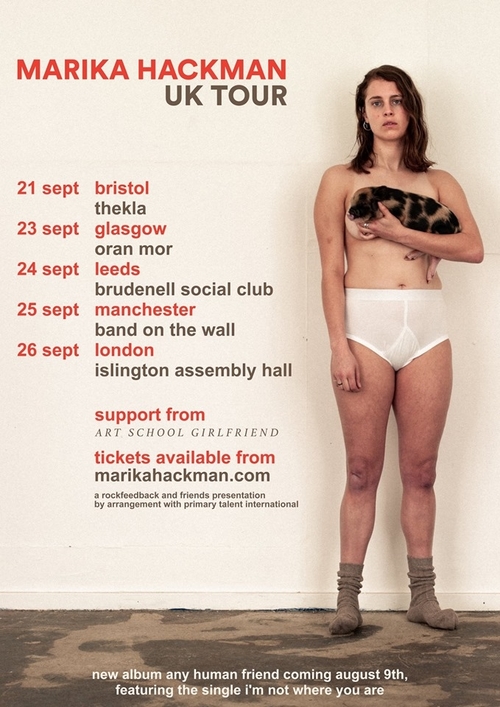
Marika Hackmansend my love

zzxxzxz.jpg

Lola CocaDe Nada

xxx.jpg

Kate BollingerTalk About It (B-Side)

ssss.jpg

Megan Davies - New Eyes

Jess ThristanYour Turn

ff.jpg

Hana VuAt the Party

FEATURE: The August Playlist: Vol. 2: Catfishes, Small Talk and a Quest for a Better America

FEATURE:


The August Playlist

IN THIS PHOTO: Pixies’ Black Francis 

Vol. 2: Catfishes, Small Talk and a Quest for a Better America

___________

THIS time on the weekly Playlist

v.jpg

 IN THIS PHOTO: Katy Perry

there are so many great artists to get involved with. Not only are there new songs from Lana Del Rey, Pixies and Katy Perry but there are cuts from Bon Iver, Tool and Slipknot. It is a pretty varied week and one that spans genres and tastes. I like what is on offer and I hope you do too. I can never predict what each week will produce in terms of sounds so it is always a nice surprise to see what comes along. Take a good listen to what is included and I know there will be something in there you like. From some big-name selections to some underground songs, it is a nice balance. If you need some kick to get your weekend off to a good start, I think these artists are ready…

jj.jpg

PHOTO CREDIT: Slipknot

TO oblige.  

ALL PHOTOS/IMAGES (unless credited otherwise): Getty Images/Artists

_________

PHOTO CREDIT: Travis Shinn

Pixies Catfish Kate

Lana Del Rey – Looking for America

Katy Perry – Small Talk

The Big Moon – It’s Easy Then

BROCKHAMPTON – If You Pray Right

Tool – Fear Inoculum

jj.jpg

Goo Goo Dolls – Indestructible

Bon IverFaith

Jake Miller – Nervous

gt.jpg

RuthAnne – Unrequited

The RegrettesFog

op.jpg

Marika Hackmanhand solo

SlipknotA Liar’s Funeral

Caroline Polachek - Ocean of Tears

PHOTO CREDIT: Ryan Duffin

King Princess Prophet

PHOTO CREDIT: Hugo Yanguela

Spector Half Life

James Blake Can’t Believe the Way We Flow

uu.jpg

PHOTO CREDIT: Howard Wise

Moon Duo Lost Heads

0g.jpg

Gold Panda Transactional Relationship

Temples You’re Either on Something

Tori Kelly - Coffee

The Amazons 25

ii.jpg

Miranda Lambert Mess with My Head 

Mary J. Blige Know

yy.jpg

Mike Posner (ft. Wiz Khalifa) Prince Akeem 

gtt.jpg

AJ Mitchell, Ava Max Slow Dance

YEBBA Where Do You Go

Lady Antebellum Pictures

Mystery Jets Screwdriver

uuunnnn.png

Snoop Dogg Let Bygones Be Bygones

f.jpg

Ella Eyre, Banx & Ranx (ft. Kiana Ledé) - Mama

Alessia Cara Rooting for You

FEATURE: Saintly and Supreme: Whatever Happened to Girl Groups?

FEATURE:


Saintly and Supreme

d.jpg

IN THIS PHOTO: The Supremes/PHOTO CREDIT: Getty Images 

Whatever Happened to Girl Groups?

_________

THIS is another subject I have covered…

de.jpg

 IN THIS PHOTO: All Saints/PHOTO CREDIT: Getty Images

before but, like any good journalist (if I can call myself that), some things are worth revisiting when the time calls! Tomorrow, I am going to talk about Lana Del Rey and her latest track – one that imagines an America without guns and chaos. It is an arresting thing and it makes me wonder whether musicians need to get more involved when it comes to raising awareness about what is happening in the U.S. Now, although some of the girl groups from my childhood are still around in some form, it seems strange that this scene died away. The Spice Girls have reunited and are performing but one wonders whether they will record new music – will it be as anthemic and spirited as their earliest stuff? One suspects now. Also, All Saints are around but, again, a more mature sound presents itself in their newest work; nothing quite like their regency back in the day. Apart from that, there are few remnants of the finest of the 1990s and earliest part of the last decade – I think En Vogue are still together but are hardly being talked about. Maybe there is something inherently un-PC about the term ‘girl group’: at a time when sexism and gender is being discussed and, in music, always present, is it demeaning and wrong to label like this?! I think ‘girl group’ is an old term that has been resigned but, in any case, what about the music that was being made? This feature from earlier in the year tells us where the girl groups of the past are.

I raise this subject for a couple of reasons – I shall get to the second in a bit. I grew up around a lot of music, but it was the music of classic 1960s girl groups that really caught my ear. Maybe it was the harmonies or the connection between the members; something magical that resonated and lingered between the notes. I recall hearing The Ronettes, The Shangri Las; The Supremes and The Shirelles for the first time and noticing how different they were to anything around. Maybe I am a sucker for the romance portrayed in the song but, really, it is the timelessness of the music that hit me – the fact it was passed from my parents to me and, in 2019, the music still sounds fresh and unique. This illuminating article dissects and revels in the extraordinary girl groups of the 1960s:

Girl groups of the 1960s were responsible for some of the catchiest hits of the day. Songs like "Be My Baby" by the Ronettes, "Will You Love Me Tomorrow?" by The Shirelles, and "Where Did Our Love Go?" by the Supremes are pop-music diamonds, short and catchy with passionate lead vocals and sophisticated harmonies. The earlier wave of '60s girl groups included The Shirelles, The Crystals, The Blossoms, Shangri-Las, The Chiffons, the Dixie Cups, the Ronettes and The Cookies. Then later came the Motown sound with The Marvelettes, Martha and the Vandellas and The Supremes.

The Supremes were one of few girl groups that was able to sustain their success through the tsunami that hit American shores in the form of the Beatles and the British Invasion. It's conventional wisdom among some music experts that the Brits more or less "killed" the girl group phenomenon, or at least hastened the end of the golden age of girl groups. But let's be real -- it's pop music, considered a fairly disposable form of entertainment at the time, and nothing lasts forever. It's also worth noting that girl group never went away, it just changed with the music -- up through the Pointer Sisters to TLC to the Spice Girls.

One of the most famous of the girl groups that emerged out of Detroit’s Motown music scene in the mid 60’s, at the same time the Beatles and the British invasion were coming on strong in the U.S. and would go toe-to-toe with those groups on the music charts, was The Supremes. Diana Ross, Mary Wilson and Florence Ballard recorded “Where Did Our Love Go” in the summer of 1964, that particular song had been rejected earlier on by the Marvelettes. It went to #1 and sold over 2 million copies, so The Supremes were on their way to make music history! They quickly followed this with two more #1 hits: “Baby Love” and “Come See About Me”. The hits kept coming for The Supremes in 1965, 1966 and 1967. Between 1964 and 1967, The Supremes had one of the best all-time female track records in pop music history: they released 15 singles and all but one made the Top 10. Additionally, 10 of those songs were #1 hits!

fd.jpg

 IN THIS PHOTO: The Bangles/PHOTO CREDIT: Bertrand Rindoff Petroff/Getty

I will bring in another article that examines the girl groups of the 1990s and early part of the last decade. It seems strange that bands of the 1960s such as The Rolling Stones and The Beatles were so much more massive than girl groups like The Supremes, but I think the classic girl groups helped influenced generations of artists and, as I say, the music sounds so sumptuous, passionate and evocative today. Whilst so many modern Pop artists discuss love in negative terms of, when being positive, are quite trite and predictable, there is something inherently jaw-dropping and seductive when you hear the 1960s’ best girl groups. Of course, not all girl group-produced music was about love and loss: there were anthems of defiance and the subject matter was quite broad. I am going to briefly mention the 1980s because we cannot ignore bands like The Bangles and Salt-N-Pepa. In a way, the classics crafted by these groups were on the same sort of level as the 1960s’ best. Maybe the subject matter was broader and we got some slightly harder-edged bands but, essentially, the template was the same: an incredible tight band performing these incredible catchy and memorable song. I like The Bangles because they were one of the few girl groups who played and rocked hard – maybe girl groups never caught on as much as Indie and Rock bands because of the lack of guitars and riffs; The Bangles were a bit of an anomaly.

When I think of the second wave of girl groups and the ones who I still listen to, it is the 1990s that comes to mind. Groups like All Saints and Destiny’s Child continued into the next decade, but I think the 1990s was this decade where girl groups held as much sway as boy bands. If the 1960s was defined by ‘boy bands’ like The Beatles courting more fevered and vocal fanbases than girl groups, there was a time when girl groups were on a level par with the men. What I like most about the 1990s’ girl groups was the fact that there were these different camps. If you wanted something a bit more commercial and sweeter, you had the Spice Girls and Sugarbabes. If you wanted something sassier that possessed a bit more clout then Destiny’s Child, TLC and En Vogue were on hand. Depending on your age will dictate whether the strongest girl groups were the legends of the 1960s or their grandchildren of the 1990s. I will end by asking where the girl groups have gone but I am not surprised the 1990s was such a fertile period for them. Even though genres came and movements evolved – we had Grunge and Britpop; U.S. alternative and all sorts at that time – girl groups seemed to be a constant that were unaffected by tastes, markets and trends. Some say girl groups aren’t prevalent today because the music is not enduring and seems uncool. I disagree. Listen to the very best girl group music of the 1990s – including All Saints and Destiny’s Child – and there are plenty of indelible tracks that added something bright and brilliant to the scene.

sa.jpg

 IN THIS PHOTO: TLC/PHOTO CREDIT: Getty Images

In America, you had these independent, pioneering and strong girl groups like TLC, Destiny’s Child and En Vogue who, to me, were about projecting these messages of strength against suppression; encouraging girls and young women to stand tall and believe in themselves. In a sense, the 1960s’ girl groups, whilst talking about love and heartache, were promoting the same thing: the new breed of the 1990s were updating those messages and giving them a bit more kick and swagger. Personally, I was a bigger fan of the U.S. best compared with our version: the Spice Girls, All Saints and Eternal were great but not quite as intriguing and nuanced as their U.S. sisters. Just as I write this, I am seeing a report that suggests Destiny’s Child might reform and tour together. They sort of came together for Beyoncé’s epic headline set at Coachella last year – few can forget that incredible performance. It was great to see the group back together and storming it like they did back in the 1990s and early-2000s. I digress. I think, though, there is an appetite for revival that extends past nostalgia and rehashing the past. Today’s music lacks potent girl groups and a sense of swagger, punch and pop. Think back to the 1990s and some of the anthems that came out. Destiny’s Child provided (from the 1990s to the next decade) Bills, Bills, Bills and Say My Name; the brilliant Lose My Breath and Jumpin’ Jumpin’. The Spice Girls had their fair share of brilliant tracks: Wannabe, Who Do You Think You Are and Say You’ll Be There among them.

Look at the En Vogue camp and some of their biggest numbers. Who can ignore the prowess and charge of Free Your Mind and My Lovin’ (You’re Never Gonna Get It)?! I really loved a lot of All Saints’ music and feel they are underrated. There was something about girl groups’ music that resonated more than simple Pop. Maybe it was the harmonies or, perhaps, the subject matter was more interesting. I was never into the branding; I never had a favourite member of the groups and, whilst I have great affection for the TLCs and Destiny’s Childs of the world, my love was purely musical – whereas a lot of fans identified with the imagery and messages being projected. I could definitely appreciate the lyrics but I understand male listeners might get something different to girls and young women. Certainly, one cannot refute the addictiveness of the music and the fact so many of the songs from the 1990s and early-2000s are revered and played today – that is the case with girl groups’ music of the 1960s, 1970s and 1990s, too. So, then…why have girl groups sort of faded away?! The Fader discussed the subject last year and stated that, whilst there are modern boy bands like BTS, girl groups are barely visible:

BTS, with their distinguishing nicknames, hairstyles, and personalities, model a dynamic homosociality in the same mold set by The Beatles over fifty years ago. Like the now-hibernating U.K. group One Direction, they present an array of types from which young fans can choose a favorite member. When a straight or bi teen girl undergoes the process of finding out what kind of boy she finds most attractive — a clean-cut beach blond like Niall Horan or a tattooed enigma like Zayn — she also begins to construct her own personality. Boy band fandom has served as an easily accessible identity-building exercise among teen girls for decades.

At the turn of the millennium, girl groups and boy bands had nearly equal sway over American culture. Singles from the Spice Girls, TLC, and Destiny's Child brushed up against hits by Backstreet Boys, 98 Degrees, and NSYNC on the radio. With bubblegum tracks about female friendship in a world that prioritized men, '90s girl groups preached a newly accessible pop feminism. "Girl power" resonated among pre-teen and teenage girls, and it succeeded largely due to the social dynamics on display in girl groups.

Whether there is room for the girl group in the contemporary neoliberal imagination remains to be seen. Non-male bands command attention in more niche genres such as indie rock, where groups like Camp Cope and Cayetana challenge the patriarchal vision of the rock stage as a male domain. The sound of female camaraderie remains a powerful one for certain audiences, yet it remains a challenge for groups of women to attain mainstream sway. If girl groups are to see a resurgence, they’ll have to prove to the market what we already know to be true: female friendship is worth looking at”.

I do think it is changes in scenery and tastes that have seen girl groups’ numbers reduce rather than them being of a particular time. There are a lot of great female artists out there now and so many of them are in very innovative and stunning bands. We still have close-knit female groups but, rather than it being displayed through R&B/Pop with melodies and harmonies, things are more varied; perhaps the commercial demand is not there just yet and, with so many of the established girl groups either disbanded or less active than before, maybe we will see another wave in years to come. I do like the fact groups like the Spice Girls and Destiny’s Child have reformed and are/will play together again. Maybe it, as the article above claims, time for the industry to recognise female power and talent out there. Whereas we had a fair few great girl groups in the 1990s and last decade, things sort of petered out. With Pop evolving and the mainstream shifting, maybe the new breed of girl groups will be an entirely different proposition to the ones who have come and gone. I am buoyed by the news Destiny’s Child might record more material and, with one of the iconic girl groups gearing up for their next phase, does this mean that other girl groups, new and established, follow in their wake? At a time when music lacks a distinct energy and fun, I think girl groups’ music has…

sdsd.jpg

 IN THIS PHOTO: The Shirelles/PHOTO CREDIT: CSU Archives/Everett/Alamy

A vital role to play.

FEATURE: Back in My Day… Is Modern Music More About Sound Collages and Mood Rather Than Hooks and Melodies?

FEATURE:


Back in My Day…

ytyy.jpg

PHOTO CREDIT: @melodyjacob1/Unsplash 

Is Modern Music More About Sound Collages and Mood Rather Than Hooks and Melodies?

_________

MAYBE this is a generational thing…

fttf.jpg

 PHOTO CREDIT: @v_well/Unsplash

but I have just posted online an article that concerns Inner City’s hit, Good Life. It is an interesting piece in The Guardian that speaks with those involved in the song’s creation. A couple of months ago, the same site did a similar feature of Sub Sub’s Ain’t No Love (Ain’t No Use) featuring Melanie Williams. Both of those songs are from a period (the late-1980s/early-mid-1990s) when there was a big emphasis on hooks, big choruses and something quite exciting. For those who did not live through the Dance and Trance explosion; the beauty of House and the fantastic Pop that was around in the 1980s and 1990s, it was a heady time for music. It was not just the catchiness and quality of the hooks but there were great melodies and timeless sentiments that we are still spinning today. One can say we still have tracks like that today and, indeed, there have been bangers and addictive songs for decades – listen back to the best of the 1960s and you have ample examples of tracks that get into the head and stay there forever. I am not suggesting artists today are devoid of fun and excitement – as I have alluded to several times – but I think there are fewer modern examples of big songs with big hearts. I am not necessarily referring to House tracks but look back at the girl groups of the 1990s and early part of the last decade; some of the big club tunes that were around at the end of the 1990s and a few of the finest cuts from this year – the likes of Lizzo, Hot Chip and Sigrid have brought bags of hooks and bright moments.

Look at the best albums of the past couple of years and it seems, at least, there is greater attention paid to urgency in a more personal and political form. Maybe, too, artists are thinking more about using sound as a collage or tapestry; a mores sophisticated and less commercial sound. I do admit that a lot of the Pop mainstream and newcomers rely on the same sound: the plastic vocals and robotic lyrics; a template that is utterly lacking in charm, interest and originality. I love albums from Cate Le Bon (Reward), Weyes Blood (Titanic Rising) and Billie Eilish (When We All Fall Asleep, Where Do We Go?) but I do feel the strength of those records lies away from hooks and something instantly gratifying. Some might say their sounds are more mature than a lot of the music I have just described but is modern music more about building layers and mood rather than something free, unleashed and hook-laden? There is enough evidence to suggest that, over the past decade, music has sort of lacked real variety. I do think a lot of the best modern artist are trying to buck this trend by writing really interesting, rich and detailed songs but, in order to avoid being seen as meaningless or samey, are artists avoiding songs with hooks, bright choruses and sumptuous melodies? I do feel like artists such as Lizzo are a rarity in the modern scene.

I have a lot of time for most music but I do sort of miss the fun times; songs that got us moving because of their common codas, pure messages and the way they made us feel. A lot of modern music interests me and engages my imagination but very little sticks around and compels me to sing along or move. Maybe natural evolution and changes in scenes means music as it is now is the new explosion: as important and meaningful as the beats of the past but different in tone. At a time when we are strained and divided, does music need to reflect reality more? Is escapism something we should avoid? I want to bring in that article from The Guardian regarding Good Life and read producer Kevin Saunderson’s recollections:

Thirty years later, Good Life still instantly gets people dancing and feeling good. It’s funny, because there’s not much to it: a TR-909 drum machine for the beat and a TR-707 for percussion, Casio and Korg keyboards and a sampler. I started with the main riff, imitated it with the bassline, put some strings on it and sent it to Paris. After she added her lyrics, I did a mix and a friend of mine played more keyboards. I wasn’t a trained musician, but I heard notes in my head and found a way of getting them out”.

We are being told music is getting louder, more receptive and over-familiar and I can appreciate how hard it is to stand out and remain relevant at a time when anyone, anywhere can release a track.


Gone are the slinky days when groups like TLC, Destiny’s Child and En Vogue could get you popping with an audacious chorus; the halcyon times when songs had quality and depth but they also boasted hooks and an explosive energy. I do think there is a desire for fun, boisterous and captivating songs that, whilst fairly simple, do make you feel better. As I say, I think modern music is great and one cannot say the quality has declined lately – in fact, I think the sheer variety and standard is staggering. In order to create structure, original expression and something personal, the universality of music has declined. By that, I mean a lot of the great tracks of the past were about coming together and feeling good. Even if they talked about love, artists were able to speak from the heart but speak to the masses and ensure there was a smile on the face. This interesting article explains how larger Pop writing teams takes away uniqueness; perhaps artists are taking fewer risks. I don’t know but I do think we have crossed from a time when there were a lot of artists penning these emphatic and instantly memorable tracks that one could relate to, but there was this need to capture the mood and move the soul. As I say, I love modern music and think it is a lot more varied and progressive than it has been for many years. Whilst genres are being fused and artists are creating these interesting tracks, I do miss harmonies and melodies; classic tracks with indelible choruses and the sense of release truly great music can provide. At this difficult and divisive time, I think the industry needs these kind of tracks…

 PHOTO CREDIT: @joewthompson/Unsplash

MORE than ever.

FEATURE: Spotlight: allusinlove

FEATURE:


Spotlight

vdeui.jpg

PHOTO CREDIT: Haris Nukem 

allusinlove

_________

THERE are a lot of rising artists…

ty.jpg

 PHOTO CREDIT: allusinlove

I want to highlight over the coming weeks but, as they are a bit of a roll now, I am putting the incredible allusinlove under the spotlight. This is not the first time I have featured the band: I have reviewed and followed them under their previous moniker, allusondrugs. If the once-drug-naming band have transformed into a more loving and wholesome-named clan, the music still has a certain sense of lick, sweat and excitement. The Yorkshire band’s new album, It’s Okay to Talk, had the terrific Catherine Marks on production duties (she is the go-to producer if you are a pretty thrilling and meaty band!), and I recommend people buy the album and check it out. The record has been picking up some promising and encouraging reviews. Here, Discovered Magazine had their say:

‘It’s Okay To Talk’ is grounded in alternative indie but has many offshoots to keep the listener guessing and interested in what is to come, heavy distorted guitars keeps the energy up while the shoegaze aspect creates a spacey atmosphere. Not to mention a very memorable performance from lead vocalist, Jason Moules, adapting to each song to match the feeling from the intimate songs to distorted and soaring choruses. The track listing does include all four songs from the latest EP released late 2018 while two songs make a return from the allusondrugs days with a fresh sound and production that lifts and improves the songs tenfold. The producers give a good indication of what to expect from the record: Catherine Marks (Foals, The Killers, Wolf Alice) and Alan Moulder (Nine Inch Nails, The Smashing Pumpkins, Queens Of The Stone Age).

As a hard reset for the band, this is an incredibly well thought out and executed record. The band have harked back to their roots while improving on it, concisely setting out what they wanted to achieve in their production. The mix of styles and genres has certainly kept things open for what is to come from the Leeds outfit which is no bad thing but rather an intriguing prospect. While relying heavily on already recorded and released material is not ideal, the band have decided that this will be the jump off point for allusinlove”.

I love the band because they sort of mix modern Indie/Alternative with something a bit older. Yes, some of their songs cut to the bone and are lustful and cocky but the band are never that crude and vulgar: instead, they remind me of bands like The Rolling Stones and Led Zeppelin and can talk about love/sex without being disparaging. With incredible chemistry between the members and riffs-aplenty, it is no wonder allusinlove are proving to be a very popular live act. There are a couple of dates coming up, but keep an eye on their social media channels (links are at the bottom of this feature) as the band might add some new ones and stuff pops up. The fact that their album is out at the moment means there will be a lot of excitement and demand. Here, the band talk about each of the tracks and I have selected a couple of interviews from a little while back – where they talk about recording their material and how they started out.

When speaking with Sound Arts, they were asked about their formation and what it was like working with producer Catherine Marks:

How did you meet and how were allusinlove (allusondrugs) formed in the first place?

We all met around the Leeds area as everyone in the band was already playing music in different projects. We had known of each other from previous gigs and nights out so we started hanging out as new friends. One evening, after a hazy conversation outside a pub, the first version of the band was born. We all connected extremely well musically because of a very similar taste in bands. The idea of forming a new band between us seemed exciting and we wanted to go for it.

“All Good People” is the first taste of your forthcoming EP, produced by the legendary Catherine Marks and Alan Moulder. How was your collaboration with them?

It was an amazing experience. Catherine was excellent to work with and she really had everything under control in the studio. She understood straight away what kind of band we wanted to be and she had some amazing ideas. There were some truly magic moments shared with both Catherine and Alan during the recording and mixing of the album. Thanks to them both we have been able to achieve a sound that we are very proud of.

Which is your favorite song from you latest EP and why?

Bad Girls is probably our favorite because it is the most experimental song we’ve done. The whole progression of the guitar riff is based around a constant loop that never actually changes it’s structure. The song loops through various different sections and the lyricism focuses on insecurities within a darker relationship between two broken souls. There’s also a hippie drum circle we recorded over the middle 8 which gives the song a real tribal feel”.

Of course, we know the E.P. became an album and the band have been showcasing songs on the road. I want to bring in another interview and, although it is pre-album, it does reveal something interesting – including who allusinlove would like to collaborate with. They explain more:

Tsvetelina: You released your EP last year and it’s so diverse and interesting. What was your main inspiration musically and lyrically for it?

Jason: It’s longing mostly, like a lot of confusion. About life and just people – how you feel about them and stuff. And sex. Just stuff, I think, everybody goes through, mostly. It’s hard to talk about, I haven’t thought much about it. Other than actual subjects, it’s feelings, as well. Live musicians, they can create a feeling that’s not something you can describe but it can take you somewhere. I like stuff I can listen to. If I make a song and I can listen to it after, we’ve won. Sometimes you can make music and be like ‘I don’t actually like that. Why have I done that?’

Tsvetelina: There are a lot of new artists and bands but who would you like to collaborate with the most?

Jason: Perfume Genius. He’s a chap from America, I think he’s from Seattle. He makes really amazing music. There’s a girl called Anna Calvi. Let’s not say a girl, she’s a woman, she’s older than me. She’s from the UK. She’s amazing. We were really lucky with the people we made the album with, the EP. We’re a four-piece band but I would say in the studio we were a seven-piece band because of our producers and our engineers. They were helping us and creating with us, so just to work with them again would actually be really nice. Hopefully, the second record, we’re gonna do it with all the same people because they were just incredible. They’ve some of our favourite records, everyone between from Smashing Pumpkins to My Bloody Valentine and Warpaint. That’s all the music that I enjoy listening to and then the people who made that music are making music with us now. I just want to collaborate again with them, I guess. Because why not? The formula is good”.

I need to catch up with the band because I would love to know what they have planned for the remainder of this year. I know there will be more gigs but, in terms of material, perhaps nothing else until next year. I recall discovering them as allusondrugs and marvelling at a band who sounded so complete and assured right from the off. They have grown even stronger and more ambitious – in no small part due to gigs and great exposure – and I think they are one of these bands who could become IDLES-big. Maybe they are not as political and charged as IDLES but this new wave of guitar music with heart and nuance is very popular and something we have been missing for a while – there has always been guitar music but there is a definite rise right now. I shall wrap things up here but, how would one describe allusinlove?! They are brotherly and have a great bond with their fans. They are riff-tastic but have plenty of heart; they are underground yet primed for big success and, in a world where we have guitar groups like John, Foals; IDLES, Slaves and countless others, there is something different about allusinlove. Have a listen to their incredible music and I know you will become a fan soon enough. Sit back, turn up (the album) It’s Okay to Talk and allow the majestic and memorable songs…

 PHOTO CREDIT: allusinlove

TO lodge themselves in the brain.

_____________

Follow allusinlove

xx.jpg

FEATURE: It All Started with Lily... Kate Bush’s Before the Dawn at Five

FEATURE:


It All Started with Lily…

tyyt.jpg

Kate Bush’s Before the Dawn at Five

_________

MAYBE I should ration my Kate Bush-related features…

oiiiiiiiiiiiiii.jpg

 IN THIS PHOTO: Kate Bush performing on stage (in 2014) in Before the Dawn/PHOTO CREDIT: Ken McKay/Rex Features

to single figures next year but, when it comes to anniversaries and talking about important events, one just has to get involved. I will write one more feature – marking thirty years of The Sensual World in October – this year but I cannot believe it has been five years since Kate Bush brought the world Before the Dawn. I recall when tickets went on sale on 21st March, 2014. In fact, those were for fans who had signed up to her website: the general public had to wait until 28th March. I was not signed up to her website but, as I had to work the day tickets were available, I missed out. Tickets sold out in fifteen minutes! It is amazing to think that a concert run could sell out that quickly but, as it was thirty-five years since Bush hit the stage in such a fashion, one could understand the fever! The Hammersmith Apollo is a venue Bush has always had affection for. Not only does it have proscenium arches – it was formerly a cinema – but it is close to where she lives; she performed a few dates to end her The Tour of Life in 1979.  The Hammersmith Apollo is a great space and one Bush clearly feels at home in. I will discuss her legendary tour soon but, in 2014, few were expecting Bush to return to the stage. Since 1979, she had played a few times but they were one-offs or rare appearances.

There had been nothing on the scale of The Tour of Life since 1979. That tour took Bush through the U.K. and around the world. In 2014, there was no way Bush was going to repeat that process. She loved the original experience but was fatigued by touring and the fact that, in many ways, it was like a touring circus: she would pack up the stage and props from one location and then they would be moved to the next – this was quite rigorous and, as she was not keen on travelling, this time around it has to be the one location. It meant there were no stresses regarding moving around and she could remain in a venue she knew and was familiar in. That said, as she discussed with Matt Everitt in 2016, she was terrified each night; the fear of remembering her lines and getting everything right did not elude her until the final performance! I will also talk about the live recording of Before the Dawn that was released in 2016 but for those who were lucky enough to be at one of the twenty-two shows in 2014 witnessed a once-in-a-lifetime thrill. You can find more information concerning The Tour of Life and the sheer effort that went into it. Bush has joked in interviews, as I said, that it was like a circus act. Such was the scale and grandeur of the tour that is left critics’ jaws dropped.

After releasing two albums in the space of a year in 1978 – her debut, The Kick Inside and Lionheart – there was a desire for Bush to control something; to have a big input into something this big. She felt her first two albums were okay but she did not have enough say and, maybe, they were not as good as they could have been. The preparations and rehearsals were rigorous. Unlike standard concerts of the time, The Tour of Life was replete with set changes, incredible choreography and a mix of mime, dance; the fantastical and poetic. Bush did not say much during the shows because it was a very planned and constructed set. If there was a lack of audience interaction, the performances could not be faulted. This was a spectacle that had not been seen perform; an extravaganza that took her work to new levels and broke new ground. The very nature of what a gig could be changed. Bush’s grand visions and groundbreaking nature – she was the first to use a wireless/head mic – inspired other artists and has gone down in musical history. There were a number of reasons why Bush did not take to the stage sooner. Her song, Albert, sort of changed her mind and gave her the courage to get back on the stage. Consider the effort and work required to realise The Tour of Life. The energy-draining sets were spectacular to watch but sapped Bush; she wanted to concentrate on making music and other stuff got in the way. There are other reasons why she did not tour again but something clicked prior to 2014.

-9009.jpg

Having been immersed in recording prior to Before the Dawn – she released Director’s Cut and 50 Words for Snow in 2011 – she was keen to try something new and move on. Whereas The Tour of Life took material from her first two albums (and the odd new song), the bulk of the material for Before the Dawn was taken from 1985’s Hounds of Love and 2005’s Aerial: two albums with concepts/suites that she could link and explore on the stage. There were similarities between The Tour of Life and Before the Dawn. With multi-media effects and a mix of shadows, dancers and puppets, it was another chocked and evocative set that also brought in filmed sequences – Bush spent three days in a flotation tank for filmed scenes played during the performance (she got ill as a result and got a ticking-off from her doctor!). Also featuring dialogue written by author David Mitchell, it was a typically bold and spellbinding Bush show. There were some flaws – some of the scripted, filmed scenes fell flat; not all of the set/props choices worked – but one cannot argue with the reviews. The Guardian had two tastes and, in both reviews, could not fail to be impressed by Bush. Kitty Empire’s review was full of praise:

Other than the woofers and what sound like a few more tweeters in Aerial's birdsong passages, there has been precious little messing with Bush's music at all. Her energies have gone into staging the visuals that tell the stories of two song-suites, The Ninth Wave (about a woman lost at sea, and the horror of being parted from loved ones), from the 1985 album The Hounds of Love, and A Sky of Honey, the second half of 2005's Aerial (about the play of light in midsummer). At one point there are 20-odd people on stage. Subtle rearrangements can suit a voice that's lost its elasticity. That stage management is not needed here. At the end of three hours of untrammelled theatricality punctuated by skits (written by novelist David Mitchell), what is truly thrilling about Kate Bush's comeback is how little her voice – or her essence – have changed.

6.jpg

IN THIS PHOTO: Kate Bush photoed in 2005/PHOTO CREDIT: Trevor Leighton/National Portrait Gallery, London 

This is an emphatically rehearsed production which draws heavily on moving scenery, startling stagecraft – a “helicopter” strafes the crowd in a botched rescue attempt during The Ninth Wave – and surprisingly scary costumes. Fish People is the handle of Bush’s website and record label, and the fish skeletons that populate the drowning dream sequences of The Ninth Wave are the stuff of gothic nightmares. Media are mixed. Infamously, Bush was filmed earlier at Pinewood Studios singing in a tank of water, buoyed by a blinking life vest, for this act. On the video she looks less like Ophelia, and colder and wearier than you might expect”.

Alexis Petridis was similarly blown away:

 “For someone who's spent the vast majority of her career shunning the stage, she's a hugely engaging live performer, confident enough to shun the hits that made her famous in the first place: she plays nothing from her first four albums.

The staging might look excessive on paper, but onstage it works to astonishing effect, bolstering rather than overwhelming the emotional impact of the songs. The Ninth Wave is disturbing, funny and so immersive that the crowd temporarily forget to applaud everything Bush does. As each scene bleeds into another, they seem genuinely rapt: at the show's interval, people look a little stunned. A Sky of Honey is less obviously dramatic – nothing much happens over the course of its nine tracks – but the live performance underlines how beautiful the actual music is.

Already widely acclaimed as the most influential and respected British female artist of the past 40 years, shrouded in the kind of endlessly intriguing mystique that is almost impossible to conjure in an internet age, Bush theoretically had a lot to lose by returning to the stage. Clearly, given how tightly she has controlled her own career since the early 80s, she would only have bothered because she felt she had something spectacular to offer. She was right: Before The Dawn is another remarkable achievement”.

I am a bit gutted not to have been in the audience for one of the Before the Dawn dates. Like me, go and buy the live album and you are treated to a pretty memorable experience. I love the excitement in Bush’s voice and the impassionate roar from the audience. The performances are tight, stunning and will stay with you for a very long time. Like the show itself, the Before the Dawn album received cracking reviews. Consequence of Sound had this to say:

While it’s tempting to look at this as an endpoint — a final and well-deserved victory lap — Bush has described this album as “a rather big comma.” This isn’t the end, apparently, and nor should it be. If anything, Before the Dawn is living, breathing proof that Bush still has the creative prowess and unique sensibilities that made her a superstar in the first place.

Like most live albums, this is not essential listening for new or casual fans. However, for dedicated fans, both those who could and could not attend the run of shows, it is a reminder of the still very potent lust for life that Bush has always exhibited in her music, art, and personality. It’s a reminder that fear can be conquered in the most ambitious and uplifting way, that fear does not define who we are”.

Celebrating and remembering the incredible Before the Dawn makes happy because it was great to see Bush back on the stage. Many asked why she did not return sooner but there are reasons for it – including the fact she started a family and The Tour of Life was quite an exhausting experience. Whilst it is unlikely Bush will take to the stage again like she did in 2014, maybe there will be a gig in the future. Who knows? You can never rule anything out with Kate Bush but, whilst we wait to see where she heads next, let us remember the magical moment Kate Bush took to the stage…

IN 2014.

FEATURE: Vinyl Corner: Television – Marquee Moon

FEATURE:


Vinyl Corner

IMAGE CREDIT: Tony Lane and Robert Mapplethorpe

Television – Marquee Moon

_________

IT is a surprise…

 IN THIS PHOTO: Television/PHOTO CREDIT: Getty Images

because I should have included Television’s Marquee Moon in Vinyl Corner a long time ago! You should snap up the album on vinyl because, since its release in February 1977, the album has influenced scores of artists and delighted fans. I am fairly new to the album as a whole but have heard various songs played on the radio since childhood. I guess we need to get a bit of background together regarding Television and Marquee Moon. Before stepping into the studio to record their debut album – yes, they were THAT good out of the blocks! –, they were a prominent and respected act in the New York music scene. I am not sure how many of their shows included tracks from Marquee Moon or, in fact, how close to the record they would have sounded. I listen to Marquee Moon and it sounds so expansive, otherworldly and wild: I imagine the New York scene in the 1970s and consider something rawer and more Punk-based. Produced by the band’s lead, Tom Verlaine and Andy Johns, Television sort of went against the grain of the time. One could have expected a Punk/guitar-driven record but, instead, we got this more Jazz-inspired record. There is so much to dissect when we think of Marquee Moon but, whereas Punk was concerned with direct vocals and lyrics and music that was close to the bone, Television combined counter-melodies with poetic and sometimes-surreal lyrics.

Verlaine’s lyrics are interesting. I know he was experimenting with psychotropic drugs around the time the album was recorded but, whilst one can detect a certain sense of trip and fantasy in places, the literary and more intellectual qualities of the songs resonates harder and deeper. There is wordplay and puns alongside oblique threads and fantastic flights of the imagination. Tom Verlaine was determined to make the album in his own vision and not, as Elektra Records suggested, produce with a well-known name. Working alongside Andy Johns, one wonders what Marquee Moon would sound like if there was a big-name producer calling the shots. Television rehearsed for six hours a day, six-seven days a week to make sure the music was ready and tight. I know a lot of artists now rehearse endlessly but how many spend so many hours a week in the studio? One can see all the effort and preparation in Marquee Moon and I can only imagine the rehearsals and these great songs coming together. One might imagine songs like Friction, Venus and Guiding Light were all written early on – before the album was recorded – but a lot of material was thrown out when the band entered the studio. Verlaine had a clear plan regarding the structure of Marquee Moon so, in terms of switching tracks and adding new numbers, there was not a lot of experimentation and flexibility.

Marquee Moon arrived in a year when Steely Dan released Aja and David Bowie released Low. Alongside that, the Sex Pistols released their album, Never Mind the Bollocks, Here's the Sex Pistols and The Clash released their eponymous debut. Many argue 1977 is the finest year for music and the sheer scope is amazing. Marquee Moon is definitely one of the best albums of the year but think of the other albums released that year and it is mind-boggling. Punk was definitely coming through but there was more experimental and interesting music nestling alongside. There are Punk elements in Marquee Moon but, rather than the album being a raw and intense experience, the energy comes in fits and starts. For a start, a lot of the songs on Marquee Moon are over four minutes and the first three tracks – See No Evil, Friction and Venus – are not exactly the sort of short tracks the likes of the Ramones and Sex Pistols were putting out! The performances and compositions are far more developed and progressive as a lot of Punk stuff; the vocals are not as snarled and, whereas there are some focused songs, a lot of the best numbers expand and move at their own pace. It is hard to say where Marquee Moon emanates from but this article suggests records that might have influenced Tom Verlaine. Billy Ficca – drums; Richard Lloyd – guitar (solo on See No Evil, Marquee Moon; Elevation and Guiding Light), vocals and Fred Smith – bass guitar, vocals created this masterpiece that still sounds completely awesome and fresh today.

Many critics have named Marquee Moon as one of the best albums of the Punk Rock movement and many also consider it the cornerstone of the Alternative-Rock scene. So many Indie and Post-Punk artists have used Marquee Moon as a starting point; the sophistication and style of Marquee Moon was a revelation in 1977 and it is impossible to count just how many artists have been inspired by this remarkable work. In terms of the reviews of 1977, there was plenty of love around. More contemporary reviews have been incredibly positive and, as you can tell from this AllMusic review, there is so much to unpick when we evaluate Television’s masterful debut:

Marquee Moon is a revolutionary album, but it's a subtle, understated revolution. Without question, it is a guitar rock album -- it's astonishing to hear the interplay between Tom Verlaine and Richard Lloyd -- but it is a guitar rock album unlike any other. Where their predecessors in the New York punk scene, most notably the Velvet Underground, had fused blues structures with avant-garde flourishes, Television completely strip away any sense of swing or groove, even when they are playing standard three-chord changes. Marquee Moon is comprised entirely of tense garage rockers that spiral into heady intellectual territory, which is achieved through the group's long, interweaving instrumental sections, not through Verlaine's words. That alone made Marquee Moon a trailblazing album -- it's impossible to imagine post-punk soundscapes without it.

PHOTO CREDIT: Getty Images 

Of course, it wouldn't have had such an impact if Verlaine hadn't written an excellent set of songs that conveyed a fractured urban mythology unlike any of his contemporaries. From the nervy opener, "See No Evil," to the majestic title track, there is simply not a bad song on the entire record. And what has kept Marquee Moon fresh over the years is how Television flesh out Verlaine's poetry into sweeping sonic epics”.

Pitchfork had this to say when they reviewed Marquee Moon:

With all that context, the most interesting thing about picking up Television's Marquee Moon-- today, for us folks who weren't old enough to buy the first edition vinyl-- is how ahistorical it sounds. If you listen to their original Brian Eno-produced demos, you hear a scragglier, faster band that's less confident and more... punk? If nothing else, the band at least sounded closer to the sometimes-sloppy Bowery clubrats Eno must have taken them for on those early tapes. Their sound on Marquee Moon, though, is clean, raw and simple. The band never breaks for a squall of energy, yet the whole record crackles with it, and they never rely on atmosphere to make their case. Billy Ficca's drums and Fred Smith's bass are extra lean and crisp, and the band's so tight that even the "Did you feel low?" call-and-response on "Venus de Milo" sounds amusingly rehearsed. The only rough edge is Tom Verlaine's striking warble, a somewhat choked-off tenor influenced either by Patti Smith or by someone kicking him in the throat… 

But the things that make the record so classic, that pump your blood like a breath of clean air, are the guitars. This whole record's a mash note to them. The contrast between these two essential leads is stunning: Richard Lloyd chisels notes out hard while Verlaine works with a subtle twang and a trace of space-gazing delirium. They play lines that are stately and chiming, rutting and torrential, the riff, the solo, the rare power chord, and most of all, the power note: the second pang on the riff to "Venus de Milo" lands like a barbell; the opening bars of "See No Evil" show one axe rutting the firmament while the other spirals razorwire around it”.

One can examine where Television came from and what was inspiring them in the 1970s. You can theorise and speculate all you like but Marquee Moon sounds like nothing else on Earth! When looking at the album forty years from its release (in 2017), Consequence of Sound remarked the following:

On its face, Marquee Moon sounds like an unparalleled work picked cleanly out of thin air. In many ways, it was and still is, but it arguably couldn’t have originated anywhere other than in the band’s home base of New York City. From a musical standpoint, New York City in the mid to late 1970s represented a wide-open frontier, a boundless play area where new ideas and experimenting were not only allowed, but encouraged. The New York Dolls, Suicide, The Modern Lovers, and The Velvet Underground before them were each creating something distinctly New York in sound and style — that is to say, something intelligent, cool, and edgy with a healthy dose of street smarts.

Marquee Moon is pure music gumbo, a staggering combination of contrasting aesthetics that slashes with punk rock grit, dazzles with jazzy guitar virtuosity, and moves to its own particular muse. It’s smart but tough, technical but accessible. Verlaine and Lloyd make a devastating guitar pair, especially on tracks like album opener “See No Evil”, the sprawling title track, and the more classic-sounding “Prove It”.

If you have not discovered this innovative, brilliant and timeless album then make sure you snap up a copy of Television’s Marquee Moon. You do not have to be a fan of Post-Punk or Jazz to appreciate the album: you simply need to put the needle down, let the songs sink into the mind and…

GET carried away.

FEATURE: Female Icons: Part Thirteen: Tina Turner

FEATURE:


Female Icons

IN THIS PHOTO: Tina Turner in 1993/PHOTO CREDIT: Getty Images 

Part Thirteen: Tina Turner

_________

THERE are a number of reasons…

j.jpg

 PHOTO CREDIT: Getty Images

why I am including Tina Turner in my Female Icons section. In terms of icons and superstars, how many of us think of Tina Tuner?! There are plaudits levied the way of Madonna, Joni Mitchell and Aretha Franklin – who I have all covered – but one cannot discount the impact and importance of Tina Turner. TINA: The Tina Turner Musical is a jukebox musical featuring the music of Tina Turner and depicting her life from her youth in Nutbush, Tennessee, through her tumultuous relationship with Ike Turner and comeback as a Rock 'n’ Roll star in her '40s. If you are a fan of Turner, you can go catch the musical and learn about her fascinating (and often struggling) background. The musical is described thus:

From humble beginnings in Nutbush, Tennessee, to her transformation into the global Queen of Rock ‘n’ Roll, Tina Turner didn’t just break the rules, she rewrote them. This new stage musical reveals the untold story of a woman who dared to defy the bounds of her age, gender and race.

One of the world’s best-selling artists of all time, Tina Turner has won 12 Grammy Awards and her live shows have been seen by millions, with more concert tickets sold than any other solo performer in music history.

Featuring her much loved songs, TINA – The Tina Turner Musical is written by Olivier Award-winning playwright Katori Hall and directed by the internationally acclaimed Phyllida Lloyd.

Presented in association with Tina Turner”.

I guess a lot of the icons and legends of music had humble and hard backgrounds – that is what spurs a determinism and that desire to succeed. Looking at Tina Turner’s life and she has endured a lot of struggle, hurdles and pain to get where she is. The idea of the music, according to Turner, was to inspire audiences and show that you can turn poison into gold; pain and struggle need not define you and you can overcome it. This inspiring message has amazed audiences and the musical runs in London until next year. Time Out caught the show last year and had this to say:

Where ‘Tina’ undoubtedly succeeds is in the casting of its lead. Broadway performer Adrienne Warren is virtually unknown over here, but it’s instantly apparent why she was tapped up for this. She doesn’t so much imitate Turner as channel her: her technically dazzling but achingly world-weary gale of a voice feels like it should be coming out of a woman decades, if not centuries, older. And while Warren doesn’t really look anything like Turner, she perfectly captures that leggy, rangy, in-charge physicality. From a musical standpoint, she virtually carries the show, singing nigh-on every song and even giving us an encore at the end.

Almost as good is heavyweight Brit actor Kobna Holdbrook-Smith, who brings a demonic charisma to the role of Ike Turner. Tina’s abusive bandleader and husband is monstrous in his self-pitying, manipulative rage, but it’s not hard to see the appeal of his raw wit and powerful sense of certainty. It is a deadly serious performance.

But the talented creative team of director Lloyd and writer Katori Hall never really crack the correct way to use their leads”.

Although the review points at some downsides – mixing spousal abuse with a collection of greatest hits is an odd blend; the euphoria and scene-stealing end sort of tarnishes a sense of queasiness -, it is a magnificent show that does not shy away from the realities of Tuna Turner’s upbringing, peak and success. Music struck Turner as a girl. As a child (Turner was born Anna Mae Bullock), she performed in the church choir at Nutbush’s Spring Hill Baptist Church. Turner’s mother ran off when she was eleven – to escape from an abusive relationship – and, as a teenager, Turner (Bullock) worked as a domestic worker. There was a lot of tribulation and upheaval in Turner’s early life and she and her sister eventually were sent to live with their grandmother Georgeanna in Tennessee. The pain and scar of domestic abuse would revisit Turner in later life but it is safe to say things were far from smooth early in her life. Displaced and unsure where she would end up, one can only imagine the sort of unhappiness and fear Turner faced. Music, in a way, provided an escape and release from a less-than-stable upbringing. She began her singing career in 1958 as part of Ike Turner’s Kings of Rhythm and she was captivated by Ike Turner instantly.

It was not until the 1960s when she adopted the stage name of Tina Turner – she was ‘Little Ann’ when recording with Ike Turner in the early days – and Ike and Tina Turner enjoyed a long and fruitful recording career. In terms of Turner’s music, we can split it between her work with Ike Turner and her solo material. As a duo, they enjoyed success with hits like River Deep–Mountain High in 1966 and Nutbush City Limits in 1973. I want to focus more on Turner as a solo artist but, sadly, her split with Ike Turner in 1976 (they divorced in 1978) was a result of domestic abuse and mistreatment. The Tina Turner musical reveals this on the stage and it is an eye-opening experience. Having seen her parents divide and split with a background of domestic abuse, Turner had to experience so much hurt and abuse. There were many who thought Turner’s career could not survive without her partner. By 1983, she had released the incredible single, Let’s Stay Together, and that was followed by the 1984 album, Private Dancer – a huge success and one of the best albums of the mid-1980s. If some of Tina Turner’s earliest experiences of music were more Gospel-flavoured, she had matured into a captivating Rock singer by the 1980s – and was shaping up to be an icon when performing with Ike Turner.

Turner enjoyed success through the 1980s and 1990s but her ‘golden period’ is the 1980s, in my view. The 1993 film, What’s Love Got to Do with It?, is a sort of early version of the Tina Turner musical and looks at her tumultuous relationship with Ike Turner. I will bring in a couple of articles that highlight the huge importance of Tina Turner’s work and how she has changed music. It is hard to select specific highlights but 1960’s A Fool in Love was a huge chart hit; the charted cover of Otis Redding’s I’ve Been Loving You Too Long is extraordinary, as is Turner’s solo rendition of Al Green’s Let’s Stay Together. Maybe her greatest year was in 1985 when she won a total of four Grammys – including Record of the Year for What’s Love Got to Do with It. She was touring her Private Dancer album at this time and was appearing in films and was pretty much unrivaled at that time. Consider other powerful female artists like Madonna and Kate Bush were peaking in 1985 and, to me, Turner topped the lots. Her incredible voice and power blew people away and, like so many recordings from the 1980s, Turner’s work does not sound dated or of a particular moment. Although Turner has not released a studio album since 1999’s Twenty Four Seven, there are many golden records in the collection.

lk.jpg

1975’s Acid Queen is a covers album (with a few song by Ike Turner) but features versions of The Rolling Stones’ Let’s Spend the Night Together and The Who’s I Can See for Miles. 1984’s Private Dancer remains a seminal work and a hugely influential album. AllMusic, in their review, were full of praise:

In 1984, a 45-year-old Tina Turner made one of the most amazing comebacks in the history of American popular music. A few years earlier, it was hard to imagine the veteran soul/rock belter reinventing herself and returning to the top of the pop charts, but she did exactly that with the outstanding Private Dancer. And Turner did so without sacrificing her musical integrity. To be sure, this pop/rock/R&B pearl is decidedly slicker than such raw, earthy, hard-edged Ike & Tina classics as "Proud Mary," "Sexy Ida," and "I Wanna Take You Higher." But she still has a tough, throaty, passionate delivery that serves her beautifully on everything from the melancholy, reggae-influenced "What's Love Got to Do With It" to the gutsy "Better Be Good to Me" to heartfelt remakes of the Beatles' "Help," Al Green's "Let's Stay Together," and David Bowie's "1984." A reflection on the emptiness of a stripper's life, the dusky title song is as poignant as it is depressing. Without question, this was Turner's finest hour as a solo artist”.

Although 1989’s Foreign Affair is, perhaps, more commercial than Turner’s early work, it contains some of her best-known hits. The Best and Steamy Windows are classics whilst I Don’t Wanna Lose You is a more mature and controlled Turner.

One can look here to see Tina Turner’s accolades and honours but it is clear what she has done to music and how many artists she has inspired. The Tina Turner musical opens on Broadway in the autumn and there is a lot of new interest around the superstar. Turner is eighty later this year and, although she is not releasing any more material at the moment (and might never do), she still holds incredible power and influence. I will bring in an older interview and a feature that studies Turner from different sides. This 2018 article from The Guardian gave an affectionate account of Turner’s early life and how she became this Rock icon:

Her singularity as an artist is undeniable. Turner merged sound and movement at a critical turning point in rock history, navigating and reflecting back the technological innovations of a new pop-music era in the 60s and 70s. She catapulted herself to the forefront of a musical revolution that had long marginalised and overlooked the pioneering contributions of African American women and then remade herself again at an age when most pop musicians were hitting the oldies circuit. Turner’s musical character has always been a charged combination of mystery as well as light, melancholy mixed with a ferocious vitality that often flirted with danger. Perfect, then, for a big-budget musical.

But it was Turner’s voice that spelled liberation even more potently than her moves, and similarly crystallised the era’s insurgent shifts in rock’n’roll singing. Whereas Little Richard squealed his queer pleasures and James Brown screamed of funk rebellion – and the Brits who idolised them followed suit, Turner turned her abrasive timbre and audacious delivery into singing that reverberated with the newly emboldened spirit of an evolving pop phenomenon.

7666.jpg

PHOTO CREDIT: Getty Images 

She generated her own rendition of sonic blackness and femininity while gigging in the 70s, finding a new home for her voice as “the acid queen” in the 1975 adaptation of rock opera Tommy. And she turned to a whole new set of covers – Under My Thumb, Let’s Spend the Night Together, I Can See for Miles, Whole Lotta Love – turning those masculine (and often misogynist) narratives of power, desire, independence and sexual prowess into the sound of brave and unbridled, sexually and socially assertive womanhood”.

I will discuss Turner’s legacy and influence a bit more in a bit but it is clear huge stars such as Beyoncé are the natural successors. You only need to turn on the radio now to know that Turner’s influence extends beyond Rock to multiple genres and various corners of the music world. The Guardian’s article continues:  

The heir to Turner’s throne has long been Beyoncé, who paid homage to her foremother back in 2005 at the annual Kennedy Center Honors: “Every now and then, when I think of inspiration, I think of the two Tinas in my life – that’s my mother, Tina, and of course, the amazing Tina Turner …” Three years later, during the opening performance of the 2008 Grammys, the love-fest continued with Beyoncé celebrating the history of black women musicians and concluding her medley by introducing the “queen” (a line that Aretha Franklin would famously contest) to sway, “nice and easy”, right alongside her. The verse in Beyoncé and Jay-Z’s Drunk in Love, in which the rapper references a scene from the biopic in which Ike abuses Tina – “eat the cake, Anna Mae!” – was a less apt tribute.

Beyond Beyoncé, Turner’s legacies remain rich and varied in the world of pop, ranging from the brooding neo-soul of Meshell Ndegocello (who recently released a pensive, darkly lilting rendition of Private Dancer) to the underrated white funk vocalist Nikka Costa (whose 2005 cover of the Ike and Tina barnburner Funkier Than a Mosquito’s Tweeter revived the duo’s brand of nasty, in-your-face battle funk, all sweat and confrontation).

We see her brash and glamorous strut every time Rihanna takes to the stage, and even rapper Cardi B, with her stalwart posturing and vibe of unpredictability, owe Turner a bit of a debt. In our #MeToo age and with pop’s women unapologetically reclaiming their time, Tina: The Musical is poised to remind us of the sister who, legs and all, kicked open the door for this moment”.

I will end by discussing Turner’s legacy but I found a very revealing and honest interview she gave to Rolling Stone in 1986. You would never get an interview as revealing nowadays but, as she was at her peak, Turner was asked about her life, including her time with Ike Turner, She was asked about her parents and being abandoned:

Psychologically speaking, there really isn’t anything worse than being abandoned by your mother, is there?

I think not. But I was different, because I’ve always been a loner. It mattered that she’d left – but it also didn’t matter. What I simply missed was that she didn’t love me. And I knew the difference, because I used to watch her with my sister, Alline – how she was with her and then how she was with me. She loved Alline. But, strangely enough, I wasn’t sad about it. It was just a fact that my parents didn’t care that much for me. See, my mother didn’t want me in the first place. She had taken my father away from another girl – which is instant karma right there. She was in the process of leaving my father when she got pregnant with me.

IN THIS PHOTO: Ike and Tina Turner in 1972/PHOTO CREDIT: Michael Ochs Archives/Getty Images 

That, of course, began sixteen years of beatings. You were a battered wife, controlled by fear.

It was a thoroughly unhappy situation I was in, but I was too far gone. I was trapped into really caring about Ike. If I left him, what was he going to do? Go back to St. Louis? I didn’t want to let him down. As horrible as he treated me, I still felt responsible for letting him down. That was a mental problem I had at the time. And I was afraid to leave. I knew I had no place to hide, because he knew where my people were. My mother was actually living in Ike’s house in St. Louis. My sister was living in an apartment basically rented by Ike.

Are you surprised by the way your life has turned out?

No. I’m not surprised, because I’ve always wanted this. And I won’t stop until I get that respect. I may not ever get it completely, because my life has been too hard so far. But I’ve gotten a taste of what that respect is probably like, and I like it. I may not be able to get that class, because I didn’t act my life, I lived it. I am Tina Turner. I am raunchy. But I know I’m a lady and that deep inside of me there’s a craving for class. I know I’m accepted, but what I always wanted was the principal’s daughters’ world. And maybe that was my lesson in life . . . . Maybe I had to learn something from wanting that and then not being able to have it. Instead, in this lifetime, I came back, so to speak, a slave girl”.

There are plenty of articles that dub Turner an icon and talk about her legacy. Turner has survived so much and overcome all of this to become the hugely inspiring artist she is. Her story is being told on stage and will, no doubt, engage new fans. This article from Afropunk in 2017 drills down the core:

Once described by the Rolling Stone as “the world’s greatest heartbreaker”, Tina Turner’s musical legacy remains to be unlike any other we’ve seen before or since. From the onset, Turner’s pioneering musicianship and unrelenting vocals bridged the mainstream (read: imaginary) gap between Rhythm and Blues and Rock-n-Roll. One of the greatest vocalists of all time, Turner’s presence on the stage challenged the conventional, “pretty” performances of Black female performers of the 1960s. With her legendary physicality and hypnotic showmanship, she brought to life the electricity and soul of rock music in ways that have paved the way for every single one of your favs.

A survivor of Biblical proportions, Turner survived and fought her way to freedom against an industry and an abuser that would have swallowed the strongest amongst us mortals whole”.

Tina Turner is a fighter and survivor. She is a Rock goddess and star. She is an idol for many and a fountain of strength for so many others. I am a big fan of her music and deeply respect and admire her work; the way she has come through some dark times and captivated the world. A peerless and stunning artist, when it comes to competing with the amazing Tina Turner, everyone else has to settle…

FOR second best.

FEATURE: Digital Love: You Me At 6: Hailing the Continued Growth and Popularity of BBC Radio 6 Music

FEATURE:


Digital Love: You Me At 6

fd.jpg

IMAGE CREDIT: BBC Radio 6 Music 

Hailing the Continued Growth and Popularity of BBC Radio 6 Music

_________

THIS is the week when the dreaded/loved RAJAR figures…

gg.jpg

 IN THIS PHOTO: BBC Radio 6 Music’s much-loved mid-morning presenter, Mary Anne Hobbs/PHOTO CREDIT: Eddie Lock

came out. Basically, they tell us which stations people are listening to. Broken down in terms of region, age and so forth, they do indicate which demographics are listening to which station; whether personal change on stations makes a difference and what changes are occurring. I shall name no names here but, when news broke that Zoe Ball’s breakfast show on BBC Radio 2 has shed a lot of listeners, there were some who were keen to criticise and attack. Ball has a marvelous show and, whilst her style is different to that of her predecessor Chris Evans, she is a warm and energetic voice. It is natural a lot of Evans’ faithful have followed him to Virgin Radio and I know Ball has picked up a lot of fresh ears – she will be in that role for many years so we will see listener figures climb up. It seems that more and more people are listening to radio and, as this article explores, some of the biggest stations keep on bringing in the punters:

BBC Radio 2‘s drop in breakfast audience affects the reach of the rest of the station too, with the overall listening figure falling 763,000 this quarter – from 15.356m to 14.593m. Ken Bruce now has the biggest show on the station, with a weekly average of 8.489m to his 9.30-12noon programme. Ken says: “After 34 years as a part of the BBC Radio 2 family, I’m astounded that the allure of my daily grumpy musings, coupled with PopMaster, continue to entertain. Many thanks to the long-suffering listeners.”

IN THIS PHOTO: BBC Radio 2’s Zoe Ball stops for a photo/PHOTO CREDIT: Getty Images 

Radio 4 remains fairly constant year on year, but there is good annual growth for Radio 1 (up 327k to 9.563m), Radio 3 (up 120k to 2.028m), Radio 4 Extra (up 258k to 2.223m), 5 Live (up 509k to 5.242m), 5 Live Sports Extra (up 311k to 1.484m – highest in nearly 2 years) and 1Xtra (up 69k to 1.102m – highest since 2015)”.

Not only has traditional radio seen a bit of a rise but, happily, digital radio is feeling the sun shine on its back. Whilst the number listening to radio via a digital device has decreased, one cannot debate the continued popularity of digital radio:

Share of listening to the radio via a digital device has gone down this quarter, whilst AM/FM listening has increased.

But the quarterly figures don’t represent the yearly trend though, with all digital listening going from 50.2% a year ago to 56% today, and AM/FM share going down to 44% from 49.8%.

Across all platforms digital listening grew by 58.9 million hours or 11.6% year on year. Listening via online and apps grew by 32.3 million hours (or by 34.2%) to now account for 12.5% of all listening and 22% of digital listening.

Listening via DAB grew by 23.9 million hours (or by 6.5%) year on year to now account for 38.6% of all listening and 69% of digital listening. Listening via DTV grew by 2.8 million hours (or by 5.9%) year on year to now account for 4.9% of all listening and 8.8% of digital listening.

PHOTO CREDIT: @juja_han/Unsplash

26% of adults now claim to own a voice-activated speaker, and 94% of those use the device to listen to live radio. This has boosted online listening in home, which is now the fastest growing platform and location, increasing by 27.7 million hours (or by 44%) year on year to account for 15% of all in home listening.

In-car digital listening grew 17.1 million hours or by 20% year on year and reached a new record share of 41.8%.

Ford Ennals, CEO of Digital Radio UK, said: “This is a significant moment for digital radio with a 34% surge in online radio listening hours prompted by the growth of smart speakers. These speakers are now in over 26% of all homes and are good news for the radio sector with most people using them to listen to live radio”.

The more popular voice-activity speakers and radios are becoming, the more people will seek out great digital stations. Riding high in the pack is the ever-expanding and incredible BBC Radio 6 Music. I understand I have written several features (many in fact!) about the station but, f*ck it, if you are someone who takes offence at optimistic and passionate journalism then you are not my kind of people. Maybe the station has not experienced the same RAJAR boom as other brands this week but, as you can see from these figures here, and a more specific breakdown here, the health of BBC Radio 6 Music is pretty impressive. In fact, as the years go by, I do think digital radio will grow and reach new heights.

 IN THIS PHOTO: Steve Lamacq gets in the middle of Slay Duggee/PHOTO CREDIT: BBC Radio 6 Music

I will get into specifics regarding the presenters and aspects of BBC Radio 6 Music that means it is the only radio avenue for me and millions of others. There have been peaks and troths regarding listening figures but one can see that there are a lot of passionate listeners out there and, whereas a lot of the commercial stations are rigid and offer a particular sound/format, BBC Radio 6 Music is a sweet-leaf, scratch-your-diary-because-you’re-going-to-be-hooked haven that continues to blossom and delight. Maybe I am biased – as I am a long-time devotee rather than a new convert – but I used to listen a lot to stations such as BBC Radio 2 and Absolute Radio and, whilst the former has excellent presenters like Zoe Ball and Ken Bruce, I find there is something lacking. Perhaps it is the music not really resonating or something else but I am hooked and locked on to BBC Radio 6 Music. Whether you add Pearl Jam’s Ten and subtract Beyoncé’s 4, the result is the same: 6 is the answer! Some might say BBC Radio 6 Music’s biggest drawback is the inflexibility regarding recruitment; a lack of fresh faces that means, compared to some stations, it lacks a sense of evolution and ambition. Conversely, it is the passion and dedication each and every person at the station has for what they do that means they do not want to go anywhere.

The rest of this feature is going to be pretty gushing and positive – it would be perverse if I were to do a switcheroo and do a hatchet job on the station! – so let’s get out some minor, minuscule points out the way – something a bit constructive. I may have covered this before but the playlists every station has, to me, seems outdated in a digital age. At a time when new songs are coming in thick and fast, having the same songs being repeated and promulgated does seem strange. If you are someone like me who listens to the stations for seven-eight hours a day, hearing the same track two days in a row can be annoying. As much as I love tracks like Sampa the Great’s Final Form, it is one of several songs that has been rinsed to the point of the obscene; constantly being spun and that has, for me, bled all the life and interest out of the track. I am not alone and do feel that mandated repetition is a little jarring; given a lot of the artists on playlists release new singles in the meantime (whilst their previous one is still being spanked) and, when their album comes out, we do not hear any other tracks from it. The only other downside relates to the classic artists are played and how, with such an impressive body of work behind them, the same songs are played. Kate Bush’s birthday was celebrated on BBC Radio 6 Music last Tuesday (30th July) and I was touched.

I did not expect them to make such an effort for an icon of mine and, to their credit, they did her proud! I was laughing to myself the day before because a Kate Bush song was played. The presenter announced Bush would be played and, without blinking I guessed what song they’d play: the station plays Hounds of Love and, more often than not, it is Running Up That Hill (A Deal with God), Cloudbusting or Hounds of Love that gets the spin – it was the former, just so you know. I guess playing her music is better than not but it is not just the fault of BBC Radio 6 Music. From The Beatles to David Bowie, I do think the same songs are played too much. I am not sure whether there are station guidelines/preferences but what about digging into the albums a bit more creatively?! Playing familiar songs is good to a point but, when we have to hear the same tracks so often, it does feel a bit stilted. The only reason I bring this up is because BBC Radio 6 Music is synonymous with its sonic depth and passion for the vinyl crates. I want to do a general shout-out to all the presenters and producers who make BBC Radio 6 Music tick; ensure that numbers climb and survival is guaranteed – God help the BBC if they try and scrap BBC Radio 6 Music like they did before.

ff.jpg

 IN THIS PHOTO: Chris Hawkins in an IDLES sandwich/PHOTO CREDIT: @ChrisHawkinsUK

Next year will be a decade since the station was saved and it is over seventeen years since it launched! That seems amazing. How many people who tuned in on 11th March, 2002 and heard Ash’s Burn Baby Burn beckon on this new station would have guessed it would still be around today?! I want to mention, in a large way, a few presenters that I listen to on a regular basis: Chris Hawkins, Lauren Laverne; Mary Anne Hobbs and Shaun Keaveny – with a bit of a nod to everyone else on the station. I love Steve Lamacq and his late-afternoon show; the clear enjoyment he has (as a veteran on the station) and the fact that he is constantly looking out for new music and discoveries. I also love Craig Charles and Cerys Matthews but, to be honest, every bone, vessel and patch of skin that makes the station a beautiful and vibrant climate should be congratulated. One can hear the soothing tones of Mary Anne Hobbs weekday mornings but (they can) also discover the U.S.-tough of Huey Morgan on Saturday. Chris Hawkins has enjoyed a boost in listener figures and, to be honest, I am not surprised in the least. He must be one of the hardest-working people in radio and I do love the infectiousness he gives – given the fact he starts at five in the freaking morning!

gfgf.jpg

 IN THIS PHOTO: Lauren Laverne poses with Michael Kiwanuka/PHOTO CREDIT: BBC Radio 6 Music

He is a quick-witted and really funny presenter who, like so many on the station, is eager to find the best new talent around. I remember him introducing Sam Fender to me and so many others. Hawkins is a busy D.J. who travels around the country to play. Based in MediaCity, Salford, his unique brand of brilliance runs seven days a week. Although he does two hours Saturday and Sunday, he does an extra half-hour during the week. Hawkins wakes me up and, when I am heading to work, he is perfect to have in the ears. Lauren Laverne takes over at 7:30 a.m. and makes sure breakfast is chilled and hot at the same time. I used to listen to her in the mid-morning slot and wondered whether she would be a great fit for breakfast. Taking over from Shaun Keaveny, it did not take too long for her to establish and hook in new listeners. Not only has Laverne been responsible for bringing record numbers to breakfast, she is an award-winning broadcaster and is fighting to ensure music is free and accessible to those who live with dementia. Laverne is the host of BBC Radio 4’s Desert Island Discs – having taken over from Kirsty Young – and I expect that appointment will be made permanent given the positive reviews and the excellent job she is doing.

One might imagine that Laverne’s breakfast show would suffer because of other commitments but, like Hawkins, she can bring that experience to BBC Radio 6 Music and, when it comes to music and reaching the public, she seems unstoppable – she has just completed a two-week break because, let’s face it, she has been working like a demon since the start of the year! I will not tread on well-covered ground too much but there are a few reasons why BBC Radio 6 Music is lucky to have presenters like Laverne. An experienced broadcaster – having worked for BBC Radio 2 and XFM -, Laverne seems to have found her home at BBC Radio 6 Music. The music featured on the show is the perfect blend of the uplifting and anthemic – lots of House and Dance – with the new, seductive and selective. There are no barriers when it comes to the sounds but, so long as the tune is ace, it goes in. Again, I have discovered new artists from listening to Lauren Laverne – Sampa the Great is one such example (even though Final Form has been ragged severely, I still love Sampa). Excellent features such as Desert Island Disco, House Music and The Maths of Life creates this structure and safety that means, like great T.V. shows, we will always tune back in. 6 Music Salutes gives a shout to people/events and music-related things that deserve a hearty nod; The People’s Playlist has a theme (usually relating to the news or inspired by something happening in music) and is a listener-curated collection of cool songs.

bvbvbvbv.jpg

 IN THIS PHOTO: Tom Ravenscroft/PHOTO CREDIT: Getty Images

I have speculated whether the show needs another feature but I think it is perfect as it is. The fantastic producers on the show ensure that there is this great balance of popular features and great music but, at the front, it is Laverne’s charm, enthusiasm and humour that keeps us all up and smiling. So many stations have presenters who are less bothered about the music and are all about being a personality or trying to be an entertainer. Maybe that accounts for a slight shift from traditional stations to digital - but BBC Radio 6 Music succeeds and resonates because music is at the core. Presenters like Laverne are all about the best sounds; bringing them to the listener and ensuring there is not a wasted breath and moment. Lauren Laverne is back on breakfast from Monday and it will be good to have her back. Before I nod to two more presenters, I want to highlight those semi-permanent presenters who often cover. This week, we have seen Huw Stephens, Tom Ravenscroft and Mark Radcliffe stand in. I will talk about Radcliffe in the conclusion but I wonder whether presenters like Ravenscroft will be given a permanent slot. He is very popular and, as his father is the late John Peel, the man knows his music! Maybe there is limited space and opportunity but I feel Ravenscroft has proven himself and would be suited to a regular position.

Mary Anne Hobbs has also been off this week and is back on Monday. When BBC Radio 6 Music had a bit of a move around late last year, it was announced Hobbs would go from weekend breakfast to weekday mid-mornings. I really love her show and, like Hawkins and Laverne, Hobbs is a keen and tireless promoter of great artists. I think BBC Radio 6 Music shines because you know the presenters are always looking out for underground artists; revealing classics we may have forgotten about and, basically, making music their life. Hobbs radiates warmth and curiosity and that is something that we all need. Less feature-led than Laverne and Keaveny, maybe it is more about playing the music but Hobbs, like so many of her colleagues, has crafted a show that is hard to fault. If they were all structured the same then it would be rather anodyne and formulaic. Instead, we get this nice blend and change of pace as we transition from Chris Hawkins to Lauren Laverne and then to Mary Anne Hobbs. I know she has seen her listener figures increase and I hope that continues for a long time to come. Shaun Keaveny takes over 1 p.m. and is someone I respect hugely. He moved from breakfast earlier this year and has taken to afternoons effortlessly. A lot of the same features remain – such as Small Claims Court and the usual impressions (Paul McCartney among them) – but there are new features.

IN THIS PHOTO: Shaun Keaveny (right) with Matt Everitt/PHOTO CREDIT: BBC Radio 6 Music 

Keaveny hosts an artist/band early each month: last month he had on the excellent Penelope Isles and, on Monday, he welcomes the legendary The Wedding Present into the studio at Wogan House. If you have not heard Keaveny’s show then tune in and witness the man in action. A key part of the show is the daily music news. The excellent Siobhán McAndrew has stood in a few days and I do hope she gets more of a role on the station down the line. Not only is Georgie Rogers making her excellent Super Women series and presenting on Soho Radio and foundation.fm, but she also does the music news. I think she is someone who would be brilliant fronting her own show on BBC Radio 6 Music but she has a great chemistry with Shaun Keaveny. In the regular music news slot is the excellent Matt Everitt. With his experience in the industry – having played with Menswear and The Montrose Avenue – his bond with Keaveny is infectious and joyous (even when they are taking the piss out of one another!). If you have not heard his show, The First Time with… then do so. It has just been named a top-ten Apple Podcast show and, alongside the book that accompanies the series, it is another essential thing you need in your life.

Maybe I am saying things I have already expressed but it is only because the station is a huge part of mine and many other people’s lives. The weekends have Mark Radlcliffe and Stuart Maconie bring their magic to the airwaves. They have features like Sampled Underfoot and The Chain – the long-running, listener-led giant – and there is that brotherly connection between Radcliffe and Maconie. They used to present afternoons during the week but the Salford-based duo are now on the weekends. I still maintain they are best when heard five days of the week and it is a bit of a shame they have a more reduced role. They are consistently funny and entertaining and, like so many people, I am now spending my weekend breakfasts listening to BBC Radio 6 Music. I have not yet mentioned Gideon Coe and Gilles Peterson; Marc Riley and Liz Kerhsaw; excellent series like Paperback Writers and the high-profile names they have had presenting on Sundays – Martin Freeman delivers his last show tomorrow; Rob Delaney presented a four-week run of shows before him. There is so much to enjoy about BBC Radio 6 Music and I know the future is very bright. I hope great presenters like Jon Hilcock, Tom Ravenscroft and Huw Stephens come into the fold more and are afforded more time on the air. I also really love Tom Robinson and cannot miss his show.

I know BBC Radio 6 Music celebrate big album anniversaries but, as The Beatles’ Abbey Road turns fifty in September, I wonder whether the station will sojourn to Abbey Road Studios and present there; have musical guests performing songs from the album and celebrating the final release The Beatles ever recorded. Maybe they will nod to the album but let’s hope they mark it somehow. BBC Radio 6 Music is there when you need it: it provides a lift and can give optimism in a grey world; it is a Mecca (Macca?!) for those who seriously adore music. Whether we want to find a great new band or rediscover some classic album, BBC Radio 6 Music is the place to be. There are other fantastic stations around but, in terms of the presenters, blend of music and quality, few can fault BBC Radio 6 Music. It has overcome some hard times and near-extinction but, with figures showing more and more people are embracing the station, it looks like things are smooth sailing (let’s hope). Maybe a few alterations – playlist-wise and giving more time to those presenters who cover for others – would be the way forward but, as it is, BBC Radio 6 Music is pretty awesome! This will be the last time this year I will write about BBC Radio 6 Music this year – as I know I can be a bit persistent! – but I hope those who are unaware of the station get involved. For those who want their music quality-steeped, their presenters engaging and passionate and their days golden, you definitely know…

WHERE to go!

______________

Follow BBC Radio 6 Music

xcxccx.jpg

FEATURE: Queens of the Underground: Part Five: Laura Snapes

FEATURE:


Queens of the Underground

PHOTO CREDIT: Laura Snapes 

Part Five: Laura Snapes

_________

THE reason for doing this feature is to…

4545.jpg

 PHOTO CREDIT: @sebastian123/Unsplash

shine a light on great women in various corners of the music industry. So far, I have featured two D.J.s and two producers who are responsible for some truly incredible work. At a time when there is a move towards equality, I feel we have a long way to. Can one realistically say we are where we need to be?! In terms of festivals and line-ups, there is a glaring gulf that is not shrinking as expeditiously as it should be; there are still very few female headliners and it makes for shocking reading. It is a shame there is so little movement because, in every layer and sediment of the music industry, there are pioneering and exceptional women who go unrecognised. This is a slightly nerve-wracking experienced because, for my fifth installment, I wanted to talk about a fantastic journalist: Laura Snapes. I guess I shouldn’t be nervous because, let’s face it, Snapes is a far more accomplished and talented journalist I am but, as I take so much guidance from her work, I will try to be as succinct as I possibly can – thinks might get a bit lengthy but you’ll have to bear with me! Whereas it is easy to talk about producers Catherine Marks and D.J.s Georgie Rogers and Carly Wilford and include videos/clips of their work, when it comes to a journalist, the game is slightly different game.

Next week, I am shining a light on a great female photographer and, today, I feel it is important to acknowledge a fantastic journalist who I know is inspiring many people – myself included. Whereas the gender imbalance is not quite as severe in journalism as it is elsewhere in music – owing to the number of blogs out there – I do feel the most interesting voices are female. I love Snapes’ work because she tackles subjects like gender inequality; interviews awesome artists and has an incredible voice. Maybe I am a bit biased but, a little while ago, she reviewed Kate Bush’s debut album, The Kick Inside – my favourite album of all time; Pitchfork (who she was writing for) were revisiting a few of Bush’s key albums and Snapes’ review really stood out. I shall talk more about my personal respect for Laura Snapes but, before you go on, make sure you order Snapes’ book, Liberté, Égalité, Phoenix! It is out on in October and you can find more details here. Snapes contributes to the book and, if you want to know what it is all about, this should give you all the information you need:

The first book from the French band Phoenix, who helped define the sound of an era.

With one foot in the French electronic music sound of the late 1990s and the other in the world of indie Rock, Phoenix have evolved from an edgy French band to one of the most influential and beloved indie acts of the last twenty years.

ttttttttt.png

IN THIS PHOTO: Phoenix/PHOTO CREDIT: Julien Mignot

The book draws on the band's personal archives, including photography of everything from their instruments to the notebooks in which every lyric and chord change were carefully notated. Accompanying this is an oral history of the Phoenix's journey in their own words. The book is a superfan's chronicle of the evolution of a band”.

As I said…I will circle back to my personal reasons for supporting Snapes’ work but, in order to show you the tip of her talent iceberg, I have found a few articles that are well worth investigating. I will put her social media and professional links at the end of this feature but, if you want to look at her work for Pitchfork then you can; similarly, one can check out her contributions for The Guardian. Snapes is The Guardian’s Deputy Music Editor and is right at the forefront of British music journalism; in my view, one of the most passionate writers around. I shall not include the complete review Snapes provided for Pitchfork regarding The Kick Inside but I have highlighted a few passages – I urge people to read the complete article as it is beautifully written. I have written about Kate Bush a lot (being a mega-fan) and have written my own features about The Kick Inside. The album is one of the most feminine and astonishing recordings ever; a sublime debut where this teenage artist shows so much confidence, originality and boldness – writing about incest, menstruation and sexuality at a time (1978) where very few female artists were not.

In Snapes’ review (also, if you want to find out more about Kate Bush’s music, read Graeme Thomson’s definitive biography), she really gets to the beating and beautiful heart of The Kick Inside:

The limited presence of women in prog tended to orgasmic moaning that amplified the supposed sexual potency of the group’s playing. Bush demanded pleasure, grew impatient when she had to wait for it, and ignored the issue of male climax—rock’s founding pleasure principle—to focus on how sex might transform her. “I won’t pull away,” she sings almost as a threat on “Feel It,” alone with the piano. “My passion always wins.”

What made Bush’s writing truly radical was the angles she could take on female desire without ever resorting to submissiveness. “Wuthering Heights” is menacing melodrama and ectoplasmic empowerment; “The Saxophone Song”—one of two recordings made when she was 15—finds her fantasizing about sitting in a Berlin bar, enjoying a saxophonist’s playing and the effect it has on her.

But she is hardly there to praise him: “Of all the stars I’ve seen that shine so brightly/I’ve never known or felt in myself so rightly,” she sings of her reverie, with deep seriousness. We hear his playing, and it isn’t conventionally romantic but stuttering, coarse, telling us something about the unconventional spirits that stir her.

The Kick Inside was Bush’s first, the sound of a young woman getting what she wants. Despite her links to the 1970s’ ancien régime, she recognized the potential to pounce on synapses shocked into action by punk, and eschewed its nihilism to begin building something longer lasting. It is ornate music made in austere times, but unlike the pop sybarites to follow in the next decade, flaunting their wealth while Britain crumbled, Bush spun hers not from material trappings but the infinitely renewable resources of intellect and instinct: Her joyous debut measures the fullness of a woman’s life by what’s in her head”.

The other three features/articles I am quoting for are those that have made an impression on me. All of Laura Snapes’ work is impressive but her review of Kylie Minogue storming this year’s Glastonbury is amazing; I want to bring in a very recent album review and, firstly, a stunning interview she conducted with Sleater-Kinney. I have just reviewed the band’s latest single and, as I am in my thirties, I recall Sleater-Kinney’s (eponymous) 1995 debut. When the interview was published, I was looking at Snapes’ Twitter feed and I think there were a lot of people pointing the finger at Annie Clark (St. Vincent) regarding the unexpected departure of Sleater-Kinney’s drummer, Janet Weiss.

090909.png

 IN THIS PHOTO: Sleater-Kinney (left to right: Janet Weiss, Corin Tucker and Carrie Brownstein)/PHOTO CREDIT: Brigitte Sire

It was Weiss who suggested Clark as producer and, although there is a bit of St. Vincent and some Pop edges on Sleater-Kinney’s upcoming album, The Center Won’t Hold, the relationship between the band and producer was respectful, harmonious and friendly – one cannot say Clark’s new vision and guiding hand led Weiss to be jaded and fear the band was losing its edge. Laura Snapes sojourned to Portland, Oregon to interview singer-guitarists Carrie Brownstein and Corin Tucker. Again, read the complete interview to get a sense of Snapes’ style and commentary but, from the first paragraph onward, it is clear here is a journalist who can bond with artists, ask the right questions and always gets a fantastic interview. Similar to the Kate Bush review, I have chosen some standout segments:

In mid-June, I am due to meet the trio to discuss their second second coming over lunch in Portland, Oregon, but I get an email hours beforehand saying Weiss is ill. Tucker arrives at the neighbourhood spot first, her striped earrings matching her monochrome T-shirt. It’s a shame about Weiss, I say. “Yeah,” Tucker says with a sigh, looking at the sky. “It is.” Brownstein appears, tiny and shaggily glam in a grey felted jacket. We head into the restaurant, which is straight out of Portlandia, the now concluded Emmy-winning satire of life in the zealously artisanal city that Brownstein wrote and starred in. She orders fish stew, while Tucker orders cornbread and asks the waiter what their “zero food print” certification means. It’s a programme funding climate-friendly farming, we learn, as Michael Jackson plays over the stereo.

Tucker and Brownstein sound crushed when we speak the day after Weiss’s news. They admit that she wasn’t unwell the day we met in Portland – this happened very recently and suddenly and they didn’t know what was going on. They tried band therapy. They won’t speculate on Weiss’s reasoning, although Brownstein says they thought “everyone was really happy about the record”.

But the show will go on. Brownstein says they are as determined to evolve as ever. “After these years, it might feel harder to take those risks, but that’s what I’m invested in. Corin and I took ourselves to the opposite side of the world to start Sleater-Kinney. There’s always been something impulsive and scrappy about this band and I don’t feel there’s another way to be in it except to adapt and evolve.”

Hang on – from singing about rape culture in 1995 to the violence of capitalism on No Cities to Love, Sleater-Kinney have never been mellow. Brownstein half-agrees: “That was the whole creed we came out of – 90s punk-rock feminism – but the older you get, the scarier it is to actually say you still want to be doing this because there are fewer stories in popular music by women of a certain age. Doing that when we were younger was almost taken for granted. Now you actually have to grab for it, be a little bit greedy and voracious.”

Expansive and adventurous, The Center Won’t Hold makes that statement boldly. There’s also the matter of Brownstein’s bare bum being on the cover of single Hurry on Home. She had wanted the whole band to be naked. “That was a bad idea!” Brownstein admits.

Tucker – and her daughter – agreed. “I was reading her texts aloud and she was like, ‘MOM! You’re not DOING THAT!’”

Before I go on, it is important that we fund journalism and ensure we can enjoy the work of Laura Snapes and her peers. Snapes contributes for a few different outlets but it is The Guardian that is her base and home. I have contributed to the site/paper because I rely on their great work but I would ask as many people as possible to contribute some money or subscribe - so that you can enjoy the fantastic work The Guardian does! There are fantastic sites and magazines closing their doors because they are not receiving funding and, in order to keep producing great-quality work, they struggle to stay afloat. If you do enjoy the work that The Guardian does, spend a few quid and help them thrive for years to come. I shall wrap things up soon but, keen as I am to outline the great work Snapes does, I want to bring in her review of Kylie Minogue at Glastonbury. If you all recall, Minogue was scheduled to headline Glastonbury back in 2005 – only a few women have headlined Glastonbury in the last fifteen years – but Minogue received devastating news: a breast cancer diagnose that meant she had to cancel. Sadly, the cancer has meant Minogue’s chances of motherhood (she can adopt, mind) are gone. I would have thought Glastonbury would ask Minogue to headline this year – as she was owed – but she was given a chance to shine on the ‘legends’ stage.

In a year when female artists are producing the best albums around – Lizzo, Julia Jacklin; Little Simz and Jamila Woods are a few of the prime examples -, it is a shame that quality is not rewarded in terms of festival gender balance. That said, Glastonbury this year was dominated by women: storming sets from Billie Eilish, Lizzo and Janelle Monáe are still bouncing around my mind! If Janet Jackson’s career-spanning set was let down by sound issue, Minogue suffered no such slights: her set was simply brilliant and she provoked more than a few tears in the eyes of those lucky enough to catch her in the flesh. One could get a real sense of the infectious energy Minogue brought in Laura Snapes’ review. Again, Snapes’ writing means one did not need to be at Glastonbury to get a feel of Minogue’s passion and flair:

She cries as she tells this story, but doesn’t mention cancer explicitly – an omission that reflects how incongruous this dark moment was in her world. Kylie was about lightness, about transcending time’s limitations. Stock Aitken Waterman pop stars weren’t built to last, let alone evolve beautifully through decades’ worth of shifts in the fabric of pop and experience second, third, fourth heydays. That this was under threat in 2005 didn’t compute, to the degree that it felt like a national crisis in her adoptive home land.

Thank god, she survived, and made it to Glastonbury 14 years after her initial appointment and to a hero’s welcome. One of the artists who covered her at the festival in 2005 was Coldplay, and she brings Chris Martin on to perform with her. Worryingly, he’s carrying an acoustic guitar, another thing that frankly has no place in Kylie’s gloriously ritzy world. They proceed to perform Can’t Get You Out of My Head – one of the 21st century’s most futuristic pop songs – in a stripped-back style. While tantamount to forsaking her official gay icon status, the goodwill and charm of the moment carries them through”.

The showmanship, the incredible run of hits – it is absolutely phenomenal. So much so that the crowd keep bursting into chants of “Kylie! Kylie!” and bringing her to tears. Never mind the legends slot; next stop, headliner”.

Laura Snapes’ range and consistency is amazing. So many journalists review certain genres and artists; they write features about distinct things but do not have that wide an arsenal. Snapes has worked with NME and you can find a selection of her work here. I really love the work Snapes has done for The Quietus but, keeping focused, I want to bring in a review she recently produced. Not only did Snapes give a rightful kick against Freya Ridings’ eponymous album when so many were (wrongfully) giving it praise but, as I said, she is not limited in terms of genre.

I am not a massive fan of Kaiser Chiefs – they have never struck me as particularly interesting and relevant – but I did want to check out their latest album, Duck. I read a few reviews but could not get a real sense of the album and whether it was worth seeking out. I have bought several albums off of the recommendation of Snapes – and, conversely, avoided some she has slated – and her Kaiser Chiefs review convinced me that the cheeky chappies might be worth a listen this time around:

Frequently while listening to Duck, you remember: this man judges a TV singing competition. It’s not that Ricky Wilson was indie’s greatest singer, but he knew what to do with his voice, a bawdy, beery thing that could definitely talk you into another pint. But now he’s a shiny-floor entertainer, parochial indie culture is dead, and Wilson sounds adrift. He won’t find an identity in the painfully strained Golden Oldies, a shouty song in sharp contrast to its broody sentiment. Nor in Don’t Just Stand There, Do Something, an unnervingly edgy vaudevillian number, Wilson bellowing about a girl locked in the bathroom while the sounds of knives being sharpened slice through the mix.

He’s more convincing as a ruffian George Ezra type: high on his band’s Motown merriment, he celebrates boyhood, “so innocent and joyful”, on People Know How to Love One Another, a song that bassist Simon Rix has unironically described as “a really important song and a great message for Brexit Britain”. Northern Holiday absolutely accepts Ezra’s invitation to ride shotgun underneath the hot sun, finding Wilson boasting of his ability to “order sandwiches in funny languages”, even though “they don’t make them like you do at home”. It’s shameless, but endearing, and echoes the quirky mundanity that powered the band’s rise 15 years ago (back when their now-departed drummer wrote the hits)”.

Of course, it is great when we read journalists like Laura Snapes review the new albums; report the news and latest happenings. The reason I am inspired by Snapes is the fact that she has this desire for change. Just look here at this article about Ryan Adams and the allegations of sexual assault aimed at him. I consider myself a proud feminist and I am horrified when male artists and music figures are making the news for the wrong reason. Over the past few months, I have become bolder as a journalist. Reading pieces by Snapes regarding musicians such as Ryan Adams has compelled me to get involved and have a say. There are so few male journalists calling out musicians who are shamed. There are few male journalists talking about gender inequality and asking for betterment in music. Maybe they feel they are unqualified and are taking a voice away from women but, truly, we need as many people as possible to speak up and join the conversation. Referring to the article Snapes wrote about Ryan Adams and toxic masculinity, a particular extract caught my eye, opened my mind and forced me to put (electronic) pen to paper:

The concept of male genius insulates against all manner of sin. Bad behaviour can be blamed on his prerequisite troubled past. His trademark sensitivity offers plausible deniability when he is accused of less-than-sensitive behaviour. His complexity underpins his so-called genius. As I wrote for this paper in 2015: “Male misogynist acts are examined for nuance and defended as traits of ‘difficult’ artists, [while] women and those who call them out are treated as hysterics who don’t understand art.”

dffdfdfdfd.jpg

IN THIS PHOTO: Ryan Adams/PHOTO CREDIT: Dave Hogan/Getty Images 

This was after, in response to an interview request, Sun Kil Moon’s Mark Kozelek told a crowd that I was a “bitch” who wanted to have his babies. Note, too, how many female geniuses are dismissed as divas, their art depicted as a symptom of disorder, their responses to mistreatment and calls for respect characterised as proof of an irrational nature”.

I have just scratched the surface here because, as you can imagine, Snapes has produced a lot of marvelous work across her career. She is an inspiration to women in music and upcoming journalists; she has made me a more aware and passionate writer and, as a male journalist, I feel I have asked myself a lot of questions: Am I doing enough? Can I be a better feminist? Can I be a better writer? What do I want to achieve? I look at Laura Snapes’ work and I am always stunned and moved. She is effortless when it comes to expertly reviewing music across the spectrum; her interviews are always deep and revealing and she writes fascinating articles. When it comes to influential figures, Snapes name definitely needs to be mentioned. As I stated, she has encouraged others to step into journalism and I started by talking about gender inequality in the industry. Although female journalist are becoming more common and heard, I do feel women in the press are not given the credit and respect they deserve. Laura Snapes is an experienced and always-compelling journalist and I take a lot of heart from her work. Although she is far stronger than me, I hope to get to her level one day – every time I read her work, I think my work sharpens. If you have some free time today, I would urge people to follow Laura Snapes, investigate her great work – remembering to pledge some money to The Guardian; pre-order her book, too – and discover a truly essential voice…

dfss.jpg

 PHOTO CREDIT: @nickmorrison/Unsplash

OF music media.

______________

Follow Laura Snapes

FEATURE: Sisters in Arms: An All-Female, Summer-Ready Playlist (Vol. VII)

FEATURE:


Sisters in Arms

u.jpg

IN THIS PHOTO: Girl Ray 

An All-Female, Summer-Ready Playlist (Vol. VII)

__________

THIS is a busy day for me…

 IN THIS PHOTO: Natasha Bedingfield

and, as I go about my way, I need some great music to keep the feet moving and the mind focused. The weather is pretty good today and I think the temperature is at least manageable. Because of that, a lot more people are out and it will be a sunny one. In that spirit, it is time for another summer-ready collection of songs that highlight some of the best female artists coming through. These new tracks are definitely worth a second look and I hope you find something in the pack that tickles your fancy. From more commercial Pop through to something a bit deeper and more varied, there is a nice collection of sounds to get your ears around. On the start of this bright weekend, have a listen to the latest selection of cuts and…

IN THIS PHOTO: Keke Palmer

GET lost in the music.

ALL PHOTOS (unless credited otherwise): Getty Images/Artists

____________

GHUM – Saturn

x.jpg

Teddi GoldCash

foxgluvvDesperately Seeking Susan

Ava MaxFreaking Me Out

PHOTO CREDIT: @heyjinnij

Cross RecordI Release You

Natasha BedingfieldKick It

RayeLove Me Again

Jade ImagineThe News

MiquelaMoney

PHOTO CREDIT: @jazminrenae

Kash DollHere I Go

vvb'.jpg

PHOTO CREDIT: Märta Thisner

Alice BomanThis Is Where It Ends

PHOTO CREDIT: James Loved for Under the Radar

Girl Ray - Show Me More

Little BootsJump

Jessica MauboyJust Like You

Teyana Taylor (ft. King Combs)How You Want It?

Lila GoldBig Sad Eyes

Daniela AndradePolly Pocket

rere.jpg

Tori Kelly2 Places

kj.jpg

Snoh AalegraSituationship

Lindsey StirlingThe Underground

Bre KennedyJealous of Birds

Keke PalmerTwerk N Flirt

Hannah TrigwellWe’re All Gonna Die

ClairoNorth

Sharna Bass4:30am

hhh.jpg

PHOTO CREDIT: Sorrel Higgins Photography

Lucy WhittakerTouch 

FEATURE: The August Playlist: Vol. 1: Summer Girls and Guillotines

FEATURE:


The August Playlist

IN THIS PHOTO: IDLES/PHOTO CREDIT: Lindsay Melbourne for DIY 

Vol. 1: Summer Girls and Guillotines

___________

THIS is an interesting week…

 IN THIS PHOTO: HAIM

where we have a mixture of some big releases and a lot of smaller ones. The more underground songs are interesting but it is the big tracks that have caught my eye. Not only is there new material from HAIM, IDLES and Elbow; we have some great cuts from Sleater-Kinney, Girl Ray; Iggy Pop, FOALS and Angel Olsen. I always love it when these great artists put out material together because it leads to a colourful and fascinating mix. If you need a boost and bit of a push to get you into the weekend, this new selection of tracks will definitely do the trick! Take a good listen and I guarantee you will feel revitalised and spiked by the great music. It another big week where some of music’s major players are…

bvb.jpg

IN THIS PHOTO: Iggy Pop

CHARGING out strong!  

ALL PHOTOS/IMAGES (unless credited otherwise): Getty Images/Artists

_________

Sleater-Kinney Can I Go On

HAIM Summer Girl

PHOTO CREDIT: Tess Janssen Photography

IDLES I Dream Guillotine

PHOTO CREDIT: Laura McCluskey

Girl Ray Show Me More

Elbow Dexter & Sinister

PHOTO CREDIT: BBC Radio 6 Music

Iggy PopJames Bond

PHOTO CREDIT: Alex Knowles

FOALSBlack Bull

BonifaceWake Me Back Up

The Futureheads - Listen, Little Man!

PHOTO CREDIT: Cameron McCool

Angel Olsen - All Mirrors

IN THIS PHOTO: Ariana Grande

Ariana Grande, Social House boyfriend

Blanck Mass - Love Is a Parasite

PHOTO CREDIT: Chris Hudson

Sheryl Crow (ft. Chris Stapleton) - Tell Me When It’s Over 

PHOTO CREDIT: Dan Wilton

Friendly FiresSilhouettes

Spinning Coin - Visions at the Stars

DRAKE Club Paradise

Kojey Radical 2020

Max Pope - Foot of the Hill

iuui.jpg

Frank Turner - Jinny Bingham's Ghost

Tadhg Daly Stuck in the Middle

IN THIS PHOTO: Tove Lo/PHOTO CREDIT: Dimitri Hakke/Redferns

Tove Lo (ft. ALMA) - Bad As the Boys  

Noah Cyrus July

Death Cab for Cutie Kids in '99

Max Cooper Perpetual Motion

YUNGBLUDHope for the Underrated Youth

gt.jpg

BROCKHAMPTONI BEEN BORN AGAIN

The LumineersLeader of the Landslide

popo.jpg

Idris Elba On Life

cc.jpg

Tom Tripp Glow

PHOTO CREDIT: Ralph Arvesen

KornCold

Ghostface Killah Party Over Here

MisterWives - whywhywhy

Cross RecordThe Fly

FEATURE: Video Made the Radio Star? Highs and Lows: The Iconic MTV at Thirty-Eight

FEATURE:


Video Made the Radio Star?

bbb.jpg

IMAGE CREDIT: Crush Creative 

Highs and Lows: The Iconic MTV at Thirty-Eight

_________

MAYBE it is arbitrary…

marking a thirty-eighth anniversary but, as MTV celebrates that birthday this week, I wanted to pay tribute. The station was born a couple of years before I was and, on its launch on Saturday, 1st August, 1981, the immortal phrase, “Ladies and gentlemen, rock and roll”, was announced; the first music video played on MTV was Video Killed the Radio Star by The Bugles. Since the very beginning, MTV was designed as a platform for music videos. I love the irony/humour of The Bugles kicking off MTV – a sort of message to say that the video would kill artists popular on radio. Rather than replace radio, MTV provided people with a new side to music; a more visual and cinematic approach that was quite new. Top of the Pops already existed but that was limited in terms of genre and artists. You didn’t get videos (for the most part) on Top of the Pops: MTV was a station that sort of had a bit of mixed fortune at the start. When I first encountered it in the late-1980s/early-1990s, I was staggered by all the brilliant videos. I was listening to music via radio and on a Walkman/Discman but MTV was this revelation; a station that opened eyes to amazing videos, new artists and, unlike a lot of radio stations, the sheer variety of sounds on offer was amazing – there were also interviews and features; a one-stop-shop for all eager music lovers.

Up until 1981, there was an enormous capacity for music videos. Sure, Top of the Pops played some but there wasn’t really an outlet where artist could see their latest video highlighted and enjoyed around the world. When videos were made, they got occasional T.V. time but radio was very much the medium for exposure. Perhaps there was a fear that music T.V. would destroy radio and artists would not be included in the world unless they made these big and commercial videos. Ironically, radio has not wavered and decline since then: one can debate the music video peaked in the 1980s and 1990s and now, at a time when we have sites like YouTube, videos hold less stock and fascination – as we mainly view them through laptops and phones and there is not the same sense of originality and spectacle. Before I get to the explosion of MTV, here is an article that talks about the station’s early success:

The concept of playing videos 24/7 was a new one, unfortunately, the technology was not quite there yet and you would often see periods of complete black on the screen as an employee would have to physically switch tapes into a new machine called a VCR which I wrote all about in this blog.

There were also a lot of repeats because in those early days there were only a few hundred music videos that they had in their system. They would also have to put in stock NASA footage at twenty past the hour for what was called “local avail”. This local avail was the time period where local cable companies could sell advertising. The problem was no one wanted to buy advertising, so they were stuck having to fill this empty time slot. A lot of people would think these were actual videos…

bbb.jpg

IMAGE CREDIT: Crush Creative 

The thing was even though MTV was only playing in certain markets, and not attracting a lot of advertisers, it was a success right out of the gate. Local record stores that were in locations where MTV was playing were starting to sell more records for songs that weren’t being played on the radio. Some of these early unknown bands included Men At Work, The Human League, and Bow Wow Wow. No, I hadn’t heard of them either.

Everyone knew what a DJ was but what the hell was a VJ? MTV wanted to go with more album-oriented rock at first featuring more well known and established bands. The problem was they found out their audience was younger than they thought so they moved into more top 40 based music. Another problem was a lot of the music in the top 40 was by unknown new singers and bands. There was also new styles of music people really didn’t know including “New Wave” and more electronic dance-based music.

This leads them to use younger presenters to introduce these new videos and artists and the term “video jockey” or “VJ” was coined.

Some of the first VJs at MTV were:

  • Mark Goodman

  • Nina Blackwood

  • Alan Hunter

  • J. J. Jackson

  • Martha Quinn (not the medicine woman..)

The VJs would start to become celebrities in their own right and sometimes MTV would use “guest VJs” such as Adam Ant, Billy Idol, Phil Collins, and Simon LeBon. Arguably one of the most famous VJs of all time would be “Downtown Julie Brown” who was the host of the Club MTV show from 1987 until 1992. Her full name is Julie Dorne Brown and had been a dancer on Top of the Pops. The show she hosted was one of the first that exclusively played dance music”.

I forgot to mention the video jockeys but that was another news aspect to popular culture: the visual side of radio, if you will. The notion of introducing videos and having this very visual and, as I said early, cinematic quality was a breakthrough. We could witness music in a fresh way and it meant those who were not fans of radio could see all their favourites hits. MTV did strengthen and diversify before long but racial exclusivity and a slight lack of genre expanse was a problem in the first few years. The earliest videos were from white artists largely and there was not a place for black artists. One can debate whether that was a conscious decision by MTV bosses or the feeling mainstream radio in the early-1980s was lacking black artists. Whilst many do not speak of Michael Jackson in positive terms today, one cannot ignore his contribution and importance regarding MTV’s survival and popularity – and the way he helped bring black artists to the station. The Root explain more in this feature that, whilst Jackson helped bring more black artists to MTV, maybe some of the harder-edged black artists from Hip-Hop and Rap were not featured heavily:

"MTV's playlist was 99 percent white until Michael Jackson forced his way on the air by making the best music videos anyone had ever seen," Rob Tannenbaum, co-author of I Want My MTV: The Uncensored Story of the Music Video Revolution, told The Root. "Compared to Michael, MTV staples like REO Speedwagon and Journey suddenly looked even more boring. And when Michael's videos created higher ratings for MTV, network executives claimed they'd 'learned a lesson' and tentatively embraced the softer side of black pop music, especially Lionel Richie."

"Now they say they played 'Billie Jean' because they loved it. How plausible is it that they 'loved it'? Their playlist had no black artists on it," Yetnikoff scoffs in the book. "And at the time, Michael Jackson was black. So what is this bullsh-t that they loved it?"

The threats from Jackson's studio exec paid off, both for Jackson and his black contemporaries. "Yetnikoff fought for Michael and this music video to be played on MTV, and once the video was in rotation everyone understood why," said DJ Dave Paul, who is bringing his San Francisco-based club night, "The Prince and Michael Experience," to Detroit, Chicago, Los Angeles, New York and even the tony towns of Martha's Vineyard, Mass., and Cape Cod, Mass., over the next few months. "It would have probably taken another two to three years, in my opinion, for MTV to [fully] integrate black artists without the success of 'Billie Jean.' "

It's important to note that MTV's embrace of "Billie Jean" wasn't just a cultural breakthrough. The music channel might not exist today had it not changed its tune on black music.

"It's not enough to say the Thriller videos forced MTV to integrate," Tannenbaum insisted. "Michael Jackson helped save the network from being shut down. MTV executives had expected to lose $10 million before they showed a profit. The network quickly lost $50 million, and its parent company was prepared to shut down MTV and call it quits. Jackson's three Thriller videos came out in 1983. In the first three months of 1984, MTV had their first quarterly profit. Ironically, MTV was rescued from failure by a musician who didn't fit the channel's original 'rock 'n' roll-only' format."

Since Jackson's magical steps lit up 30 years ago, black music videos have grown to the point where a few generalizations to describe them would never suffice to really capture it all. There have been significant strides in filmmaking quality due to technological advances and a wider palette of thought when it comes to conceptualizing what a video can be”.

MTV’s style was about quick cuts and stylised lightning. Not only did this bring more music video directors to Hollywood but it translated into filmmaking and some of the big film releases. We look at MTV as a platform for music videos, but it was much larger than that. MTV was practically a new language and an obsession for many. It gave a new lease and imagination to music and, once the station overcame its early issues regarding race and variety, it exploded. My early memories of MTV revolve around these incredibly imaginative videos. I recall seeing Peter Gabriel’s Sledgehammer for the first time on MTV and the beguiling stop-motion/Claymation affects that were so evolved then – it still seems ahead of its time now. Madonna was an early star and videos for tracks like Material Girl and Vogue were hugely popular and talked-about. I shall conclude soon enough but, when seeing MTV as much more than a way to see videos from across the music spectrum, The National explored its wider realm:

It was influential - enormously so - and MTV became a channel devoted to selling a lifestyle as much as anything else. "The job changed," the legendary producer Rick Rubin said of making music in the era of MTV. "It became a job of controlling your image."

As Marks and Tannenbaum scrupulously describe, artists with any hesitation about their looks, or about the power of the music video to sculpt careers, were left behind, replaced by a new, MTV-savvy fleet of superstars. MTV was little more than a disaster for major performers such as Bob Seger who were uncomfortable with their looks; like the advent of sound in film had spelled the end for actors with poor speaking voices, the arrival of MTV often meant an untimely conclusion to the careers of those musicians with faces made for radio.

In their place came artists such as Madonna, U2, and Guns N' Roses, who understood the power of video to burnish reputations, to create mythologies, and to reach enormous audiences with unparalleled ease. Music videos became the arena where larger-than-life performers exchanged one persona for another, treating stardom as a series of masks to be donned and abandoned at will. The channel would soon expand worldwide, opening numerous outposts in Europe and Asia, and eventually launching MTV Middle East (formerly known as MTV Arabia) in 2007”.

Articles such as this chart MTV’s highs and lows but I think the station was always going to struggle to survive when people caught on; when other stations broadcast music videos and, crucially, when the Internet took over. As mentioned, YouTube is the biggest platform for music videos and that means we do not rely on TV as much. It is a real shame we do not talk about MTV in the same way as we used to because, at its peak, it was truly remarkable. I loved the fact I could find this station that showed amazing videos and music content. I found so many new artists and songs from watching MTV and I know for a fact so many popular artists upped their game in terms of videos so they could get featured on MTV – the same can be said of the most innovative directors. Returning to the article from The National and they highlighted the change from video broadcasts to a new style of programming on MTV that was more about reality shows – this continues to this very day:

The second, and more significant, is MTV's eventual abandonment of the music video. The groundwork for this move had been laid decades before, when market research indicated that a half-hour of scheduled programming - any programming - would regularly beat 30 minutes of videos in the ratings.

MTV began slowly, rolling out game shows such as Remote Control and fashion programmes such as House of Style that offered at least a tenuous musical link. But with the introduction of The Real World in 1992, the sluice gates opened, and the tidal wave of reality was loosed - not only on MTV, which would soon introduce the likes of Singled Out, Road Rules, and yes, Jersey Shore, but across television as a whole.

cd.png

IN THIS PHOTO: Director Michel Gondry helped push MTV to new audiences with his groundbreaking videos of the 1990s/PHOTO CREDIT: Getty Images

"That's really when MTV ended," says Duran Duran's Nick Rhodes of The Real World. With the buzz generated by its reality programming, MTV realised it had outgrown videos, and slowly began to jettison them from its schedule. Journalists penned obituaries for the video, and it was widely assumed that once MTV was no longer interested in playing them, neither would anyone else. They were completely wrong. The music video, left for dead after MTV abandoned it in the late 1990s, reinvented itself in smaller, fitter, fleeter fashion for its new patron - the internet”.

Every great innovation, format and revolution goes through its ups and downs and, sadly, had to compete with modern changes and progression. Many are remembering MTV at thirty-eight and were they were when they first saw it; the video that captured them and, for people like me, how long it took to come into our lives. One can argue the birth and popularity of MTV changed the relationship between artist and consumer; maybe there was less need to see them perform live as we could watch the videos but, to me, MTV helped boost so many artists; it brought girl and boy bands to the fore and gave the world some of the best music videos of the day. MTV gave us a lot of gold…and I especially love the Unplugged series.

MTV was a lifeline and essential fix for children back in my day. We could see a big artist in a new light and that simple visual aspect was essential: not just hearing someone from the radio but getting to see their videos, concerts and interviews. It heralded the modern=-day alternative, YouTube, but there is much more to MTV’s thirty-eighth anniversary than mere nostalgia. I want to end by sourcing from a 2008 article that seem to distil the essence of MTV and what it meant:

Now watched by more than 340 million viewers in 139 countries (among them, Russia, China, and Vietnam), MTV has been credited with creating icons (Michael Jackson and Madonna leading a long and glittering list), influencing fashion, spawning movies and television shows (Flashdance, Miami Vice), saving the music industry, even ending the Cold War. Not to mention, according to its critics, leading several young generations to perdition.

MTV has shaped so much for so long, it is hard to recall a time when there wasn’t a blocky, graffiti-sprayed M (the channel’s break-all-the-design-rules logo is counted one of the most instantly identifiable on the planet) peering into the living room. But there was. Eons ago, when Ronald Reagan was in the first months of his presidency and Bill Gates had yet to make his first billion and cable television was boasting an unheard-of two dozen choices, there was no such thing as a 24-hour music channel…”

MTV will have its detractors and those who say its shone briefly and had more issues than triumphs. Others will use MTV as an example of a station that tried to control our tastes and was more about what was cool than what was good; maybe concerned with fashion and branding – there are those who have negative opinions and are glad the station is no longer a huge player. To many of us who grew up in the 1980s and 1990s, it was a fountain of conversation and, as I shall repeat, opened eyes to new songs and the power of the music video. Seeing our favourite artists on the screen was a huge delight and many of my treasured young memories stem from seeing videos for the first time on MTV. I can still recall the day I saw Soundgarden’s Black Hole Sun (from 1994’s Superunknown) and having my eyes opened to this weird and unique video; seeing Madonna and Michael Jackson create these ambitious and stylish videos in their prime; the cool adverts and those iconic logos – all of it sticks with me still. I think it is sad we no longer have music T.V. and, when we think of MTV and Top of the Pops, many want a return – there is something missing from the current climate. The Bugles sung about video killing the radio star but, actually, radio flourished (and still does): MTV was this great phenomenon and station that, whilst it only shone for a short time, we still talk about today. Thirty-eight years after it launched, I am remembering MTV and those stunning music videos. I have my top-ten list (of videos I saw on the station) but…

WHICH do you rank as the very best?