FEATURE: Spotlight: James Holt

FEATURE:


Spotlight

PHOTO CREDIT: Asupremeshot 

James Holt

__________

THERE are some artists where it is easier…

 PHOTO CREDIT: Asupremeshot

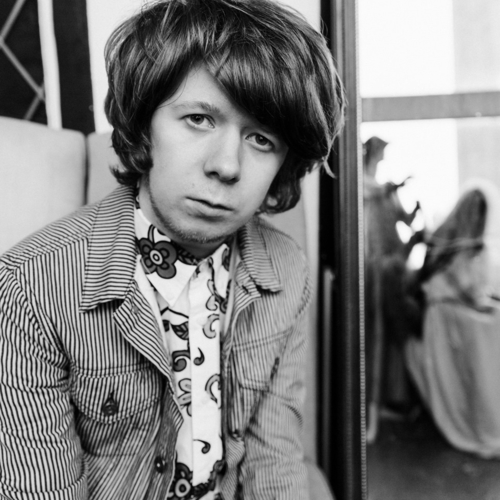
letting the music do the talking rather than words! As I am charged with putting something on the page, I suppose I need to think quick! Actually, there is plenty to pen when it comes to James Holt. At a time when the music industry needs a bit more skip, step and sway…Holt is an artist who fits the bill. His latest single, Come Out to Play, is a slice of 1960s Pop and is another magical offering from the Manchester artist. Having gained kudos from stations like BBC Radio 6 Music – and D.J.s such as Chris Hawkins -, Holt is someone with a bright future. Before I continue on, how about some information from the man himself?

James Holt is a solo artist from Bolton and is receiving attention and praise from music industry giants, such as legendary producer Brian Eno, and the listening public alike. With the craftsmanship and energy of his song writing translating effortlessly to his stage performance, and having performed at the UK’s most prestigious venues such as the Royal Albert Hall, this is an artist to watch out for in 2019.

The 24-year-old – who was diagnosed with a bilateral hearing loss at the age of four – has overcome his disability to release a pulsating and raucous rock’n’roll track. Speaking candidly about the record’s inception, James explained:

“The inspiration came from a Sky Arts TV programme set in an alternate reality in which John Lennon walked out of the Beatles before their fame in the mid-60s. It’s a fusion of thoughts and ideas and also bears references to George Orwell‘s 1984. Some people say that it sounds very Dylan-esque in the verses (especially with the harmonica), but I think the Indian-fused Beatles’ Revolver creeps in the bridge.”

Music legend, Brian Eno – who has long championed James – invited the young luminary to meet him at his John Peel Lecture for BBC Radio 6 Music. The former Roxy Music keyboard player, record producer and revered ambient pioneer also chose James’s song to use as part of an arts festival last year.

James – who graduated with a BA Music 1st class honours and MA in Music Composition (distinction) provides lead vocals, backing vocals and plays all instruments on the track, highlighting his immense talent as a musician and his resilience in the face of adversity.

This feature is going to be fairly short, but I hope I can get people tuned into Holt and his music. He has overcome adversity and, for my money, he is one of the most interesting and promising artists around. I do think the North gets overlooked regarding music; it is wonderful such a strong and vibrant wave of artists are making their voices heard right now. I think my first taste of James Holt was back in 2016 when he released the E.P., Sanguine on the Rocks. I was hooked by the sheer vitality of the songs and Holt’s voice: this rare blend of cautious and emphatic. You get drawn in by a sense of intrigue and mystery but, just as you lean in, this blast of energy and fun comes out. Holt’s music perfectly mixes moods and emotions to create this harmonious blend.

Holt has been garnering some attention recently, and I think he is one of these artists you need to keep your eyes peeled out for in 2020. With a voice that has echoes of John Lennon (Holt is a big fan of The Beatles), it is hard to ignore the quality and authority. I do think the scene is more primed towards the political and serious right now. There are pockets of light and joy and, with James Holt out there, one can be guaranteed of rich songwriting, sunshine and bounce. That is not to suggest the songwriter dodges more emotive and deep subjects – his music is so varied and wide-ranging. In every song, you feel this rare power and conviction that makes every word hit the mark. His music rewards repeated listens. One can hear a song and find much to enjoy. The more you listen, the more that comes out; little notes and angles that you might not have caught the first time around. I have seen his music evolve and grow in confidence. There are a couple of big dates coming up so, if you get a chance to see James Holt play then do. I know the remainder of the year will be busy and Holt will be working on new material. He is embarking on his earliest steps now but, at a time when strong and vibrant songwriters like Sam Fender are coming from the North, I wouldn’t bet against Holt reaching the same status. There is a lot of anger and seriousness in music so, luckily, we have an artist like James Holt who can…

LIFT the spirits.

______________

Follow James Holt

FEATURE: The Good Vibes Playlist: Part Two

FEATURE:

z.jpg

IN THIS PHOTO: FRANKIIE/PHOTO CREDIT: FRANKIIE

The Good Vibes Playlist: Part Two

__________

AFTER the previous edition of my Good Vibes Playlist

IN THIS PHOTO: LIFE/PHOTO CREDIT: Lindsay Melbourne

I am back with another installment of the best and most interesting songs around. This is another playlist crammed with quality…and artists who have a very special vibe. I hope you do enjoy the selections and, if you can, get involved with the artist and follow them on social media. The weather is pretty changeable and unpredictable at the moment, so it is the perfect time to immerse yourself in music. I know these tracks will supply some energy, emotion and sunshine. 2019’s music has been among the strongest of the decade and, with each passing month, I am amazed at what is coming through. Take a dive into the waters of some truly…

IN THIS PHOTO: PIXX/PHOTO CREDIT: Steve Gullick

SENSATIONAL artists.

FEATURE: Vinyl Corner: Donald Fagen – The Nightfly

FEATURE:


Vinyl Corner

nn.jpg

Donald Fagen – The Nightfly

__________

I realise I have featured….

 PHOTO CREDIT: Getty Images

a few Steely Dan albums here and there but, when it comes to Donald Fagen solo work, I have been a bit shy. There are a number of reasons why I am putting his debut solo album, The Nightfly, into Vinyl Corner and recommend people buy a copy. It is a wonderful record and one that is renowned for its textures, layers and brilliance. For audiophiles and those who want their stereos tested, The Nightfly is the perfect record! Many people know Donald Fagen from Steely Dan but some might not be aware he has a successful solo career - his most recent album, Sunken Condos, came out in 2012. I am a huge fan of Fagen’s work and feel his solo material does not get enough coverage. The Nightfly was produced by Gary Katz and was released on 1st October, 1982. Steely Dan’s last album before their split was 1980’s Gaucho. The band broke the year after and Fagen decided to go solo. It is amazing to see the leap in quality between the uneven Gaucho and the sublime, flawless The Nightfly! Maybe Fagen was keen to head in a new direction or had a few songs ready for a solo project. Whatever the truth, The Nightfly is a treasure trove of incredible sounds and moments. Unlike Steely Dan’s work, The Nightfly has an autobiographical nature and many of the songs relate to the optimistic mood of Fagen’s childhood in the late-1950s and 1960s. Everything from fallout shelters, Jazz D.J.s and tropical escapes are covered across the album.

To listen to The Nightfly is to be transported back to a time when there was fear in the air but there was also hope of a better future; a period of transition when America was looking forward. That seems alien today but, actually, I think The Nightfly is a work that is relevant today. We are facing perils and an uncertain world but, really, there seems to be little optimism. America transitioned through a period when nuclear annihilation seemed likely and, whereas our global crisis cannot be fixed instantly, I do think there is a way we can all come together and find a new hope; a fresh frontier on the horizon. Back in 1981, digital recording was quite new. Maybe that is why The Nightfly has a freshness and shine that embeds it in the mind. It is a gloriously produced record that is finely engineered and honed. There is looseness in the music, but it is the passion and fastidiousness of the production team, musicians and Donald Fagen that means The Nightfly such a classic. One of the reasons Steely Dan went into hibernation is the perfectionist tendencies of Donald Fagen and Walter Becker. Maybe having two perfectionists in a room was too much: on his own, Fagen was allowed to step away from the confines and strains in the Steely Dan camp – Becker’s drug problems exacerbated tensions between the two. In total, thirty-one musicians were employed for The Nightfly’s sessions. I think Gaucho had ambition, but its compositions often wandered and failed to connect.

Conversely, The Nightfly seems more focused, refreshing and nuanced; full of songs that stand up to endless plays and are ripe with inspiration! If The Nightfly demonstrated a new peak in Fagen’s writing, there was a period of writer’s block following the album; Fagen finding it hard to transition and adapt without Becker’s input and voice. There are some welcome changes from the Steely Dan days in terms of the lyrics and style. The music is more Jazz-influenced whereas the lyrics are more personal, less cutting and, yes, more optimistic! As Fagen was recalling childhood memories and writing from a new perspective, loading an album with sarcasm, cynicism and dread would not have sounded right. He wanted The Nightfly to sound fun and enjoyable. Indeed, Fagen’s debut album is among his most uplifting work. I think Fagen downplayed the purely autobiographical tones – saying it was more a composite of various versions of himself from the past -, but there is a warmth and personal relevance that makes The Nightfly so compelling and engaging. As one can imagine, the reviews for The Nightfly are universally positive. I want to bring in a couple of reviews that highlight different points. AllMusic, in their review, had this to note:

A portrait of the artist as a young man, The Nightfly is a wonderfully evocative reminiscence of Kennedy-era American life; in the liner notes, Donald Fagen describes the songs as representative of the kinds of fantasies he entertained as an adolescent during the late '50s/early '60s, and he conveys the tenor of the times with some of his most personal and least obtuse material to date. Continuing in the smooth pop-jazz mode favored on the final Steely Dan records, The Nightfly is lush and shimmering, produced with cinematic flair by Gary Katz; romanticized but never sentimental, the songs are slices of suburbanite soap opera, tales of space-age hopes (the hit "I.G.Y.") and Cold War fears (the wonderful "The New Frontier," a memoir of fallout-shelter love) crafted with impeccable style and sophistication”.

When they assessed The Nightfly, Albumism were full of praise:

The Nightfly also remains a curious case in build-up. The title track doesn’t appear until the second song on the B-side, and the A-side has some of the album’s weaker tracks. “Green Flower Street” has all the patter of a rain-slicked street and a swingin’ cover of the Drifters “Ruby Baby,” closing with the lovelorn (but musically sparse) “Maxine.”

But it just further sets the stage for the B-side, where all the real action is. The album kicks into gear with “New Frontier,” a raucous party in an abandoned bomb-shelter. “It’s just a dugout that my dad built / in case the Reds decide to push the button down.” It seems almost worth building a bomb shelter just to limbo and listen to Dave Brubeck records, plus the added benefit of surviving the nuclear blast. It’s that sort of cheeky look at the apocalypse that makes Fagen so goddamn wonderful.

iuyt.jpg

IN THIS PHOTO: Donald Fagen in 1982/PHOTO CREDIT: Getty Images

The album winds down with “The Goodbye Look,” which is perhaps the darkest song on the album. There’s a twinge of his late musical partner Walter Becker in here, a sinister quality that is missing from the rest of the album, all feathered over with Fagen’s increasingly-anxious vocals. And it’s in sharp contrast to the album’s upbeat closer, “Walk Between the Raindrops,” an easy, lovely little tune that wouldn’t have been out of place in any Manhattan ballroom or cocktail party of the time.

(In addition to “I.G.Y.,” Fagen performed “The Nightfly,” “Green Flower Street,” and “New Frontier,” during his solo tour earlier this summer. I am not in the slightest bit ashamed to say that I wept with breathless, nearly-orgasmic bliss through most of the first verse. Though he rarely performs his solo work live, he played “Green Flower Street” with the Dukes of September and has been playing “New Frontier” during his current tour, along with Becker’s “Book of Liars” from 11 Tracks of Whack.

Fagen would follow up the album with two more in the “Nightfly Trilogy,” Kamakiriad in 1993 and Morph the Cat in 2006. But 35 years later, The Nightfly couldn’t be more perfect. It remains a record collection essential, a sonic delight. Thanks for calling. I wait all night for calls like these”.

For someone like me – born a year after the album came out -, it is hard to identify directly with the scenes of childhood/adolescence in the 1950s and 1960s. As powerful and evocative as any drama set in the time, The Nightfly is this snapshot into a past time; a better world maybe but, even with looming uncertainty, there is a sense of hope and betterment – Fagen does dip into negative territory at times but the mood is largely beautiful and hopeful. The Nightfly is not an album reserved for Jazz fans or those who are who are explicitly aware of Fagen’s cannon. In this feature, the writer discusses the album in more detail:

Everything about the clear-eyed, merrily nostalgic The Nightfly is resonant from that time. Fagen's No. 26 hit "I.G.Y.," the album's first single, referenced the International Geophysical Year – an global scientific project held from 1957-58 – while looking ahead to a hoped-for time when technology will work in concert with man. "New Frontier," a follow-up single named after a term used by John F. Kennedy in his acceptance speech at the 1960 Democratic convention, took place during a teen's party inside his family bomb shelter. Period groups like the Drifters and the Four Freshmen had a notable influence in "Maxine" and "Ruby Ruby," respectively, while "The Goodbye Look" seemed to build off the era's revolutionary upheaval in Cuba.

zzxx.jpg

The Nightfly would eventually be part of triad of albums that were meant to represent the three stages of life – youth, middle age and death. First, however, Fagen would have to endure a lengthy layover between the first and second installments as he battled with a crisis of creative faith.

You could blame The Nightfly, he said. "I had come to the end of whatever kind of energy was behind the writing I had been doing in the '70s, and The Nightfly sort of summed it up for me in a way," Fagen told the Los Angeles Times in 1991. "And although I would work every day, I essentially was blocked because I didn't like what I was doing. I'd write a song and then a week later I just wouldn't connect with it at all. It seemed either I was repeating myself, or it just bored me. It wasn't relevant to what I was going through at the time".

I am a huge Steely Dan fan and I can hear a lot of them in Donald Fagen’s work (obviously). That being said…Fagen does not repeat himself: his solo work is a different sensation, even if he used a lot of the same musicians on The Nightfly as he did on Steely Dan’s final (before they reformed) album. The Nightfly is perfect on vinyl! It is a deep, rich and exciting album that provides so much story, detail and colour. If you have not heard the album then I would urge people to buy it on vinyl – if not, then go and stream it now! On I.G.Y. (What a Beautiful World), the words “What a beautiful world this will be” are sung. In these hard times, listening to The Nightfly gives one hope and…

MAKES you believe.

FEATURE: Female Icons: Part Twenty: Ella Fitzgerald

FEATURE:


Female Icons

dddd.jpg

IN THIS PHOTO: Ella Fitzgerald in 1935/PHOTO CREDIT: Universal 

Part Twenty: Ella Fitzgerald

__________

ROUNDING off my Female Icons feature…

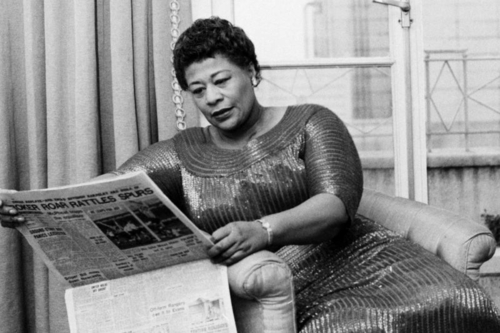
 IN THIS PHOTO: Ella Fitzgerald in a London hotel room in 1961/PHOTO CREDIT: Getty Images

is an artist who is seen as the Queen of Jazz. Renowned for the incredible clarity and tone of her voice, there is grace, command and incredible passion in each of her performances. Ella Fitzgerald died in 1996 aged seventy-nine but, in her career, produced some of the most emotive and memorable recordings ever put down. Born in 1917 in Virginia, Fitzgerald has gone on to influence so many modern artists. This article lists a few artists that owe a debt to Ella Fitzgerald. Adele spoke about her love of Fitzgerald:  

"There was no musical heritage in our family," she told The Telegraph in 2008.

"Chart music was all I ever knew. So when I listened to the Ettas and the Ellas, it sounds so cheesy, but it was like an awakening.

"I was like, oh, right, some people have proper longevity and are legends. I was so inspired that as a 15-year-old I was listening to music that had been made in the Forties.

"The idea that people might look back to my music in 50 years' time was a real spur to doing this".

Lady Gaga – among many other artists - is someone who has also taken some guidance and spirit from the legendary First Lady of Song:

Lady Gaga threw a career curve-ball in 2014 when she teamed up with Tony Bennett to release a jazz album, but Gaga had been listening to and loving jazz since her early teenage years.

"I started singing jazz when I was 13 and I discovered it before then," she told Vogue magazine in 2014.

"My mom used to play Billie Holiday on Sundays, I found Ella Fitzgerald - who’s my absolute favorite jazz singer - and my father listened to Frank Sinatra and Tony Bennett.

"So part of me knew in my heart that many of my fans would fall in love with jazz the same way I did, because we’re very similar".

It is no wonder that the intoxicating music of Ella Fitzgerald still affects artists today. It is such a potent, rare and beautiful concoction, one cannot resist its potency. Like so many icons, Fitzgerald’s early life was not the smoothest. She did face some upheaval before the stability arrived. I guess music is that grounding force that can give troubled souls direction and strength – that is definitely the case when it comes to Ella Fitzgerald. Before Fitzgerald embarked on a solo career, she found success and fame with The Chick Webb Orchestra. Whilst they performed through the U.S., the Savoy Ballroom in Harlem was their home. I am not sure what Harlem’s Jazz scene is like now but, when Fitzgerald and the band played, one can only envisage the sights, smells and music in the air! Fitzgerald embarked on her solo career in 1942 but, alongside her solo work, she collaborated with the likes of Louis Armstrong and Duke Ellington. There are countless golden moments in the catalogue of Fitzgerald but, when thinking about her finest renditions, her interpretations of the Great American Songbook spring to mind. It is clear Fitzgerald enjoyed a steady rise and came from a difficult background. It is worth looking back at Fitzgerald’s upbringing to see what inspired her path. The daughter of William Fitzgerald and Temperance Henry, the early life of Ella Fitzgerald was not the most stable.

By the early-1920s, Fitzgerald’s mother and Joseph Da Silva, her new boyfriend, moved to New York City; by 1925, the family relocated to a poor Italian area. Although Fitzgerald’s surroundings were not ideal and glamorous, she excelled at school and was a keen dancer. A gifted student and dancer, Fitzgerald performed during school and recess when she could; her early experiences in church exposed her to music and the combination opened her eyes. Listening to Jazz artists like Louis Armstrong and The Boswell Sisters, this new world gave Fitzgerald the inspiration and fuel she needed to dream. One can only imagine the feeling Fitzgerald felt when her mother used to bring her records; the sounds that came from the vinyl and how deep the music resonated. Alongside this burning love for music and discovery came tragedy. Fitzgerald’s mother died when she was fifteen and she was raised by her stepfather. There is rumour that she was abused by her stepfather and, after moving in with her aunt in Harlem, there was this hugely uncertain and unsettled period. When in Harlem during 1933/1934, Fitzgerald performed on the street and got a break when she performed at the Apollo Theatre in 1934 at the age of seventeen. Not only was there change in Fitzgerald’s personal life; there was also change in the music industry. During the early-1940s, Swing and Big Band music was still burning. By the end of the Second World War, changes were occurring and genres like Bebop came through.

 PHOTO CREDIT: Universal

This led to a change in Fitzgerald’s vocal style; a period when Fitzgerald began scatting – one of her ace cards – and used her voice more like an instrument (she said she tried to imitate the horns in the band when singing). Her earliest recordings with Decca Records were successful, but her Verve years provided turbulent. There were events during the 1950s that spring to mind; times where Fitzgerald was subjected to discrimination and attack. Fitzgerald enjoyed a successful tour of Australia in 1954 but there was an incidence of discrimination that caused her to miss her first two concerts in Sydney. As it goes, Fitzgerald and members of her band were due to fly from Honolulu to Australia but were ejected from the plane and not allowed to retrieve their luggage and items. They were stranded in Honolulu and were late for the Australian tour. There was a defence from Pan-American Airlines that the incident was not racially-motivated but one struggles to find any other explanation. Whilst Fitzgerald excelled in Bebop, she was frustrated at Verve Records because there was a feeling things were getting stagnant and routine. It was her discovery of Cole Porter that led to an awakening. Ella Fitzgerald Sings the Cole Porter Songbook sounds like an artist refreshed and re-inspired; entering a new phase and taking her voice in a new direction. That collection was released in 1956 - Fitzgerald recorded eight Song Book collections with Verve from 1956 to 1964.

These stunning recordings are the bedrock of the Great American Songbook and helped bring Jazz to audiences who were not used to the genre. Fitzgerald was a pioneer. Why is Ella Fitzgerald so important? This article from June raised some theories:

Dip into any one of her Song Books, pick any track at random and you will hear perfection. Everything from the arrangements, the musicians, and the songs themselves create the perfect blueprint for Ella’s voice. Ella was 38 years old when she recorded her first song book and her voice was honed to perfection. Whether she is singing a straightforward ballad or love song or something with more than a hint of jazz about it she purrs and swings. There can be no one who has heard these records and not been totally beguiled.

It was also in 1956 that Ella recorded again with Louis Armstrong. Following a gig at the Hollywood Bowl the day before, they went to Capitol’s Hollywood studio to record Ella and Louis, arguably the greatest album of jazz duets ever. The following year they recorded Ella and Louis Again and Porgy and Bess; the latter is one of the most beautiful recordings ever made.

It wasn’t until 1964 that Ella completed her song book cycle with the Johnny Mercer album. In between there were numerous other albums with arrangers like, Russ Garcia, Paul, Weston, Quincy Jones, Frank DeVol and Nelson Riddle all adding their shimmer and gloss to a career that was the kind that other singers aspire to.

Ella’s later career while not climbing to the dizzy heights of her decade with Verve Records still produced memorable highlights, as did her concert performances around the world. In 1980, Granz, who still managed Ella, came up with the idea that was almost a songbook, Ella Abraça Jobim; her tribute to the brilliant Brazilian songwriter. She also returned to the Gershwin canon with her old friend, Andre Previn”.

Although, like other artists in this series, I cannot give too much depth and review of her albums (as there is less material available in that sense), I shall let the music do the talking. There were few harder-working artists in the world than Ella Fitzgerald. Such a prolific performer, Fitzgerald continued to perform, even when her health was declining. I will finish this feature soon but, before I do, I want to bring in this feature from Grammy Museum that talks about Fitzgerald’s later life and how her legacy is more than music: her altruism and charity rarely gets mentioned when we discuss her legacy:

Fitzgerald continued to work as hard as she had early on in her career, despite the ill effects on her health. She toured all over the world, sometimes performing two shows a day in cities hundreds of miles apart. In 1974, Fitzgerald spent a legendary two weeks performing in New York with Frank Sinatra and Count Basie. Still going strong five years later, she was inducted into the Down Beat magazine Hall of Fame, and received Kennedy Center Honors for her continuing contributions to the arts.

Outside of the arts, Fitzgerald had a deep concern for children and those in need. Though this aspect of her life was rarely publicized, she frequently made generous donations to organizations for disadvantaged youth, and the continuation of these contributions was part of the driving force that prevented her from slowing down.

In 1987, U.S. President Ronald Reagan awarded her the National Medal of Arts. It was one of her most prized moments. France followed suit several years later, presenting her with their Commander of Arts and Letters award, while Yale, Dartmouth and several other universities bestowed Fitzgerald with honorary doctorates.

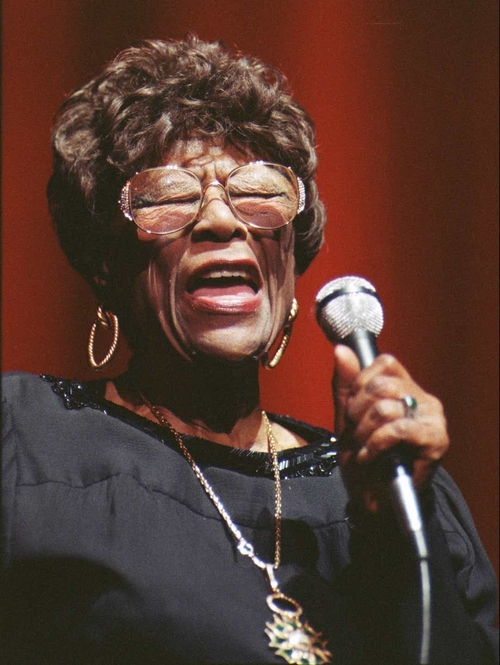
IN THIS PHOTO: Ella Fitzgerald captured in 1991 at Radio City Music Hall in New York/PHOTO CREDIT: Mark Phillips/Associated Press

On June 15, 1996, Ella Fitzgerald died in her Beverly Hills home from complications of diabetes. Hours later, signs of remembrance began to appear all over the world. A wreath of white flowers stood next to her star on the Hollywood Walk of Fame, and a marquee outside the Hollywood Bowl theater read, "Ella, we will miss you."

Ella Fitzgerald won 13 GRAMMY Awards, a Recording Academy Lifetime Achievement Award, and has eight recordings inducted into the GRAMMY Hall Of Fame. She holds the distinction as the first African-American to ever receive a GRAMMY Award”.

I shall end things here, but I urge people to listen to Ella Fitzgerald. Not only is her work essential and hugely powerful; she has inspired so many modern artists across various genres. A true icon, grounbreaking artist and timeless force in music, there is nobody in music like Ella Fitzgerald. As I wrap up my Female Icons feature, I get to put out an Ella Fitzgerald playlist that proves what a…

MAJESTIC artist she was.

FEATURE: This Woman’s Work: Kate Bush’s The Sensual World at Thirty

FEATURE:


This Woman’s Work

PHOTO CREDIT: John Carder Bush 

Kate Bush’s The Sensual World at Thirty

__________

ON 16th October, it will be thirty years…

nnn.jpg

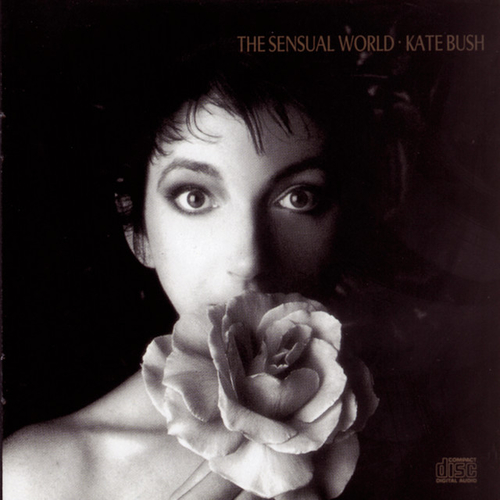
 IN THIS PHOTO: Kate Bush in 1989/PHOTO CREDIT: John Carder Bush

since Kate Bush’s The Sensual World came into the world. In some ways, it was a bit of an odd album. Four years after her defining moment, Hounds of Love, The Sensual World came out. It is a very different record and one that did not receive the same sort of praise as its predecessor. There are a few things that define The Sensual World and its beauty. Backing vocals on Never Be Mine, Rocket’s Tail and Deeper Understanding feature the Trio Bulgarka, and I think The Sensual World features some of Bush’s most affecting work. I think there was a bit of disappointment due to the fact The Sensual World does not have the same stride as Hounds of Love. There are relatively few standout singles on the album – The Sensual World and This Woman’s Work are exceptional tracks but are very different to Cloudbusting and Running Up That Hill (A Deal with God). If Hounds of Love was a more instant, commercial album – albeit it, one whose second side is a conceptual suite -, The Sensual World is, in some ways, more romantic and deep. There is a definite tonal shift between the albums and I think a lot of people overlook The Sensual World. It is not her best album, but it is one that sounds brilliant thirty years later; so many fantastic moments that highlight why Kate Bush is one of the greatest songwriters ever. Hounds of Love set such a high benchmark and was a real peak for her.

Not willing to stand still and produce the same album, The Sensual World took her music forward. If Hounds of Love’s tracks are more instant and accessible, I think The Sensual World’s tracks unfurl over time and reward great investigation. The Sensual World is thirty very soon and I do think it deserves to find a new audience. Maybe, in 1993, Bush’s golden touch was starting to fade a little – The Red Shoes is considered one of her weaker albums. The Sensual World, far from being weak or inferior to Hounds of Love, in fact, is a hugely nuanced album. Yes, there are a few weaker tracks but the best moments – such as The Sensual World and Deeper Understanding – are among her very best. In this article from Classic Album Sundays, it is clear Bush was in a league of her own in the 1980s:

By the middle of the 1980s Kate Bush had reached the apex of her career with Hounds of Love. The album featured the most powerful and intriguing songs of her discography thus far, demonstrating just how incredible her sonic storytelling had become. Resisting the frenetic pace of a typical major label release schedule, Bush would spend another four years crafting her followup, with only sporadic singles and collaborations bridging the commercial gap. She found inspiration in the literary world again, scouring the pages of James Joyce’s landmark 1920s novel Ulysses to find Molly Bloom’s closing monologue, in which the character steps from the pages of the book and revels in the real world. Bush was delighted to find that the rhythm and sound of the words fit perfectly with the music she had been working on.

This revelation was frustrated by the intractability of Joyce’s estate, which repeatedly refused Bush permission to use the words as her lyrics on ‘The Sensual World’. She was forced to rebuild from the ground-up, writing new passages that captured the same breathless energy as Bloom’s soliloquy.

Unlike previous albums, The Sensual World did not follow a single conceptual arc. Instead each track illustrated a vignette, written from the perspectives of far more ordinary people than had previously featured in her songs. The allegories were still vivid and fantastical but at the heart of each story was the existential crises that we all face at some point in our lives. On songs such as ‘Heads We’re Dancing’, Bush deploys her dark sense of humour to imagine a young girl who is charmed onto the dance floor by a man she later learns is Adolf Hitler. The song was inspired by a friend who had spent the evening in the company of a captivating man they later found out to be “father of the atomic bomb” Robert Oppenheimer. Although somewhat ridiculous on the surface, the song speaks to something very real: can you ever really trust your own judgement? And if not, what does that say about you?”.

I love all of Kate Bush’s albums but there is something about The Sensual World that digs deep and hits the heart. Listen to a track such as The Fog and all the expressions and things happening. It is grand, beguiling and busy; Reaching Out is emphatic and passionate whilst Rocket’s Tail sweeps you up and takes your mind somewhere else.

The Sensual World has some truly sensual, raw and extraordinary moments. This feature we get a track-by-track guide from Bush and some truth about the album:

"On this album there's more of me in there in a more honest way than before and yet, although some of it is me, the songs aren't about me. It's this kind of vague mish-mash of other people and yourself, bits of films, things you've heard, all put together in a mood that says a lot about me at this time.

"A lot of people will think these songs are about me. I've always had that and like, with 'Deeper Understanding', people react immediately saying, 'Is this autobographical? So you're into computers now? So you spend all night on computers?' People immediately switch on to the mechanicalness. It's a song about computes so she must be into computers!"

I think all the great albums deserve attention on big anniversaries. The Sensual World, I feel, is overlooked and does not get the same applause as albums like Hounds of Love and The Dreaming. If you have not bought a copy of the album then grab one and let the songs take you away. When the album was released, The Sensual World got praise. As I said, there was a sense of disappointment and doubt. Retrospective reviews have been ore effusive and, perhaps, we needed to see the years pass before The Sensual World truly sunk in. Pitchfork’s recent review is balanced and gets to the heart of the songs:

There’s no Hounds-style grand narrative thread on The Sensual World. Bush likened it to a volume of short stories, with its subjects frequently wrestling with who they were, who they are, and who they want to be. She was able to pour some of her own frustrations into these knotty tussles: She found it more difficult than ever to write songs, couldn’t work out what she wanted them to say, and hit roadblock after roadblock.

PHOTO CREDIT: John Carder Bush 

The 12 months she spent pestering Joyce’s grandson were surpassed by the maddening two years she spent on “Love and Anger,” which, fittingly, finds her tormented by an old trauma she can’t bring herself to talk about. But by the end, she banishes the evil spirits by leading her band in something that sounds like a raucous exorcism, chanting, “Don’t ever think you can’t change the past and the future” over squalling guitars.

Even its most surreal songs are rooted in self-examination. “Heads We’re Dancing” seems like a dark joke—a young girl is charmed on to the dancefloor by a man she later learns is Adolf Hitler—but poses a troubling question: What does it say about you, if you couldn’t see through the devil’s disguise? Its discordant, skronky rhythms make it feel like a formal ball taking place in a fever dream, and Bush’s voice grows increasingly panicky as she realizes how badly she’s been duped. As far-fetched as its premise was, its inspiration lay close to home: A family friend had told Bush how shaken they’d been after they’d taken a shine to a dashing stranger at a dinner party, only to find out they’d been chatting to Robert Oppenheimer.

PHOTO CREDIT: Getty Images

She didn’t need to prove her own steeliness to anyone, especially the male journalists who patronized her and harped on her childishness as a way of cutting her down to size. Instead, The Sensual World is the sound of someone deciding for themselves what growing up and grown-up pop should be, without being beholden to anyone else’s tedious definitions.

It gave her a new template for the next two decades, inspiring both the smooth, stylish art-rock of 1993’s The Red Shoes and the picturesque beauty of 2005’s Aerial. Like Molly Bloom, Bush had set herself free into a world that wasn’t mundane, but alive with new, fertile possibility”.

I am excited by the upcoming anniversary of The Sensual World and I hope radio stations dig deep and play some of the lesser-heard tracks from the album…in addition to the more popular tracks like This Woman’s Work. After thirty years, The Sensual World

STILL sounds completely amazing.

FEATURE: Metal Guru: Remembering the Great Marc Bolan at Seventy-Two

FEATURE:


Metal Guru

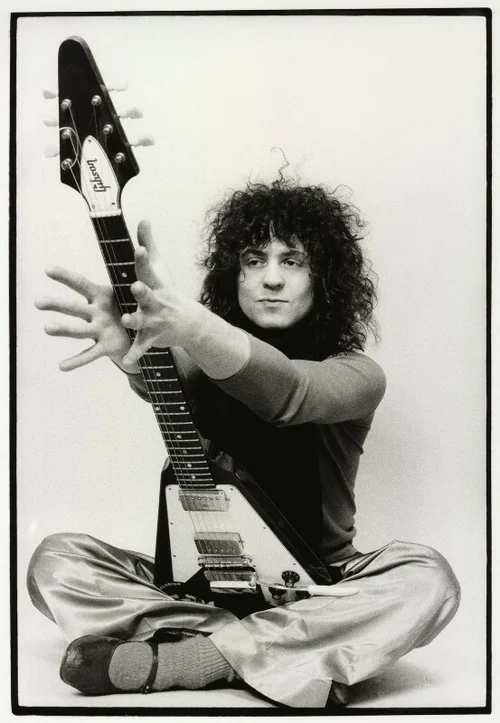
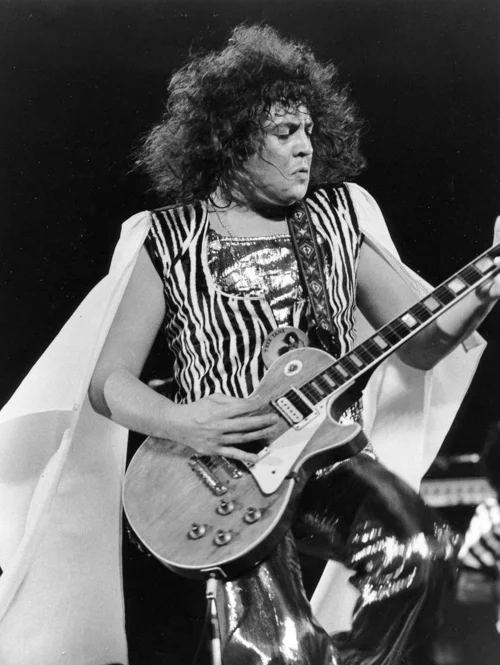
IN THIS PHOTO: Marc Bolan in 1972/PHOTO CREDIT: Keith Morris

Remembering the Great Marc Bolan at Seventy-Two

__________

THAT number, ‘seventy-two’, is important…

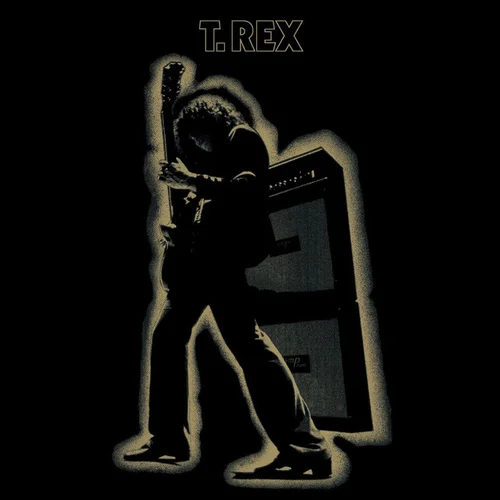
 IN THIS IMAGE: The cover of T. Rex’s 1971 masterpiece, Electric Warrior

because that year was a pretty important one for T. Rex. I shall come to that in a minute but, on Monday, the late Marc Bolan would have been seventy-two. There are a few reasons why Bolan is on my mind. On 16th September, it was forty-two years since Bolan was killed in a car crash. It is tragic that he died at the tender age of twenty-nine. There were ups and downs in Bolan’s career but, in 1977, one feels that a new rise was beginning; a possible reinvention and growth. It is hard to say but, even though Bolan died young, He achieved so much in his life. We live in an age where there is fairly little joy in music. There is some character and colour, but one suspect we have entered quite a dark and generic time. There are no big scenes and movements uniting us and creating this wave of fascinating music. It is a little sad we do not have the same wonder and inspiration as there was years ago. When I think of Marc Bolan, I picture this man with glitter on his face; a cheeky smile and music that is both electric and seductive. Even though many are familiar with the legendary T. Rex, Tyrannosaurus Rex released four albums and were a different proposition. I think Tyrannosaurus Rex were criticised by some and seen as a bit hippy-dippy and cosmic.

Although the band (Marc Bolan was a constant member, and he was joined by Steve Peregrin Took and Mickey Finn at different points) released a couple of truly spectacular albums – including 1970’s A Beard of Stars -, it was the galvanised T. Rex that really broke through. Perhaps less inspired by the 1960s and a less urgent sound, T. Rex were one the pioneers of the Glam Rock movement. I discovered T. Rex when I was a child and remember listening to their music on cassette. Back then (in the early-1990s), I was listening to songs like Ride a White Swan, Metal Guru and Children of the Revolution and being startled by this unique and stunning sound. The band’s magic scored the songs but it was Bolan’s powerful and gripping voice that added personality and something fresh to each song. It is hard to explain, but I was attracted to this artist who seemed to inhabit his own world yet, oddly, was relatable and someone a child could understand. There was an innocence and playfulness to the music, but there was a sweaty and sexual edge. In fact, T. Rex’s music mixed in so many different emotional and lyrical elements. Although T. Rex released their first album in 1970, the quantum leap came on 1971’s Electric Warrior. With a core of Marc Bolan – vocals, guitar; Mickey Finn – congas, bongos and vocals; Steve Currie – bass guitar and Bill Legend – drums, tambourine, the album is almost like a greatest hits collection! The first side has the incredible Jeepster and Cosmic Dancer; the second side has Get It On, Girl and Life’s a Gas.

There is this great balance of the bigger hits and anthems and tracks like Planet Queen and The Motivator that are a little less urgent but then get into the head and under the skin. The album is unique but it is also responsible for inspired Glam Rock artists and developing the genre. One could say that David Bowie got inspiration from Electric Warrior – Bowie released Hunky Dory in 1971 and it would be a year until he released Ziggy Stardust to the world. It is clear what Marc Bolan and T. Rex created a revolution on Electric Warrior. In this review, AllMusic explain its genius:

The music recalls not just the catchy simplicity of early rock & roll, but also the implicit sexuality -- except that here, Bolan gleefully hauls it to the surface, singing out loud what was once only communicated through the shimmying beat. He takes obvious delight in turning teenage bubblegum rock into campy sleaze, not to mention filling it with pseudo-psychedelic hippie poetry. In fact, Bolan sounds just as obsessed with the heavens as he does with sex, whether he's singing about spiritual mysticism or begging a flying saucer to take him away. It's all done with the same theatrical flair, but Tony Visconti's spacious, echoing production makes it surprisingly convincing. Still, the real reason Electric Warrior stands the test of time so well -- despite its intended disposability -- is that it revels so freely in its own absurdity and willful lack of substance.

xxx.jpg

IN THIS PHOTO: Marc Bolan in 1973/PHOTO CREDIT: Getty Images 

Not taking himself at all seriously, Bolan is free to pursue whatever silly wordplay, cosmic fantasies, or non sequitur imagery he feels like; his abandonment of any pretense to art becomes, ironically, a statement in itself. Bolan's lack of pomposity, back-to-basics songwriting, and elaborate theatrics went on to influence everything from hard rock to punk to new wave. But in the end, it's that sense of playfulness, combined with a raft of irresistible hooks, that keeps Electric Warrior such an infectious, invigorating listen today”.

1972’s The Slider brought tracks such as Metal Guru and Telegram Sam; the band were on a hot streak and at the forefront was the insatiable, nuanced voice of Bolan. By 1974’s Zinc Alloy and the Hidden Riders of Tomorrow, it is clear T. Rex were in decline and some of the stardust was missing. 1977’s Dandy in the Underworld was resurgence and, sadly, suggested T. Rex were hitting their stride once more. 1971-1972 is their classic period and one where Marc Bolan was sitting proud on the throne. I admire David Bowie hugely but there is something about Marc Bolan that defined the early-1970s and Glam Rock. As a child discovering Bolan and T. Rex years after their formation, I was used to Pop and a very different sound. Having my eyes and mind opened in such a way is an experience that has stayed with me. I just have to think of songs such as Hot Love (released a single in 1971) and Metal Guru and I am transported back.

Even though Marc Bolan has inspired musicians such as Johnny Marr, I don’t think anyone in the modern age could pull off the moves, looks and licks of Bolan. An incredible guitarist, songwriter and lead, he exuded charisma, sexuality and tenderness. There are some great Marc Bolan biographies available that give you an insight into this iconic. I have been looking at articles online that talk about Bolan; his highs and lows and more troubled side. Looking at this article from The Telegraph, it is clear that, underneath the hooks and catchy songs, there was this rare and, at times, egotistical star (as T. Rex’s producer, Tony Visconti, explained):

Bolan took it back to its primal roots of snappy hooks and naggingly memorable choruses. Songs like Get It On, Hot Love, Telegram Sam were love letters to lusting adolescents. Beneath the satin tat, the feather boas and top hats, Bolan had

the sultry, pouting look of a corrupt cherub, strutting for a legion of adoring pubescent fans. 'It was like, this is where he belonged all along,' says Visconti. Bolan played the role of pop idol to the hilt. He splashed out on clothes, guitars, a Rolls-Royce (even though he was unable to drive). Always possessed of a self-belief that could border on the messianic, he now became impossibly self-regarding; his interviews bragging sessions.

'If God were to appear in my room,' he told one journalist, 'obviously I would be in awe, but I don't think I would be humble. I might cry, but I think he would dig me like crazy.' His friend and rival David Bowie was dismissed as 'a one-hit wonder'. Bolan accused Lennon of trying to imitate him, and boasted to Visconti that David Niven wanted to make a film with him. 'It was completely untrue,' says Visconti. No matter how successful he was, it was never enough. 'I used to phone EMI each day for the sales figures,' remembers Visconti, 'and at one point Hot Love was selling more than 25,000 copies a day - an astronomical number. It was number one for seven weeks. Marc would phone me 40 minutes later and say, "Hi Tone, guess what it sold yesterday - 50,000!" '

xxx.jpg

 PHOTO CREDIT: Alamy

Forty-two years after his death, you can feel aspects of Marc Bolan in the air; elements and layers that have been passed down through the years. I think he is one of the most underrated artists of the 1970s and, as I said earlier, he made an impact on me when I was a child. I am still a huge fan of T. Rex and listen to the albums when I need that boost and blast. Their music can raise the spirits but it has swagger and potent spirituality – listen back to Tyrannosaurus Rex and there is a flavour of Marc Bolan discovering himself and sowing the initial seeds of promise. What makes Bolan so revered, timeless and cool? This feature discussed Bolan’s riffs, style and influence:

Keith Richards may have rightly earned himself the epithet of ‘The Human Riff’, but it was to Bolan (a veritable guitar-slinger in his own right) that The Smiths and Oasis looked to in penning some of their most memorable numbers. Evidently, Morrissey didn’t take Bolan’s rejection of his request for an autograph to heart, as Panic is, according to Smiths bassist Andy Rourke, “more or less a note for note take on Metal Guru”, while the chorus of Shoplifters of the World Unite owes much to that of Bolan’s Children of the Revolution. It also goes without saying that without the raunchy riffery of Bolan’s biggest hit, Get it On, there wouldn’t have been the Gallagher brothers’ Cigarettes and Alcohol. So down and dirty were Bolan’s riffs that even Guns ‘n’ Roses covered one of his songs, Buick Mackane, on 1993’s The Spaghetti Incident.

It didn’t matter that Bolan was short – “I know I’m small, but I enjoy living anyway,” he sang on Spaceball Ricochet; what he lacked in length he more than made up for in style. One look at the cover of The Slider, featuring Bolan with a leather top hat above his trademark ‘corkscrew hair’, is enough to have Slash’s look all figured out. On the same note, Temples frontman James Bagshaw is a spitting image of Bolan, who had epitomised the whole ethereal curly-mopped look long before he or St. Vincent ever came tottering along. That’s all aside from the many who have imitated and been influenced by Bolan’s signature vocal quavering (which he’d picked up as a child by singing to records played at faster speeds), such as David Bowie (on Black Country Rock), Devendra Banhart, and Anohni.

From trippy acoustic folk to bluesy rock, glam, and even heavy metal, Bolan’s wide musical range was impressive. At times, it seemed there was nothing Bolan couldn’t do, and, while his most popular albums may be similar in sound and style, listening to his oeuvre in its entirety reveals a diverse array of aural vistas. In the late seventies, when punk and new-wave were taking over England, and the old establishment crumbling, Bolan actively promoted bands like Generation X, The Jam, and The Boomtown Rats – to children – on his television programme, ‘Marc’, in addition to touring with The Damned in 1977. Before he could tinker any further with his own sound, though, the dandy truly left the dudes above for the underworld, just two weeks shy of his 30th birthday.

I can imagine Marc Bolan turning seventy-two on Monday and still being the same man as he was back in the Seventies. I feel he would be a little shocked at how the industry has changed and, with David Bowie gone, he would be one of the last-surviving Glam Rock gods. I do think Marc Bolan was truly one of a kind and his music will last forever. You only have to listen to the majestic hooks and vocals and you are transported somewhere special. On Monday, I will be raising a glass to the truly…


MAGNIFICENT Marc Bolan.

FEATURE: Modern Heroines: Part Two: Little Simz

FEATURE:


Modern Heroines

hhhhhhhhhhhhhhhhh.jpg

PHOTO CREDIT: Jack Bridgland 

Part Two: Little Simz

__________

THE first part of Modern Heroines featured…

zzzz.jpg

 PHOTO CREDIT: Evening Standard

the one and only Laura Marling. My representation of Little Simz is going to be a touch shorter because she has released fewer albums than Marling. The idea behind this series is to shine a light on modern female artists who will become iconic and legends in years to come – or, as they stand, are among the strongest artists in the world. Before I look at the discography and biography of Little Simz, one cannot argue against her rise and achievements. This year has been especially productive for the London-born rapper. Not only was her third album, GREY Area, nominated for a Mercury Prize (it lost out to Dave’s PSYCHODRMA), but she is also appearing in Netflix’s Top Boy. Go and watch the show if you can because the entire cast are powerful and turn in terrific performances. The fact the performances seem to pure and convincing is because cast members like Little Simz grew up around the sort of scenes we find on Top Boy. When speaking with The Guardian last month, Little Simz was asked about Top Boy and whether the show resonated with her:

You grew up not far from Hackney, where the series is set. Did it ring true?

Yeah for sure. Every story that’s being told in this series, I’ve witnessed [a version of it] first-hand. Even the character I’m playing, I know this person in real life. It’s very close to home.

Was it surreal shooting a TV drama in the area where you grew up?

It was. It gave me another outlook on this area, because growing up here we felt like this place was worth nothing. It was essentially a shithole, there’s no opportunity here and nothing to do. And now we’re filming this Netflix series here. The contrast was surreal. But it felt great. As we were filming, people were walking past, going, “Top Boy’s back!” The community was super-excited and happy that we’re doing this and still remaining true, basing it in the same areas, keeping that realness.

Hackney has changed a lot over the past decade due to gentrification, and knife crime is on the rise. How do you feel about the area now?

There’s been some development, but there’s still a very long way to go and the same problems are there. Just making it clear, Top Boy definitely does not glamorise or glorify what’s happening, it’s just a real representation of our world today. This show is going to open up eyes and hopefully help ignite change”.

I think a series like Top Boy adds to the dynamics and potency of Little Simz’s work. Think about her latest album and every beat, line and expression seems to ring true and hit the mark. You can hear the conviction in her voice; for those who have not experienced the same upbringing and conditions as Little Simz and her peers, one can still identify and find something extraordinary in the music. Little Simz is such an amazing and popular artist because her music is essential and universal. It is not only about her world and life: the music throws out to the wider world and represents what is happening right now.

nnnn.jpg

 PHOTO CREDIT: Getty Images

Simbiatu 'Simbi' Abisola Abiola Ajikawo was born in Islington, London to Nigerian parents. After studying at Highbury Fields School in London, she attended St. Mary’s Youth Club in Upper Street, Islington. Her music career really started to develop after she studied at Westminster Kingsway College. Little Simz has performed at Hackney Empire; she has been nominated for a Mercury Prize and played at the BBC 1Xtra Proms (in 2015) at the Royal Albert Hall. She has gathered acclaimed across the industry and is one of the fastest-rising stars around. Music has been part of her life since childhood but, even before she gained focus due to her television gigs, music was in the blood of Little Simz. Her first mixtape came out in 2010 and she put out material for several years after. A lot of Rap and Hip-Hop artists put mixtapes out before albums because, I guess, mixtapes are less constricting and allow for greater experimentation; they can be freer and slightly rougher and, by 2014, Little Simz was putting out E.P.s. In fact, she put out four E.P.s in that year and she caught the ear of promoters and D.J.s. 2015 was when the anticipated and exceptional debut album, A Curious Tale of Trials + Persons, arrived. The album is a classic case of an artist with promise, but one still finding her true voice and footing. Looking back and it seems like a completely different beast to what we find on this year’s GREY Area. That said, A Curious Tale of Trials + Persons, is a fascinating start that showed, even in 2015, there was a genius spark. In this review from The Line of Best Fit , they underline how Little Simz’s confidence and brilliance is a natural evolution from her mixtapes and E.P.s:

From the off, the level of lyricism and pure quality that Little Simz has often struck over her many mixtapes and EP’s is upped. A trip of emotions about combatting fame and the changes it can bring to a person’s life in different ways makes up the general atmosphere of the album, best articulated on “Wings”, a track filled with determination, bold statements and questions that see Ajikawo’s confidence and belief in her ability grow. It’s easy here to draw parallels to Raury’s high energy message of youthful revolution.

Across A Curious Tale…, Simz eloquently explores and relays her perception of fame through many perspectives, combing through not only the conceptual subject of the album but also her own levels of ability – talents of which we have no doubt. Outstanding tracks beside “Wings” include “Lights” and “Dead Body”, and with details of parts two and three of the latter already teased by Simz herself, we eagerly look forward to hearing what Kano & Stormzy can add to it.

Ultimately, Little Simz explores and challenges all perceptions of what she should be throughout A Curious Tale…. Flexing her rapping abilities, intertwined with her choice of instrumentals and interludes with “This Is Not an Interlude” and taking us out with the remarkable “Fallen”. It’s not only a very solid debut, but it’s one with the power to break down and challenge the way things are done in the music industry”.

I think A Curious Tale of Trials + Persons warrants reinvestigation because it sounds incredible and unique. The album received a few lukewarm reviews in 2015 but I do think it (the album) sounds incredible now; it seems to fit into the scene better now than four years ago – maybe A Curious Tale of Trials + Persons is more relevant in 2019. I am not sure exactly. In any case, A Curious Tale of Trials + Persons remains a strong and vibrant debut album that would see Little Simz go on to bigger things.

Even if some reviewers were a little unsure of her debut and felt she had better in her, the success and recognition of A Curious Tale of Trials + Persons opened up doors. A year after she brought out her debut, Stillness in Wonderland arrived. Give the short spell of time between her debut and second album, one could forgive a little rush and lack of progression. In fact, Stillness in Wonderland was a big leap. Maybe it was increased exposure or Little Simz growing in confidence and command.    

Reviews for her second album were largely positive. More websites and music sources were picking up on her music and there was this feeling that a star was emerging. Those who had been following Little Simz’s music since the start were aware of what she was capable of; everything seemed to crystallise on Stillness in Wonderland. In this interview from The Fader, some interesting details come to light:

 “Since self-releasing her debut album in late 2015, Simz has been living in her own Wonderland of sorts. This year, she’s toured with Lauryn Hill and Nas, and became the first British MC to ever make Forbes’s 30 Under 30 list — all as an independent, unsigned artist. Her world’s bigger than it used to be, and a little more surreal.

Stillness can be loosely cut into two halves. Its first part is bright and optimistic. On “Shotgun,” Simz’s playfully confrontational verses bounce up against a sunshine-flecked hook sung by The Internet’s Syd. Embodying the dreamscape theme, the songs have a richer texture than Simz's usual stuff, all guitar melodies, delicate backing vocals, and, at one point, a swaggering saxophone. But while the lure of escaping into Wonderland can be tempting, Simz is always conscious of the importance of staying grounded. “I don't want to not know what's real and what's not,” she said. “That's what happens sometimes in the industry; things faze you or blind you.”

The record’s second half is darker. After the eerie strings that open “King of Hearts,” Simz’s voice gets notably lower, and grime MCs Chip and Ghetts add some world-weariness and manic lyricism, respectively. The album’s most somber moment, “Poison Ivy,” is also Simz’s most personal track to date. Over a downtempo guitar beat, Simz sings about the lies we tell ourselves in unhealthy relationships. “That's how my last relationship was,” she said of the track, which she produced herself. “It was toxic. I knew it, he did as well; the idea of it was a lot more appealing than the actual thing itself.”

Across Stillness, Simz's need to be real clashes with the urge to create a nurturing safe space for the listener, and for herself. In its grappling, the album has echoes of Solange Knowles’s A Seat At The Table. Neither Solange nor Simz comes to a concrete conclusion about how to live in a world that’s confusing and cruel, but both offer a place to escape into for a little while — without ever losing sight of truth. For Simz, imagination is a weapon, but she wants to make real change in the real world too. She raps about that goal emphatically over the laid-back groove of “Zone 3”: “There’s gonna be a revolution, better partake”.

The importance and depth of her music connected with a lot of people. I think 2016 is a year when Little Simz really sort of came into her own and, for want of a better phrase, found her voice. That sounds a tad insulting, but I think Little Simz grew and expanded between 2015 and 2016.

bvbb.jpg

 PHOTO CREDIT: Blair Brown

This sample review for Stillness in Wonderland shows what critics thought of the album:

As she explores and conquers the different realms of Wonderland (fame & fortune, relationships, and her state of mind), Ajikawo finds herself stunted, a ‘stillness’ that affects her personally and professionally. Wonderland’s physical state surrounds her with people she doesn’t trust (“I don’t’ trust anyone but who I came with /Is that bad of me?”). Subsequently, it pushes her further into a mental escape where she internalizes this scrutiny. Her epiphany is revealed in “Low Tide” as the distractions of Wonderland recede to bare Ajikawo at her rawest, which is also her strongest. By the finale, “No More Wonderland”, Ajikawo sheds its spectacle, realizing that it is out of lessons to teach her.

“Real shit’s happening and my people need me/I’m out” she concludes, but thankfully she dropped in just long enough to deliver a truly fantastic record that defies the expectations people have of unsigned artists and female rappers. Ajikawo knows she’s on her way to something new, and she enjoins us to follow her instead of white rabbits. She already knows where they’re going, and it’s not nearly as interesting as where she’s headed”.

iikh.jpg

This sort of takes us to where we are now. Even though It was three years between Stillness in Wonderland and GREY Area, Little Simz’s current album is her strongest work. It seems her most relevant and powerful. I think the touring and experience has heighted the work of Little Simz and she is firing from all cylinders now. Her previous two albums were brilliant, yet I feel GREY Area is her peak so far. Not only has it just been nominated for a Mercury Prize, but I think the songs cut deeper; the delivery is more nuanced and there is greater musicianship and feel. I think Little Simz will go onto create a lot of spectacular albums and act as a role model. She is definitely under the skin of fans and critics alike. When speaking with Vice, we learn about the songs and Little Simz’s progress:

 “Grey Area straddles Simz’s outward-looking sensibilities – the community of creative people she’s built around her, the influences she’s picked up through her own listening and her travels on the road – with tightly, inward-looking and reflective subject matter. From her mental health, to the strain of touring, to figuring out what exactly the fuck she’ll be doing in her late twenties, Grey Area digs into it all. “I had to re-assess a lot,” she says early in our conversation. “Friendships, personal relationships – all those things had to be looked at differently.” She chose to record this album in London to be close to those bonds. “I’d been travelling so much and it was just too much. It was like, ‘I can’t bear missing people and working myself tirelessly.’ I could see it taking its toll. So I just needed to make an album where I’m pouring out my heart and soul, but I’m also eating properly. Taking care of things that I need to pay close attention to.”

She’s not exaggerating. Simz started rapping aged nine, putting music up online and getting on mics wherever she could around London via her star-making youth clubs (I’m talking Leona Lewis and Alexandra Burke as other alums). Born Simbi Ajikawo and raised in Holloway by her mother, a devoted foster carer, Simz’s gallons of creative energy needed an outlet. So as a teen she acted too, appearing on TV shows like CBBC’s Spirit Warriors and E4’s Youngers, but music kept drawing her back. By the time she’d started her music technology degree at University of West London, in Ealing, her career was taking off. And she soon realised she couldn’t do both. Quitting uni would show both sides to herself: her ambition, and her insistence on doing things her own way. Really, she’d been like that her whole life. As a child, she remembers, “100% my vibe was ‘I’m just doing my thing,’ literally. And as much as it may be shocking to people that I’m indie and doing music, if you know me from when I was little I’ve always moved in a way that is independent. I’ve always done my own thing. My friends and that, close people, my family, they know this about me: Simbi moves how she wants to move. I’m not following no this and that”.

GREY Area is one of the finest albums of this year, and there are few voices in music as arresting and promising as Little Simz. She has a long future ahead of her and, like Laura Marling last time around, it is amazing Little Simz has achieved so much and is at the level she is (she is twenty-five).

I will end things very soon but, as GREY Area received such warm praise, I want to bring in a review from The Independent:

 “Simz flips between two tones: bristling and unapologetic, and warm and reflective. “Offence” is the former, with tongue-in-cheek bars that have her hailing herself as “Jay-Z on a bad day, Shakespeare on my worst days”. So, too, is “Boss”, with its killer bass hook and distorted punk vocals. Elsewhere, she considers the impact of her own ambition: “Wanting to be legendary and iconic, does that come with darkness?” she asks on closer “Flowers”, reflecting on her idols Jimi Hendrix and Amy Winehouse.

There’s another subtle nod to Winehouse on “Therapy”, which is anchored by her extraordinary bass player, in the way it recalls the late artist’s biggest single “Rehab” on the chorus. Simz has said making this album felt cathartic. “Selfish” assesses her independence, while “Boss” lets rip at the man/men who disrespected her. “Venom”, which opens with a shiver of violins, is so menacing you wonder what kind of fool would dare to get in her bad books. What Simz does here is phenomenal. This is an album – and artist – to cherish”.

In terms of her language, ability and consistency, there are few out there like Little Simz. A lot of artists feel the pressure after such a well-received album, and they can fall apart: Little Simz seems to suggest there is even better in her! That is quite a scary thought, yet I am interested in seeing where she heads and what she comes up with next. If you have not immersed yourself in the world of Little Simz then do ensure you…

jj.jpg

 PHOTO CREDIT: Evening Standard

THROW your weight behind her.

FEATURE: Sisters in Arms: An All-Female, Autumn-Ready Playlist (Vol. I)

FEATURE:


Sisters in Arms

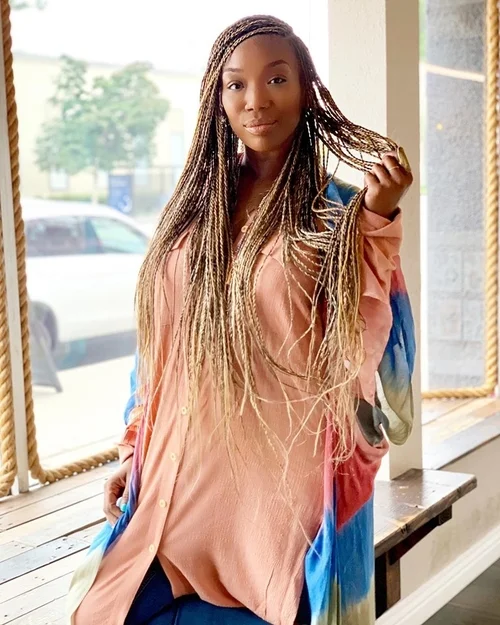
IN THIS PHOTO: Brandy 

An All-Female, Autumn-Ready Playlist (Vol. I)

__________

I did say how this was…

 IN THIS PHOTO: Cate le Bon

going to be the first autumn playlist and, given that the weather is pretty awful, it is appropriate that we have a collection of songs guaranteed to add some fizz and sparkle. There are a few tracks that are a bit more laid-back and, together, this is a varied and eclectic playlist. I hope there is something in the playlist that catches your eyes and stays in the memory. Here is a rundown of some of the best female-led sounds of the moment. Get involved, play the songs below and they will make the weekend a lot warmer…

 IN THIS PHOTO: Greentea Peng/PHOTO CREDIT: @stefypocket

AND pleasurable.

ALL PHOTOS (unless credited otherwise): Getty Images/Artists

____________

MysieSweet Relief

ssss.jpg

PHOTO CREDIT: Trevor Ball Photography

Tegan and Sara Hello, I’m Right Here

3333.jpg

PHOTO CREDIT: Jay Bartlett

Dog in the SnowDual Terror

AustelNow We’re Here

PHOTO CREDIT: Pany Inthaxoum

Just MustardSeven

Janet DevlinConfessional

xx.jpg

Sui ZhenMatsudo City Life

ss.jpg

dodieBoys Like You

BrandyFREEDOM RINGS

ssse.jpg

Tessa VioletGames

Christina AguileraHaunted Heart

Anna MaeChoose

MALKATaking It Back

sxx.jpg

Lauren SandersonHotel Room

Chelsea CutlerYou Are Losing Me

ddd.jpg

Dove CameronBloodshot

Cate le Bon, Bradford CoxSecretary

MabesBigger Picture

LexytronCouples

Olivia HoltBad Girlfriend

kjjkkj.jpg

Astrid SDown Low

Emily WeisbandMixed Emotions

PHOTO CREDIT: @stefypocket

Greentea PengMr. Sun (miss da sun)

eee.jpg

Megan Lara MaeAll for Love

www.jpg

IN THIS PHOTO: Anna Lunoe

Anna Lunoe, Nina Las VegasOne Thirty

sss.jpg

PHOTO CREDIT: @catgubernick

VöluspaLive One Life

FEATURE: The September Playlist: Vol. 4: Riding into the Surf with a Bubble Gun

FEATURE:


The September Playlist

IN THIS PHOTO: Honeyblood 

Vol. 4: Riding into the Surf with a Bubble Gun

___________

IT is an oddly quite week for music…

 IN THIS PHOTO: Christina Aguilera

and one with fairly few big releases. That bring said, there is enough to get your teeth into and I am sure you will find something to enjoy. There is new music from Honeyblood and Girl Band; fresh offerings from Foals, Belle & Sebastian and Editors – with some Christina Aguilera, Temples and The Japanese House for good measure! There is definitely some great music about but not quite as many big-name cuts as I was hoping for. Maybe it is a period for music when artists are gearing up for autumn; a week where there are a few sparks here and there but not quite the fire we have seen in previous weeks. If you do need a kick and boost to get your weekend underway, I have some songs that will get you in the mood. Take the playlist with you and ensure the weekend…

 PHOTO CREDIT: Maggie Steber

BEGINS with some great tunes!  

ALL PHOTOS/IMAGES (unless credited otherwise): Getty Images/Artists

_________

sss.jpg

HoneybloodBubble Gun

White Lies Hurt My Heart

Belle & Sebastian This Letter 

Foals Into the Surf

poop.jpg

PumarosaI See You

EditorsBlack Gold

ggg.jpg

Christina Aguilera Haunted Heart

Sui Zhen Different Places

oomm.jpg

Cate Le Bon, Bradford Cox Secretary

Temples Holy Horses

The Japanese HouseSomething Has to Change

Olivia HoltBad Girlfriend

PHOTO CREDIT: Mitch Ikeda

Noel Gallagher’s High Flying Birds Evil Flower

gg.jpg

PHOTO CREDIT: Howard Wise

Moon Duo Flying

bbb.jpg

Arlo Parks Second Guessing

Girl Band Couch Combover

Tegan and SaraPlease Help Me

dodieBoys Like You

Lukas Graham Lie

Amber Run Worship

eee.jpg

The New Pornographers Higher Beams

PHOTO CREDIT: Emma Whittle

Strawberry Guy Birch Tree

PHOTO CREDIT: Stefy Pocket

Greentea Peng Mr. Sun (miss da sun)

Mount Eerie (with Julie Doiron) - Love Without Possession

dddd.jpg

BrandyFREEDOM RINGS

Broken BellsGood Luck

ScroungeBadoom

FEATURE: Joy as an Act of Resistance: Will We See a Musical Revolution in 2020?

FEATURE:


Joy as an Act of Resistance

o.jpg

PHOTO CREDIT: @iamarnold/Unsplash 

Will We See a Musical Revolution in 2020?

__________

I have heard from a  couple of people…

v.jpg

 PHOTO CREDIT: @v_well/Unsplash

in the past couple of weeks (independently) who have commented that both the 1960s and 1990s are noted for their sense of liberation, uplift and experimentation. Of course, in both decades, there were periods where music dipped and got darker. I associate the 1960s with a feeling of togetherness and harmony; a resistance and reaction against the somewhat troubled times. Whilst there were some rather forgettable artists back then, one cannot argue against the spirit and best music that arrived then. The same is true of the 1990s. It is not the case things got bleak and dull from 1970 and did not pick up for a couple of decades: there was ample energy and brilliance to be found. I think it is interesting we can draw some comparisons between the 1960s and 1990s. I especially reckon Pop was at a real peak during these times. The 1960s gave us bands like The Beatles whereas the 1990s had all sorts of varied and brilliant Pop music. Maybe there is not this magical thirty-year cycle, but it is interesting to note. One of the reasons why we got such unifying, brilliant and powerful music is that reaction to political and social events; the feeling that the best way to combat that division was to produce this amazing music.

cc.jpg

 PHOTO CREDIT: @arthursavary/Unsplash

I have written a few times about modern music and how the tone has changed. I was thinking about it the other day and I can, maybe, trace it back to 2004 or 2005 - when things shifted markedly, that is. In relation to the catchiest, anthemic Pop and the last great Rock bands, there are not too many examples in the past fifteen years. Some might bridle at that, but it is clear Pop has changed in tone. There are fewer bigger hooks, sublime vocal melodies and optimistic jams: the palette has become sadder, slower and more repetitive. Some feel the terrorist attacks of 2001 resonated in the music world and, as the landscape changed, so too did sounds. Maybe the start of the millennium and a rise in technology has meant music has become less about anthems and huge choruses and more about the personal and reflective. It would be all-sweeping to suggest the 1960s and 1990s were unique, perfect and much stronger than anything we have today. I do think there is a need, against the division of today, to bring about some form of revival and change. Music is great right now, but I do feel there is little in the way of unity and overt positivity. Some might say that is a natural position: listen to the news and look around and there is not too much to smile about! This year has been one of the strongest in terms of political music and, whilst that is great, I do feel there is a desire for music that lifts the mind and senses as well as informs.

 PHOTO CREDIT: @bob_blob/Unsplash

I can understand why artists want to write the way they do; to open eyes and reflect what is happening in the world. I am not sure about you, but I am at my most inspired and revived when listening to music that makes me think but can stay in the mind; a feeling of defiance and optimism that we all need right now. I do not think musicians would be wasting their platform or ignoring the world around them. Indeed, there is more energy and passion in the air now than there has ever been. This year has been excellent for music, but I can sense something bubbling. Maybe, as I have mooted before, a third Summer of Love is a little remote; I do think there will be some sort of mass movement…maybe a new genre or wave that tackles what we are all going through right now (from climate change to political dissension) and sprinkles in elements of the 1960s’ and 1990s’ best. Whilst there is some great music around, there is a lack of connection; we have no movements, scenes or any uprisings. It is time for that in 2020. The intent and charge are flowing but, as I have written about many times, there is not a lot to feel happy about or get us all jumping. Sure, the world is in a poor state and it has been before; we are all compelled to see things change and I do think things will improve.

 PHOTO CREDIT: @dchuck/Unsplash

I do feel popular music (especially) has declined in some ways and, for many artists, there is an inclination towards the angry and downbeat. I am one who likes to see honesty in music, but I think there is a danger that, without new movements, scenes and renewed purpose, music will fail to lift and boost the mood. I don’t know about you. For me, music needs to blend purpose and importance with a degree of joy and energy. Look back at the 1960s and 1990s and one can find plenty of that. I hope 2020 is a year when we see either a new Summer of Love or a change in direction. I am hopeful things can improve in that sense and, although this year has been great in terms of quality music, it has been a pretty heavy one – few chinks of light or escape. We all want to tackle and challenge the status quo and see progression. I think music has produced some great moments but few that join us together and offer hope and positivity inside the black – the world is not now or has never been completely lost and desolate (it is debatable there were great fears and worries back in the 1960s). Whether there is a general overhaul or there is a 2020 movement, now is the perfect time given the sense of defeat and anger that is around. There is a lot of change right now and we are not sure quite what will come of all the problems in Government. Although we will encounter some hard and uncertain times, the future is one that exists…          

zz.jpg

 PHOTO CREDIT: @priscilladupreez/Unsplash

WITH plenty of hope.

FEATURE: In Her Honour: The Rise and Rise of Lauren Laverne

FEATURE:


In Her Honour

zzz.jpg

PHOTO CREDIT: Rachell Smith

The Rise and Rise of Lauren Laverne

__________

EVEN though I have written a few BBC Radio 6 Music-related…

zzzz.jpg

 PHOTO CREDIT: BBC Radio 6 Music

features this year (as the station keeps growing and attracting new listeners), I feel compelled to highlight a wonderful team that is among the finest in radio. Shining bright in the BBC Radio 6 Music crown is Lauren Laverne. Again, I have penned a few pieces this year about Lauren Laverne. In my Station to Station feature (that celebrates radio icons/champions), I gave a pretty comprehensive assessment; I was one of the first to review Laverne’s breakfast show debut on BBC Radio 6 Music back in January; I wrote about her appointment as captain of the Desert Island Discs ship, following the departure of Kirsty Young – suffering from fibromyalgia, she has, sadly, stepped down for good; the keys have now been handed to Laverne permanently. I shall not repeat myself here – or TRY not to, at least -, but I think there are a few reasons why I should revisit a tremendous broadcaster (it will be the final visit of the year because, let’s me fair, she will get a bit fed up with me!).

 PHOTO CREDIT: BBC Radio 6 Music

A lot has happened since I last wrote about Laverne and, by the month, she seems to add something new to her C.V. Having recently presided over the Mercury Prize, she brought great life, warmth and passion to the ceremony. It was a great night where things went right down to the wire – Dave won the prize for his debut album, PSYCHODRAMA. Before I cover over ground, I have noticed something: Laverne has not been awarded an OBE or MBE! One might think that, at forty-one, one needs more life experience and time under their belt before being deemed worthy of such an honour. Lesser broadcaster and those who have been in the public eye less time – and having achieved relatively little – have been garnished with an OBE or MBE…or an even higher honour! For anyone who feels Laverne does not warrant an OBE or MBE, I would have to quote The Simpsons’ Troy McClure: “You’ve got some attitude, mister”. I have scanned pages and used various search terms to see whether I have missed something. The closest I can get to seeing ‘Lauren Laverne’ and ‘OBE’ mentioned in the same article is here (I suspect, when Laverne’s time comes, she will do things a little ‘differently’ when turning up to collect her honour!). In the coming months, I am keen to explore women in radio who are pioneers; who are championing great artists and striving for equality. If you have not caught Laverne’s BBC Radio 6 Music breakfast show, then make sure that is rectified!

The Sunderland-born, Muswell Hill-based broadcaster is an ambassador of her hometown and is incredibly proud of her roots; one of the aspects that makes her so natural and accessible. I will bring in a contentious article where Laverne’s accent and background were brought up when discussing Desert Island Discs. I think the passion she has for her home and roots extends so much further. She is someone who radiates compassion and, one feels, has found her haven and bliss. In fact, when searching through various interviews, I found this from The Times:

Radio is for people who like to show off, but in private. 

As soon as I got in front of the radio mic, I realised I had found my home. It’s not full of people who want to be centre stage – we’re the ones who want to sit in a darkened room, telling you all the stuff that we know.

The longer I go on, the more I think the key to a successful relationship might be luck. I

always felt that it was quite a good sign that Graeme and I like being in the car together, having a laugh on the way to the supermarket. We enjoy doing boring things together. If that’s the kind of relationship you’ve got, you’ll probably be OK. If your relationship is predicated on the need to go travelling or having fabulous meals at upscale restaurants? Nah!”.

I wanted to bring in a snippet that reflected her domestic chemistry because, as I said, it is the accessibility that makes Laverne (among other reasons) such a compulsive fixture.

 PHOTO CREDIT: Boden Diaries

I have already mentioned the fact Laverne hosted the Mercury Prize. She also hosted the AIM Awards, and it seems, when it comes to giving strong voice to the best music around, Laverne is the go-to host! Not only does Laverne have gravitas and huge knowledge; she is fronting a breakfast show that is synonymous with championing the finest acts around. Many broadcasters seem to play what is popular and commercial: Lauren Laverne and her incredible team of producers are committed to sourcing wonderful underground artists whilst combining this with fine cuts from the past. BBC Radio 6 Music is synonymous with its hunger for music that strikes a rare chord and goes deep – Mary Anne Hobbs and Tom Ravenscroft are other names on the station who love to rummage through the crates (physical and online). I will end this piece with a personal story that adds weight (if subjective). Before then, I want to lay out a few cases/examples of why I feel a broadcaster like Lauren Laverne not only ranks among the finest in the country, but is highly deserving of a nod from the highest echelons. You can catch Laverne’s Recommends show, where she brings us the tastiest, juiciest offerings from music. There is not a lot one can suggest regards improving Laverne’s work (maybe a homepage that brings all her various goings-ons and shows into one space?): her voice is one of the most essential and popular in radio. One of the things the radio industry can do to improve is including more women on their playlists.

Rates and ratios vary but, even on a broad and inclusive station like BBC Radio 6 Music, one hears about one female artist for every three men. I am not sure whether there are sonic reasons why men outweigh women on radio playlists – maybe they feel men have greater range or there is more choice in terms of songs. It can be dispiriting to see so many male artists feature but, to me, Laverne is a broadcaster who is keen to address that and spotlight more women. Laverne’s past successes, current popularity and future promise are all reasons why she warrants an MBE, OBE or CBE. I shall stop my campaign to decorate Laverne with some letters – it might be something she doesn’t want, even – but, my point is, here is a broadcaster who keeps making strides and is opening doors for women stepping into broadcasting. As curator and passionate supporters of the best new acts, there is no telling how far and wide Laverne’s influence extends. I am not sure where she finds the time outside of radio to fit any more commitments in, but she does! Laverne is the Ambassador for Music for Dementia 2020: a cause that is close to my heart and one everyone is behind. In this feature, she explains more:

I can’t imagine my life without music. We all instinctively know how important music is, and how beneficial it is for our wellbeing. It connects us to others, to our memories and boosts our mood.
 
“That’s why it’s a central part of every important human interaction – from socialising with friends to weddings, even funerals.

“But because music is everywhere, we sometimes take it for granted, and that’s a huge mistake.
 
“There is now a vast amount of scientific research exploring the enormous benefits music has for cognitive, physical and mental health.
 
“Music’s connection to memory is something we intuitively understand and celebrate every day on radio shows like mine, but we are failing to use this powerful tool in the fight against dementia.
 
“Music should be made available to everyone living with the syndrome.”

Lauren will bring her experience and insight from the music industry to her role with Music for Dementia 2020 – an initiative created and funded by The Utley Foundation. She will help shape the campaign over the course of two years and increase awareness around how and why music can be used as an integral part of dementia care”.

vbbv.jpg

PHOTO CREDIT: Getty Images 

Lauren Laverne’s breakfast show on BBC Radio 6 Music has attracted a huge wave of new listeners and she has been celebrated and recognised by the industry. Earlier in the year, she was named Radio Broadcaster of the Year at the Broadcasting Press Guild Awards. In this article, the judges revealed why Laverne was a perfect recipient:

Lauren Laverne has been named Radio Broadcaster of the Year at the 45th Broadcasting Press Guild Awards.

The national breakfast presenter was honoured for her work on BBC Radio 6 Music as well as Desert Island Discs and Late Night Woman’s Hour, both on BBC Radio 4. 

The chair of the BPG radio jury, Julian Clover, said: “Our winner moves seamlessly between speech and music radio. She’s been tasked with presenting two of the big beasts of Radio 4… and, after presenting the mid-morning show on BBC Radio 6 Music, her move to breakfast was described by one of our judges as a big step forward for the music content and a welcome step away from obligatory breakfast banter”.

I shall end with a bit about Desert Island Discs and why this recent step highlights why Laverne is so popular and inspiring. Another reason why she resonates and manages to cross boundaries is her down-to-earth personality. There are broadcasters who seem rather distant; maybe they are stuffy or hard to connect with. There are some great interviews around; I especially wanted to source from one Laverne conducted with Red. It seems family life, her career and future are all very bright and important. She also has a very laudable and universal mantra:

Lauren talks about her 40s with an infectious positivity:

"Your 40s are bananas. Everything is happening. You know the sound of an orchestra tuning up, where it’s just bonkers? That’s what your 40s are like. It’s fascinating. You realise there are all sorts of different, brilliant ways to live your life. And hooray for that."

"Parents are getting older, some people are having babies, other people's kids are leaving home, people are going through divorce, people are getting remarries, some are getting marries for the first time..."

Throughout our interview with Lauren her upbeat optimism and drive is clear, from her passion for music to her love for her friends and family.

One of the standout moments? The advice she shared from an old friend: "All that matters in the world is good brews, good tunes and good buddies".

"That's quite a good maxim for life" Lauren notes.

Whether approaching this as an article that argues for an honour coming Laverne’s way or merely an additional bit of kudos, one needs to recognise the importance of Desert Island Discs. If you have not heard her recent interview with Radiohead’s Thom Yorke, then make sure you catch up. Regarding the appointment (whether temporary or permanent) of Lauren Laverne as the presenter of the long-running Desert Island Discs, there were a few eyebrows raised in haughty imperiousness. Not that one should put too much stock in isolated and ridiculous articles – there was something outrageous and insulting regarding the words written in The Spectator last month:

There’s no getting away from it: Lauren is lightweight and uncerebral. Her capacity to come up with the forgettable phrase is quite something. When I asked a former radio critic what he thought of her he answered instantly: ‘Awful. I heard her with [poet] John Cooper Clarke and it was sucking up to PC idiocy and brandished plebbiness. But that’s what the programme is for now… Guests can be nearly anonymous provided they are vibrant and diverse.’ A BBC journalist observed: ‘The latest run of programmes have been really flat — is that her or is that the selection of guests? Nobody chooses anything or says anything that is surprising — perhaps her lack of big interview experience tells.’

The recent programme with Tim Waterstone, the bookshop man, was an exception — it was good listening — but then, he practically interviewed himself. He also cares about music, but because it was classical, it elicited no enthusiasm from Lauren.

Under her, the show has become that bit more politically correct. When she had the Chief Medical Officer Dame Sally Davies on last month, the one thing she pressed her on was the advertising campaign against obesity, and ‘how to remove the stigma and shame from that conversation’ — that is, the indignation fatties would feel at the suggestion they are eating themselves into the grave. Dame Sally gave that usefully short shrift.

She knows her stuff with contemporary music — she was plainly at ease interviewing Emily Eavis — but on classical she’s out of it, which is a pity when some castaways, like the geographer and social scientist Jared Diamond, are so interesting and informed.

Not only was the article hugely inaccurate but, after its release into the wild, the response on social media was clear: a tsunami of support came the way of Lauren Laverne! Such was the level of praise and love, it not only invalidated The Spectator’s article, but it proved that she is a brilliant host and someone who is a very safe pair of hands. There was a response in The Spectator to the original putdown; my point remains this: it is the natural warmth and personality that makes Laverne so popular. If she was to R.P. (Received Pronunciation) her voice – it is not the 1950s anymore! – and try and be someone she is not, then the effect would not be the same. She can ably command a cutting-edge breakfast show on BBC Radio 6 Music and a very different vibe on Desert Island Discs.

Although I still maintain Laverne deserves a big honour – because of her radio accomplishments and all her outside work -, maybe that can be set aside. I would also not single her out for praise on a station that boasts so many inspiring and hugely popular broadcasters. I have heard from a few people who have said Laverne has inspired them in some sense. For some (like me), inspiration comes from a production side; wanting to get into radio so they can work with someone like her – let’s be fair, right; that would be the dream job, wouldn’t it?! For others, she has provided emotional solace and guidance. She does involve listeners in her show – from Monday’s Cloudbusting to Thursday The People’s Playlist (there is also Social Recall and Desert Island Disco) –, and we get to see how Laverne involves the listeners and brings them into her world. You can follow her on Twitter and Instagram; there are ways to get involved with her BBC Radio 6 Music show. This is the final BBC Radio 6 Music-related feature I will write this year. I felt compelled to put something out because of the recent article from The Spectator and the terrific work Laverne is doing, not only on BBC Radio 4 and 6, but in some many other areas. From the casual listener to those who want to follow in her footsteps, Lauren Laverne is an inspiration…

 IN THIS PHOTO: Lauren Laverne alongside James Rebanks on Desert Island Discs in January 2019/PHOTO CREDIT: @BBCRadio4

FOR so many out there.

FEATURE: Spotlight: Molly Sarlé

FEATURE:


Spotlight

zzz.jpg

PHOTO CREDIT: Lauren Margit Jones

Molly Sarlé

__________

I am eager to put under the spotlight…

an artist who has just released one of the most interesting and evocative albums of 2019 – I shall come to that a bit later. Molly Sarlé is part of the American trio, Mountain Man, who blend traditional American Folk with Appalachian Folk; it is a mix that puts acoustic guitar alongside haunting, beauty vocals. Unlike a lot of trios, the emphasis is less on creating a harmony with instruments/vocals: for Mountain Men, the emphasis is very much on the vocal chemistry and weave. I suggest you check out their work because, with a new E.P. out, Mountain Man Sings John Denver, here is another sparkling work! Sarlé has stepped out solo to give us a sublime album that retains elements of Mountain Man but brings something new into the pot. According to her Bandcamp page, Sarlé can be described thus:

From the cliffs of Big Sur to the North Carolina backwoods - Molly Sarlé brings open-hearted, unflinching songwriting perfect for late-night karaoke comedowns, plaintive morning walks, and conjuring the spirit world. West Coast incantations with a warm, Appalachian glow”.

This year has been a very varied and exciting one. I think female artists have made the biggest impact and, when you listen to artists like Molly Sarlé, you are transported somewhere wonderful. She is a captivating artist who can buckle the knees; her songs arrest the senses and you find yourself coming back for more. Karaoke Angel, apart from its cool title – I think Why by Annie Lennox is Sarlé’s karaoke song of choice! –, is rich with emotion, beauty and strength.

If the music itself wasn’t reason enough to throw respect the way of Sarlé, she also has a musical confidante in the form of Feist. In this interview with Vanity Fair, Sarlé explained how she was having doubts and, when speaking with Feist, some clarity came about: 

For another person, this story might be the beginning of a career in the industry or doing something else entirely, but not everyone has Leslie Feist to serve as their fairy godmother. While Feist was in town, Sarlé confided in her about the difficulty she was facing and how she was thinking about becoming a session singer. According to Sarlé, Feist said, “You're a lightning bolt, there aren't very many of those. You should do your own thing.”

Despite having recording experience and a few songs under her belt, Sarlé said the experience of working solo with a band taught her how much she had left to learn. ”When I started to write this record, I had never actually sat down and tried to write a song before. Usually they would just happen,” she said. “So a big part of the process was even figuring out how to make myself sit down and work on music”.

One can get lost in Sarlé’s world and immerse themselves. Not only is the music dreamy and comforting but the lyrics are arresting and thought-provoking. I think there are too many young songwriters who are writing in a very predictable manner; love described rather simply; the songs lack that nuance and intrigue.

Of course, when you have a skilled and fascinating songwriter like Sarlé on your hands, the songs can get misconstrued. There are reviews in for Karaoke Angel – I shall quote a couple soon – and, as she explained when speaking with Aquarium Drunkard, some can leap to the wrong conclusions when faced with her music:

AD: Were those the scariest songs to write on the record?

Molly Sarlé: “Suddenly” was really difficult to put out into the world because of how differently it is interpreted by men and women, not to get too gendered. [Laughs]

AD: You can get gendered. Do men misread that song due to its sexual subject matter?

Molly Sarlé: They completely misread it. It’s about a particularly female experience. Part of what the song is saying is, “Listen, I’ve painted the entire picture for you, so that you can understand what this feeling is like,” and to have people [miss the point], even when I’m trying to spell it out for them, is really frustrating.

That’s a song where I sat down and it just came out. Part of the song is about robbing yourself through your own performance of yourself. I was coming to the realization that was something I had been doing while I was writing the song. It was empowering to have that realization. That’s what the song is most centrally about.

AD: In “Human” you sing “Who hasn’t talked to God like he’s a man?/I do it all the time on accident.” Why does it feel accidental to approach God that way?

Molly Sarlé: In one word, the patriarchy. I was raised Catholic. I think a lot of things are changing…but as far as who holds power in our world, externally, it’s white men. So if you’re speaking to God like you’re speaking to power…I think it’s so easy to idealize people in positions of power, and project that onto love interests”.

There are tour dates coming up in the U.S. - and I hope she comes to the U.K. next year (she was recently here performing). Her live sets are celebrated, and I recommend, if you can go and see her, then you do so! Although Molly Sarlé might not get the same attention and spotlight as some of the bigger artists around, she is a fantastic artist who has crafted a stunning album in the form of Karaoke Angel. Pitchfork had this to say:

Sarlé fluctuates between knowing who she is and what she wants, and convincing herself that others hold those keys. “I wanna tell you if you lead me back to myself/I won’t go running to anyone else,” she sings on “Human,” her billowy vocals making the loaded promise seem effortless. Her journey to understanding—that long drive with only a rearview mirror—may have its limits, but storytelling offers a space for control. On Karaoke Angel, Sarlé wields her voice with power, finding actualization in the act of telling. On “Dreams,” her whisper works its own pace against winding synths. “I’ve been working on a version of the truth/I think you’re gonna like it,” she sings. “Call it a song you can sing along to”.

It is a magnificent record and I am interested seeing what comes next for Sarlé. Her voice has this transcendent quality and her songs, whilst personal, can be taken to heart by so many different people. When providing their review, Secret Meeting talk about possible influences (for Sarlé) and which songs stand out:

And on top of this is her attempt at telling her own story. Singing verse to a new partner’s ex-wife on Kimberly, and regaling tales of old lovers brawling with substance addictions on This Close, she brings together thoughts from a range of chaotic-ish experiences which nod to an anything goes-sort-of attitude.

Home, This Close and Faith For Doubt are the clear standouts. Suddenly, which combines appalling wry lyrics to a lovely melody, unfolds in fits and starts, which all bring out a clear thesis throughout the ten-tracks: Sarlé has no concerns with wearing her influences on her sleeves.

Often finding herself onstage singing Fleetwood Mac’s Dreams on Karaoke, along with Sheryl Crow and Mazzy Star records, the Nicks and Buckingham touches can be found strewn across the record, both in the vocal delivery, instrumentation and driving rhythms. Faith For Doubt and This Close take many pointers from The War on Drugs, particularly the reverb-drenched production. While you can hear Haim in Suddenly.

On Karaoke Angel, it feels like Molly Sarlé has put her flag in the ground and found a place where she’s comfortable with musically and lyrically. Now, if she chooses it, is a new path forwards”.

If you are unfamiliar with Molly Sarlé then I recommend that you get behind her. She is a fantastic artist and someone who has a very bright future. I think there will be more solo albums and I am excited to learn whether Sarlé has any dates confirmed in the U.K. for 2020; there are a lot of people who want to see her do her thing! I shall leave things there but encourage people to grab a copy of Karaoke Angel or, if not, stream it. Such a magnificent record and one that deserves a lot of willing and passionate ears. It just goes to show that this year keeps getting…

STRONGER and stronger.

___________

Follow Molly Sarlé

lklklk.jpg

FEATURE: The End: The Beatles' Abbey Road at Fifty: A Truly Eye-Opening Album

FEATURE:


The End

nbbn.jpg

PHOTO CREDIT: Iain Macmillan 

The Beatles’ Abbey Road at Fifty: A Truly Eye-Opening Album

__________

I don’ remember the exact year…

zzz.jpg

 PHOTO CREDIT: Apple Corps Ltd.

but it must have been when I was around six or seven – placing us, year-wise, at around 1989 or 1990. Whenever it was, I can recall seeing this album peering out from the vinyl collection at home. I do wonder whether children today will get the same effect when discovering legendary albums; whether a decline in physical sales means, for the most part, many will find albums through the Internet and not in a more traditional way. I was enthralled and captivated by an album cover that, to young eyes, was very different and intriguing! Abbey Road was the final album The Beatles recorded but, for me, it was one of the first I came across. When the album turns fifty tomorrow, I will dig out a vinyl copy and be sure to spin it all the way through! I am not sure about other people but, for me, Abbey Road defined The Beatles and their genius. Whilst Rubber Soul is my favourite album of theirs, Abbey Road has this sense of the epic and romantic; both intertwined into this opus of beauty. When I was a child, I sort of gazed at this striking cover and was sort of bowled over by its simplicity. When listening to the music within, the breadth and instant brilliance was hard to ignore. When recalling Abbey Road, I think its second side comes to mind.

There are wonderful songs throughout, but I had never heard anything like the suite that you get on that second side!You Never Give Me Your Money and The End seem like very different tracks, but they fit together seamlessly when part of this wonderful cycle. Come Together is classic Beatles territory and a song that got into my head right away. I love Something and its sense of entice and affection; Octopus’s Garden is pretty silly but a charming song that one would be loathed to dismiss. In terms of The Beatles’ cannon, Rubber Soul digs deeper but Abbey Road is the most important album. Experiencing this 1969-released work so young was a game-changer. I believe the copy I saw as a child is still at home and, like all great albums, there must be a few scratches here and there! Not only do I get transported back to childhood when I listen to Abbey Road, but I have a new appreciation for it as an adult.

cvvc.jpg

0PHOTO CREDIT: Iain Macmillan

Thirty (ish) years after the album first swam in my ears, I cannot help but put it on and wonder what could have been. Abbey Road is a perfect finale for the greatest band ever, and it seems hard to believe they would call time very shortly afterwards. Unlike Let It Be (1970), Abbey Road has a sense of cohesion and memorability that ranks alongside their best albums. I think people rate Abbey Road so highly because it is so complete, evocative and nuanced – not just because it was the final Beatles recording and, therefore, has sentimental value. I didn’t know it way back then but, when listening to this timeless album, I was actually experiencing a piece of history. There is a great anniversary edition of Abbey Road that people need to get involved with an own. Back when I first found Abbey Road, I did not have access to the demos and rarities that we have on the new release.

The fiftieth anniversary of The Beatles’ last-recorded album makes me a bit emotional. On the one hand, it is sad to reflect on the fact the band would not record another album. I am also reminded of that first encounter with the album and the impact it had on me. I can only imagine what was happening in the studio when The Beatles recorded Abbey Road. They knew it was the last time they would be together. From a musical perspective, Abbey Road is a masterpiece. Compare what The Beatles were putting out in 1963 and then put that alongside Abbey Road – an album released only six years later! This article explains how diverse Abbey Road is and how the band were hitting new realms on their final outing. 

In two parts, this sprawling album represents how far The Beatles came throughout the decade. With such multifaceted work clear in each song, the amount of effort put in by all four members seems monumental. Even by today’s standards it represented yet another step forward for music from The Beatles.

Even on their way out, The Beatles were leaders to the future of music. The album covers a wider variety of topics and ideas, yet at the end, it is telling that the band concludes with a simple message about love (after all, so much of their catalog was concerned with the many facets of love). Perhaps we would all do well to remember their final line to the world, at the end of an incredible career, focused instead on that love: “And in the end, the love you take is equal to the love you make”.

Such an amazing work that ranges from the cool and laid back Come Together to the intense I Want You (She’s So Heavy); the sumptuous Here Comes the Sun and the power of Carry That Weight. There is so much happening across the album that it is hard to take it all in!

When I heard these songs as a child, I was only really used to a more Pop-based and simple Beatles. I was amazed by the catchiness of the music, but Abbey Road provided something more complex and emotive. I had never heard a song medley before and was transfixed by the snippets that were woven together perfectly; the staggering Because was a new sensation and, when thinking of Abbey Road, so many fresh ideas and worlds were being opened. I cannot give all the credit to Abbey Road, but I think that album made me more curious about music; opening my eyes and realising just how powerful it could be. How many people in 1962 and 1963 would imagine The Beatles releasing something like Abbey Road?! It is a remarkable album and one that will bring back a lot of memories for people tomorrow (26th September). There were those who were children when the album came out; those (like me) who discovered it through their parents and a new generation who are hearing it for the first time. I think Abbey Road is one of those albums that will last forever and amaze new ears decades from now. I play it now and I am picking up on things I did not realise existed; fresh twists and little sounds that thrill me. I am glad there are anniversary releases and we get to uncover tracks that give Abbey Road alternative dimensions; a broader telling of the recording process. Tomorrow, many people will converge to Abbey Road Studios in London and people across the world will share what Abbey Road means to them. Whilst there is a sadness knowing Abbey Road is the final album from The Beatles and they would never work together after that point, we have this marvellous, endlessly-enduring work that continues to bring…       

SO much joy.

FEATURE: One for the Record Collection! Essential October Releases

FEATURE:


One for the Record Collection!

zzz.jpg

IN THIS PHOTO: Big Thief/PHOTO CREDIT: Big Thief

Essential October Releases

__________

I am going to guide you through…

IMAGE CREDIT: Anna Meredith

thirteen albums that are worth your money next month. Of course, one can only afford so much, but I do think it is worth considering all the albums below – if you love diversity and some pretty tasty sounds! I would recommend you have a look through the assorted offerings below but, to get started, how about Angel Olsen’s All Mirrors?! The album is out on 4th October and is well worth some pennies! Released through Jagjaguwar, it is the fourth studio album from Olsen. Her last album, 2016’s My Woman, was hugely well-received and showed real progression – greater musical diversity and more hooks. It seems that All Mirrors is going to be another triumphant release. When speaking with FADER recently, Olsen talked about her life at the moment; how the new record sounds and what she has planned for the future:

In many ways, it feels like her voice has always belonged inside the emotive swings of a string orchestra, the trembles of the cello adding an extra twinge to the heart with every word she sings. And across All Mirror’s 11 tracks, there are moments where the production and Olsen’s message converge into a singular swirl of hope and optimism. At one point, mid-album slow-burner “Tonight” collapses into unrelenting waves of instrumentation that feel almost unbearable. It is Olsen’s favorite song.

“I’m not worried about breaking out anymore,” she says. “I already did that in my mind. I don’t need to play Primavera Sound every year and play the best slot at every festival. I just wanna keep making music. I feel a little bit more fulfilled by other things now, and it doesn’t entirely depend on being accepted as a famous musician”.

Make sure you order All Mirrors but, if you are in the mood for something slightly different, then I can direct you to 808 State’s Transmission Suite.  It is out on 11th October and is a much-needed return from the legendary act. To me, 808 State defined Acid House and can be considered the pioneers and figureheads. I know their current album will not sound the same as their best in the 1980s and 1990s, but it is sure to be glorious and utterly engrossing! In this feature, we learn more about Transmission Suite:

Just a year after celebrating three decades in music with a UK Tour, Graham Massey and Andy Barker of 808 State have united once again for the new album' Transmission Suite' - a 15-track self-release scheduled for October 11.

It's the duo's first full studio album since the release of their beloved 'Output Transmission' album in 2002. Keeping in touch with their roots, 808 State recorded the new album in the Granada studios where they once performed live on television in 1989. Along with the '90s Detroit records that have always informed their style, 808 State cites the mixed sound of Manchester's modern and old-school club scene as their main source of influence.

"We're trying to make a future for other people to immerse themselves in," says Graham. "It feels a bit like an imaginary landscape. That's always been a big part of 808 State, when you go back through the music: these kinds of landscapes of futurism".

One album I am especially looking forward to is Big Thief’s Two Hands. It is their fourth album and is actually their second album of the year! U.F.O.F. came out in May and, on 11th October, its companion piece arrives – the band very much see it as a compliment to their last album. They started recording Two Hands a few days after U.F.O.F. was wrapped and they convened to Tornillo ion Texas to work with producer Andrew Sarlo – he has produced every album from the band. This is how the band describe their latest work:

Big Thief had only just finished work on their 3rd album, U.F.O.F. – “the celestial twin” – days before in a cabin studio in the woods of Washington State. Now it was time to birth U.F.O.F.’s sister album – “the earth twin” – Two Hands. 30 miles west of El Paso, surrounded by 3,000 acres of pecan orchards and only a stone’s throw from the Mexican border, Big Thief (a.k.a. Adrianne Lenker, Buck Meek, Max Oleartchik, and James Krivchenia) set up their instruments as close together as possible to capture their most important collection of songs yet. Where U.F.O.F. layered mysterious sounds and effects for levitation, Two Hands grounds itself on dried-out, cracked desert dirt.

In sharp contrast to the wet environment of the U.F.O.F. session, the southwestern Sonic Ranch studio was chosen for its vast desert location. The 105-degree weather boiled away any clinging memories of the green trees and wet air of the previous session. Two Hands had to be completely different — an album about the Earth and the bones beneath it. The songs were recorded live with almost no overdubs. All but two songs feature entirely live vocal takes, leaving Adrianne’s voice suspended above the mix in dry air, raw and vulnerable as ever”.

Like 808 State, Elbow are back after a bit of a gap. To be fair, the last Elbow album was in 2017: Little Fictions was one of their very best but, when it comes to Elbow, the desire and hunger is always there! Giants of All Sizes comes to us on 11th October and I urge people to go and order it. Singles Dexter & Sinister and Empires suggest a slightly different sound and tone to previous records. It is an intriguing move and, as Guy Garvey explained when talking to NME, there are some notable changes:

A lot about this record is different. We started recording in a new city, in Hamburg, we changed the way we worked and we all decided from the off to let the songs take the lead, without compromising the vision of each tune.”

Garvey continued: “At times, it’s a bleak record, but it has a huge, if bruised, heart. It was a pleasure to make and we are all immensely proud of it.”

A statement said the album “lyrically takes in moments of deep personal loss, whilst reflecting its times by confronting head-on the spectres of injustice and division not just in the UK but across the world”.

There are quite a few big releases this month – few come much bigger than Kim Gordon’s No Home Record! Not only do you need to buy it, but just listen to tracks like Air BnB and one is easily hooked! Due for release on 11th October through Matador Records, No Home Record is a gem. In this interview, Gordon talked about her music and her sound:

I like a certain amount of tension in music,” she states: “I like the kind of music that maybe makes you think about the status quo.” It’s something she feels is largely missing from music these days, reflected in the “easy listening” nature of the offerings on streaming services like Spotify: “I feel like the technology has influenced music so much,” she says critically. “A lot of the playlist titles are like, ‘chill work vibes, chill this, chill that, chill everything’,” she remarks with disdain. “It’s like everything’s ‘chill’. Is that a Californian thing? … It’s escapist, escape-oriented. The more f---ed up the world gets, the more things there are to escape into, [like] pot finally being legalised. The world’s going to shit but now you can get high!

Battles must win the award for best album title of this month with Juice B Crypts! It is released on 18th October and it follows on from 2015’s La Di Da Di. In this CLASH feature, it seems like the much-missed Battles are preparing to unleash something rather special:

The New York experimental band have been largely silent since the release of 2015's 'La Di Da Di', with the line up shifting once more.

Now focussing on line up Ian Williams (keys, guitar, electronics) and John Stanier (drums), the band have finished work on their fourth LP.

'Juice B Crypts' will be released through Warp on October 18th, and it features a plethora of guests.

New single 'Titanium 2 Step' is a thrilling introduction, with the crisp rhythmic feel harking back to the New York underground scene of the early 80s.

Recruiting Sal Principato from seminal no wave group Liquid Liquid certainly helps, and it's a taut, urgent, and undeniably catchy return.

"We loved making this record in our hometown of New York and cannot be more pleased that Sal from Liquid Liquid is on the track,” explains John, “it could not have been more perfect".

It is definitely worth grabbing a copy of Juice B Crypts because it is going to be one of those albums that, once heard, will not be forgotten in a hurry!

One of the more under-the-radar releases comes from Caroline Polachek in the form of Pang. So Hot You’re Hurting My Feelings is the latest track from the album and is an absolute blinder! The album is out on 18th October and, whilst I cannot find any pre-order links yet, keep an eye on her Twitter feed and more details will arrive. In this Vogue feature from earlier in the year, we learn more about the album’s process and Polachek’s sonic orientation: 

It’s been more than three years since Chairlift disbanded, having risen to accidental ubiquity via their sleeper hit “Bruises” that infamously soundtracked an iPod advert during the late-’00s indie boom. Perhaps lesser known are the two critically acclaimed follow-ups that never quite got the commercial attention they deserved: the eerie, ’80s-inflected synth-pop of 2012’s Something, then 2016’s Moth, a glossy, euphoric record about life in the city. Today, the Brooklyn-centric indie scene where they first made their name has largely faded away, but Polachek sees it as a blessing in disguise. “I think there was a real lane built for indie bands during the time when Chairlift came up,” she says. “I felt a little bit trapped in that lane in some ways. For better or worse, that lane has disappeared. I don’t feel like I have a clear lane in the music industry right now, which is actually very exciting.”

And where Chairlift’s final two albums viewed love through a prism of misty-eyed wonderment, Polachek’s solo venture is bracingly candid. Across the album, she plumbs the depths of heartbreak and romantic frustration—and, on the penultimate track, “Door,” undergoes a kind of emotional rebirth—to address her personal life in heart-rending, honest terms.

IN THIS PHOTO: Caroline Polachek/PHOTO CREDIT: Into the Gloss

Why, then, did she choose to lead with “Door,” one of the record’s more enigmatic, slow-burning moments? “I was actually really stunned that my label suggested ‘Door’ as the single to lead with, as it’s such a long and winding song,” she adds. “But the more I sat with it, the more I felt that, yeah, this is a really good introduction. There are songs on the record that are a bit more twisty and moody. And this one feels like, no pun intended, an open door. It feels like an invitation.”

It’s no mere journey, though, but a full-on trip. “I do think about music a lot as rollercoasters,” Polachek adds. “I think of myself as a rollercoaster builder. Pop, in particular, does that very consciously: it sets up dips and rises for people. I cared a lot about the ‘ride’ while making the new music. In that respect, ‘Door’ is a pretty accurate taste of what’s to come”.

Another fantastic artist bringing us some musical gold net month is Vagabon. The Vagabon album can be pre-ordered here, and Laetitia Tamko (a.k.a. Vagabon) has been putting her all into it. In this interview from July, she discussed her progress and what the stage means to her:

Home, and being separated from it, comes up a lot on Vagabon. Its lyrics seem to point to relationships stretched thin by distance, but when asked if she was missing anyone in particular while she was out touring Infinite Worlds, Tamko demurs. She acknowledges that much of her new material came from a feeling of rootlessness, but says that “very few songs are about a person; it’s more just about a feeling of not being in place.” And, to be fair, this is hardly a new concept for Tamko—just look at her chosen stage name.

The idea of home had come up earlier in our conversation, too, in a context that felt much less expected. Tamko said that she feels most at home onstage, the same place where she experiences nerves so intense that she sometimes can’t open her eyes. To me, this seems paradoxical—to find solace in a space so riddled with anxiety. But Tamko embodies many seemingly opposing forces: She’s nervous yet fearless, methodical but trusting of her intuition. And she’s not above succumbing to a whim. “Do you ever feel like blowing your life up?” she asks me abruptly, mid-meal, fire in her eyes. She’s talking about the thrill of behaving recklessly—the feeling of freedom that accompanies a leap against odds—and I recognize the sentiment. Comfort and ambition don’t always play nicely”.

My final five album suggestions are a varied bunch! Anna Meredith’s FIBS comes out on 25th October. You can pre-order it here and you just know the album will deliver. Meredith is one of the most pioneering and exceptional artists around and, when it comes to FIBS, we are in for a treat:

Scottish composer and producer Anna Meredith has shared details about a new LP.

‘FIBS’ – out in October via Moshi Moshi – will be her second studio album, coming three and a half years on from the release of her Scottish Album of the Year Award-winning debut ‘Varmints’.

According to her team, we can expect 45 minutes of technicolour maximalism, almost perpetual rhythmic reinvention, and a project that boasts a visceral richness and unparalleled accessibility.

The album is trailed by its first single ‘Paramour’ and an accompanying single-take video.  Both song and visuals both sweep and dart around at top speed (a blistering 176 BPM) before rounding the journey out with an unexpected tuba-led rock-out.

‘FIBS’ is set to be an overhauled, updated version of the Meredith’s sound. She’s chucked out her old MIDI patches and paired her unique compositional voice with brand-new instruments, both acoustic and electronic, and a writing process that’s more intense than she’s ever known.

Fibs, Meredith explains, are “lies — but nice friendly lies, little stories and constructions and daydreams and narratives that you make for yourself or you tell yourself”.

Meredith is one of those artists who brings you into her world and, if some though her Varmints album of 2016 was a little inaccessible, I actually think FIBS is easier to appreciate, if you are not steeped in her work and a fan of her brand. One of those groups who seeps into your blood and relaxes the senses, it is great Cigarettes After Sex are bringing us Cry on 25th October through Partisan Records. You can pre-order the album, and I would suggest you do! The Texas band’s eponymous album arrived in 2017 and received some very positive reviews.

mmnmn.png

IN THIS PHOTO: Cigarettes After Sex/PHOTO CREDIT: Ebru Yildiz

It is interesting to read how Cry’s recording setting influenced the sound:

The follow-up to 2017's self-titled debut was recorded at a mansion on the Balearic island of Mallorca, a place frontman Greg Gonzalez said is key to the record. “The sound of this record is completely tied to the location for me,” Gonzalez said in a statement. “Ultimately, I view this record as a film. It was shot in this stunning, exotic location, and it stitches all these different characters and scenes together, but in the end is really about romance, beauty & sexuality. It’s a very personal telling of what those things mean to me”.

Completely different to Cigarettes After Sex, FKA twigs gets set to unveil Magdalene on Young Turks (you can pre-order here). It comes out on 25th October and is one of the most anticipated albums of 2019. In this fascinating discussion with i-D, FKA twigs chatted about Magdalene and some of the tracks that feature on the album:

Work began on Magdalene, which she produced predominantly with Nicolas Jaar, alongside other contributors, three years ago. It came to fruition between London, New York and Los Angeles, where she indulged in a period of solitude, taking to wearing long medieval dresses and wandering around by herself. “I was in a sad place, mentally,” she says, “and I didn’t want to come out of it. I don’t have many friends there, and wasn’t communicating with my friends or family here. I just went and locked myself off.”

xxcxcx.png

IN THIS PHOTO: FKA twigs/PHOTO CREDIT: @FKAtwigs

The record is about every lover that I’ve ever had, and every lover that I’m going to have,” she says. Musically, she describes it as “just when you think it’s really fragile and about to fall apart, there’s an absolute defiance and strength in a way that my work’s never had before”. If previously, Twigs was seen as something otherworldly, now she’s right there in front of us, pouring her heart out. “It’s really fragile. I made it at a time when I was in recovery – physically and emotionally – and I think that comes through.” The intense vulnerability of the record contrasts with just how precise and superhuman her talent is.

“I used to laugh to myself about how, as a woman, your story is often attached to the narrative of a man,” she explains. “No matter what you’re doing or how great your work is, sometimes it’s as though you have to be attached to a man to be validated. I’d felt like that at times. And then I started to read about Mary Magdalene and how amazing she was; how she was likely to have been Jesus’s best friend, his confidante. She was a herbalist and a healer, but, you know, her story is written out of the bible and she was ‘a prostitute’. I found a lot of power in the story of Mary Magdalene; a lot of dignity, a lot of grace, a lot of inspiration

"Holy Terrain", featuring Future, will undoubtedly receive the most attention. A dark, sexy, witchy trap tune, it’s a new direction for Twigs. After getting hold of Future’s number, she did what any of us would do and casually dropped him a text.

“I wasn’t sure whether he would even know who I am. I was like, ‘Hi, it’s Twigs. Let me know if you wanna talk about music or anything.’ He texted back right away and I was like…” Twigs throws her phone onto the sofa beside her suddenly. “‘Oh my god, he’s just messaged me back!’ He’s such a sweetheart. I sent him the album and I called him up and was like, ‘Listen, Future… this is what my album’s about. It’s a really empowering, sensitive record, with a lot of feminine energy, and this song is probably the most fun track on it, but I still need lyrical content.’ And he said, ‘Okay, I’ve got it’. And his verse is beautiful,” she says. “He’s just talking about his downfalls as a man; how he’s sorry and asking for healing. I love sad Future. I love when he gets emo, when he expresses himself. It’s just so beautiful when he opens up.”

It is always great having a new Michael Kiwanuka record in the world! KIWANUKA is out on 25th October and follows his fantastic album, Love & Hate, from 2016. With every album, we get something very different from Kiwanuka. It seems, on his upper-case, semi-eponymous album, everything is bold and urgent. Do make sure you get your copy. NME discussed the album with Kiwanuka in an interview from earlier in the year:

Michael Kiwanuka self-titling his upcoming third album is more of a statement than most make when releasing an eponymous record. His is a name that was constantly mispronounced at school in North London’s Muswell Hill. Then, when his music career was kicking off, people asked him what name he was going to release the songs under. From the man whose first big hit came in the form of a song called ‘Black Man In A White World’, it’s something that’s coloured his entire career. Stepping out, then, with the follow-up to a chart-topping, Mercury-nominated second album, and naming it after his ‘difficult’ surname, means a lot. He’s even written it in all-caps, too, as if to hammer the point home even further. ‘KIWANUKA’.

As well as ‘KIWANUKA’ being a deeply personal record, it’s also one that is firmly embedded in what it means to be British in 2019, and the near-constant change that Kiwanuka was experiencing when he headed out on tour with ‘Love & Fear’ in his back pocket towards the end of 2016, the most tumultuous year both Britain and the USA have had in many decades. “You felt a power shift in music,” he says of the time he spent on the road, conversing with all manner of bands and musicians at festivals and travelling from fractured country to fractured country. “Black music, from 2014 up until now, became the most important thing in popular culture. Albums were changing too, and I feel like they’re becoming more important now, and people are making really amazing bodies of work, maybe to go against the throwaway culture we live in”.

The final album that is worth some financial consideration comes in the form of Drift Songs from Underworld. You can find out more on their website, and make sure you see them live if you can. Underworld are putting out so much music at the moment; it is wonderful seeing these legends continuing to impress and move forward! In this interview from earlier this year, Karl and Rick of underworld talked about their Drift project and how it came together:

Torture the Artist: For the ‘Drift’-format you have scheduled two days in the studio in order to produce a new track that covers (recent) observations or reactions to everyday occurrences. How do you deal with both, the observations or reactions, in the studio, if you find yourself valuing them as not fitting or not as catchy as you thought in the process of producing the track? Additionally how do you deal with the self-imposed pressure to finish a track at a given time?

Karl: Sometimes it’s two, sometimes five, and if we’re away on tour it’ll be seven days a week together. Rick keeps us moving, keeps us focused. He’s continually re-evaluating the next release and what music we include or drop from the Drift Map in a rolling day-to-day re-assessment. The pressure is both a focus and a pain, but we’re committed to it, and for now I wouldn’t go back to making just one album every few years…..maybe next time…

Rick: I try not to panic every Thursday morning.

aazz.jpg

IN THIS PHOTO: Underworld/PHOTO CREDIT: Rob Baker Ashton

Torture the Artist: Who is the observer and who’s the doer in your musical relationship and how do manage to complement each other and bring your strengths together?

Karl: I am the goldfish.

Rick: Sometimes I am the bowl.

Torture the Artist: How does ‘Drift’ influence your live-performances?

Karl: As you can imagine, the ‘Drift’ project generates a lot more material than single albums would, coming around on three year cycles. Thanks to the internet and a skilled and dedicated team around us we can reach a global audience instantly. Knowing that a lot’ve people hear what’s coming out through the ‘Drift’ project gives us way more flexibility in what goes into the live set, how we can adapt our show for different kinds of festivals, and it’s particularly liberating when we’re playing multiple nights at the same venue. We’ve never had the luxury of so much new material to draw from”.

There are some really great albums arriving next month, so do keep your eyes open and add as many as you can to your collections. Every month produces sensational albums, but October looks especially fruitful and jam-packed. No matter what your tastes, you are pretty covered regarding the selection above. I will be getting Kim Gordon, FKA twigs and Elbow’s new ones but, to be honest, all the albums mentioned in this feature are fab! It just goes to show that 2019 is a very strong year for music. If you’ll excuse me, I am off to…

PHOTO CREDIT: Rob Baker Ashton

ORDER a few albums!

FEATURE: Vinyl Corner: Go-Go’s – Beauty and the Beat

FEATURE:


Vinyl Corner

Go-Go’s – Beauty and the Beat

__________

ALTHOUGH it is a bit tricky sourcing…

 IN THIS PHOTO: The Go-Go’s in 1981/PHOTO CREDIT: Getty Images

a fresh copy of Beauty and the Beat, I would recommend people do all they can to get hold of the debut from the New Wave band, the Go Go’s. The Go-Go’s were formed in Los Angeles in 1978 and gained fame in the 1980s. If Go-Go’s did not quite hit the peak of their debut on subsequent albums – and tensions/drug use in the band created fraction -, one cannot underestimate the legacy and brilliance of Beauty and the Beat. With singles like We Got the Beat gaining popularity and love around the world, the Go-Go’s were on the lips of many. Their 1981-released debut went on to sell over two-million copies and is double-platinum. It remains one of the most successful and important debut albums ever and was a key player in the American New Wave scene. At a time when we need fun and something sunny, the Go-Go’s’ debut is an album you need in your life. Belinda Carlisle, Jane Wiedlin and Margot Olavarria met at a Punk-Rock show in California and, apparently, they all were in the audience for the Sex Pistols’ final gig in 1978. It was clear there was this bond and chemistry that would see them form the Go-Go’s. With a singer and characterful as Belinda Carlisle – who would go on to have a successful solo career of her own -, all they needed was the tunes. Although the band could not play instruments when they met, they soon learned and honed their craft.

Soon, Charlotte Caffey joined as their lead guitarist – Elissa Bello joined on drums - and the Go-Go’s built a reputation as one of the freshest and most exciting bands on the Punk scene. Maybe they did not have the same rawness as the Sex Pistols and the Ramones, but there was a Pop edge and plenty of hooks. Mixing infectiousness with unique attitude, the band soon found themselves opening for Madness on a U.K. tour. The original line-up changed after tensions between Bello and Olavarria became too much. Drummer Gina Schock and bassist Kathy Valentine joined and, moving slightly away from Punk, a more Pop-flavoured sound came in. If the Go-Go’s were influenced, at the start, by the Punk bands at the time, the emerging New Wave scene took them in a new direction – enforcing what we would hear on their debut album. Although the band released a stunning album through the I.R.S. label, they struggled to get a deal at the time. In 1981, bands like Squeeze, The Human League and Genesis were releasing albums and there were very few, if any, female bands at the forefront. It is clear there was some sexism involved; labels not sure what to do with the Go-Go’s and there was that resistance. Now, you can hear bands who are inspired by the Go-Go’s; even a few years after their debut, more female bands were emerging but, in 1980/1981, there was not a lot of direct comparison.

It is just as well the band were signed and got to release the tremendous Beauty and the Beat. Despite early problems and a line-up change, the album is harmonious and sublime. Songwriting was split between the band but, for most songs, Charlotte Caffey and Jane Wiedlin took on writing duties. With most of the music/lyrics coming from the guitarists, there is a definite physicality and energy to the album – plenty of groove, sunshine and warmth too. Reviews were hugely positive at the time and retrospective critics have heaped praise on amazing debut. When reviewing the thirtieth anniversary release of Beauty and the Beat, American Songwriter had this to say: 

 “Beauty and the Beat, one of the 1980s cornerstone albums of American new wave, was both groundbreaking and inspired. Yielding the hits “Our Lips Are Sealed’ and “We Got The Beat,” this seminal recording has never sounded better than here on this new remaster, which manages to breathe new life into these songs no matter how many times you’ve listened to them.

“Can you hear them/They talk about us/Telling lies, well that’s no surprise,” sang Carlisle in “Our Lips Are Sealed,” which could be heard blasting from every car stereo during the summer of 1981. That breakthrough hit was soon followed up by “We Got The Beat,” which became the group’s most successful song and spent three weeks at number two on the U.S. hot 100. The classic 80s anthem’s lyrics “See the kids just getting out of school/They can’t wait to hang out and be cool,” left an indelible impression on pop culture.

The Go-Go’s magic relied on the masterful blending of upbeat melodies, catchy hooks, and background harmonies layered upon sad lyrics, while delivered with undeniable attitude. “Get dressed up and messed up/Blow our cares away/We rule the streets tonite/Until the morning light,” declares Carlisle with energetic angst during the frenetic “Tonite.” Carlisle gets right into your face as she sings “Change the lines that were said before/We’re all dreamers, we’re all whores/This town is our town, it is so glamorous/Bet you’d live here if you could and be one of us,” with an undeniable aggressiveness during the Hollywood ode “This Town”.

In another review, AllMusic highlight the catchiness and cleverness that one can hear all over Beauty and the Beat:

 “It’s not quite right to say that the Go-Go’s' 1981 debut, Beauty and the Beat, is where new wave caught hold in the U.S., but it’s not quite wrong, either. Prior to this, there had certainly been new wave hits -- Blondie had been reaching the Top Ten for two years running -- but the Go-Go’s ushered in the era of big, bright stylish pop, spending six weeks at the top of the U.S. charts and generating two singles that defined the era: the cool groove of “Our Lips Are Sealed” and the exuberant “We Got the Beat.” So big were these two hits that they sometimes suggested that Beauty and the Beat was a hits-and-filler record, an impression escalated by the boost the Go-Go’s received from the just-launched MTV, yet that’s hardly the case.

Beauty and the Beat is sharp, clever, and catchy, explicitly drawing from the well of pre-Beatles ‘60s pop -- girl group harmonies, to be sure, but surf-rock echoes throughout -- but filtering it through the nervy energy of punk. With the assistance of Rob Freeman, producer Richard Gottehrer -- a veteran of the Strangeloves (“I Want Candy”) who also wrote the girl group standard “My Boyfriend’s Back” -- sanded down the band’s rougher edges, keeping the emphasis on the hooks and harmonies but giving the Go-Go’s enough kick and jangle that at times the group resembles nothing less than early R.E.M., particularly on “How Much More” and “Tonite.” But this isn’t Murmur; there is nothing murky about Beauty and the Beat at all -- this is infectiously cheerful pop, so hooky it’s sometimes easy to overlook how well-written these tunes are, but it’s the sturdiness of the songs that makes Beauty and the Beat a new wave classic”.

Beauty and the Beat is a classic and an album, thirty-eight years after its release, is still inspiring and providing surprises. I said how, today, there are artists inspired by the Go-Go’s but, at the same time, one does not hear so much New Wave; maybe we need to look back to the past and inject a bit of that rush and positivity back into the scene. As this article explains, the band did face derision and ignorance; how could one ignore such a great album?

They weren’t totally unprepared, though. Carlisle says they had too many songs, but they eventually settled on the 11 that make up Beauty And The Beat. Guitarist Jane Wiedlin wrote album opener “Our Lips Are Sealed” based on a letter she received from former flame Terry Hall, singer of The Specials. (Hall is credited as a co-writer on the song.) “I knew it was a hit as soon as I heard it, and I was right,” Carlisle says in her book. For her part, Carlisle only co-wrote one song, “Skidmarks On My Heart.”

5343.jpg

IN THIS PHOTO: The Go-Go’s in L.A. in 1981/PHOTO CREDIT: Janette Beckman 

Although the song just seems to be about a guy who’s more interested in his car than his girlfriend, Carlisle notes in her book it’s about her brother, her cat, and her first car. Guitarist Charlotte Caffey, the primary songwriting force of The Go-Go’s, wrote eight of the songs (many with Wiedlin), and bassist Kathy Valentine also wrote one, “Can’t Stop The World.” The songwriting was as diffuse as it would get in The Go-Go’s, and Beauty And The Beat produced some of the band’s best and most loved songs: “Our Lips Are Sealed,” “We Got The Beat,” “This Town,” “How Much More,” “Lust To Love.”

That Rolling Stone article typified the media’s attitude toward the band: “The Go-Go’s are safe, wholesome, and proudly commercial,” wrote Steve Pond in the piece’s most infamous line. The Go-Go’s may have appeared on Beauty And The Beat’s cover in towels and facial masks (Carlisle’s idea) and in bubble bath on the back cover, but they weren’t exactly wholesome. “We were cute and bubbly, but we were also twisted, crazy, drug-addict sex fiends,” said Jane Wiedlin in Behind The Music. Caffey and Carlisle developed serious drug problems; in Carlisle’s case, they’d last well into the 2000s. “The whole sex thing was uncomfortable for us,” Carlisle told Spin in 1987. “[The Rolling Stone cover] caused a lot of shit, but the thing was, we were laughing at the typical way a female band could be packaged.”

In We Gotta Get Out Of This Place: The True, Tough Story Of Women In Rock, Valentine notes, “There was a real desire on the part of the media and society for us to be nonthreatening and wholesome… We could have done more to try to control the way our image was thrust on us, but for some reason, that had to be part of the package in order for us to be accepted”.

The band followed up Beauty and the Beat with Vacation in 1982 and, whilst there are some good moments and interesting facts tied to the album (the single, Vacation, is, perhaps the first cassette single ever), the reviews were not as positive. The band are, I think, still around today and there is always a chance we will see another Go-Go’s album. Not just a product of its time, Beauty and the Beat is an album that resonated through the years and remains one of the most starling debuts ever. Go and dig it on vinyl but, failing that, stream Beauty and the Beat and get lost in this gem. There is so much to enjoy (about the album) and these songs that get straight into the head. Some might have been a bit stuffy and dismissive of Beauty and the Beat in 1981 but, before long, the album hit and started to fly off of the shelves! In 2019, one cannot only appreciate it as one of the finest debuts ever but, when we look at the eclectic and stunning music of the 1980s, Beauty and the Beat is one of the…  

vv.jpg

 IN THIS PHOTO: The Go-Go’s circa 1981/PHOTO CREDIT: Getty Images

BEST of the decade.

FEATURE: Bigger Picture: Why Now Is the Time for a Music Television Revival

FEATURE:


Bigger Picture

sss.jpg

PHOTO CREDIT: @lifesimplyrocks/Unsplash 

Why Now Is the Time for a Music Television Revival

__________

WHEN I was writing about…

szz.jpg

 PHOTO CREDIT: @jmvillejo/Unsplash

the thirty-eighth anniversary of MTV last month, it allowed me the chance to revisit a station/brand that had some hard times and, yes, there were problems. Not only was MTV’s regency fairly short-lived, but it took a while to get off the ground. How broad was it, and can one overlook its exclusion of black artists in the early days? Depending on how you see MTV in the history of music television, one cannot argue against the fact (the station) provided these big music videos and, for many of us, it was essential viewing. When MTV launched in the 1980s, it was a curious concept and music television has evolved since then. I have written about the lack of music T.V. shows and stations on now and, after every occasion, I am no closer to finding an answer. Once was the day when we had CD:UK and Freshly Squeezed. We had Pop World from 2001 and 2007; The Tube ran from 1982 and 1987 and, if you do your research, you can uncover so many different music T.V. shows that catered to those hungry for the latest news, big performances and features. Even though it is off the air at the moment, Later… with Jools Holland seems to be the only real music T.V. show on now. Think about where artists perform when they need to promote music. Laughably, cooking shows like Sunday Brunch are doubling up as ersatz music platforms.  

I think the industry is as packed, varied and hungry as ever and, because of that, are we saying the only way to discover new acts is on the Internet or at gigs? Granted, the advent and growth of social media and streaming means we do not need to rely on music T.V. to discover artists. We have great radio stations so, in this digital age, is the idea of a music T.V. show old-fashioned and obsolete?! I think that is on the lips of every T.V. executive and broadcaster when they are asked about the lack of music T.V. shows. It would be quite expensive to mount a regular series and, considering the calibre of artists one might need to attract, is it worth the trouble? I have read feedback from artists – when I post similar articles – that asks why, in 2019, there are virtually no music T.V. shows. At certain points in history, we have seen three or four (or more) shows run that offers something slightly different. Now, as the Internet takes over, more and more people are sourcing music on their phones/laptops. The convenience of that is wonderful but there is more to music than new releases and the latest news. So many acts, established and new, rely on the rigours of live performance; playing so many venues in order to get noticed and appreciated. T.V. shows like Later… with Jools Holland allow people to discover artists they might not have been familiar with.

gf.jpg

 PHOTO CREDIT: @glenncarstenspeters/Unsplash

For me, I love the show because it retains the charm and simplicity of older brands like The Old Grey Whistle Test but has a very modern feel. I use the Internet a lot to get my music fix but feel that, when it comes to engaging my attention, T.V. is best. I like to relax and watch T.V. and I think that would be a perfect opportunity to bask in some musical goodness. In terms of budget, maybe the BBC and ITV would not be able to finance a properly big show but, with the likes of Netflix broadening and expanding, there is that chance to bring people in. In this feature from 2008, MTV was put under the microscope. Ratings were declining and the station had to respond:

In the 1990s, the channel evolved. It proved to be a powerful platform for a new breed of video auteurs, who exploited the burgeoning acceptance of the music video as an artform. The likes of Spike Jonze, Michel Gondry and Hype Williams cut their teeth on pop videos before graduating to Hollywood; many of them won recognition at that other famous cash cow for the company: the high profile MTV Video Music Awards, which again expanded into non-music territory with a raft of spin-offs. The awards continued to hog headlines this week, when at the MTV Movie Awards in Los Angeles two presenters (the actors Seth Rogen and James Franco) pretended to smoke marijuana before giving a gong.

PHOTO CREDIT: @frankokay/Unsplash 

MTV claims that, despite the overall fall in viewers, over the past year it has gone some way to reversing its decline in viewing figures, and that while MTV Flux was justifiably canned, interactive elements have been incorporated into all its channels. MTV UK's director of television, Heather Jones, says: "We are still very much part of the cutting edge. We have a host of live music events which we are behind this summer, and are bringing the Europe Music Awards to Liverpool. And I would say that online, our video streams are up”’.

Eleven years later, the fortunes of MTV are rock-bottom and the music T.V. landscape is barren. Against stiff competition, there is that concern regarding financial loss and potential ratings. One of the problems with the Internet is the fact many of us get caught in a loop and fall into routine. Even if you are hunting down the best new tunes, there is a limit and, as I said, many of us will listen to the same tracks. Maybe a show like Jools Holland’s is a bit restrictive in the sense it is live performance and interviews. Its popularity and longevity suggest there is a healthy appetite for that format but, as we have so much information and options at our fingertips, a new music T.V. show needs to be more ambitious. I shall try and not repeat myself but, with many people bemoaning the decline or music T.V. and artists in need of somewhere to get their music heard (beyond cooking shows!), we need to cover a lot of bases.

I can understand the reticence of stations when they are quizzed about music television. Budget and potential popularity and important considerations and there is limit room on the schedules. I think it would be impossible to revive the glory days of music T.V. but there is a demand that is going unsatisfied. Live performances would not need to be reserved for big acts and those we are all familiar with. A blend of the bigger and underground would provide gravitas and provide invaluable exposure for artists who can prove their live chops – and give viewers a chance to discover something fresh. I think a weekly show would be best because a once-monthly show seems a little slight. You could have a few performances that cover different genres and artists – like a new Alternative band on the same bill as Madonna – and it would be good blending the classic with contemporary. I have not even mentioned the best-known and popular music T.V. show in this country: Top of the Pops. So many I know want that to be revived but I think one could have the best of that show in a new format. The variation of acts and the studio audience element; mix that with MTV’s music video aspect and introduce a series of new artists each week. There is music news to consider and endless scope for features. The brilliant classic album series have died out and I used to love watching them. You can have documentary segments that cover a range of subjects – from Hip-Hop sampling to Pop’s changing sound – and you would have a balance of the entertaining and educational. 

 PHOTO CREDIT: @namroud/Unsplash

It is a bit sad the T.V. landscape has changed so much through the years. I don’t like the idea of music being completely funnelled into the Internet and there is a lot to be said of a show that unites family and friend and ticks all the boxes. Even if it was an hourly show every week, so much could be crammed in. One can still get new music and news from the Internet but a T.V. show would help broaden tastes and give us artists/information we might not have otherwise unearthed. I do think a music T.V. show that covers the spectrum but has its own personality would prove popular. There are definite benefits to streaming and radio but T.V. shows can produce original content and featured you will not get anywhere else. Giving artists a small screen stage to perform on means they can reach a wider audience and allows those who cannot get to gigs a chance to see these acts. The budget would not necessarily be huge…and I think, with T.V. and online promotion, a healthy audience could be built pretty quickly. I can emphasise with stations and bosses who must think about the time, trouble and money needed to create these shows; the loss and issues faced if they prove unpopular or underwhelming. It would be a blow, but I think we need a music T.V. revival. It doesn’t need to be loads of shows but, if you can get one excellent format off the ground, other shows will follow.

It means we could make music – beyond gigs – more communitive and get us away from laptops and phones (I know the T.V. has a screen, but music T.V. shows could be watched and allow us to converse). The artists who could benefit from exposure would be immense and bringing back features like classic album series would introduce iconic albums to a new generation. T.V., as I said, gives this big platform to music; one that is powerful and can reach around the world. With some excellent features and a memorable format, a T.V. show could happily thrive alongside the current options – such as the Internet and radio. Artists no longer have the option to perform on T.V. and music is becoming less sociable and Internet-based. If a network like Netflix did a bit of research and spent some time concocting a fantastic concept, I think it could kick-start a new wave of music T.V. I do genuinely miss music T.V. and the pleasure of having all your needs and tastes catered for in a single show. Those days are gone and, in a vast digital jungle, I think a great music T.V. show would provide a shaft of life and breath of fresh air. Stations are reluctant to take gambles and do not understand the importance of music T.V. I do not abide by the notion the Internet has usurped music T.V. entirely: there is a space for both and, with more musicians on the scene than ever, a real desire from fans and artists themselves. I do think money and ratings cloud opinions and holds back conversation. It is important that a new show succeeds and is worth investment but, at the same time, networks need to consider the benefits (of a show) to music fans, labels and artists. Many stations are concentrating on a narrow focus and concern whereas they need to look at…            

 PHOTO CREDIT: @byfoul/Unsplash

THE bigger picture.

FEATURE: Female Icons: Part Nineteen: Debbie Harry

FEATURE:


Female Icons

PHOTO CREDIT: Getty Images 

Part Nineteen: Debbie Harry

__________

THERE is only one installment to go…

ccc.jpg

 IN THIS PHOTO: Debbie Harry with Andy Warhol/PHOTO CREDIT: Getty Images

in my Female Icons feature but, before concentrating on that, I want to talk about a remarkable artist: the iconic lead of Blondie, Debbie Harry. In terms of artists who have inspired others, you have to mention Harry. Born on 1st July, 1945 in Florida, Harry was adopted at the age of three months by gift shop owners in Hawthorne, New Jersey – she was born Angela Tremble but renamed Deborah Ann Harry. Prior to getting into music, Harry worked a variety of jobs – including as a secretary, a waitress and go-go dancer. One could not accuse the young Harry of lacking ambition. I do wonder whether Harry’s life will be put to the big screen as she is long-overdue a cinematic outing. There was division when Kirsten Dunst was rumoured to be playing Harry in a biopic:

The singer Debbie Harry has leapt to the defence of the actress Kirsten Dunst after fans of the singer accused the Hollywood star of not having "the edge, quirkiness or charisma" to play Harry in a planned biopic.

Dunst received a torrent of abuse from fans of Harry, lead singer of the group Blondie, who claimed that she lacked both the necessary acting and singing ability to play the 1970s icon.

Dunst was forced to declare publicly that she had received the singer's blessing for the role following campaigns to revoke the casting on internet message boards. "Debbie chose me for this role so anyone who disputes this can take it up with her," said Dunst, who recently starred in Spider-Man 3. She added: "I'll work hard on this character because she is the coolest women of all time."

Harry moved to quell the controversy by speaking out for the first time about the casting. "[Kirsten] is a really sweet person," she said. "I've met her a couple of times and hung out with her socially”.

 PHOTO CREDIT: Getty Images

That was over a decade ago and, with the music landscape crying out for someone like Debbie Harry, I think it would be great to at least have a documentary that explores her early life and pre-Blondie days. I guess one has some of the younger Harry alive in bands of the moment but, to be fair, none touch the command and cool of the Blondie icon. By the late-1960s – after working in a variety of jobs – Harry started working as a backing singer. After doing backing for The Wind in the Willows, Harry began working with the future Blondie member, Chris Stein (guitar). They were part of The Stilettoes and then Angel and the Snake. Whilst these incarnations were good experience, it was not overly-fruitful. Stein and Harry then formed Blondie – so named because that is the cat-call Harry received after dying her hair blonde –, and they started to gather a reputation around New York. This was a time of liberation, rebelliousness and Punk. Whilst a lot of the bands prominent in the Punk era were all-male/fronted by men, Blondie’s female lead added new dimensions and possibilities. Whilst there were other female-fronted Punk acts, Debbie Harry is a pioneer and someone who was as tough, accomplished and stunning as any male artist of the time. With her inimitable style and captivating voice, Harry soon became a Punk icon. In terms of her style and looks, there are many iconic examples.

Her thrift-store look was, in a way, re-adapted and adopted by 1980s artists like Madonna but, back when Blondie started, Harry was striking out and catching the eye. This article looks at Harry’s various looks; casting a special eye on her T-shirts:

Debbie Harry has always been known for her effortless thrift-store style t-shirts, and this “Andy Warhol’s Bad” tee is easily one of her most iconic. Although Harry and Warhol’s connection to each other extended far beyond the swirling letters of t-shirt. “I bumped into Andy on Broadway and 13th street and said hello and we chatted about everything. I suppose this is how we met and our friendship grew from there,” Harry has since said. “He was very softly spoken and used a funny Polaroid portrait camera. Andy was part of our legacy and our future.” An early pop art image of Harry by Warhol from 1980 has recently been sold for a cool $5.9 million”.

I will talk more about Blondie’s albums but, in terms of attention and popularity, the band found themselves on the cover of Rolling Stone in 1979. Harry provided an irresistible lead: her cool persona and sexuality, mixed with a street-sassy look, meant the band sky-rocketed. There was a difference between Harry the band leader (‘Blondie’) and Harry the woman – something the band were keen to point out. In a year when albums by Stevie Wonder, Joni Mitchell; Eagles and Steely Dan were collecting huge kudos, Blondie arrived on the scene.

Maybe there was a sense of foresight regarding Punk’s explosion; maybe the band struck a chord at the right time but, in 1976, their debut seemed to capture a spirit and common thread. Critics were keen to laud the eponymous debut. Maybe the grittier sound would come on later albums but, on their debut, there was a definite energy and momentum, tied with a New Wave sound that would be popularised and augmented by groups such as the Go-Go’s. Producer Richard Gottehrer had worked with artists of the 1950s and 1960s, so it is no surprise there is an element of that in Blondie’s debut – melted and mixed together with Punk shades and effortless cool. The reviews for Blondie’s debut were positive. I want to quote AllMusic, who reviewed the album retrospectively:

If new wave was about reconfiguring and recontextualizing simple pop/rock forms of the '50s and '60s in new, ironic, and aggressive ways, then Blondie, which took the girl group style of the early and mid-'60s and added a '70s archness, fit right in. True punksters may have deplored the group early on (they never had the hip cachet of Talking Heads or even the Ramones), but Blondie's secret weapon, which was deployed increasingly over their career, was a canny pop straddle -- they sent the music up and celebrated it at the same time.

So, for instance, songs like "X Offender" (their first single) and "In the Flesh" (their first hit, in Australia) had the tough-girl-with-a-tender-heart tone of the Shangri-Las (the disc was produced by Richard Gottehrer, who had handled the Angels ["My Boyfriend's Back"] among others, and Brill Building songwriter Ellie Greenwich even sang backup on "In the Flesh"), while going one step too far into hard-edged decadence -- that is, if you chose to see that. (The tag line of "Look Good in Blue," for example, went, "I could give you some head and shoulders to lie on.") The whole point was that you could take Blondie either way, and lead singer Deborah Harry's vocals, which combined rock fervor with a kiss-off quality, reinforced that, as did the band's energetic, trashy sound. This album, released on independent label Private Sound, was not a major hit, but it provided a template for the future”.

If some bands need to transition and get into their stride a little down the line, they need to take tips from Blondie. I know Chris Stein, Gary Valentine (bass guitar); Jimmy Destri (organ, piano and various instruments) and Clem Burke (drums) were responsible for a lot of the magic but, in my mind, Harry is the combustible element that makes the music pop. X Offender and In the Flesh are thrilling, original tracks that showcases all of Debbie Harry’s personality sides and elements in one.

Maybe it was a case of bringing out a ‘difficult second album’ but, before Parallel Lines, there came Plastic Letters. For the most part, individual members of Blondie wrote songs – mainly Stein and Destri –, and there seems to be less of Harry’s voice in the mix, in terms of songwriting. In vocal terms, one can hear strides and developments, but I feel the band would hit their first peak later in 1978. It is amazing to think that the band released two albums in 1978 (Kate Bush-style!); at a time when Punk was very much in-vogue, Blondie released Parallel Lines. Plastic Letters was a bit of transition: it was the last produced by Gottehrer and Blondie met producer Mike Chapman whilst playing in Australia. Chapman was encouraged to produce Blondie’s next record because there was a feeling that his eclectic nature and experience would take the band in a new direction. Harry, ever the leader and strong figure, was against the appointment of Chapman as producer. Blondie were very New York in terms of sound and personality; Chapman was Los Angeles and West Coast. Maybe it was a feeling that these two camps would clash or Chapman would lack the strength and passion the music required – perhaps setting them off in a Yacht-Rock direction?! After he played them back Heart of Glass and Sunday Girl – two of the band’s biggest hits in embryonic form –, Harry’s caution subsided.

I will bring in a review of Parallel Lines because, as we know, 1978 was a pretty damned cool year for music! The likes of Elvis Costello and The Attractions, Bruce Springsteen and The Jam were owning the charts…and Blondie blew them all away! I think 1978 is a year that gets associated by Punk, but it was Blondie who made the biggest impact. The band chemistry is incredible but, again, it is the personality and beauty from Debbie Harry that makes each and every song essential. Despite the brilliant music, the working relationship between producer Chapman and the band was not always cordial. The band, apparently, were difficult to work with and, although he praised Harry and was in love with her voice, there was this feeling she was very emotional and moody. Maybe this is an impression that lasts to this day: a very cool human being but someone who is a little distant or harder to crack. Maybe there was a lack of work ethic at times; maybe personalities did clash but, as a body of work, Parallel Lines is one of the defining albums of the 1970s. There is debate as to which Blondie album is best. In terms of the impact, brilliance of Harry’s lead and the feeling one gets, Parallel Lines is their defining moment. This is how Pitchfork assessed the album:

The swift move from the fringes to the top of the charts tagged Blondie as a singles group-- no shame, and they did have one of the best runs of singles in pop history-- but it's helped Parallel Lines weirdly qualify as an undiscovered gem, a sparkling record half-full of recognized classics that, nevertheless, is hiding in plain sight. Landing a few years before MTV and the second British Invasion codified and popularized the look and sound of 1980s new wave, Parallel Lines' ringing guitar pop has entered our collective consciousness through compilations (built around "Heart" plus later #1s "Call Me", "Rapture", and "The Tide Is High"), ads, film trailers, and TV shows rather than the album's ubiquity.

Time has been kind, however, to the record's top tier-- along with "Heart of Glass", Parallel boasts "Sunday Girl" and the incredible opening four-track run of "Picture This", "Hanging on the Telephone", "One Way or Another", and "Fade Away and Radiate". The songs that fill out the record ("11:59", "Will Anything Happen?", "I'm Gonna Love You Too", "Just Go Away", "Pretty Baby") are weak only by comparison, and could have been singles for many of Blondie's contemporaries, making this one of the most accomplished pop albums of its time”.

PHOTO CREDIT: Andy Warhol

Blondie would go on to create other genius albums, but I think Parallel Lines tied together all their promise and genius into one record. This article explains how Harry shone and the band managed to quiet those who doubted their worth:

Widely regarded as Debbie Harry and company’s signature disc, Parallel Lines also succeeded in silencing the harshest of critics, with notoriously cranky Village Voice writer Robert Christgau even proclaiming it to be “as close to God as pop-rock albums ever get”. However, while the record has long since earned its stripes as one of the high-water marks of the post-punk era, its stellar success was by no means a given when the band embarked on the sessions with producer Mike Chapman in June 1978.

Housed in an iconic – and instantly recognisable – sleeve shot by photographer Edo Bertoglio, Parallel Lines was first released on 23 September 1978, receiving almost uniformly good reviews. Blondie’s adoring public were also in no doubt the band’s time was at hand: after singles ‘Picture This’ and ‘Hanging On The Telephone’ ripped up the UK Top 20 and, in February 1979, Parallel Lines shot straight to the top of the UK charts, Harry and co played a sell-out UK tour which descended into Beatlemania-esque chaos when the band were mobbed by thousands of fans at a signing session at Our Price Records on London’s Kensington High Street.

Fittingly, it was the genre-defying ‘Heart Of Glass’ which provided Blondie with their first UK No.1 in January 1979, but this time round the band’s success in the UK, Europe and Australia was mirrored by their commercial performance in the US. Indeed, with a further push from Stanley Dorfman’s iconic promotional film of the band performing the song at chic NYC nightspot New York New York, the timeless ‘Heart Of Glass’ soon became Blondie’s first Billboard 100 chart-topper and the record responsible for turning the band into bona fide superstars”.

Relentlessly hard-working and riding the crest of a wave, Blondie marched on and released Eat to the Beat in 1979. At the time, there was nobody cooler and more alluring than Debbie Harry. She was this alluring and edgy lead; a style icon and a voice that instantly inspired the senses. Eat to the Beat contains some of Blondie’s best work: singles Union City Blue and Atomic are instant classics! Harry, again, shines on the album but there was a sense that the pace and demands were affecting the band.

Drugs were making their way into the studio and relationships were strained. Even though Eat to the Beat is a magnificent work, Blondie were unable to keep the momentum going with 1980’s Autoamerican. Barely taking breath between released and touring, there is a radical sense of change on their 1980 album. Aside from Rapture, there are few songs that stand out - it is clear that the band were in need of some time to breathe and recharge. 1982’s Hunter was another lacklustre affair…it would be another seventeen years until they recorded another album. I always have a lot of admiration for bands who can split and then come back together. I recall listening to Blondie as a child and being struck by the power of Debbie Harry and the quality of the songwriting. Maybe it took a few years to really get into the band but, when I did, I was hooked and absorbed as much as I can.

At the age of sixteen, I got to witness Blondie’s return. Led by the terrific single, Maria, No Exit is a fantastic album that is as eclectic as their earlier work. In terms of critical acclaim, reviews have been mixed since Blondie came back with No Exit. 2017’s Pollinator is their most successful and complete post-hiatus/break-up album. In this review from The Guardian, it is clear that the band had lost none of their golden touch

It doesn’t bode well when formerly prolific bands reach for outside songwriters, but a cast stretching from Johnny Marr to Sia to Charli XCX and the Strokes’ Nick Valensi have helped recreate Blondie’s classic late-1970s band sound, albeit with a modern sheen. Clem Burke’s trademark machine-gun drumming propels songs with teasingly familiar big hooks and earworm choruses.

Four writers – including TV on the Radio’s Dave Sitek – collaborate on Fun’s Chic-style disco-funk. However, the old Chris Stein/Debbie Harry partnership contributes excellent opener Doom Or Destiny, sung with Joan Jett. Love Level has a glorious pop brass riff. Already Naked and When I Gave Up on You find Harry at her most warm and emotional.

One or two songs drop the ball, but the Dev Hynes/Harry-penned electro shimmer Long Time shares the DNA of Sunday Girl and Heart of Glass. The 71-year-old singer’s tales of youthful “racing down the Bowery” are wonderfully evocative, as Blondie rediscover their Midas touch”.

I am not sure whether there is any more Blondie material planned in the coming years. I hope we have not seen the last album from them. When it comes to inspiration and enduring icons, there are few like Debbie Harry. Artists like Madonna, Shirley Manson (Garbage) and Cyndi Lauper cite Harry as an influence. Listen to music now and you can feel and hear Harry’s D.N.A. in some many places! Debbie Harry’s much-anticipated biography, Face It, arrives on 1st October and you can pre-order it here. I cannot wait to read the book and, as Harry turns seventy-five next year, we are still learning so much about her. From the timeless songs to Debbie Harry’s incredible cool and fashion, there is still nobody like her. Before finishing up, I just want to bring in a final feature:

Debbie Harry went on to pursue a solo career as singer and actress, encountering another distinctive artist in the form of H. R Giger, the Austrian master of biomechanics and designer of the creatures in Ridley Scott’s movie Alien. Giger’s grotesque Gothic art graced the cover of Harry’s debut solo album KooKoo in 1981—he worked with an airbrush to enhance Harry’s photograph and clothed her in a bodysuit painted head-to-foot in the video for her single Backfired.

PHOTO CREDIT: Getty Images 

Blondie eventually reformed and toured, and Debbie Harry, now aged 74, continues with a solo career. The first 368-page volume of her biography, Face It, is published by HarperCollins in October, featuring a cover photo taken by her bandmate and boyfriend Chris Stein in New York in 1979, overlaid by punk-inspired black and gold hieroglyphics drawn by graffiti artist Jody Morlock.

In many ways a Day-Glo shadow of Marilyn Monroe, connected through Warhol to the glorious past of Hollywood, Debbie Harry’s image remains iconic of the ‘80s, and of an art world fascinated by celebrity, surface appearance and the fleeting nature of fame”.

Maybe we will get more Blondie music in the future but, regardless…Debbie Harry’s legacy and reputation is sealed. Since this exciting and fresh band came along in the 1970s, Debbie Harry has been in the critical gaze and under the microscope. She remains so engaging, fascinating and unique. As a woman, a fashion icon and an artist, the sublime Debbie Harry is…

IN THIS PHOTO: Debbie Harry in New York in 1985/PHOTO CREDIT: David Michael Kennedy

SUCH a force of nature.

FEATURE: X Marks the Spot: The Unique Tours of Madonna

FEATURE:


X Marks the Spot

IN THIS PHOTO: Madonna in 2019/PHOTO CREDIT: @Madonna 

The Unique Tours of Madonna

__________

IT is hard to think of a time since her debut album…

when Madonna was inactive or took a rest. I was born the same year as Madonna’s eponymous debut album (1983) and was instantly seduced. I have written about her from several different angles and assessed quite a few of her albums. This year has been pretty eventful. In March, Like a Prayer turned thirty and, the month after, Madame X was released. Some say Madonna’s fortunes and critical acclaim has waned since 2000’s Music and, in terms of her status as an iconic live performer, does she have the same pull and magic as she did in the 1980s and 1990s? It is true Madonna’s music now is very different to what it was in her peak – the mid-1980s to the late-1990s –, but that is no bad thing. Madame X is a very modern-sounding album and one that brings in a few different collaborators. I quite like the album and feel she has returned to form. For an icon who has been performing and recording for nearly four decades, one would expect Madonna to have slowed or taken some time off. I think it is her love of the people and her connection to the stage that keeps her driven; the chance to bring her music to the people and make that connection. I wanted to discuss Madonna’s live shows because she is currently touring Madame X.

NME, in this article, tell the story:

The singer, who turned up an hour late, played a lengthy set which laced tracks from her recent album with classic hits from her backcatalogue at the BAM Howard Gilman Opera House in Brooklyn.

All fans were asked to lock their phones in an airtight container before the show to stop them filming the gig.

Of the hits, Madonna performed ‘Vogue’, ‘La Isla Bonita’, ‘Frozen’, ‘American Life’ and ‘Like A Prayer’. She finished up with recent single ‘I Rise’.

Madonna’s setlist was:

‘Dark Ballet’
‘Human Nature’
‘Vogue’
‘I Don’t Search I Find’
‘Papa Don’t Preach’
‘God Control /Rescue Me’ (outro)
‘American Life’
‘Batuka’
‘Fado Pechincha’

‘Killers Who Are Partying’
‘Crazy’
‘La Isla Bonita’
‘Sodade’
‘Medellin’
‘Extreme Ocident’
‘S.E.X [Interlude]’
‘Rescue Me’
‘Frozen’
‘Come Alive’
‘Future’
‘Crave’
‘Like A Prayer’
‘I Rise’

Last month, Madonna postponed the start of her Madame X Tour as a result of technical setbacks.

Two of the first three dates at Brooklyn’s BAM Howard Gilman Opera House — originally scheduled for September 12 and 14 — were moved back to October 10 and 12.  A further show on September 15 was cancelled.

As well as the US dates, Madonna will play a 15-night residency at the iconic London Palladium in February 2020.

In a four-star review of ‘Madame X’, NME’s El Hunt described the record as “bold, bizarre, self-referential and unlike anything Madonna has ever done before”.

There are a few interesting points regarding the new tour. Apart from the technical setbacks and delays, as you can tell from the NME review snippet, Madonna’s new set is just as bold as past tours.

 PHOTO CREDIT: @Madonna

It is not like she has decided to go acoustic and confined herself to a very routine and boring show: Madonna in 2019 knows how to create a spectacle and bring her album to life! The persona of Madame X is intriguing but, in a sense, Madonna has cast herself in different guises since the beginning. It is obvious how much Madonna loves performing and the effort she puts in. The setlist above shows that Madonna wants to put some classics in and please the fans, but she can ably balance that with the brand-new material. The theatrics, spectacle and emotion projected at one of her gigs is captivating and, aged sixty-one, there is no slowing the Queen of Pop. What is interesting about the Madame X tour is the upcoming London shows. The London Palladium is an interesting choice of venue and, whilst it will sell-out pretty quickly (if it hasn’t done already…), there is a certain intimacy behind that choice. It is clear she wants to startle and amaze with shows but do so with a sense of intimacy rather than grandeur and pomp. Through the years, Madonna has redefined live performance and produced some of the most influential and memorable tours ever. Look at the Blond Ambition World Tour – the third tour from Madonna – that was launched to support her 1989 studio album, Like a Prayer. Madonna is turning heads now but, on the Blond Ambition World Tour, her blend of Catholic symbolism/imagery and provocative choreography made headlines.

We learn more about the tour in 1991’s Truth or Dare, but it is clear Madonna defined the Pop spectacle. So many artists since then owe a debt to Madonna. The costumes and the choreography; the designs and gravitas of this world-famous performer at the centre…it was a revelation and huge step forward in terms of what a Pop concert could be. Collecting millions of dollars and still one of the most popular tours ever, there is so much to unpack. The Blond Ambition World Tour enraged catholic bodies and groups as, during the show, male dancers caress and there is a sense of sexual liberation and openness. Madonna was breaking rules and pushing boundaries, that is for sure – what ever great artist should strive to do. Not only did the dance and themes of the show inspire and influence but the fashion on display – including the conical bra designed by Jean-Paul Gaultier – is iconic in its own right.

There is debate as to which Madonna tour defines her best – it is clear the Blond Ambition World Tour takes some beating. Look back at other tours and, on every occasion, she has reinvented herself and produced something unique. The Who’s That Girl World Tour of 1987 saw Madonna take on Europe and Asia; her second tour supported True Blue and Who’s That Girl? and it was a big affair. A confident, multimedia affair, the tour utilised better choreography, big screens and a larger space. It was a definite spectacle and sign that the approaching Queen of Pop was stepping into a league of her own.

1993’s The Girlie Show arrived at a time where Madonna was courting as much controversy as popular focus. 1992’s Erotica album and her Sex book did stir up more than their fair share of division and any other artist might have retreated or backed off in terms of what a live show contained. This being Madonna, she was not about to let her fans down. I think the best Madonna tours are defined by a conviction and confidence; using the stage to defy critics and dazzle crowds. In 1993, Madonna’s Mistress Dita persona (from Erotica) took to the stage and, alongside her, there was cabaret, burlesque and celebration. Once more, with a runway projecting from the main stage, Madonna was, literally, seeing how far she could go and not being confined in terms of set-up, themes and delivery. Into the twenty-first century, one would imagine Madonna would do something a little smaller-scaled or relaxed. Instead, the majesty of the stage beckons and, with her Madame X persona, she gets to create this new and exciting world. Madonna has always stepped out of what is expected and confined and done her own thing. Think of the Confessions Tour of 2006 and the spectacle witnessed. From performing Live to Tell whilst hanging on a mirrored cross – again, the Catholic church was displeased! – to putting on two lifts, two runways and a turntable platform…we are talking millions of dollars!

A couple of years previous, for her Re-Invention World Tour, she gave fresh life and importance to her American Life (2003) album with stunning costumes and set designs. Madonna spun riffles and sung on T.V. steps; there was a military-cum-cabaret look and the whole show as head-spinning and dizzying! Various sources have their own opinion regarding her best live performances but, even when the show is a bit average, there is always something special; an angle or moment that lifts it up. Even now, into her fifth decade of performance (or maybe longer), Madonna is breaking rules and standing out. She has banned fans from using mobiles at her shows - and she is still blowing people away. I shall leave you with a review from The New York Times from 18th September, 2019, regarding her Madame X tour:

“Unlike jukebox musicals or “Springsteen on Broadway,” Madame X is a concert focusing on new songs and the present moment. In other words, Madonna is still taking chances. She will reach arena-size attendance in only a handful of venues on the eight-city tour, but with much longer engagements; the Gilman Opera House holds 2,098, and she booked 17 shows there, through Oct. 12. Onstage, “selling” a selfie Polaroid to an audience member who happened to be Rosie O’Donnell, she claimed, “I’m not making a dime on this show.”

SSSS.jpg

PHOTO CREDIT: @Madonna

By the time Madonna had completed just the first two songs, she had already presented an epigraph from James Baldwin — “Artists are here to disturb the peace” — that was knocked out onstage by one of the concert’s recurring figures, a woman (sometimes Madonna herself) at a typewriter.

Gunshots introduced “God Control,” which moves from bitter mourning about gun deaths to happy memories of string-laden 1970s disco, while Madonna and dancers appeared in glittery versions of Revolutionary War finery, complete with feathered tricorn hats, only to be confronted by police with riot shields. “Dark Ballet” had Joan of Arc references, a montage of gothic cathedrals and scary priests, a synthesizer excerpt from Tchaikovsky’s “Nutcracker” and Madonna grappling with masked dancers, until cops pulled her off the piano she had been perched on. The signifiers were already piling up.

The songs Madonna chose from her past were mostly exhortations and pushbacks, sometimes coupled with direct political statements. She sang part of “Papa Don’t Preach,” reversing its decision to “keep my baby,” then spoke directly about supporting abortion rights. Dancing while surrounded by video imagery of pointing fingers, she revived “Human Nature,” which already testified — a full 25 years ago — to Madonna’s tenacity and determination to express herself uncensored. When it ended, her daughters Mercy James, Estere and Stella were onstage, and the singers and a full-throated audience shared an a cappella “Express Yourself”.

From the 1980s through to the present time, Madonna has redefined live performance and, if you can, go and see her in London. She is getting some great reviews from a fantastic album (Madame X); proof that the unchallenged Queen of Pop is a live force…

LIKE no other.

FEATURE: A Legend from New Jersey: The Boss at Seventy: The Ultimate Bruce Springsteen Playlist

FEATURE:


A Legend from New Jersey

ioiooi.jpg

PHOTO CREDIT: Bruce Springsteen 

The Boss at Seventy: The Ultimate Bruce Springsteen Playlist

__________

THE world will celebrate the fiftieth anniversary…

 PHOTO CREDIT: Bruce Springsteen

of The Beatles’ Abbey Road on Thursday (26th September). Whilst we all come together to mark an iconic album, it is worth remembering that, a few days before (on Monday), it will be Bruce Springsteen’s seventieth birthday. I think all of us have some exposure to The Boss and his music. I have not heard all of his latest album, Western Stars, but I was brought up on his classic records. Born to Run (1975) and Born in the U.S.A. (1984) are stone-cold classics and albums that anyone can listen to at any time and connect with. Springsteen is an artist who, since his 1973 debut, Greetings from Asbury Park, N.J., has inspired generations. He is one of the greatest artists who has ever lived and, as he turns seventy, I think he deserves a lot of love and acclaim. Many will be revisiting his best albums, but I thought I would try and put together a seventy-song playlist that is ‘ultimate Springsteen’: a selection of his greatest cuts that show what a master he is. The Boss’ music is, apparently, pretty risky when you are driving - such is the thrill you get from it! Springsteen has inspired so many artists and some of our favourite groups owe him a debt. To pay tribute to a true music legend, here is a seventy-song playlist that shows why…  

THE Boss is truly the boss!

FEATURE: The Immortal Shot: The Beatles' Abbey Road at Fifty: Celebrating an Iconic Cover

FEATURE:


The Immortal Shot

sddsds.jpg

PHOTO CREDIT: Iain McMillan 

The Beatles’ Abbey Road at Fifty: Celebrating an Iconic Cover

__________

IF you are lucky…

 IN THIS PHOTO: Abbey Road, taken on the morning of The Beatles’ album cover shoot on 8th August, 1969/PHOTO CREDIT: Iain McMillan

you might create one brilliant album cover in your career! I am thinking of bands like Nirvana (Nevermind), The Rolling Stones (Sticky Fingers) and Pink Floyd (The Dark Side of the Moon), who often appear in the ‘best album covers ever’ list - and it is hard to argue against. These artists can be proud of that but, when you think of The Beatles, they can claim to have THREE album covers that are iconic and timeless – Sgt. Pepper’s Lonely Hearts Club Band (1967), The Beatles (1968) and Abbey Road (1969). There is debate among fans as to which of that trio stands out most. Of course, one simply has to tip their hat to the genius cover of Sgt. Pepper’s Lonely Hearts Club Band and the gamut of famous faces that appear. It is amazing to think how The Beatles progressed as a band between 1965’s Rubber Soul and 1966’s Revolver. Along with this leap in sonic endeavour and ambition came a more artistic approach to their covers. Look at the covers pre-1966 and, largely, it is the band snapped quite simply. Maybe that reflects the music they were producing: simple, classic Pop albums do not necessarily require hugely illuminating and complex covers. When they started pushing the studio and splicing sounds, their covers became more eye-catching and inventive. If Sgt. Pepper’s Lonely Hearts Club Band dripped with effort, thought and a lot of focus, Abbey Road’s cover has a charmingly casual and of-the-moment vibe.

aaa.jpg

 PHOTO CREDIT: Iain McMillan

Paul McCartney sketched how he wanted the cover to look but I think, were it too posed, it would look weird and unnatural! Very few shots were taken, and it is amazing we got the shot we did; the band looking casual but in perfect step. The Beatles Bible talks about the day the cover was shot and how it all came together:

All four Beatles gathered at EMI Studios on the morning of Friday 8 August 1969 for one of the most famous photo shoots of their career. Photographer Iain Macmillan took the iconic image that adorned their last-recorded album, Abbey Road.

Iain Macmillan was a freelance photographer and a friend to John Lennon and Yoko Ono. He used a Hasselblad camera with a 50mm wide-angle lens, aperture f22, at 1/500 seconds.

A policeman held up the traffic as Macmillan, from a stepladder positioned in the middle of the road, took six shots as the group walked across the zebra crossing just outside the studio.

The Beatles crossed the road a number of times while Macmillan photographed them. 8 August was a hot day in north London, and for four of the six photographs McCartney walked barefoot; for the other two he wore sandals.

Shortly after the shoot, McCartney studied the transparencies and chose the fifth one for the album cover. It was the only one when all four Beatles were walking in time. It also satisfied The Beatles' desire for the world to see them walking away from the studios they had spent so much of the last seven years inside.

oo.jpg

PHOTO CREDIT: Iain McMillan 

Macmillan also took a photograph of a nearby tiled street sign for the back cover. The sign has since been replaced, but was situated at the corner of Abbey Road and Alexandra Road. The junction no longer exists; the road was later replaced by the Abbey Road housing estate, between Boundary Road and Belsize Road”.

Given the simple beauty of the cover, it is easy to replicate – through the years, scores of people have copied that shot outside Abbey Road. Although it is not the same spot The Beatles used in 1969, one cannot resist doing a version of Abbey Road. This hugely important album turns fifty on 26th September, and you just know scores of people will be striding across zebra crossings, in fours, doing their spin on a genius cover. I bet every artist on the planet was green with envy when that cover came out. Something that simple looking so brilliant! Maybe it is the aura The Beatles projected or the fact there was something symbolic about them walking as they did. Maybe it represented them walking away from the studio; perhaps it is them all together but separate. When Abbey Road hit shelves, there was the famous ‘Paul is dead’ theories that circulated. Many thought the cover’s image was the band leaving a funeral. In front, Lennon is dressed in white (as a religious figure); Starr was dressed in black (representing the undertaker) and George Harrison was in denim – sort of playing the gravedigging role.

ooo.jpg

 PHOTO CREDIT: Iain McMillan

As McCartney was bare-footed is out of step with the others and holding a cigarette in his right hand (he was left-handed), many assumed it was an imposter; maybe a sign that he was dead. I am not sure whether McCartney planned the image like this; whether he wanted people to view the band as leading their own funeral procession, but it is clear people have read a lot into the cover – and, of course, Paul McCartney is very much with us! The first time I saw the cover, aged about six or seven, I liked the fact The Beatles all had different clothes on. If there was uniformity, then it would have clashed with the zebra crossing and wouldn’t have resonated. Each band member has their own style and, for my money, John Lennon edges it in the fashion stakes! Artists since have tried to create an album cover as iconic with so little effort. I cannot think of anything since 1969 that has grabbed the eye and stayed in the mind quite like Abbey Road’s cover. I am hoping to put out another Abbey Road feature before the big day, but I just HAD to feature the stunning cover. It is one of the best ever and, as I have mentioned, sent heads spinning with conspiracies and speculation. In fact, as we can see from this article, there are even more ‘clues’ regarding the supposed (premature) demise of Paul McCartney:

The license plate

In the background we see a Volkswagen Beetle with the plate "LMW 28IF" Conspiracists claim this to mean that McCartney would be 28 if he were alive. (Nevermind the fact that he would actually have been 27 if the rumor were true.)

nh.jpg

PHOTO CREDIT: Iain McMillan 

The police van

Parked on the side of the road is a black police van, which is said to symbolize authorities who kept silent about McCartney's fatal fender-bender.

The girl in the blue dress

On the night of McCartney’s supposed car accident, he was believed to have been driving with a fan named Rita. Theorists say the girl in the dress featured on the back cover was meant to be her, fleeing from the car crash.

Connect the dots

Also on the back cover are a series of dots. Join some of them together and you can make the number three — the number of surviving Beatles.

Broken Beatles sign

On the back cover, we see the band’s name written in tiles on a wall and there’s a crack running through it. Of all the symbols, this one turned out to be the most meaningful, and sad. Although the release of Abbey Road was followed with ample evidence that McCartney was alive and well, what the public didn’t know was that the Beatles had secretly broken up. Abbey Road would be the band’s penultimate studio album, and the group would call it quits only a year later”.

There is so much to unpack, investigate and adore when it comes to Abbey Road. It was the final album the band recorded, and they gave us, perhaps, their finest effort. There is debate where Abbey Road falls in the rankings regarding musical quality; in terms of that arresting cover, I do not think the band bettered that. Maybe Abbey Road is not the absolute best cover ever, but it must be in the top three, surely! Whether you are hooked by its coolness and simplicity or go into the conspiracy side of things, one must marvel at its sheer brilliance! There was rumour The Beatles were planning another album after Abbey Road; that they had a bit more to give. I am not sure what changed their mind, but it is sort of heartbreaking thinking…

WHAT could have been.