FEATURE: Spotlight: Arlo Parks

FEATURE:


Spotlight

Arlo Parks

___________

AS we are still in lockdown…

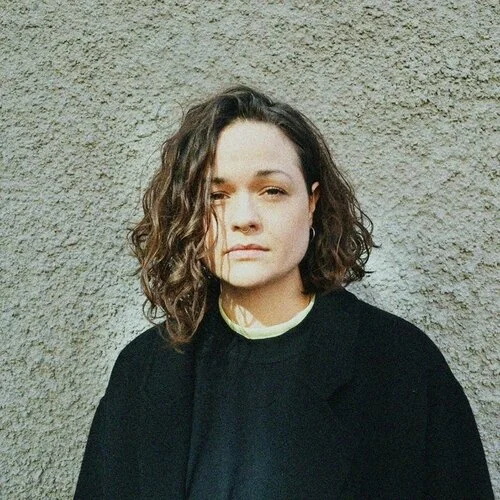
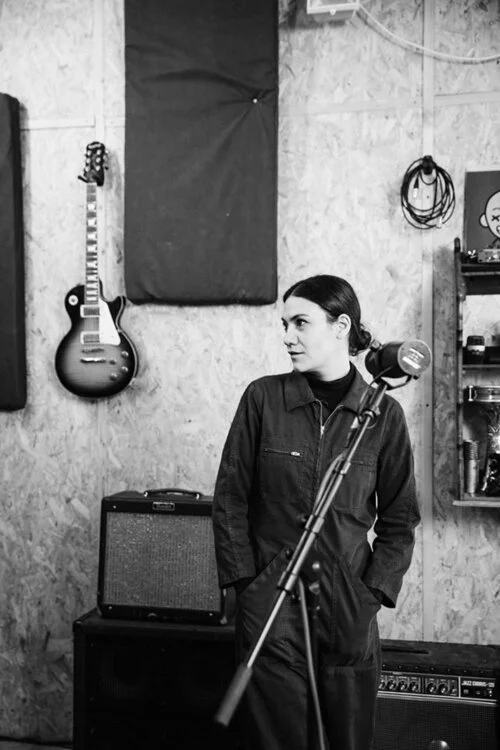
I am not really thinking about gigs and seeing artists play live. Instead, I am looking at new artists coming through and digging some brilliant music. Arlo Parks is someone I have been aware of for a while now, but she is starting to attract the attention of big radio stations. The nineteen-year-old songwriter was predicted as a breakthrough act of 2020 in an annual BBC poll of music critics, Sound of 2020. Her voice and songs are arresting, and there is nobody else who has her incredible blend of sounds and talents. She is a magnificent artist, and I remember her getting a lot of press focus last year – I will source from a couple of those articles. I do want to quote this (excellent) DIY article from last year, as it reveals a bit about Parks’ start and route into music:

Recently signed to Transgressive Records following the release of last year’s breakthrough single ‘Cola’ and its following EP ‘Super Sad Generation’, the musician’s blend of nuanced, observational poetry and smooth bedroom beats straddle the line between youth and something far more timeless. Case in point, recent single ‘george’ – a lilting summer jam that riffs on cad-about-town early 18th century poet George Byron and transposes his womanising ways into a modern playboy who woos ladies by playing MF Doom.

“Books and words were always my refuge,” she explains. “I was quite a loner when I was younger, and if there was a story with people who were super popular and going on adventures, then I’d read about it and feel like a part of it.”

Taking up poetry-writing at the start of her teens, Arlo soon also picked up a guitar and began writing songs, cribbing influence equally from the wordsmiths that informed her increasing literary passions and a series of “really intense genre phases” of musical love. “I totally had my emo phase,” she laughs, “and I was super into really hard rap as well. I say that to people and they’re like, ‘But you make the softest songs?!’ It’s like, yeah, but everything I listen to, I take something out of it”.

I recall discovering Arlo Parks last year and being amazed when reading interviews about her. The music itself is wonderful and rich, but she is such an engaging, compelling and inspiring person. Not only is Parks an artist who creates these wonderful and powerful songs; she has spoken about subjects such as mental-health and L.G.B.T.Q.I.A.+ issues. In this interview (from last year) with The Line of Best Fit, she spoke more about mental illness and the L.G.B.T.Q.I.A.+ voice:

 “Parks sits at the forefront of Generation Z – the digital natives born into the uneasy wreckage of this new millennium. Unlike their burnt out millennial forbears, Gen Z are fiercely individual: dreamers, optimists, creators. All this, in spite of the global uncertainty and chaos they’re faced with every day. It’s this contrast that Parks encapsulates in upcoming single “Super Sad Generation”.

“In my age group, there’s a lot of prevalence of mental health [problems], being self-destructive, and quite hopeless,” she explains of the track’s inspiration. “I’m not sure if it’s social media, or what it is, but we’re all fucking sad!

“A year ago, my friend took his life. It shocked me, and ever since I’ve been trying to encapsulate that feeling into a song: kind of lost, but also hopeful. It was quite an important song, I felt, for me to make.”

When probed, Parks elaborates on from exactly where her generation’s well of hope springs.

“There’s so much talent, so much vibrancy, and we still have that youth. If you look at LGBTQ issues, there’s more awareness, and I feel like – obviously not in all places ­– there is more acceptance. More people are talking about depression and anxiety; it’s been made more okay to look for help. Even though online communities can be quite toxic, there’s more space to get support. In some places it’s not as accessible as others – it’s not there yet – but it’s growing.”

Having touched upon the LGBTQ theme, it seems pertinent to mention that Parks is openly bisexual. This is perhaps less surprising than it might have been even just five or 10 years ago, as Generation Z is by far the queerest generation in recent history. However, Parks speaks maturely on the importance of providing role models to those yet to come out, particularly given her identity as a black woman”.

The past year has been a busy and successful one for Parks. She released two E.P.s, Simply Sad Generation, and Sophie. Both E.P.s are really strong, and I think – as I say with so many artists – Parks is growing in confidence and quality as her career goes on.

If you have not heard Simply Sad Generation, go and check it out, as the songwriting and production is incredible; the E.P. caught the ear of the press, who were keen to share some positive words. This is what Vinyl Chapters wrote in their review:

The lyrics of the title track exemplify the disorderliness and tumult portrayed throughout a record whose currency is that of getting wasted, falling in and out of love and holding out for optimism amidst the enveloping gloom: “When did we get so skinny/Started doing ketamine on weekends/ Getting wasted at the station/Trying to keep our friends from death”.

The morose lope of Sophie and the prettily acoustic Angel’s Song are stand-outs of an album which operates as a canvas for the ominous and unsettling outpourings of a self-described outsider, a loner who started off moulding scratchy spoken-word pieces which morphed into fully-formed nuggets of lo-fi pop. Elliptical traces of Portishead, Denai Moore, Lily Allen and Corinne Bailey Rae hover into view intermittently, but this is very much the work of a fascinating and singular talent. Beset by a wounded insecurity that’s both pained and intoxicating, Arlo Parks has created a brilliantly tense and brooding record in Sweet Sad Generation”.

Sophie came out in November and, again, it got some good reviews: an artist who was pushing forward and making a big impression.

This year has seen her music reach new people, but touring is, obviously, off of the table right now. Keep an eye on her social media channels, as there will be some rescheduled dates. If you can see her live at some point, I would recommend you do. It has been a busy year already, and Parks is being spotlighted as an artist to watch closely. She spoke with DORK in April, and talked about collaborating with other artists:

Reflecting on the whirlwind that her life has become, Parks recognises the power of a good network to keep her grounded. A keen collaborator, her smooth vocal tones can be found on Easy Life's 'Sangria', and old tourmate Loyle Carner pitched in with his brother to direct the music video for 'Eugene', a gentle lament to watching the friend you secretly fancy fall in love with somebody else.

"Working with the Coyle-Larner brothers was just the best - to have a director who is a musical artist themselves, it's a very special thing," she says. "The crew was quite big and a bit overwhelming, and it was my first time doing any acting, so it was really nice to have that familiar, calming presence. With 'Sangria', Murray [Easy Life's Frontman] just reached out to me over Instagram. We'd been fans of each other, and were going around the same festival circuits but always just missing each other and never meeting. He sent me the demo and asked if I'd like to jump on it, and I just recorded it on my little mic at home. They're such lovely boys – we got to play it live for BBC Sounds at Maida Vale, and then at the Roundhouse, it was all so nice. Always work with your friends, I'd say!"

dss.jpg

PHOTO CREDIT: @laurengharris

Arlo Parks is standing out because her music is so hard to pin down. One could call her music Indie-Pop/Indie-Folk, but it is so much broader and more original than that. The last interview I will bring in is from the Manchester Evening News, who exposed a talent who was keen not to be easily predicted and had these big ambitions:

"I’d hate my music to be easily categorised," she insists. "I'm of a generation that doesn't see boundaries when it comes to music. I'm just as likely to be influenced by a 70s funk tune as I am a modern electronic tune. My favourite albums are ones like A Seat At The Table ( by Solange ) or Channel Orange ( by Frank Ocean ) - albums that played about with genres, but also had a strong sense of the artist’s identity."

Given her life-long love affair with words, it's no surprise that Parks has ambitions beyond the world of music. She already has plans to publish a book of her poems and, one day, she'd love nothing more than to "write a novel. I know I've got one within me."

For now, though, Arlo Parks is firmly focused on her music career. Her debut LP, which she's currently in the process of writing, is scheduled for release later this year. And this month, she embarks on her biggest UK tour to date – a prospect which she's clearly relishing.

"Being on stage is where I'm at my happiest," she enthuses. "I feel confident when I'm stood up there. When I'm singing my own songs, telling my truth, that's where I feel most in control”.

This year is strange in terms of live music, but there are some seriously brilliant artists emerging we need to look out for now; those who will be riding high on festival bills next summer. I think the best way to experience the wonder of Parks is to listen to her music – buy it if you can -, and reveal in its beauty and potency. Last year and this year have been exciting and memorable for Arlo Parks, but 2021 is going to be a year where she is primed to…

MAKE an even bigger footprint.

______________

Follow Arlo Parks

FEATURE: Vinyl Corner: Alanis Morissette – Jagged Little Pill

FEATURE:


Vinyl Corner

Alanis Morissette – Jagged Little Pill

___________

THIS feature is quite timely…

IN THIS PHOTO: Alanis Morissette in 1995/PHOTO CREDIT: Kevin Cummins/Getty Images

as there is a lot going on regarding Alanis Morissette’s Jagged Little Pill. Morissette hosted/was involved with a livestream of the album a few weeks back, and the album itself turns twenty-five on 13th June. Morissette was due to tour the iconic album later this year but, as you can imagine, plans have changed radically. NME reported the news:

 “The multiple Grammy award-winning singer revealed details of a world tour celebrating her landmark album’s 25th anniversary last year, with shows kicking off with support from Garbage and Liz Phair on June 2 in Portland, Oregon.

Today (May 9), Morissette revealed that the US leg of the tour has been postponed due to the ongoing coronavirus crisis.

“hi everyone,” she wrote on Twitter. “my North American Tour scheduled to begin in a few weeks is being rescheduled to Summer 2021 out of an abundance of caution. please hold on to your tickets as they will be honored for the new dates which we hope to announce very soon”.

Although Jagged Little Pill is Alanis Morissette’s third album, I sort of feel like it is a debut. Now Is the Time was released in 1992, but hardly anyone knows about it; Morissette was not really involved with the songwriting, and many people have not heard of the record; before that, in 1991, Alanis was released.

Jagged Little Pill was her debut international release. Like Radiohead following Pablo Honey with The Bends and Nirvana releasing Nevermind after Bleach, Jagged Little Pill was a seismic leap for Morissette and broke her into the mainstream. Released through Maverick, Morissette’s first album released outside of Canada was pretty much everywhere in 1995! I recall buying the album back then, and singles like You Oughta Know, Ironic, Head Over Feet and All I Really Want (released between 1995-1996) were ubiquitous. I had never heard of a voice like Morissette’s; her very honest songwriting and incredible powerful voice divided some, but I was transfixed. It seems strange to think that such a classic album received some mixed reviews back in 1995. I think it has found greater favour years on, as a lot of songwriters have been inspired by Jagged Little Pill, and the popularity and exposure of the songs have resonated through the years. It is a pity Morissette cannot tour the album on its twenty-fifth anniversary, but the Broadway musical received rave reviews, and there is still so much love and fascination for this remarkable record. If you can buy it on viny, then do so, as I think it is one of those albums that you need to experience in this format. It is amazing to think how far Morissette developed since her first two albums – these were mainly Dance, Pop and New Jack Swing-influenced albums. The fact that Morissette travelled to Los Angeles and met Glen Ballard opened up her horizons and was a hugely important move.

In a year when Grunge was in its final stages and Britpop was ruling the charts in the U.K., Jagged Little Pill does stand out. That said, artists like The Smashing Pumpkins and PJ Harvey were producing these quite raw and different-sounding records (it is hard to explain what I mean), and Morissette (with Ballard) spliced angsty lyrics and Post-Grunge sounds with a Pop flavour and sensibility. I feel Jagged Little Pill connected with so many people in 1995 because it sort of united the anger and energy of Grunge with the new wave of Post-Grunge and Pop that was prevalent; Jagged Little Pill is a very personal album, yet it is one that spoke to many people. Despite some slightly underwhelming reviews, Jagged Little Pill topped the charts in thirteen countries, and it is one of the best-selling albums of all-time. I will finish off with a couple of features/reviews that show why Jagged Little Pill is so celebrated and regarded. Out of the thirteen tracks on the album, seven were released as singles, but the remaining songs are very strong. I especially love Right Through You and Mary Jane, and I feel they could have been released as singles – maybe Maverick (and Reprise) felt that the album had seen enough singles spawned, and they were keen to leave it at that. Though Alanis Morissette followed up Jagged Little Pill with the incredible Supposed Former Infatuation Junkie in 1998, I still think Jagged Little Pill is her defining album.

This is what AllMusic wrote in their review:

It's remarkable that Alanis Morissette's Jagged Little Pill struck a sympathetic chord with millions of listeners, because it's so doggedly, determinedly insular. This, after all, plays like an emotional purging, prompted by a bitter relationship -- and, according to all the lyrical hints, that's likely a record executive who took advantage of a young Alanis. She never disguises her outright rage and disgust, whether it's the vengeful wrath of "You Oughta Know" or asking him "you scan the credits for your name and wonder why it's not there." This is such insider information that it's hard to believe that millions of listeners not just bought it, but embraced it, turning Alanis Morisette into a mid-'90s phenomenon. Perhaps it was the individuality that made it appealing, since its specificity lent it genuineness -- and, even if this is clearly an attempt to embrace the "women in rock" movement in alterna-rock, Morissette's intentions are genuine. Often, it seems like Glen Ballard's pop inclinations fight against Alanis' exorcisms, as her bitter diary entries are given a pop gloss that gives them entry to the pop charts. What's all the more remarkable is that Alanis isn't a particularly good singer, stretching the limits of pitch and credibility with her octave-skipping caterwauling. At its core, this is the work of an ambitious but sophomoric 19-year-old, once burned by love, but still willing to open her heart a second time. All of this adds up to a record that's surprisingly effective, an utterly fascinating exploration of a young woman's psyche. As slick as the music is, the lyrics are unvarnished and Morissette unflinchingly explores emotions so common, most people would be ashamed to articulate them. This doesn't make Jagged Little Pill great, but it does make it a fascinating record, a phenomenon that's intensely personal”.

I will wrap this up soon but, just as Jagged Little Pill prepares to celebrate twenty-five years, I think it is a great time to grab it on vinyl and, if you weren’t a fan in 1995, re-assess a brilliant album. I want to quote a snippet of an NME article from 2014 that was defending Jagged Little Pill; the feeling, I think, that some were still unsure about the album’s stature and brilliance:

One of the reasons the album so struck a chord with millions is its broad thematic content. Morrissette tackles the rollercoaster of life head on, exploring religious hypocrisy, jealousy, parental expectations, drinking, mental illness, co-dependence, the patriarchy, friendship, self-esteem, infidelity and on. For the “young and the underpaid, who haven’t got it figured out just yet,” there was a ton of identification. And even though Morrisette was a middle-class white girl with a comfortable upbringing in a strict Catholic family, these themes are pretty universal. Everyone’s gone in the “wrong direction” at some time or other”.

I love Jagged Little Pill, and not only is it one of the best albums of the 1990s; I think it is one of the very best albums of all-time – I would put it in my top-fifty, for sure. I love its power and the instant appeal of the songs. Jagged Little Pill hasn’t dated, and, in fact, I do wonder why more artists have not been inspired by the record – even though quite a few have. Maybe it is so individual that it feels quite tricky to replicate. Although Alanis Morissette cannot take Jagged Little Pill on the road this year, we will be able to see the songs brought to life on stage…

IN 2021.

FEATURE: From Kitchen Discos to the Radio? Hearing More of Sophie Ellis-Bextor on the Airwaves

FEATURE:

From Kitchen Discos to the Radio?

Hearing More of Sophie Ellis-Bextor on the Airwaves

___________

I tuned in pretty late…

PHOTO CREDIT: Sophie Ellis-Bextor

but a lot of people have been posting on social media their reactions to Sophie Ellis-Bextor’s Friday night kitchen disco posts. We are all finding ways to get through lockdown and stay upbeat. I have seen many celebrities and musicians use their platform to help people. On Friday, the extremely popular Friday posts from Ellis-Bextor came to an end:

Sophie Ellis-Bextor has been cheering up her fans in lockdown by sharing videos of disco parties at her home - but she hung up her disco ball last night.

Each Friday during lockdown Sophie, 41, has dressed up to the nines for the parties with her kids.

Promote health. Save lives. Serve the vulnerable. Visit who.int

The singer has performed some of her biggest hits such as The Murder On The Dancefloor as her kids dance around her.

But she called time after last night's stream where she was seen wearing a dazzling multi-coloured top, leather skirt and heels.

It comes after Sophie shared a rare picture of her 16-year-old son Sonny last month as he celebrated his birthday during lockdown”.

I guess that, if you have children home and it can get quite claustrophobic, putting on a kitchen disco is a rather good way to get them involved and melt away some stress at the same time! For Ellis-Bextor, she was not only making her time in lockdown a bit more fun, but she has also connected with many other people and inspired them to set up their own kitchen disco.

When she spoke with The Guardian earlier in the week, Ellis-Bextor explained the importance of the kitchen discos:

Doing the kitchen discos has meant an incredible amount to us. It’s been an anchor for each week, but also escapism. I’ve been singing songs I haven’t sung for years. It’s a portal – suddenly you’re 17 and in an indie club. I discovered disco in my early 20s once I started listening to dance music. As someone who sings along to stuff, I like stories, and disco is the first place that dance music told stories.

When I do the last one today I’m pretty sure I’m gonna cry because it’s been so special. When lockdown first started, we felt there would be a big distinction between lockdown and “out you go into the world again”. It became apparent that’s there’s going to be a slow re-emergence into a new normal. I wanted to keep the discos going until there was a change in the wind”.

As an artist, Sophie Ellis-Bextor has had a long and successful solo career – though I still think one of her finest moments was on Spiller’s Groovejet (If This Ain't Love). Disco, Dance and Pop has been a part of her work since the beginning, and there is a certain energy and snap in her music that draws fans in. Her last studio album, Familia (2016), was produced by Ed Harcourt – the two are working together for Ellis-Bextor’s forthcoming album I understand.

As soon as word of Sophie Ellis-Bextor’s kitchen discos started to gain traction and buzz on social media, I felt that she would very naturally translate to radio. On Monday, Ellis-Bextor put together two hours of Disco and Dance tunes for BBC Radio 2. I could have done some more research but, so far as I know, this was the first time Ellis-Bextor has presented a show for BBC Radio 2. Also, I think, the Bank Holiday Monday show is going to be a one-off, but I have listened to the show, and I wonder whether it could be something more permanent. The response she got was tremendous, and so many people were eager to express their praise. It was an excellent broadcast, and Ellis-Bextor has a natural flair and affinity for radio! Her selection of tunes was top-notch (it would be good to see them listed on the show’s page on the BBC Radio 2 website), and it made me wonder whether we could see her return. On stations like BBC Radio 6 Music, they have series where well-known faces present a selection of their favourite tracks (in Paperback Writers). They have actor Cillian Murphy presenting shows on a semi-regular basis, and I think Sophie Ellis-Bextor is someone who could gain a big fanbase at BBC Radio 2. Whether she would have a show entirely about Disco and Dance, I am not sure, but her Bank Holiday show seems too good to leave there. This is me thinking aloud, but I think Ellis-Bextor’s Friday kitchen disco shows buoyed many people around the world, and it was great she was given an opportunity to get onto the airwaves and lay down some top-notch cuts. I hope that, given Sophie Ellis-Bextor’s recent kitchen discos and her impressive radio stint, a weekly position on BBC Radio 2 becomes…

A permanent appointment.

FEATURE: The Lockdown Playlist: Alternative Rock Smashes

FEATURE:


The Lockdown Playlist

xxxx.jpg

PHOTO CREDIT: @natalieparham/Unsplash

Alternative Rock Smashes

___________

ALTHOUGH the lockdown is easing…

saa.jpg

PHOTO CREDIT: @rakhmatsuwandi/Unsplash

we are still being encouraged to stay at home, and we are very far from the end of all of this. I do know things are getting better, but we are still having to keep inside and be good. Because of that, I think the Lockdown Playlists are needed! I have covered quite a few genres already and, this time around, I will cover some of the best Alternative Rock hits. If you do require a playlist with a big of energy, grit and electricity, then I think I have the one for you! This weekend is going to be a bright and warm one so, if you need some tunes to accompany you whilst you get some exercise, then turn the volume up (but not too loud). One thing that has kept a lot of us going through the last few weeks is music. For me, it has been a great form of distraction and energy. It is amazing to consider the universal…

zaz.jpg

PHOTO CREDIT: @marcishere/Unsplash

POWER of music.

FEATURE: We All Have a Favourite Set: Looking Ahead to a Classic, Unique Experience

FEATURE:

xcc.jpg

IN THIS PHOTO: David Bowie at Glastonbury in 2000/PHOTO CREDIT: Julian Makey/REX/Shutterstock

We All Have a Favourite Set: Looking Ahead to a Classic, Unique Experience

___________

THERE has been great loss this year…

IMAGE CREDIT: Glastonbury Festival

in terms of festivals and gigs being cancelled. The music industry has suffered a lot, and I think Glastonbury Festival’s cancellation was one of the most heartbreaking. As this year was their fiftieth, many people were looking forward to seeing Paul McCartney, Taylor Swift and Kendrick Lamar headlining, alongside a host of brilliant acts. We are being treated to a selecting of Glastonbury sets over the weekend this year’s festival should have taken place. The BBC explains in more detail:

The BBC is to broadcast classic Glastonbury performances this year in the music festival's absence.

Previous headline sets from Beyoncé, Adele, Coldplay, David Bowie and Jay-Z will be shown on BBC Two and BBC Four.

A new pop-up channel will also appear on BBC iPlayer, which will feature more than 60 historic sets.

This year's festival, which was due to feature Taylor Swift, Kendrick Lamar and Sir Paul McCartney, was cancelled amid the coronavirus pandemic.

More than 200,000 people, including 135,000 ticket-holders, would have descended on Worthy Farm in Somerset if the festival had gone ahead from 25 to 28 June.

Clara Amfo, Edith Bowman, Jo Whiley, Lauren Laverne and Mark Radcliffe will host four days of programming across the BBC.

At the centre of the BBC coverage will be three 90-minute programmes on BBC Two, broadcast on Friday 26, Saturday 27 and Sunday 28 June.

They will feature performances from Amy Winehouse, Arctic Monkeys, Blur, Dizzee Rascal, Lady Gaga, PJ Harvey, R.E.M. and The Rolling Stones.

Additional programming on BBC Four will feature some of the most memorable acoustic performances filmed in the BBC compound at previous festivals - including Ed Sheeran, Dua Lipa, Kano, Leon Bridges, Patti Smith, Richie Havens and Youssou N'Dour.

There was a lot of disappointment when Glastonbury was cancelled, but there was no alternative. Instead of being at Worthy Farm and witnessing a historic festival go down, we can stay safe at home and watch some truly incredible performances. There are some interesting articles that rank the best headline Glastonbury sets ever. I have been looking at UDiscoverMusic’s rundown of the best Glastonbury performances, and it has brought back some memories. I think many people agree David Bowie’s 2000 set at Glastonbury tops the pile; I think Beyoncé’s 2011 headline set and Radiohead’s epic 1997 set are in the top-three. I have selected passages where UDiscoverMusic highlighted these performances:

 “Radiohead also turned in sterling Glastonbury performances in 2003 and 2017, but as yet they’ve been unable to beat their 1997 show – a watershed moment in their career, which Michael Eavis himself has described as “the best Glastonbury performance ever”. In 1997, Thom Yorke and company appeared just a fortnight after the release of their landmark third album, OK Computer, and sent the festival audience into raptures with stunning performances of its standout tracks, including ‘Karma Police’, ‘No Surprises’ and a mind-bogglingly intense ‘Paranoid Android’.

Another triumph for pop in the rock arena, Beyoncé’s superbly-paced 2011 set was stuffed with hits including ‘Crazy In Love’, ‘Single Ladies’, ‘Independent Women’, ‘Halo’ and ‘If I Was A Boy’, along with surprise covers of Kings Of Leon’s ‘Sex On Fire’ and Alanis Morrisette’s ‘You Oughta Know’. The star later confessed she’d asked Coldplay’s Chris Martin for a little help with her setlist, but her 90-minute performance was rapturously received and, as she told the BBC’s Jo Whiley afterwards, “I am just so honoured – this is a highlight of my career.”

David Bowie first featured on a Glastonbury bill in 1971, in the festival’s second year. It was then known as the Glastonbury Free Festival and the event was still cultivating its identity. If that low-key appearance has largely been overlooked, the same won’t ever be said for Bowie’s return in 2000: a truly tumultuous event and arguably one of the greatest rock and pop headlining shows ever, wherein the chameleonic star played just about everything of significance from his catalogue, from ‘Wild Is The Wind’ to ‘Ashes To Ashes’, ‘Changes’, ‘Rebel Rebel’, ‘“Heroes”’, ‘The Man Who Sold The World’ and so many more. In a nutshell: showmanship, superb pacing and timeless music. His Glastonbury triumph shows exactly why we won’t ever see the likes of him again”.

I have always wondered why we haven’t had access to the full treasure trove of Glastonbury performances, because it would be great to look back at the classics – unless there is a place on the Internet one can access them. I am looking forward to experiencing Glastonbury’s best sets at the end of June, and I think many of us will be able to get together – albeit, at a distance – and celebrate some tremendous highlights. Bowie’s 2000 set will be brilliant to see, but I cannot wait to see what else is on offer. I read on the official Glastonbury Twitter page that loads of acts will be announced as we get closer to the date. Although seeing these beloved artists on the screen is not the same as being at Glastonbury in the flesh, I think the bonanza the BBC are offering is…

NOT a bad compensation!

FEATURE: Second Spin: The Smiths – Meat Is Murder

FEATURE:


Second Spin

The Smiths – Meat Is Murder

___________

IN this feature…

zz.jpg

IN THIS PHOTO: The Smiths in 1985/PHOTO CREDIT: Pictorial Press Ltd./Alamy

the idea is to shed new light on an album that was either underrated when it was released or has not been given the attention it deserves since. The Smiths’ second album is not often seen as their best. When people compile a list of the top-three Smiths albums, people often put The Queen Is Dead (1986), The Smiths (1984) and Strangeways, Here We Come (1987) ahead of Meat Is Murder. Although my favourite album from The Smiths is Strangeways, Here We Come, I think Meat Is Murder is a lost classic. I have seen reviews from the album – from those published at the time and those since – and there is a mix of the slightly disappointed and positive. I think Strangeways, Here We Come warrants more acclaim, because it is a fantastic album. Maybe it was the fact that there was not a song as instant and accessible, perhaps, as This Charming Man (from their debut) on Strangeways, Here We Come; maybe the more political tone of the record was a bit jarring or unexpected. Since Meat Is Murder, Morrissey (the band’s lead and now-solo artist) has spoken frequently and passionately – and sometimes controversially – about his vegetarianism and political beliefs. I think Meat Is Murder manages to combine accessible and nuanced tracks with serious messages. The Headmaster Ritual is one of my favourite Smiths songs, but it is a track that is ant-corporal punishment.

I love the fact that the band – including guitarist and composer Johnny Marr (lead guitar), Andy Rourke (bass) and Mike Joyce (percussion) – were more muscular and adventurous on The Smiths’ second album. Barbarism Begins at Home has this incredibly catchy riff that makes the song spring and pop. Although the track is almost seven minutes in length, you are hooked until the end. Nowhere Fast is a Smiths classic, whilst the opening two tracks – The Headmaster Ritual and Rusholme Ruffians – are incredibly memorable and have that classic sound. The band sound more confident and adventurous than they did on The Smiths, and they were definitely keen to create a bolder album than the debut. Some say that Meat Is Murder’s title track (which ends the album) is filler; others think it is more noise than a song, but I think it is a hugely arresting and striking song that, appropriately, comes right at the very last. In fact, I do not think there is a weak track on the album, and it bemuses me that there were some mixed reviews back in 1985. At just nine tracks, Meat Is Murder has longer songs rather than a series of shorter songs. Most tracks on Meat Is Murder are three/four minutes in length, and I think the track listing is perfect – opening with those two incredible tracks and ending with a real punch. Although there have been some less-than-impassioned reviews for Meat Is Murder, it has been included in many lists that celebrate the finest albums ever. I want to bring in a review from Rolling Stone from 1985 that is among the more positive and constructive reviews from the time:

Lead singer and wordsmith Stephen Morrissey (who goes by his surname professionally) is a man on a mission, a forlorn and brooding crusader with an arsenal of personal axes to grind. Drawing on British literary and cinematic tradition (he cites influences ranging from Thomas Hardy and Oscar Wilde to Saturday Night and Sunday Morning), Morrissey speaks out for protection of the innocent, railing against human cruelty in all its guises. Three of the songs on Meat Is Murder deal with saving our children — from the educational system (“The Headmaster Ritual”), from brutalizing homes (“Barbarism Begins at Home”), from one another (“Rusholme Ruffians”). The title track, “Meat Is Murder,” with its simulated bovine cries and buzz-saw guitars, takes vegetarianism to new heights of hysterical carniphobia.

A man of deadly serious sensitivity, Morrissey recognizes emotional as well as physical brutality, assailing the cynicism that laughs at loneliness (“That Joke Isn’t Funny Anymore”). Despite feeling trapped in an unfeeling world, Morrissey can still declare, “My faith in love is still devout,” with a sincerity so deadpan as to be completely believable.

Though he waves the standard for romance and sexual liberation, Morrissey has a curiously puritanical concept of love. He’s conscious of thwarted passion and inappropriate response, yet remains oddly distant from his own self-absorption. The simple pleasures of others make him uncomfortable, as if these activities were the cause of his own grand existential suffering. Morrissey’s uptight romanticism wears the black mantle of a new Inquisition.

In contrast to Morrissey’s censorious lyrical attitudes is the expansive musical vision of guitarist and tunesmith Johnny Marr. When these two are brought into alignment, the results transcend and transform Morrissey’s concerns. The brightest example is the shimmering twelve-inch “How Soon Is Now?” (included as a bonus on U.S. copies of Meat Is Murder). Marr’s version of the Bo Diddley beat and his somber, reptilian guitars propel Morrissey’s heartfelt plea — “I am human, and I need to be loved, just like everybody else does” — into the realm of universal compassion and postcool poetry. At this point, his needs seem real, his concerns nonjudgmental, and his otherwise pious persona truly sympathetic”.

I want to source from a couple of reviews, just to give a flavour and tone of what people think of Meat Is Murder. There are a few four-star reviews for the album, but most seem to be two or three-star ones; since 1985, I have not heard Meat Is Murder talked about in the same terms as The Smiths’ debut or The Queen Is Dead. Meat Is Murder turned thirty-five back in February, and I think now is a perfect time to reassess and rediscover a brilliant album.

A lot of reviews for Meat Is Murder laud songs like The Headmaster Ritual, but they tend to turn their noses up at many of the other tracks. (I have not even mentioned the epic How Soon Is Now?, as it appears on the U.S. edition of Meat Is Murder and was not part of the U.K. version). A lot of reviews for Meat Is Murder are a bit unfair to the tracks, which I think are full of life, variation and depth. This review from AllMusic sort of underlines what I mean:

With their second proper album Meat Is Murder, the Smiths begin to branch out and diversify, while refining the jangling guitar pop of their debut. In other words, it catches the group at a crossroads, unsure quite how to proceed. Taking the epic, layered "How Soon Is Now?" as a starting point (the single, which is darker and more dance-oriented than the remainder of the album, was haphazardly inserted into the middle of the album for its American release), the group crafts more sweeping, mid-tempo numbers, whether it's the melancholy "That Joke Isn't Funny Anymore" or the failed, self-absorbed protest of the title track.

While the production is more detailed than before, the Smiths are at their best when they stick to their strengths -- "The Headmaster Ritual" and "I Want the One I Can't Have" are fine elaborations of the formula they laid out on the debut, while "Rusholme Ruffians" is an infectious stab at rockabilly.

However, the rest of Meat Is Murder is muddled, repeating lyrical and musical ideas of before without significantly expanding them or offering enough hooks or melodies to make it the equal of The Smiths or Hatful of Hollow”.

Some will argue that Meat Is Murder has either been celebrated adequately or is underserving of bigger focus – I would disagree on both fronts! Even if you are not a fan of The Smiths, I would encourage people to investigate Meat Is Murder, as it is a fantastic album with many classic moments. Maybe it is not quite as jaw-dropping and accessible as The Queen Is Dead, but it is an album that will linger in the mind. I shall leave things here…but take a moment to spin The Smiths’ second album, because it is a real treasure trove. Meat Is Murder is a record that contains more than its fair share…

OF wonder.

FEATURE: The Lockdown Playlist: Club Classics

FEATURE:


The Lockdown Playlist

xccc.jpg

PHOTO CREDIT: @aditya_ali/Unsplash

Club Classics

___________

WHEN I have done previous playlists…

xc cc.jpg

PHOTO CREDIT: @z5a1nt/Unsplash

I have covered Club music from different decades. I have not dedicated one entirely to the Club classics that manage to energise and uplift us all, regardless of our musical tastes. The sheer exuberance and thrill of the Club anthems is what we all require right now - everything from ‘90s classics to some R&B to the more hardcore mixes! Whilst lockdown still continues, we are allowed out for more exercise and, with that, we can take music with us. A great playlist can add something to our daily exercise, and I have been rooting around for the best Club gems to soundtrack your movements. If you require some additional kick this week, I think I have some selections that will give you plenty of…

PHOTO CREDIT: @bantersnaps/Unsplash

STAMNINA and buzz.

FEATURE: The Red Shoes, The Line, the Cross and the Curve and Beyond… Kate Bush and the Year 1993

FEATURE:


The Red Shoes, The Line, the Cross and the Curve and Beyond…

ccc.jpg

IN THIS PHOTO: Kate Bush in a promotional photo for Eat the Music in 1993

Kate Bush and the Year 1993

___________

AS with many of my Kate Bush features…

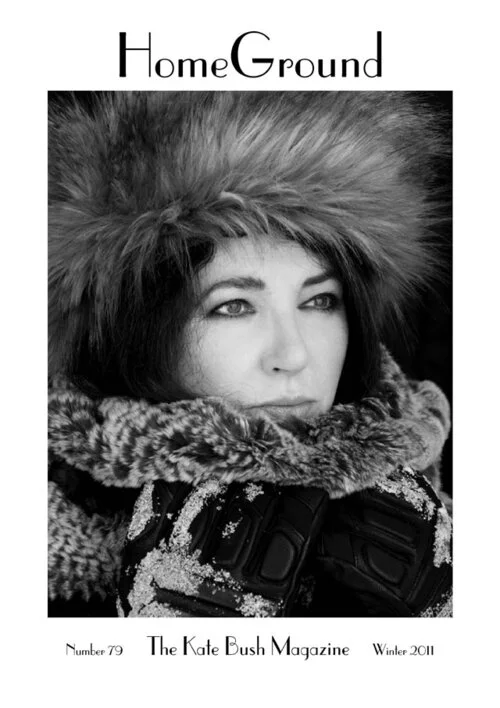
I want to bring in a couple of reviews and bits from the media, as I think it adds context and colour. I was only nine when 1993 began, and I think The Red Shoes was the first Kate Bush album I recall upon its release. I have looked at the years 1978 and 1983 when talking about Bush and pivotal moments in her career. The reason I wanted to spotlight 1993 is, when many people talk about her work, 1993 sort of gets glossed over. Maybe that is not entirely true, but The Red Shoes is often considered the weakest Kate Bush album, we do not talk about her interviews from the time or the film, The Line, the Cross and the Curve. Hounds of Love (in 1985) is the peak of her career; 1989’s The Sensual World, whilst a less-acclaimed follow-up, was still an ambitious work. I think, by 1993, Bush was looking to return to a simpler way of working that she might not have experienced since the very start of her career. Recording for The Red Shoes began in 1990 but, like so many Kate Bush albums, the writing was pretty quick, whereas the recording takes the longest time. Bush’s mother, Hannah, passed away on 14th February, 1992, and The Red Shoes is dedicated to her memory. Of course, we would not see another album Kate Bush (after The Red Shoes) for another twelve years – the double-album, Aerial, saw Bush return to the spotlight with aplomb (and a new son, Bertie, who was born in 1998).

Whilst we might like back at 1993 as a hard year where she would soon hibernate from the music scene, at the time, I think there was this sort of deterioration in terms of the appreciation her music deserved. Certainly, The Sensual World was a very different record to Hounds of Love, and I think – although it won a lot of positive reviews – many people in the media wrote Bush off. To me, I think 1993 was a year where she produced a lot of great music and, actually, The Line, the Cross and the Curve deserves new inspection and attention. I think The Red Shoes is very underrated, and I actually prefer it to albums like The Sensual World and Director’s Cut (2011). Whilst many of the songs for The Red Shoes were written before Bush’s mother died, she was going through a break-up (or more than one) with her long-time boyfriend, Del Palmer (who she met in the 1970s and works with until this day), and maybe that mars her memories of the album and she was not able to produce her best work. I don’t know. I think The Red Shoes has a couple of week tracks, but it is overloaded with life and textures. There are a couple of cameos that were misguided, but I love how the Trio Bulgarka (who had contributed to The Sensual World) appeared on three songs: You're the One, The Song of Solomon, and Why Should I Love You?.

Bush revisited seven songs from The Red Shoes for Director’s Cut, as she was not happy with the digital production; she wanted the songs to breathe more and get stripped back. The problem is, I think only Top of the City sounds superior in its new setting: the remainder of the tracks are not improved upon. I can appreciate how Bush wanted to right some perceived wrongs on The Red Shoes, but I think there is a lot to love about The Red Shoes. Although some of the overly-glossy and compacted production does harm some tracks, I think it brings songs to life on the album in a way that Bush didn’t manage in 2011. I actually have no big beef with the sounds of the early-1990s – in terms of production and adapting to the compact disc -, and The Red Shoes has a lot going for it. The track listing is brilliant, so that one of the strongest tracks (and my favourite), Rubberband Girl, kicks things off, and that leads into the more emotive and softer And So Is Love – both tracks, I feel, rank alongside Bush’s best. Eat the Music is a feast of Worldbeat rhythms; it was the lead-off single in the U.S. – Rubberband Girl was the lead single elsewhere in the world -, and the video is wonderful. Although some of the lyrics on this song, and the album, are a bit lumpen and daft, I think Eat the Music charms and moves you with its energy and performance.

Moments of Pleasure – a top-thirty hit in the U.K. -, and Lily are wonderful tracks, and end a fabulous side. Look at the video for Moments of Pleasure, and it is one of Bush’s best videos; she was still producing stunning visuals in 1993 – something I will expand upon a bit later. I think the first side to The Red Shoes is among the strongest of Bush’s career, and I think a lot of critics were a bit harsh towards the album in 1993. I want to quote from a Pitchfork review because, although it is constructive in its criticism, it does offer some positives:

The record’s personal themes of loss, perseverance, and memory coalesce on “Moments of Pleasure,” one of Bush’s most affecting ballads. She sings of the small memories of life—laughing at dumb jokes, snowy evenings high above New York City, a piece of wisdom from her mother—as Oscar-nominated composer Michael Kamen builds these quiet moments into monuments with a heroic string arrangement. Bush ends the song with a series of mini eulogies: for her aunt, her longtime guitarist, her dance partner. “Just being alive, it can really hurt,” she belts at the center of the track, stating the obvious with such conviction that it sounds revelatory”. 

v.jpg

IN THIS PHOTO: Kate Bush during filming for The Line, The Cross and the Curve in 1993/PHOTO CREDIT: Guido Harari

Bush was sort of doing everything herself, and definitely wanted to please only herself and nobody else. Perhaps that stubborn work ethic did take a big toll when we consider how long it would take Bush to follow The Red Shoes, but I think she should be commended for producing an album that is incredibly open, diverse and under-respected. In 1993, The Chicago Tribune had this to say:

With a siren's voice and a taste for the eccentric, Bush has built a significant cult following over the past decade. With "The Red Shoes," she edges closer to the mainstream; her obsession with transcendence is now focused on affairs of the heart as opposed to the fairy tales of earlier work, she jump-cuts musical genres as voraciously as Prince (one of many guest stars she enlists), and her voice is more direct and soulful-check out the raspy belting on "Constellation of the Heart" and "You're the One." But there's still a touch of the strange, as when Bush compares her lover to a pomegranate on "Eat the Music." There's fruity imagery of a different stripe on "Moments of Pleasure," which announces, "Just being alive, it can really hurt!" But the variety of musical settings, from Celtic romp on the title track and the Latin rhythms of "Eat the Music" to the funky "Rubberband Girl" and arty skronk of "Big Stripey Lie," undercuts the melodrama. Bush has pulled it off: Her most accessible album has arrived without sacrificing her ravishing, quirky essence

One can look at some obvious downsides – certain tracks are too long; a few songs suffer clunky and uninspired lyrics – and dismiss the album on that basis. Though The Red Shoes’ second side is not as strong as the first, there are some great cuts! I really love The Red Shoes, Top of the City and You’re the One. Bush’s voice is stunning and dedicated throughout The Red Shoes, and the album is certainly not the disaster many people paint it as – and I would urge people to give it some time when they can. There are two songs which, sadly, sap a lot of the good from The Red Shoes. Big Stripey Lie features some of Bush’s least impactful lyrics (“Oh my God it's a jungle in here/You've got wild animals loose in here”), and I think Why Should I Love You? suffers from there being too many cooks in the kitchen. Not only do we hear from Lenny Henry; there is a lot of input from Prince who, sadly, does not turn in his greatest performance and adds too many layers to the song – Prince was a much more impressive artist when working on his own (and his band) rather than collaborating with others. I will admit that an artist who was experiencing romantic and personal struggle was probably not in the best mindset to record her clearest and most consistent album, and a couple of tracks could have been trimmed and we would have seen a stronger album.

There are so many different moods explored, and there’s a nice range of sounds on The Red Shoes that stands up to repeated listens. I don’t think the compositions are too busy and stuffed, and Bush’s voice sounds wonderful from the first to last. I can understand her desire to reexplore the songs on Director’s Cut, but I think she (and many others) have been too dismissive of the album. It was evident that, in 1993, Bush was on the precipice of a major decision regarding her career and her relationship with the press. Even up to The Sensual World, she was conducting a fair few interviews, but there are relatively few from 1993 – there are a couple of good T.V. ones and one particularly interesting interview from Q – which I shall quote from shortly. Bush was worried, prior to The Red Shoes, that her music was too complicated, and she wanted to return to a more rooted sound. There was also the plan to record the album quickly and tour it but, as we know, other things got in the way. For someone who experienced the death of her mother and the break-up of a serious relationship so close together, it is amazing that she managed to finish an album at all! I concede that there are some clichés and similar-sounding songs on the album but, looking back, I think there is a lot to love about The Red Shoes.

The Line, the Cross and the Curve, which Bush has distanced herself from and dismissed in ensuing years, is a short film/extended music video that features songs from The Red Shoes – inspired by the 1948 classic film, The Red Shoes, which was directed by Michael Powell (and it is a favourite film of Bush’s). In the film, Bush plays a frustrated singer-dancer who is enticed by a mysterious woman (played by Miranda Richardson) into putting on a pair of magical ballet slippers. Once on her feet, the shoes start dancing on their own, and Bush's character must battle Richardson to free herself from the spell of the shoes. Her guide on this strange journey is played by Lindsey Kemp (the famous choreographer and dancer who was instrumental in fostering Bush’s love of dance in the 1970s). Though the film was toured and made its way to cinemas, it was not a success with critics and Bush suffered ill health through the shooting of The Line, the Cross and the Curve. The fact she performed in it, wrote the script and directed meant that, perhaps, she was biting off more than she could chew – perhaps an outside director could have taken some of the pressure off of Bush and given her advice regarding her acting performance (which is inferior when compared to Miranda Richardson’s). Bush did decide to stop performing and working not long after promoting The Line, the Cross and the Curve, but I see the film in the same manner as The Red Shoes: it is given flack and snubbed, but there is a lot to love.

IN THIS PHOTO: Kate Bush in 1993/PHOTO CREDIT: Guido Harari

I know Bush was hoping to tour again, and she definitely did want to make a visual statement, in the manner of her 1979 Tour of Life. Unable to get back to the stage – it would be 2014 when we saw her return -, The Line, the Cross and the Curve does sport some wonderful visual moments, and it is nice to see Bush and Richardson on screen together – they connect and play off of each other well, even if the more experienced Richardson has the superior acting chops. The songs used during the film (from The Red Shoes) are wonderful, and I especially admire the visuals for Rubberband Girl and Eat the Music. I wanted to write this feature, as many people write off The Red Shoes and The Line, the Cross and the Curve too quickly without offering many positives. The always-ambitious Bush had to shoulder a lot of loss and struggle, but I think The Red Shoes and The Line, the Cross and the Curve are a lot stronger than people give them credit for. I want to round off with a couple of interviews Bush was involved with in 1993. She was slowly pulling away from promotion and publicity – when she returned in 2005, there were relatively few interviews conducted to promote Aerial -, but I love hearing her thoughts and what people were asking her at different points in her career.

Looking back at an  interview from Melody Maker, this passage caught my eye:

With its mix of acoustic instruments (mandola, whistles, valiha) and synth-like keyboard textures, "The Red Shoes" immediately made me think Bush was trying to make a link between ancient and modern ideas of dance, pagan rites and techno-pagan raving. The way that these primal modes of ecstatic trance-endence have resurfaced in an ultra-modern hi-tech context --lasers, strobes, 50 K sub-bass sound--suggests that these impulses lie dormant in our collective unconscious or even genetic code.  People have instinctively reinvented these rituals despite, or perhaps because, our culture in impoverished when it comes to forms of communal release.

"Something very similar was on my mind, the idea of trance, delirium, as a way of transcending the normal.  Maybe human beings actually need that. Things are very hard for people in this country, maybe they instinctively need to transcend it. It's very much that ancient call".

One of the biggest and more in-depth Kate Bush interviews of 1993 happened in Q. The magazine’s cover in December 1993 featured a portrait of Bush looking contemplative-but-stunning with this quote: “Booze, Fags, Blokes And Me”. That might suggest a salacious, controversial or edgy interview but, in fact, it was Bush being open in a way she hadn’t been for a while – new sides were revealed, and I love reading her responses to the questions asked.

I have selected a few exerts that really interested me; it sounds like Bush was a very willing and responsive interviewee, too:

 “Kate Bush's career falls neatly in half like a well-thumbed book, the broken spine in this instance being The Dreaming, 1982's "difficult" album. Prior to this, Bush had established her stellar reputation with a debut Number 1 single at 19 with Wuthering Heights and a trio of albums that revealed her as rock's premier ingenue --precocious (she apparently wrote The Man With the Child In His Eyes at 12), beautiful, talented and with the ability to turn everything from incest, sexual yearning towards infants, the threat of nuclear incineration and Delius into limpid ballads and new-minted pop-rockers. Grown men and women alike cooed, DJs said "Great Lady!" and Bobby Davro and Faith Brown clogged up Saturday evening TV with unfunny impressions of her unrestricted performing style (although, weirdly, Kate once wrote a four-page letter of congratulation to Faith Brown).

She is oddly disparaging of albums like Lionheart and Never For Ever now and even then seemed keen to leave this phase behind, perhaps understandably -- she had been given two years to write the songs for The Kick Inside and, allegedly, four weeks to come up with Lionheart. By 1982 she was under the influence of Peter Gabriel and the revolutionary drum sound of Phil Collins's In The Air Tonight. Determined to do something like this herself, she became locked into a hellishly expensive round of aborted studio stints, finally emerging with The Dreaming, easily her weirdest effort and one that effectively stalled her career, peaking at Number 3 (Never For Ever entered at Number 1) and spawning a batch of flop singles. Wild rumours abounded, including the choice story advanced by the Daily Mail that she had ballooned up to 18 stone. This was patently untrue but she *had* ground herself down into a state of nervous fatigue, not helped by a reputed diet of junk food and chocolate. It was not the happiest of times.

"I look back at that record and it seems mad," she says now. "I heard it about three years ago and couldn't believe it. There's a lot of anger in it. There's a lot of 'I'm an artist, right!'" Fingers burned by the experience of The Dreaming, she decided that a studio of her own and a retreat into her domestic shell was a priority. Thus was ushered in a period of stability from whence came the enormously successful Hounds of Love and, in 1990 [1989], The Sensual World. These later records reflected her growing interest in the studio as a compositional tool and her growing desire to stay well out of the public eye.

Do you get stopped in the street?

"No, not really. Sometimes people will come up, but I don't generally get stopped in the street. People tend to just smile at you. But you may have your trousers on back to front. It may not be anything to do with fame."

You don't go out in Michael Jackson-style disguise?

(Laughing:) No, I'm not sure people care that much. Occasionally I see them nudging each other, but I feel it's more part of American culture, that idea of TV fame and celebrity. It's more of a laugh here, isn't it? 'Look, there's that bloke off the telly!'"

Are you into sport?

"Not really. I sometimes wish I was. I see friends getting enormous pleasure out of watching Wimbledon or something, but no, not for me, I'm afraid. Sometimes I enjoy watching athletes and gymnasts. But that's maybe because of dancing. I like dancing because there's the combination of music and athleticism without the competition that's integral to sport." 

IN THIS PHOTO: Kate Bush during filming for The Line, The Cross and the Curve in 1993/PHOTO CREDIT: Guido Harari

Do you go out dancing?

"I used to for a very short phase. Of course, when I was little the aunts would drag me up and get me to dance, and I'd love that. I had a phase as a teenager when a group of us would go dancing. But then I got famous after my first record and I'm not sure I had the desire to do it any more. It was something I did in my teens. But I've never felt very comfortable with it. Not unless I'm really drunk."

Do you get drunk often?

(Pause, smile:) "No, not really. I don't go out clubbing and all that. I don't make an exhibition of myself out on the floor".

I think Kate Bush produced some great work – and some of her best songs – for 1993’s The Red Shoes, and I don’t think that year was quite the car crash many (Bush included) talk about. It was a transformative year where she had sort of reached a barrier and needed to move away from the limelight for a while. I would encourage people to listen to The Red Shoes again (or for the first time) and watch The Line, the Cross and the Curve, as there are a lot of highlights. Whilst Kate Bush was active between 1993-2005, we did not see or hear too much from her. I look back at 1993 and wonder what would have happened if she had left an album on the shelf for a couple more years or personal circumstances had not played such a big role. The Red Shoes is a great-yet-flawed album, and one that she would not follow…

FOR another twelve years.

FEATURE: The May Playlist: Vol. 5: This Sheela-Na-Gig Walk

FEATURE:


The May Playlist

IN THIS PHOTO: PJ Harvey 

Vol. 5: This Sheela-Na-Gig Walk

__________

IN this week’s Playlist…

IN THIS PHOTO: Nubya Garcia

there are some seriously good tunes in the pack! Not only is there material from PJ Harvey and Georgia Anne Muldrow; some ace material from Nubya Garcia, Cigarettes After Sex, Dolly Parton, The Lemon Twigs, Liela Moss, Bright Eyes and Courtney Marie Andrews is in there for good measure! It is another busy week, and one full of diversity and brilliance! If you need some great music to give you a kick and some boost this weekend, then settle in with some of the best tunes out there. Have a listen to a playlist that is crammed…

IN THIS PHOTO: The Lemon Twigs

WITH gold.

ALL PHOTOS/IMAGES (unless credited otherwise): Artists

__________

d.jpg

PJ Harvey - Sheela-Na-Gig (Demo)

qqqq.jpg

IN THIS PHOTO: Georgia Anne Muldrow

Jyoti, Georgia Anne Muldrow - This Walk

aaaaa.jpg

PHOTO CREDIT: Fabrice Bourgelle Photography

Nubya Garcia  - Pace

Desire - Cold as Ice

Liela Moss  - Atoms at Me

IN THIS PHOTO: Lady Gaga

Lady Gaga (with BLACKPINK) Sour Candy

Cigarettes After Sex - You're All I Want

PHOTO CREDIT: Max Knight

Dan Croll - So Dark

Maverick Sabre - Don’t You Know by Now

>

PHOTO CREDIT: Ben Semisch

Bright Eyes - One and Done

Dolly Parton - When Life Is Good Again

Daughters of Reykjavík Sweets

PHOTO CREDIT: Robin Joris Dullers for Enfnts Terribles

CelesteI Can See the Change

Gang of Four - Forever Starts Now

The Lemon Twigs Moon

w.jpg

The Raconteurs Black Generation (Studio Version – Recorded at Electric Lady Studios)

PHOTO CREDIT: Agatha Powa

Baker Grace - Bottle of Wine

Courtney Marie Andrews - It Must Be Someone Else's Fault

Melanie C Blame It on Me

Aitch 30

Baby Queen Internet Religion

qaa.jpg

BLOXXThinking About Yourself

Jake Bugg Rabbit Hole

saaaa.jpg

Winona Oak, Robin SchulzOxygen

Skip MarleyNo Love

Winnie Raeder A Quiet Way

Four of Diamonds, Mr Eazi The Writer

Ward Thomas, Dan Owen Someone to Someone

Matt Maltese Queen Bee

SodyBedroom Ceiling

1222.jpg

PHOTO CREDIT: Emmanuel Olunkwa

Kelsey Lu Morning Dew

Destiny RogersOn 11

Remi WolfDisco Man

Sarah BarriosMourn the Living

FEATURE: A Buyer’s Guide: Part Four: Queens of the Stone Age

FEATURE:


A Buyer’s Guide

ccc.jpg

Part Four: Queens of the Stone Age

___________

WHEN I was thinking about an artist…

for the next part of this feature, I wanted to move back into band territory. There are groups like Fleetwood Mac and Beastie Boys who I will address in the coming weeks but, right now, I wanted to take a closer look at one of my favourite bands ever: the mighty Queens of the Stone Age. I have been listening to them since the 1990s, and they continue to produce sensational music. I am not sure what the future holds for them, but I do hope we get more albums from the American group. If you are new to Queens of the Stone Age, I have compiled a list that should help you get to the bottom of their brilliant sound. Here is my guide to a band who, on every album, bring something…

xxx.jpg

IN THIS PHOTO: Queens of the Stone Age in 2018/PHOTO CREDIT: Oliver Halfin

TRULY awesome.

_____________

The Four Essential Albums

Rated R

Release Date: 6th June, 2000

Label: Interscope

Producers: Chris Goss/Joshua Homme

Standout Tracks: Feel Good Hit of the Summer/The Lost Art of Keeping a Secret/Tension Head

Buy: https://ukstore.qotsa.com/products/rated-r-reissue-l

Stream: https://open.spotify.com/album/05tJhGl52X4zGe0ySlcBk6

Review:

The second Queens of the Stone Age album, Rated R (as in the movie rating; its title was changed from II at the last minute before release), makes its stoner rock affiliations clear right from the opening track. The lyrics of "Feel Good Hit of the Summer" consist entirely of a one-line list of recreational drugs that Josh Homme rattles off over and over, a gag that gets pretty tiresome by the end of the song (and certainly doesn't need the reprise that follows "In the Fade"). Fortunately, the rest of the material is up to snuff. R is mellower, trippier, and more arranged than its predecessor, making its point through warm fuzz-guitar tones, ethereal harmonies, vibraphones, horns, and even the odd steel drum. That might alienate listeners who have come to expect a crunchier guitar attack, but even though it's not really aggro, R is still far heavier than the garage punk and grunge that inform much of the record. It's still got the vaunted California-desert vibes of Kyuss, but it evokes a more relaxed, spacious, twilight feel, as opposed to a high-noon meltdown. Mark Lanegan and Barrett Martin of the Screaming Trees both appear on multiple tracks, and their band's psychedelic grunge -- in its warmer, less noisy moments -- is actually not a bad point of comparison. Longtime Kyuss fans might be disappointed at the relative lack of heaviness, but R's direction was hinted at on the first QOTSA album, and Homme's experimentation really opens up the band's sound, pointing to exciting new directions for heavy guitar rock in the new millennium” – AllMusic

Choice Cut: Monsters in the Parasol

Songs for the Deaf

000.jpg

Release Date: 27th August, 2002

Label: Interscope

Producers: Josh Homme/Adam Kasper/Eric Valentine

Standout Tracks: A Song for the Dead/Go with the Flow/God Is In the Radio

Buy: https://ukstore.qotsa.com/products/songs-for-deaf-reissue

Stream: https://open.spotify.com/album/4w3NeXtywU398NYW4903rY

Review:

What crazies Queens of the Stone Age are. With one perv-dwarf (Nick Oliveri: bass, cock-flashing) and one freak-Elvis (Josh Homme: guitar/vocals, spookiness), they became almost famous in 2000 with Rated R, a psychedelic-retro hard-rock masterwork. Their “nicotine, Valium, Vicodin, marijuana, Ecstasy and alcohol” chant in “Feel Good Hit of the Summer” made them critics’ faves, a cheeky diversion from the hand-wringing moan of millennial nü-metal. With Songs for the Deaf — dudes, you’re killing us! — the odd couple will be taken much more seriously. QOTSA 2002 have added former Nirvana drummer Dave Grohl, ex–Screaming Trees singer Mark Lanegan and comedy-rock dweeb Dean Ween. Pushed by Grohl, the Greatest Living Rock Drummer, this post-grunge commune utterly revels in classic-rock gestures. Deaf kicks off by resurrecting the robo-punker “Millionaire” (previously on the fifth volume of their Desert Sessions side project), then stretches out with “No One Knows” (a Britpop strut/fuzz-rock hybrid) and “First It Giveth” (tumbling with falsetto verses and a pummeling chorus), which demonstrate QOTSA’s canny songwriting. While clichés abound, from druggy references (“We get these pills to swallow/How they stick in your throat/Taste like gold”) to ballistic drum breaks that seem to arise from John Bonham’s coffin, this huge music is delivered with panache. By the time Lanegan croaks “Song for the Dead” and “Song for the Deaf,” both Arabic-gone-goth grooves that conjure visions of Black Sabbath rockin’ the pyramids, you can only smile. Bong-blitzed teens will still dig Queens, but the pop smarts of “Go With the Flow” and “Another Love Song” (a pristine slice of ’60s psychedelia-lite) could also position Songs for the Deaf as crossover metal, if the world is willing to embrace Homme and Oliveri’s freaky faces. QOTSA execute their hoary AOR moves with irony and conviction, having fun while making fun, creating a world where every month is Rocktober” – Blender

Choice Cut: No One Knows

Lullabies to Paralyze

xxxxx.jpg

Release Date: 21st March, 2005

Label: Interscope

Producers: Joe Barresi/Joshua Homme

Standout Tracks: Everybody Knows That You Are Insane/In My Head/The Blood Is Love

Buy: https://thesoundofvinyl.com/*/*/Lullabies-To-Paralyze-Deluxe-Reissue/6A6L0000000

Stream: https://open.spotify.com/album/2OMdsA2I4RxrHCyogwKGvF

Review:

The blurb for Lullabies to Paralyse compares it to a pagan ritual involving woodland dancing around a campfire. If anything, the album is more disturbing. Full of unsettling undercurrents, it is something like Bowie's Diamond Dogs fused with Blair Witch Project.

Ostensibly, this follow-up to 2002's fab Songs for the Deaf documents the bitter split between frontman Josh Homme and his childhood friend/creative foil Nick Olivieri, best known for performing naked; it's not difficult to guess who is the target of the chorus of Everybody Knows That You're Insane. However, Homme has emerged with the best songs of his career.

Lullabies splits between twisted, skewed rock anthems and eerie reveries such as the whispery Someone's in the Wolf. The songs' interest level is heightened by aural mind games: sounds of what could be devil worship, and at least one audible "stabbing".

Play it loud and hold on to the seat of your pants” – The Guardian

Choice Cut: Burn the Witch

…Like Clockwork

Release Date: 3rd June, 2013

Label: Matador

Producers: Dean Fertita/Josh Homme/James Lavelle/Michael Shuman/Troy Van Leeuwen

Standout Tracks: I Sat by the Ocean/Smooth Sailing/I Appear Missing

Buy: https://ukstore.qotsa.com/products/copy-of-like-clockwork-standard-vinyl

Stream: https://open.spotify.com/album/06S2JBsr4U1Dz3YaenPdVq

Review:

The same filthy feeling abounds on the ferocious but perfectly polished ‘Smooth Sailing’. “I’m in flagrante/In every way”, confesses Josh, before adding, almost as an afterthought, “I blow my load over the status quo”. Quite. Yet there’s also a more meditative flipside to ‘…Like Clockwork’. ‘The Vampyre Of Time And Memory’ is a startlingly low-key piano hymnal, even with its flashes of Giorgio Moroder synths and cocaine-soul guitar solo. Its confessional lyrics, set against a twisted power ballad melody, come on like an even more fucked-up Fleetwood Mac. “Does anyone ever get this right?/I feel no love”, purrs Josh. ‘Kalopsia’, featuring Reznor, is another haunting slow jam, but pulls a flick-knife chorus on you, amping up the menace with eerie backing vocals that echo the melancholy “sha-bop- sha-bop”s of The Flamingos’ version of skulking doo-wop ode ‘I Only Have Eyes For You’.

‘…Like Clockwork’ closes with the title track, perhaps the least QOTSA-sounding song ever. If MGM are hunting the next Bond movie theme creator, this should swing it for Josh, as he indulges his dexterous falsetto, channelling the sweeping, string-laden ’60s scores of John Barry, with production help with the man from UNKLE, James Lavelle. Last year, Biffy Clyro’s Simon Neil praised Queens Of The Stone Age for their ability to make sexy records. “Which I think is hard to do in a rock band,” he said. That’s because Queens Of The Stone Age aren’t most rock bands – they’re the rock band” – NME

Choice Cut: My God Is the Sun

The Underrated Gem


Era Vulgaris

Release Date: 12th June, 2007

Labels: Interscope/Rekords Rekords

Producers: The Fififf Teeners (Chris Goss & Josh Homme)

Standout Tracks: Misfit Love/Make It wit Chu/Suture Up Your Future

Buy: https://ukstore.qotsa.com/products/era-vulgaris-lp

Stream: https://open.spotify.com/album/1w71aBHYJ1zTOsSsmr2Fca

Review:

This is a band, after all, who have made a virtue of trying everything. A heavy rock band whose personal mythology is built on songs like their excellent Feel Good Hit Of The Summer (essentially a list of drugs Homme had consumed), and whose music has encompassed jazz and polka, Queens are a group whose superb music is the product of enquiring, if hedonistic minds.

It’s a policy that has brought them great success (the triumphant Songs For The Deaf Album, anchored around contributions from then-singer Mark Lanegan), and personal upheaval (founder member Nick Oliveri was sacked for transgressing too far into unacceptable behaviour), but this flexible attitude towards nearly everything is maintained rigidly here.

Produced by long-time associate and godfather figure of Californian desert rock Chris Goss, there are textbook moments of monolithic rock music here - the hypnotic ‘Turning On The Screw’, the woozy ‘Suture Up Your Future’ and seduction slow jam ‘Make It Witchu’.

Perversely, though, Homme calls this a dance record – and Battery ‘Acid” and “Misfit Love” are both shot through with the band’s own noisy interpretation of the genre.

Whatever the sources they plunder, though, here Queens Of The Stone Age perform in the same way they have throughout their career: they continue to find some clever ways to do a pretty dumb thing. It’s true, our generation may occasionally be clouded by indecision, and have its palette jaded by too much choice. Era Vulgaris, though, is a demonstration in how originality can still find a way to shine through” – Uncut

Choice Cut: Sick, Sick, Sick

The Latest/Final Album

Villains

Release Date: 25th August, 2017

Label: Matador

Producers: Mark Ronson/Mark Rankin

Standout Tracks: The Way You Used to Do/Head Like a Haunted House/The Evil Has Landed

Buy: https://ukstore.qotsa.com/products/villains

Stream: https://open.spotify.com/playlist/2BYzDMKPFvl3ie7ci5G6wk

Review:

The first place he moves to is a complete surprise. The rasping, buzzy riff of “The Way You Used To Do” has serious offhand cool, a snazzy sort of sound punctuated with handclaps, all handled with a swingy panache that even Elvis would recognise as rock’n’roll – which wouldn’t usually be the case with heavy rock. The strut-stomp “Domesticated Animals” and moody “Fortress” head back to the darkness, the former’s warning that “today is the day the wilderness comes to reclaim everything” segueing via strings into the latter’s equally cheery observation that “everyone faces darkness on their own”. But gloom is swiftly dispelled by the frantic “Head Like A Haunted House”, which bristles with euphoric determination. With a wheedling theremin squeal chasing its shrill riff, it’s the most headlong, pell-mell piece here.

Towards the album’s end, a trio of songs hint at influences lurking beneath the surface. The complex, heavy riff of “The Evil Has Landed” is pure “Trampled Underfoot”, but ultimately subsumed by a slicker funk-rock groove. Less expected is “Villains Of Circumstance”, a heavy-hearted separation plaint sung by Homme with a wan vulnerability that recall Bernard Sumner. “Miss you now, what’s come over me/Hostages of geography,” he laments, over an arrangement of subdued trepidation occasionally teetering into furtive hope. It’s quite charming, and its winsome modesty provides a pleasing counterbalance to the brash “Un-Reborn Again”, which, I kid you not, is like a slowed-down “Telegram Sam” sung by the Bowie of “The Man Who Sold The World”. Extraordinary!” – The Independent

Choice Cut: Domesticated Animals

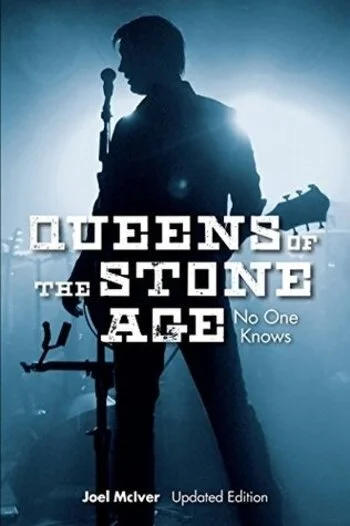
The Queens of the Stone Age Book

Queens of the Stone Age: No One Knows

333.jpg

Author: Joel McIver

Publication Date: 18th March, 2015

Publisher: Omnibus Press

Synopsis:

This updated edition of the first ever book about Queens Of The Stone Age takes in nine years of chaos. Since the first edition appeared in 2005, Josh Homme's band has undergone multiple line-up changes, toured the world and released two acclaimed albums. They have taken on a new version of Homme's old band Kyuss in court and helped to spawn multiple projects such as Them Crooked Vultures and a supergroup featuring Homme, Foo Fighters singer Dave Grohl and Led Zeppelin bassist John Paul Jones. Along the way there have been death, near-death and physical confrontations of all kinds, with Homme's near-fatal asphyxiation during a knee operation in 2010 almost ending the band. Want to know about the pitfalls of being in a rock band? Read it all here...” – Waterstones

Buy: https://www.amazon.co.uk/dp/B00OQEA58I/ref=dp-kindle-redirect?_encoding=UTF8&btkr=1  

FEATURE: Early Forecast: Predicting the Hyundai Mercury Prize 2020 Runners and Riders

FEATURE:


Early Forecast

IN THIS PHOTO: Michael Kiwanuka

Predicting the Hyundai Mercury Prize 2020 Runners and Riders

___________

IT might seem a bit premature…

IN THIS PHOTO: Dave won the Mercury Prize for PSYCHODRAMA in 2019/PHOTO CREDIT: Getty Image

to start forecasting the shortlist for this year’s Hyundai Mercury Prize, but I am looking forward to hearing which artists have made the cut. Before I continue, here is some information about this year’s event:

 “We, along with BBC Music, the Prize’s broadcast partner, believe that it is important in the current crisis to continue to showcase and celebrate the achievements of British & Irish artists and musicians.

The Shortlist of 12 Hyundai Mercury Prize Albums of the Year will be revealed on Thursday 23 July.

The overall winner of the 2020 Hyundai Mercury Prize will be announced on Thursday 10 September at the Awards Show, which is being held at the Eventim Apollo in Hammersmith. The event will celebrate the twelve shortlisted artists and their albums, with BBC Music providing live television and radio coverage of the event.

Hyundai Motor, the Mercury Prize’s title partner, will be celebrating the shortlisted artists and continuing to support innovations in British & Irish music”.

I hope that everything does go ahead as planned because, although gigs have been cancelled and a lot of musicians have had to stream from home, there is the hope that the Mercury Prize will go ahead. So long as things continue as they are, it can take place – though it may have to be socially distanced and take on a different feel this year. It has been a brilliant past year for music from the U.K. and E.I.R.E.

I have been thinking about the albums that are likely to feature when the shortlist is announced on 23rd July. Though there is a couple of months to go, artists who want to be considered had to get their nominations in last week. I have looked ahead at albums yet to be released and, with a few reviews sprinkled here and there, I will make some predictions. Although I will mention thirty artists/albums, I will start off with the albums that I feel are the favourites. In terms of ones to beat, I think Dua Lipa’s Future Nostalgia, Michael Kiwanuka’s KIWANUKA and Laura Marling’s Song for Our Daughter will be favourites. KIWANUKA was released on 1st November, 2019, and it is an album that is more than worthy of inclusion. This is what NME wrote when they reviewed the album:

Where ‘Love & Hate’ was a tentative step forward into identity politics, ‘Kiwanuka’ is a daring leap of self-affirmation. It’s Kiwanuka at his most vulnerable and exposed, as he unpacks the causes of his identity crisis and ultimately finds catharsis by holding a candid mirror up to a world that still relentlessly maligns and mistreats its minorities. “No need to blame myself,” he emotively sings on rebellious opener ‘You Ain’t The Problem’: for the first time in his career, Kiwanuka seems to have something that resembles peace as he navigates personal doubts via political observation. His technique is similar to that of poets Jackie Kay and Lemn Sissay; we see prejudice through Kiwanuka’s eyes. The fact it’s taken him so long to release a self-titled album suddenly starts to make sense: his plea of “Help me carry on” on ‘I’ve Been Dazed’ is gut-wrenching to hear”.

Although the Mercury Prize has been accused of bias towards London artists, I feel this year will be a broader one – even though Kiwanuka resides in North London. Laura Marling and Dua Lipa are sure to be on the Mercury shortlist. Marling has been nominated before – for her 2008 debut, Alas, I Cannot Swim, and 2013’s Once I Was an Eagle -, and I think Song for Our Daughter is one of the best albums of the past year. It is always hard to make predictions regarding the shortlist, as each year throws up surprises and, even if you think you know which album will win, there is a twist. Dua Lipa’s Future Nostalgia is a brilliant album, and she released it early whilst in lockdown; it gave fans a treat and, with it, resounded with critics. It is a bold and brilliant album full of superb cuts, and I think it will be among the shortlisted artists. Although the past few years have seen other genres take home the award, I reckon Pop has been overlooked and, with Future Nostalgia, here is an album that cannot be ignored! I think Nadine Shah should have won the prize in 2018 with Holiday Destination – Wolf Alice won for Visions of a Life -, but I predict the forthcoming Kitchen Sink is a hot favourite. Though the album is not out until 26th June, I feel the album is shaping up to one of this year’s very best. Singles like Ladies For Babies (Goats For Love) are among her best work and, to be fair, it would be nice to see an artist from the North (Shah was born in Whitburn, Tyne and Wear) win the Mercury. Though I am not picking an outright winner, I do think Kitchen Sink deserves to be in the mix.

IN THIS PHOTO: Nadine Shah/PHOTO CREDIT: Michael Clement Photography

In terms of the remainder of the top-ten, there are some masterful albums that just have to be included in the Mercury shortlist! FKA twigs’ MAGDALENE is one of 2019’s finest albums (released back in November), and it scored huge reviews. Here is what AllMusic wrote:

On her early EPs and LP1, FKA twigs' Tahliah Barnett expressed the intersections of love, pain, fragility and strength with remarkable eloquence. While making Magdalene, she embodied them. Not only did she endure the end of a long-term relationship, she had surgery to remove six large uterine fibroids (colorfully described by her as a "fruit bowl of pain"). These events became the heart of her second album, which uses the duality of Mary Magdalene as a lens for its wounded yet resilient feminine energy. An herbalist and confidante of Jesus portrayed as a prostitute in the Bible, Mary Magdalene's gifts were overshadowed by her ties to a great man. Barnett digs into and subverts this relationship on Magdalene, most prominently on "Holy Terrain," a dramatic, erotic duet with Future. While she wonders if she'll ever find a man who can support her the way she's supported men in her past over its trap beats, warping metallic tones, and Bulgarian folk chants, the way she's assisted on the track by A-list co-producers like Skrillex and Jack Antonoff -- as well as by Future's repentant bars -- is a small step in the right direction. On "Mary Magdalene," she draws on both sides of her archetype, bridging women's sensual and healing powers with a heroic dose of independence”

I would be very surprised if MAGDALENE was ignored, as it is a stunning achievement. Mystery Jets put out A Billion Heartbeats in April, and it is, in my view, the best album so far from the London band. It is their most ambitious, confidence and expansive record, and I feel it deserves a Mercury nomination. J Hus’s Big Conspiracy is another terrific album and, although my predictions so far include a lot of London acts, it would be a shame if an album as celebrated and wonderful as Big Conspiracy was overlooked. Richard Dawson’s 2020 is an album a lot of people might not have heard of but is a magnificent record. This is how 2020 is described on Richard Dawson’s Bandcamp page:

2020 is the sixth solo album from Richard Dawson, the black-humoured bard of Newcastle. The album is an utterly contemporary state-of-the-nation study that uncovers a tumultuous and bleak time. Here is an island country in a state of flux; a society on the edge of mental meltdown”.

What about the last two albums in a theorised top-ten? I think Charli XCV’s how I’m feeling now is another accomplished and hugely arresting Pop album – like Dua Lipa’s Future Nostalgia – that sort of takes the breath and stays with you long after you have heard it. Beatrice Dillon’s Workaround was released in February and, similar to Richard Dawson’s 2020, it is an album few people will instantly recognise. It received a lot of praise; this is how the album is described on her Bandcamp page:  

‘Workaround’ is the lucidly playful and ambitious solo debut album by rhythm-obsessive musician and DJ, Beatrice Dillon for PAN. It combines her love of UK club music’s syncopated suss and Afro-Caribbean influences with a gamely experimental approach to modern composition and stylistic fusion, using inventive sampling and luminous mixing techniques adapted from modern pop to express fresh ideas about groove-driven music and perpetuate its form with timeless, future-proofed clarity”.

There are many other British and Irish albums from the past year that have made a big impact and are worthy of consideration by the Mercury panel. Albums that will definitely be on the minds of many include The Murder Capital’s When I Have Fears. Although it was released in August, I think it is still fresh in the minds of many. The Dublin five-piece have been compared to the likes Joy Division to IDLES, but their sound is very much their own; they are one of the finest bands on the scene at the moment. When I Have Fears is their debut, and it would be great to see the album on the shortlist. Whilst some might find it unlikely, I would not be shocked if Harry Styles’ Fine Line was considered too. It is another strong Pop album and, although it is more commercial than others I have mentioned, the Mercury Prize has never been averse to more mainstream Pop – Ed Sheeran’s ÷ was shortlisted in 2017. The Big Moon’s Walking Like We Do is a terrific album, and I think the London quartet are in with a shot. Lanterns on the Lakes delivered the tremendous Spook the Herd in February. This is what The Line of Best Fit wrote when they reviewed the album:

Even in the quietest moments on Beings, it felt as if there was always something ringing out, from Angela Chan’s violin to Wilde’s effect-laden vocals. There were no gaps left unfilled, as if there was anxiousness on the band’s part about giving the sound too much room to breathe, tomeander.

That’s dissipated on Spook the Herd, and they sound so much freer as a result; if there’s a throughline, it’s Ol Ketteringham's drumming, which has always had a cascading, jazzy feel to it but this time out, he anchors the group in a way he hasn't previously.

The overarching effect is one of the calm during the storm, as if the realisation of some of the band’s worst fears has cleared their heads, sharpened their senses, and compelled them to look for the light breaking through the clouds, however dim. The results are musically elegant, emotionally eloquent, and absolutely vital”.

The 1975’s Notes on a Conditional Form arrived on 24th April and, whilst it received a mix of very positive and slightly mixed reviews, I would not bet against the band being nominated for a second year running – they were nominated for A Brief Inquiry into Online Relationships last year; Dave won for PSYCHODRAMA. Whoever is in the shortlist this year, it will be one of the most varied and close-run lists for many years. So much tremendous music has arrived since last year’s Mercury Prize, so expect July’s shortlist to be full of gold. There are other albums that have impressed me that could be in with a shout of receiving a nomination. This all a bit of fun and speculation and, whilst it is a way off, I think this year’s Mercury Prize will be an important one. I hope the event can be held and, if so, I feel more people will be tuned in than ever before. I will come to albums that, whilst they might not be in the eventual shortlist, are still worthy of selection.

IN THIS PHOTO: The 1975

A few other albums that I feel are in with a decent chance of being nominated are Pigs Pigs Pigs Pigs Pigs Pigs Pigs’ Viscerals, Four Tet’s Sixteen Oceans and Tim Burgess’ I Love the New Sky. Pigs Pigs Pigs Pigs Pigs Pigs Pigs hail from Newcastle Upon Tyne, and they are one of the most popular and impressive new bands coming through. I wanted to select this passage from a Music OMH review that shows how the band have evolved since their earliest days:

Still, they have evolved with each of their albums; their songs have become faster and tighter. Their 2017 debut, Feed The Rats, consisted of two 15-minute tracks that sandwiched between them a single piece of lean meat. 2018’s King Of Cowards managed twice as many tracks in a similar run time but maintained a hazy, stoned vibe; more weight was provided in the form of an aromatic cloud of smoke that you had to wade through in order to get to the riffs

Pigs Pigs Pigs Pigs Pigs Pigs Pigs definitely deserve a Mercury nod, and it would be great to see an act from the North East like Pigs Pigs Pigs Pigs Pigs Pigs Pigs or Nadine Shah win. I think Tim Burgess’ I Love the New Sky will be in the mind of the Mercury panel/judges, and the universally positive reviews the album has accrued means it is another album that one should not discount when it comes to the Mercury Prize. Porridge Radio and Georgia are two fairly new British acts. Porridge Radio are a superb band, and their Every Bad album gained a lot of love when it came out in March. Led by Dana Margolin, the fantastically instant-yet-nuanced songs signal them out as a band to watch closely. Every Bad is their debut album and, although they have been putting out music for a few years now, I think this year is one that has truly put them on the map. Similarly, Georgia (Georgia Barnes) is not brand-new, but her second album, Seeking Thrills, is her finest work. She co-wrote all twelve tracks on the album, and I would love to see her get a Mercury nomination.

There are albums that, whilst impressive and worthy, are probably a little less likely to get onto the shortlist – though one can never make concrete predictions, as the Mercury Prize is always unpredictable! Every year, you find an album on the shortlist that is less conventional than most. Whether you want to call the albums outsiders or experimental, it is refreshing to find these usually smaller artists recognised for their work. Shabaka and The Ancestors is fronted by London saxophonist Shabaka Hutchings, and the We Are Sent Here by History album is terrific. The Guardian and many others gave it a positive review, but it is a record that was not as covered and talked-about as many others I have mentioned in this feature. Glass Animals’ Dreamland, Dream Wife’s forthcoming album, So When You Gonna…, and Ultraista’s Sister are definitely albums to keep an eye out when we get closer to July. Although Dream Wife’s new album is not out until 3rd July, their eponymous debut of 2018 was not nominated for a Mercury Prize, and I think that was an oversight! They are an incredible live band, and one can learn more about their upcoming album through their Bandcamp page:

Dream Wife (Alice Go, Bella Podpadec and Rakel Mjöll) are back with their second album and just like the title suggests, this is a record brimming with adrenaline and playful excitement (“It’s an invitation, a challenge, a call to action,” says Rakel). From the jagged, CSS-like guitar of “So When You Gonna…” to the hooky brightness of album opener “Sports!” and the whip-smart lyrical asides of “Validation”, these are moreish, pumped up, sparkling tracks that feel like newer, dynamic evolutions of debut standouts, like “F.U.U.” and “Hey Heartbreaker.”

But they often lean into sweeter, softer, more emotional moments too. “Temporary” and “After the Rain” in particular – songs about miscarriage and abortion, respectively – are complicated, painful stories told through a soft and hopeful lens. These were difficult subjects to write about, but Dream Wife think it’s important to bring these conversations into the public sphere, to refuse to brush things under the rug, to empower and support others in the process”.

Bombay Bicycle Club put out Everything Else Has Gone Wrong in January, and I wonder whether it will be one of those albums that sort of surprises people and gets onto the shortlist. Although it received mainly positive reviews, I still think it is an outside bet. Two of my favourite albums from this year have come from Cornershop and Baxter Dury. Cornershop’s England Is a Garden is their ninth studio album, and it is amazing to see how consistent the band are - considering their debut arrived in 1994! I love how much detail there is in their music, and I think their latest album is one of their most fully-realised and memorable. Baxter Dury’s The Night Chancer is a very different beast, yet it is filled with incredible characters, lyrics and performances. Dury’s sixth studio album gained him some of the best reviews of his career. This is what Gigwise wrote in their review:

A man of many faces, Dury is able to shrug on the sheep’s clothing of any number of modern fiends. ‘Slumlord’ drags its way through a mire of underworld slime, ‘Saliva Hog’ grovels for attention and ‘Sleep People’ slurs about the bittersweet life of being a fashion blogger. Whether hammy, Disney villain or sincere, Dury’s performance is eminently believable - and enjoyable - in each.

As ever, the female vocals that feature throughout Dury’s tunes serve to counteract his own coarse drawl. The effect is magnificent, drawing out the landscape in which Dury operates and colouring it in. Slinky bass, soaring orchestra and trilling synths also serve to lift the mood, adding stage dressing, hair and make-up, and mise-en-scene to Dury’s acting masterclass.

The Night Chancers presents a storyboard of modern-day villains, but does not smirk or gloat at them. It merely watches and assimilates. Alongside its pleasing soundtrack of French pop, electronica and disco, Baxter Dury has settled on a unique formula that works”.

Three more albums are in my thoughts; ones that might well be in with a shout come July. Again, Jessie Ware has not released her latest studio album. What’s Your Pleasure is out on 19th June, and I think Ware is producing her best work to date right now. Even though the album is not out in the world, the fact we have heard quite a few tracks from it - Adore You, Mirage (Don’t Stop), Spotlight, Ooh La La, and Save a Kiss – means that many of us are familiar with her new sound and are eagerly awaiting an album. Pet Shop Boys are among the old guard, but they are one of these bands/duos that continue to innovate and surprise. Hotspot is a reliably packed and stunning album from Neil Tennant and Chris Lowe, and I think it is strong enough to be a consideration for a Mercury shortlist place. This is AllMusic’s take on Hotspot:

Pet Shop Boys resume their exceptional late-period run with Hotspot, their third in a series of high quality collaborations with producer/engineer Stuart Price. Recorded at Berlin's legendary Hansa Studios, the acclaimed duo's 14th album finds them firmly in their element, delivering crisp electro-pop invocations, wry dance bangers, and melodic gems both sunny and stormy. Still more or less in the self-described "electronic purist" mode of 2013's Electric and 2016's Super, Neil Tennant and Chris Lowe make a few allowances here, particularly on the melancholic standout, "Burning the Heather," which features some crafty psych-inspired guitar work from Suede guitarist Bernard Butler. Opening volley "Will-O-the-Wisp" is all hard synth bite and rippling tension, possessing a specific kind of dark energy that few acts can summon so well, let alone after nearly four decades together.

Its intensity is offset by brighter dance cuts like the wry "Monkey Business" and the buoyant "Happy People" with its infectious chorus threaded with Tennant's distinctive spoken-word rhymes. Lightly cloaked political stabs pop up here and there like on "Dreamland," a collaboration with Years and Years' Olly Alexander, that imagines a borderless world free of Brexit fears and immigration policies. The clever melodic shifts that are one of Pet Shop Boys' hallmarks remain in evidence across Hotspot, giving songs like the tender "Only the Dark" a dreamy sense of uplift. Through it all, Tennant and Lowe feel as confident and progressive as ever, honoring their signature sound while continuing to push it into the future”.

Shopping are a Post-Punk band and their fourth album, All or Nothing, ranks alongside the best of this year so far. The band have pushed on and expanded since 2018’s The Official Body; All or Northing mixes in a range of genres. Often, when a band evolve and try something new, it can result in something patchy and less than what came before. In the case of Shopping, I think they are hitting a peak, and it would be nice to see that rewarded with a Mercury nod! We have to wait until 23rd July to see which twelve albums make the shortlist. I am pretty sure that most of the twelve have been covered in this feature, and I will be interested to see the albums rank alongside one another. Whilst I want Nadine Shah’s Kitchen Sink to win the Mercury, it has been such a strong last year for British and Irish music, so the competition will be hot! In a year that has been tough for the music industry, the 2020 Hyundai Mercury Prize is something we can…

IN THIS PHOTO: Shopping

ALL look forward to.

FEATURE: Love at First Sight: The Kylie Minogue Playlist

FEATURE:

Love at First Sight

The Kylie Minogue Playlist

___________

I am doing a series of…

xxxza.jpg

PHOTO CREDIT: Rankin and Katie Grand

birthday playlists over the next couple of months to celebrate certain artists. As it is Kylie Minogue’s birthday today (28th May), I thought it was a good time to put together a collection of her best songs in a playlist. In future weeks, I will explore some other much-loved artists but, today, I want to feature one of the greatest Pop artists of all-time. I was familiar with Minogue’s music from the age of about six (in 1989), and I have followed her ever since. Through her career, Minogue has evolved and explored numerous genres. It is amazing to think how much ground Minogue has explored in her three-and-a-bit-decade career! In honour of her birthday, here is an ultimate playlist that celebrates one of music’s most-loved and…

CELEBRATED artists.

FEATURE: Inside of Every Line: The Kate Bush Fanzine, HomeGround, and a Truly Passionate Fanbase

FEATURE:

Inside of Every Line

The Kate Bush Fanzine, HomeGround, and a Truly Passionate Fanbase

___________

THIS will be a fairly short feature…

but I have been reading a lot about Kate Bush and trying to get a view of how other people worship her. I was born in 1983, so my experience of Kate Bush’s music is largely in the form of looking back and sort of catching up. I missed out on many of her studio albums when they were new because of my age, but I started to pick up on her music pretty early. Bush means something different to everyone, and there are so many sides to her. One only needs to think about the people who attended her long-awaited return to the stage in 2014 – with her Before the Dawn residency – to realise the sort of love there is out there for her. Among those who saw Bush live in 2014 includes Kylie Minogue, Annie Lennox and Anna Calvi; Stephen Fry, Jude Law, Miranda Richardson and Terry Gilliam. Actor Gemma Arterton also saw Bush perform and, back in 2010, she explained how she’d love to play Kate Bush on the screen one day:

Gemma Arterton has admitted that she would love to play Kate Bush on the big screen.

However the actress is worried about playing a living artist as they may not like her portrayal of them. And, without giving anything away, she revealed that there were quite a few people that she would like to play in a movie.

Speaking to ITN she said: "Kate Bush, maybe, in the future. There are a few people [I'd like to play], but they're still living. I just think it's weird playing someone who's still alive. If they're rock stars they can be quite scary, people like Courtney Love. 

sssss.jpg

IN THIS PHOTO: Gemma Arterton/PHOTO CREDIT: Philip Gay/The Guardian

"I love Kate Bush and I reckon I could do a good Kate Bush impression but she's still alive - good!"

"I feel like I'm a rock star trapped in an actress's body, I'm just rubbish, but luckily I might play a rock star one time. I don't have to worry about writing music."

Arterton is back on the big screen this week in comedy Tamara Drewe, which is the new movie for The Queen filmmaker Stephen Frears, as the title character”.

I look online now, and there is so much love for Bush’s music still. Unlike most artists, Bush is seen almost as a deity: there is this camp that see her as something akin to a goddess or supernatural talent. I have covered the cult of Kate Bush and her army of fans before, but I wanted to circle back, as I have been reading a lot of books relating to Kate. Not only are there excellent books like Adventures in Kate Bush and Theory by Deborah M. Withers, My Life With Kate Bush by Riaz Ali and Kate Bush: Under the Ivy by Graeme Thomson; there is the incredible photographic book, Kate: Inside the Rainbow, from her older brother, John Carder Bush. It is wonderfully touching to see authors and fans write books about her and ensure that this stunning and hugely inspiring musician is given the respect and love she deserves.

Over forty years from her debut album, Kate Bush commands the sort of adulation and admiration reserved for a precious few. Every day, I see someone post online some sort of paen to Bush; a song shared here or a tweet that expresses devout dedication to a true original. I wonder whether it is a product of the pre-social media age, but I recall the days when there were fanzines and clubs for various artists. Maybe the quick and wide access we have to digital resources means that people would feel a bit lumbered having to subscribe to a magazine or taking the trouble to read a magazine. That said, the printed music press is still strong, though it is being threatened by the current situation and climate. I love the fact that there was a long-running and lovingly-curated fanzine dedicated to Kate Bush: the magnificent HomeGround. Actor Guy Pearce is one of the legions of fans who felt that their week was only made relevant and bright by the arrival of a new edition of HomeGround – a treasure trove of information and news. Pearce actually spoke about his love of Kate Bush with The Telegraph back in 2018:

Do you have any of your old movie memorabilia?

I don't usually take something from a film, to be honest. Chris Nolan [the director of Memento] gave me one of those Polaroid cameras that folds out. Not the one that we use in the film, he's got that. But a new one... I do own a dress that Kate Bush wore in a video. From The Sensual World. I bought it at a charity auction. Capital Radio were doing a charity auction and I'm a huge Kate Bush fan. And my friend, who runs the Kate Bush fan magazine said to me, "You should buy it". So we rang up and bought it.

IN THIS PHOTO: Guy Pearce

Where do you keep it?

Well for some years my ex-girlfriend had it, because she was a huge Kate Bush fan as well, but I've now got it back. So it's just hanging up in the cupboard. It needs to be out on one of these [he gestures to a dressmakers' dummy that happens to be in the corner of the room]. It is pretty amazing. I remember Shaney, my old girlfriend, getting hold of it and there was a little sweat mark in the armpit and Shaney was [excitedly] going "Ohhh it's Kate Bush's sweat!"

I am digressing a bit but, for those who are unfamiliar with the Kate Bush fanzine, here are some details regarding HomeGround:

The longest running Kate Bush fanzine, which started in 1982. The final printed issue, number 79, was published in 2011. It was run by Krystyna Fitzgerald-Morris, Peter Fitzgerald-Morris and Dave Cross from the UK.

The fanzine was conceived in Dave Cross's flat in May 1982. 25 copies were run off an office photocopier. Through the years, the fanzine was produced with ever more professionality and in fact got the support of Kate and the people around her. Fans contributed stories, artwork and poetry, while the editors followed every detail about Kate in the press worldwide, even during quieter times.

In 2014, two big books summarizing the impressive output of the fanzine were released by Crescent Moon Publishing: HomeGround Anthology volumes 1 and 2. It is a detailed look at Kate's career through the eyes of fans around the world, along with the aforementioned artwork, poetry and prose from fans”.

PHOTO CREDIT: Mondadori Portfolio/Getty Images

I have both editions of the published HomeGround books. Volume one and two can be purchased and enjoyed, and here is some more information about them – starting off with a quote from Guy Pearce:

For a Kate Bush fan there was nothing more satisfying, other than perhaps Kate herself dropping around for a quick cup of tea, than the arrival of a much awaited issue of HomeGround. Just as the illusion of being the one and only devotee reaches overwhelming heights a surprise package is delivered as a joyous reminder of Kate Bush’s hold over, not just me, but many of us.”

… so Emmy Award winning actor Guy Pearce introduces HomeGround: The Kate Bush Magazine Anthology 1982-2012, a project we have worked on for over five years, and which we are delighted to say, is now available to order.

The first issue of HomeGround appeared in 1982, four years after Kate Bush’s dramatic debut with Wuthering Heights. Starting with an ancient manual typewriter, real scissors and a pot of genuine paste, we mounted articles on recycled backing sheets and added hand-drawn artwork to fill the gaps. The first issue was photocopied, the pages hand-stapled together and twenty-five copies were given away to fans we knew. Only later did we discover the magic of word processing, and then desktop publishing. 

From those beginnings HomeGround became a cornerstone of the ‘Kate-speaking world’, going on to co-organise with the official fan club four fan conventions and events at which Kate Bush and members of her family and band appeared; arrange at her request a team of fans to be extras in two of her videos, and organise annual informal fan gatherings on Glastonbury Tor, and at Top Withens, the storm-blown ruin on Haworth Moor thought to be the place which inspired the creation of Emily Brontë’s Wuthering Heights. Years before the internet, HomeGround became a place where fans could discuss Kate’s music, and a place where they could publish creative writing and artwork inspired by that music.

Built around the thread of HomeGround’s retracing of the scenes of Kate’s musical career, these unique books include material from over 400 HomeGround contributors from the thirty-year existence of the magazine, and include material inspired by all periods of Kate’s musical progression.

This is a two-volume set published both in hardcover and paperback. Volume 1 covers Kate’s career from the late 1970s to the late 1980s – from before Wuthering Heights to The Sensual World and the box set set This Woman’s Work. Volume 2 covers Kate’s career from the 1990s to date – from The Red Shoes to 2011’s 50 Words for Snow. Both volumes include a detailed Kate timeline and discography and a “who’s who” of people involved in the story. 

IN THIS PHOTO: Kate Bush in 1985

These volumes also contain a definitive collection of the beautiful Kate-related artwork from professional artists Paulina Stuckey-Cassidy and Steven Brown, the riotous Cosmic Kate graphic stories of Chris Tilley, the Kate-related extemporary photography of Rob Assenberg, Paul Camilleri, and Jules Angel and the work of published poets John Carder BushCollin Kelley, Kyla Clay-Fox, Antonello Saeli, and Jeff Side”.

I thought I knew everything about Kate Bush before I read the HomeGround books, but it has been a voyage of discovering looking through these pages! I am not sure whether other artists have had fanzines of such quality and depth, but HomeGround is replete with illustrations and poems about Bush; collated reviews of her albums and interviews. It is a shame HomeGround printed its last edition in 2011, because there is still a voracious appetite out there for Bush’s music – in an age where we get most of our music content online, I think a fanzine would be a wonderfully archaic and welcomed thing! HomeGround has given me a wonderfully vivid and variegated view of Kate Bush’s biggest fans and how, since 1982, she has commanded such dedication from so many people. One can glean a certain amount from biographies and archived interviews. HomeGround provides this incredibly detailed and rich documentation of Bush’s career and the sheer loyalty of her fanbase. I am just finishing the second edition, and I have been wondering whether a third stage of HomeGround could be started.

Bush has not released another studio album since 2011’s 50 Words for Snow, though she cannot be done yet – one suspects there are another couple of albums left! Also, as social media is so vast and predominant, we can collate articles and pieces concerning Kate Bush from 2011 to now. Her 2014 Before the Dawn residency is ripe for inclusion, and there has been some Bush activity since then – including the remastering of her back catalogue and the release of a book of lyrics, How to Be Invisible, in 2018. So many artists have been inspired by Bush – including St. Vincent and Bat for Lashes -, and I think a new compendium of HomeGround would take Bush’s story from 2011-2020 and introduce a new line of fans to her work. Regardless, I love the HomeGround fanzine, and the books of the magazines (if you follow?) are essential purchases for diehards and casual Bush fans alike. The sort of intense and fascinating chronicling of Bush’s work and fan/media appreciation has not really been seen since 2011, but she continues to have articles and books written about her – there are two upcoming books of photographing arriving fairly soon. I have read through the illuminating and fascinating pages of HomeGround (the books) and it is so moving to see so much love on the pages and inside of every line! One can question whether an artist warrants such lofty and fulsome appreciation but, when you listen to the music of Kate Bush and explore her visual and audio world, it is…

zz.jpg

IN THIS PHOTO: Kate Bush in front of Royal Liver Building in Liverpool while on the Tour of Life/PHOTO CREDIT: Getty Images

NOT hard to see why.

FEATURE: Spotlight: Public Practice

FEATURE:

Spotlight

Public Practice

___________

THIS is a part of the year…

where festivals are offering stages and platforms to the best new artists around. I think it is a shame that so many acts who were hoping to play to new fans and get more exposure might have to wait until next year. Hailing from New York, Public Practice (Sam York: Vocals, Vince McClelland: Guitar, Drew Citron: Bass/Synth/Vocals, Scott Rosenthal: Drums) have delivered one of this year’s best albums in the form of Gentle Grip. The List published an article earlier in the year that discussed the album’s upcoming arrival and what went into the recording:

New album Gentle Grip, out on Fri 15 May, deals with tension and release, both musically (danceable rhythm sections cut through with angular guitars) and in the lyrics. Lead lyricist York tells us that 'the overarching themes surround essential "moral gymnastics" – how do we function in society? How do you walk through your daily life trying to be good when everything is so corrupt?' This constant questioning and lack of certainty adds to the group's unpredictability, with songs taking unexpected turns and wrong-footing the listeners. 'You don't always get the chorus when you want it,' York says, 'and some songs will leave you questioning what the chorus actually is'.

The group recorded the majority of Gentle Grip in their own practice space and studio, something that York feels they were extremely fortunate to be able to do. 'Getting to do it ourselves, and pick and choose how we wanted songs to sound, allowed us to make them exactly what we wanted them to be'. A major exception to this is the album's blistering opening track 'Moon', which was recorded live in another larger studio. Recording it live allowed Public Practice to introduce themselves to the world on their terms, as a formidable unit, weaving together sounds to create an uncompromising sound.

In terms of their live gigs, York says the band very much enjoy what they're doing and want the audience to feel and understand that. Discussing how they put on a show, she says, 'we don't shy away from the fact that we are performers, we don't shy away from the theatrics', referencing not only key post-punk/new wave inspirations like Talking Heads but also traditional pop music. 'The music is how we got to the stage, but when you have that stage you should use it'”.

I have listened to Gentle Grip quite a lot, and I am finding new things to enjoy each time I visit. In terms of sound and influence, I think people have comparted Public Practice to everyone from Blondie to The B-52’s. In their review, NME had this to say:

‘Gentle Grip’ presents some conundrums for both listeners and the band themselves. In its subject matter, it ruminates on the “moral gymnastics” of life in 2020 – one where we’re trying to do our best for the world around us, but are also still driven by material wants and desires. The early Blondie gleam of ‘Compromised’ finds York torn between the two sides over tumbling guitar hooks, spinning circles around herself as she whispers: “House is important/Car is important/Shoes are important […] Trees are important.”

Sonically, though, the album is also a puzzle – namely, where on earth is it going to go next? That unpredictability exists as it changes from track to track but also within each individual song themselves. Opener ‘Moon’ is a dark, swirling piece that puts Public Practice’s love of the theatrical at the forefront, York presiding like a mythical higher being over a thunderstorm of drummer Scott Rosenthal’s beats and McClelland and Citron’s spiralling, spiky accompaniments. Later, ‘Disposable’ metamorphoses from chunky Rapture riffs ready to soundtrack the grimiest of DIY discos to something more fragmented and eerie, like morning sun piercing through warehouse windows and shaking you out of party mode.

‘Gentle Grip’ doesn’t let you return to the real world for too long though, continuing on its ever-surprising journey through irresistible grooves and glittering masterpieces of invention. We might not be able to hit a proper dancefloor for some time but, with their debut album, Public Practice are urging us all to push the furniture aside and find relief in the space we’ve got. Don’t let their call go unanswered”.

xsss.jpg

I would encourage people to go and listen to Gentle Grip, as Public Practice have many years in the music industry ahead of them. That is where they are now and, without knowing when they can tour and get out and see people, I want to head back to last year when many sites and magazines were starting to pick up on this remarkable band. There aren’t too many features/interviews online relating to the band, but DIY featured them in 2019. I have picked out a couple of questions that I feel are important when it comes to understanding the band: which artists inspired them and how important New York is:

Who were some artists that inspired you when you were just starting out (and why)?

The U2 album that they installed in everyone’s phone, unsolicited. Every time we plug in my phone in the van on tour this record we didn’t even know existed plays through the speakers and now we all inadvertently know the words to the first song.

You’re based in New York - what’s the music scene like there at the moment? Are there other artists breaking through at the same time that you take inspiration from?

We are very lucky to be a part of such a vibrant music scene in NYC where basically any night of the week there are bands worth seeing playing near by. We have a little family of bands that we play with often including Pill, Bodega, Future Punx, B Boys and Gustaf”.

I do love the band, and I appreciate how fresh and uplifting their music sounds whilst, at the same time, providing plenty of nuance and interesting angles. It is a pity they will not get to tour for a while, but I encourage people to follow them online and go and buy their music. I wanted to end with a recent interview from NME, as they were keen to catch up with one of the hottest rising bands of the moment. The interview is fascinating – I did not want to include the whole thing -, but they were asked about the future and touring:

We’re going through a big cultural shift, which is a pretty weird time to be releasing records,” frontwoman Sam York sighs from her apartment. “We put a lot of work into this record and I’m excited to share it any way we can, but not being able to do shows is pretty heartbreaking as a performer.”

Over the last couple of years, Public Practice have made themselves an integral part of the New York DIY scene alongside the likes of Bodega, Future Punx and Pill. This isn’t any of the members’ first rodeo – York and guitarist Vince McClelland were formerly a part of promising post-punk group WALL, while bassist Drew Citron and drummer Scott Rosenthal were bandmates in Beverly. Given those projects, it’s unsurprising that this current outfit have become quietly renowned as one of the most exciting bands in the city, both on and off stage. Their songs and performances are theatrical and compelling, and are always ready to fuel a good time.

While other artists have been going live online, the New Yorkers have mixed opinions about doing it themselves. York concedes that there are “a lot of cool, creative things that can be done with live-streaming”, but she can’t reconcile the idea of performing to a screen with the feeling of an actual gig. “Being on stage with lights and the energy of a room full of people is incredibly powerful,” she says. “That’s something that that simply does not happen with this kind of online interaction. I don’t think it’s comparable.”

As for what lies ahead for Public Practice beyond the next few months, the band themselves aren’t sure. McClelland has been using the time in isolation to work on new music, while York has been struggling to access her creativity. They’re also aware of how slow the return to physically being able to take in culture will be. “I genuinely can’t picture what the cultural landscape is gonna look like,” York sighs again. One thing she can promise is the band will “keep making music we believe in and feel happy and excited to perform and share.” No matter what the future looks like, at least we’ll have that”.

I have high hopes for Public Practice, as they have a magnificent sound and have released a belting album. I hope they get to come to the U.K. later this year or next year, and I would really love to see them play. The New York band are definitely worth keeping an eye out for, as they are going to be…

PRETTY big very soon.

_______________

Follow Public Practice

FEATURE: Vinyl Corner: Rod Stewart – Atlantic Crossing

FEATURE:


Vinyl Corner

Rod Stewart – Atlantic Crossing

___________

IN the 1970s…

xccx.jpg

Rod Stewart’s career went through a couple of different phases. It was a bit of a mixed and slow start to the decade. 1974’s Smiler – his fifth solo album – gained some mixed reviews, and it was not one of his best works. Things change drastically the following year when Atlantic Crossing arrived. Though it is hard to buy the album on vinyl in perfect condition, there are options around, and you can pick up a pretty good copy. Stewart’s sixth solo album went to number-one on the U.K. charts, and Atlantic Crossing was his bid to gain some new commercial success; Stewart changed direction on Atlantic Crossing (and he signed to Warner Brothers), and the album was divided into two different sides:

Fast Half (Side One)

1.    "Three Time Loser" (Rod Stewart) – 4:03

2.    "Alright for an Hour" (Stewart, Jesse Ed Davis) – 4:17

3.    "All in the Name of Rock 'N' Roll" (Stewart) – 5:02

4.    "Drift Away" (Mentor Williams) – 3:43

5.    "Stone Cold Sober" (Stewart, Steve Cropper) – 4:12

Slow Half (Side Two)

1.    "I Don't Want to Talk About It" (Danny Whitten) – 4:47

2.    "It's Not The Spotlight" (Barry GoldbergGerry Goffin) – 4:21

3.    "This Old Heart of Mine" (Lamont Dozier, Brian Holland, Eddie HollandSylvia Moy) – 4:04

4.    "Still Love You" (Stewart) – 5:08

5.    "Sailing" (Gavin Sutherland) – 4:37”.

I love Rod Stewart’s voice through Atlantic Crossing, and I think the album contains some of his best tracks. I grew up listening to songs like Sailing, I Don’t Want to Talk About It, Three Time Loser and Drift Away. During this album, Stewart cut ties with long-time associates such as Ronnie Wood and the musicians he had worked with when he was signed to Mercury Records. Completely overhauling his sound and working practice, Stewart recruited The Memphis Horns and three-quarters of Booker T and the MG’s. Rod Stewart left The Faces by the end of 1975. The group disliked his change of sound, and it seemed like Stewart and the rest of the group were moving in different directions. This article from Ultimate Classic Rock sheds more light on the success of Atlantic Crossing and Rod Stewart’s view on the album:

 “Although Stewart continued to struggle to gain traction on American radio stations, Atlantic Crossing was a sizable hit the U.S. as well as the U.K., breaking the Top 10 and going gold in the States while hitting No. 1 in Britain and spinning off a pair of Top Five singles ("Sailing," No. 1, and "This Old Heart of Mine," No. 4). Two years later, Crossing would deliver yet another hit, when "I Don't Want to Talk About It" was released as a two-sided single with "The First Cut Is the Deepest," a cut from his follow-up effort A Night on the Town.

Although some listeners, missed the Faces-style rootsy charm of his previous records, Crossing's success — coupled with guitarist Ron Wood joining the Rolling Stones — put the writing on the wall for the band, as well as Stewart's increasingly commercial focus on subsequent efforts.

"The world is a lot bigger than Great Britain and the Faces. A lot bigger," he told Creem. "I must have had blinkers on these last five years. I must have been mad using the same musicians over and over again. I should have branched out a long time ago. All the fun has come back into recording for me at last. I've never liked going into the studio and now I can't wait to go back. I'd always used the Faces on my albums so for that reason I've wanted to keep the band together. But now I know I can stand on my own two feet."

That attitude spilled over into the Faces' final round of dates, a tumultuous U.S. tour booked through the fall of 1975, and by the end of the year, the group announced it was splitting up — leaving Stewart to get right back to work on his next solo album.

"It only took three weeks' solid recording time to do it," he laughed. "When an album is only 40 minutes long, I'm a firm believer that it shouldn't take a year to make. I think I could make another one before Christmas".

Although many of the songs on Atlantic Crossing were not written by Rod Stewart, I think he makes the tracks his own. Stewart would find further success with 1976’s A Night on the Town; an album that contains classics like The First Cut Is the Deepest. The 1970s was a changeable and mixed decade for Stewart in terms of success, but I think Atlantic Crossing is a great album and one of his best solo efforts. In their review, this is what AllMusic had to say:

Rod Stewart's sixth album was called Atlantic Crossing because the singer was literally crossing the Atlantic, making America his new home for reasons of the heart (he was fully enamored with actress Britt Ekland at the time) and the wallet (he was eager to escape Britain's restrictive tax rates). As it happens, 1975 was a perfect time for a new beginning for Stewart: the Faces were falling apart, his last LP, Smiler, wasn't roundly loved, and he had wrapped up his contract with Mercury and signed with Warner, so he completely rebooted, hiring legendary producer Tom Dowd to steer him through a slick, streamlined revamping of his signature sound. The first thing to be ditched were any traces of the ragged folkie who had popped up on all his first five solo albums, including on his career-making hit "Maggie May," a move that may partially have been due to Stewart's longtime writing partner Martin Quittenton deciding to sever ties with him.

Without those ringing acoustic guitars, Dowd and Stewart ratcheted up the rock & roll, soul, and whiskey-soaked ballads, first taking a stab at recording the album with the MG's (outtakes of which popped up on Warner's 2009 double-disc Collector's Edition of the album), then expanding this core group with other studio pros who could easily settle into a smooth, polished groove. The results were splashy without being glitzy, soulful without being gritty, an impressive big-budget revamp of Stewart that benefited enormously from a clutch of great songs, both originals and covers. Tellingly, all the great originals arrive on the first side dubbed "The Fast Half," with Rod writing blistering, funny rockers about being laid up three times with VD ("Three Time Loser") and suffering through an unwanted sobriety ("Stone Cold Sober"), then easing back for a quick romance on the Jesse Ed Davis co-written "Alright for an Hour" -- all good indications that his heart was still at a party. But the "Slow Half" did reveal that Stewart had lost none of his fine, nuanced interpretive skills, as he tore into Danny Whitten's "I Don't Want to Talk About It," took his first stab at "This Old Heart of Mine," and kept "Sailing" from drifting away into sentimentality. When taken together, the two halves might have showcased a somewhat slicker Stewart, but he was still the same old Rod with a big, oversized heart and an irresistible bad boy smirk. He may have crossed the Atlantic, but he was none worse for the wear for his journey, at least not yet.

Even if you are not a Rod Stewart fan, I think Atlantic Crossing is a fantastic album with plenty of variety and standouts. It is brilliantly produced (by Tom Dowd), and Stewart gives every song his all. Atlantic Crossing is not often talked about, but I think that it is a great album…

WORTH some serious exploration.

FEATURE: An Underrated Genius: A Perfect Ten: Ringo Starr’s Best Beats

FEATURE:


An Underrated Genius

IN THIS PHOTO: Ringo Starr captured in London in 1963/PHOTO CREDIT: Cyrus Andrews/Michael Ochs Archives/Getty Images

A Perfect Ten: Ringo Starr’s Best Beats

___________

I will try not to step on my own toes…

PHOTO CREDIT: Bent Rej

and repeat myself in this feature. Excitedly over-eager and prepared for Ringo Starr’s eightieth birthday on 7th July, I composed a piece about him back in March. Although it has been less than two months since I last wrote about the mighty Ringo Starr, I will try and approach things from a different angle this time around. There will be some similarities: the word ‘genius’ appears on both features; I will be highlighting his finest drumming performances with The Beatles; I want to bring in words from other people, too – those who are far more qualified to explain why a particular bit of drumming is spellbinding and reveal some of the technical aspects of the performance. I do not need to give even casual fans of The Beatles details about when Starr (Richard Starkey) joined the band and what he brought. One reason why I have decided to revisit Starr’s percussive prowess – aside from the fact that the master turns eighty in a matter of weeks – is to satisfy a passion I have for his playing, whilst simultaneously dispelling any notions that he was a bad drummer! Though there was a time when people joked about Starr’s talent and did not give his drumming proper respect, there are still people today who see Starr as hugely inferior to other members of The Beatles.

WWWWW.jpg

IN THIS PHOTO: Ringo Starr with the rest of The Beatles/PHOTO CREDIT: Getty Images

Sure, John Lennon and Paul McCartney wrote the majority of the band’s songs and they must be regarded as two of the finest songwriters who have ever graced the planet. It sort of irks me that there are some who deride Starr’s brilliance or feel he was, in any way, a minimal and minor player in The Beatles’ story. I think so many of the band’s best songs are heightened and defined by Starr’s unique and wonderful playing – as I underlined and explained in my last feature. I will be quoting heavily from other articles, as I can only really describe why a performance hits me, rather than giving you any real technical specifications or proper explanation. I think Starr is not only an underrated genius; he has also inspired pretty much every drummer who has come since him – whether they know it or have just subconsciously absorbed Starr’s magnetic and phenomenal work. I think Starr’s drumming chops should not be doubted or undervalued, and there are articles that explain why Starr is such a terrific player. There is a magnificent feature that was published a few years back that goes into detail regarding Ringo Starr’s style, the kit he used and why he remains so distinct. Before I move on to selecting ten songs that perfectly epitomise Starr’s wide-ranging and undeniable gifts, I want to quote a few bits from the (excellent) article:

He’s not a technical drummer. Men like Buddy Rich and Gene Krupa would run rings around him, but he is a good solid rock drummer with a steady beat, and he knows how to get the right sound out of his drums.

That’s how Sir George Martin, the man who produced The Beatles into existence, summed up the magic of Ringo’s drumming genius. No, it wasn’t technically perfect, but it had an intuitive soul that all truly great musicians have. So how did he do it?

PHOTO CREDIT: Express Newspapers/Getty Images

Ringo was also known for “painting” his hi-hat with an unorthodox swing. He swung his stick at a more horizontal angle, glancing back and forth off of the hi-hat. He would also aim to hit the middle of the stick, not the tip. The beauty of this technique is that he could add more sound without expending more energy, simply by adjusting the angle of his swing and how close to the tip he would hit. This technique is easy to spot in early hits like “I Saw Her Standing There.”

Ringo’s drum sound was a collaboration between Ringo and master producer George Martin. It began with Ringo’s unorthodox approach to drum tuning. Up to that time, many of the early rock ‘n’ roll drummers were still aiming for the same tones produced by jazz, swing and bebop players.

Ringo wanted deeper, more resonant tones. He started by tightening his top heads and loosening the bottom heads. He also tinkered with the bass, removing the front head and adding blankets or pillows to muffle the sound. Ringo would also play with thin tea towels draped over the toms and a pack of cigarettes or roll of masking tape resting on the snare. As a final touch, Ringo removed the resonant heads from his toms, creating a louder, flatter effect”.

IN THIS PHOTO: Ringo Starr in 1964

Whilst it might be reductive to distil Starr’s awe-inspiring drummer to just ten songs, I would suggest people dig the back catalogue of The Beatles and listen to everything Starr played on. Whilst not every Starr turn is hugely memorable, there are certain albums that are raised to God-like levels because of Starr’s beats – Rubber Soul (1965) and Abbey Road (1969) stand out to me. Whilst every Beatles fan will have differing opinions as to Ringo Starr’s best drumming turns, I think there is some consensus as to songs that are simply impossible to ignore! I will be quoting some passages from a DRUM! Magazine article from last year that goes into detail about Starr’s best performances – I will not present my favourite songs in chronological order (as I am pretty annoying like that!). I think the finest Ringo Starr drumming performance is on Rain – which was a B-side on Paperback Writer (a non-album track) in 1966. When it comes to placing the other nine songs, it can be tough; for that reason, I am not going to rank his best drumming turns. I am also thankful to Goldmine Magazine, as they also provide some great insight into Ringo Starr’s choice tracks…

Rain (1966)

This is The Beatles song that, to me, really defines why Ringo Starr is a genius. If anyone is under the impression Starr was a crap drummer – silly, idiotic people -, then Rain should silence any doubts – whilst simultaneously blowing your mind wide fuck*ng open!

Generally acknowledged as one of the percussive highlights of Starr’s Beatles career — by critics, fans, and Ringo himself — the 1966 B-side found Ringo moving all around the kit with precision while still remaining firmly in the pocket.“It was the first time and last time I ever played that busy,” Starr has said, although he actually had played in a not dissimilar fashion a few months earlier when he recorded the almost-as-wonderful drums for“She Said She Said” on “Revolver”  - Goldmine Magazine

For those who disparage Starr as an unadventurous drummer, “Rain” should prove to be an ear-opener. After firing off bracing snare shots, he’s all over the kit by the halfway point of the first verse, and he stays that way through the entire song, free-forming fills and never repeating a phrase. The Beatles cut five takes of the rhythm track, recording them at a fast tempo but then slowing down the tape, which resulted in lower tones and a more disorienting drum sound.

Rather than a standard-issue guitar solo, there’s a break at 2:24 during which McCartney performs a booming, squiggly run. Starr locks in with him, matching every note on the snare before taking off wildly into the song’s psychedelic coda, replete with Lennon’s drug-induced backward chants. Summing up his own work on the track, Starr is anything but humble, at one point calling it “the best out of all the records I’ve ever made” – DRUM! Magazine

Tomorrow Never Knows (1966)

aaaa.jpg

There are plenty of golden Ringo Starr performances on 1966’s RevolverI’m Only Sleeping, She Said She Said (which I will talk about later), in addition to And Your Bird Can Sing among them -, but the album’s final track takes some beating! The Beatles produced more their fair share of epic album closers (they would end their next album, Sgt. Pepper’s Lonely Hearts Club Band, with A Day in the Life; another genius Starr performance!), and Tomorrow Never Knows ranks alongside the best. The power and technique from Ringo Starr throughout the song is spinetingling!

There are tape loops galore—seagull sounds, an orchestra droning on a B-flat chord, a finger rubbing the rim of a wine glass—along with backward guitar solos and other bits of aural experimentation. Underneath Lennon’s almost unrecognizable sneer (altered by a Leslie speaker and artificial double-tracking) is a pounding, hypnotic, and utterly sensational drum performance by Starr. Playing on slackened tom heads, his minimalist pattern of eighth-notes on the crash (with a subtle variation on his snare-and-tom work from “Ticket To Ride”) barely waivers. Paired with McCartney’s equally repetitive bass line, it’s the perfect underpinning for this daring musical free-for-all” – DRUM! Magazine

Something (1969)

Whilst some would not include Something in the list of the top-ten Ringo Starr drumming performances, I think it should be. The George Harrison-written highlight from Abbey Road (alongside his other track, Here Comes the Sun) is almost perfect! From the sublime vocal to the gorgeous and deeply personal lyrics, I think Starr takes it over the top with his wonderfully-judged and phenomenal drumming.

Ringo once described his drumming on “Abbey Road” as “tom-tom madness” — due to the fact that he had just obtained a marvelous-sounding new kit with calf skin drum heads — and that madness is in full effect on this song. At first blush the drums might sound simple, but once the bridge kicks in, Starr elevates the track to another level by upping the dynamics considerably. There’s a version of the song on YouTube that has the drums isolated — hearing that bridge section is absolutely mind blowing” – Goldmine Magazine

In My Life (1965)

There are so, so many Rubber Soul tracks that stand in the mind, but I think John Lennon’s In My Life is the best of them all! It is such an emotional and beautiful song that, to be honest, could take the breath with no drumming at all. It was quite brave adding percussion in, but Starr’s playing adds something extra to the song; it seems to have its own voice that transforms In My Life from a wonderful song to a masterpiece.

The instrumentation on “In My Life” matched the song’s gentle Baroque pop—Lennon on softly strummed electric rhythm, Harrison playing lattice-like riffs, McCartney performing understated bass lines. As for Starr, he provided a subtle rhythmic underpinning that is perhaps the song’s greatest sonic asset. Rather than keep a straight 2 and 4 beat, he composed an arresting and memorable soft-funk rhythm based around the hi-hat, snare, and bass drum—he doesn’t even touch his toms and crashes—and only attends to the ride during the tune’s captivating bridges (“In my life, I’ve loved them all”) where he splits his time between quarter- and eighth-note patterns.

Starr later overdubbed a tasteful tambourine part that underscored the song’s wistful lyrics, and Martin added a brilliantly composed, Bach-influenced piano solo section that sounded remarkably like a harpsichord. Everything came together to complete what Lennon would later call his “first real major piece of work” – DRUM! Magazine

She Said She Said (1966)

ssss.jpg

Revolver is an album that is packed with exceptional drumming performances. Whilst Starr does not top the work he did on Tomorrow Never Knows on She Said She Said, I just adore what he did to the track and how he brings so much passion, texture and nuance to the song. Take a listen to the song and concentrate on Starr’s percussion: it is a masterclass in how sparsity and subtlety can make as big an impression as power, potency and loads of layers.

Ringo’s unorthodox drumming style has given the band some of the most memorable moments in their songs. Take, for instance, the John Lennon-written bluesy classic ‘Come Together’. Starr’s drums on this single are a testament to his laconic style. His style is swinging and cultured, as he “plays with his shoulder”—it leads to some off-beat and unique fills. It’s a style that is almost impossible to replicate.

The song ‘She Said She Said’, a track penned by Lennon for the 1966 album Revolver, was once described as “an ‘acidy’ song” by Lennon. It was the beginning of the band’s rejection of their popstar tagline. They were now expanding not only their sound but their minds.

The lyrics were inspired by actor Peter Fonda’s comments during an LSD trip in August 1965. The striking opening lines “She said, she said, I know what it’s like to be dead,” were attributed by Lennon after a particular night with acid took place with members of The Beatles and The Byrds.

‘She Said, She Said’ is also a contentious song for the fact it doesn’t feature Paul McCartney at all on the record. Macca allegedly stormed out of the recording sessions after an argument over the arrangement of the tune. But Ringo Starr more than makes up for his departure bringing an understated rhythm to this psychedelic number” – Far Out Magazine

Strawberry Fields Forever (1967)

This is another Beatles masterpiece, and it is part of the double A-side (with Penny Lane) that dropped in 1967 which still sounds out of this world today! Of course, we all know John Lennon wrote the track and, whilst the rest of the band definitely bring their A-game, it is, again, Starr’s drumming that transforms the song into this biblical, transcendent thing.

With each new verse, he opens the kit up more, laying down a furious sixteenth-note groove on the floor tom while increasing the intensity of his fills. By the final verse, taken from the “harder” second take, he’s bearing down like he’s in a drum line. After the innovative fade-out/fade-in fake, Starr is in full freak-out mode, performing some of his most flamboyant and sophisticated licks before the whole thing ebbs away with Lennon’s infamous “cranberry sauce” line, which many listeners thought was “I bury Paul,” one more element of the “Paul is dead” hoax” – DRUM! Magazine

I Feel Fine (1964)

There are two camps of Beatles fans: those who prefer their tighter and more Pop-y songs pre-1966, and those who gravitate towards the more experimental songs that appeared on Revolver and albums after that. I think Ringo Starr’s drumming went up a notch on Rubber Soul in 1965, but there are some cuts pre-1965 where he really brought the heat! I Feel Fine is a prime example from 1964. This Lennon-penned single features one of Starr’s most joyous and accomplished performances – it is definitely in my top-five!

Paul McCartney: “The drumming is what we used to think of as ‘What’d I Say’ drumming…sort of a Latin R&B that Ray Charles’ drummer played on the original record, and we used to love it. One of the big clinching factors about Ringo as the drummer in the band was that he could really play that so well” – Goldmine Magazine

And so “I Feel Fine” starts, and after Harrison’s splendid, arpeggiated opening riff, Starr grabs hold. Although the song is in 4/4 time, Starr performs the verses as something of a subtle hybrid of mambo and R&B, the main influence being the Latin feel in Ray Charles’ hit “What’d I Say.” While teasing the ride cymbal with a groovy, heavily accented “stuttering” pattern, he alternates between the tom and snare rim clicks as if they were conga drums—a sexy and stylish flow that works as the perfect counterpoint to Harrison’s distinctive lead lines” - DRUM! Magazine

She Loves You (1963)

There is not much I can say about this iconic single that has not been said before! Released in the U.K. on 23rd August, 1963, She Loves You is one of the greatest singles ever released. It is quintessential 1960s Pop, albeit on a different plain to anything else. The fact the song has inspired and survived for nearly sixty years is down to the band giving it their all – including a tremendous bit of drumming from Ringo Starr!

Beginning with rolling toms followed by a staccato beat during the chorus and the open hi-hat that became a Starr trademark in the early years, the drive, passion and pure energy here is undeniable” – Goldmine Magazine

A Day in the Life (1967)

I do not think any album has ended as memorably as Sgt. Pepper’s Lonely Hearts Club Band. A Day in the Life is a symphony in itself, and it could not have appeared in any other position on the album – it ends so dramatically, any song that follows it would have sounded pale in comparison. By 1967, Starr was near the top of his game, and A Day in the Life is full of so much detail and nuance. The lyrics, vocals and compositions make A Day in the Life a true masterpiece; Starr’s unbelievable drumming, again, turns a piece of near-genius into an unbeatable and untouchable epic.

Lesser drummers might have approached Lennon’s folk-flavored first verses with a straight beat or even a soft shuffle, but Starr treats them as musical theater, dispensing with the idea of rhythm in favor of those well-placed, well-spaced tom flurries. Played on low-tuned calfskin heads and drenched with echo, they sound like timpani in a concert hall, contrasting with the spine-tingling effect of Lennon’s detached, almost otherworldly vocals.

After an orchestral crescendo and the ring of an alarm clock, Starr keeps militaristic pace with McCartney through the cheeky “woke up, fell out of bed/dragged a comb across my head” section, and then we’re plunged back into Lennon’s kaleidoscopic vision. Here, Starr is in full bloom, working double-duty as a peerless timekeeper and a virtuoso pit drummer, providing ingeniously propulsive tom licks that rise up to meet Lennon as the song spirits away to its shattering conclusion” – DRUM! Magazine

Come Together (1969)

ssss.jpg

The reason I have only quoted from Goldmine Magazine and DRUM! Magazine is because, between them, they have chosen the very finest Ringo Starr performances in their lists. There are one or two songs that are exclusive to each – ones they do not both mention -, but I am not being lazy by only selecting onr song outside of that (She Said She Said), as I agree with what they say. There are some notable omissions – I have only selected ten tracks to show you the tip of the Starr iceberg of drumming genius -, but I could not ignore Abbey Road’s Come Together. Like Rubber Soul, Abbey Road is a brilliant percussion album where Starr turns every song into something golden. I could have selected I Want You (She’s So Heavy) and The End in addition to Come Together and Something. I feel bad fort leaving out Here Comes the Sun, but it just shows how many staggering performances from Starr there were on Abbey Road alone – let alone every other Beatles album.  

Emerick’s innovations worked wonders on the minimalistic drum figures Starr employed on “Come Together.” Coming off a sixteenth-note triplet on the hi-hat, Starr plays what is now one of his signature licks, a melodic triplet roll across the toms—“tapita tapita tapita tap”—that segues into the backbone of the song, a floor tom–led pattern that sounds both groovy and ominous. On the next two choruses, he transcends the “less is more” ethos with beautifully placed snare cracks on the 2 and 4, and it is not until the organ/guitar solo section that he opens the kit up, laying down a driving rhythm on the crash and snare. For the final chorus, he reduces his playing to a single quarter-note bass drum pattern before taking flight once again.

All in all, it’s a masterful performance that once again underscores Starr’s ability to compose the perfect hooks and to play exactly what is needed at exactly the right point in a song” – DRUM! Magazine

FEATURE: The Lockdown Playlist: Hip-Hop Gold

FEATURE:

The Lockdown Playlist

xxxx.jpg

PHOTO CREDIT: @breakreate/Unsplash

Hip-Hop Gold

___________

FROM focusing on various years…

PHOTO CREDIT: @omarlopez1/Unsplash

of music, I have branched out into genres and different scenes. I thought I would present some great Hip-Hop cuts for the Lockdown Playlist today. This is a genre that I really love, so I have delved into the archives and united some classics and newer tracks. We still have a little while until we come out of lockdown, so I think music is going to be important in keeping us all upbeat and looking ahead. Enjoy the playlist, and I hope there is something in there that strikes the ear. If you require some energy and boost to get you through the day, then I think I have a selection of great songs that should…

ass.jpg

PHOTO CREDIT: @wackomac007/Unsplash

DO the trick.

FEATURE: He Contains Multitudes: The Bob Dylan Playlist

FEATURE:


He Contains Multitudes

The Bob Dylan Playlist

___________

AS Bob Dylan is seventy-nine…

qa.jpg

PHOTO CREDIT: Bettmann/Bettmann Archive

today (24th May), I felt it only right to put together a career-spanning playlist to celebrate his work. I do not think I have done an essential Dylan – not for a while, anyway -, so I think one is long-overdue! It is amazing to think that he is still putting out original material – a few new songs have arrived so far this year -, and Rough and Rowdy Ways is out on 19th June. I am a fan of Dylan’s work, so I wanted to pay tribute and wish him a very happy birthday! From his earliest work in the 1960s through to the present time, the legend has inspired fans and musicians alike. It seems like there is no slowing the songwriting genius so, with that in mind, I have compiled a career-spanning playlist that salutes…

xcx.jpg

PHOTO CREDIT: Express Newspapers/Getty

A true great. 

FEATURE: Second Spin: Britney Spears - Britney

FEATURE:


Second Spin

Britney Spears - Britney

___________

FOLLOWING the success of…

aqqq.png

IN THIS PHOTO: Britney Spears in 2001

2000’s Oops!... I Did It Again, there was a certain level of pressure on Britney Spears when it came to her third album. Released a year after Oops!... I Did It Again, Britney was out in the market. Although Spears was nineteen when Britney was released, she wanted to move in a more mature direction for her third album. If her first couple of albums were more Pop-focused, Britney fuses Electronica, Hip-Hop and Disco into the mix. There is a slightly harder edge to the music, and I think that was a natural transition for an artist who had been in the public eye for a few years and did not want to repeat herself. I love the blend of sounds, and I don’t think she sacrificed big tunes in the desire of evolution and a more serious direction. With some brilliant production throughout, Spears addressed adulthood and sexuality. I think she balanced the more fun and dispensable Pop sound with songs that had a serious and less accessible edge. Maybe critics were looking for something like her first two albums; maybe they were uncomfortable with her image. There was a lot of press attention given over to a more proactive look and sound from Spears. If a male artist were in Spears’ shoes, there would be no complaints. She was still a role model for women, but as she approached twenty, Spears was growing into womanhood; none of her songs promote a bad message, and I think a lot of the grumbling and judgement was the feeling Spears was setting a bad example.

That said, the album debuted at number-one on the US Billboard 200 with first-week sales of 745,750 copies. Its success made Spears the first female artist to have her first three studio albums debut atop the chart, a record she would later break again with her fourth studio album, In the Zone (2003). I’m a Slave 4 U is a sweaty and thrilling number where Spears pushed up the sauce factor. With influences of Urban and Middle Eastern music, her development and experimentation were clear from the off. Overprotected talks of a girl being manipulated and not wanting to stand for it any longer – the song’s Europop flavours makes it an instant gem. A lot of what was being discussed on Britney would have resonated with girls and women alike. Tracks that investigate loneliness and impedance would have resonated with many of Spears’ fans and, whilst her videos were definitely catching the eye, there was never a sense of Spears leading young fans down a bad path or her flaunting flesh to get coverage. This was Spears’ most eclectic album to date, and one where she was able to push the envelope and win the heart. I’m Not a Girl, Not Yet a Woman dealt with the struggle teenage girls experience, and it is a mature and memorable offering. Songs like Boys and I’m a Slave 4 U are among Spears’ best songs.

Whilst there are some issues with the album – the second half is weaker than the first; I Love Rock 'n' Roll could have been reserved as a B-side -, there are great moments to keep you invested. Though Britney Spears has released finer albums - Oops!... I Did It Again and 2007’s Blackout -, I think she is someone who courted negative reviews, just because of who she was and not what she was producing. Britney is an album that has some great songs, and Spears sounds committed throughout. I agree that there are some filler tracks, but I think a lot of reviews reacted to the attention Spears was getting in the media; the fact here was a huge Popstar that we could tear down. This is what SLANT wrote back in 2001:

The problem is, however, that Spears is also a consummate under-achiever. There’s a learning curve in pop superstardom and Britney’s development has seemed comparatively slow—if only because she’s released three albums in such a short period without much time for growth in between. The media generously and optimistically dubbed her the next Madonna but she’s nowhere near “Live to Tell” and she’s light years away from Like a Prayer. (It’s undoubtedly hard to gain street cred when you think DJ Skribble matters anywhere else but at the Jersey Shore.) Her interpretations of classics like “(I Can’t Get No) Satisfaction” and, now, “I Love Rock N’ Roll” lack irony and grit. Her work with electronic guru BT was guiltlessly scrapped because it didn’t “fit” Spears’s vision. (Lord knows we wouldn’t want to silence the screaming TRL contingent.)

Spears unveiled the album’s first single, “I’m a Slave 4 U,” at the 2001 VMAs. The song, her chirpy voice and performance initially recalled Paula Abdul’s last moderate hit, “My Love Is for Real.” Both songs have subtle Middle Eastern flavors and both require little of their vocalists. However, “Slave” (produced by the ubiquitous Neptunes), coupled with one of the hottest videos of the year (courtesy of director Francis Lawrence), elevates Ms. Spears just slightly above her paradoxical squeaky clean image. Likewise, the retro-funky “Boys” calls on Janet’s “Nasty” and Vanity’s “Nasty Girl” to help channel Spears’s chastity into unapologetic dancefloor aggression.

Other surprise deviations from the formula include the saccharine-doused disco of “Anticipating” and the midtempo “That’s Where You Take Me,” in which Spears gives a Janet-inspired performance amid Middle Eastern chimes and a collage of electronic beats and drum programming. Martin and Rami spice up their pop recipe on the savory “Overprotected” but the hip-pop of tracks like “Let Me Be” and “Bombastic Love” stick to the same old Britney blueprint. Britney fills her role of guilty pleasure (the disc certainly satiates more than the stunted growth of last year’s Oops!…I Did It Again), but it’s time for Spears to quit being such a cock-tease and cook something up that will satisfy the ever-vacillating hype-machine”.

I have been looking at reviews long after Britney came out, and opinion has changed slightly. Maybe there was too much expectation on her shoulders, and Spears was trying to please those who wanted Pop classics and others who wanted her to progress and change.

Britney is a hugely autobiographical album, and one that won her a lot of new fans. In their review from 2013, AllMusic were in a positive frame of mind:

The title says it all -- that this third album is where it's all about Britney. Actually, the titles say it all: Britney is "Overprotected," she pleads "I'm Not a Girl, Not Yet a Woman," tries to let us all see "What It's Like to Be Me." All three songs are pivotal moments on Britney Spears' third album, the record where she strives to deepen her persona (not the same thing as her character, of course), making it more adult while still recognizably Britney. That much was evident from the selection of the first single, "I'm a Slave 4 U," a sultry Neptunes-produced salute to Prince that is so far removed from the big, glitzy Max Martin productions that are her signature that at first it sounds awkward, even wrong. As it grows, it sounds like one of her best singles -- a skittering, spare funk number that is a perfect next move for her teasing, unformed sexiness. Such a departure seems to signal a full album of surprises like that, especially when teamed with the aforementioned title, but Britney isn't that bold -- after it opens with the Neptunes' retro-future funk, it delves right back into Martin territory with "Overprotected." At first, that's a disappointment, but then the small, yet significant, changes become apparent. Rhythmically and melodically, the whole album is sharper, tougher than what came before.

IN THIS PHOTO: Britney Spears performing at the V.M.A.s in 2001/PHOTO CREDIT: Kevin Mazur/Wireimage/Getty Images

What used to be unabashedly frothy has some disco grit, underpinned by Spears' spunky self-determination that helps sell hooks that are already catchier, by and large, than those that populated her previous two albums. While there's no denying that this reinvention and statement of dogged individuality is no doubt a calculated move (and a brilliant, timely one at that), there's no denying that it's effective, in large part because Spears is committed to making this record work. She's co-written more songs than ever before, and these are strong selections, whether it's the hard-edged "Lonely," the sweet "That's Where You Take Me," or, especially, the neo-disco "Anticipating," one of the pure delights on this record. These are small steps forward -- really, the most overt steps forward are the collaborations with the Neptunes on "Slave" and "Boys," which are the sexiest sounding cuts she ever did -- but most of the Martin productions sound fuller (particularly the Dido-written ballad "I'm Not a Girl"), and Rodney Jerkins offers some welcome rhythmic invention on many of his contributions.

This isn't a perfect record -- Martin stumbles on "Bombastic Love," Jerkins drops the ball on "I Love Rock N Roll" (this year's entry of the now obligatory cringe-inducing classic rock by Ms. Spears) -- but it does sound like the work of a star who has now found and refined her voice, resulting in her best record yet (and rivaling Mandy Moore's eponymous album as the best teen-pop record yet released). It's enough of a reinvention to suggest that Britney will know what to do when the teen-pop phenomenon of 1999-2001 passes for good”.

Maybe Britney sounds a little dated now, but I think it inspired a lot of other Pop artists of the time, and Spears would follow Britney with 2003’s In the Zone – an album that was better received and contains the brilliant single, Toxic. I would encourage people to listen to Britney, as it has some great tracks, and it is interesting comparing the album with her first two and seeing how she grew. I think Britney deserves some reappraisal and, as it was released almost twenty years ago, we can see artists who have taken the album to heart and incorporated elements in their work. Despite some patchy moments, Britney is an album that warrants more respect and acclaim. I have been playing it a bit lately, and some of the songs I missed back in 2001 are revealing themselves to me now.  I am glad I have featured Britney and given some new exposure to…

A pretty decent album.

FEATURE: I Love the Sound of Breaking Glass (and Other Strange Objects): Kate Bush and the Fairlight CMI

FEATURE:


I Love the Sound of Breaking Glass (and Other Strange Objects)

IN THIS PHOTO: Kate Bush in the 1980s

Kate Bush and the Fairlight CMI

___________

I have sort of covered this…

IN THIS PHOTO: Kate Bush with a Fairlight CMI in 1982

in other features, yet I have not focused on the Fairlight CMI. Whilst Kate Bush did incorporate other synthesisers and equipment into her work from the time of Never for Ever (1980), it was that album that marked a real change and eye-opener – the Fairlight CMI was a passage to new worlds and possibilities. For some more information about the Fairlight CMI and Kate’s quotes relating to it, here is a useful bit of information from the Kate Bush Encyclopaedia: 

 “The Fairlight CMI (short for Computer Musical Instrument) is a digital synthesizer, sampler and digital audio workstation introduced in 1979 by the founders of Fairlight, Peter Vogel and Kim Ryrie, developed based on the commercial license of Qasar M8 dual-MC6800 microprocessor musical instrument originally developed by Tony Furse of Creative Strategies in Sydney, Australia. It was one of the earliest music workstations with an embedded digital sampling synthesizer. It rose to prominence in the early 1980s and competed in the market with the Synclavier from New England Digital.

Peter Gabriel was the first owner of a Fairlight Series I in the UK, with Boz Burrell of Bad Company purchasing the second, which Hans Zimmer hired for many recordings during the early part of his career. It was Peter Gabriel who introduced Kate Bush to the Fairlight. She first began to use the Fairlight on her album Never For Ever. By the time of the albums The Dreaming and Hounds Of Love it had become her primary writing tool.

As we have a Fairlight, it tends to negate us getting in other sampling gear. We're pretty well covered with the Fairlight and the DX7 for keyboard and the quality of the Fairlight is much better, though so difficult to use. Everyone says that. I used to programme it myself, but since the new software... I can't keep up. They keep changing it as soon as I learn to programme it. (What Katie did next. International Musician, 1989)

I'm not sure it really made me more in control, but it introduced a whole new library of sounds that I was able to access. And the Fairlight had a very specific quality to its sound which I really liked, so it was very much a sort of atmospheric tool for me. (Kate Bush Speaks. The Fader, 23 November 2016)”.

On Lionheart’s (1978) Wow, Coffee Homeground and Hammer Horror, Bush did use a synthesiser – it was played by Duncan Mackay. Whilst those songs are afforded a certain resonance and originality; the synthesiser we get on Wow does give the song a definite strangeness. Maybe Bush would have discovered the Fairlight CMI without Peter Gabriel, but I’d like to think of her, eyes wide, being blown away when she heard it played; thinking to herself what it could bring to her albums! I am not sure whether Babooshka was selected as the opening track (and second single) on Never for Ever because Bush was eager to get the Fairlight into play, or whether Babooshka just seemed like a perfect way to open one of her best albums – I suspect there was a bit of both.

I love what she manages to summon with the Fairlight CMI on Babooshka. The breaking glass sound, especially, is wonderful. In terms of the song’s lyrics, I guess the breaking glass represents shattered trust, change…or maybe Bush just wanted to take her compositions away from being largely piano-based and shake things up a bit. The Yamaha CS-80 polyphonic synthesizer appears on Babooshka and All We Ever Look For, and I wonder, actually, whether it was the Fairlight or Yamaha that Bush used to get the breaking glass effects from – I suspect it was the Fairlight. As today is International Synthesiser Day (23rd May is the birthday of Robert Moog – he was an American engineer and pioneer of electronic music. He was the founder of Moog Music and the inventor of the first commercial synthesizer, the Moog synthesizer, which debuted in 1964), it is interesting to note that a Minimoog was used on the track, Egypt. In fact, Never for Ever utilises synthesisers and synthetic sounds in a way Kate Bush had never done before. Maybe Hounds of Love (1985) was when she utilised equipment like the Fairlight CMI best, though nobody can deny just how much she got from synthesisers between 1980 and 1985. Whilst the Prophet synthesizer on Breathing is magnificent, and the Prophet 5 synthesizer on Egypt works beautifully (played by other instruments), it was Bush’s playing and experimentation with the Fairlight CMI (John L. Walters and Richard James Burgess programmed it) that, to me, defines Never for Ever and how it took Bush to a new stage.

IN THIS PHOTO: Kate Bush on Peters Pop Show in 1985

Some noted how Bush sounded a bit flighty on The Kick Inside and Lionheart (from 1978) and, by 1980, she was able to be theatrical, dramatic and varied without losing identity or sounding too flighty (if that is an appropriate word to use?!) – the more eclectic compositions maybe took some of the pressure from her voice, as it were. I love her first two albums, but even I wont dispute the fact Bush was evolving and producing genius work on Never for Ever. I will move on to The Dreaming and Hounds of Love (and beyond) in a bit, but this fascinating article is worth a read, as it gives a breakdown on some of Bush’s biggest songs and how the Fairlight CMI comes into play:

Running Up That Hill

Arguably Kate Bush’s most well-known song, Running Up That Hill (A Deal With God) is full of strange tones, with a dreamy background that transcends the usual synthpop palette of the era. When asked about some of the production techniques in a 1986 interview with Island Ear, Bush was very tight-lipped, preferring to keep her production secrets to herself so they wouldn’t be imitated. However, she did confirm that the songs scooped parts came from the Fairlight.

Regarding the types of sounds you get, how did you get that little part on "Running Up That Hill" that comes in first at the start of the song, after the drums and before the vocals? That's the Fairlight and that was actually what I wrote the song with. That was what the song was written around.

IN THIS PHOTO: Kate Bush performing Babooshka on French T.V. in 1980

Army Dreamers

Army Dreamers from Bush’s 1980 album Never For Ever uses the Fairlight for its cello sound, this time the SOLOSTR2 sample from the HISTRING bank. The folk instrument that plays the melody in the intro sounds suspiciously like the KICHAPEE sample, although it can’t be the Fairlight as the sounds last longer than its sampler would allow. The song may have been demo'd with the Kichapee sound and then recorded with a real instrument for the final version.

All We Ever Look For

In the track All We Ever Look For, the intro's whistling hook comes from the Fairlight, specifically the WHISTLE sample from the WIND bank. Again, the patch is played without manipulation, although it is layered with a piano and synth to strengthen the overall sound of the sample. The synth is the Yamaha CS-80, which was Bush’s favourite at the time. The lead patch is a simple square wave patch that uses pulse-width modulation to get a wind-like hollow sound.

Babooshka

The lead plucked sound in Babooshka is the CS-80, possibly layered with a Balalaika or another folk instrument. In Arturia CS-80 V, I used the Voice I preset 9 (Guitar 1) and made use of the touch sensitivity to add a human element to the part. The touch-sensitivity is the feature that Kate has mentioned being her favourite of the CS-80, which isn't surprising as she is also a pianist”.

The Fairlight CMI can be heard on every track from The Dreaming bar Pull Out the Pin and Suspended in Gaffa. This was the first album Bush produced solo – she co-produced Never for Ever with Jon Kelly -, and I am not surprised that the Fairlight become more instrumental and used. I am not sure that, if she had discovered the Fairlight on her debut album, the record company would have been as happy to let her use it as much. I guess having the freedom to produce how she wanted meant that she could move on a direction that felt natural to her. Tracks like The Dreaming, Houdini and Get Out of My House are given extra weight and intrigue because of the Fairlight CMI. Piano was still evident across The Dreaming, but far less in the spotlight as it was on The Kick Inside and Lionheart – almost like Bush stepping into the modern day and more away from the classical image of her first couple of records.

The Fairlight isn't just capable of instantly replaying a given sampled envelope (waveshape) at a different frequency: it can be used to modify the shape, too. Kate, however, finds it infinitely preferable to retain the natural envelope. In an interview with Electronic Soundmaker circa 1983, Bush discussed the Fairlight CMI and how it transformed her music:

"Quite often there's very little that needs doing to it. Occasionally I quite like reversing it -- quite an interesting example of that was when I was working on "The Dreaming". I wanted a dijeridu, and as the Fairlight is an Australian instrument, it happened to have a dijeridu as one of its present samples." This was used as the basis of a loop, which illustrates another aspect of the <Fairlight> CMI: it can construct a sound that lasts longer than its maximum sampling period, by looping sections of the original envelope together.

"There's a page <commands for modifying or setting up sounds are presented as pages on a display screen> where you can loop your sound up, and you can vary the length of the loop according to what you want. Other pages have different functions. For instance, page two is the voice page, so that's where you actually call up the sound. You can actually create sounds by drawing your own waves, but the problem is that they do tend to sound very synthetic, and I haven't found any use for them. It's very hard to draw something that sounds natural -- it's a very complicated thing."

We then rounded on the visual dimension of the CMI.

"That's something that's very useful: you can actually see a sound. Incredibly ugly sounds can look really beautiful. It's really like another dimension: visual interpretation of the world rather than audial."

And again Kate enthused about the "human element" of the Fairlight.

"I'm very into natural sounds -- particularly taking them out of their range, and maybe sometimes putting them backwards. I suppose I like distortion of natural things. I like to still feel there's something natural in it."

The main employment for the Fairlight -- certainly as far as Kate Bush is concerned -- is as a tool for filling gaps in the music.

"When you've already got the song, and there's a gap in there, and you know that there's some kind of instrument that will fit it, you know that it's gonna come out of the Fairlight, and just can't find it, it's incredibly frustrating".

Maybe some of the sounds produced on The Dreaming was a bit too much for critics back in 1982 – since, Bush’s replication of natural sounds is seen as one of the key reasons why The Dreaming is such a rich and challenging album. Perhaps the greatest use of the Fairlight CMI came on Hounds of Love. In 1983, Bush built her own 24-track studio in the barn behind her family home which she could use at any time she liked.

This gave her the freedom to work of her schedule and, also, used the Fairlight CMI as liberally as she wished. This article talks about Bush building her studio and how she worked on Hounds of Love:

Bush would describe building her own studio as “the best decision I ever made”, and she kitted it out with the most up-to-date music technology of the time: LinnDrum machines, a vast array of synths and, most importantly, her Fairlight CMI sampler, which she had utilised heavily on preceding album The Dreaming and would incorporate in a very forward-thinking way on Hounds of Love and future productions. She composed the bulk of the album’s material with the Fairlight after using a Yamaha CS-80 as her primary composition tool on previous albums.

Cloudbusting is a sample-heavy composition that Bush wrote and arranged on the Fairlight CMI. “Discovering the Fairlight gave me a whole new writing tool, as well as an arranging tool,” Bush told Option magazine in 1990, “…like the difference between writing a song on a piano or on a guitar. With a Fairlight you’ve got everything: a tremendous range of things. It completely opened me up to sounds and textures, and I could experiment with these in a way I could never have done without it.”

The eighth track Waking the Witch is a chilling piece of textured sound. A freaky, whispered voice states “wake up” with an ominous swelling piano chord kicking off the composition (which is actually recorded backwards) resolving into a sampled voice saying “this is your early morning call” before exploding into a sea of chopped-up myriad voices insisting that the listener (or Bush herself) wakes up. Crazed piano and guitar arpeggios then form an uneasy, uncomfortable musical landscape as the track conjures an image of a witch trial. Watching You Without Me is the perfect comedown from the insanity of the previous aural onslaught”.

Running Up That Hill (A Deal with God) is, perhaps, the most notable and famous use of the Fairlight CMI that, along with Del Palmer’s (he was an engineer on the album and played various parts) LinnDrum programming, gives the song such majesty and beauty. Drums, Fairlight CMI and cello are the only non-vocal parts on Hounds of Love – the fact there is no bass makes it amazing! -, and The Big Sky (my favourite song from Hounds of Love) shows that the Fairlight CMI can work alongside instruments as diverse as the bass and digeridoo! Apart from string and drums (and vocals from Kate Bush, John Carder Bush, Paddy Bush, Del Palmer and Brian Bath), it is the Fairlight CMI that provides this vibrant palette that scores one of Kate Bush’s finest songs. 1989’s The Sensual World signalled a return to more keyboard and piano and, not to equate a slight dip in quality with the relative absence of the Fairlight CMI – Del Palmer played Fairlight CMI percussion on the album -, but there might be a link. To be fair, Bush wanted to keep moving and not repeat herself, and The Sensual World features a banquet of different instruments – included are whip (swished fishing rod), valiha, mandolin, tupan, uilleann pipes, whistle and bouzouki! Fairlight programming can also be heard on The Red Shoes (1993), but I think that was the last time that Bush really used this technological aid in her music – listen to Aerial (2005), Director’s Cut (2011) and 50 Words for Snow (2011) and Bush sort of returns to the musical template of her first couple of albums – albeit, more expansively and maturely.

From the first breakthrough after The Kick Inside, Never for Ever (1980), to her magnum opus, Hounds of Love (1985), the Fairlight CMI changed the way Bush felt, worked and wrote. She was less constricted and could use technology to give her music so much more range and effect. It is a shame that she sort of retired the Fairlight CMI by the 1990s, but I guess technology changed and, as she was working in digital from that point, maybe she felt that she needed to use other instruments and change the way she composed. I listen to Never for Ever, The Dreaming and Hounds of Love, and I marvel at many things: the staggering vocals and how tight her musicians are; the lyrical range and genius throughout, and the blend of traditional instruments and the Fairlight CMI. Bush herself was inspired and motivated by seeing Peter Gabriel utilise the Fairlight CMI, but there is no doubt she influenced artists who followed her because of the popularity of her albums where the Fairlight CMI was used. With the Series I: 1979–1982, Series II: 1982–1985 and Series III: 1985–1989 making a big impact on popular music, Bush and other artists played a big role in changing the landscape of music. You can read more information about the Fairlight CMI here, but it is worth noting the connection to Kate Bush and how important Never for Ever is:

Peter Gabriel was the first owner of a Fairlight Series I in the UK. Boz Burrell of Bad Company purchased the second, which Hans Zimmer hired for many recordings during the early part of his career. In the US, Bruce Jackson demonstrated the Series I sampler for a year before selling units to Herbie Hancock and Stevie Wonder in 1980 for US $27,500 each. Meat-packing heir Geordie Hormel bought two for use at The Village Recorder in Los Angeles. Other early adopters included Todd Rundgren, Nick Rhodes of Duran Duran, producer Rhett Lawrence and Ned Liben of Ebn Ozn.

“The first commercially released album to incorporate it was Kate Bush's Never for Ever (1980), programmed by Richard James Burgess and John L. Walters.

Wonder took his Fairlight out on tour in 1980 in support of the album Stevie Wonder's Journey Through "The Secret Life of Plants" to replace the Computer Music Melodian sampler he had used on the recording. Geoff Downes of Yes conspicuously used a CMI with monitor on the band's 1980 tour to support the album Drama. The first classical album using the CMI was produced by Folkways Records in 1980 with composers Barton McLean and Priscilla McLean”.

Whilst the Fairlight CMI decreased in use and popularity after the 1980s, its legacy and use in music cannot be underestimated and understated – Phil Collins was another musician who took to the Fairlight:

The ubiquity of the Fairlight was such that Phil Collins stated on the sleeve notes of his 1985 album No Jacket Required that "there is no Fairlight on this record" to clarify that he had not used one to synthesize horn and string sounds.

Coil considered the device unique and unsurpassed, describing using the Fairlight as "An aural equivalent of William Burroughs cut-ups".

In 2015, the Fairlight CMI was inducted into the National Film and Sound Archive's Sounds of Australia collection”.

For Kate Bush, there was this sense of awakening and endless possibility. For someone who was so curious when it came to the studio and technology, I can imagine the Fairlight was both a blessing and curse: Bush had access to a library of new sounds, but her near-perfectionist habits must have fatigued some of her musicians and crews and she searched for those ‘perfect sounds’! Helping to define and score some of her best songs and albums, the extraordinary Fairlight CMI was a…

cccc.jpg

IN THIS PHOTO: Kate Bush buying a Fairlight CMI in 1981

HUGE revelation.