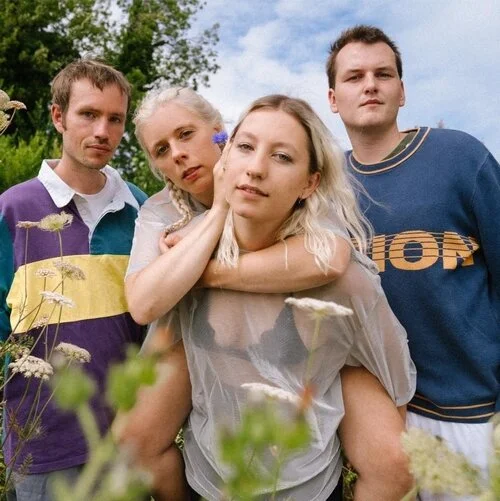
FEATURE: Spotlight: Nova Twins

FEATURE:


Spotlight

PHOTO CREDIT: @arwimages

Nova Twins

___________

THIS duo have been around for a while…

but as they released an album back in February and they are getting a lot of love right now, I thought it was a good time to include them in Spotlight. I have known about Nova Twins for a couple of years, and there are few acts like them around. I think there is still a perception that Rock is reserved for white men, and Georgia South and Amy Love are dispelling that; striking back and trying to change things. I want to bring in an article from The Guardian, - from 2016, who highlight this amazing, rising duo:

“Nova Twins are all about that bass: the lurching, grinding, seismically distorted, FX-mangled sound that propels the music of this young London duo: Georgia South, 19, and Amy Love, who is in her early 20s (Tim Nugent, no relation to Ted, adds drums). They call it urban punk but elsewhere their bass-heavy racket with irascible, sharply insinuating vocals has been variously titled hip hop-grime, grime-pop/“grop”, even “grunk”, such is their furious collision of grime and punk. “We are females of colour playing heavy music,” declares Love, who alternately sings (term used advisedly) and raps, with backing squeals from South. “Sometimes we have to shout a little bit louder. We don’t want to be pigeonholed.” Their heroes range from MC5 to Missy Elliott, Skunk Anansie to Skepta, and they get a broad demographic at their increasingly populous gigs, although to date they have attracted more punks and rockers than grime kids.

“Because our sound and delivery is so intense, and because we do it all live, without laptops or any programming, some grime people are put off,” explains Love. “But we want it to be more open – we want diversity in our audience ’cos that’s what we are,” she says of their mixed parentage. “We want guys in snapbacks next to guys with mohawks and nose rings. That would be amazing.”

“When we were younger and slightly more vulnerable, someone pissed us off, trying to make us sound less live, reduce the power of the bass and make us sound American,” recalls Love. “He was expecting us to be more pop, thinking, ‘That’s a bit heavy.’ So we walked out, and he walked out. But we’re not making music for the record industry, we’re making it for us.”

“People do stereotype us,” adds South. “We’re both mixed [race] and we play guitars, so straight away we get, ‘Oh, you girls are going to be singing some R&B,’ and it’s like, ‘Oh come on, educate yourself!”

It is still a time when women are vastly under-represented in music, and festival line-ups are especially shocking and skewed in favour of male artists. Nova Twins know this and they are desperate for things to change. Their album, Who Are the Girls?, is one of the finest of this year, and I think Nova Twins will be playing a lot of festivals when things start to get back to normal. At the moment, I would recommend that you buy that album, and witness a fantastic duo primed for big things!

I want to bring in an interview they gave to Louder Sound in February, just before the release of their album - and it is clear that Nova Twins are definitely always evolving and looking ahead:

“Looking into the future, the duo seem interested in progressing their music further and trying out new things in their sound. “We are where we are now,” Love says. “I think album four might end up with a synth, who knows.”

Their new label 333 Wreckords Crew, founded by Fever 333's Jason Butler, is something the duo are sincerely excited to be a part of. Instead of a standard label, it’s defined as an ‘artist-orientated collective’. “You don’t always feel backed because everyone is struggling to get to one place or another, so it’s hard for artists to look out for each other,” says Love. “But Jason’s been like, ‘we have to look out for each other’ and we totally agree with that.”

The duo are aware they're outnumbered in the rock industry – not only are they women, but women of colour – and that the odds are stacked against them in such a male-dominated industry. They experienced it first-hand at some of the festivals they played in 2019. During rock and metal festival Download, for example, the girls noticed they were two of seven women on the line up. “We feel like we need to represent all the women and people of colour [at the festival]” says South. “When we walk around, we cannot see our reflection.”

Instead of seeing it as a downside, the girls see it as a challenge. In the next decade, they want to further promote the movement of a diverse audience at rock shows. “We want to change it up and try and make it more open, so more people can be involved in heavy music.

"Because everyone has an influence on the culture – rock and punk – but it doesn’t necessarily let everyone in. So we’re trying to do that”.

I am going to bring in a couple more pieces that highlight the awesomeness of Nova Twins, as I have been intrigued and bowled over by their music got a very long time. Before their debut album, I heard the tracks they released, but I think one gets a bigger and clearer story with the album regarding who Nova Twins are and what their music represents. I think the next year or two will be crucial when it comes to making changes in the music industry so that those at the top are replaced as we can see discussion, progression and, above all, effective change regarding inequality. Things are not moving forward quickly enough! When Nova Twins spoke with NME, they were asked about the political tones in their album and what can be done to make Rock music less white and male-heavy:

“Hey Nova Twins. What did you feel you had to prove with your debut album?

Amy: “As women and especially as women of colour, you do come against a lot of stereotypes and challenges. This album was us proving a point.

Georgia: “There are no synths, no backing track and no other writers. It’s just us.”

Amy: “So when we do play it live, nobody can say anything ‘cos its going to sound like the record. We can do it all, no matter how much hopscotching we’re doing on the pedals to make it happen.”

Would you say it’s a political album?

Amy: “Being black women doing punk music is political, so yes. ‘Devil’s Face’ touches on Brexit, ‘Bullet’ speaks about sexism, but ‘Athena’ is completely fictional and mythological. We called it ‘Who Are The Girls?’ because we didn’t always feel heard or accepted making the type of music we do, looking the way that we do. It’s definitely challenging and there is a stigma attached to it.”

Georgia: “When we play these festivals, we’re the only people that look like us on these bills and a majority of the audience would never have seen a band like us, so we need to be the best band possible so their whole perception of black women playing rock music is changed. We wanted to be the voices for the unheard.”

What kind of impact did not seeing people of colour in rock music have on you?

Georgia: “You wonder if you can even be in a heavy band because you don’t see anyone else doing it.”

Amy: “It also affects people in ways they don’t even realise. They start trying to dull themselves down to fit in, but when you try and fit into somewhere you will never, ever belong because your existence doesn’t lend itself to that, it becomes really psychologically damaging. You start questioning yourself and that quickly becomes self-hatred. It took me a long time to accept myself.”

Georgia: “We feel this responsibility to make sure no one else feels like that”.

What can be done to make rock music less straight, white and male?

Georgia: “All we’re asking for is the same chances and opportunities. It needs to start from the top, get rid of tokenism and hire more people of colour but the power is with the audience too. If you support a band, buy their merch, go to shows, you’re giving them power. If you keep supporting POC in alternative music, it’ll become undeniable and they’ll have to be heard”.

I will leave things here, but I want to bring in a review for Who Are the Girls? that underlines what an important album it is. It is one of my favourite from 2020, and I think Nova Twins will get bigger and better with each release! This is what CLASH wrote when they reviewed the album:

 “Nova Twins’ pedalboards have also grown exponentially since 2016, when their reputation for grotty, pitch-shifted assaults of distortion earned them the label ‘grime-punk’. It’s not an unfair description. South’s basslines are what supercharge the songs, leading from the bottom with a dirty, street-gutter rumble that attains absolute perfection on lead single ‘Taxi’. When paired with Love’s delivery, the music can resemble the heavier cuts from Skepta and Tempa T, but they just as often deviate into the realms of UK garage, or rave, or even dubstep.

Both ‘Play Fair’ and ‘Bullet’ end with full-on wub-a-dub freakouts that owe a debt to the likes of Caspa and Rusko, while ‘Undertaker’ genuinely sounds like it could have been painstakingly pieced together out of re-pitched Rage Against The Machine tracks by The Prodigy’s Liam Howlett.

While their peers are busy taking on board smooth-edged American influences and trying to become the next Imagine Dragons, Nova Twins’ sound remains 100% homegrown British beefiness. There are many people out there from across the rap-rock spectrum who will despise this album (for reasons both fair and foul), but there are many more who will appreciate the lack of compromise in this rollicking call to arms. You have never heard two women have this much fun with a metric fucktonne of distortion pedals, but if you do in the future, then the way will have been paved by Nova Twins”.

If you have not discovered the amazing Nova Twins, then follow them online and make sure that you keep an eye on them! They are an amazing duo and I think they will be huge names very soon. This year has been pretty bad but, with Nova Twins’ music out there, 2020 has provided us with some…

GOLD and light.

_____________

Follow Nova Twins

b.jpg

FEATURE: Vinyl Corner: Laura Mvula – The Dreaming Room

FEATURE:


Vinyl Corner

Laura Mvula – The Dreaming Room

___________

I have included some fairly recent albums…

in my Vinyl Corner feature, as there are these recordings that sort of got some attention when they were released but they do not get talked about too much today. I have always loved the work of Laura Mvula and her debut album, Sing to the Moon, of 2013 contained the phenomenal track, Green Garden. With a stunningly powerful voice and a blend of R&B and Neo-Soul, there is a dreaminess and potency that makes her music so long-lasting and interesting. The Dreaming Room is Mvula’s second album, and it was released on 17th June, 2016. There was a positive critical response to Sing to the Moon, and it got inside the top-three in the U.K. album charts. Following that debut release, Mvula worked on various projects; she recorded Little Girl Blue, which was included on the soundtrack for the 2013 film, 12 Years a Slave. At this venture, Mvula began working on her second album. It wasn’t until January 2016 when her first single in three years arrived in the form of Overcome. The song features Nile Rodgers, and it was one of Mvula’s strongest releases. I really love Sing to the Moon, but there was some extra on The Dreaming Room; her sound and confidence was at a new peak and her songwriting finer. I would urge people to buy The Dreaming Room on vinyl, as it is such a deep and stunning album.

Although she wrote songs with others – producer Troy Miller co-writes a few tracks, whilst Steve Brown takes a couple -, it is Mvula’s voice and direction that defines the album. She has a writing credit for every song, and I think she puts her everything into each track! The Dreaming Room is a stunning album that boasts so many standouts. I really love the singles, Phenomenal Woman, and Show Me Love, but non-singles such as Who Am I, and Let Me Fall are sensational. There are, in my opinion, no weak moments, and one can easily listen through The Dreaming Room time and time again, as you’ll pick up new shades and layers that you might not have encountered the first time around! It has been four years since that album, and I wonder whether we might get a new album from Laura Mvula next year, perhaps? It would be fantastic, as the Birmingham-born artist is one of the U.K.’s best singer-songwriters, and her albums are always stuffed with life, meaning and passion. There was a really positive reaction to The Dreaming Room. This is what AllMusic wrote when they reviewed the album:

“The Dreaming Room is somehow more sumptuous and emotive than Sing to the Moon, Laura Mvula's impressive 2013 debut. Written and produced primarily with Troy Miller, who she met while working on the soundtrack for 12 Years a Slave, it's another categorically evasive set that updates and amalgamates traditional forms of blues, jazz, R&B, and orchestral pop. For all its unearthly charm, it nurtures the soul. Mvula's rich voice prances across songs of perseverance, salvation, survival, hope, and pride.

 Everything is transmitted with a contagious form of optimism, even in darker moments like "People," where Mvula mourns "They strip us down and rape our minds, our skin was a terrible thing to live in," then marvels "How glorious, this light in us," her words accentuated with a congruent verse from Wretch 32. The only other guest appearance comes from Nile Rodgers, whose golden and unmistakable rhythm guitar is threaded throughout "Overcome," one of the many highlights of this powerful album”.

Although The Dreaming Room charted lower in the U.K. compared with Sing to the Moon, I think it is a better album, and it deserved more acclaim and sales. Looking back, I think the album is one of the best of 2016. It was a very strong year for music and, if released now, I think the album would go into the top-ten in the U.K. and U.S. There was a lot of love for the album. When they tackled the album, The Guardian offered the following:

“The Dreaming Room is a rich stew. It’s vivid, cramming a lot of information into barely half an hour of music. Even the most commercial tracks are pretty odd – as evidenced by the off-kilter funk and yelped, incomprehensible chorus of the single Phenomenal Woman, Mvula’s interpretation of her grandma’s instruction to “write a song I can lift me spirits, write a song I can jig me foot” – and even the quiet moments prickle with intensity: the ostensibly straightforward piano-and-vocal section in Show Me, recorded in such a way that Mvula appears to be singing directly into your ear, the tranquil piano chords disrupted by the noise of her feet on the pedals. Lyrically, it’s preoccupied with relationship woe and black empowerment.

The artist who declined to attend the Brits in protest at its woeful lack of black nominees is present on People – “our skin was a terrible thing to live in” – while there’s also a lot of raw, often harrowing stuff about Mvula’s divorce, the tracks on which she appears to come to terms with the collapse of her marriage outnumbered by those where she seems inconsolable: “I miss the wonder of a future with somebody,” she sings on Show Me’s hymn-like opening, “Oh God, where are you?”

It should be much harder work than it is. But like Joanna Newsom, Mvula pulls the listener along with her through the most serpentine songs: however winding their routes, the melodies are almost always beautiful; however much the musical scenery shifts, it is always striking. You do wonder what its commercial fate will be. Despite the discrepancy between its advance publicity and its contents, Sing to the Moon went gold, but there are moments here strange enough to make Sing to the Moon sound like the work of the new Adele by comparison. Or perhaps audiences will be seduced by The Dreaming Room’s invention and originality, which would be entirely fitting”.

If you have not played or owned The Dreaming Room, I think it is a good time to discover a real treat. Mvula’s voice is like no other, and her second studio albums offers so much to the listener. It is a wonderful release, and one that I have been revisiting a lot over the past few weeks. Go and get a wonderful album from such…

A huge talent.

FEATURE: The Lockdown Playlist: Songs of Optimism and Uplift

FEATURE:


The Lockdown Playlist

PHOTO CREDIT: @priscilladupreez/Unsplash

Songs of Optimism and Uplift

___________

I cannot recall whether I have…

PHOTO CREDIT: @adigold1/Unsplash

covered this subject before for a Lockdown Playlist, but I thought I would put out a playlist of unifying, uplifting songs, as things have become pretty tense…and it has been a fraught past week or two especially. With areas of the country locked down and others plain confused, I think we do need some clarity, for sure, but also some spirit that gives us some energy and optimism! Whilst we cannot literally join together and embrace, music is a powerful connective tool, and it has the ability to elevate and bring people closer. I have been looking around for songs that will give us a bit of a spirit and togetherness at a time when we…

PHOTO CREDIT: @belchev/Unsplash

SORELY need it.

FEATURE: Of All the Things I Should Have Said: Kate Bush’s This Woman’s Work

FEATURE:

Of All the Things I Should Have Said

Kate Bush’s This Woman’s Work

___________

IN future pieces relating to Kate Bush…

I am going to be more general and explore various aspects of her work. At the moment, I am keen to dive into particular songs, as I think, in a streaming age, how often do we digest entire songs or take them apart? The Sensual World is an album that is not among my most-spun of Bush’s, and I have been coming back to it in recent weeks. A while ago, I argued that The Dreaming’s Get Out of My House might be her finest closing track on any album. That song has such an intensity and physicality that it is impossible to follow it! It is one of Bush’s most-underrated songs and brought a magnificent album to a powerful end. On the opposite end of the scale is The Sensual World’s This Woman’s Work. This is a song that is very dear to Kate Bush fans, and it is a song that could only have ended The Sensual World, such is its weight of emotion and effect on the listener – the C.D. bonus track had Walk Down the Middle ending the album, but This Woman’s Work is the true closer. The song was originally included on the soundtrack of the American film, She's Having a Baby (1988). I have never seen the film, but it was a rare occasion of a Kate Bush song featuring on a film soundtrack – I still think there are many films that could be lifted by including a Bush song on them!

Sourcing from the Kate Bush Encyclopaedia, here is some more information about This Woman’s Work – including interview quotes where Bush discussed the track:

“Song written by Kate Bush. Originally released on the soundtrack of the movie She's Having A Baby in 1988. A year later, the song was included in Kate's sixth studio album The Sensual World. The lyric is about being forced to confront an unexpected and frightening crisis during the normal event of childbirth. Written for the movie She's Having a Baby, director John Hughes used the song during the film's dramatic climax, when Jake (Kevin Bacon) learns that the lives of his wife (Elizabeth McGovern) and their unborn child are in danger. As the song plays, we see a montage sequence of flashbacks showing the couple in happier times, intercut with shots of him waiting for news of Elizabeth and their baby's condition. Bush wrote the song specifically for the sequence, writing from a man's (Jake's) viewpoint and matching the words to the visuals which had already been filmed.

The song was used in the 21st episode of the third season of Party Of Five. The song was also used in the first episode of the second season of The Handmaid's Tale.

The music video was directed by Bush herself. It starts with Bush, spotlighted in an otherwise black room, playing the introductory notes on a piano. In the next scene, a distraught man (played by Tim McInnerny) is pacing in the waiting room of a hospital. It is then revealed through flashbacks that his wife (played by Bush) has collapsed while they were having dinner. The story blurs into a continuous scene where he carries her to the car, a desperate race to the hospital, and his wife being wheeled away on a stretcher as he races in behind her.

While waiting, the husband is wracked with fear and imagines his wife in happier times, kissing him in the rain, and even imagines the nurse coming to tell him she has died. The nurse then pulls him out of his reverie, as she reassuringly puts her hand on his shoulder and tells him about his wife's situation, the outcome of this is left ambiguous; yet the nurse is seen smiling as she speaks, implying a happy outcome. The final scene of the video returns to Bush as silently closes the piano keyboard.

John Hughes, the American film director, had just made this film called 'She's Having A Baby', and he had a scene in the film that he wanted a song to go with. And the film's very light: it's a lovely comedy. His films are very human, and it's just about this young guy - falls in love with a girl, marries her. He's still very much a kid. She gets pregnant, and it's all still very light and child-like until she's just about to have the baby and the nurse comes up to him and says it's a in a breech position and they don't know what the situation will be. So, while she's in the operating room, he has so sit and wait in the waiting room and it's a very powerful piece of film where he's just sitting, thinking; and this is actually the moment in the film where he has to grow up. He has no choice.

There he is, he's not a kid any more; you can see he's in a very grown-up situation. And he starts, in his head, going back to the times they were together. There are clips of film of them laughing together and doing up their flat and all this kind of thing. And it was such a powerful visual: it's one of the quickest songs I've ever written. It was so easy to write. We had the piece of footage on video, so we plugged it up so that I could actually watch the monitor while I was sitting at the piano and I just wrote the song to these visuals. It was almost a matter of telling the story, and it was a lovely thing to do: I really enjoyed doing it. (Roger Scott Interview, BBC Radio 1 (UK), 14 October 1989)

That's the sequence I had to write the song about, and it's really very moving, him in the waiting room, having flashbacks of his wife and him going for walks, decorating... It's exploring his sadness and guilt: suddenly it's the point where he has to grow up. He'd been such a wally up to this point. (Len Brown, 'In The Realm Of The Senses'. NME (UK), 7 October 1989)”.

I guess one can interpret the lyrics to This Woman’s Work in different ways. If you see it in the film, you get this idea of what the song is trying to represent but, actually, when listening without visuals, various listeners will have different perspectives. I really love the music video and what Kate Bush did as a director on it, as it is a powerful and moving clip. I am surprised that Bush re-recorded the track for 2011’s Director’s Cut. That album was a reaction to Bush’s view that a collection of her songs from The Sensual World, and The Red Shoes (1993) needed reworking – the originals perhaps sounding too cluttered and needed to be opened and stripped back to an extent. The version of This Woman’s Work that we hear on The Sensual World was edited from the She’s Having a Baby soundtrack; the single version was a different mix, so we have four different versions of the same song – the version on The Sensual World, I feel, is the definitive! I admire the sparse version on Director’s Cut, but there is something more evocative and spine-tingling when listening to the 1989 version.

Although This Woman’s Work only reached number-twenty five in 1989, I think it is one of Bush’s best songs, and it constantly is included in polls of her finest tracks – Louder Sound included it in a top-twenty-five poll in 2018; Far Out feel This Woman’s Work is one of Bush’s essential songs, whilst Consequence of Sound ranked it high in 2016, and The Guardian placed the song at number-three in 2018. This Woman’s Work has been sampled and covered by others, and it was the name given to a compilation boxset released on 22nd October, 1990 – which I shall mark in a future feature. The Sensual World is a phenomenal album, and I have already covered its opening number, the title track, and the opener to the second side, Deeper Understanding. I might cover The Fog, and Love and Anger later in the year, but I have not featured This Woman’s Work, and it is such an important song in her cannon. Over thirty years since its release, This Woman’s Work still has the power to move, and it is one of Kate Bush’s most hard-hitting and emotive songs – even though there is a lot of hope and strength to be found. In a career filled with hugely important and memorable songs, This Woman’s Work holds a very…

SPECIAL place in people’s hearts.

FEATURE: The Lockdown Playlist: The Best Sub-Two Minute Songs

FEATURE:


The Lockdown Playlist

cvv.jpg

PHOTO CREDIT: @insungyoon/Unsplash

The Best Sub-Two Minute Songs

___________

THROUGH these playlists…

PHOTO CREDIT: @icons8/Unsplash

I am trying to cover as wide a spread as I can regarding music and different themes. Today, I was thinking about short songs that make a real impact in under two minutes. It can be hard making an impression in such a short time, but there are those tracks that deliver a real sense of memorability without saying that much. For this Lockdown Playlist, I have compiled some epic tracks that, despite their brevity, are high in quality! If you need a little bit of a lift and something to help out at this hard time, have a listen to the playlist as there are some brilliant songs in the mix that are guaranteed to stay on your head and…

xzzz.jpg

PHOTO CREDIT: @von_co/Unsplash

GIVE you that much-needed energy!

FEATURE: Women Like Me: Can Little Mix: The Search Revitalise the Music Talent Show?

FEATURE:


Women Like Me

PHOTO CREDIT: BBC

Can Little Mix: The Search Revitalise the Music Talent Show?

___________

I have not held back my feelings regarding…

IN THIS IMAGE: Little Mix release their new album, Confetti, on 6th November

music talent shows in the past. I am a purist who believes that artists should earn their way, and that T.V. shows like The Voice are cheats and, worse, exploit contestants and are pretty uncomfortable to watch. The pressure that the singers feel to prove themselves; the disappointment they must feel when they are turned away, to me, should not really be allowed. I like the old-fashioned idea of a battle of the bands-type contest, where there is a more fun and relaxed vibe, and the artists can play and perform their own songs. It has been a while since there has been a more light-hearted and kinder talent show for artists. As we have seen so many music talent shows in various guises through the years, another one might seem redundant and completely pointless. Little Mix have introduced a Pop show, Little Mix: The Search that, at least, seems to offer some form of positivity  - as the BBC report here:

“UK pop stars Little Mix began their search for the next big thing this weekend.

The girl band, who made their name on ex-manager Simon Cowell's show, The X Factor, are looking to find and create their own arena-filling pop group on their new BBC One show, The Search.

The programme received positive reviews and was praised for modernising and freshening up the age-old format.

Despite that, it also received relatively low early viewing figures.

Around 1.9m people tuned into episode one on Saturday night, giving the show an 11.6% share of the TV viewing audience at that point. On Sunday, that figure was 1.8m - an 11.3% share.

'A kinder approach'

The task for Leigh-Anne Pinnock, Perrie Edwards, Jesy Nelson and Jade Thirlwall is to create six bands from thousands of wannabes - a boy band, girl vocal, girl dance group, mixed, vocal and instrument, and rap and R&B.

The winners will support the band on their next tour (which could be a while off sadly, due to Covid-19)”.

There have been some positive reviews for Little Mix: The Search. I would not usually consider it, but the fact they are searching for girl and boybands intrigues me. Also, the broadness to include a mixed group, vocal and instrument, and Rap and R&B means that there it is not just about Pop or the same as what other talent shows promise. It is sad these kind of groups – especially girlbands – have sorted waned since the 1990s and first decade of the twenty-first century. It has been a while since the likes of TLC, Destiny’s Child, and Spice Girls ruled, and I was sort of partial to a few of the songs from boybands like *NSYNC, and Boyz II Men. The classic eras for girlbands, I think, were during the 1990s, though some classic groups from the 1960s and 1970s (such as Diana Ross and The Supremes) are pretty close. The boybands have never had the same appeal and variety as their female rivals, but that might change with this new talent show.

Also, at a time where we need to see equality and diversity in music, we could discover a girlband who can mix it with the icons of the past. A vocal and instrument group interests me, and there is plenty of scope to discover a potential festival headliner. When The Independent reviewed the opening episode of Little Mix: The Search last week, they had this to say

“Just when you thought the final nail had been struck in the singing contest coffin, Little Mix arrive with The Search (BBC One). Hoping to find “the next big act” to support the group on their Confetti tour in 2021, it casts band members Leigh-Anne Pinnock, Perrie Edwards, Jesy Nelson and Jade Thirlwall as both judges and mentors to a new generation of wannabe stars.

While this is definitely not a rival to Simon Cowell’s X Factor (which Little Mix won in 2011), it also definitely is. The group split from Cowell’s label Syco in 2018, with both parties hinting at issues over the direction Little Mix were taking. Little Mix told me in an interview last year that their show would take a kinder approach than “other ones out there”. They’ve stuck to that promise. It helps that these women are the right age to remember the era of “peak pop band” – from Blue to Boyzone, Steps to S Club 7 – and identify those pop group-sized gaps in the music industry today.

The first episode tackles boybands. A lot of the boys seem to have auditioned for the sole purpose of flirting with the members of Little Mix; one hopeful winks at them so much, I worry he’s having some kind of seizure. When another contestant reveals he doesn’t know who NSYNC are, they all reel. “Oh my god, that makes us feel so old,” Jesy announces. The boyband finalists are then plonked in front of a live audience to test their mettle, after which Little Mix choose their favourites for the ultimate boyband”.

I do think that, as more positivity is coming into Pop and there is a mini Disco revival – with the likes of Dua Lipa, Jessie Ware, and Róisín Murphy -, we might see a new wave of Pop that puts big choruses above something more introspective or processed. Maybe the winners of Little Mix: The Search might not equal the very best girl and boybands we have seen, it would be good to see some fresh blood in these markets. I do think that there is a saturation of talent shows that look for solo singers and, as these shows have been running for years and the formula has become increasingly tired and predictable, we will never an artist come through these shows that can match the best in the industry at the moment. Looking around, and apart from Little Mix, BTS, and a few other examples, there are not that many girl of boybands. I am optimistic but, if we can find a group who has a bit of panache and can perform Pop/R&B anthems with very little vocal processing and heavy-handed production, then it will be worth it. I think the break away from four-on-a-panel format is a good thing, as it is done by every talent show – whether it is music, dancing or cooking -, and I think Little Mix can help revitalise and move forward the music talent show. It is a bit hard at the moment with COVID-19 restrictions and it is not the best time for a potential new band to launch into the market, but Little Mix: The Search has legs – let’s hope a great group or two can come out of the other end that is less a commercial product and more of an authentic and unique act (as much as that is possible when we talk about a T.V. talent quest). Talent shows have become alarmingly irrelevant and poor the past few years but, with a different and more promising competitor coming forth, it is nice to have this BBC show…

IN the mix.

FEATURE: A Buyer’s Guide: Part Twenty-Three: The Divine Comedy

FEATURE:

A Buyer’s Guide

qqqq.jpg

PHOTO CREDIT: Ben Meadows

Part Twenty-Three: The Divine Comedy

___________

NEXT week will see me move out a bit…

and feature on a female artist and, also, go back to a more traditional format. I was keen to include The Divine Comedy in this feature, as they are a group I really love and, even though it essential consists Neil Hannon, he has worked with an array of musicians and singers through the years. I am not including a book for The Divine Comedy, as I cannot see one listed, but I have recommended the four albums you’ll want to own; one that is underrated and I think warrants closer examination, in addition to the latest one from a songwriting treasure. If you are not overly-familiar with Neil Hannon’s music and the brilliant force that is The Divine Comedy, then this guide should steer you towards the albums that…

YOU’LL want to own.

___________

The Four Essential Albums

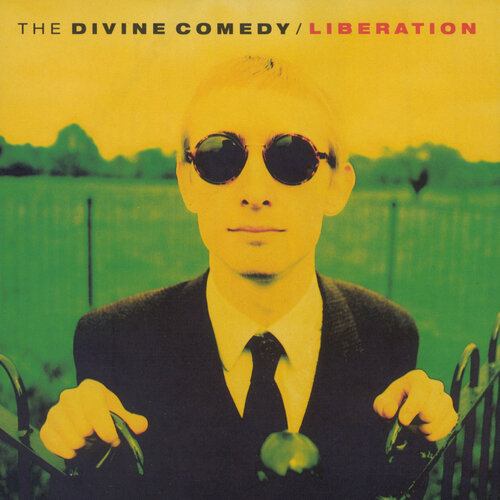
Liberation

Release Date: 16th August, 1993

Label: Setanta

Producers: Neil Hannon/Darren Allison

Standout Tracks: Bernice Bobs Her Hair/Europop/Lucy

Buy: https://www.discogs.com/The-Divine-Comedy-Liberation/master/43809

Stream: https://open.spotify.com/album/2LkPsyWPYhVMpvhgfR6kv8?si=fmdOyWcsTn2ZxfCYpcdwmw

Review:

“Hannon's masterstroke is forsaking traditional rock'n'roll posturing in favour of a melancholic approach which is underpinned by a full string section and a lone French Horn player who parps away so frantically that you can't help but wonder what sort of divilment these classical types get up to when they're not blowing, plucking or banging things.

Yer man is not, it has to be said, the happiest of campers. In fact, the likes of 'Death Of A Supernaturalist' and 'I Was Born Yesterday' are downright miserable but unfurl their tales of woe with such eloquence that Morrissey and Marc Almond comparisons are, I'm afraid, unavoidable.

'Bernice Bobs Her Hair', meanwhile, documents that most traumatic of adolescent experiences - a truly crap haircut: "Her hair was long, her hair was dark, her hair fell down her back and now it's on the floor/ The mirror tells of her mistake, her heart is fit to break." We were so distraught here in H.P. Central that we nearly chipped in to buy the poor lass Gazza-style hair extensions but, hey, why add to her problems?

'Europop' is laced with not entirely bitter irony, a Casio-driven ode to the pros and cons of Smash Hits stardom which has already gatecrashed into the indie top 10 and, with a bit more promotional zeal, could do the same in the grown-ups chart.

Hannon isn't adverse to a spot of constructive plagiarism either - 'Timewatching' is a gloriously flamboyant re-write of 'When I Fall In Love' while 'Lucy' takes Wordsworth's 'A Slumber Did My Spirit Steal' and turns it into the lushest of love songs. The moral here, I think, is that if you're going to rip something off, do it with a sense of panache!

'Europe By Train' is one of the few occasions when Liberation abandons its quasi-Englishness, a cheeky Zorba The Greek parody which is redolent of sunkissed Mediterranean islands and a severe overdose of Ouzo.

It might be argued - and I'm sure many of my colleagues will - that The Divine Comedy are a little too weighty and intellectual for current tastes but artistry shouldn't be limited by the marketplace and if this LP only sells half-a-dozen copies, it'll still be a triumph.

Ray Davies, I suspect, would wholeheartedly approve” – Hot Press

Choice Cut: The Pop Singer's Fear of the Pollen Count

Promenade

Release Date: 28th March, 1994

Label: Setanta

Producers: Neil Hannon/Darren Allison

Standout Tracks: Going Downhill Fast/Don't Look Down/Neptune’s Daughter

Buy: https://www.discogs.com/The-Divine-Comedy-Promenade/master/43821

Stream: https://open.spotify.com/album/4MY1E61exkrdDyr28tMPcZ

Review:

“While in appearance, it seems like a sequel to Liberation -- a similar cover shot down to the typeface that is on the front, in this case showing Hannon in front of the IM Pei-designed entrance to the Louvre, while the back shows a similarly Rococo piece of decoration -- Promenade is in fact even more extremely and defiantly non-rock than its predecessor. With a larger number of string performers to accompany him, not to mention someone on oboe, sax, and cor anglais (English horn), Hannon retains only drummer/co-producer Darren Allison from the previous record to make what remains his most self-conscious art release to date. The opening "Bath" sets the course, with seacoast sounds and a brief spoken word bit that turns into a minimalist Michael Nyman homage before slamming into the song proper, where the guitars and bass take a back seat to the choir, strings, and woodwinds, all the while driven along by Allison's solid percussion. From there all kinds of twists and turns emerge in an alternate universe where classical instrumentation offers as much pop as a guitar strum. The extreme archness of "Going Downhill Fast" is also a pub singalong, while "Don't Look Down" builds to a dramatic, striking ending. Hannon's wickedly sharp wit informs almost everything; "The Booklovers" is the clear winner on that count, as Hannon tremulously recites a number of authors' names (with an appropriate accompanying sample or aside, often quite hilarious) over a stately arrangement. "A Seafood Song" and "A Drinking Song" celebrate exactly what they say they do, the latter offering up the great line "All my lovers will be pink and elephantine!" At the same time, the tender side of Hannon, which has sometimes been ignored, surfaces more than once, with "The Summerhouse," a nostalgic, wonderfully gentle piece on a lost season of love. This turns out to be one of Hannon's best songs ever” – AllMusic

Choice Cut: When the Lights Go Out All Over Europe

Casanova

Release Date: 29th April, 1996

Label: Setana

Producers: Neil Hannon/Darren Allison

Standout Tracks: Becoming More Like Alfie/In & Out of Paris & London/The Frog Princess

Buy: https://www.discogs.com/The-Divine-Comedy-Casanova/master/43787

Stream: https://open.spotify.com/album/5zhKAcWDyjCIDk2yqxsHmV

Review:

“Finally, The Divine Comedy's Neil Hannon has got the budget he deserves and has made the record that validates his past pretensions. The Barry White parody in the Jacques Brel-style tango Change aside, Hannon's vision of Scott Walker singing Noel Coward, arranged by Bacharach & Sondheim (and, in Casanova's case, "inspired by the writings of the 18th Century Venetian gambler, eroticist and spy"), is less concerned with parody than the realisation of a maverick vision. Something For The Weekend, Becoming More Like Alfie and Middle Class Heroes make for a terrific, pop-centred opening, there is an oasis of acoustic calm in Songs Of Love, while The Frog Princess and A Woman Of The World lead the way toward the big-ballad climax of the 40-piece-orchestra-at-Abbey-Road scenario, The Dogs And The Horses. With strong melodies and a lyrical treatise on love that smoulders with knowingly arch comedy, this is music to appeal across all pop tastes” – Q

Choice Cut: Something for the Weekend

Absent Friends

Release Date: 29th March, 2004 (U.K. & Europe)/4th May, 2004 (U.S.)

Labels: Parlophone (U.K. & Europe)/Nettwerk (U.S.)

Producer: Neil Hannon

Standout Tracks: Absent Friends/My Imaginary Friend/Our Mutual Friend

Buy: https://www.discogs.com/The-Divine-Comedy-Absent-Friends/master/43777

Stream: https://open.spotify.com/album/6sJTXExBj2yCPRSukicLYz

Review:

“The title track could be the theme from High Chaparral that got left on the cutting room floor and features namechecks to Oscar Wilde, Steve McQueen and Willie Woodbine (whoever he is).

"Sticks And Stones", with its tense, stabbing strings is another song straight out of the movies - while "Charmed Life" is an epic string ballad that could have been written for Sinatra.

Essentially, Absent Friends is the soundtrack of a man who's never been happier, yet is keen to remember the bad times to put things in perspective. New single "Come Home Billy Bird" - with gorgeous backing vocals from Lauren Laverne - is the tale of an over-worked businessman who overcomes a series of obstacles to make his boy's first football match.

"The Wreck Of The Beautiful" follows the haunting last rites of a once-great battleship and "Our Mutual Friend" recalls the pal who introduced Hannon to a woman, then took her for himself. The cad. Light relief comes in the shape of "My Imaginary Friend" - Bowie's "Laughing Gnome" dragged into the 21st century - but the laughs are generally few and far between.

Anyone expecting a return ticket for the National Express is going to be disappointed. Persevere, though, and you'll find it's the smoothest ride you've had in ages”  - BBC

Choice Cut: Come Home Billy Bird

The Underrated Gem

Bang Goes the Knighthood

Release Date: 31st May, 2010

Label: Divine Comedy

Producer: Neil Hannon

Standout Tracks: Down in the Street Below/Bang Goes the Knighthood/I Like

Buy: https://www.discogs.com/The-Divine-Comedy-Bang-Goes-The-Knighthood/master/254740

Stream: https://open.spotify.com/album/71aizAHZJTH9fH2T0y2F5O

Review:

“Elsewhere, any trace of disdain for the National Trustafarians seeking stately homes to visit in "Assume The Perpendicular" ("Lavinia loves the lintels, Anna the architraves/Ben's impressed by the buttresses thrust up the chapel nave", etc) is conveyed solely by the way the banjo punctures the pomposity of the brass arrangement. Something similar happens with the prancing music-hall piano of "The Complete Banker", though as the title suggests, even Hannon can't resist a gentle tilt at this most deserving modern Aunt Sally. Most skillfully of all, with "Neapolitan Girl" he returns to the Eurotrash territory previously visited in "A Lady Of A Certain Age", employing a jolly, lightly chugging Europop setting for a really rather dark song about Italian girls selling sex to feed themselves in the immediate aftermath of the Second World War: in Hannon's hands, their plight is varnished with a Riviera Touch of empathic glamour that is implicitly forgiving.

It's not an entirely successful collection : "Can You Stand Upon One Leg" is a silly, throwaway kids song – Hannon's Sesame Street moment, maybe – and "The Lost Art Of Conversation", his Beatlesque pop piece about the delights of discourse, is little more than an excuse to string together ludicrously literate lists of subjects for discussion.

But like The Magnetic Fields' Stephin Merritt, when Hannon keeps his inner show-off restrained, he can lay waste to one's emotions. Here, it's his poignant analysis in "When A Man Cries" of the difference between childish tears and adult tears – the one so public and profuse, the other so private and piercingly intense – that cuts to the quick in a manner made all the more intense in coming from one best known as a social satirist”  - Belfast Telegraph

Choice Cut: At the Indie Disco (ft. Cathy Davey)

The Latest Album

Office Politics

Release Date: 7th June, 2019

Label: Divine Comedy

Producer: Neil Hannon

Standout Tracks: Queuejumper/Norman and Norma/Philip and Steve's Furniture Removal Company

Buy: https://www.discogs.com/The-Divine-Comedy-Office-Politics/master/1560254

Stream: https://open.spotify.com/album/5BrYBrnS8Lp9AzzECZASKd

Review:

“However, at times, Office Politics seems a little too aware of its joke, not unlike like the disco-dope of “The Life and Soul of the Party,” showing off drunken dance moves and rambling to co-workers who do not care. The punchline—that he’s alone and no one likes him—is obvious from the song’s opening line: we get it, office and suburban life are dull, but by this point in the album, it’s a cliche.

“Phillip and Steve’s Furniture Removal Company,” goes on a little too long; it’s supposed to be the theme song for an imaginary show (as explained in the skit that precedes it) and although I would absolutely watch 30 seasons of it, I would skip the 4 minutes and 51 seconds theme song—the longest track on the album—nine times out of then. The other semi-skit piece, “Psychological Evaluation,” which lays heavier on the synths than “The Synthesizer Service Center Super Summer Sale,” is obnoxious and immensely unpleasant to listen to, a hard recovery as the album starts to lose momentum.

The songs that are sincere, such as the domestic drama “Norman and Norma,” and the brokenhearted lover’s lament, “A Feather in Your Cap” are surprisingly so, so much so that I waited for a punchline that never quite came. In the case of the former, I’m actually happy that Norman and Norma—who we’ve seen raise their children and fall into romantic complacency—find their bliss in battle reenactments. “I’m a Stranger Here,” a simple piano-based melodic operetta, punctuated by sweetly swirling strings, about a time traveler trying to navigate his new surroundings, plays similarly. A sweet plea for assistance as he realizes the life and home he knows is gone, he sings, “If you ask where I come from, I’ll say ‘the past’ and wander on”  - PASTE

Choice Cut: Infernal Machines

FEATURE: One Place Before π: Kate Bush’s King of the Mountain

FEATURE:


One Place Before π

xxssss.jpeg

Kate Bush’s King of the Mountain

___________

I will discuss Kate Bush’s Aerial in greater depth…  

IN THIS PHOTO: Kate Bush in 2005/PHOTO CREDIT: Trevor Leighton/National Portrait Gallery, London

in the coming weeks, as the album turns fifteen on 7th November. That album is special as it was her first album since 1993’s The Red Shoes, and there was great excitement when Aerial was announced! It is Kate Bush’s only double album, it consists, like Hounds of Love, of a more traditional and non-conceptual first side – even though Aerial’s songs are less commercial than those on Hounds of Love - and a conceptual suite on the second side (where Hounds of Love’s The Ninth Wave clocks in at under thirty minutes, Aerial’s A Sky of Honey is forty-two minutes in length). The second track on Aerial is π, where Bush, literally, recites the mathematical constant! Before the album’s least conventional and most unusual track came the one and only single: the mighty King of the Mountain. The Red Shoes’ last single, And So Is Love, was released on 7th November 1994, so it was over a decade since we saw Kate Bush on film – it is not strictly true, but that was her last single before King of the Mountain. Arriving on 24th October, 2005 came this single that was distinctly and pleasingly Kate Bush! Rather than return with something quite plodding or ordinary, we get a song about Elvis Presley! With some great drumming from Steve Sanger and Del Palmer on bass (her engineer and long-time friend) - and some backing vocals from her brother, Paddy Bush -, it was a triumphant single that reached number-four in the U.K. The song was first played on 21st September, 2005 on BBC Radio 2. King of the Mountain was actually written ten years prior to most songs on Aerial, so it seemed only natural that it would lend itself to being a single.

I really love the song’s video, and Bush looks amazing in it! Directed by Jimmy Murakami, there was a concern from Bush that she had put out a bit of weight and, frequently, she had to be reassured by Murakami that she looked great! I guess there was a certain degree of nerves that she might not have felt with the album itself. Of course, putting out a double album would have been intimidating, as she had put so much time and herself into it and, since the public last saw her, there had been some definite changes. She became a mother in 1998 (to her son, Bertie), and the music world was very different since she released And So Is Love. Shot in London on the 15th and 16th September, 2005 using live animation techniques rather than 3-D computers, there is this transfixing and classic look to the video! Bush felt that computers lacked  human touch, and this is typical of her. She still prefers tape to digital because of its warm quality, and Aerial is an album whose second disc, A Sky of Honey, is about the passing of a day and the beauty of nature. To have the first visual taste of Aerial by computer-generated or unnatural-looking would have contrasted the album’s full and natural aesthetics! Elvis’ famous jumpsuit can be seen in the video, whilst Bush explores and weaves her way around his mansion.

Bush and Murakami worked together on the storyboard. She has always been involved in her videos, and I do like how there was this close and productive partnership with Murakami. Interestingly, the B-side to the U.K. release of King of the Mountain was a cover of Marvin Gaye’s Sexual Healing and, like all cover versions Bush tackled, she provide her own inimitable take! King of the Mountain was the last single to feature Bush in the video. She directed the video for Deeper Understand (from 2011’s Director’s Cut), but she didn’t appear in the video; 50 Words for Snow’s single, Wild Man, featured an animated short film by Finn and Patrick at Brandt Animation. I wonder whether, if Bush releases another album, we will get a single that features her in it! I know she would have been eager to appear in King of the Mountain as it had been a while since she was last ‘in the public eye’, as it were - but there seems to be less necessity now, seeing as singles are digital and there isn’t that same incentive releasing one; where people can hold it and have this physical thing. Aerial performed incredibly and went into the top-three in the U.K. album charts. The reviews for Aerial were glowing and, after such a gap, there was no guarantee that Bush would be welcomed back with such fervency. However, having created such a masterful double album of such scope and brilliance, there was no doubt that the reception she was afforded would be anything less than captivated!

I will delve into Aerial more as the weeks to its fifteenth anniversary unfurl, but that lone single was released to a delighted and hungry world almost fifteen years back! When Bush returned to the stage in 2014 for Before the Dawn, she ended the first act with King of the Mountain. It featured as a brilliantly energetic and powerful bookmark – after she kicked off the show with Lily -, and it followed Running Up That Hill (A Deal with God). I would urge anyone who does not own the live album of Before the Dawn to get it on vinyl, as the version of King of the Mountain sounds terrific! I know Aerial’s importance lies in each of the songs hanging together rather than this one single sticking out, but as the album’s opening track and the first single release since 1994, it was hugely exciting hearing this amazing new song that Bush had spent years with. The beautiful and striking video was the perfect accompaniment, and I think King of the Mountain stands up among Bush’s finest singles (The Guardian ranked King of the Mountain as Bush’s eleventh-best single in 2018). I just love the King of Rock ‘n’ Roll being paid tribute to by the…

IN THIS PHOTO: Kate Bush shot in 2005/PHOTO CREDIT: Trevor Leighton

QUEEN of Art Rock (or just music in general!).   

FEATURE: Second Spin: Heart - Dreamboat Annie

FEATURE:

Second Spin

dddd.jpeg

Heart - Dreamboat Annie

___________

THEIR sixteenth studio album…  

IN THIS PHOTO: Ann and Nancy Wilson of Heart/PHOTO CREDIT: Michael Marks/Michael Ochs Archives/Getty

Beautiful Broken was released in 2016 but, today, I am charged with shining a light on Heart’s incredible debut of 1975, Dreamboat Annie. Heart were formed by Steve Fossen (bass guitar), Roger Fisher (guitar), David Belzer (keyboards), and Jeff Johnson (drums). They evolved from an existing band, White Heart. Since 1973 the vocalists for Heart have been the sisters Ann Wilson (lead vocals, flute, guitar) and Nancy Wilson (vocals, guitar, mandolin). To me, they are the heart of heart, as there has been three different line-ups through the years. It is the core of the Wilson sisters that, to me, defines the band’s sound. Heart have released some fantastic albums through their career, but I think their strongest album is their first. Dreamboat Annie was first released in Canada in 1975. Heart were based in Vancouver at the time, and the album was recorded there. It wasn’t until 1976 when Dreamboat Annie was released in the U.S. I really love the cover design of the album, and the Wilson sisters look incredible! It is a great photo, and I really love the tracks throughout. There was a smattering of praise when Dreamboat Annie was released, and it is one of these albums that I feel warrants more acclaim. Mike Flicker’s production is wonderful, and the entire album is really enjoyable and memorable. Magic Man, and Crazy on You are, perhaps, the best-known tracks from Dreamboat Annie, and they are songs that still sound great today.

The album reached the top-ten in the album charts in America, and it sold an impressive 30,000 copies across Canada in its first few months. Heart’s future looked uncertain as early as that debut. The popularity and success of Dreamboat Anne indirectly led to a break between the band and label. The group tried to renegotiate their royalty rate to be more in keeping with what they thought a platinum band should be earning. Mushroom's (a Canadian label) unreasonable stance in negotiations, and their opinion that perhaps the band was a one-hit wonder, led to Mike Flicker leaving the label. The relationship broke down completely when the label bought a full-page ad in Rolling Stone mocked up like a National Enquirer front page. The ad used a photo similar to the one on the Dreamboat Annie album cover, showing Ann and Nancy back to back with bare shoulders. The band moved to another label and signed with Portrait Records. Mushroom insisted that the band was still bound to the contract which called for two albums. So, Mushroom released the album, Magazine, with incomplete tracks, studio outtakes and live material and a disclaimer on the cover. One has to feel sympathy to the way Heart were treated at the beginning, and I guess that sort of marred Dreamboat Annie to an extent. The fact they managed to keep releasing albums and are recording today is testament to their determination and resilience.

Although grittier, Rock-driven women in music was fairly common by the 1980s, when Dreamboat Annie arrived in 1975, there were very few artists like Heart. In this article from UDiscoverMusic, we learn more about Heart’s start and the rise to Dreamboat Annie:

“By the mid-80s, the idea of female-fronted bands taking ballsy hard rock to the top of the charts had ceased to surprise. Credible all-girl metal outfits including Girlschool and Vixen could command big sales and critical acclaim, while arena-sized anthems such as ‘I Love Rock’n’Roll’ and ‘Love Is A Battlefield’ had, respectively, turned Joan Jett and Pat Benatar into bona fide international stars. Any female singers that record companies took a punt on in the pre-punk 70s, however, were still liable to be marketed as the next Carly Simon or Joni Mitchell. So in 1976, when Heart, a Seattle-birthed but Vancouver-based outfit fronted by sisters Nancy and Ann Wilson, notched up consecutive Billboard Hot 100 hits with tough, Led Zeppelin-esque rockers ‘Crazy On You’ and ‘Magic Man’, the industry quickly sat up and took notice, waiting to see what the band’s debut album, Dreamboat Annie, would have in store.

This suggests that the band were an overnight success but, in reality, Heart had waited a long time for commercial vindication. Starting out as Hocus Pocus, they’d paid their dues during the early 70s, slogging through soul-destroying club gigs in and around the Pacific Northwest, before circumstances and personnel reshuffles inspired a move north of the border. They officially became Heart after lead vocalist Ann Wilson’s guitar-wielding sister Nancy joined in 1974; when the band nailed their debut album, Dreamboat Annie, for small Vancouver imprint Mushroom, their Fleetwood Mac-esque line-up included two romantically involved couples: Ann and guitarist/manager Mike Fisher, and Nancy Wilson and Mike’s lead guitarist brother Roger.

Recorded with help from local sessioneers and producer Mike Flicker (Poco, Al Stewart), Dreamboat Annie was heavy on aggressive, yet inherently melodic radio-friendly rock. Showcasing Ann Wilson’s tough-but-tender Robert Plant-inflected vocal capabilities and the band’s knack for dirty, hooky riffs, ‘Sing Child’ and the strutting ‘White Lightning & Wine’ demonstrated that there was plenty more where the breakthrough hits came from, though the intricate mini-suite ‘Soul Of The Sea’ and elegant, folk-flecked title track confirmed that Heart also harboured additional reserves of ambition.

Dreamboat Annie was initially released with little fanfare in Canada in the summer of 1975, and its first single, the stately, semi-acoustic ballad ‘How Deep It Goes’, flew under the radar. However, interest snowballed after Heart scooped the choice opening slot for Rod Stewart’s highly publicised Montreal concert in October ’75; when Mushroom’s LA-based US division granted the album a full US release on 14 February 1976, it eventually peaked at No.7 on the Billboard 200 chart and shifted over a million copies”.

When we talk about the great introduction of the 1970s, Heart’s Dreamboat Annie is not brought up as often as it should be. The sheer variety and emotional blends through the album is amazing, and I don’t think the songs sound at all dated. Nancy and Ann Wilson paved the way for many other women in music, and I think Dreamboat Annie is a hugely significant release.

I will end by bringing in a positive review for Dreamboat Annie – as I have seen a few that are mixed and do not have many positive aspects -, but Ultimate Classic Rock wrote about Dreamboat Annie in 2016 and talked about its legacy:

 “The way Dreamboat Annie mixes these loud, aggressive moments with more nuanced, stripped-back songs — notably the string-kissed "How Deep It Goes" — is perhaps more impressive, though. (In fact, the title track appears in three separate guises: dreamy '70s soft rock, fantastical folk and easygoing, banjo-tinged rock.) It's a template and approach Heart would employ on all of their future albums, and signaled the band as a unique, thoughtful entity.

"It was a real first to see two women who were not just the ornaments, but the writers and the singers and the players too," Nancy Wilson told In the Studio With Redbeard. "I think if anything that it did for other women in the biz, it gave them a lot of encouragement and a lot of hope."

Perhaps even better, the musicians and players in Heart's orbit had enormous respect for the Wilson sisters' talents, especially Ann's powerful voice. That dynamic studio chemistry helped Dreamboat Annie's songs — and Heart themselves — evolve. "As a band we really solidified our own character by the end of the Dreamboat Annie sessions," Nancy Wilson said in Heart: In the Studio. "A lot of styles and poses that we offered up in clubs were stripped off for the all-original new Heart that felt most like us to us".

I think Dreamboat Annie is a classic debut, and one that is not talked about nearly enough. Maybe there were more mixed reviews in 1975 and 1976 than now, but I still feel Dreamboat Annie is underrated and undervalued. In their review of 2014, this is what AllMusic had to say:

“In the 1980s and '90s, numerous women recorded blistering rock, but things were quite different in 1976 -- when female singers tended to be pigeonholed as soft rockers and singer/songwriters and were encouraged to take after Carly Simon, Melissa Manchester, or Joni Mitchell rather than Led Zeppelin or Black Sabbath. Greatly influenced by Zep, Heart did its part to help open doors for ladies of loudness with the excellent Dreamboat Annie. Aggressive yet melodic rockers like "Sing Child," "White Lightning & Wine," and the rock radio staples "Magic Man" and "Crazy on You" led to the tag "the female Led Zeppelin." And in fact, Robert Plant did have a strong influence on Ann Wilson. But those numbers and caressing, folk-ish ballads like "How Deep It Goes" and the title song also make it clear that the Nancy and Ann Wilson had their own identity and vision early on”.

There is so much to enjoy through Heart’s debut album. The fact that they defied the impression of what a woman in music should be in the 1970s is incredible. The band – and the Wilson sisters – were performing a style of music popularised and dominated by men, and they were doing it as well (if not better) and with their own style and direction. A phenomenal album that stands the test of time, I think Heart’s Dreamboat Annie is deserving of…

ANOTHER listen.   

FEATURE: Too Good to Be Forgotten: Songs That Are Much More Than a Guilty Pleasure: Mariah Carey - Fantasy

FEATURE:

Too Good to Be Forgotten: Songs That Are Much More Than a Guilty Pleasure

Mariah Carey - Fantasy

___________

WHEN putting together…

songs for this feature, there is some criteria that I follow. I know it is subjective whether a song is a guilty pleasure or not, or whether that term doesn’t exist. There are artists and songs that some people feel hesitant to embrace, or they think that song is a bit of a guilty pleasure. In the case of Mariah Carey’s Fantasy, this is a song that, I think, is among the very best of the 1990s - but some feel that it is a bit cheesy or, as it is Mariah Carey, it is not that great. I feel Carey has released some terrific albums, and she is among the most influential artists we have ever seen. I shall get to that song but, on Friday, she released an album of rarities. It has been quite a busy week in terms of Carey news and, as this NME article explains, there was some plan in 1995 – when she released Daydream, the album from which Fantasy is taken – to release an Alt-Rock album:

“Mariah Carey has revealed further details of her secretly-recorded 1995 alt-rock album, ‘Someone’s Ugly Daughter’, which she released under the moniker, Chick.

The singer broke the news late last week on Twitter, in an extract shared from her memoir, The Meaning of Mariah Carey.

Carey captioned the post: “Fun fact: I did an alternative album while I was making [1995 album] ‘Daydream’. Just for laughs, but it got me through some dark days. Here’s a little of what I wrote about it in #TheMeaningOfMariahCarey.”

Carey shared further details about the release during an appearance on The Late Show With Stephen Colbert earlier this week.

“I did it for laughs. [Alternative rock] was such a popular genre at the time,” Carey told Colbert.

“I was like, ‘Well, I have a full band here. Let’s just do something, and I’ll just make up some nonsense and sing it’.”

Carey also revealed that she designed the album art for the record. She kept the record under wraps for years and apparently created quite a stir with her label at the time.

“I did a video, and I want it to be released so bad. My plan was I was going to dress up in a costume and make a video and be unrecognisable and just release it and see what happened,” she recalled.

“But that got stifled by certain people at the label so I kind of had to abandon the project, but I’m kind of happy that at this moment that the fans are actually hearing it”.

It would have been interesting to hear a completely different-sounding album in 1995 because, when Daydream arrived that year, it got a lot of acclaim. The album, actually, is twenty-five today, and it is a favourite among many Mariah Carey fans. Some might say that the follow-up, Butterfly (1997), is a stronger and more commercial album, but Daydream was a definite step forward from Carey.

Alongside great tracks like Fantasy, there are the singles One Sweet Day, and Always Be My Baby. The Daydream album did incredibly well. It debuted at number-one on the Billboard 200, with 224,000 copies sold, staying at the top spot the following week with 216,000 copies sold; for a third consecutive week, it topped the charts with 170,000 copies sold. Daydream is an edgier and more confident album than anything she had ever released and, as it was her fifth album, it was the time to make the change. Daydream is a more personal album, and Carey’s songwriting broadened and sharpened – she wrote many of the album tracks solo and co-wrote the rest! I have heard many people write off songs like Fantasy without giving it a moment of thought, but I think it is one of the defining songs of the 1990s. The song was written by Carey and Dave Hall, both serving as primary producers alongside Sean Combs. The song heavily samples Tom Tom Club's 1981 song, Genius of Love, and incorporates various other beats and grooves arranged by the former. The lyrics are pretty simple – a woman fantasising about a man whom she feels it will be impossible to be in a relationship with -, and the vocal performance from Carey is among her most passionate and stirring. Fantasy became the second song in Billboard history (and the first by a female) to debut atop the Billboard Hot 100.

wee.jpg

IN THIS PHOTO: Mariah Carey in 1995/PHOTO CREDIT: Mick Hutson/Redferns

Fantasy, to me, embodied so much of the spirit of the 1990s in terms of its sense of energy and optimism. Though the song tackles this sort of roadblock, Carey’s determination is clear, and she is putting her heart out there. Fantasy was a real revolution and development from Mariah Carey, and I think it influenced the rest of her career. I want to bring in a fantastic article from last month where Fantasy’s brilliance and legacy was discussed:

“Convivial and liberating in nature, Carey’s “Fantasy” exudes a spirit of artistic freedom and calls back to a time where innovation, like intense love, came at a whim. Here, the torrid summer energy presented on Tom Tom Club’s 1981 “Genius Of Love” is leveled-up for a new decade, decorated in Carey’s breezy emphatic metaphors of vigorous passion and a fiery backbeat that got even the most obstinate listener out of their seat.

Twenty-five years after Carey unveiled “Fantasy” as the lead single to her Grammy-nominated fifth studio album Daydream, the bouncy ‘80s-esque number continues to prove it has the stamina and formulaic sampling power to exert influence over a plethora of musical acts to follow. While it further broke new ground for rap and R&B — already introduced by a hip-hop soul queen — the infallible pop-R&B formula behind “Fantasy” is all too familiar.

Despite her label, Columbia Records, pushing Carey to continue with the palette of bonafide adult contemporary and pop that catapulted her career, she paired with famed R&B producer Dave “Jam” Hall to essentially reenvision her Music Box lead single “Dreamlover” from two years earlier.

Co-produced by Hall, “Dreamlover” was a slice of heavenly chart-topping perfection, drenched in the bubbly pop that Columbia pressed so hard. But its incorporation of thunderous kick-snare-bass interplay from Big Daddy Kane’s “Ain’t No Half-Steppin” gave it the energetic facade it needed to transcend urban radio.

While this undeniable crossover success at the forefront of “Fantasy” was a career milestone for Carey, as it relates to her getting a foot in the door, she proceeded to up-the-ante on the track’s potential. With the help of Columbia Records A&R Corey Rooney, and at the initial resentment of the label, she boldly ushered in rap heavy-hitter Ol’ Dirty Bastard to feature on the “Fantasy” remix after gaining an appreciation for his appearance on SWV’s “Anything” with Wu-Tang Clan. And with Bad Boy’s Sean “Puff Daddy” Combs behind the boards, they penned what would be the birth of the massive rap-sung hit.

It was a risky choice for Carey to fearlessly mix pop-R&B and hip-hop for a lead single, one that her label feared would tank her career. However, it applauds her bold intent to have full creative control over her work. In fact, it yielded successful results, as “Fantasy” debuted at number one on the Billboard Hot 100 in September 1995, making Carey the first female artist, and second overall, to do so. As well as Daydream subsequently becoming Carey’s second diamond-certified album, the elusive chanteuse’s impact on popular music reached new heights at the helm of the song’s major success.

A quarter of a century after Carey welcomed us to her hip-hop/pop-R&B concoction, “Fantasy” remains a vital stop on the trek of contemporary music. What started as an effort to gain creative control from a rescinding label transformed into an exuberant movement bringing forth the marriage of hip-hop and R&B for a new millennium”.

Maybe it was a school-yard attitude towards mainstream Pop and R&B at the time. Perhaps most of the boys were keener on Britpop and Rock, where artists like Mariah Carey were given a wider berth. Looking back, and it is a shame that there was this attitude and tribalism, and it is a shame that many people still consider songs like Fantasy to be a bit reserved for certain people. I think it is a remarkable track, and I think a lot of Carey’s catalogue should be reappraised – so many of her albums have gathered mixed reviews when they warrant so much better! Perhaps there was a general attitude in the 1990s that was dictated by coolness. Maybe Carey and artists like her were not seen as overly-hip but, actually, Fantasy is a really cool and popular track that hit the heart of many critics at the time. Many noted how Fantasy was a career-high; Carey was really developing as an artist, and others remarked how there is this great mix of bubble gum and uplifting with Gospel elements and some great production. It is a rich and endlessly giving song that you can whack on and get a great hit from! For those – myself included – who dismissed Fantasy back in 1995, and to anyone who writes it off now, listen back to it now and…

FEEL your troubles melt away.

FEATURE: The October Playlist: Vol. 1: I’ve Spent a Lifetime Trying to Get to Californian Soil

FEATURE:


The October Playlist

IN THIS PHOTO: Hannah Reid (London Grammar)

Vol. 1: I’ve Spent a Lifetime Trying to Get to Californian Soil

__________

IT is a wet start to the weekend…

IN THIS PHOTO: Romy

and the next few days don’t look that great either! On a very damp day, I think it is best to stay in with some music and relax. In the mix this week are songs from London Grammar, Romy, Róisín Murphy, Sinéad O'Connor, Gorillaz (ft. Elton John & 6LACK), Denise Johnson, Bat for Lashes, Adrianne Lenker, Jónsi (ft. Robyn), and Groove Armada. Throw into the pile some awesome music from Laura Veirs, Jorja Smith (ft. Popcaan), Melanie C, and Bon Jovi. If you need a boost and kick to get you into the weekend, have a listen to these great tracks and I am sure they will do the job. When the weather is pretty bad, stay in and listen to some great new music from…

IN THIS PHOTO: Jorja Smith

SOME terrific artists.

ALL PHOTOS/IMAGES (unless credited otherwise): Artists

___________

PHOTO CREDIT: Billboard

Romy – Lifetime

wsww.jpg

London Grammar - Californian Soil

ccc.jpg

PHOTO CREDIT: David Corio/The New York Times

Sinéad O'Connor - Trouble of the World

ffff.jpg

PHOTO CREDIT: Shervin Lainez

Adrianne Lenker – dragon eyes

gff.jpg

Gorillaz (ft. Elton John & 6LACK) - The Pink Phantom (Episode Seven)

PHOTO CREDIT: Danny Bird

Denise Johnson – Steal Me Easy

Jónsi (ft. Robyn) – Salt Licorice

Róisín Murphy – Kingdom of Ends

PHOTO CREDIT: Steve Gullick

Working Men’s Club – Tomorrow

PHOTO CREDIT: Camera Press

Bat for Lashes - We’ve Only Just Begun

Laura Veirs - Another Space and Time

beabadoobee – How Was Your Day?

Emmy The Great - Chang-E

Alfie Templeman - Forever Isn’t Long Enough

Mariah Carey – All I Live For

mmm.jpg

Jorja Smith (ft. Popcaan) – Come Over

PHOTO CREDIT: Holly Whitaker

Goat Girl - Sad Cowboy

Maren Morris – Better Than We Found It

Groove Armada – What Cha Gonna Do with Your Love

PHOTO CREDIT: Daniela K Monteiro

IDER – Saturday,

Anna of the North – Someone Special

PHOTO CREDIT: Daniel Nadal

Melanie C – Overload

Julia Michaels – Lie Like This

Coach Party - Can’t Talk, Won’t

Tom Petty – Leave Virginia Alone

Bon Jovi – Beautiful Drug

Demi Lovato – Still Have Me

Anna B Savage – A Common Tern

Dolly Parton – Comin’ Home for Christmas

Becky Hill – Space

Kelsy Karter – You Only Die Once

Bishop Briggs – HIGHER

PHOTO CREDIT: Shane Serrano

Denise Chaila - Anseo

Liz Lawrence – Whoosh

fss.jpg

BLACKPINK – Lovesick Girls M/V

Alex Jayne - Clouds

Pet Shimmers - All Time Glow

FEATURE: The Lockdown Playlist: The Ledge: Lindsey Buckingham’s Best Tracks

FEATURE:


The Lockdown Playlist

PHOTO CREDIT: @LBuckingham 

The Ledge: Lindsey Buckingham’s Best Tracks

___________

I include quite a few birthday-themed…  

ttt.jpg

IN THIS PHOTO: Lindsey Buckingham (second from the left) alongside his Fleetwood Mac bandmates/PHOTO CREDIT: Fin Costello/Getty Images

Lockdown Playlists, and today (3rd October) is the birthday of Lindsey Buckingham. The former Fleetwood Mac member made a huge impression on the band when he joined with Stevie Nicks on the eponymous 1975 album - and it is a shame that he and the band parted ways. Whether as a member of Fleetwood Mac, working solo or collaborating with former Fleetwood Mac bandmate Christine McVie (like he did in 2017), I think Lindsey Buckingham’s music is incredible and so accomplished. I wanted to nod to a music legend who has helped craft some of the greatest tracks and albums heard – to me, although the Rumours sessions were tense, he was a driving force behind the album. To mark his seventy-first birthday, I have put together a collection of his tracks from Fleetwood Mac and albums away from the band that shows the breadth…

IN THIS PHOTO: Lindsey Buckingham and Christine McVie/PHOTO CREDIT: John Berry/Courtesy Photo

OF his brilliance.   

FEATURE: One for the Record Collection! Essential October Releases

FEATURE:


One for the Record Collection!

IN THIS PHOTO: Adrianne Lenker/PHOTO CREDIT: Shervin Lainez

Essential October Releases

___________

I usually publish these features…  

IN THIS IMAGE: The cover of Jónsi’s Shiver

before the start of the month but, as there is a batch of new albums due today (2nd October), I think I have snuck in on time! There are quite a few great albums that you will want to snap up this. Starting with albums out today, and Jónsi’s Shiver is one you will want to get hold of! You can find the album here. It has been a decade since he released Go, so there is a lot of anticipation regarding his new release. Here is some information:

“Shiver is the exciting and boundary pushing second record from LA-based Icelandic musician Jónsi, co-produced by A. G. Cook (PC Music, Charlie XCX) and comes a decade after his debut, Go, was released.

The new album features tracks with Liz Fraser (Cocteau Twins) and pop icon Robyn. It will be released on 2nd October 2020 and was recorded in Berlin, Reykjavik, London and Helsinki.

Not too long ago Jónsi was traveling through London, where he met up with iconoclastic producer A.G. Cook, who he admired for his boundary-breaking work with the PC music collective. He had no expectation for the meeting, but the more they talked, the more he realized they might be perfect collaborators. “I’ve been doing this for 30 years,” Jónsi says. “I get tired of everything really easily. I always want things to be fun and exciting and fresh, and doing another album...I just wanted to have a different approach.”

Jónsi had made a career on sweeping music that plumbed the depths of the human experience and our connection to the natural world. Cook’s production exists at the opposite end of the spectrum: synthetic, sometimes abrasive, and often on the cutting edge of experimentalism. On paper, their collaboration is surprising, but Shiver is a beautiful record that pushes Jónsi’s otherworldly voice into startling new territories”.

One album that I have been especially looking forward to is Róisín Murphy’s Róisín Machine. I would encourage everyone to get the album, as it is full of gems and it will infuse you with energy and motivation on a very windy and wet day! If you need some more information about the new album from one of music’s most amazing and original artists, then Rough Trade can help you out:

“Róisín Murphy releases her fifth album, titled Róisín Machine via Skint and BMG. The album, which was made with Murphy's regular collaborator Crooked Man, AKA DJ Parrot, follows 2015's Hairless Toys (which was nominated for a Mercury Prize) and 2016's Take Her Up To Monto, as well as her four-EP project with Maurice Fulton in 2018. Among its ten tracks are previously released singles like Narcissus and Murphy's Law”.

I think Róisín Machine is Murphy’s finest album to date, and I have been playing it a lot today. It is awash with songs that make the heart skip a beat and get the feet moving! It is an essential purchase that everyone will need to add to their vinyl collection!

There is a nice variety of albums out today, but I would recommend Melanie C’s album, Melanie C. The former Spice Girl (or should that be current?!). Following 2016’s Version of Me, you should check out the bundles available for Melanie C. The album features singles such as Blame It on Me, and Fearless, and I think the critical reviews will be pretty good (I am writing this on 28th September). Things are pretty crazy for Melanie C., but I think her latest solo album is one of her strongest. An artist who I am a big fan of is Ailbhe Reddy. Her album, Personal History, is out today, so make sure that you get a copy. Her music is so gorgeous and memorable, I can guarantee that you’ll be a fan as soon as you hear the album – if you are not one already! Personal History is going to be one of album you will not want to miss out on:

“Dublin alt-folk artist Ailbhe Reddy releases debut album Personal History via Friends of the Family. Three years in the making, her record finds Ailbhe ruminating on the rites of passage in life as a young, emerging, queer artist from Ireland. On Personal History, Ailbhe’s ability to write songs of earnest and honest self-appraisal see her autobiographically navigate through break-ups in the age of social media (Looking Happy), reflect on the duality of loneliness and independence while touring (Time Difference), and open-up about coming out as explained in her newest effort (Between Your Teeth).

“It’s about the frustration of being unable to communicate in a relationship”, detailed the gifted lyricist. “Both people hold things back because they either don’t want, or don’t know, how to express themselves. While travelling alone, I always spent a lot of time thinking too much about past conversations and wondering what words were being held back between another person’s teeth”. Produced by Erland Cooper and Tommy McLaughlin (producer and touring member of Soak)”.

Taking us to 9th October, and there are a couple of releases that are worth some money. I am looking forward to Dizzee Rascal’s seventh studio album, E3 AF. His last album, Raskit, of 2017 was a big return to form, and I think E3 AF will continue that hot streak. You can pre-order the album, and it seems like the man himself is in no short supply of confidence regarding the album’s quality! When he spoke with Dummy in August, Dizzee Rascal explained more about the time and effort he has put into E3 AF:

“Dizzee Rascal has shared news surrounding his upcoming ‘E3 AF’ record, the grime veteran’s seventh studio album to date. Dropping October 9th, the project’s name pays homage to the E3 post code district where he grew up in Bow, East London.

The rapper’s last full-length album ‘Raskit’ was released back in 2017, earning wide-spread critical acclaim with a stripped-back offering that showed off the extent of his lyrical potency.

Announcing the news on Instagram, the London MC seems confident that his latest offering will be a strong return to form.

“I’ve spent the last 3 years losing and finding myself in music and I’ve made something flawless”, Dizzee stated. “I made this album for YOU!

“I want you to play it at home, in your car or wherever you want but I want you to listen to it all the way through and you better have some BASS!! The link-ups are mad and I didn’t come to play! You’re welcome,” he added”.

Changing pace and direction entirely, and another gold record coming out on 9th October is SISTER, from Mina Tindle. I would encourage people to pre-order a simply beautiful album, as Tindle is one of the most original and incredible songwriters around! If you are new to her work and require a bit more information – about her and the album – then here are some details:

“The third full-length from Mina Tindle, SISTER is an album populated by mythic creatures of all kinds: lions on parade, lovers turned to cannibals, kings and Sirens and women with wings. Like any great fabulist, she threads her storytelling with a fragile wisdom, revealing essential truths about all the danger and wildness within the human heart. With each moment elevated by her spellbinding vocal work — a gift she’s shown in recording and touring as a singer for The National — SISTER ultimately makes for a transportive listen, at turns impossibly dreamlike and profoundly illuminating.

Mina Tindle is the project of Parisian singer/songwriter and multiinstrumentalist Pauline De Lassus. Mostly made in New York City with producer Thomas Bartlett (Yoko Ono, Florence + the Machine), the album’s elegant detail balances the odd magic of the songs with a fierce emotional realism. “Give a Little Love,” written and produced by Sufjan Stevens, channels intense longing, its soulful melancholy magnified by Stevens’s warm background vocals. On “Belle Pénitence,” she shares a tender love letter to her husband (The National’s Bryce Dessner), twisting the mood of lovely surrender with some fantastically brutal hunting imagery rendered in her native tongue. And on “Lions,” with its shimmering grooves, De Lassus offers up a bit of soft-hearted encouragement in the face of self-doubt: “If the roads are made for a parade/Go march with the lions.” She adds, “You need to keep going, even if sometimes you feel like you’re just pretending to be brave. It’s all about the march.”

After the gloriously sprawling “Triptyque”— partly written with Dessner — SISTER closes out with a stark rendition of “Is Anything Wrong” by Lhasa De Sela, the late artist whom De Lassus names among her most enduring influences. Mina Tindle’s version originally featured as part of a tribute to the late singer that she conceived and organized in 2019 with another of her longtime heroes Canadian singer Leslie Feist. They would later perform the tribute at London’s Barbican and the Cork Opera House.

De Lassus later appeared as a featured soloist on The National’s 2019 album I Am Easy to Find and toured extensively with the band. During the last few years as she was writing and recording SISTER, De Lassus has also been an integral part of the PEOPLE Festivals at the historic Berlin Funkhaus in 2016 and 2018, where she worked with a vast range of musicians and artists in the community.

SISTER achieves a potent complexity, arriving as her most imaginative selection of songs to date while wholly embracing the sometimespainful truth-telling she’s long treasured in her most beloved artists. “All the people I love the most have this beautiful way of singing their truth, and I hope these songs give that same kind of honesty”.

One great album from 16th October that I would urge people to snap up is Catherine Anne Davies and Bernard Butler’s In Memory of My Feelings. You can pre-order it here, and it is an album that I am very much looking forward to! Piccadilly Records provide more details:

“Needle Mythology, the label founded by music writer, author and broadcaster Pete Paphides, is proud to announce the very first release of brand new music on the label. ‘In Memory Of My Feelings’ is the result of a one-off collaboration between Catherine Anne Davies and Bernard Butler. The album was recorded over writing and recording sessions covering a four year period, but amounting to just fifteen days in total. Prior to the creation of the record, the two had never met. There are ten songs featured in total on ‘In Memory Of My Feelings’.

Key tracks include the unearthly end-of-days address The Breakdown, the triumphant four-to-the-floor excoriations of Sabotage (Looks So Easy) and the luxuriant glam ache of No More Tears To Cry. Work on In Memory Of My Feelings was completed in 2014, but extraneous commitments forced Catherine and Bernard to postpone its release indefinitely. Of the record Butler says: “I’d got used to the idea that the record might never emerge. Occasionally, I’d listen to it on my headphones if I was on the bus, I always had the same thought, “I wish I could go to a record shop and buy this.” Davies adds: “For me, the best thing is that we still don’t know each other that well. The songs were the conversation.” Catherine is best known for her work as The Anchoress. Her debut album Confessions Of A Romance Novelist was released to widespread critical acclaim in 2016 and was named amongst the Guardian critics’ Albums of the Year, earned her the Best Newcomer prize at the PROG Awards and was also named HMV’s Welsh Album of the Year.
Since then she has played in the touring line-ups of Manic Street Preachers and Simple Minds. The second Anchoress album is scheduled for release early next year. Bernard Butler is a founding member of Suede, with whom he co-wrote and performed two era-defining albums. He then went on to enjoy top ten success with McAlmont & Butler and as a solo artist before focusing on writing and production work with artists such as Bert Jansch, The Libertines, Duffy, Teleman and Texas
”.

On 23rd October there is not one but two albums from Big Thief’s Adrianne Lenker! songs, and instrumentals come as one, but they are two distinct projects. I would encourage people to pre-order, as Lenker is an amazing songwriter and performer.

This Pitchfork article from last month provided details regarding Lenker’s latest release: 

“Big Thief’s Adrianne Lenker has announced two new albums: songs and instrumentals are both out on October 23 via 4AD. Listen to the new single “anything” (from songs) below.

The albums were recorded in April after Big Thief’s tour was cut short by the COVID-19 pandemic. She recorded them entirely analog in a cabin with engineer Philip Weinrobe. “I grew really connected to the space itself,” Lenker said in a statement. “The one room cabin felt like the inside of an acoustic guitar—it was such a joy to hear the notes reverberate in the space.” She continued:

I had a handful of songs that I was planning on recording, but by the time Phil arrived I was on a whole new level of heartsick and the songs were flying through my ears. I was basically lying in the dirt half the time. We went with the flow. A lot of the focus was on getting nourishment from our meals. We cooked directly on the woodstove, and we went on walks to the creek every day to bathe. I’m grateful that this music has come into existence. These songs have helped me heal. I hope that at least in some small way this music can be a friend to you”.

Two more albums to own on 23rd are Bruce Springsteen’s Letter to You, and Laura Veirs’ My Echo. The former, from The Boss, is his twentieth studio album, and I always look forward when he has an album out! This GQ article from last month gives some more information:

“The 12-track Letter To You is Springsteen's 20th studio album and was recorded at his home studio in New Jersey. It includes nine recently written Springsteen songs as well as new recordings of three of his legendary, but previously unreleased 1970s compositions, “Janey Needs A Shooter”, “If I Was The Priest” and “Song For Orphans”. Springsteen is joined on Letter To You by Roy Bittan, Nils Lofgren, Patti Scialfa, Garry Tallent, Steven Van Zandt, Max Weinberg, Charlie Giordano and Jake Clemons (so at least there is some saxophone elsewhere on the album). “I love the emotional nature of Letter To You,” says Springsteen. “And I love the sound of the E Street Band playing completely live in the studio, in a way we’ve never done before and with no overdubs. We made the album in only five days and it turned out to be one of the greatest recording experiences I’ve ever had”.

Go and pre-order the album, as Letter to You will be among 2020’s very best and celebrated.

Laura Veirs is another iconic songwriter, and My Echo is an album that you should definitely add to your collection! Rough Trade provide more information about a very special record:

“Laura Veirs releases her eleventh solo album My Echo via Bella Union. The album features guest appearances from Jim James, Bill Frisell, Karl Blau, Matt Ward and others.

“My Echo is my 11th solo album. It’s my ‘my songs knew I was getting divorced before I did’ album. My conscious mind was trying as hard as I could to keep my family together but my subconscious mind was working on the difficult struggles in my marital life. I was part of a “Secret Poetry Group” that met and wrote poems monthly for a year during the writing of this record. Many of my poems turned into songs for this album. By the time the album was being mixed last fall, my ex-husband / producer Tucker Martine and I had decided to go our separate ways. We were a great musical team for many years but we struggled to be compatible in our marriage and family life and that struggle is reflected in this album. In this new batch of songs I imagine escaping from some sort of prison or cage. Advancing age, the confines of domesticity, our oppressive government and the threat of the apocalypse permeate these songs.

In these songs my heart craves certainty and permanence but none is to be found. It’s an album about disintegration. It reveals my artist’s intuition at work. Although these songs were written before quarantine they are strangely relevant to times in which we find ourselves currently. You will find me staring at the walls (Turquoise Walls). You will find me feeling grateful to be alive (Memaloose Island). You will find me accepting the ephemeral nature of life (Vapor Trails and All the Things). You will find me searching for personal freedom while feeling trapped (Freedom Feeling). You will find me trying to accept that sometimes the best thing to do is to sit still and do nothing at all (Another Space and Time). Produced by Tucker Martine in the summer and fall of 2019 in Portland, OR. Includes appearances from Jim James, Bill Frisell, Karl Blau, Matt Ward”.

Two albums out on 30th October that you should pre-order are from two artists whose names begin with e: Elvis Costello, and Eels. Costello’s Hey Clockface is his thirty-first studio album and, even if you are not a huge fan of his, I would encourage people to buy the album, as the songs he has released from it sound incredible. Drift Records have provided some details about the album:

“Hey Clockface was recorded in Helsinki, Paris and New York and mixed by Sebastian Krys in Los Angeles. Following the solo recording of, “No Flag”, “Hetty O’Hara Confidential” and “We Are All Cowards Now” at Suomenlinnan Studio, Helsinki by Eetü Seppälä in February 2020, Costello immediately traveled to Paris for a weekend session at Les Studios Saint Germain. Costello tells us, “I sang live on the studio floor, directing from the vocal booth.

We cut nine songs in two days. We spoke very little. Almost everything the musicians played was a spontaneous response to the song I was singing. I’d had a dream of recording in Paris like this, one day.” The assembled album, “Hey Clockface” is “An Elvis Costello & Sebastian Krys Production” following on from their work together on Elvis Costello and The Imposters Grammy-winning album “Look Now.” The motion picture of “We Are All Cowards Now” by Eamon Singer & Arlo Mc Furlow features images of flowers & pistols, smoke & mirrors, tombstones & monuments, courage & cowardice, peace love and misunderstanding”.

Eels’ Earth to Dora is another great October release that you should pre-order, because Mark Oliver Everett always brings something special and enormously interesting to each Eels album! Here are some details from Rough Trade:

“Eels release their highly anticipated new album Earth to Dora via E Works. The album was produced by band leader Mark Oliver Everett a.k.a. E, and performed by E, Koool G Murder, The Chet and P-Boo. Just one song was done in the thick of the early pandemic days, Are We Alright Again, which is kind of a quarantine daydream. It includes the surprise single releases Baby Let’s Make It Real and Who You Say You Are. Earth to Dora marks the 13th full length Eels album, and first since 2018’s The Deconstruction, their first in four years”.

Those are the October albums that I would recommend people buy and, with a few gems out today, spare no time or delay! I think it is a really strong and varied month, and there are some real crackers due. If you need some awesome music to get you through a potentially tough month, then the above albums…

WILL surely not disappoint!   

FEATURE: Everything in Its Right Place: Retrospect and Re-Examination: Radiohead’s Kid A at Twenty

FEATURE:


Everything in Its Right Place

xxx.jpg

Retrospect and Re-Examination: Radiohead’s Kid A at Twenty

___________

THE first four Radiohead albums…  

xxxx.jpg

are as fascinating and different as any in all of music. Pablo Honey was released in 1993 and, whilst it has some great moments, many people know it for the single, Creep. The Bends of 1995 marked a seismic shift in terms of Radiohead’s clarity and invention; an album that ranks alongside the best of the 1990s. Expanding their guitar sound and providing a wider and bolder sonic and thematic palette for OK Computer in 1997, the band were at the peak of their powers. There was a certain amount of pressure when it came to following such a hugely popular and iconic album. The band were exhausted off the back of touring OK Computer – their lead, Thom Yorke, was especially drained and spent -, so there needed to be some changes. I am amazed that the band managed to release two albums so soon together. Kid A arrived on 2nd October, 2000, whilst Amnesiac followed on 5th June, 2001 – a lot the material for Amnesiac was recorded during the time of Kid A’s sessions. Kid A is an album that completely differed from OK Computer. It shouldn’t have shocked critics that the Oxford band would have wanted to evolve and venture into a new direction after The Bends, and OK Computer. Kid A has some traditional guitar-bass-drums as a foundation, but the band took influence from synthesisers, Electronic music; there are Jazz elements and brass in the mix. More experimental than anything they had released before, Kid A arrived with very little fanfare and promotion – there were no singles released and Radiohead provided no interviews.

This untraditional, low-key approach to releasing an album perhaps explains why Kid A received some mixed and negative reviews. A lot of people in 2000 were expecting Radiohead to release a very similar album to OK Computer but, as I explained when I featured the album in Vinyl Corner, Radiohead wanted to move forward. Maybe Thom Yorke was worried that an album as popular and accessible as OK Computer would create another wave of adulation and touring, which could have finished the band off! Not that Kid A was Radiohead becoming introverted and creating something out-there. Far form it. I think Kid A was Radiohead’s most interesting and nuanced album to that point. Taking inspiration from Talking Heads’ Remain in Light and Björk, Thom Yorke took from Talking Heads’ David Byrne when it came to lyrics for Kid A; often cutting up word and reconstructing them in a random manner. Co-produced by Nigel Godrich and Radiohead, I think Kid A is one of the finest albums Radiohead ever released, and it has gained a lot more positivity and adulation in subsequent years. Kid A did get some positive reviews in 2000, but there were some who felt Radiohead had lost their way. This is what Melody Maker wrote in 2000:

“But d'oh! What are they doing singing something resembling a verse like a bunch of syphilitic corporate whores?!? They are Radiohead band, and Radiohead band knee convention in the nadgers, remember? So come the title track they've locked Thom inside a 10-inch thick Metal Mickey costume and buried it 6ft under Chernobyl, from where we can just about make out his mumbles of "We've got heads on sticks, you've got ventriloquists". Cheers! Jonny Greenwood comes on like a Chinese DJ Shadow, laying down cold and charmless flickerbeats while Robo-Thom, casting himself as a Wonky-Eyed Piper of Grimlin, chokes, "Rats and children follow me out of town", thereby introducing the underlying theme of the album: oh woe upon woe, why must poor Thom be tormented with mass international success, a pile of hard cash the size of Ann Widdecombe, and this damned fanbase that plagues him so? Put another record on, mate.

Quite literally, before they do "The National Anthem". Presumably the National Anthem for some bizarre jazz-loving nation ruled by demented circus folk, it is both "Kid A"'s nadir and its first really important track. For once we're past the lumpen space-funk workout and they let the horn section from Bedlam out of their jaw restraints, it turns into Primal Scream's "Accelerator" as played by 50 crack-crazed clowns on their honky noses and thus utterly redefines the notion of "unlistenability", propels us to a whole new sphere of self-indulgence, invents - if you will - post-bollocks.

You're left dazed, bemused, and musing over the motives of "Kid A". Are Radiohead trying to push the experimental rock envelope, unaware that they're simply ploughing furrows dug by DJ Shadow and Brian Eno before them? Are they having a laugh at the pseuds' expense before they go "not really!" and release the proper album of rollicking great pop songs next spring? Or have they simply made a record not to be listened to but to be placed on a plinth at the head of every dinner party butter?

Ground-breaking? As Thom sang in 1993 on "Pop is Dead", by far Radiohead's most inspired single to date, "The emperor [really] has no clothes on/And all his skin is peeling off." And important? As the great poet, philosopher and anti-globalisation non-robot Jim Royle might have said: "Important, my arse".

There is so much to love when it comes to Kid A. The opener, Everything in Its Right Place, was a breakthrough for the band, and all the rest of the songs followed when they had that lead track cracked. How to Disappear Completely is haunting and hugely evocative, whilst The National Anthem features incredible repetitive bass and Jazz influences. Optimistic, and Morning Bell are two of the best and most accessible songs from Kid A, whilst Motion Picture Soundtrack is a wonderful close. I can appreciate how Kid A was a shock in 2000 but, unbeknownst to many critics, Radiohead were forging a path to the future. This is noted by AllMusic in their review from 2012:

“In the wake of OK Computer, it became taken for granted among serious rock fans of all ages that Radiohead not only saved rock from itself, but paved the way toward the future. High praise, but given the static nature of rock in the last half of the '90s, it was easy to see why fans and critics eagerly harnessed their hopes to the one great rock band that wanted to push the limits of its creativity, without grandstanding or pandering. Daunting expectations for anyone, even for a band eager to meet them, so it's little wonder that Kid A was so difficult to complete. Radiohead’s creative breakthrough arrived when the band embraced electronica -- which was nearly a cliché by the end of the '90s, when everyone from U2 to Rickie Lee Jones dabbled in trip-hop or techno.

The difference is that the wholehearted conversion on Kid A fits, since OK Computer had already flirted with electronica and its chilly feel. Plus, instead of simply adding club beats or sonic collage techniques, Radiohead strove for the unsettling "intelligent techno" sound of Autechre and Aphex Twin, with skittering beats and stylishly dark sonic surfaces. To their immense credit, Radiohead don't sound like carpetbaggers, because they share the same post-post-modern vantage point as their inspirations. As perhaps befitting an album that’s coolly, self-consciously alienating, Kid A takes time to unfold; multiple plays are necessary just to discern the music's form, to get a handle on quiet, drifting, minimally arranged songs with no hooks. This emphasis on texture, this reliance on elliptical songs, means that Kid A is easily the most successful electronica album from a rock band: it doesn't even sound like the work of a rock band, even if it does sound like Radiohead”.

On Tuesday, a new book, This Isn’t Happening: Radiohead’s Kid A and the Beginning of the 21st Century, was released, and it provides wonderful insight into the album’s creation and what was happening with Radiohead prior to the year 2000 – and what impact Kid A has had in the years since. Pitchfork covered the release of the book in an article from 24th September:

“The heady ambition of Radiohead’s work around the turn of the millennium can hardly be considered overlooked. Kid A, which turns 20 next month, has been named the best album of the 2000s by ourselves and some of our peers. This week, when Rolling Stone debuted its revamped 500 Best Albums of All Time list, Kid A leapt straight to No. 20, ahead of any other album of the decade (or by Radiohead). Though the band’s fourth LP initially drew some accusations of pretension, modern critics have fallen over themselves celebrating the infamous hard-left into arty electronics, especially once it turned out to be Radiohead’s semi-permanent direction.

Fittingly, then, Steven Hyden’s new book, This Isn’t Happening: Radiohead’s “Kid A” and the Beginning of the 21st Century, isn’t just another round of gushing praise. Yes, the Your Favorite Band Is Killing Me author and longtime rock critic does argue that “in terms of the culture and mood of the times, Kid A is the most emblematic album of the modern era.” But he’s as interested in the era itself—how the album serves as a kind of time capsule for the early, confusing years of the ’00s. With the conversational irreverence of the guy sitting down the bar, Hyden draws connections to hybrid rock acts like Linkin Park, surreal and misanthropic blockbusters like Fight Club and Vanilla Sky, the internet’s transformation from a utopian dream into a dystopian nightmare, and, as has been noted before, the tragedy on 9/11. For good measure (and fan service), he bookends This Isn’t Happening’s cultural insights with key Radiohead-related events occurring before and after the album”.

“In the future, Thom Yorke will be vindicated. By the end of the aughts, Kid A will be regarded by many as the best album of the 21st century’s first decade. In 2011, the American electronic music producer Derek Vincent Smith, known as Pretty Lights, will create a popular mash-up that melds “Everything in Its Right Place” with Nirvana’s “All Apologies” and Nine Inch Nails’ “Closer,” unofficially confirming Kid A’s status as classic rock for Millennials. Five years after that, “Everything in Its Right Place” will appear in the trailer for a movie in which Ben Affleck stars as an autistic math genius who is also a cold-blooded professional killer, confirming that Radiohead has ascended to “thinking-man’s Smash Mouth” status.

When people hear “Everything in Its Right Place” in the future, it won’t sound alien or cold or difficult; it will evoke glitchy cell reception and patchy Wi-Fi and decontextualized social-media updates and the modern reality of omnipresent technological interconnectivity at the expense of genuine human connection. It will eventually seem logical—even the parts that aren’t supposed to seem logical. It will sound like screaming at your neighbors and never being heard, in an online landscape that is as dark, disorderly, and foreboding as a Stanley Donwood album cover. Or as inescapable as an arena you can’t ever leave. In time, many of us will feel like the singer in the successful rock band—surrounded by every convenience, and yet thoroughly alienated by this supposedly inviting world.

What is that you tried to say? What was that you tried to say...”.

As Kid A turns twenty tomorrow (2nd October), I have been thinking about the reaction the album received in 2000, and how it has been reappraised since then – and the impact and influence it has (Radiohead became one of the first major acts to use the Internet as a promotional tool). Many publications have placed Kid A not only in their list of the best albums of the first decade of the twenty-first century, but of all-time. I think that the towering and wonderful Kid A is…

AMONG Radiohead’s very best albums.  

FEATURE: A Perfect Introduction: Returning to the Bedazzling Wuthering Heights

FEATURE:


A Perfect Introduction

IN THIS PHOTO: Kate Bush in 1978/PHOTO CREDIT: Gered Mankowitz

Returning to the Bedazzling Wuthering Heights

___________

INSPIRED by a tweet from BBC Radio’s Mark Radcliffe…

sssss.jpg

IN THIS PHOTO: Kate Bush in March 1978/PHOTO CREDIT: Mirrorpix

recently, I have been thinking about Kate Bush’s debut single, Wuthering Heights. Radcliffe has filmed a piece about that song and Kate Bush, and it will be interesting to see what the film explores. He has visited the Yorkshire moors, and I think he will discuss the song in relation to the landscape, and why the track remains so evocative and wind-swept. Based on the novel, Wuthering Heights – though Bush was inspired by a T.V. adaptation of the novel and caught the last ten minutes -, it is a spooky coincidence that Emily Brontë and Kate Bush have the same birthday (30th July). Achieving a number-one with your debut single is impressive enough, but doing so with a song that remains so singular and unusual is one reason why Wuthering Heights is so adored and studied today. From my favourite album, The Kick Inside, many people might not have been aware of the song prior to the album coming out. Imagine having heard The Man with the Child in His Eyes – the second single taken from the album – and being blown away by that (as that is track five, and Wuthering Heights is track six) and then hearing Wuthering Heights! Not only is it a strong and perfect way to end the album’s first side, but it was brave that the album’s finest song was left so late – many artists would have opened an album with a song like Wuthering Heights! I wrote about Wuthering Heights recently, but I want to expand on that feature.

er.jpg

Before moving on, I want to source from the Kate Bush Encyclopaedia, that provides more details about the song, in addition to Kate Bush’s tale of how she wrote one of her most-famed moments:

“The song was recorded with Andrew Powell producing. According to him, the vocal performance was done in one take, "a complete perfomance" with no overdubs. "There was no compiling," engineer Kelly said. “We started the mix at around midnight and Kate was there the whole time, encouraging us… we got on with the job and finished at about five or six that morning." The guitar solo that fades away with the track in the outro was recorded by Edinburgh musician Ian Bairnson, a session guitarist.

Originally, record company EMI's Bob Mercer had chosen another track, James And The Cold Gun as the lead single, but Kate Bush was determined that ‘Wuthering Heights’ would be her first release.  She won out eventually in a surprising show of determination for a young musician against a major record company, and this would not be the only time she took a stand against them to control her career.

The release date for the single was initially scheduled to be 4 November 1977. However, Bush was unhappy with the picture being used for the single's cover and insisted it be replaced. Some copies of the single had already been sent out to radio stations, but EMI relented and put back the single's launch until the New Year. Ultimately, this proved to be a wise choice, as the earlier release would have had to compete with Wings' latest release, ‘Mull of Kintyre’, which became the biggest-selling single in UK history up to this point in December 1977.

‘Wuthering Heights’ was finally released on 20 January 1978, was immediately playlisted by Capital Radio and entered their chart at no. 39 on 27 January. It crept into the national Top 50 in week ending 11 February at No.42. The following week it rose to No.27 and Bush made her first appearance on Top of the Pops ("It was like watching myself die", recalls Bush), The song was finally added to Radio One's playlist the following week and became one of the most played records on radio. When the song reached number 1, it was the first UK number 1 written and performed by a female artist”.

“I wrote in my flat, sitting at the upright piano one night in March at about midnight. There was a full moon and the curtains were open, and every time I looked up for ideas, I looked at the moon. Actually, it came quite easily. I couldn't seem to get out of the chorus - it had a really circular feel to it, which is why it repeats. I had originally written something more complicated, but I couldn't link it up, so I kept the first bit and repeated it. I was really pleased, because it was the first song I had written for a while, as I'd been busy rehearsing with the KT Band.

I felt a particular want to write it, and had wanted to write it for quite a while. I remember my brother John talking about the story, but I couldn't relate to it enough. So I borrowed the book and read a few pages, picking out a few lines. So I actually wrote the song before I had read the book right through. The name Cathy helped, and made it easier to project my own feelings of want for someone so much that you hate them. I could understand how Cathy felt.

It's funny, but I heard a radio programme about a woman who was writing a book in Old English, and she found she was using words she didn't know, but when she looked them up she found they were correct. A similar thing happened with 'Wuthering Heights': I put lines in the song that I found in the book when I read it later.

I've never been to Wuthering Heights, the place, though I would like to, and someone sent me a photo of where it's supposed to be.

One thing that really pleases me is the amount of positive feedback I've had from the song, though I've heard that the Bronte Society think it's a disgrace. A lot of people have read the book because of the song and liked it, which I think is the best thing about it for me. I didn't know the book would be on the GCE syllabus in the year I had the hit, but lots of people have written to say how the song helped them. I'm really happy about that.

There are a couple of synchronicities involved with the song. When Emily Bronte wrote the book she was in the terminal stages of consumption, and I had a bad cold when I wrote the song. Also, when I was in Canada I found out that Lindsay Kemp, my dance teacher, was in town, only ten minutes away by car, so I went to see him. When I came back I had this urge to switch on the TV - it was about one in the morning - because I knew the film of Wuthering Heights would be on. I tuned in to a thirties gangster film, then flicked through the channels, playing channel roulette, until I found it. I came in at the moment Cathy was dying, so that's all I saw of the film. It was an amazing coincidence. Kate Bush Club Newsletter, January 1979”.

It is bittersweet that Wuthering Heights did so well. On the plus side, the song catapulted Bush and brought attention to The Kick Inside – the single and album were released about a month apart. Also, it announced this unique songwriter who instantly captivated millions. The song is one of the most-loved and popular, and chart success did give her some pull and clout – seeing as she knew that the first single had to be Wuthering Heights and was proven right! Bush performed the track several times on Top of the Pops and, as the first appearance was a nightmare – as a solo artist, she was not allowed to play with her band and had to sing to a backing track -, future slots on the show were not particularly comfortable! Also, she was parodied quite a bit by comics of the time, because the video for Wuthering Heights – lots of dramatic movements and wide-eyed looks – casts her as quite kooky and flighty. I love the video and I think Bush’s originality was unusual for people to understand, and she was a real antidote to the more basic music of the time. That sounds reductive, but I think, as Punk was dominant, anything that contrasted that so boldly and obviously was going to find itself mocked. Wuthering Heights has endured longer than most of the Punk songs of the time, and it is a track that is almost impossible to equal.

Every year, as I have said before, there is an event called The Most Wuthering Heights Day Ever, where fans around the world don a red dress (that Bush wore in the U.S. version of the song) and celebrate its famous routine. There is so much to unpackage and celebrate when we think about Bush’s Wuthering Heights. As a vocal performance, it is so spectral and striking! I think a lot of critics felt that her voice was hard to appreciate, and others were quite unkind. It was an effect Bush was lending to give the song the drama and power it required, and one feels they are listening to the possessed Catherine Earnshaw (the fact that Brontë’s heroine and Bush were both called Catherine is another great coincidence) calling out to Heathcliff. The video, in spite of some who poke fun at it, is amazingly moving and hypnotic. The video’s routine, choregraphed by Robin Kovac, brings the song to life, and it actually goes a long way to drawing one into the novel itself. The composition is gorgeous and tender, and the opening piano notes alone are enough to cause one to shiver. What remains the most amazing facet of Wuthering Heights is how it connects with the book and the fact that a new, teenage artist would choose a rather rare source of inspiration for her debut single!

In this article from Literary Hub from last year, we learn more about how she took from the text and you get this sort of absorption:

 “But as Bush borrowed from the dialogue, she made a crucial transposition in the point of view. When she sings, “You had a temper, like my jealousy / too hot too greedy,” the my refers to Cathy and the you to Heathcliff, the novel’s brooding protagonist/antagonist/antihero/villain (depending on your point of view). But the novel itself never inhabits Cathy’s consciousness: she is seen and heard, her rages and threats vividly reported, but everything we know about her comes from either Nelly Dean, a longtime housekeeper for the Earnshaw and Linton families, or through Lockwood, a hapless visitor to the Yorkshire moorlands and the principle first-person narrator of the novel (most of the novel consists of Nelly’s quoted speech to Lockwood, who is eager to hear the complete history of the inhabitants of Wuthering Heights and its neighboring property, Thrushcross Grange). Although the novel spans decades and multiple generations of Earnshaws and Lintons, Kate Bush’s shift into Cathy’s point of view centers the song entirely on Cathy and Heathcliff—which is fittingly how Cathy, in the novel, views the world. She and Heathcliff share one soul, she claims; everyone else, including her husband Edgar, is little more than scenery.

With this choice, Bush gives voice to a female character who—though an electric presence in the novel—is denied the agency of self-narrating, or even of being narrated through a close third person. Nelly may be presented to us by Lockwood as a simple, transparently objective narrator, but the novel is littered with moments where Nelly complicates the lives of those around her by revealing or concealing what she knows. Bush’s musical interpretation of the novel makes visible the questions that surround point of view: who does the telling? What is their agenda? Who can we really trust?

IN THIS PHOTO: Kate Bush shot 1979/PHOTO CREDIT: Gered Mankowitz

By opening up these questions, the song situates itself in the tradition of other so-called “parallel texts” that respond to or reinvent earlier, often canonical works of literature: think Jean Rhys’s Wide Sargasso Sea and Charlotte Brontë’s Jane Eyre, or Kamel Daoud’s The Meursault Investigation and Albert Camus’s The Stranger. In each pairing of “parallel” and “source” text, the later work privileges characters narrated about, but never before narrated from within”.

It is interesting that there is a further connection between Kate Bush and Brontë in terms of entering and trying to succeed in a very male-dominated landscape. Though they are polls apart in many respects, Bush and Brontë are both groundbreaking and pioneering. The article talks about similarities between author and songwriter:

It was unthinkable at the time that young, unmarried women would circulate their names so freely on books that portrayed the love between a wealthy man and his hired governess, or the flare-ups of passion and cruelty that marked the relationship of Cathy and Heathcliff. The sisters also knew that women authors were routinely dismissed or pilloried by the all-male fraternity of critics, and they hoped that the Bell names would offer protection and a fair shake from reviewers. Still, one early review blasted the incidents in Wuthering Heights for being “too coarse and disagreeable to be attractive,” while even a more positive review called it “a strange book. It is not without evidences of considerable power: but, as a whole, it is wild, confused, disjointed, and improbable.” Two years after Emily’s death in 1848, an edition of Wuthering Heights was published under her own name, with a preface and biographical note by Charlotte defending her sister’s moral character against the aspersions cast on her.

Fast forward to the late 1970’s and Kate Bush finds herself a young female artist in a culture industry still dominated by men. Her record company, EMI, pushed for another song, “James and the Cold Gun,” to be her first single, but Bush insisted that her debut had to be “Wuthering Heights.” After winning that argument, she delayed the release of the single in a dispute over the cover art, and later referred to herself as “the shyest megalomaniac you’ll ever meet.” When the single was finally released in early 1978, it needed only a few weeks and a performance by Bush on Top of the Pops to claim the #1 spot on the UK charts, displacing ABBA’s “Take a Chance on Me.” Only 19, Bush became the first female singer to make it to #1 with a song that she herself had written. At a time when women were viewed primarily as interpreters of others’ lyrics—as instruments rather than creators—Kate Bush upended the narrative with her first piercing notes. She would narrate from within, and in her own words”.

I look forward to seeing what Mark Radcliffe produces for his Kate Bush show, as I think Wuthering Heights as a track is an intriguing, attention-worthy and interesting as any single Kate Bush album. Forty-two years after it was released and climbed to number-one, the song (and video) still sounds like nothing in the world! It is a magnificent and staggering song and, when you think about it, not a bad way…

TO start your career!

FEATURE: Spotlight: A. Swayze & the Ghosts

FEATURE:


Spotlight

A. Swayze & the Ghosts

___________

WHEN looking around for a great new band…  

to cling onto, there are plenty of good choices! I am excited by the variety and quality of bands coming through, and a new discovery of mine is Hobart’s A. Swayze & the Ghosts. Offering a terrific and straight-ahead sound with direct and honest lyrics, they are receiving quite a lot of buzz and attention! I think the last fairly similar band from Australia I featured was Royal Headache a few years back – their album, High, was one of the best of 2015. In this country, we have bands like IDLES who deliver a Post-Punk symphony, and I wonder whether they will get A. Swayze & the Ghosts to support them if they play Australia next year?! Anyway, the Hobart band are brilliant, and their new album, Paid Salvation, is getting some brilliant reviews! If you, like me, are a bit new to the band, then they gave an interview to So Young Magazine last year and talked about their formation – and what they want to achieve in the next year (through to 2020):

“How did you find each other?

Zac (drums) found me at a cafe we worked at by the waterfront of Hobart. I probably looked like shit when he first saw me due to my lifestyle back then. I found our guitarist Hendrik sitting on a vertical bar outside our graphic design class during one of the first weeks of college. We didn’t talk. He was a shy guy and I was boisterous – I think he was scared. I don’t remember finding Ben (bass). Perhaps it was at one of his gigs the night before Zac found me at work looking like shit?

What led you to form a band? A particular happening or mutual love for a record or sound?

I wanted to start a band of my own after both groups I played guitar in split up within a month of each other. I lived with Zac and Hendrik and had written a few songs in my bedroom in our shitty share house. We still play some of those songs today. I coerced the two of them to start a three piece that I would front and we rehearsed in Zac’s few times and then went out and started gigging. It became apparent pretty quickly that we would be far better off writing as a collective as I can be a lazy prick and enjoy intoxication a bit too much. We gained a bit of a reputation for being quite a wild live band and played heaps. Six months had passed and we saved some money and went in to track a record locally. We asked Ben to play some synth over a couple of tracks, though the album was a drug-fuelled mess and we threw it out (but kept Ben). After that episode is when we really became serious about this band and we’ve been slogging it out ever since both in the studio and across Australia.

What can we be excited for (from you) over the next 12 months?

We’ve just finished tracking our debut full length record and it’s going to be fire. We worked with a phenomenal Australian producer named Dean Tuza. The guy understands our direction perfectly and held forth our integrity to make a record that is the perfect reflection of our attitude and opinions, and we are all proud and elated to release it. Otherwise we’re spending most of the year playing shows, including our first trip to the UK this May/June as a part of The Great Escape festival. Bring on the Zingers, Britain”.

Fast-forward to this year and, whilst it has not been an ideal backdrop for a talented young band to flex their muscles, they have released their album…and it is a blinder! I want to bring in a couple of interviews from this year, as it is important to ‘catch up’ with them and see where they are now. I can’t recommend the band highly enough and, in a year when we need truth and direction, A. Swayze & the Ghosts offer this in spades! Their lead, Andrew Swayze, spoke with DIY last month and he talked about his path into music:

 “Hailing from Hobart - the capital of Australia’s island state of Tasmania - Andrew Swayze spent his formative years increasingly feeling like the walls were narrowing in. “[Tasmania] is isolated by physical distance from the mainland and it really felt like that when we were growing up, that we were so separate and always getting things last,” he recalls. “The education rate here is really low, the poverty rate is really high, the obesity rate is one of the highest in the country, the employment rate is low. Things have changed recently, but when I was a kid it was really depressing.”

However, when he stumbled upon Kurt Cobain, vocally exorcising his demons and expressing the same frustration and angst that he was feeling too, the young musician found something that felt like a way out. “That was the turning point where it really became evident that music was this really fucking ravenous thing within me,” he remembers. And from then, first seeking out the small, underground local scene and then, five years ago, stepping out and forming his own group, making music became an absolute necessity. “I always wanted more than just to live on this little island and be depressed, so music was always this avenue to be like, I don’t want to be normal. I want to express myself and be big and loud and not be one of these run of the mill people that I felt like I was surrounded by,” he continues.

“I despise lyricists who just mess with irony. I’ve got a lot to say. I’m a heavily opinionated person,” he confirms. “I hope [the album] pisses the right people off - people who should be pissed off. I spent months and hundred of iterations of these songs getting everything right, so I’m really proud of every track on here - if people love it that’s awesome, but if people hate it I don’t really care because I’m sure I’ve said the things I want to say”.

There is a lot of great music around at the moment, and some of it offer escape and a great deal of fun. When it comes to A. Swayze and the Ghosts, the business plan and main objective is to be direct and highlight themes that are important. Bands like A. Swayze & the Ghosts, IDLES, and The Murder Capital are providing a blend of Punk sounds and affecting lyrics, with some heart thrown into the mix. I wonder what the scene is like in Hobart and whether there are legions of artists like A. Swayze & the Ghosts who are ready to strike. I would encourage the media to further investigate the area, as Australia has always been a fervent and fertile landscape for great and innovative music! In an NME interview, Andrew Swayze discussed his lyrical approach and why the band won’t be selling out their music:

“Music is so influential. I want to talk about important things,” says frontman Andrew Swayze via Zoom. “If you look through history, you’ll see all these cultural changes that have been inspired by art. I know I’ve had my life drastically changed by songs or what an artist has said, so I know the great power that music holds.”

Across ‘Paid Salvation’, A. Swayze & The Ghosts use theirs with great responsibility. But the band haven’t always been this socially conscious and self-aware about using their rapidly growing platform. “We never intended on doing anything ultra important and we definitely had no intentions of touring the world,” says Swayze. The band started in their shared house a few years ago as a way for these wild party boys – Swayze, Hendrik Wipprecht (guitar), Zackary Blain (drums) and Ben Simms (bass) – to pass the time.

A. Swayze won’t let their music soundtrack any old rubbish, though. As more people start paying attention, there are more opportunities for the gang. “We get offered a lot of things and asked if we, for lack of a better phrase, want to sell out,” Swayze tells NME. It doesn’t take the band long to tell these suits exactly where they can fuck off to. “It seems a lot of people would rather take that quick sell than keep their integrity, but you owe it to your listeners to stay true. Your integrity is all you’ve got”.

This sort of takes us to Paid Salvation. You can buy the album now, and I think (the album) is one of the best underground, lesser-known releases of this year so far. The album has been courting affection from Australia and the U.K., and I bet the band are keen to get the songs on the road. The situation regarding COVID-19 is better in Australia than the U.K., so they might be able to tour Australia soon enough. I have my fingers crossed that the group can get over to the U.K. soon, but enjoy their album in the meantime. I want to source from a review in Louder Than War - who were more than blown away by Paid Salvation:

“You’ll get people – young people – young men – jumping around to this record like they jump around to Idles. And that’s all well and fine. So long as they know why. “I especially want young men to hear songs like Suddenly and It’s Not Alright and think about what they’re saying rather than just listening to them and going, ‘Yeah I’m all jacked up on this rock song!’”

Recorded over only a handful of days with producer Dean Tuza in a converted warehouse space in inner-city Melbourne, the aim was to present the band as raw and honestly as possible. No frills. No extra fat. Four guys in a room, plugging in, playing their music, warts and all, hiding behind nothing. If you want guitar solos, forget about it. If you’re looking for string arrangements, you’re in the wrong place

“The thing with Dean is that he’s more than capable of getting a really polished sound going,” Swayze adds. “But he was like, ‘I don’t want it to sound like you have a producer in the room. I don’t want it to sound polished. I want it to sound like you’re a live band’ – and I think we achieved that.”

Within its seemingly straightforward framework of drums, bass and guitar, there are nods to Krautrock (the motorik rhythm that drives the sarcastic Rich), synth-punk (the drum machine in Paid Salvation and Cancer), and classic rock –  and even a hint of disco deep within the bassline of that opener, It’s Alright.

The album includes both singles, 2018’s Suddenly and this year’s Mess Of Me, but sadly nothing from their 2015 debut EP, with its brave but curious choice of debut single – the spacey slow-burning ten-minute jam Reciprocation, with its repetitive groove and spoken lyric.

They seem to have abandoned that side of their music in favour of a more cohesive mood, but it’s one I would certainly like to see them explore further; and the album might have benefited from its change of pace”.

Make sure you are tuned into A. Swayze & the Ghosts, as they are a band that are going to go a long way! With a terrific album out in the world, many more listeners will discover them, and it will be exciting to see the band grow. Check out their socials, listen to the music, buy Paid Salvation, and show some appreciation for…

A blistering band.  

____________________

Follow A. Swayze & the Ghosts

FEATURE: Vinyl Corner: Kim Wilde – Kim Wilde

FEATURE:

Vinyl Corner

ccx.jpg

Kim Wilde – Kim Wilde

___________

ON this occasion…  

PHOTO CREDIT: Ullstein Bild/Getty Images

I am including Kim Wilde’s eponymous album in Vinyl Corner. I like the cover of the album, as it sort of has a Blondie vibe – there is a bit of Debbie Harry in Wilde, and there are some similarities (the cover was shot by the legendary British photographer, Gered Mankowitz - who photographed everyone from The Rolling Stones to Kate Bush). Whilst Kim Wilde and Blondie are different artists, I guess there are moments when various songs can be compared. Released on 29th June, 1981, Kim Wilde is a remarkable debut from one of the most popular artists of the 1980s. All of the songs from Wilde’s debut album were written by her father, Marty Wilde (who was a successful artist of the 1950s) and her brother, Marty. I have not heard of too many other albums where things are so in the family, as it were! Ricky Wilde produced the album, and I guess Kim Wilde would have had that trust that her brother and dad would take care of her music - and I can imagine the recording was a very smooth process. Alongside her band - Steve Stewart – guitars, engineer, Francis Lickerish – guitars, Robert John Godfrey – keyboards, Martin Russell – bass and Chris North – drums –, Wilde delivered a fresh and unique album that combines New Wave, Rock and Pop. I do love the blend of Rock and New Wave, and you get something accessible and radio-friendly with plenty of energy and punch.

In terms of themes covered on the album, there is a mix of love songs but tracks also address themes such as the depletion of cities (Our Town), and tinnitus (Water on Glass) – showing that Wilde was a very different and more original proposition than a lot of her peers! Kim Wilde reached as high as number-three in the U.K., and we all know the first single, Kids in America, that was released in February 1981 – it remains her best-known hit. Go and buy Kim Wilde on vinyl if you can, as it is an incredible album that is much more than Kids in America and a feel other tracks. In their review, this is what AllMusic had to say:

“Kim Wilde's debut album is seemingly dwarfed by her first hit single, "Kids in America." Merging punk attitude with gleaming synths, the power pop anthem is a galvanizing call to arms delivered in breathless style by Wilde and one of the defining songs of the new wave era. It's wrong to dismiss the rest of the record, though, because it's one of the strongest, most entertaining new wave albums of the early '80s. More cohesive than a Blondie album and nearly as peppy as the Go-Go's debut, Kim Wilde is filled with fist-pumping rockers ("Chequered Love," "Our Town"), energetic reggae knock-offs ("2-6-5-8-0"), epically melancholy ballads ("You'll Never Be So Wrong"), and whip-smart modern pop songs ("Water on Glass," "Falling Out") that zoom by in a rush of hairspray, cheesy synths, and background chants.

Wilde's vocals are the star; she delivers exactly what each song needs, whether it's blasé detachment ("Tuning In, Tuning Out"), delicate crooning ("Everything We Know"), or rousing joyfulness ("Kids in America"). The record is a Wilde family production with her '50s pop-star dad Marty on lyrics and her glam rock brother Ricky providing the music and sounds. He balances things nicely between artful, punky noise and factory-fresh synths, getting a punchy, light, and fun sound that's built to blare out of radios as loudly as possible. Kim Wilde is new wave at the genre's absolute finest; it's fun, it's a little weird, and it's anchored by songs that nod to the past while blasting headlong into the future. Dismiss Kim Wilde as a one-hit wonder or sleep on Kim Wilde at your own risk -- you just might miss out on some of the best tunes of the early '80s if you do”.

Many will be aware of Kim Wilde and were around when her debut came out, but there are many who do not know her, and they might take a look at the album and decide to pass it by. I think Kim Wilde warrants some time and consideration, as it is such a broad and consistently excellent album. When Wilde’s first three albums were released earlier this year, Louder Than War reviewed the trio. This is what they said about the eponymous debut:

 “The self titled debut plater was a winning collection of late-period new wave pop, coupled with a heavy dose of synth action. The sleeve does owe a large visual debt to the first Blondie album, with Kim obviously the focal point while her group, including ex-Chelsea guitarist James Stevenson, skulk a bit further back. I suppose it works in making it appear more of a band thing, even if the music and singing was again almost all done by the siblings (with assistance from prog behemoths the Enid).

Listening back to the album in the present day, the first thing that struck me is the gutsy guitar sound – yes these songs are pure early 80s new wave, but they’re despatched with real hammer and energy and then-fashionable synths are sprinkled about liberally too. With such a lot going on instrumentally, it would have been easy for a singer to be overwhelmed, but credit to Kim as the force of her personality wins through, despite the odd rocky moment vocally.

The singles are the highpoints, with the steady, “Stepping Stone” riffing of Water On Glass a particular treat, but the punky Young Heroes and closing track Tuning In Turning On also impress, the later has a hint of Magazine circa Secondhand Daylight about it. A couple of reggae-tinged efforts 2-6-5-8-0 and Everything We Know vary the formula a bit, giving the record a little more depth. All things considered, Kim Wilde the album has an irrepressible gusto which sees it through the trickery moments. The bonus track here round up the various single versions not featured on the LP proper, with the 60s influence of Boys being the standout for me”.

One can trace a lot of modern artists to the likes of Kim Wilde, and her debut still sounds exciting; the production is not so polished that the songs fade in quality or depth the more you listen. Wilde’s latest album, 2018’s curiously-titled Here Come the Aliens, received some good feedback, but my favourite album of hers will always be that amazing introduction. Playing the album today, and it is impossible not to be hooked in and…

LIFTED by the music.   

FEATURE: The Lockdown Playlist: Wonderful Autumnal Tracks

FEATURE:


The Lockdown Playlist

wqq.jpg

PHOTO CREDIT: @alexgeerts/Unsplash

Wonderful Autumnal Tracks

___________

BECAUSE summer is over…  

PHOTO CREDIT: @jeremythomasphoto/Unsplash

and things are definitely chillier than they were a few weeks ago, many of us are fishing out our autumn clothes! The days are getting shorter and, whilst it is a shame the hottest weather has passed, there is something about autumn that is peaceful and welcoming. Because of that, I have put together some autumn-themed and autumnal songs that should keep you comforted and calm the spirits - there is a bit of wind and breeze in the mix. It has been a stressful week for many people, so I think music is a great way of providing some form of contemplation and stillness. In this autumn playlist are some terrific songs that will definitely help soothe the spirits and…

PHOTO CREDIT: @baitman/Unsplash

MAKE a big difference.   

FEATURE: I've Been Dazed: What Next for the Mercury-Winning Michael Kiwanuka?

FEATURE:


I've Been Dazed

What Next for the Mercury-Winning Michael Kiwanuka?

___________

ON Thursday (24th)…

PHOTO CREDIT: Jeff Spicer/Getty Images for Hyundai Mercury Prize

Michael Kiwanuka won this year’s Mercury Prize. It was a real competitive and exceptional shortlist this year, and the fact Kiwanuka won with his album, KIWANUKA, proves what a wonderful album it is. The actual ‘ceremony’ was very different this year. Annie Mac announced Kiwanuka as the winner on The One Show, and there was so much love and respect for him when the news was announced. The man himself seemed genuinely shocked and humbled, and the fact Kiwanuka is such a modest artist made his win so deserved. It is a bit of an odd time to win the award, but the album will go on to reach new people. I would encourage everyone to buy the album, as it is truly remarkable, and it follows 2012’s Home Again, and 2016’s Love & Hate – both of which were nominated for the Mercury Prize. On his finest album to date, Kiwanuka really struck a chord and produced an album that will resonate and reverberate for years. Here is what AllMusic wrote when they reviewed KIWANUKA:

“Singer and songwriter Michael Kiwanuka is beloved by progressive music fans in his native U.K. He's been nominated for the Mercury Prize for his previous albums (Home Again and Love & Hate) and also received a Brit Prize nom for the latter. Further, his song "Cold Little Heart" became a kind of international indie hit after it was chosen as the theme song for HBO's star-studded series Big Little Lies. Born to Ugandan parents who fled during Idi Amin's reign of terror and settled in Muswell Hill, Kiwanuka has had to fight to keep his identity at the forefront of the culture; numerous record execs tried to get him to dump his birth name for one easier to market, resulting in such a crisis of self-confidence that he shelved an earlier album called Night Songs, recorded as the initial follow-up to Home Again, so he could decide if he even wanted to continue pursuing a musical vocation.

This third album wears its self-titling as a badge of honor, a statement of who Michael Kiwanuka as artist and individual is. Once more produced by Danger Mouse and Inflo, this 13-song set is a brave, colorful collection that provides an exceptionally well-rounded aural portrait of Kiwanuka’s massive and diverse talent. If one had to choose a genre umbrella for this release, the term “21st century psychedelic soul” would fit better than anything else. The opening tune here, “You Ain’t the Problem,” carries the inspiration of Curtis Mayfield in its rave-up chorus, while “Rolling” melds sweeping soul and the reverbed guitar psychedelia of Arthur Lee and Love. “Hero,” at least initially, is a haunted, acoustically driven folk ballad: “I won’t change my name/No matter what they call me.”

It transforms from a first-person manifesto into a trippy yet direct folk-rock homage to Fred Hampton, late president of the Chicago chapter of the Black Panther Party, who was gunned down by city police as he slept. “This Kind of Love” is perhaps the first tune to ever meld Bill Withers’ folksy, funky soul to Terry Callier’s singular, jazzed-up take on the genre. “Hard to Say Goodbye” is a weave of exotica-tinged, pillowy strings; Pink Floyd-esque guitar and effects atmospherics; and the sophisticated soul of Stevie Wonder circa Talking Book. Lyrically, the album reveals Kiwanuka at his most vulnerable and strident (no mean feat). The dramatic nature of his songwriting is gifted to listeners in catchy earworms, adventurous textural interludes, provocative lyrics, and through an ambitious melodic palette. As fine as Love & Hate was – worthy of all its accolades – Kiwanuka stands head and shoulders above it as a complex, communicative, poetic, and sometimes even profound collection that wears its heart on its sleeve and its sophistication in its grooves”.

I am so pleased for Michael Kiwanuka, and this is a moment where he can capitalise on his success and adulation and see where he heads next. Ordinarily, he might be in the studio or touring, but as we are still locked down to an extent, it will be interesting to see what Michael Kiwanuka does next. After such a terrific third album, I don’t think there will be a lot of instant pressure and expectations for a follow-up. I think, given that 2020 has seen a lot of division and racial tensions, that is going to be on Kiwanuka’s mind; the way the world has changed since COVID-19 will play a part, and I would be interesting to see how Kiwanuka spends the £25,000 prize money. This is a question every Mercury winner is asked, but it is a big sum, and previous winners have used the money to record another album or use it to tour internationally. I think Kiwanuka will put some of the money into a new album, but he was interviewed by NME after his win; he explained how the honour has helped him dream big:

“Your album was a powerful statement of intent about celebrating your identity and heritage in the face of adversity. Do you think this win will help inspire others?

“I hope it’s something that people can hear and be inspired by. I hope it inspires people who maybe have a similar story to mine or people who, in other ways, maybe feel like they’re going into something that is maybe outside of their comfort zone or not usually the path they would be expected to take. I’d hope it inspires them just to keep going and to keep being true to themselves, to keep going but not to compromise. That’s something I really believe in and I hope that is something can garner from my music and especially the songs on this album.” 

mmmm.jpg

PHOTO CREDIT: Olivia Rose Courtesy of Polydor Records

Has lockdown given you any time to start work on a new album?

“I’m always writing songs and having ideas. I don’t know if [what I’ve done yet] will be for another record necessarily. I need to find out what sound I’m going to go to. But yeah, definitely at the beginning of lockdown I couldn’t stop writing. I chilled out a bit after that and now I’m writing a bit more now. Like everyone else, I’ve got a little home set-up and studio and just done demos. So I’ve been doing that but I’ve also been taking it easy as well and just enjoying listening to records. I’ve kind of just been going back to the roots of it all and just playing my acoustic guitar and just seeing what comes out. I don’t know what sound or what direction the next album will go in yet but we’ll see!”

Have you any plans yet for what you’re going to do with the prize money?

“I do you know! I really want to set up a good studio and I think I’m going to use some of this money to help get that going; I want to find a good space where I can be creative anytime of the day or night and also I want it to be a space that can be used by others and the community as well.

“I think people forget how exciting and powerful playing music is, especially young people. With the news about kids not enjoying school, if they can find music and a place to do that and play loudly or just learn instruments, I think there’s so much they can gain from that. Music saved my life so I’d love to have a space where people could be able to do that. So hopefully some of this money can go towards starting something like that”.

Look at the sheer growth and rate of progress between albums. 2012’s Home Again was a great album, but there was a bit of debt owed to classic Soul singers. Love & Hate arrived four years later, and it marked a big leap for Kiwanuka in terms of individuality and confidence. I would think he wants to perform songs from KIWANUKA next year before committing to a new album, but I think each release gets stronger and stronger! I wanted to react to his win (albeit a bit late!) and look ahead to a career that is going to get bigger and richer. I think Michael Kiwanuka will get major headline sets (when festivals resume) and he will continue to release some of the best albums you’ll ever hear! Match his incredibly powerful and beautiful voice with songs that not only get into the heart but make you think more deeply about the world, and we have a modern artist who has the potential to be a legend. If you have not investigated the world of Michael Kiwanuka and heard his Mercury-winning album, then do so now, as it is an album that you will not be able to shake and forget when you hear it. I just want to end by adding my congratulations to the…

WONDERFUL Michael Kiwanuka.

FEATURE: Them Heavy People: Kate Bush and Early Critical Perception

FEATURE:


Them Heavy People

IN THIS PHOTO: Kate Bush captured in 1978/PHOTO CREDIT: Gered Mankowitz

Kate Bush and Early Critical Perception

___________

AS the fortieth anniversary…

IN THIS PHOTO: Kate Bush in 1979/PHOTO CREDIT: David Redfern/Redferns/Getty Images

of Kate Bush’s single, Army Dreamers (the third and final release from her third album, Never for Ever), occurred on Tuesday (22nd), I was looking around for reviews and bits regarding the song and how it was reviewed at the time. I have seen that Kate Bush News has updated the HomeGround Audio Archive: clips and segments collating interviews and audio reviews of Bush’s work. You can check it out, and it makes for interesting listening! I was listening through the audio interviews and clips from 1980, and there is a Radio Lux review of Army Dreamers, in addition to a BBC Roundtable review. Whilst Bush received some praise for her Christmas single, December Will Be Magic Again, in 1980, hearing reviews of Army Dreamers sort of set me back! Whilst there were a few kind words, a lot of people were quite dismissive and cruel. Now, there is this enormous squadron of fans who love what Kate Bush’s earliest work, but I think there was a lot of hesitancy and snobby attitudes, certainly prior to 1982’s The Dreaming. Maybe Bush was not as political as other acts in music when she put out songs like Army Dreamers, and Breathing, but I think so many people were pretty short and underwhelmed. Wow was reviewed in 1979, and the third track (and second single) from Lionheart got mixed reception on BBC Radio 1’s Roundtable.

Maybe it was a case of people not being able to appreciate an artist who was very different to everyone around, but it does shock me that there were so many reductive and negative comments. I have covered this area before but, when Bush arrived in 1978 and delivered Wuthering Heights to a world that had seen nothing like it – and a music scene that was very different-sounding -, I think there was this perception that she was lightweight and too arty. This article from The Guardian of 2014 explored this – and looks at a few choice singles where Bush developed and proved she was a truly diverse songwriters:

“This was partly a matter of timing. After a year of being developed by EMI, (who funded her while she "grew up", expanding her horizons and honing her craft) Bush emerged into a British music scene transformed by punk. Both her sound and her look seemed conventionally feminine when juxtaposed with ferociously confrontational performers such as Siouxsie Sioux and Poly Styrene, who shredded expectations of how the female voice should sound and who shattered taboos with their lyrical content and appearance. Bush's fantastical lyrics, influenced by children's literature, esoteric mystical knowledge, daydreams and the lore and legends of old Albion, seemed irrelevant, and deficient in street-cred at a time of tower-block social realism and agit-prop. Her odd combo of artiness and artlessness, and the way she came across in interviews – at once guileless and guarded – made her a target for music-press mockery. Her music was often dismissed as a middlebrow soft option, easy listening with literary affectations.

Despite being as young or younger than, say, the Slits, Bush seemed Old Wave: she belonged with the generation of musicians who had emerged during the 1960s ("boring old farts", as the punk press called them). Some of these BOFs were indeed her mentors, friends, and collaborators: David Gilmour, Peter Gabriel and Roy Harper. Growing up, her sensibility was shaped by her older brothers, in particular the musical tastes and spiritual interests of Jay, 13 years her senior and a true 60s cat.

Punk often sneered at "art" as airy-fairy, bourgeois self-indulgence, but its ranks were full of art-school graduates and this artiness blossomed with the sound, design and stage presentation of bands such as Wire and Talking Heads. Yet Bush's music seemed the wrong kind of "arty": ornate rather than angular, overly decorative and decorous. It was the sort of musically accomplished, well-arranged, album-oriented art-pop that EMI had been comfortable with since the Beatles and had pursued with Pink Floyd, Cockney Rebel and Queen. They signed Bush expressly as the first major British female exponent of this genteel genre.

1978: Wuthering Heights. Gothic romance distilled into four-and-a-half minutes of gaseous rhapsody, this was released as her first single at Bush's insistence in the face of opposition from seasoned and cautious EMI executives; wilfulness vindicated by the month it spent at the top of the charts.

1979: Them Heavy People (the radio cut from the On Stage EP), which namedropped the Russian mystic Gurdjieff and Sufi whirling dervishes, a celebration of being intellectually-emotionally expanded: "it's nearly killing me … what a lovely feeling".

1980: Breathing, a chillingly claustrophobic sound-picture of slow death through radiation sickness after the bomb drops: "Chips of plutonium/are twinkling in every lung." Swiftly followed by Army Dreamers: perhaps the best, certainly the most subtle of anti-war songs, inventing and rendering obsolete Let England Shake a couple of decades ahead of schedule.

1981: Sat in Your Lap. Avant-pop stampede of pounding percussion and deranged shrieks, a sister-song to Public Image Ltd's Flowers of Romance, but lyrically about the quest for knowledge: "I want to be a scholar!"

Not only was Bush facing a lot of resistance and scepticism from critics in her early years, there was a lot of people merely painting her a sex symbol and wanting to know about her private life. Even in 1983, broadcasters wanted to know about gossip and who Bush was dating, and very few were taking her seriously. What was behind a lot of the pushback and those who wrote Bush off? It would be easy enough to say that she was unconventional and many were expecting a traditional Pop artist or something more Punk-based. By the arrival of Hounds of Love in 1985, few could refute her brilliance and musical quality; an album that is strange and contains many moods, but perhaps it is more restrained – in terms of the vocal and pitch – and accessible than Bush’s first four albums (The Kick Inside – 1978/Lionheart – 1978/Never for Ever – 1980/The Dreaming – 1982).

The fact Bush is still recording and is more popular than ever shows that her music has endured and those who were imperious towards her between 1978-1982, hopefully, changed their tune when they heard her later work. I expect there was a degree of expectation in the late-1970s regarding female artists. Away from Punk artists and female-fronted Punk bands, Bush was neither Punk nor similar to her female contemporaries. Louder Sound talked about this in an article from 2018:

 “There was, at the time, a striking novelty to her upfront expressions of lust and eroticism through the female gaze. You can sweat the details, cite Bessie Smith and Joni Mitchell, but it wasn’t yet the norm. And in an era when punk was on the rise, she was – at least technically – its very antithesis. Her moods, chords and theatricality (mentored by Pink Floyd’s David Gilmour) had more in common with prog. Her songs swooned and sighed with romance and yearning – not a current hot ticket. What she did share with punk was a free spirit, a doing-her-own-thing drive – the same young generation who queued to get gobbed on at Damned gigs embraced her.

That debut was averse to self-editing; it was both unfettered and rhapsodic. Urges, fevers, visions, unfiltered. She somehow transcended the mundane categories of the here and now. She was atypical, not topical. Pansexual. We all know what an impressive musical career she’s gone on to have, keeping that differentness, that individualism. Along the way she’s evolved from TV light-entertainment regular and accidental sex symbol to arguably the most enigmatic recluse in the business, one who marches to her own eccentric drum beat.

“Every female you see at a piano is either Lynsey de Paul or Carole King,” Bush told Melody Maker in 1977. “And most male music – not all of it, but the good stuff – really lays it on you. It really puts you against the wall. And that’s what I like to do. I’d like my music to intrude. Not many females succeed with that.”

But almost everything about Kate Bush defies conventional reason. Those who routinely ridicule artiness and pretension make an exception for her. She’s very British, yet the British tick of sneering at the ‘different’ and their hifalutin ideas is set aside for her. People who profess to hate prog clasp their hands to their ears in denial if you point out how closely related her music and ideas, even her imagery, are to significant phases of Genesis and Floyd.

Her influence on other singers, musicians and performers who have surfed her slipstream during four decades is immense. Again, it’s not just the overt – Tori Amos, PJ Harvey, avowed fan St Vincent. It’s foolishly reductive to list just female artists as her legacy, her debtors, when there are as many men who, emboldened by her footprints, desire and require autonomy to function best. Kate Bush’s genre is, essentially, Kate Bush”.

Looking at all the artists Bush has touched and how she is perceived now is wonderful, but I still get irked by a lot of the reactions her image and music were afforded in those earliest years! I am going to write a few features regarding songs and events from Bush’s early career, as it is a period that really fascinates me. If some were not warm and open-minded to Kate Bush’s music when she came through, there is no denying that, today, there are very few who…

IN THIS PHOTO: Kate Bush in 1979/PHOTO CREDIT: Mirrorpix

HAVE a bad word to offer.