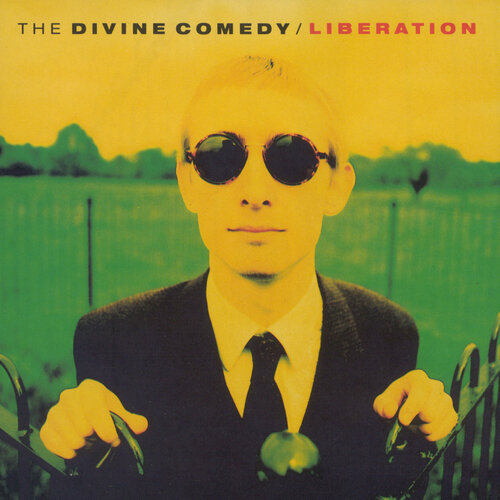
FEATURE: Second Spin: Beastie Boys – To the 5 Boroughs

FEATURE:

Second Spin

Beastie Boys – To the 5 Boroughs

___________

THE last few albums from the Beastie Boys…  

are really interesting, as they vary in quality. Hot Sauce Committee Part Two was released in 2011, and that was followed, rather sadly, by the death of Adam ‘MCA’ Yauch in 2012. I think it is a fitting and strong final album from the legendary Hip-Hop trio, and it is a shame that there can be no other albums from them. Before that came 2007’s The Mix-Up, and that was an album of instrumentals. It has some great moments, but I think it is the group’s weakest album. 1998’s Hello Nasty was an album I really fell for when it came out and, between that album and The Mix-Up we have the fantastic To the 5 Boroughs of 2004. The sixth album from the Beastie Boys, it debuted at number-one on the Billboard 200, and it has since been certified platinum. Maybe one would not rank the album in the best three/five of their albums, but I think To the 5 Boroughs is a great album that won some mixed reviews when it came out. Ch-Check It Out, and An Open Letter to NYC is classic Beastie Boys, whereas Right Right Now Now is a brilliant track. Of the fifteen tracks, there are a few weaker numbers, but I think the Beastie Boys put out a great album that moved their music on whilst retaining their distinct tone and style. I think some that dismissed the album felt that, naturally, there was plenty of fun to be found but the guys were not bringing anything new to the plate.

It was their first studio album for six years, and the boys had entered a new century. Hip-Hop had changed since the late-‘90s, and I guess the Beastie Boys’ were at their peak between 1989 and 1994. That said, their music sounds incredible today, and I don’t feel that it is defined by a certain time or moment. I really like To the 5 Boroughs, as there are so many great tracks, and Michael ‘Mike D’ Diamond, Adam ‘MCA’ Yauch and Adam ‘Ad-Rock’ Horovitz sound like they are having a great time throughout! The chemistry between them is as electric and brotherly as ever, and I think the album deserves re-evaluation and reassessment. I want to highlight a review from The Guardian, who were not completely sold by To the 5 Boroughs:

“In January, anyone with $10,000 to spare could have bid for what was once the world's hippest record label: The Beastie Boys' Grand Royal, bankrupt and up for internet auction.

The label's 2001 closure brought the curtain down on the New York trio's decade-long reign as global avatars of cool, and their first album in six years retreats from the cutting-edge into comfortingly familiar territory: the 1980s hip-hop that first brought them mainstream success.

The beats bounce along happily enough, particularly on the dubby Crawlspace and Dead Boys-sampling An Open Letter to NYC, but the stripped-down sound focuses attention on the anti-Bush lyrics, and that proves to be the album's undoing.

Not even the most hysterical Beastie Boys fan would claim them as great wordsmiths, and political conviction doesn't appear to have sharpened their skills. "George W's got nothing on we," suggests a typical line from That's It That's All. "We got to take the power from he." Indeed us do, but this is a strangely underwhelming way to go about it”.

As a big Beastie Boys fans, maybe I am a little subjective when it comes to their albums, but I feel To the 5 Boroughs is a really complete and interesting album where the group’s sharp pens and rhymes are right at the fore, and the production throughout is brilliant – To the 5 Boroughs was solely produced by the Beastie Boys. In a more positive review, AllMusic offered the following:

For the Beasties, this means heavy doses of old school rap spiked with a bit of punk, which admittedly isn't all that different from the blueprints for Check Your Head, Ill Communication, and Hello Nasty, but the attack here is clean and focused, far removed from the sprawling, kaleidoscopic mosaics of their '90s records. In contrast, To the 5 Boroughs is sleek and streamlined, with all the loose ends neatly clipped and tied; even the punk influences are transformed into hip-hop, as when the Dead Boys' "Sonic Reducer" provides the fuel for "An Open Letter to NYC." Given the emphasis on hip-hop, it may be tempting to label Boroughs as an old-school homage, but that isn't accurate, since nothing here sounds like a lost side from the Sugarhill Records stable. Still, old-school rhyme schemes and grooves do power the album, yet they're filtered through the Beasties' signature blend of absurdity, in-jokes, and pop culture, all served up in a dense, layered production so thick that it seems to boast more samples than it does.

Apart from an explicit anti-Dubya political bent on some lyrics, there's nothing surprising or new here, and the cohesive, concise nature of To the 5 Boroughs only emphasizes the familiarity of the music. Familiarity can be comforting, though, particularly in troubled times, and there's a certain pleasure simply hearing the trio again after six long years of silence, particularly since the Beasties are in good form here, crafting appealing productions and spitting out more rhymes than they have since Paul's Boutique. If there are no classics here, there's no duds, either, and given that the Beasties' pop culture aesthetic once seemed to be the territory of young men, it's rather impressive that they're maturing gracefully, turning into expert craftsmen that can deliver a satisfying listen like this. That's a subtle achievement, something that will likely not please those listeners looking for the shock of the new from a Beastie Boys record, but judged on its own musical merits, To the 5 Boroughs is a satisfying listen, and convincing evidence that the trio will be able to weather middle age well”.

Maybe it was hard to reinvent the wheel in terms of what Beastie Boys could offer, but I think they do venture into new ground on To the 5 Boroughs. Many wondered whether the Beastie Boys would release any other albums after Hello Nasty, and the fact that they came back with such a gem was a real relief! I would encourage people to listen to the album. Many Beastie Boys fans do not rank it that high, and non-fans might not even be aware of its existence. To the 5 Boroughs is a fantastic album from Hip-Hop legends. Some critics feel that To the 5 Boroughs is a slightly weaker Beastie Boys effort but, to me, it is just…

BUSINESS as usual.   

FEATURE: MOJO: The Collectors’ Series: Kate Bush: Challenging the Traditional Songwriter, Remaining Private and Blowing Minds

FEATURE:


MOJO: The Collectors’ Series: Kate Bush

IMAGE CREDIT: MOJO

Challenging the Traditional Songwriter, Remaining Private and Blowing Minds

___________

I am sliding an extra Kate Bush feature in…  

this weekend, as I took delivery of a great magazine. MOJO have a Collectors Series, which means they dedicate an entire magazine to a particular artist. If you want to order the one on Kate Bush that has just come out, then this is what you can expect:

MOJO The Collectors’ Series: KATE BUSH DIRECTOR’S CUT 1958-2020

MOJO is delighted to present its finest writing on Kate Bush in a collectable single deluxe volume.

As one of the most original and extraordinary figures in music, Kate Bush deserves to be saluted in style – and that’s exactly what this sumptuous 132-page magazine does. Drawing on MOJO’s many exclusive interviews with the singer down the years, plus a wealth of archive features and rare and iconic images, DIRECTOR’S CUT 1958-2020 traces Kate’s remarkable story from her pre-fame days recording demos with Pink Floyd’s David Gilmour and breakthrough success with Wuthering Heights and The Kick Inside album, right through to the creation of the mid-’80s masterpiece Hounds Of Love and on to her millennial return to live performance with 2014’s breathtaking Before The Dawn shows.

Among the other wow-some treasures you’ll find within its covers are an unguarded 1980 Sounds interview conducted by writer Phil Sutcliffe, Tom Doyle’s epic four-hour encounter with the singer after she returned from a decade’s hiatus with 2005’s Aerial album, a run-down of Kate’s 50 greatest songs and guide to all her key albums. Plus much more besides. Unbelievable indeed!”.

It is a wonderful magazine, and it covers all of her career; going into detail regarding specific albums; showing us some interviews Bush conducted with MOJO, and giving us so many great photos. It is something I would recommend to everyone and, whilst I know much of the facts and stories that are laid out through the magazine, there were sections and snippets that compelled me to write this. This is going to be a fairly general piece but, having read through the magazine a few times, it amazes me how Bush transformed the way we approach a female singer-songwriter, and that influence and ripple is still being felt now!

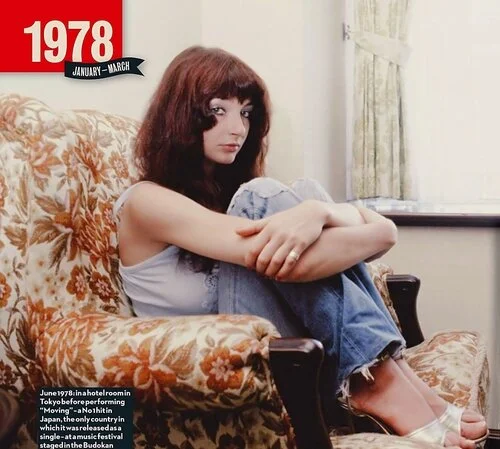
Not only that, but the blend of the private and musically bold – which I have covered in a previous feature – really comes to the fore. In interviews, Bush talks about being shy and quiet, yet we have a body of work from an artist who exuded so much confident and inhabited so many different guises through the years. I am going to quote a few snippets from the magazine, as we get this detailed impression of a songwriter who, since 1978 (and actually before that), has left jaws hanging and created some of the most interesting and incredible music ever! Going from the earliest pages that caught my eye and, when MOJO talk about Bush’s early T.V. appearances, it made me feel sorry for her. Throughout Bush’s career, she has always been seen as a sex-symbol, and her beauty and sexuality has always been on the minds of interviewers. I am going to bring in that side of things – Bush and her approach to sex and its liberation – in a feature next week but, as this otherworldly and very excited young artist coming onto the scene in 1978, it must have been daunting and, at times, a bit angering having to navigate (mainly) male interviewers, who were either focusing on her looks or were asking quite clumsy questions. I think the way Bush navigated this minefield, with grace and composure, is one reason why people have so much respect for her – other artists might have shot back or had a go at the interviewers!

When The Kick Inside was released in 1978, Bush appeared on Saturday Night at the Mill and, as Mark Blake writes for MOJO, she must have seemed “absurdly out of place” as she played Them Heavy People and name-checks philosophers and spirituality – they wouldn’t have seen her like on the show before! Hosted by Bob Langley, the T.V. show was quite a formal and stuffy thing, so Bush’s presence and unusual music might have taken people by surprise. Langley was quite the old schoolmaster when speaking with Bush, and she answered all his questions “but looks like she might be silently telling him to piss off”. Bush wanted to overhaul the cliché expectations of female songwriters and make music that was quite intrusive and physical. The Kick Inside – and subsequent albums – deals with sex and love in a very open and raw way, and her vocals are far more arresting and imaginative than that of many of her peers of the time. Just looking back on some of those very early T.V. appearances, and one can only imagine how a young Kate Bush would have felt. She was excited to get her music out there, but one feels that the business of being interviewed was something she never truly enjoyed. As Blake writes, Bush’s music had “one foot in the BBC studio” with its piano and gorgeous strings, but songs (on The Kick Inside) that looked at incest, suicide, and orgasms were the kind to raise a few of the more conservative eyebrows!

IN THIS PHOTO: Kate Bush in Italy in 1978/PHOTO CREDIT: Angelo Deligio/Mandadori via Getty Images

That is the one thing that I love about Bush’s music above all else: the subject matter was always fearless and tackled themes that were not often discussed in music. Not only were the lyrics and vocals produced by a singular artist, but the compositions, even on The Kick Inside, nodded back to Progressive Rock. Kate’s early boyfriend, the future D.J. Steve Blacknell, recalls that he took her on dates to see Camel, and the Incredible String Band – “you can hear elements of these and more on The Kick Inside”, as MOJO (rightly) observe. It shouldn’t be a surprise that Bush was attracted to the psychedelic and progressive, as her music was brought to the attention of Pink Floyd’s David Gilmour. In 1973, when Bush was at St Joseph’s Convent Grammar School, her brother Paddy passed a simple demo tape to his friend, Ricky Hopper, who was playing with Unicorn (a Folk Rock band), whose producer was Gilmour – he heard potential on that tape and was intrigued. It is clear that the music world was witnessing a true and unique star come forward in 1978. Gilmour oversaw recordings at Bush’s family home and at his studio in Essex. He was pitching Bush to EMI, who he saw as “cloth-eared record company folk”; they were probably expecting something very conventional, commercial and unchallenging. Gilmour fronted the money to bring Bush to AIR studios in 1975, and she recorded three tracks – including The Man with the Child in His Eyes. Producer Andrew Powell was there, and it must have been remarkable for Powell, Gilmour, and those musicians in the sessions that were hearing a then-sixteen-year-old Bush deliver these sublime-yet-unusual songs!

When EMI’s Bob Mercer was given the demo tape of Bush by Gilmour, he signed her on an “apprenticeship deal”, and she was given £3,000 to write some songs and gig – Bush left school, moved out of the family home and embarked on, in her words, “the beginning of my life”. One very obvious thing I gleaned from reading the earliest pages of the MOJO special is that Bush dreamed of putting out an album long before she encountered David Gilmour. I have discussed Bush’s childhood influences and exposure to music, and Bush herself said: “Since I was 14, my only ambition was to get 10 songs on a piece of plastic”. There was an urgency and desire that one can hear through The Kick Inside, and producer Andrew Powell almost had to forewarn the musicians that the songs were not your usual fare, and that they should not judge them/her. It didn’t take long before these experienced male musicians had their jaws opened by an artist whose extreme musical beauty and extraordinary talent was like nothing they had ever witnessed! Bush’s lyrics have always astonished me. She has said how many take time to formulate, whilst others “just come out like … like … diarrhoea”. Why, as MOJO ask, would Bush start singing a Sanskrit mantra – “om mani padme hum” - in the middle of a track (Strange Phenomena) that covers the celestial power of the moon, coincidence and menstruation?! It is that sort of un-linera and unpredictable sense of narration. I guess Bush faced a lot of judgement regarding her age.

How could someone who, when her debut album was released was only nineteen, be aware of the complexities of love and the challenges of life?! She explained how she, like many teenagers, had gone through some heavy times and the best way to channel these experiences and emotions was through music. If so many artists of the late-1970s were using their music as a platform to express anger and rebellion, Bush’s music (on The Kick Inside) was always positive and beautiful. I want to move on from 1978, as I am really interested in how Bush was already fully-formed and this stunning artist right from the get-go. In hindsight, I wonder whether record men and bosses like Bob Mercer regretted not listening to Kate Bush more closely. Many at EMI did not know what to do with her, and when Mercer suggested James and the Cold Gun as the first single, Bush resolutely knew it had to be Wuthering Heights; at which juncture there was quite a heated moment between them where, depending on who you believe, Bush broke down in tears because she knew that she was right – Bush denies that she cried, but it was clear that she had this determination, stubbornness and sense of her own music that many others did not see at that time.

IN THIS PHOTO: Kate Bush at the Plaza Hotel, Copenhagen in 1979/PHOTO CREDIT: Jorgen Angel

Moving forward a bit, and there was, in many magazine and newspaper pieces, this clash of Kate Bush the musician and Kate Bush the public figure. In teen magazine, Look-in, Bush’s rise to attention was described thus: “To every young girl working hard at dance classes and learning music, the story of Kate Bush’s rise to fame must seem like the ultimate fairy story. Few may look as striking as Kate, and it is unlikely that many have her incredible vocal range, but her rise to acclaim gives us all a model to aspire to – showing just how much sheer hard work is involved in reaching the top”. When Never for Ever arrived in 1980, many had heard Bush’s previous singles and albums (Lionheart arrived in 1978; Never for Ever was her third album), and there has been a bit of a change from the higher-voiced artist who was ripe (rudely) for parody in 1978, to a growing artist who was discovering the joys of technology – she used the Fairlight C.M.I. for the first time on Never for Ever -, and was changing all the time. That said, and reading an interview she conducted with Sounds in 1980, and there was still these tags she could not shake off! When that piece/quote from Look-in was read to Bush in the Sounds interview, there was this exasperation – she would have left school and worked at Woolworth, as that sense of pressure scared the hell out of her! Like many artists, Bush was subject to misquotes and the lure and grubbiness of the tabloids. She told Sounds how she saw an early interview that was entirely made up. Sounds themselves ranked Bush at number-two in their list of Sex Object(s) (Female). Today, there would be an outcry and social media backlash if a magazine was ranking female artists in terms of their sex appeal, but it must have been galling and unwanted (rather than flattering) to be seen as a sex-symbol and reduced like this, whereas her music was so majestic, worthy and passionate! Even two years after her debut album, Bush was still being handled and addressed as this slight young girl by many.

She explained how many male interviews were flirty and try-too-hard in the flesh, whereas they would tear her apart in print. She sort of knew that came with the territory, but how could she be anyone but herself?! Maybe people expected Bush to be akin to her sword-wielding, sexy character in the Babooshka video (from Never for Ever) in person, rather than who she really was: quite shy, private and nice. By 1980, Bush’s lyrics were turning slightly more to the political but, even when her attentions were pure, she was still finding interference from record bosses who thought she was putting sex into the mix. Take the anti-war song, Breathing, which Bush saw as her symphony and one of her best moments – she was worried some would feel she was exploiting nuclear war, but her song, told from the perspective of a foetus whilst nuclear war was in the air, was a very honest and serious thing. There is a line, “Breathing, in-out”, which was construed by someone from EMI as being pornographic. He felt the ‘in-out’ was Bush being saucy, which shows that she was not being taken as a serious artist, even in 1980 – as she was progressing and putting out this heavy song, the men from the record company were almost acting like fathers who were dissuading their daughter from meeting boys and talking about sex! It is clear that, in every album and movement, Bush was not only changing the role and view of a young female songwriter, but she was having to battle interfering record bodies and this never-ending perception about her! I do think the media can do more damage than good when it comes to how the public perceive an artist. It was a while until the narrative shifted from Bush being this sex object and ingénue, slightly star-gazing songwriter to a young woman who was crafting some of the greatest music of her time and, unbeknownst to everyone, she was also inspiring artists years down the track!

IN THIS PHOTO: Kate Bush performing on Peter's Pop Show on 30th November, 1985/PHOTO CREDIT: ZIK Images/United Archives via Getty Images

Skip through to Hounds of Love – the MOJO magazine does not really talk about 1982’s The Dreaming -, and we see Bush embark on her most confident transformation. On The Dreaming, Bush was viewed by many in the media as being too experimental and releasing these singles that were too uncommercial to be taken seriously and played – The Dreaming, and There Goes a Tenner charted very low, and there were doubts from EMI that Bush should produce Hounds of Love (after she produced solo for the first time on The Dreaming). I think Bush’s most successful and happiest work (in the sense that she felt happier and less exhausted) arrived when she was in the producer’s chair alone. The Dreaming was a hard transition and album where Bush was pushing technology, the studio and herself to the limits, but Hounds of Love was a much more pleasurable experience for Bush. By 1985, the media had (in a large part) changed their view of her and there was more talk of her as a successful and accomplished artist, and less reliance on her sex appeal and young age. As singles like Hounds of Love, and Running Up That Hill (A Deal with God) charted higher than her efforts from The Dreaming, she was afforded new respect and focus – although The Dreaming did well in the U.S., Hounds of Love was a bigger breakthrough. One interesting change that occurred after The Dreaming was the relationship between musicians and Kate Bush. Stuart Elliott, who played on every Bush album up to Aerial (2005), remarks how Bush started using one musician at a time and, as she told MOJO’s Phil Sutcliffe, “Now the chemistry is between the individual musician and the track he is playing on”. MOJO’s special on Kate Bush notes how, even though technology was a big part of Hounds of Love, the physical performance and the importance of nature and the water was elemental.

Bush has always been interested in the power of people – Running Up That Hill (A Deal with God) is about a man and woman trading places so they can better understand one another -, and the beauty and wilderness of nature (The Big Sky is Bush embracing clouds and the child-like wonder they provoke, whereas The Ninth Wave, is about a woman stuck at sea and at the mercy of the darkness and unpredictability of what lies below). One thing that is not talked about enough – and was covered well by MOJO – is how Kate Bush not only blew away musicians and the media with her music and extraordinary abilities, but of her courtesy, hospitality and down-to-Earth aspect. Musicians playing on Hounds of Love noted how tea and snacks would be prepared for them at the farm kitchen before they headed to record in the barn (it sounds primative, but Bush installed a nice studio in there!). “Brian Tench, who oversaw the album’s final mix (barring the title track and Mother Stands for Comfort), was similarly impressed. “You couldn’t see her doing her vocals” Tench tells MOJO. “She enjoyed being in there and getting into her own world. Then she’d come out and say, (quiet voice) ‘How was that?’ and we’d all be sat there with our mouths wide open”. Hopping to her next album, and there is a quote that she provided that seems to relate to the making of that album: “In music you have to break your back before you even start to speak the emotion”. One of the biggest observations from Bush’s work post-1980 is that albums were taking longer to record and release. As I have said many times before, Bush could write songs pretty quickly, but the actual finalisation became lengthier as each new album came out about. By 1989’s The Sensual World, there were notable gaps. Bush said the actual album took about two-and-a-half years to make, but there were gaps and stops. “There’s tremendous self-doubt involved”, as she admitted.

Bush also noted how she started working on the album soon after Hounds of Love; perhaps trying to capitalise on the momentum created, she was tasked with making another album but, as The Sensual World was very different to Hounds of Love, I can understand why it was four years between album releases. Bush came to resist and hate going from one album to another, and she needed a wall so she could shut off and recharge – that might explain why Aerial arrived twelve years after The Red Shoes! I think one reason why Bush was able to continue recording after The Dreaming and was able to keep writing is because she took some time out to detach and relax. She took up gardening and spent more time with her family – something that would become hugely important before Aerial’s release as her son, Bertie, was born in 1998. I have covered Bush’s early career and that media perception and sense of judgement; taking it through to the breakthrough of Hounds of Love and how different life was for Bush then (Bush’s mother, Hannah, died on 14th February, 1992, and whilst many of the songs on 1993’s The Red Shoes were written before that even, the emotional impact of her passing was another reason why that album took four years to follow on from The Sensual World). The grounded and domestic aspect of Kate Bush came to the fore when she was conducting interviews in 2005. MOJO were lucky enough to be invited into her home, and it is amazing to think about Bush in 1978 and her life then compared to the mother of 2005 who was more interested in spending time at home rather than putting music out – she was keen to release Aerial but she was not going to be rushed or intruded upon! Tom Doyle spoke to Bush in 2005 and, in the years between albums, there was the usual media speculation: Had she had a breakdown or retired? Was there ever going to be another album? Was something more sinister behind her inactivity? If the media perceived Bush as a recluse and someone who was very illusive and strange, the Bush that greeted Doyle in 2005 was a forty-seven-year-old mum who was dressed in brown shirt top, jeans, and as welcoming (if nervous) as ever.

Around us, there is evidence of a very regular, family-shaped existence – toys and kiddie books scattered everywhere, a Sony widescreen with a DVD of Shackleton sitting below it”. It is, as Doyle writes, a “disarming environment in which to meet such a daunting figure”. One thing that many people do not realise about Bush is how normal she is. I feel there is this vision of her living in a Gothic mansion with jewels around her; this sense of her being otherworldly and superhuman. In the run-up to Aerial’s release, Bush and her guitarist partner, Danny McIntosh, found themselves shattered (after Bertie’s birth in 1998) and moving to a new house – they then spent months doing it up. Being Kate Bush, she was not going to hire a nanny or help, so she was attending to her motherly duties and demands of the house whilst slowly fermenting and constructing songs. Bush was having to adapt from a fourteen-hour working day that she would have undergone in years previous, to being in the studio far less frequently. If pre-2005 albums took a while to come along because of the time she spent in the studio getting songs right, it is understandable how time would have flown by when she had to juggle so many things after giving birth and moving home! Bush herself wondered whether an album would come out and if she could make it happen and, if one fabled story about EMI visiting her home – who came down and, when asked what she had produced, Bush took some cakes from the oven and presented them – is not true, there must have been some nervousness from the label about their huge star and her eighth studio album. Bush is rare as an artist, as she never took a penny in advances, and she did not play the label her works-in-progress before an album came out – one can imagine artists now having to present their music in a very different way now!

Bush was asked what it was like playing EMI the album for the first time: “Well, the first time they listened in the studio. I just think they were relieved that it wasn’t complete crap. So they’re thinking, ‘Phew, thank God for that’”. EMI’s chairman, Tony Wadsworth, was blown away when he heard the album and relieved that it was finished. One passage from that interview seems to epitomise the contrast between Kate Bush the artist and her as a normal person. MOJO observe how the music remains beguiling, unique and this balance of the mundane and ordinary (Bush is always interested in the everyday when it comes to her lyrics) and the simply magical. One domestic conversation between Kate Bush and Danny McIntosh caught my eye. “A clock somewhere strikes two, and the chipper, ever-attentive Danny McIntosh arrives with tea, pizza, avocado drizzled with balsamic vinegar and cream cake for afters, only to be fully admonished by his partner, who protests, “I can’t eat all that shit!”. Digging through the MOJO special and reading interviews like that from 2005 makes you wonder what she is doing now and what her daily life is like – even at a time like now, I can imagine it is a house filled with humour and great moments! I am going to end by taking from an interview from 2016 but, sticking with the interview from 2005, and there are a couple of things I want to quote before moving along. MOJO comment how Bush stares into the late-afternoon light one moment, before bursting into life as she presents Bertie’s favourite toy of the time: a disembodied hand (“like Thing from The Addams Family”) that “creeps its way across the carpet”. That seems to perfectly articulate the two sides to Kate Bush: the dreamer and always-thoughtful person who loves the simplicity of nature and the outside world, but someone who is intrigued by technology, new inventions and other people. Before moving on from this interview – and skipping ahead to 2011 -, and there was a question that I knew the answer to but it made me smile reading it in print…

It relates to Bush meeting the Queen for the first time – Bush was awarded a CBE in 2013, and it seemed to be a smoother meeting than the first time. When she was attended a music industry reception at Buckingham Palace, some say that she asked the Queen for an autograph. Bush grinned and confirmed: “Yes, I did!”. “I made a complete arsehole of myself. I’m ashamed to say that when I told Bertie that I was going to meet the Queen, he said, ‘Mummy, no, you’re not, you’ve got it wrong’, and I said, But I am So rather stupidly I thought I’d get her to sign my programme. She was very sweet…”. In terms of personal development and big shifts in Bush’s life, there were not any major changes between Aerial in 2005 and Director’s Cut arriving in 2011 – Bertie was older, and I am sure one or two big events had gone down in the Bush household! In musical terms, I guess one cannot easily compare the two albums. Director’s Cut was Bush reworking and rerecording songs from The Sensual World, and The Red Shoes – albums where she felt there were issues with production or many of the songs needed room to breathe and required some stripping down. I just want source from a MOJO interview from Keith Cameron, and highlight some interesting parts. At 8:35 a.m. – on the day of the interview – Bush rang and wondered whether it was a good time to conduct the second part of the interview. It was not, as Cameron explained, and he asked if they could re-arrange it for 9:15 a.m. Five minutes later, whilst Cameron was driving through South London, he was caught in a scrape with another vehicle and, moments before, pondered whether it was wise to delay Kate Bush – showing that she could literally drive men to distraction after all these years! Bush conducted that first interview in six years by phone – she did invite a couple of people into her home to interview then (including Mark Radcliffe and John Wilson for the BBC).

cccc.jpg

IN THIS PHOTO: Kate Bush in a promotional shot for Director’s Cut in 2011/PHOTO CREDIT: John Carder Bush (from the book, KATE: Inside the Rainbow)

Bush did call MOJO back at 9:15 a.m. and she explained how, in the start of her career, she didn’t realise that she could say ‘no’. I think her enthusiasm and eagerness to promote her music and do as much as possible tipped the balance and, years later, she was resolved to promoting less and recording more: “And then suddenly I was being asked to do all this stuff, so I thought, Right I’d better do it! What I didn’t like was spending all my time promoting the thing and a very small amount of time being set aside for the creative process. That wasn’t me. I just put the balance back the way I wanted it”. MOJO were impressed that, whilst Bush was engaging in one aspect of music that she has never fully enjoyed, she was a fifty-two-year-old being a mother and trying to lead a normal life as possible. The humour of Bush showed. Cameron was asked whether he had heard the new album and, when he said he had, he confessed that the new version of Moments of Pleasure made him shed a tear – “Oh God, it’s not that bad is it?” was Bush’s retort. In the interview, Bush was asked everything from whether the death of her mother affected The Red Shoes (she said the songs had been written but “it was devastating, for all of us as a family”), to whether that album was originally conceived as being more stripped-back and she intended to tour it (“Yes, you’re right. And… it kind of just went away”). There is one more interview I want to briefly grab from but, in the Director’s Cut interview, Bush was asked whether she still worked with Del Palmer – her former long-term boyfriend, trusted and varied player, and her engineer since the Hounds of Love days. She confirmed she was working with him (and he also engineered the follow up, 50 Words for Snow), and she was asked whether he was sick of her by now: “Oh, I think so! It’s wonderful, because I’m working with someone I know so well and I’m very relaxed when I’m in those very early stages of the creative process”. 

IN THIS PHOTO: Kate Bush in a promotional shot for 50 Words for Snow in 2011/PHOTO CREDIT: John Carder Bush (from the book, KATE: Inside the Rainbow)

She explained how she is shy and feels very relaxed with Palmer – “in some ways, in the nicest possible way, it’s almost like he’s not there”. Del Palmer was there for 50 Words for Snow (his credit is ‘Recorded by Del Palmer’), and, actually, I wanted to go past that album and to the last big event involving Kate Bush: her 2014 Before the Dawn residency in Hammersmith. She spoke with Jim Irvin of MOJO about the release of the live album of that show in 2016. Irvin noted how Bush had refused face-to-face meetings and interviews since Aerial arrived – they were speaking with one another by phone. That is not entirely true. Bush invited to her home Ken Bruce, Mark Radcliffe and John Wilson (both for Director’s Cut, and 50 Words for Snow - you can hear her speak to Wilson about Director’s Cut here, and 50 Words for Snow here; I am not sure what happened to the Mark Radcliffe interviews. She spoke to him, in her home, about Aerial in 2005 and, strangely, there is a 2011 interview Bush conducted with BBC Radio 2’s Jamie Cullum that has also disappeared online!); so it was a rare event but she had opened her doors to people – she also spoke to Matt Everitt in the flesh for BBC Radio 6 Music in 2016 to similarly promote the live album. In the final passages, it sort of takes us back to the beginning and how, whilst Bush has released remarkable albums through her career and been consistently brilliant, her life had changed a lot since 1978. She was asked whether she knew things would get crazy after her debut album arrived: “No. You deal with stuff as it comes in, don’t you? It was such an intense time. But it was very exciting that it was being responded to in such an incredibly positive way”. I am going to complete my selective dig through the MOJO magazine special on Kate Bush in a minute but, before completing, there is an interesting couple of sections from that 2016 interview relating to the live album. Bush was asked what the audiences were like: “Every night they were fantastic. You couldn’t have wished for more appreciative audiences. There was a different energy coming off them every night, but they were all so receptive”. The reception Bush was afforded on the various nights shows how much people adore her and that her months of hard work (around about eighteen months or so from start to finish) paid off!

It was lucky that Bush made it to the stage at all! The Ninth Wave is performed in full during Before the Dawn, and part of it sees her immersed in water. She was filmed singing and floating in a twenty-foot water tank; she co-directed for hours at Shepperton Studios. The challenge was to create waves in the tank – as Bush played a woman lost at sea and it needed to look realistic – but not damage the vocal microphone in the process. Bush grew increasingly irritable, and there was quite a tense exchange between Bush and the technicians: “But it doesn’t look right, we need bigger waves”. “You can’t fucking have bigger fucking waves!” was Bush’s response, clearly aggravated about the increasing cold and uncomfortableness (she developed flu-like symptoms that night and was told by her doctor she had mild hypothermia and only to be in the water two hours the next day – Bush, as always, suffering for her art and dedication!). Bush remarked noted, in the show’s notes, that she truly questioned her sanity! The gamble and suffering paid off, and she made a triumphant return to the stage – the first big production since 1979’s The Tour of Life. That was in 2014 and, just over six years since that residency ended, we await her next move. I was really struck by the MOJO Collectors’ Series print of Kate Bush, as I learned new things and, more importantly, had affirmed my appreciation of her talent and how hard she has worked to get where she is! She is seen as a goddess-like figure and sex-symbol; others remark on her spectacular songs that still sound like nothing else, and others see her as a recluse and someone who hides away. I wanted to highlight both her openness and normality; the way she has tirelessly worked through the years and, despite all her success, she remains rooted and dedicated to home and family – if, at the start, it was to her parents and two brothers, Paddy and John, now it is her son and Danny McIntosh.

Although Bush’s second recording experience was with the KT Bush Band – the band she performed in pubs with prior to recording most of the album; in April 1977, they were invited to De Wolf Studios to record some demos (they did not appear on The Kick Inside; instead, musicians from established, more professional bands like Pilot were used instead) -, her first was in 1975 at the age of sixteen. Instead of sitting mock O-Levels, she was instead recording what was to be the final version of The Man with the Child in His Eyes. Bush recalls how gutsy it was of her to sit in that studio and realise that she had achieved a long-held dream. Her parents would have wanted her to take her O-Levels and focus more on school but, as the MOJO feature quotes “I wanted to make music. When I look back at it, they (her parents) were really great about it. Because they probably saw I so driven that it was what I was going to do anyway”. Forty-five years after that fateful (if nerve-wracking!) first experience of a professional studio, and Kate Bush has become an icon and one of the most beloved artists ever! I would urge people to buy that MOJO edition, even if they have a passing interest in Kate Bush, as it is illuminating, informative and very revealing. One gets a bigger and better sense of an artist who, through the decades, has negotiated early critical dubiousness and misrepresentation, the demands of album releases, the addictive lure of technology, and the revelation of motherhood. From the first notes on The Kick Inside’s opening song, Moving, to the final notes (on Among Angels) of her most-recent studio album, 50 Words for Snow, she has beguiled and moved the world; inspired so many people and made an indelible mark on the fabric of music! Let’s hope that 50 Words for Snow was not the final chapter, as I don’t think the whole story has been told. The thing about Kate Bush is that she could release two albums in a year (as she did in 1978 and 2011), or she could suddenly announces that she is coming back to the stage (as she did in 2014). The surprise and unpredictability is why so many people love her so, and let’s hope that the enigmatic, ordinary, spellbinding and hugely important Kate Bush…

IN THIS PHOTO: Kate Bush with Paul McCartney, Linda McCartney, Victor Spinetti, Phil Lynott and Leo Nocentelli, circa 1979

NEVER changes.

FEATURE: The October Playlist: Vol. 2: Maybe a Shot in the Dark, But Show Them the Way

FEATURE:


The October Playlist

IN THIS PHOTO: Stevie Nicks

Vol. 2: Maybe a Shot in the Dark, But Show Them the Way

__________

ALTHOUGH there are fewer bigger songs…

out this week than previous ones, there are still some great tracks in the pack! There is brilliant new music from Stevie Nicks, Lykke Li, AC/DC, Anderson .Paak, Little Mix, John Cale, and Yola (ft. Natalie Hemby, The Highwomen, and Sheryl Crow). Alongside them are Steps, Lauran Hibberd, Katy J Pearson, Travis, cupcakKe, Girlhood, Celeste, and The Lathums. It is a busy week, and one with a lot of variation of brilliant new acts – mixing it up alongside a few legends! It is a bit of a chilly week, and I think these songs provide plenty of heat, energy, and motivation. If you need a boost and some kick to get the weekend swinging along, then take a listen to the best of this week’s new releases, and I am sure that they will be able to send you…

IN THIS PHOTO: Anderson .Paak

ON your way.

ALL PHOTOS/IMAGES (unless credited otherwise): Artists

___________

Stevie Nicks - Show Them the Way

Lykke Li BRON

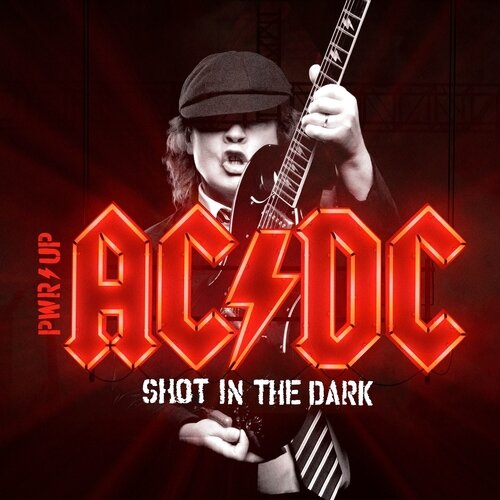
AC/DC - Shot in the Dark

GirlhoodIt Might Take a Woman

Little Mix Not a Pop Song

Anderson .Paak - JEWELZ

John Cale - Lazy Day 

aaa.jpg

IN THIS PHOTO: John Grant

Lost Horizons (ft. John Grant) Cordelia

PHOTO CREDIT: Alysse Gafkjen

Yola (ft. Natalie Hemby, The Highwomen, Sheryl Crow) Hold On

Katy J Pearson Something Real

StepsUnder My Skin

cupcakKe Elephant

Lauran Hibberd Boy Bye

Izzy Bizu (ft. Dom McAllister) - MG 

BicepApricots

Travis Waving at the Window

Low Island Don’t Let the Light In

Megan O’Neill Head Under Water

Jetta Taste

PHOTO CREDIT: Matilda Hill-Jenkins

Celeste Hear My Voice

The Lathums I See Your Ghost

Sasha Sloan Hypochondriac

Bea Miller wisdom teeth

Sharna Bass Murda

Future IslandsBorn in a War

Martha Skye Murphy Yours Truly

ccccc.jpg

PHOTO CREDIT: Sophia Burnell

Ward Thomas Don’t Be a Stranger

Bleached - Stupid Boys

Fia Moon Let This Go

MICHELLEUNBOUND

Eve Belle Bluff

Kassi Ashton Black Motorcycle

vvvvv.jpg

Emma McGrath Mad About It

FEATURE: The Lockdown Playlist: Best of the ‘80s

FEATURE:


The Lockdown Playlist

IN THIS PHOTO: Janet Jackson

Best of the ‘80s

___________

I have done a 1980s playlist before…  

ffff.jpg

IN THIS PHOTO: The Smiths/PHOTO CREDIT: Camera Press

but, as it is National Album Day and the theme for this year is the music of the 1980s, I wanted to do a Lockdown Playlist that fuses the best sounds of the decade. I still think it remains an underrated decade, and many people sort of overlook it or define it rather simplistically. I think it is a remarkable time for music, and so many terrific albums and artists came out of that decade. To honour National Album Day and nod to the brilliant music of the 1980s, this Lockdown Playlist is all about one simply…

yyyy.jpg

IN THIS PHOTO: Madonna/PHOTO CREDIT: Gary Heery

WONDERFUL period of music.

FEATURE: National Album Day 2020: The Eighties: The Album of the Decade That I Will Be Playing: Traveling Wilburys - The Traveling Wilburys Vol. 1

FEATURE:

National Album Day 2020: The Eighties

The Album of the Decade That I Will Be Playing: Traveling Wilburys - The Traveling Wilburys Vol. 1

___________

EVERY year…  

I always look forward to National Album Day. It is a bit strange this year, in so much as everything feels a bit odd! There is a theme with each National Album Day and, for today (10th October), it is about the music of the Eighties. Here are some more details:

On Saturday 10th October the entire British music community are coming together to celebrate the third National Album Day.

There’s going to be a week-long build-up of activities across the country celebrating the album as a format involving amazing talent which spans artists, songwriters, producers, labels, retailers, sleeve designers and the great British public too!

We've enjoyed over 70 years of albums; classic, life-changing, first, influential and even the ones we couldn't live without. Albums mean different things to different people – but there is no denying the huge impact they’ve not only had on our lives but on British pop-culture as we know it.

There are lots of ways for to celebrate National Album Day, from hosting album listening parties, going record shopping with friends, attending live album playbacks or just rejoicing in your record collection and telling us all about the albums you cherish and love. Check out our Get Involved page for more ideas and to submit information about your event.

The Eighties is our theme for 2020, exploring the long voted UK’s favourite music decade that has inspired future generations. It's hard to believe the era began 40 years ago!”.

Of course, it is a chance to embrace all music of the Eighties, but I am going to put together a playlist of great music from that decade but, when it comes to focusing my time on a single album from that decade, it is going to be The Traveling Wilburys Vol. 1. There were other albums I was considering – including Janet Jackson’s Control, Paul Simon’s Graceland, and De La Soul’s 3 Feet High and Rising -, but I think the one album of the decade that has given me some joy recently is The Traveling Wilburys Vol. 1. I grew up listening to a lot of the great artists of the 1980s. Madonna and Michael Jackson were a big part of my childhood, and Bad by Michael Jackson was an album that meant a lot to me. It still is a massive album to me, but I was not too sure how people would react if I selected that album – what with the fact Jackson is not really played now amid controversy and an ongoing feeling of unease. Putting that aside, and the debut album from the Traveling Wilburys is one of my all-time favourites. I have written about this album before, and it is one that I experienced not long after its release. There are many reasons why The Traveling Wilburys Vol. 1 is the album of the Eighties that I am going to be enjoying today.

My experience of the album started when I was a small child and the family and I would have Sunday morning trips up to see my grandparents. They lived close by, and the day would see us drive towards their house, stop for a McDonald's not too far away, before driving up to their house – on the way back, me and my sister would be allowed to buy some sweets at a newsagents near our house on the way back (in the days when there were penny sweets and there was this pleasure about being allowed to choose 50p of sweets and enjoying them on the Sunday!). I listened to a lot of music in the family car when I was young, and I think I may have first heard The Traveling Wilburys Vol. 1 as early as 1989 – though it may have been a bit later. In terms of music from the Eighties, it was mainly Pop that I was listening to. I was getting into Hip-Hop and artists who crossed Hip-Hop and Pop, but I did not stray too far away from those genres in those early days. The Traveling Wilburys Vol. 1 took me by surprise, as it was very different to anything else, and I was not initially aware about the pedigree of the musicians in the band.

I could detect Bob Dylan and George Harrison in there, but I hadn’t heard too much music from Jeff Lynne, Roy Orbison and Tom Petty; it was only in later years that I understood what a supergroup was and why The Traveling Wilburys Vol. 1 could have been a gamble. The musicians were friends, but having five huge names perform together does not necessarily translate into natural and instant results. In other supergroups, egos can clash and the songwriting can seem a bit muddled and unfocused. With the Traveling Wilburys, there was this respect between the members, and you get this carefree vibe throughout the album. The sheer simplicity and catchiness of the songs affected me as a child, and I liked the fact that there were different lead vocals and there was so much range throughout The Traveling Wilburys Vol. 1. Petty, Orbison, Harrison, Dylan, and Lynne were in different stages of their careers by the time they got into the studio. This review from AllMusic talks about how The Traveling Wilburys Vol. 1 helped re-inspire the group - and the result was one of the finest albums of the Eighties:

The Traveling Wilburys built upon Harrison's comeback with Cloud Nine and helped revitalize everybody else's career, setting the stage for Dylan's 1989 comeback with Oh Mercy, Petty's first solo album, Full Moon Fever, produced by Lynne (sounding and feeling strikingly similar to this lark), and Orbison's Mystery Girl, which was released posthumously. Given the success of this record and how it boosted the creativity of the rest of the five, it's somewhat a shock that the second effort falls a little flat. In retrospect, Vol. 3 plays a little bit better than it did at the time -- it's the kind of thing to appreciate more in retrospect, since you'll never get another album like it -- but it still labors mightily to recapture what came so effortlessly the first time around, a problem that can't merely be chalked up to the absence of Orbison (who after all, didn't write much on the first and only took lead on one song).

Where the humor flowed naturally and absurdly throughout the debut, it feels strained on Vol. 3 -- nowhere more so than on "Wilbury Twist," where Petty implores you to put your underwear on your head and get up and dance, the epitome of forced hilarity -- and the production is too polished and punchy to give it a joie de vivre similar to the debut. That polish is an indication that Lynne and Petty dominate this record, which only makes sense because they made it between Full Moon Fever and Into the Great Wide Open, but it's striking that this sounds like more like their work, even when Dylan takes the lead on "Inside Out" or the doo wop-styled "7 Deadly Sins." Both of these are quite good songs and they have a few other companions here, like the quite wonderful country stomp "Poor House," but they're songs more notable for their craft than their impact -- nothing is as memorable as the throwaways on the debut -- and when combined with the precise production, it takes a bit for them to sink in. But give the record some time, and these subtle pleasures are discernible, even if they surely pale compared to the open-hearted fun of the debut. But when paired with the debut on this set, it's a worthy companion and helps support the notion that the Traveling Wilburys were a band that possesses a unique, almost innocent, charm that isn't diminished after all this time”.

The Traveling Wilburys Vol. 1 is not necessarily a ‘typical Eighties album’, but in such a varied decade, I don’t think we can easily define and limit the music of the time. The originality and timelessness of the music is a reason why The Traveling Wilburys Vol. 1 hit me when I was young, and it is the album I will diving into today.

At ten songs, the album is very tight and focused. It starts and ends with two brilliant Harrison-led songs (Handle with Care, and End of the Line), and it ensures that we kick off with an awesome track and finish on one of the very best. Last Night is a wonderful song combining Tom Petty and Roy Orbison, and Orbison can be heard on all five tracks from the first side – he goes solo on Not Alone Any More. There is a lack of his incredible instrument on the second half (aside from the final track, End of the Line), but it is nice that we get to hear him so much in the first half! I love the Dylan-led Tweeter and the Monkey Man, as it is an epic song and has nods to Bruce Springsteen; Heading for the Light is a huge highlight, and every track on the album sounds polished, but there is definitely punch and depth – Jeff Lynne and George Harrison produced. The Traveling Wilburys Vol. 1 is a great nostalgic trip, and one of the first albums from the Eighties that made a very big impression. I return to it a lot now, as it is impossible to listen to the album and not be cheered and lifted. If you have not heard The Traveling Wilburys Vol. 1, then I would encourage people to listen to it now but, on National Album Day, everyone will be playing some great music from the Eighties that means a lot to them. I am going to listen to other music from the decade, but I wanted to focus on an album from the Eighties that means a great deal to me. It is an important record from my childhood, and one that keeps revealing new pleasures and highlights…

OVER thirty years since its release.

FEATURE: Power to the People: John Lennon at Eighty: An Incredible Legacy

FEATURE:

Power to the People

PHOTO CREDIT: Bob Gruen

John Lennon at Eighty: An Incredible Legacy

___________

IT will be quite an emotional day…

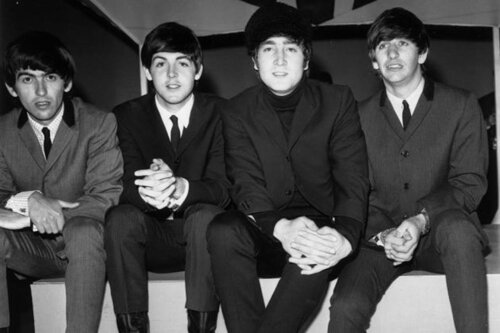
IN THIS PHOTO: John Lennon with The Beatles, circa 1963/PHOTO CREDIT: Jim Gray/Keystone/Getty Images

today (9th October), as it is John Lennon’s eightieth birthday. Even though Lennon was killed forty years ago, his legacy and influence remains strong and widespread. Whether you discovered his songwriting genius when he was a member of The Beatles, or you were tuned in when he was releasing solo work, it is clear that, between some slightly less-than-incredible albums, he was producing some truly fantastic work. In fact, the last album he released in his lifetime, Double Fantasy (1980), ranks alongside his very best. From the incredible originality and constant reinvention, through to Lennon’s embrace of the Avant Garde and the experimental – that started during his Beatles’ work and continued thereafter -, to his amazing work with his widow, Yoko Ono,  there was nobody like Lennon! In fact, Yoko Ono had a profound impact on Lennon as an artist and man, and her positive influence can be felt in his work - his bed-in for peace in 1969 would not have happened were it not for Ono. Looking at the way Lennon progressed as a songwriter, and one hears something more political and sharper on his work with The Plastic Ono Band and in his solo material compared to what he was producing with The Beatles. One does not have to divide Lennon pre and post-Beatles, but there were definite changes and developments when he stepped away from the band.

It is impossible to talk about John Lennon and his legacy without mentioning The Beatles. He started the band and brought Paul McCartney in; the two formed the finest songwriting partnership that has ever been seen in music. If McCartney was associated with slightly softer music, character songs and there was greater escape and invention, then Lennon’s songs were bolder, bigger, and, perhaps, more emotionally raw - though McCartney was no stranger to bearing his heart and soul! I think Paul McCartney was the best Beatle, but I know Lennon wrote, debatably, three of the best songs the band ever produced. Strawberry Fields Forever, and In My Life are masterpieces, whilst I Am the Walrus is one of my absolute favourites. One can also mention All You Need Is Love, and A Day in the Life – McCartney wrote some of it, but the main thrust and body came from Lennon. There are various events and shows dedicated to John Lennon at eighty. There is a wonderful series by Sean Ono Lennon on BBC Radio 2, where he interviews people inspired by his father. Ono Lennon chats with Paul McCartney, Elton John and his brother, Julian Lennon. In 2010, Richard Williams wrote a piece for The Guardian, and he discussed Lennon’s legacy, and where he might have headed if he had lived:

Now, too, we can hear him prefacing "(Just Like) Starting Over" with: "This one's for Gene and Eddie and Elvis… and Buddy!" This was Lennon excavating his roots and he might have carried on with that for a while. He would certainly have admired the way some of his contemporaries make new music while retaining the integrity of the sounds that first inspired them. The chances are, however, that – after effectively missing out on punk and the new wave, which happened during his voluntary engagement with house-husbandry while Yoko worked at consolidating their fortune – he would have found a way to engage with more innovative sounds, rather than settling for the kind of traditional AOR textures that were added in the final stages of the production of Double Fantasy.

Not that he was ever a completely dauntless adventurer. For all his endorsement of Yoko's wailing, he cheerfully confessed that he had been unable to get through even the first side of John Coltrane's Ascension, one of the key works of the 60s avant garde. But having enlisted Phil Spector's help in 1969 to turn the reverb-laden sound of Elvis Presley's Sun records into the pared-back starkness of "Cold Turkey", "Instant Karma" and the John Lennon/Plastic Ono Band album, he might have found a way to perform the same trick for a second time at a later stage in his life. There is always an audience for primal, bare-bones rock'n'roll, something for which he had an instinctive feel.

In the Britpop wars, he would probably have preferred Blur's originality to Oasis's revivalism ("So why all this nostalgia? I mean, for the 60s and 70s, you know, looking backwards for inspiration, copying the past. How's that rock'n'roll?"). It's easy to imagine him enthusing over Radiohead and the White Stripes”.

Not only is Lennon’s musical genius affecting artists and resonating so many years later, but his activism definitely connected with people in all walks of life. In 1990, Yoko Ono spoke with Rolling Stone and shared her memories of Lennon and the way he continued to influence people a decade after his death:

She had struck a similar note during her press conference following the UN ceremony. “I think John’s spirit is alive today,” Yoko answered when she was asked what sort of things Lennon might be doing on this day if he were still alive. “And I think this celebration is a proof of that. I think that his music is still affecting people, affecting the world and encouraging people to make a better world.” She emphasized in particular Lennon’s continuing importance to people who were only children when he was killed. “It seems like [young people] have their own way of being in touch with John’s spirit,” she said.

“I have a teenage son, so I know that that generation seems to be very interested in, not John’s only, but Sixties music.” Of course, Yoko, like everyone else, has her own favorite aspect of the legacy left by her husband. “The exchange of roles,” she said that day in the Dakota, with evident fondness. “John’s awareness about the roles of women and men and how to cope with each other and with a relationship. I think that affected a lot of couples and a lot of couples with children, too.”

She still holds to the brand of personal politics that she and Lennon made a hallmark of all their activism in the Sixties and Seventies. Speaking about what ordinary people can do to help realize the ideals extolled by John and Yoko in their own lives, Yoko articulated a vision that inextricably linked the late Sixties with the early Nineties. “I always get letters from people saying, ‘I’m not famous, I’m not rich, and I’m just an ordinary housewife. What could I do?’ ” Yoko began. “I think this is an age when the issues are so big that, of course, one hero cannot take care of it. All of us have to be heroes in some ways. But we don’t really have to be that much of a hero. What I learned from what we did in the Sixties – maybe we were young, too, but we were always in so much of a hurry. When I wrote the song, ‘Now or Never,’ I thought, ‘Oh, well, with this song, everything is going to be all right by next year’ – I was that naive, you know?

IN THIS PHOTO: John Lennon and Yoko Ono circa 1970s/PHOTO CREDIT: Keystone-France/Gamma/Getty Images

 And when I saw that nothing happened after writing a song or something, it was like ‘Oh, it didn’t work.’ I think a lot of us were like that. We were very idealistic, and we wanted a result now. If we demonstrated, the war was supposed to end tomorrow. That’s how it was”.

John Lennon is still motivating and stirring his Beatles bandmate, Paul McCartney, and I know there are scores of artists performing today who owe a debt to John Lennon! It will be sad looking back on Lennon’s life knowing that he could have made so many changes and contributed so much more brilliant work to the world, but we can also celebrate his legacy and spirit. From the timeless music and his politics through to his work with The Beatles and everything else, we will all come together today to mark the eightieth birthday of a true icon. He really was a one-off who changed music and the world more than he could ever have imagined! Whatever you are doing today, put away some time to remember the life of and celebrate the great music of…

THE masterful John Lennon.

FEATURE: The Lockdown Playlist: Eddie Van Halen’s Finest Guitar Work

FEATURE:


The Lockdown Playlist

PHOTO CREDIT: Paul Natkin/Getty Images

Eddie Van Halen’s Finest Guitar Work

___________

GIVEN the news that…  

PHOTO CREDIT: Fin Costello/Getty Images

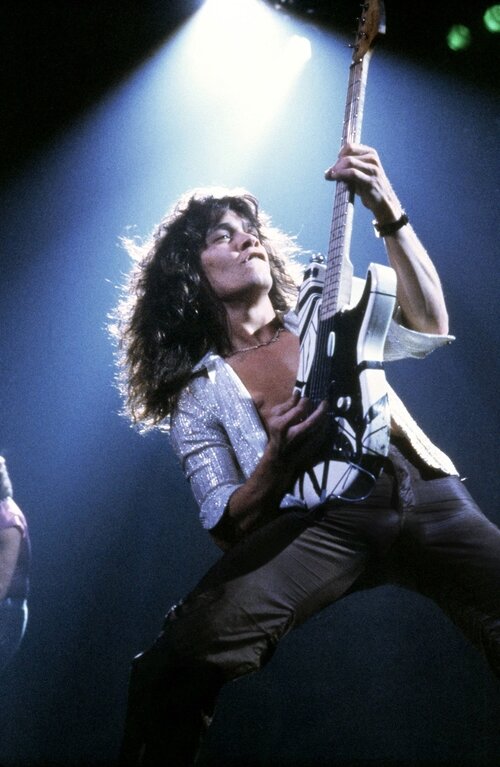
the great Eddie Van Halen died earlier this week (on Tuesday), I had to dedicate a Lockdown Playlist to his incredible guitar genius. I think Van Halen is one of the greatest guitar players ever, and he helped revolutionise and evolve the guitar and bring it to new audiences. He very much had his distinct and intimidate style, and I listen back to the classic hits from Van Halen and they are defined by the stunning guitar notes of Eddie Van Halen. Michael Hann writing for The Guardian explained why Van Halen is such an important player and innovator:

Think of Eddie Van Halen as a time traveller as much as a guitarist, someone who saw the future and fetched it back into the present. “What Eddie Van Halen did was reinvent the electric guitar,” says Def Leppard’s Joe Elliott. “He took it to the next level. He did what Hendrix did in 1967. He made people start listening again.”

He was far ahead of the times, in fact, that his playing could be used to symbolise something unearthly: it is him playing on the cassette that Marty McFly uses to convince his future father he is an alien in Back to the Future – a burst of Van Halen’s squalling, squealing playing, then the words, “silence, earthling!” In 1985, that was a joke all the watching audience understood. Those other players? Yeah, they shred. But Eddie? He’s one step past that.

That much was evident on the debut album by his band, also called Van Halen, released early in 1978. The songs themselves were revolutionary – hard rock, but with a pop edge; a new, sunny, Californian sound that owed little to the bands who had dominated guitar music earlier in the decade – but it was the second track on the album that proclaimed Eddie Van Halen as the heir to Hendrix.

What set Eddie Van Halen apart from the shredders who followed – Yngwie Malmsteen, Joe Satriani and the like – was that he didn’t just play; he could write songs. Huge, glorious, memorable songs. Though he always saw himself as a hard rock player, he also knew how to write pop, and so Van Halen were never just a band for the guitar nerds. Though Van Halen albums always had some showcase for Eddie’s playing – Spanish Fly, Tora! Tora!, the opening of Mean Street, Cathedral – they were usually brief, and his soloing within songs was surprisingly to the point (across the first six VH albums, the ones with David Lee Roth, only three songs last longer than five minutes; this was not a self-indulgent band). His skills were just as often displayed in little flourishes – a guitar equivalent of a drum fill – fitted into the spaces in riffs, or between Roth’s lines. If you can make an impact in a few seconds, why bother wasting more time?”.

To honour the great man – and a hugely sad loss for music -, I have combined some of Eddie Van Helen’s finest work into a playlist that shows why he is so revered and such an influence. It is clear that we will not see anyone like him…

PHOTO CREDIT: Getty Images

WALK the Earth again.

FEATURE: Once in a Lifetime: Talking Heads’ Remain in Light at Forty

FEATURE:


Once in a Lifetime

Talking Heads’ Remain in Light at Forty

___________

SOME big album anniversaries…

have already happened this year, but today (8th October) is the fortieth anniversary of Talking Heads’ Remain in Light. It is the fourth studio album from the band, and it was produced by Talking Heads’ long-term collaborator, Brian Eno. Led by the incredible David Byrne, Remain in Light was the first Talking Heads album I came across. I think it was the single, Once in a Lifetime, that hooked me into the band, and I was instantly struck by that song! I think there was a feeling, on previous albums and 1979’s Fear of Music, that the band was a front for David Byrne, whereas Remain in Light was a shift and a more inclusive album; one where the band experimented with Nigerian music and looping grooves. Although David Byrne suffered some writer’s block during Remain in Light’s creation, he adopted a stream-of-consciousness approach to lyrics and was inspired by academic literature on Africa. I do not think I had heard too many African elements in music prior to discovering Remain in Light. I guess Paul Simon’s Graceland (1986) was an album where the sound of Africa was present, but there were not too many albums from my childhood where we had that blend of accessible and conventional sounds with something more unusual. I think the reason why I loved Remain in Light from the start is that it was so original and different from anything around, in the sense that there are so many sounds merged together and we hear these brilliant songs flow effortlessly!

There is plenty of complexity and genius, but the album can be appreciated by all. As a child, I was powerless to resist Talking Heads, and I listen to their music a lot still. Although David Byrne has gone solo and the band’s last album, Naked, was released in 1988, I think they are inspiring artists today and we can look back at albums like Remain in Light as classics. Even though Remain in Light weas released in 1980, I think it is one of the best albums of the decade, and I think it helped bring African rhythms and music more to the forefront. The album peaked at number-nineteen on the U.S. Billboard 200 and number twenty-one on the U.K. Albums Chart. I think the greatest strength of Remain in Light is the variety of sounds and how diverse the album is. With some Art Pop and Dance Rock mixed with that African influence, it sounded like nothing else at the time – and it is still in a league of its own. Remain in Light is an album that sounds great on vinyl - and this is how Rough Trade describe it:

The musical transition that seemed to have just begun with Fear of Music came to fruition on Talking Heads' fourth album, Remain in Light. "I Zimbra" and "Life During Wartime" from the earlier album served as the blueprints for a disc on which the group explored African polyrhythms on a series of driving groove tracks, over which David Byrne chanted and sang his typically disconnected lyrics. Remain in Light had more words than any previous Heads record, but they counted for less than ever in the sweep of the music. The album's single, "Once in a Lifetime," flopped upon release, but over the years it became an audience favourite due to a striking video, its inclusion in the band's 1984 concert film Stop Making Sense, and its second single release (in the live version) because of its use in the 1986 movie Down and Out in Beverly Hills, when it became a minor chart entry.

Byrne sounded typically uncomfortable in the verses ("And you may find yourself in a beautiful house, with a beautiful wife/And you may ask yourself, well, how did I get here?"), which were undercut by the reassuring chorus ("Letting the days go by"). Even without a single, Remain in Light was a hit, indicating that Talking Heads were connecting with an audience ready to follow their musical evolution, and the album was so inventive and influential, it was no wonder. As it turned out, however, it marked the end of one aspect of the group's development and was their last new music for three years”.

I will wrap up soon, but I want to bring in a couple of reviews. Remain in Light received widespread acclaim on its release in 1980, and it continued to accrue praise and accolades years after its release. In their review of 2012, here is what the BBC had to say:

Remain in Light wasn’t the first time Talking Heads, helmed by the inimitable David Byrne, had worked with producer Brian Eno. Nor was it the first time they’d incorporated elements of "world" music: debut set Talking Heads: 77’s opener, Uh-oh, Love Comes to Town, features steelpan sounds from the Caribbean. But it was (is!) the indubitable zenith of both the band’s Eno collaborations and their explorations beyond art/post-punk and new wave templates.

Whilst Byrne and bandmates’ intentions from the outset were framed by the desire to experiment, Remain in Light is a perfectly accessible affair, never losing sight of the following Talking Heads had attracted via minor single hits like Psycho Killer and their cover of Al Green’s Take Me to the River.

This mainstream-savvy sensibility is encapsulated by Once in a Lifetime. Far from Remain in Light’s most riveting moment, it’s nevertheless the ideal introduction to this set: Eno’s introduction of Fela Kuti-inspired rhythms lends the track a savant edge, but Byrne’s aspiration-meets-realism lyricism connects with a universal audience. With MTV offering support come the station’s 1981 launch, the track was Talking Heads’ best-known song until it was out-radio-played by 1985’s Road to Nowhere

Road to Nowhere’s parent LP, Little Creatures, can’t match Remain in Light’s bravado, though. This fourth album illustrates how keen ambition could gel with commercial nous, with results that dazzle. Even in its darker turns - closer The Overload the obvious example -these eight tracks continue to fascinate over 30 years after their creation.

In short: same as it ever was, same as it ever was…

There is no doubt that Remain in Light marked a real turning point and peak for Talking Heads. I think David Byrne’s lyrics especially come to the fore, and he produced his best work with the band on the album. At forty, Remain in Light still has the power to startle and intrigue the senses. I want to source from a Pitchfork review of 2018, where they talk about the album’s strengths and why the album is so important:

The musical transition that seemed to have just begun with Fear of Music came to fruition on Talking Heads' fourth album, Remain in Light. "I Zimbra" and "Life During Wartime" from the earlier album served as the blueprints for a disc on which the group explored African polyrhythms on a series of driving groove tracks, over which David Byrne chanted and sang his typically disconnected lyrics. Remain in Light had more words than any previous Heads record, but they counted for less than ever in the sweep of the music. The album's single, "Once in a Lifetime," flopped upon release, but over the years it became an audience favorite due to a striking video, its inclusion in the band's 1984 concert film Stop Making Sense, and its second single release (in the live version) because of its use in the 1986 movie Down and Out in Beverly Hills, when it became a minor chart entry.

Byrne sounded typically uncomfortable in the verses ("And you may find yourself in a beautiful house, with a beautiful wife/And you may ask yourself, well, how did I get here?"), which were undercut by the reassuring chorus ("Letting the days go by"). Even without a single, Remain in Light was a hit, indicating that Talking Heads were connecting with an audience ready to follow their musical evolution, and the album was so inventive and influential, it was no wonder. As it turned out, however, it marked the end of one aspect of the group's development and was their last new music for three years.

Although Remain in Light has become an acknowledged classic, it retains a feeling of unfamiliarity. It is tempting to attribute this quality to Byrne’s obtuse lyrics, but the album’s instrumental arrangements also constitute a break with rock’s conventional forms. Weymouth’s bassline on “Crosseyed and Painless” crowds staccato bursts of notes into the first half of each measure, leaving the second half empty in a way that defines the percussion pattern. This technique, essential to funk, diverges from rock’s standard practice of using the bass to keep time. Perhaps the album’s greatest heresy, though, is its total absence of guitar riffs. Like Weymouth, Harrison prefers to use his instrument as a noisemaker. His howling fills on “Listening Wind” lend a foreboding, unpredictable atmosphere to lyrics that are as close as Byrne gets to conventional narrative. These tracks do not hew as strictly to Afrobeat forms as “Once in a Lifetime” or “Born Under Punches (The Heat Goes On),” but they still manage to introduce a coherent sound that is alien to mainstream rock”.

Remain in Light’s legacy is huge. It was named one of the best albums of 1980 by many publications at the time, and, in 1989, Rolling Stone named Remain in Light as the fourth-best album of the decade. In 1993, it was included at number-eleven in NME's list of The 50 Greatest Albums of the '80s. Many other newspapers, music magazines and sites have listed Remain in Light among the best albums of all-time. I know that Remain in Light will receive a lot of love today, and many will nod to a very important album. I got hooked on it as a child, and I have loved it ever since. Albums as extraordinary as Remain in Light come about….

ONCE in a lifetime.

FEATURE: In My Garden: Home and Hearth: Early Influences on Kate Bush

FEATURE:


In My Garden

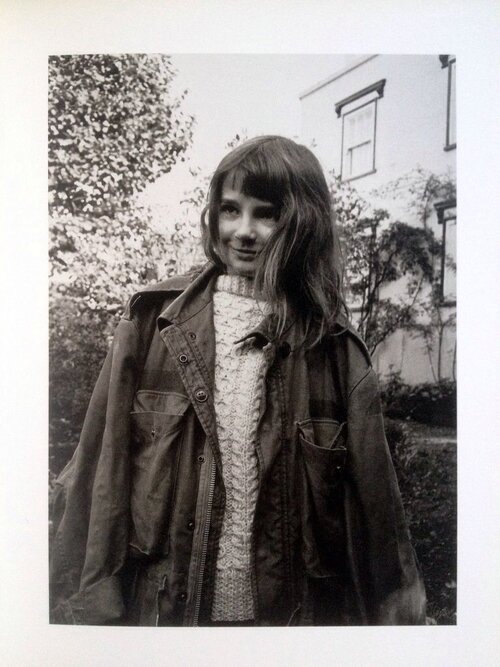
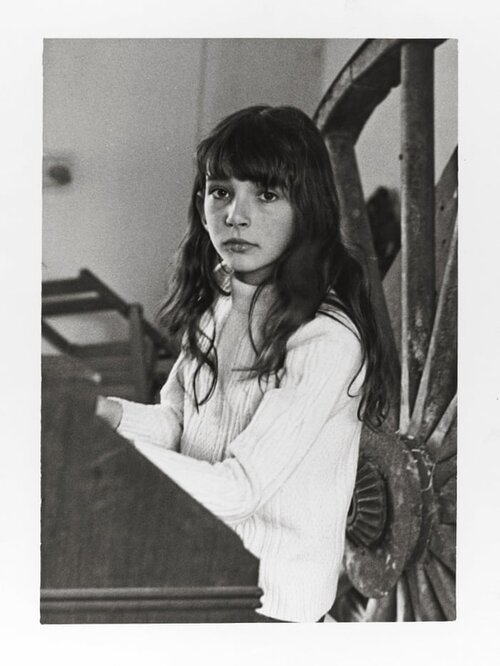
IN THIS PHOTO: A young Kate Bush/PHOTO CREDIT: John Carder Bush (from his book, Cathy)

Home and Hearth: Early Influences on Kate Bush

___________

AS I (and many others) imagine whether we…

PHOTO CREDIT: John Carder Bush (from his book, Cathy)

will ever see another Kate Bush photograph book in the world, I have been thinking about John Carder Bush’s Cathy. Here are some more details:

First published as a run of just 500 copies in 1986, Cathy is a collection of photographs by John Carder Bush of his sister Kate as a young girl, with accompanying text. This new edition—the first printing since the original edition—includes a new introduction by John Carder Bush, illustrated with eight previously unpublished photographs. A beautifully bound hardback with a linen cover, head and tail bands, and a matching linen slipcase, Cathy is comprised of 28 cut out pages featuring the text, with full-page photographs revealed on a separate page beneath. The design matches the original limited run in layout, including the original introduction as well”.

One can buy a copy of that book and, whilst it is expensive, it does provide an intimate and vivid look into the early life of Kate Bush by her brother. I will come on to look at the art, music and inspiration Bush was surrounded by in her childhood home (and school to an extent), as I have not really looked back at Kate Bush pre-The Kick Inside (her debut album of 1978). When it comes to a lot of great artists, we do not really have access to photos of them when they were very young and really falling in love with music and the world around them. I guess it helped having a photographer brother, so we can get a photographic representation of Cathy blossoming into this fantastic artist.

I want to cover a small window of her childhood where she was in a family home and the earliest musical seeds were being planted. There aren’t interviews with Kate Bush really before 1978, so these photographs are invaluable and give us a great impression of a curious and shy girl who was absorbing so much around her and, even as a child, possessed this unnatural ability and prolific intent! I am going to be referring from the 2015 book, KATE: Inside the Rainbow. It is a great book I would urge any Kate Bush fan to own:

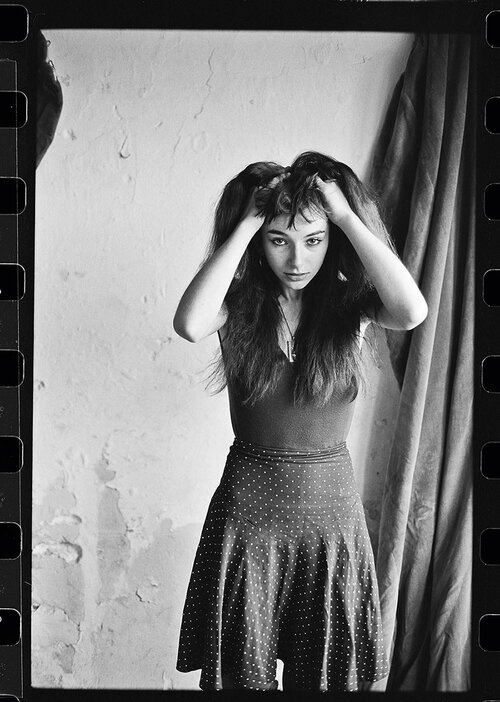
KATE: Inside the Rainbow is a collection of beautiful images from throughout Kate Bush’s career, taken by her brother, the photographer and writer John Carder Bush. It includes outtakes from classic album shoots and never-before-seen photographs from sessions including The Dreaming and Hounds of Love, as well as rare candid studio shots and behind-the-scenes stills from video sets, including ‘Army Dreamers’ and ‘Running Up that Hill’.

These stunning images will be accompanied by two new essays by John Carder Bush: From Cathy to Kate, describing in vibrant detail their shared childhood and the early, whirlwind days of Kate’s career, and Chasing the Shot, which vividly evokes John’s experience of photographing his sister”.

There are interviews where Bush looked back at her upbringing and family home, but I am going to start off by quoting from John Carder Bush’s 2015 update and expansion of the Cathy book. KATE: Inside the Rainbow has over 250 rare photos in black-and-white and colour that were taken between 1964 (when she was five/six) and 2011 – when her current studio album, 50 Words for Snow, was released.

Like any songwriter, those very early years are as influential and formative as any. I think the music and culture we are surrounded by as children moulds and directs us. Carder Bush was involved with his sister (in a creative manner) for twenty years, and, as he puts it in his book, he was “surrounded by a pulsating system of remarkable creativity – it actually felt like I was living life from inside such a phenomenon: from inside a vibrant shimmering rainbow, where reality juxtaposed seamlessly with intense creativity to conjure something enigmatic and intangible that has always embraced my sister and her music”. Although she was born in Bexleyheath in 1958, the Bush family lived in a farmhouse in East Whickham – an urban village in Welling, London (Welling is located in the London Borough of Bexley, although it does share the Kent postcode prefix of DA16). Her father, Robert, was a doctor, and her mother, Hannah, was an Irish staff nurse; daughter of a farmer in County Waterford. Surrounded by a loving family including her older brothers John (or ‘Jay’) and Paddy, Bush came from an artistic background: her mother was an amateur traditional Irish dancer, her father was an amateur pianist Paddy worked as a musical instrument maker, and John was also a poet and photographer. Both brothers were involved in the local Folk music scene. Although she wasn’t necessarily a veracious reader, Bush would have been influenced by literature and poetry from a young age. Celtic and Folk music was in her bloodstream very early, and the idyllic surroundings of the farm provided perfect tonic and elixir for someone who was clearly instilled with a love of music and the arts from a very young age.

PHOTO CREDIT: John Carder Bush (from his book, KATE: Inside the Rainbow)

I think one of the reasons Bush’s music is infected by and infused with elements of dance, literature, and cinema is because of her childhood years and the way the arts was introduced into her life very young - and it became such an important element of her daily life. Carder Bush, in KATE: Inside the Rainbow, recounts how he kept journals and can remember how (for his sister) “1973 and 1974 were very intensive creative years, with often a couple of new songs a week”. Bush would have been fifteen by that point, and I am going to go back further a bit later when I reference Graeme Thomson’s biography, Under the Ivy: The Life & Music of Kate Bush. Through Kate Bush’s infancy, the house was awash with the Irish singing of her mother. As Hannah Bush grew up in the rural South of Ireland, family holidays were taken in Ireland, and the vivid and colourful landscape was at odds with the somewhat greyer and more modest greenery of rainy England. That experience of holidaying among such evocative countryside had a very direct and powerful impact on young Kate/Cathy. As Carder Bush remarks: “Most of our uncles played an instrument, and our mother’s family all loved dancing, both traditional and ballroom”. Sequestered in a slice of paradise in Welling, although the urban expanse had increased in the 1950s and 1960s, there was something pleasingly traditional about the Bush household.

With the music, dance and words of the Irish connecting to the young Bush through her mother and her side, coupled with the piano and Methodist hymns from her father, it must have been quite strange for Bush to enter quite an orthodox school in England! I want to discuss her brother Paddy and his musical influence, in addition to Bush’s school life and her fascination with poetry. Whilst quite a disparate and eclectic cocktail of English and Irish poetry, music and religion might have been quite confusing and strange for a child, it seemed to provide a warm cocoon for Kate Bush – as John Carder Bush attests to in his book. In conjunction with music and literature came film and T.V. I am not sure how many families had access to T.V. in the 1950s and 1960s – Bush’s family were comfortably middle-class, though she was never spoiled -, but the young Bush was often found sitting in front of the T.V. watching the Saturday night film on BBC 2. I have explored how influential film was to Bush in terms of her songwriting and original tangent, and how many of her songs are rich with images and elements of classic T.V. and film – her debut single, Wuthering Heights, was written after Bush saw a T.V. adaptation of the Emily Brontë novel of the same name. Cathy/Kate was meant to practice violin – something she did but never really enjoyed -, but, instead, she began playing the piano.

DSSS.jpg

PHOTO CREDIT: John Carder Bush (from his book, KATE: Inside the Rainbow)

The piano was in the room where she was meant to play violin, and that piano was given to Bush’s father by his piano teacher. Bush would embrace Irish music and her mother’s side through her career – one can hear elements through many of her albums from 1980’s Never for Ever onwards -, but the violin was a pathway into the piano and, on this instrument, Bush enjoyed her first crush and most passionate relationship. Her brother, Paddy, was also very music (he appeared on many of her albums), and they both had a great and easy aptitude for piano – perhaps more influenced by their father than their mother. So many iconic songwriters started out listening to commercial artists or being influenced by what they heard on the radio; they would go on to develop their own style later and evolve through time. Kate Bush definitely loved more conventional music – from Steely Dan and Captain Beefheart through to Elton John and Roy Harper -, but her earliest songs were provoked by things and events around her; anything that really moved her – from pets and animals through to imaginary love. As a child prodigy became more prolific, none of the family realistically felt that this would lead into a music career but, as John Carder Bush remarks in KATE: Inside the Rainbow: “We all became aware of something unexpected emerging; the flower left to grow in its own safe surroundings was blossoming in an exotic and unique way, like a rare orchid among daffodils”.

PHOTO CREDIT: John Carder Bush (from his book, KATE: Inside the Rainbow)

That is a beautiful and apt description of his sister’s clear talent, and the photos John Carder Bush took in those very early years shows Kate at the piano in her elements, frolicking in the splendour and grace of her family’s garden, or looking thoughtful and pensive beneath a tree. One interesting observation (made by Carder Bush) is that Kate Bush’s generation was the first who were not pressured by their parents or expected to follow in their footsteps. Bush could have become a doctor or a nurse – as she was extremely academic and could have gone to university -, but she was gently encouraged to go into music, as her father especially could see that she possessed unflinching and fascinating ability. Although he was proud of his daughter, there was a fear of future instability: the perception that she would become a wandering musician and pursue creativity and success with very little financial stability and career to fall back on. This sort of fear exists in the minds of parents today, and it wasn’t until Pink Floyd’s David Gilmour heard a demo tape from Bush and took an interest in her that the fear subsided. In 1975, Bush recorded both The Man with the Child in His Eyes, and The Saxophone Song – they would appear on The Kick Inside three years later. Not only was music and art an important factor in the Bush household but, curiously, karate was prevalent!

IMAGE CREDIT: John Carder Bush

Everyone, apart from their mother, practiced karate, and Kate Bush trained with her brother, John, for two years – she took two examinations in the Shotokan style. I think the exposure to karate and this form of movement not only fed into her songwriting later on, but it coupled alongside her attraction to dance. Bush trained with and was a fan of the late Lindsay Kemp – whose incredible production, Flowers, resonated and deeply affected her -, and  the marriage of movement, song and literature – alongside film and T.V. -, all went into Kate Bush’s wild and wonderful musical brew! Karate is about defence and attack and, whilst Bush studied it, she substituted for a form of expression more about beauty and protection; something less offensive and confrontational – which is where mime, dance and Lindsay Kemp played an important role. During a time when music was making its way into every household and car, the young Kate Bush was experiencing so many different sounds that her parents would not have had access to in their youth. Her brother, Paddy, brought her examples of World music and unusual sounds; this continued through her entire career, and I think it is as important to her originality and success as anything. Whilst myriad sounds and musical sources provided direction for Bush, it would have been quite overwhelming too. I often wonder whether Bush’s love of nature and birdsong is intended as an escape from the noise and assault of the media…and the endless stream of music.

Kate Bush, appropriately, arrived in music like a rare and magical bird, pure of song and spirit in a music scene enveloped in noise and generic clatter. That sounds rude to her peers, but Wuthering Heights seems like it arrived from a different world and time period; hardly typical of what was absorbed and popular in 1978! I want to shift from the Bush household to the school environment in a moment but, in KATE: Inside the Rainbow, there is a passage that made me stop dead. As John Carder Bush notes: “When I was sixteen, our father’s father, our English grandfather, told me the story of his adolescence”. Because of his religious convictions, he was designated as a conscientious objector when World War I broke out in 1914. Conscription did not come in until 1916, so there was no choice but to enrol; his grandfather went on the run. He was caught and put before a military tribunal. Alongside eleven other ‘conchies’, they were sentenced to death before a firing quad unless they enlisted to go to war. “Six took the opportunity of saving their lives” whereas the remaining six were sent before the firing squad; they were given the chance (again) to go to war, and three more took that option. Three were left, including Carder Bush’s grandfather, and the riffles were cocked and ready to fire…but it was all a ruse!

vvv.jpg

PHOTO CREDIT: John Carder Bush (from his book, KATE: Inside the Rainbow)

Rather than execution, he was sent to prison for the rest of the war. That self-belief and determination not to kill another human was an unpopular one at a time when Britain needed to recruit soldiers. Maybe not as dramatic, John Carder Bush equates that story with his sister determined to follow her instincts and enter an industry by herself. Not only was she influenced by her brothers and her parents, but her grandfather too! The inter-generational and multifarious influences all seeped into her bones and soul, and the girl who wrote from a very young age and was playing her creations to family members and friends was now embarking on a very challenging and frightening move into professional music! As Graeme Thomson writes in his excellent book, Under the Ivy: The Life & Music of Kate Bush, Bush’s background and family home was important regarding her decision to go into music, but there was this niggling that, as she was from a stable home and had not suffered for her art, then that this somewhat invalidated her career choice. I think there is this perception that great art comes from sadness and struggle but, as Bush dispelled in future interviews, one does not need to be unhappy to create great music. Her parents were from “unshowy country stock”, and one cannot accuse Bush of being spoiled. The shift from Catherine to Kate occurred after she left school, but those school years are important – which I shall get to in a second. Bush and her family would holiday in countries like New Zealand (where they would visit members of Bush’s mother’s family), and this infant exposure to different nations and cultures would have been instrumental.

PHOTO CREDIT: John Carder Bush (from his book, KATE: Inside the Rainbow)

Thomson argues that, rather than wealth and opportunity being the most important reason why Bush stepped into music, it was the artistic environment and bohemian atmosphere of her household that was the biggest factor. Indeed, many of Bush’s school friends remarked how her father, Dr. Bush, took surgery in a flowered smock; the family house had a Victorian ghost exorcised when it became too intrusive, and there was this eccentric nature to the home which, inevitably, explains why Bush’s music has always been imbued with a slightly more unusual edge! Whilst the young Bush loved and followed Roxy Music, Marc Bolan, and Simon & Garfunkel (the first album she owned/loved was their Bridge Over Troubled Water album), there was not a lot of traditional Pop music in the house – Bush didn’t get into The Beatles until the Seventies (and later explained how Magical Mystery Tour was her favourite album of theirs). Whilst Paddy played concertina for the English Morris Dancers, and the pure narrative of Irish music was a common sound, those wondering why Bush’s arrival into music was so unconventional-sounding and unorthodox should look at her childhood and upbringing – the Kate Bush we know and love would not exist were it not for her family and the sounds of East Wickham Farm! Through her brothers, Bush was exposed to a lot of English Folk music, which was often gritter than Irish Folk – tales of murder, incest and ghouls ran deep! Bush, as Thomson notes, cannot be categorised as a Folk artist, but its impact “runs deep in her writing”. John Carder Bush, whilst a huge fan of music, became a sort of tutor to his sister and opened her eyes to poetry and deeper ideas.

Jay/John was an accomplished poet, and some of his more illicit and explicit work was shown to his sister. He showed her “how explicit desire was a legitimate artistic endeavour”. Bush wrote her own poetry similar in tone to that of her brother’s and, whist a little sloppy, she would become more refined later. Listen to songs on her debut album, The Kick Inside, where she talks of love and lust in such a direct and bold manner, and one can link that back to her connection with poetry and her brother’s influence. The Bush household was unencumbered and unabashed, and there would have been no taboo when it came to sex and desire. Whilst Paddy Bush brought to his sister so many weird and wonderful recordings that spiked her mind, Jay’s intellectual curiosity and ferocity rubbed off on his sister; she especially loved G.I. Gurdjueff (a Greek-American spiritual leader who died in 1949), and mentioned him on her debut album and in several interviews. Her older brothers’ passions definitely shaped her but, like all great artists, the young Kate Bush pursued her own outside interests. From books – by Kurt Vonnegut to Oscar Wilde -, to Billie Holiday and T.V./film, everything became food for thought. Thomson also notes how there is this misconception that Bush’s music is high-concept and all about philosophy and high-minded ideas where, in actuality, there is silliness, fantasy and humour.

IN THIS PHOTO: A young and mirror-side Kate Bush/PHOTO CREDIT: John Carder Bush (from his book, Cathy)

Track backwards and sideways to Bush’s school years and, whilst it was an unhappy environment (she could not wait to leave), her time at St Joseph’s Convent Preparatory School and St Joseph’s Convent Grammar definitely left their mark. Though her school friends paint her as a shy and extremely nice person, I am intrigued by St Joseph’s and the blend of the ordered and strict. Run by runs – always a horrifying image and sentence! -, everything was kept very beautiful and neat; there was a gardener, and the surroundings were beautiful. It was a school for middle-class children and it prepared these young women for excellence. The nuns, it seems, were proto-feminists and any discipline that took place was self-regulated – there were no canings or anything of that manner! Rather than girls being fearful of a lashing or some form of physical rebuke, there was a sense of disappointment if the pupils did not perform at their highest level. That ethos of performing to your very best standard definitely motivated Bush, and it stuck with her through her career. One can imagine that it was frustrating for Bush to be surrounded by girls with very little male contact, given her fascination with the masculine. Perhaps that stems from her childhood home and the influence of her father and brothers; school was a sharp contrast to life at home.

rrrr.jpg

IN THIS PHOTO: Kate Bush on holiday in Kent in 1972/PHOTO CREDIT: John Carder Bush (from his book, KATE: Inside the Rainbow)

One of the positive aspects of school was the fact that music was a part of the curriculum. I have already mentioned the prolificacy of music in the Bush household, but every pupil at St Joseph’s had to learn an instrument. I think the importance of school on Bush was less about absorption and obedience and more about a sense of defiance. By that, music was taught rather rigidly and there was little in the way of flexibility and excitement in the curriculum. This was at odds with the freer and thrilling energy of home, so I can understand why Bush did not enjoy school a whole lot. Despite her English classes being too regimented and structured to offer any stimulation or interest, Bush did start to blur the lines between home and school. Friends would come home to the farm, and it was a very different atmosphere to St Joseph’s. A more open and far less disciplined space, there were parties, seances, smoking and singing! Bush was probably the most introverted of her friend circle, and I think being around more extroverted characters was important; the very shy Kate Bush definitely started to come out of herself, though she would remain quite private and shy for much of her young and adult life. If her English classes were quite dull and rigid, many noticed Bush excel as a poet and writer whilst at school.

eee.jpeg

IN THIS PHOTO: Paddy and Kate Bush in 1980/PHOTO CREDIT: John Carder Bush (from his book, KATE: Inside the Rainbow)

As Graeme Thomson writes: “Between Form I and III she had several poems published in the school magazine”. This magazine was a rare chance for Bush to express herself in a manner she would not have been afforded in English classes. She was just eleven when her first poem was published, and there was a mix of more introspective pieces and poems that related to death and religion – nothing too unusual for a teen in the Seventies (or any time). Thomson describes those early poems as the “first tangible public evidence of the overpowering excess of emotions that, hidden away, characterised her private childhood…”. A lot of her earliest poems had a definite fixation on death, and it is clear that Jay’s influence was there. Even though Bush would strengthen as a poet and writer in years to come, it is evident from her very first works that she had a great grasp on form and language; a definite confidence of voice. One can see a continuation of the themes in her poems in some of the earliest tracks that would appear on The Kick Inside. I am interested in the demos that Bush recorded in 1972 and 1973 – she would have been around fourteen or fifteen when these songs were put to tape. Many of the songs on these demo tapes would have been considered for inclusion on The Kick Inside, but most of the recordings have never been officially released.

I want to bring in an article from the Kate Bush Encyclopaedia concerning some early demos, and how Bush went from those similar songs to recording her first professional cuts in 1975:

In 1972 and 1973 Kate recorded several tapes of songs. Reports vary about the amount of songs that were recorded, but there must have been dozens. 20 to 30 of these songs were presented via Kate's brother John Carder Bush's friend Ricky Hopper, first without success to record companies. Ricky Hopper then presented the songs to David Gilmour. Gilmour noticed her talent, but also the bad tape recorder quality. This led to one or more recording sessions with David Gilmour present, but with a better recorder. According to Kate: "Absolutely terrified and trembling like a leaf, I sat down and played for him."

At Gilmour's insistance, another recording session took place in the summer of 1973, at Gilmour's farm with two band members from Unicorn: drummer Peter Perrier and bassist Pat Martin, and Dave Gilmour on electric guitar. According to Gilmour, ca. 10-20 songs were recorded. This tape definitely made it to EMI Records. One of the songs recorded during this session was Passing Through Air, which ended up on the B-side of the single Army Dreamers in 1980.

Then, in June 1975, David Gilmour booked a professional studio (AIR London), brought Andrew Powell to arrange and produce the songs and hired top musicians to back Kate. They recorded The Man With The Child In His Eyes, Saxophone Song and Maybe. This tape finally was Kate's breakthrough at EMI. The first two songs from this session appeared on The Kick Inside. With the three demo songs in hand, a recording deal is much discussed between Kate, her family, Gilmour and EMI. In July 1976 it finally comes together: Kate gets £3000 from EMI Records and a further £500 to finance her for a year of personal en professional development”.

I have talked a lot about how there was positive family influence but, when talking about Bush’s school life, there was a lonelier side. Maybe not overly-impactful when it comes to her music and creative drive, I think it warrants mention though. I want to quote from an article from 2017 relating to an article Bush wrote for a magazine called FlexiPop! It makes for quite sobering reading:

I was too shy to be a hooligan but inside I had many hooligan instincts,” wrote Ms Bush in Testament of Youth, an article published in 1982 by Flexipop!, a short-lived pop magazine.

Reprinted in a new book detailing the history of the cult magazine, which featured a flexi-disc by a leading pop act on each cover, the Bush article pulls no punches about her troubled childhood.

“I became very shy at school,” wrote Ms Bush, who attended St Joseph’s Convent Grammar School in Bexley, south-east London. “There were people who picked on me and gave me a very hard time. It was a very cruel environment and I was a loner,” said the singer, who would “get hit occasionally.”

“My friends used to play this game whereby they’d ‘send you to Coventry.’ My friends sometimes used to ignore me completely and that would really upset me badly.

“I still tend to be vulnerable, but I’m much better at fighting back if people are nasty to me today.”

The aspiring performer was writing songs at the age of 10 but didn’t tell anyone at school “because I feared it would alienate me even more.”

Describing her life as a teenager as “interesting and difficult”, Ms Bush, then 24, concluded: “I was very lonely. And even after I left school there were times when the loneliness became desperate.”

In her article, Ms Bush said she found the idea of school “exciting” because she “liked the idea of wearing a uniform.” An extrovert as a young girl, she became “very self-conscious” and stopped dancing to music.

“I found it very frustrating being treated like a child when I wasn’t thinking like a child,” said the singer who “felt I was being patronised, right through the until I was 18 or 19. From the age of 10 I felt old.” Her adolescent struggle was “important because it stirred up all sorts of things in me” which shaped her persona as a musician.

One of the reasons why I want to see/hear a new Kate Bush documentary and see her demo recordings released officially is because that pre-debut album period is fascinating and instrumental! I am intrigued by her childhood and the impact her family had on her music - and it is great that we have books like KATE: Inside the Rainbow to provide a literal look at her childhood home and the very young Kate Bush. It is interesting looking back at the pre-teen/teen Kate Bush and those promising beginnings and the music/art she was exposed to. Who would have known, back in the 1960s and early-1970s, that she would grow into the…

vcc.jpg

PHOTO CREDIT: Anton Corbijn

LEGEND that she is today!

FEATURE: Spotlight: Nova Twins

FEATURE:


Spotlight

PHOTO CREDIT: @arwimages

Nova Twins

___________

THIS duo have been around for a while…

but as they released an album back in February and they are getting a lot of love right now, I thought it was a good time to include them in Spotlight. I have known about Nova Twins for a couple of years, and there are few acts like them around. I think there is still a perception that Rock is reserved for white men, and Georgia South and Amy Love are dispelling that; striking back and trying to change things. I want to bring in an article from The Guardian, - from 2016, who highlight this amazing, rising duo:

Nova Twins are all about that bass: the lurching, grinding, seismically distorted, FX-mangled sound that propels the music of this young London duo: Georgia South, 19, and Amy Love, who is in her early 20s (Tim Nugent, no relation to Ted, adds drums). They call it urban punk but elsewhere their bass-heavy racket with irascible, sharply insinuating vocals has been variously titled hip hop-grime, grime-pop/“grop”, even “grunk”, such is their furious collision of grime and punk. “We are females of colour playing heavy music,” declares Love, who alternately sings (term used advisedly) and raps, with backing squeals from South. “Sometimes we have to shout a little bit louder. We don’t want to be pigeonholed.” Their heroes range from MC5 to Missy Elliott, Skunk Anansie to Skepta, and they get a broad demographic at their increasingly populous gigs, although to date they have attracted more punks and rockers than grime kids.

“Because our sound and delivery is so intense, and because we do it all live, without laptops or any programming, some grime people are put off,” explains Love. “But we want it to be more open – we want diversity in our audience ’cos that’s what we are,” she says of their mixed parentage. “We want guys in snapbacks next to guys with mohawks and nose rings. That would be amazing.”

“When we were younger and slightly more vulnerable, someone pissed us off, trying to make us sound less live, reduce the power of the bass and make us sound American,” recalls Love. “He was expecting us to be more pop, thinking, ‘That’s a bit heavy.’ So we walked out, and he walked out. But we’re not making music for the record industry, we’re making it for us.”

“People do stereotype us,” adds South. “We’re both mixed [race] and we play guitars, so straight away we get, ‘Oh, you girls are going to be singing some R&B,’ and it’s like, ‘Oh come on, educate yourself!

It is still a time when women are vastly under-represented in music, and festival line-ups are especially shocking and skewed in favour of male artists. Nova Twins know this and they are desperate for things to change. Their album, Who Are the Girls?, is one of the finest of this year, and I think Nova Twins will be playing a lot of festivals when things start to get back to normal. At the moment, I would recommend that you buy that album, and witness a fantastic duo primed for big things!

I want to bring in an interview they gave to Louder Sound in February, just before the release of their album - and it is clear that Nova Twins are definitely always evolving and looking ahead:

Looking into the future, the duo seem interested in progressing their music further and trying out new things in their sound. “We are where we are now,” Love says. “I think album four might end up with a synth, who knows.”

Their new label 333 Wreckords Crew, founded by Fever 333's Jason Butler, is something the duo are sincerely excited to be a part of. Instead of a standard label, it’s defined as an ‘artist-orientated collective’. “You don’t always feel backed because everyone is struggling to get to one place or another, so it’s hard for artists to look out for each other,” says Love. “But Jason’s been like, ‘we have to look out for each other’ and we totally agree with that.”

The duo are aware they're outnumbered in the rock industry – not only are they women, but women of colour – and that the odds are stacked against them in such a male-dominated industry. They experienced it first-hand at some of the festivals they played in 2019. During rock and metal festival Download, for example, the girls noticed they were two of seven women on the line up. “We feel like we need to represent all the women and people of colour [at the festival]” says South. “When we walk around, we cannot see our reflection.”

Instead of seeing it as a downside, the girls see it as a challenge. In the next decade, they want to further promote the movement of a diverse audience at rock shows. “We want to change it up and try and make it more open, so more people can be involved in heavy music.

"Because everyone has an influence on the culture – rock and punk – but it doesn’t necessarily let everyone in. So we’re trying to do that”.

I am going to bring in a couple more pieces that highlight the awesomeness of Nova Twins, as I have been intrigued and bowled over by their music got a very long time. Before their debut album, I heard the tracks they released, but I think one gets a bigger and clearer story with the album regarding who Nova Twins are and what their music represents. I think the next year or two will be crucial when it comes to making changes in the music industry so that those at the top are replaced as we can see discussion, progression and, above all, effective change regarding inequality. Things are not moving forward quickly enough! When Nova Twins spoke with NME, they were asked about the political tones in their album and what can be done to make Rock music less white and male-heavy:

Hey Nova Twins. What did you feel you had to prove with your debut album?

Amy: “As women and especially as women of colour, you do come against a lot of stereotypes and challenges. This album was us proving a point.

Georgia: “There are no synths, no backing track and no other writers. It’s just us.”

Amy: “So when we do play it live, nobody can say anything ‘cos its going to sound like the record. We can do it all, no matter how much hopscotching we’re doing on the pedals to make it happen.”

Would you say it’s a political album?

Amy: “Being black women doing punk music is political, so yes. ‘Devil’s Face’ touches on Brexit, ‘Bullet’ speaks about sexism, but ‘Athena’ is completely fictional and mythological. We called it ‘Who Are The Girls?’ because we didn’t always feel heard or accepted making the type of music we do, looking the way that we do. It’s definitely challenging and there is a stigma attached to it.”

Georgia: “When we play these festivals, we’re the only people that look like us on these bills and a majority of the audience would never have seen a band like us, so we need to be the best band possible so their whole perception of black women playing rock music is changed. We wanted to be the voices for the unheard.”

What kind of impact did not seeing people of colour in rock music have on you?

Georgia: “You wonder if you can even be in a heavy band because you don’t see anyone else doing it.”

Amy: “It also affects people in ways they don’t even realise. They start trying to dull themselves down to fit in, but when you try and fit into somewhere you will never, ever belong because your existence doesn’t lend itself to that, it becomes really psychologically damaging. You start questioning yourself and that quickly becomes self-hatred. It took me a long time to accept myself.”

Georgia: “We feel this responsibility to make sure no one else feels like that”.

What can be done to make rock music less straight, white and male?

Georgia: “All we’re asking for is the same chances and opportunities. It needs to start from the top, get rid of tokenism and hire more people of colour but the power is with the audience too. If you support a band, buy their merch, go to shows, you’re giving them power. If you keep supporting POC in alternative music, it’ll become undeniable and they’ll have to be heard”.

I will leave things here, but I want to bring in a review for Who Are the Girls? that underlines what an important album it is. It is one of my favourite from 2020, and I think Nova Twins will get bigger and better with each release! This is what CLASH wrote when they reviewed the album:

 “Nova Twins’ pedalboards have also grown exponentially since 2016, when their reputation for grotty, pitch-shifted assaults of distortion earned them the label ‘grime-punk’. It’s not an unfair description. South’s basslines are what supercharge the songs, leading from the bottom with a dirty, street-gutter rumble that attains absolute perfection on lead single ‘Taxi’. When paired with Love’s delivery, the music can resemble the heavier cuts from Skepta and Tempa T, but they just as often deviate into the realms of UK garage, or rave, or even dubstep.

Both ‘Play Fair’ and ‘Bullet’ end with full-on wub-a-dub freakouts that owe a debt to the likes of Caspa and Rusko, while ‘Undertaker’ genuinely sounds like it could have been painstakingly pieced together out of re-pitched Rage Against The Machine tracks by The Prodigy’s Liam Howlett.

While their peers are busy taking on board smooth-edged American influences and trying to become the next Imagine Dragons, Nova Twins’ sound remains 100% homegrown British beefiness. There are many people out there from across the rap-rock spectrum who will despise this album (for reasons both fair and foul), but there are many more who will appreciate the lack of compromise in this rollicking call to arms. You have never heard two women have this much fun with a metric fucktonne of distortion pedals, but if you do in the future, then the way will have been paved by Nova Twins”.

If you have not discovered the amazing Nova Twins, then follow them online and make sure that you keep an eye on them! They are an amazing duo and I think they will be huge names very soon. This year has been pretty bad but, with Nova Twins’ music out there, 2020 has provided us with some…

GOLD and light.

_____________

Follow Nova Twins

b.jpg

FEATURE: Vinyl Corner: Laura Mvula – The Dreaming Room

FEATURE:


Vinyl Corner

Laura Mvula – The Dreaming Room

___________

I have included some fairly recent albums…

in my Vinyl Corner feature, as there are these recordings that sort of got some attention when they were released but they do not get talked about too much today. I have always loved the work of Laura Mvula and her debut album, Sing to the Moon, of 2013 contained the phenomenal track, Green Garden. With a stunningly powerful voice and a blend of R&B and Neo-Soul, there is a dreaminess and potency that makes her music so long-lasting and interesting. The Dreaming Room is Mvula’s second album, and it was released on 17th June, 2016. There was a positive critical response to Sing to the Moon, and it got inside the top-three in the U.K. album charts. Following that debut release, Mvula worked on various projects; she recorded Little Girl Blue, which was included on the soundtrack for the 2013 film, 12 Years a Slave. At this venture, Mvula began working on her second album. It wasn’t until January 2016 when her first single in three years arrived in the form of Overcome. The song features Nile Rodgers, and it was one of Mvula’s strongest releases. I really love Sing to the Moon, but there was some extra on The Dreaming Room; her sound and confidence was at a new peak and her songwriting finer. I would urge people to buy The Dreaming Room on vinyl, as it is such a deep and stunning album.

Although she wrote songs with others – producer Troy Miller co-writes a few tracks, whilst Steve Brown takes a couple -, it is Mvula’s voice and direction that defines the album. She has a writing credit for every song, and I think she puts her everything into each track! The Dreaming Room is a stunning album that boasts so many standouts. I really love the singles, Phenomenal Woman, and Show Me Love, but non-singles such as Who Am I, and Let Me Fall are sensational. There are, in my opinion, no weak moments, and one can easily listen through The Dreaming Room time and time again, as you’ll pick up new shades and layers that you might not have encountered the first time around! It has been four years since that album, and I wonder whether we might get a new album from Laura Mvula next year, perhaps? It would be fantastic, as the Birmingham-born artist is one of the U.K.’s best singer-songwriters, and her albums are always stuffed with life, meaning and passion. There was a really positive reaction to The Dreaming Room. This is what AllMusic wrote when they reviewed the album:

The Dreaming Room is somehow more sumptuous and emotive than Sing to the Moon, Laura Mvula's impressive 2013 debut. Written and produced primarily with Troy Miller, who she met while working on the soundtrack for 12 Years a Slave, it's another categorically evasive set that updates and amalgamates traditional forms of blues, jazz, R&B, and orchestral pop. For all its unearthly charm, it nurtures the soul. Mvula's rich voice prances across songs of perseverance, salvation, survival, hope, and pride.

 Everything is transmitted with a contagious form of optimism, even in darker moments like "People," where Mvula mourns "They strip us down and rape our minds, our skin was a terrible thing to live in," then marvels "How glorious, this light in us," her words accentuated with a congruent verse from Wretch 32. The only other guest appearance comes from Nile Rodgers, whose golden and unmistakable rhythm guitar is threaded throughout "Overcome," one of the many highlights of this powerful album”.

Although The Dreaming Room charted lower in the U.K. compared with Sing to the Moon, I think it is a better album, and it deserved more acclaim and sales. Looking back, I think the album is one of the best of 2016. It was a very strong year for music and, if released now, I think the album would go into the top-ten in the U.K. and U.S. There was a lot of love for the album. When they tackled the album, The Guardian offered the following:

The Dreaming Room is a rich stew. It’s vivid, cramming a lot of information into barely half an hour of music. Even the most commercial tracks are pretty odd – as evidenced by the off-kilter funk and yelped, incomprehensible chorus of the single Phenomenal Woman, Mvula’s interpretation of her grandma’s instruction to “write a song I can lift me spirits, write a song I can jig me foot” – and even the quiet moments prickle with intensity: the ostensibly straightforward piano-and-vocal section in Show Me, recorded in such a way that Mvula appears to be singing directly into your ear, the tranquil piano chords disrupted by the noise of her feet on the pedals. Lyrically, it’s preoccupied with relationship woe and black empowerment.

The artist who declined to attend the Brits in protest at its woeful lack of black nominees is present on People – “our skin was a terrible thing to live in” – while there’s also a lot of raw, often harrowing stuff about Mvula’s divorce, the tracks on which she appears to come to terms with the collapse of her marriage outnumbered by those where she seems inconsolable: “I miss the wonder of a future with somebody,” she sings on Show Me’s hymn-like opening, “Oh God, where are you?”

It should be much harder work than it is. But like Joanna Newsom, Mvula pulls the listener along with her through the most serpentine songs: however winding their routes, the melodies are almost always beautiful; however much the musical scenery shifts, it is always striking. You do wonder what its commercial fate will be. Despite the discrepancy between its advance publicity and its contents, Sing to the Moon went gold, but there are moments here strange enough to make Sing to the Moon sound like the work of the new Adele by comparison. Or perhaps audiences will be seduced by The Dreaming Room’s invention and originality, which would be entirely fitting”.

If you have not played or owned The Dreaming Room, I think it is a good time to discover a real treat. Mvula’s voice is like no other, and her second studio albums offers so much to the listener. It is a wonderful release, and one that I have been revisiting a lot over the past few weeks. Go and get a wonderful album from such…

A huge talent.

FEATURE: The Lockdown Playlist: Songs of Optimism and Uplift

FEATURE:


The Lockdown Playlist

PHOTO CREDIT: @priscilladupreez/Unsplash

Songs of Optimism and Uplift

___________

I cannot recall whether I have…

PHOTO CREDIT: @adigold1/Unsplash

covered this subject before for a Lockdown Playlist, but I thought I would put out a playlist of unifying, uplifting songs, as things have become pretty tense…and it has been a fraught past week or two especially. With areas of the country locked down and others plain confused, I think we do need some clarity, for sure, but also some spirit that gives us some energy and optimism! Whilst we cannot literally join together and embrace, music is a powerful connective tool, and it has the ability to elevate and bring people closer. I have been looking around for songs that will give us a bit of a spirit and togetherness at a time when we…

PHOTO CREDIT: @belchev/Unsplash

SORELY need it.

FEATURE: Of All the Things I Should Have Said: Kate Bush’s This Woman’s Work

FEATURE:

Of All the Things I Should Have Said

Kate Bush’s This Woman’s Work

___________

IN future pieces relating to Kate Bush…

I am going to be more general and explore various aspects of her work. At the moment, I am keen to dive into particular songs, as I think, in a streaming age, how often do we digest entire songs or take them apart? The Sensual World is an album that is not among my most-spun of Bush’s, and I have been coming back to it in recent weeks. A while ago, I argued that The Dreaming’s Get Out of My House might be her finest closing track on any album. That song has such an intensity and physicality that it is impossible to follow it! It is one of Bush’s most-underrated songs and brought a magnificent album to a powerful end. On the opposite end of the scale is The Sensual World’s This Woman’s Work. This is a song that is very dear to Kate Bush fans, and it is a song that could only have ended The Sensual World, such is its weight of emotion and effect on the listener – the C.D. bonus track had Walk Down the Middle ending the album, but This Woman’s Work is the true closer. The song was originally included on the soundtrack of the American film, She's Having a Baby (1988). I have never seen the film, but it was a rare occasion of a Kate Bush song featuring on a film soundtrack – I still think there are many films that could be lifted by including a Bush song on them!

Sourcing from the Kate Bush Encyclopaedia, here is some more information about This Woman’s Work – including interview quotes where Bush discussed the track:

Song written by Kate Bush. Originally released on the soundtrack of the movie She's Having A Baby in 1988. A year later, the song was included in Kate's sixth studio album The Sensual World. The lyric is about being forced to confront an unexpected and frightening crisis during the normal event of childbirth. Written for the movie She's Having a Baby, director John Hughes used the song during the film's dramatic climax, when Jake (Kevin Bacon) learns that the lives of his wife (Elizabeth McGovern) and their unborn child are in danger. As the song plays, we see a montage sequence of flashbacks showing the couple in happier times, intercut with shots of him waiting for news of Elizabeth and their baby's condition. Bush wrote the song specifically for the sequence, writing from a man's (Jake's) viewpoint and matching the words to the visuals which had already been filmed.

The song was used in the 21st episode of the third season of Party Of Five. The song was also used in the first episode of the second season of The Handmaid's Tale.

The music video was directed by Bush herself. It starts with Bush, spotlighted in an otherwise black room, playing the introductory notes on a piano. In the next scene, a distraught man (played by Tim McInnerny) is pacing in the waiting room of a hospital. It is then revealed through flashbacks that his wife (played by Bush) has collapsed while they were having dinner. The story blurs into a continuous scene where he carries her to the car, a desperate race to the hospital, and his wife being wheeled away on a stretcher as he races in behind her.

While waiting, the husband is wracked with fear and imagines his wife in happier times, kissing him in the rain, and even imagines the nurse coming to tell him she has died. The nurse then pulls him out of his reverie, as she reassuringly puts her hand on his shoulder and tells him about his wife's situation, the outcome of this is left ambiguous; yet the nurse is seen smiling as she speaks, implying a happy outcome. The final scene of the video returns to Bush as silently closes the piano keyboard.

John Hughes, the American film director, had just made this film called 'She's Having A Baby', and he had a scene in the film that he wanted a song to go with. And the film's very light: it's a lovely comedy. His films are very human, and it's just about this young guy - falls in love with a girl, marries her. He's still very much a kid. She gets pregnant, and it's all still very light and child-like until she's just about to have the baby and the nurse comes up to him and says it's a in a breech position and they don't know what the situation will be. So, while she's in the operating room, he has so sit and wait in the waiting room and it's a very powerful piece of film where he's just sitting, thinking; and this is actually the moment in the film where he has to grow up. He has no choice.

There he is, he's not a kid any more; you can see he's in a very grown-up situation. And he starts, in his head, going back to the times they were together. There are clips of film of them laughing together and doing up their flat and all this kind of thing. And it was such a powerful visual: it's one of the quickest songs I've ever written. It was so easy to write. We had the piece of footage on video, so we plugged it up so that I could actually watch the monitor while I was sitting at the piano and I just wrote the song to these visuals. It was almost a matter of telling the story, and it was a lovely thing to do: I really enjoyed doing it. (Roger Scott Interview, BBC Radio 1 (UK), 14 October 1989)

That's the sequence I had to write the song about, and it's really very moving, him in the waiting room, having flashbacks of his wife and him going for walks, decorating... It's exploring his sadness and guilt: suddenly it's the point where he has to grow up. He'd been such a wally up to this point. (Len Brown, 'In The Realm Of The Senses'. NME (UK), 7 October 1989)”.

I guess one can interpret the lyrics to This Woman’s Work in different ways. If you see it in the film, you get this idea of what the song is trying to represent but, actually, when listening without visuals, various listeners will have different perspectives. I really love the music video and what Kate Bush did as a director on it, as it is a powerful and moving clip. I am surprised that Bush re-recorded the track for 2011’s Director’s Cut. That album was a reaction to Bush’s view that a collection of her songs from The Sensual World, and The Red Shoes (1993) needed reworking – the originals perhaps sounding too cluttered and needed to be opened and stripped back to an extent. The version of This Woman’s Work that we hear on The Sensual World was edited from the She’s Having a Baby soundtrack; the single version was a different mix, so we have four different versions of the same song – the version on The Sensual World, I feel, is the definitive! I admire the sparse version on Director’s Cut, but there is something more evocative and spine-tingling when listening to the 1989 version.

Although This Woman’s Work only reached number-twenty five in 1989, I think it is one of Bush’s best songs, and it constantly is included in polls of her finest tracks – Louder Sound included it in a top-twenty-five poll in 2018; Far Out feel This Woman’s Work is one of Bush’s essential songs, whilst Consequence of Sound ranked it high in 2016, and The Guardian placed the song at number-three in 2018. This Woman’s Work has been sampled and covered by others, and it was the name given to a compilation boxset released on 22nd October, 1990 – which I shall mark in a future feature. The Sensual World is a phenomenal album, and I have already covered its opening number, the title track, and the opener to the second side, Deeper Understanding. I might cover The Fog, and Love and Anger later in the year, but I have not featured This Woman’s Work, and it is such an important song in her cannon. Over thirty years since its release, This Woman’s Work still has the power to move, and it is one of Kate Bush’s most hard-hitting and emotive songs – even though there is a lot of hope and strength to be found. In a career filled with hugely important and memorable songs, This Woman’s Work holds a very…

SPECIAL place in people’s hearts.

FEATURE: The Lockdown Playlist: The Best Sub-Two Minute Songs

FEATURE:


The Lockdown Playlist

cvv.jpg

PHOTO CREDIT: @insungyoon/Unsplash

The Best Sub-Two Minute Songs

___________

THROUGH these playlists…

PHOTO CREDIT: @icons8/Unsplash

I am trying to cover as wide a spread as I can regarding music and different themes. Today, I was thinking about short songs that make a real impact in under two minutes. It can be hard making an impression in such a short time, but there are those tracks that deliver a real sense of memorability without saying that much. For this Lockdown Playlist, I have compiled some epic tracks that, despite their brevity, are high in quality! If you need a little bit of a lift and something to help out at this hard time, have a listen to the playlist as there are some brilliant songs in the mix that are guaranteed to stay on your head and…

xzzz.jpg

PHOTO CREDIT: @von_co/Unsplash

GIVE you that much-needed energy!

FEATURE: Women Like Me: Can Little Mix: The Search Revitalise the Music Talent Show?

FEATURE:


Women Like Me

PHOTO CREDIT: BBC

Can Little Mix: The Search Revitalise the Music Talent Show?

___________

I have not held back my feelings regarding…

IN THIS IMAGE: Little Mix release their new album, Confetti, on 6th November

music talent shows in the past. I am a purist who believes that artists should earn their way, and that T.V. shows like The Voice are cheats and, worse, exploit contestants and are pretty uncomfortable to watch. The pressure that the singers feel to prove themselves; the disappointment they must feel when they are turned away, to me, should not really be allowed. I like the old-fashioned idea of a battle of the bands-type contest, where there is a more fun and relaxed vibe, and the artists can play and perform their own songs. It has been a while since there has been a more light-hearted and kinder talent show for artists. As we have seen so many music talent shows in various guises through the years, another one might seem redundant and completely pointless. Little Mix have introduced a Pop show, Little Mix: The Search that, at least, seems to offer some form of positivity  - as the BBC report here:

UK pop stars Little Mix began their search for the next big thing this weekend.

The girl band, who made their name on ex-manager Simon Cowell's show, The X Factor, are looking to find and create their own arena-filling pop group on their new BBC One show, The Search.

The programme received positive reviews and was praised for modernising and freshening up the age-old format.

Despite that, it also received relatively low early viewing figures.

Around 1.9m people tuned into episode one on Saturday night, giving the show an 11.6% share of the TV viewing audience at that point. On Sunday, that figure was 1.8m - an 11.3% share.

'A kinder approach'

The task for Leigh-Anne Pinnock, Perrie Edwards, Jesy Nelson and Jade Thirlwall is to create six bands from thousands of wannabes - a boy band, girl vocal, girl dance group, mixed, vocal and instrument, and rap and R&B.

The winners will support the band on their next tour (which could be a while off sadly, due to Covid-19)”.

There have been some positive reviews for Little Mix: The Search. I would not usually consider it, but the fact they are searching for girl and boybands intrigues me. Also, the broadness to include a mixed group, vocal and instrument, and Rap and R&B means that there it is not just about Pop or the same as what other talent shows promise. It is sad these kind of groups – especially girlbands – have sorted waned since the 1990s and first decade of the twenty-first century. It has been a while since the likes of TLC, Destiny’s Child, and Spice Girls ruled, and I was sort of partial to a few of the songs from boybands like *NSYNC, and Boyz II Men. The classic eras for girlbands, I think, were during the 1990s, though some classic groups from the 1960s and 1970s (such as Diana Ross and The Supremes) are pretty close. The boybands have never had the same appeal and variety as their female rivals, but that might change with this new talent show.

Also, at a time where we need to see equality and diversity in music, we could discover a girlband who can mix it with the icons of the past. A vocal and instrument group interests me, and there is plenty of scope to discover a potential festival headliner. When The Independent reviewed the opening episode of Little Mix: The Search last week, they had this to say

Just when you thought the final nail had been struck in the singing contest coffin, Little Mix arrive with The Search (BBC One). Hoping to find “the next big act” to support the group on their Confetti tour in 2021, it casts band members Leigh-Anne Pinnock, Perrie Edwards, Jesy Nelson and Jade Thirlwall as both judges and mentors to a new generation of wannabe stars.

While this is definitely not a rival to Simon Cowell’s X Factor (which Little Mix won in 2011), it also definitely is. The group split from Cowell’s label Syco in 2018, with both parties hinting at issues over the direction Little Mix were taking. Little Mix told me in an interview last year that their show would take a kinder approach than “other ones out there”. They’ve stuck to that promise. It helps that these women are the right age to remember the era of “peak pop band” – from Blue to Boyzone, Steps to S Club 7 – and identify those pop group-sized gaps in the music industry today.

The first episode tackles boybands. A lot of the boys seem to have auditioned for the sole purpose of flirting with the members of Little Mix; one hopeful winks at them so much, I worry he’s having some kind of seizure. When another contestant reveals he doesn’t know who NSYNC are, they all reel. “Oh my god, that makes us feel so old,” Jesy announces. The boyband finalists are then plonked in front of a live audience to test their mettle, after which Little Mix choose their favourites for the ultimate boyband”.

I do think that, as more positivity is coming into Pop and there is a mini Disco revival – with the likes of Dua Lipa, Jessie Ware, and Róisín Murphy -, we might see a new wave of Pop that puts big choruses above something more introspective or processed. Maybe the winners of Little Mix: The Search might not equal the very best girl and boybands we have seen, it would be good to see some fresh blood in these markets. I do think that there is a saturation of talent shows that look for solo singers and, as these shows have been running for years and the formula has become increasingly tired and predictable, we will never an artist come through these shows that can match the best in the industry at the moment. Looking around, and apart from Little Mix, BTS, and a few other examples, there are not that many girl of boybands. I am optimistic but, if we can find a group who has a bit of panache and can perform Pop/R&B anthems with very little vocal processing and heavy-handed production, then it will be worth it. I think the break away from four-on-a-panel format is a good thing, as it is done by every talent show – whether it is music, dancing or cooking -, and I think Little Mix can help revitalise and move forward the music talent show. It is a bit hard at the moment with COVID-19 restrictions and it is not the best time for a potential new band to launch into the market, but Little Mix: The Search has legs – let’s hope a great group or two can come out of the other end that is less a commercial product and more of an authentic and unique act (as much as that is possible when we talk about a T.V. talent quest). Talent shows have become alarmingly irrelevant and poor the past few years but, with a different and more promising competitor coming forth, it is nice to have this BBC show…

IN the mix.

FEATURE: A Buyer’s Guide: Part Twenty-Three: The Divine Comedy

FEATURE:

A Buyer’s Guide

qqqq.jpg

PHOTO CREDIT: Ben Meadows

Part Twenty-Three: The Divine Comedy

___________

NEXT week will see me move out a bit…

and feature on a female artist and, also, go back to a more traditional format. I was keen to include The Divine Comedy in this feature, as they are a group I really love and, even though it essential consists Neil Hannon, he has worked with an array of musicians and singers through the years. I am not including a book for The Divine Comedy, as I cannot see one listed, but I have recommended the four albums you’ll want to own; one that is underrated and I think warrants closer examination, in addition to the latest one from a songwriting treasure. If you are not overly-familiar with Neil Hannon’s music and the brilliant force that is The Divine Comedy, then this guide should steer you towards the albums that…

YOU’LL want to own.

___________

The Four Essential Albums

Liberation

Release Date: 16th August, 1993

Label: Setanta

Producers: Neil Hannon/Darren Allison

Standout Tracks: Bernice Bobs Her Hair/Europop/Lucy

Buy: https://www.discogs.com/The-Divine-Comedy-Liberation/master/43809

Stream: https://open.spotify.com/album/2LkPsyWPYhVMpvhgfR6kv8?si=fmdOyWcsTn2ZxfCYpcdwmw

Review:

Hannon's masterstroke is forsaking traditional rock'n'roll posturing in favour of a melancholic approach which is underpinned by a full string section and a lone French Horn player who parps away so frantically that you can't help but wonder what sort of divilment these classical types get up to when they're not blowing, plucking or banging things.

Yer man is not, it has to be said, the happiest of campers. In fact, the likes of 'Death Of A Supernaturalist' and 'I Was Born Yesterday' are downright miserable but unfurl their tales of woe with such eloquence that Morrissey and Marc Almond comparisons are, I'm afraid, unavoidable.

'Bernice Bobs Her Hair', meanwhile, documents that most traumatic of adolescent experiences - a truly crap haircut: "Her hair was long, her hair was dark, her hair fell down her back and now it's on the floor/ The mirror tells of her mistake, her heart is fit to break." We were so distraught here in H.P. Central that we nearly chipped in to buy the poor lass Gazza-style hair extensions but, hey, why add to her problems?

'Europop' is laced with not entirely bitter irony, a Casio-driven ode to the pros and cons of Smash Hits stardom which has already gatecrashed into the indie top 10 and, with a bit more promotional zeal, could do the same in the grown-ups chart.

Hannon isn't adverse to a spot of constructive plagiarism either - 'Timewatching' is a gloriously flamboyant re-write of 'When I Fall In Love' while 'Lucy' takes Wordsworth's 'A Slumber Did My Spirit Steal' and turns it into the lushest of love songs. The moral here, I think, is that if you're going to rip something off, do it with a sense of panache!

'Europe By Train' is one of the few occasions when Liberation abandons its quasi-Englishness, a cheeky Zorba The Greek parody which is redolent of sunkissed Mediterranean islands and a severe overdose of Ouzo.

It might be argued - and I'm sure many of my colleagues will - that The Divine Comedy are a little too weighty and intellectual for current tastes but artistry shouldn't be limited by the marketplace and if this LP only sells half-a-dozen copies, it'll still be a triumph.

Ray Davies, I suspect, would wholeheartedly approve” – Hot Press

Choice Cut: The Pop Singer's Fear of the Pollen Count

Promenade

Release Date: 28th March, 1994

Label: Setanta

Producers: Neil Hannon/Darren Allison

Standout Tracks: Going Downhill Fast/Don't Look Down/Neptune’s Daughter

Buy: https://www.discogs.com/The-Divine-Comedy-Promenade/master/43821

Stream: https://open.spotify.com/album/4MY1E61exkrdDyr28tMPcZ

Review:

While in appearance, it seems like a sequel to Liberation -- a similar cover shot down to the typeface that is on the front, in this case showing Hannon in front of the IM Pei-designed entrance to the Louvre, while the back shows a similarly Rococo piece of decoration -- Promenade is in fact even more extremely and defiantly non-rock than its predecessor. With a larger number of string performers to accompany him, not to mention someone on oboe, sax, and cor anglais (English horn), Hannon retains only drummer/co-producer Darren Allison from the previous record to make what remains his most self-conscious art release to date. The opening "Bath" sets the course, with seacoast sounds and a brief spoken word bit that turns into a minimalist Michael Nyman homage before slamming into the song proper, where the guitars and bass take a back seat to the choir, strings, and woodwinds, all the while driven along by Allison's solid percussion. From there all kinds of twists and turns emerge in an alternate universe where classical instrumentation offers as much pop as a guitar strum. The extreme archness of "Going Downhill Fast" is also a pub singalong, while "Don't Look Down" builds to a dramatic, striking ending. Hannon's wickedly sharp wit informs almost everything; "The Booklovers" is the clear winner on that count, as Hannon tremulously recites a number of authors' names (with an appropriate accompanying sample or aside, often quite hilarious) over a stately arrangement. "A Seafood Song" and "A Drinking Song" celebrate exactly what they say they do, the latter offering up the great line "All my lovers will be pink and elephantine!" At the same time, the tender side of Hannon, which has sometimes been ignored, surfaces more than once, with "The Summerhouse," a nostalgic, wonderfully gentle piece on a lost season of love. This turns out to be one of Hannon's best songs ever” – AllMusic

Choice Cut: When the Lights Go Out All Over Europe

Casanova

Release Date: 29th April, 1996

Label: Setana

Producers: Neil Hannon/Darren Allison

Standout Tracks: Becoming More Like Alfie/In & Out of Paris & London/The Frog Princess

Buy: https://www.discogs.com/The-Divine-Comedy-Casanova/master/43787

Stream: https://open.spotify.com/album/5zhKAcWDyjCIDk2yqxsHmV

Review:

Finally, The Divine Comedy's Neil Hannon has got the budget he deserves and has made the record that validates his past pretensions. The Barry White parody in the Jacques Brel-style tango Change aside, Hannon's vision of Scott Walker singing Noel Coward, arranged by Bacharach & Sondheim (and, in Casanova's case, "inspired by the writings of the 18th Century Venetian gambler, eroticist and spy"), is less concerned with parody than the realisation of a maverick vision. Something For The Weekend, Becoming More Like Alfie and Middle Class Heroes make for a terrific, pop-centred opening, there is an oasis of acoustic calm in Songs Of Love, while The Frog Princess and A Woman Of The World lead the way toward the big-ballad climax of the 40-piece-orchestra-at-Abbey-Road scenario, The Dogs And The Horses. With strong melodies and a lyrical treatise on love that smoulders with knowingly arch comedy, this is music to appeal across all pop tastes” – Q

Choice Cut: Something for the Weekend

Absent Friends

Release Date: 29th March, 2004 (U.K. & Europe)/4th May, 2004 (U.S.)

Labels: Parlophone (U.K. & Europe)/Nettwerk (U.S.)

Producer: Neil Hannon

Standout Tracks: Absent Friends/My Imaginary Friend/Our Mutual Friend

Buy: https://www.discogs.com/The-Divine-Comedy-Absent-Friends/master/43777

Stream: https://open.spotify.com/album/6sJTXExBj2yCPRSukicLYz

Review:

The title track could be the theme from High Chaparral that got left on the cutting room floor and features namechecks to Oscar Wilde, Steve McQueen and Willie Woodbine (whoever he is).

"Sticks And Stones", with its tense, stabbing strings is another song straight out of the movies - while "Charmed Life" is an epic string ballad that could have been written for Sinatra.

Essentially, Absent Friends is the soundtrack of a man who's never been happier, yet is keen to remember the bad times to put things in perspective. New single "Come Home Billy Bird" - with gorgeous backing vocals from Lauren Laverne - is the tale of an over-worked businessman who overcomes a series of obstacles to make his boy's first football match.

"The Wreck Of The Beautiful" follows the haunting last rites of a once-great battleship and "Our Mutual Friend" recalls the pal who introduced Hannon to a woman, then took her for himself. The cad. Light relief comes in the shape of "My Imaginary Friend" - Bowie's "Laughing Gnome" dragged into the 21st century - but the laughs are generally few and far between.

Anyone expecting a return ticket for the National Express is going to be disappointed. Persevere, though, and you'll find it's the smoothest ride you've had in ages”  - BBC

Choice Cut: Come Home Billy Bird

The Underrated Gem

Bang Goes the Knighthood

Release Date: 31st May, 2010

Label: Divine Comedy

Producer: Neil Hannon

Standout Tracks: Down in the Street Below/Bang Goes the Knighthood/I Like

Buy: https://www.discogs.com/The-Divine-Comedy-Bang-Goes-The-Knighthood/master/254740

Stream: https://open.spotify.com/album/71aizAHZJTH9fH2T0y2F5O

Review:

Elsewhere, any trace of disdain for the National Trustafarians seeking stately homes to visit in "Assume The Perpendicular" ("Lavinia loves the lintels, Anna the architraves/Ben's impressed by the buttresses thrust up the chapel nave", etc) is conveyed solely by the way the banjo punctures the pomposity of the brass arrangement. Something similar happens with the prancing music-hall piano of "The Complete Banker", though as the title suggests, even Hannon can't resist a gentle tilt at this most deserving modern Aunt Sally. Most skillfully of all, with "Neapolitan Girl" he returns to the Eurotrash territory previously visited in "A Lady Of A Certain Age", employing a jolly, lightly chugging Europop setting for a really rather dark song about Italian girls selling sex to feed themselves in the immediate aftermath of the Second World War: in Hannon's hands, their plight is varnished with a Riviera Touch of empathic glamour that is implicitly forgiving.

It's not an entirely successful collection : "Can You Stand Upon One Leg" is a silly, throwaway kids song – Hannon's Sesame Street moment, maybe – and "The Lost Art Of Conversation", his Beatlesque pop piece about the delights of discourse, is little more than an excuse to string together ludicrously literate lists of subjects for discussion.

But like The Magnetic Fields' Stephin Merritt, when Hannon keeps his inner show-off restrained, he can lay waste to one's emotions. Here, it's his poignant analysis in "When A Man Cries" of the difference between childish tears and adult tears – the one so public and profuse, the other so private and piercingly intense – that cuts to the quick in a manner made all the more intense in coming from one best known as a social satirist”  - Belfast Telegraph

Choice Cut: At the Indie Disco (ft. Cathy Davey)

The Latest Album

Office Politics

Release Date: 7th June, 2019

Label: Divine Comedy

Producer: Neil Hannon

Standout Tracks: Queuejumper/Norman and Norma/Philip and Steve's Furniture Removal Company

Buy: https://www.discogs.com/The-Divine-Comedy-Office-Politics/master/1560254

Stream: https://open.spotify.com/album/5BrYBrnS8Lp9AzzECZASKd

Review:

However, at times, Office Politics seems a little too aware of its joke, not unlike like the disco-dope of “The Life and Soul of the Party,” showing off drunken dance moves and rambling to co-workers who do not care. The punchline—that he’s alone and no one likes him—is obvious from the song’s opening line: we get it, office and suburban life are dull, but by this point in the album, it’s a cliche.

“Phillip and Steve’s Furniture Removal Company,” goes on a little too long; it’s supposed to be the theme song for an imaginary show (as explained in the skit that precedes it) and although I would absolutely watch 30 seasons of it, I would skip the 4 minutes and 51 seconds theme song—the longest track on the album—nine times out of then. The other semi-skit piece, “Psychological Evaluation,” which lays heavier on the synths than “The Synthesizer Service Center Super Summer Sale,” is obnoxious and immensely unpleasant to listen to, a hard recovery as the album starts to lose momentum.

The songs that are sincere, such as the domestic drama “Norman and Norma,” and the brokenhearted lover’s lament, “A Feather in Your Cap” are surprisingly so, so much so that I waited for a punchline that never quite came. In the case of the former, I’m actually happy that Norman and Norma—who we’ve seen raise their children and fall into romantic complacency—find their bliss in battle reenactments. “I’m a Stranger Here,” a simple piano-based melodic operetta, punctuated by sweetly swirling strings, about a time traveler trying to navigate his new surroundings, plays similarly. A sweet plea for assistance as he realizes the life and home he knows is gone, he sings, “If you ask where I come from, I’ll say ‘the past’ and wander on”  - PASTE

Choice Cut: Infernal Machines

FEATURE: One Place Before π: Kate Bush’s King of the Mountain

FEATURE:


One Place Before π

xxssss.jpeg

Kate Bush’s King of the Mountain

___________

I will discuss Kate Bush’s Aerial in greater depth…  

IN THIS PHOTO: Kate Bush in 2005/PHOTO CREDIT: Trevor Leighton/National Portrait Gallery, London

in the coming weeks, as the album turns fifteen on 7th November. That album is special as it was her first album since 1993’s The Red Shoes, and there was great excitement when Aerial was announced! It is Kate Bush’s only double album, it consists, like Hounds of Love, of a more traditional and non-conceptual first side – even though Aerial’s songs are less commercial than those on Hounds of Love - and a conceptual suite on the second side (where Hounds of Love’s The Ninth Wave clocks in at under thirty minutes, Aerial’s A Sky of Honey is forty-two minutes in length). The second track on Aerial is π, where Bush, literally, recites the mathematical constant! Before the album’s least conventional and most unusual track came the one and only single: the mighty King of the Mountain. The Red Shoes’ last single, And So Is Love, was released on 7th November 1994, so it was over a decade since we saw Kate Bush on film – it is not strictly true, but that was her last single before King of the Mountain. Arriving on 24th October, 2005 came this single that was distinctly and pleasingly Kate Bush! Rather than return with something quite plodding or ordinary, we get a song about Elvis Presley! With some great drumming from Steve Sanger and Del Palmer on bass (her engineer and long-time friend) - and some backing vocals from her brother, Paddy Bush -, it was a triumphant single that reached number-four in the U.K. The song was first played on 21st September, 2005 on BBC Radio 2. King of the Mountain was actually written ten years prior to most songs on Aerial, so it seemed only natural that it would lend itself to being a single.

I really love the song’s video, and Bush looks amazing in it! Directed by Jimmy Murakami, there was a concern from Bush that she had put out a bit of weight and, frequently, she had to be reassured by Murakami that she looked great! I guess there was a certain degree of nerves that she might not have felt with the album itself. Of course, putting out a double album would have been intimidating, as she had put so much time and herself into it and, since the public last saw her, there had been some definite changes. She became a mother in 1998 (to her son, Bertie), and the music world was very different since she released And So Is Love. Shot in London on the 15th and 16th September, 2005 using live animation techniques rather than 3-D computers, there is this transfixing and classic look to the video! Bush felt that computers lacked  human touch, and this is typical of her. She still prefers tape to digital because of its warm quality, and Aerial is an album whose second disc, A Sky of Honey, is about the passing of a day and the beauty of nature. To have the first visual taste of Aerial by computer-generated or unnatural-looking would have contrasted the album’s full and natural aesthetics! Elvis’ famous jumpsuit can be seen in the video, whilst Bush explores and weaves her way around his mansion.

Bush and Murakami worked together on the storyboard. She has always been involved in her videos, and I do like how there was this close and productive partnership with Murakami. Interestingly, the B-side to the U.K. release of King of the Mountain was a cover of Marvin Gaye’s Sexual Healing and, like all cover versions Bush tackled, she provide her own inimitable take! King of the Mountain was the last single to feature Bush in the video. She directed the video for Deeper Understand (from 2011’s Director’s Cut), but she didn’t appear in the video; 50 Words for Snow’s single, Wild Man, featured an animated short film by Finn and Patrick at Brandt Animation. I wonder whether, if Bush releases another album, we will get a single that features her in it! I know she would have been eager to appear in King of the Mountain as it had been a while since she was last ‘in the public eye’, as it were - but there seems to be less necessity now, seeing as singles are digital and there isn’t that same incentive releasing one; where people can hold it and have this physical thing. Aerial performed incredibly and went into the top-three in the U.K. album charts. The reviews for Aerial were glowing and, after such a gap, there was no guarantee that Bush would be welcomed back with such fervency. However, having created such a masterful double album of such scope and brilliance, there was no doubt that the reception she was afforded would be anything less than captivated!

I will delve into Aerial more as the weeks to its fifteenth anniversary unfurl, but that lone single was released to a delighted and hungry world almost fifteen years back! When Bush returned to the stage in 2014 for Before the Dawn, she ended the first act with King of the Mountain. It featured as a brilliantly energetic and powerful bookmark – after she kicked off the show with Lily -, and it followed Running Up That Hill (A Deal with God). I would urge anyone who does not own the live album of Before the Dawn to get it on vinyl, as the version of King of the Mountain sounds terrific! I know Aerial’s importance lies in each of the songs hanging together rather than this one single sticking out, but as the album’s opening track and the first single release since 1994, it was hugely exciting hearing this amazing new song that Bush had spent years with. The beautiful and striking video was the perfect accompaniment, and I think King of the Mountain stands up among Bush’s finest singles (The Guardian ranked King of the Mountain as Bush’s eleventh-best single in 2018). I just love the King of Rock ‘n’ Roll being paid tribute to by the…

IN THIS PHOTO: Kate Bush shot in 2005/PHOTO CREDIT: Trevor Leighton

QUEEN of Art Rock (or just music in general!).   

FEATURE: Second Spin: Heart - Dreamboat Annie

FEATURE:

Second Spin

dddd.jpeg

Heart - Dreamboat Annie

___________

THEIR sixteenth studio album…  

IN THIS PHOTO: Ann and Nancy Wilson of Heart/PHOTO CREDIT: Michael Marks/Michael Ochs Archives/Getty

Beautiful Broken was released in 2016 but, today, I am charged with shining a light on Heart’s incredible debut of 1975, Dreamboat Annie. Heart were formed by Steve Fossen (bass guitar), Roger Fisher (guitar), David Belzer (keyboards), and Jeff Johnson (drums). They evolved from an existing band, White Heart. Since 1973 the vocalists for Heart have been the sisters Ann Wilson (lead vocals, flute, guitar) and Nancy Wilson (vocals, guitar, mandolin). To me, they are the heart of heart, as there has been three different line-ups through the years. It is the core of the Wilson sisters that, to me, defines the band’s sound. Heart have released some fantastic albums through their career, but I think their strongest album is their first. Dreamboat Annie was first released in Canada in 1975. Heart were based in Vancouver at the time, and the album was recorded there. It wasn’t until 1976 when Dreamboat Annie was released in the U.S. I really love the cover design of the album, and the Wilson sisters look incredible! It is a great photo, and I really love the tracks throughout. There was a smattering of praise when Dreamboat Annie was released, and it is one of these albums that I feel warrants more acclaim. Mike Flicker’s production is wonderful, and the entire album is really enjoyable and memorable. Magic Man, and Crazy on You are, perhaps, the best-known tracks from Dreamboat Annie, and they are songs that still sound great today.

The album reached the top-ten in the album charts in America, and it sold an impressive 30,000 copies across Canada in its first few months. Heart’s future looked uncertain as early as that debut. The popularity and success of Dreamboat Anne indirectly led to a break between the band and label. The group tried to renegotiate their royalty rate to be more in keeping with what they thought a platinum band should be earning. Mushroom's (a Canadian label) unreasonable stance in negotiations, and their opinion that perhaps the band was a one-hit wonder, led to Mike Flicker leaving the label. The relationship broke down completely when the label bought a full-page ad in Rolling Stone mocked up like a National Enquirer front page. The ad used a photo similar to the one on the Dreamboat Annie album cover, showing Ann and Nancy back to back with bare shoulders. The band moved to another label and signed with Portrait Records. Mushroom insisted that the band was still bound to the contract which called for two albums. So, Mushroom released the album, Magazine, with incomplete tracks, studio outtakes and live material and a disclaimer on the cover. One has to feel sympathy to the way Heart were treated at the beginning, and I guess that sort of marred Dreamboat Annie to an extent. The fact they managed to keep releasing albums and are recording today is testament to their determination and resilience.

Although grittier, Rock-driven women in music was fairly common by the 1980s, when Dreamboat Annie arrived in 1975, there were very few artists like Heart. In this article from UDiscoverMusic, we learn more about Heart’s start and the rise to Dreamboat Annie:

By the mid-80s, the idea of female-fronted bands taking ballsy hard rock to the top of the charts had ceased to surprise. Credible all-girl metal outfits including Girlschool and Vixen could command big sales and critical acclaim, while arena-sized anthems such as ‘I Love Rock’n’Roll’ and ‘Love Is A Battlefield’ had, respectively, turned Joan Jett and Pat Benatar into bona fide international stars. Any female singers that record companies took a punt on in the pre-punk 70s, however, were still liable to be marketed as the next Carly Simon or Joni Mitchell. So in 1976, when Heart, a Seattle-birthed but Vancouver-based outfit fronted by sisters Nancy and Ann Wilson, notched up consecutive Billboard Hot 100 hits with tough, Led Zeppelin-esque rockers ‘Crazy On You’ and ‘Magic Man’, the industry quickly sat up and took notice, waiting to see what the band’s debut album, Dreamboat Annie, would have in store.

This suggests that the band were an overnight success but, in reality, Heart had waited a long time for commercial vindication. Starting out as Hocus Pocus, they’d paid their dues during the early 70s, slogging through soul-destroying club gigs in and around the Pacific Northwest, before circumstances and personnel reshuffles inspired a move north of the border. They officially became Heart after lead vocalist Ann Wilson’s guitar-wielding sister Nancy joined in 1974; when the band nailed their debut album, Dreamboat Annie, for small Vancouver imprint Mushroom, their Fleetwood Mac-esque line-up included two romantically involved couples: Ann and guitarist/manager Mike Fisher, and Nancy Wilson and Mike’s lead guitarist brother Roger.

Recorded with help from local sessioneers and producer Mike Flicker (Poco, Al Stewart), Dreamboat Annie was heavy on aggressive, yet inherently melodic radio-friendly rock. Showcasing Ann Wilson’s tough-but-tender Robert Plant-inflected vocal capabilities and the band’s knack for dirty, hooky riffs, ‘Sing Child’ and the strutting ‘White Lightning & Wine’ demonstrated that there was plenty more where the breakthrough hits came from, though the intricate mini-suite ‘Soul Of The Sea’ and elegant, folk-flecked title track confirmed that Heart also harboured additional reserves of ambition.

Dreamboat Annie was initially released with little fanfare in Canada in the summer of 1975, and its first single, the stately, semi-acoustic ballad ‘How Deep It Goes’, flew under the radar. However, interest snowballed after Heart scooped the choice opening slot for Rod Stewart’s highly publicised Montreal concert in October ’75; when Mushroom’s LA-based US division granted the album a full US release on 14 February 1976, it eventually peaked at No.7 on the Billboard 200 chart and shifted over a million copies”.

When we talk about the great introduction of the 1970s, Heart’s Dreamboat Annie is not brought up as often as it should be. The sheer variety and emotional blends through the album is amazing, and I don’t think the songs sound at all dated. Nancy and Ann Wilson paved the way for many other women in music, and I think Dreamboat Annie is a hugely significant release.

I will end by bringing in a positive review for Dreamboat Annie – as I have seen a few that are mixed and do not have many positive aspects -, but Ultimate Classic Rock wrote about Dreamboat Annie in 2016 and talked about its legacy:

 “The way Dreamboat Annie mixes these loud, aggressive moments with more nuanced, stripped-back songs — notably the string-kissed "How Deep It Goes" — is perhaps more impressive, though. (In fact, the title track appears in three separate guises: dreamy '70s soft rock, fantastical folk and easygoing, banjo-tinged rock.) It's a template and approach Heart would employ on all of their future albums, and signaled the band as a unique, thoughtful entity.

"It was a real first to see two women who were not just the ornaments, but the writers and the singers and the players too," Nancy Wilson told In the Studio With Redbeard. "I think if anything that it did for other women in the biz, it gave them a lot of encouragement and a lot of hope."

Perhaps even better, the musicians and players in Heart's orbit had enormous respect for the Wilson sisters' talents, especially Ann's powerful voice. That dynamic studio chemistry helped Dreamboat Annie's songs — and Heart themselves — evolve. "As a band we really solidified our own character by the end of the Dreamboat Annie sessions," Nancy Wilson said in Heart: In the Studio. "A lot of styles and poses that we offered up in clubs were stripped off for the all-original new Heart that felt most like us to us".

I think Dreamboat Annie is a classic debut, and one that is not talked about nearly enough. Maybe there were more mixed reviews in 1975 and 1976 than now, but I still feel Dreamboat Annie is underrated and undervalued. In their review of 2014, this is what AllMusic had to say:

In the 1980s and '90s, numerous women recorded blistering rock, but things were quite different in 1976 -- when female singers tended to be pigeonholed as soft rockers and singer/songwriters and were encouraged to take after Carly Simon, Melissa Manchester, or Joni Mitchell rather than Led Zeppelin or Black Sabbath. Greatly influenced by Zep, Heart did its part to help open doors for ladies of loudness with the excellent Dreamboat Annie. Aggressive yet melodic rockers like "Sing Child," "White Lightning & Wine," and the rock radio staples "Magic Man" and "Crazy on You" led to the tag "the female Led Zeppelin." And in fact, Robert Plant did have a strong influence on Ann Wilson. But those numbers and caressing, folk-ish ballads like "How Deep It Goes" and the title song also make it clear that the Nancy and Ann Wilson had their own identity and vision early on”.

There is so much to enjoy through Heart’s debut album. The fact that they defied the impression of what a woman in music should be in the 1970s is incredible. The band – and the Wilson sisters – were performing a style of music popularised and dominated by men, and they were doing it as well (if not better) and with their own style and direction. A phenomenal album that stands the test of time, I think Heart’s Dreamboat Annie is deserving of…

ANOTHER listen.   

FEATURE: Too Good to Be Forgotten: Songs That Are Much More Than a Guilty Pleasure: Mariah Carey - Fantasy

FEATURE:

Too Good to Be Forgotten: Songs That Are Much More Than a Guilty Pleasure

Mariah Carey - Fantasy

___________

WHEN putting together…

songs for this feature, there is some criteria that I follow. I know it is subjective whether a song is a guilty pleasure or not, or whether that term doesn’t exist. There are artists and songs that some people feel hesitant to embrace, or they think that song is a bit of a guilty pleasure. In the case of Mariah Carey’s Fantasy, this is a song that, I think, is among the very best of the 1990s - but some feel that it is a bit cheesy or, as it is Mariah Carey, it is not that great. I feel Carey has released some terrific albums, and she is among the most influential artists we have ever seen. I shall get to that song but, on Friday, she released an album of rarities. It has been quite a busy week in terms of Carey news and, as this NME article explains, there was some plan in 1995 – when she released Daydream, the album from which Fantasy is taken – to release an Alt-Rock album:

Mariah Carey has revealed further details of her secretly-recorded 1995 alt-rock album, ‘Someone’s Ugly Daughter’, which she released under the moniker, Chick.

The singer broke the news late last week on Twitter, in an extract shared from her memoir, The Meaning of Mariah Carey.

Carey captioned the post: “Fun fact: I did an alternative album while I was making [1995 album] ‘Daydream’. Just for laughs, but it got me through some dark days. Here’s a little of what I wrote about it in #TheMeaningOfMariahCarey.”

Carey shared further details about the release during an appearance on The Late Show With Stephen Colbert earlier this week.

“I did it for laughs. [Alternative rock] was such a popular genre at the time,” Carey told Colbert.

“I was like, ‘Well, I have a full band here. Let’s just do something, and I’ll just make up some nonsense and sing it’.”

Carey also revealed that she designed the album art for the record. She kept the record under wraps for years and apparently created quite a stir with her label at the time.

“I did a video, and I want it to be released so bad. My plan was I was going to dress up in a costume and make a video and be unrecognisable and just release it and see what happened,” she recalled.

“But that got stifled by certain people at the label so I kind of had to abandon the project, but I’m kind of happy that at this moment that the fans are actually hearing it”.

It would have been interesting to hear a completely different-sounding album in 1995 because, when Daydream arrived that year, it got a lot of acclaim. The album, actually, is twenty-five today, and it is a favourite among many Mariah Carey fans. Some might say that the follow-up, Butterfly (1997), is a stronger and more commercial album, but Daydream was a definite step forward from Carey.

Alongside great tracks like Fantasy, there are the singles One Sweet Day, and Always Be My Baby. The Daydream album did incredibly well. It debuted at number-one on the Billboard 200, with 224,000 copies sold, staying at the top spot the following week with 216,000 copies sold; for a third consecutive week, it topped the charts with 170,000 copies sold. Daydream is an edgier and more confident album than anything she had ever released and, as it was her fifth album, it was the time to make the change. Daydream is a more personal album, and Carey’s songwriting broadened and sharpened – she wrote many of the album tracks solo and co-wrote the rest! I have heard many people write off songs like Fantasy without giving it a moment of thought, but I think it is one of the defining songs of the 1990s. The song was written by Carey and Dave Hall, both serving as primary producers alongside Sean Combs. The song heavily samples Tom Tom Club's 1981 song, Genius of Love, and incorporates various other beats and grooves arranged by the former. The lyrics are pretty simple – a woman fantasising about a man whom she feels it will be impossible to be in a relationship with -, and the vocal performance from Carey is among her most passionate and stirring. Fantasy became the second song in Billboard history (and the first by a female) to debut atop the Billboard Hot 100.

wee.jpg

IN THIS PHOTO: Mariah Carey in 1995/PHOTO CREDIT: Mick Hutson/Redferns

Fantasy, to me, embodied so much of the spirit of the 1990s in terms of its sense of energy and optimism. Though the song tackles this sort of roadblock, Carey’s determination is clear, and she is putting her heart out there. Fantasy was a real revolution and development from Mariah Carey, and I think it influenced the rest of her career. I want to bring in a fantastic article from last month where Fantasy’s brilliance and legacy was discussed:

Convivial and liberating in nature, Carey’s “Fantasy” exudes a spirit of artistic freedom and calls back to a time where innovation, like intense love, came at a whim. Here, the torrid summer energy presented on Tom Tom Club’s 1981 “Genius Of Love” is leveled-up for a new decade, decorated in Carey’s breezy emphatic metaphors of vigorous passion and a fiery backbeat that got even the most obstinate listener out of their seat.

Twenty-five years after Carey unveiled “Fantasy” as the lead single to her Grammy-nominated fifth studio album Daydream, the bouncy ‘80s-esque number continues to prove it has the stamina and formulaic sampling power to exert influence over a plethora of musical acts to follow. While it further broke new ground for rap and R&B — already introduced by a hip-hop soul queen — the infallible pop-R&B formula behind “Fantasy” is all too familiar.

Despite her label, Columbia Records, pushing Carey to continue with the palette of bonafide adult contemporary and pop that catapulted her career, she paired with famed R&B producer Dave “Jam” Hall to essentially reenvision her Music Box lead single “Dreamlover” from two years earlier.

Co-produced by Hall, “Dreamlover” was a slice of heavenly chart-topping perfection, drenched in the bubbly pop that Columbia pressed so hard. But its incorporation of thunderous kick-snare-bass interplay from Big Daddy Kane’s “Ain’t No Half-Steppin” gave it the energetic facade it needed to transcend urban radio.

While this undeniable crossover success at the forefront of “Fantasy” was a career milestone for Carey, as it relates to her getting a foot in the door, she proceeded to up-the-ante on the track’s potential. With the help of Columbia Records A&R Corey Rooney, and at the initial resentment of the label, she boldly ushered in rap heavy-hitter Ol’ Dirty Bastard to feature on the “Fantasy” remix after gaining an appreciation for his appearance on SWV’s “Anything” with Wu-Tang Clan. And with Bad Boy’s Sean “Puff Daddy” Combs behind the boards, they penned what would be the birth of the massive rap-sung hit.

It was a risky choice for Carey to fearlessly mix pop-R&B and hip-hop for a lead single, one that her label feared would tank her career. However, it applauds her bold intent to have full creative control over her work. In fact, it yielded successful results, as “Fantasy” debuted at number one on the Billboard Hot 100 in September 1995, making Carey the first female artist, and second overall, to do so. As well as Daydream subsequently becoming Carey’s second diamond-certified album, the elusive chanteuse’s impact on popular music reached new heights at the helm of the song’s major success.

A quarter of a century after Carey welcomed us to her hip-hop/pop-R&B concoction, “Fantasy” remains a vital stop on the trek of contemporary music. What started as an effort to gain creative control from a rescinding label transformed into an exuberant movement bringing forth the marriage of hip-hop and R&B for a new millennium”.

Maybe it was a school-yard attitude towards mainstream Pop and R&B at the time. Perhaps most of the boys were keener on Britpop and Rock, where artists like Mariah Carey were given a wider berth. Looking back, and it is a shame that there was this attitude and tribalism, and it is a shame that many people still consider songs like Fantasy to be a bit reserved for certain people. I think it is a remarkable track, and I think a lot of Carey’s catalogue should be reappraised – so many of her albums have gathered mixed reviews when they warrant so much better! Perhaps there was a general attitude in the 1990s that was dictated by coolness. Maybe Carey and artists like her were not seen as overly-hip but, actually, Fantasy is a really cool and popular track that hit the heart of many critics at the time. Many noted how Fantasy was a career-high; Carey was really developing as an artist, and others remarked how there is this great mix of bubble gum and uplifting with Gospel elements and some great production. It is a rich and endlessly giving song that you can whack on and get a great hit from! For those – myself included – who dismissed Fantasy back in 1995, and to anyone who writes it off now, listen back to it now and…

FEEL your troubles melt away.

FEATURE: The October Playlist: Vol. 1: I’ve Spent a Lifetime Trying to Get to Californian Soil

FEATURE:


The October Playlist

IN THIS PHOTO: Hannah Reid (London Grammar)

Vol. 1: I’ve Spent a Lifetime Trying to Get to Californian Soil

__________

IT is a wet start to the weekend…

IN THIS PHOTO: Romy

and the next few days don’t look that great either! On a very damp day, I think it is best to stay in with some music and relax. In the mix this week are songs from London Grammar, Romy, Róisín Murphy, Sinéad O'Connor, Gorillaz (ft. Elton John & 6LACK), Denise Johnson, Bat for Lashes, Adrianne Lenker, Jónsi (ft. Robyn), and Groove Armada. Throw into the pile some awesome music from Laura Veirs, Jorja Smith (ft. Popcaan), Melanie C, and Bon Jovi. If you need a boost and kick to get you into the weekend, have a listen to these great tracks and I am sure they will do the job. When the weather is pretty bad, stay in and listen to some great new music from…

IN THIS PHOTO: Jorja Smith

SOME terrific artists.

ALL PHOTOS/IMAGES (unless credited otherwise): Artists

___________

PHOTO CREDIT: Billboard

RomyLifetime

wsww.jpg

London Grammar - Californian Soil

ccc.jpg

PHOTO CREDIT: David Corio/The New York Times

Sinéad O'Connor - Trouble of the World

ffff.jpg

PHOTO CREDIT: Shervin Lainez

Adrianne Lenker dragon eyes

gff.jpg

Gorillaz (ft. Elton John & 6LACK) - The Pink Phantom (Episode Seven)

PHOTO CREDIT: Danny Bird

Denise JohnsonSteal Me Easy

Jónsi (ft. Robyn)Salt Licorice

Róisín Murphy Kingdom of Ends

PHOTO CREDIT: Steve Gullick

Working Men’s Club Tomorrow

PHOTO CREDIT: Camera Press

Bat for Lashes - We’ve Only Just Begun

Laura Veirs - Another Space and Time

beabadoobee How Was Your Day?

Emmy The Great - Chang-E

Alfie Templeman - Forever Isn’t Long Enough

Mariah Carey All I Live For

mmm.jpg

Jorja Smith (ft. Popcaan) Come Over

PHOTO CREDIT: Holly Whitaker

Goat Girl - Sad Cowboy

Maren MorrisBetter Than We Found It

Groove Armada What Cha Gonna Do with Your Love

PHOTO CREDIT: Daniela K Monteiro

IDER Saturday,

Anna of the North Someone Special

PHOTO CREDIT: Daniel Nadal

Melanie C Overload

Julia Michaels Lie Like This

Coach Party - Can’t Talk, Won’t

Tom Petty Leave Virginia Alone

Bon Jovi Beautiful Drug

Demi Lovato Still Have Me

Anna B Savage A Common Tern

Dolly Parton Comin’ Home for Christmas

Becky Hill Space

Kelsy Karter You Only Die Once

Bishop Briggs HIGHER

PHOTO CREDIT: Shane Serrano

Denise Chaila - Anseo

Liz Lawrence Whoosh

fss.jpg

BLACKPINK Lovesick Girls M/V

Alex Jayne - Clouds

Pet Shimmers - All Time Glow